
HONOR’s upcoming Robot Phone, which is claimed to feature ARRI Color Science, was shown at the company’s Imaging Technology Launch Event. The Robot Phone is an interesting concept with an almost DJI Osmo Pocket-style gimbal camera that folds out of the phone.
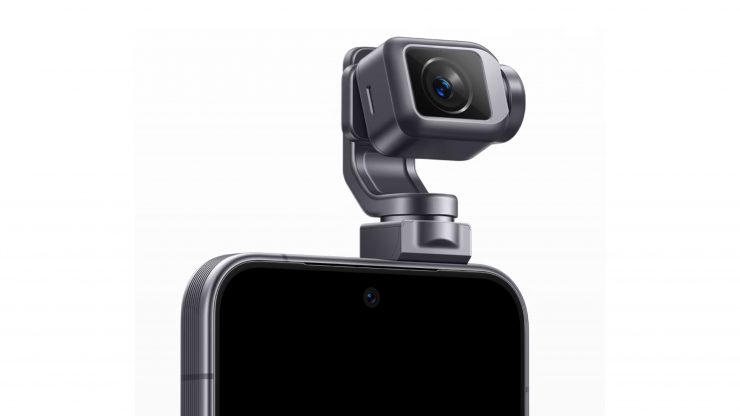
Despite the interesting approach of combining a gimbal camera and a phone, with the addition of ARRI color science, it is arguably going to be a tough sell against cameras like the DJI Osmo Pocket 4P.
5 months ago, HONOR entered into a strategic technical collaboration with ARRI. At the time, HONOR stated that the collaboration marked a significant step in extending established cinematic standards into the rapidly evolving world of mobile imaging.
HONOR and ARRI state that in cinema, image science determines how colors look, how highlights and shadows are rendered, and how images consistently behave from capture to final screen. Drawing on ARRI’s Image Science foundation, the collaboration is said to apply core cinematic imaging principles to HONOR’s mobile imaging architecture. That’s certainly a lot of marketing speak!
HONOR got long-time Sony advocate Claudio Miranda ASC to shoot a short launch film for the Robot Phone that you can see above. This doesn’t really show you much about the image quality of the phone.

According to HONOR, the Robot Phone features the industry’s smallest 4DoF Gimbal System and micro motor.
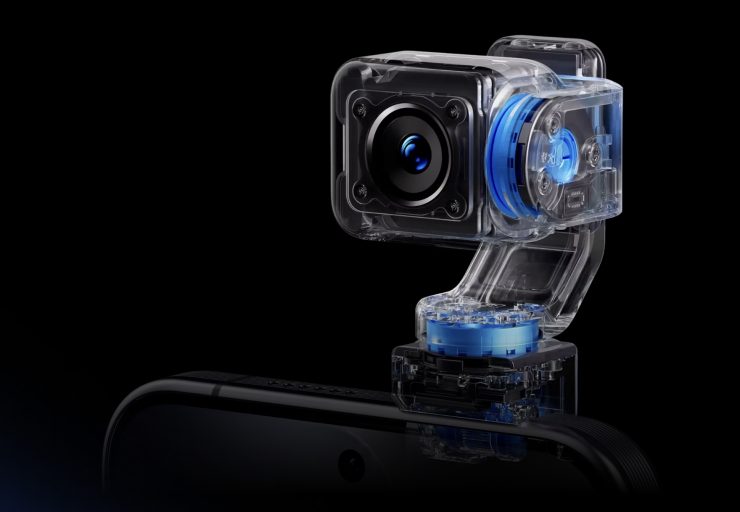
HONOR states that the gimbal’s highly reactive system provides industry-leading stabilisation performance on a smartphone. Three-axis mechanical stabilization is paired with an AI stabilization engine.
The smartphone gimbal camera also provides intelligent subject tracking. HONOR claims that it was trained using millions of scene simulations, so the system can automatically understand the scene, anticipate the trajectory of movement, and respond in milliseconds. Users can double-tap on the subject, and AI will automatically lock on and keep tracking. It’s claimed that even if the subject moves suddenly or is briefly obscured, it quickly re-identifies them and resumes tracking.
The Robot Phone is also claimed to be the first smartphone with spinshot. Spinshot supports two modes: 90 degrees and 180 degrees.
It is built around a 200MP sensor, and as well as the gimbal camera, there care two other cameras on the phone.
The Robot Phone, along with featuring what are referred to as robot-grade motion and cinematic imaging capabilities, also combines embodied AI interaction. It features what is called multimodal perception, meaning it will be able to identify sounds, track motion, and maintain visual awareness. It also has 120W fast charging, which means the phone could be charged in around 20-30 minutes. All these features will come at a cost. The Robot Phone utilizes titanium alloy-made structural components, which are around 3x more expensive than standard aluminum parts, and the manufacturing procedure includes nearly 60 different stages with lots of components.
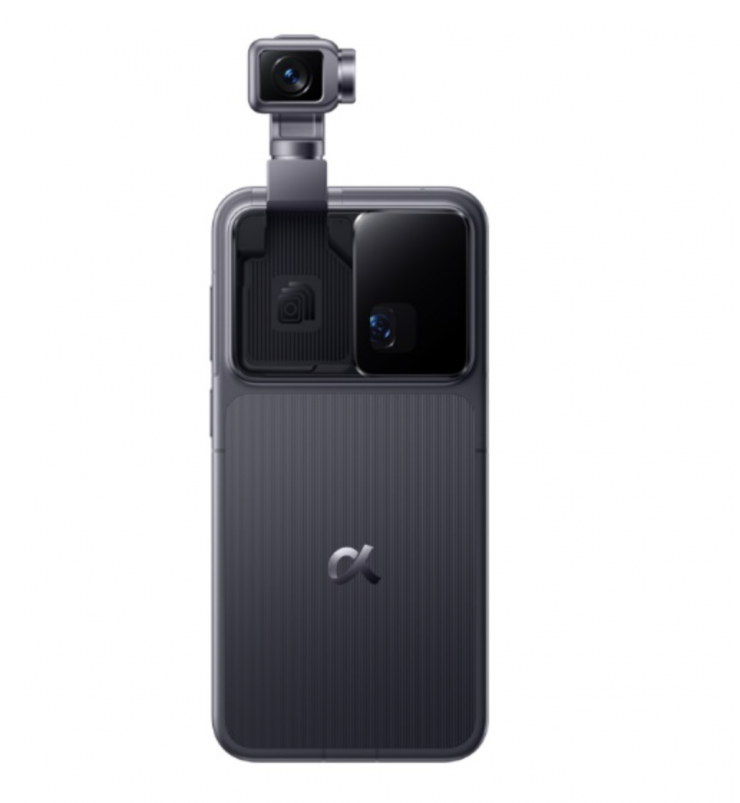
Robot Phone will also support all-angle AI video calling that follows the user through robot-grade motion control. It also responds with emotional body language, including expressive nods and head shakes, and can even dance to the beat of music.
We have previously seen ARRI make a small move into the consumer space by collaborating with Panasonic to offer ARRI LogC3 in some of their cameras, but getting into the consumer smartphone business is a whole new kettle of fish. Hopefully, this doesn’t go the same way as the RED Hydrogen phone!
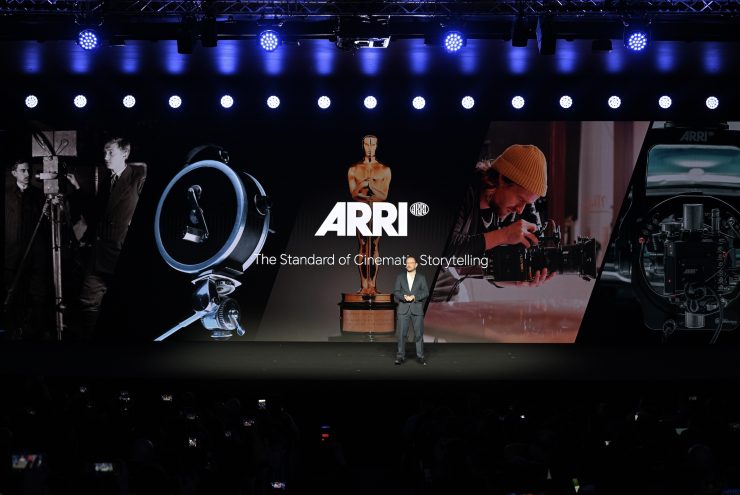
With a lot of legacy companies in our industry struggling to stay afloat, it only makes sense to try to branch out into different markets to increase revenue streams. Although, in saying that, it is perhaps a little odd that ARRI teamed up with a company that most of us probably don’t know. HONOR is a Chinese consumer electronics company majority-owned by Shenzhen Zhixin New Information Technology Co. Ltd. It was formerly a subsidiary of Huawei, which sold the brand in November 2020.
You would have thought that teaming up with a Samsung or Apple would make more sense, but partnerships can be tricky, and undoubtedly, ARRI felt like this was the best option. It is somewhat of a strange partnership, given that HONOR products can’t currently be sold in the US.
Smartphones operate under fundamentally different constraints: smaller sensors, highly integrated SoCs, different optical stacks, and different bandwidth limits. The challenge is not to replicate cinema hardware, but to translate the underlying principles into compact, real-time mobile architectures. The partnership’s goal is to bring a true cinematic aesthetic to smartphone imaging, natural color, gentle highlight roll-off, and a sense of depth that feels authentic to how stories are meant to be seen. ARRI and HONOR state that creators should be able to move seamlessly from mobile capture into professional post-production workflows.
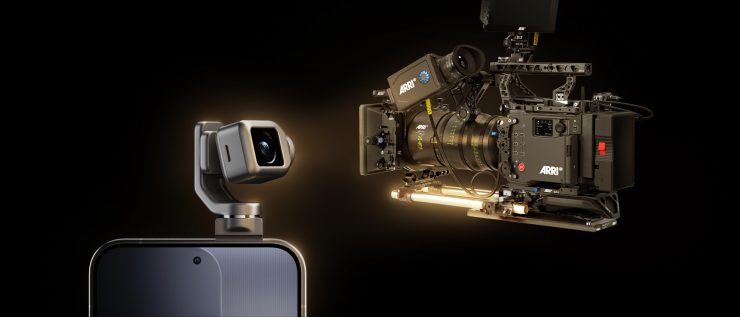
“Today, consumer smartphones have already become a serious tool in professional filmmaking, being used on blockbusters across the globe. That’s why we believe it is time to bring these worlds even closer together. For the first time ever, core elements of ARRI Image Science are being integrated directly into a consumer device,”
David Bermbach, Managing Director at ARRI.
“HONOR is pioneering a new era of mobile imaging, where technology exists to inspire creativity and storytelling. ARRI has defined the visual language of cinema for generations. Through this collaboration, we are bringing those cinematic standards and professional workflows into mobile imaging, enabling creators to craft stories with greater authenticity and emotional depth.”
James Li, CEO of HONOR
Above, you can see HONOR’s presentation earlier this year at MWC 2026.
HONOR still hasn’t officially unveiled full specifications or details about pricing and availability, although there have been inklings that it could cost as much as 15,000 Yuan in China (around $2,200 USD), and it should be available (only in China) sometime this month. It will not go on sale in the US due to current market restrictions on HONOR products.