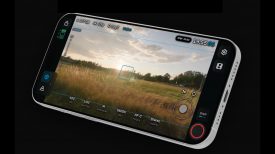

Beeble has announced SwitchHDR, a new AI model that was designed to reconstruct HDR imagery from conventional SDR video, producing scene-linear 16-bit EXR sequences with native ACES support for professional post-production.
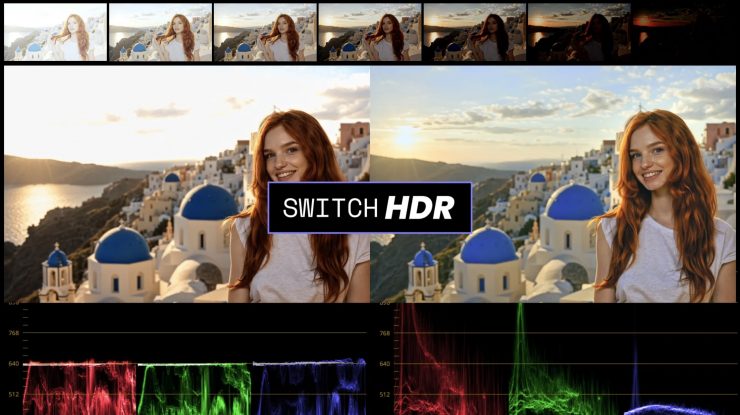
SDR video captures only a fraction of the dynamic range present in a real scene. Once highlights clip or shadow detail is compressed or lost, traditional SDR-to-HDR methods can only redistribute the remaining signal, often introducing banding, noise, and other artifacts. Conversely, SwitchHDR is claimed to be trained on real HDR footage so it can reconstruct a plausible HDR representation rather than stretch the existing SDR signal. The result rebuilds highlight and shadow detail, suppresses shadow noise, and preserves temporal consistency across entire video sequences.
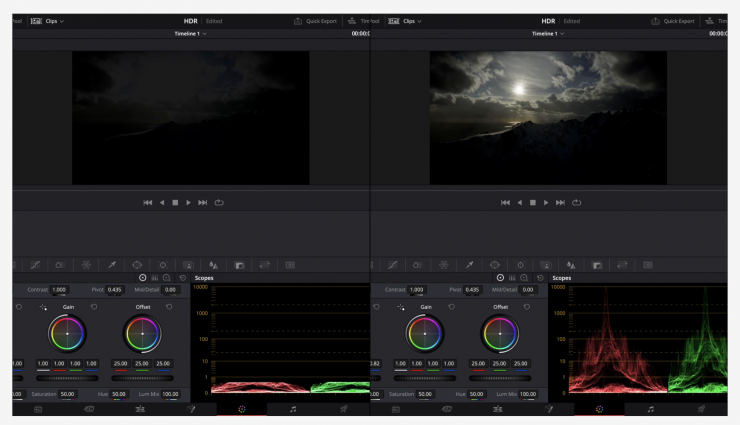
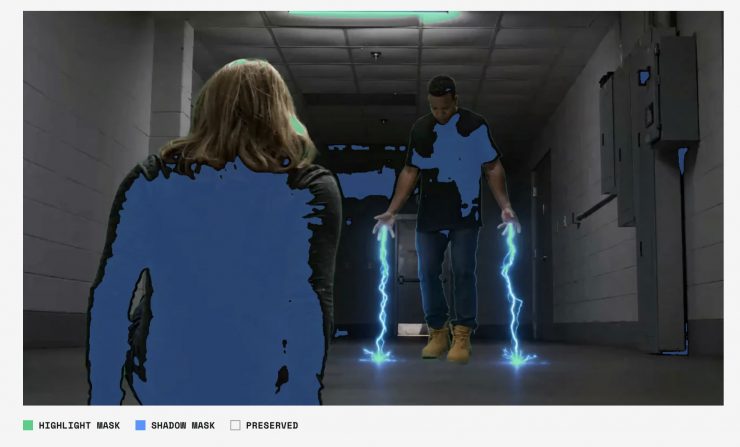
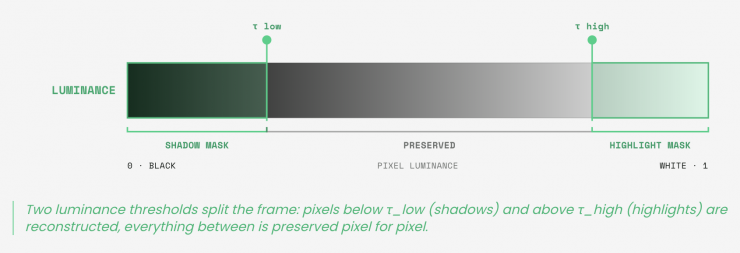
Beeble states that, unlike automatic conversion tools, SwitchHDR offers direct artistic control over the process. Users can define highlight and shadow regions using luminance masks and guide the model with separate text prompts. HDR reconstruction is applied only to selected regions, while the remainder of the image is carried through without AI reconstruction.
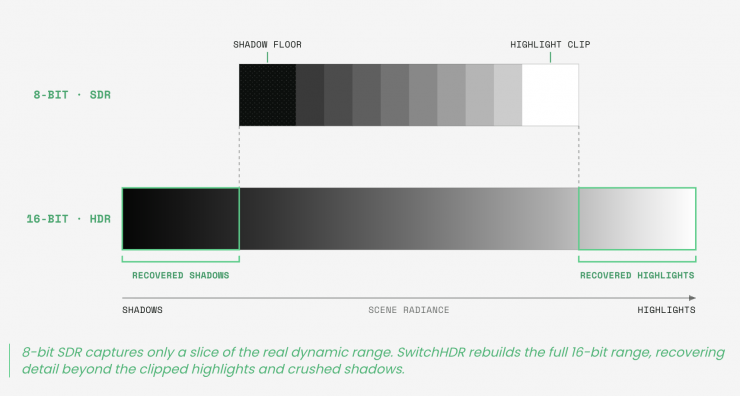
Output is delivered as scene-linear 16-bit EXR sequences in ACES2065-1 (AP0), enabling easy integration into professional grading, compositing, and VFX pipelines.
SwitchHDR is designed for professional production and post-production workflows, including feature films, commercials, sports production, archival restoration, and visual effects. The technology expands Beeble’s suite of AI tools for production and post-production, building on the company’s work in relighting, compositing, and virtual production.
SwitchHDR was designed for filmmakers, colorists, VFX artists, and post-production teams working across film, commercials, sports, archival restoration, and visual effects.
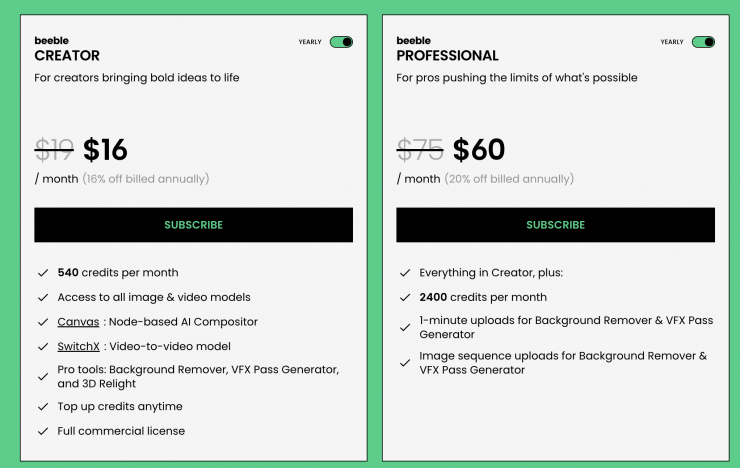
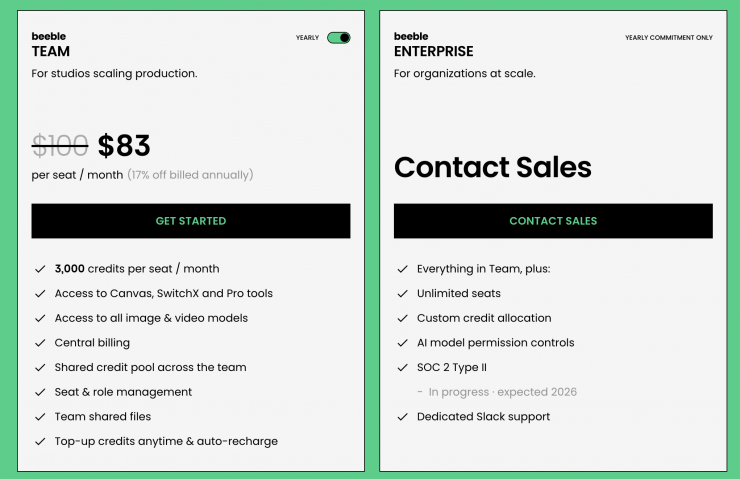
SwitchHDR is available through Beeble’s web app and is included with all paid plans.