
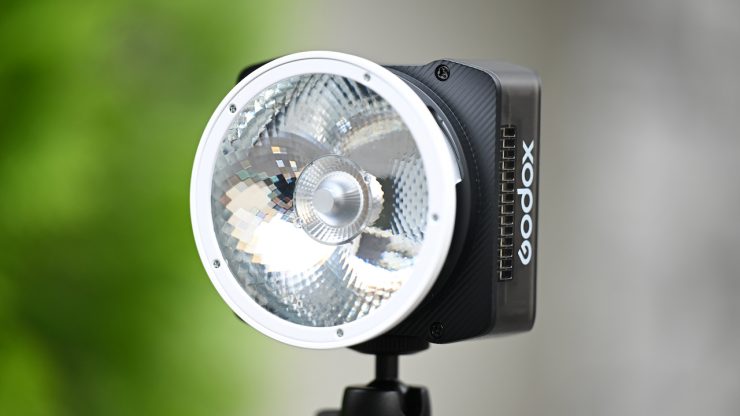
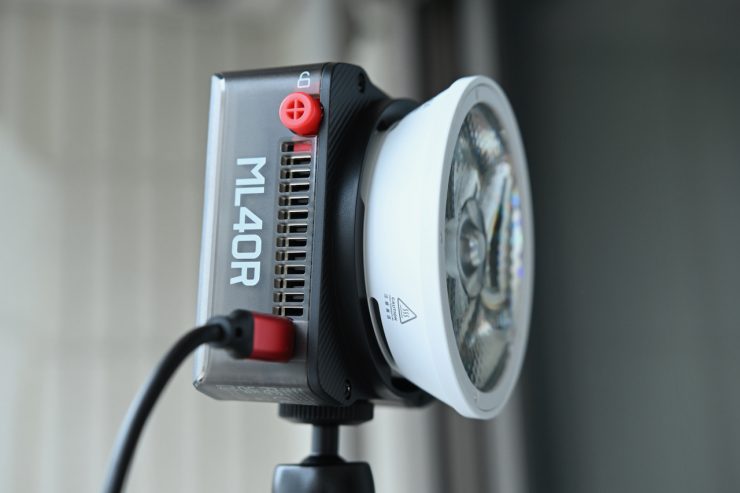
Godox recently announced the ML40R/Bi, the newest additions to its ML series. They were designed to be portable LED lights with a built-in battery and a specially designed lens to deliver high brightness in a compact form.
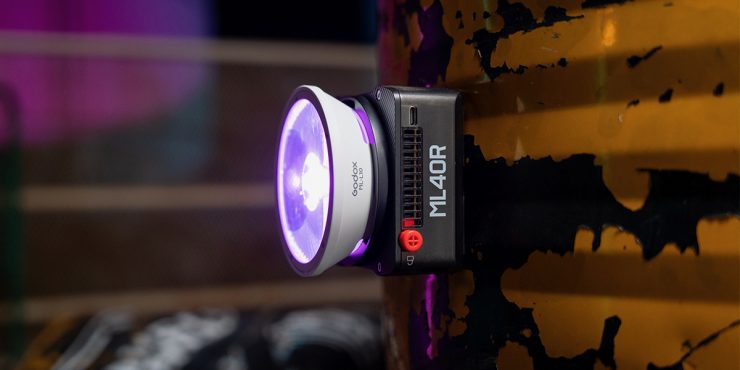
The all-new Lens Reflector ML-L10, purpose-built for the ML40Bi and ML40R, is claimed to boost light intensity, making the fixtures up to 24x and 16x brighter, respectively, without a modifier.
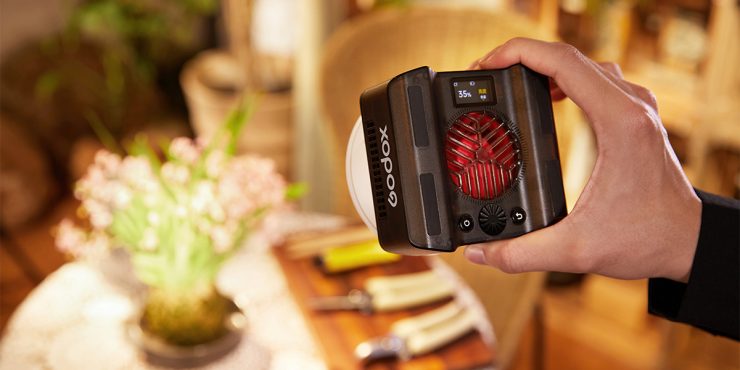
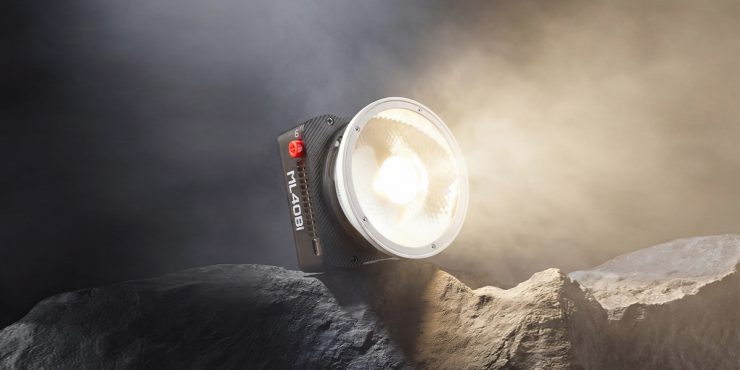
The Godox ML40Bi/ML40R is small enough to sit in your hand and easy to store and transport in a bag. Both fixtures weigh just 422g / 0.93lb, and they have physical dimensions of 97 x 46 x 91mm / 3.82″ x 1.81″ x 3.58″.
Key features
- For Content Creators & Vloggers
- Output: 781 Lux at 3.3′ (5600K)
- 1800-10,000K CCT; RGBW Color Control
- Built-In Battery; 42-Minute Runtime
- Onboard & App Control; NFC Connection
- CRI 95 | TLCI 95
- 14 Lighting Effects
- Compact & Lightweight Design
- Godox Mount, 1/4″-20 & Magnetic Mount
- Includes Lens Reflector & USB-C Cable
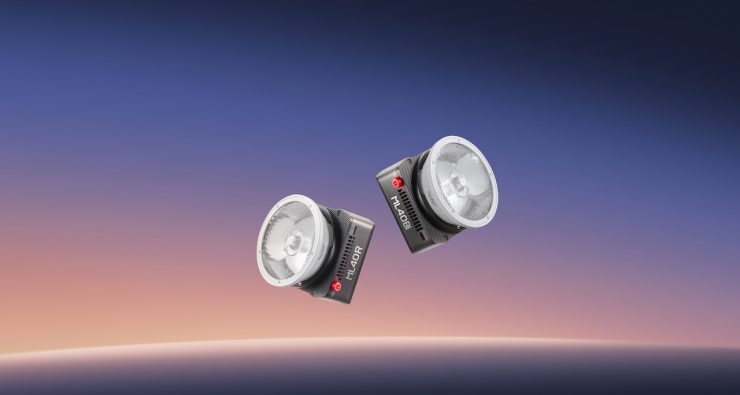
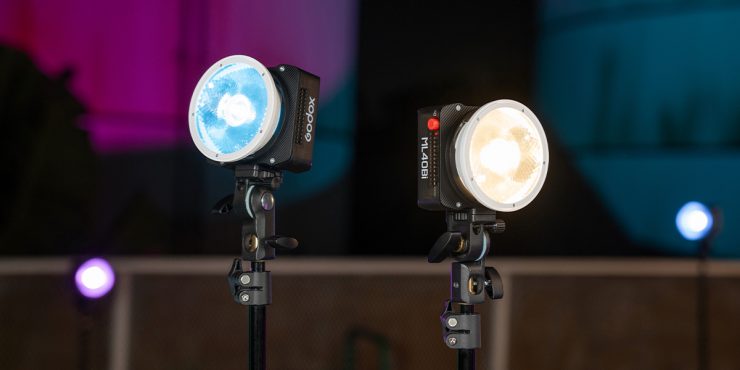
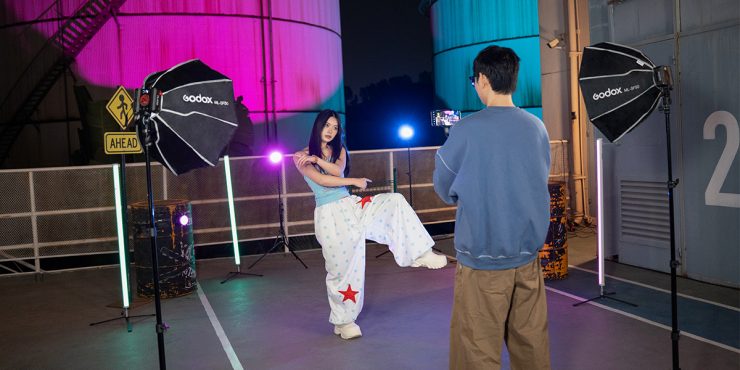
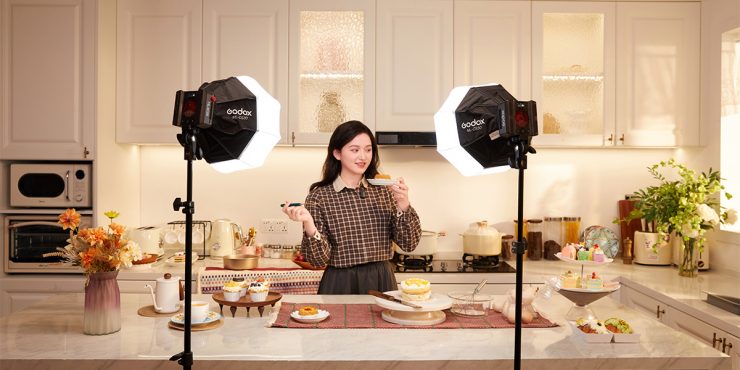
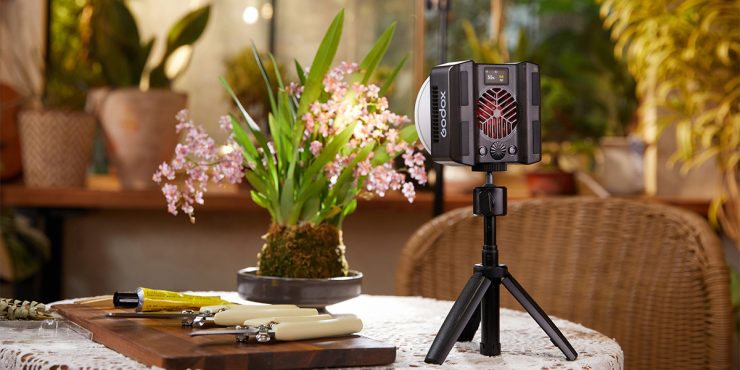
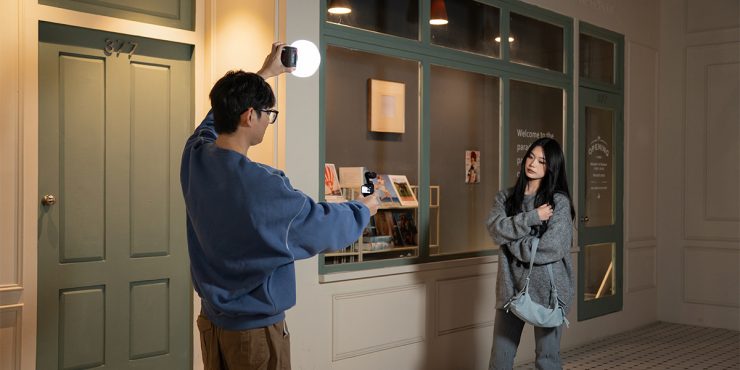
There are now quite a few lights in this type of form factor, and they have been popular because of the compact size and output.
For this review, I will be looking at the ML40R. Every light I review on the site gets the same in-depth treatment and impartial evaluation regardless of who it comes from or how much it costs.
Concept
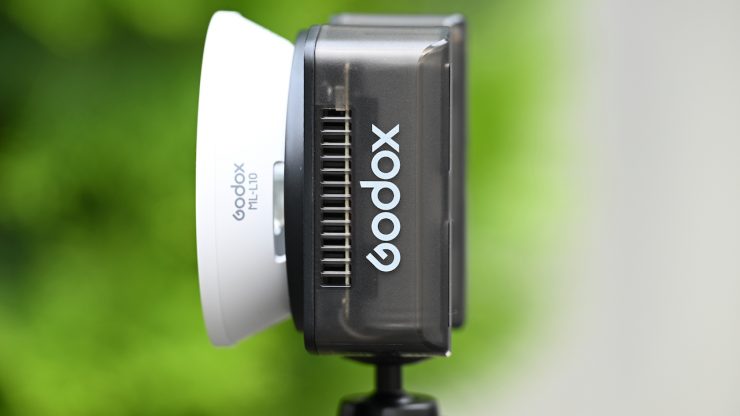
The concept behind the ML40R was to come up with a high-power COB LED light that is suitable for studios, live streaming, and other lighting applications.
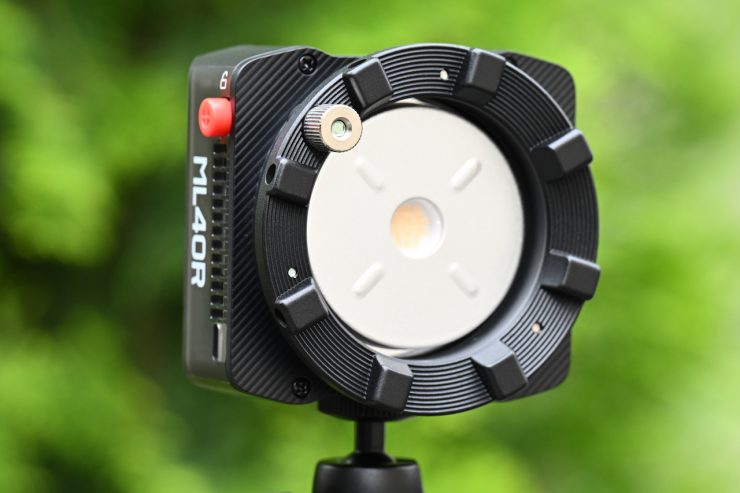
Like similar lights from ZHIYUN and SmallRig, the ML40R features a quite unusual form factor, and it looks very different from a lot of other LED lights on the market. In some ways, this type of design looks like a small-sized camera with a COB instead of a sensor.
Godox’s strategy was to make lightweight and compact high-output COB lights by essentially putting a COB LED in front of a large cooling system.
Build Quality
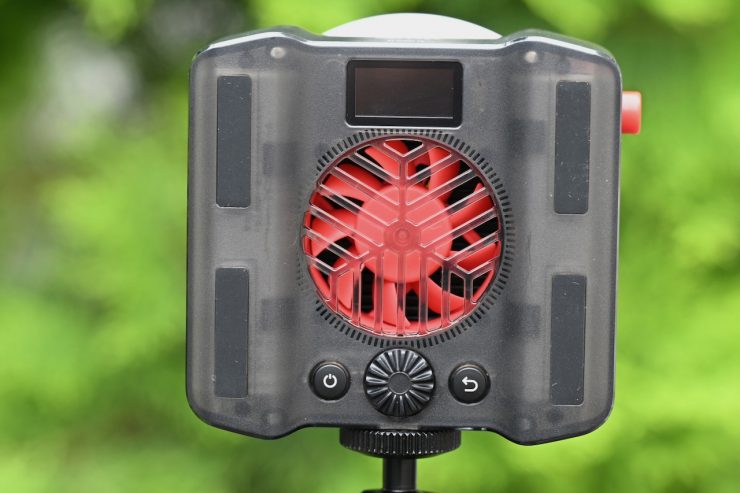
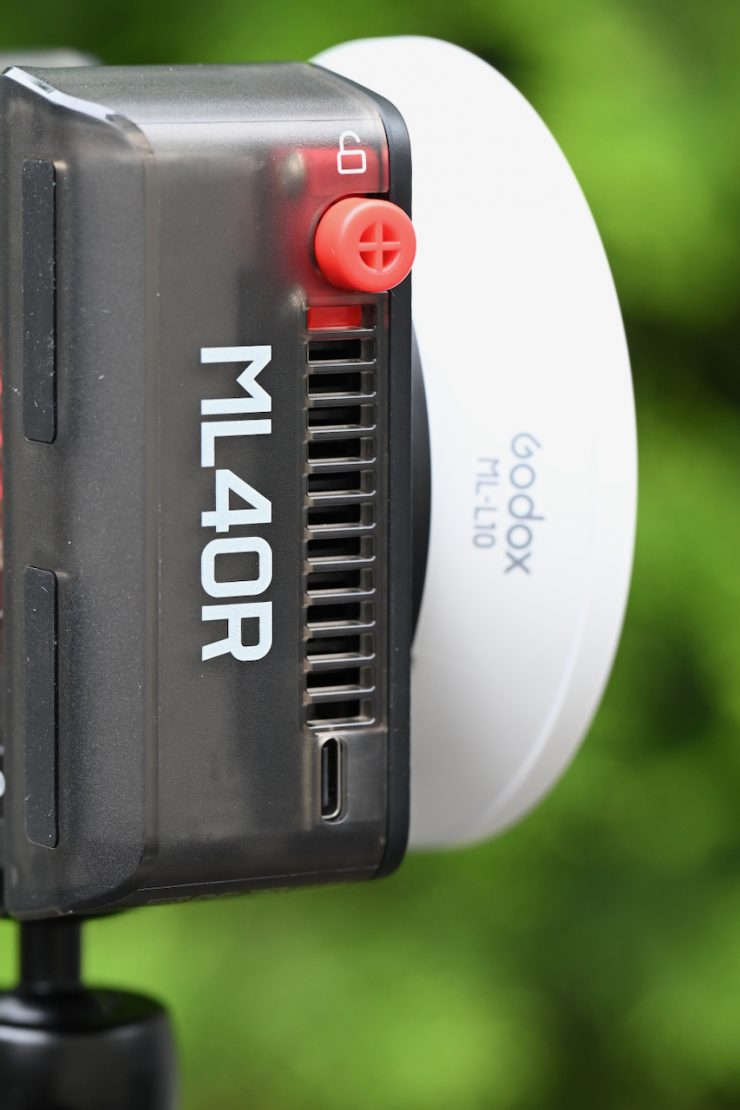
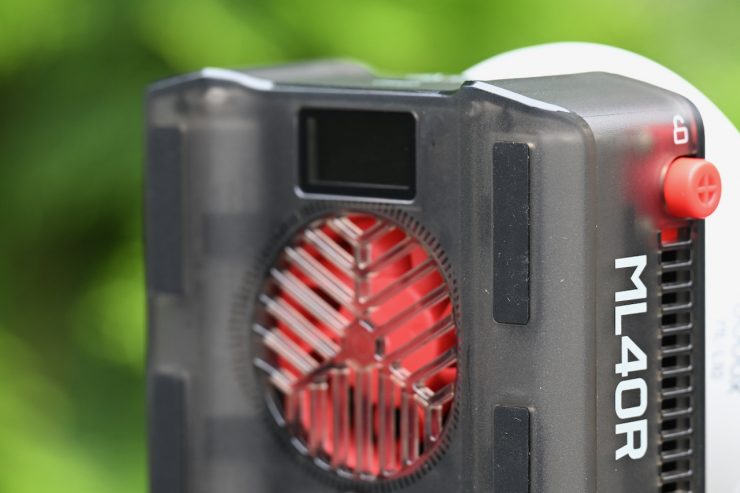
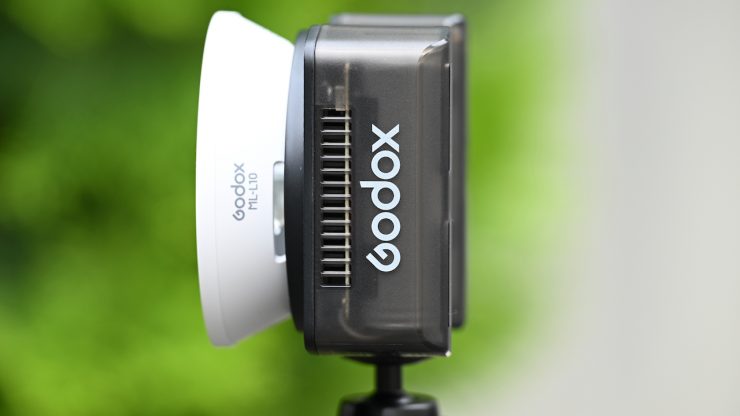
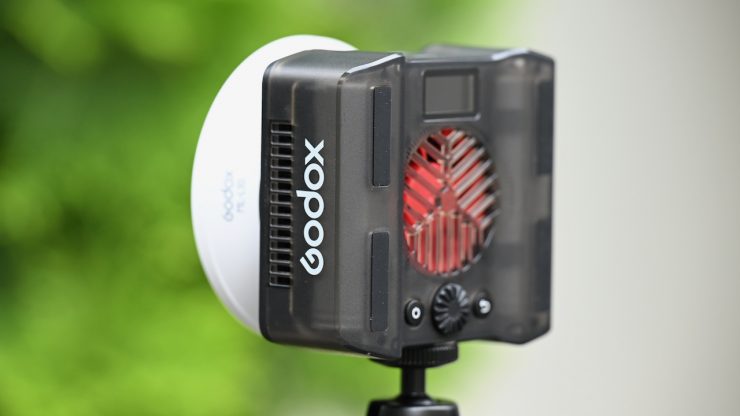
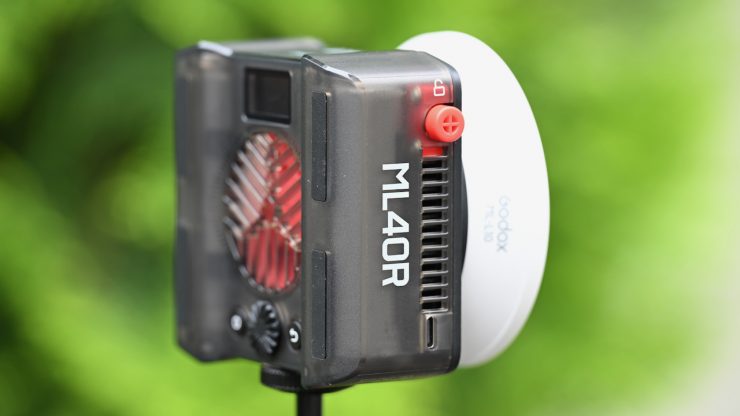
The build quality of the ML40R is pretty decent for a light at this price. The casing of the light is made out of lightweight materials to keep the weight to a minimum, although I am not sure how it would go if you accidentally dropped it.
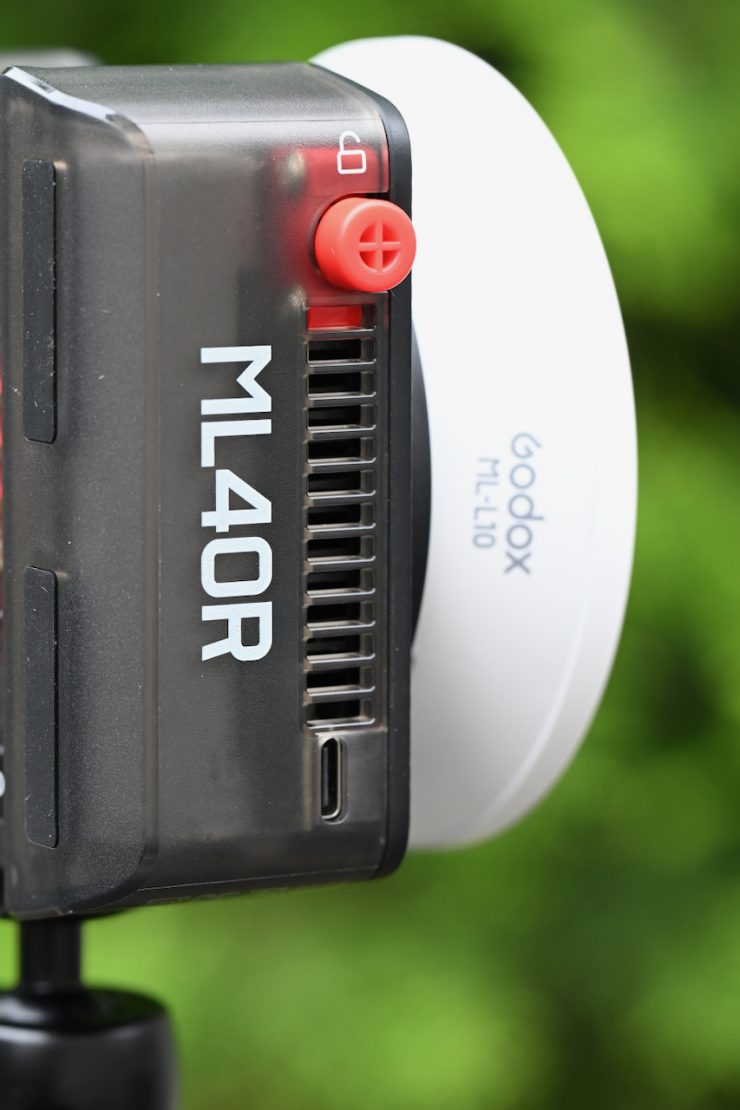
The release button for removing accessories from the mount is made out of hard composite material and not metal, although it still works reasonably well.
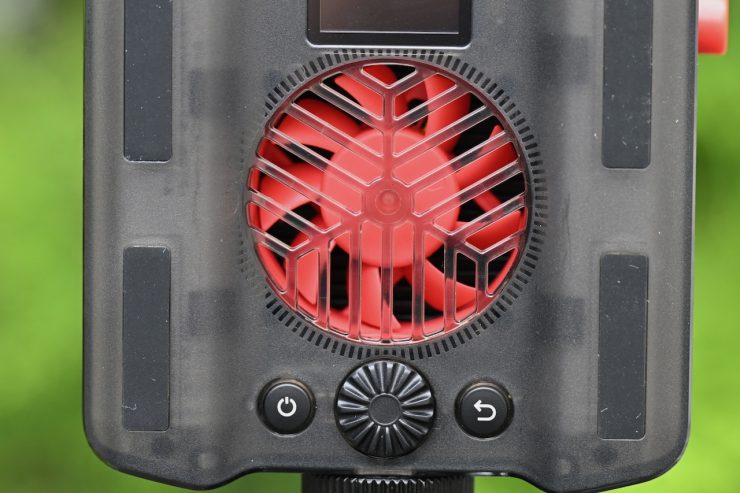
The dials and buttons are ok, but not very tactile.
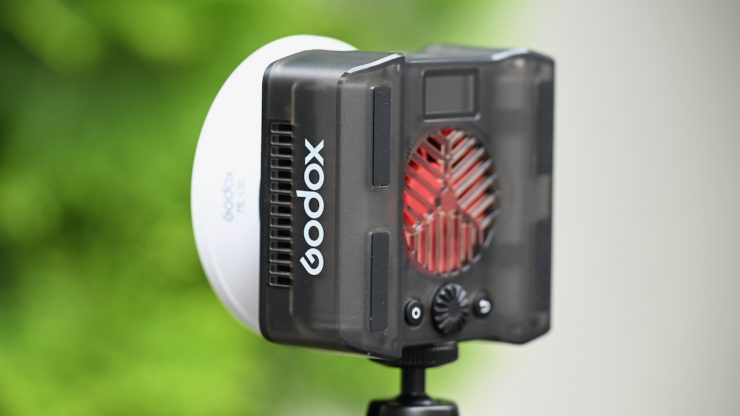
Unlike larger lights with a similar form factor, such as the Zhiyun MOLUS G200, that feature a separate head unit and a power supply/controller, the Godox ML40R is a self-contained unit.
Weight & Size
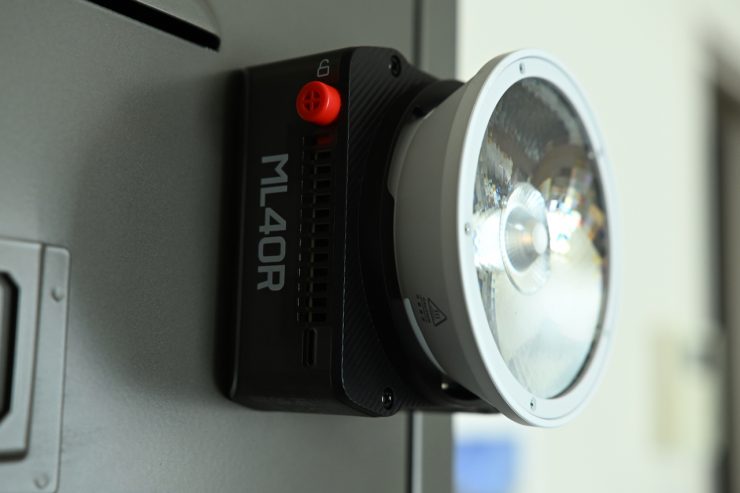
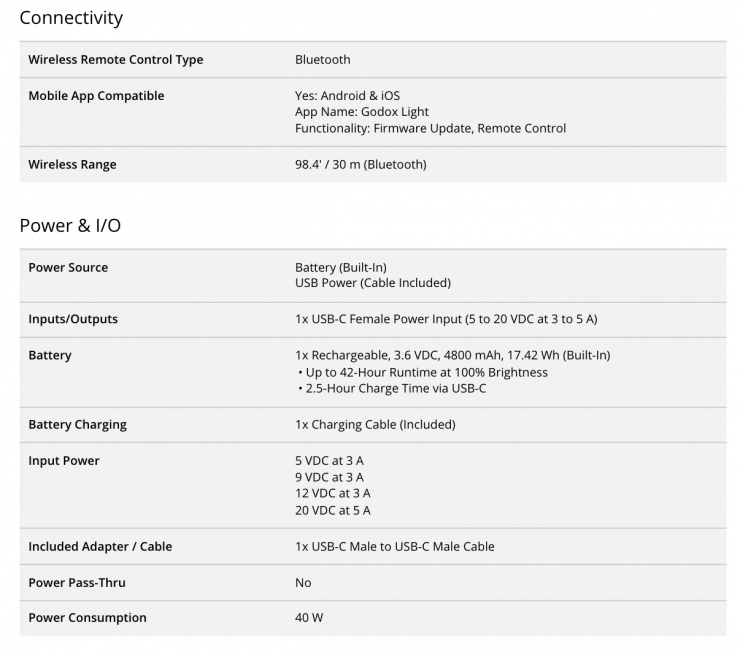
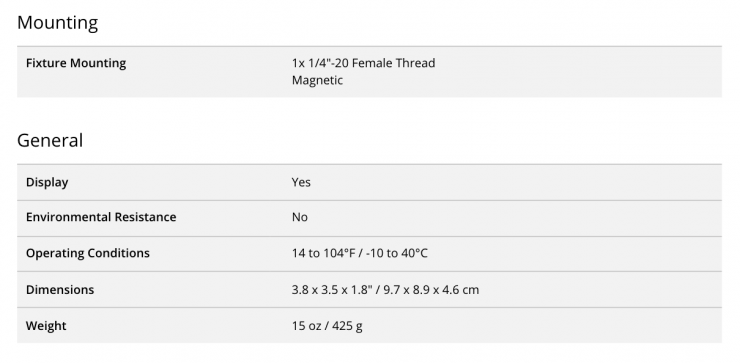
The Godox ML40R weighs in at just 15 oz / 425g. It has physical dimensions of 3.8 x 3.5 x 1.8″ / 9.7 x 8.9 x 4.6 cm.
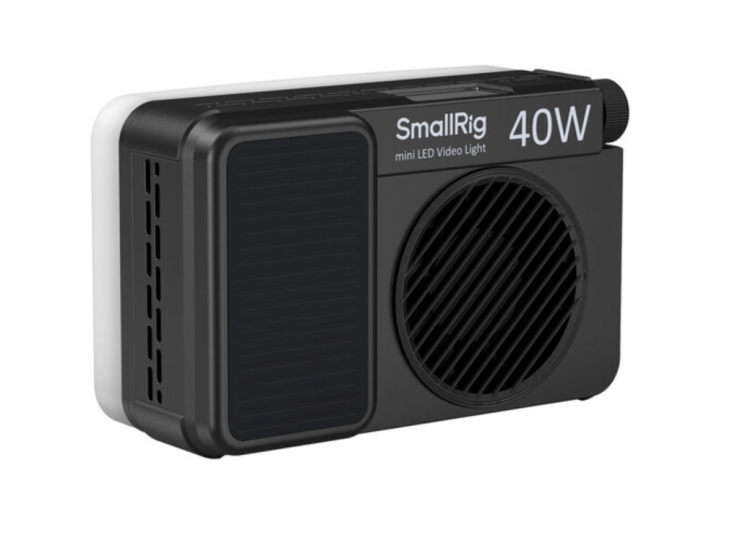
As a comparison, the SmallRig RM 40C Mini LED Video Light weighs 0.7 lb / 302g.
I think the small size and lack of weight make this an appealing light for anyone who needs to travel while maintaining a small footprint.
So how does this weight compare to some other lights with a similar power draw that could be considered competition? Below you can see:
| WEIGHT | |
| Godox ML40R | 15 oz / 425g |
| SmallRig RM 40C Mini LED Video Light | 0.7 lb / 302g |
| Godox ML30Bi Bi-Color LED Dainty Light | 1.3 lb / 587g |
| Harlowe Mini Max Bi-Color LED Monolight Standard Kit (Brown Faux Leather) | 1.53 lb / 694g (Fixture) |
| SmallRig RC 60C RGB LED Monolight (Power Bank Clamp Edition) | 1.5 lb / 700g (Fixture) |
| SmallRig RC 60C RGB LED Monolight (Lite Edition) | 1.5 lb / 700g (Overall Kit) |
| Nanlite FC60B Bi-Color LED Spotlight | 1.54 lb / 700g (Fixture) |
| Zhiyun FIVERAY M40 Powerful 40W Pocket LED Light with Silicone Diffuser Kit | 0.7 lb / 320g |
| Ulanzi C60RGB 60W Bi-Color Video Light (RGB, without Adapter) | 1.2 lb / 537g (Fixture) |
| COLBOR Wonder W60R RGB LED Monolight | 0.8 lb / 345g |
| amaran Halo 60x Bi-Color LED Monolight | 0.9 lb / 420g (Fixture) |
| Godox RS60R RGB LED Monolight | 0.7 lb / 311g |
| Sirui C60X Handheld Pocket Bi-Color LED Light | 1.2 lb / 535g |
| Neewer FS60B 60W Compact Pocket Bi-Color LED Video Light | 10.5 oz / 298g |
| GVM PL60C RGB Pocket LED Monolight | 1.8 lb / 800g |
| Lume Cube XL RGB LED Monolight (Mobile Kit) | NA |
| Lume Cube XL RGB LED Monolight | NA |
Godox Mount
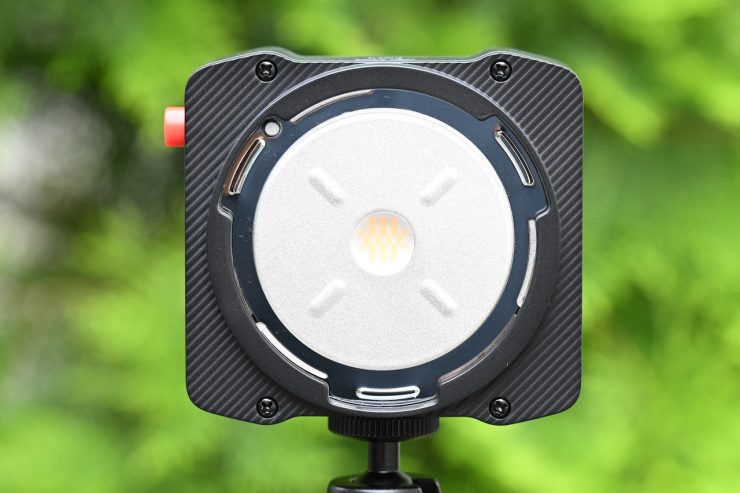
The ML40Bi/ML40R utilizes the Godox Mount, and there is a large array of lighting modifiers available.
Powering & Power Draw
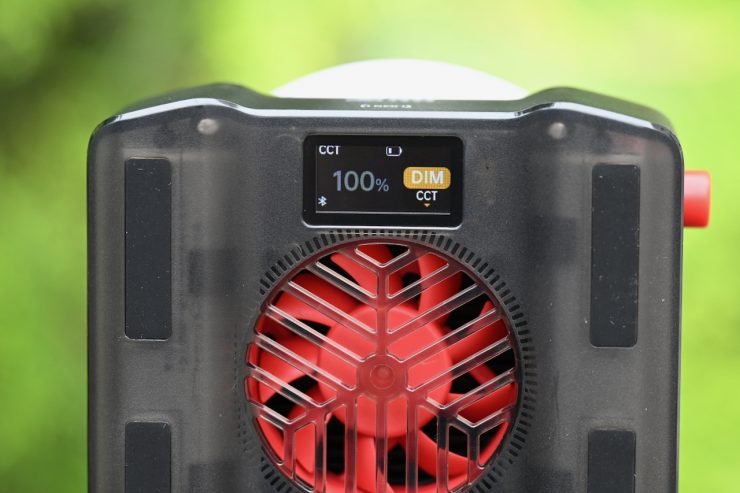
The ML40R features a built-in battery that is claimed to provide up to 42 minutes of run time at 100% brightness. Charging time is around 2 hours and 30 minutes.
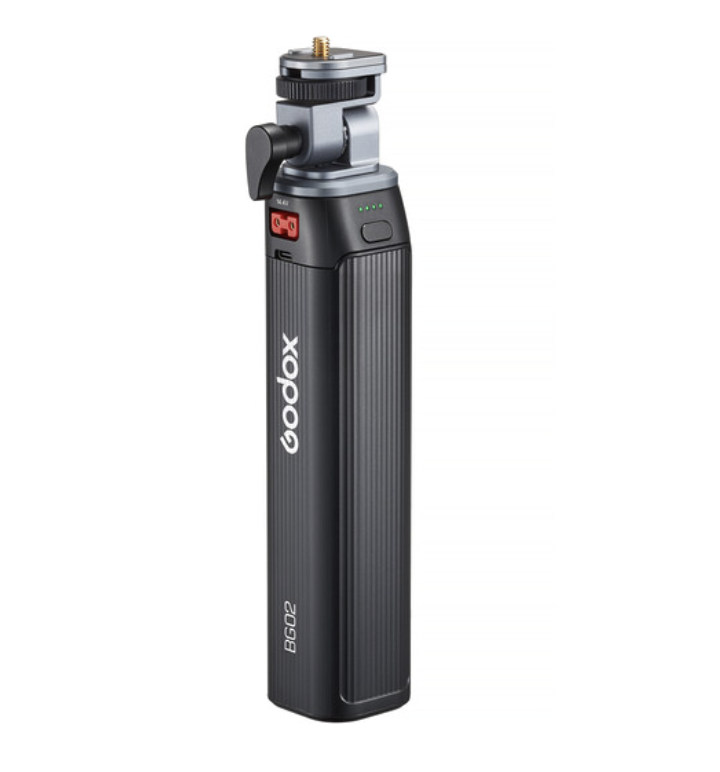
If you want to, you can purchase the optional BG02 battery grip or just use a power bank to keep the light running for longer periods of time.
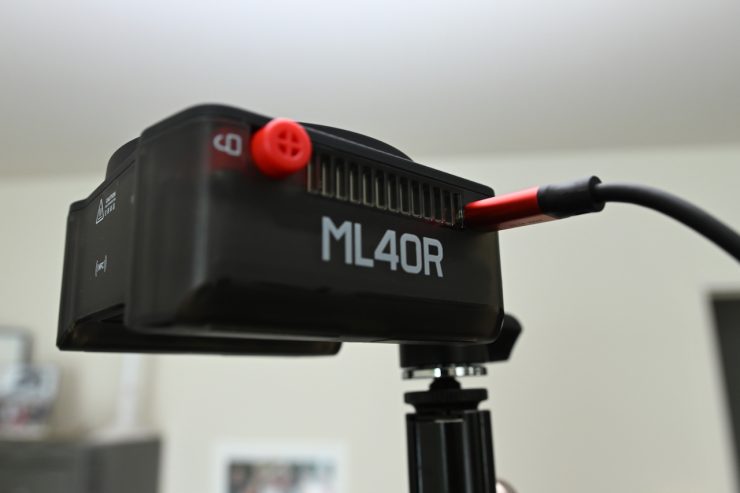
Godox recommends that you use a power bank or USB-C source that can provide at least 60W.
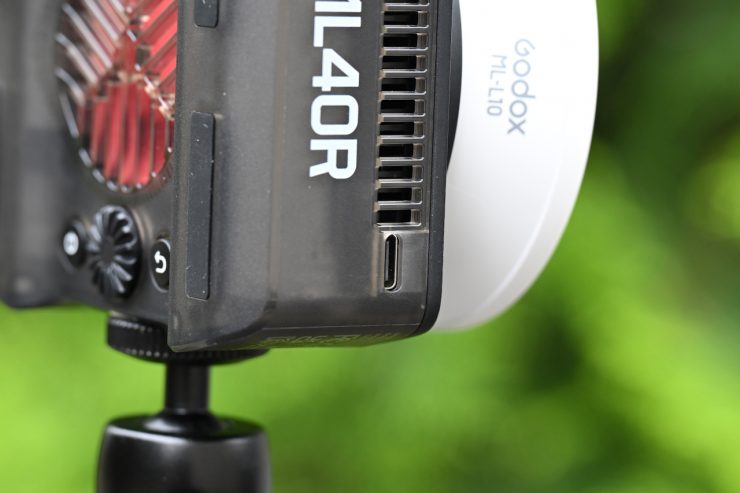
The USB-C input is located on the right side of the fixture.
Having an in-built non-replaceable battery certainly has its pros and cons. On one hand, it allows for a self-contained unit where you don’t need to attach any type of cable or battery, but on the other hand, batteries inevitably degrade over time, and you can end up with a product that is no longer reliable enough to use from battery power.
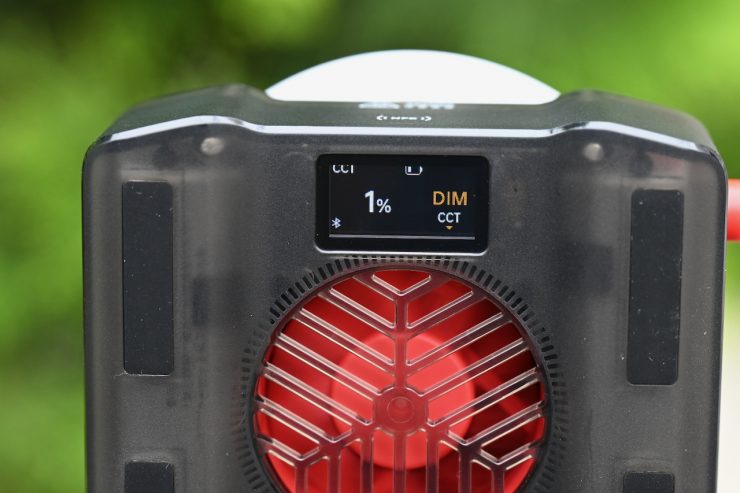
The ML40R draws a maximum of 40W, which isn’t a lot.
| POWER DRAW | |
| Godox ML40R | 40W |
| SmallRig RM 40C Mini LED Video Light | 40W |
| Godox ML30Bi Bi-Color LED Dainty Light | 40W |
| Harlowe Mini Max Bi-Color LED Monolight Standard Kit (Brown Faux Leather) | 40W |
| SmallRig RC 60C RGB LED Monolight (Power Bank Clamp Edition) | 60W |
| SmallRig RC 60C RGB LED Monolight (Lite Edition) | 60W |
| Nanlite FC60B Bi-Color LED Spotlight | 60W |
| Zhiyun FIVERAY M40 Powerful 40W Pocket LED Light with Silicone Diffuser Kit | 40W |
| Ulanzi C60RGB 60W Bi-Color Video Light (RGB, without Adapter) | 100W |
| COLBOR Wonder W60R RGB LED Monolight | 60W |
| amaran Halo 60x Bi-Color LED Monolight | 63W |
| Godox RS60R RGB LED Monolight | 60W |
| Sirui C60X Handheld Pocket Bi-Color LED Light | 60W |
| Neewer FS60B 60W Compact Pocket Bi-Color LED Video Light | 60W |
| GVM PL60C RGB Pocket LED Monolight | 60W |
| Lume Cube XL RGB LED Monolight (Mobile Kit) | 60W |
| Lume Cube XL RGB LED Monolight | 60W |
So how does this power draw compare to some other lights that could be considered competition? Above you can see that it draws around 20W less than a lot of other options on the market.
How does it stay cool?
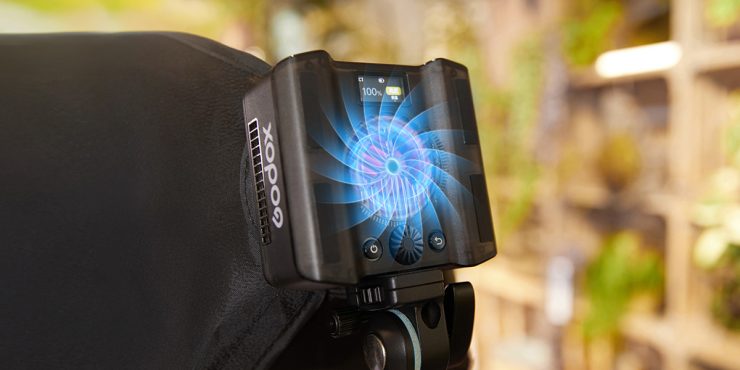
COB LED lights generate a lot of heat, and as the ML40R is a self-contained unit, it features an in-built fan and cooling system.
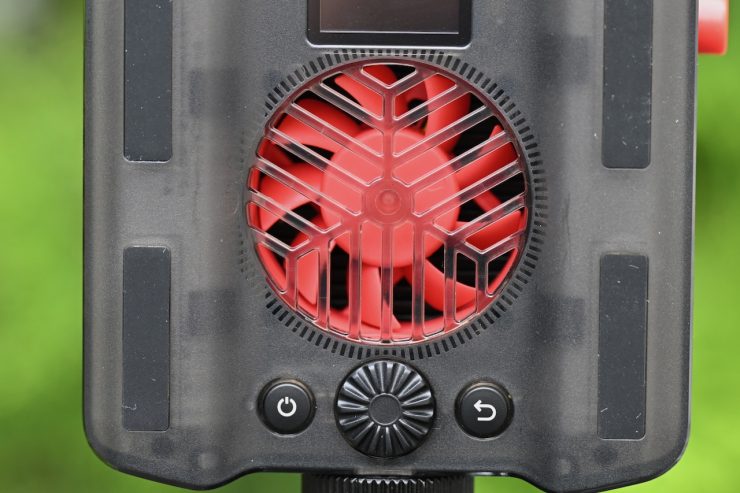
Godox states that an optimized heat-dissipation system keeps temperatures under control.
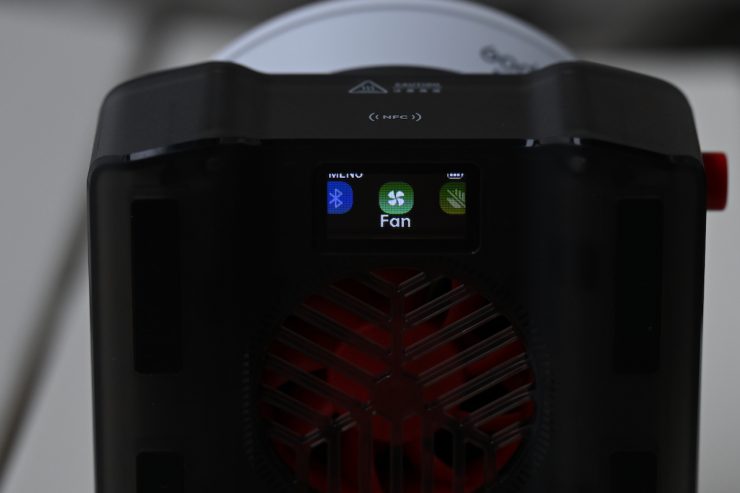
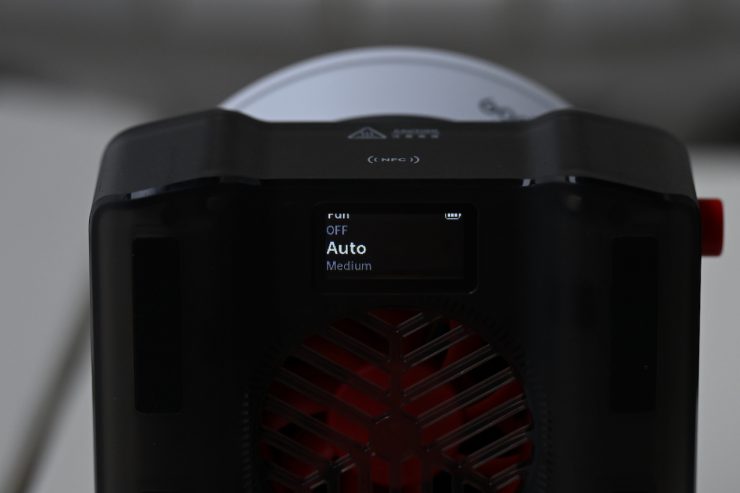
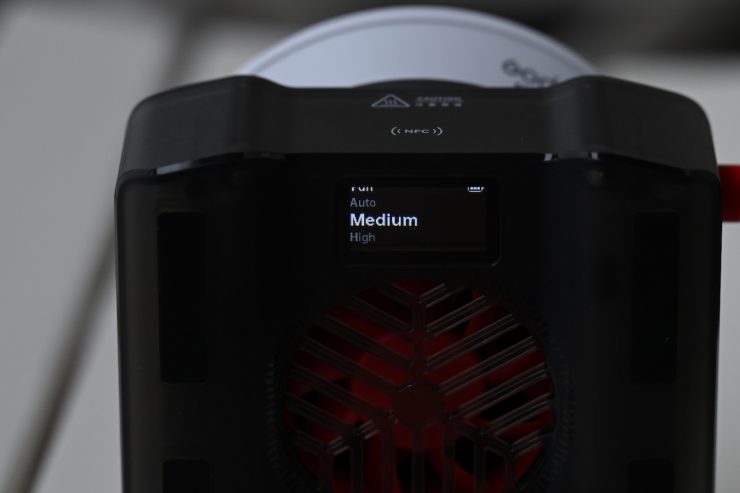
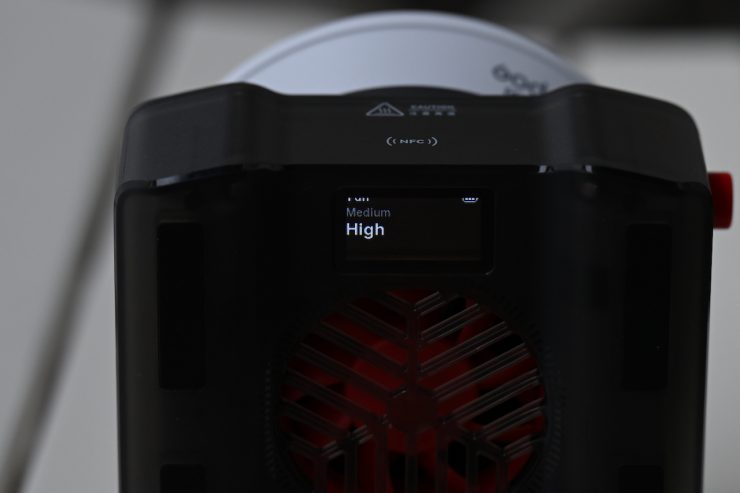
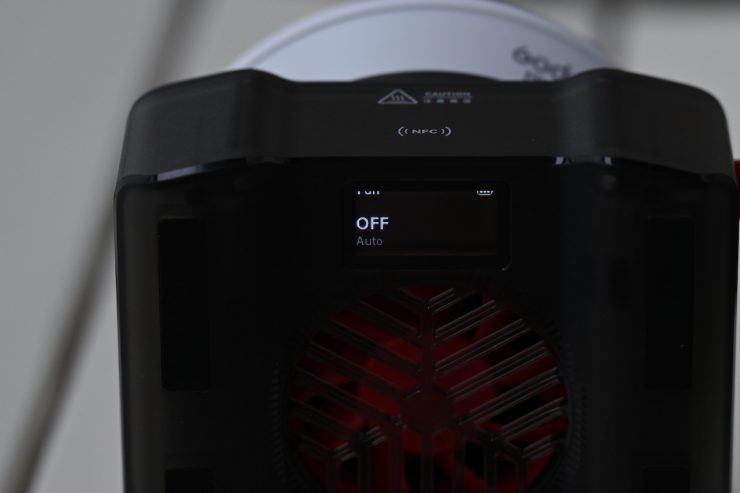
The fixture does have fan settings that you can select. These settings include:
- Off (turns off the fan for silent operation)
- Auto (balances noise reduction and heat dissipation for daily use)
- Medium (provides enhanced cooling for long, full-power operation)
- High (provides enhanced cooling for long, full-power operation)
The fan is relatively quiet even when operating at 100% output for long periods of time in the normal operating mode.
With the fan set to Off, the output is capped at 20%.
Beam Angle
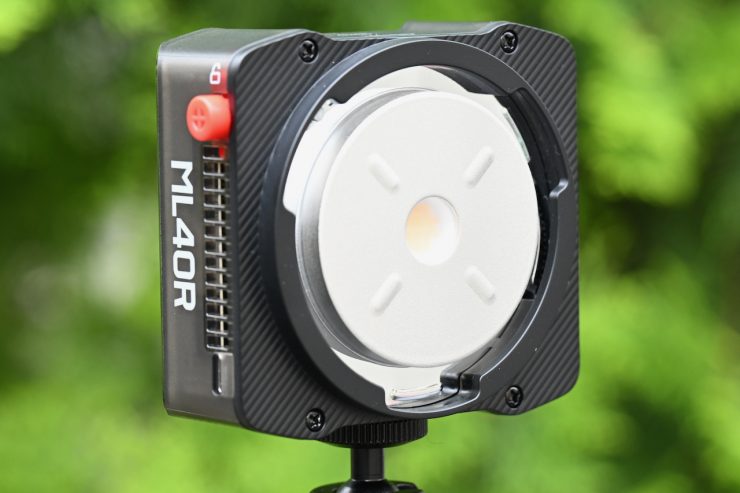
Godox doesn’t list what the native beam angle of the ML40R is when used open-face.
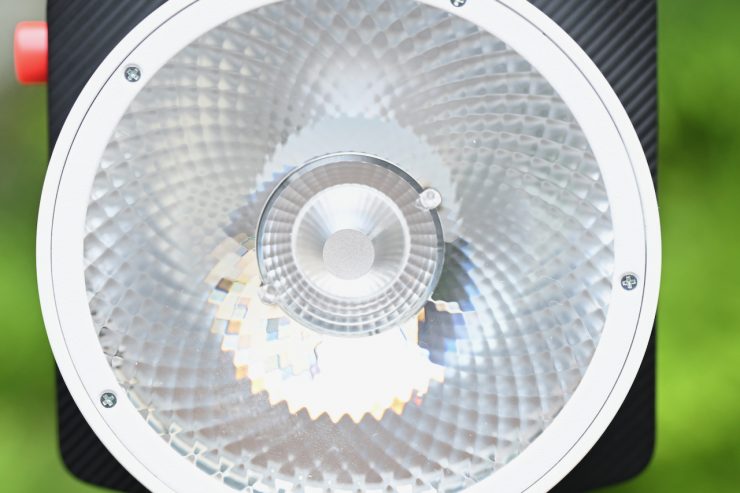
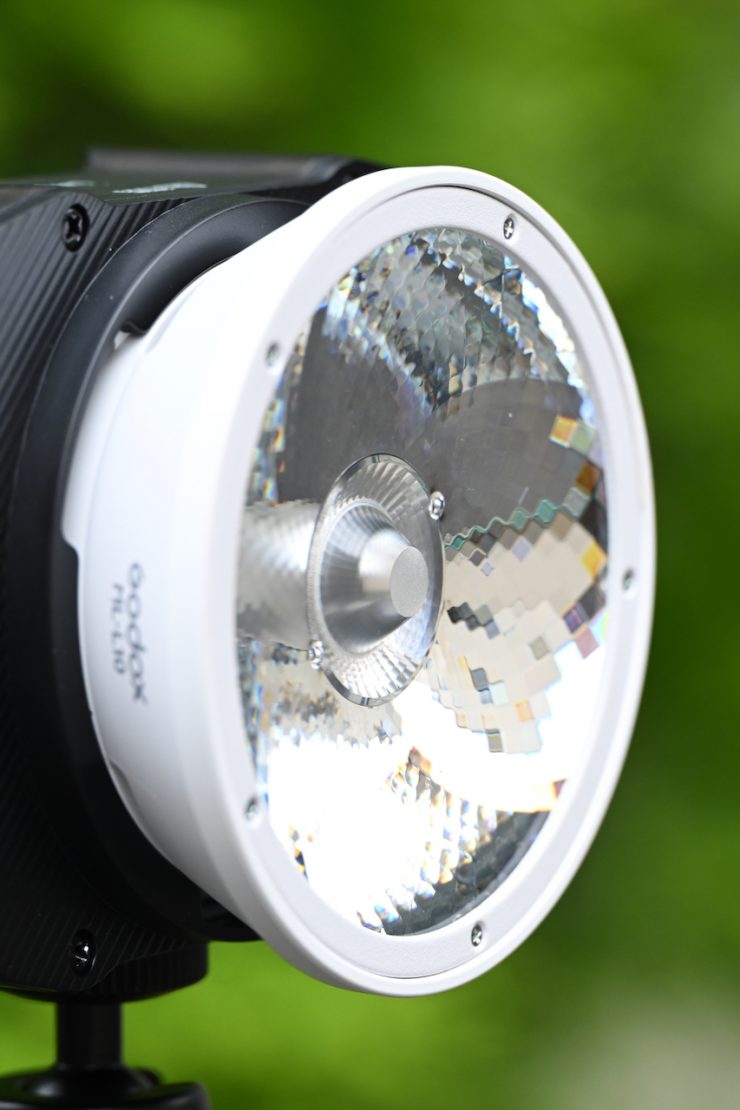
You can alter that beam angle by using the 10° lens reflector. This beam angle is very tight, which is handy for various lighting applications.
Mounting
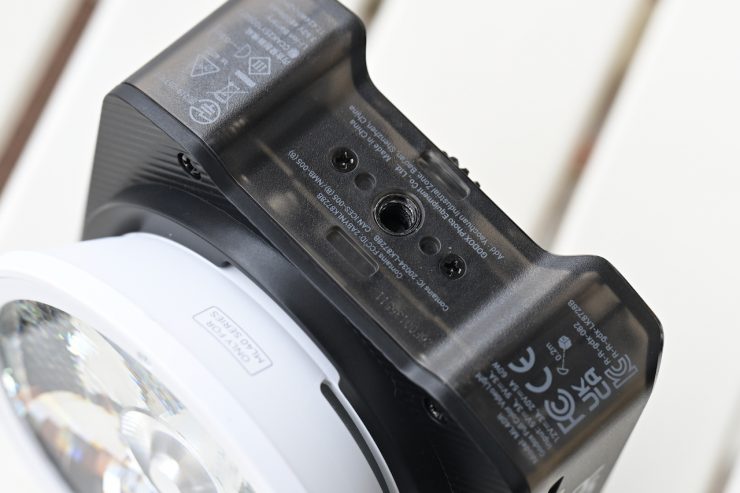
The light doesn’t come with any type of mounting bracket. Instead, there is a single 1/4-20″ thread.
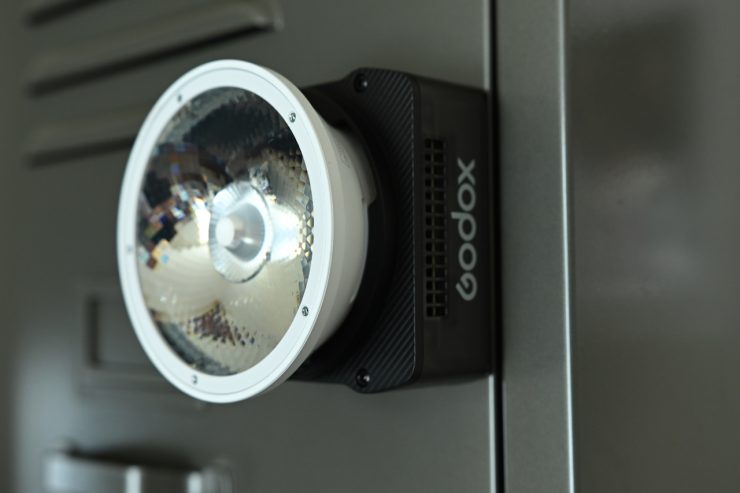
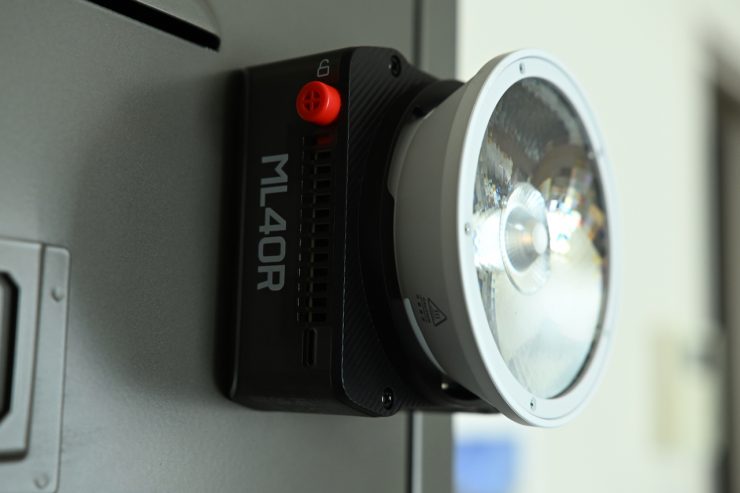
Despite there being no mounting bracket, the back of the fixture has some magnetic plates so you can attach it to metal surfaces. This is very handy, and because the fixture is so small, it allows you to easily hide or position the light without needing any additional rigging accessories.
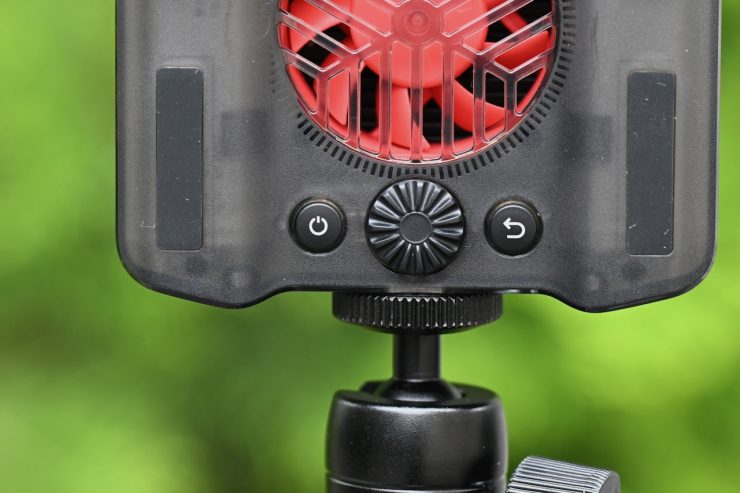
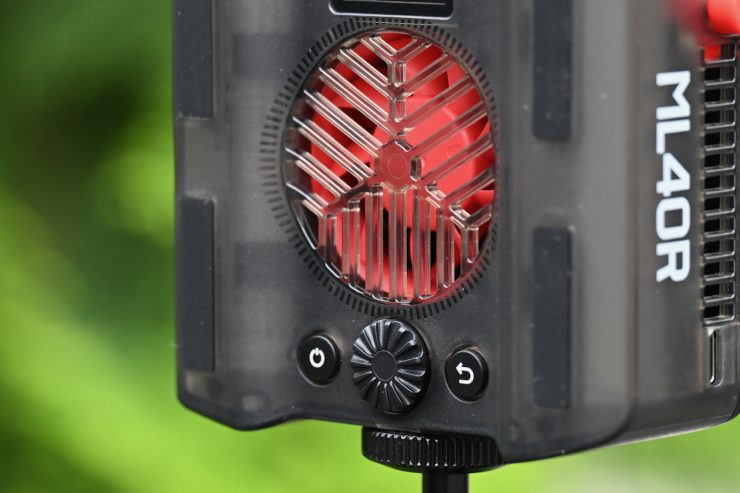
As the fixture is lightweight, I was just using a ball head and adapter to mount it to a lighting stand.
Controls & Menu System
The ML40R has a pretty basic interface, but it is easy enough to use.
You use a combination of a scroll dial and buttons to make changes.
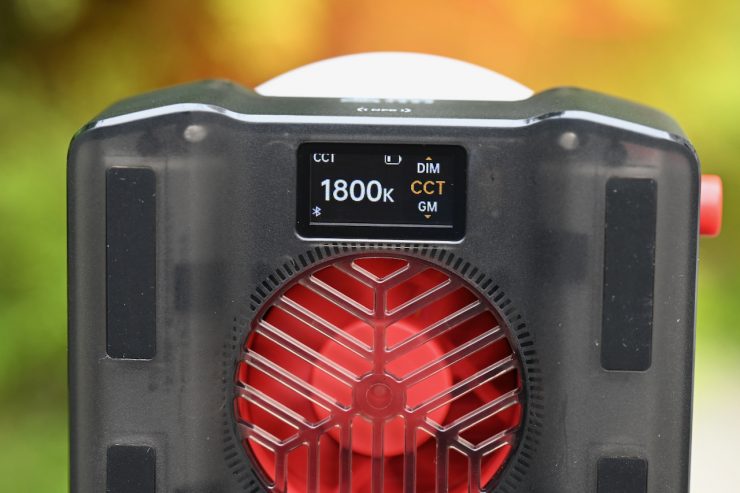
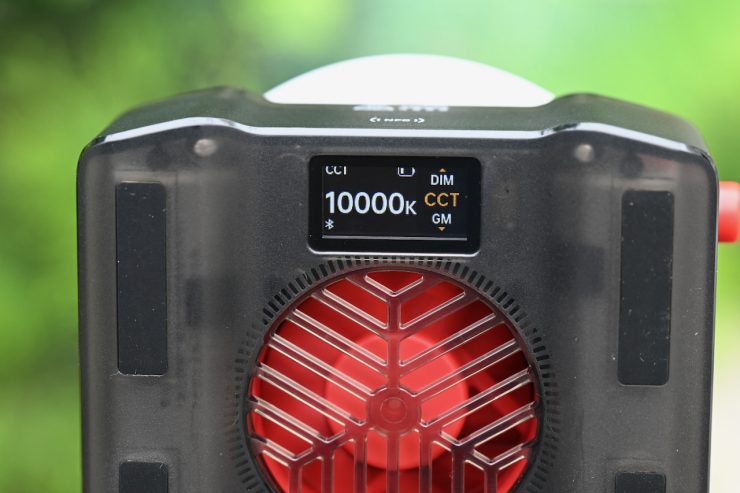
You can adjust the CCT from 1800 to 10,000K, as well as the intensity in increments of 1%. My issue with the CCT adjustment is that you can only make changes in 100K increments. There is also +/- G/M adjustment.
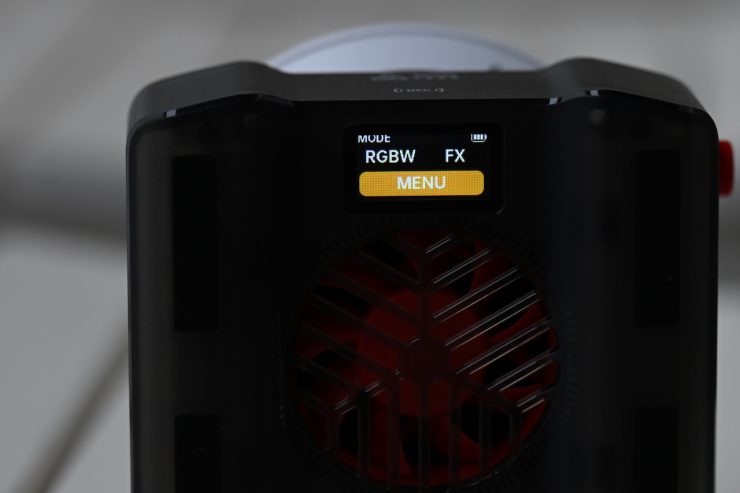
The MENU is a little hard to find as it is listed underneath all of the operating modes.
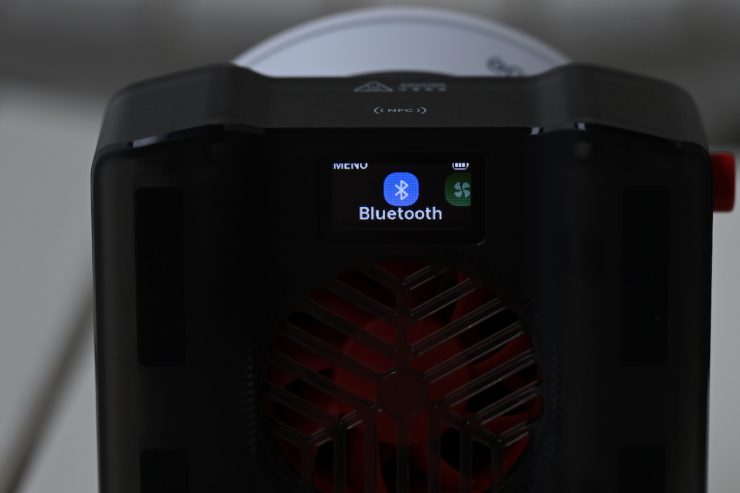
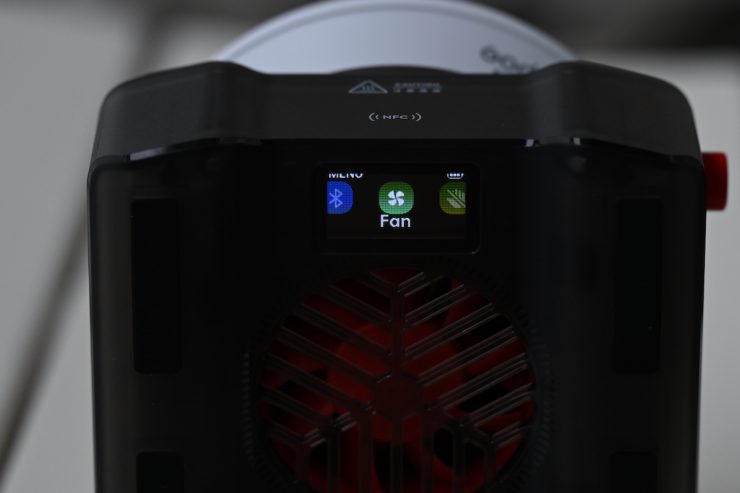
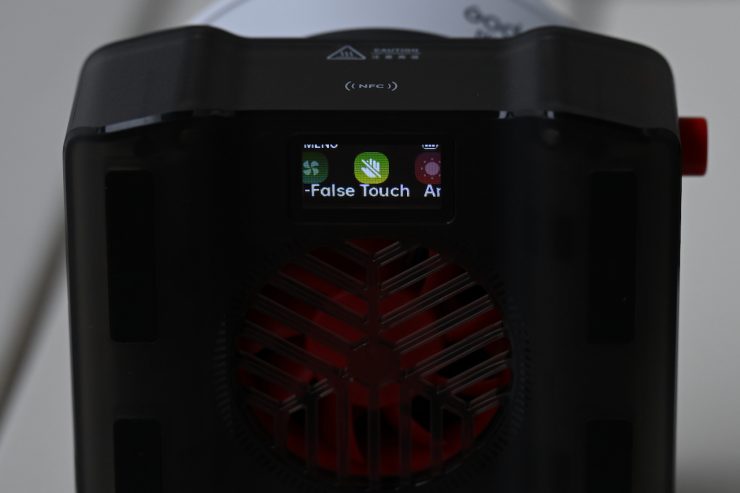
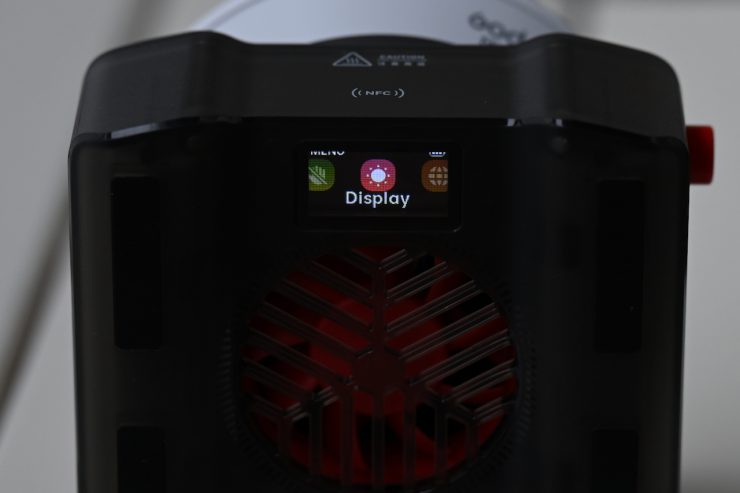
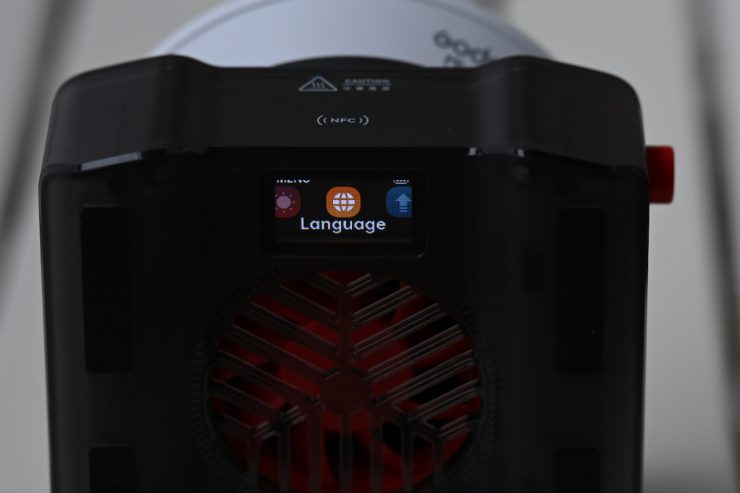
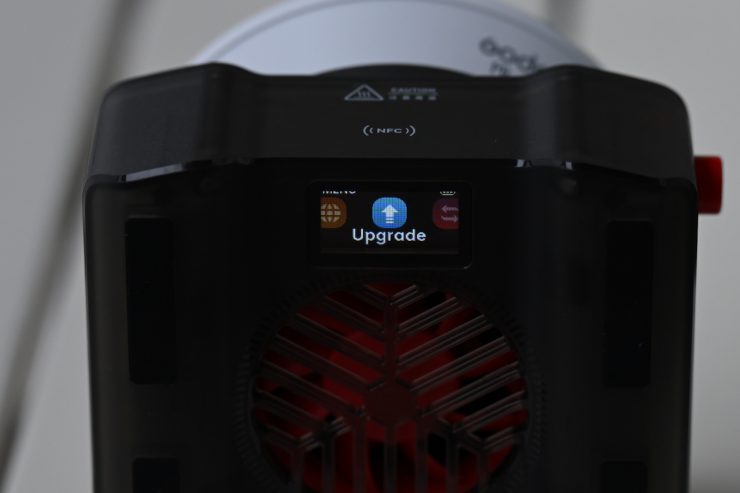
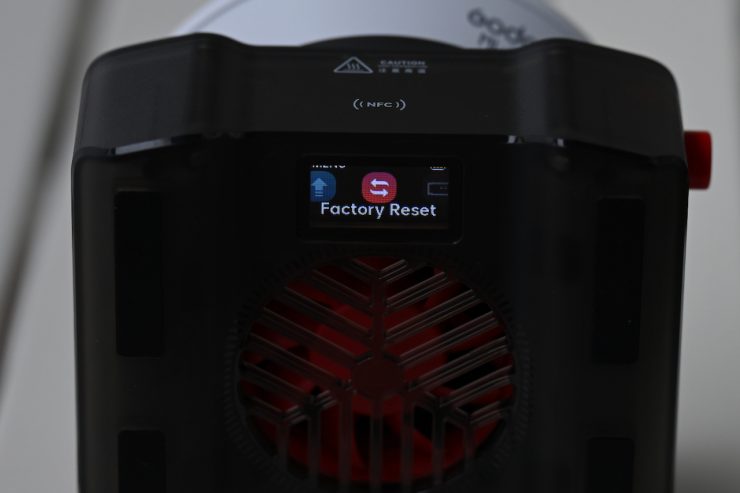
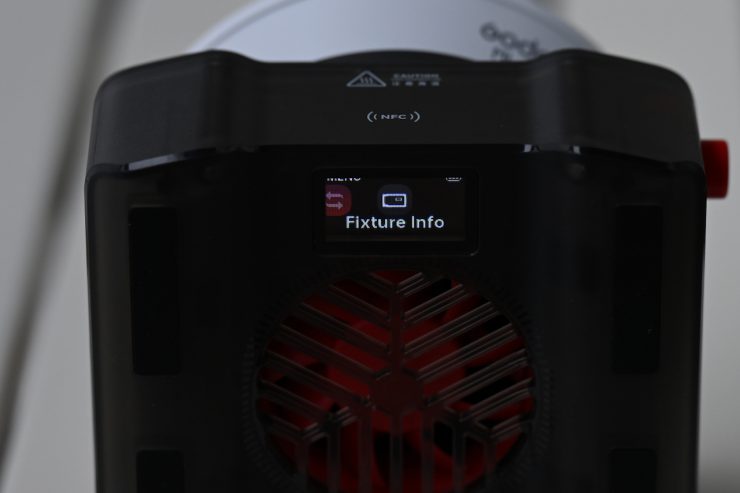
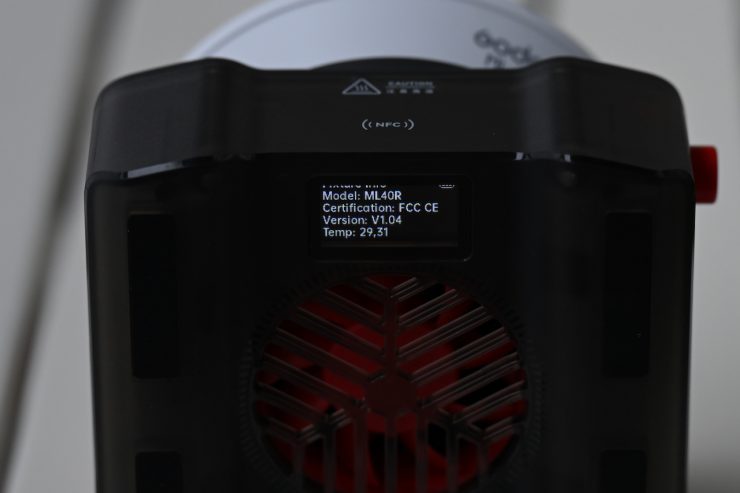
If you go into the MENU section, you can adjust/see the following items:
- Bluetooth
- Fan
- False Touch
- Display
- Language
- Upgrade
- Factory Reset
- Fixture Info
As I always say, the hallmark of a good operating system is that you shouldn’t have to read a manual to work out how to use it. You should be able to turn it on and use it straight away. In that regard, the light was reasonably straightforward and easy to operate and control, but nonetheless, it is always a good idea to read the manual.
Operating Modes
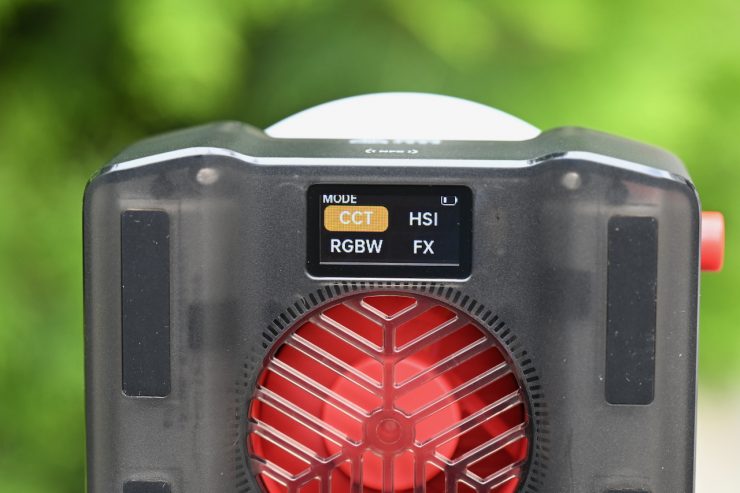
The light has the following operating modes:
- CCT
- HSI
- RGBW
- FX
CCT Mode
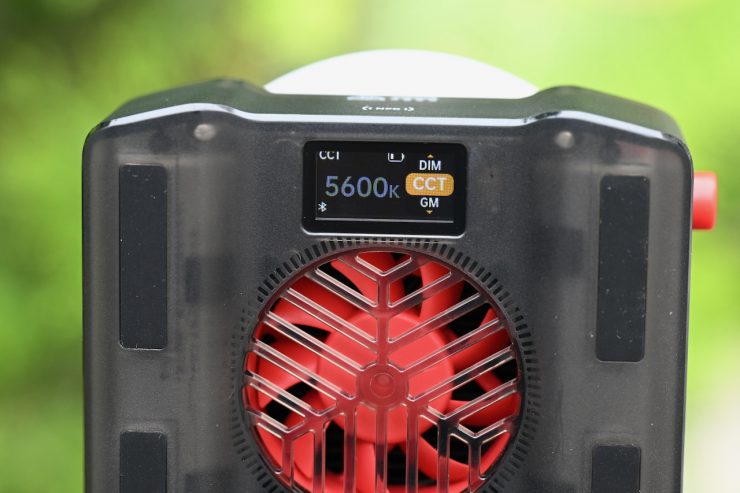
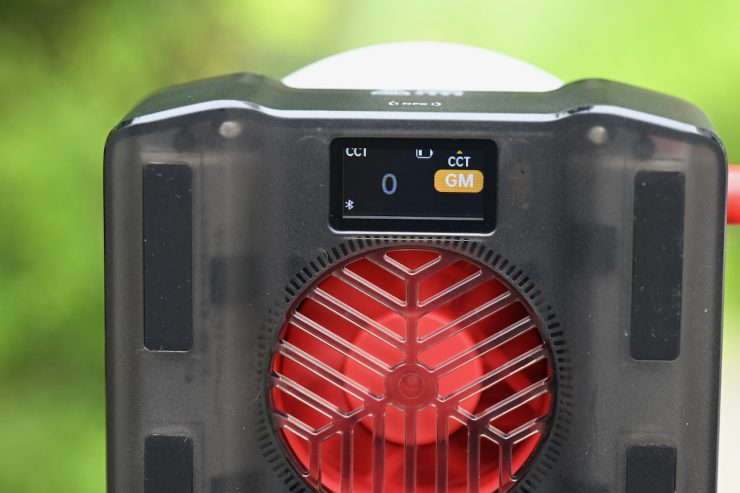
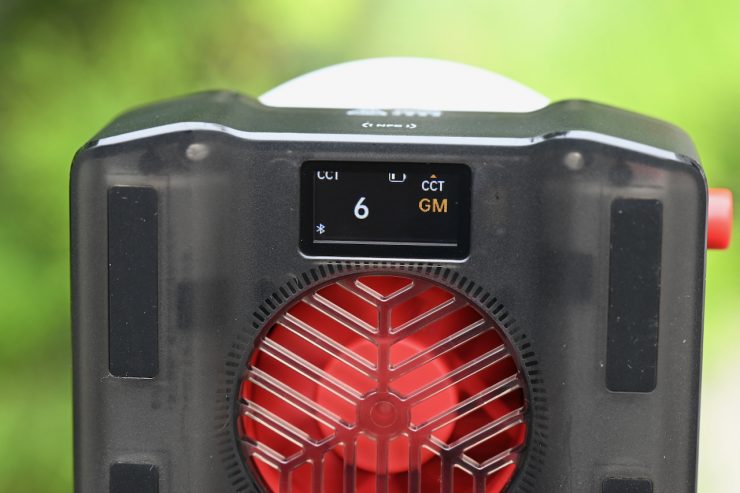
In the CCT mode, you can adjust the CCT from 1800K-10000K. You also have the ability to do full +/- G/M adjustment from -100%~ +100%.
As the fixture includes +/- Green adjustment, you can quite easily correct any tint. While there is no exact science to this, and it really depends on what camera you are using as well, it’s just a matter of trial and error to see what setting actually works the best. The nice thing is that any light with +/- Green adjustment can be fine-tuned to deliver better results.
HSI Mode
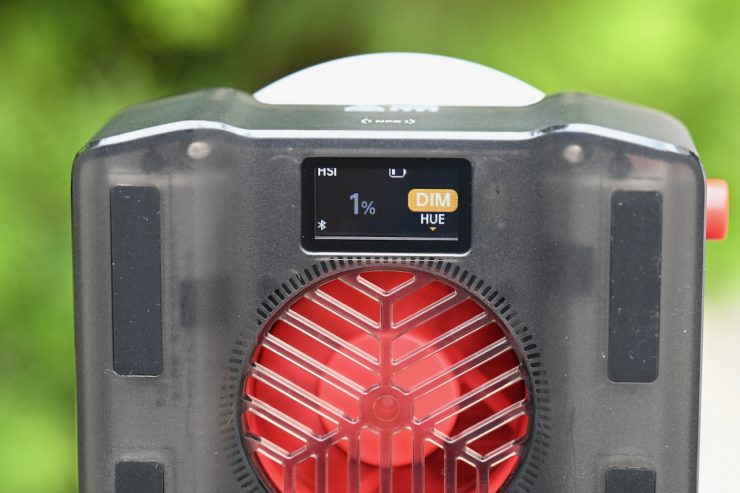
In HSI Mode, you can independently control hue, saturation, and intensity.
RGBW Mode
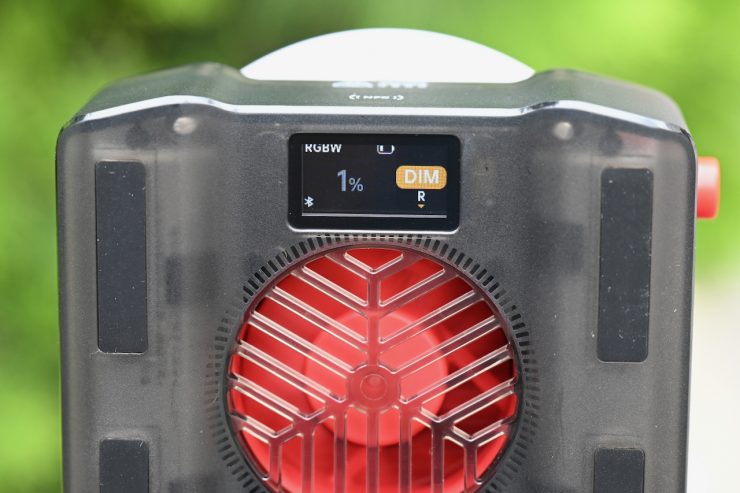
In RGBW mode, you can individually control red/green/blue/white.
FX Mode
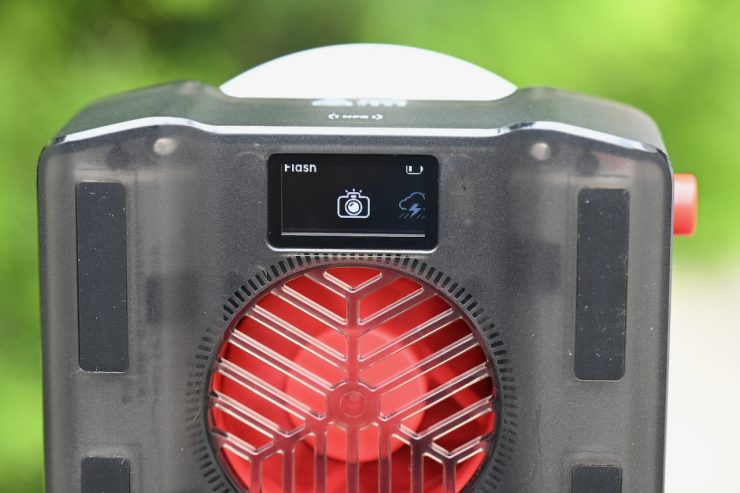
As its name suggests, FX Mode lets you re-create a variety of lighting effects. You can also tailor these effects as you see fit.
GODOX Light app
You can scan the QR code to download the GodoxLight smartphone app, which is available for both Android and iOS devices.
The app can be used directly on the first installed device (smartphone or iPad). When changing to other mobile devices (smartphone or iPad), the light will be reset before the normal connection of the app. The app needs to be version 3.0 or above.
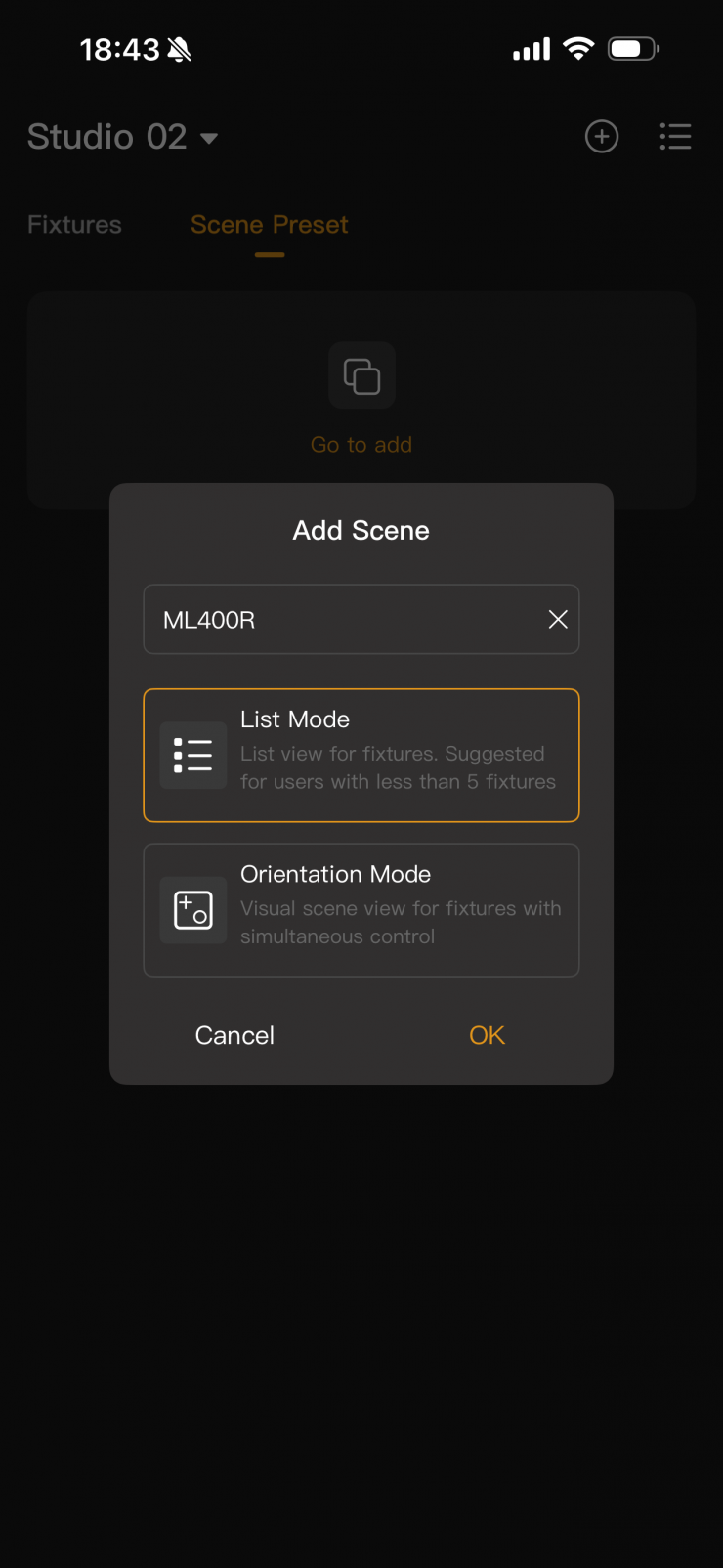
The app is pretty straightforward and easy to set up and use. You just create a new scene and hit the + button.
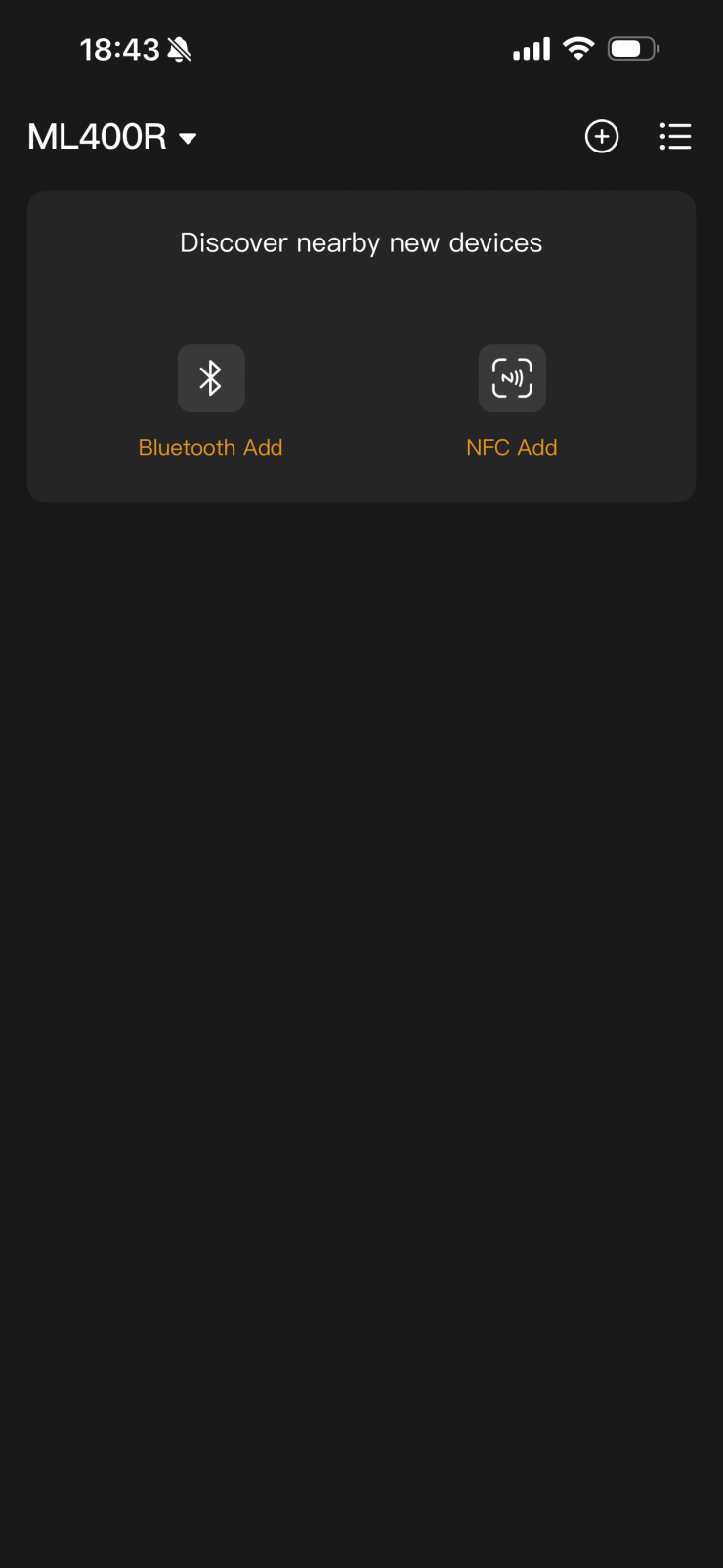
You can then add fixtures in a variety of ways. For this example, I am just going to add it via Bluetooth. To do this, I am going to press the + button.
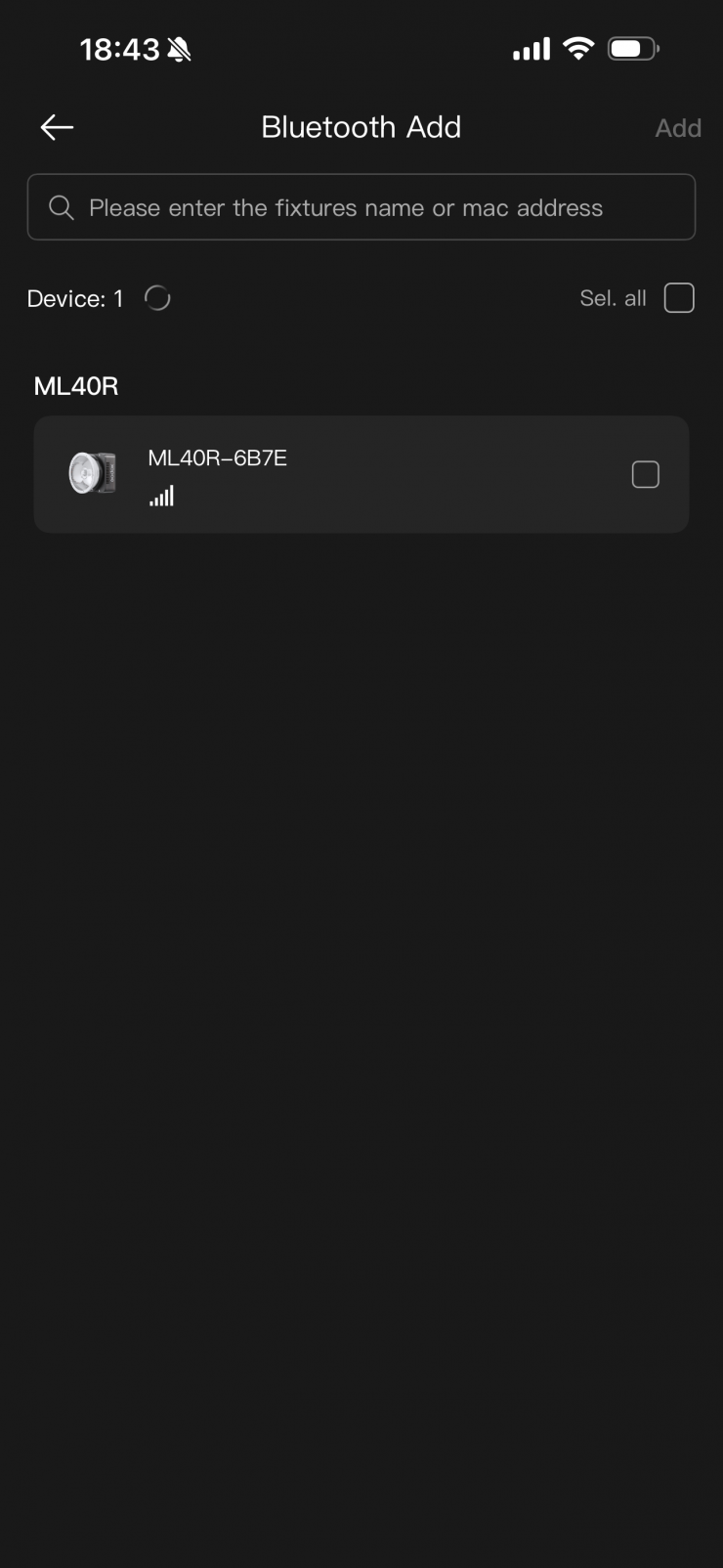
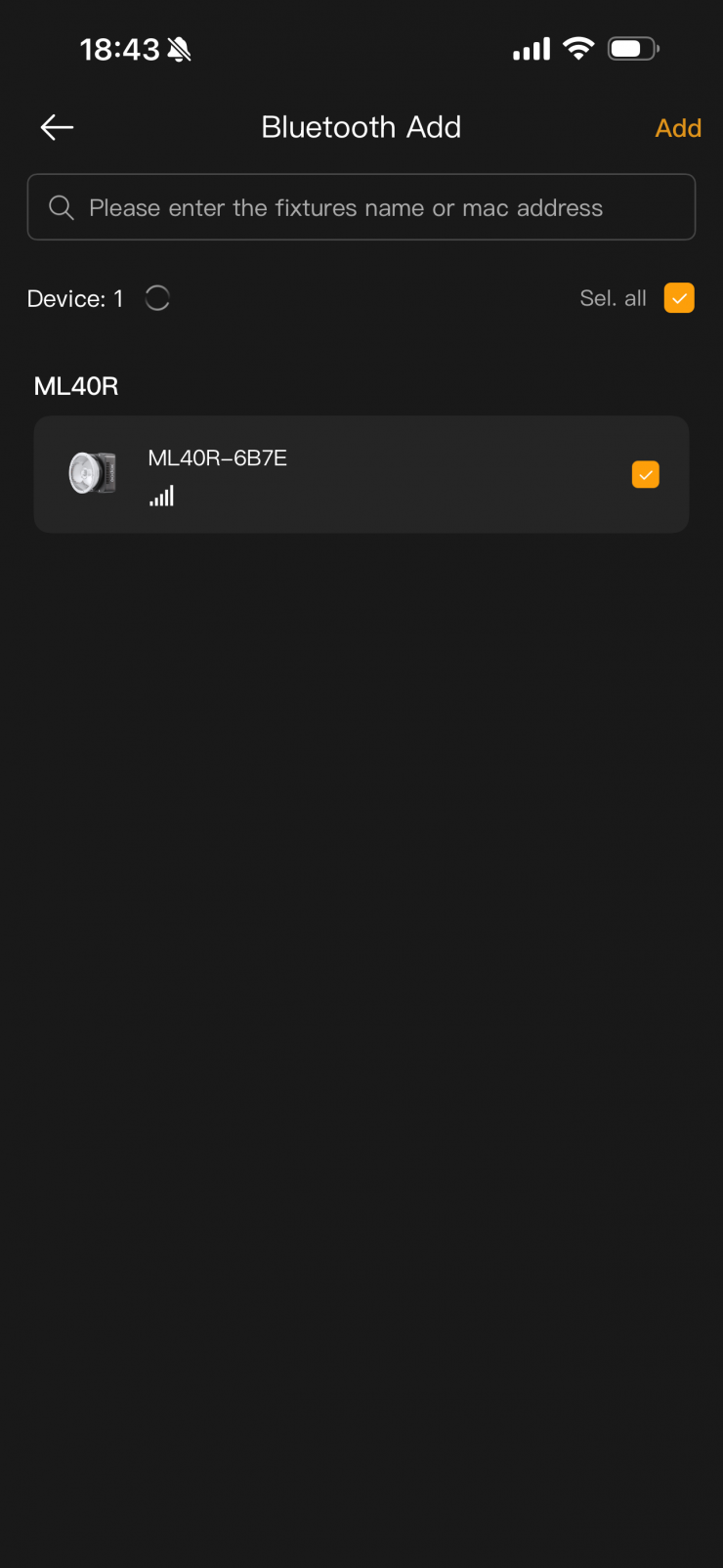
Once it has found the fixture, you then click to select it. If it doesn’t find the fixture, make sure its Bluetooth is turned on. If that doesn’t work, it’s best to reset the Bluetooth.
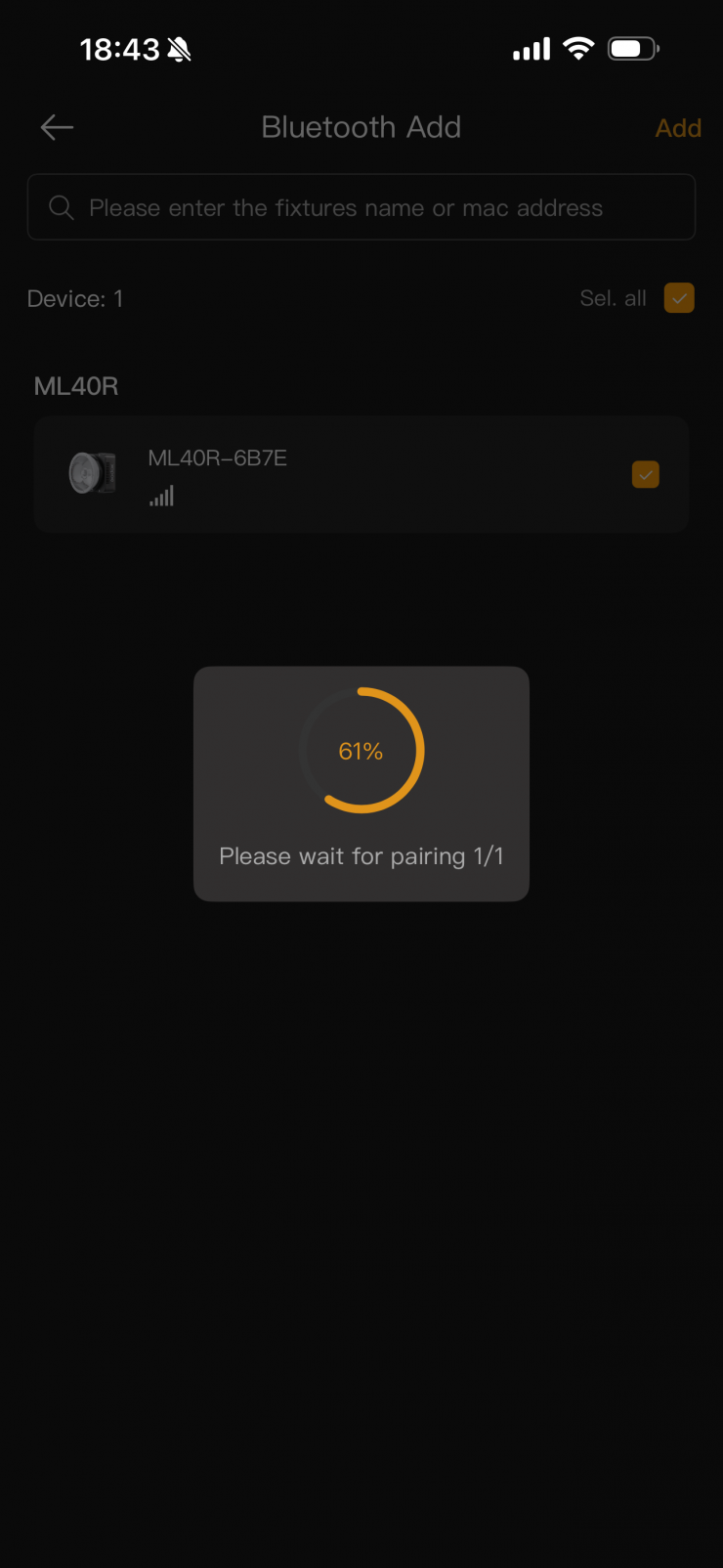
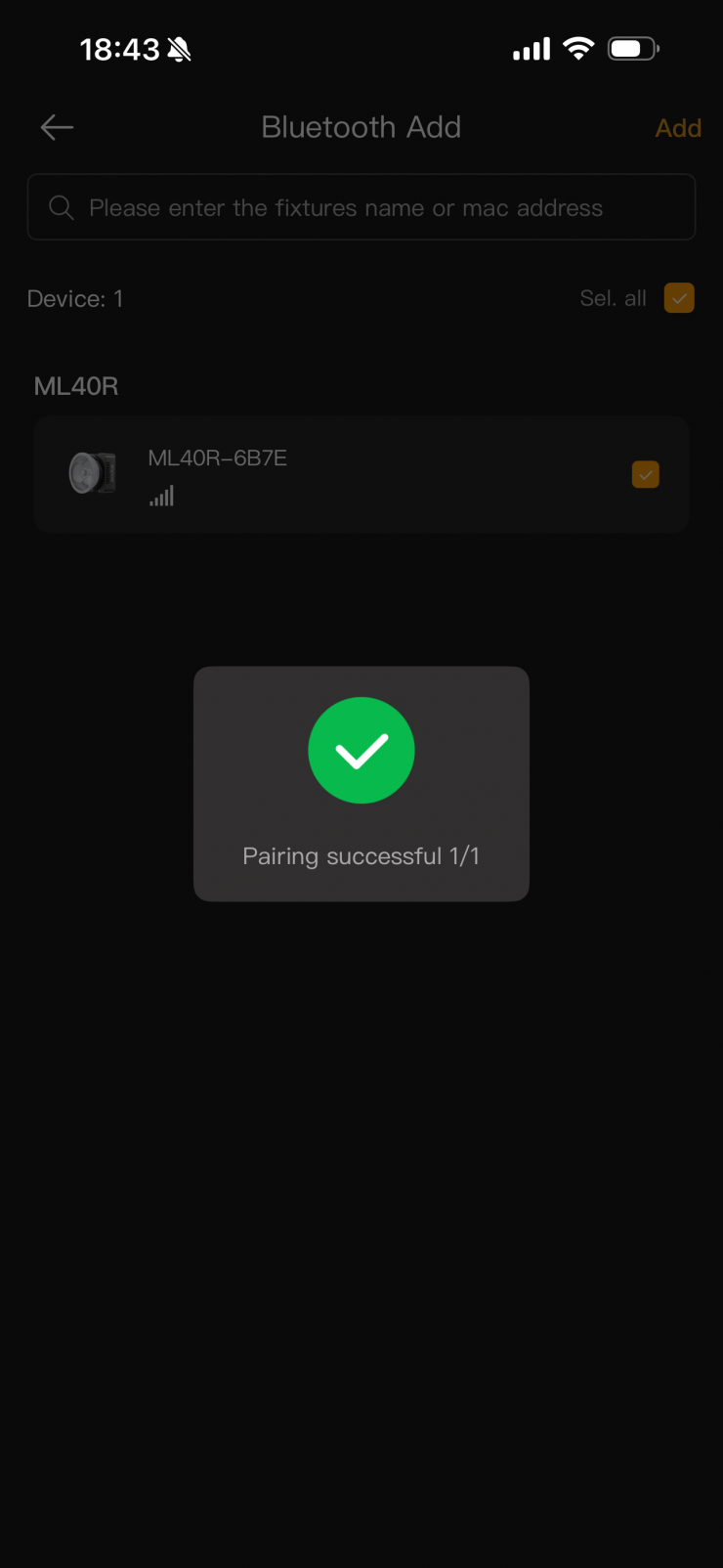
Once you have pressed Add, it will take about 10 seconds for the app to set it up.
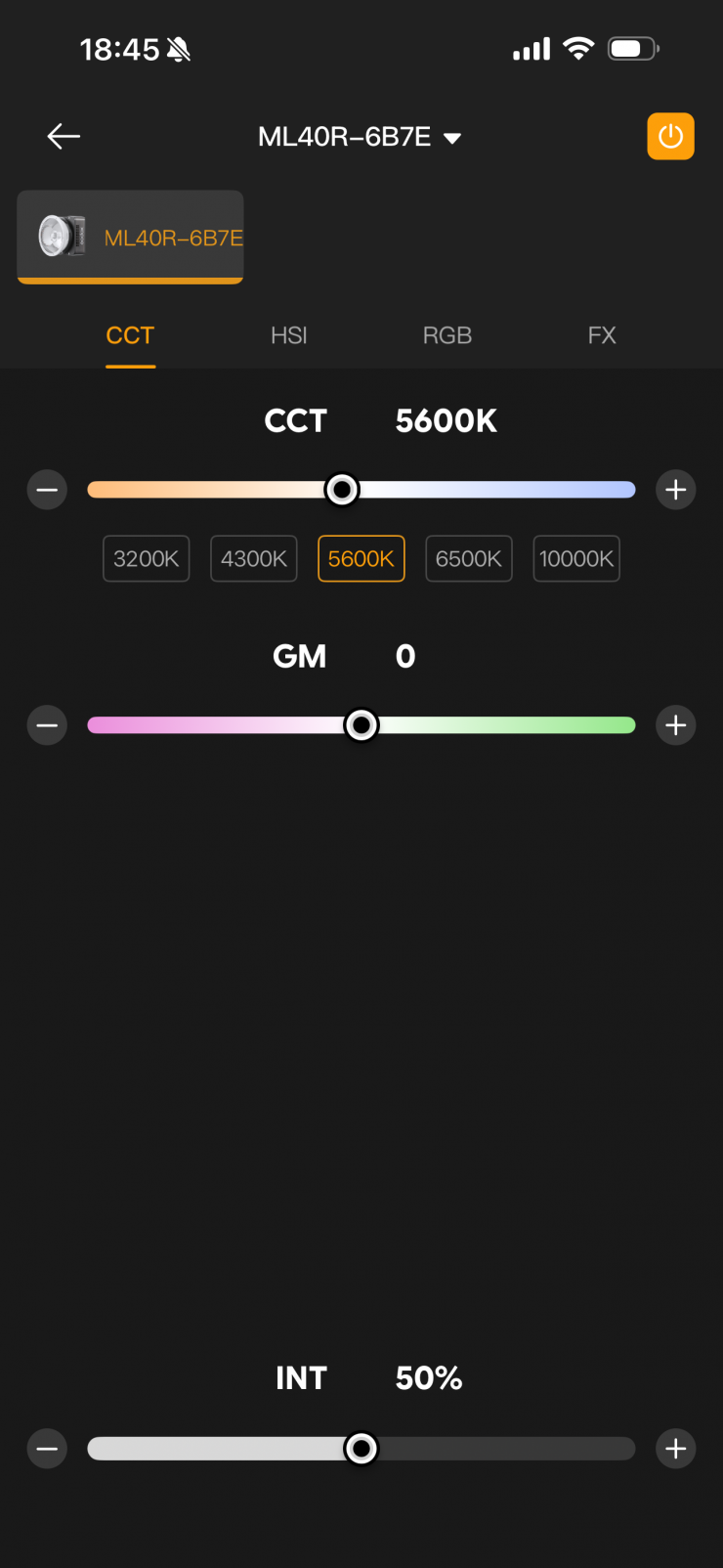
This is the main home screen you will be greeted by, and by default, the light will be in its CCT mode.
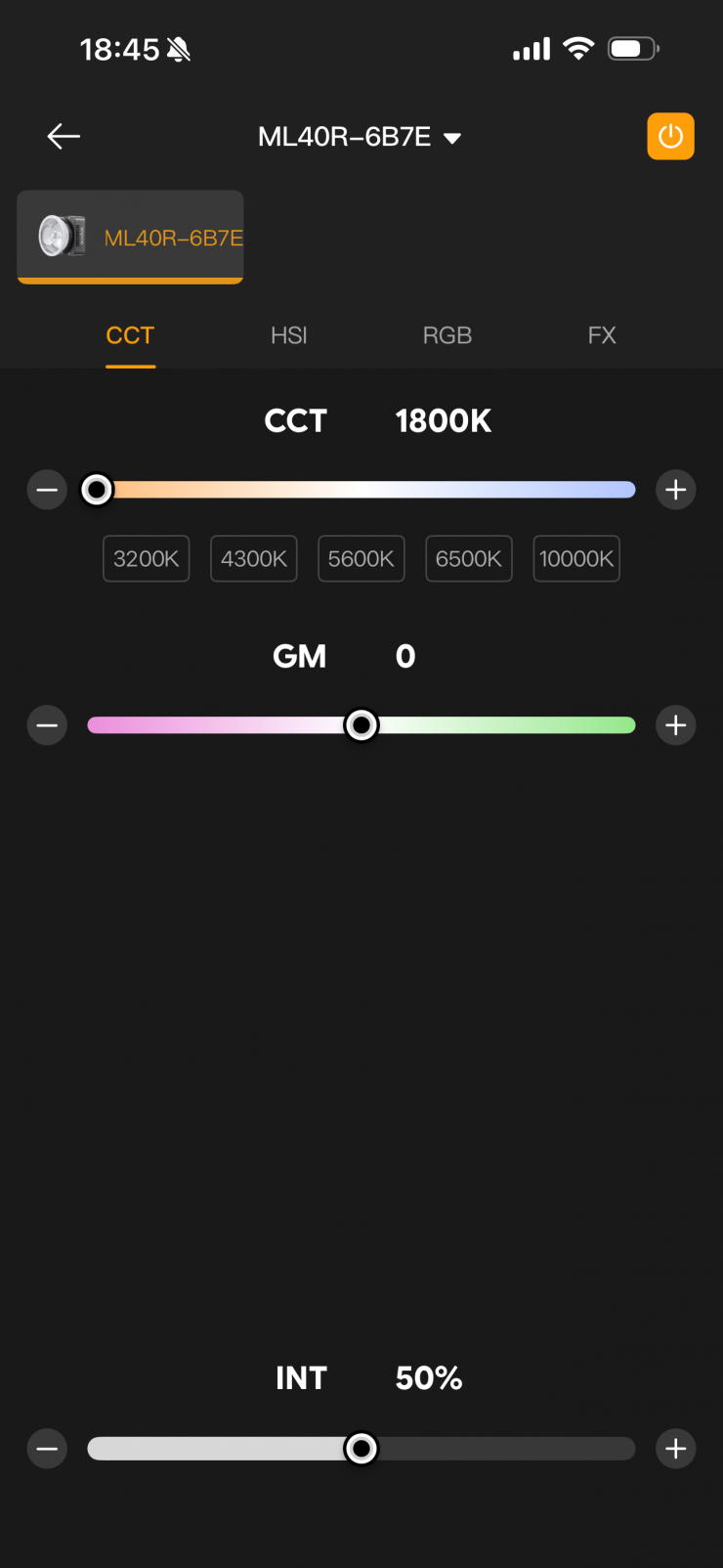
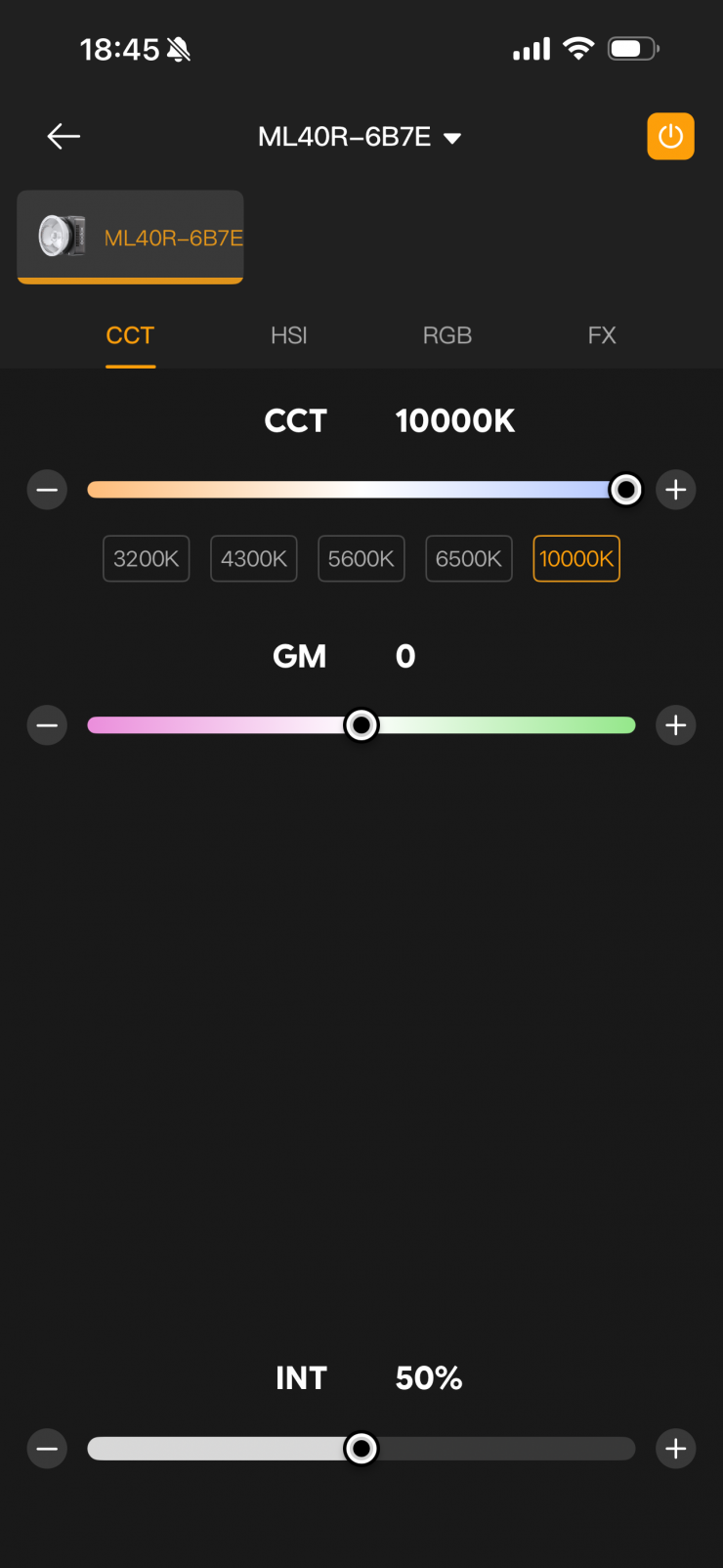
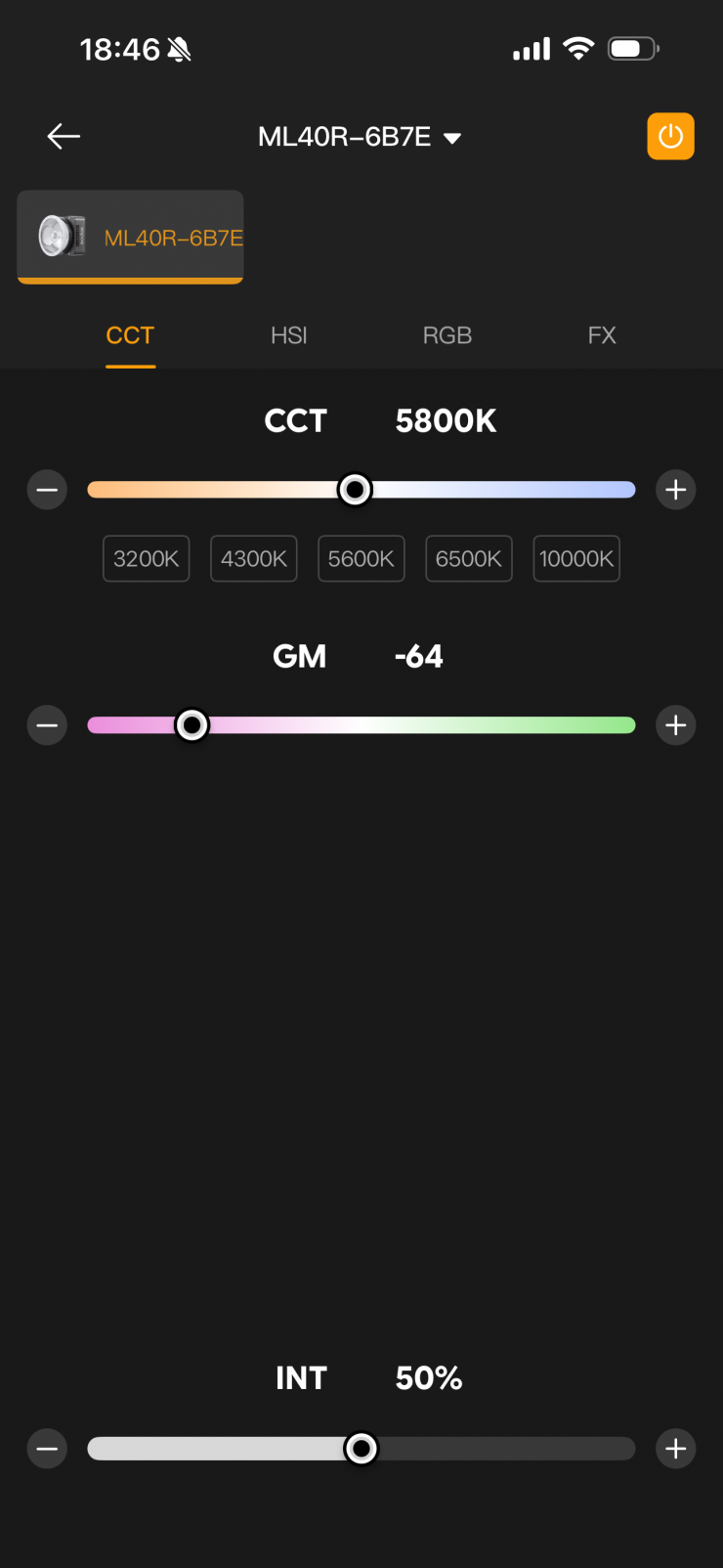
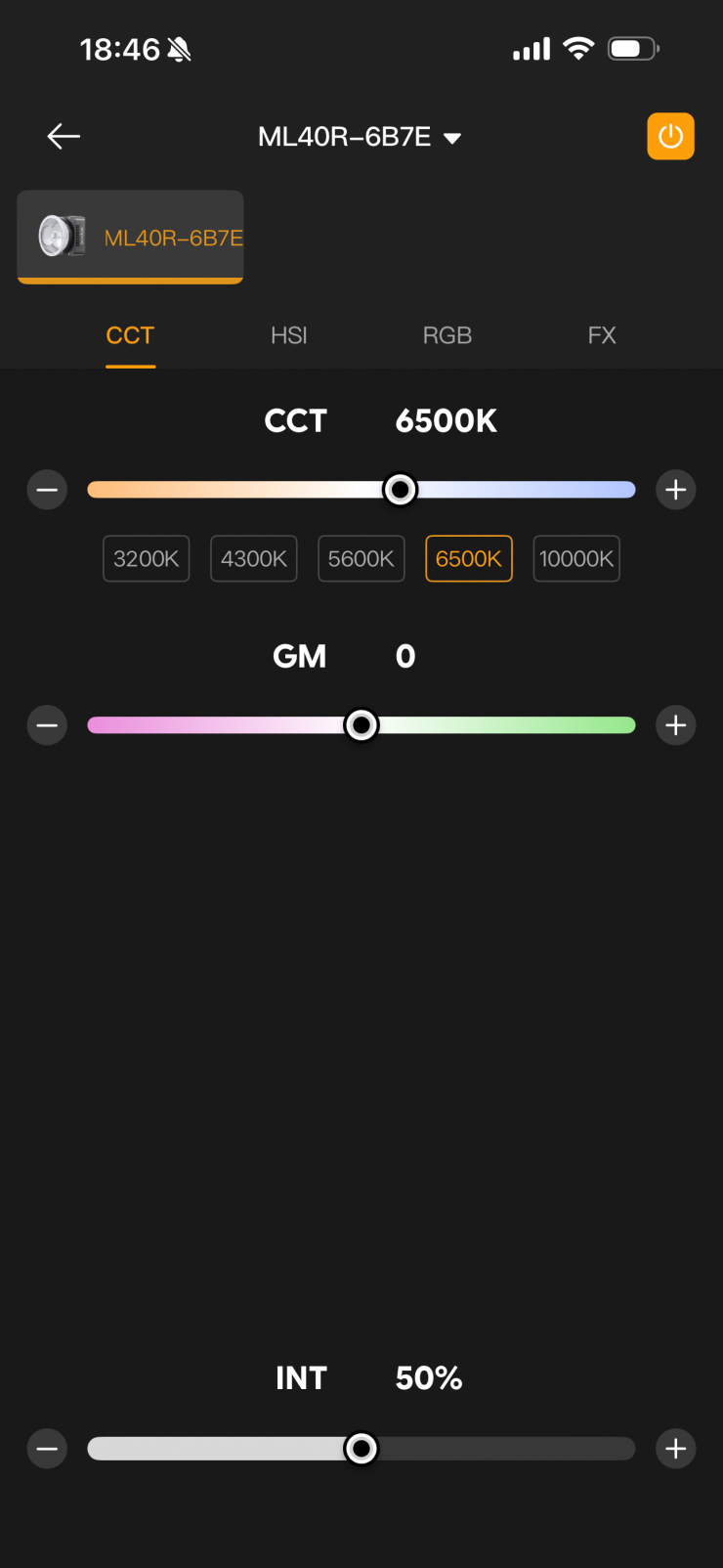
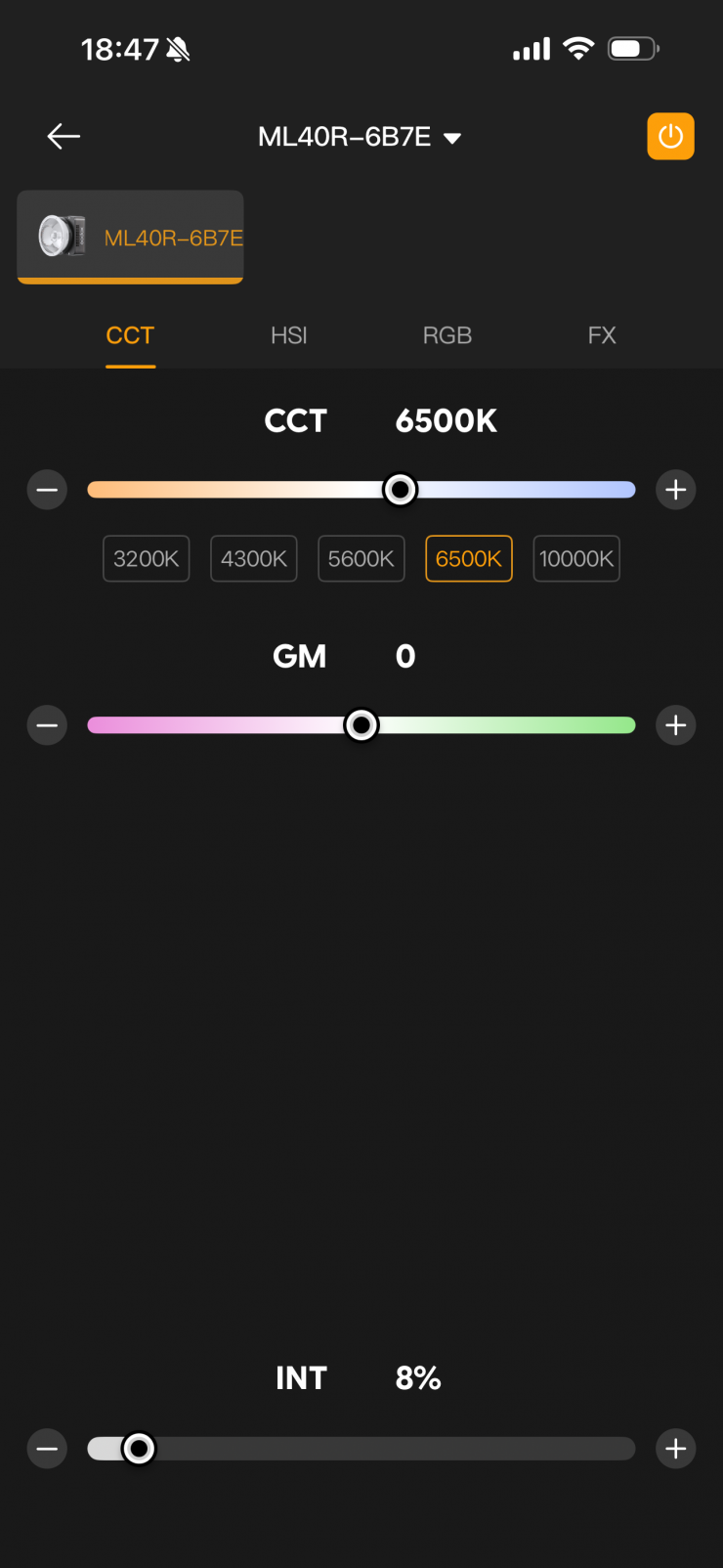
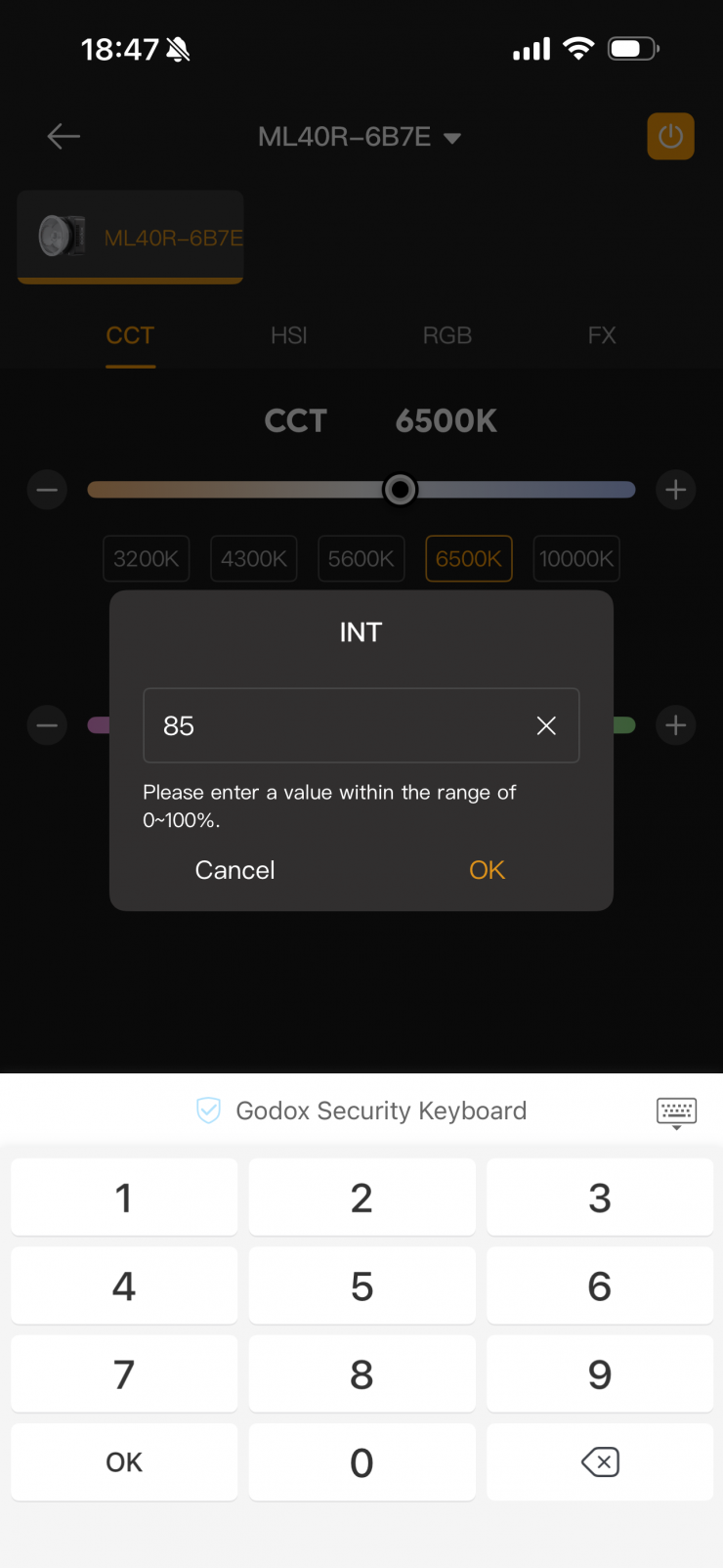
Here you can change the CCT setting between 1800-10,000K, change the intensity, the +/- G/M bias, and pre-select from some fixed CCT settings. You can either use the touchscreen to change values or enter them manually using the keyboard.
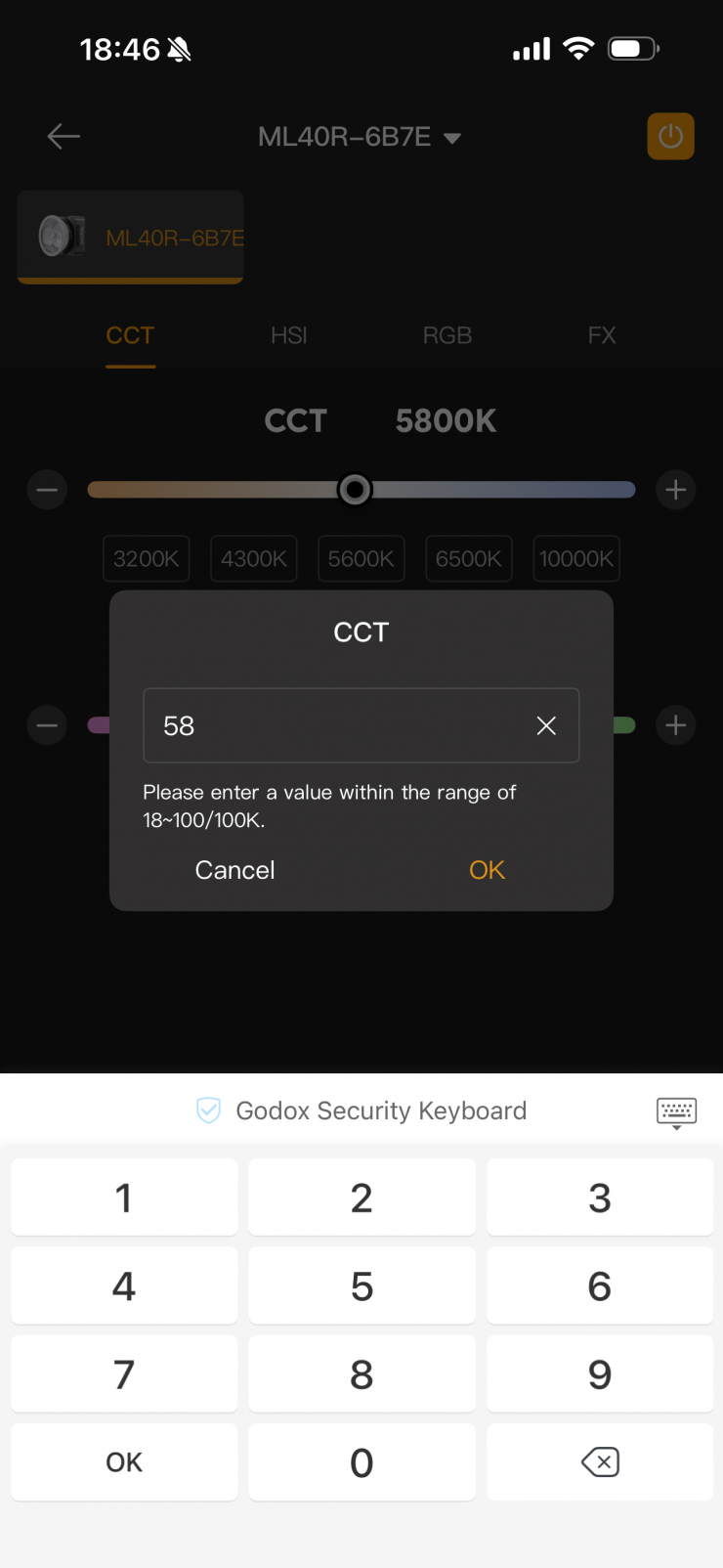
Changing the CCT by entering values is a little weird, as if I wanted to set it at 5800K, I type in 58 and not 5800.
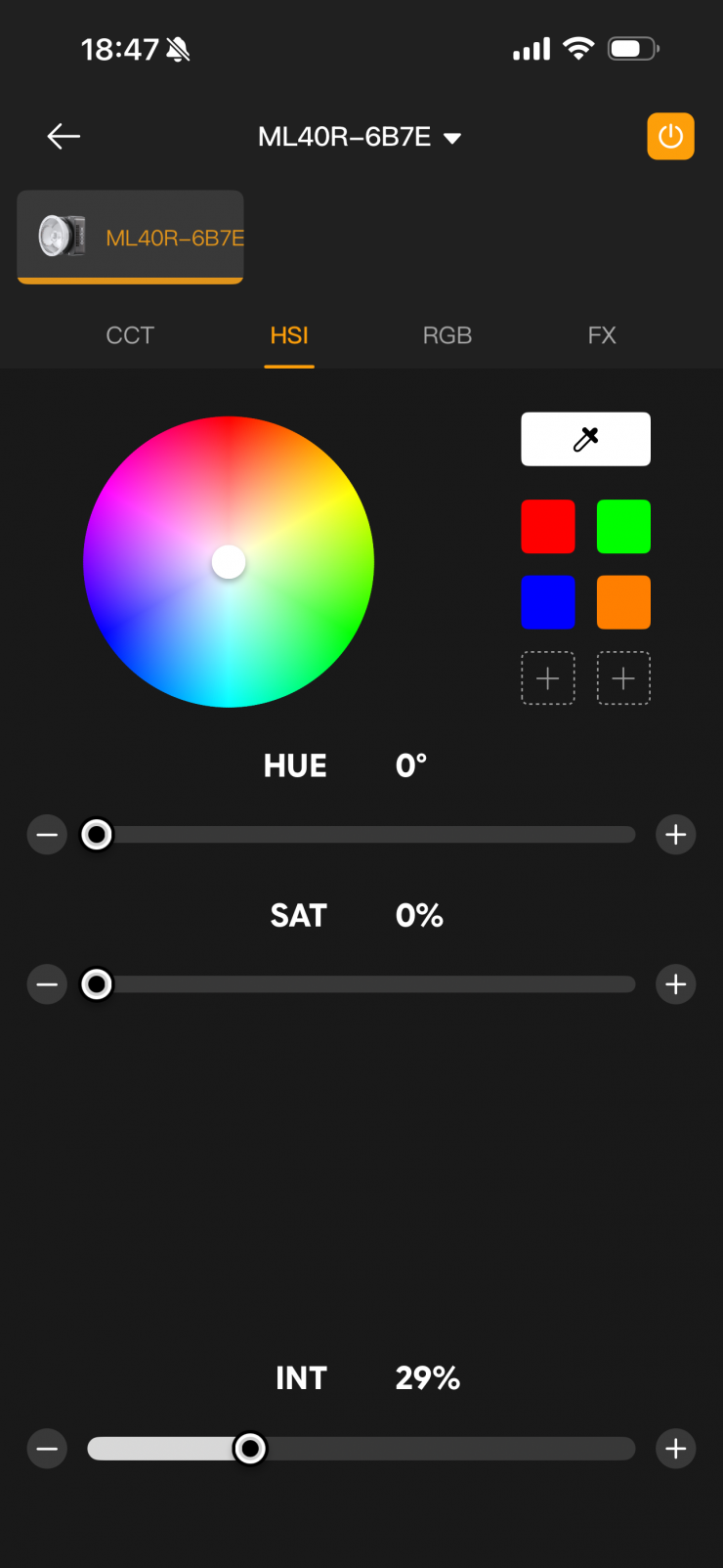
In the HSI mode, you can change the Hue, Saturation, and Intensity. Godox also gives you some colored icons that you can use if you want a fully saturated red, etc.
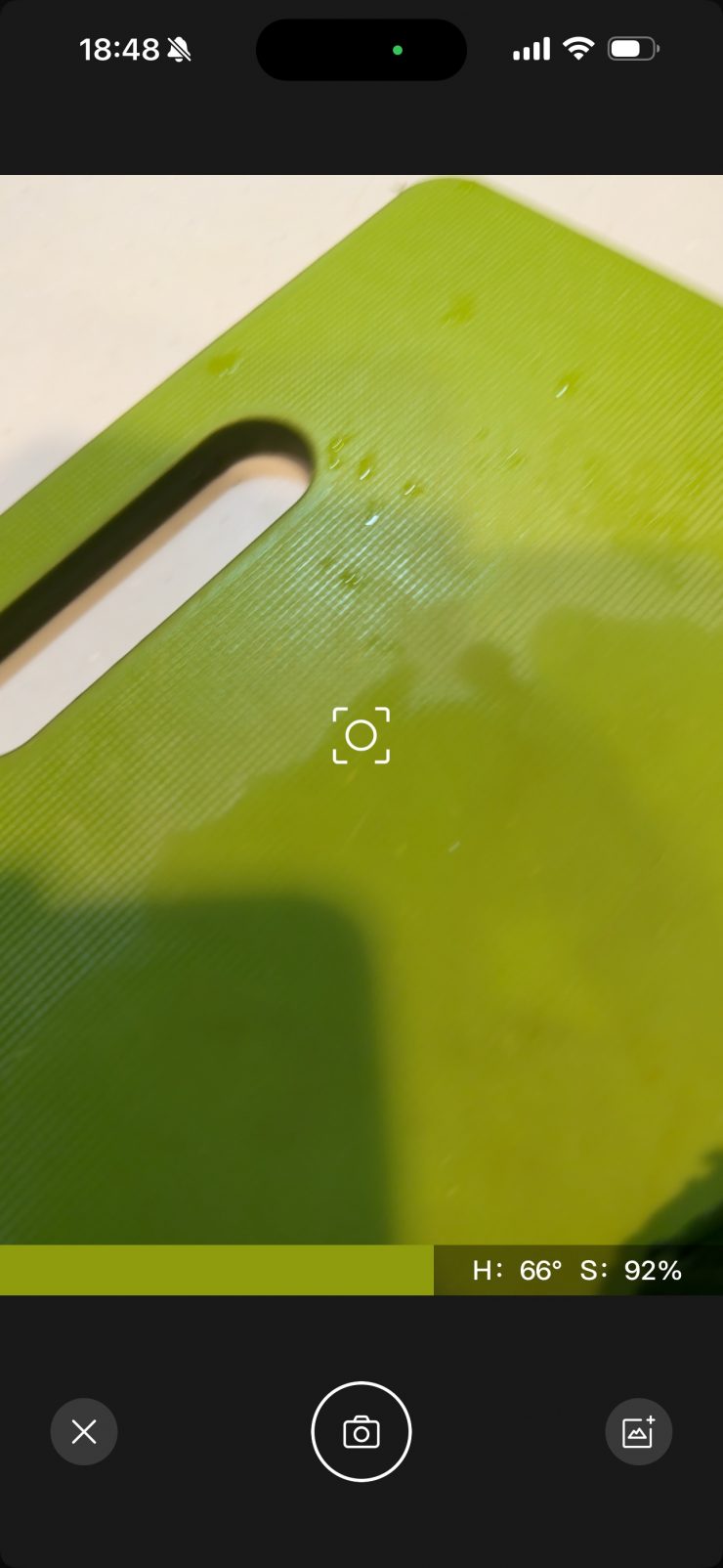
You can also use your smartphone or tablet’s camera to take a picture of a color or bring up a photo.
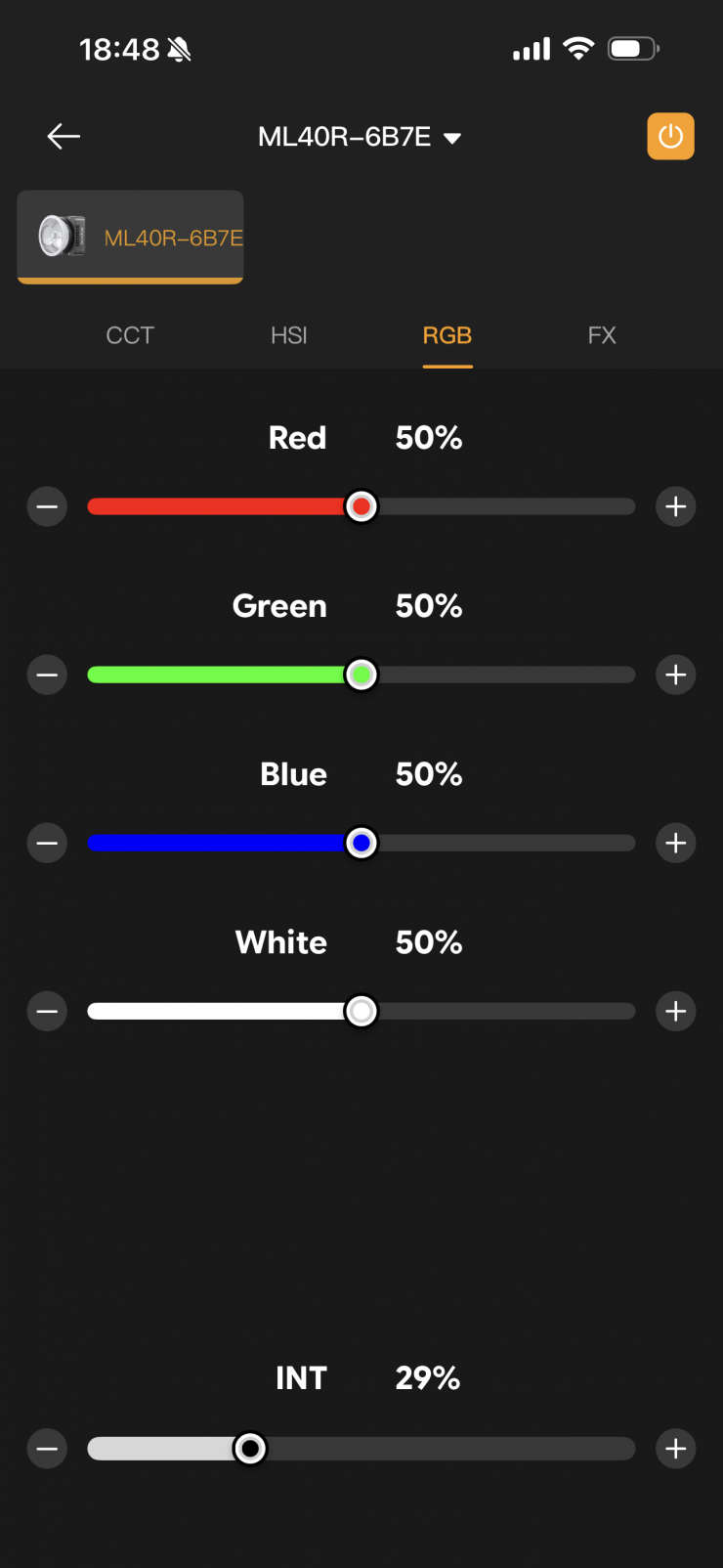
In the RGB mode, you can individually control the red, green, blue, and white channels.
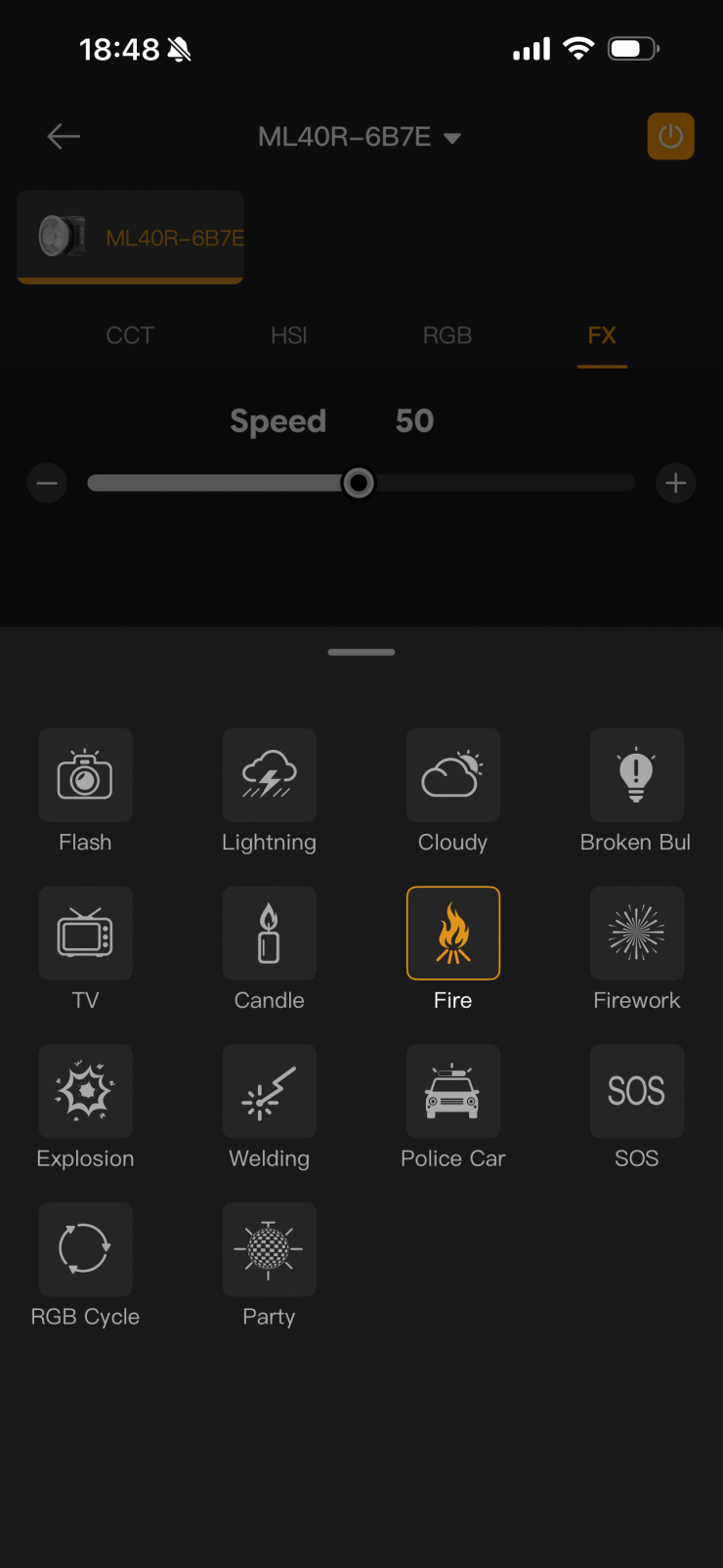
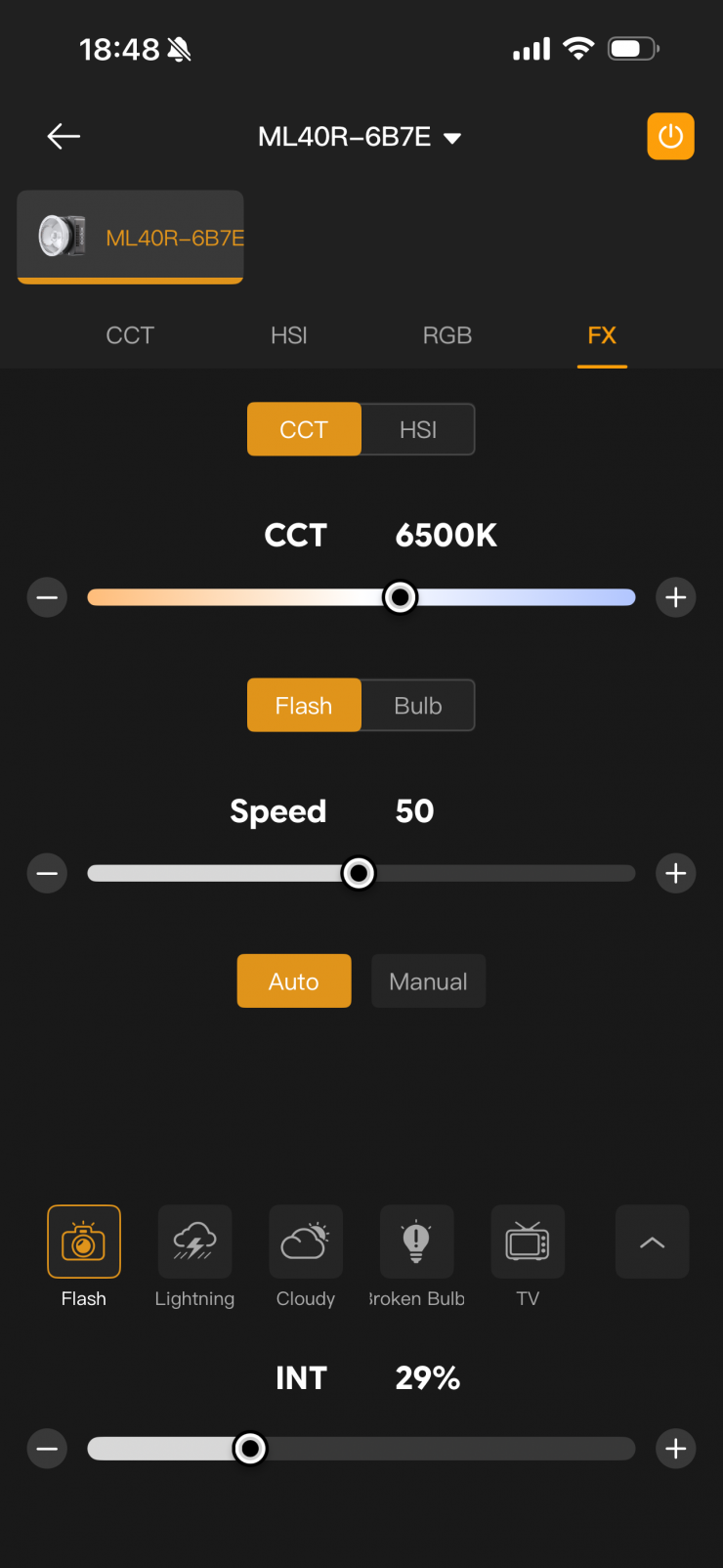
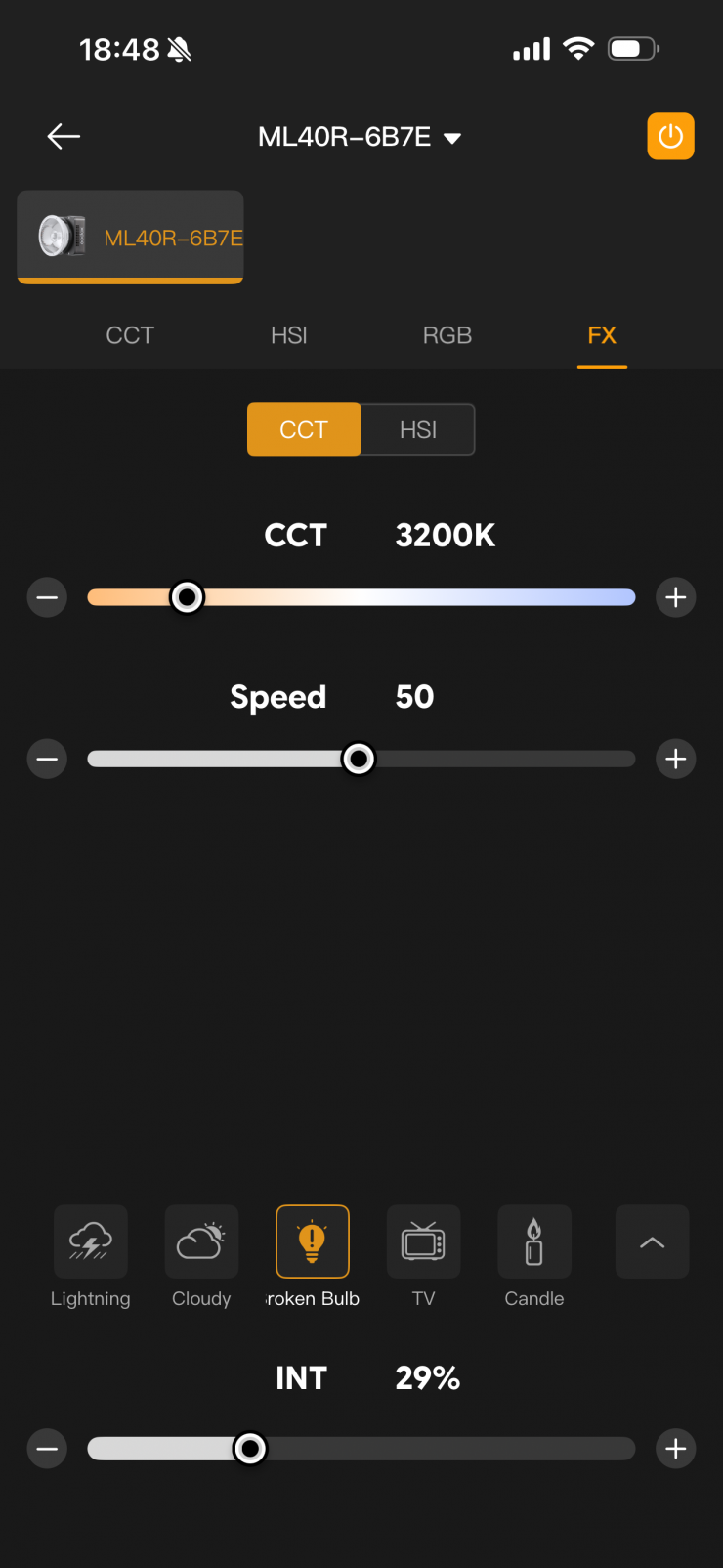
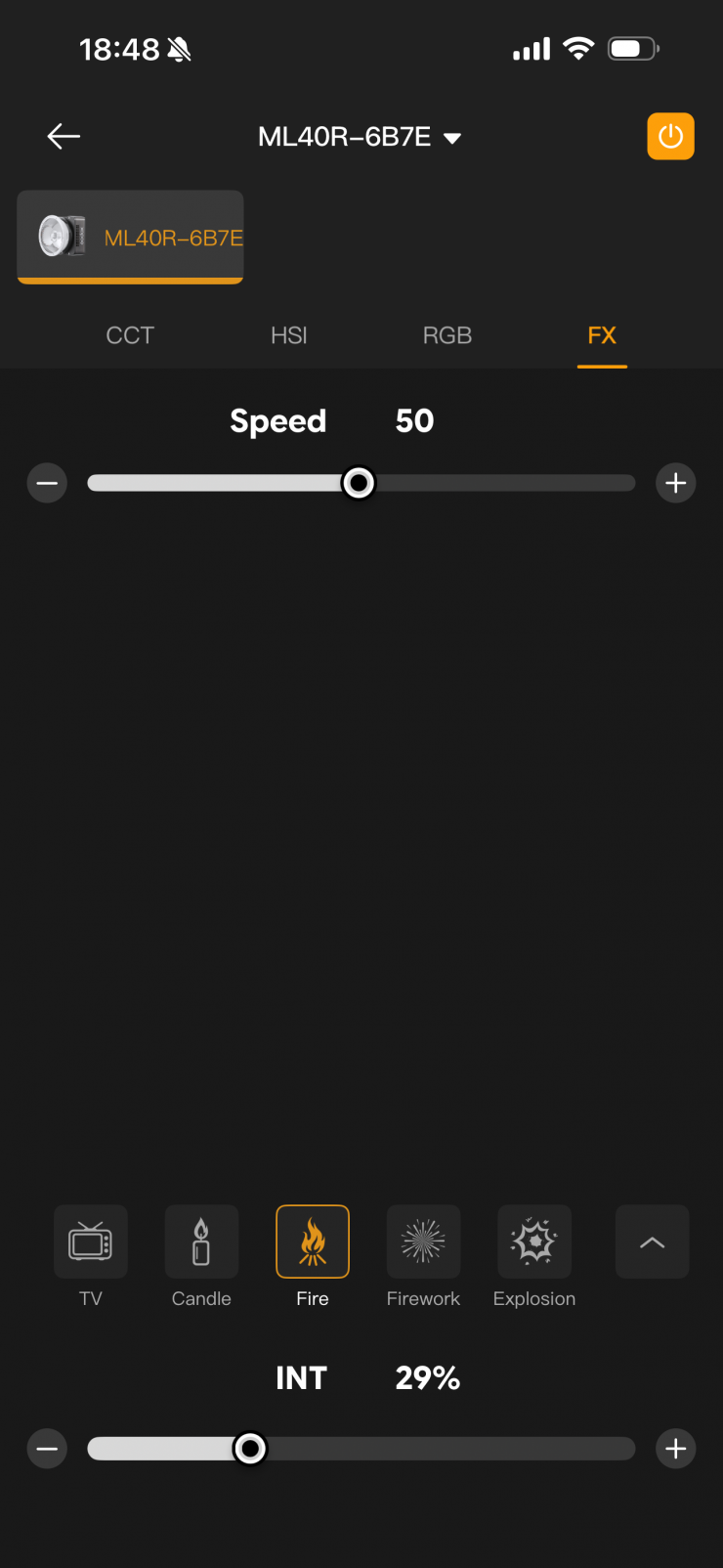
In the FX mode, you get to choose from the usual array of special effects, and you can then tailor those effects.
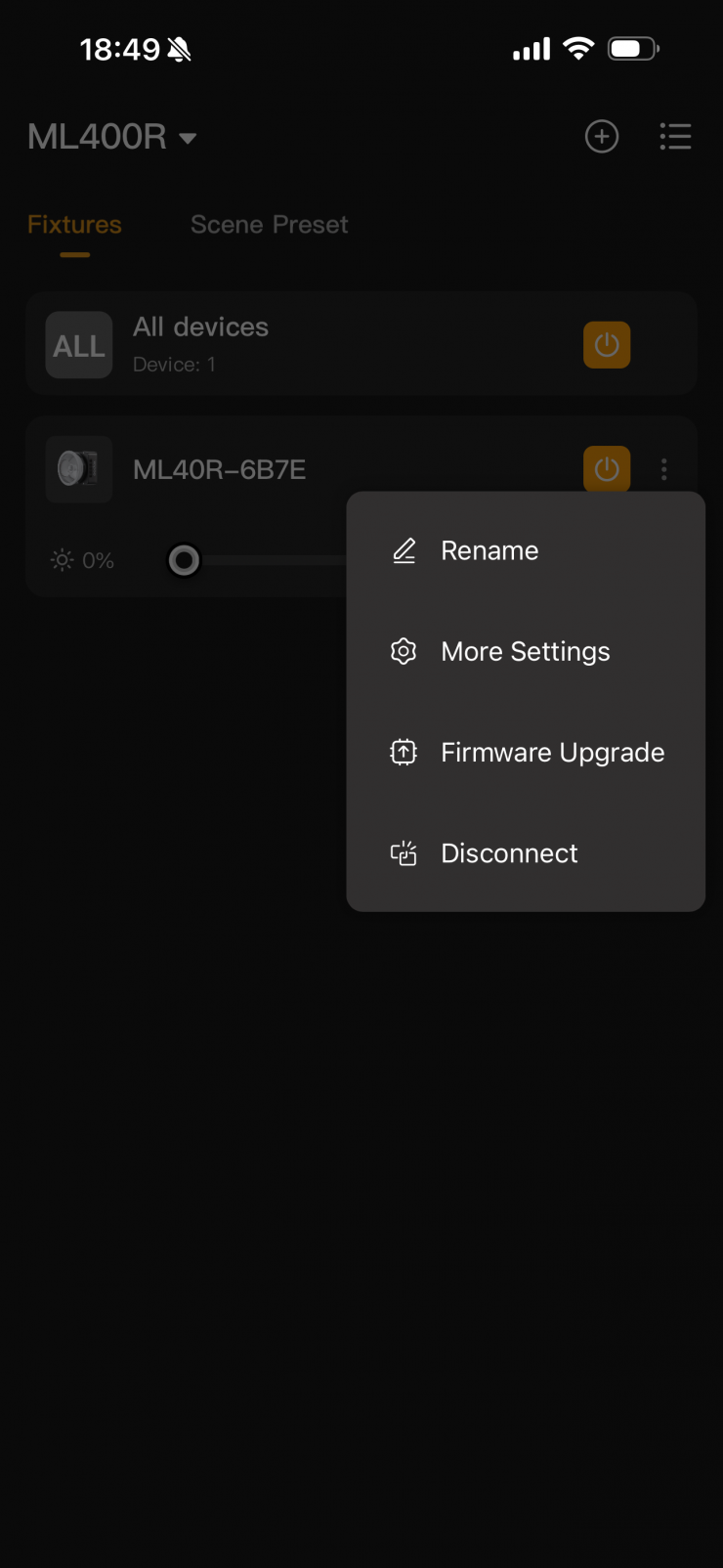
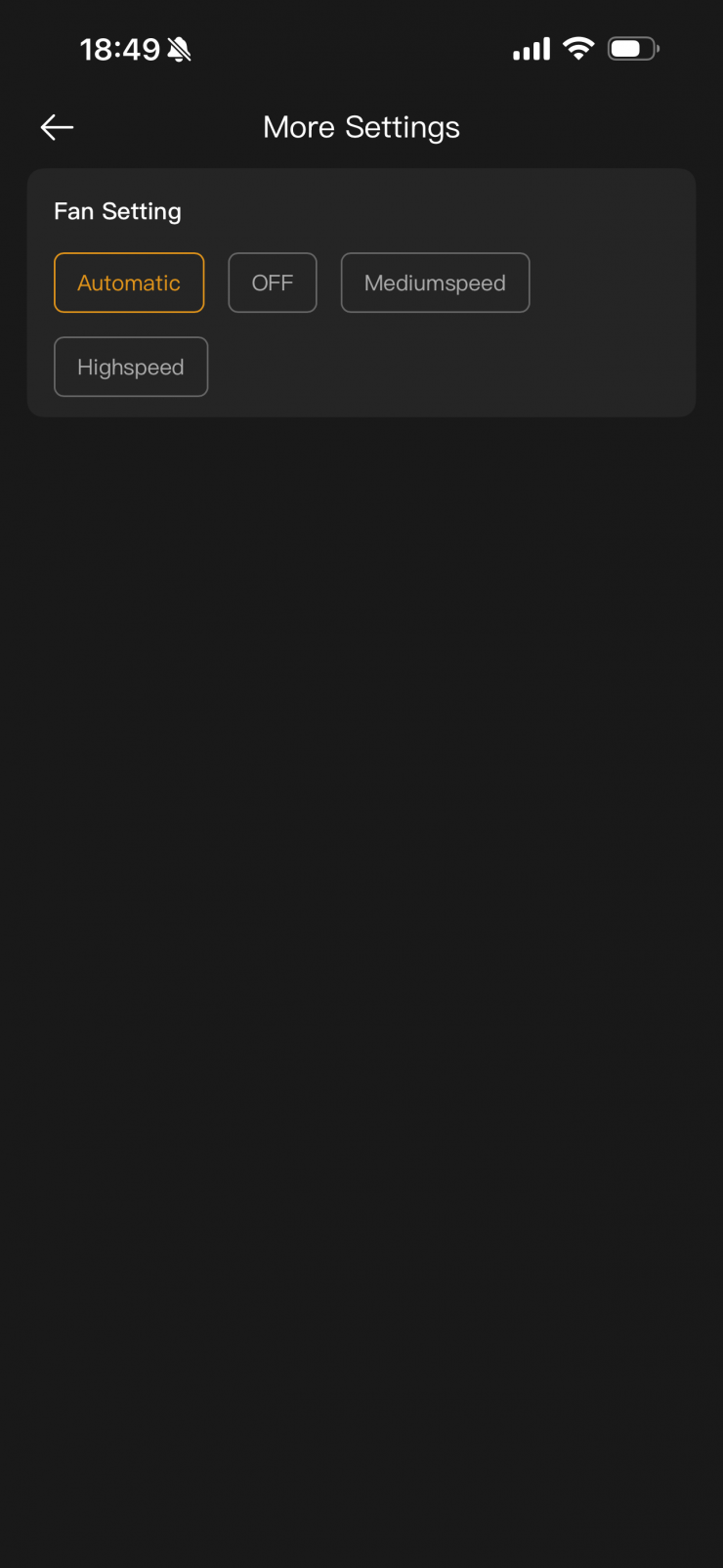
You can also do things like adjust the fan speed and do firmware updates.
RGBW color engine
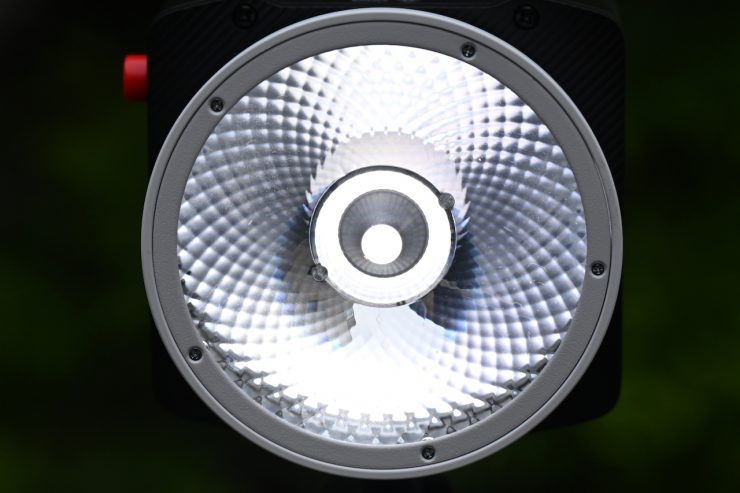
We are seeing a lot of lighting companies now using RGBW technology. RGBW stands for Red, Green, Blue & Warm White. There are, however, other types of RGB, such as RGBWW, RGBAW, and RGBACL. Aputure also has new BLAIR and BLAIR-CG light engines, NANLUX has its Nebula C8 Color Light Engine, Profoto has a few versions, and even Godox itself has its new PaletteLab lighting engine.
From what I can ascertain, the ML40R utilizes a similar RGBW light engine that Godox is using across most of its full-color range of fixtures.
This arguably could put it at a disadvantage against RGBWW, RGBAW, and RGBACL fixtures when trying to create saturated colors. I will test this out further down in the review.
Godox ML-SF3030 Softbox
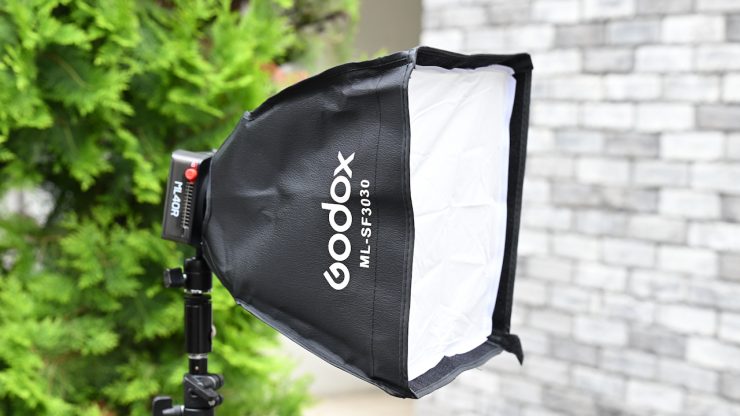
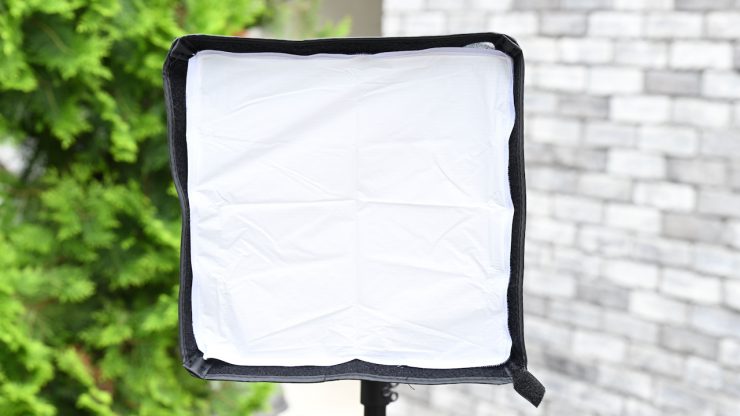
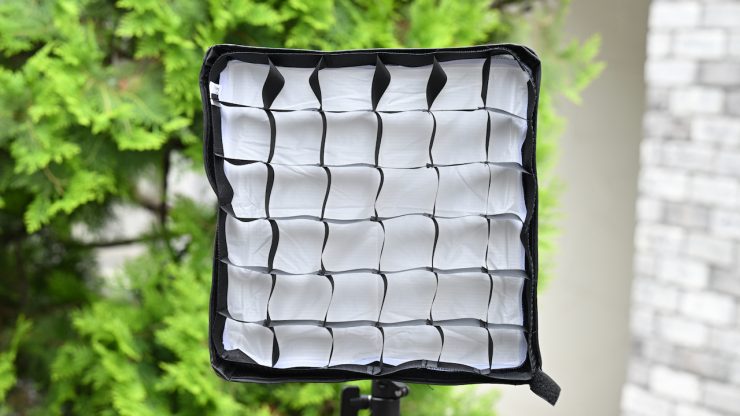
You can purchase the optional ML-SF3030 softbox to use with the ML40R. With the softbox, you get an internal baffle, diffusion cloth, and a honeycomb grid.
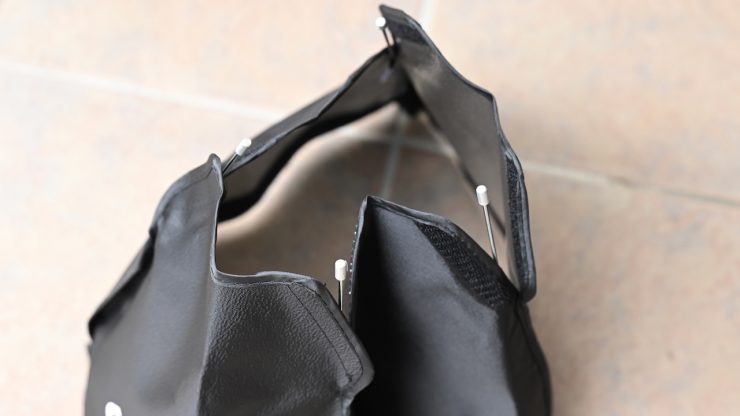
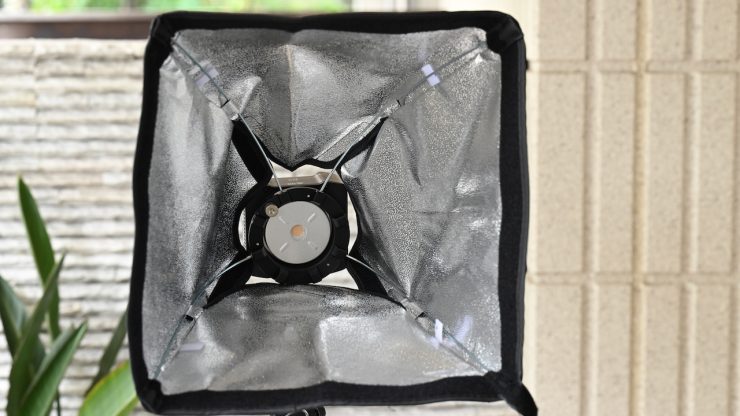
The softbox has been strangely designed for a light that is meant to be fast and quick to use. Instead of having a folding design, it utilizes rods that you have to insert into an adapter ring. This is very fiddly and takes too much time to set up. I personally don’t like these types of designs, as inevitably the rods get bent and the softbox no longer holds its shape. A collapsible mount softbox would have made a lot more sense for use with a light like this.
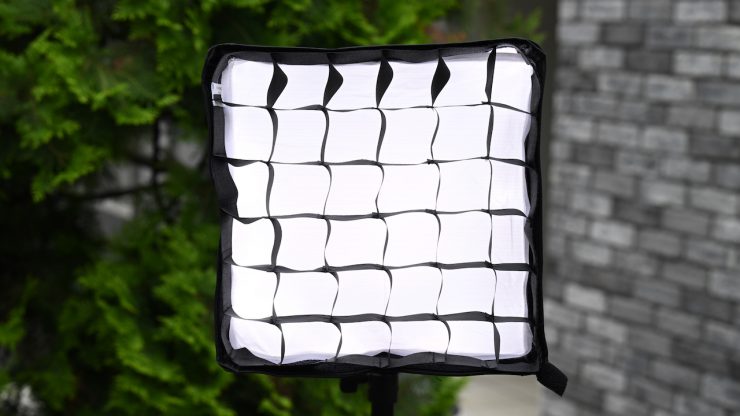
On the positive side, the ML40R is able to fill up the softbox nicely.
Photometrics
So now let’s get to the photometric results. I always test lights in this way so that I get a reference for how they compare to other fixtures. Results only tell part of the story and should never be used alone to judge a light. I have found from extensive testing over the years that certain lights that have good photometric results don’t always look good, and lights that have worse photometric scores can sometimes look better than their results indicate.
You can’t judge a light from one set of photometric results. SSI, while great, doesn’t provide you with all of the information you need. You have to look at all of the different results to be able to come to a conclusion. Judging alight on one set of results is like reading one chapter in a book and thinking you know the whole story.
Different lights can also look different depending on what camera you happen to be using.
Output & Color Temperature Accuracy
According to Godox, the ML40R is capable of outputting 12,300 lx (with Reflector) at 5600K, and 781 lx when used open face at 1m / 3.3′.
I tested the ML40R at a variety of CCT settings with a Sekonic C-800 Spectrometer to find out how much output the light had and how accurate the CCT reproduction was. All readings are taken at a distance of 1m (3.28ft) in a controlled environment. The readings were all taken directly from the light source. In the case of using the light with a Reflector or any attachment, the readings were taken from the edge of those attachments. This is how I test all lights.
So just how much output does it have? Well, let’s find out.
Godox ML40R 5600K (open face)
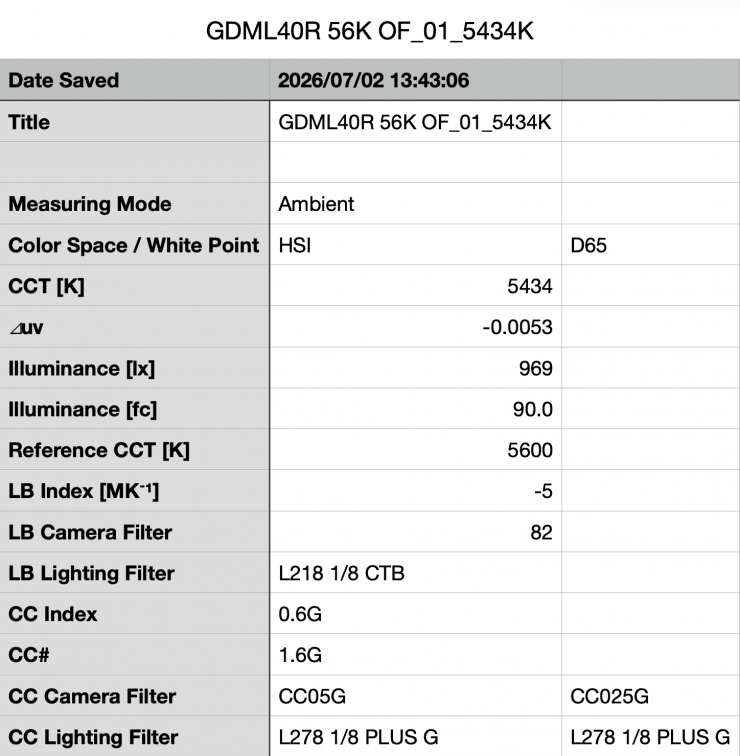
Above, you can see the ML40R recorded an output of 969 lx (90 fc) when set at 5600K and used open face. This was a reasonable amount of output for a light of this size and power draw when used open face. The output was higher than what Godox officially states.
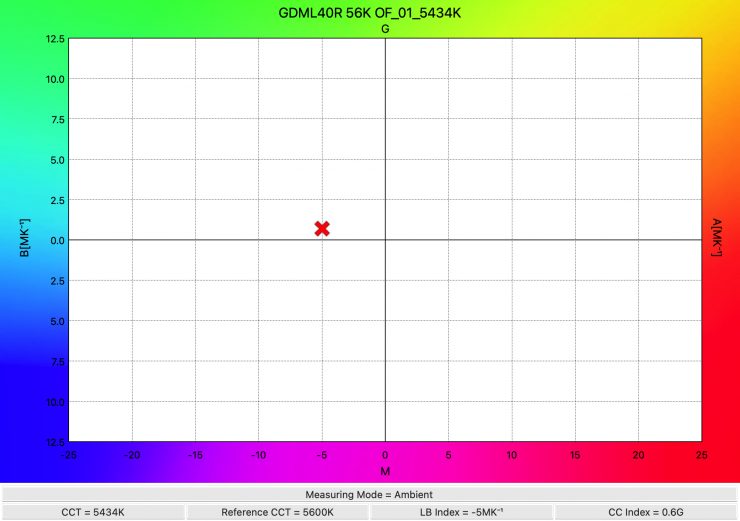
The light recorded a CCT reading of 5434K, which was ok, but 166K off from being correct.
Godox ML40R 3200K (open face)
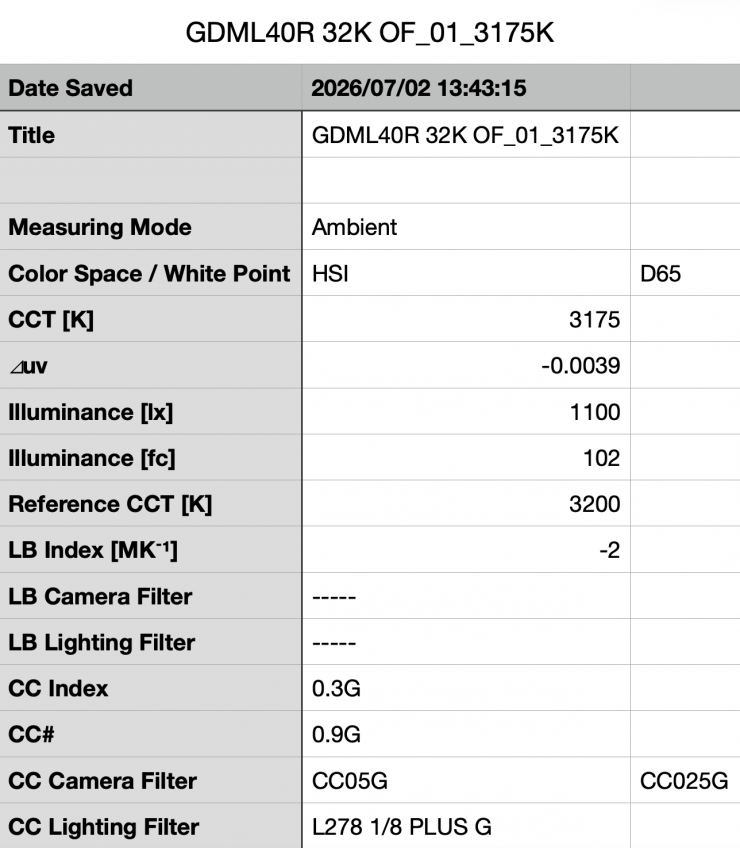
Above, you can see the light’s output when it was set at 3200K in the open face configuration was 1100 lx (102 fc), which was 13.51% more than it produced at 5600K.
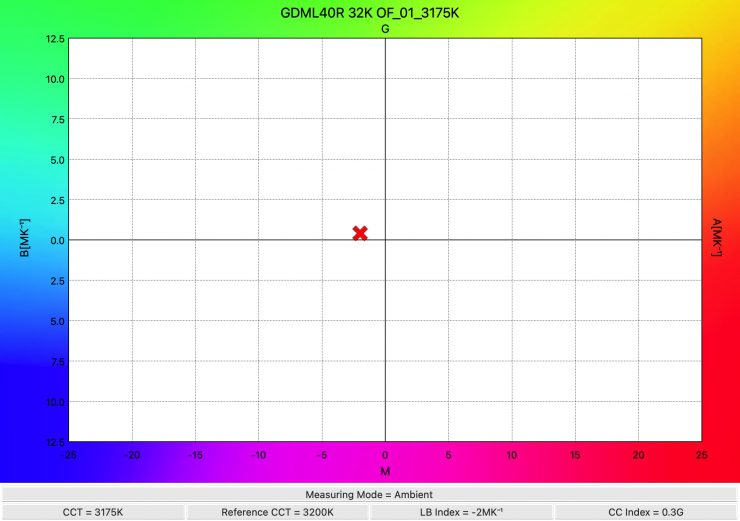
As far as CCT accuracy goes, it recorded a very good reading of 3175K.
Godox ML40R 5600K (ML-L10 Reflector 10°)
Now that we have seen some results when it was used open face, what happens if we use it with the included ML-L10 Reflector 10°
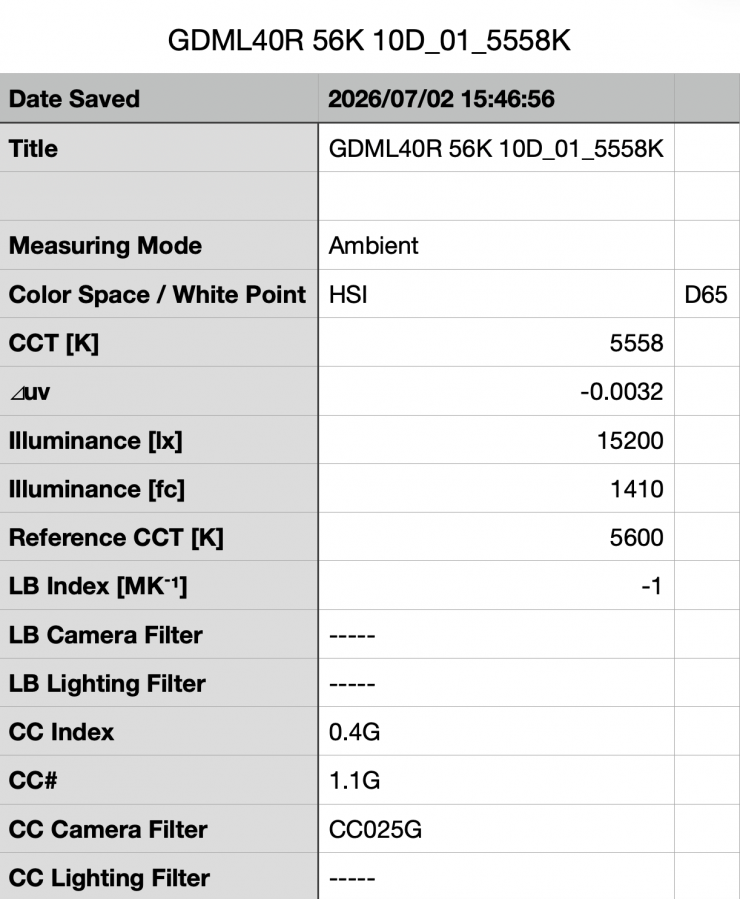
Above you can see the light’s output when it was set at 5600K with the ML-L10 Reflector was 15,200 lx (1410 fc), which was 1,462% more than it produced when used open face. This is a lot of output from a small 40W LED light, but you do need to remember that it comes at the expense of a very tight 10° beam angle.
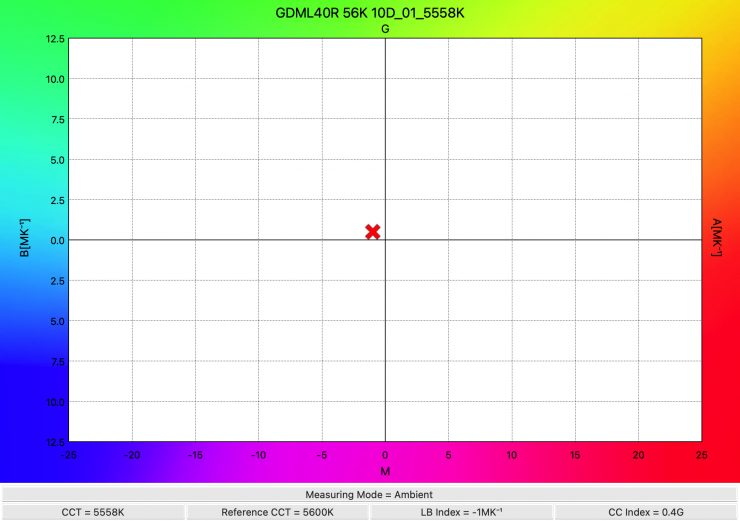
As far as CCT accuracy goes, it recorded a reading of 5558K, which was excellent and much better than the 5434K it recorded when used open face.
Godox ML40R 3200K (ML-L10 Reflector 10°)
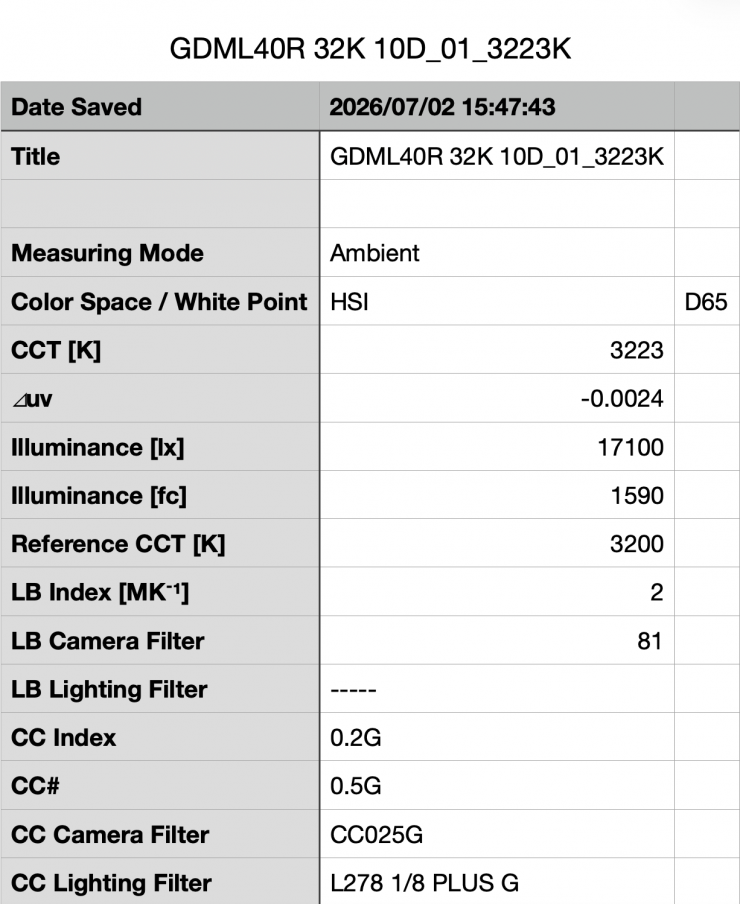
Above, you can see the light’s output when it was set at 3200K using the ML-L10 Reflector 10°, was 17,100 lx (1590 fc), which was 12.5% more than it produced at 5600K. Please note this measurement was made 1m / 3.3′ from the end of the reflector.
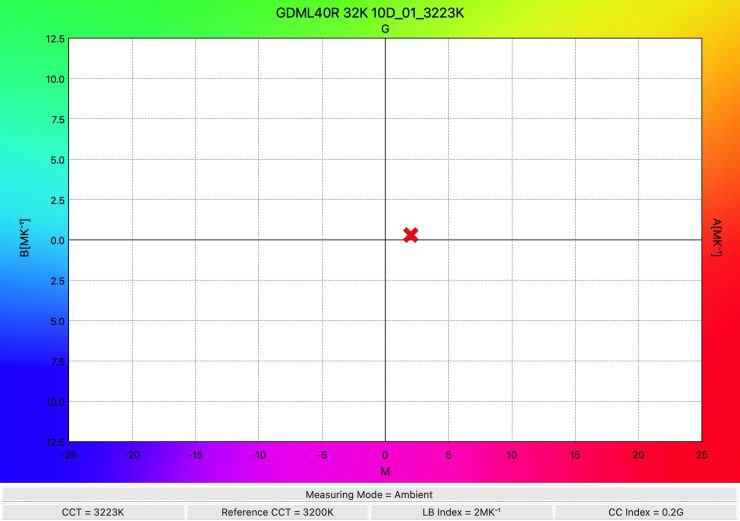
As far as CCT accuracy goes, it recorded a reading of 3223K, which was just as good as the 3175K it recorded when used open face.
Godox ML40R 5600K (ML-L10 Reflector 10°) Fan Off
Let’s now see what happens if we use the fixture with the fan turned off.
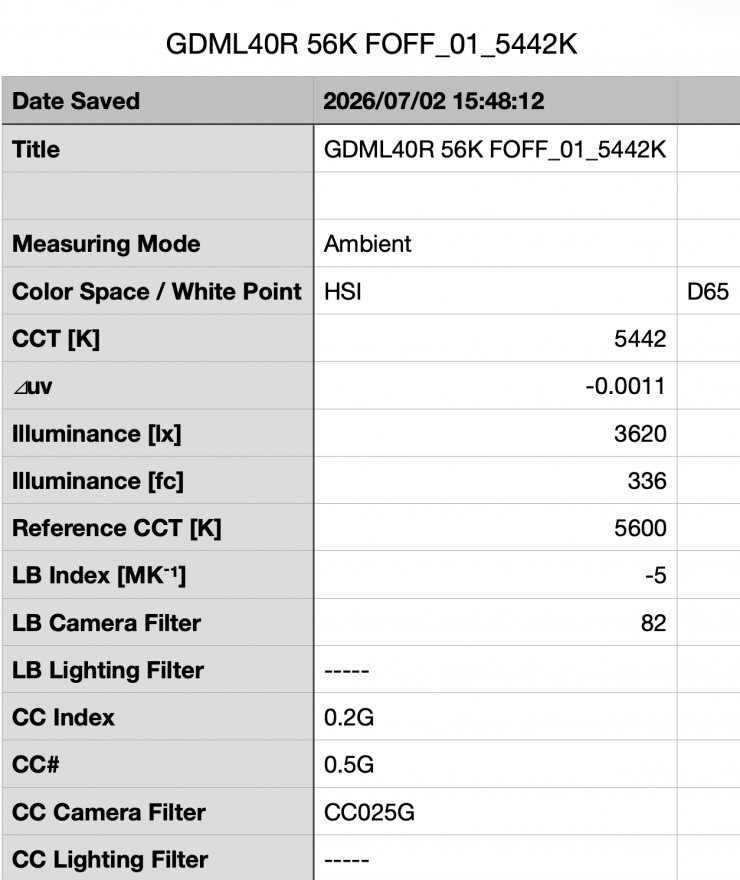
Above, you can see the light’s output when it was set at 5600K using the ML-L10 Reflector 10° and the fan turned off was 3620 lx (336 fc), which was 76.18% less than it produced with the fan set to Auto.
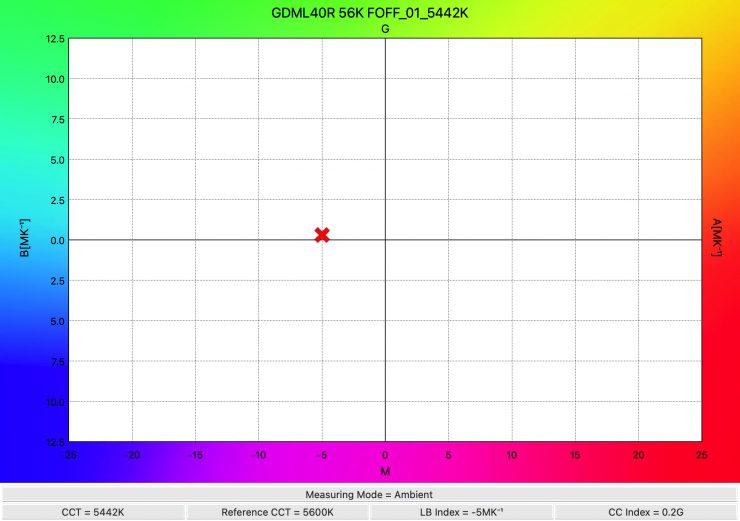
As far as CCT accuracy goes, it recorded a reading of 5442K.
How does it perform at various CCT Settings?
Summary of results (ML-L10 Reflector 10°)
| SETTING | OUTPUT | CCT READING |
| 2500K | 14,300 lx | 2520K |
| 3200K | 17,100 lx | 3223K |
| 4500K | 16,100 lx | 4479K |
| 5600K | 15,200 lx | 5585K |
| 6500K | 14,400 lx | 6533K |
| 8000K | 12,400 lx | 7981K |
| 10000K | 10,500 lx | 10290K |
These results show me that the light’s output varies by 38.59% depending on what CCT temperature you are using between 2500-10000K. However, between 3200-6500K, the output only varies by 15.78%.
The CCT accuracy across the range was excellent. It was no more than 33K off being correct between 2500-8000K. Only at 10,000K was it a little off.
Godox ML40R 5600K ML-SF3030 Soft Box
Let’s now see what happens if we use the fixture with the optional ML-SF3030 Soft Box.
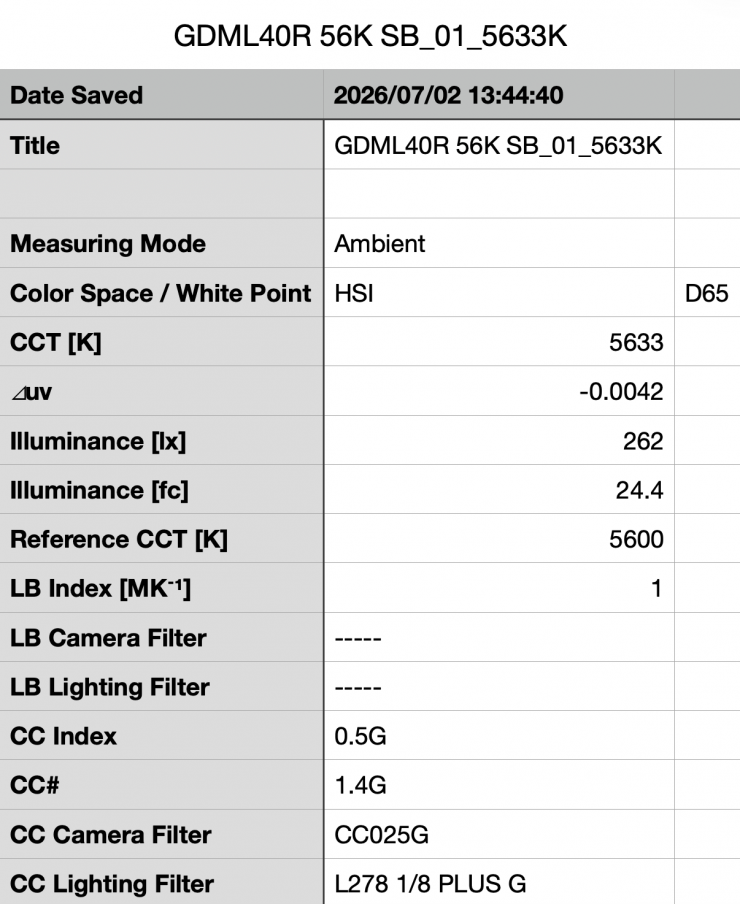
Above, you can see the light’s output when it was set at 5600K using the ML-SF3030 Soft Box was 262 lx (24.4 fc). When using the light open face with the softbox, the output levels are very low.
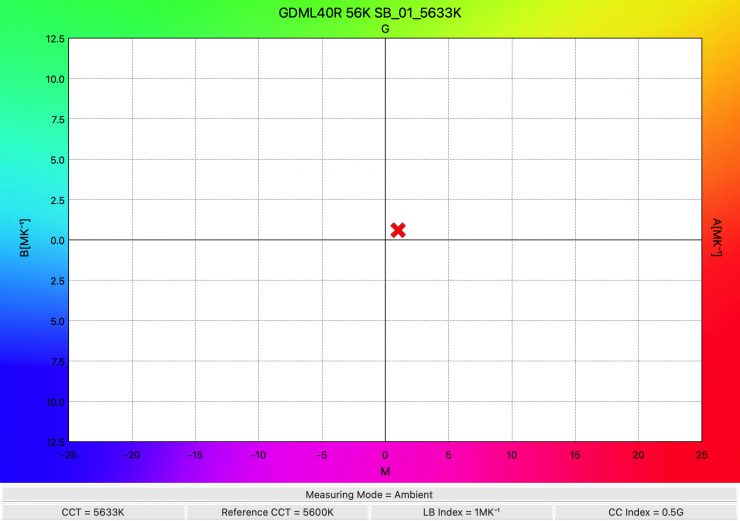
As far as CCT accuracy goes, it recorded a very good reading of 5633K.
Godox ML40R 3200K ML-SF3030 Soft Box
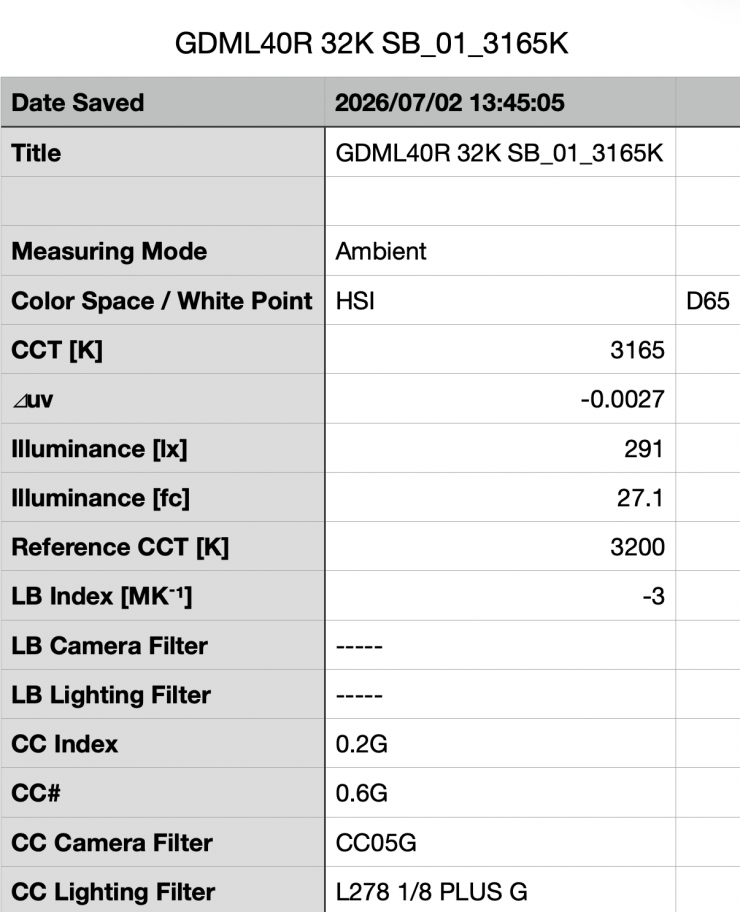
Above, you can see the light’s output when it was set at 3200K using the ML-SF3030 Soft Box was 291 lx (27.1 fc).
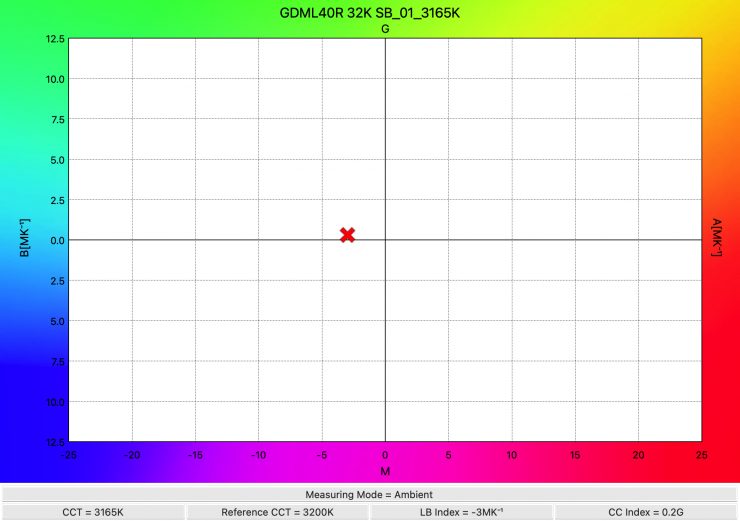
As far as CCT accuracy goes, it recorded a very good reading of 3165K.
CCT consistency & linear output when dimming the light
Now, what you should always do when testing lights is to see if the CCT remains consistent when dimming the light. Just because you set a light at say 5600K, that doesn’t mean that the CCT will remain stable as you start dimming the fixture down. I also wanted to see how linear the dimming curve was.
I decided to do a series of tests at 100%/75%/50%/25%10% to see if the CCT being recorded changed. This was done at a distance of 1m using a Sekonic C-800. These tests were done at 5600K using the standard reflector.
| CCT READING | OUTPUT | INTENSITY % |
| 5585K | 15,200 lx | 100 |
| 5680K | 8130 lx | 75 |
| 5693K | 5080 lx | 50 |
| 5569K | 3450 lx | 25 |
| 5404K | 1660 lx | 10 |
The Godox ML40R’s CCT consistency wasn’t great, but it wasn’t terrible either. As you start dimming the fixture, the CCT changes. My testing showed that the CCT readings varied by 289K. This didn’t come as any huge surprise as it’s a low power draw, small-sized fixture.
As far as how linear the output is when you start dimming the light, at 50%, it had 66.57% less output than when used at 100%. At 25%, it had 77.30% less output than when used at 100%. At 10% output, it had 89.07% less output than when used at 100%. This shows me that the light’s dimming curve isn’t very linear until you get under 50%.
Output & Accuracy when creating fully saturated colors
I also wanted to test the light to see how it performed when creating super-saturated colors using the Reflector.
0° – RED
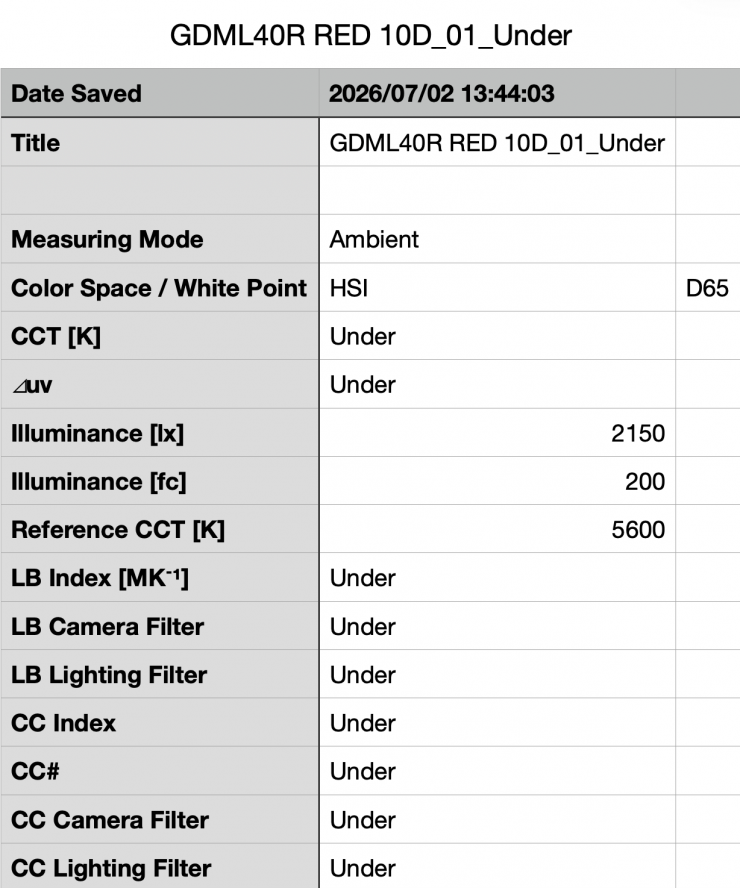
Above, you can see that the light, when using its ML-L10 Reflector 10°, recorded an output of 2150 lx (200 fc).
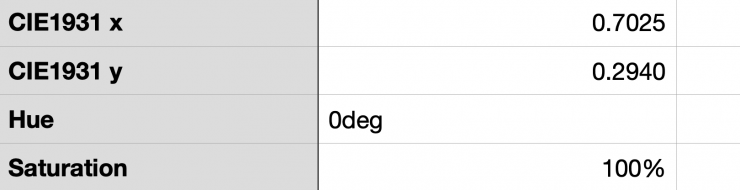
As far as creating an accurate 0° RED, the ML40R was spot on with a reading of 0°.
120° – GREEN
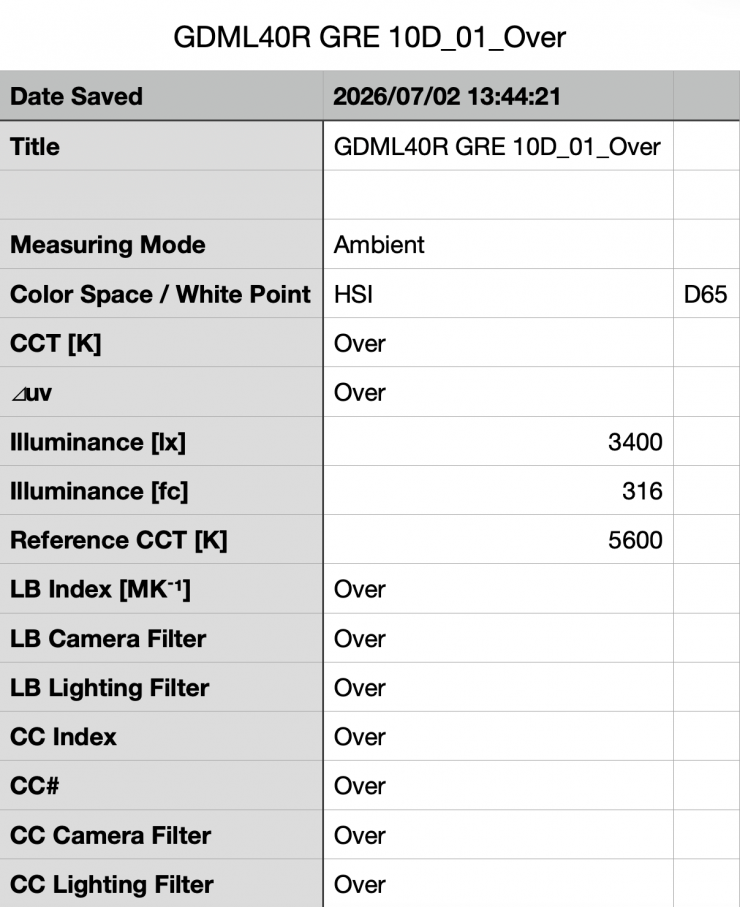
Above, you can see that the light, when using its reflector, recorded an output of 3400 lx (316 fc).
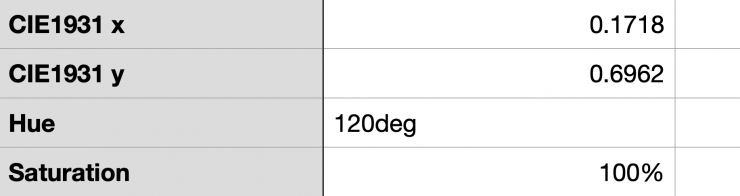
As far as creating an accurate 120° GREEN, the ML40R was spot on with a reading of 120° and 100% saturation.
240° – BLUE
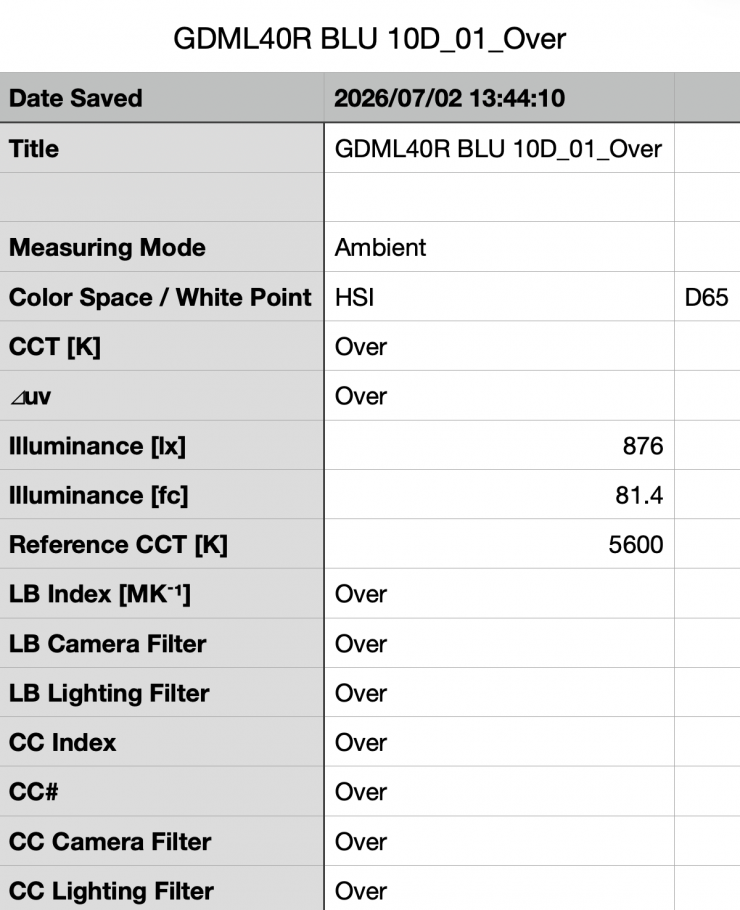
Above, you can see that the light recorded an output of 876 lx (81.4 fc).
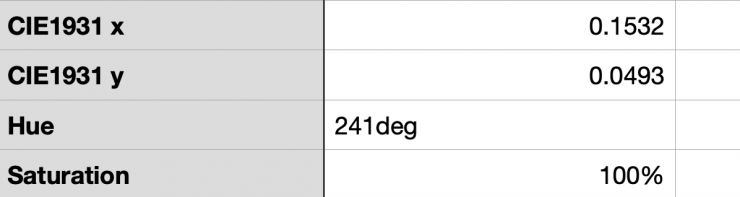
As far as creating an accurate 240° Blue, the ML40R was 1° off with a reading of 241°.
60° – YELLOW
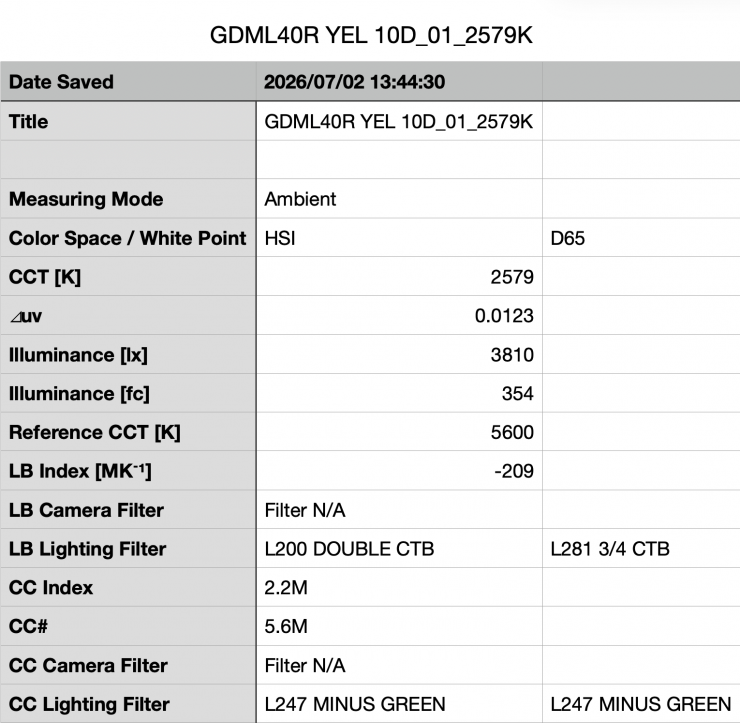
Above, you can see that the light recorded an output of 876 lx (81.4 fc).
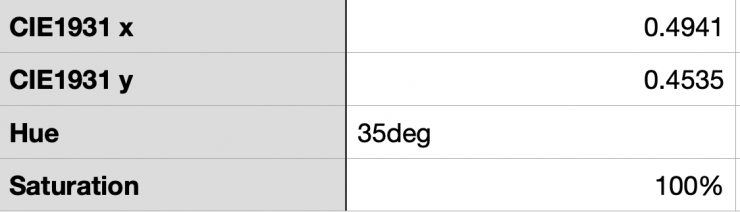
As far as creating an accurate 60° Yellow, the ML40R was 25° off with a reading of 35°.
Color Rendering
So now that we have seen how much output the Godox ML40R produces, how does it perform when it comes to replicating accurate colors?
Godox ML40R 5600K (ML-L10 Reflector 10°)
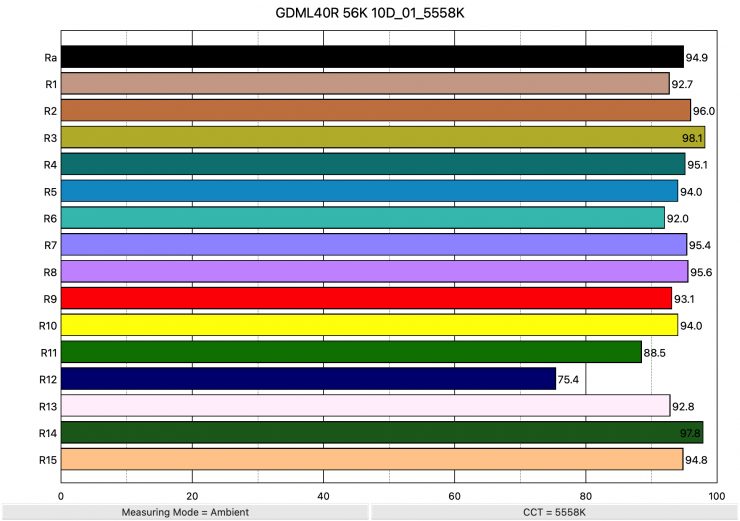
Above you can see that when the light was set at 5600K and used with its reflector, recorded an average CRI (R1-R8) of 94.9 and an extended CRI (R1-R15) of 93.02. For replicating accurate skin tones it recorded for 93.1 for R9 (red), 92.8 for R13 (closest to caucasian skin tones), and 94.8 for R15 (closest to Asian skin tones). These were decent results, and only R11 (Green) and R12 (Blue) were under 90.
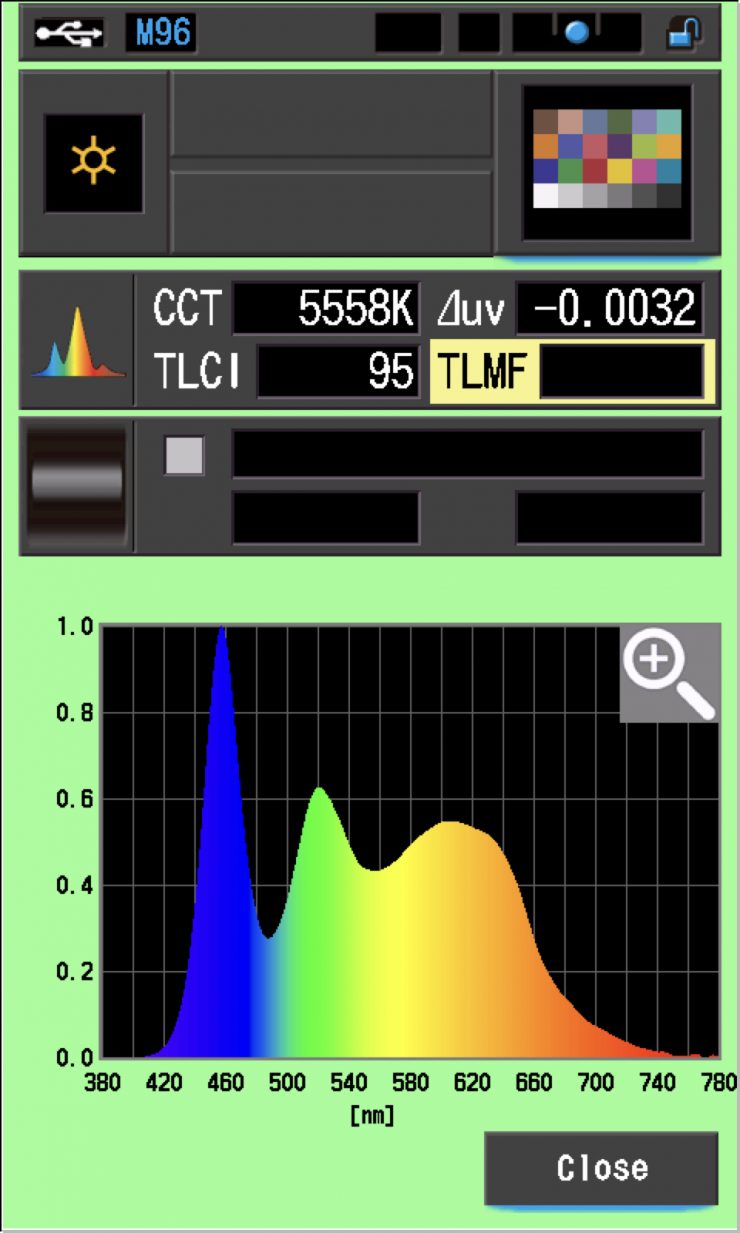
The ZHIYUN MOLUS G300 when set at 5600K recorded a TLCI score of 95, which was a little low.
Godox ML40R 3200K (ML-L10 Reflector 10°)
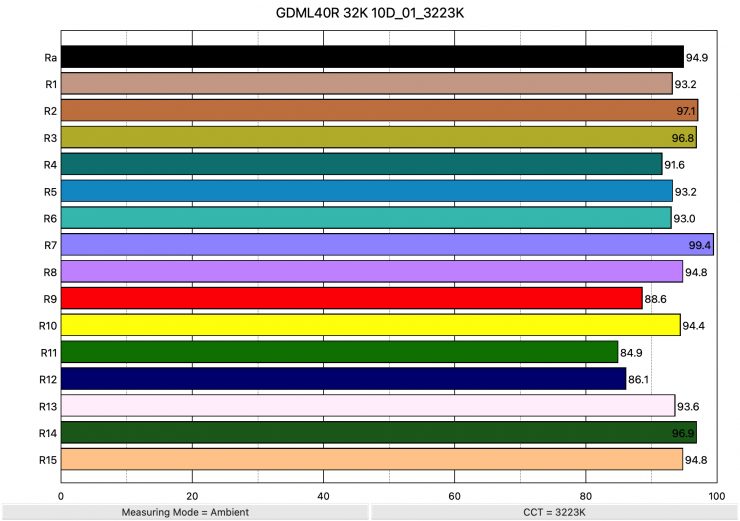
Above you can see that when the light was set at 3200K and used with its reflector, recorded an average CRI (R1-R8) of 94.9 and an extended CRI (R1-R15) of 93.22. For replicating accurate skin tones it recorded for 88.6 for R9 (red), 93.6 for R13 (closest to caucasian skin tones), and 94.8 for R15 (closest to Asian skin tones). These were ok results, but R9 (Red), R11 (Green) and R12 (Blue) were under 90.
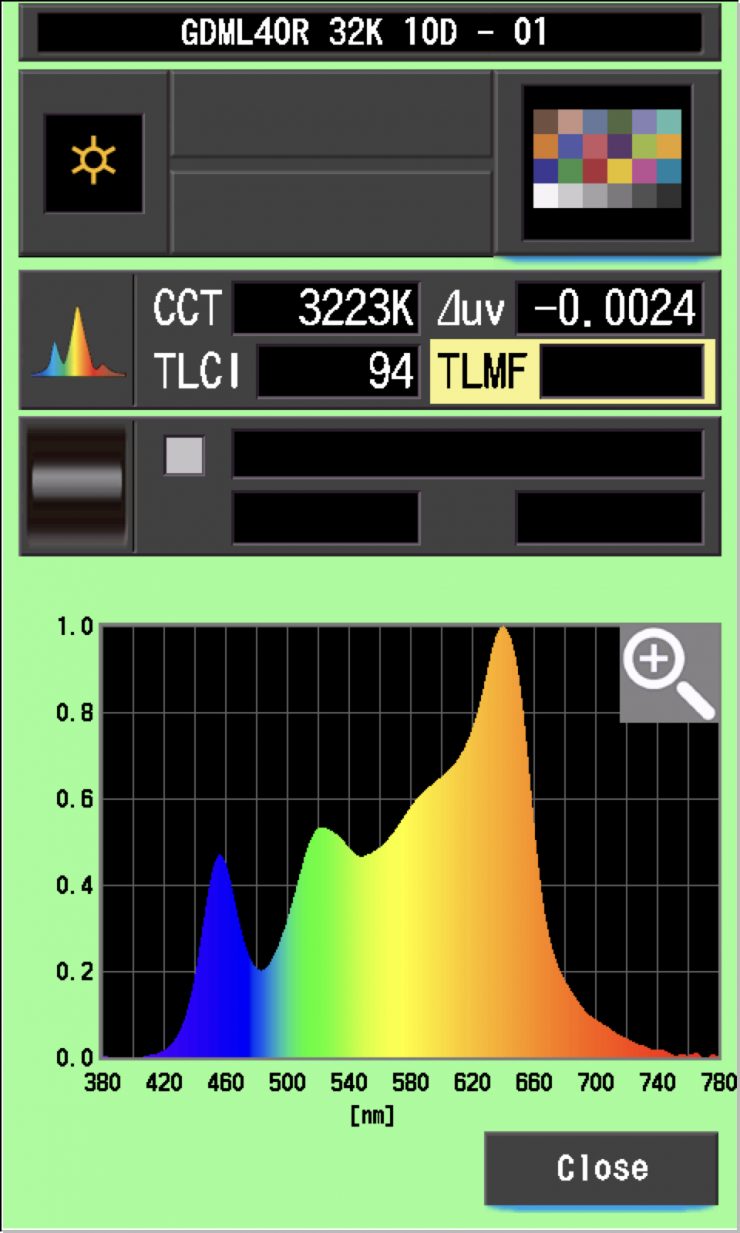
The ZHIYUN MOLUS G300 when set at 3200K recorded a TLCI score of 94, which was a little low.
Godox ML40R 5600K (Open Face)
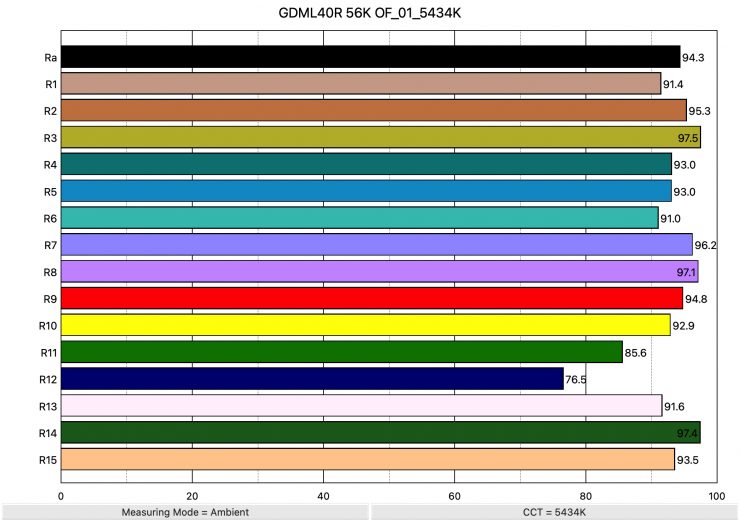
Above you can see that when the light was set at 5600K and used open face recorded an average CRI (R1-R8) of 94.3 and an extended CRI (R1-R15) of 92.45. For replicating accurate skin tones it recorded 94.8 for R9 (red), 91.6 for R13 (closest to caucasian skin tones), and 93.5 for R15 (closest to Asian skin tones). These were ok results, but R11 (Green) and R12 (Blue), were under 90.
What was good to see is that the color rendering scores were basically identical whether you use the light with its reflector or open-faced.
Godox ML40R 3200K (Open Face)
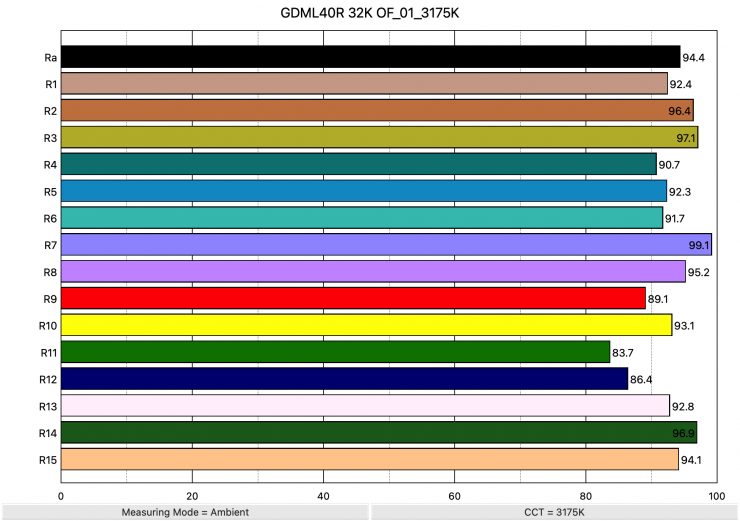
Above you can see that when the light was set at 3200K and used open face it recorded an average CRI (R1-R8) of 94.4 and an extended CRI (R1-R15) of 95.56. For replicating accurate skin tones it recorded 89.1 for R9 (red), 92.8 for R13 (closest to caucasian skin tones), and 94.1 for R15 (closest to Asian skin tones). These were ok results, however, R9 (red), R11 (green) and R12 (Blue) were all below 90.
Again, the results were very consistent when using the light with or without its reflector. When used with its reflector it did have a slightly better score than when used open face, but not by much.
CC Index & ⊿uv
The CC Index displays the CC correction value and whether any magenta or green need to be added or subtracted. 1 CC corresponds to 035 Kodak CC values or 1/8 Rosco filter values. Any reading less than +1.00 or -1.00 and you’re probably not going to need to make any kind of adjustment. The ⊿uv is the value to show how much this light is away from being an ideal light source (black body radiation = incandescent lamp). As with the CC Index you want this number to theoretically be zero. Kelvin is not a linear value, so we need to convert from Kelvin to MK-1 to compare the values of color temperature. To calculate from Kelvin to Mired is MK-1= 1*1000000/Kelvin. While this may sound confusing, it is the only way of measuring if the Kelvin shift is significant enough to warrant having to use a filter for correction. Below are the results for the Godox ML40R:
Godox ML40R Kelvin Vs MK-1
| Kelvin | Difference in K | MK-1 | Difference in MK-1 | |
| SET VALUE | 2500K | 0 | 400 | 0 |
| ACTUAL READING | 2520K | 20 | 396.82 | 3.18 MK-1 |
| SET VALUE | 3200K | 0 | 312.5 | 0 |
| ACTUAL READING | 3223K | 23 | 310.27 | 2.23 MK-1 |
| SET VALUE | 4500K | 0 | 222.22 | 0 |
| ACTUAL READING | 4479K | 21 | 223.26 | -1.04 MK-1 |
| SET VALUE | 5600K | 0 | 178.57 | 0 |
| ACTUAL READING | 5558K | 42 | 179.92 | -1.35 MK-1 |
| SET VALUE | 6500K | 0 | 153.87 | 0 |
| ACTUAL READING | 6533K | 33 | 153.07 | 0.8 MK-1 |
| SET VALUE | 8000K | 0 | 125 | 0 |
| ACTUAL READING | 7981K | 19 | 125.30 | -0.30 MK-1 |
| SET VALUE | 10000K | 0 | 100 | 0 |
| ACTUAL READING | 10209K | 209 | 97.95 | 2.05 MK-1 |
These figures might look confusing, but what it tells me is that the light is extremely CCT accurate across its 2500-10000K range. Any MK-1 score that is under -9/9 means you wouldn’t have to use any color correction gels. Any MK-1 score that is under -6/6 is a very good result.
Ok, now let’s look at the CC INDEX & ⊿uv.
Godox ML40R CC INDEX & ⊿uv
| CC INDEX | ⊿uv | |
| 2500K | 0.5G | -0.0029 |
| 3200K | 0.2G | -0.0024 |
| 4500K | 0.2G | -0.0032 |
| 5600K | 0.4G | -0.0007 |
| 6500K | 0.4G | -0.0012 |
| 8000K | 0.5G | 0.0007 |
| 10000K | 0.8G | 0.0008 |
These were decent results. There is nothing here that concerned me.
TM-30
TM-30 is a relatively new color rendering standard that was developed to deal with the limitations of CRI. TM-30 looks at 99 individual colors. These 99 colors are categorized into seven groups: nature, skin color, textiles, paints, plastics, printed material, and color systems.
TM-30 scores go from 0 – 100. The higher the score, the more accurate a light is at producing colors. Any TM-30 Rf score in the ’90s is considered to be good. What is interesting and something that you need to be very aware of is that two separate light sources with the exact same CRI scores can render colors very differently. A light with a high CRI rating could have a low TM-30 score. Conversely, a light with a good TM-30 score could have a bad CRI score.
Now, there are two measurements associated with TM-30, Rf and Rg.
Rf (Color Fidelity)
Rg (Color Gamut)
With Rf value, ideally, you want a score in the 90’s.
With Rg value, a score below 100 indicates that the light source renders colors with less saturation than the reference source. So ideally you want this score to be 100.
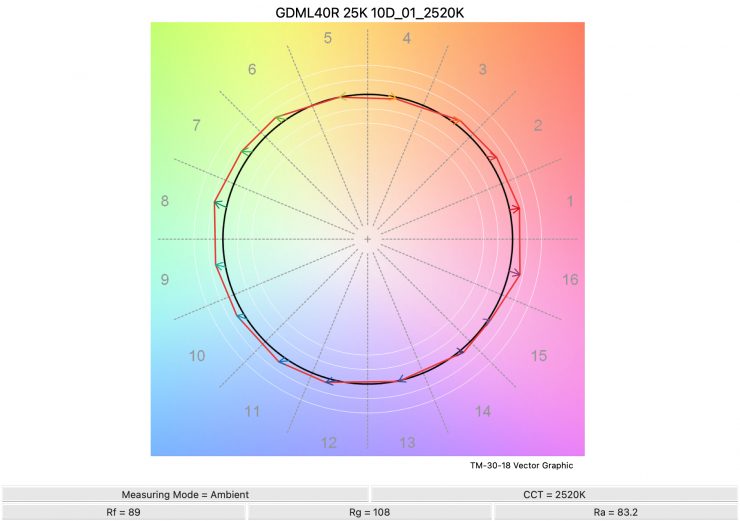
2500K 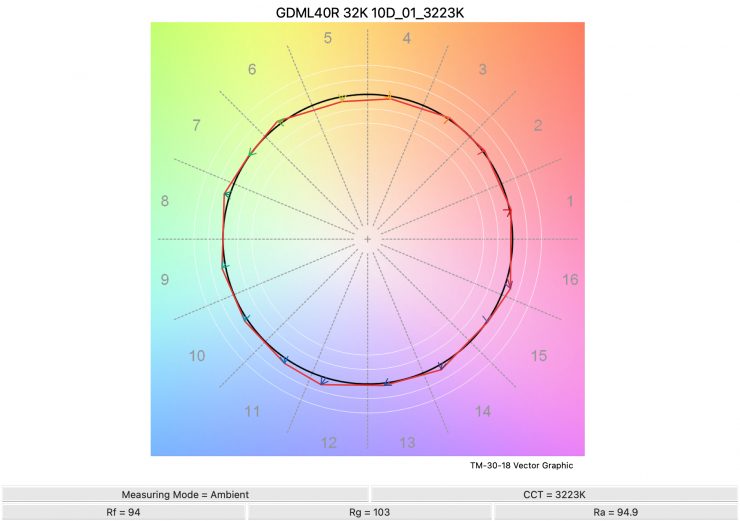
3200K 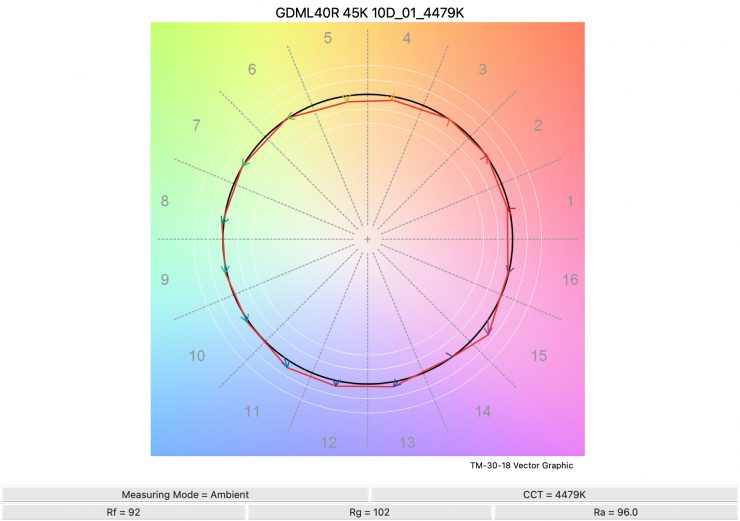
4500K 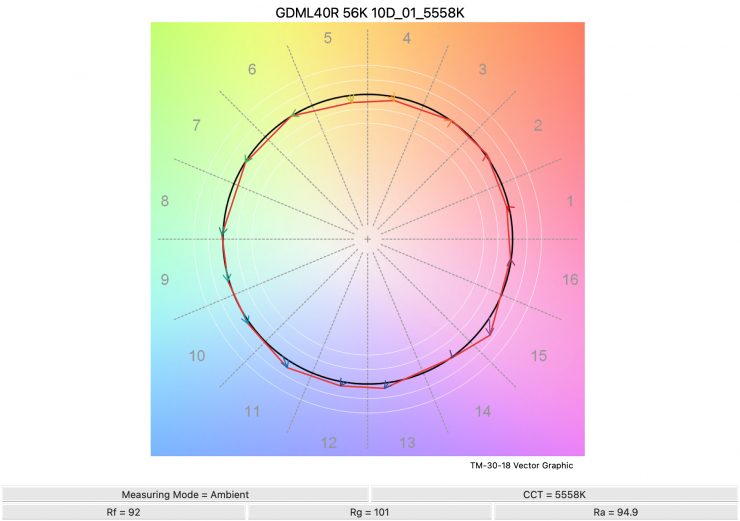
5600K 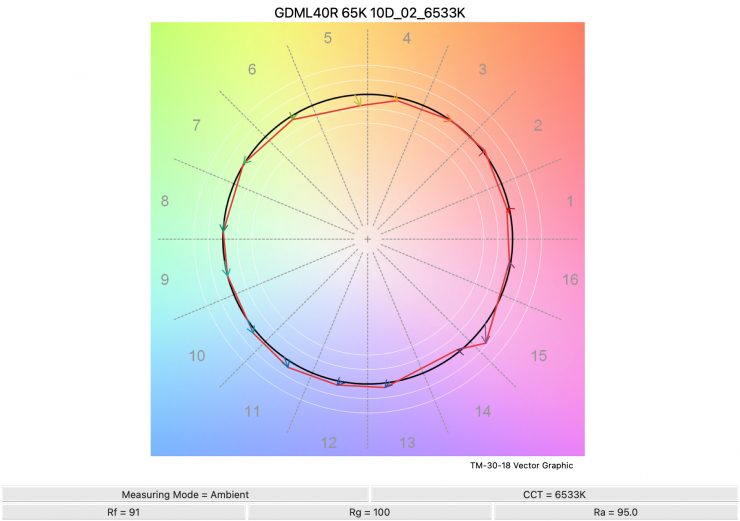
6500K 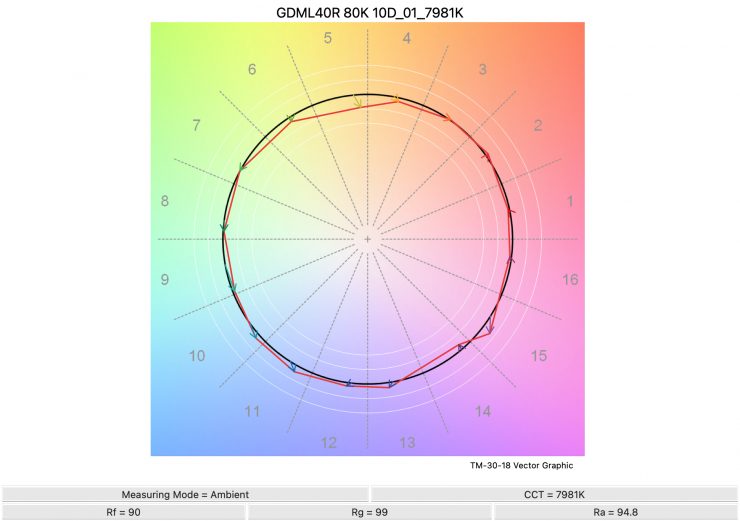
8000K 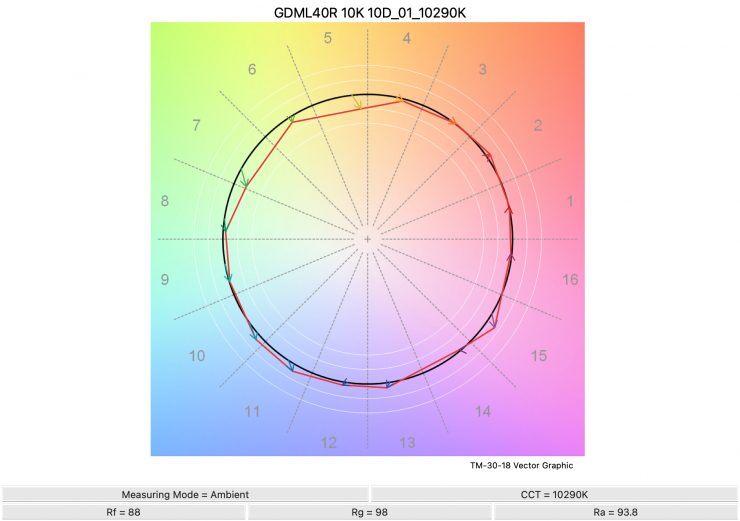
10,000K
Above you can see the scores for the ML60R at various CCT settings. Below I have listed the figures as well.
Here are the results:
| Rf | Rg | |
| 2500K | 89 | 108 |
| 3200K | 94 | 103 |
| 4500K | 92 | 102 |
| 5600K | 92 | 101 |
| 6500K | 91 | 100 |
| 8000K | 90 | 99 |
| 10000K | 88 | 98 |
The TM-30 scores were ok, but the light struggles a little bit at the extremes of its CCT range.
SSI
SSI (Spectral Similarity Index) was developed by the Sci-Tech Council of the Academy. SSI gives me the ability to set any light as a standard, or use predefined standards (such as CIE D55), and then give other lights an SSI score based on how well they will match standards such as CIE D55. This way I can measure spectral response and compare it directly against an ideal light source. This is actually a much better test than recording CRI scores.
Godox ML40R 3200K
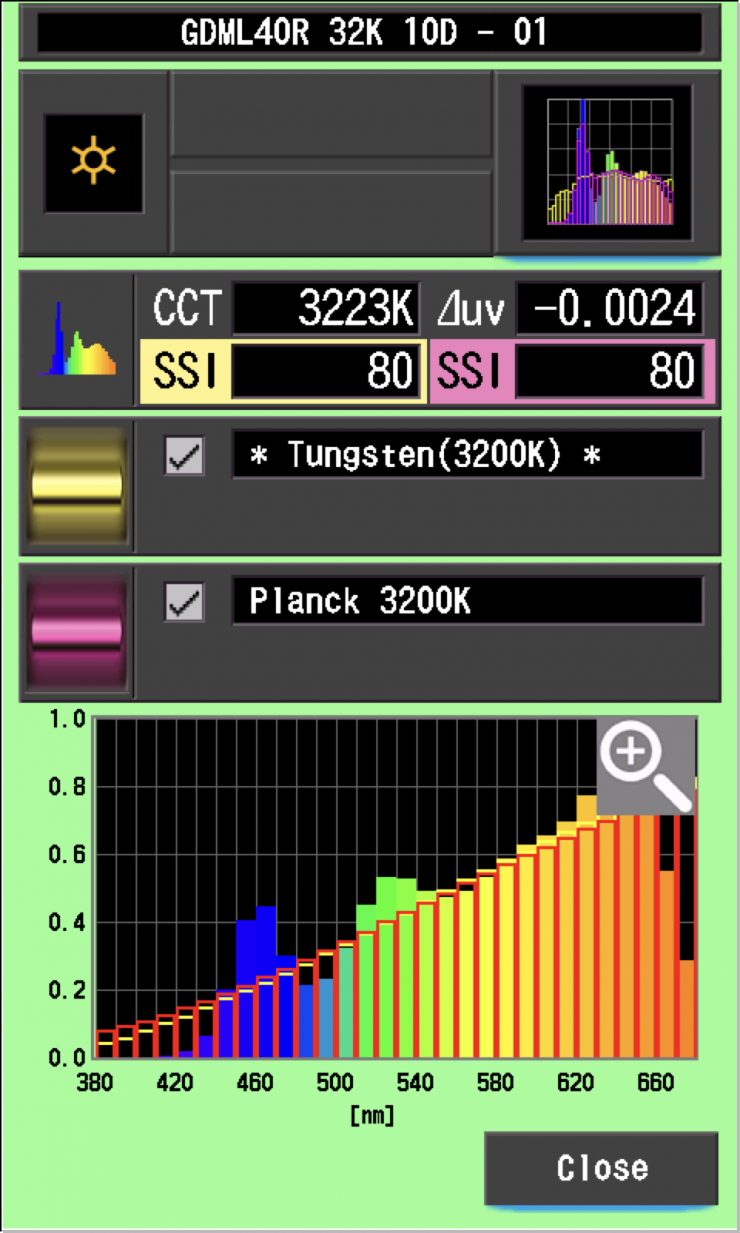
In this graph, the red bars indicate a perfect Planck 3200K source. The gold bars indicate a perfect 3200K Tungsten source. This lets us compare how close to a perfect 3200K lighting source the ML40R is. Any SSI score in the high 70’s, low ’80s is very good for a 3200K LED light. The results for the ML40R were decent when used at 3200K. As you can see, LED lights have a hard time replicating colors below about 450nm.
Godox ML40R 5600K
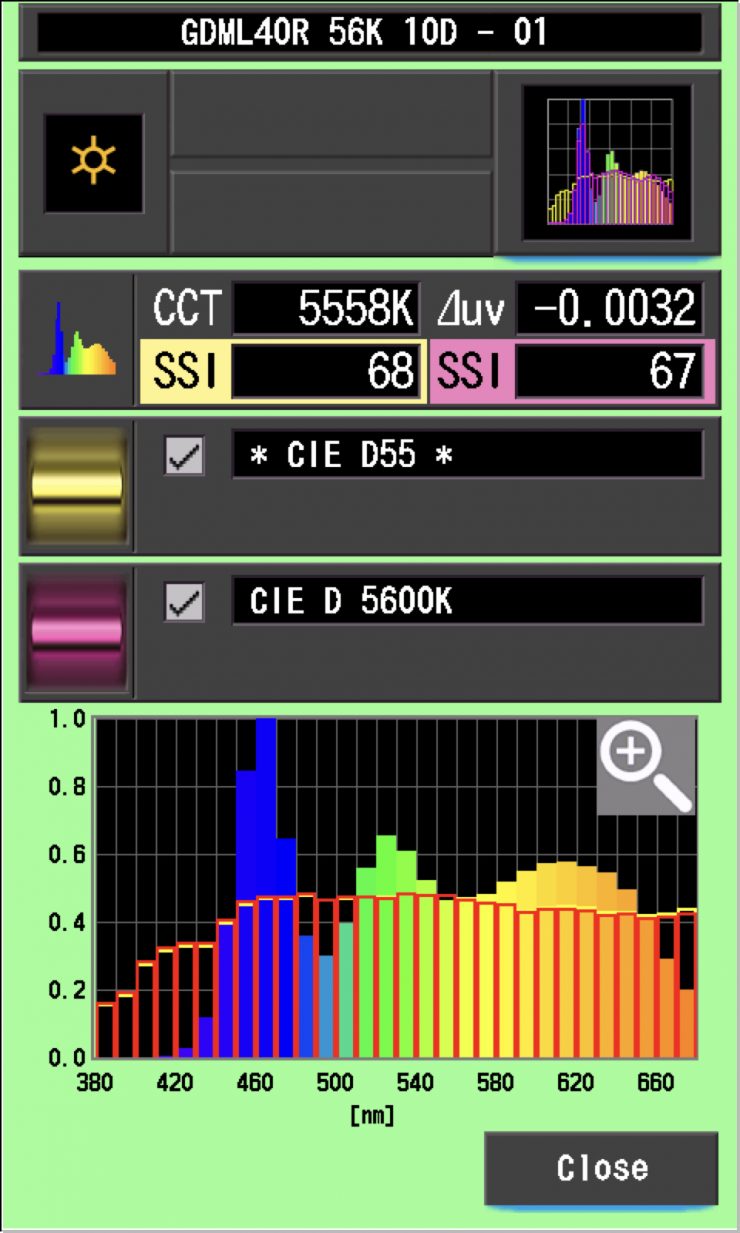
In the graph above the gold bars indicate a perfect CIE D55 source. The red bars indicate a perfect CIE D 5600K source. This lets us compare how close to a perfect 5600K lighting source the ML40R is. A score in the low 70’s is typical for a 5600K LED source. The scores for this light were not great.
The main reason we want to record SSI scores is so we can see how well they match with other lights. As an example, I wanted to see how well the Godox ML40R matched the Maxima Spectra and the Aputure STORM 1000c. Below you can see the results.
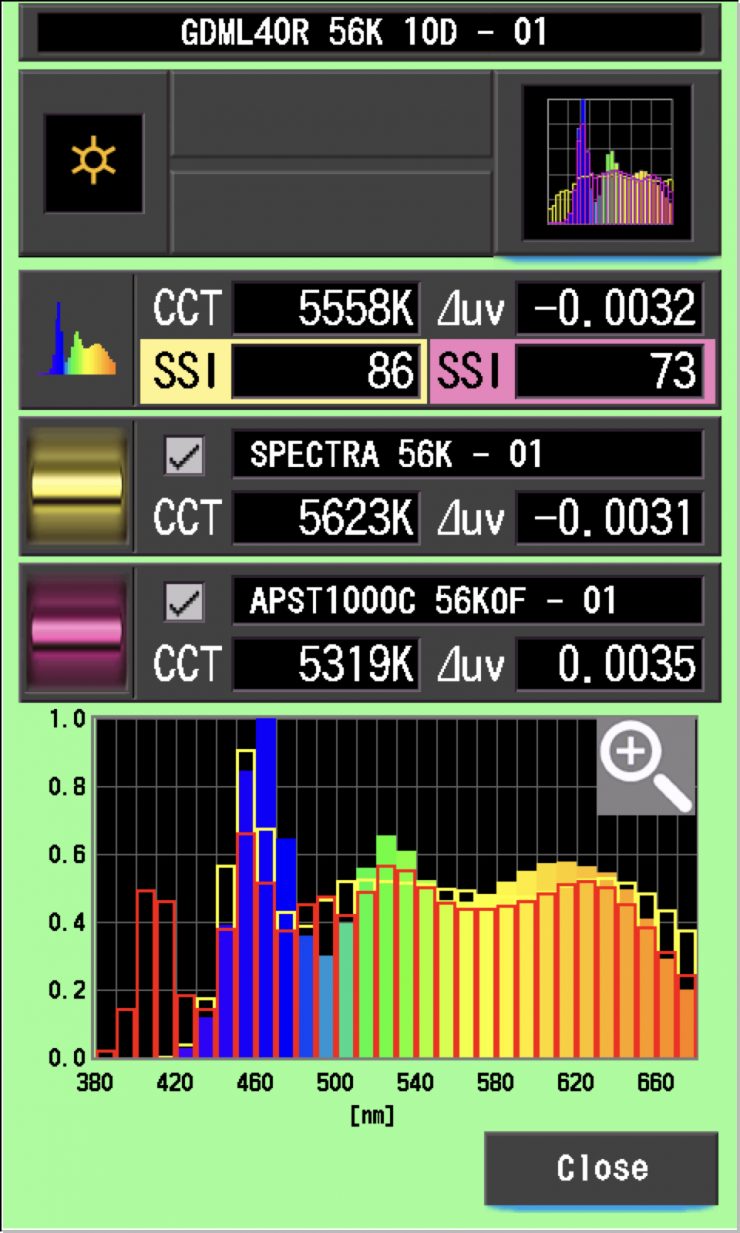
As you can see the ML40R is not a great match with either of these lights Any score in the high ’80s and low 90s would be enough to get a decent enough match.
As another test, I thought I would compare those same lights against the Godox ML40R at 3200K. Below you can see the results.
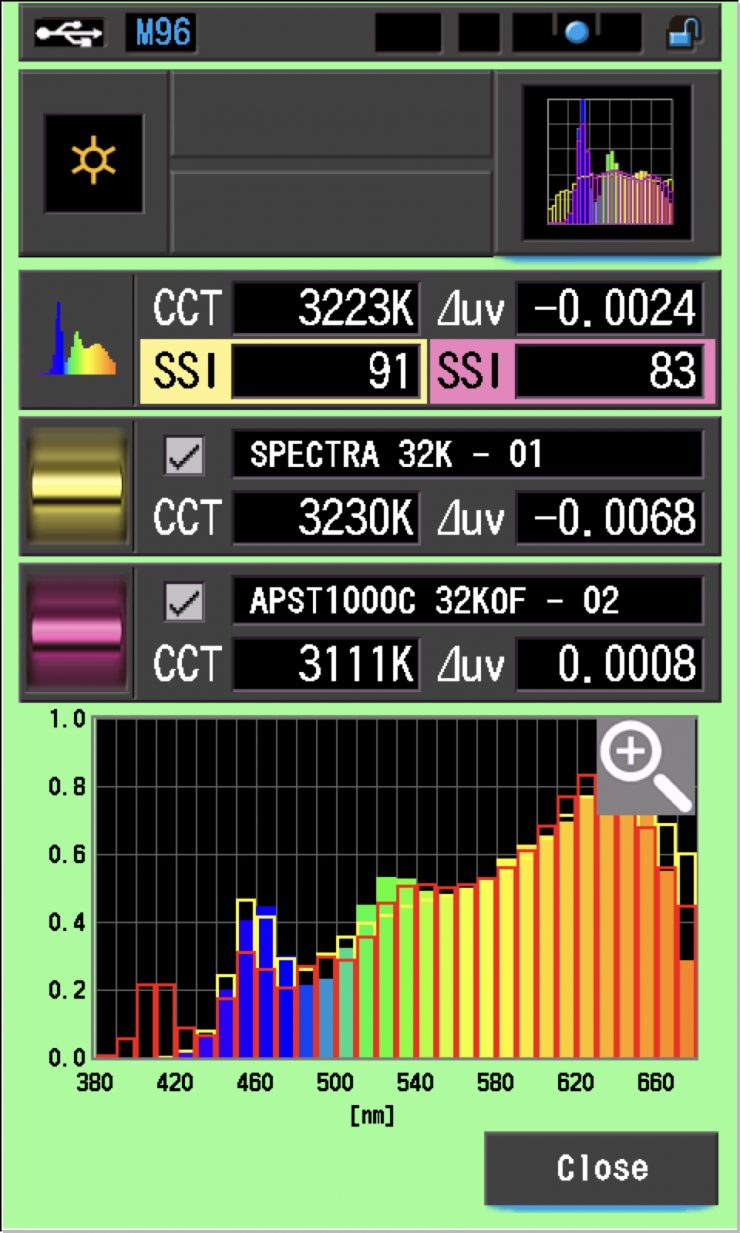
As you can see, the results were a bit better when using the light at 3200K. Very few lights from different manufacturers are ever going to be an exact match.
Ok, so let’s do some more comparisons. This time I wanted to see how well the ML40R when used with its reflector matched the light when it was used with open face and with the optional Softbox.
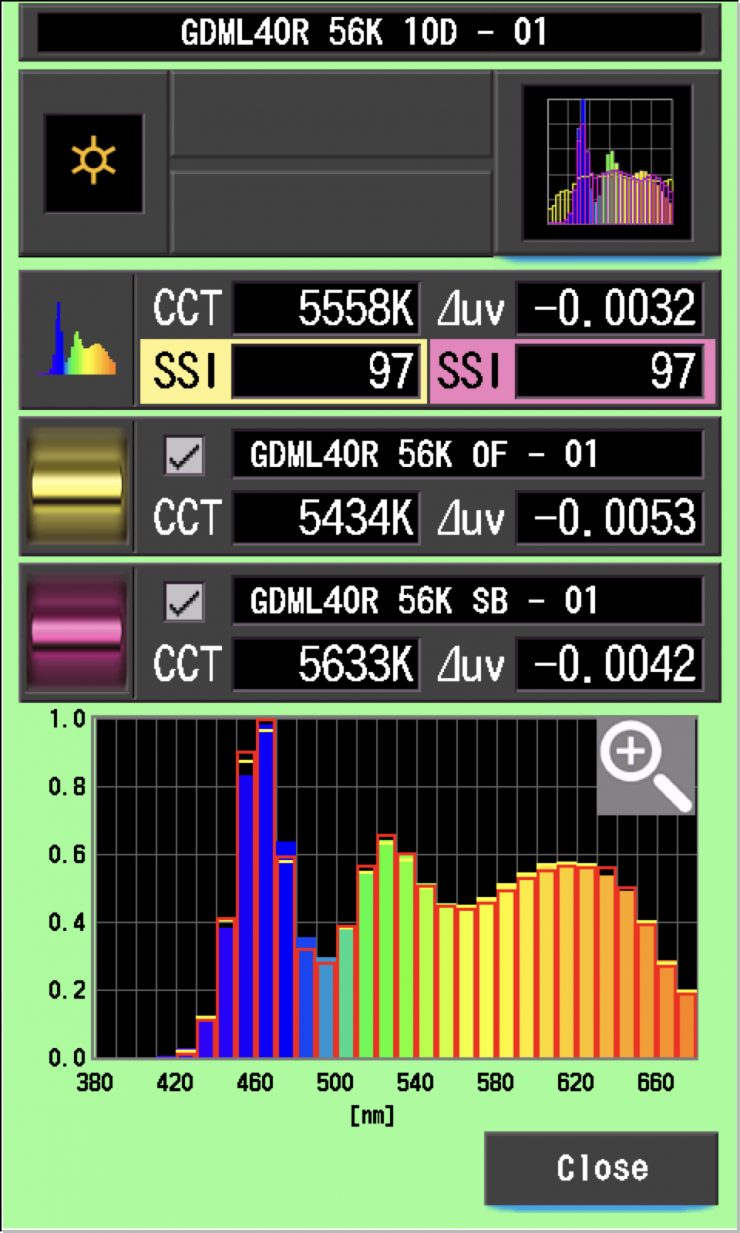
As you can see, with a score of 97, the light matches very well when used both Open face and with its reflector or a soft box. This tells me that if I had two ML40Rs, and I used one open-face and the other with a reflector or soft box they would be virtually indistinguishable.
SSI tests are a great way of telling you what lights you own or use will work well together.
Spectral Distribution
5600K
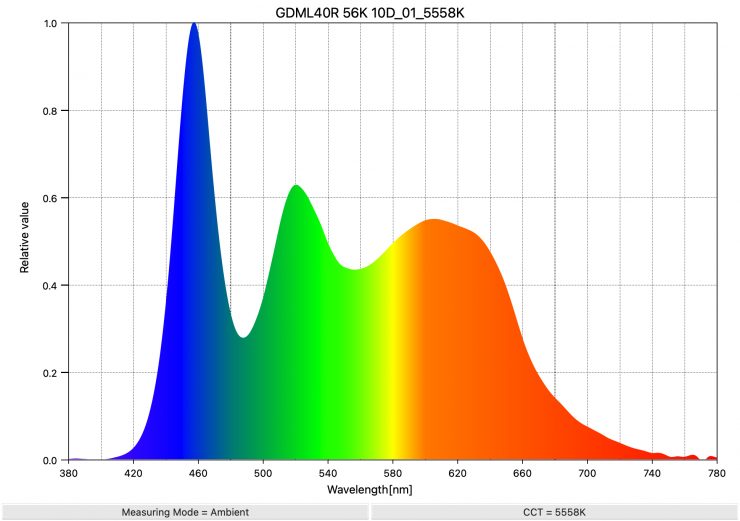
Above you can see the spectral distribution of the Godox ML40R when it is set at 5600K. The spectral distribution isn’t overly full for a full color LED light.
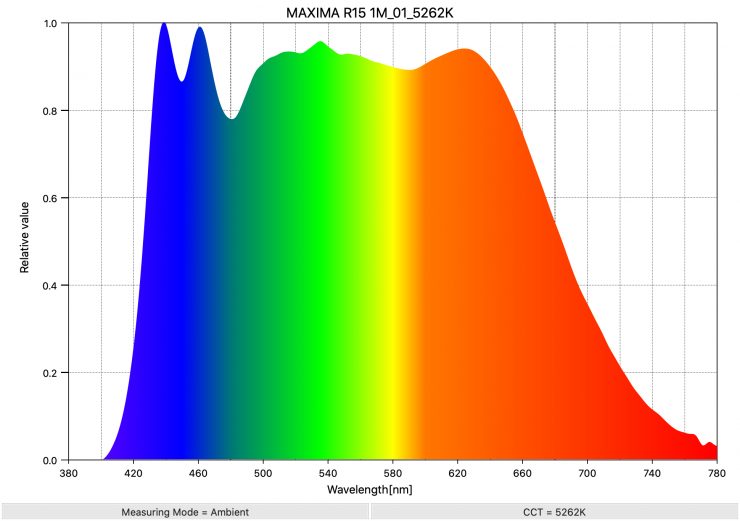
If you want to see what a really good spectral response looks like for a LED light at 5600K, above is the result for the Maxima 3.
3200K
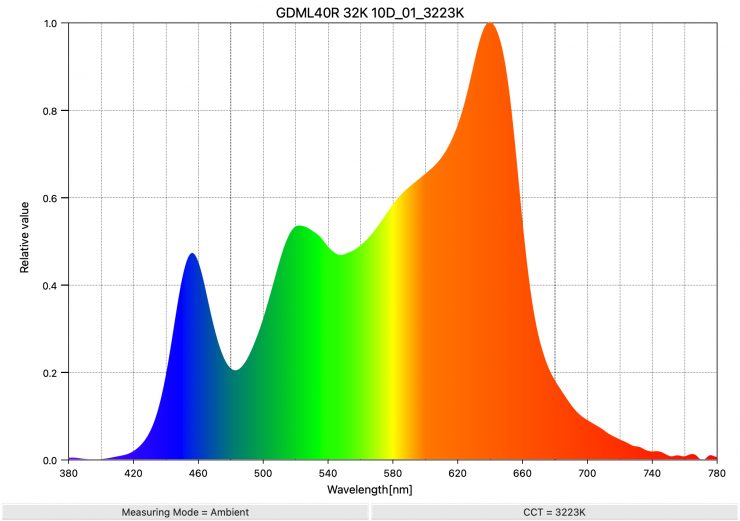
Above you can see the spectral distribution of the Godox ML40R when it is set at 3200K. The spectral distribution isn’t very full.
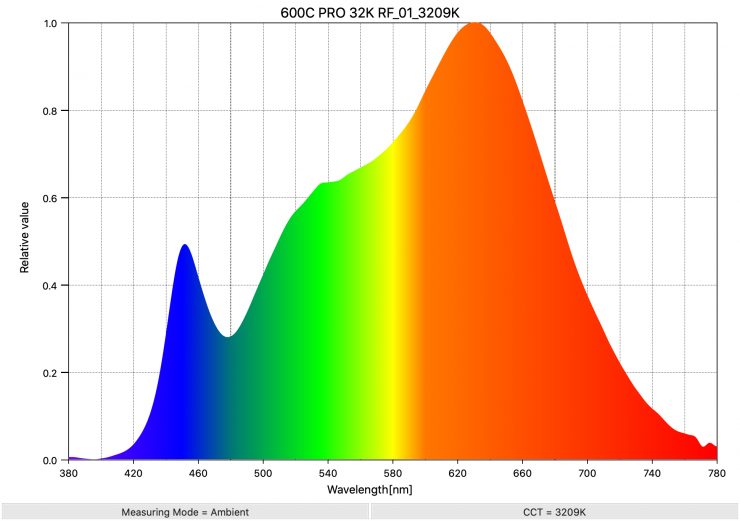
As a comparison, above you can see the spectral distribution of the Aputure 600c Pro when it is set at 3200K.
Real-World Performance & Quality of Light
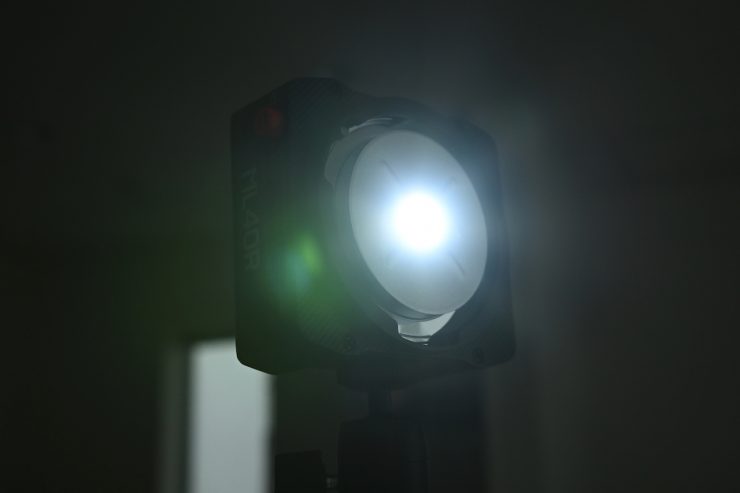
As I always say, photometric scores only tell you part of the story. So let’s find out if the scores from the Godox ML40R translate into good real-world performance.
The photometric results can only give me scientific data and it is much more important for me to see how the light looks and performs. Contrary to popular belief, if you are in the business of making lights you don’t want to try and achieve perfect scores because perfect scientific scores don’t equate to a light looking good. A good light should look good to a camera because, after all, that is what is capturing the image. Cameras and our eyes see differently and ideally, you want to use a light that looks good to your camera. There’s a bit of alchemy in knowing what to prioritize in order to render colors that appear accurate, natural, and pleasing. It’s not just about hitting certain numbers.
Lighting really comes down to how you use the light, and having a great light isn’t suddenly going to produce better results for you unless you know what you are doing.
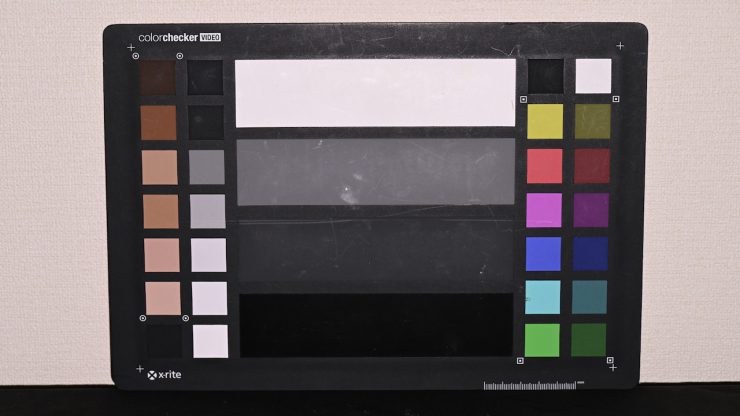
Preset 5600K Camera WB 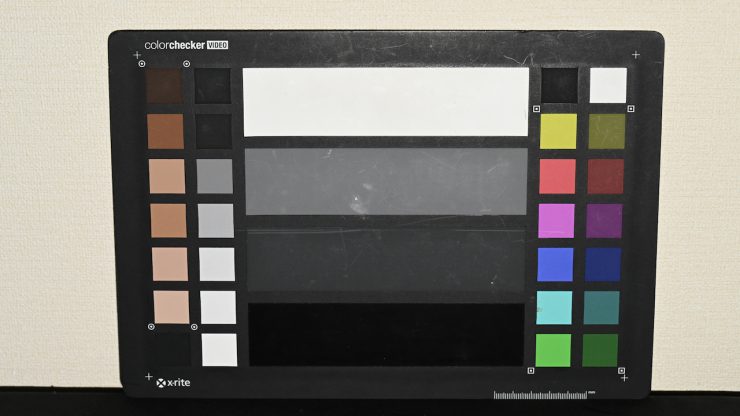
Camera WB
Firstly, let’s look at one of the most important aspects of a light, color accuracy. I set up a small test in a controlled environment where I shot a color checker chart with the camera WB at a preset value of 5600K, with the light set at 5600K. I then did a manual WB to see what the differences were. As you can clearly see, the Godox ML40R leans magenta.
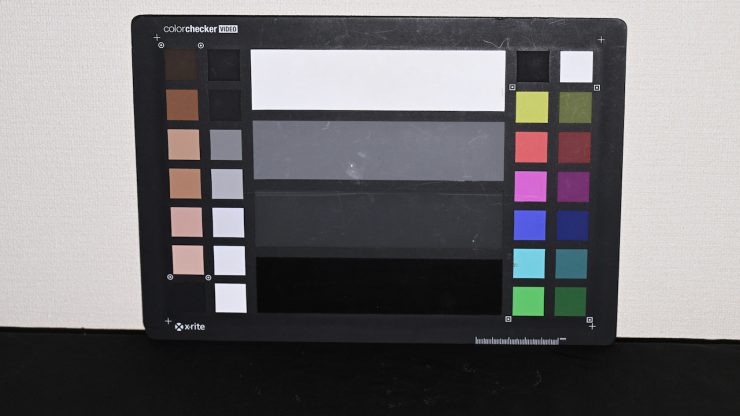
Preset 5600K Camera WB 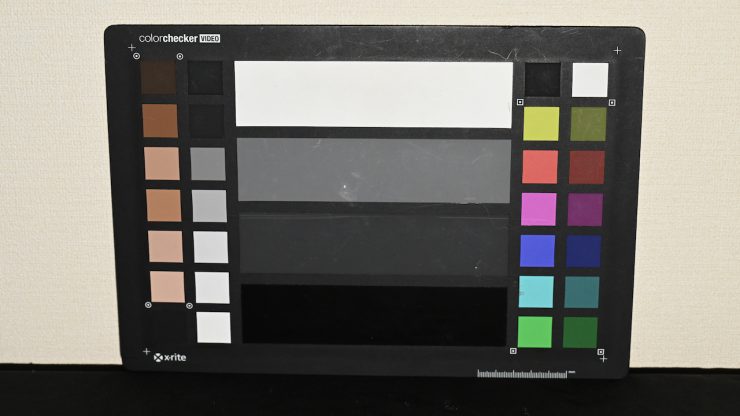
Camera WB
Now, let’s do that exact same test, but this time at 3200K. In the real world, at 3200K, the light is more color-accurate than it is at 5600K
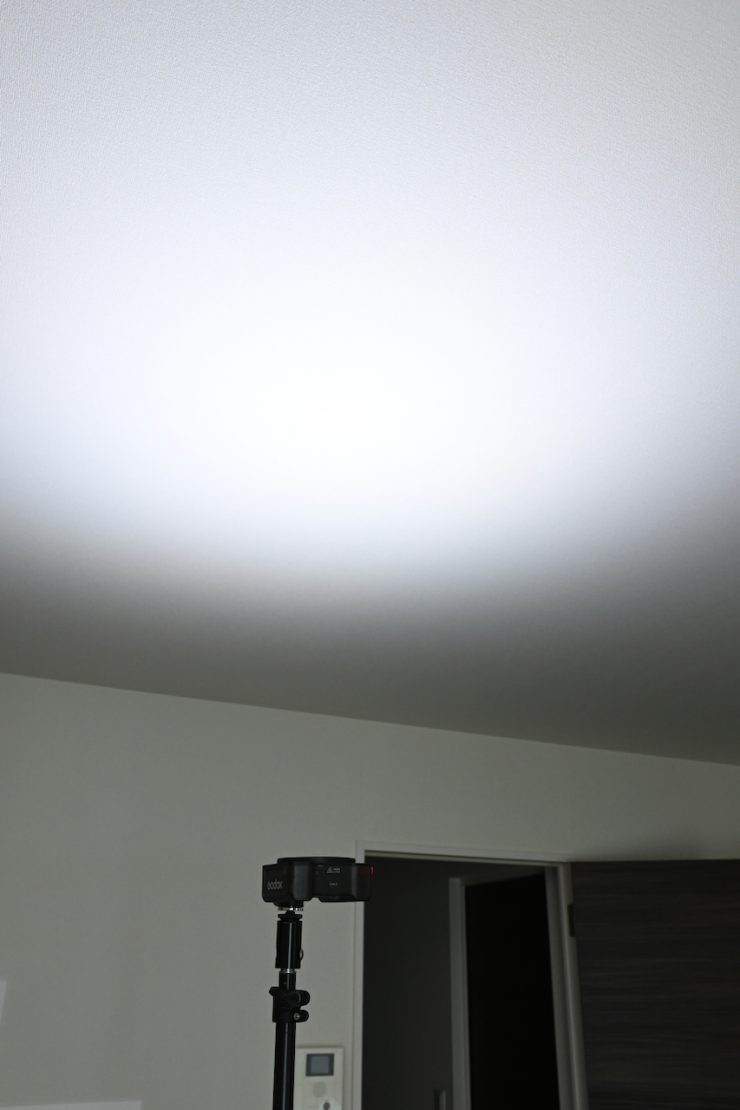
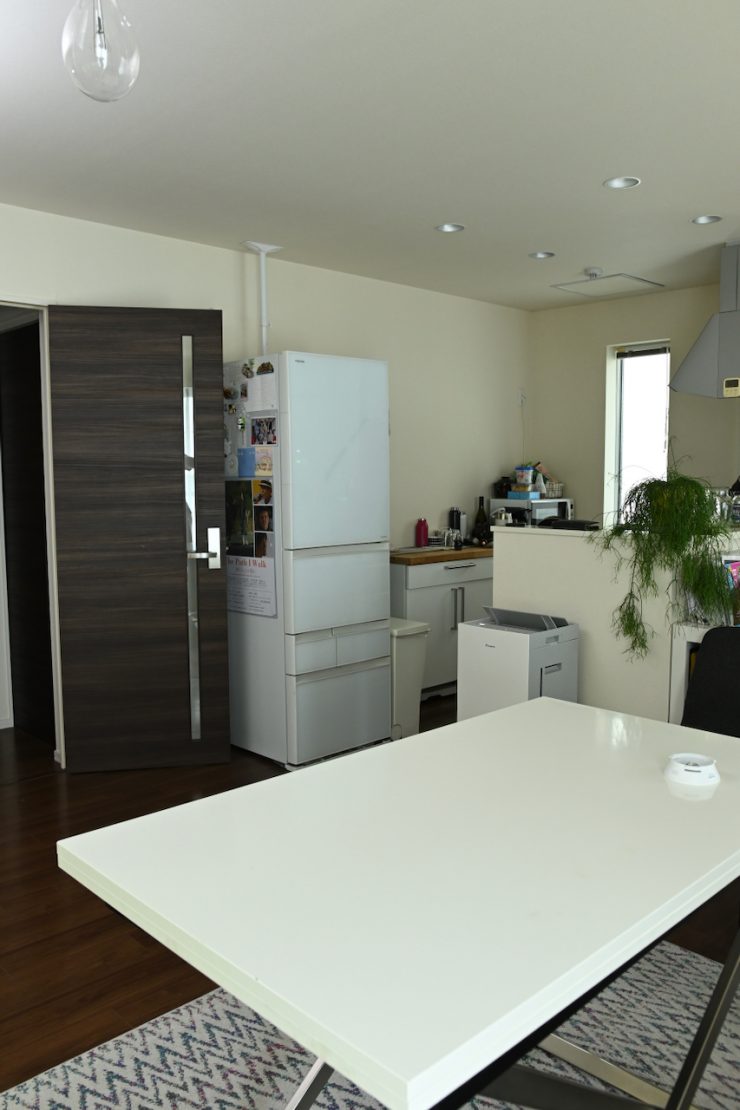
Light On 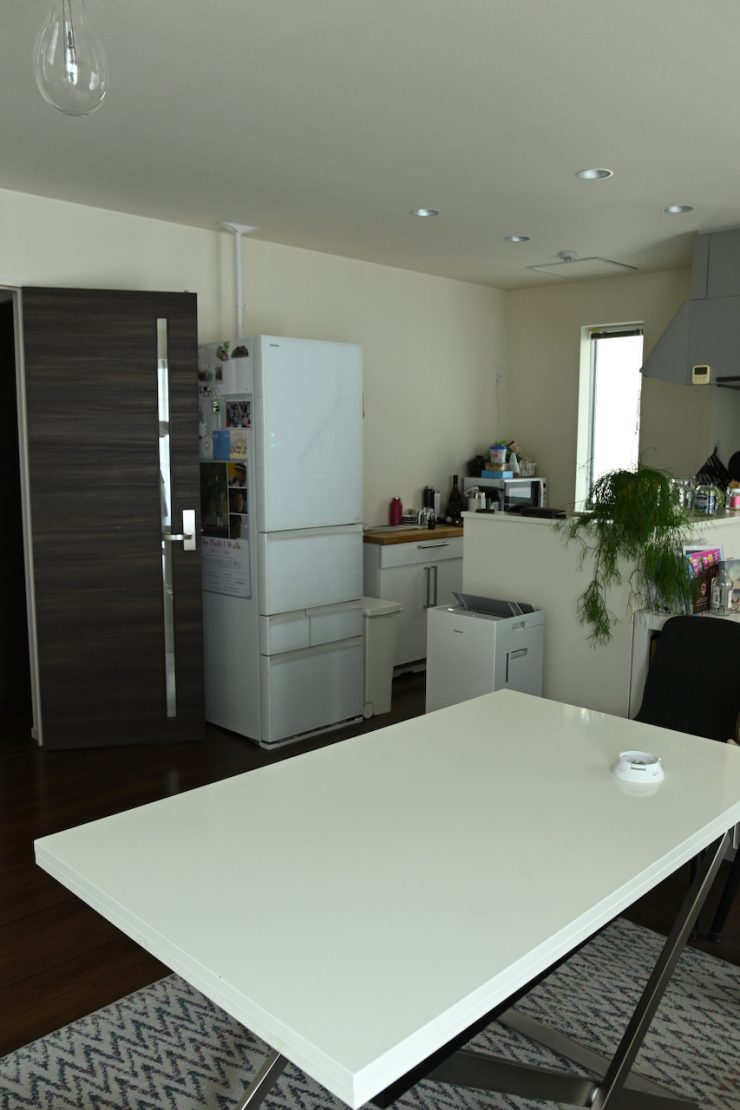
Light Off
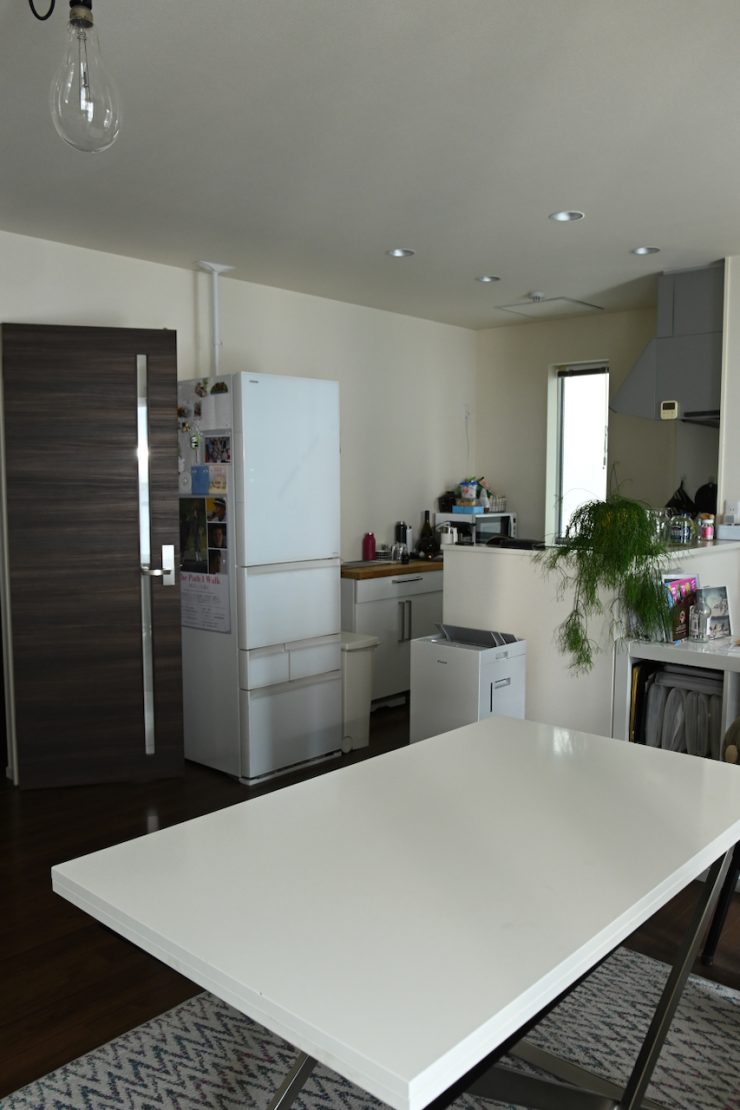
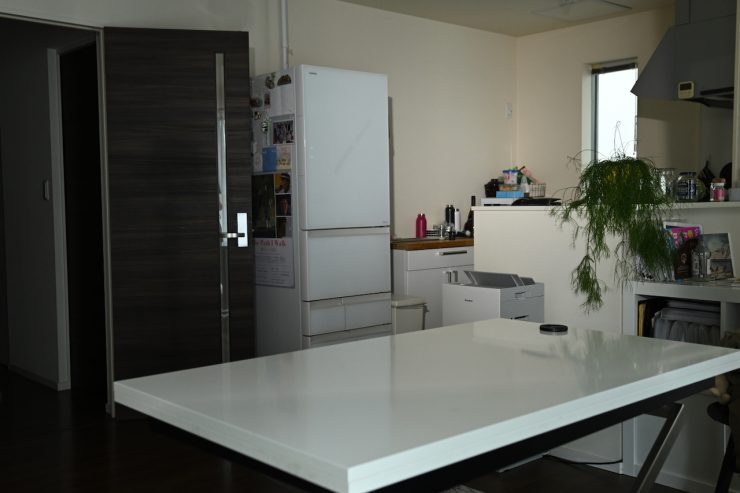
The beam spread you get when using the light open-faced allows you to create a reasonably broad spread of light. For a small-sized light that only draws 40W, it is certainly capable of lifting the illumination in a small-sized room or area if you bounce it off a ceiling or wall.
Light On 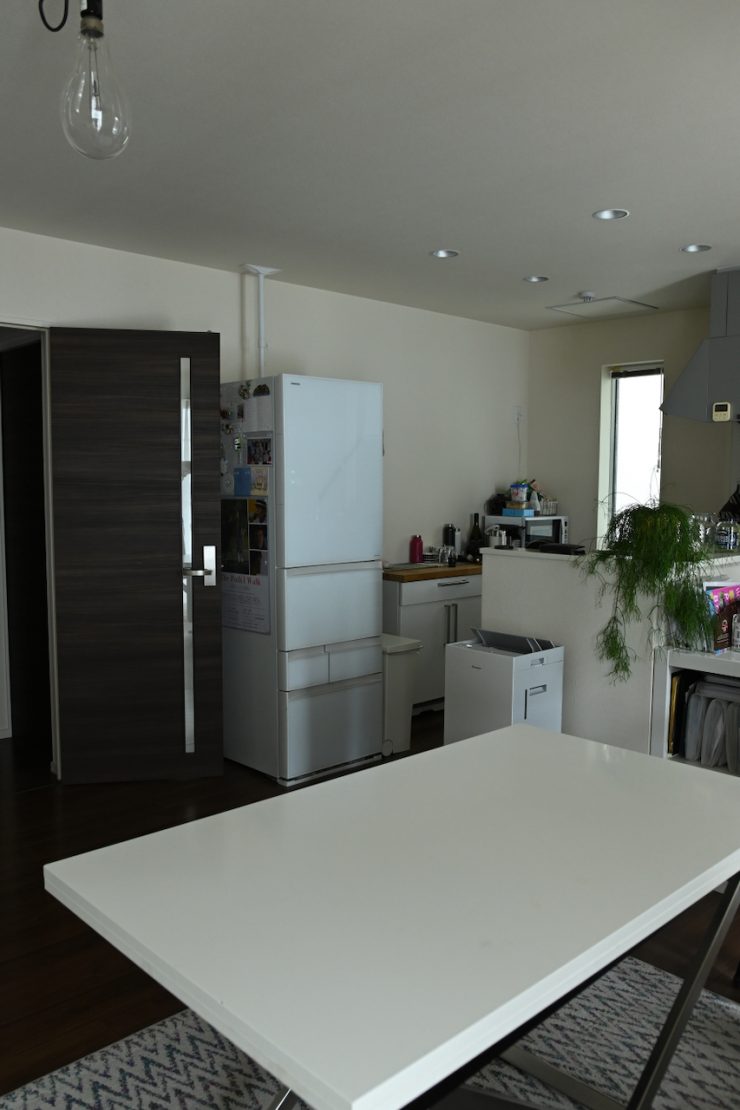
Light Off
Above, you can see what the light looks like when it is placed outside and punched through a sheer curtain using its included 10-degree reflector. I have kept the same camera settings for all three shots.
Light punched into reflector panel 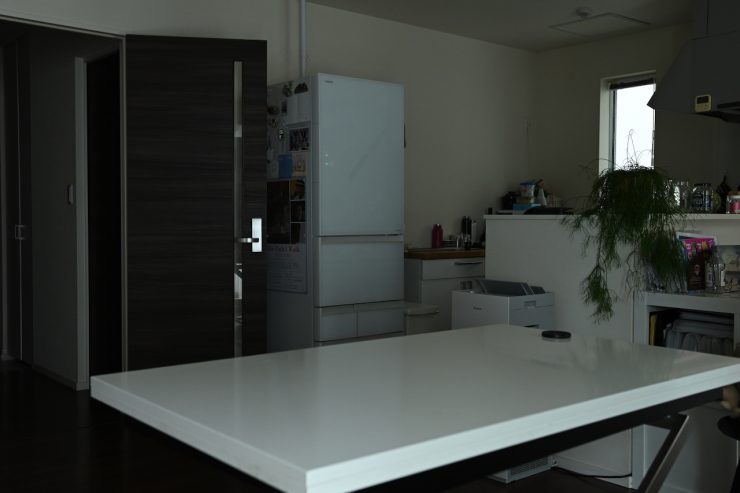
Light Off 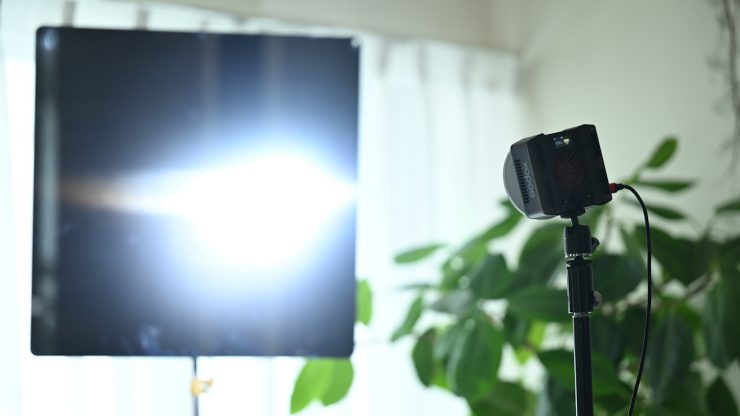
The nice aspect about the 10-degree reflector is that you can use the light with reflector panels like the CRLS Lightbridge. Even though the light only draws 40W, it can provide a good amount of illumination when used with reflectors.
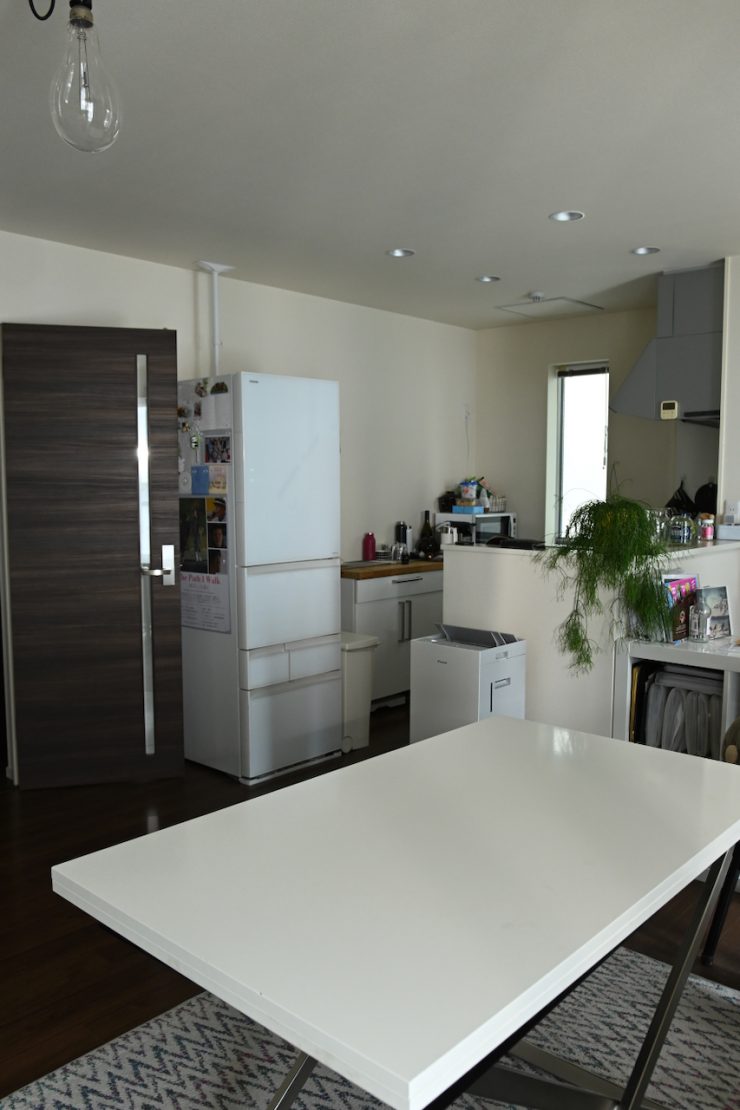
Light On 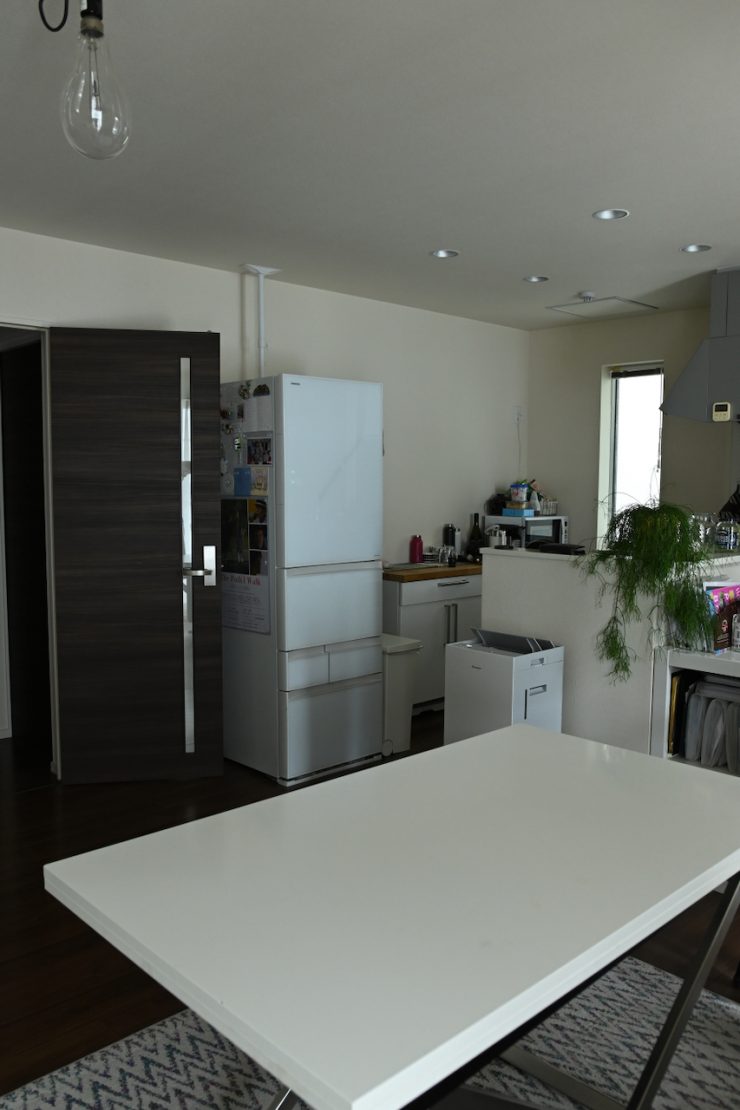
Light Off 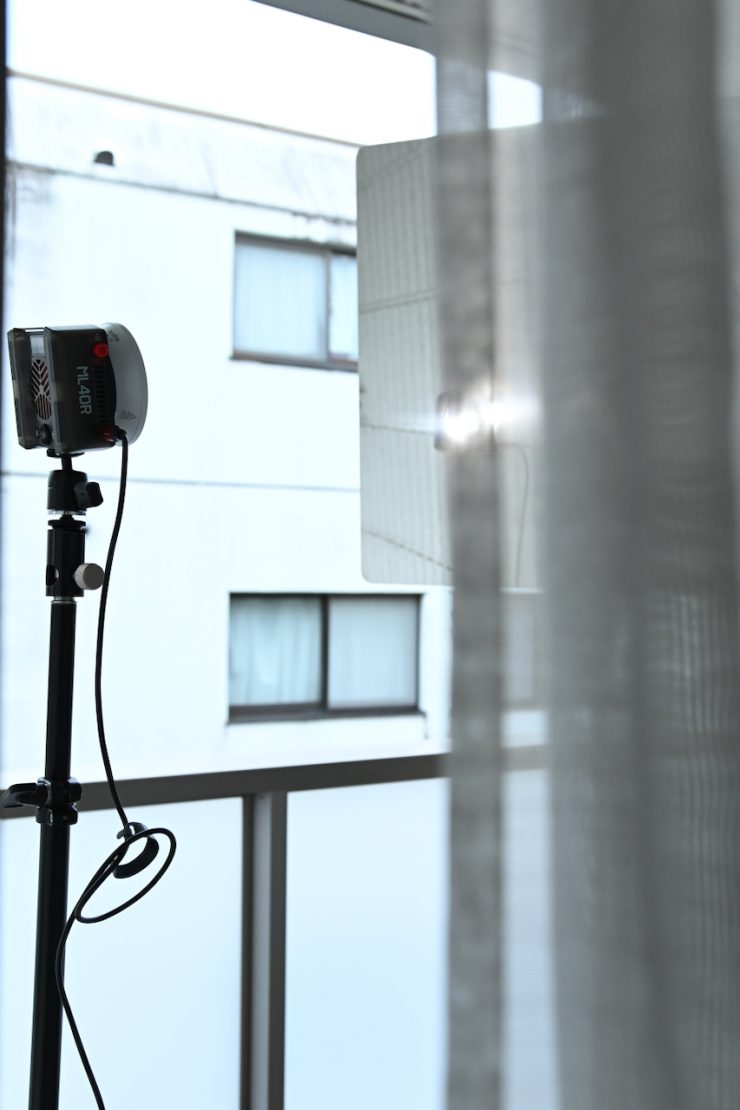
Position of light
Above, you can see what it looks like when the light and a reflector are placed outside and punched through a sheer curtain. This is impressive given the small size and power draw of the fixture.
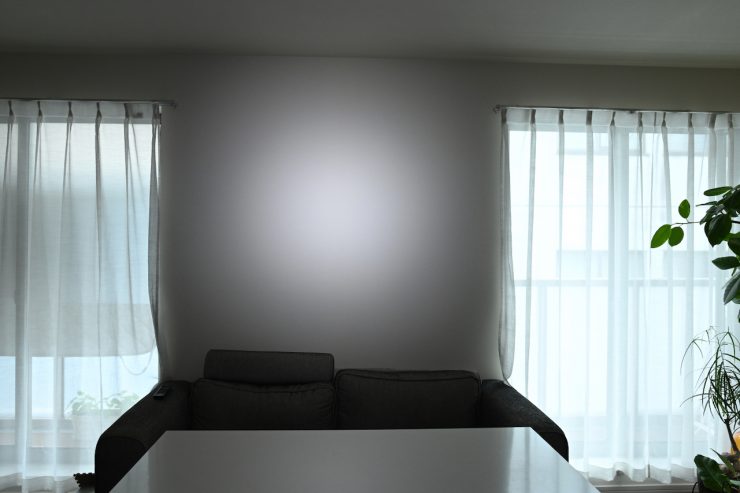
10-Degree Reflector 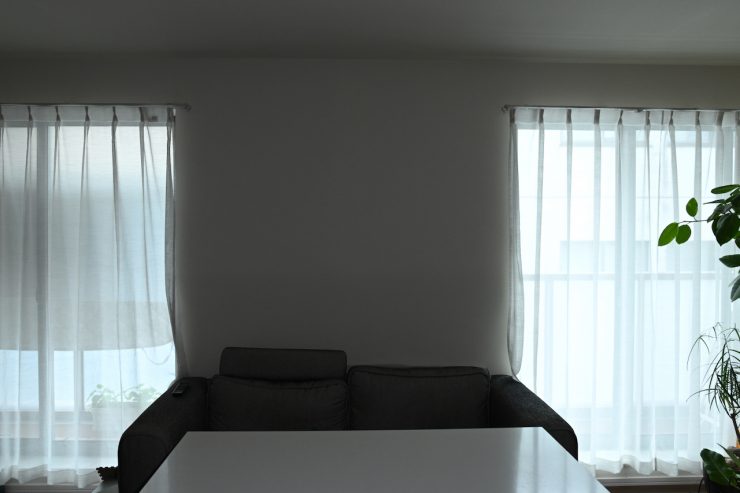
Open Face 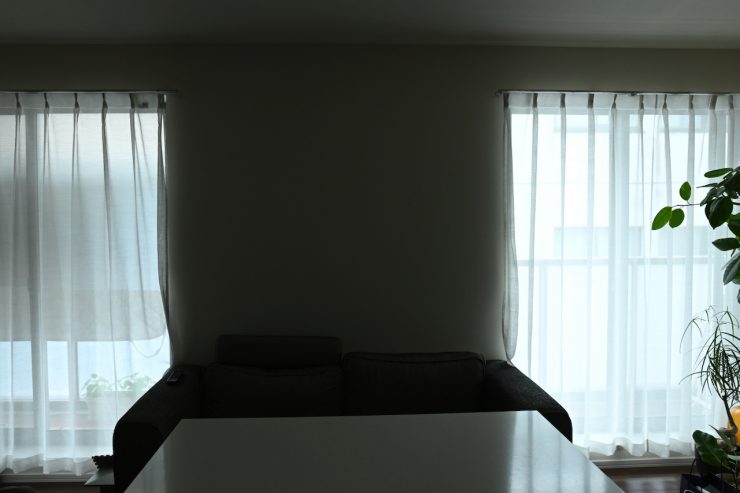
Light Off
Above, you can see what the light looks like when used open face and with the 10-degree reflector when placed 3m / 9.9′ from a wall. I have kept the camera settings the same for all three shots.
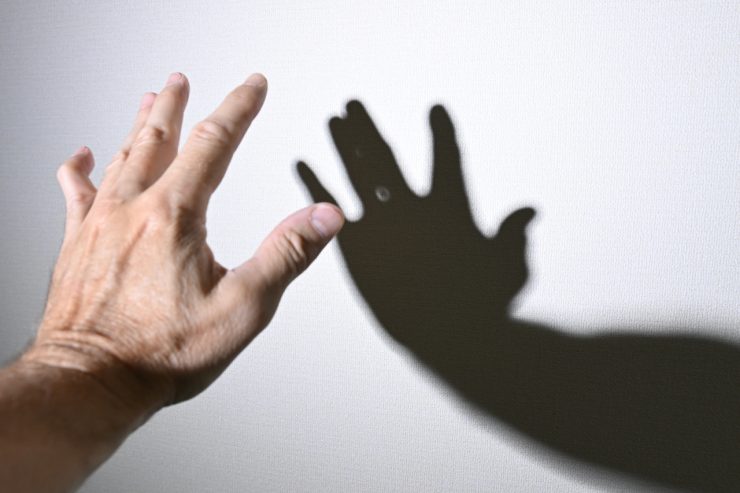
10-degree Reflector 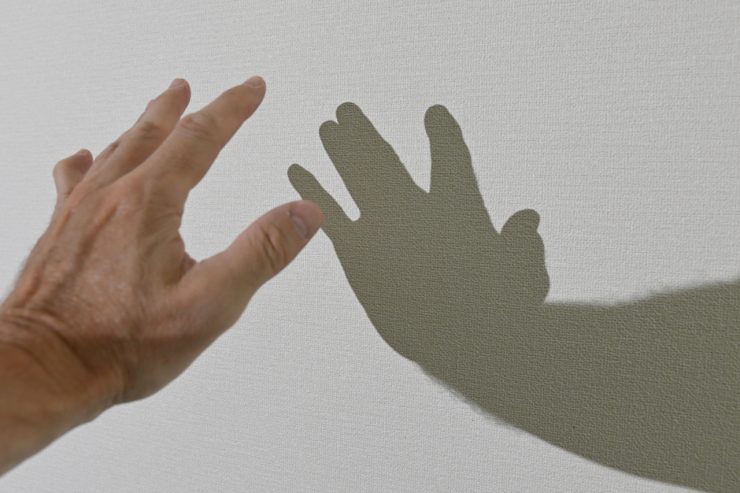
Open Face
As far as shadows are concerned, above you can see what they look like when the light is used open face and with its 10-degree reflector.

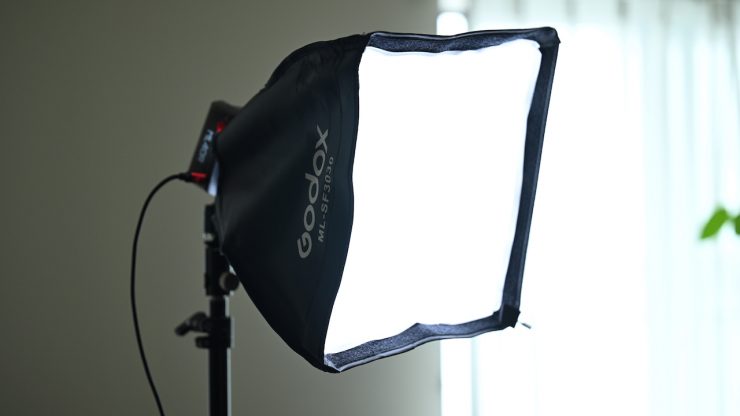
Above, you can see what it looks like when coupled with the optional Godox ML-SF3030 Softbox.
What I also liked is that because the light is so small and it doesn’t weigh much, you could easily put it out on a boom arm over a table, etc.
Price & Availability
The Godox ML40R retails for $119 USD, and it is now available to purchase.
The light doesn’t come in a hard/soft carry case. This means you will have to find a case or bag to put it in.
Below you can see how the price compares to some of the competition.
| PRICE | |
| Godox ML40R | $119 USD |
| SmallRig RM 40C Mini LED Video Light | $79.99 USD |
| Godox ML30Bi Bi-Color LED Dainty Light | $229 USD |
| Harlowe Mini Max Bi-Color LED Monolight Standard Kit (Brown Faux Leather) | $599 USD |
| SmallRig RC 60C RGB LED Monolight (Power Bank Clamp Edition) | $229.99 USD |
| SmallRig RC 60C RGB LED Monolight (Lite Edition) | $179.99 USD |
| Nanlite FC60B Bi-Color LED Spotlight | $159 USD |
| Zhiyun FIVERAY M40 Powerful 40W Pocket LED Light with Silicone Diffuser Kit | $99 USD |
| Ulanzi C60RGB 60W Bi-Color Video Light (RGB, without Adapter) | $99.99 USD |
| COLBOR Wonder W60R RGB LED Monolight | $129 USD |
| amaran Halo 60x Bi-Color LED Monolight | $119 USD |
| Godox RS60R RGB LED Monolight | $259 USD |
| Sirui C60X Handheld Pocket Bi-Color LED Light | $119 USD |
| Neewer FS60B 60W Compact Pocket Bi-Color LED Video Light | $109.99 USD |
| GVM PL60C RGB Pocket LED Monolight | $129 USD |
| Lume Cube XL RGB LED Monolight (Mobile Kit) | $349.99 USD |
| Lume Cube XL RGB LED Monolight | $249.99 USD |
At $119 USd it is certainly competitively priced, but it does face stiff competition from a wide array of other fixtures with similar or slightly higher power draws.
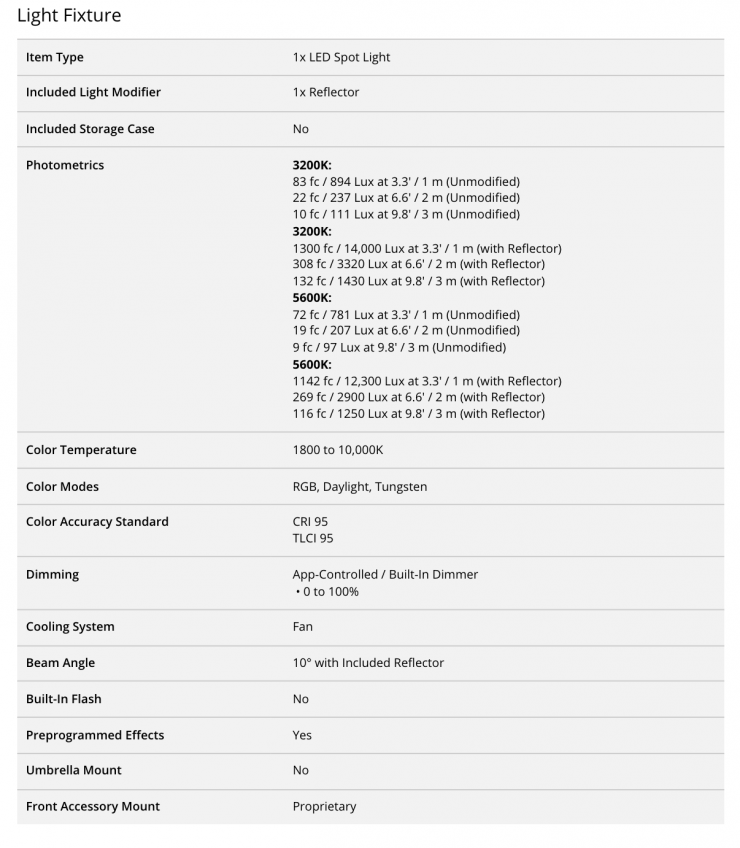
Specifications
Conclusion
The Godox ML40R has its pros and cons, like any light. The build quality is generally good, and the light packs a massive punch for a small-sized fixture. Its compact size and lack of weight make it a good choice if you need to keep your kit to a minimum or you are traveling. The photometric scores are solid and, most importantly, very consistent. The CCT accuracy when dimming the light could be better, and it doesn’t have a consistent output across its CCT range.
The tiny footprint of the Ml40R means you could create a very small lightweight lighting kit using 2-3 of these fixtures. Everything could easily fit inside a small-sized backpack or Pelican case. However, in saying that, its small size does come with the caveat that it can’t be used for certain applications, and the high output also comes at the expense of a very tight beam angle when using the included reflector. The positive aspect of the tight beam angle when using the 10-degree reflector is that it works well with reflectors for indirectly bouncing light.
You could use it as a key light with the Godox ML-SF3030 Softbox in a pinch if you had to and you had a reasonably controlled environment. The light also works well if you just need to add a little bit of ambient fill into a space.
The magnets on the back are handy for mounting the light on compatible surfaces.
Having a proprietary mount also limits the number of lighting modifiers that are available, but Godox does have quite a few accessories for the fixture.
The in-built battery, as I mentioned earlier in the review, has its pros and cons, but it is nice that you can use a battery, power bank, or even a USB-C PD mains power adapter to run the light if you don’t want to use the in-built battery.
The ML40R has its faults, but there is certainly a lot to like about it. Its color rendering performance is good, and in most of the tests I conducted, it performed well. Its compact size and high output make it a very intriguing option when compared to a lot of the other available options; however, it will face very stiff competition given other options that are available.