
Deity used IBC 2026 to give the TC-2 its first public showing, a follow-up to the TC-1 timecode box that Deity had not previously teased. The headline addition is continuous Bluetooth timecode transmission, letting any compatible device in range listen in and stay locked to a single time reference without a manual jam-sync step.
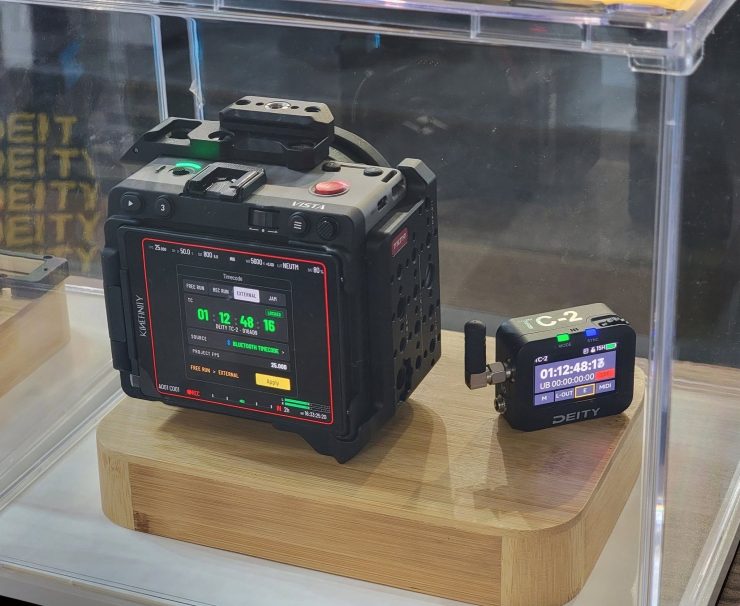
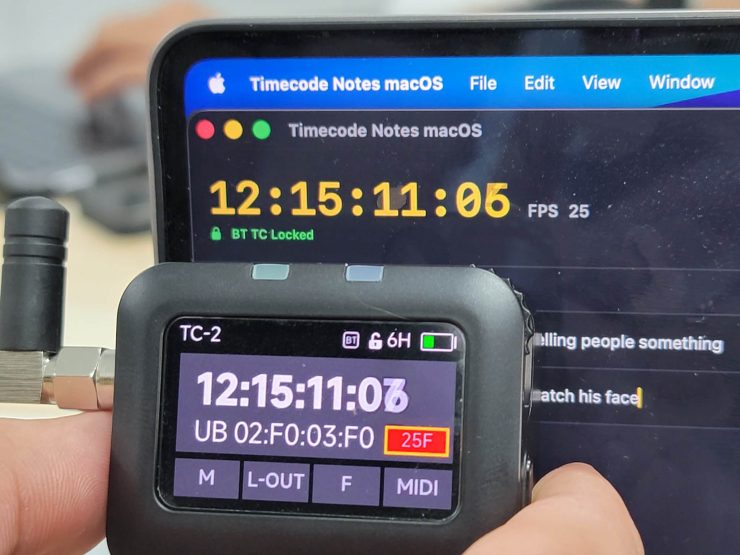
Kinefinity is the first camera brand partnering with Deity to offer this Bluetooth timecode integration built into the camera itself. We spoke with Deity owner Andrew Jones on the show floor.
What it is
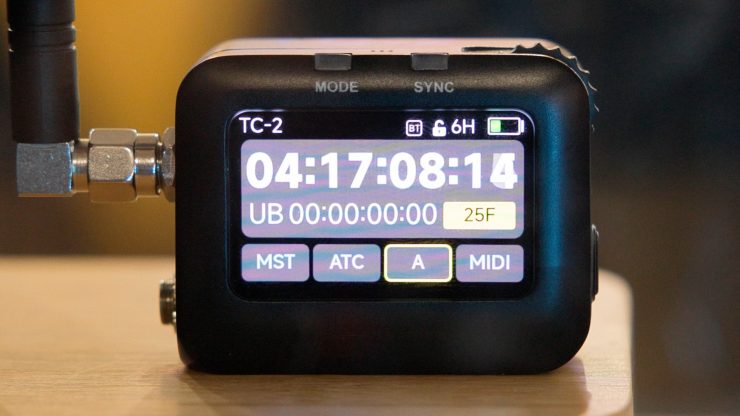
Where the TC-1 could jam-sync over Bluetooth, the TC-2 broadcasts timecode continuously, so any paired device within range decodes and stays locked to it in real time rather than syncing once and drifting. According to Andrew, setup is just turning the units on: set one TC-2 as master, others as auto-jam sub-nodes, and additional devices (a PR-2ii or other paired hardware) join the same timecode reference the moment they power on, no re-jamming required.
If a device moves out of Bluetooth range, it doesn’t lose timecode outright. It falls back to its own internal clock (accurate to about 1 frame drift per 48 hours per Andrew), then re-syncs and corrects automatically once it’s back in range.
Featured Specifications
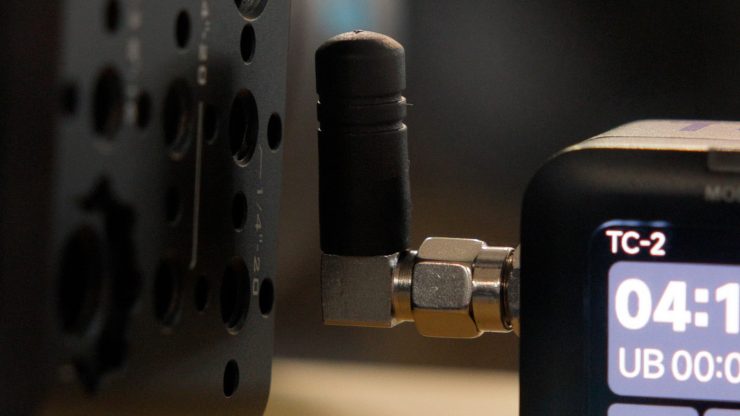
- Continuous Bluetooth timecode: Broadcasts a live timecode reference to any compatible device in range, not just point-in-time jam sync
- Wireless range: Up to 70 meters via RP-SMA antenna (Andrew measured about 35 meters in the IBC hall itself, attributing the difference to RF interference on the show floor)
- Native 120fps timecode: First portable timecode box supporting the SMPTE ST 12-3 standard
- Additional protocols: USB-C ATC timecode, MIDI timecode (for lighting boards and control surfaces), wireless LANC (remote record start/stop, focus, zoom on supported cameras)
- Display: AMOLED, protected by 6H-rated glass, larger than the TC-1’s
- Price: Not yet announced; will be priced above the current TC-1, availability targeted for Q1 2027
Specifications
| Category | Spec |
|---|---|
| Product type | Wireless timecode generator, successor to TC-1 |
| Continuous Bluetooth timecode | Yes, broadcasts live to any compatible receiving device in range |
| Wireless range | Up to 70m (RP-SMA antenna) |
| Legacy device sync | BitConnectify 1.0 (compatible with DBTX, TC-SL1, PR-2) |
| High frame rate support | Native 120fps timecode, SMPTE ST 12-3 |
| USB-C timecode | ATC over USB-C |
| MIDI timecode | SMPTE timecode as MIDI messages, for lighting/control surfaces |
| Camera remote control | Wireless LANC (record start/stop, focus, zoom on supported cameras) |
| Display | AMOLED, 6H-rated glass protection, variable refresh up to 60Hz |
| App control | Sidus Audio (iOS/Android) |
| Accessory compatibility | Uses existing TC-1 cables and hook-and-loop cold shoe mount |
| Standalone drift (out of range) | About 1 frame per 48 hours per Andrew |
| Availability | Targeted Q1 2027 |
Why continuous Bluetooth matters
Because timecode is only written to a file the moment record is pressed, Andrew’s framing was less about a single wireless link and more about building a “cloud” of timecode across a set. Mount one TC-2 with line of sight to a room (rigged up near lighting, for instance) and every device inside that space, including other brands’ gear listening for the same Bluetooth signal, can stay on the same reference without individually jamming to each other first.
Beyond cameras: lighting and control surfaces
The MIDI timecode addition lets the TC-2 feed lighting boards and control surfaces directly, and wireless LANC support adds remote start/stop, focus, and zoom control on cameras that support it (Andrew named Sony and Blackmagic as examples). Andrew said Deity is in conversations with additional manufacturers, since some cameras already ship with Bluetooth or Wi-Fi radios that simply haven’t had this functionality turned on.
Display and design
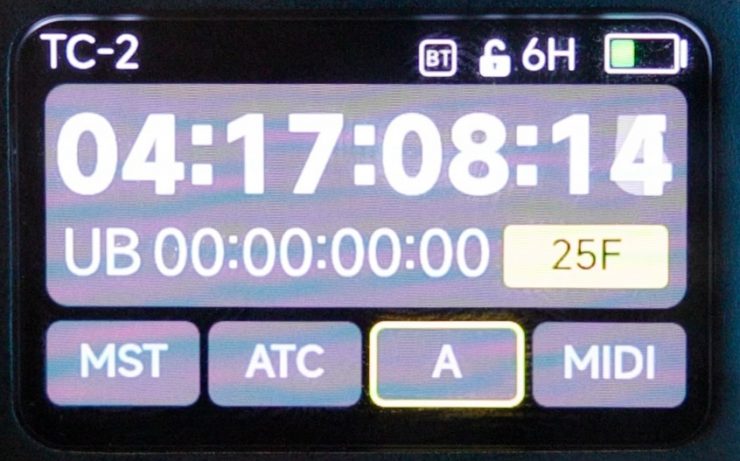
The TC-2 keeps the same footprint as the TC-1, with a bit less battery life in exchange for a considerably upgraded screen, an AMOLED panel Andrew described as high-PPI and around 600 nits, protected by 6H-rated glass. It stays backward-compatible with existing TC-1 cables and the hook-and-loop cold shoe mount, and the screen can still be disabled (triple-tap the power button) for operators who don’t want camera crew touching settings.
Price & availability
Deity hasn’t announced final pricing. Andrew said the TC-2 will sit above current TC-1 pricing (TC-1 currently runs around $159 to $170 depending on kit) with enough of a gap that buyers will have to weigh whether they need the added features, and that fewer TC-2 units may be needed per production given the extended range and continuous sync. Target availability is Q1 2027, with the TC-1 remaining in the lineup as Deity’s entry-level timecode box.