
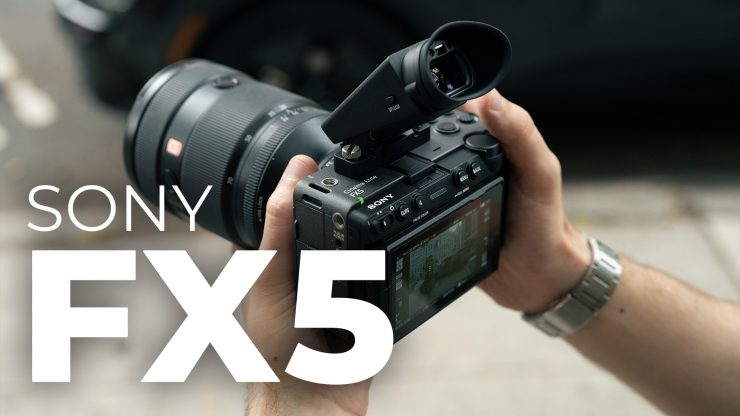
Sony has announced its new FX5. The FX5 is capable of recording 5K60 Open Gate (3:2) and 5K120 (16:9) internally in X-OCN RAW, and features three base ISO settings, a VENICE-inspired user interface, and a Multi-Function Dial.
Even though it was designed to sit between the FX3 and the FX6, it represents a real paradigm shift for Sony as a company. I say that because the company has finally relented and made an affordable digital cinema camera that is capable of open gate recording. Up until now, Sony has been very careful in protecting its higher-end models, namely the BURANO and VENICE 2. However, with lots of the competition offering open gate in lower-end models, Sony arguably needed to change its thinking.
The FX6 and FX3 were extremely successful cameras for Sony, but both of them are now getting a little long in the tooth. Instead of making new models of both those cameras, Sony decided to come up with something that sits in between. With the majority of sales happening at the lower end and more and more people creating content, this is arguably a smart move.
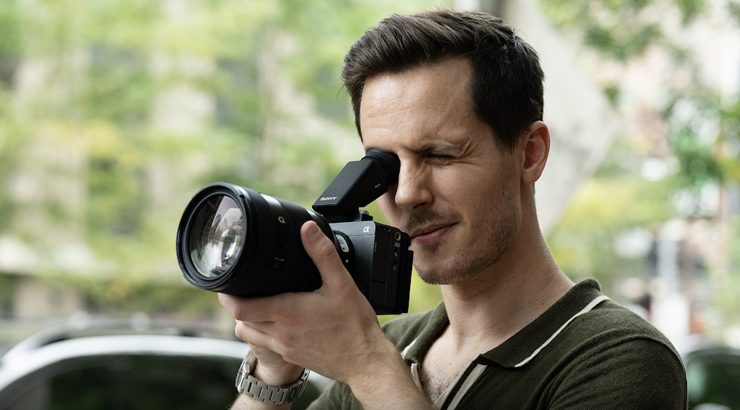
Unlike the FX3, the FX5 isn’t a mirrorless hybrid, as it doesn’t feature any stills capabilities. I think most potential buyers of the FX5 won’t be angry about this, as it means fewer menus and less compromises on the video side. Besides, if you want a mirrorless hybrid, there are plenty of other options that are available.
Key features
- 5K 16.6MP Stacked Full-Frame Sensor
- 5K60 Open Gate (3:2) & 5K120 (16:9)
- Internal X-OCN Raw Recording
- Triple Base ISO | Dual Gain Mode
- 3.5″ 16:9 4-Axis Multi-Angle Touchscreen
- AI-Powered Autofocus & White Balance
- 5-Axis In-Body Image Stabilization
- BIG 6 Menu System & Streamlined Controls
- Dual CFexpress Type A/SDXC Card Slots
- XLR-H2 XLR Handle Unit | Optional EVF
How is it different from other FX Cameras
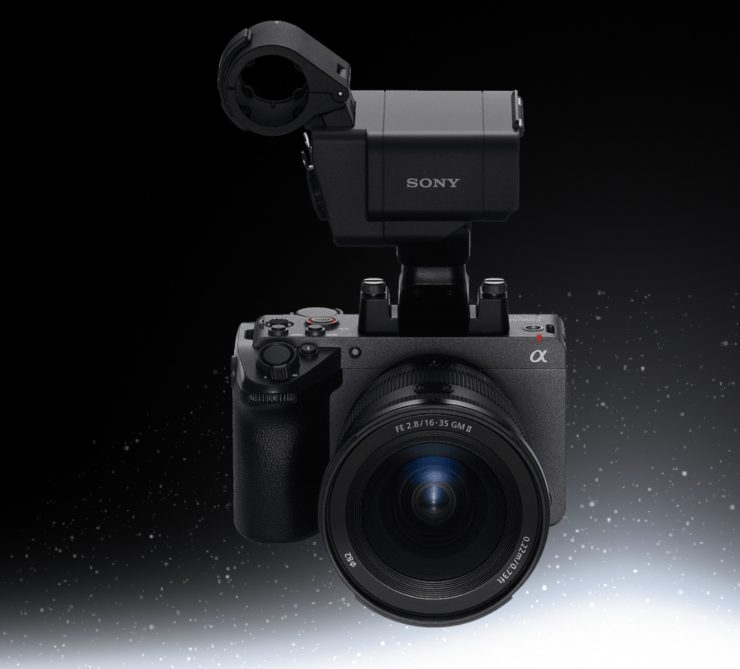
- First FX-series camera with internal X-OCN
- First FX-series camera with full-frame Open Gate
- Three Base ISO settings
- Dual Gain with a claimed dynamic range of more than 16 stops
- New BIONZ XR2 with integrated AI processing
- Full-frame stacked 5K sensor
- Optional EVF
- Optional 32-bit float XLR handle
- Built-in False Color, Waveform, and Vector Scope
- New 3.5-inch four-axis LCD
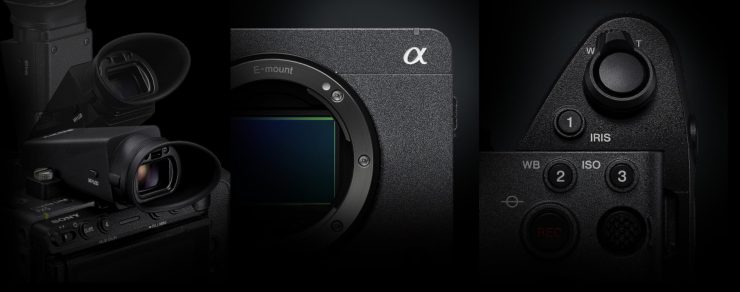
- VENICE-inspired user interface and Multi-Function Dial
Full-Frame Open Gate

The FX5 is capable of recording 5K (4992 × 3328) in a 3:2 aspect ratio, using the complete height of the sensor at up to 60p in X-OCN. As I previously mentioned, this is a big step forward for Sony, and they have finally relented to industry pressure and included Open Gate recording in one of their more affordable cameras. Up until now, if you wanted to record in 4:3 or 6:5 aspect ratios on a Sony cinema camera, you needed to spend $24,999 USD on a BURANO. For Open Gate, you needed to step up to the VENICE 2.
You can’t currently record in Open Gate in XAVC, but that is coming as part of the firmware roadmap in 2027.
With more and more demand for deliverables in multiple aspect ratios and the increase in vertical video for social media content, having the ability to shoot in Open Gate increases the camera’s versatility. You can now also utilize anamorphic lenses with squeeze ratios above 1.33x and not throw away resolution like you would with the FX3/FX3 or FX6.
As you would expect, Sony has added 1.3x, 1.5x, 1.6x, 1.8x, and 2.0x anamorphic de-squeeze display options.
X-OCN
The FX5 has the ability to record in three different flavors of X-OCN. X-OCN (eXtended tonal range Original Camera Negative) is Sony’s answer to a compressed RAW format. The FX5 is the first camera below the BURANO to offer X-OCN recording. X-OCN is available when recording in Full-frame 5K 3:2, 17:9, 16:9 aspect ratios, and in the Full-frame crop 3.8K 16:9 mode.
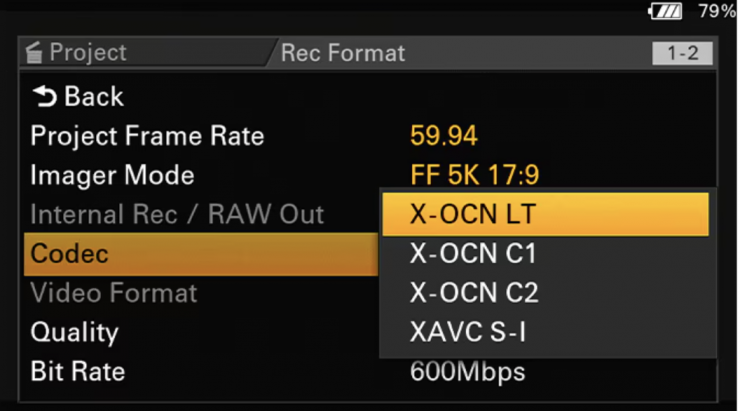
The FX5 has the following X-OCN Recording Options:
- X-OCN LT
- X-OCN C1
- X-OCN C2
The X-OCN LT is exactly the same as you will find on the BURANO. But what are X-OCN C1 and X-OCN C2?
According to Sony, X-OCN C1 file sizes are approximately 25% smaller than those of X-OCN LT. X-OCN C2 was designed so that users can have smaller file sizes when shooting in higher frame rates.
- X-OCN LT (Light): Indie features, TV, commercials, documentaries, and live events-preserves editing flexibility and 16-bit linear encoding. (5K24 OG: 712 Mb/s)
- X-OCN C1: Content creation, online distribution, live events, documentaries-additional compression for longer runtimes and less discerning productions. (5K24 OG: 536 Mb/s)
- X-OCN C2: Prioritizes media storage and long runtimes. (5K24 OG: 429 Mb/s)
Lens distortion correction is not applied to X-OCN clips recorded in-camera.
When using Sony, or licensed partner E-mount lenses, lens distortion correction can be applied in Catalyst Browse, Catalyst Prepare, or Catalyst Prepare Plugin using embedded lens metadata.
Clip preview support for lens distortion correction will be added in a future update.
During shooting, lens distortion correction is applied to the image displayed on the camera’s LCD monitor and to the video output via HDMI. However, lens distortion correction is not reflected during clip preview. As a result, the appearance of distortion may differ between shooting and clip preview.
X-OCN supports a variety of resolutions and color reproduction information based on S-Gamut3, Sony’s wide color gamut standard. Sony states that it is capable of recording the wide dynamic range captured by the camera sensor as 16-bit scene-linear data with rich tonal gradation. This information can be effectively utilized not only in high-quality video production such as traditional commercials and films, but also in compositing and HDR production. X-OCN was previously available only in Sony’s higher-end VENICE 2 and BURANO. The VENICE 2 can record 16-bit X-OCN internally to AXS memory cards, while the BURANO has internal 16-bit X-OCN LT that can be recorded to CFexpress Type B cards.
Way back in 2016, Sony released its new recording format called X-OCN (eXtended tonal range Original Camera Negative). I am only speculating here, but I imagine that they came to some sort of licensing agreement with RED/NIKON to be able to use X-OCN in their cameras, including with the FX5.
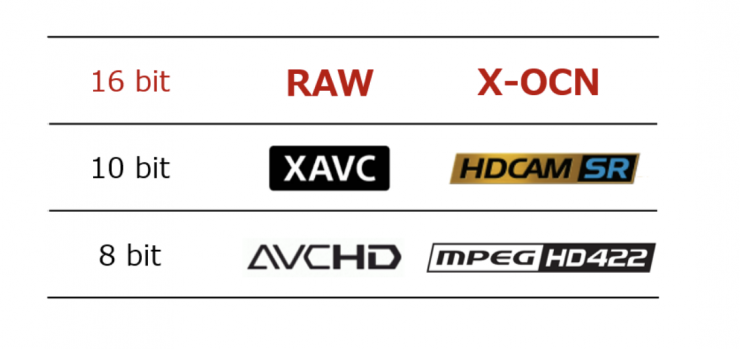
X-OCN was developed to enhance the compression efficiency of Sony RAW to deliver visually lossless image quality utilizing 16 bits. It does this by processing the camera’s original image data utilizing a unique algorithm that was developed by Sony. By utilizing this algorithm, Sony could produce file sizes that were much smaller than typical camera RAW, but with 16-bit scene linear encoding. X-OCN utilizes CBR (Constant Bit Rate) encoding, where the output remains constant regardless of the complexity of the image. This contributes to minimizing risks of any distortion or artifacts in the image that may be caused by a limitation of conventional encoding
16-bit X-OCN records 65,536 tonal gradations per color component or over 280 trillion individual shades of color. What you need to keep in mind is that while having all of these shades of color is great, monitors are not able to display that much color information,
According to Sony, the key features of X-OCN are:
• Exceptional quality with the power of 16 bits
• Smaller files, Longer recording times
• Greater decision-making flexibility in post-production
• Stable image quality with robust encoding
• Easy to work with full third-party support
X-OCN doesn’t “bake in” your settings for Exposure Index, color space, LUTs, gamma, Log, and others, as it only captures these parameters as monitoring settings.
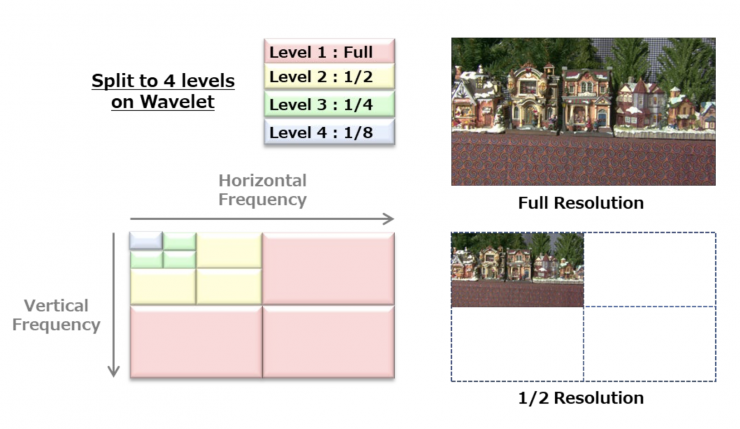
X-OCN uses the same industry-standard OP1a MXF wrapper as Sony RAW, XAVC, SR, and MPEG2 formats. Picture, Sound, and Metadata are contained within one file wrapper. X-OCN also adopts a wavelet transform as part of the image compression that allows it to offer great flexibility in viewing performance. You can still playback X- OCN clips smoothly in real-time by selecting 1/2 or 1/4 resolution (or even less if supported) on application software.
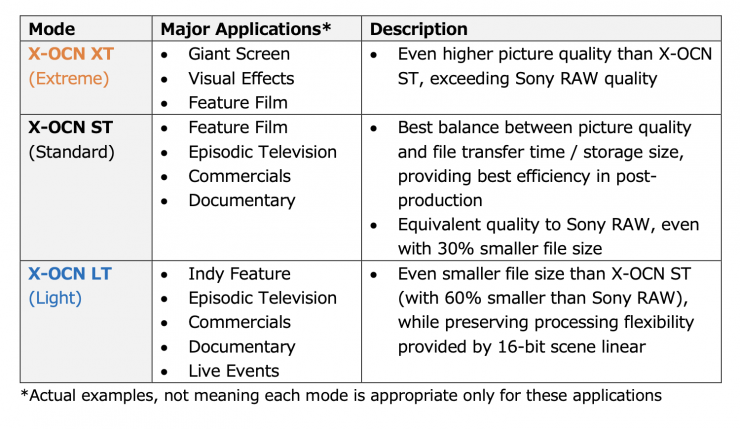
X-OCN is available in three different flavors. The FX5 and BURANO are only able to record in X-OCN LT, while their bigger brother, the VENICE 2, can capture in X-OCN XT and X-OCN ST as well.
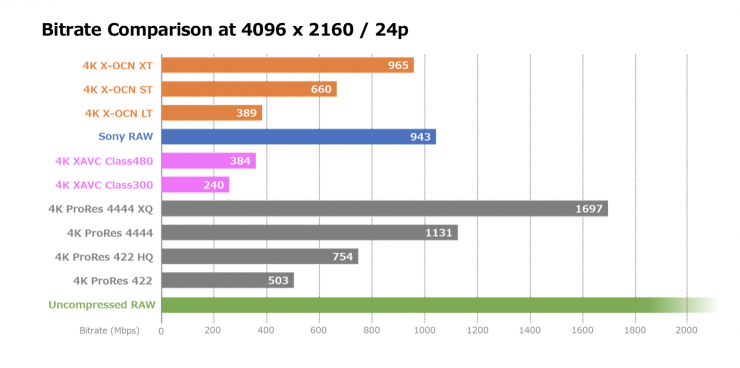
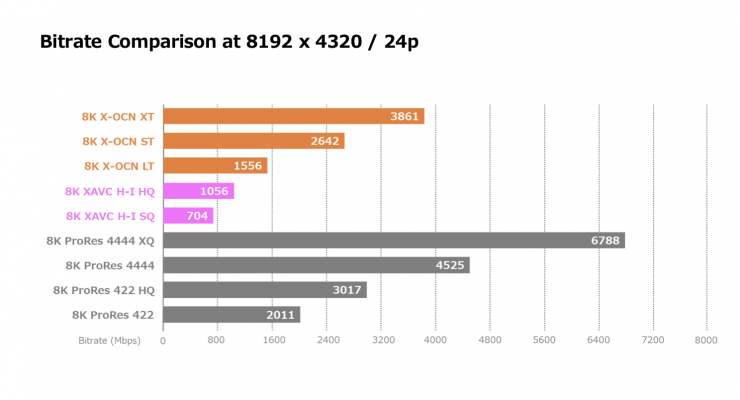
Above you can see how the bitrate of X-OCN compares to other formats.
In the case of the BURANO and FX5, X-OCN LT (389Mbps) can offer RAW quality with 16-bit scene linear at almost equivalent bitrate to 4K XAVC Class480 (384Mbps) and even at a lower bitrate than 4K ProRes 422 (503Mbps).
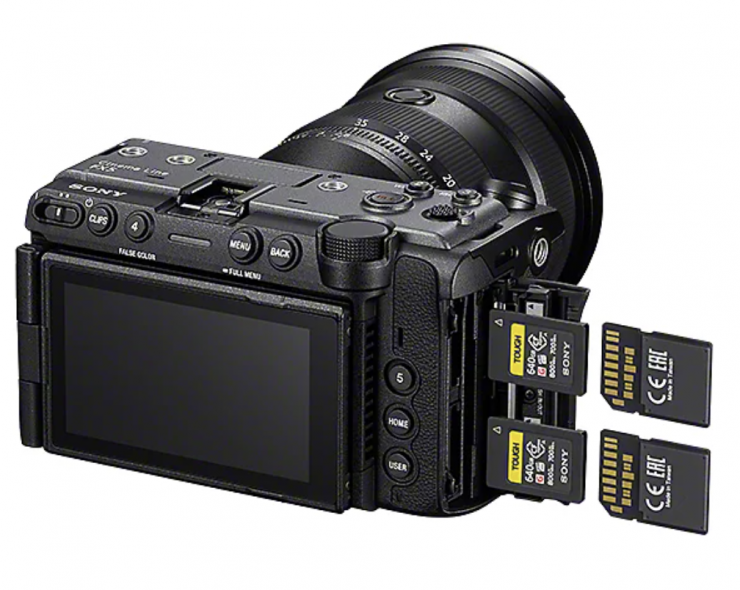
Unlike the VENICE 2, the FX5 doesn’t require the use of the AXS-R7 external recorder to be able to record X-OCN files. This is now all done internally to the camera’s dual CFexpress Type A/SDXC Card Slots.
Now, as I mentioned earlier, you don’t get all of the X-OCN recording options as you do with the VENICE 2. The FX5 and BURANO are only capable of recording X-OCN LT; you cannot record in X-OCN XT or X-OCN ST.
Sony states that X-OCN LT is ideal when you need even smaller file sizes. These files are 60% smaller than Sony RAW yet still give you the picture quality and image processing flexibility provided by a 16-bit Linear file.
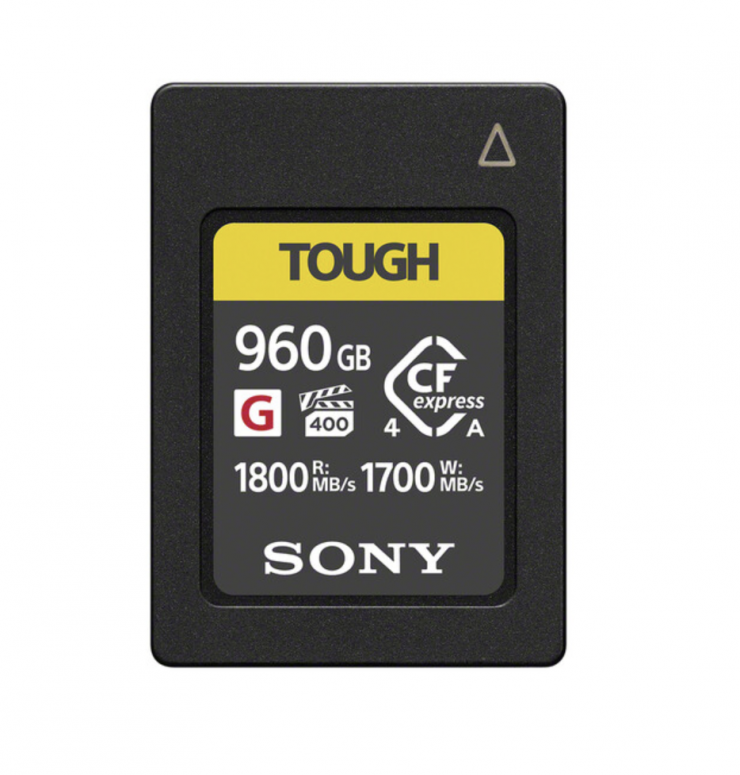
CFexpress Type A cards are fast enough to record the data rates required for the X-OCN LT files. However, you do need to use VPG400-certified cards to do so. You don’t have to use VPG400-certified cards if you are recording in XAVC. These cards are not cheap, and with memory card prices going up and up, you need to factor in the cost if you plan on shooting in X-OCN. As an example, the Sony 960GB CFexpress 4.0 Type A TOUGH Memory Card costs $878 USD.
XAVC
Along with X-OCN, you can also record in the following XAVC codecs:
- XAVC HS-L 4:2:2
- XAVC HS-L 4:2:0
- XAVC S-I
- XAVC S-L 4:2:2
- XAVC S-L 4:2:0
XAVC S-I supports the following selected recording resolutions:
• Full-frame 5K 17:9, 16:9
• Full-frame crop 4.5K 17:9, 16:9
• Super 35 3.2K 16:9
There are also Long-GOP formats available for selected full-frame and Super 35 recording areas.
XAVC supports 8 and 10-bit colour depth as well as 4:2:2 and 4:2:0 color sampling and wide colour gamut. It also supports HDR (High Dynamic Range) shooting.
XAVC S is a subset format, using many of the superlative techniques and technologies used in XAVC, but it is intended for consumer products and workflows. It supports 1920×1080 HD and the 3840×2160 pixel version of 4K, known as Quad Full HD, QFHD, UltraHDTV or UHDTV. XAVC S is a lighter codec with Long GOP compression and relatively small recorded file sizes. XAVC S uses the .MP4 file wrapper for greater compatibility and suitability in consumer workflows.
XAVC-HS uses H.265 compression so that file sizes are reduced. It is claimed to offer twice the efficiency of XAVC S but with the same level of quality.
Sensor Formats & Recording Areas
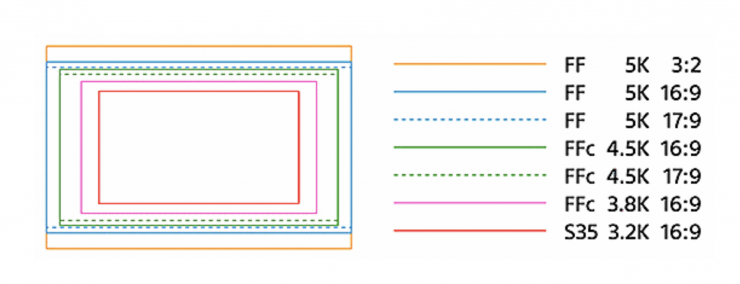
You can record in full-frame, full-frame crop, and S35 modes with the FX5.
Full-Frame
Open Gate
- 3:2 aspect ratio
- 4992 × 3328 resolution
- Uses the complete image-sensor height
Full-Frame 17:9
- 4992 × 2632 resolution
- Available with supported X-OCN formats (XAVC in this imager mode is only 4K)
Full-Frame 16:9
- 4992 × 2808 resolution
- Up to 5K 60p
- Supported by X-OCN formats (XAVC in this imager mode is only 4K)
Full-Frame Crop Modes
- 4.5K 17:9
- 4.5K 16:9
- 3.8K 16:9
- Supports higher-frame-rate recording depending on format
Super 35 Mode
- 3264 x 1836 resolution
- 16:9 aspect ratio
- Supports selected XAVC recording formats
16.6MP full-frame stacked sensor & BIONZ XR2 processor
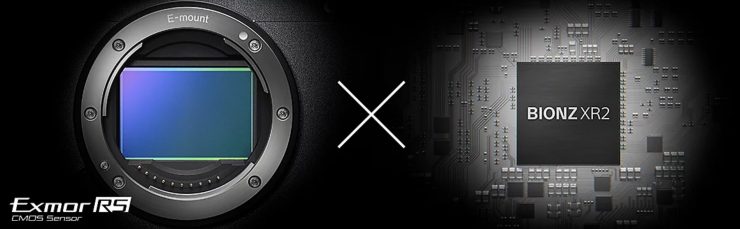
The FX5 utilizes a brand new 16.6MP full-frame stacked sensor and BIONZ XR2 processor. As a comparison, the FX3/FX3A and FX6 utilize a 12.1MP Exmor R BSI CMOS sensor and a BIONZ XR processor.
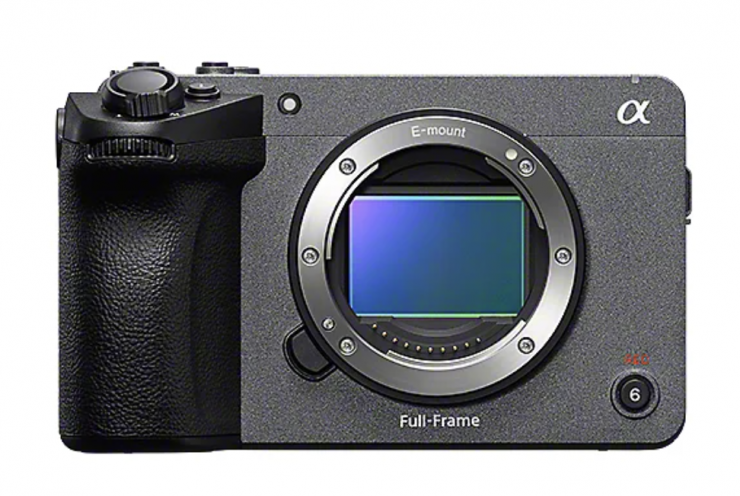
Full-Frame Stacked Exmor RS Sensor
- 16.6 MP effective resolution
- Full-frame stacked CMOS architecture
- 5K maximum sensor resolution
- Faster sensor readout for high-frame-rate capture
- 5K 60p recording
- 4K 120p recording
- Full HD 240p recording
- 15+ stops of native dynamic range
- Three Base ISO settings
- Dual Gain readout mode
- Open Gate 3:2 capture
The stacked sensor in the FX5 allows for much faster readout speeds, and this faster readout helps to reduce rolling shutter, increase resolution, and frame rates in video. The Sony A7R VI also uses a fully stacked sensor. A fully stacked sensor offers better performance than a partially stacked sensor, but it is more expensive to produce. Partially stacked sensors have been used in cameras like the Sony a7 V, Nikon Z6 III, the new Nikon ZR, and Panasonic LUMIX SII.
Sony states that the claimed dynamic range is 15+ stops.
Now, if you want to squeeze more dynamic range, there is a Dual Gain readout mode available. Now, please don’t confuse the camera with having a Dual Gain sensor, because it doesn’t. I am not sure technically how this Dual Gain readout mode works with a stacked sensor. With the Dual Gain readout mode enabled, Sony claims that you can achieve 16+ stops of dynamic range.
A camera with a DGO sensor produces images optimized for HDR by creating two images. One prioritizes highlights, and the other prioritizes shadows and dark areas. This is how you are able to achieve high dynamic range with reduced noise in the shadows and improved low-light performance. Noise is greatly reduced because the Dual Gain Output signal was taken directly from the sensor and before any image processing takes place.
You shouldn’t confuse Dual Gain Output with Triple Base ISO. Although it’s the same basic idea of having different readout calibrations, Dual Gain Output is much harder to do than Triple Base ISO because that switches between the three. What ARRI and Canon (with the C70) are doing requires there to be a dual readout on every frame and then processing all of that on every frame.
With cameras that utilize DGO, you probably didn’t notice a massive increase in dynamic range if you are still finishing in SDR. It is with HDR that DGO was noticeable.
The reason most companies moved away from DGO sensors is that they offer better AF performance.
BIONZ XR2 Processing Engine
- Integrated Al processing unit
- Al-based subject recognition
- Al-based subject tracking
- Al-powered Auto Tracing White Balance
- Improved autofocus processing
- Improved stabilization processing
- Supports professional monitoring and user-interface functions
Just like the Sony a7 V, a7R IV, a1, and a7S III models, the FX5 uses a BIONZ XR2 processor featuring an integrated AI unit. The new processing engine offers increased processing performance, which enables faster overall performance, better image quality with wide sensitivity, and higher dynamic range. The improved processing is capable of handling AI tasks and intelligent AF alongside imaging processes. This processing system is also claimed to reduce rolling shutter.
How does it stay cool?
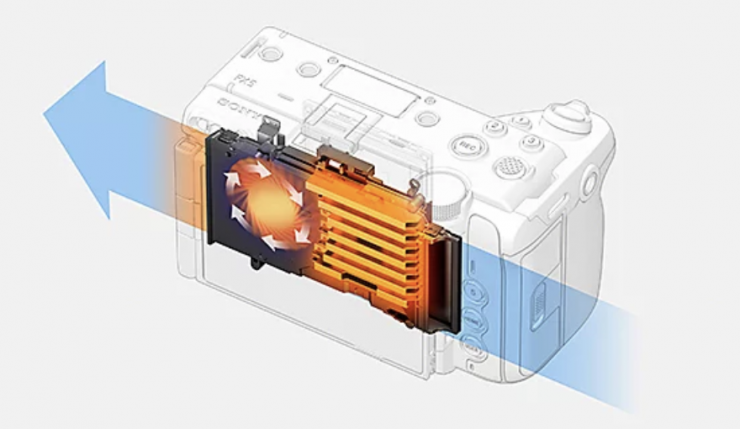
The camera is said to feature a high-efficiency cooling fan with enhanced cooling performance and an optimised heat dissipation design. According to Sony, the camera generates up to three times the airflow of the FX3, ensuring continuous cooling even when the LCD monitor is closed. You can choose from three fan modes—[Auto], [Minimum] and [Off during recording].
Triple Native ISOs
We first saw Triple base ISOs being used in the Canon C80, and now the Sony FX5. The FX5’s three native ISOs are as follows:
- 800
- 4000
- 12800
Manual setting of the base ISO sensitivity is supported only in Cine EI and Flexible ISO modes. In Cine EI Quick mode, the optimal base ISO sensitivity is automatically selected in accordance with the EI setting.
Controls
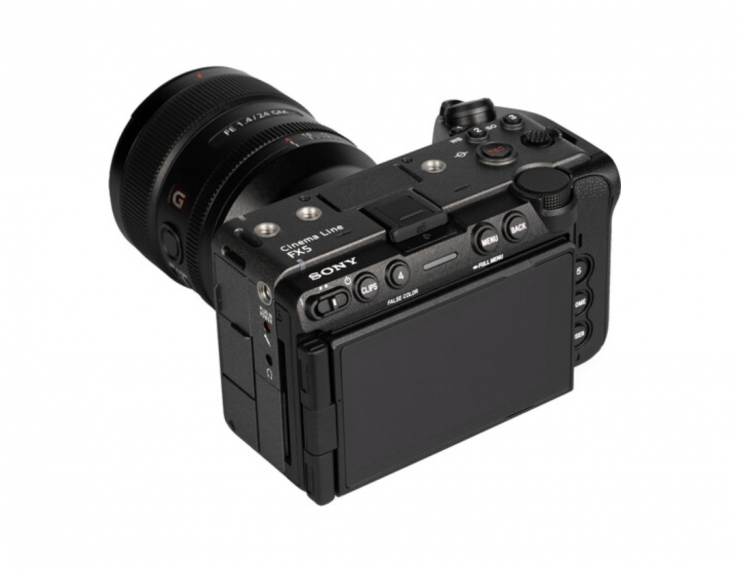
Sony has worked hard to optimize the button layout by making it faster to access core shooting functions. The controls and menu were designed to be more similar to the VENICE 2 and BURANO.
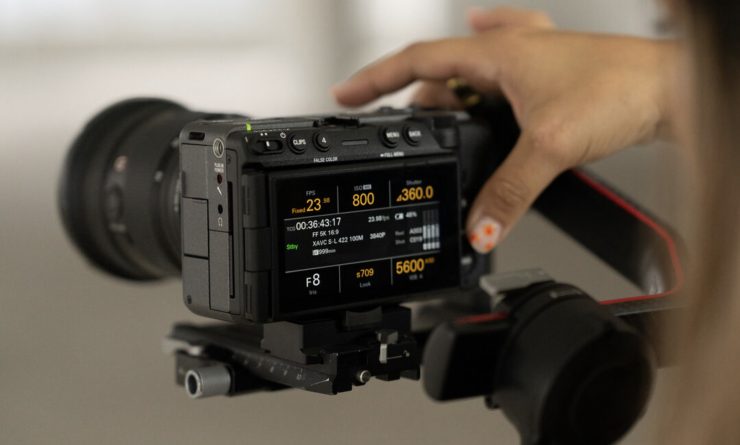
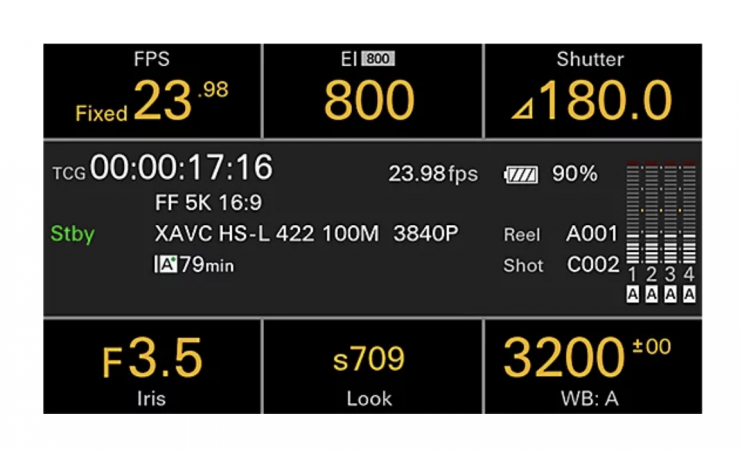
There is also the BIG 6 Menu System that allows users to quickly access frequently used functions during shooting (BIG6) – Inherited from Sony’s CineAlta cameras, such as the VENICE/VENICE 2, BURANO, FX6, etc., the BIG6 interface displays six essential parameters – FPS, ISO, Shutter, Iris or ND Filter, Look, and White Balance – all in one view.
- Updated shooting screen layout – black borders
- Support for Blackmagic RAW recording via HDMI
- Support for HLG mild in custom shooting mode
- Paint and Look in one scene file to easily share
The camera features the following buttons:
- Six assignable buttons
- Dedicated Clips button
- Dedicated Back button
- Dedicated Home button
- Dedicated User button
- Multi-Function Dial inherited from VENICE 2/BURANO
3.5-inch LCD & Optional Sony DVF-EL1 Electronic Viewfinder
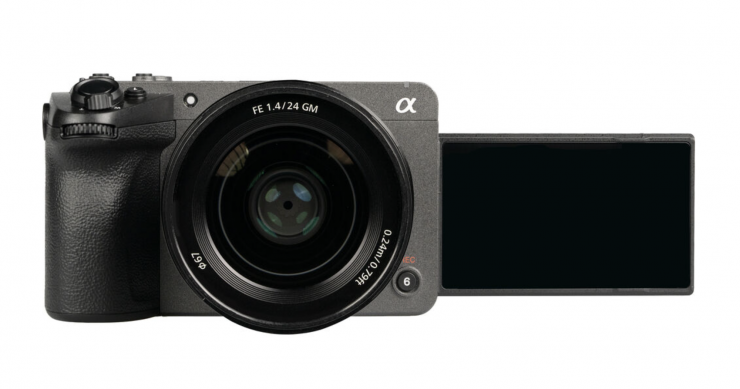
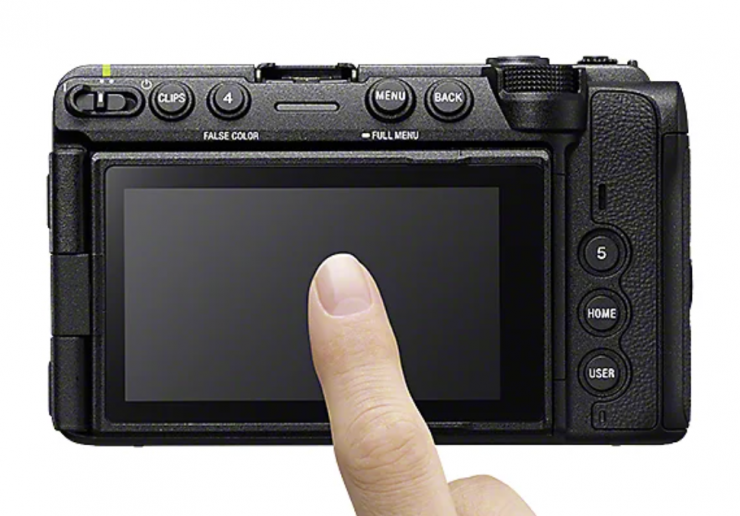
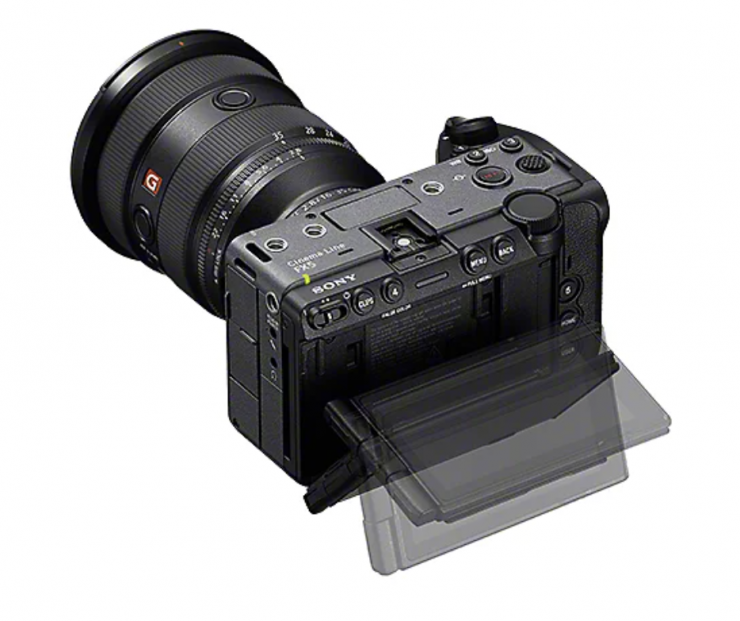
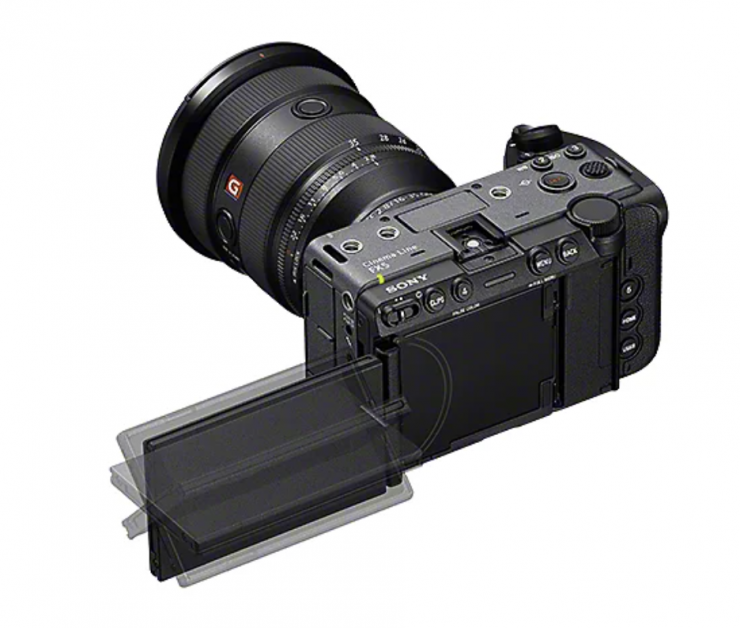
The FX3/FX3A and FX30 don’t feature any EVF, and you need to rely on a relatively small LCD screen to judge exposure, focus, and composition. A lot of users of these cameras ended up running an external monitor or EVF, but this increases the footprint of the camera and requires additional powering solutions. The FX5 has a four-axis multi-angle 3.5-inch LCD screen, which is slightly larger than the 3.0-inch screen used on the FX3A. It is also claimed to be brighter.
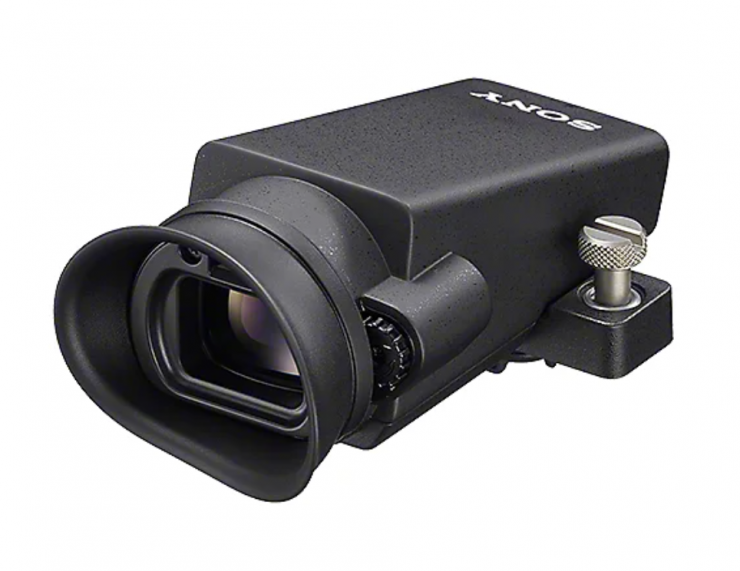
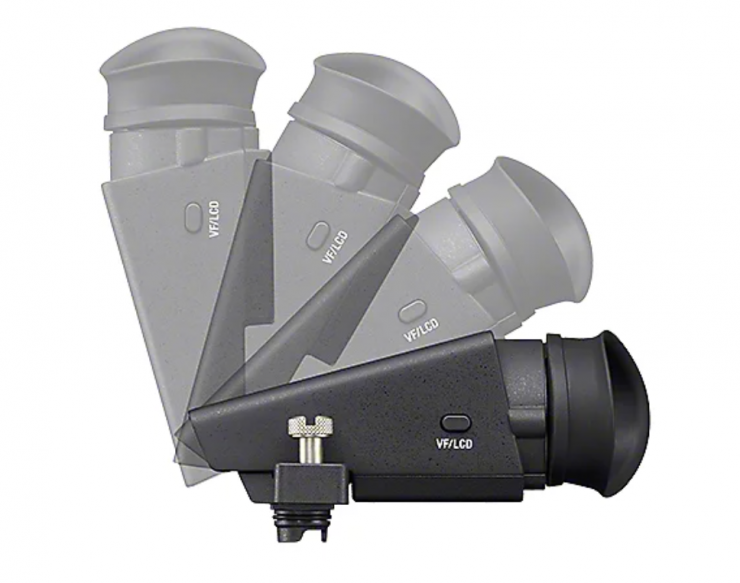
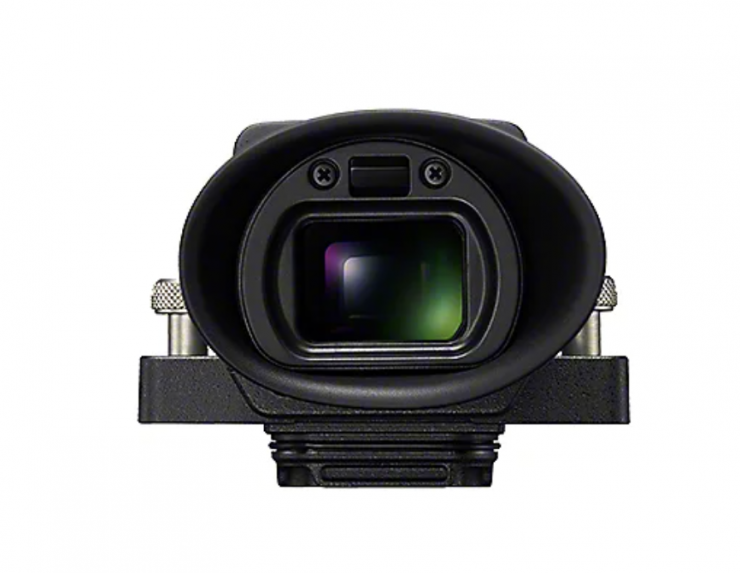
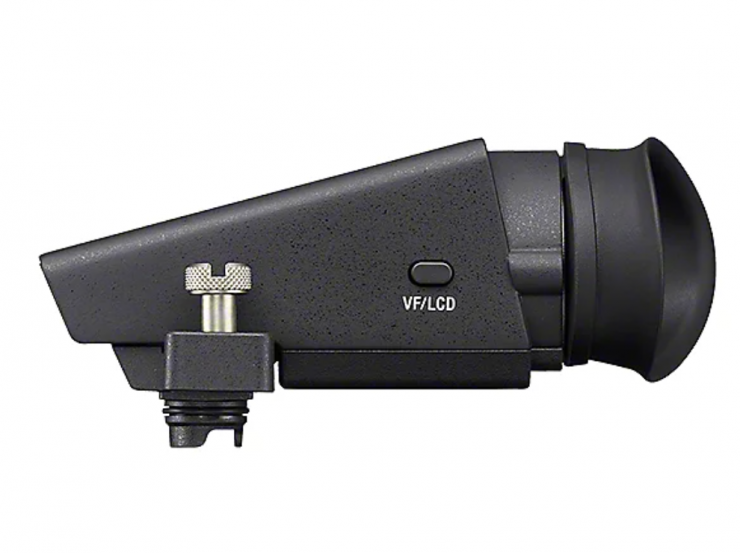
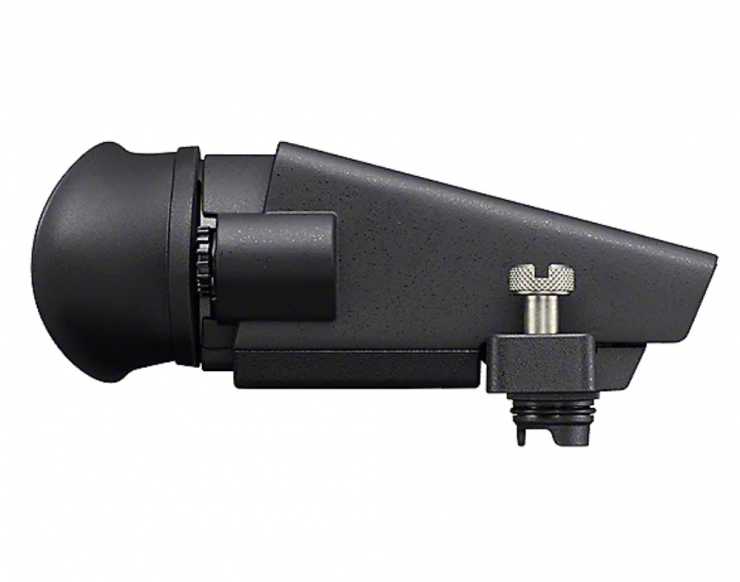
Sony is also offering an optional, removable EVF. The DVF-EL1 Electronic Viewfinder
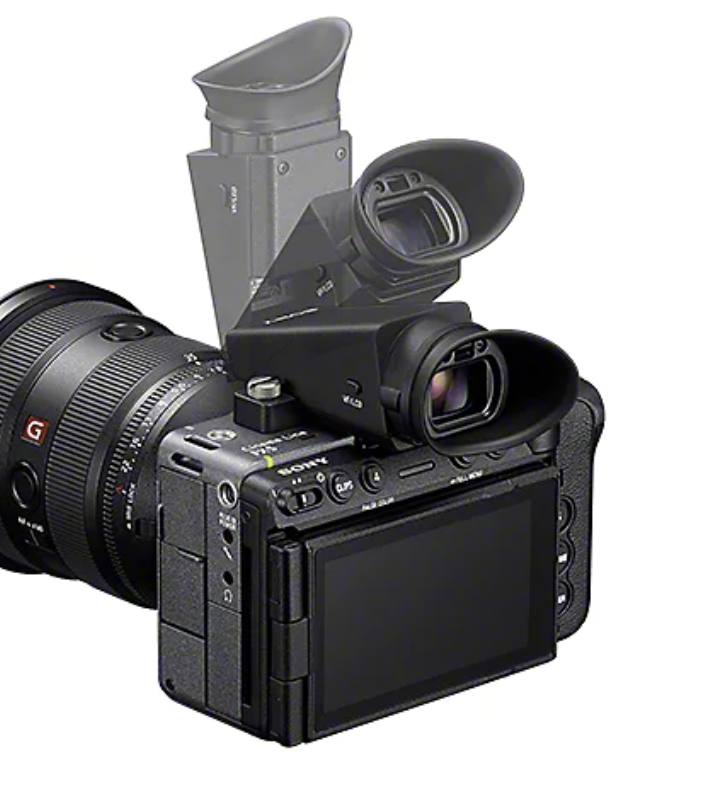

The EVF tilts up and down. While it isn’t going to offer the type of mounting versatility that a third-party EVF does, it is certainly a useful option, especially when working in bright conditions where seeing an LCD screen can be tricky. It also has a diopter that lets users dial it in to suit their eye.
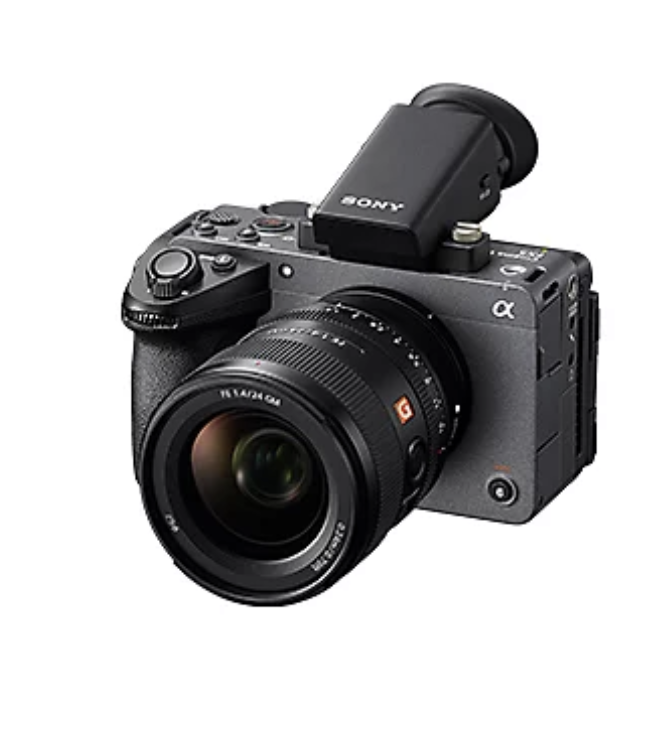
The detachable viewfinder features a high-resolution 0.58-type OLED panel with approximately 7.07 million dots. It supports HDR display with a color gamut equivalent to DCI-P3 and 10-bit gradation. According to Sony, the wide colour gamut allows you to accurately check the colours of your subject, whilst the HDR display enables you to accurately verify details when shooting or viewing scenes or subjects with high contrast between light and dark areas. It features a magnification of approximately 0.90x.
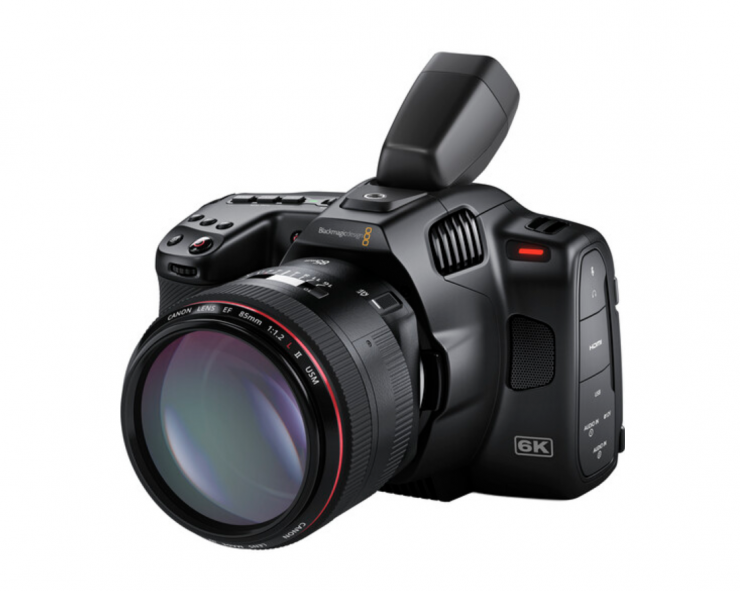
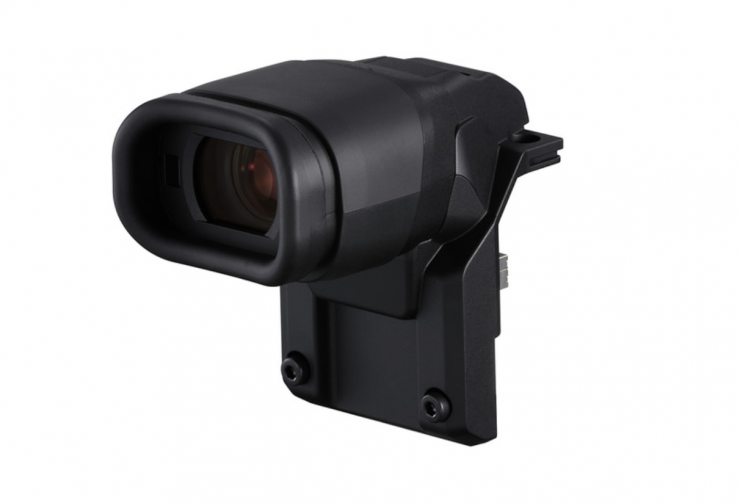
The EVF is a similar concept to Blackmagic Design’s EVF for the Pocket Cinema Camera 6K Pro, Canon’s EVF-V50 OLED Viewfinder for C500 Mark II, and Sigma’s LVF-11 LCD Viewfinder.
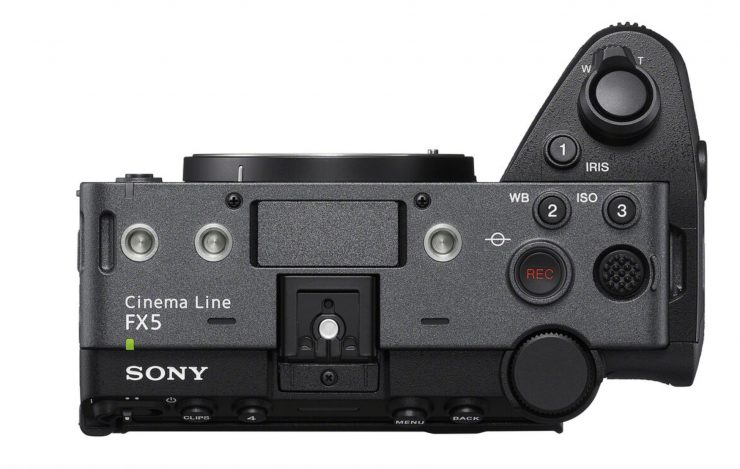
Now, there are caveats with the optional EVF: you can’t use it together with the optional XLR Handle Unit, and you can’t reposition it. This is because both the EVF and the XLR Handle Unit need to be attached to the plug in front of the MI Hot Shoe and the MI Hot Shoe, respectively. It would have been nice if Sony could have come up with a solution to attach the DVF-EL1 Electronic Viewfinder onto the back of the XLR Handle Unit.
MID49 has a bunch of accessories for Sony’s just-announced FX5. Despite its capabilities, the FX5 is still a small-sized camera that will require accessories to be used in some shooting environments.

If you want to have your cake and eat it too, MID49 has a new handle rod clamp for the Sony XLR-H2 that allows a sideways 15mm to be attached without a cage.
Users can install the TWIST Mount EVF System and new EVF Extension Cable for the Sony FX5. This means you can use both the optional DVF-EL1 Electronic Viewfinder and the XLR Handle with 96 kHz/32-bit float audio at the same time. This overcomes a major usability hurdle.
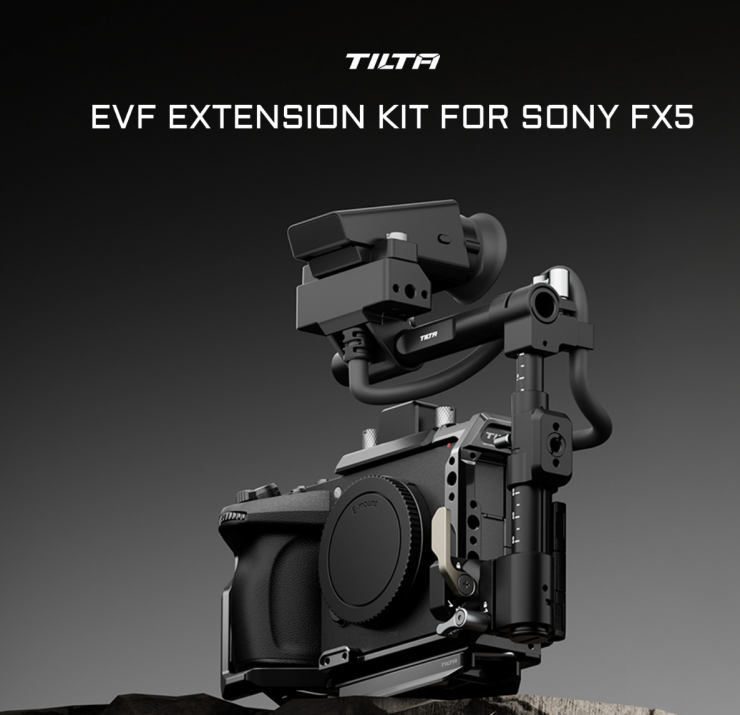
Tilta also has an upcoming EVF Extension Kit for the Sony FX5. The EVF Extension Kit was designed to position the EVF away from the camera. There is a dedicated extension cable that runs from the EVF to a plug hidden behind a little removable door in front of the MI shoe on the camera. Additionally, a multi-axis bracket lets you position your EVF for handheld, shoulder-mounted, or tripod setups.
IO
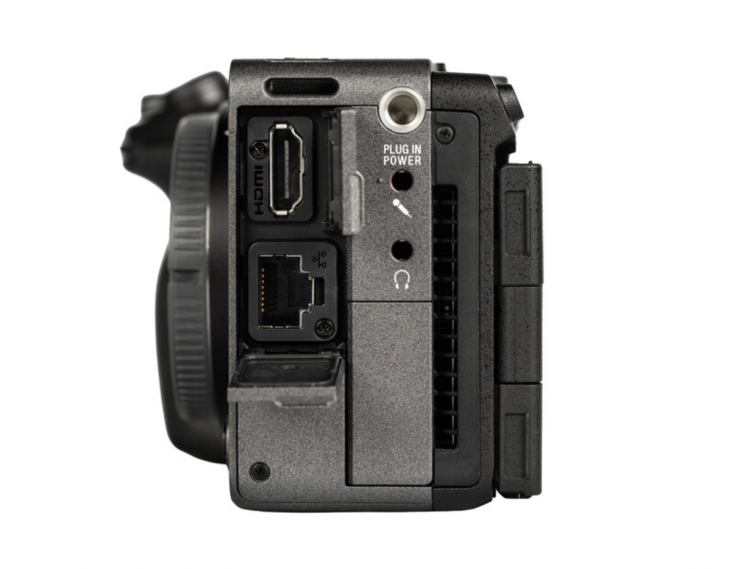
As the camera is still in the form factor of the FX3/FX3A, you won’t find SDI outputs and XLR inputs, etc. The camera, just like the FX3/FX3A, has a single HDMI Type A and an Ethernet/LAN port.
Additionally, there are two USB Type-C ports, a 3.5 mm mic input, and a 3.5 mm headphone output.
Mounting Points
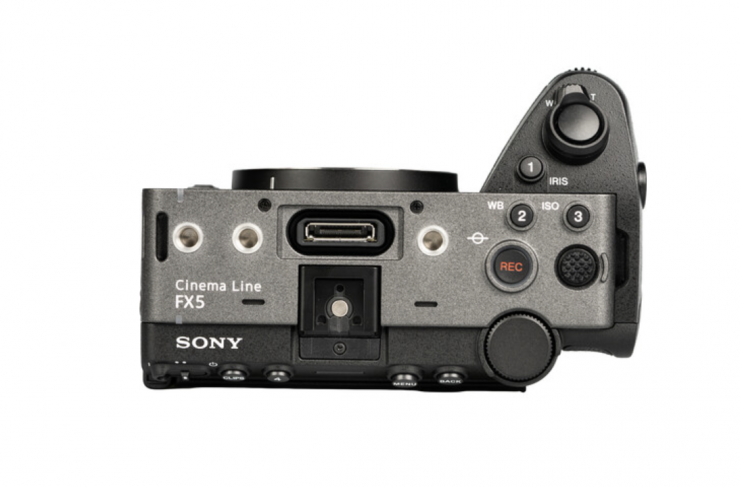
The FX5 has multiple 1/4-20″ mounting holes where you can attach accessories.
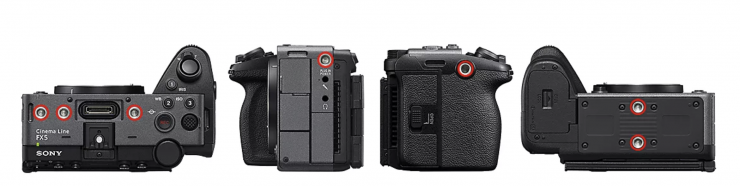
Top of the camera– Accessory screw holes (compatible with 1/4-20 UNC screws) (x3), multi-interface shoe (x1), viewfinder terminal (x1)
Side of the camera– Accessory screw holes (compatible with 1/4-20 UNC screws) (x2)
Bottom of the camera– Tripod screw holes (compatible with 1/4-20 UNC screws) (x2)
Connectivity
The camera has Tri-band Wi-Fi: 2.4 GHz, 5 GHz, 6 GHz, and it is capable of High-speed wired and wireless workflows.
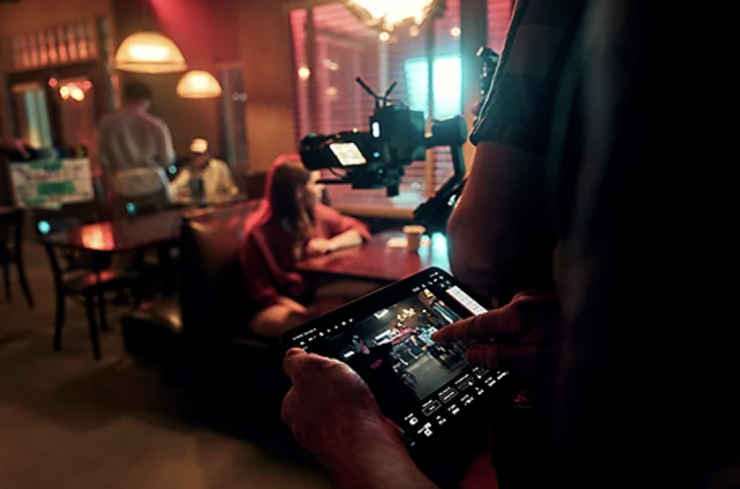
Sony designed the camera for streaming, and you can also utilize the Monitor & Control app for wireless smartphone monitoring and camera
control. It also supports integration into IP and network-based production environments.
New Battery System
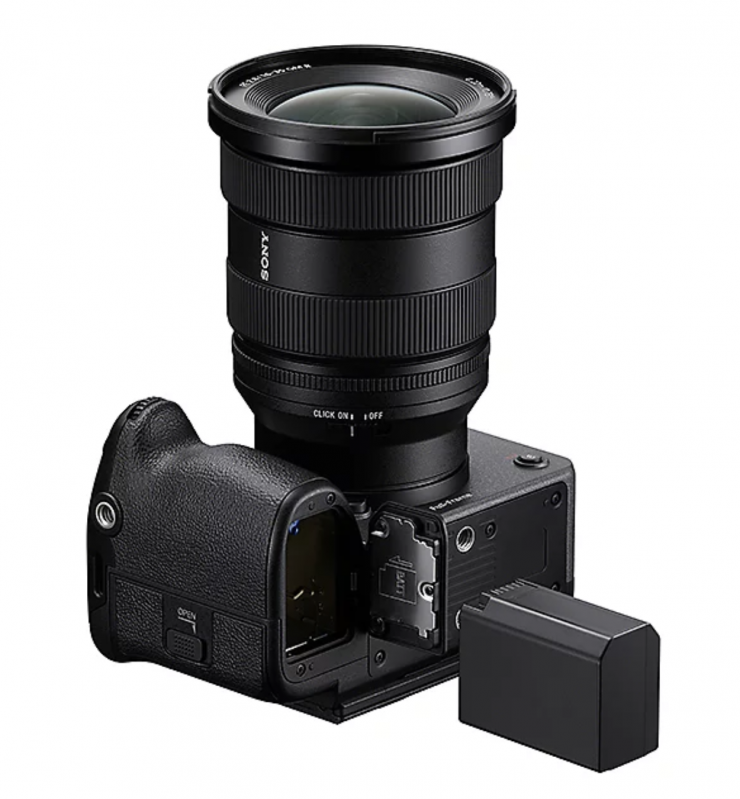
The FX5 utilizes a new battery. The NP-SA100 is claimed to be able to record up to 130 minutes of 4K 60p video, which Sony states is about 17 minutes longer than the battery that is used in the FX3A. It offers approximately 1.3 times the capacity of the NP-FZ100 and supports fast charging
Sony states that the FX5 requires more power to support the new sensor, processor, larger display, and cooling system, hence the new battery.
You can also power or charge the camera through the USB-C input.
Size & weight
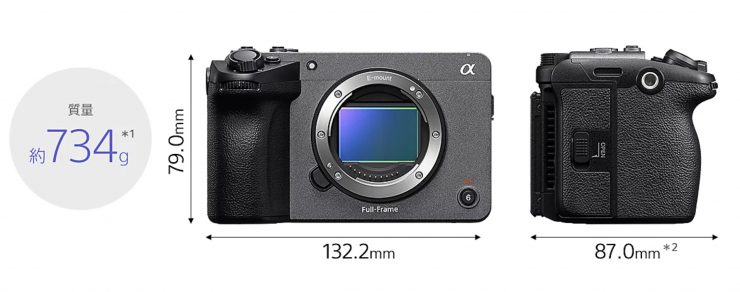
The FX5 is fairly similar in size and weight to the FX3/FX3A. The FX5 tips the scales at 1.62 Ibs / 734g, and it has physical dimensions of 132 x 79 x 87 mm / 5.19 x 3.11 x 3.42″. The Sony FX3A weighs 1.4 lb / 640g and has physical dimensions of 129.7 x 84.5 x 77.8 mm / 5.1 x 3.3 x 3.1″.
As a competition comparison, the Canon C80 weighs 1.30kg / 2.87 lb (Body Only) and has physical dimensions of 160 x 138 x 116 mm / 6.3 x 5.4 x 4.6″ (Body Only).
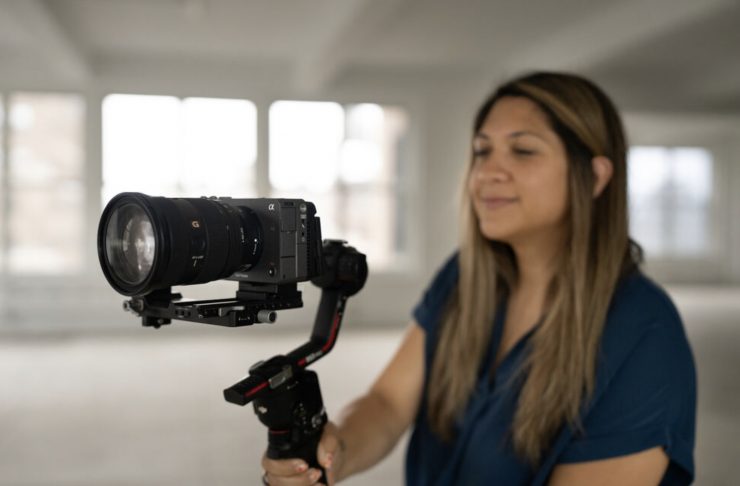
How does this weight compare to some other cameras?
| WEIGHT | |
| Sony FX5 | 1.62 Ib / 734g (Body Only) |
| Kinefinity VISTA | 1.32 lb / 600g (Body only) |
| Canon EOS R6 V | 24.3 oz / 689g (Body only) |
| Canon EOS C50 | 23.5 oz / 665g (Body only) |
| Nikon ZR | 1.19 lb / 540g (Body only) |
| Sony FX3A | 1.4 lb / 640g (Body only) |
| Sony FX2 | 1.3 lb / 594g (Body only) |
| Sony FX30 | 1.2 lb / 562g (Body only) |
| Sony ZV-1 | 10.37 oz / 294g (With Battery, Recording Media) |
| Ricoh GR IV | 8.0 oz / 228g (Body only) |
| Leica D-Lux 8 | 14.0 oz / 397g (With Battery) |
| Sony Cyber-shot DSC-RX100 VII | 10.65 oz / 302g (Body only) |
| Panasonic S1RII | 1.57 lb / 710 g (Body Only) |
| Panasonic LUMIX S1 II | 1.58 lb / 717 g (Body Only) |
| Panasonic Lumix S9 | 0.9 lb / 403g (Body only) |
| Panasonic Lumix S5 II | 1.45 lb / 658g (Body only) |
| Panasonic Lumix S5 IIX | 1.45 lb / 658g (Body only) |
| Panasonic Lumix GH7 | 1.6 lb / 721g (Body only) |
| FUJIFILM X-M5 | 12.5 oz / 355g (Body only) |
| FUJIFILM X-T5 | 16.8 oz / 476g (Body only) |
| FUJIFILM X-T50 | 0.9 lb / 389g (Body only) |
| FUJIFILM X-H2S | 1.3 lb / 579g (Body only) |
| Nikon Z8 | 1.8 lb / 820g (Body only) |
| Nikon Z6 III | 23.6 oz / 670g (Body only) |
| Nikon Z50 II | 17.46 oz / 495g (Body only) |
| Nikon Zfc | 13.8 oz / 390g (Body only) |
| Nikon Z30 | 12.3 oz / 350g (Body only) |
| Sony FX6 | 2.0 lb / 890g (Body only) |
| Sony BURANO | 2.4 kg / 5.3 lb (Body only) |
| Canon EOS C80 | 2.87 lb / 1.30 kg (Body only) |
| Canon EOS C70 | 2.58 lb / 1.17 kg (Body only) |
| Blackmagic Design PYXIS 6K | 3.85 lb / 1.75 kg (Body only) |
| Blackmagic Design PYXIS 12K | 3.5 lb / 1.6 kg (Body only) |
| Blackmagic Design Pocket Cinema Camera 6K Pro | 2.49 lb / 1.13 kg (Body only) |
| ARRI ALEXA Mini LF | 5.7 lb / 2.6 kg (Body only) |
| RED V-RAPTOR | 4.03 lb / 1.82 kg (Body only) |
| RED V-RAPTOR XE | 4 lb / 1.8 kg (Body only) |
| RED KOMODO | 2.1 lb / 952g (Body only) |
| RED KOMODO-X | 2.62 lb / 1.19 kg (Body only) |
Weather Sealing
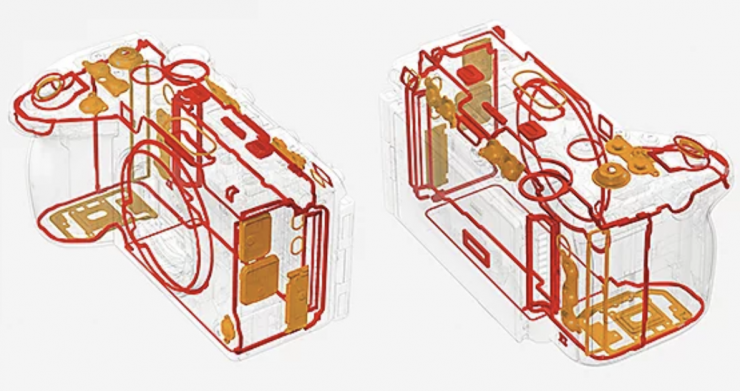
Sony has made improvements to the entire camera body to enhance its dust- and splash-resistant performance, ensuring high reliability even in demanding shooting conditions. A sealing structure has been incorporated at the joints in the outer casing and on the battery cover to prevent the ingress of moisture and dust, whilst the cooling fan has been housed in a separate air chamber.
Tally Lamps and Recording Indicators
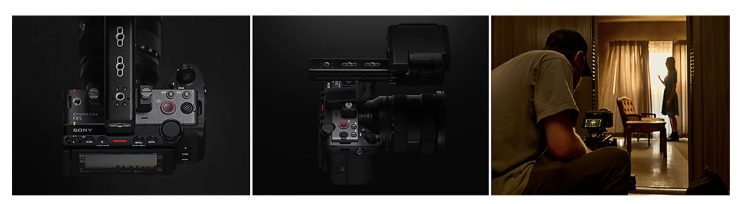
Tally lamps, which allow you to see the REC/STANDBY status at a glance, are positioned on the front (top) and rear of the camera. The camera’s REC button also lights up in conjunction with the rear lamp. In addition, a red border is displayed on the monitor screen so you can check the status at a glance. This allows you to immediately tell whether recording is in progress, even when the screen is difficult to see whilst the camera is mounted on a rig or gimbal. You can select whether to turn the front and rear tally lamps on or off, depending on your needs.
Optional XLR Handle with 96 kHz/32-bit float audio
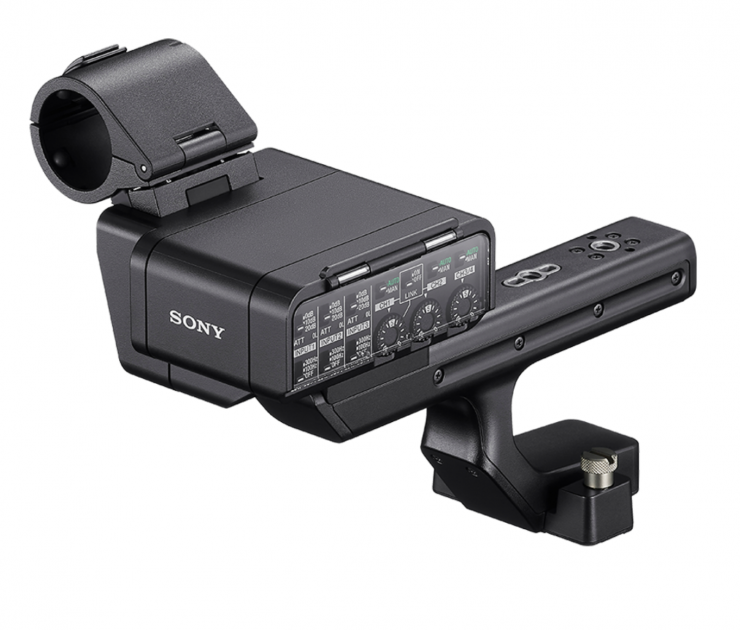
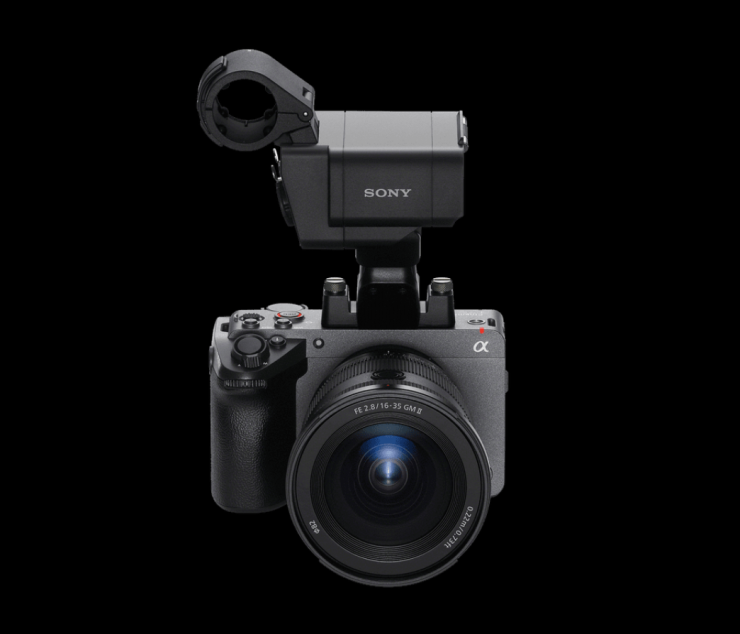
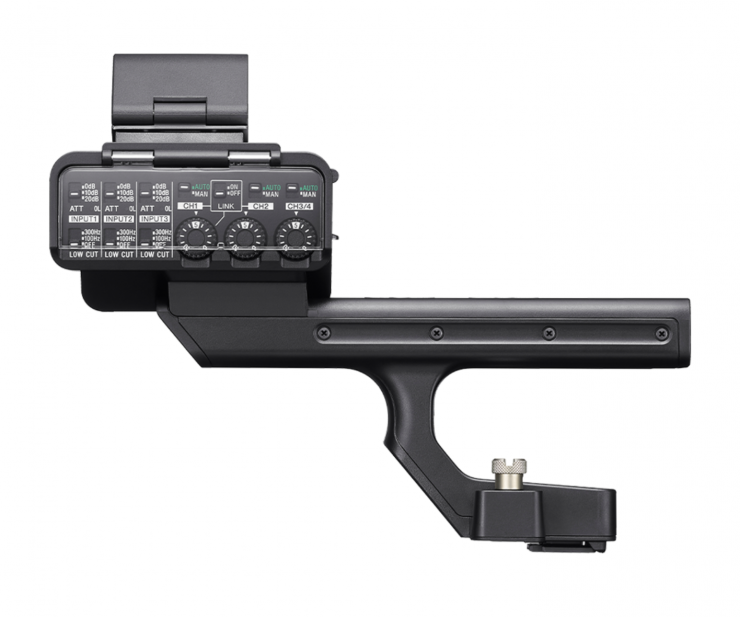
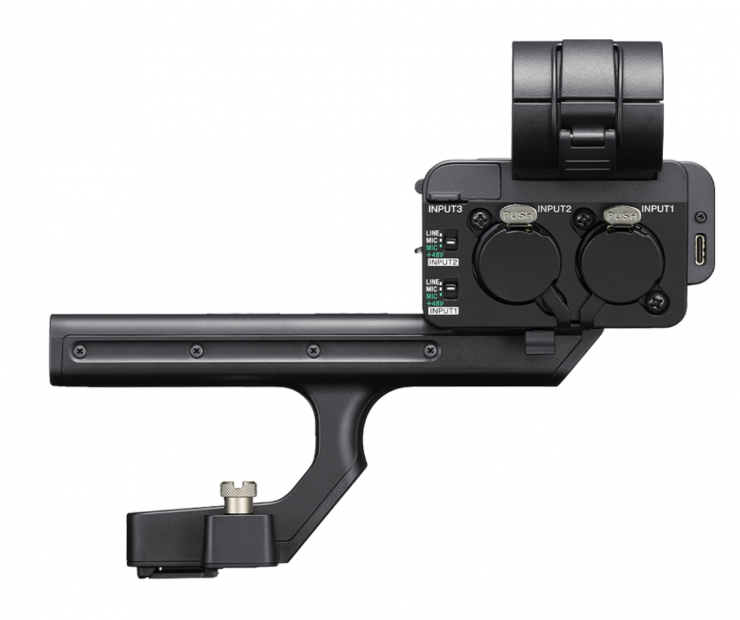
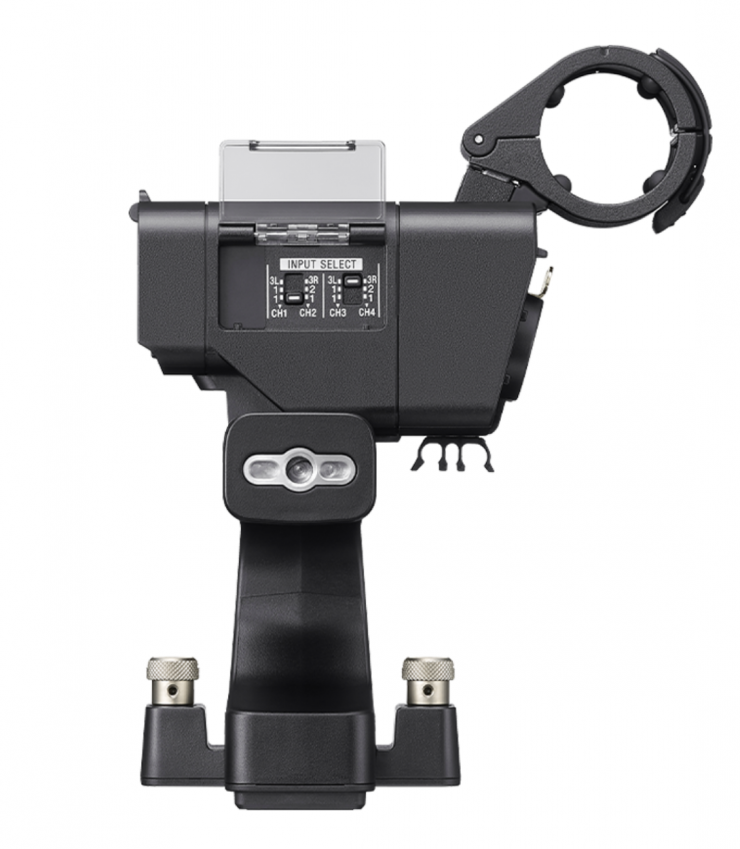
Sony has an optional XLR Handle with 96 kHz/32-bit float audio available ($798 USD) that you can purchase separately, or you can get it in a kit with the camera.
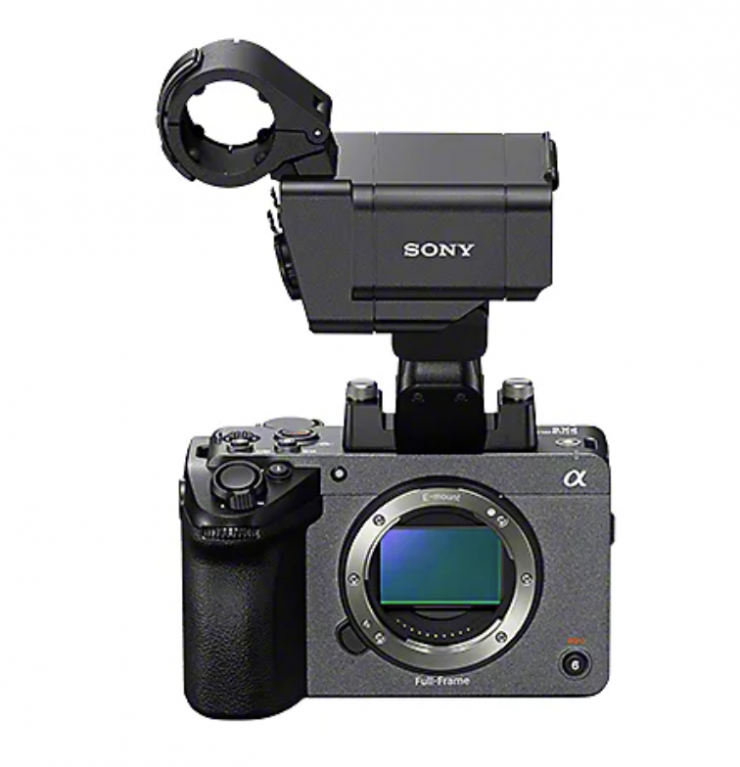
Form factor-wise, this is pretty similar to the existing Sony XLR-H1 XLR Handle Unit that is for the FX3/FX3A, FX30, and FX2. It offers two combo XLR-1/4″ inputs along with a 3.5mm mic input. The handle has physical controls and dials located on the side with covers to prevent accidental changes in the middle of a take.
There is a microphone holder that can be used to mount a shotgun microphone to your system. It securely mounts to the camera’s Multi Interface Shoe with two screws
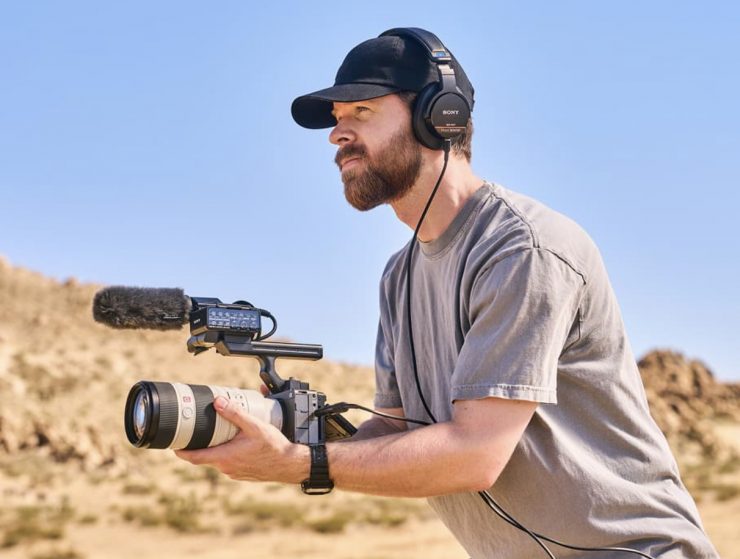
The biggest difference is that the new XLR Handle allows you to internally record 96 kHz/32-bit float audio to the camera. As far as I am aware, this can only be done when using the XLR Handle. You can’t record 32-bit float by plugging a microphone directly into the camera itself.
Having the ability to capture 32-bit float is very handy if you are working solo in environments where the sound levels can change drastically.
If you don’t want to use the optional XLR Handle, there is a 3.5mm mic input that you can utilize.
Optional Timecode Cable
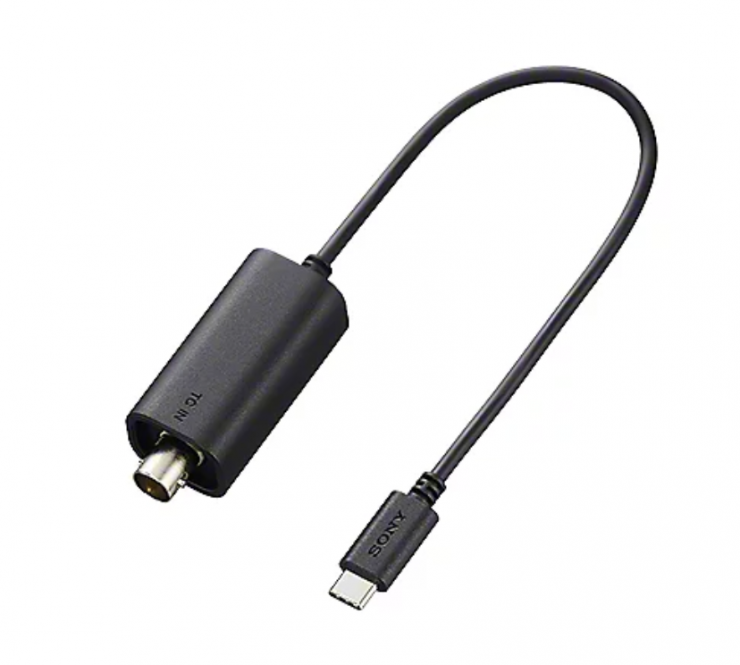
You can purchase an optional VMC-BNCU1 timecode cable ($98 USD), which features a USB-C-to-BNC configuration to synchronize the camera during multi-camera productions or when working with a sound recordist, etc.
Monitoring Tools
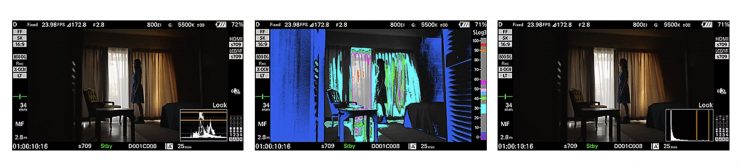
Sony wanted to streamline the monitoring assist tools so they more closely align with the higher-end Cinema Line and CineAlta cameras.
The FX5 features the following monitoring assist tools:
- False Color
- Waveform.
- Vector Scope
- Focus Map
- Histogram
- Zebras
- Peaking
The exposure tools are available on the built-in LCD. I presume that they are also available on the optional DVF-EL1 Electronic Viewfinder, but I haven’t been able to confirm that.
No Internal ND
The camera doesn’t feature any internal ND, which doesn’t come as any big surprise.
If you don’t mind using manual focus PL lenses, you could get something like the Mofage POCO II, which is available in Sony E mount and supports a wide range of drop-in filters:
- Variable ND 0.3–2.4
- Pure Clear
- Circular Polarizer
- Orange Streaks
- White Mist (1/4, 1/8)
- Black Mist (1/4, 1/8)
- Pro Duo Series: FSND 0.3 / 0.6 / 0.9 / 1.2 & Glimmer 1/4 / 1/8
The POCO II is available in the following camera mounts:
- Sony E
- Canon RF
- Leica L
- Nikon Z
- Fujifilm X
- Kine Mount
If you are sticking to native E-mount AF lenses, then you would need to use a matte box or screw-on variable ND filters.
AI Features

The camera features a bunch of AI capabilities. With AF, subject recognition utilising AI-based posture estimation technology captures not only the position of a person’s eyes but also the position of their body and head with high precision, delivering claimed excellent AF performance even in low-light scenes.
AI-Based Subject Recognition & Autofocus
The FX5’s Integrated AI processing provides subject recognition for:
- Humans
- Animals
- Birds
AI-powered subject tracking
AI-powered subject tracking is claimed to provide:
- Improved low-light autofocus performance
- Improved subject retention during movement
- Supports autofocus independently of conventional image-analysis data
- Reduces the need for manual subject-selection changes in fast-moving environments
AI-Powered Auto Tracing White Balance
Sony has introduced an AI-Powered Auto Tracing White Balance feature that is intended to produce more natural white-balance behavior during continuous recording. This is a very handy feature if you are working in mixed lighting enviroments and run and run-and-gun situations where you don’t always have the time or ability to do a manual WB.
It provides the following capabilities:
- AI-based ATW processing
- Tracks changes in scene illumination
- Improves automatic white-balance transitions
- Designed to reduce abrupt color shifts
- Supports movement between mixed-light environments
5-Axis In-Body Image Stabilization
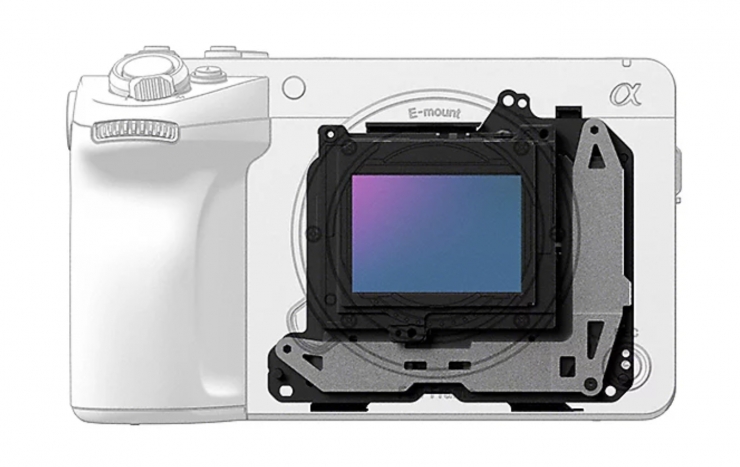
The camera features 5-Axis In-Body Image Stabilization, just like the FX3/FX3A.
According to Sony, they have improved in-body image stabilization, and it features approximately 2x improved roll correction.
There is also a Dynamic Active Mode and Gyro metadata support for post-stabilization workflows. The Dynamic Active Mode prioritizes stronger correction for walking and moving-camera shots.
Clear Image Zoom
Sony states that they have updated the Clear Image Zoom, and the optical and digital zoom can operate simultaneously. It is claimed that it provides smoother transitions between the optical and digital zoom ranges. This is said to avoid the visible handoff associated with optical-first, digital-second operation.
AF is fully supported when using the zoom modes.
Planned Firmware Update
According to Sony, on their Firmware Roadmap, Version 2.0, which is scheduled for August 2027 or later, will add the following features:
- 4K 240p X-OCN recording.
- Open Gate 3:2 recording in XAVC-I.
- Optimized user interface for vertical shooting.
- Frame Grab for still-image extraction.
Pricing & Availability
The FX5 will retail for $4,898 USD. The Sony FX5 with XLR Handle Unit is $5,498 USD. The estimated shipping date is Tuesday, August 18th.
So how does that price compare to some other cameras? Below you can see.
| PRICE | |
| Sony FX5 | $4,898 USD |
| Kinefinity VISTA | $2,499 USD |
| Canon EOS R6 V | $2,499 USD |
| Nikon ZR | $2,196.95 USD |
| Canon EOS C50 | $3,699 USD |
| Canon EOS C80 | $5,499 USD |
| Canon EOS C70 | $3,499 USD |
| Canon C400 | $8,799 USD |
| Canon EOS R5 C | $2,999 USD |
| Canon EOS R50 V | $569 USD |
| Canon PowerShot V1 | $849 USD |
| Canon PowerShot G7 X Mark III | $879.99 USD |
| Blackmagic Design PYXIS 6K | $3,389 USD |
| Blackmagic Design PYXIS 12K | $5,695 USD |
| Blackmagic Design Pocket Cinema Camera 6K Pro | $2,835 USD |
| Sony FX6 | $6,998 USD |
| Sony BURANO | $24,999 USD |
| Sony FX3A | $4,298 USD |
| Sony FX2 | $2,698 USD |
| Sony FX30 | $2,098 USD |
| Sony ZV-1 | $798 USD |
| Ricoh GR IV | $1,496.95 USD |
| RED KOMODO-X | $6,995 USD |
| Leica D-Lux 8 | $1,915 USD |
| Sony Cyber-shot DSC-RX100 VII | $1,498 USD |
| Panasonic S1RII | $2,997.99 USD |
| Panasonic LUMIX S1 II | $2,897.99 USD |
| Panasonic Lumix S9 | $1,297.99 USD |
| Panasonic Lumix S5 II | $1,697.99 USD |
| Panasonic Lumix S5 IIX | $1,897.99 USD |
| Panasonic Lumix GH7 | $1,797.99 USD |
| FUJIFILM X-M5 | $899 USD |
| FUJIFILM X-T5 | $1,895.95 USD |
| FUJIFILM X-T50 | $1,499 USD |
| FUJIFILM X-H2S | $2,699.95 USD |
| Nikon Z8 | $3,396.95 USD |
| Nikon Z6 III | $1,996.95 USD |
| Nikon Z50 II | $1,006.95 USD |
| Nikon Zfc | $1,065.96 USD |
| Nikon Z30 | $606.95 USD |
Thoughts
The FX5 is sure to be a popular camera, especially with the addition of internal RAW recording and Open Gate. It ticks a lot of boxes for a lot of shooters, especially in a time where budgets are tight.
You could, however, make a strong argument that a lot of FX6 shooters would have preferred to have seen these capabilities and features put into a body that has e-ND and SDI, etc.
The FX3/FX3A was popular for a reason, as it suited a lot of people’s needs because it bridged a gap between mirrorless and digital cinema cameras, and it offered a good compromise between the two.
By utilizing a similar form factor to the FX3/FX3A, but adding features like Open Gate and internal RAW recording, potential buyers can get a lot of the same functionality as a more expensive digital cinema camera without having to pay as much money. No, you won’t get all of the features found on a more expensive camera, or even the FX6, but in my personal opinion, Sony has put enough of them into the FX5 to give potential buyers something to think about. In saying that, the FX6, even despite its age, is still a very capable camera and it offers features that will make it more suitable for certain productions.
For a very long time, Sony has been afraid to cannibalize their own digital cinema camera lineup. However, with so many of their competitors now offering Open Gate and internal RAW recording, they needed to do this. While it is always good to have lots of choices, bringing out too many camera models can end up frustrating your own customers, especially if they bought a more expensive camera that they now feel is being undervalued by a cheaper model.
Maybe an FX6 II would have made more sense, but improving the FX6 would be difficult as Sony wouldn’t want it to step on the toes of the BURANO.
Sony has the FX30, FX2, FX3, FX6, BURANO, VENICE 2, and now the FX5 in their lineup. The advantage Sony has is that a lot of their cameras got to market early and they were widely adopted. Once you have someone locked into your lens ecosystem, it is very hard to get them to change over to another brand. If you are an FX6 user, you are unlikely to switch over to a Canon C80 or C400.
If you are serious about video shooting and don’t need a true hybrid, at least to me, the FX5 makes a lot of sense if you don’t need internal ND and SDI, etc.
Just like any camera, the FX5 isn’t a camera that will suit everyone, but it does look like a good camera for a lot of applications, or even as a B camera to a BURANO or VENICE 2. If you are shooting events, news, and documentaries, it could still work well, but arguably a camera like the FX6 is better suited to that.
It is good to see an optional EVF, even though it has limited movability and it can’t be used in conjunction with the XLR handle.
While it is far from perfect (no camera is), it will suit a lot of shooters’ needs. As I have mentioned numerous times before, almost every camera being released has decent dynamic range and recording options. What you should be spending more time looking at is usability, total cost of entry, inputs/outputs, menu ease of use, and whether that camera will work for you.
Specifications are just specifications, and they never tell you the true story about any camera. Usability is the number one thing I look for when deciding on a camera. I don’t care if a camera can shoot a certain number of frames per second at a certain resolution in RAW if that camera isn’t easy to use or doesn’t meet the requirements of how I like to work. I will always choose cameras that are easy to use and don’t get in the way of what I want to accomplish.
Don’t get blinded by marketing hype or specifications, high frame rates, or high resolution. Pick the camera that works best for you. At the end of the day, the only person you have to justify a camera purchase to is yourself (or your wife or husband if you have a joint bank account!). If the camera you already own or use or the camera you want to buy pays the bills and meets the requirements of the clients you work for, then that is the right camera for you.
What do you think about the new FX5? Let us know in the comments section below.