

Sony was drawing some of the biggest crowds on the Cine Gear Expo floor this year, and the reason was sitting right on their demo table: the RIALTO 65, a new 65mm format sensor block under development for the VENICE 2. We talked to Sony to get a closer look at what the company is building — and why they believe it is a more significant announcement than a new camera body would have been.
Not a VENICE 3
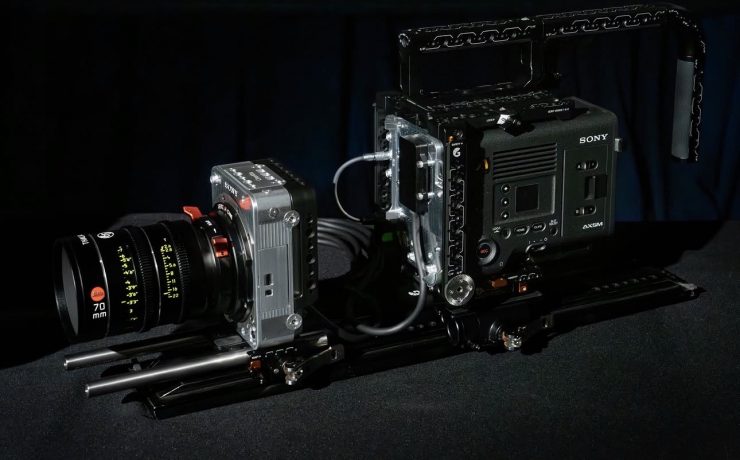
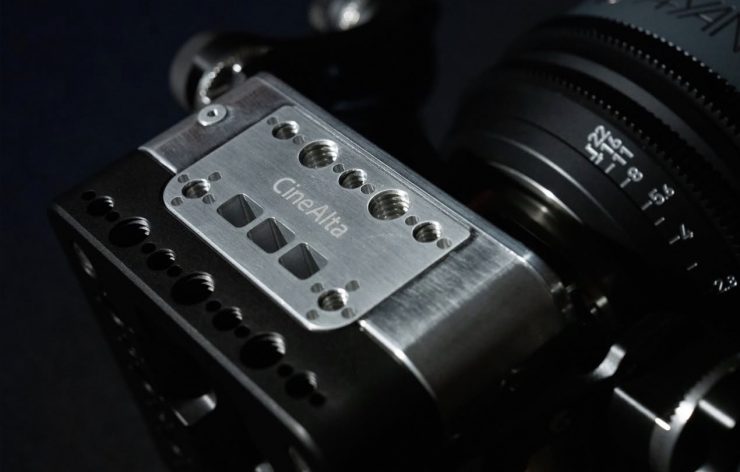
Sony announced the RIALTO 65 ahead of Cine Gear, and the booth was showing a pre-production unit mounted on a VENICE 2 body, paired with a one-of-a-kind Panavision Primo lens capable of covering the 65mm image circle. The combination was attracting cinematographers who, by Sony’s own admission, would not ordinarily spend time at its booth.
The announcement has sparked speculation about a VENICE 3, but Sony’s position is that the RIALTO 65 is a deliberate statement to the contrary. The company is extending the VENICE 2’s lifespan rather than replacing it. “What I love is that Sony is not only launching a 65 sensor, but it’s also showing a commitment to the VENICE 2,” she said. “If you’re holding out for another camera — no, this is where we’re going. You don’t have to worry about buying a whole new camera body. You can just buy the sensor, and it plugs right in.”
The Sensor
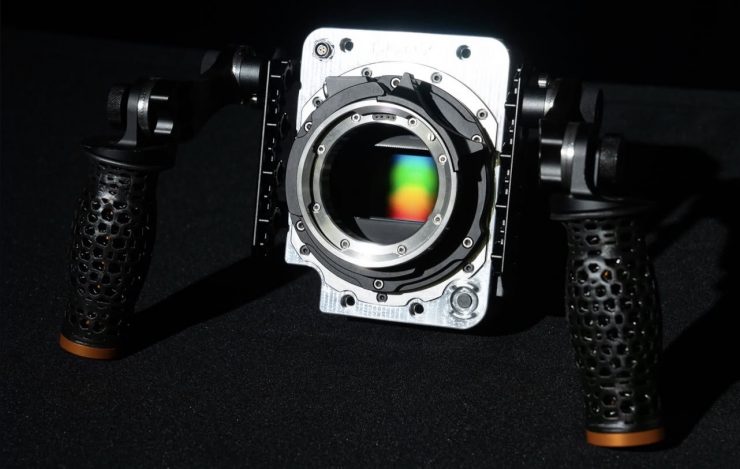
The RIALTO 65’s new image sensor has a diagonal of approximately 64.60mm — 53.75mm wide by 35.83mm tall — with a 3:2 aspect ratio and approximately 2.2 times the light-receiving area of a full-frame sensor. For reference, the VENICE 2’s existing 8.6K sensor measures 36.2 x 24.1mm. The RIALTO 65 captures 9.6K 3:2 open gate and supports multiple readout modes to maintain compatibility with 65mm format lenses that have narrower image circles.

That 9.6K resolution figure was not arbitrary. Katie explained that keeping the pixel count there was a practical decision with several downstream benefits. “My biggest concern when I first heard we were going to do a large format sensor was: are we going to be at 12K, 15K? That was a huge concern. But being able to keep it at 9.6K keeps a manageable pixel density for sensitivity, and it also keeps data manageable — and gives me high hopes about where we would go with high frame rate.”
Frame rate specifications have not been confirmed. The cameras on display were pre-production and not capturing images, so formal specs for high frame rate are still forthcoming. Heat management is one of the engineering challenges Sony has had to address with this sensor size. “When I took it apart, the VENICE 2’s 8K and 6K sensors have a heatsink on the back with air blown past it,” she said. “With the RIALTO 65, they changed the method — more fans, more ventilation, and the body itself acts as a natural heat sink.”
Rialto Mode & What It Actually Means for Production
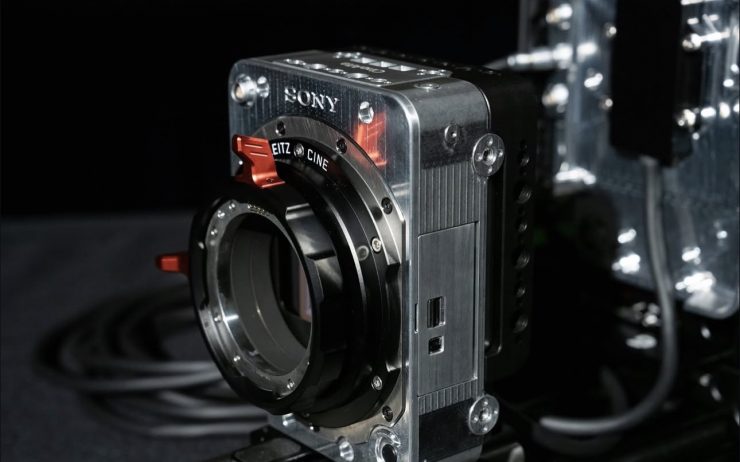
Like the existing RIALTO extension system for the VENICE 2, the RIALTO 65 can be separated from the camera body and connected via cable. That modular approach is what excites Sony most about where this product lands in production workflows.
“Because the RIALTO 65 is part of the pipeline now, it can also be used in RIALTO mode,” Katie explained. “That means I can take this super large sensor — which historically has been a massive camera — and put it in a car, get really tight angles, even use it for body camera footage. Imagine it: an IMAX-sized sensor, in such a small body. That blows my mind.”
The practical implications for car shoots and tight-space cinematography are significant. The RIALTO 65’s small form factor means that 65mm format is no longer confined to the large, heavy rigs traditionally required to accommodate sensors of this size.
Lenses & the Barrier to Entry
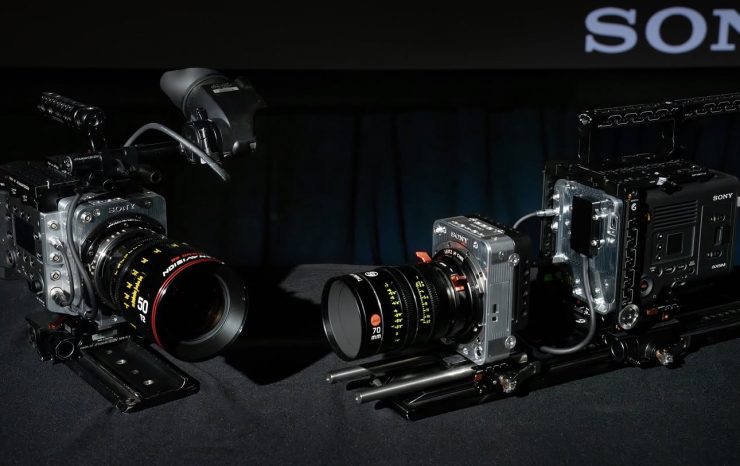
Large format has historically come with a lens problem — the image circles required to cover oversized sensors limit the pool of compatible glass considerably. Sony says they moved early to address this by coordinating with lens manufacturers and rental houses ahead of the announcement.
“There’s been a massive, synchronous effort between Sony and lens manufacturers and rental houses,” Katie said. “We’re saying, hey, we’re coming out with a larger format sensor, let’s talk about lens options. That barrier to entry, what once seemed so difficult, is now going to be extremely more accessible.”

On the booth, the demo unit was fitted with a Panavision Primo designed to cover the 65mm circle — described as a one-of-a-kind piece. Katie pointed to the way the larger sensor transforms lens behavior as a draw for cinematographers: “There’s something so romantic about the feeling of it — the way focus falloff happens. These lenses are so beautiful, and they cover the 65 sensor from wide open to f/5.6. It’s almost like you have three different lenses in one. That’s attributed to the lens, but also to the larger sensor. It gives you that much more flexibility — more paintbrushes in your toolkit.”
ND Filter System


Because the 65mm sensor is significantly larger than what the VENICE 2’s existing spinning ND turret system was designed to cover, Sony redesigned the filtration approach for the RIALTO 65. Rather than rotating between two turrets as on the VENICE 2, NDs for the RIALTO 65 will slide in from the side — the same method used on the Rialto Mini. Available densities will include clear, along with 3, 6, and 9-stop options.
Who Will Shoot With It
Sony expects high-budget feature productions to be the first adopters, primarily because they have the post pipelines to manage the data and workflow. But Katie was clear that the broader ambition is accessibility. “Once those guys really start to get it, I think the indie world is going to start to take off. And the barrier to entry with lensing — what once seemed so difficult — is going to be much more manageable.”
The rental market is expected to be a key driver. Because the RIALTO 65 attaches to an existing VENICE 2 body, rental houses can offer it as an upgrade rather than an entirely separate camera package. “You don’t have to buy a whole new camera,” she said. “That’s what makes it accessible and makes our rental house partners happy.”
Timeline & Pricing
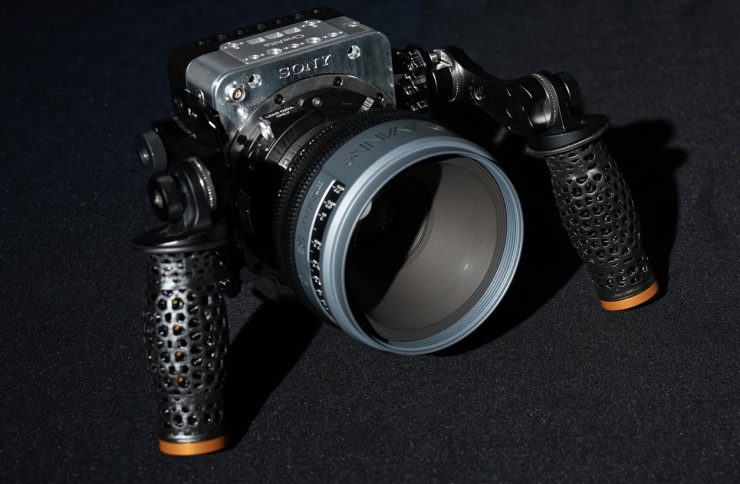
Sony is targeting availability in the first half of 2027, though Katie noted that Sony has a history of delivering faster than its announced windows. On pricing, no figures have been given. “I could throw a number out there, but it would be the wildest guess ever,” she said. “I do have high hopes that it’s more like an accessory than a whole camera, so pricing should be manageable.” The unit at Cine Gear was still a machined, unfinished silver prototype — not yet in final production form.
Specifications (as announced)
- Format: 65mm
- Sensor diagonal: ~64.60mm (53.75mm × 35.83mm)
- Aspect ratio: 3:2
- Open gate resolution: 9.6K
- Light-receiving area: ~2.2× a full-frame sensor
- Compatible body: Sony VENICE 2
- Mounting: Direct body mount or cable separation (Rialto mode)
- ND system: Slide-in filters; clear, 3, 6, and 9 stops
- High frame rate specs: TBD
- Availability: First half of 2027
- Pricing: TBD
The RIALTO 65 is still under development. Sony’s full announcement can be found in our original coverage here.
The Sony VENICE 2 8K is available at B&H. The Sony VENICE 2 6K is also available at B&H.