
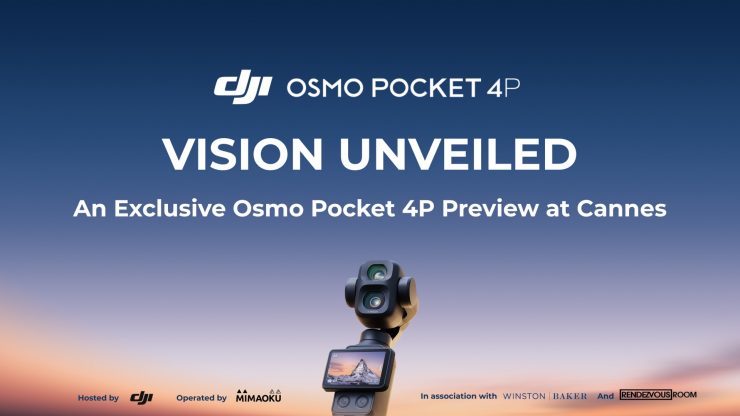
At Cannes, France, DJI has unveiled the Osmo Pocket 4P. DJI started creating the gimbal camera category in 2015 and introduced one of the world’s first pocket-sized gimbal cameras in 2018. They have continuously redefined how creators capture motion and tell stories. Today, with the Osmo Pocket 4P, DJI is entering a new era of cinematic handheld gimbal systems, where professional-grade filmmaking capabilities meet true pocket-sized portability.
DJI states that by unveiling the Osmo Pocket 4P at one of the most prestigious stages in global filmmaking, DJI signals a bold entry of the Pocket series from a creator tool into a cinematic imaging device capable of professional-grade storytelling.
DJI claims the Osmo Pocket 4P has some very impressive specifications that are geared toward professional use. It’s designed to deliver cinematic-level dynamic range for rich tonal depth alongside 10-bit D-Log2 color performance for professional color grading workflows. Combined with DJI’s advanced stabilization, the device brings professional cinema capabilities into a truly pocket-sized form factor.
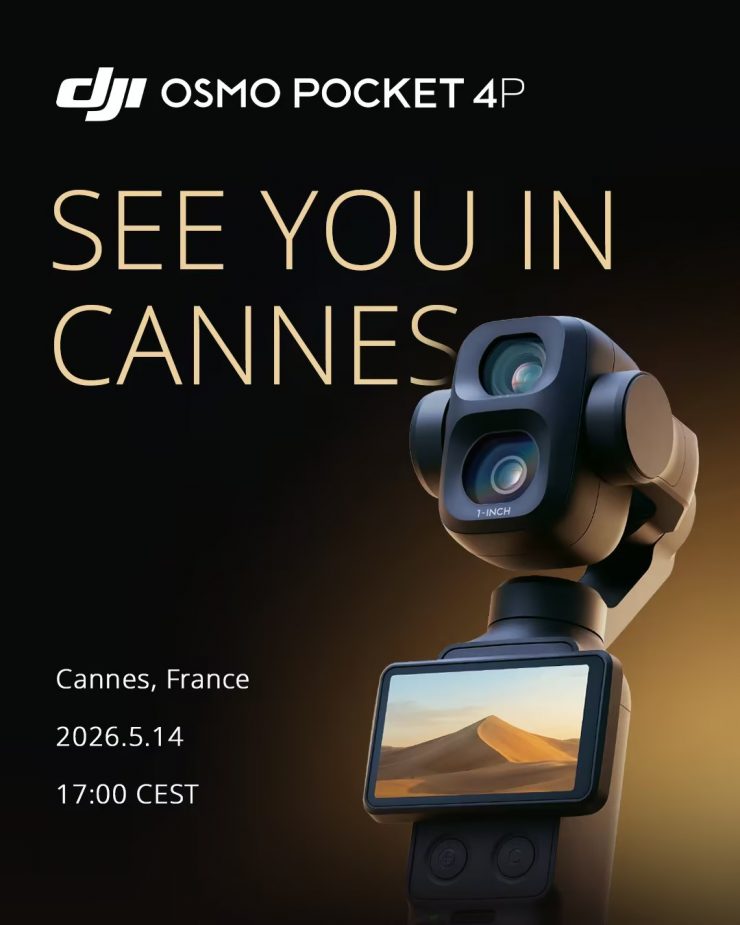
In Cannes, the Osmo Pocket 4P is already being explored by filmmakers, documentary creators, and visual storytellers seeking agile, high-quality production tools. Its compact form, paired with cinematic imaging performance, positions it as a compelling companion for independent filmmakers and a powerful storytelling device for documentary work. The Cannes debut reinforces the idea that cinematic storytelling is no longer confined to large-scale rigs but can now exist on a device small enough to carry anywhere.
The Osmo Pocket 4P introduces significant advancements designed to address real-world creator needs. Its enhanced portrait capabilities deliver natural skin tones and cinematic depth, enabling more emotionally engaging storytelling across interviews, vlogs, and narrative content. Improved zoom functionality expands creative possibilities, allowing creators to capture distant subjects while maintaining image integrity. In low-light environments, advanced sensor technology and refined imaging algorithms ensure clear, detailed footage, making it possible to shoot confidently in challenging conditions from nighttime cityscapes to indoor scenes. These innovations position the Osmo Pocket 4P as a true consumer professional imaging device, bridging the gap between accessibility and cinematic quality.
DJI
Following the global success of its predecessor, the Osmo Pocket 4P builds on a growing movement in which compact cameras are reshaping how stories are created and shared. Its Cannes debut highlights its potential to influence the future of cinematic vlogging, inspire a new generation of mobile-first filmmakers, and lead global trends in portrait-driven visual storytelling. With seamless integration into DJI’s broader creative ecosystem, including audio and stabilization solutions, the Osmo Pocket 4P enables creators to build complete, professional workflows within an ultra-portable setup.
The Osmo Pocket 4P will be available through DJI’s official channels and authorized retail partners. Pricing and configurations will be announced at a later date. It will not be available in the US due to being on the FCC Covered List and not being authorized for sale.
DJI’s ecosystem now spans cinema cameras, cinema drones, professional stabilizers, gimbal cameras, and portable power solutions, reflecting the company’s commitment to delivering an integrated approach to modern film and content production. At the event, the DJI Power 1000 Mini, launched in April, and the DJI Power 2000 were also showcased as power solutions for the Osmo Pocket 4P, demonstrating how DJI’s broader product ecosystem can support creators with more flexible and reliable production workflows. Together, these solutions underscore DJI’s vision of building a complete and professional creative ecosystem for storytellers.
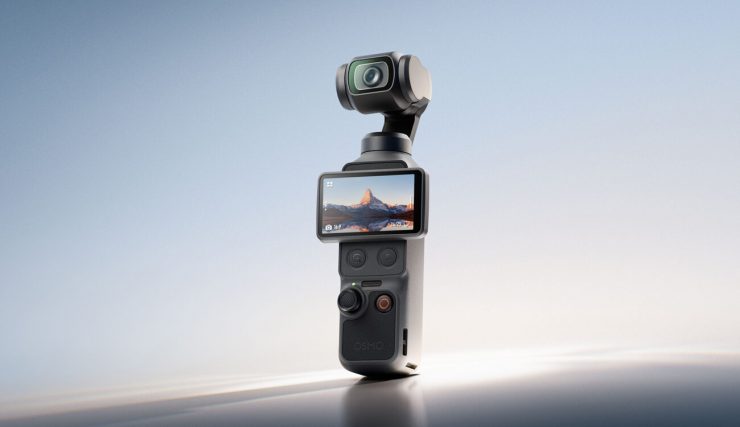
Since specifications are not being released today for the “Pro” version, here are the specs on the OSMO Pocket 4 that was recently released.
DJI Osmo Pocket 4 — Full Specifications
Camera & Sensor
| Spec | Detail |
|---|---|
| Sensor | 1-inch (Type 1) CMOS |
| Photo Resolution | 37 MP (7,680 × 4,320 px, 16:9) |
| Photo Formats | DNG RAW, JPEG |
| Aperture | f/2.0 |
| Equivalent Focal Length | 20mm |
| Minimum Focus Distance | 0.2 m (0.7 ft) |
| ISO Range | 50–12,800 |
| Dynamic Range | 14 stops |
| Color Profiles | Normal, 10-bit D-Log |
| Max Video Bitrate | 180 Mbps |
Video
| Spec | Detail |
|---|---|
| Max Resolution | 4K |
| Standard Frame Rates | 4K: 24/25/30/48/50/60 fps |
| Slow Motion | 4K/240 fps |
| Zoom | 2× lossless (4K), 4× (1080p) |
| Slow Shutter (Manual) | Down to 1/4 s |
Stabilization & Tracking
| Spec | Detail |
|---|---|
| Gimbal | 3-axis mechanical stabilization |
| Tracking | ActiveTrack 7.0 (up to 4× zoom) |
| Tracking Subjects | People, animals, vehicles, objects, faces |
| Tracking Modes | Spotlight Follow, Dynamic Framing |
| Focus Modes | Subject Lock Tracking, Registered Subject Priority |
| Gesture Control | Yes (hands-free ActiveTrack & capture toggle) |
Display & Controls
| Spec | Detail |
|---|---|
| Screen | 2.0-inch OLED touchscreen |
| Screen Resolution | 556 × 314 px |
| Brightness | Up to 1,000 nits |
| Color Gamut | 100% P3 |
| Orientation | Rotatable (landscape & portrait) |
| Physical Buttons | Dedicated zoom button, customizable preset button |
| Joystick | 5D joystick |
Audio
| Spec | Detail |
|---|---|
| Built-in Microphones | 3-microphone array |
| Audio Channels | 4-channel recording |
| External Mic Support | DJI Mic 2, Mic 3, Mic Mini (direct connection) |
| Special Audio Modes | Spatial Audio, Audio Zoom |
Storage & Connectivity
| Spec | Detail |
|---|---|
| Built-in Storage | 107 GB |
| Transfer Speed (Wired) | Up to 800 MB/s (USB 3.1) |
| Transfer Speed (Wireless) | Up to 90 MB/s (Wi-Fi 6) |
| Bluetooth | LE 5.4 |
| Video Output | DisplayPort (4K live streaming up to 60 fps) |
| Companion App | DJI Mimo |
Battery
| Spec | Detail |
|---|---|
| Capacity | 1,545 mAh |
| Recording Life (1080p/24fps) | Up to 240 minutes |
| Recording Life (4K/60fps) | Up to 135 minutes |
| Fast Charging (0–80%) | 18 minutes (65W PD charger) |
| Full Charge Time | 32 minutes |
Pricing & Availability
| Edition | Price (EUR) | Price (GBP) |
|---|---|---|
| Standard Combo | €499 | £445 |
| Creator Combo | €619 | £549 |
Note: The Osmo Pocket 4 is not available through official US retail channels at launch due to pending FCC authorization.
DJI’s Professional Pedigree: The Ronin 4D
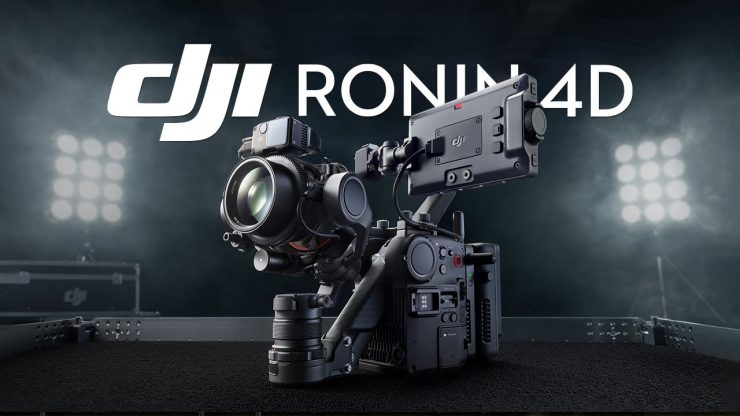
DJI is best known to most people through its consumer drone and gimbal lines, but the company has been quietly building a presence in professional film and television production through the Ronin 4D cinema camera.
The Ronin 4D is an all-in-one cinema camera system, integrating a full-frame sensor, LiDAR autofocus, and 4-axis stabilization into a single body. The design eliminates the need for separate stabilization rigs, which reduces setup complexity and overall weight — factors that matter significantly on productions where mobility is a priority. The Ronin series was awarded an Engineering Emmy, reflecting its adoption within the broadcast and production industry.
The camera gained considerable attention following its use on Netflix’s Adolescence, the 2025 limited drama series shot entirely in single, continuous takes across all four episodes. Cinematographer Matthew Lewis selected the Ronin 4D largely for practical reasons — its size and self-contained stabilization made it workable in confined spaces and allowed the camera to be handed between operators mid-take, something the production’s format demanded. It was also used on Alex Garland’s feature film Civil War.
That production history is relevant background for understanding where DJI positions the Osmo Pocket 4P. The company has an established foothold in professional production at the Ronin 4D level, and the Pocket 4P appears to be an effort to bring some of that thinking further down the product line with a tool that is very compact and light with pro-level features.