

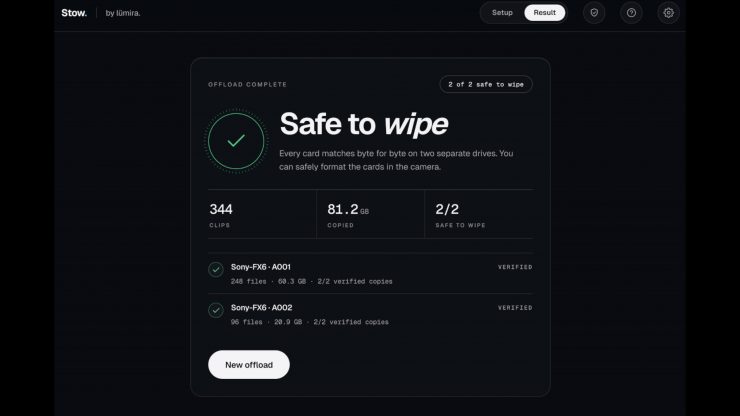
Stow is free copy and verification software that was designed by Luke Lv, who runs a video production studio in the UK called lümira. Just like everyone who works in small teams or by themselves, there is always a question that really matters at the end of a shoot: have we backed the cards up properly, and can we wipe them now?
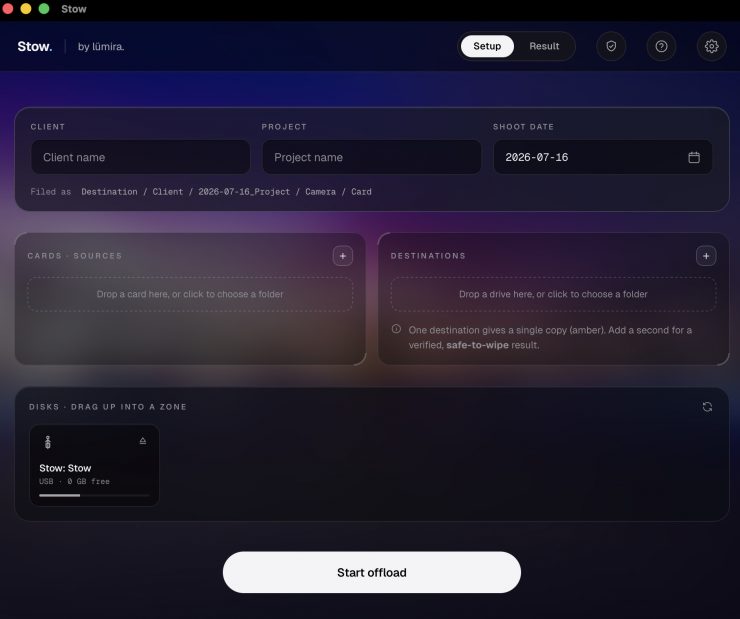
The team at lümira was tired of paying per seat for offload software, so they decided to build their own and make it free. Stow copies a card to two drives at once, reads every file back off the disk to prove the copy, then gives a plain verdict: safe to wipe, or not yet. It runs on both Mac and Windows.
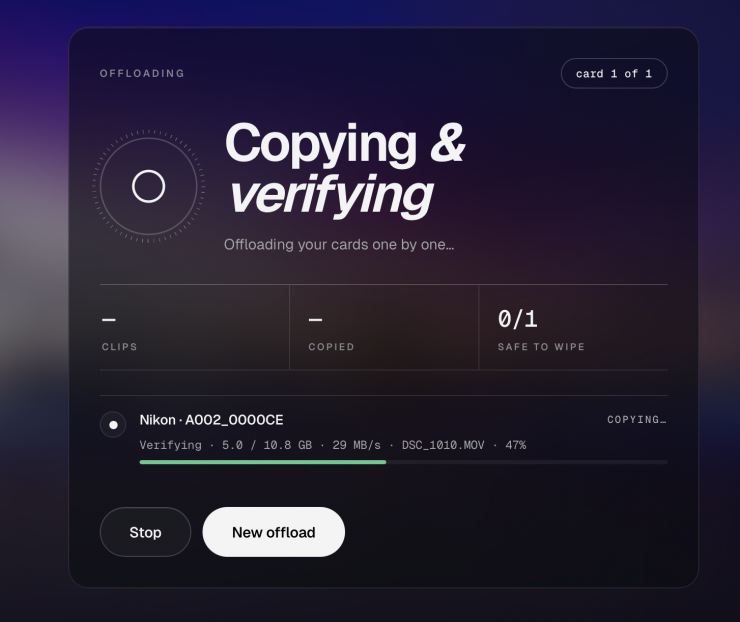
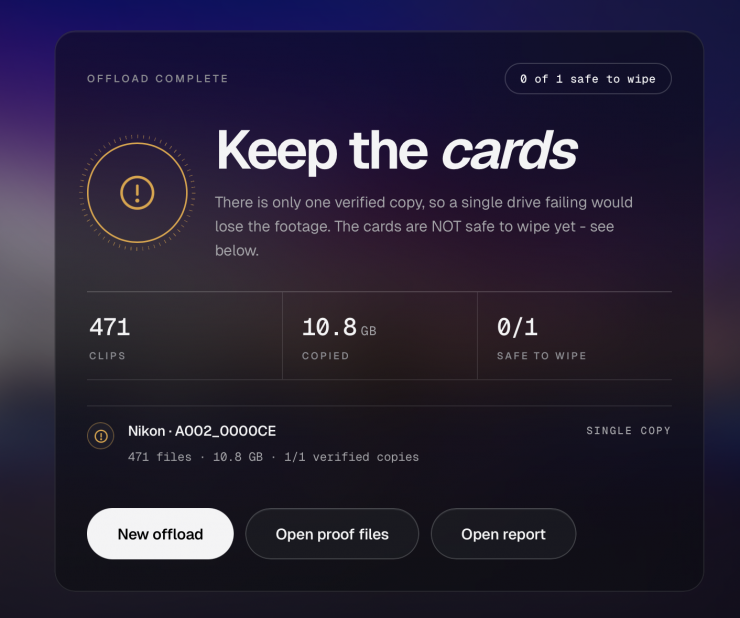
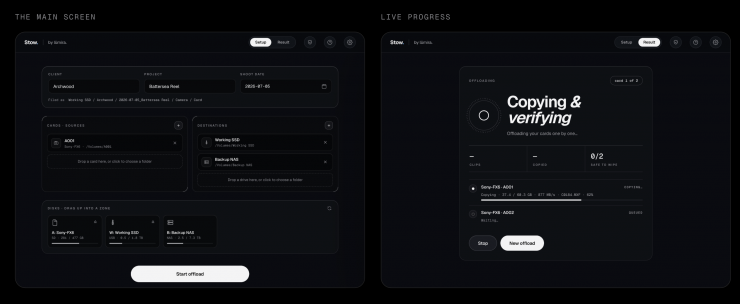
The important part is the read-back. After Stow writes a file to a destination, it re-reads that file from the drive and calculates a checksum, which is a short fingerprint of the exact bytes. It compares that fingerprint to the one taken from the card. If they match, the copy is a true copy. If they differ by even a single byte, it is not, and Stow says so.
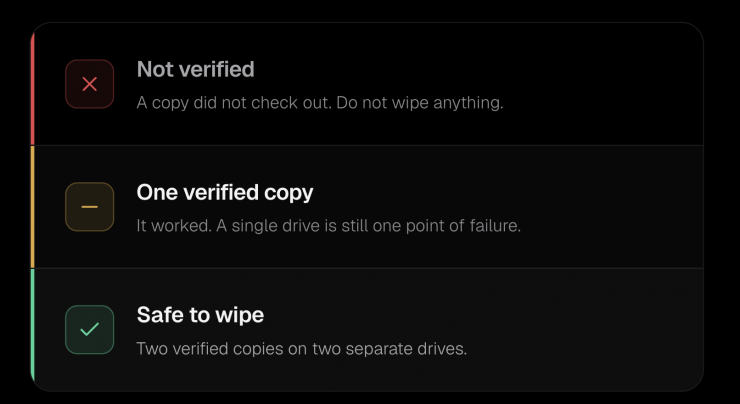
Stow clears a card with two verified copies on two separate drives. One copy holds at amber. An unverified copy stays red.
Stow uses xxHash checksum verification. A checksum is a short string calculated from every byte of a file. The same bytes always produce the same string. Flip a single bit, and the string changes. Hash the card file and the copy: if the two match, the copy is identical.
Checksum versions:
- xxHash. Built for speed. It runs at tens of gigabytes per second, far faster than any drive, so the check never slows the copy. It catches accidental corruption well. It is not cryptographic.
- MD5. The old standard. Slower and broken for security, but still fine for spotting corruption and widely supported in older pipelines.
- SHA-256. Cryptographic, so it resists deliberate forgery, not just accident. Slower in software, though modern chips speed it up. Use it when a delivery spec or a chain-of-custody asks for it.
- CRC32C and C4. CRC32C is fast and weak, good for quick error detection. C4 is a cryptographic ID used in some cinema pipelines.
For getting a card off safely, you want a hash that is fast enough to verify every file without slowing you down, and reliable at catching corruption. That is xxHash, which is why OffShoot, ShotPut Pro, Silverstack, and YoYotta all default to it. Stow uses it too.
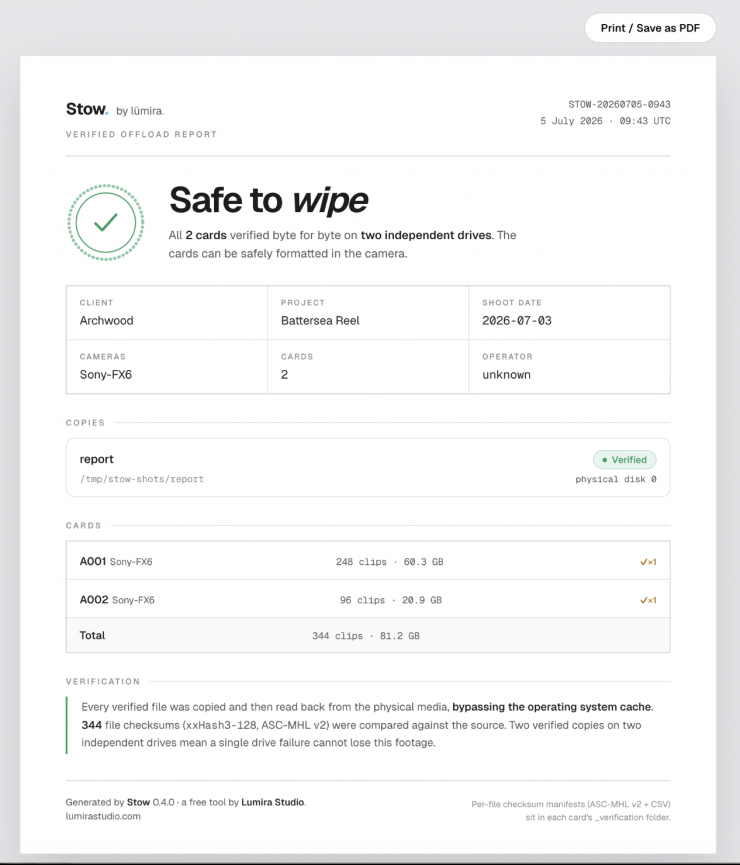
Every time you use Stow, it writes a one-page report to each destination. It states what was copied, what was verified, and the verdict, and it prints straight to PDF. This is very handy as you can also pass it on to clients.
- The safe-to-wipe verdict, in plain words
- Per-card clips, size, and verified copies
- Read back off the disk, checked with xxHash3-128 and ASC-MHL v2
- A checksums.csv beside every manifest, openable in a spreadsheet
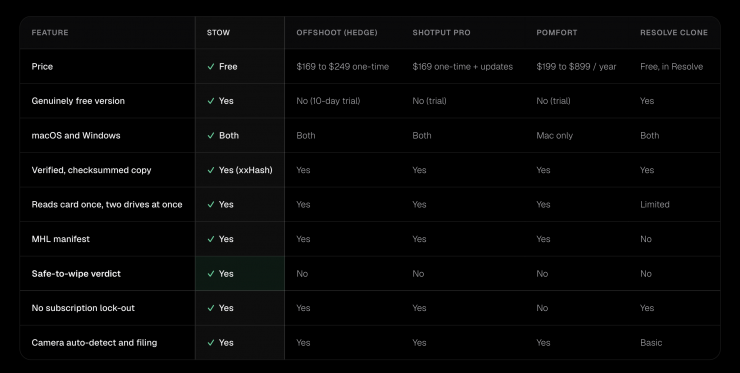
If you want to see how Stow compares to other solutions on the market, there is a table above that you can see. When looking at anything as important as copy and verification backup, you also want to factor in long-term reliability, software updates, and support.
UPDATE: Stow has now been certified by both Microsoft and Apple.
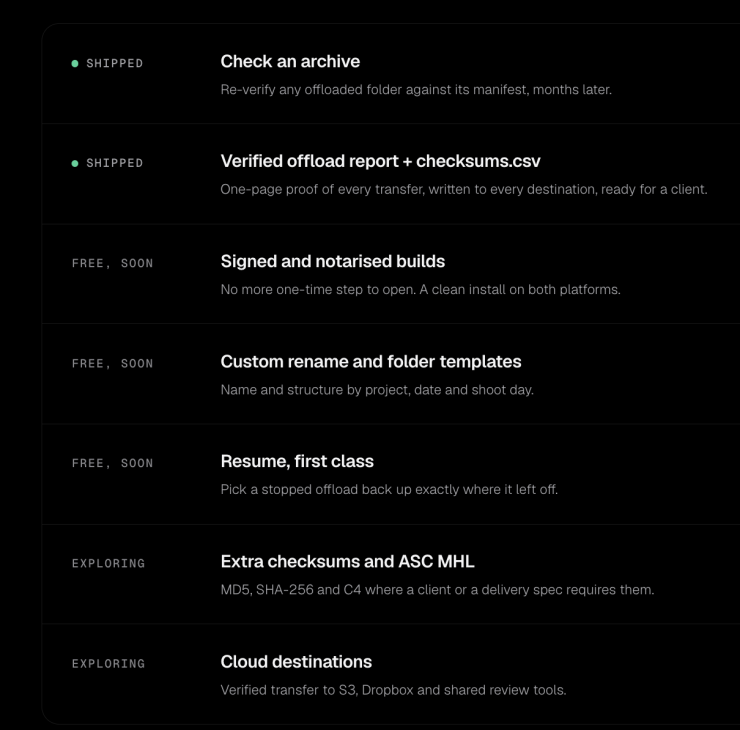
Above, you can also see what is coming in the future.