
Nikon has announced the new NIKKOR Z 70-200mm f/2.8 VR S II, a high-end fast telephoto zoom lens for full-frame/FX format mirrorless cameras. This second-generation version of Nikon’s NIKKOR Z 70-200mm F2.8 zoom is claimed to offer improved optical performance, faster focusing, and a 26% lighter weight than its first-generation predecessor.
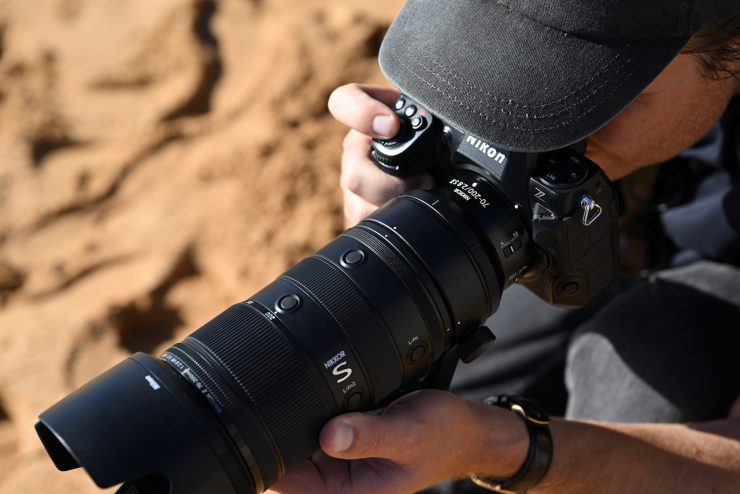

According to Nikon, this latest S-Line lens improves upon this classic recipe, specifically created for professional photographers and videographers who will not compromise on image quality and capability.
Key features
- Full-Frame | f/2.8 to f/22
- Versatile, Fast Telephoto Zoom
- 26% Lighter Weight, 0.5″ Shorter Length
- Silky Swift VCM Multi-Focus AF System
- 6-Stop VR Image Stabilization
- ED, Aspherical, SR, & Fluorite Elements
- Meso Amorphous and ARNEO Coatings
- Control Ring with Click/De-Click Switch
- Removable Arca-Style Tripod Foot
- Rounded 11-Blade Diaphragm
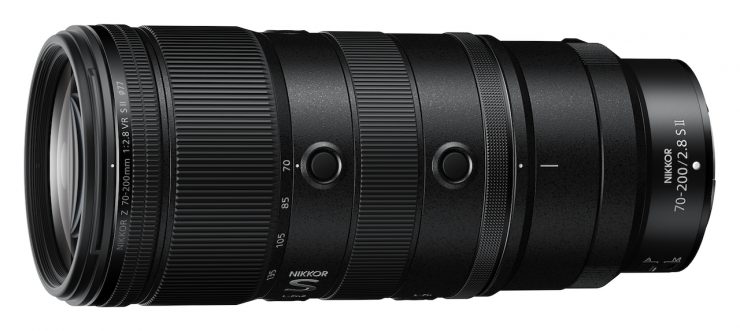
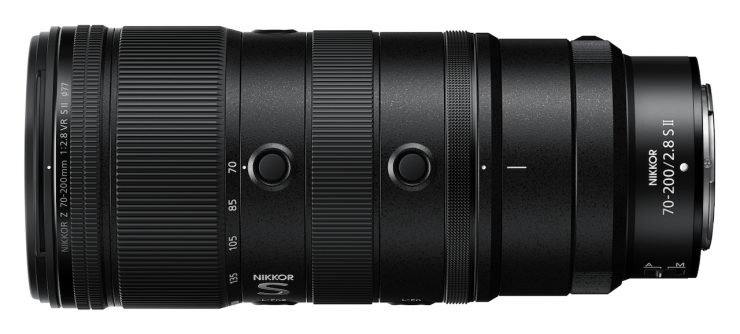
The new 70-200mm f/2.8 employs Nikon’s VCM (SSVCM) autofocus drive system, which is claimed to enable highly precise, smooth, and quiet autofocus (AF) control. Autofocusing is said to be approximately 3.5× faster, and AF tracking while zooming is approximately 40% better.
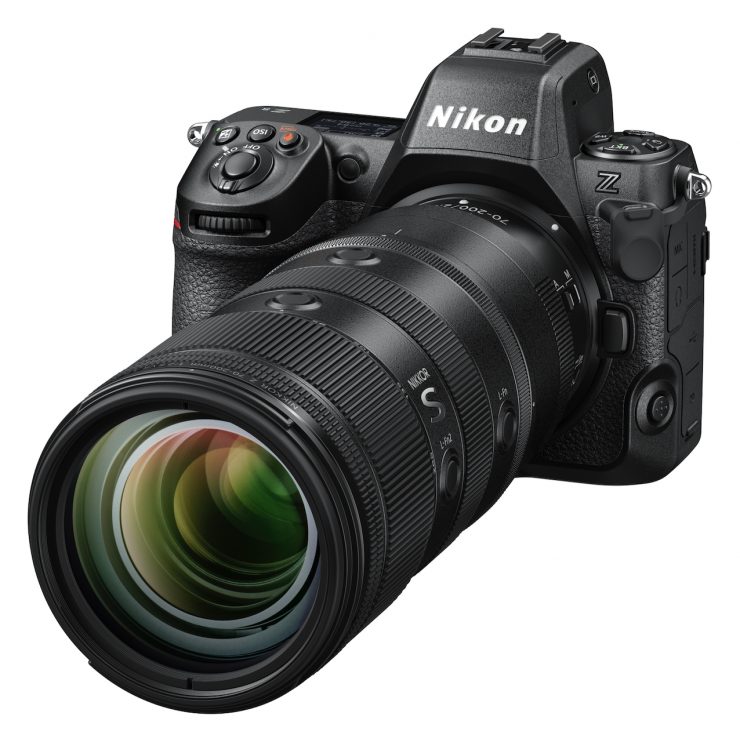
The optical formula has been thoroughly revised, with a reduction in the number of lens elements and a more optimal placement of aspherical elements. Additionally, Super Extra-low Dispersion (ED) and aspherical ED elements have been adopted for chromatic aberration correction.
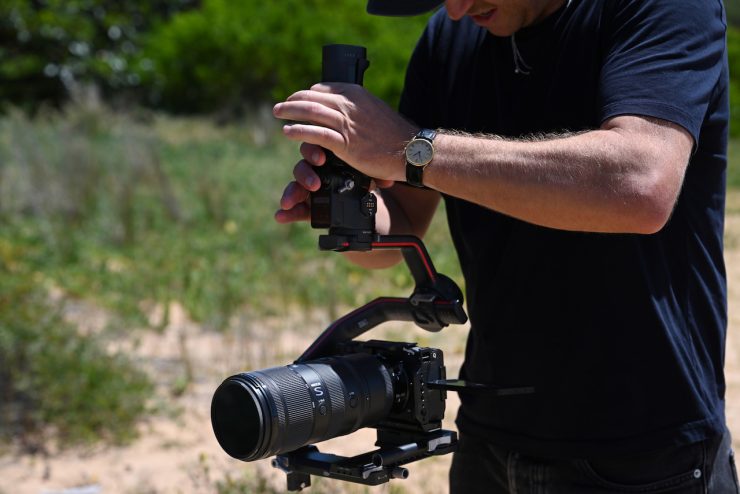

The lens features an internal zoom design, making it suitable for gimbal use and enabling it to be used with rod-based matte boxes.
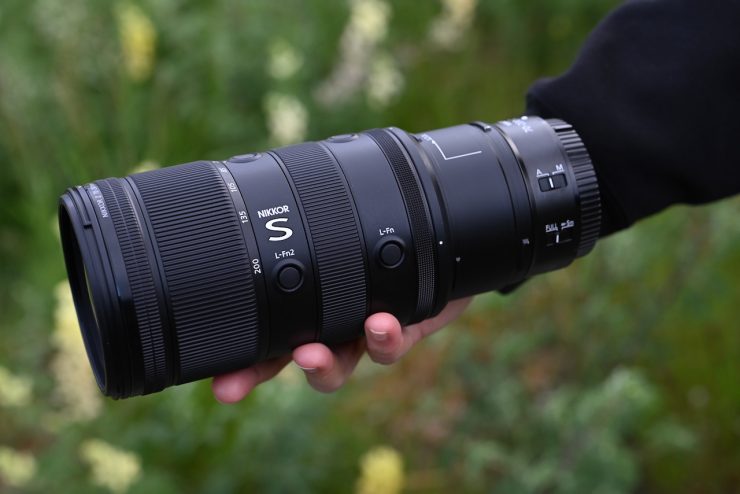
The NIKKOR Z 70-200mm f/2.8 VR S II weighs just 998g / 2.2 lb. The previous version weighed 1360 g / 3 lb. This weight reduction was achieved by modifying the front lens group configuration and eliminating mechanical components in the moving lens groups. Overall, the lens is 26% lighter and 12mm shorter than its predecessor.
The optical design features six different types of lens elements: Super ED, aspherical ED, ED, aspherical, fluorite, and Short-wavelength Refractive (SR). Additionally, the lens now features 11 rounded diaphragm blades for more natural, circular bokeh.
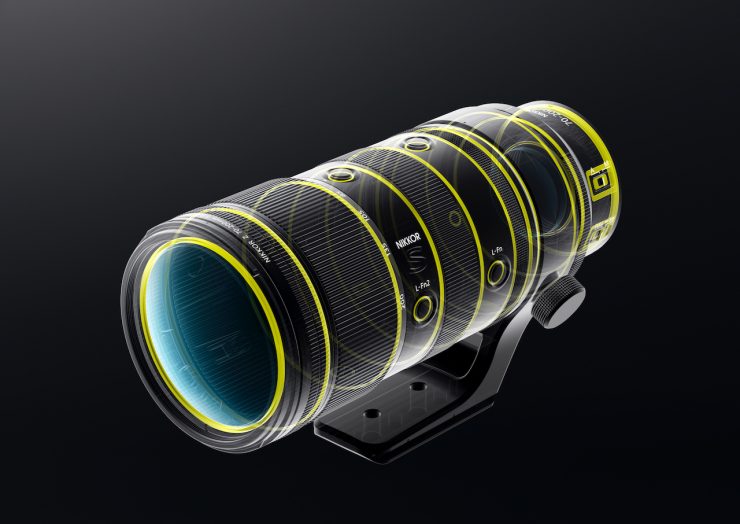
The lens adopts a Meso Amorphous Coat, which is claimed to offer the best anti-reflection performance in Nikon history, and an ARNEO Coat, which effectively suppresses ghosting and flares. It features dust- and drip-resistant performance, and a fluorine coating on the front element further protects against dirt and smudges.
The minimum focus distance is 0.38 m (wide) and 0.8 m (tele), with a maximum reproduction ratio of 0.3× (wide) /0.25× (tele).
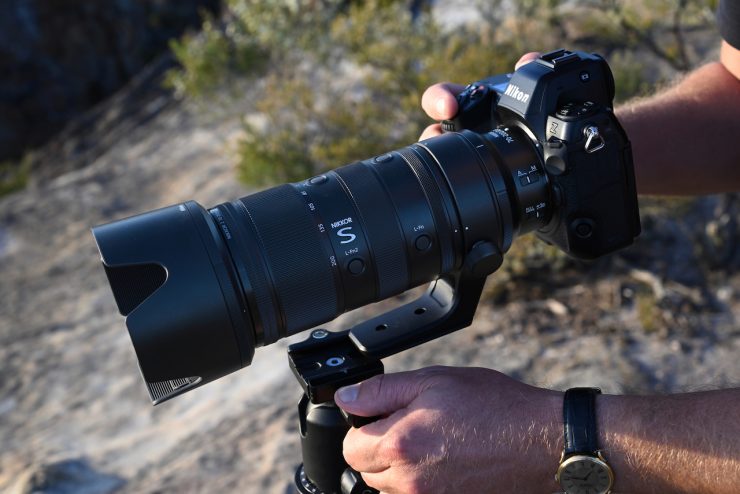
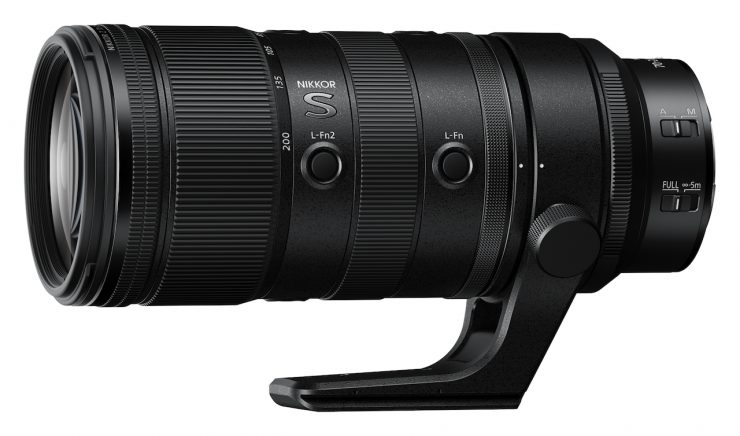
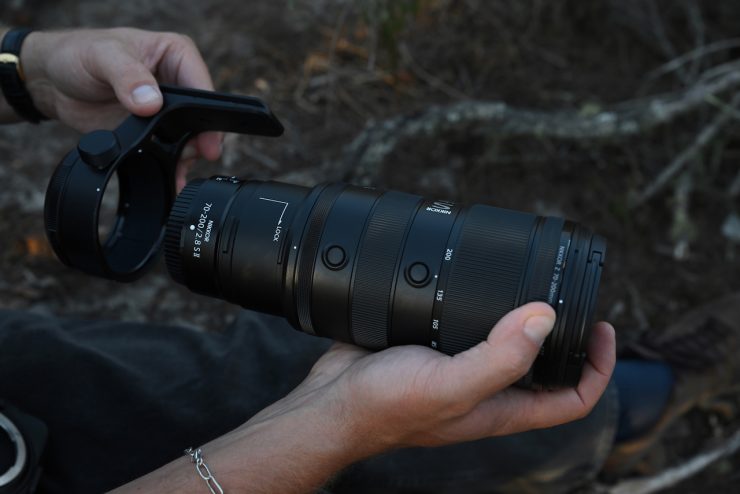
This is also the first-ever NIKKOR lens to support the use of Arca-Swiss. A removable tripod collar ring enables switching between portrait and landscape orientation.
The control ring clicking switch allows users to enable or disable the tactile click for control ring operation.

The lens has 6.0-stop vibration reduction (VR) performance which is accessible at the center and edges of the frame when used with a camera that supports Synchro VR.
The included lens hood features a filter adjustment window that allows users to adjust circular polarizing and variable ND filters without removing the lens hood.
It is compatible with Z TELECONVERTER TC-1.4× or Z TELECONVERTER TC-2.0×.
Pricing & Availability
The new NIKKOR Z 70-200mm f/2.8 VR S II lens will be available in late March 2026 for $3,196.95 USD. As a reference, the previous NIKKOR Z 70-200mm f/2.8 VR S costs $2,896.95 USD.