
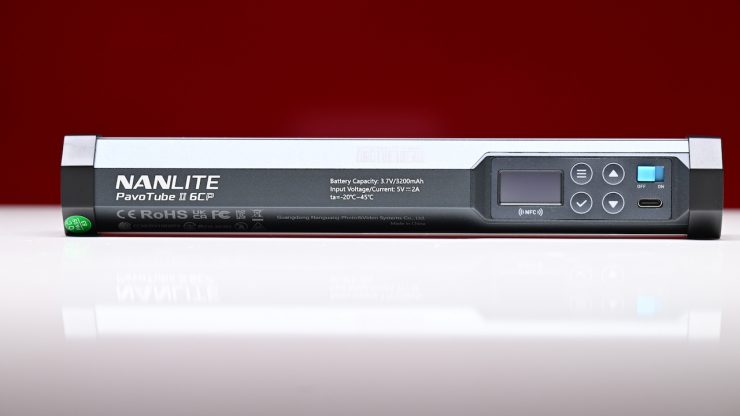
Nanlite is no stranger to making LED tube lights, and recently, they announced their new PavoTube II 6CP. This is a follow-up to the PavoTube II 6C, and Nanlite claims that it offers more output, better battery life, and more enhanced features.
The form factor of tubular sources and their ability to generate and create lots of different colors make them useful for discreet lighting effects and placement in confined or hard-to-reach places. Lots of lighting companies now have tube LED lights in their portfolio, and that can make the choice of which one to get somewhat confusing.
Key features
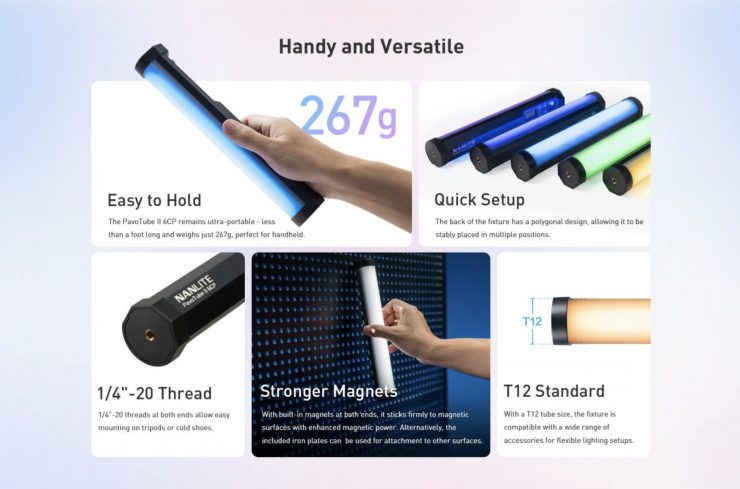
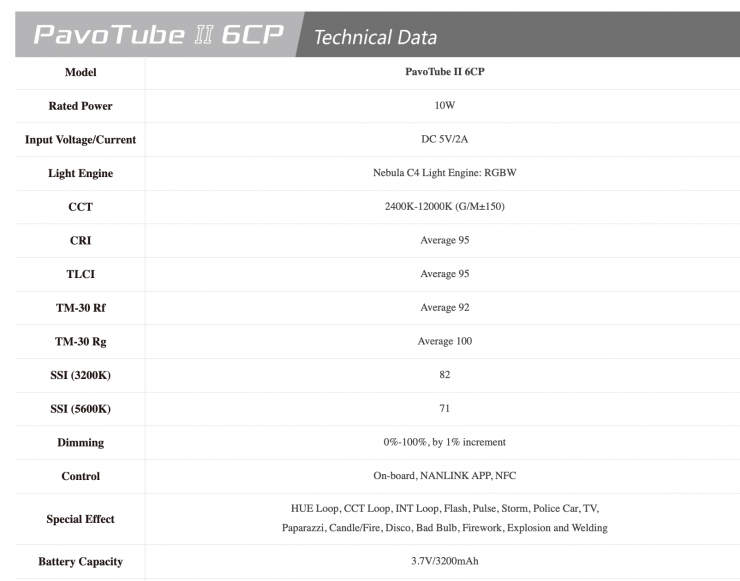
- Only 267g, 25cm long, standard T12 size
- Wide CCT range of 2400K-12000K with ±150 green/magenta adjustment
- Excellent color rendition with CRI/TLCI average 95/95, TM-30 Rf/Rg average 92/100
- Four lighting modes: CCT, HSI, gel, and effect
- 460 gels help easily match other lighting sources
- 15 customizable effects to simulate real-world lighting
- Polygonal design and built-in magnets allow stable placement
- Supports on-board and NANLINK App 2.0 control
- NFC function enables quick connection to NANLINK App 2.0
Design & Concept
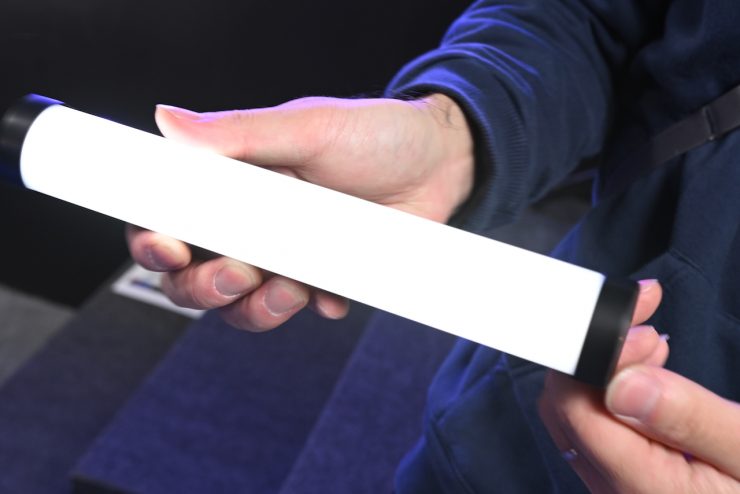
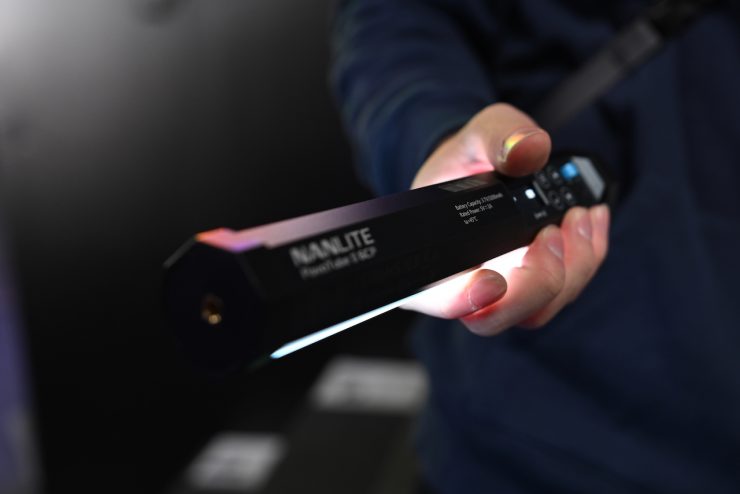
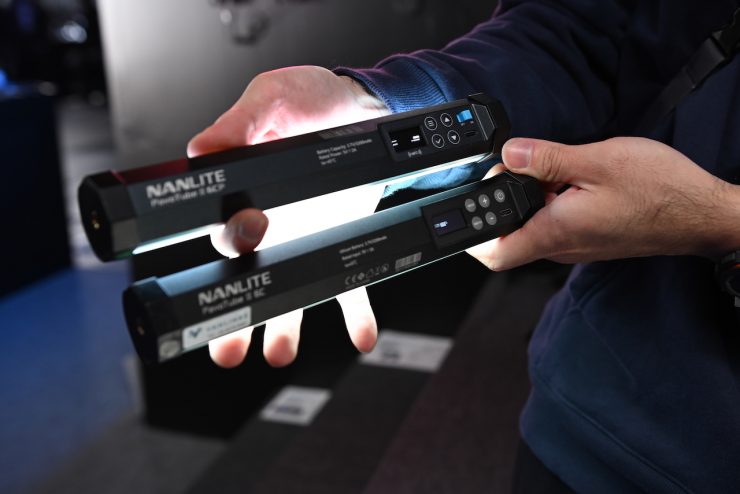
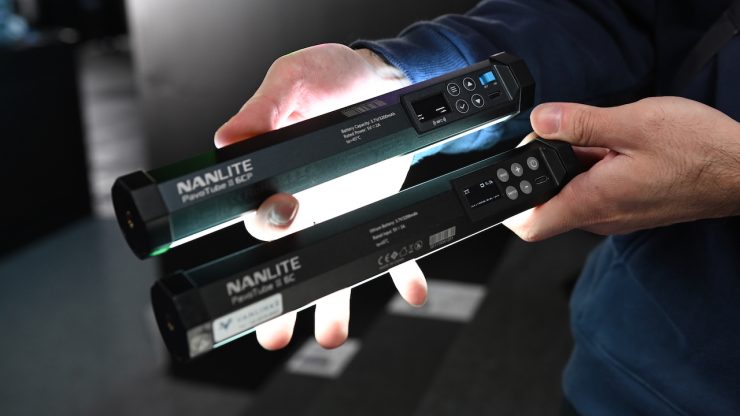
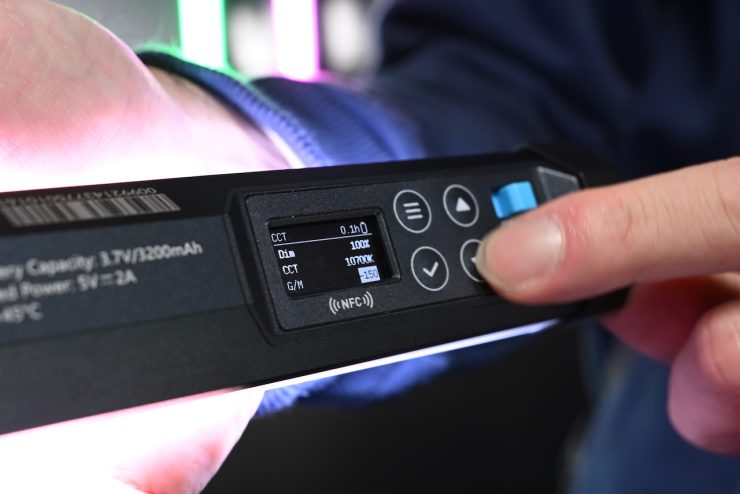
Tube lights are not a new concept. Fluorescent tubes have been around for a very long time, and in recent years, we have seen quite a lot of RGB LED tube options in a variety of different sizes coming to market at various price points
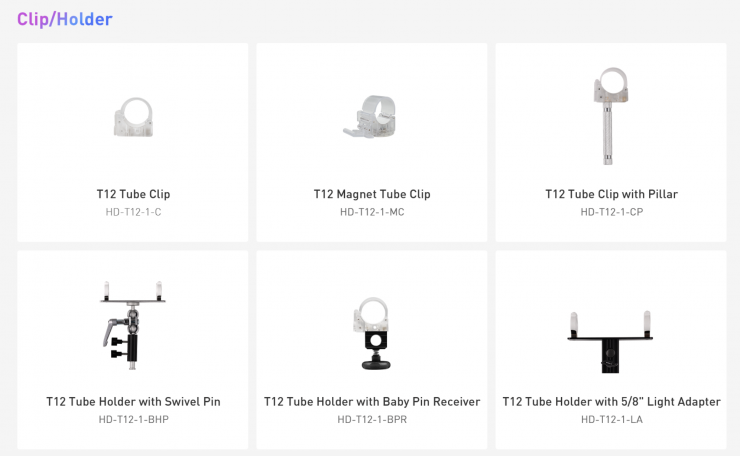
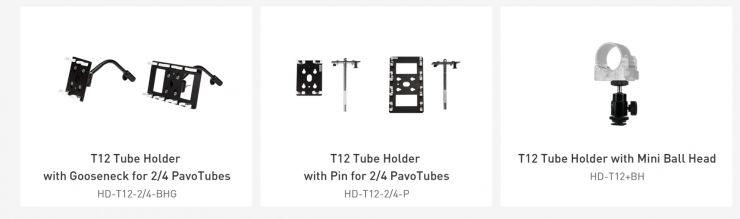
One of the inherent problems with a tube light is that you have to think carefully about how you are going to mount and power it, although a lot of companies have now come up with decent solutions for doing that.
The light has been designed to be an all-in-one unit, so you can run the PavoTube II 6CP from its inbuilt 3200 mAh lithium battery. This all-in-one design makes it relatively quick to set up and use.
The problem with long tube lights is when it comes to transportation and storage. Due to their length (this especially applies to the longer versions), they are an awkward item to transport. With smaller-sized tubes, such as the PavoTube II 6CP, they are much easier to transport and pack into bags.
You also have the ability to mount multiple tubes together lengthwise, so you could easily make a close to 3′ tube by combining three of them.
The LED chips on PavoTube II 6CP are surrounded by diffusion materials, so they can offer better performance for shooting highly-reflective objects or when you use them as in-frame practical lights.
It is worth noting that the Nanlite PavoTube II 6CP are T12-sized tubes, which are the same as tubes from Astera, Digital Sputnik, and Qusar Science.
Build Quality
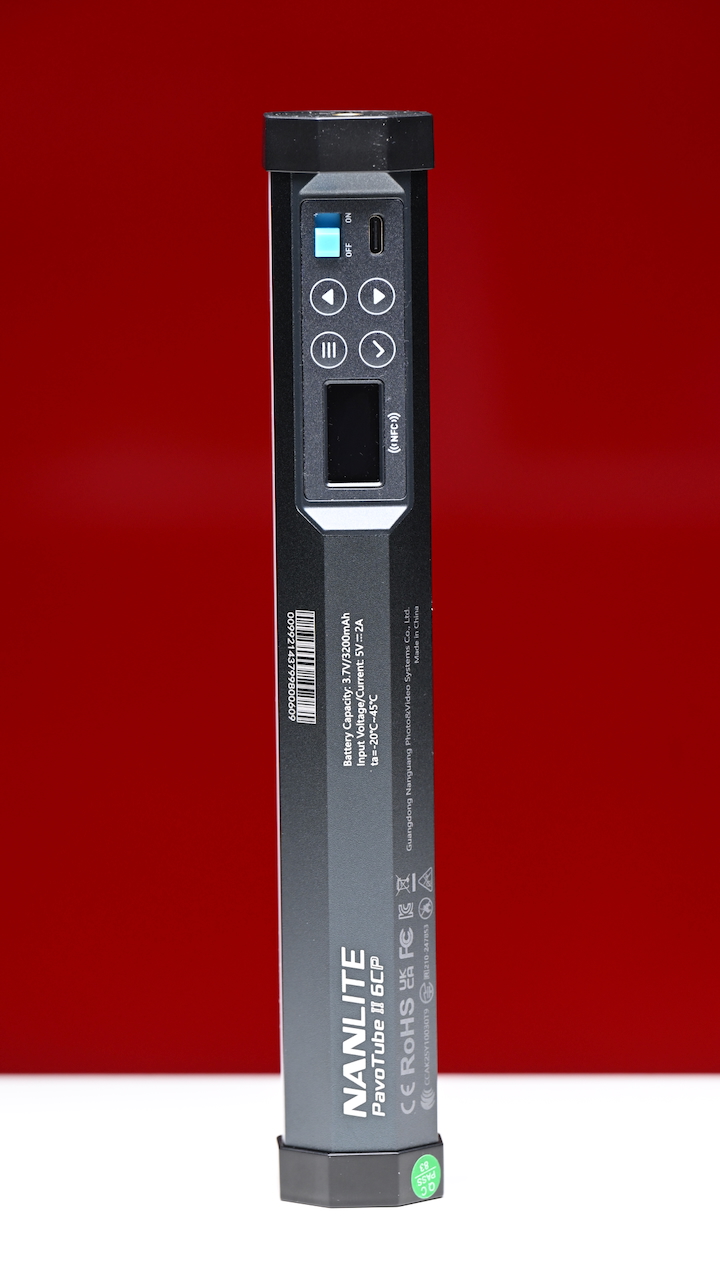
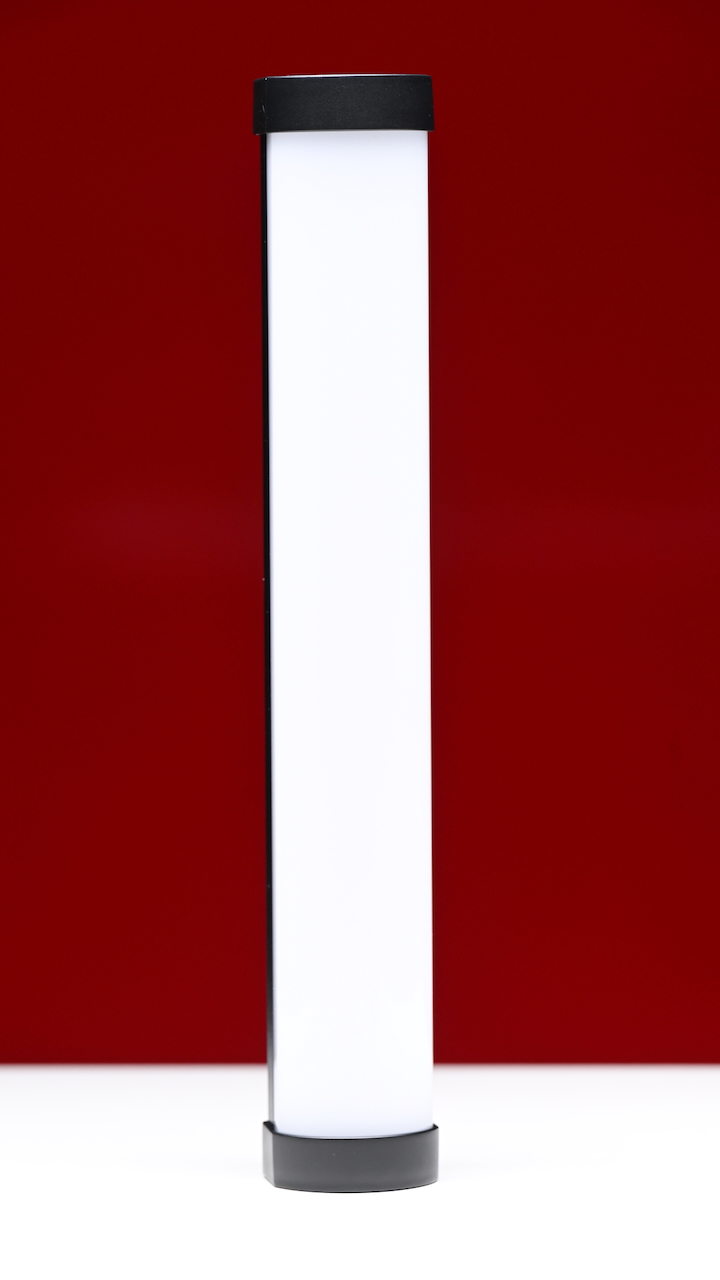
The build quality is pretty good considering it is a sub $100 USD fixture.
Most tube lights probably won’t survive repeated drops on hard surfaces. It is always a good practice, at least in my opinion, to treat tube lights with care.
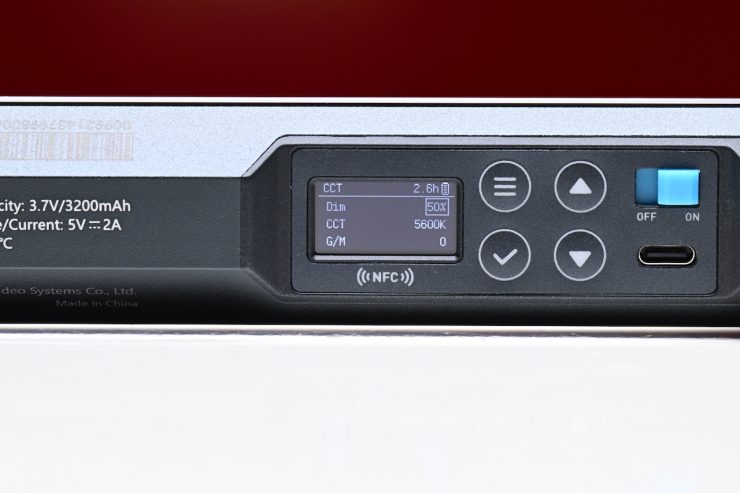
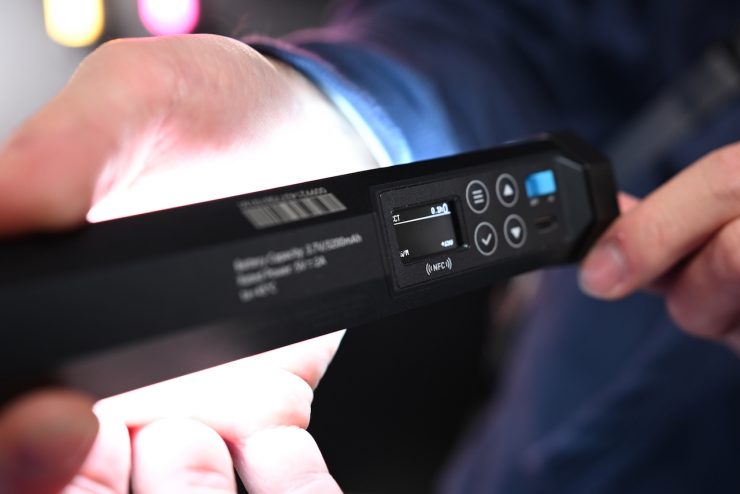
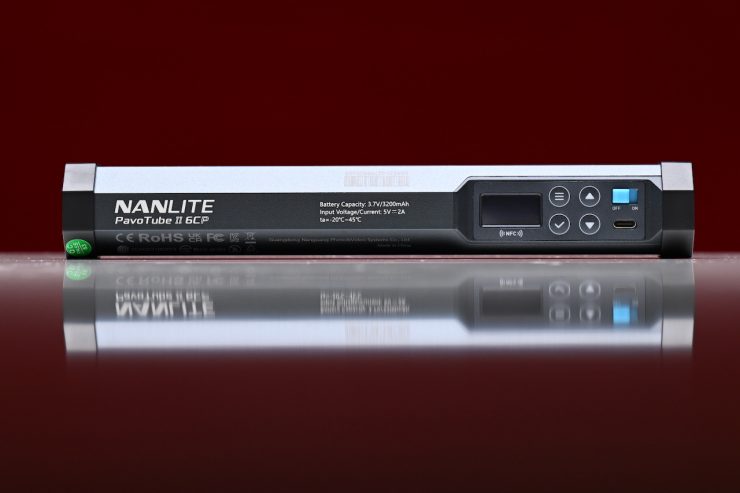
The buttons and switches all feel pretty tactile. The small LCD display is pretty basic, but it gets the job done.
It is hard to judge just how robust this tube light is and how it would hold up to extensive use. I wish I could be more specific than that, but I’m in no position to comment on longevity after only spending a few months with the light.
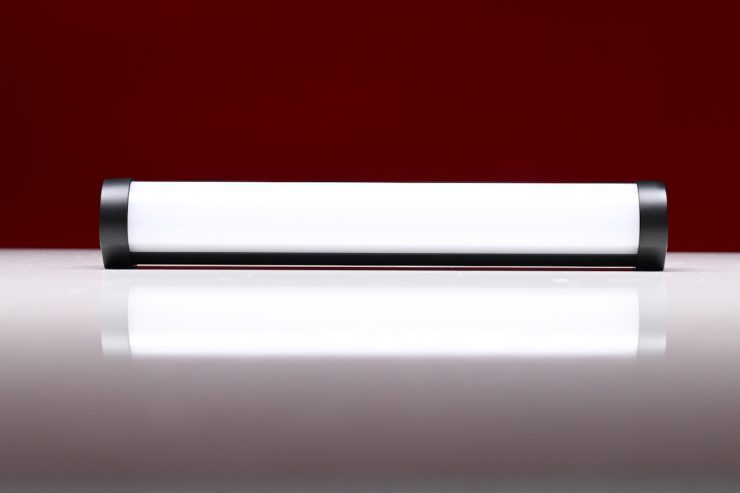
I’m not a big fan of having branding all over lights, and the PavoTube II 6PC doesn’t have any on the front side of the light, which is nice. The last thing a user wants is branding on the front of a fixture, especially since tube lights are often used as replacements for practicals.
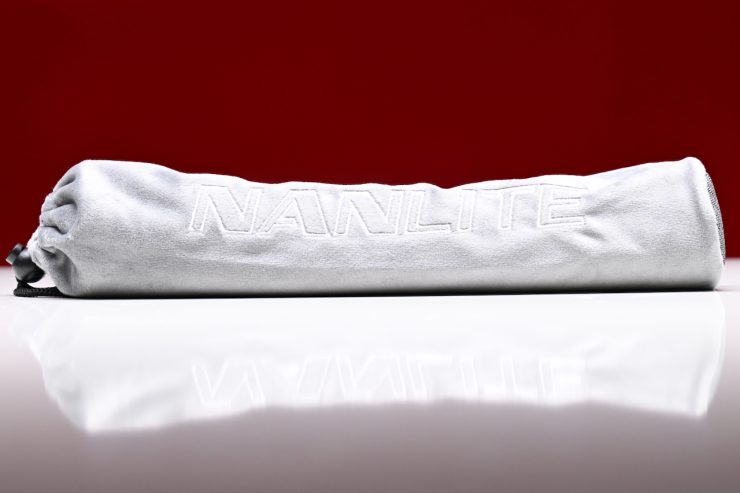
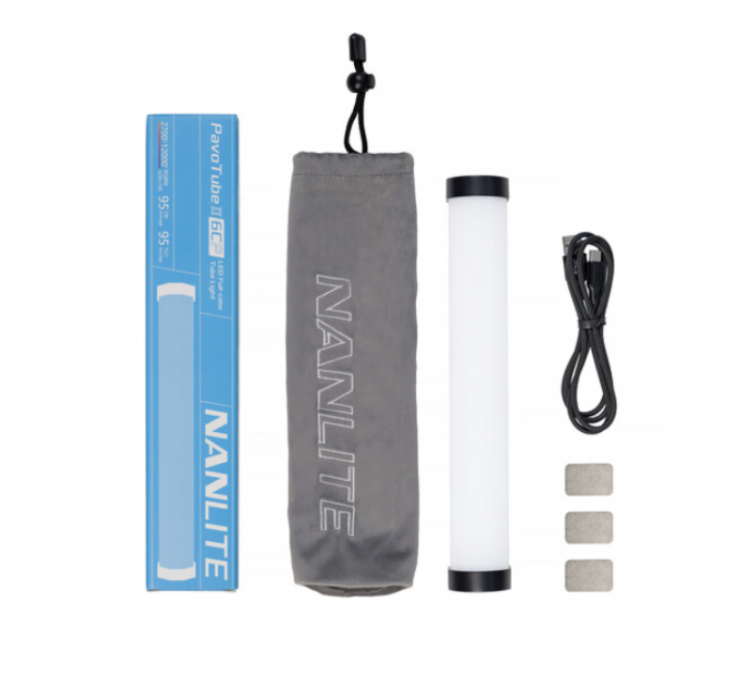
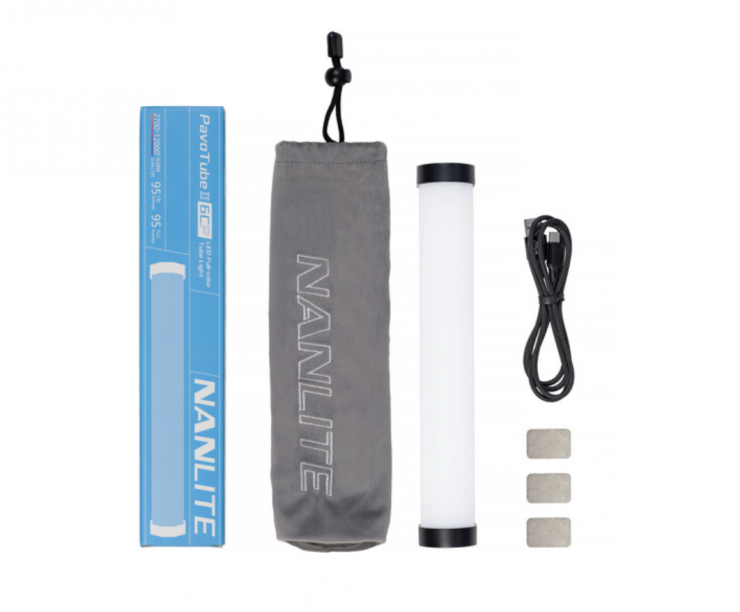
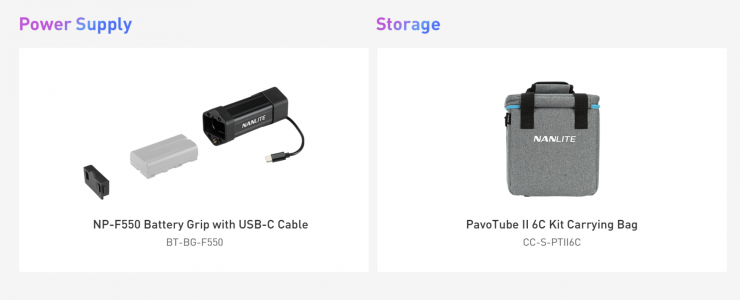
The light comes in a small carry bag. You also get the following items:
- USB-C Cable
- 3 x Iron Mounting Plate
- Carry Bag
Weight
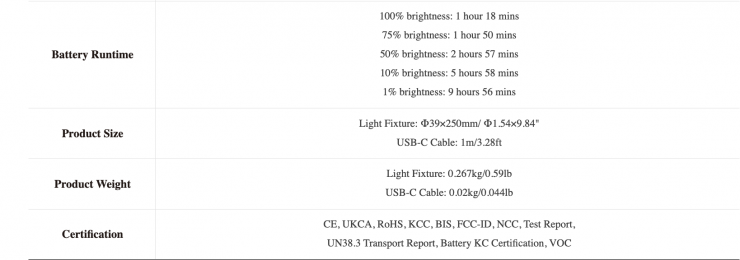
The PavoTube II 6CP weighs just 267g / 9.41 oz.
Controls & Menu System
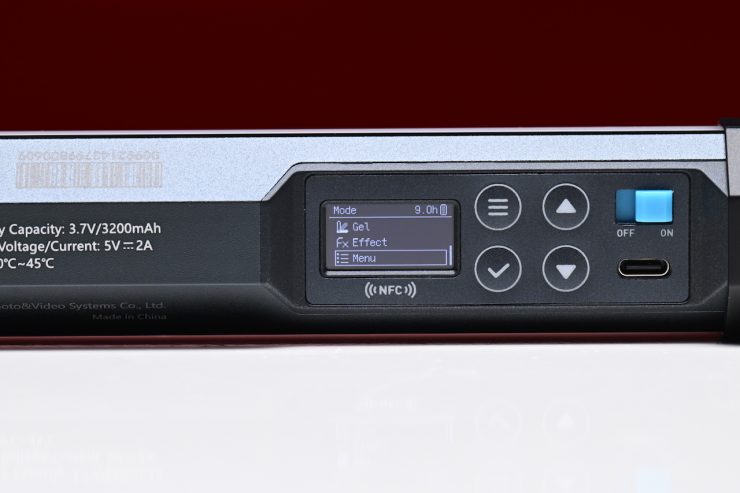
The fixture gains a new user interface that combines an improved button layout and a redesigned menu.
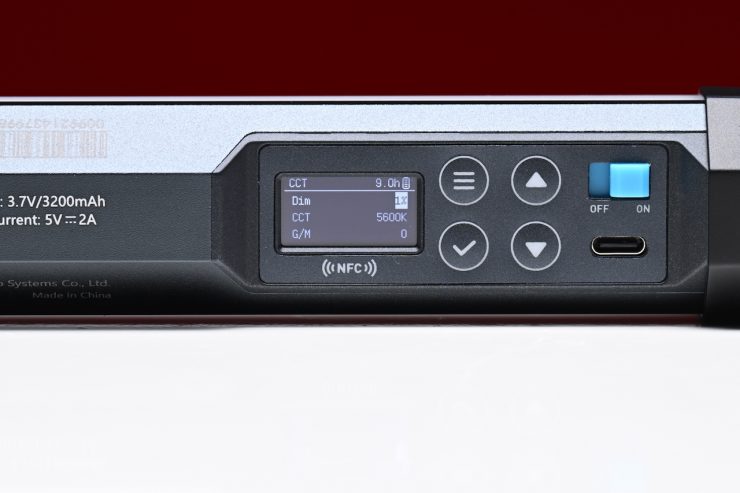
The controls and menu system are very straightforward, and the light is relatively easy to use. This is not a light you need to pull out an instruction manual for. Tubes should be quick and easy to operate and use, and that is certainly the case with the
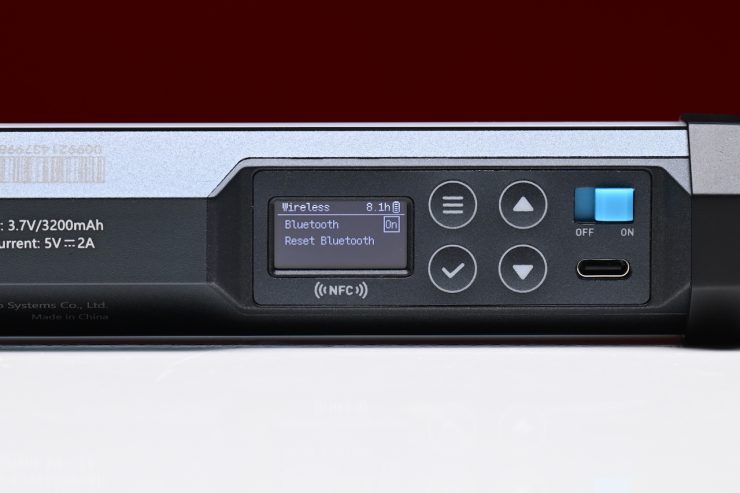
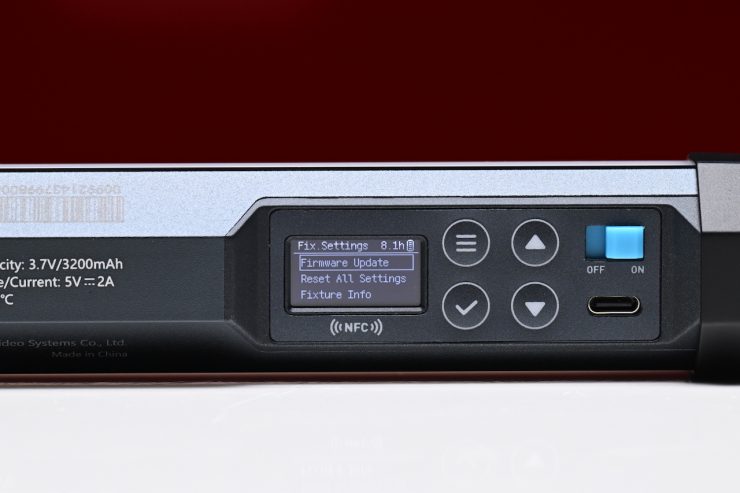
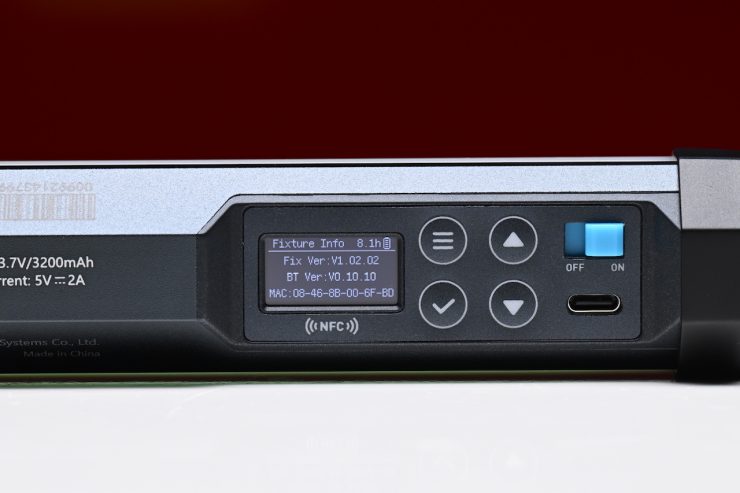
In the menu, there are options for changing the operating channel, turning Bluetooth on/off, and the ability to update firmware and change the language.
I found making changes to be super simple, and the light doesn’t have extensive menus that you get lost in. There is also a free iOS and Android App available. If you want to directly control the light using the app, you can only do it via Bluetooth.
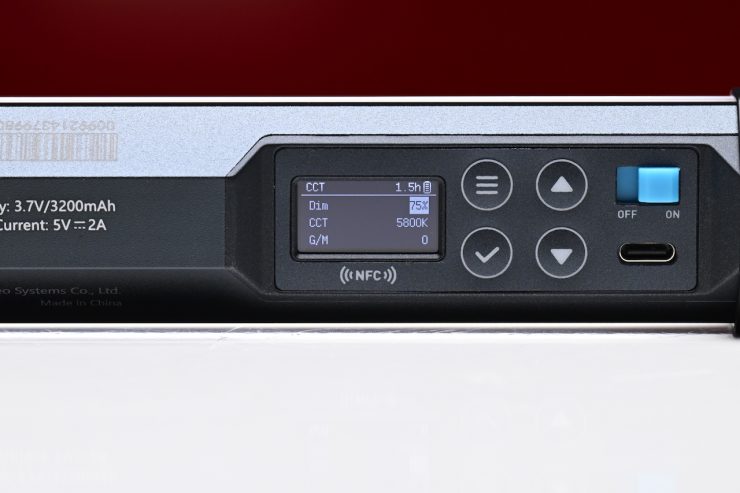
The buttons for making changes to things such as CCT and intensity are easy to use, and they are reasonably tactile. When you are adjusting the CCT, you can only do it in increments of 100K. It would have been nice to be able to adjust the light more precisely.
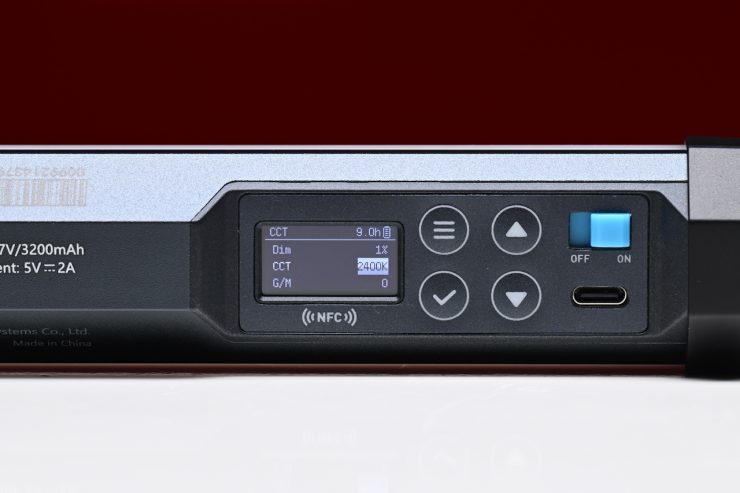
On the tubes, the up and down buttons make adjustments, while the check button allows you to toggle through and select the options.
Operating Modes
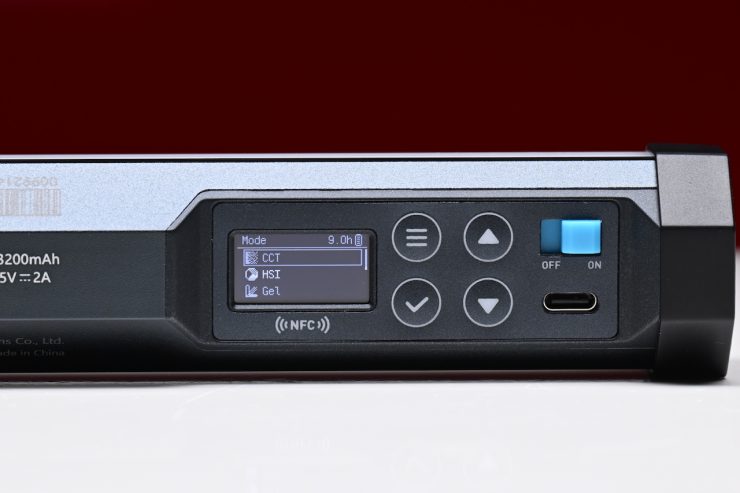
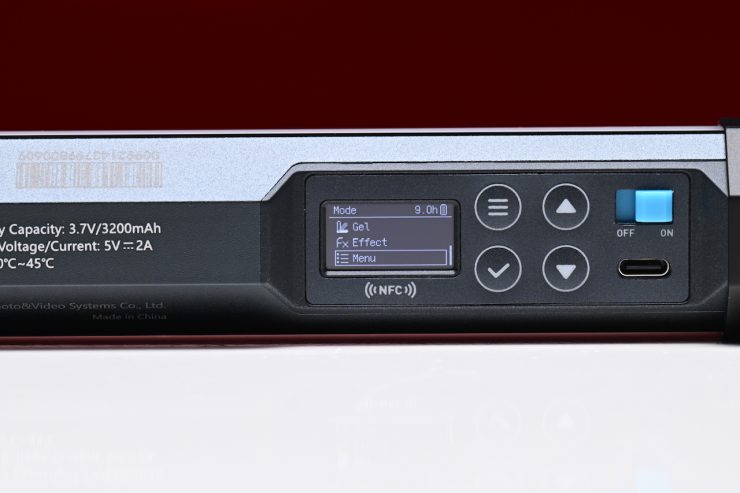
Depending on what operating mode you are in, the tubes can be configured to work in a variety of ways:
- CCT Mode
- HSI Mode
- Effects Mode
- Gel Mode
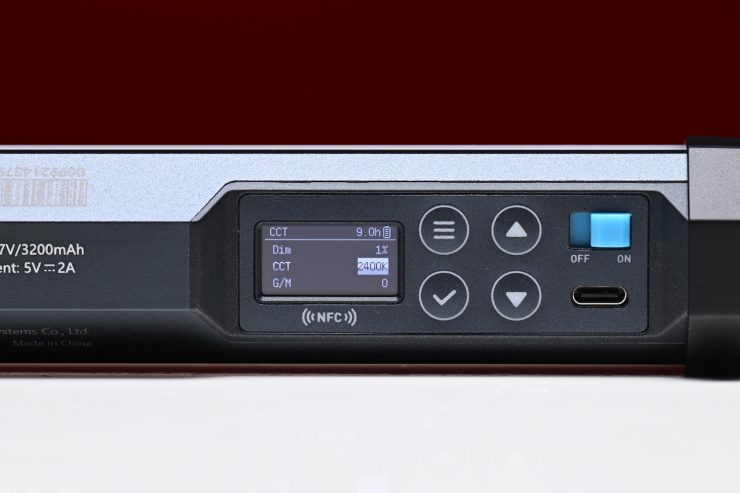
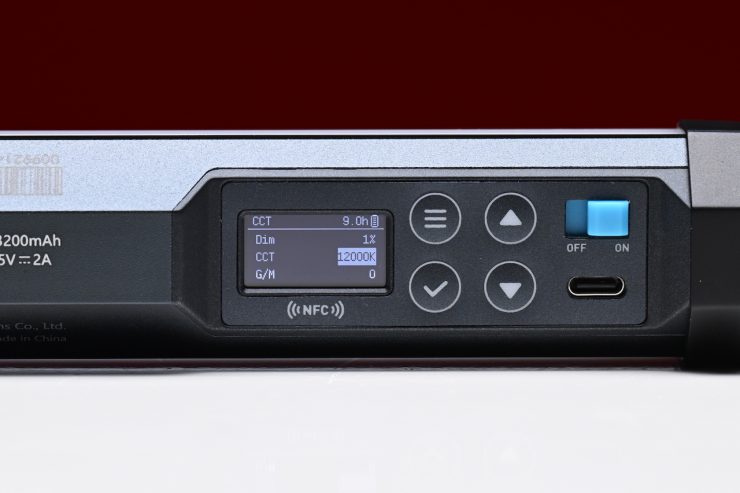
There is a normal CCT Mode where you can adjust the Kelvin color temperature between 2400K to 12,000K.
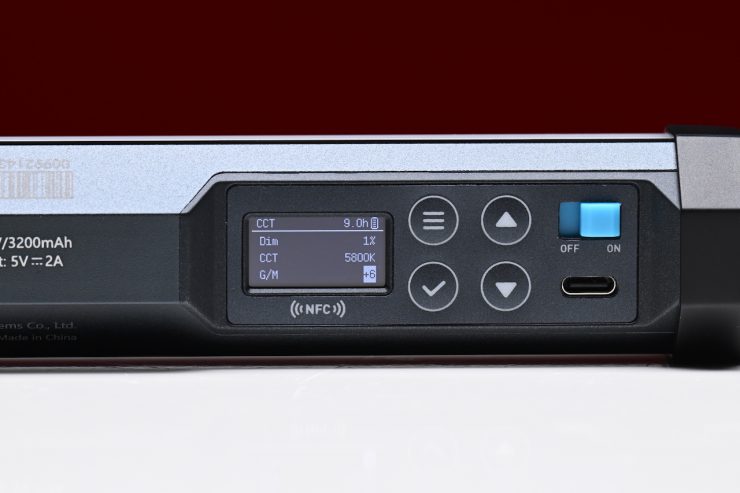
You also have the ability to make green/magenta adjustments of ±150
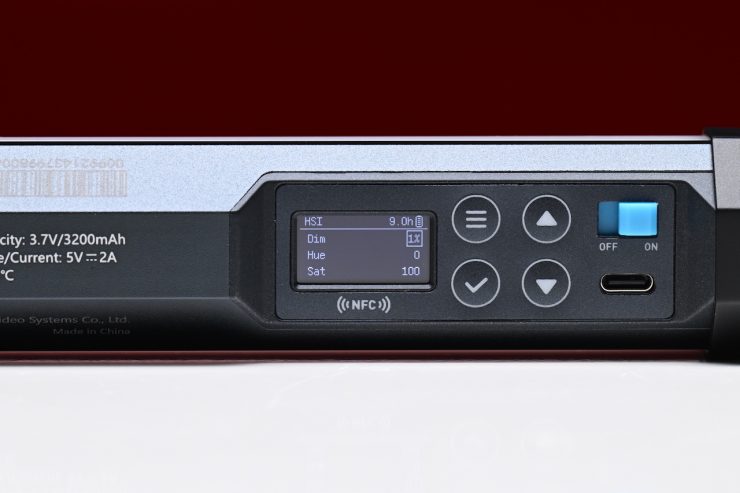
HSI Mode lets you adjust the hue, saturation, and intensity of the light. In this mode, you can create a multitude of different colors and looks.
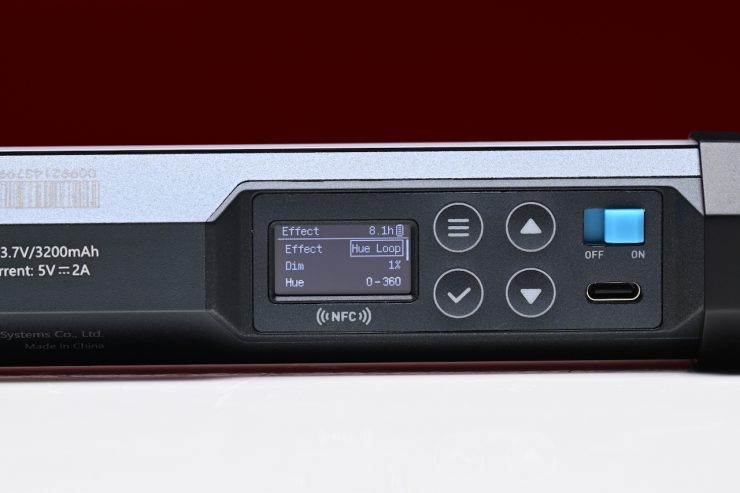
The Effects Mode, as its name suggests, lets you create effects such as Hue Loop, CCT Loop, INT Loop, CCT Flash, HUE Flash, CCT Pulse, Hue Pulse, Storm Auto, Storm Manual, Police Car, TV, Paparazzi, Candle/Fire, Disco, Bad Bulb, Fireworks, Explosion, and Welding.
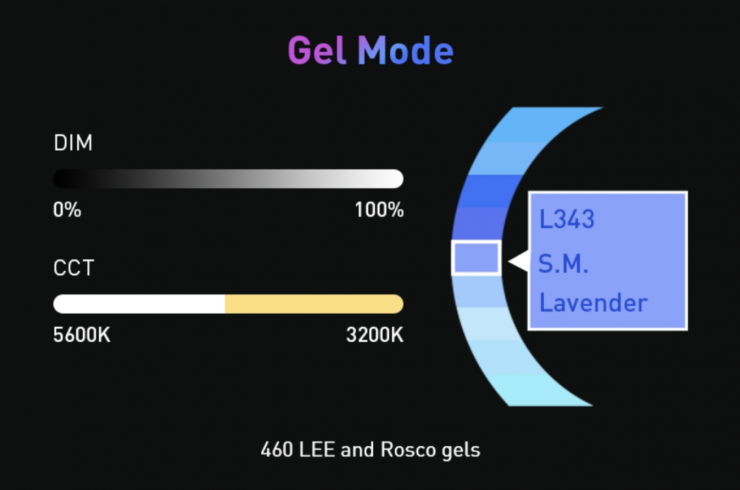
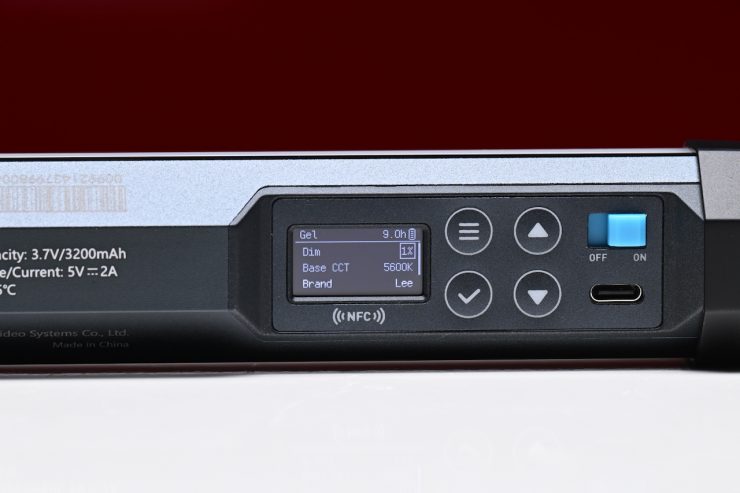
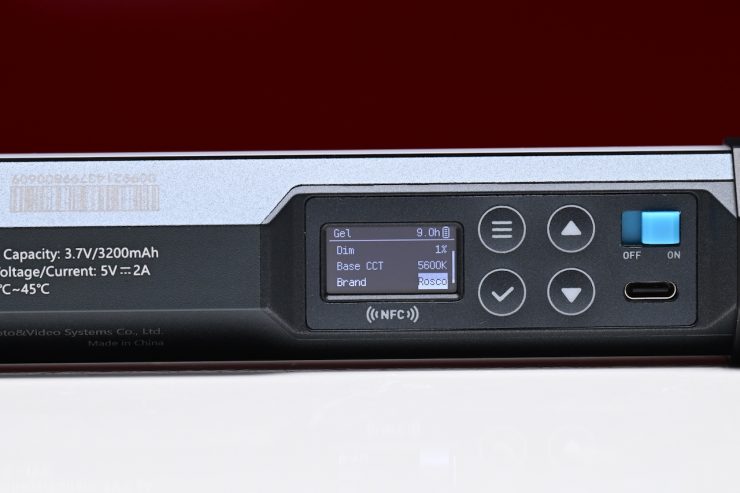
GEL Mode featuring 460 LEE and Rosco color filters you can choose from.
Power Draw
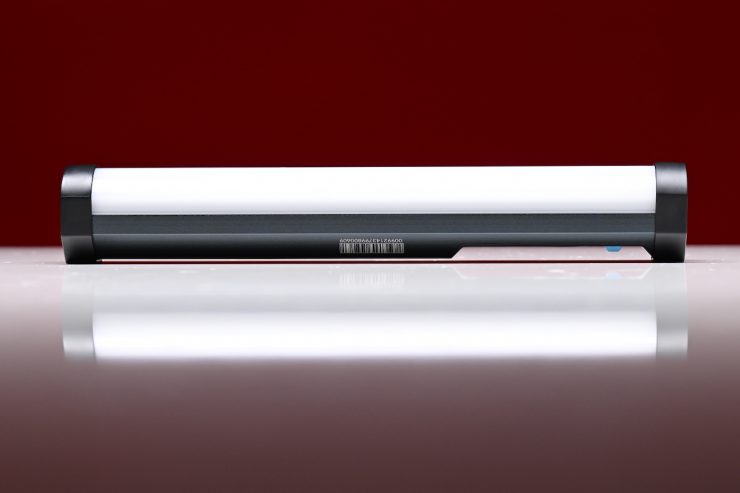
The PavoTube II 6CP draws just 10W. As I mentioned earlier, it utilizes an in-built 3200 mAh lithium battery.
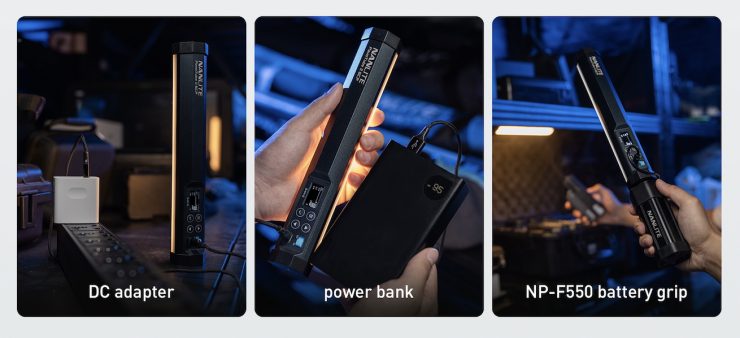
The fixture can be powered or charged via the USB-C port using a DC 5V/2A adapter or PD adapter. It can also be powered via an optional battery grip with an NP-F550 battery (7.4V/2600mAh), which extends runtime by approximately 2 hours. Please note that the PD output defaults to 5V, and fast charging is not supported.
The PavoTube II 6CP offers around 78 minutes of runtime at full power, which is close to 30% longer runtime than the PavoTube II 6C.
Below you can see the claimed run times when using the light at various levels of brightness:
- 100% brightness:~1 hour 18 min
- 50% brightness:~2 hour 57 min
This is a reasonable amount of run time on a battery, and in a lot of cases, with lights such as these, you won’t be running them at 100% brightness.
Tube lights are great as practical replacements, but if they are going to be visible in shot, there may be times when you will want to run them by using an external power source and not via the in-built battery.
Silent Operation
The PavoTube II 6CP doesn’t feature any type of fan, and instead, it is passively cooled. While this does prevent any unwanted noise, it does mean that the tube can get quite hot, although not as hot as the PavoTube 15/30/60X II fixtures. The other downside of not using any type of fan is that the output is going to be limited.
Mounting
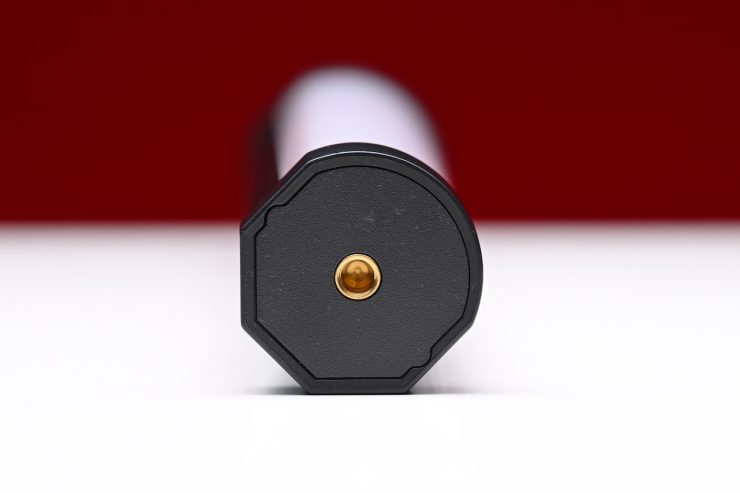
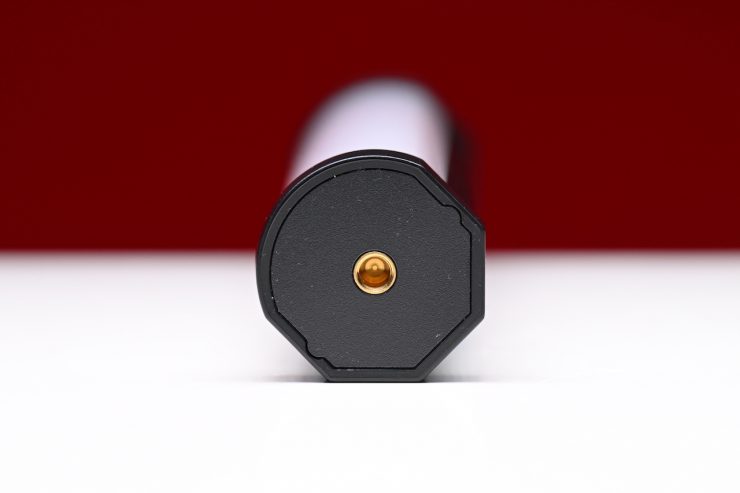
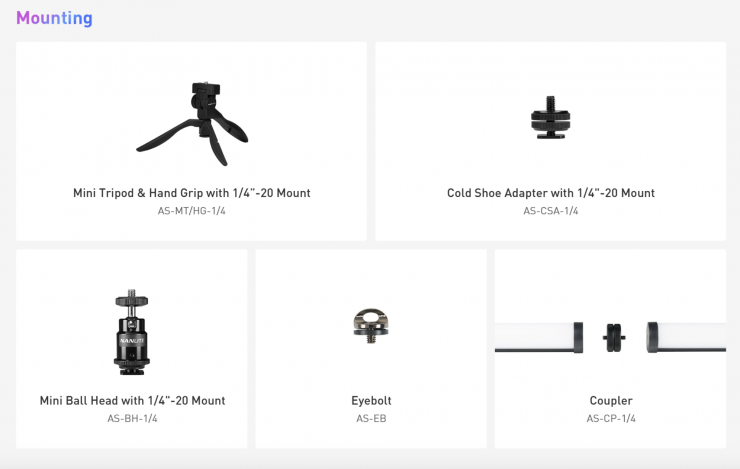
When it comes to mounting, there are single 1/4-20″ mounting points on both ends of the tube.
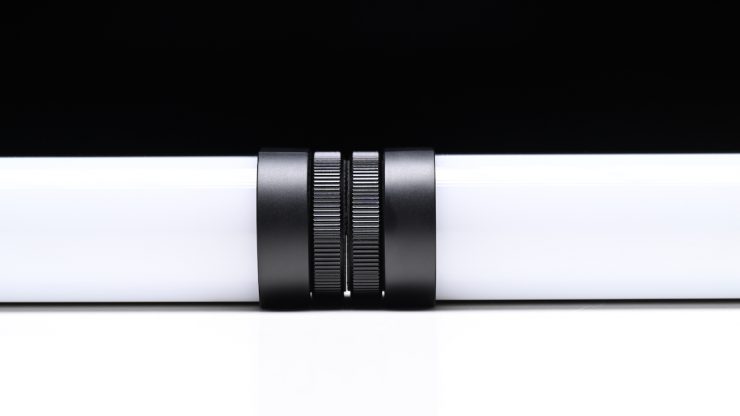
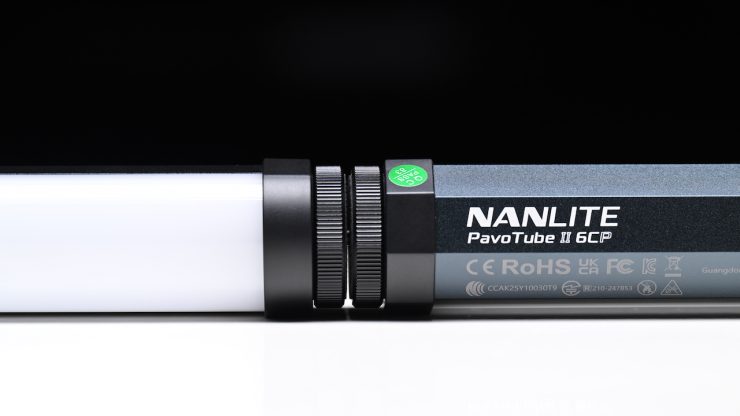
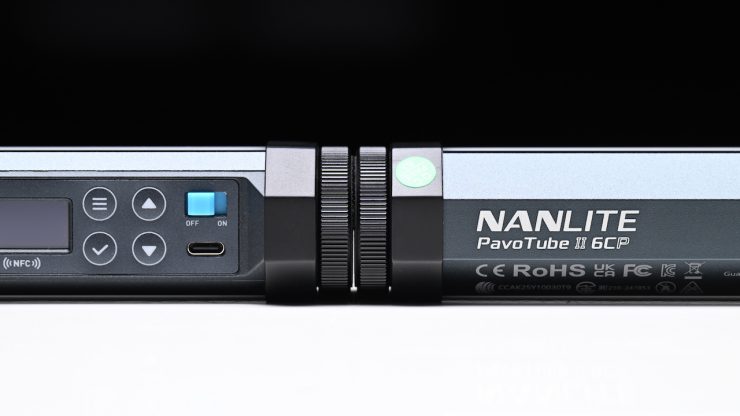
You can also buy an optional AS-CP-1/4 Nanlite Pavotube II 6C Coupler, which is a 1/4 20″ male to male adapter specially designed to safely connect multiple PavoTube II 6Cs. This works pretty well, and it allows you to connect multiple tubes together to create bigger sources. You can also mount one tube facing one direction, and the other facing a different direction.
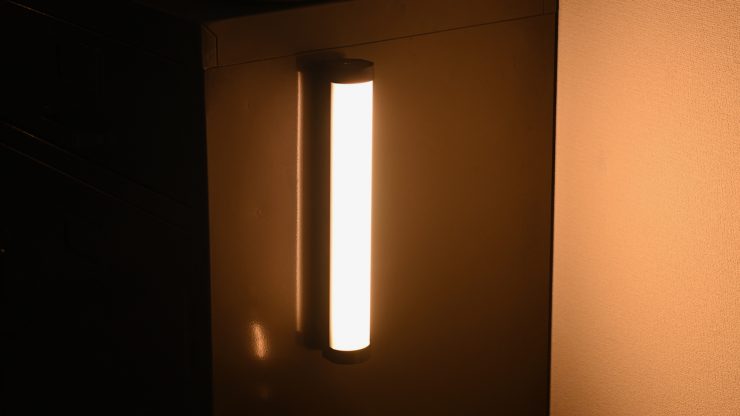
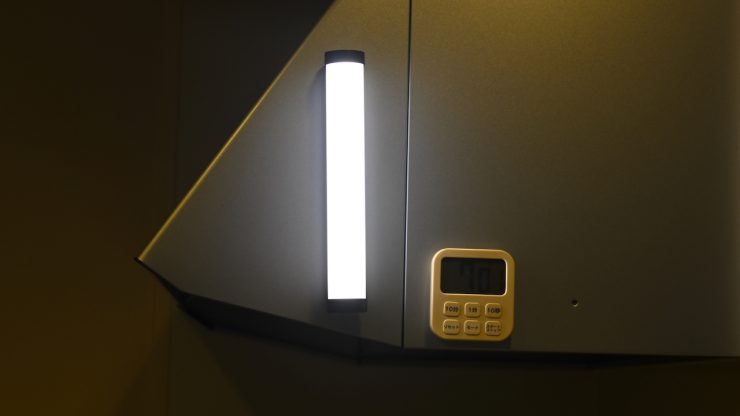
The polygonal design features built-in magnets, allowing you to place he tube on metal surfaces. This is handy for certain lighting applications.
Bluetooth & NFC
The PavoTube II 6CP can be controlled via Bluetooth using the NANLINK App 2.0. Thanks to the built-in NFC function, users can quickly connect the fixture to the App by simply tapping their compatible phone or tablet on the fixture’s NFC tag.

The NANLINK iOS and Android app only works directly if you use Bluetooth. For WiFi control, you need the optional transfer device.
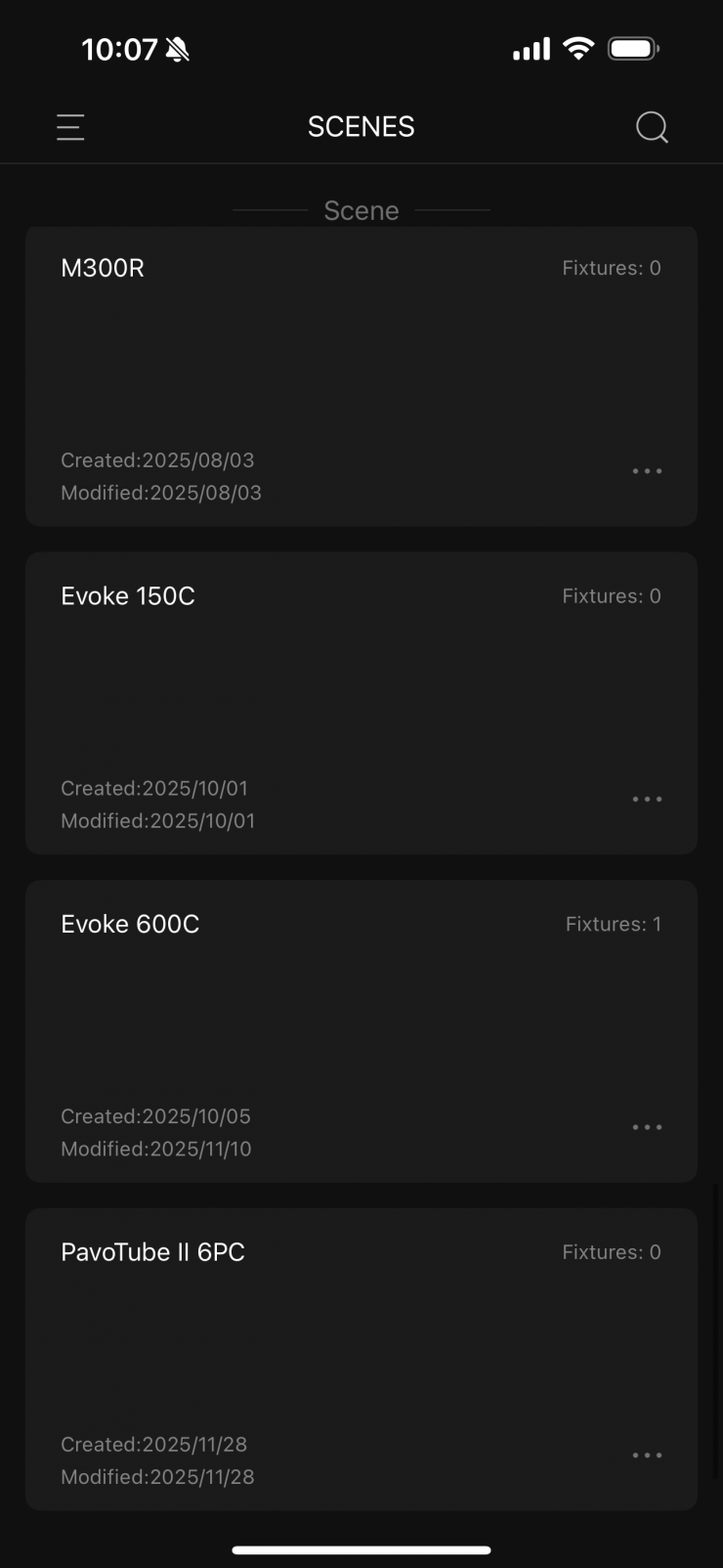
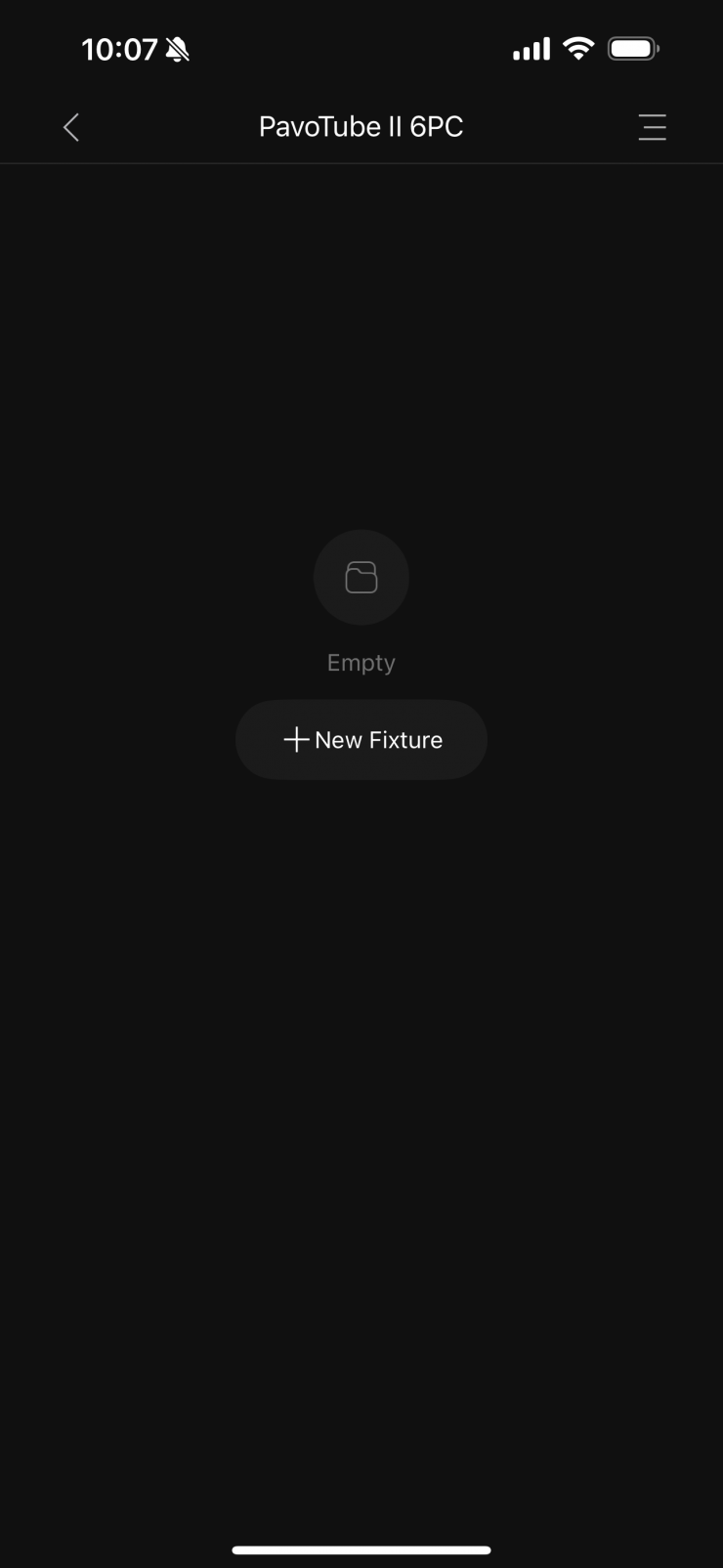
With the app, the first thing I am going to do is create a new Scene and name it PavoTube II 6PC. It will then ask me to add a fixture.
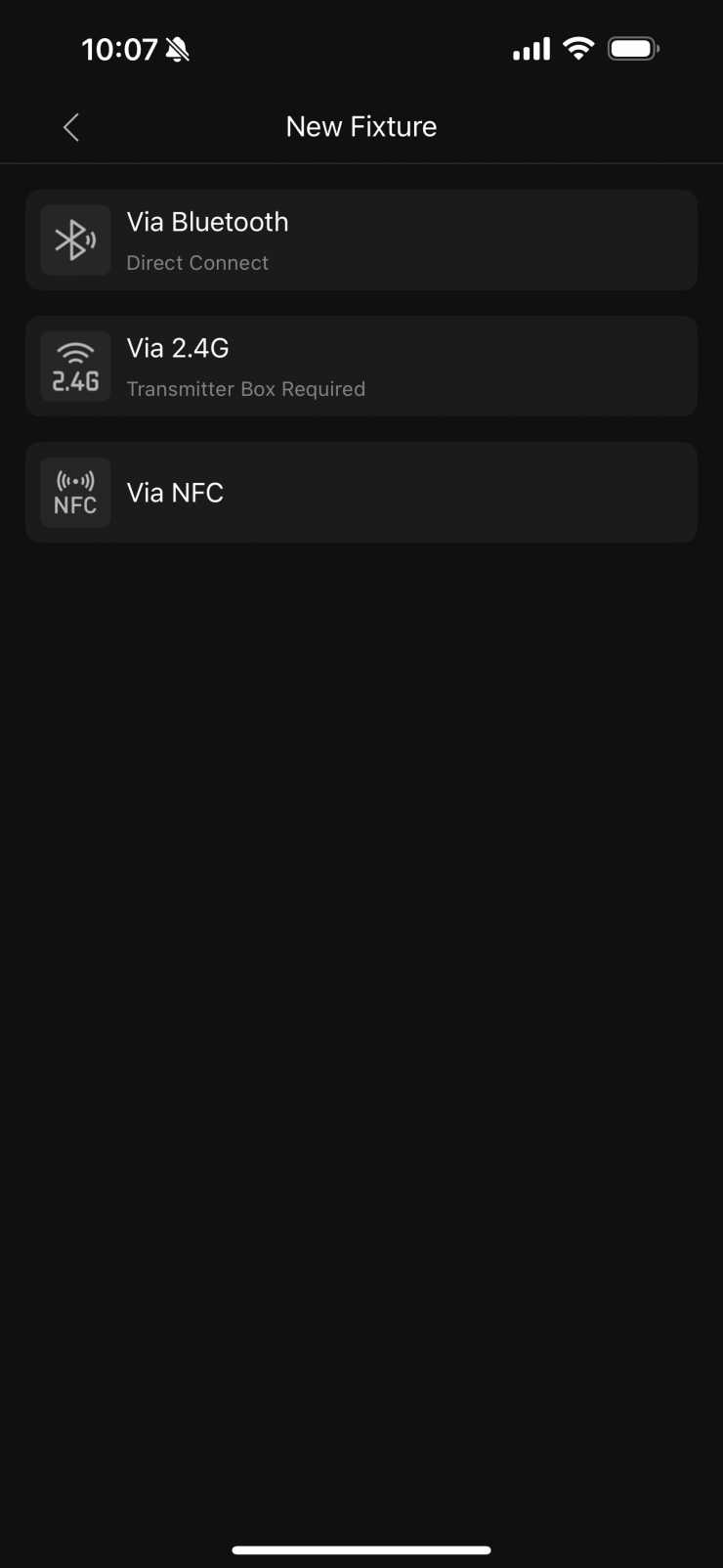
I then get a choice of how I would like to connect to the fixture. In this case, I will choose Bluetooth.
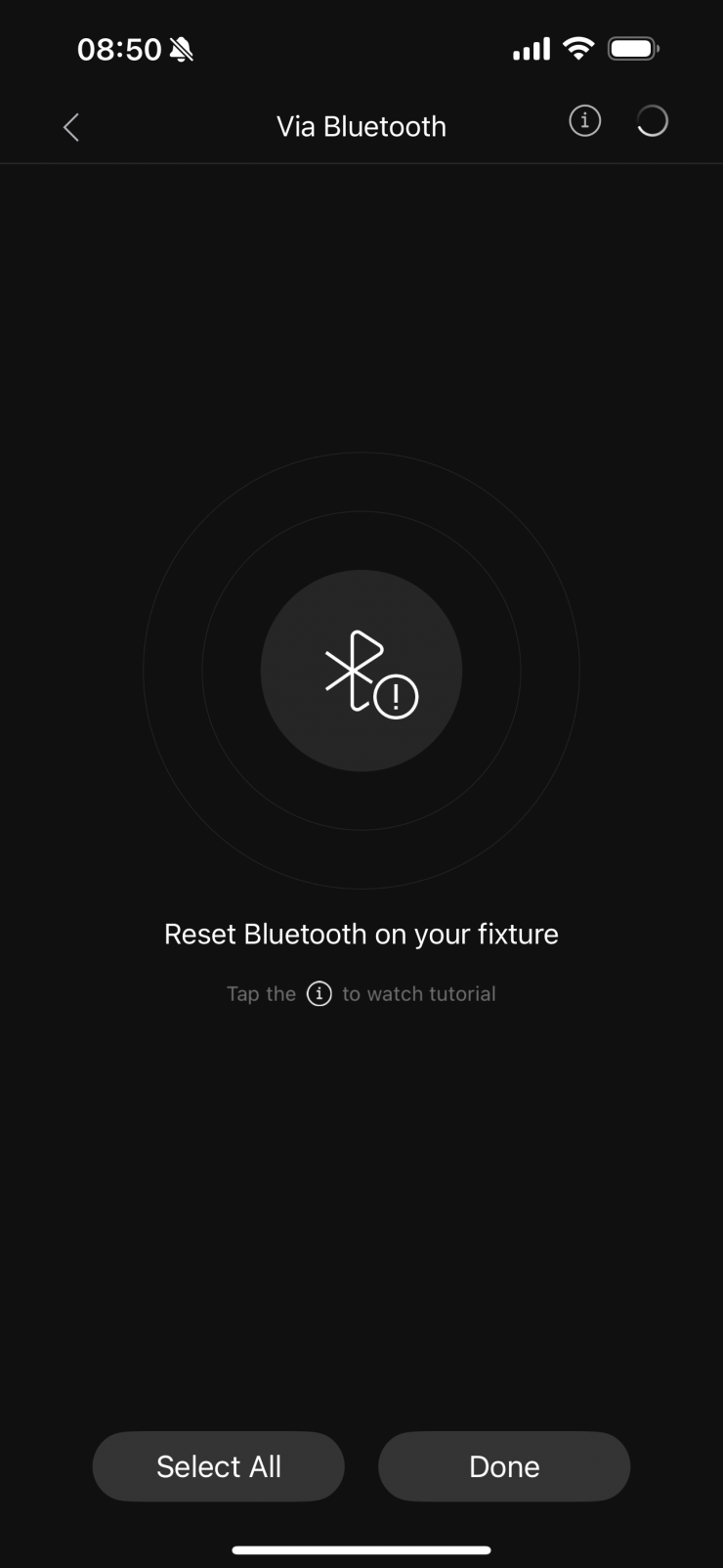
Once I click to add a new fixture, it will ask me to reset the Bluetooth on the fixture.
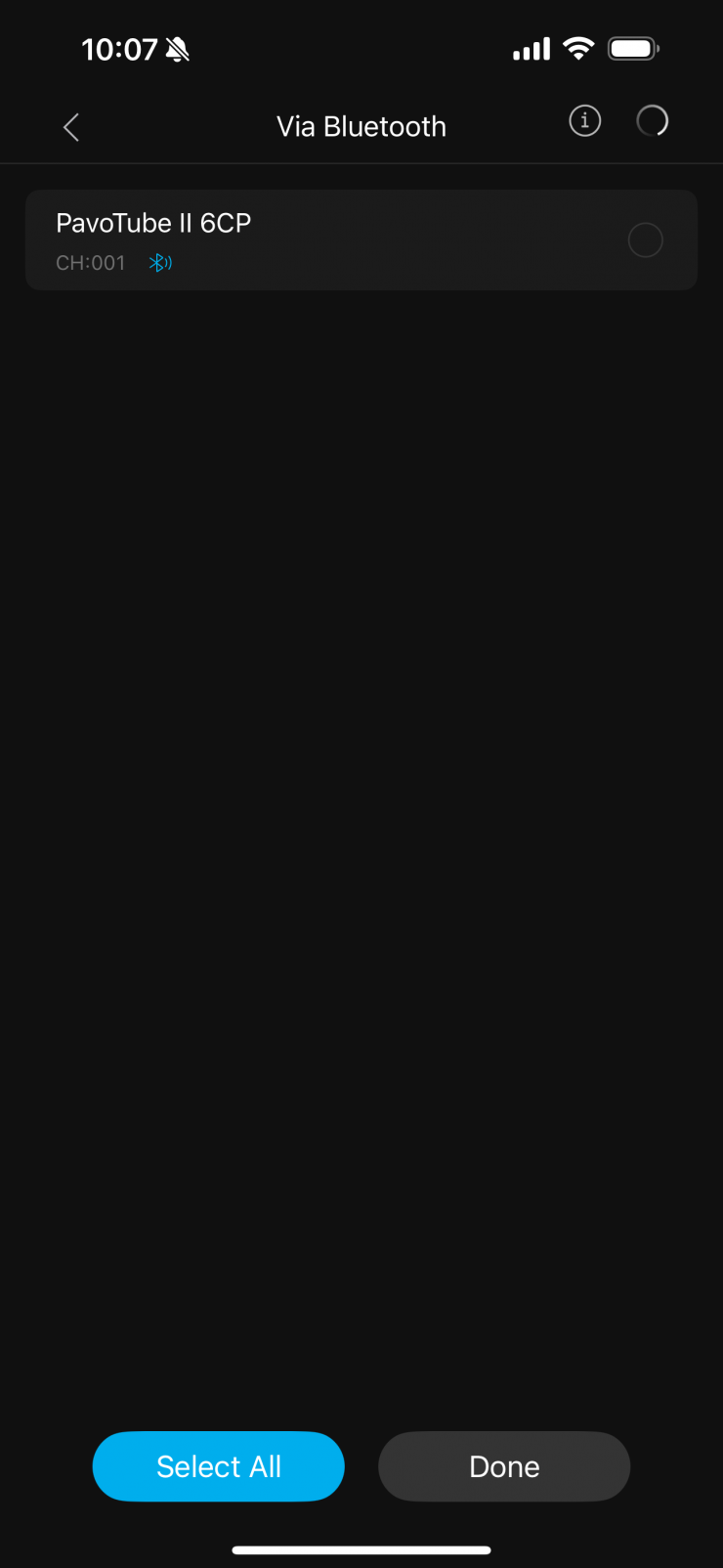
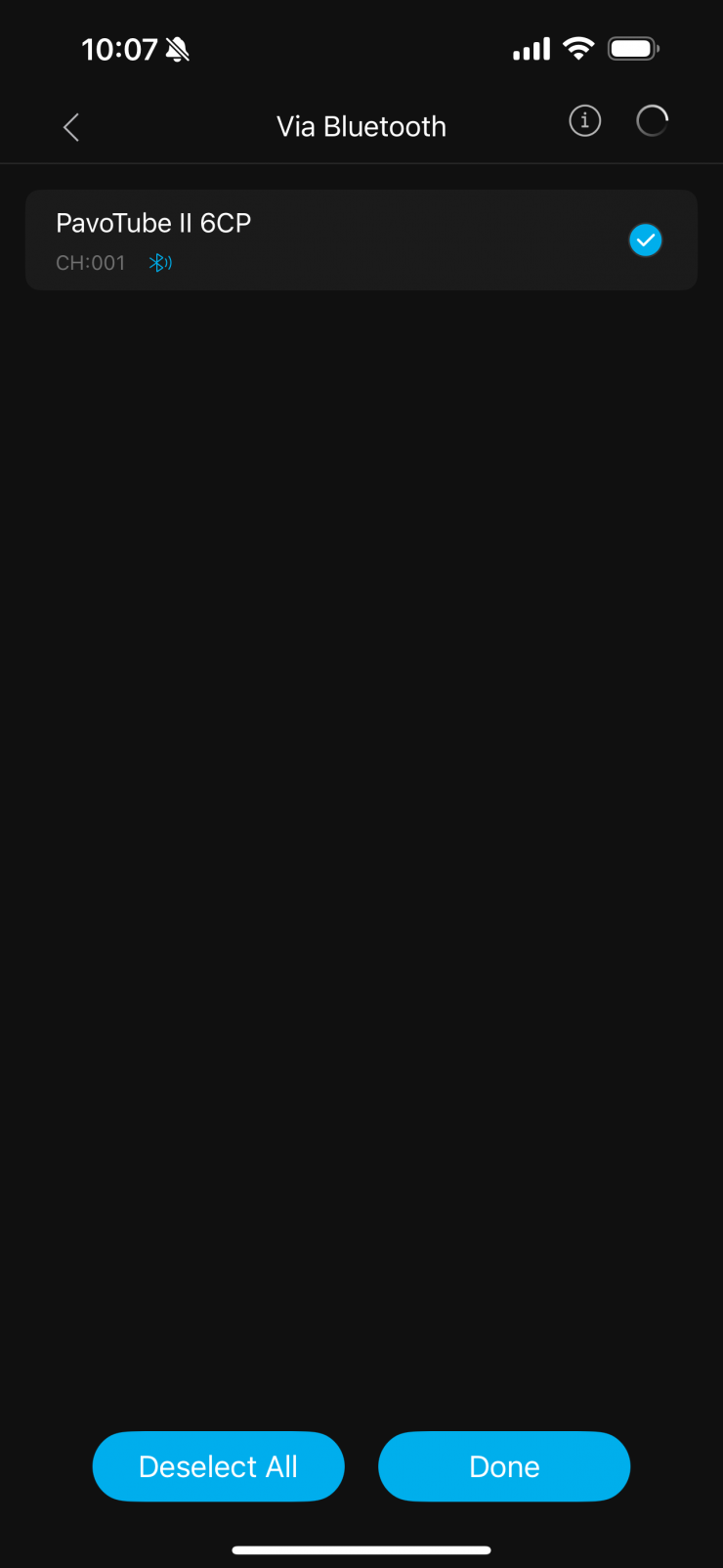
Once I have done this, the app will then show me any Nanlite/ NANLUX fixtures that are tuned on. I am now going to select the PavoTube II 6PC.
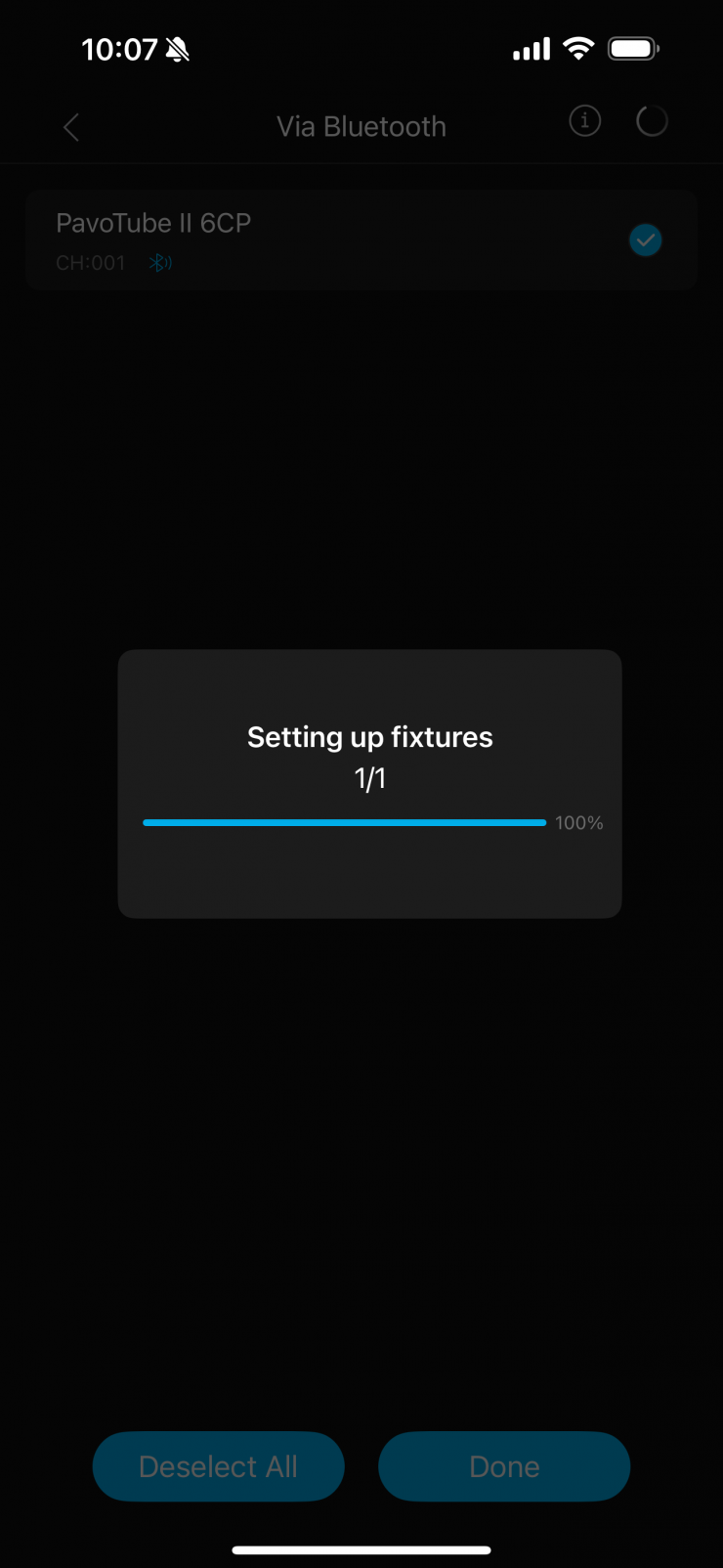
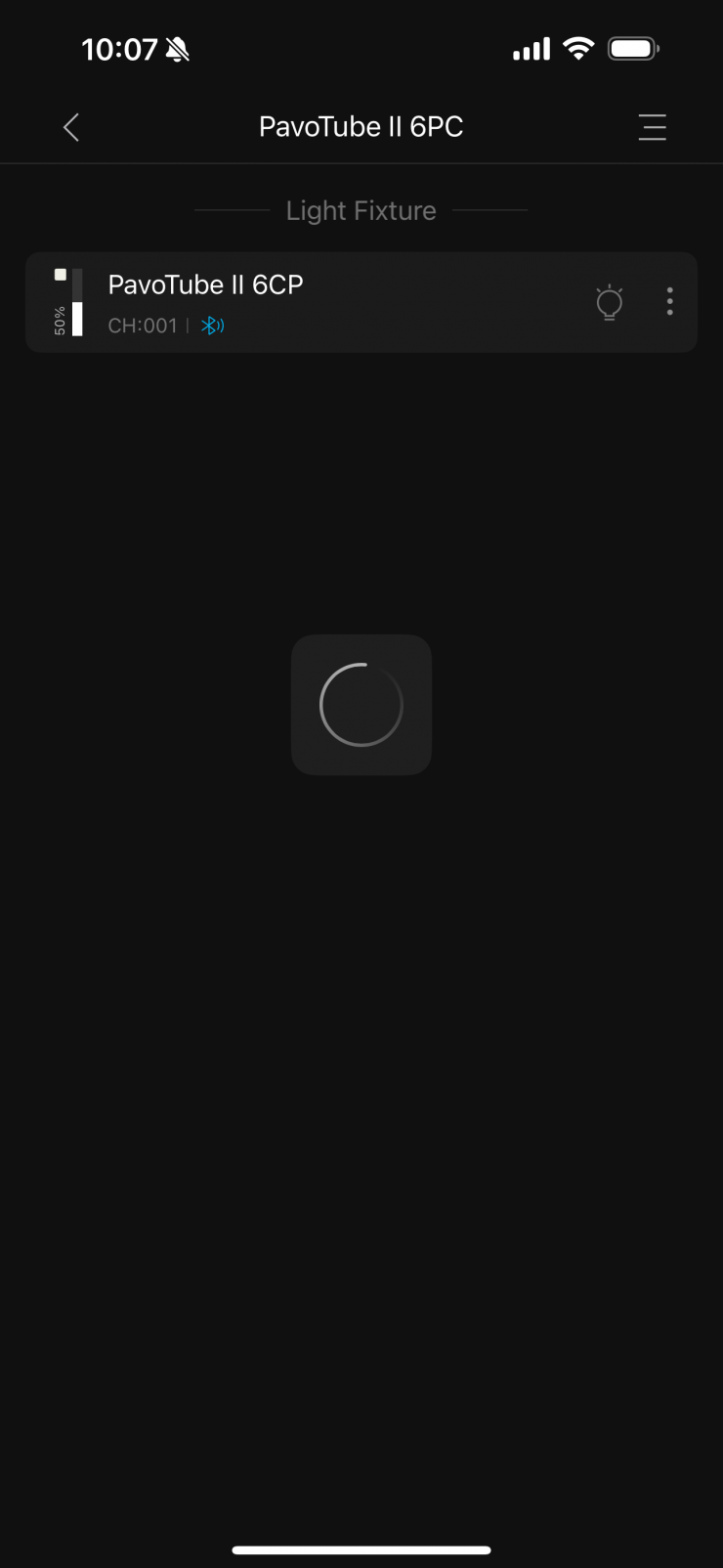
It will then start setting the fixture up to use with the app.
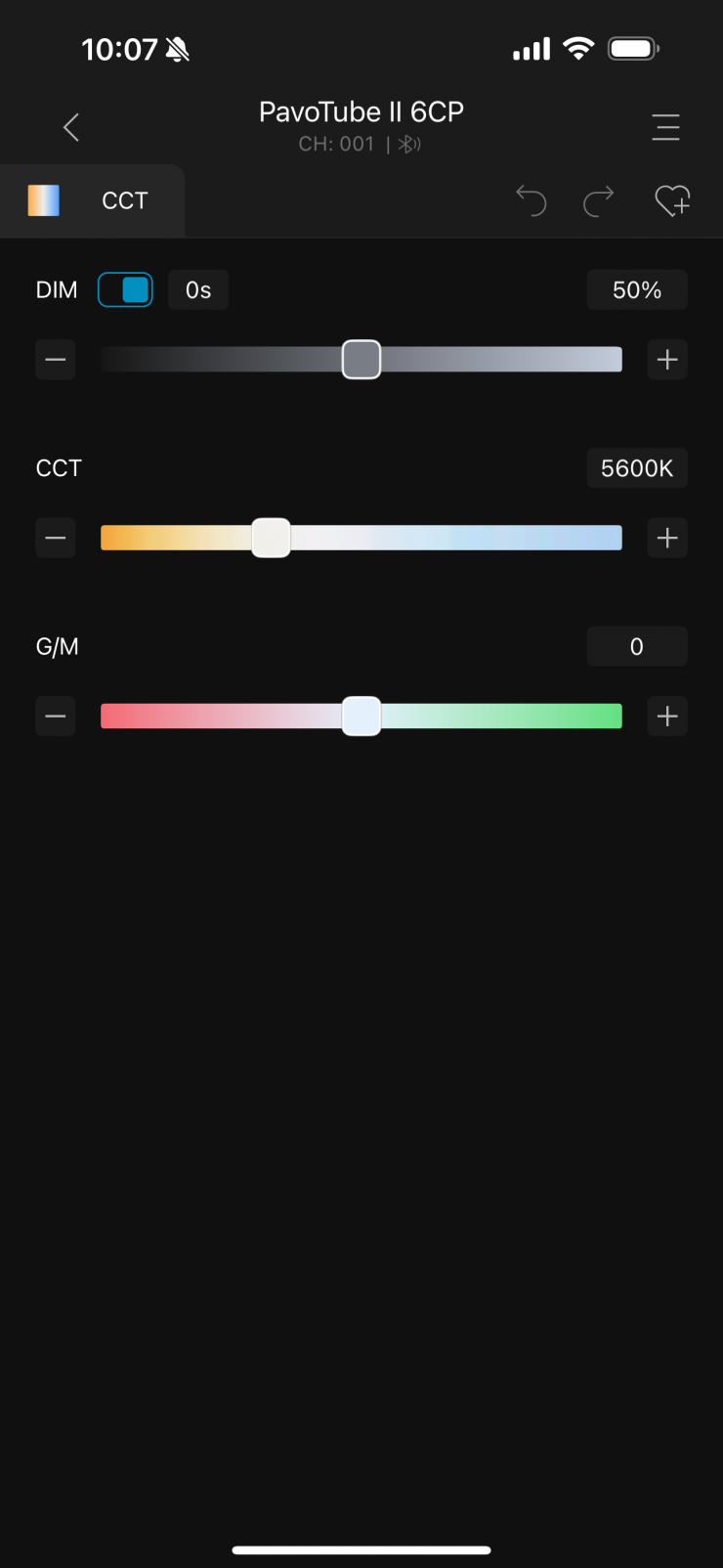
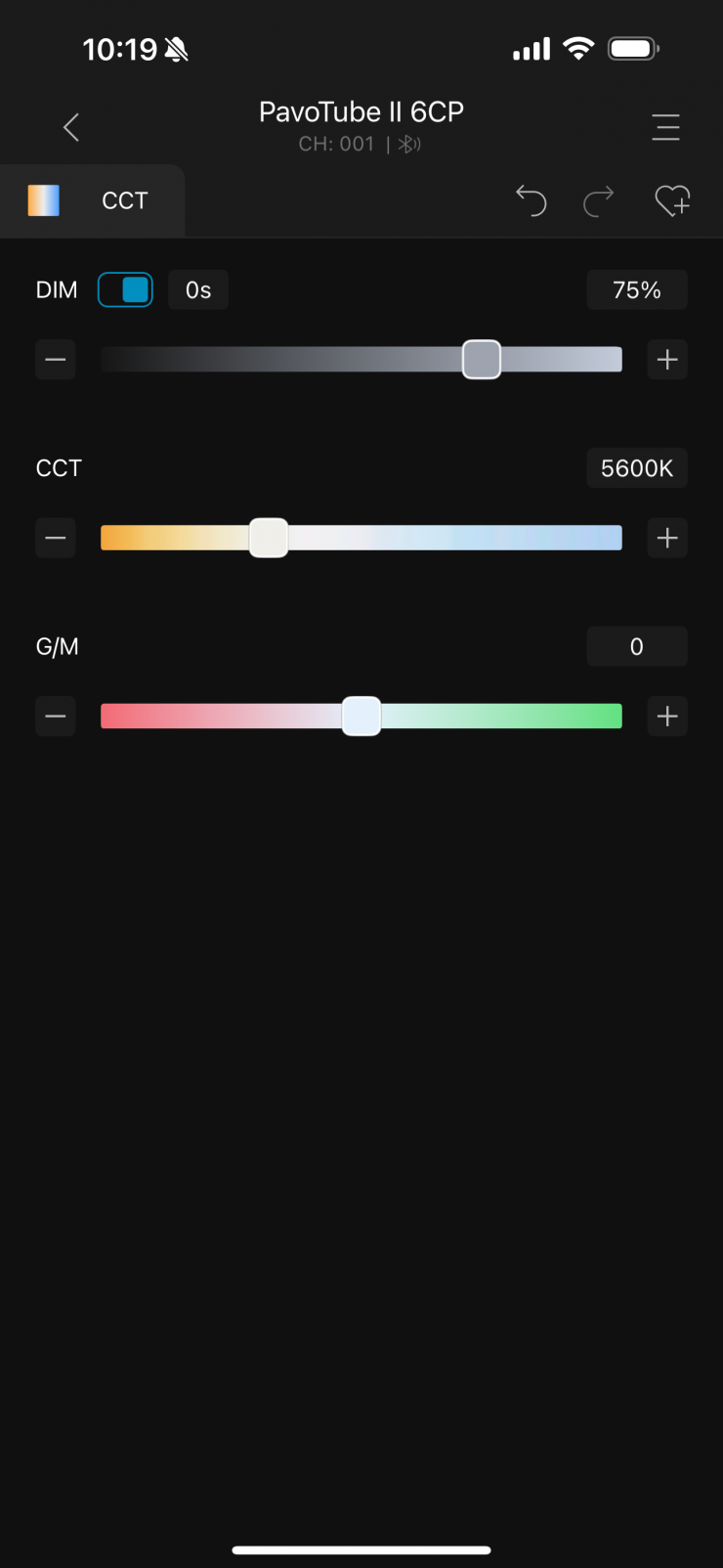
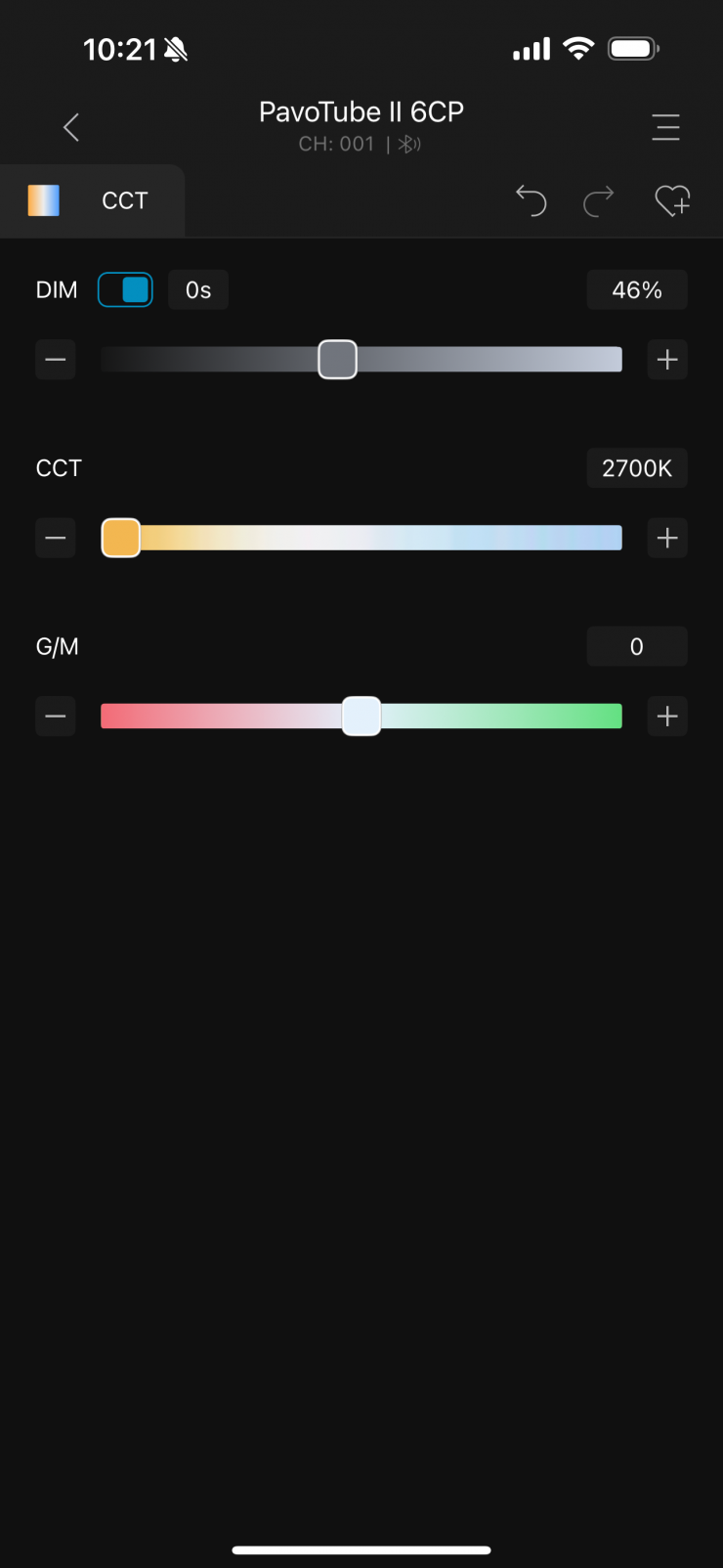
I then end up at the main UI screen. By default, you will be on the CCT page. Here I can adjust the CCT, brightness, and +/- G/M bias.
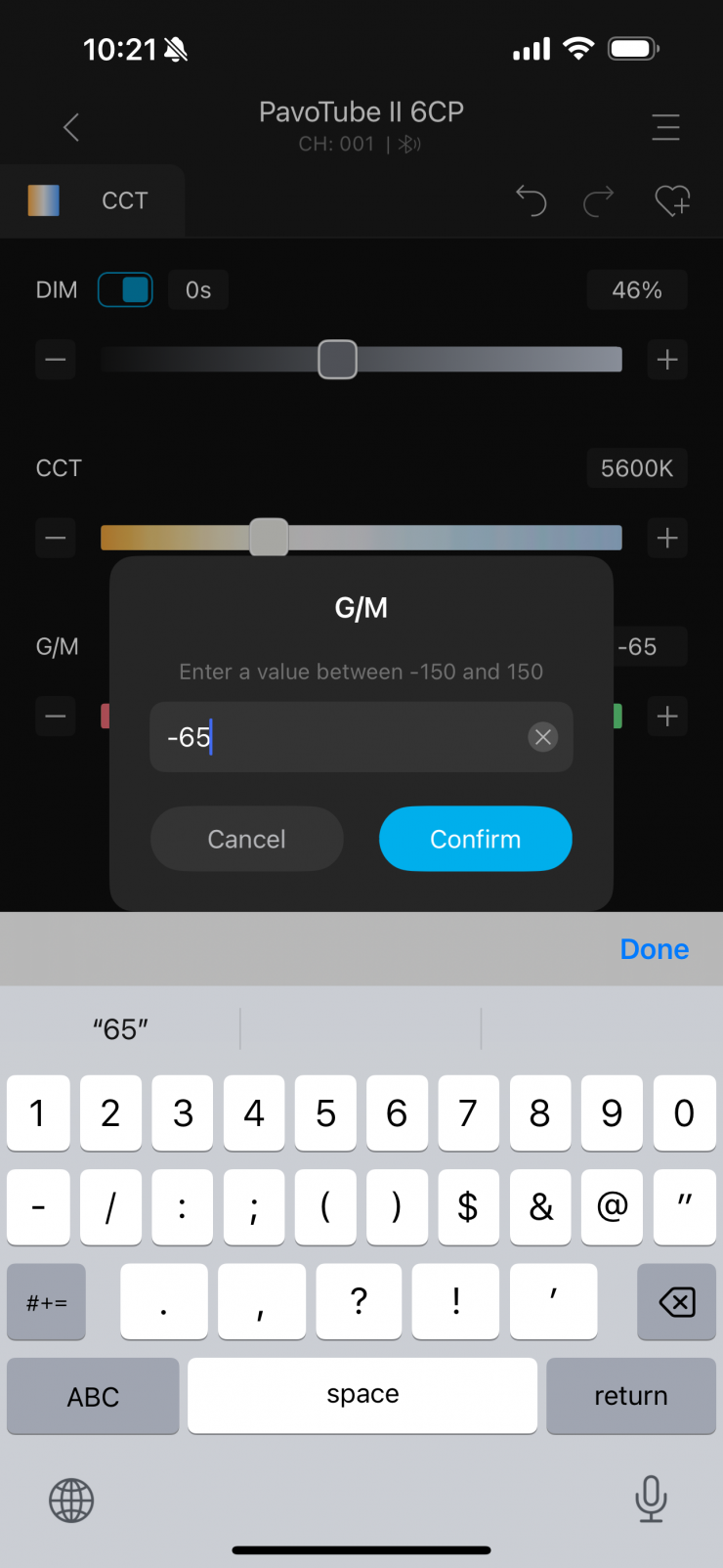
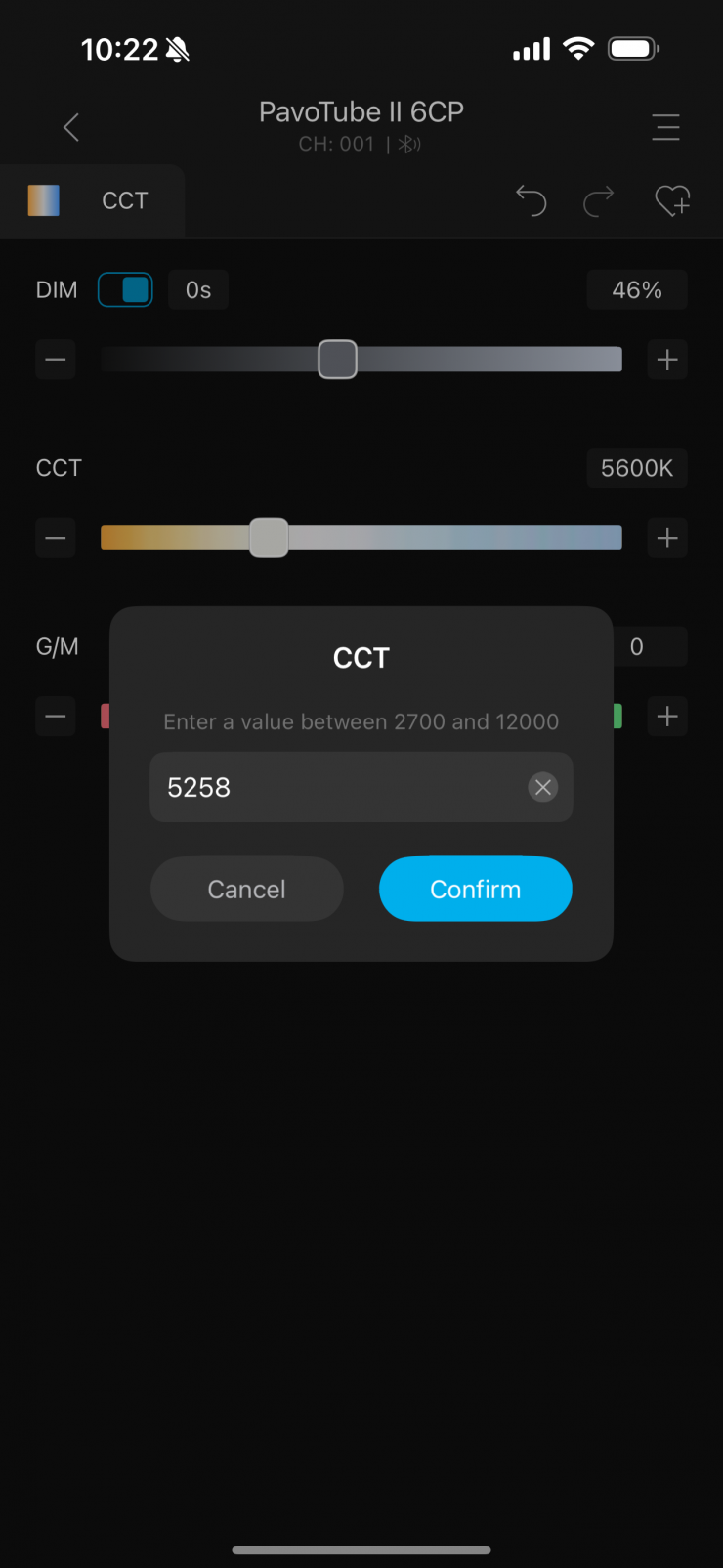
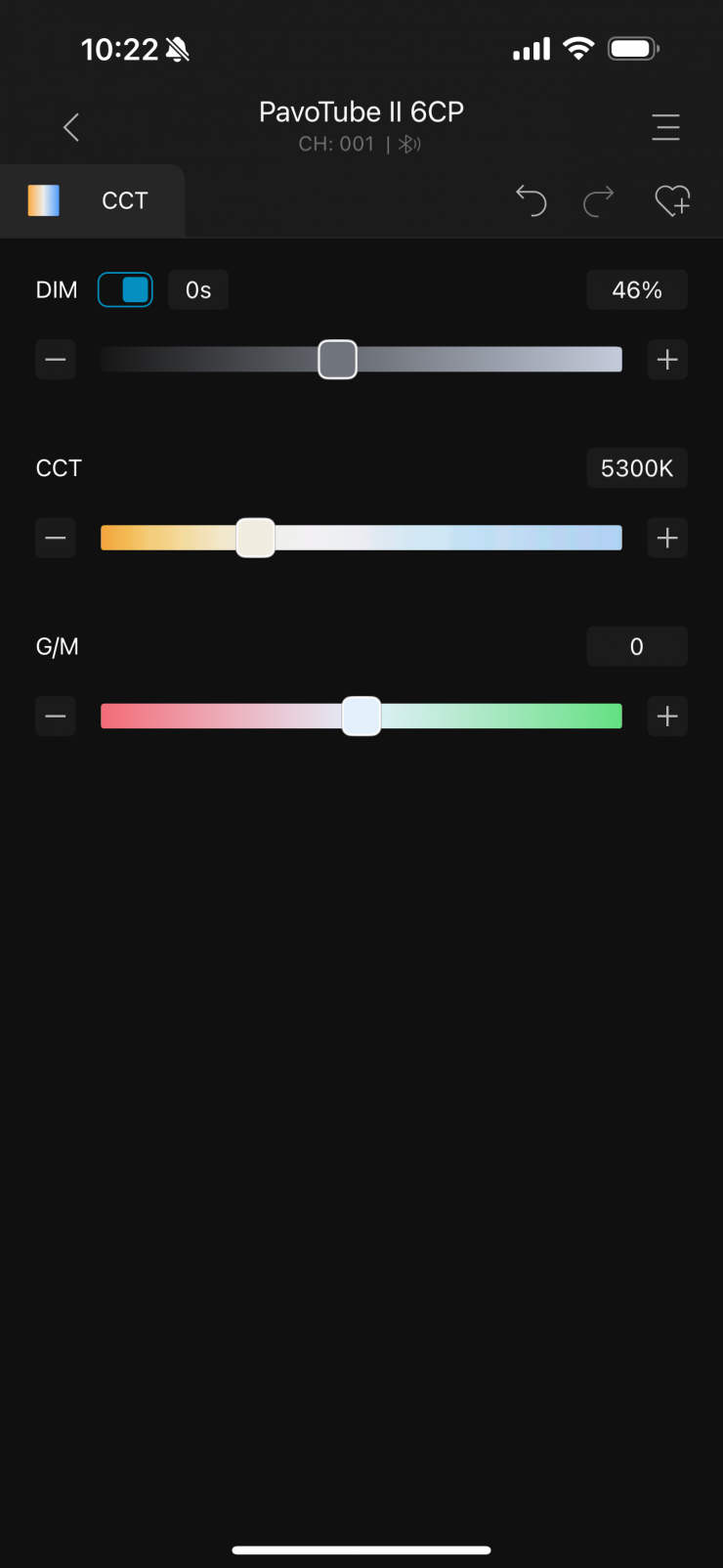
You can use the sliders or simply type in values if you prefer. The only issue I had was that you can’t add a value for CCT that isn’t in 100K increments, even if you type it in.
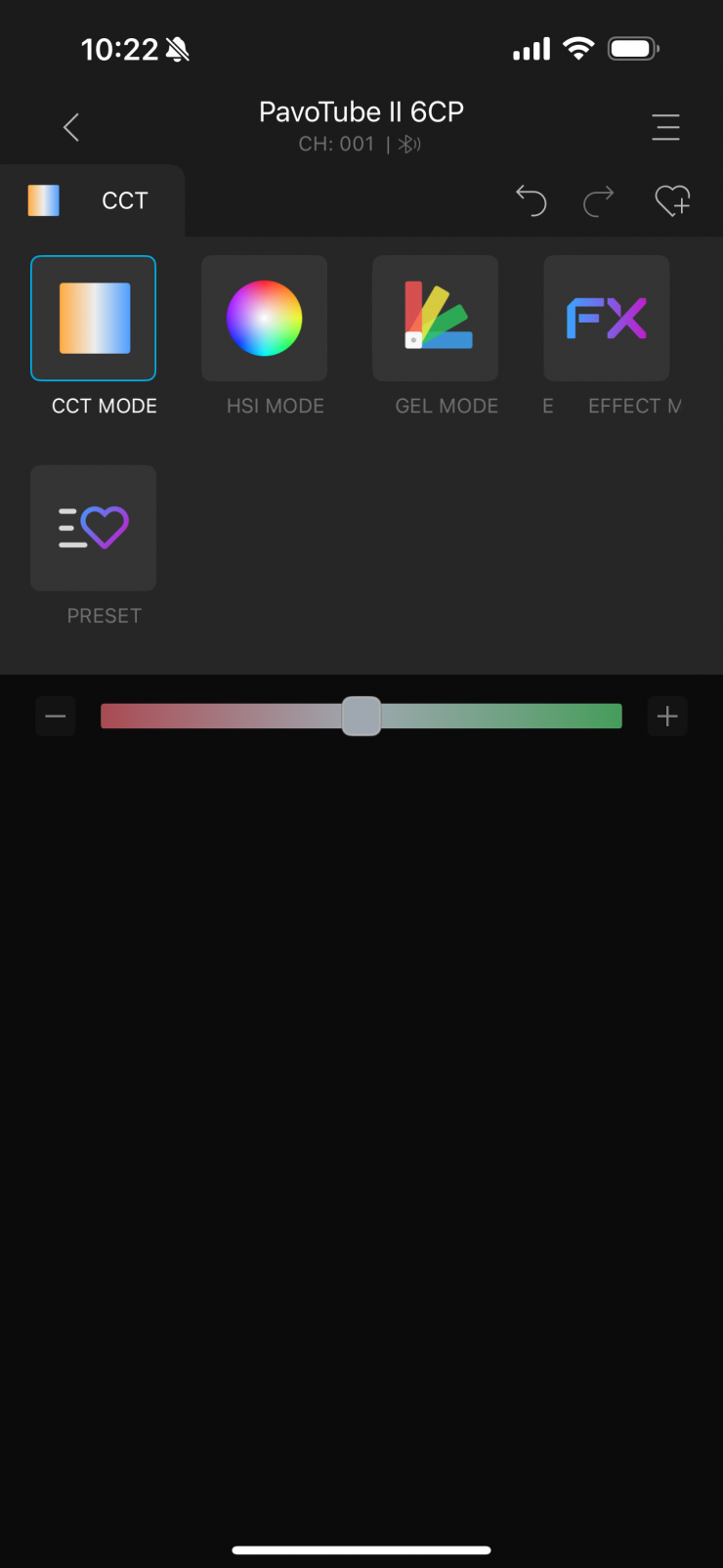
If I want to enter the various operating modes, I simply tap on where the CCT tab is.
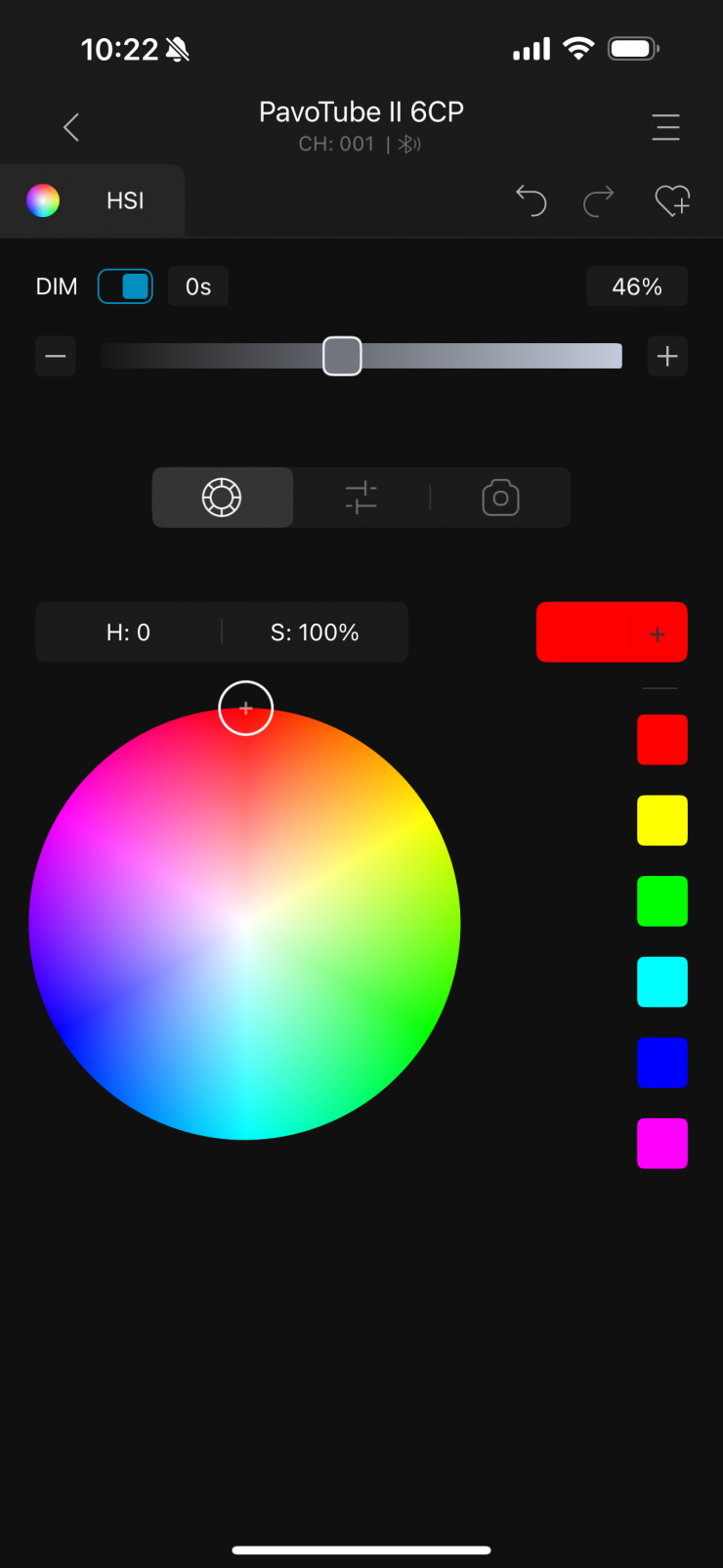
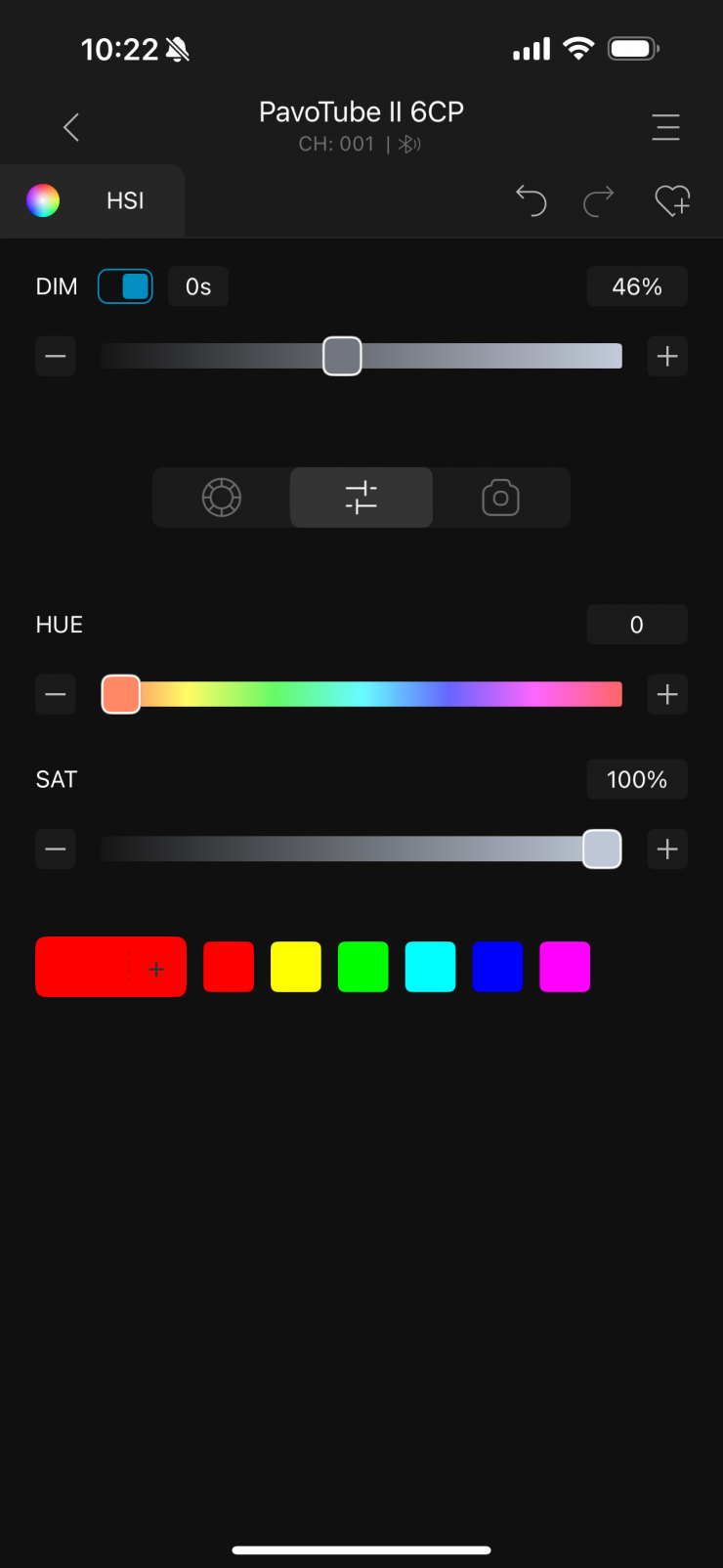
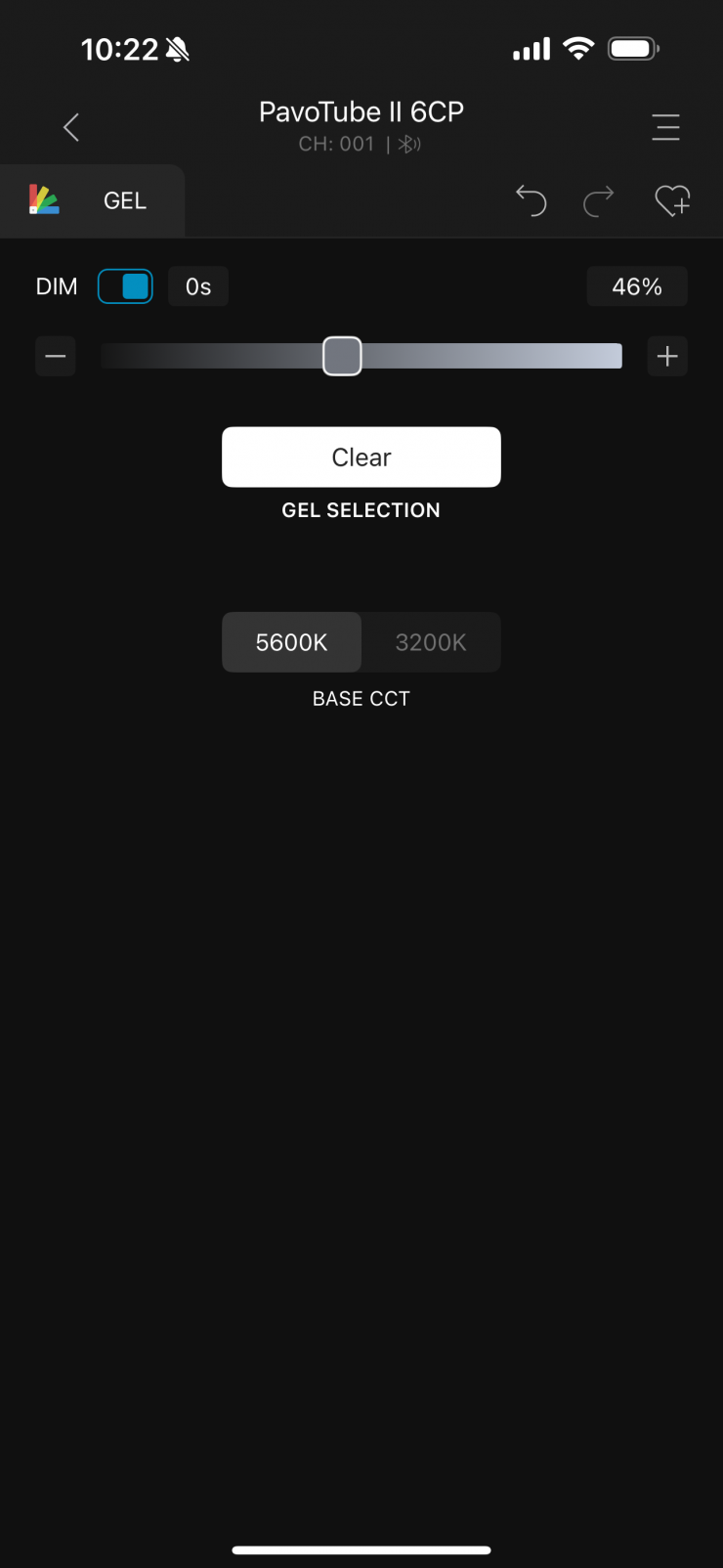
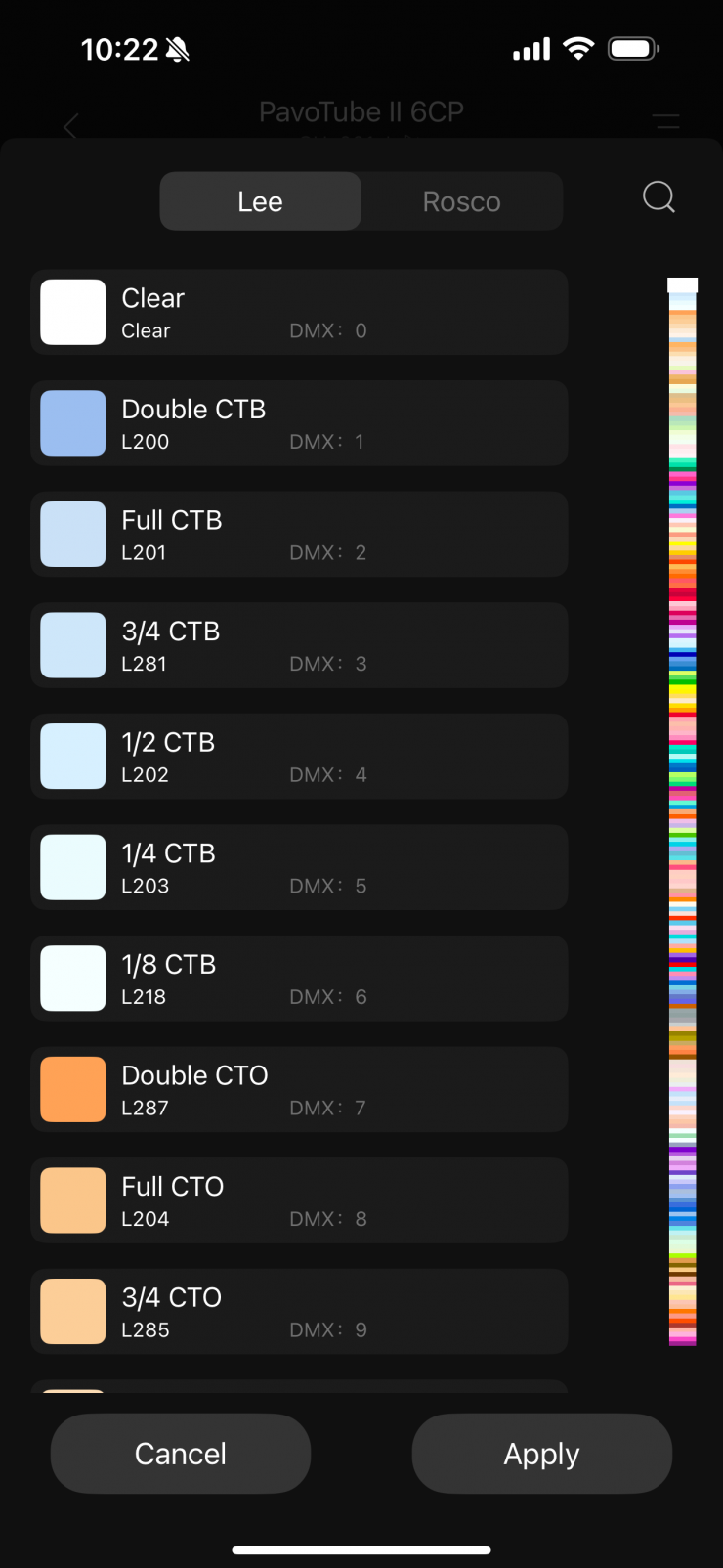
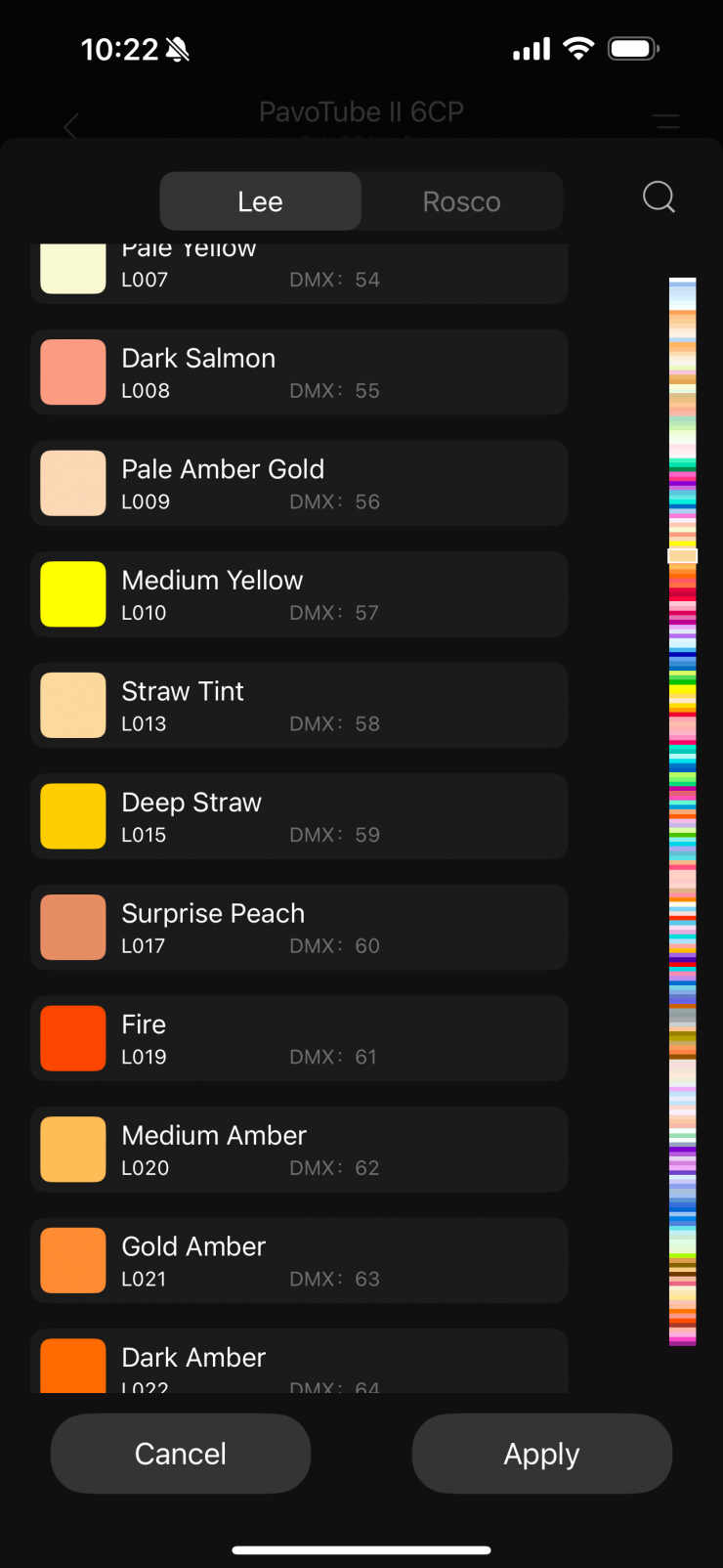
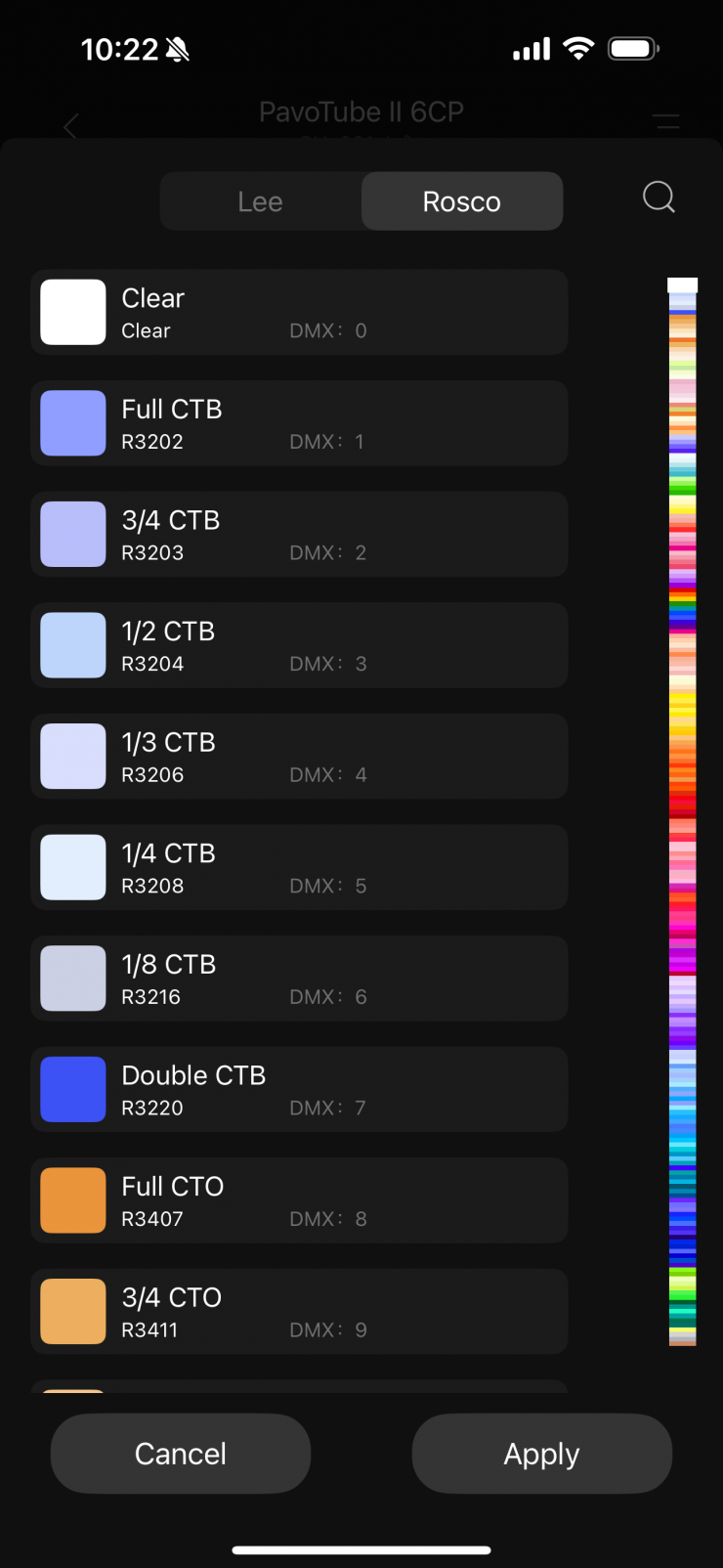
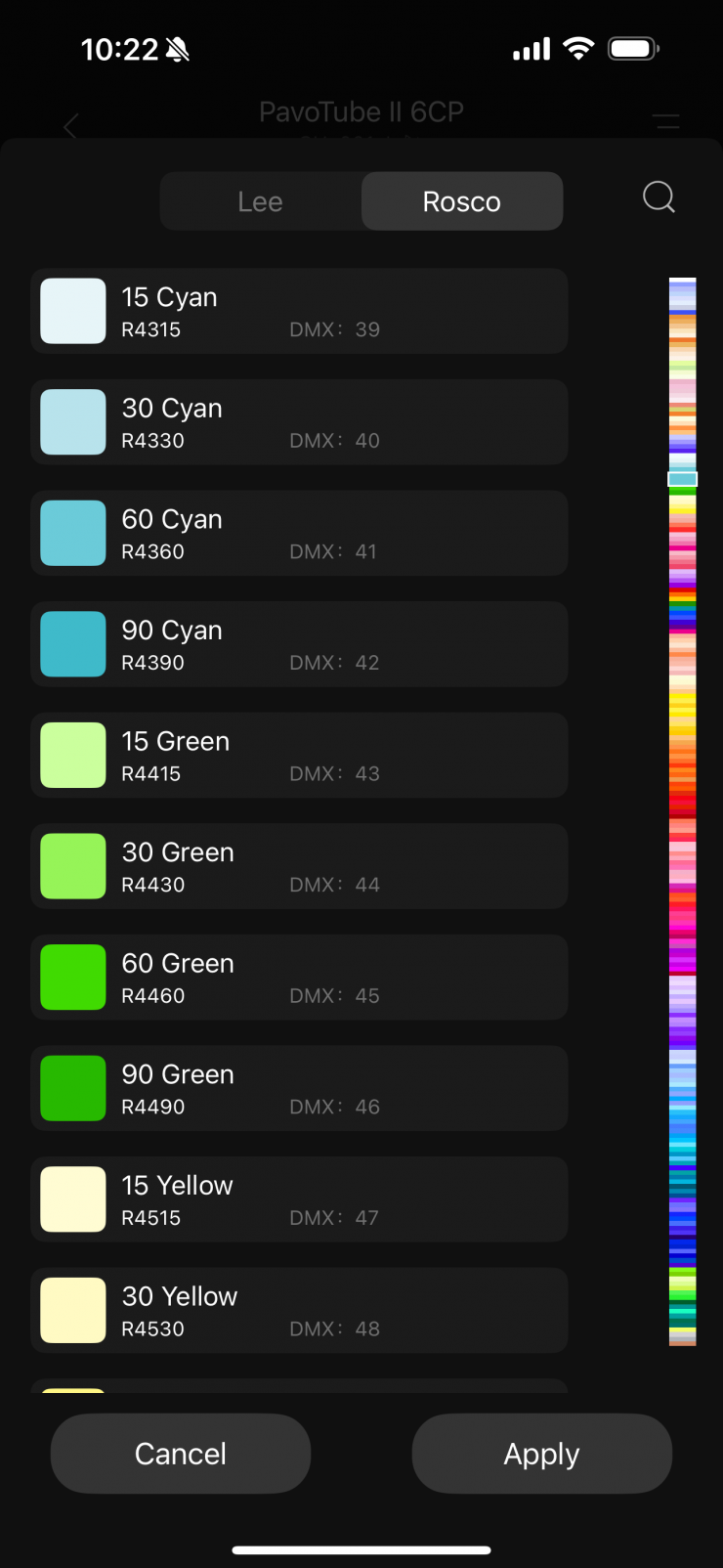
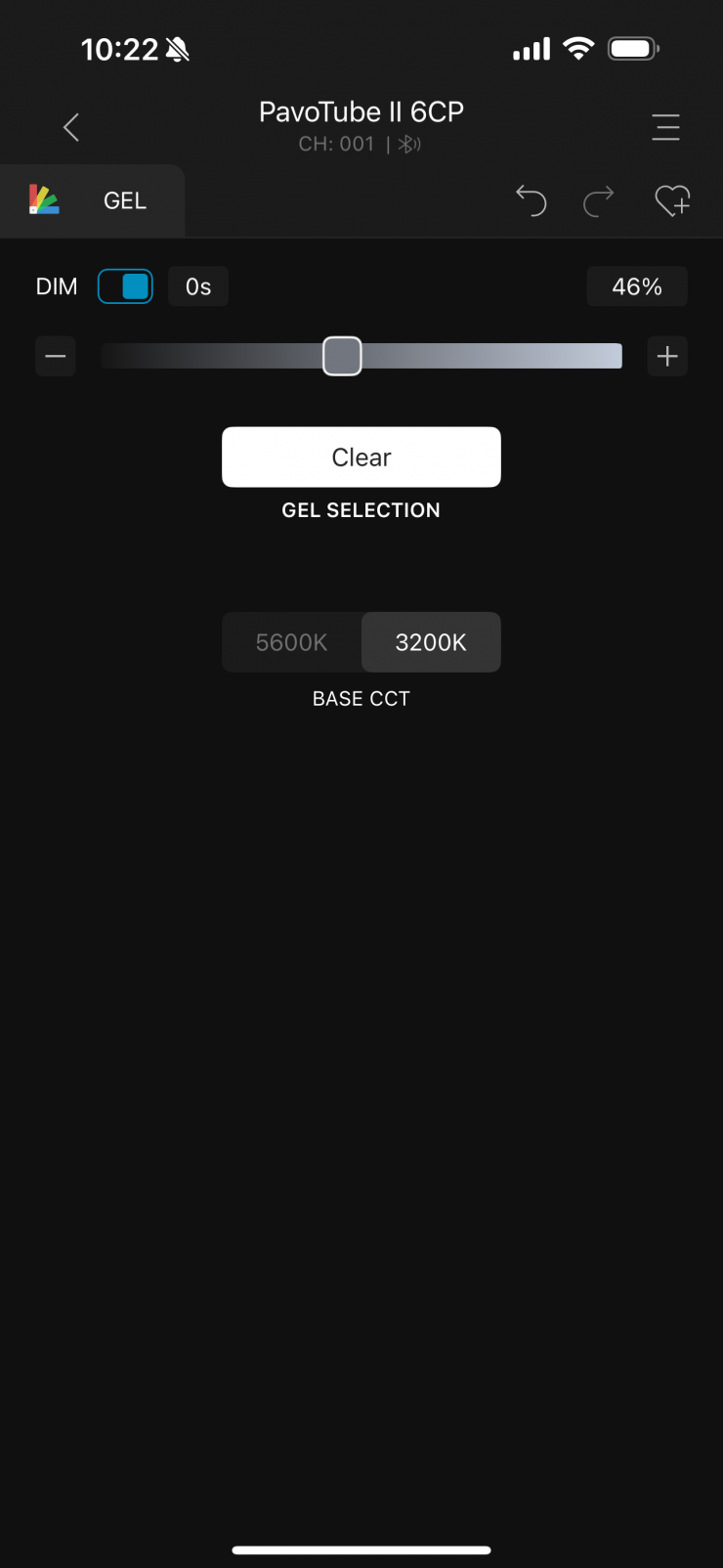
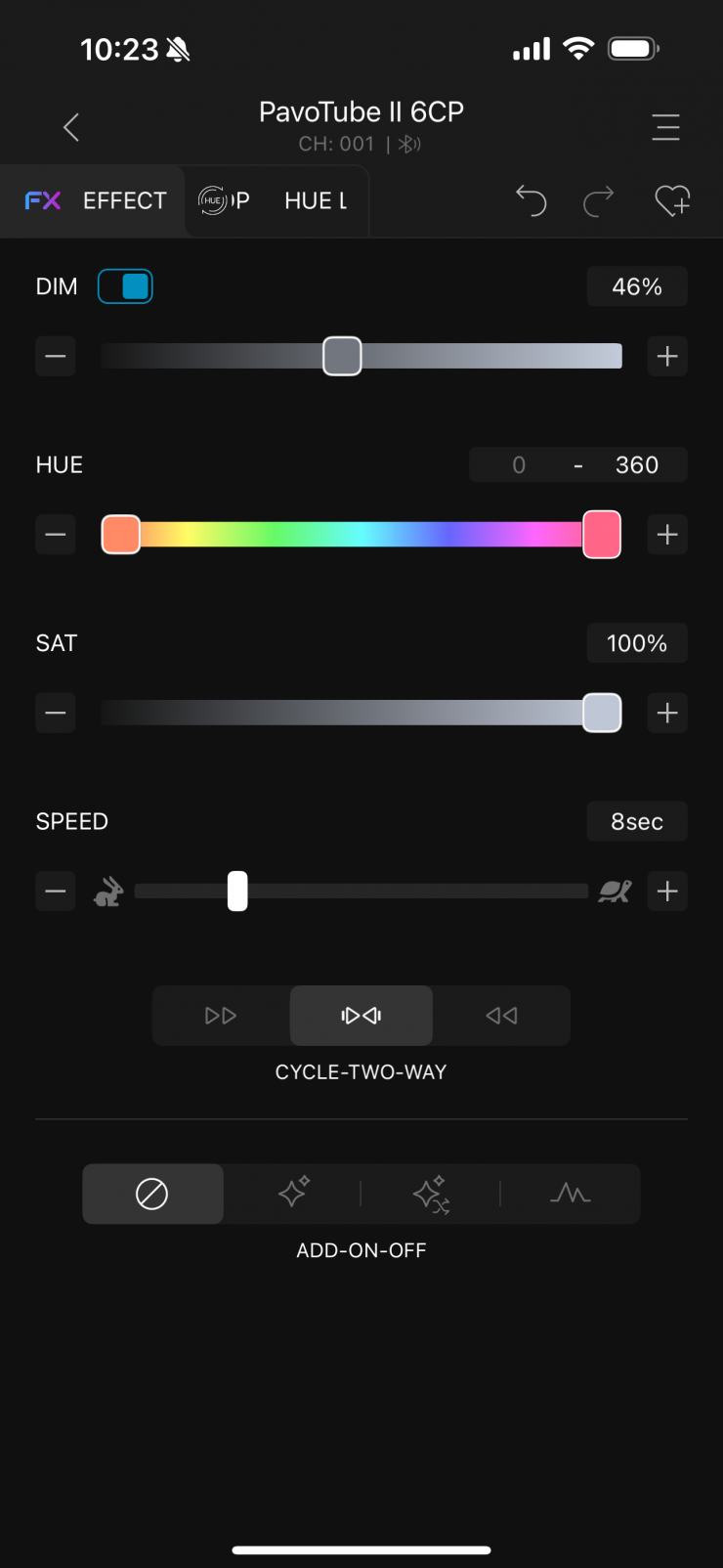
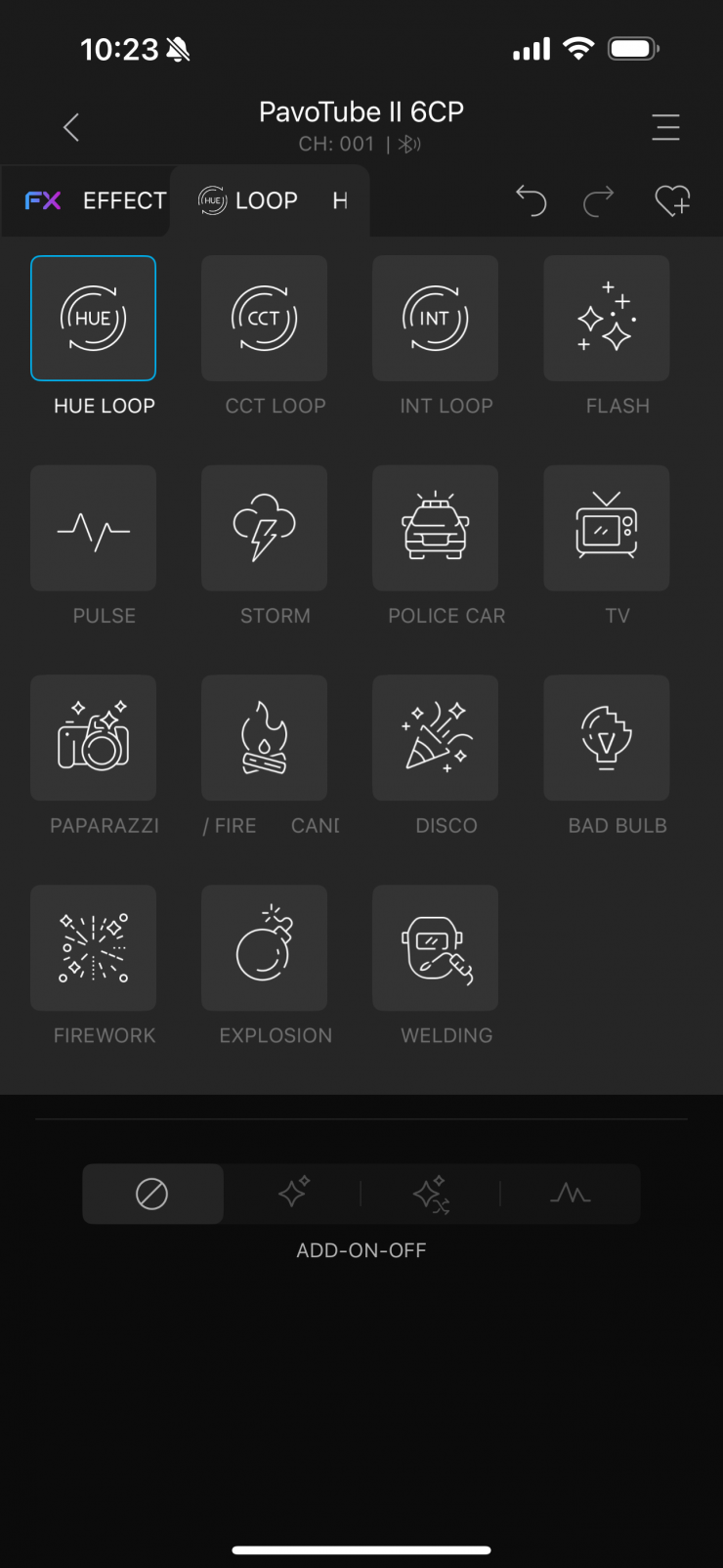
Above, you can see what the screens and settings for each mode look like.
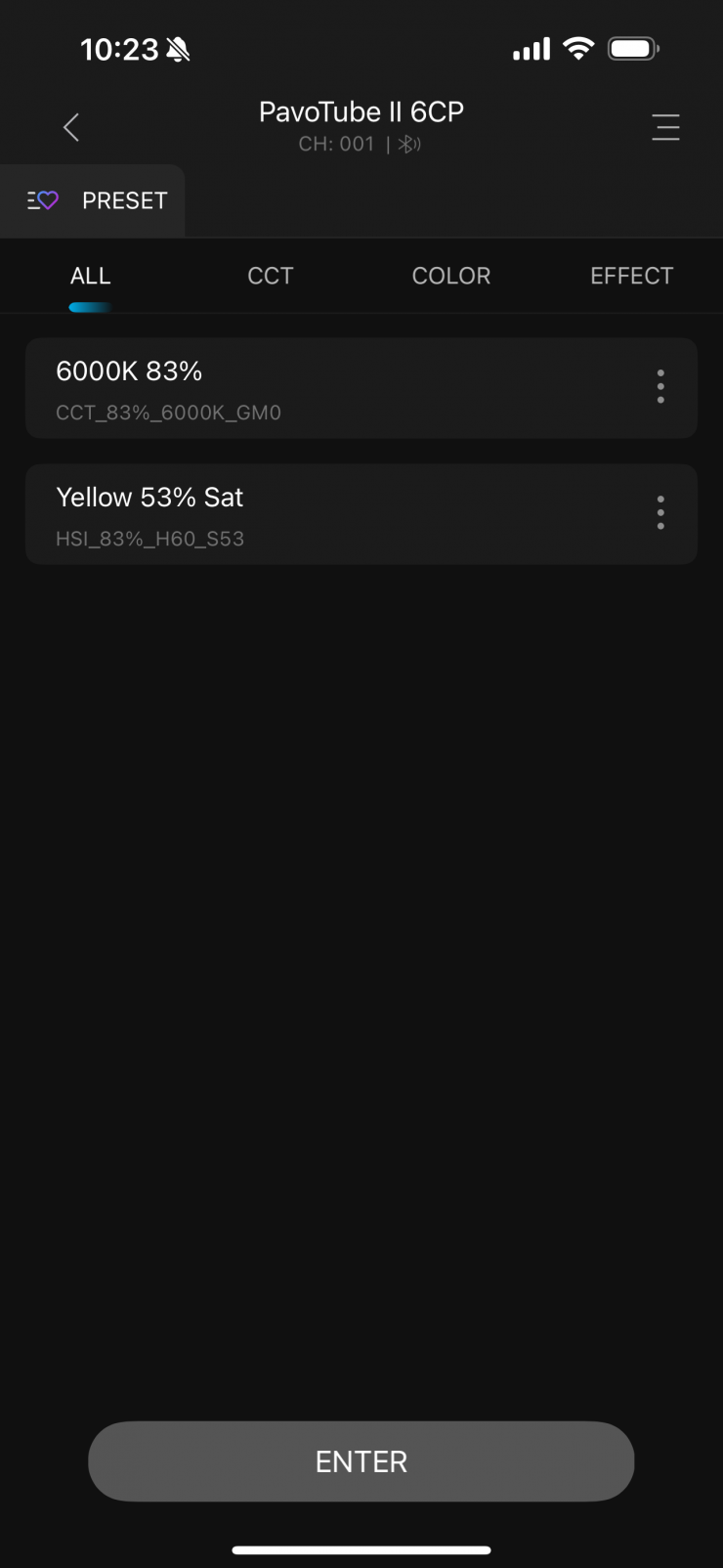
I can also save presets that I can store and recall at a later date.
Overall, the app works well. It is easy to make changes, and it connects up without any issues.
The app is reasonably easy to set up and get going. Once you have created a group, you can then add fixtures to that group. You simply scan for new lights if you haven’t added them previously.
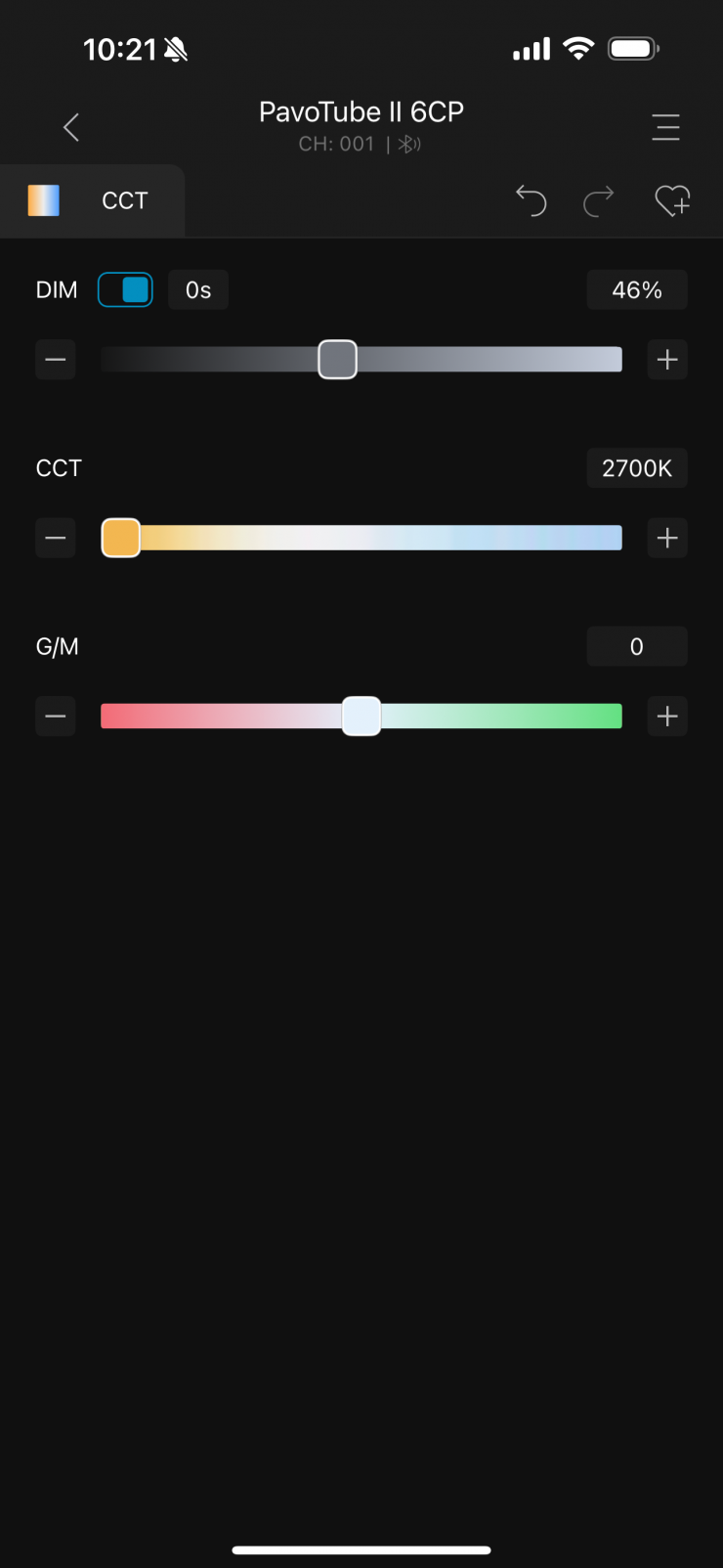
There is a problem I encountered when using the app. The CCT value in the app only went down to 2700K, even though the fixture can go down to 2400K. I asked Nanlite about this, and they told me that they suggested deleting the 6CP in the app and adding it again, then the lowest CCT will be 2400K.
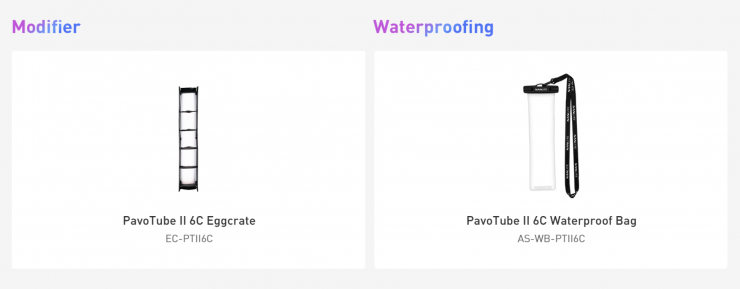
Optional Egg Crate
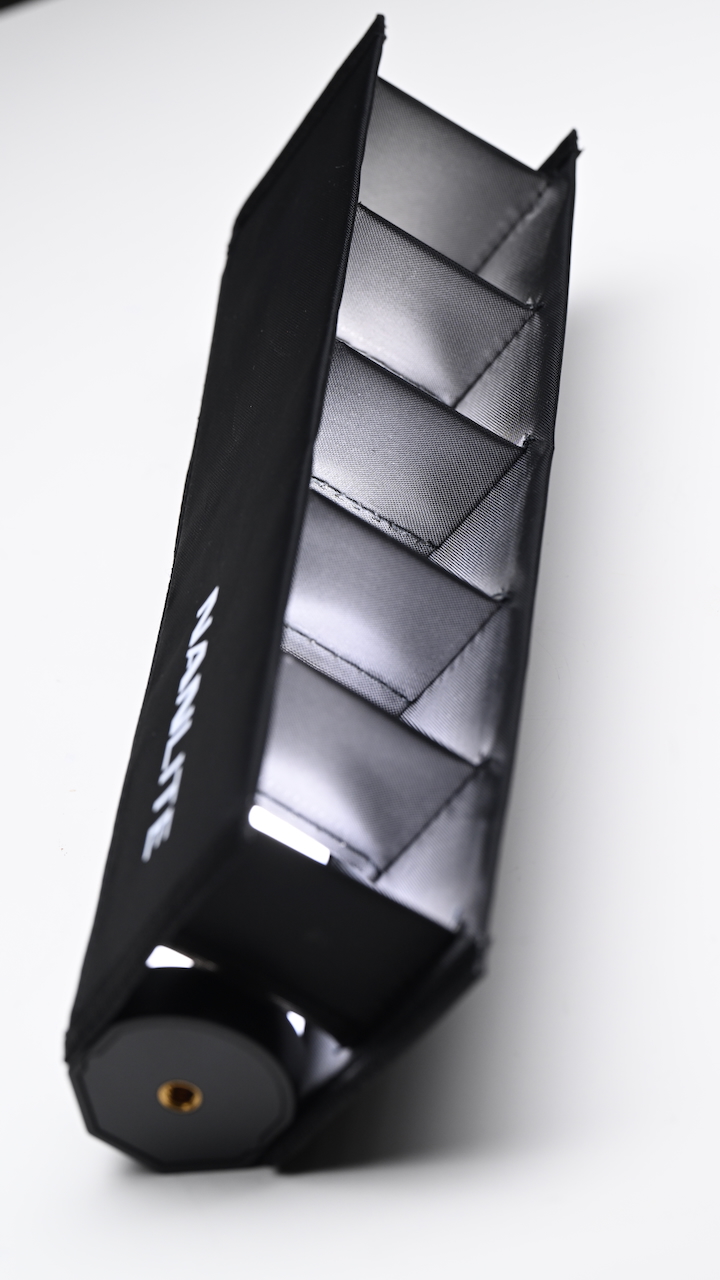
The optional NANLITE EC-PTII6C is a bespoke lighting modifier designed just for the PavoTube II 6C.
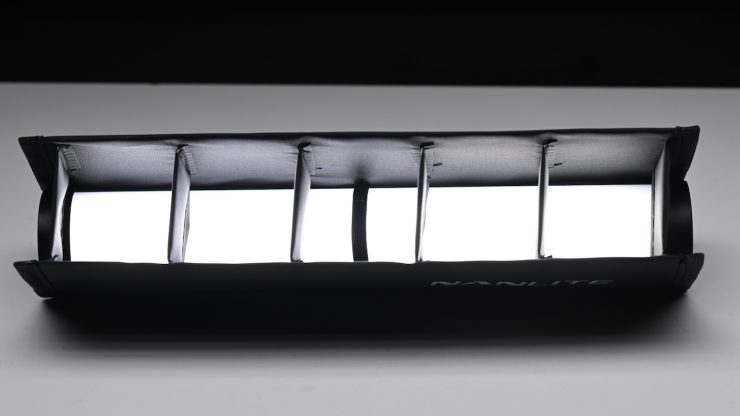
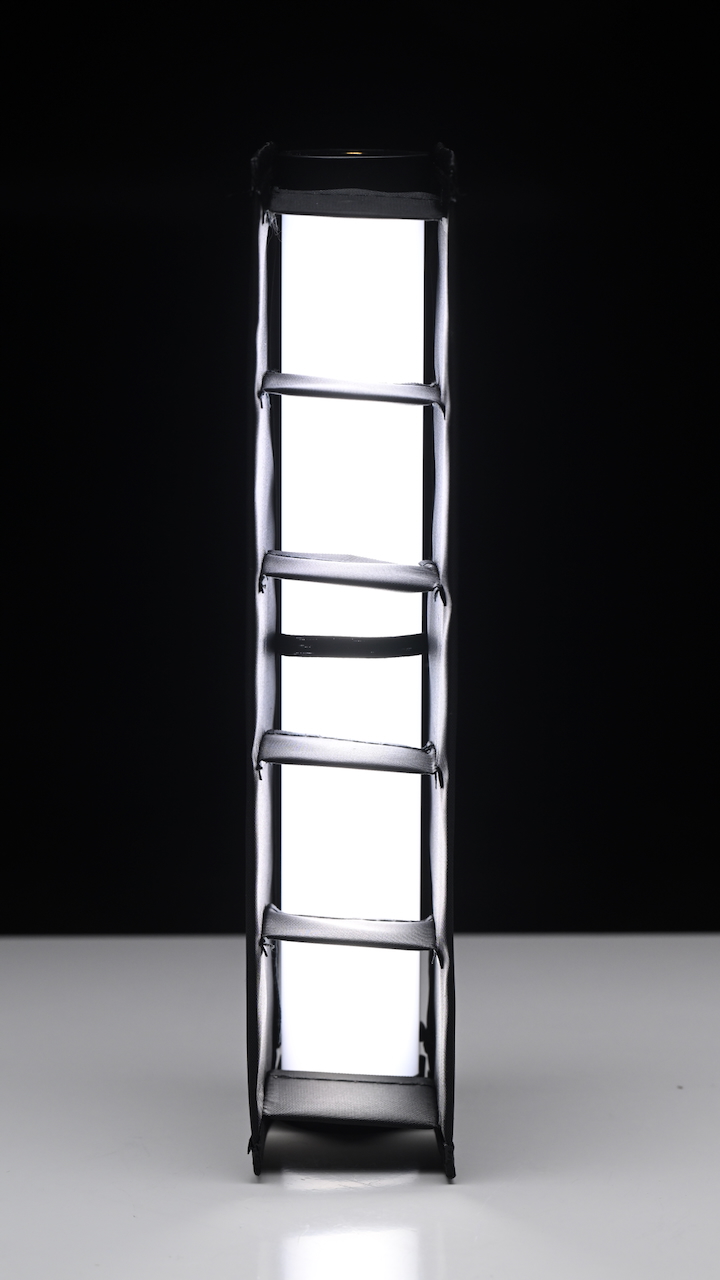
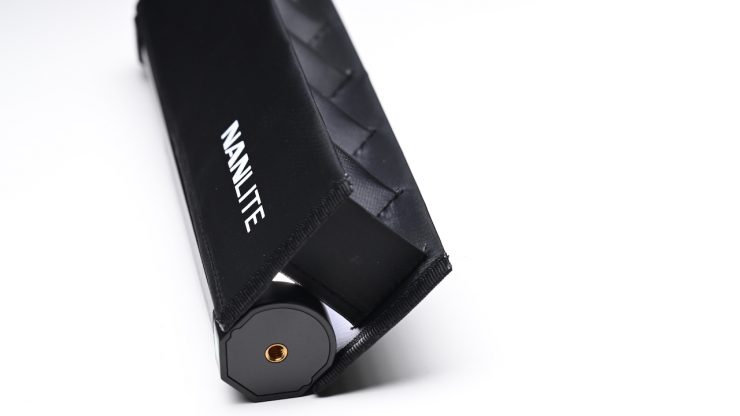
This slides on very easily, and it controls the spill.
Photometrics
So now let’s get to the photometric results. I always test lights in this way so that I get a reference to how they compare to other fixtures. Results only tell part of the story and should never be used alone to judge a light. I have found from extensive testing over the years that certain lights that have good photometric results don’t always look good, and lights that have worse photometric scores can sometimes look better than their results indicate.
You need to look at all of the photometric results to get an accurate assessment of a light; looking at just one set of results is like reading one chapter in a book and skipping the rest.
Different lights can also look different depending on what camera you happen to be using.
Output & Color Temperature Accuracy
I tested the PavoTube II 6CP at a variety of CCT settings with a Sekonic C-800 Spectrometer to find out how much output the light has and how accurate its color temperature reproduction was. I took all of the readings at a distance of 1m / (3.28ft) in a controlled environment.
5600K
PavoTube II 6CP 5600K
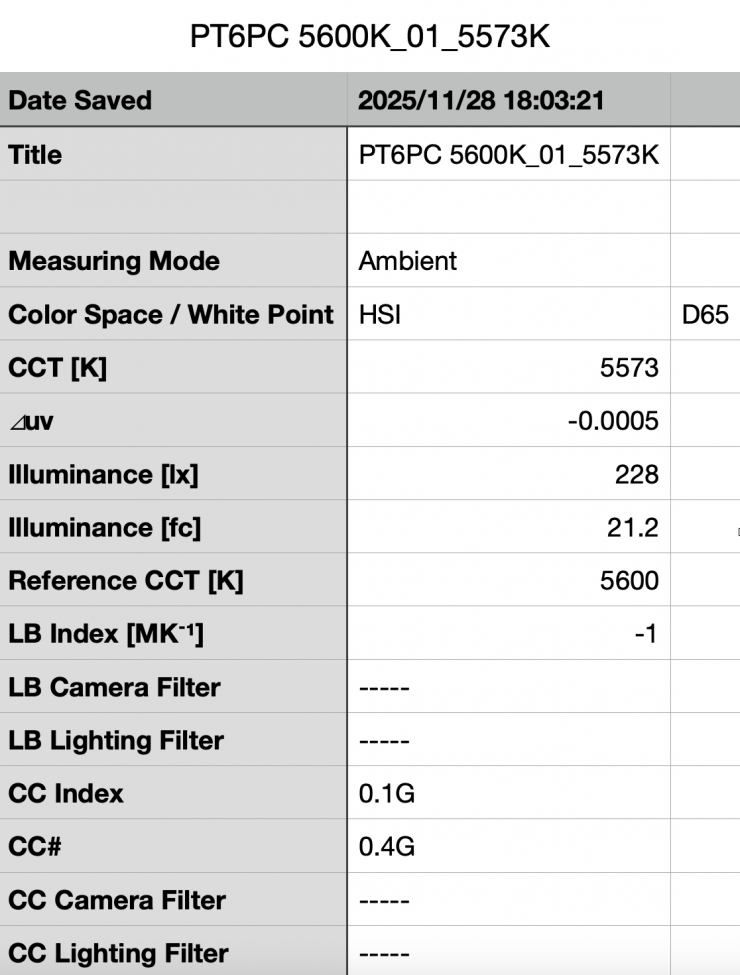
Above, you can see the PavoTube II 6CP recorded an output of 228 lx (21.2 fc) when set at 5600K. This is a reasonable amount of output for a tube light of this size.
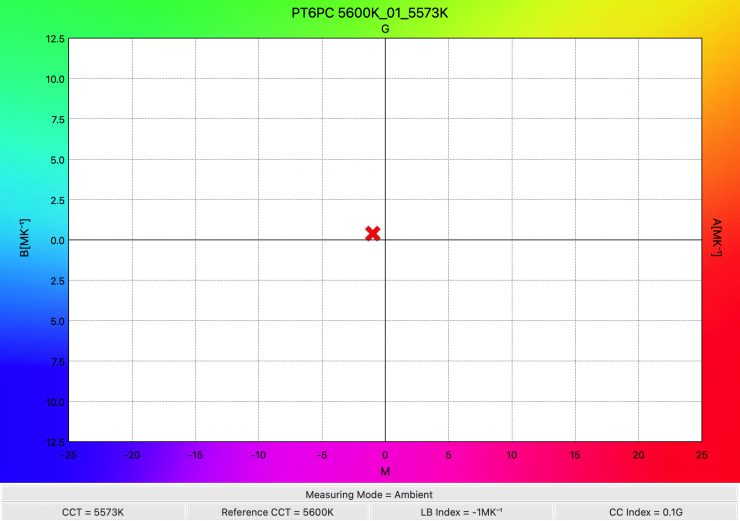
The fixture produced a CCT reading of 5573K, which was a very good result.
3200K
PavoTube II 6CP 3200K
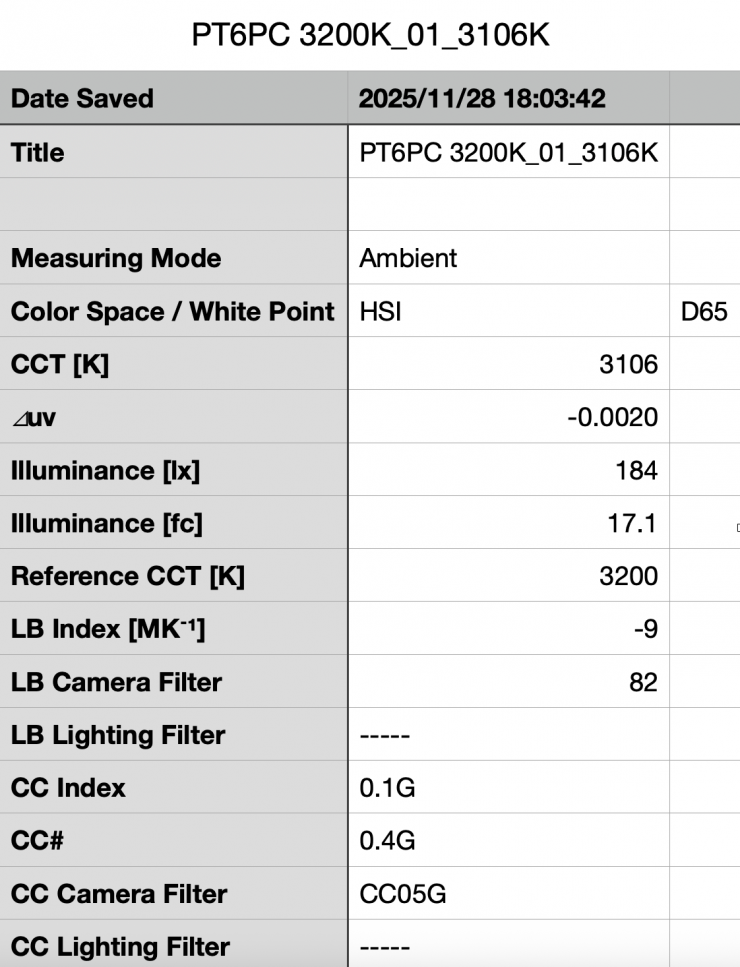
Above, you can see the lights’ output when it was set at 3200K. It produced 184 lx (17.1 fc), which was 19.3% less than the 228 lx it produced at 5600K.
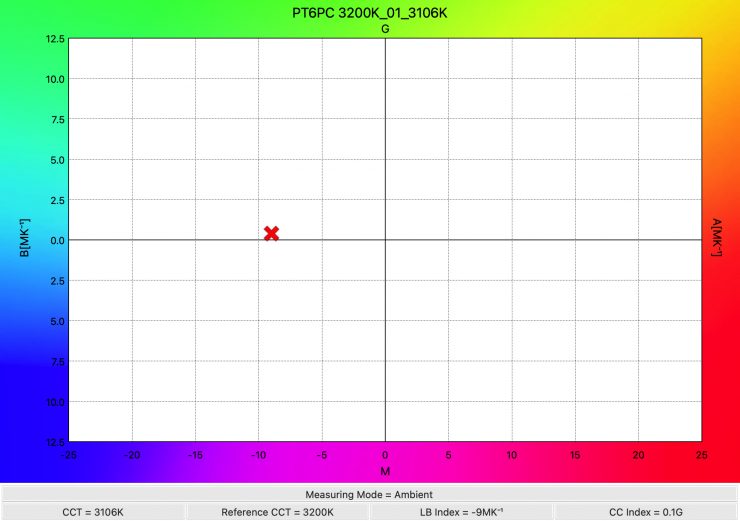
As far as CCT accuracy goes, it recorded a reasonable reading of 3106K.
So how does it perform at various CCT settings when it comes to output and CCT results? Well, below you can see.
PavoTube II 6CP
| CCT SETTING | LUX | CCT READING |
| 2500K | 173 lx | 2374K |
| 3200K | 184 lx | 3106K |
| 4500K | 186 lx | 4431K |
| 5600K | 228 lx | 5573K |
| 6500K | 182 lx | 6515K |
| 8000K | 184 lx | 8204K |
| 10000K | 180 lx | 10633K |
These results tell me that the light retains reasonably good CCT accuracy up until about 8000K. At 10,000K, it wasn’t as good.
The output of the light is very consistent, except when used at 5600K. The output varies by 24.12% from the highest to the lowest figures that I recorded.
CCT consistency & linear output when dimming the light
Now, what you should always do when testing lights is to see if the CCT remains consistent when dimming the light. Just because you set a light at say 5600K, that doesn’t mean that the CCT will remain stable as you start dimming the fixture down. I also wanted to see how linear the dimming curve was.
I decided to do a series of tests at 100%/75%/50%/25%10% to see if the CCT being recorded changed. This was done at a distance of 1m / 3.3′ using a Sekonic C-800. These tests were done at 5600K.
Nanlite PavoTube II 6CP
| CCT READING | OUTPUT | INTENSITY % |
| 5573K | 228 lx | 100 |
| 5464K | 139 lx | 75 |
| 5794K | 88.4 lx | 50 |
| 5696K | 45.7 lx | 25 |
| 5676K | 19.4 lx | 10 |
The Nanlite PavoTube II 6CP CCT consistency was a bit all over the place as you start dimming the fixture. My testing showed that the CCT readings varied by 330K.
As far as how linear the output is when you start dimming the light, at 50% output, it had 61.2% less output than when used at 100%. At 25% it had 79.95% less output than when used at 100%. At 10% output, it had 91.49% less output than when used at 100%. This shows me that the light’s dimming curve isn’t overly linear, and it could be better.
Output & accuracy when creating saturated colors
I also wanted to test the light to see how it performed when creating super-saturated colors.
0° – RED
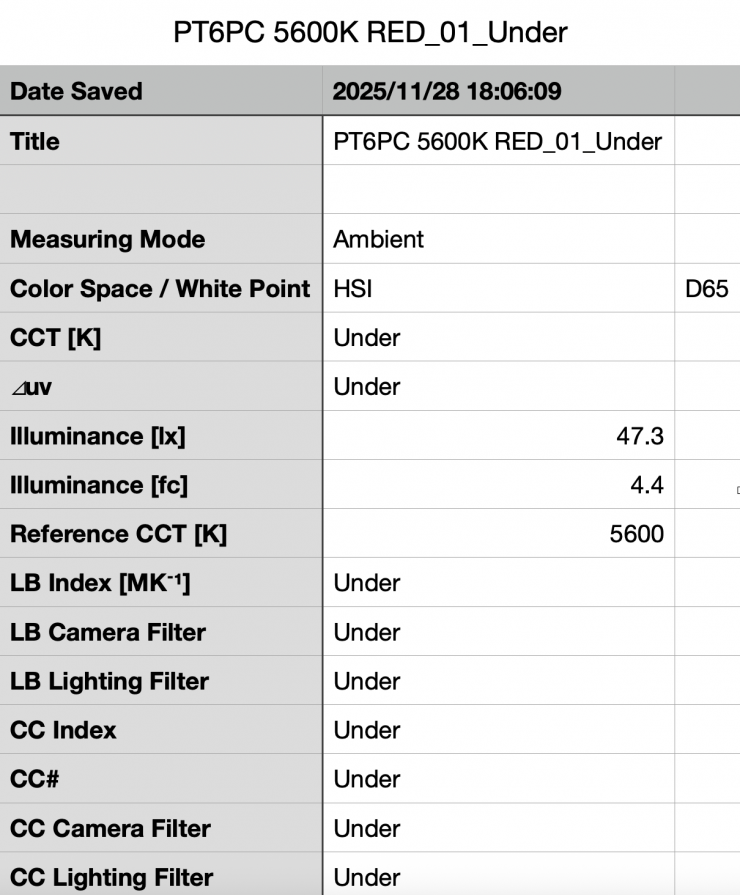
Above, you can see that the light recorded an output of 47.3 lx (4.4 fc).
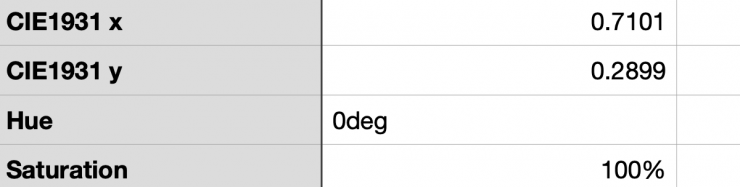
As far as creating an accurate 0° RED, the PavoTube II 6CP was spot on with a reading of 0°.
120° – GREEN
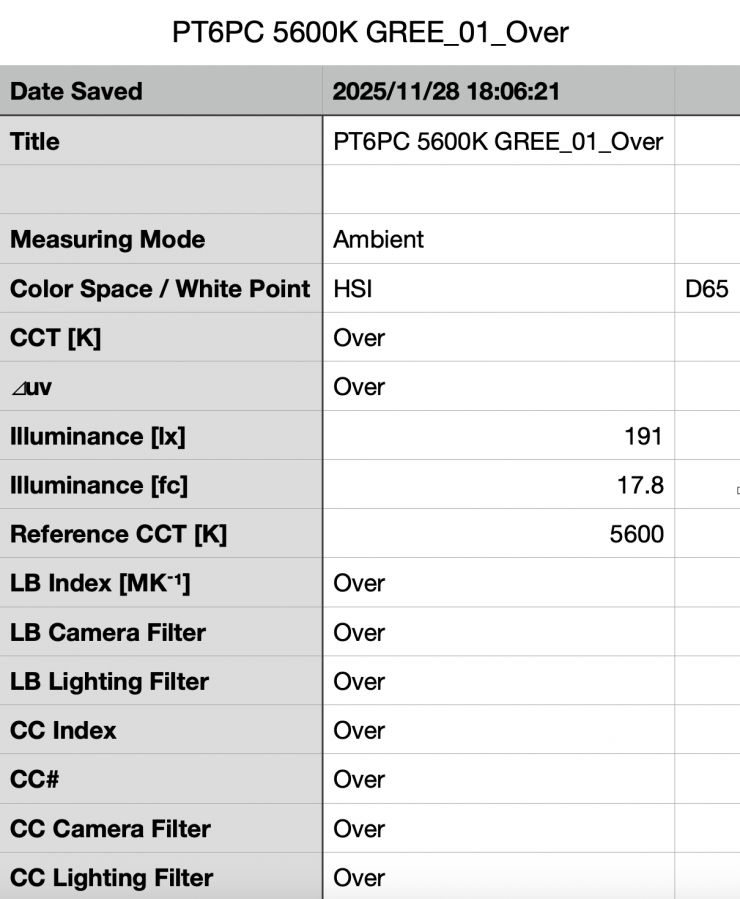
Above, you can see that the light recorded an output of 191 lx (17.8 fc).
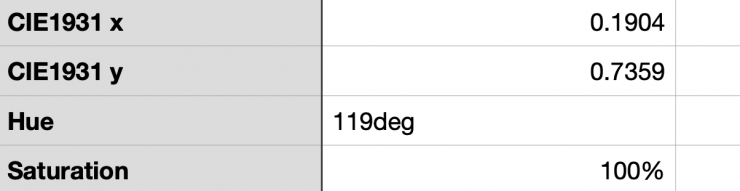
As far as creating an accurate 120° GREEN, the PavoTube II 6CP was 1° off with a 119° reading and 100% saturation.
240° – BLUE
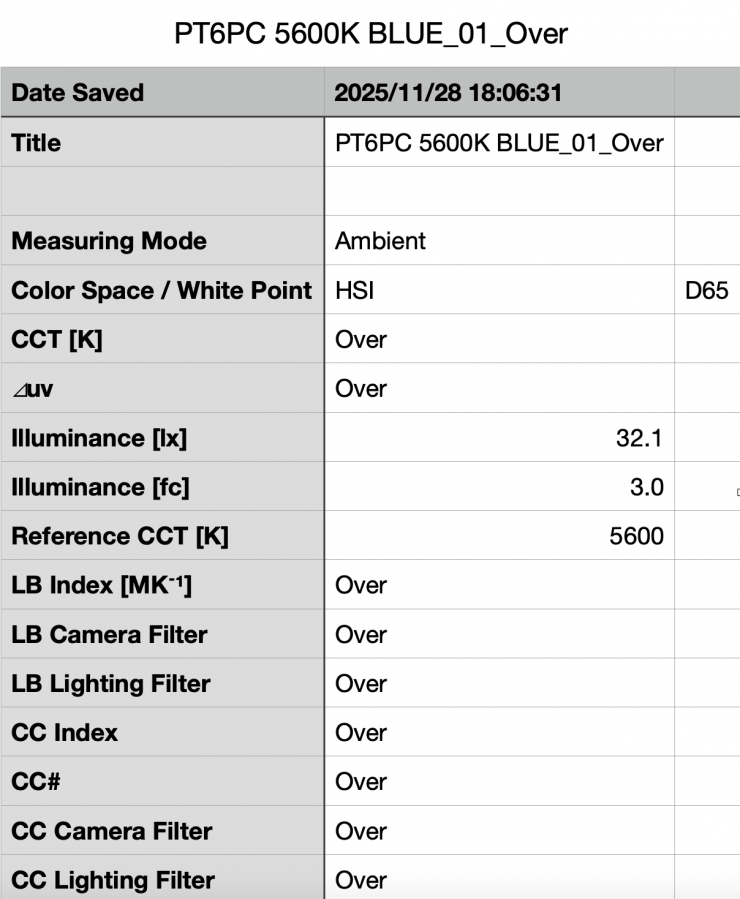
Above, you can see that the light recorded an output of 32.1 lx (3 fc).
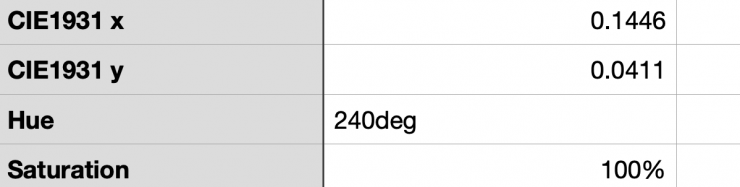
As far as creating an accurate 240° BLUE, the PavoTube II 6CP was spot on with a reading of 240°.
60° – YELLOW
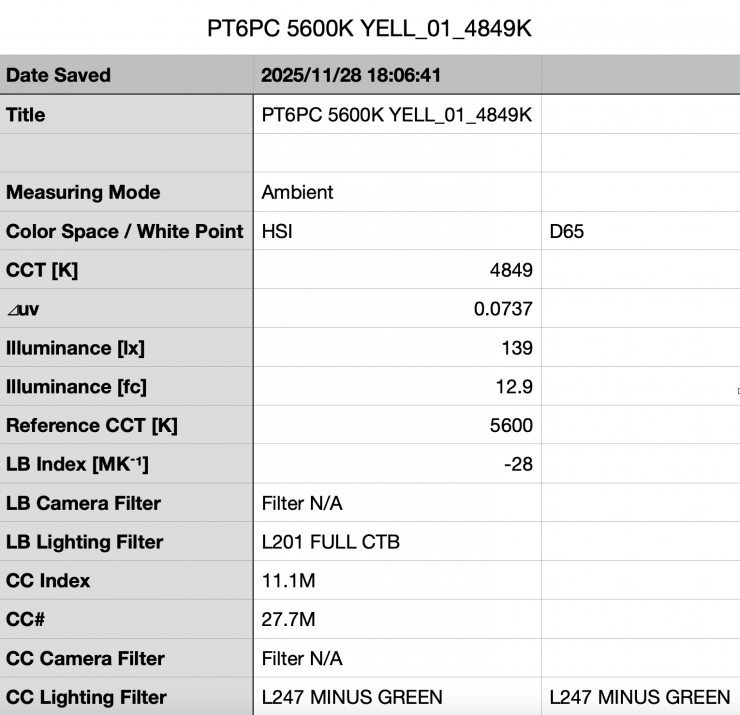
Above, you can see that the light recorded an output of 139 lx (12.9 fc).

As far as creating an accurate 60° Yellow, the PavoTube II 6CP was way off with a reading of 84°.
With the PavoTube II 6CP, the output certainly doesn’t remain consistent depending on what color you are trying to generate. This is something you need to keep in mind.
Color Rendering
So now that we have seen how much output the PavoTube II 6CP produces, how does it perform when it comes to replicating accurate colors? Well, let’s find out.
5600K
PavoTube II 6CP 5600K
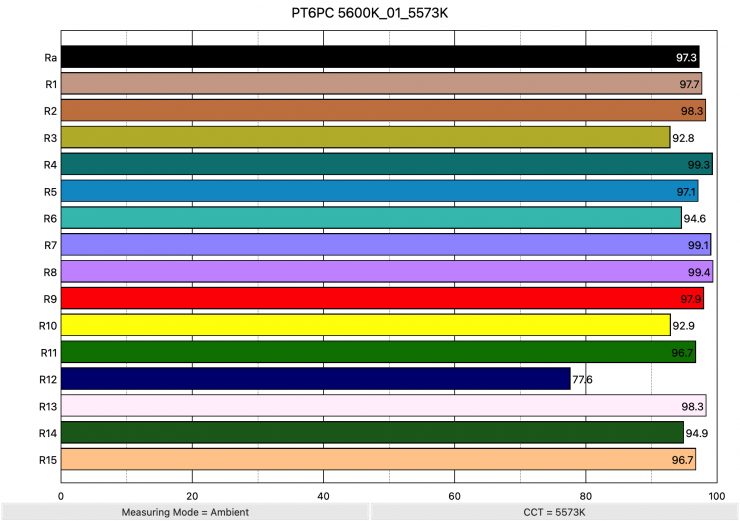
Above, you can see that when the light was set at 5600K, it recorded an average CRI (R1-R8) of 97.3 and an extended CRI (R1-R15) of 95.53. For replicating accurate skin tones, it recorded 97.9 for R9 (red), 98.3 for R13 (closest to caucasian skin tones), and 96.7 for R15 (closest to Asian skin tones). These results were very good for a tube light. Only R12 (Blue) was under 90.
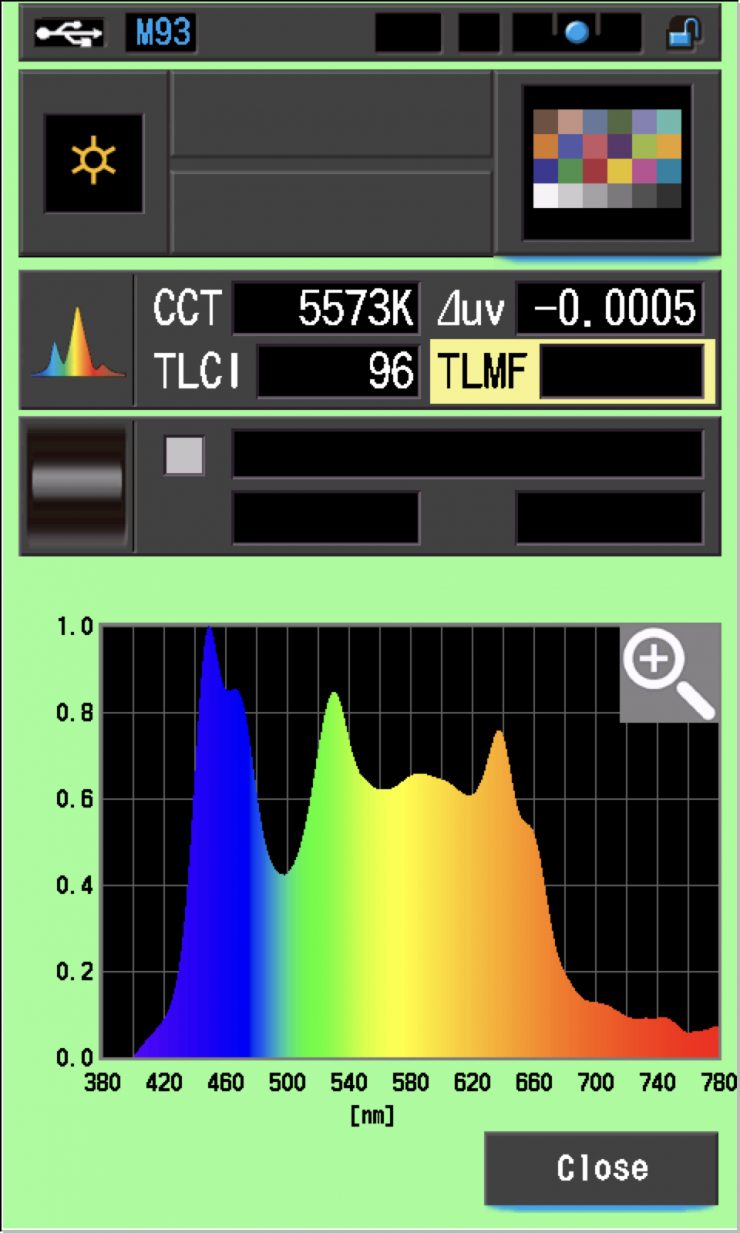
The light, when set at 5600K, also recorded a TLCI score of 97.
3200K
PavoTube II 6CP 3200K
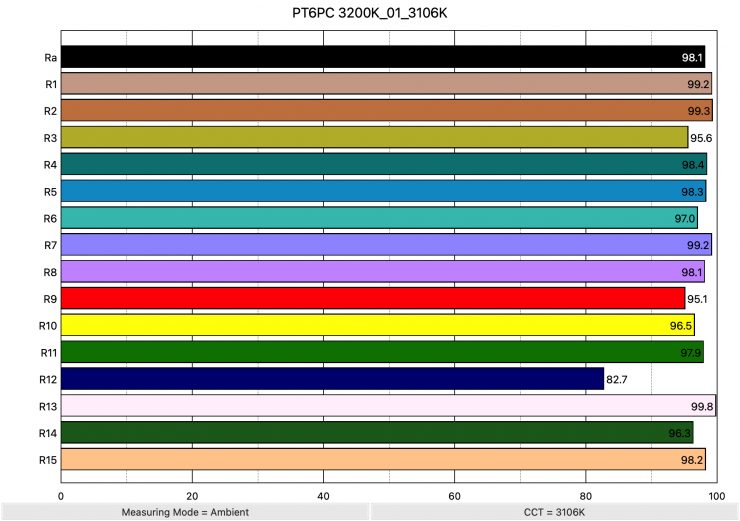
Above, you can see the scores for when the light was used at 3200K. It recorded an average CRI (R1-R8) of 98.1 and an extended CRI (R1-R15) of 96.77. For replicating accurate skin tones, it recorded 95.1 for R9 (red), 99.8 for R13 (closest to caucasian skin tones), and 98.2 for R15 (closest to Asian skin tones).
Just like at 5600K, these were excellent results. Only R12 was below 90.
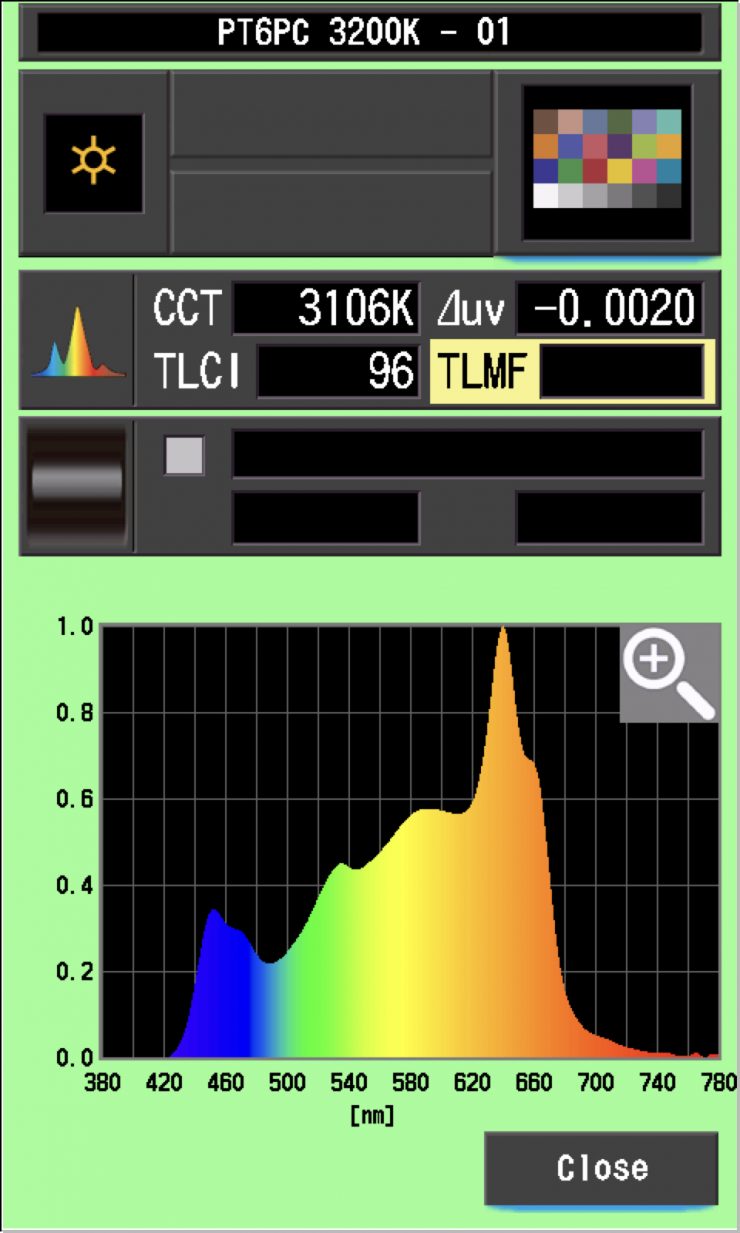
The light, when set at 3200K, recorded a TLCI score of 96.
CC Index & ⊿uv
The CC Index displays the CC correction value and whether any magenta or green need to be added or subtracted. 1 CC corresponds to 035 Kodak CC values or 1/8 Rosco filter values. Any reading less than +1.00 or -1.00 and you’re probably not going to need to make any kind of adjustment. The ⊿uv is the value to show how much this light is away from being an ideal light source (black body radiation = incandescent lamp). As with the CC Index you want this number to theoretically be zero. Kelvin is not a linear value, so we need to convert from Kelvin to MK-1 to compare the values of color temperature. To calculate from Kelvin to Mired is MK-1= 1*1000000/Kelvin. While this may sound confusing, it is the only way of measuring if the Kelvin shift is significant enough to warrant having to use a filter for correction. Below are the results for the PavoTube II 6CP.
Kelvin Vs MK-1
PavoTube II 6CP
| Kelvin | Difference in K | MK-1 | Difference in MK-1 | |
| SET VALUE | 2500K | 0 | 400 | 0 |
| ACTUAL READING | 2374K | 126 | 421.22 | -21.22 MK-1 |
| SET VALUE | 3200K | 0 | 312.5 | 0 |
| ACTUAL READING | 3106K | 94 | 321.95 | -9.45 MK-1 |
| SET VALUE | 4500K | 0 | 222.22 | 0 |
| ACTUAL READING | 4431K | 69 | 225.68 | -3.46 MK-1 |
| SET VALUE | 5600K | 0 | 178.57 | 0 |
| ACTUAL READING | 5573K | 27 | 179.43 | -0.86 MK-1 |
| SET VALUE | 6500K | 0 | 153.84 | 0 |
| ACTUAL READING | 6515K | 15 | 153.49 | 0.35 MK-1 |
| SET VALUE | 8000K | 0 | 125 | 0 |
| ACTUAL READING | 8204K | 204 | 121.89 | 3.11 MK-1 |
| SET VALUE | 10000K | 0 | 100 | 0 |
| ACTUAL READING | 10633K | 633 | 94.04 | 5.96 MK-1 |
These figures might look confusing, but what they tell me is that the light is pretty accurate across its CCT range, except for when it is used at 2500K and 3200K. Any MK-1 score that is under -9/9 means you wouldn’t have to use any color correction gels. Again, we don’t want to judge a light based on one set of scores.
CC INDEX & ⊿uv
PavoTube II 6CP
| CC INDEX | ⊿uv | |
| 2500K | 0.5G | -0.0020 |
| 3200K | 0.1G | -0.0020 |
| 4500K | 0 | -0.0015 |
| 5600K | 0.1G | -0.0005 |
| 6500K | 0.5G | -0.0019 |
| 8000K | 0.8G | -0.0018 |
| 10000K | 1.2G | -0.0024 |
The ⊿uv scores weren’t great for this light, except when it was used at 5600K. It has a very slight magenta push, that gets amplified at 6500K and above 5600K and above.
TM-30
TM-30 is a relatively new color rendering standard that was developed to deal with the limitations of CRI. TM-30 looks at 99 individual colors. These 99 colors are categorized into seven groups: nature, skin color, textiles, paints, plastics, printed material, and color systems.
TM-30 scores go from 0 – 100. The higher the score, the more accurate a light is at producing colors. Any TM-30 Rf score in the ’90s is considered to be good. What is interesting and something that you need to be very aware of is that two separate light sources with the exact same CRI scores can render colors very differently. A light with a high CRI rating could have a low TM-30 score. Conversely, a light with a good TM-30 score could have a bad CRI score.
Now, there are two measurements associated with TM-30, Rf and Rg.
Rf (Color Fidelity)
Rg (Color Gamut)
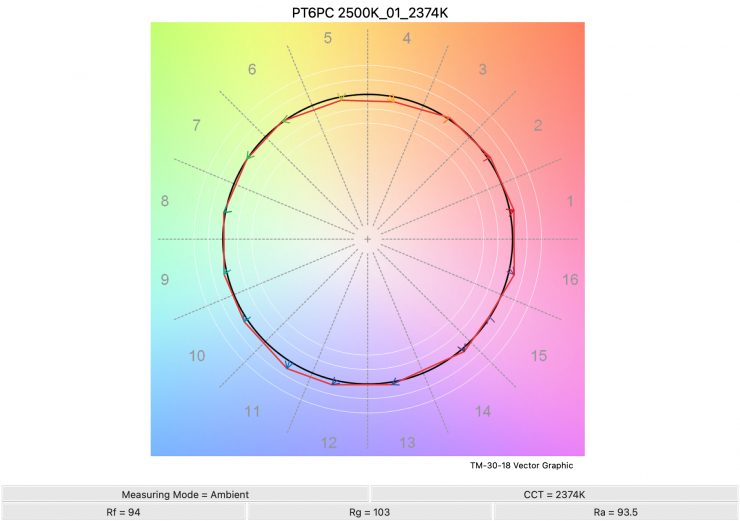
With Rf value, ideally, you want a score in the 90’s.
With Rg value, a score below 100 indicates that the light source renders colors with less saturation than the reference source; any score above 100 indicates over-saturation, so ideally, you want this score to be 100.
PavoTube II 6CP
2500K 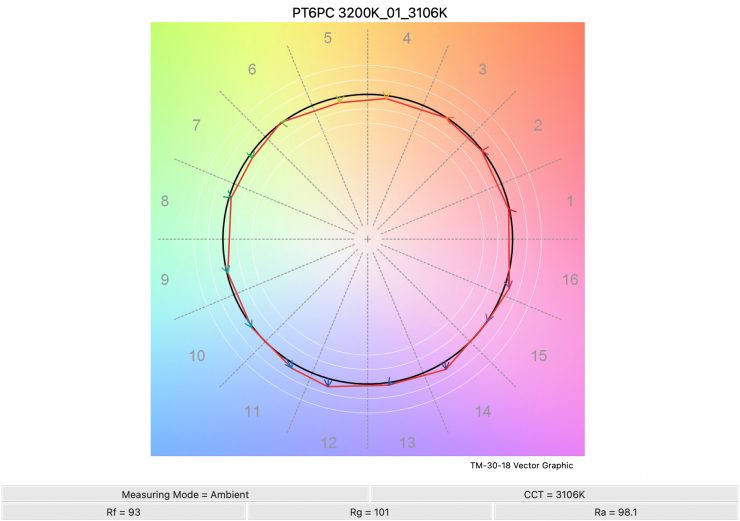
3200K 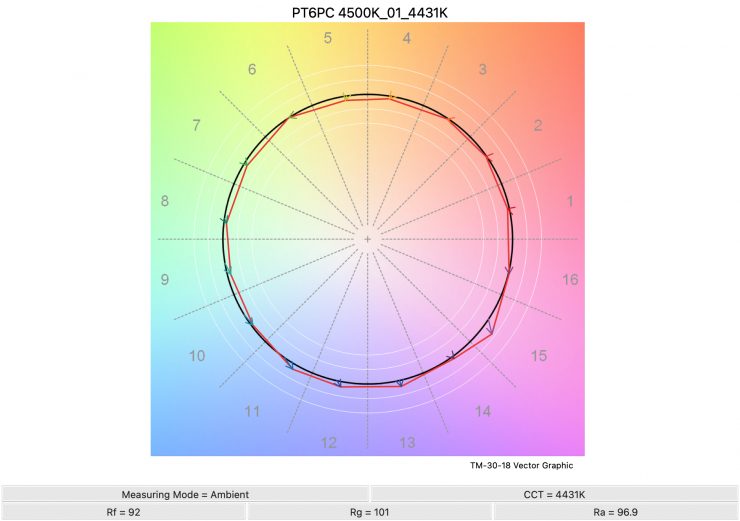
4500K 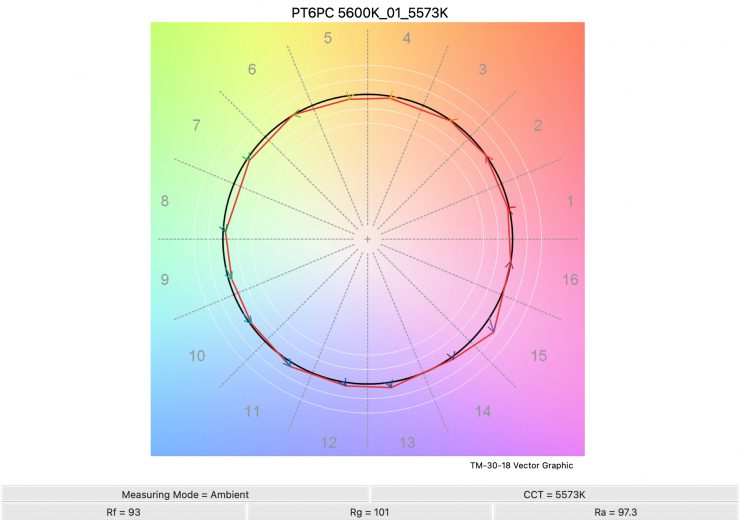
5600K 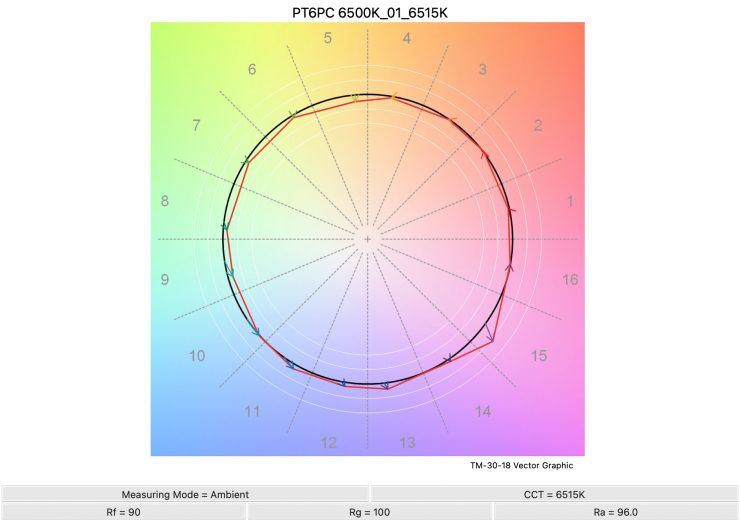
6500K 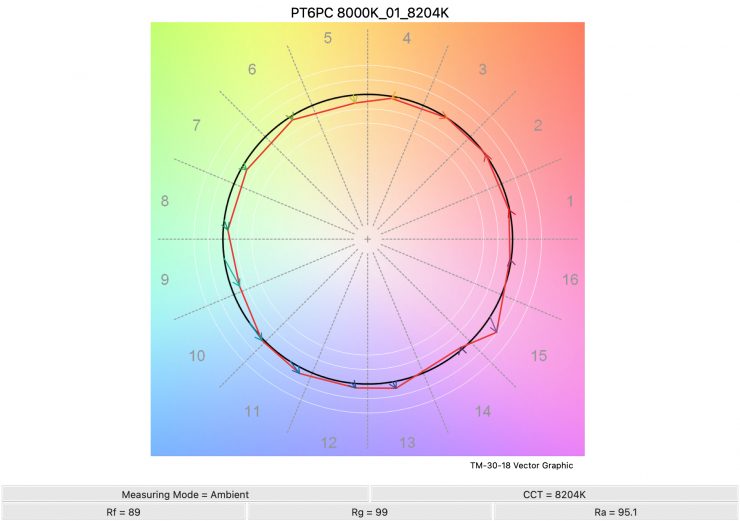
8000K 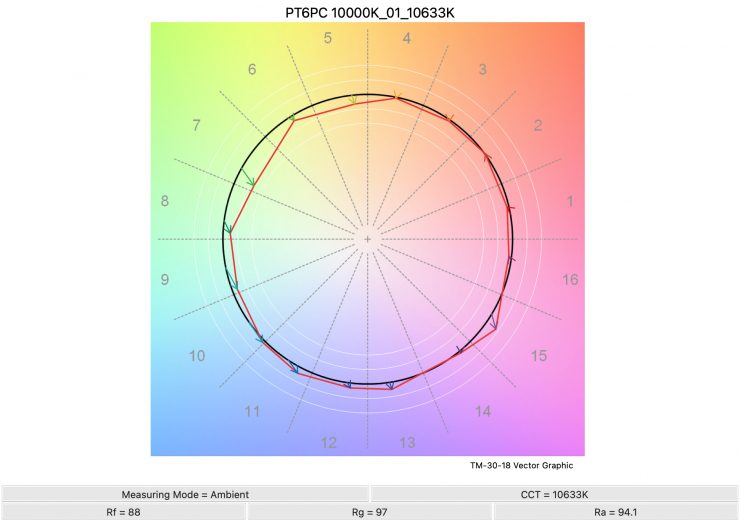
10,000K
Above, you can see the scores for the PavoTube II 6CP at various CCT settings. Below, I have listed the figures as well.
| Rf | Rg | |
| 2500K | 94 | 103 |
| 3200K | 93 | 101 |
| 4500K | 92 | 101 |
| 5600K | 93 | 101 |
| 6500K | 90 | 100 |
| 8000K | 89 | 99 |
| 10000K | 88 | 97 |
The Rf and Rg scores are reasonably consistent for the light, but you can see it oversaturates colors at 2500K, and under saturates them at 8000K and 10,000K.
SSI
SSI (Spectral Similarity Index) was developed by the Sci-Tech Council of the Academy. SSI gives me the ability to set any light as a standard, or use predefined standards (such as CIE D55), and then give other lights an SSI score based upon how well they will match standards such as CIE D55 measure spectral response and compare it directly against an ideal light source.
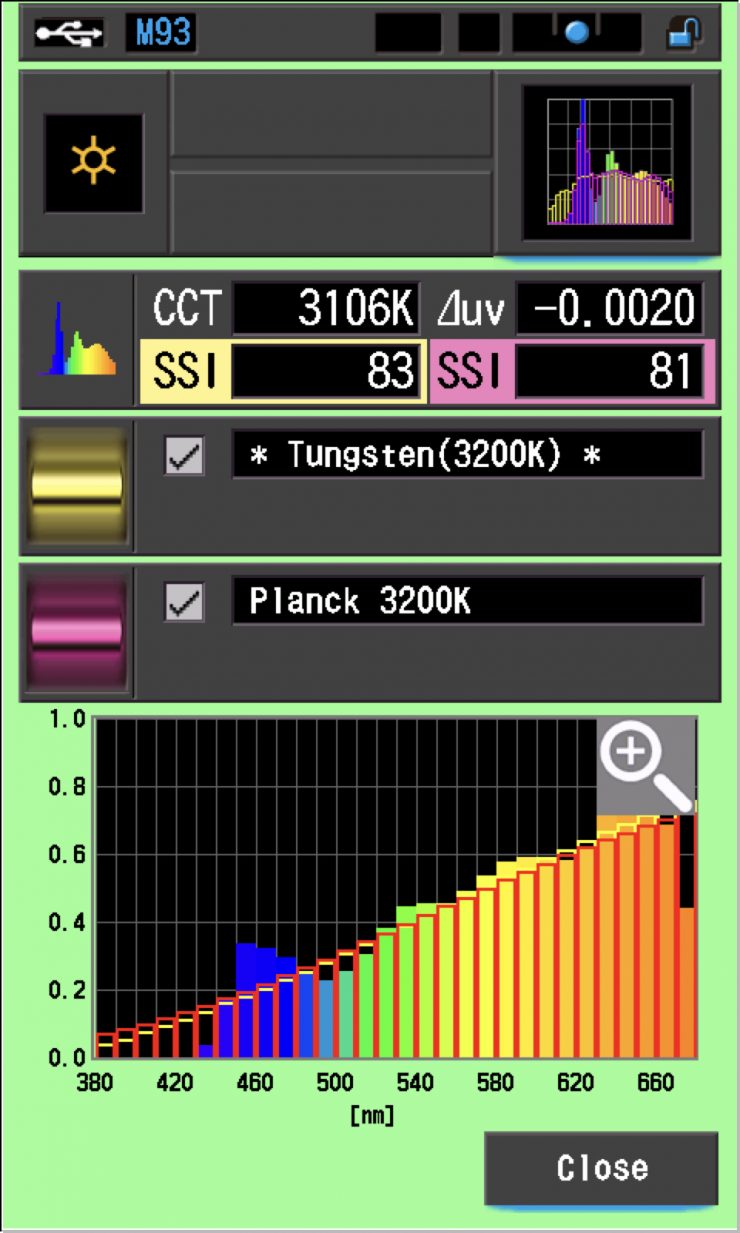
In this graph, the red bars indicate a perfect 3200 (Tungsten source. The Red bars indicate a Planck 3200K source. This lets us compare how close to a perfect 3200K lighting source the PavoTube II 6CP is. A score in the mid-80s is very good for an LED light trying to replicate a 3200K source.
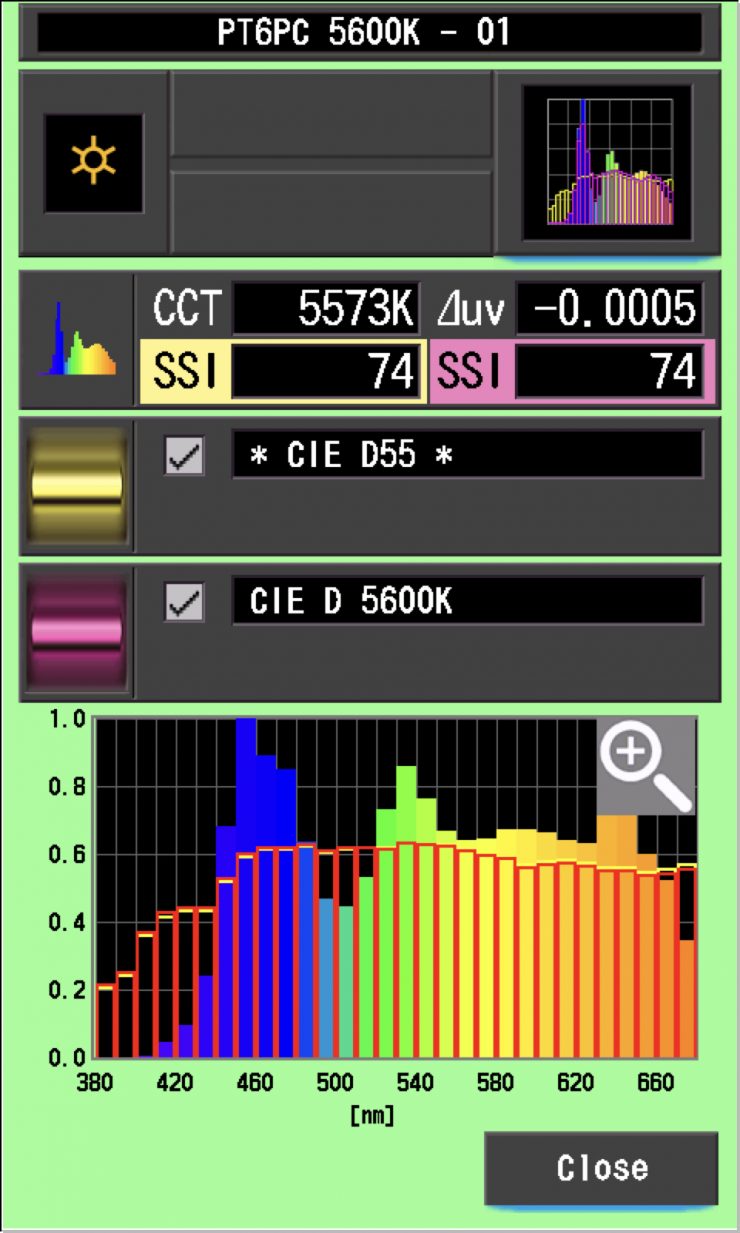
In the graph above, the red bars indicate a perfect CIE D 5600K source. The Red bars indicate a perfect CIE D55 source. This lets us compare how close to a perfect 5600K lighting source the PavoTube II 6CP is.
Most LED lights only record SSI scores in the low to mid-70s when they are used at 5600K.
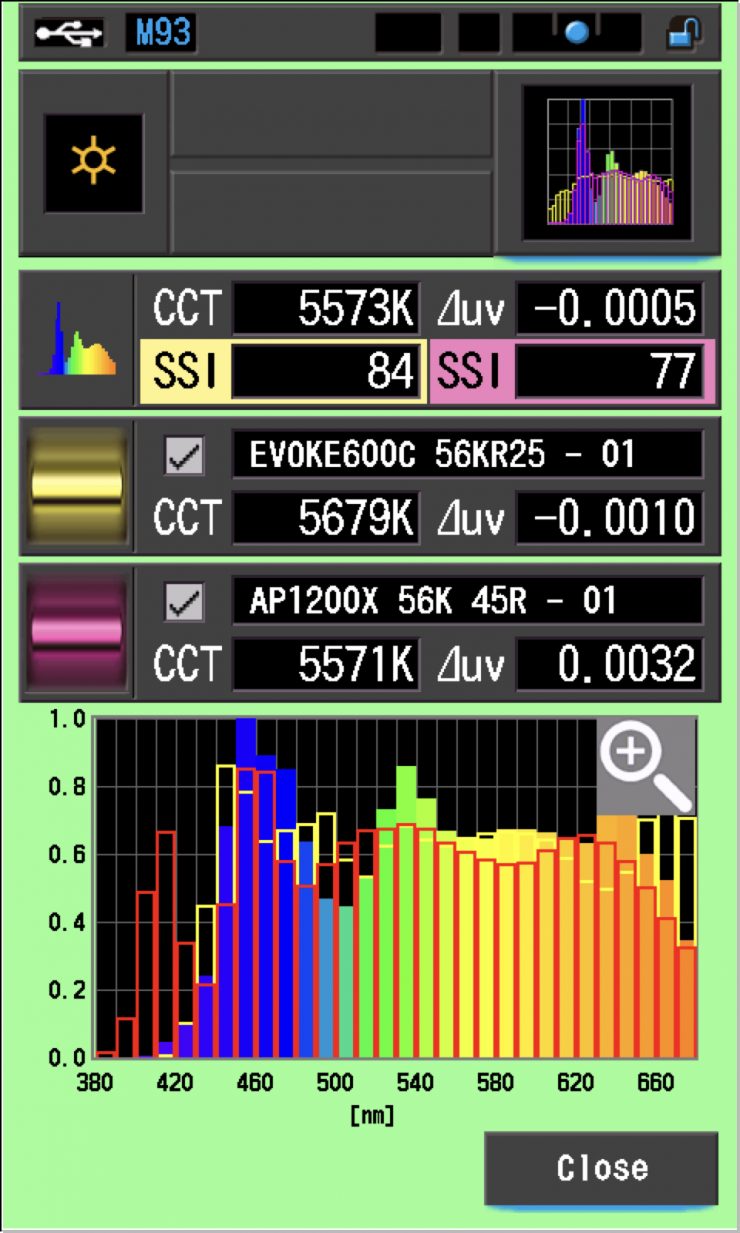
The main reason we want to record SSI scores is so we can see how well they match with other lights. As an example, let’s see how well the Nanlite matches the NANLUX EVOKE 600C and Aputure STORM 1200x when used at 5600K. As you can see, the Nanlite isn’t a great match to either fixture. In a perfect world, you would want the lights you are using to have a score of 100 if they were all being used in the same CCT setting. That is rarely ever going to be the case unless you are using the exact same lights from the same manufacturer.
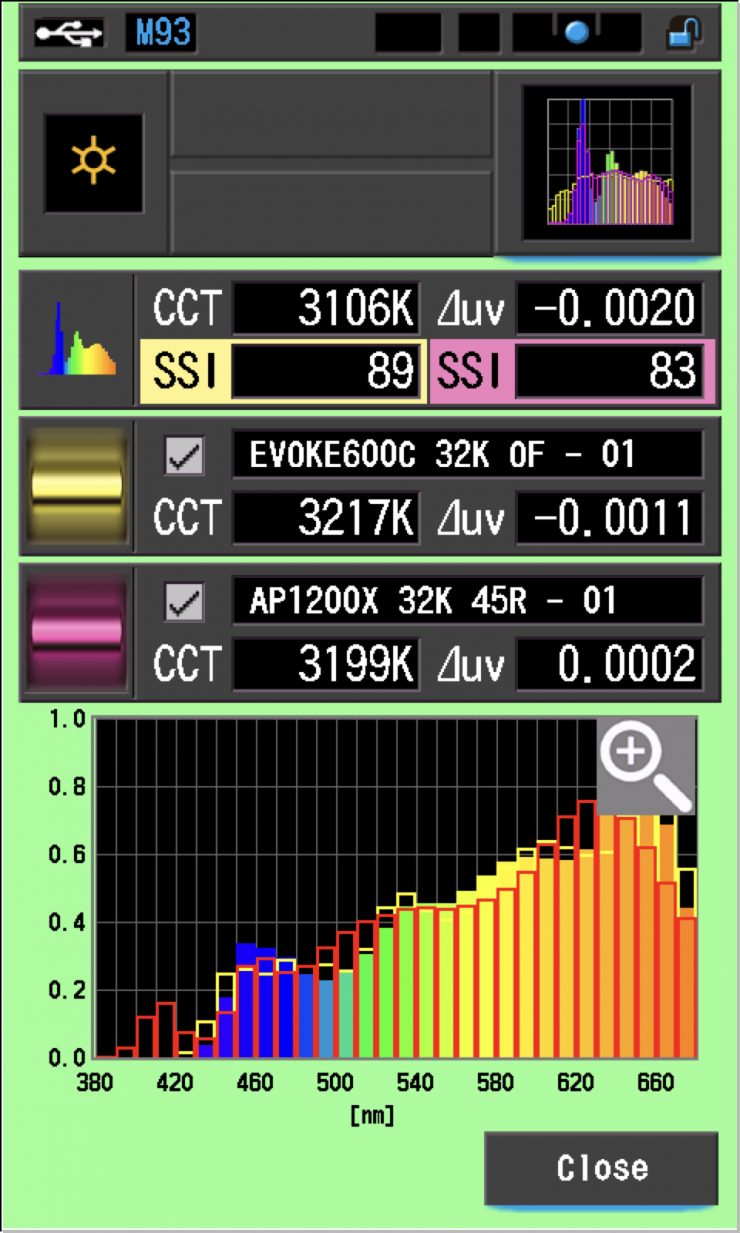
Just as another comparison, above, you can see how all of those same lights match when used at 3200K. As you can see, the Nanlite is a better match to both lights when used at 3200K.
Spectral Distribution
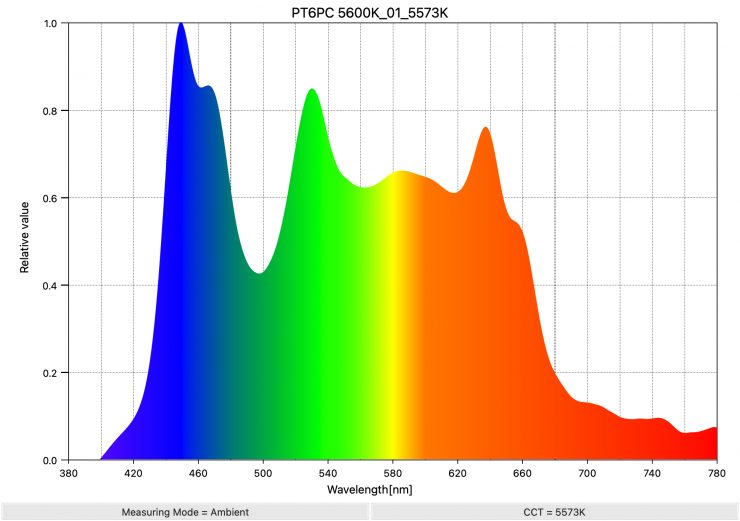
Above, you can see the spectral distribution of the PavoTube II 6CP when it is set at 5600K. The spectral distribution is reasonably full, but it does have a couple of spikes at 500-540nm and 620-660nm.
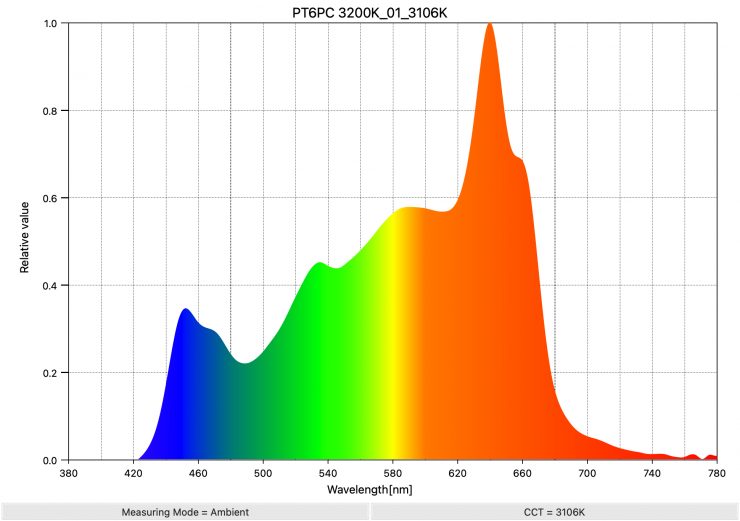
Above, you can see the spectral distribution of the PavoTube II 6CP when it is set at 3200K. The spectral distribution isn’t overly full.
Real-World Performance & Quality of Light
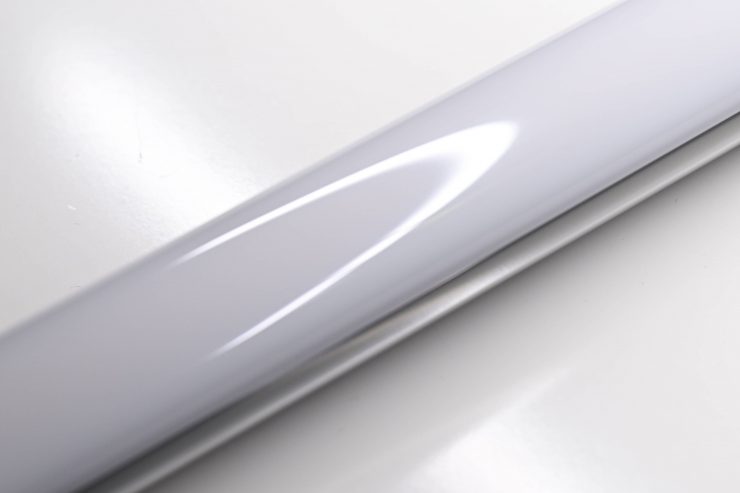
I might sound like a broken record, but as I always say in lighting reviews, photometric scores only tell you part of the story. LED lighting technology has gotten to a point where almost all of the lights that are being released score well in photometric tests. What you should be focusing on, and this goes for just about any product, is usability. How will this product fit into the way I like to work?
The PavoTube II 6CP is quick to set up, and you could use the light for lots of different applications. Tube lights such as this are fairly versatile and can be used as accent lights, interview lights (in certain situations), replacements for practicals, etc, etc.
Yes, I would have liked to have seen a slightly longer run time when using the built-in battery, but on the other hand, you get a product that you can just pull out and turn on. I don’t like separate battery or power systems, but I do want the option to be able to use one if need be, so it is nice that you can do that with the PavoTube II 6CP.
As far as output is concerned, the light isn’t overly bright, but for a lot of scenarios where it will be used as a practical or placed in shot on purpose, it doesn’t need to be too bright. If you wanted to use this tube light as a key light in an interview, you could, but you do have to be mindful that it will probably only work well in controlled environments or if you use more than one tube.
As I previously mentioned, Nanlite states that the LED chips on PavoTube II 6CP are surrounded by diffusion materials so they can offer better performance for shooting highly-reflective objects or when you use them as in-frame practical lights.
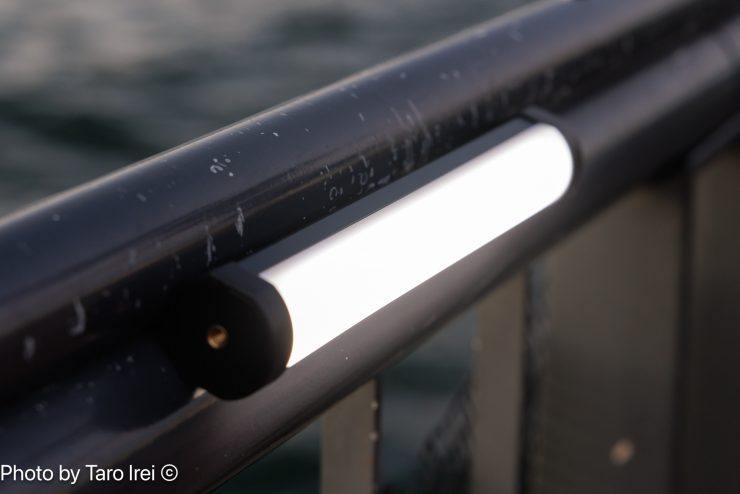
Having the ability to mount the light directly to metal objects through the built-in magnets is very handy.
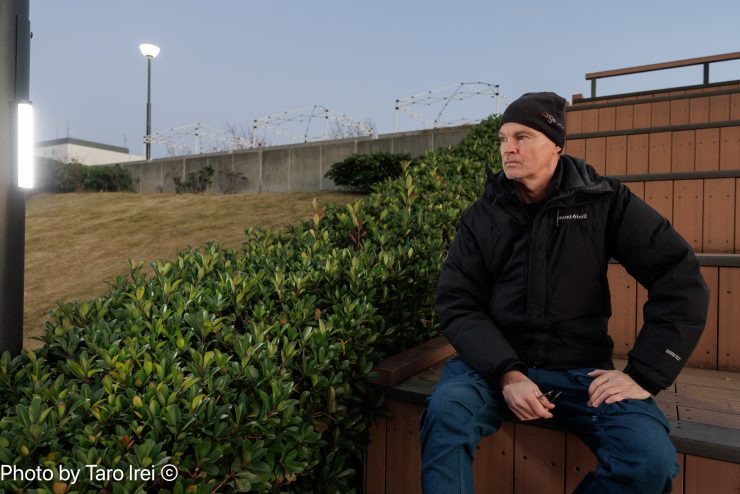

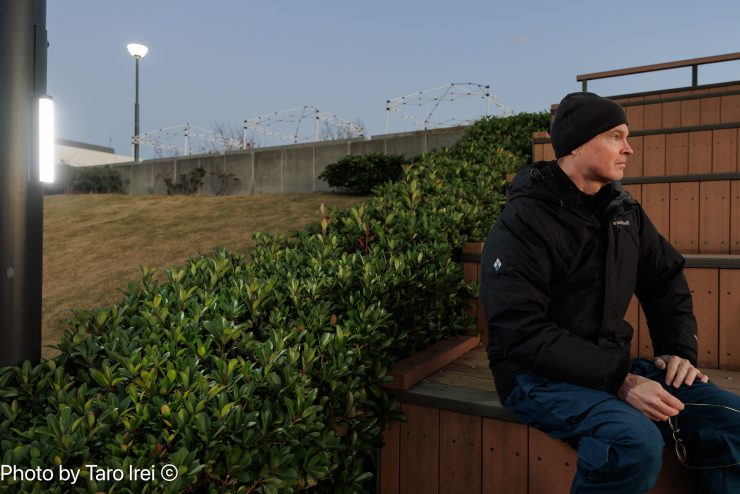
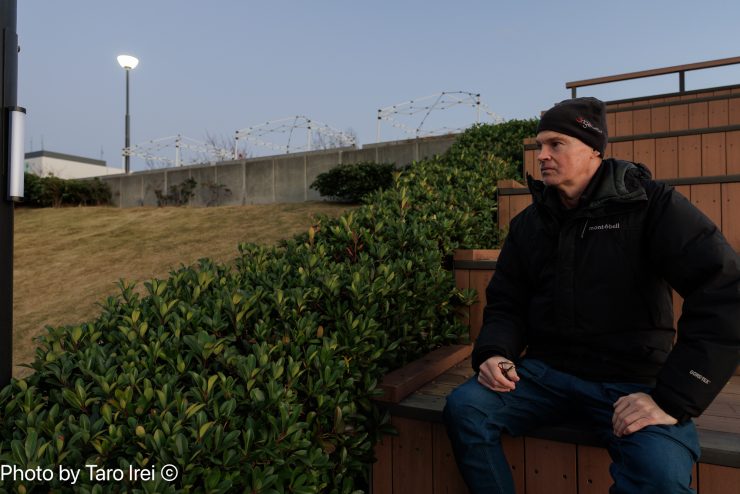
Light Off 
Light Off
Above, you can see a couple of quick example frames where I have mounted the Nanlite PavoTube II 6CP onto a metal pole outdoors to provide a bit of fill. Having a light like this with a built-in battery makes setting up simple shots like this really quick.
While tube lights are reasonably versatile, the physical size and difficulty of transportation may outweigh their benefits depending on the type of work you do.
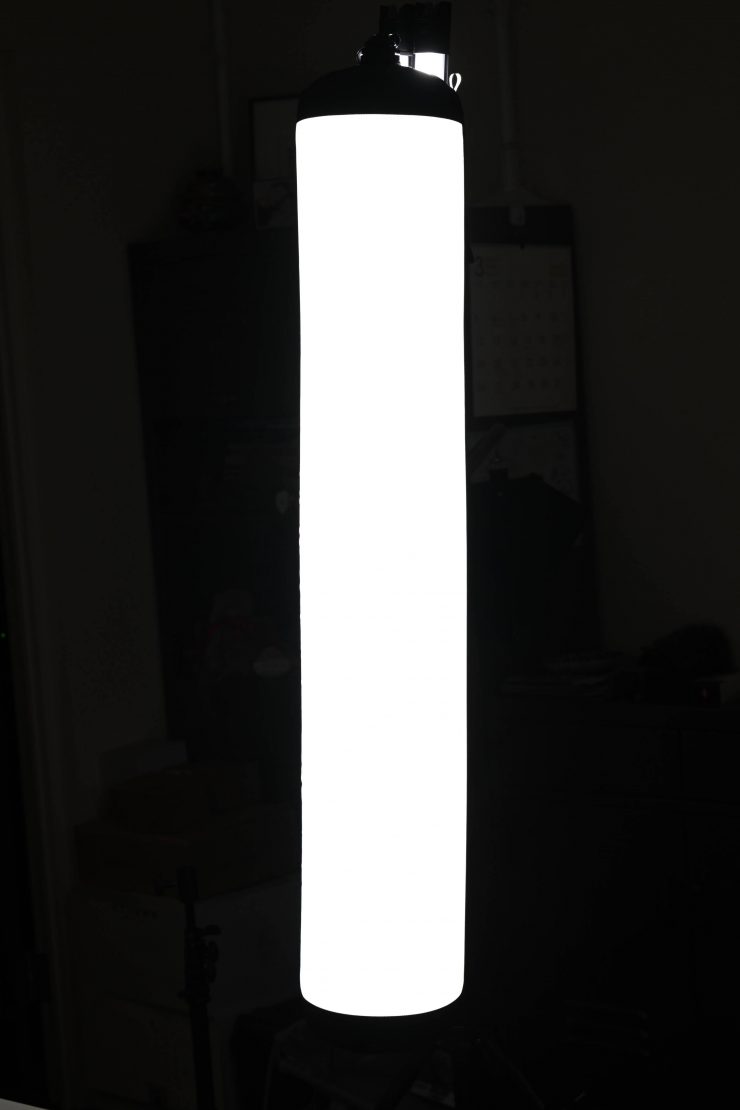
I also like to place a couple of tubes inside something like a Caligri AirTube to create a nice soft source.




Above, you can see what three of the tubes in a Caligri AirTube look like.
If you are shooting music videos or other content where you need a light to be able to create colors or effects that can be discreetly placed in a scene, then tube lights make a lot of sense.
Price & Availability
The PavoTube II 6CP is now available to pre-order for $89 USD.
In the kit, you get the following:
- Nanlite PavoTube II 6CP RGB LED Tube Light (10″)
- USB-C Cable
- 3 x Iron Mounting Plate
- Carry Bag
- Limited 2-Year Manufacturer Warranty
Registration Extension: 1-Year
This makes them very competitively priced when you compare them to their competition.
Similar-sized RGB LED tube lights include:
- iwata Tech Master S RGB Tube Light (Gray, 10.2″) $89 USD
- Neewer TL20C RGB Magnetic Light Wand (9″) $59.99 USD
Accessories
Specifications
Conclusion
There is no such thing as a perfect light, and tube lights, in general, are filled with compromises that you need to be willing to accept. While you could use them for a whole range of different applications, they are often more suited to certain lighting requirements than others. I always like to have a few tube lights in my kit because they are versatile and quick to use when the situation arises.
The PavoTube II 6CP has very good CCT accuracy, a vast range of features and capabilities, and it is reasonably well-made. I like the built-in magnets and the ability to combine multiple tubes together to create a bigger source. The updated physical controls are better than the previous model, and I found it easier to use. The internal battery run time could perhaps be longer.
The tubes are also very affordably priced and have a decent amount of output for a tube of this size. Their small size and low weight make them very easy to transport.
The PavoTube II 6CP is a very solid and well-performing option in a now very crowded RGBW tube market.