
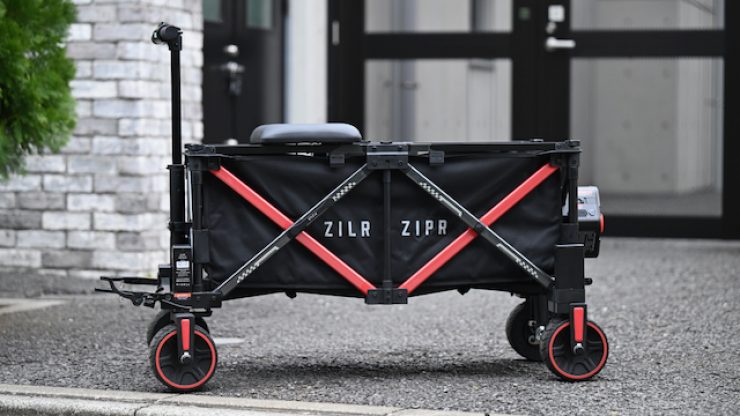
The ZILR ZIPR is an electric-powered kit cart designed specifically for content creators, production crews, and anyone who moves equipment professionally.
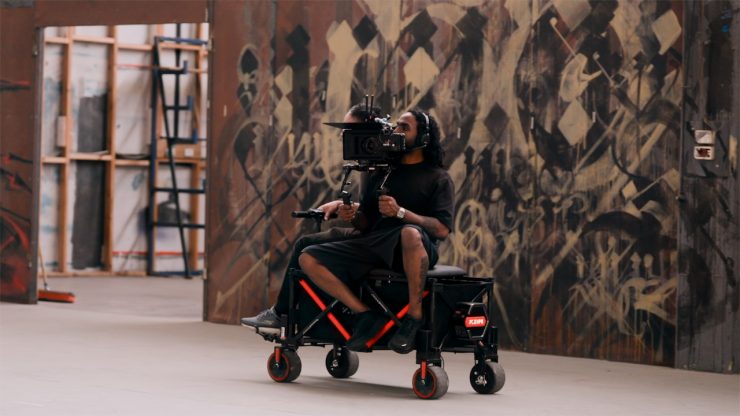
ZIPR was designed to bring efficiency and ease of use when moving gear around. It also has the added benefit that you can utilize it for tracking or dolly shots with an optional 2nd seat or rear mount point.
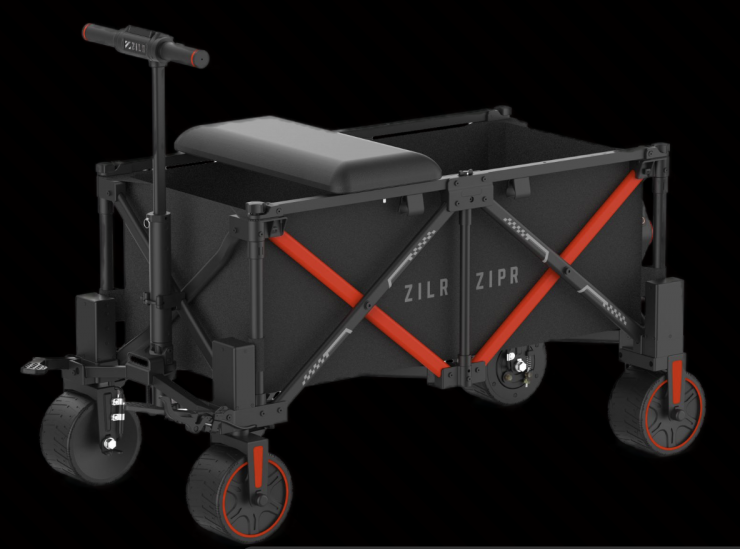
The ZIPR represents a significant expansion for ZILR beyond cables and power solutions into professional mobility. After years of listening to production professionals talk about the physical strain of moving gear, the time lost to logistics, and the limitations of existing cart solutions, ZILR came up with the ZIPR solution to help solve these real-world problems.
Key features
- Electric-powered with intelligent drive systems (2WD or 4WD options)
- Up to 350kg / 771.6 lbs cargo capacity while maintaining portability
- 30-second folding mechanism – fits in vehicle trunks and stores upright
- Up to 30km range on a single charge
- Regenerative braking with hill-start assist and anti-rollback
- All-terrain capability with puncture-proof tyres and IPX5 weather rating
- Modular ecosystem with accessories for different production needs
How is ZIPR different from other solutions?
In our industry, you either tend to find large and heavy production carts from companies such as Inovativ, Tilta, SmallRig, etc., or more portable and smaller options from MultiCart, Gator, etc. Some news crews and people doing events, etc, also utilize rolling carts that they got from hardware/home improvement stores, etc.
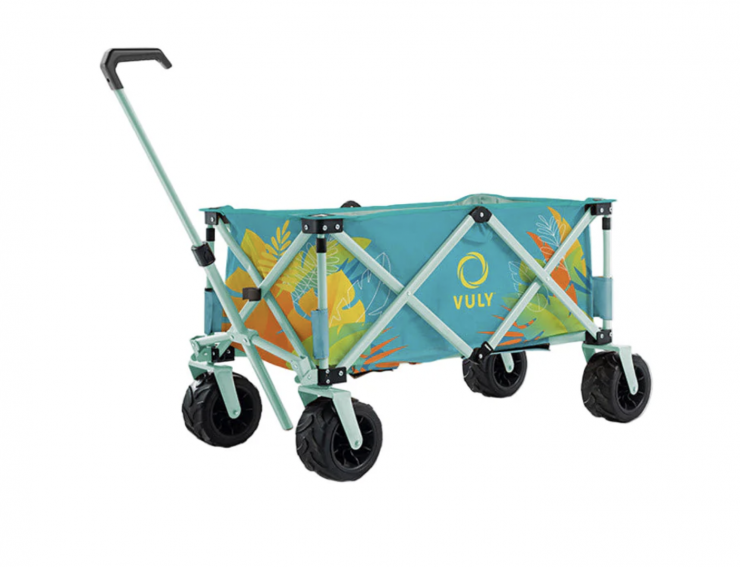
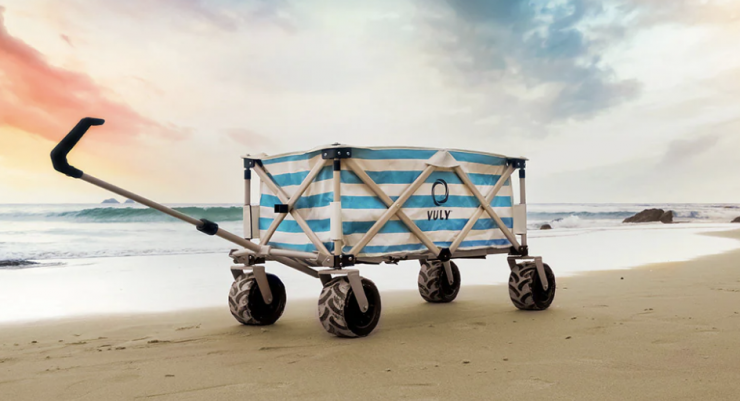
You see a lot of lightweight, rollable carts in Australia as people use them to take stuff to the beach.
The ZIPR borrows concepts from all of these different solutions to come up with something that is a little different. In saying that, I wouldn’t classify these as production carts per se, as they are not multi-tiered; they are more suitable for just moving equipment around.
Just to clear with our readers, the ZIPR isn’t a copy of something that already exists. Its structural designs, technological innovations, appearance, and alternative solutions are protected by over 150 domestic and international patent applications.
Anybody who works in production knows the endless joys of lugging gear in and out of locations. It is arguably the worst part of the job, and everyone has their own solutions for doing this.
We put enough strain on our bodies from using equipment, let alone carrying it. With a lot of e-powered products now available, it only makes sense to have an e-powered cart to help you move kit around.
Weight & Storage Capacity
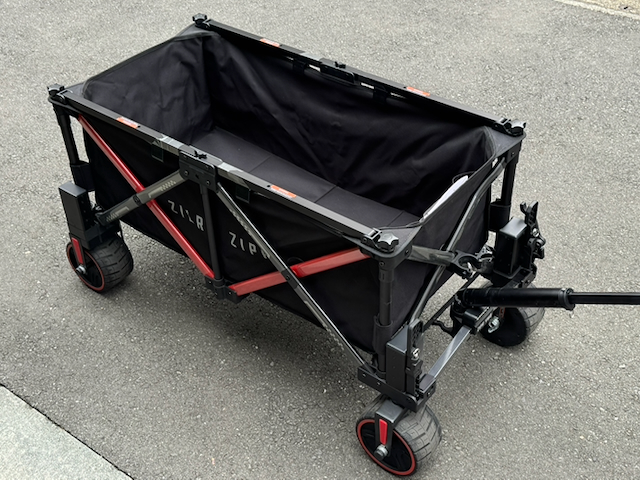
The ZIPR 2WD version can carry up to 250kg / 550lbs, and the ZIPR 4WD version can carry up to 350kg / 771.6lbs. This is a lot of weight, and realistically, it would be very hard to physically put enough gear in the cart that it would reach those types of limits. However, in saying that, on inclined slopes, you don’t want to exceed 120kg / 264.5 lbs. This is for obvious safety reasons!
In terms of cargo volume, they can carry 183 Litres / 48.3 Gal.
As far as the physical size is concerned, both models, when in their operating state, have physical dimensions of 116 x 63 x 50 cm / 45.7 x 24.8 x 23.6″. If you need a comparison, the Inovativ Voyager 42 NXT Equipment Cart has dimensions of 116.6 x 103.9 x 62.7 cm / 45.9 x 40.9 x 24.7″ and the MultiCart RocknRoller R12RT 8-in-1 All-Terrain Equipment Cart has a platform surface of 86 to 132 x 34 cm / 34 to 52 x 13.5″.
Let’s see how the weight capacity of the ZILR ZIPRs compares to a couple of other options:
| PAYLOAD CAPACITY | |
| ZILR ZIPR 2WD | 250kg / 550lbs |
| ZILR ZIPR 4WD | 350kg / 771.6lbs |
| Inovativ Voyager 42 NXT Equipment Cart | 272.2kg / 600lbs |
| Inovativ Apollo 52 EVO Cart | 544.3kg / 1200lbs |
| Inovativ Apollo 52 Motorized Workstation | 544.3kg / 1200lbs |
| SmallRig 36″ Lightweight Video Production Camera Cart | 249.9kg / 551lbs |
| Tilta 36″ Boulder Camera Cart (Base Model) | 400.1kg / 882lbs |
| TARION Titanrig Foldable Production Cart (Base Model) | 200kg / 440.9lbs |
| MultiCart RocknRoller R12RT 8-in-1 All-Terrain Equipment Cart | 227kg / 500lbs |
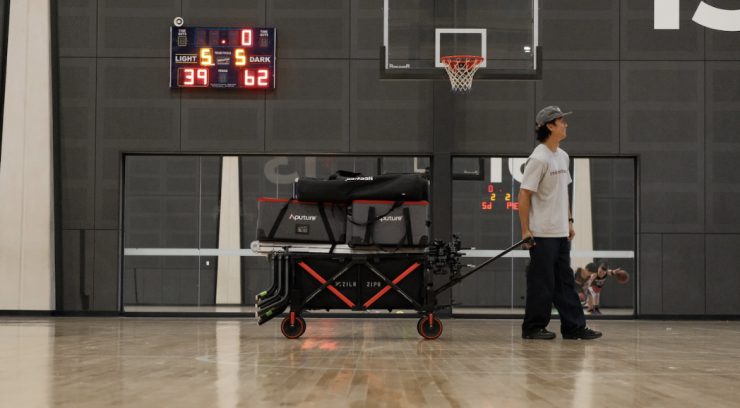
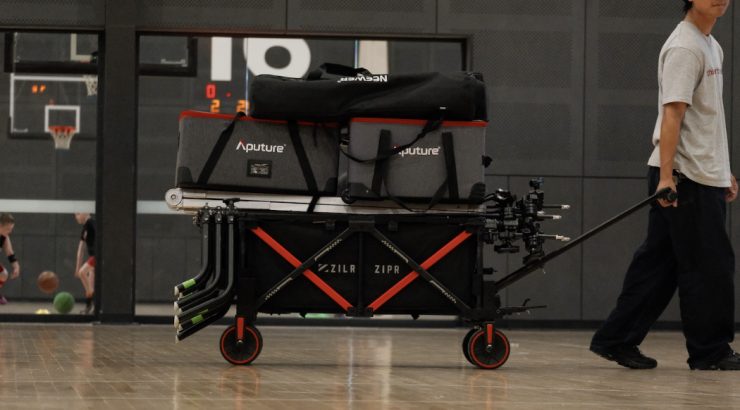
You can load it up with quite a lot of equipment, but like with any cart, you may need to be creative when working out how to maximize your space.
What do they weigh?
Production carts that can carry heavy payloads are generally not what you would consider lightweight. The ZIPR 2WD version weighs in at 28kg / 61.7lbs (without the battery), and the ZIPR 4WD version tips the scales at 32kg / 70.54lbs (without the battery).
With this weight, at least in my opinion, you need two people to carry it or lift it in or take it out of a vehicle. While one person could probably do it, it’s not worth straining or hurting your back to do so.
I would have liked to have seen ZILR include a carrying handle system, because I did find it difficult for two people to lift it up and carry it.
To put the weight of the ZIPR carts into perspective, let’s have a look at what a couple of production and regular transport carts weigh:
| WEIGHT | |
| ZILR ZIPR 2WD | 28kg / 61.7lbs |
| ZILR ZIPR 4WD | 32kg / 70.54lbs* |
| Inovativ Voyager 42 NXT Equipment Cart | 39.9kg / 88lbs |
| Inovativ Apollo 52 EVO Cart | 57.4kg / 126.5lbs |
| Inovativ Apollo 52 Motorized Workstation | 83.5kg / 184lbs |
| SmallRig 36″ Lightweight Video Production Camera Cart | 28kg / 61.7lbs |
| Tilta 36″ Boulder Camera Cart (Base Model) | 46.4kg / 102.3lbs |
| TARION Titanrig Foldable Production Cart (Base Model) | 20kg / 44.1lbs |
| MultiCart RocknRoller R12RT 8-in-1 All-Terrain Equipment Cart | 16.3kg / 35.9lbs |
*Does not include the weight of the battery.
How much does the battery weigh?
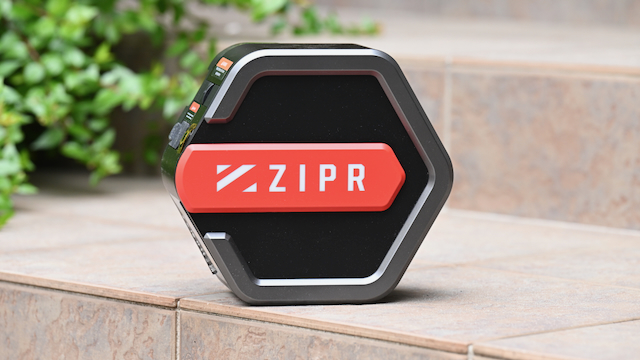
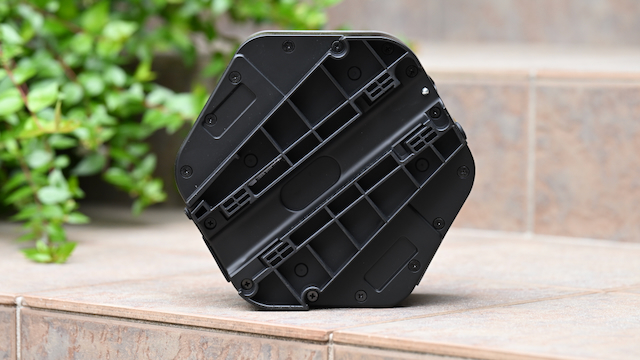
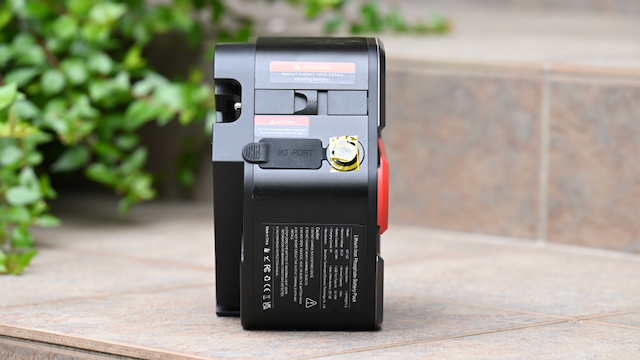
The battery for the ZIPR E-Powered Kit Carts weighs in at 4.4kg / 9.7 lbs.
How small do they fold down to?
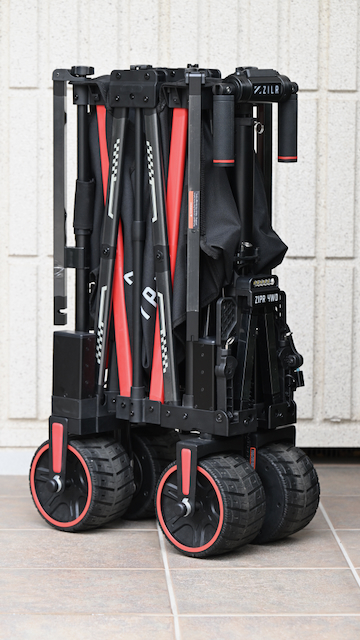
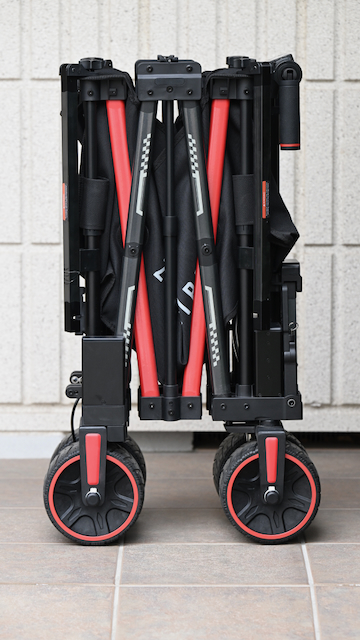
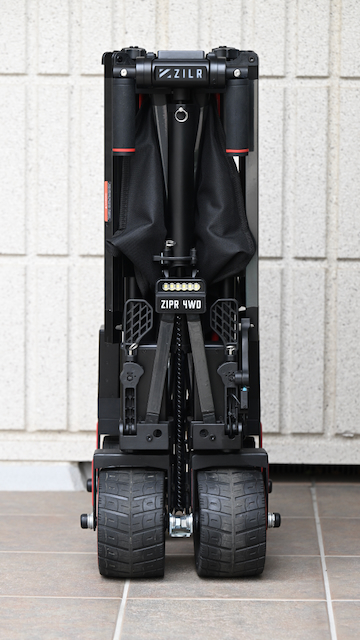
When folded down for transport, they have physical dimensions of 48 x 29 x 80 cm / 18.9 x 11.4 x 31.5″. This does make them fairly compact for placing in a vehicle or storage, especially given their payload capacity and extended size.
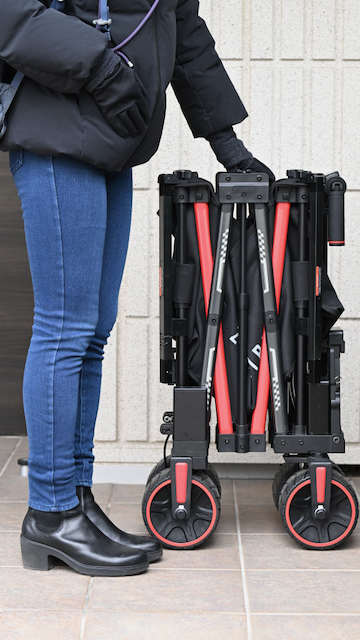
Above, you can see what it looks like next to someone who is 5′ 4″.
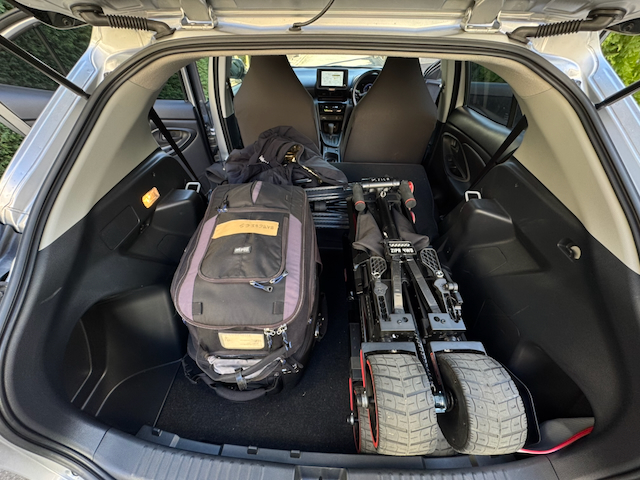
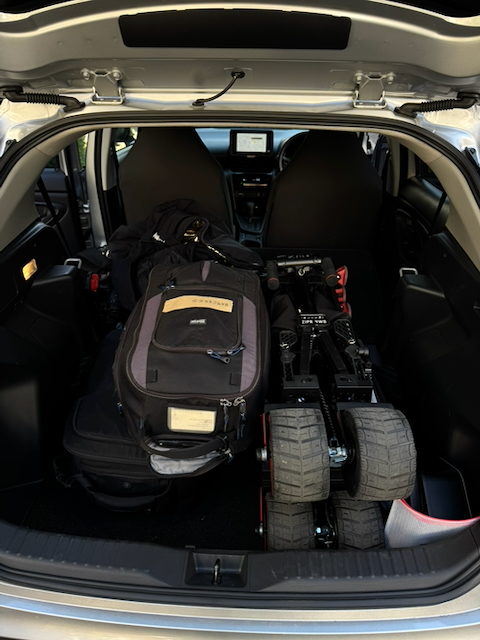
As they fold up to a very compact size, they easily fit inside even small-sized vehicles.
How quickly can you set them up & pack them down?
The ZIPR carts are reasonably quick to set up and pack down.
I found that the first time I set it up, it probably took me close to 10 minutes as I was closely following the instructions. Once you get familiar with the steps, you can easily do it in around 3 minutes.
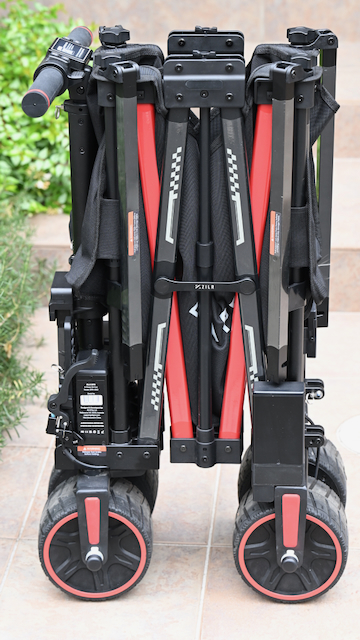
So, how do you actually set it up from its folded position?
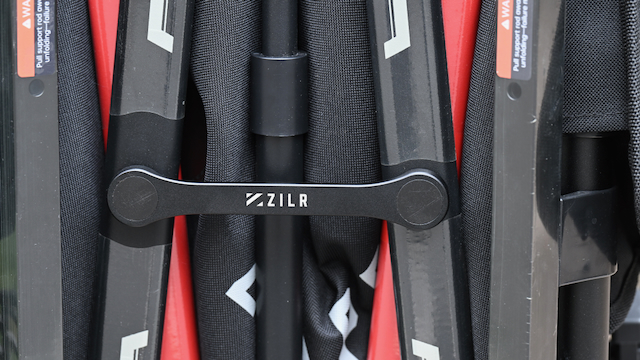
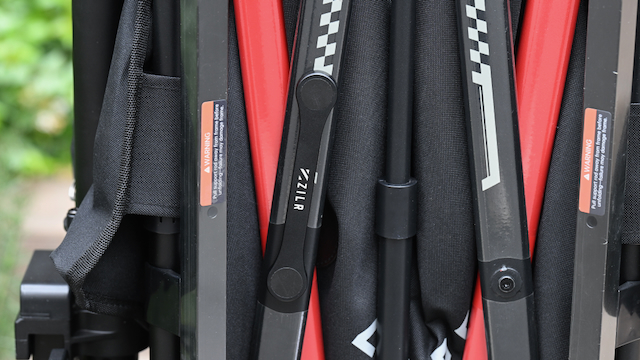
The first thing you have to do is to remove the magnetically attached bracket that holds the cart together and attach it to the frame.
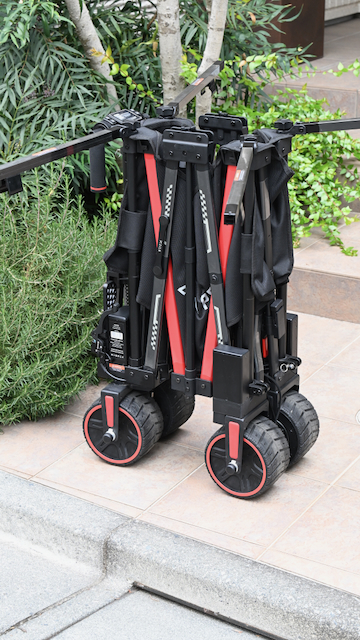
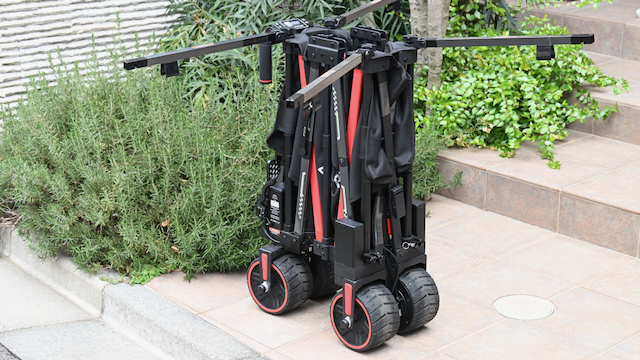
Once you have done this, you then release the four arms from the side of the frame.
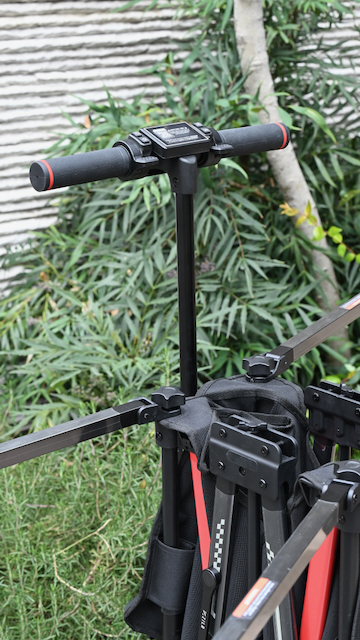
You can then extend the handle and fold out the side handles.
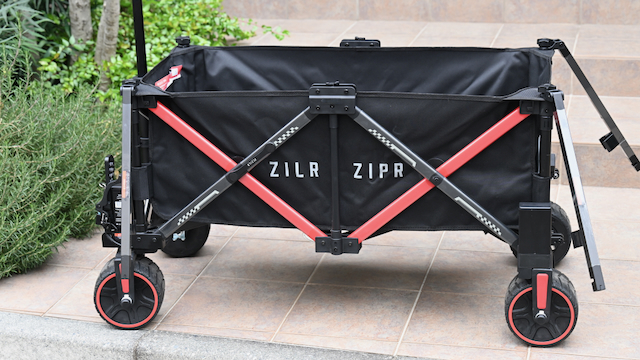
The next step is to pull the cart apart so that it goes out to its fully working form.
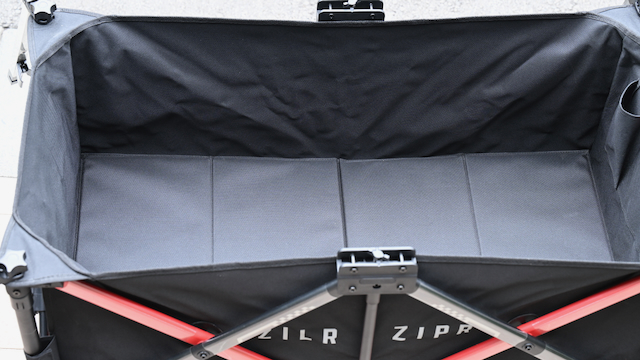
If you want to, you can also go ahead and insert the foldable insert that creates the floor. You can also do this later if you prefer.
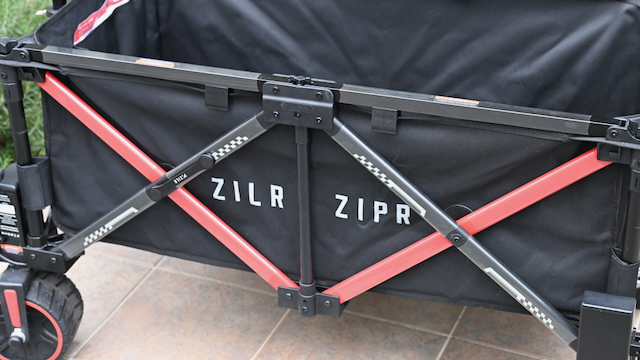
You then move the arms in and secure them to the frame. This then creates the rigid frame.
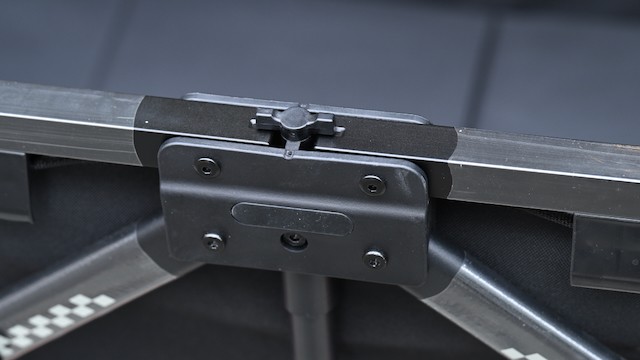
There is a small latch that you simply rotate to lock everything in place. You need to do this on both sides.
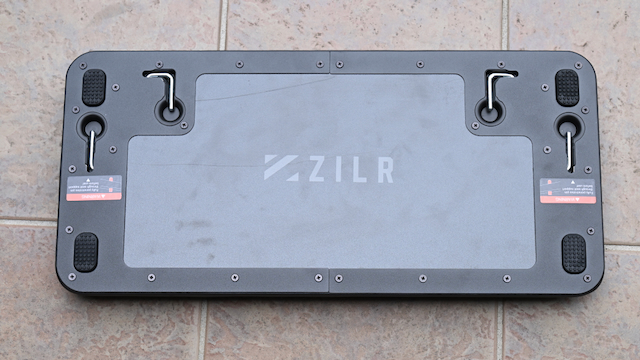
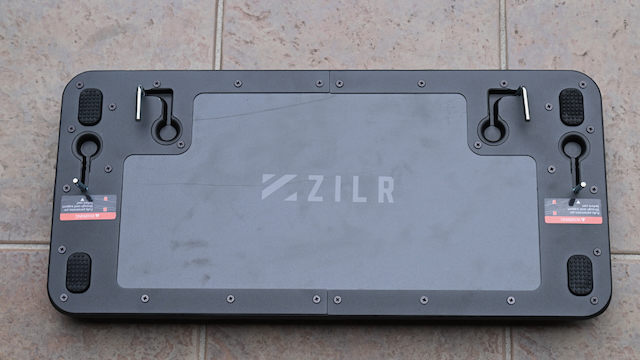
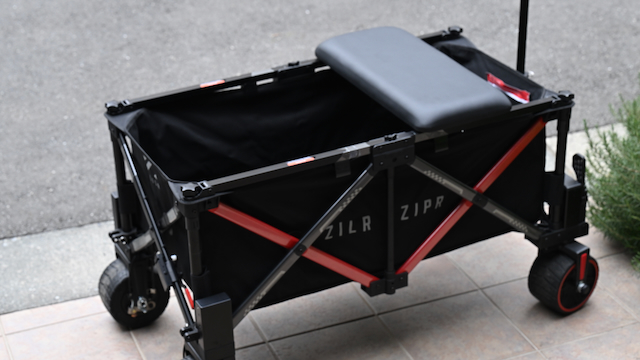
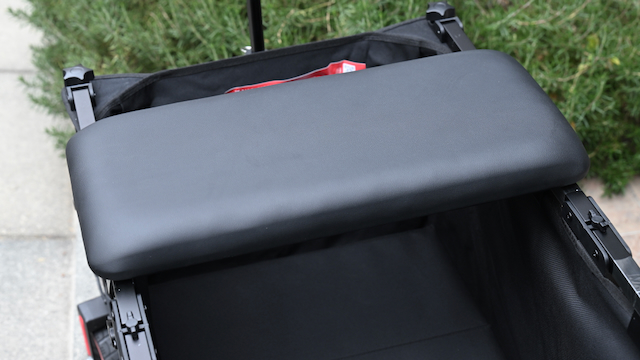
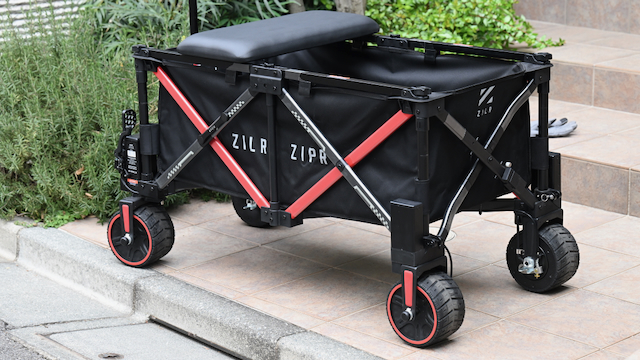
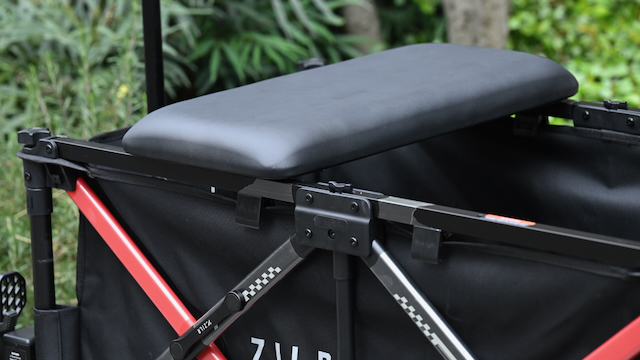
If you want to add the seat, you extend out the pins on the bottom and then insert them into the pins on the frame.
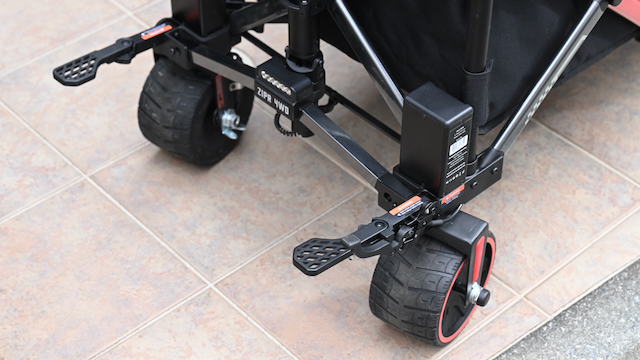
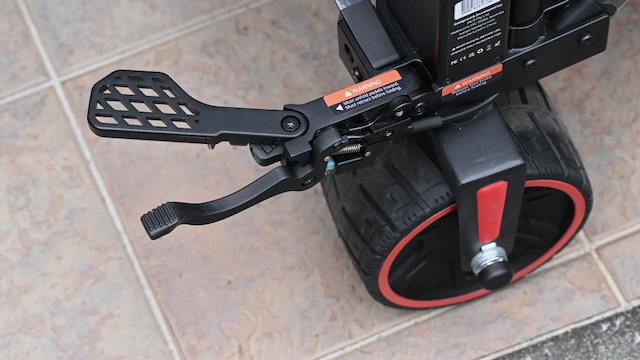
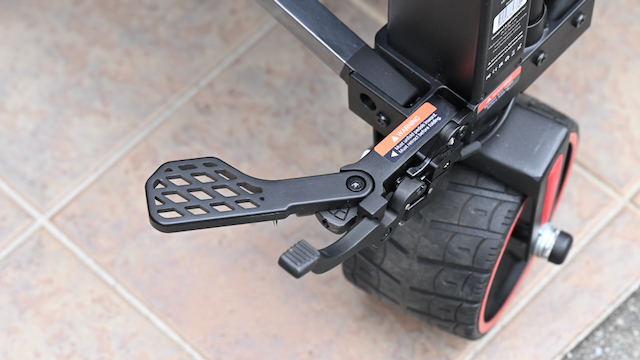
If you are going to ride it, you then need to pull out the footrests. These are adjustable, so you can angle them depending on your requirements.
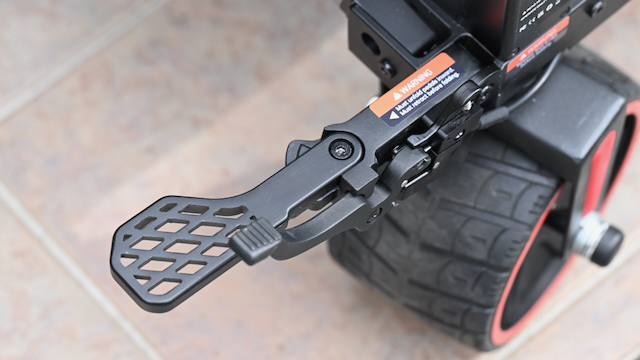
Before attaching the battery, you need to lock the brake by pressing down on it with a bit of force till you hear a click.
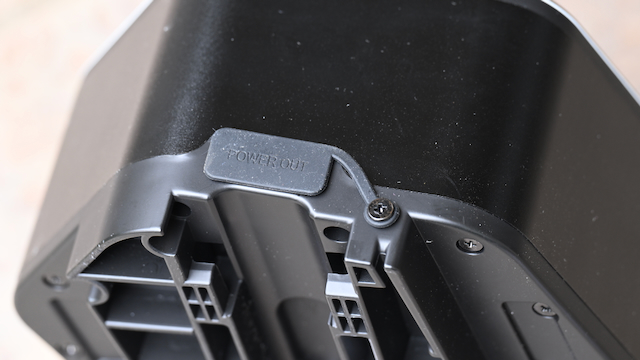
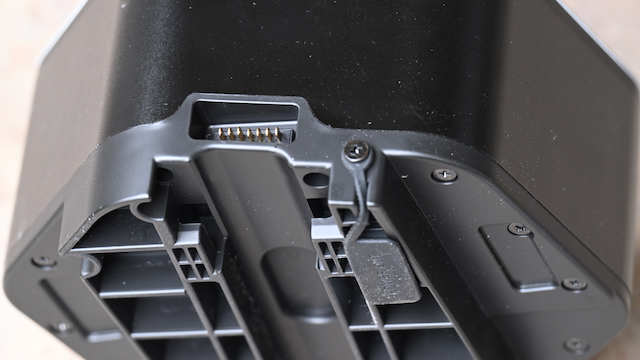
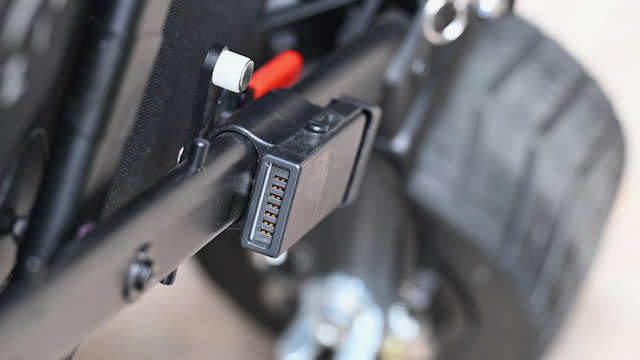
The final step is to attach the battery. You need to make sure that it is turned off before inserting it. You first need to remove the cover from the battery, and then move the cover and reposition it on the bottom of the frame, where the battery goes.
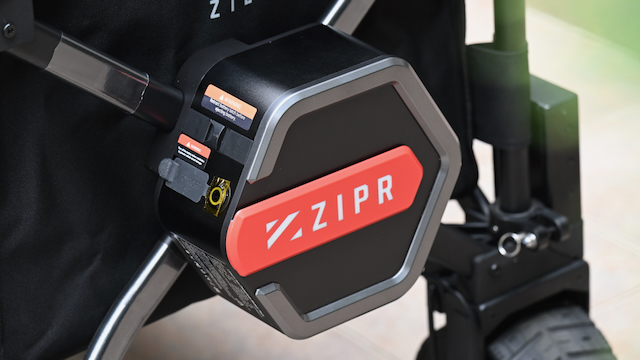
You then line up the battery with the grooves on the frame and slide it down till you hear a locking click. This step is a little tricky when you do it for the first time, and I suggest you follow the instructions carefully.
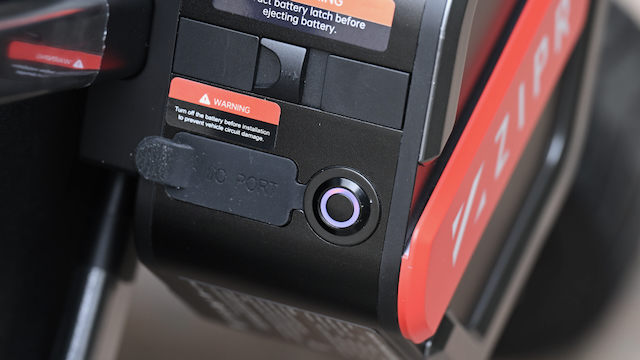
Finally, you turn the battery power on by pressing the button until it illuminates.
The reasonably fast set-up time is one of the best features, as a lot of other production carts require tools and quite a bit of time to set up or break down. What is important to remember is that setting up or breaking down a ZIPR cart does take a little bit longer than if you were using something like a MultiCart RocknRoller R12RT 8-in-1 All-Terrain Equipment Cart, but not by much. For certain use case applications, the setup time could be an issue if you need to move very fast.
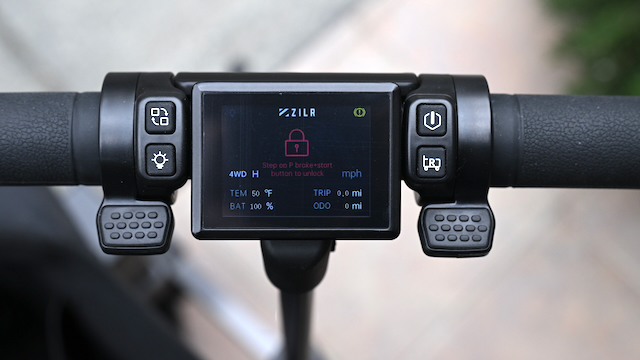
Once the cart is fully assembled and the battery is turned on, it is ready to go. You press the power switch on the control panel, and you will get an audible announcement that the cart has been turned on.
As a safety measure, the ZIPR is locked until you release the parking brake, press down on the foot brake, and then press the power button once.
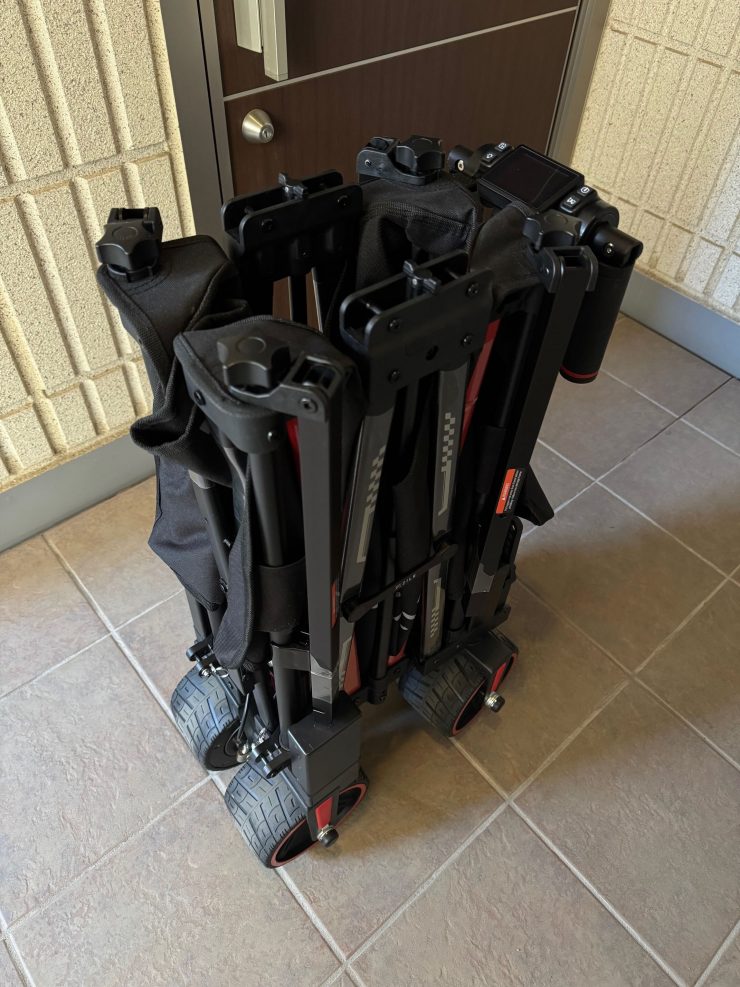
I found that packing up the cart was a little quicker than assembling it. It only took around 2 minutes for me to break it down.
The hardest part was removing the battery. The first time I tried, I struggled as I was out in very cold conditions, and I couldn’t get the battery release mechanism to move. What I found is that it required a little bit of force to move it, and this was probably because of the outside temperature. Once I got the hang of it, I could install and remove it pretty easily.
While it doesn’t take up a ton of space once it is folded up, you still need to separately store and transport the seat, foldable bottom floor, and the battery. Arguably, it would have been nice to have seen a small carry bag for those pieces, but you could just put them in any bag if you wanted to.
Controls & Operation
The controls are very simple to understand and use, but because it is essentially a mini electric vehicle, you need to take your time understanding them and practising how to operate it before using it for anything serious.
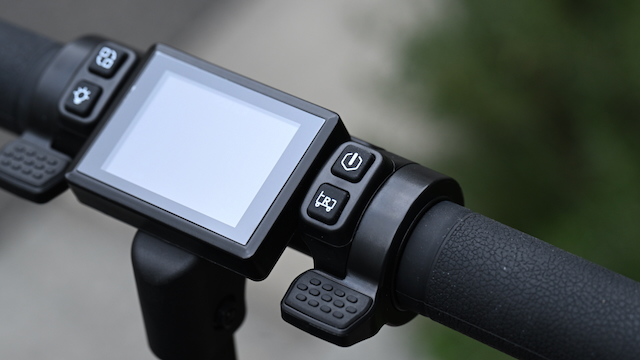
On the main control panel, you have a series of buttons and two levers. There is an On/Off switch, a Reverse switch, a button for accessing settings, and a button for turning the light on or off. The lever on the right-hand side is for acceleration, and the lever on the left-hand side is for the E-brake.
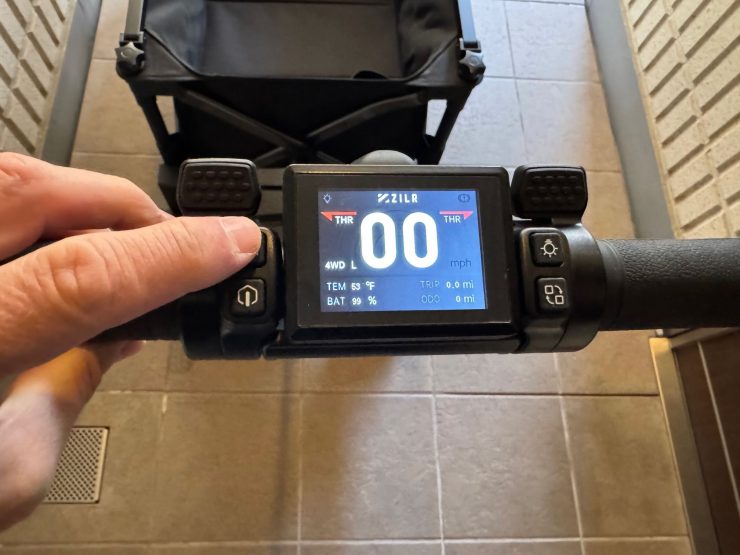
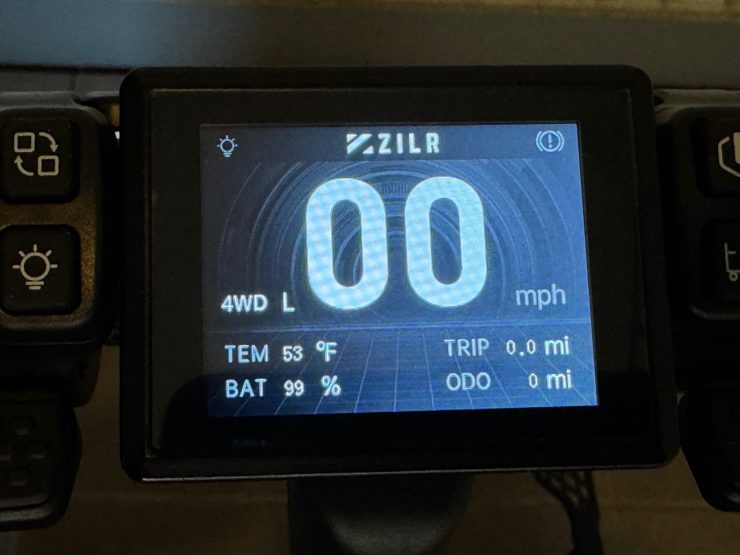
To go from High Speed to Low Speed Mode, you just have to press the Settings button. In Towing Mode, the ZIPR defaults to the Low Speed mode for obvious reasons.
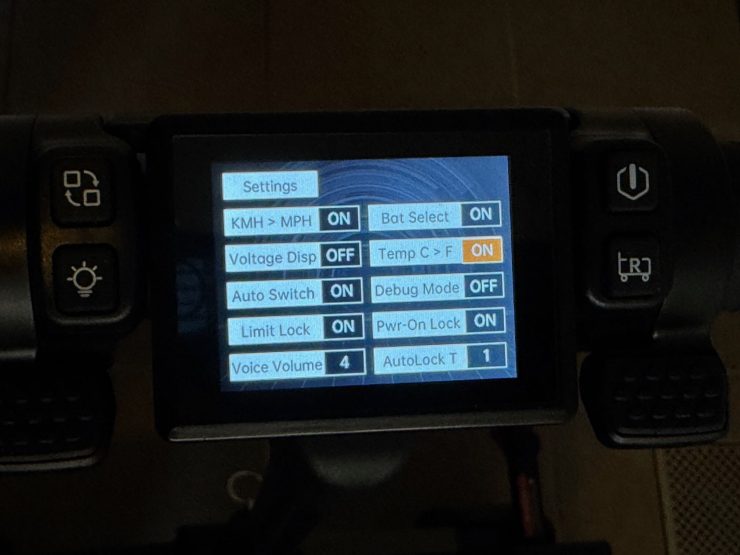
To access the Settings page, you need to hold the Function button and the Power button for 5 seconds. You then use the Powr button to navigate up and the Reverse button to navigate down. The Light button saves settings and also allows you to exit the settings page.
What is nice is that you get audible warnings whenever you change a setting. For instance, if you put the cart in Reverse, it will tell you that it is going into Reverse mode. This is a very handy feature, because it avoids confusion and improves safety awareness.
You do need to be very aware of the sudden acceleration that can occur, especially when in the Riding Mode with the higher speed setting selected. Like any electric car, the power comes on instantly, so ou nee to feather the lever and get used to how it works.
If you are in Riding Mode, it is not recommended to have anyone operating the ZIPR mode who weighs over 65kg / 165lbs if you are on any type of big incline to prevent the cart from flipping due to the forward weight distribution.
Towing Mode
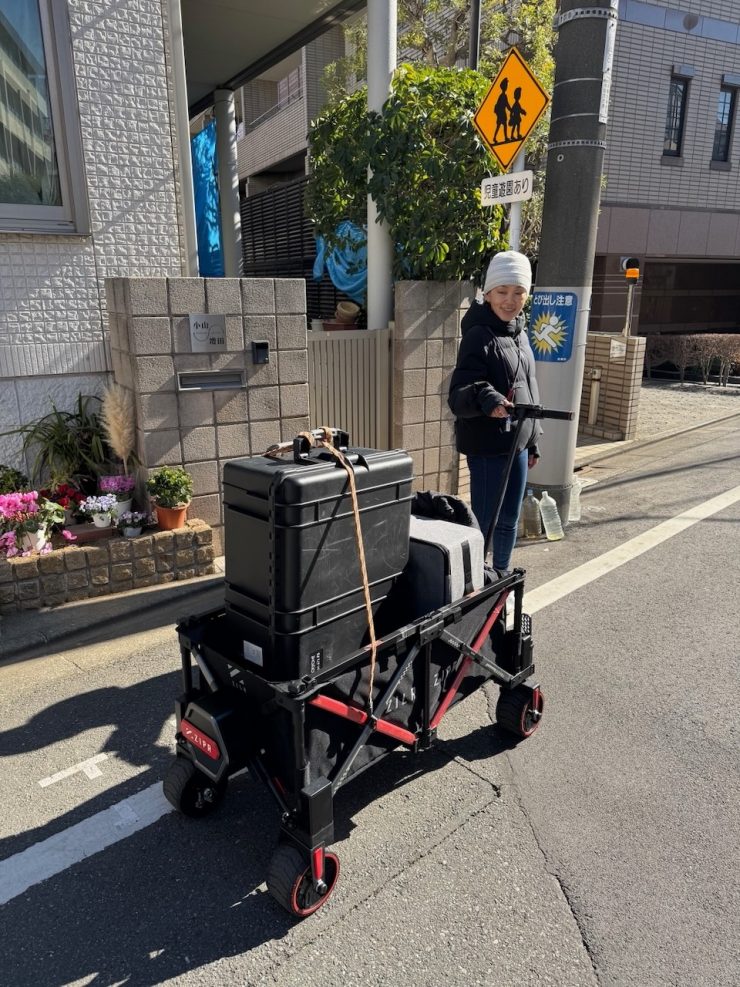
Most users are arguably going to be using the Towing mode a lot more than the Riding Mode.
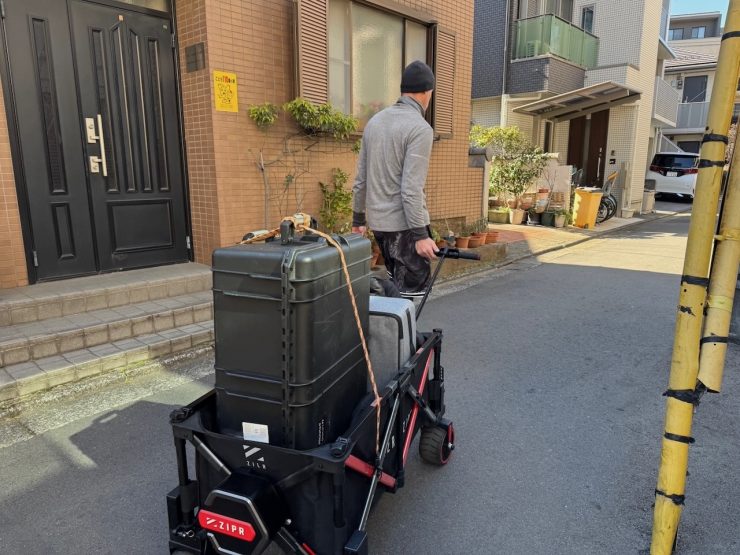
In this capacity, the ZIPR works really well. Being able to have some automated assistance makes a big difference, and it doesn’t feel like you are pulling anything.
Even someone who isn’s big or strong can easily move heavy equipment, and it’s easy to go up slopes (however, you should always be mindful of the payload as weight distribution is important when it comes to safety).
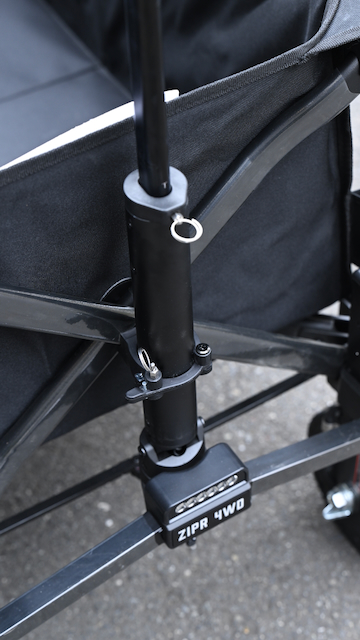
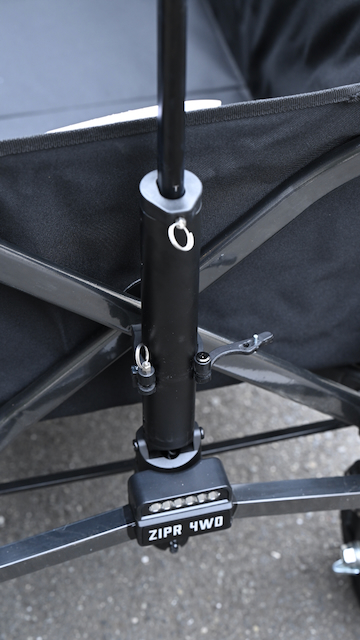
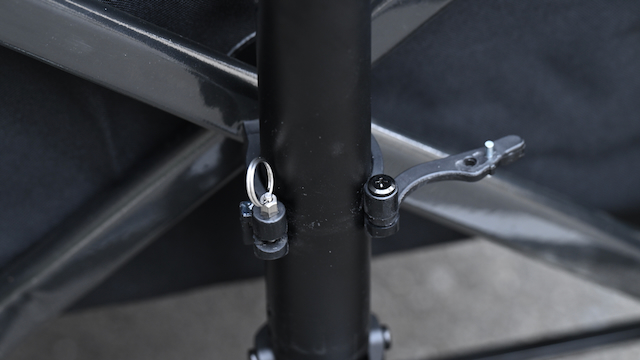
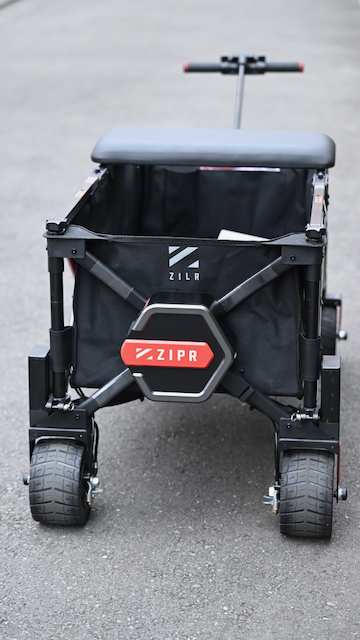
To utilize the Towing Mode, you first need to extend the handle to its furthest position and then release the locking mechanism that keeps it upright. You also need to make sure that the wheels are aligned in a straight position.
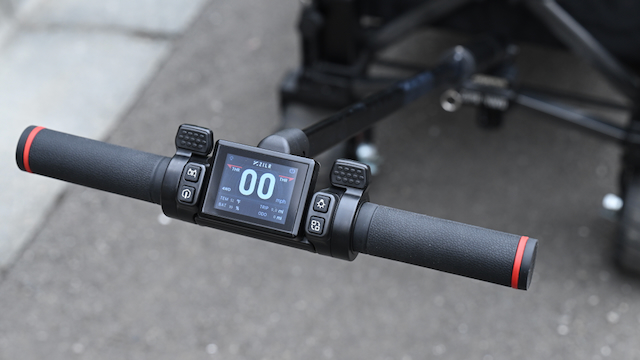
This allows you to angle and lower or raise the handle.
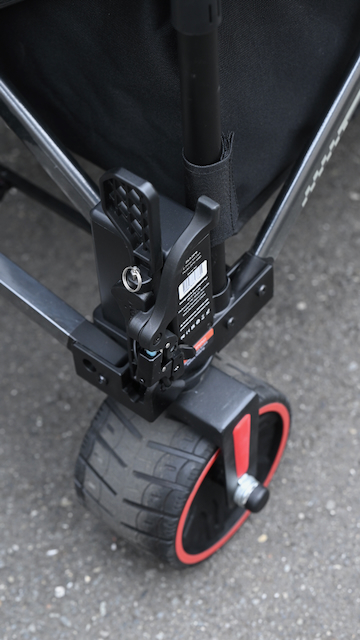
You also need to fold up the footrests.
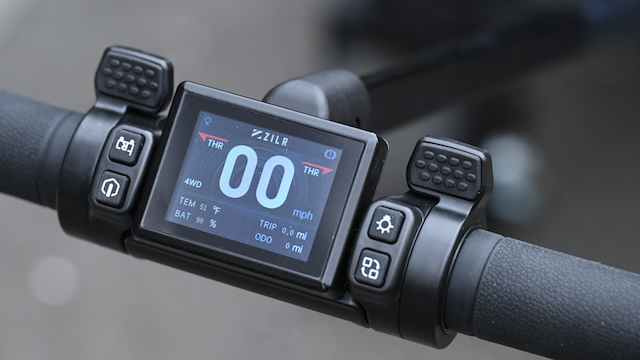
What is nice is that the system will automatically recognize what you have done and enter the Towing Mode for you. It will also automatically rotate the screen to the correct viewing position.
It is important to note that when you are in the Towing Mode, both levers act as the accelerator; the E-brake isn’t accessible. The display will clearly indicate this for you.
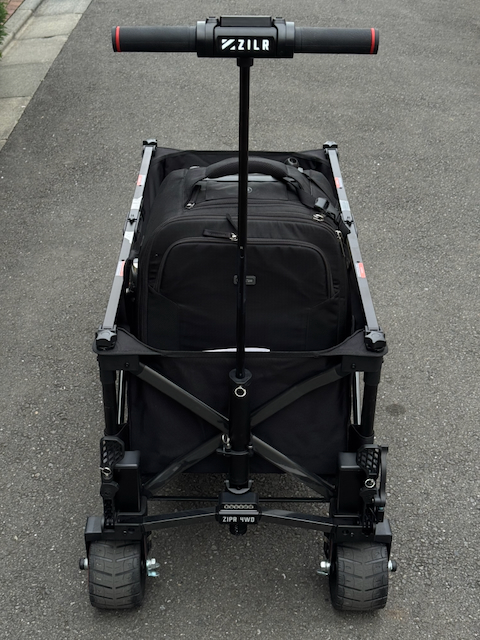
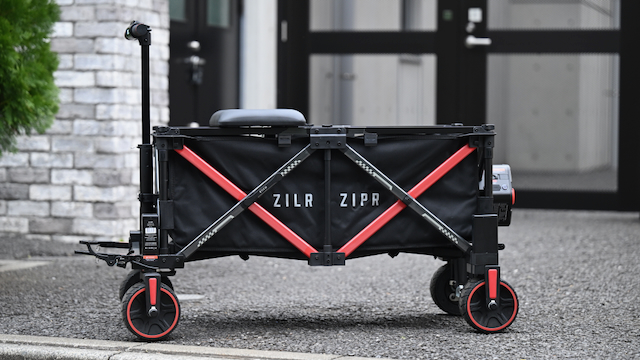
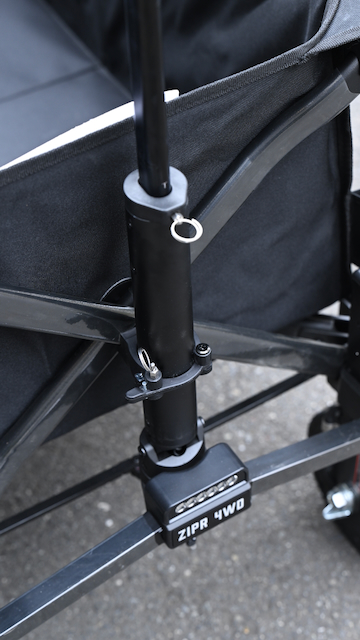
You can push the handle back into the frame if you prefer to use it this way, but if you do put the locking mechanism back, the cart will go back into the Riding Mode. You do, however, get an audible warning that this has happened. I personally found that it was more difficult to use it like this.
Riding Mode
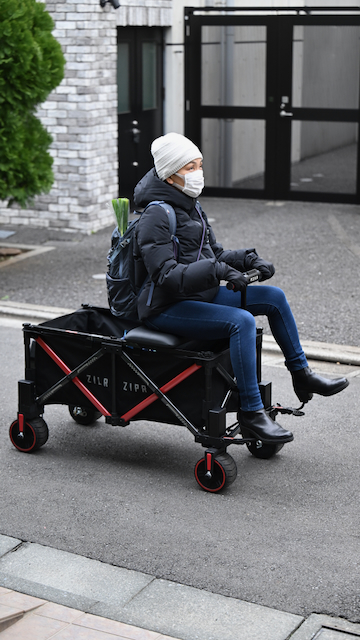
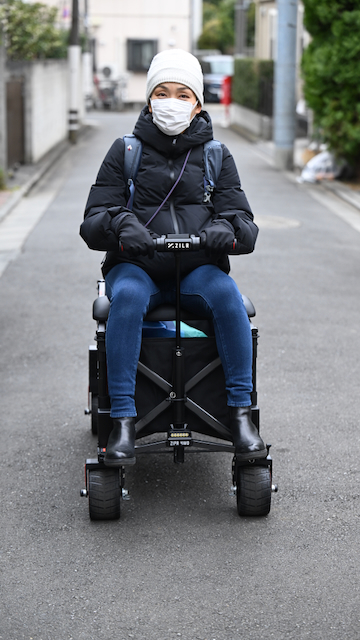
Riding Mode is going to be a bit of a niche feature for a lot of people. While it is cool and fun, it comes with a lot of limitations as to where you can actually use it. You can read what a lot of these limitations are in the Brakes & Safety section, a little bit further down in the review.
Riding the ZIPR is pretty easy once you get the hang of it, and it can move pretty quickly. You can go around corners and up slopes without issue. I need to stress again that you need to carefully look into local rules and regulations as to whether you can use it in this capacity. I got some quick shots with it on some quiet back streets when there were no cars around.
What type of battery does it use?
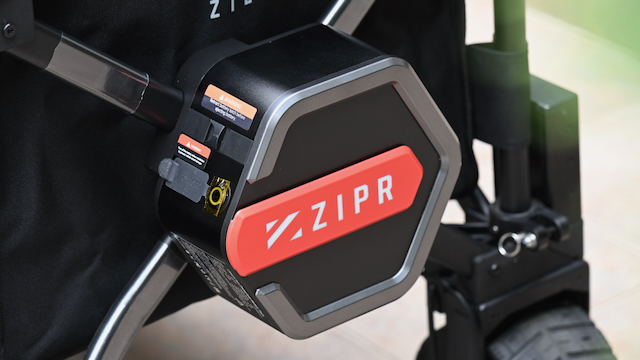
The ZIPR carts use a LiFePO, 32700 11S battery. This battery takes around 3 hours to fully charge.
There is an LED gauge that shows you the remaining capacity.
Battery Range & Speed
The ZILR ZIPR 2WD version has a range of 30km / 18.6 miles, while the ZILR ZIPR 4WD version has a range of 15km / 9.3 miles (in 4WD mode).
This is a pretty good range, and if you are required to move a cart under power further than 7.5km (one way), you should be firing your production manager!
The carts have three speed modes so you can limit top speed and acceleration.
The ZIPR 2WD version has an operating speed of 0-16 KM/H / 0-10 MPH. The ZIPR 4WD version can be operated in 2WD, 4WD, or RWD modes. In 4WD mode, it can operate at speeds of 0-16 KM/H / 0-10 MP/H. If you move to the 2WD mode, it drops slightly to 0-14 KM/H / 0-9 MP/H.
There are also cruise control and tow modes. Speaking of towing, both models come pre-installed with a TUGR Tow Hitch, so you can connect multiple ZIPRs together if need be.
Brakes & Safety
Before we get into the safety features, let’s go to the important warning first.
Operator Responsibility:
The operator is solely responsible for the safe use of this product and for ensuring that it is operated in full compliance with all applicable laws, regulations, and safety guidelines.
The ZIPR is a powered utility cart designed exclusively for private land use.
- FOR PRIVATE LAND USE ONLY – NOT FOR PUBLIC ROAD USE.
- USE ONLY IN PUSH, PULL, OR LOW-SPEED RIDE MODE.
- USE SEAT ONLY – DO NOT STAND WHILE RIDING.
- MAX LOAD: 200KG / 300KG STATIC.
- USE ONLY APPROVED BATTERY AND CHARGER.
Failure to comply with local legislation may result in fines, enforcement action, or confiscation. The user accepts full responsibility for ensuring that the ZILR ZIPR is used legally and safely at all times. The ZIPR comes with avery in-depth user manual that I suggest you read thoroughly. In a nice touch, ZILR has put a QR code on theZIPR that you can scan that will take you directly to the manual.
Ok, now, let’s look at the safety features it has.
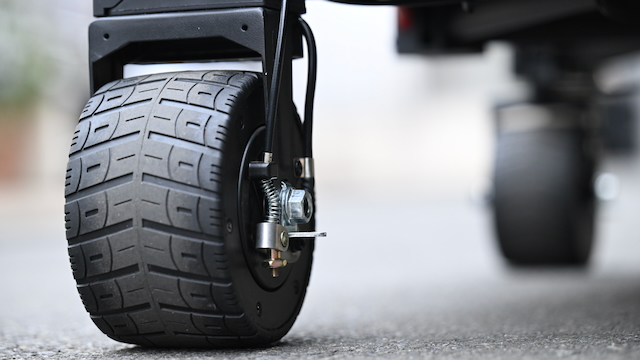
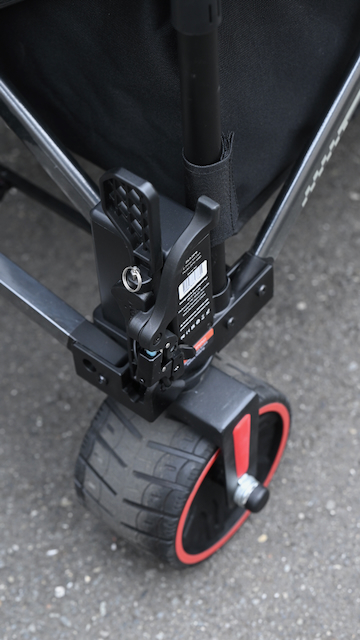
The ZIPR 2WD version has front and rear dual regenerative brakes. The 4WD version has a 6-brake system with 4-wheel regen braking and rear dual mechanical drum brakes.
e-breaking features include anti-rollback, hill start assist, and regenerative braking.
An Electronic Braking System (EBS) engages automatically when the throttle is released. Additionally, there is gradient compensation that adjusts motor output on slopes. This works really well, and you don’t have to worry about the ZIPR rolling away from you on a slope.
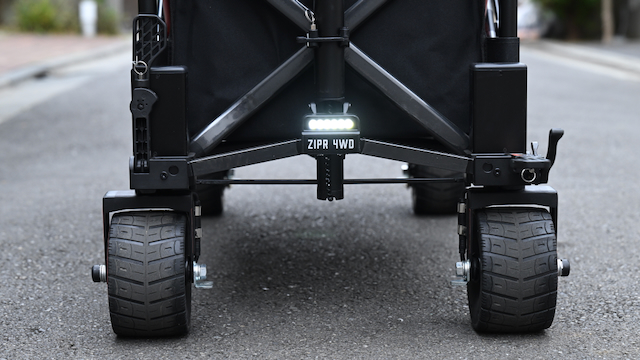
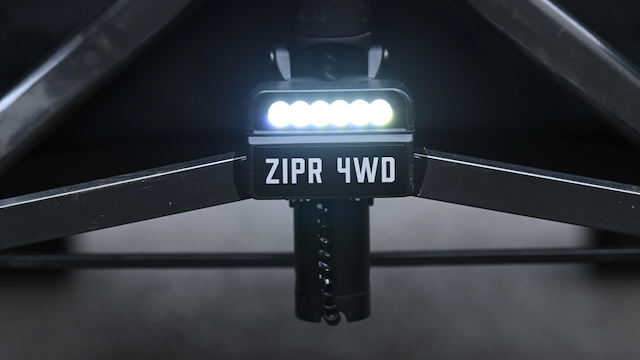
There is a backlit instrument panel, front headlight, and logo lights front and rear.
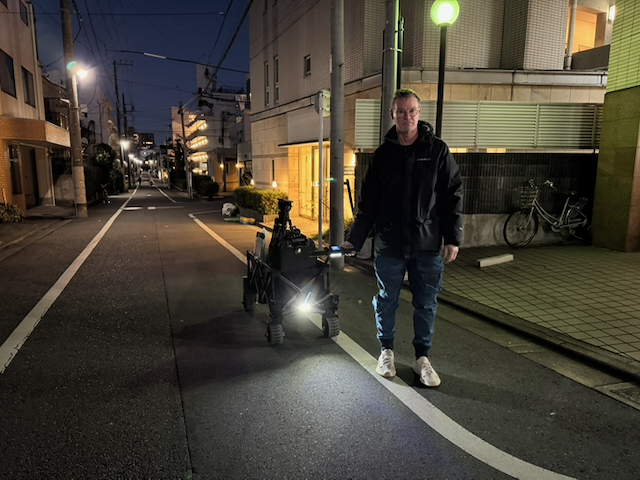
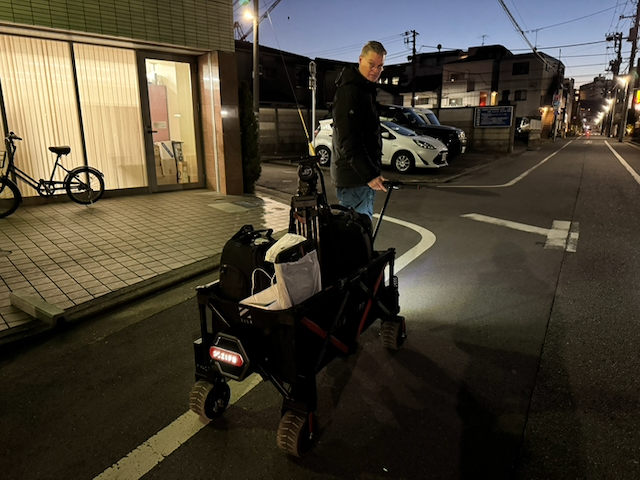
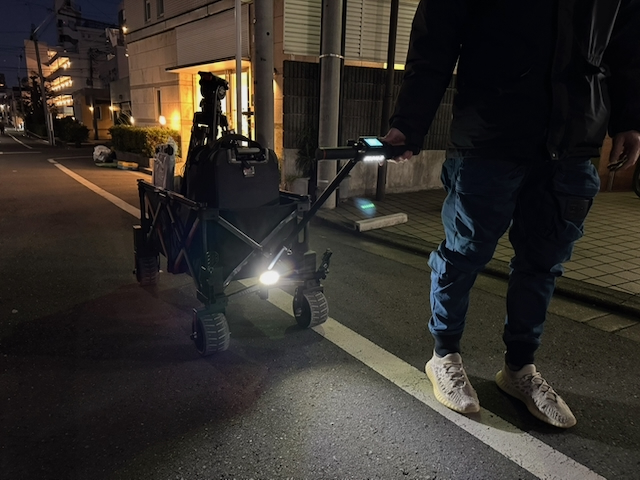
The headlight is reasonably bright, and it’s good to have it in lower light conditions.
As the ZIPR models feature a low deck, the distributed weight is claimed to improve stability when loaded. You want to try to distribute the weight as evenly as you can, and it’s best to use common sense when loading the cart up.
They also have an automatic shut-off that powers down the carts after inactivity (10 min mainboard / 60 min battery).
What I would have liked to have seen is some sort of security lock where you need to enter a pin or something to enable use. I say this because theft is always a possibility.
Is it noisy?
In short, no. The ZIPR is incredibly quiet, and it doesn’t generate any noticeable noise that could interfere with audio recording.
Build Quality
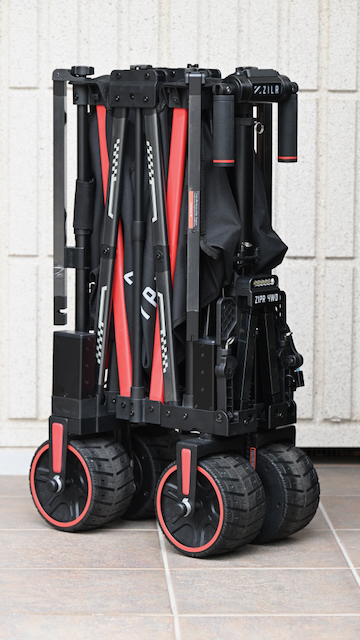
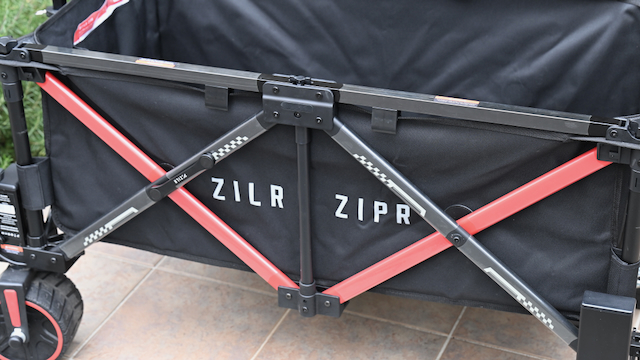
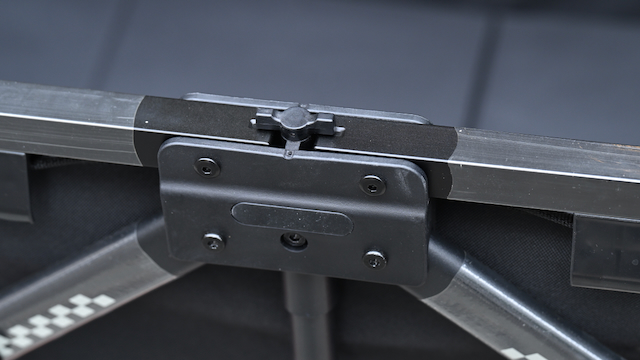
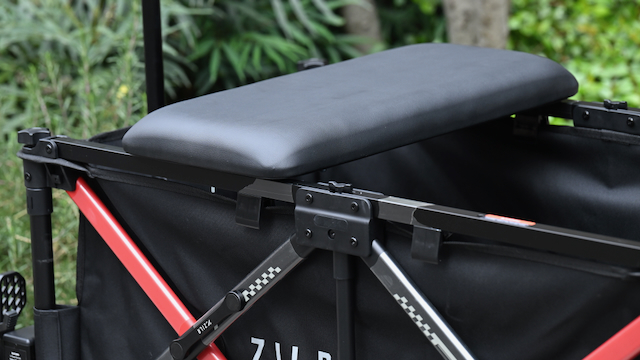
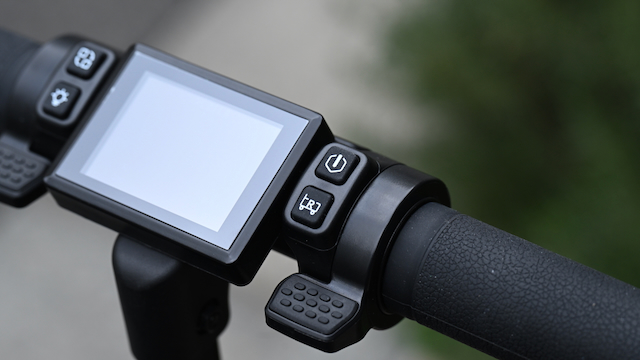
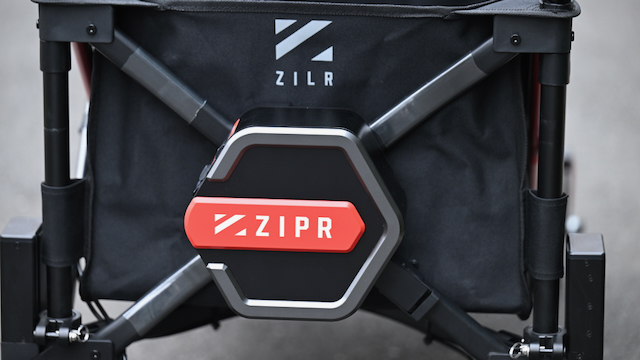
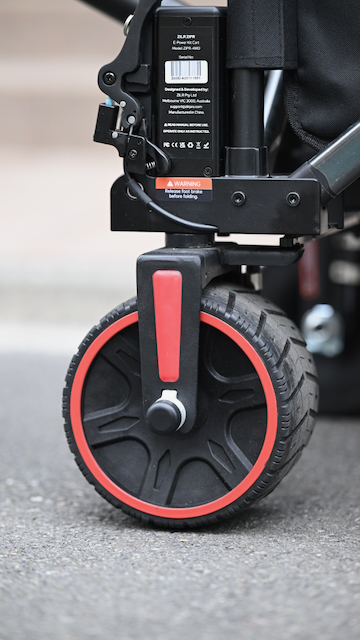
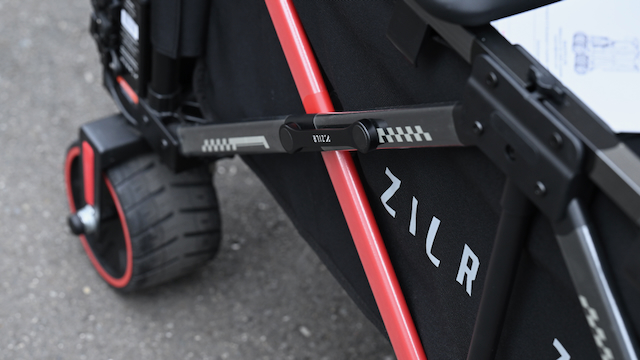
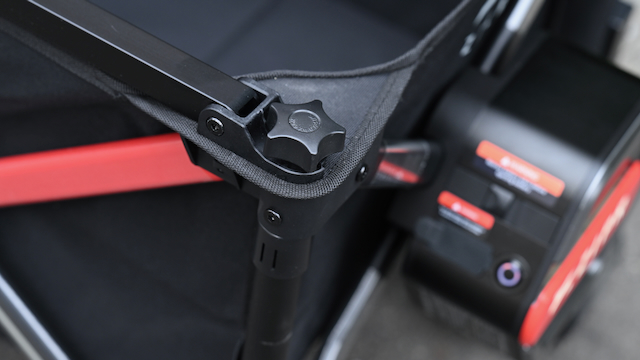
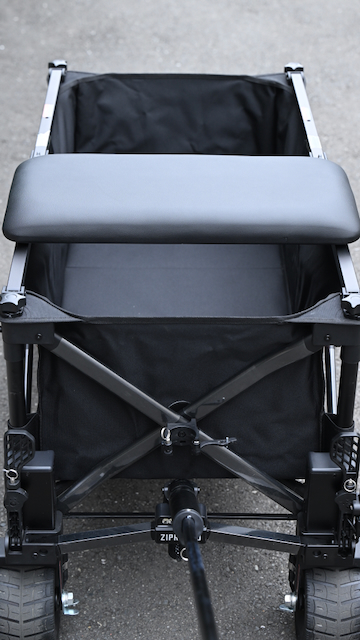
You shouldn’t confuse this with a regular beach cart, etc., because this is a completely different animal when it comes to build quality. I was actually a little surprised at how well it is built and constructed.
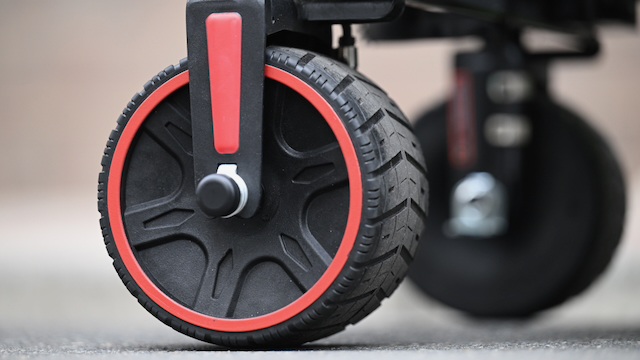
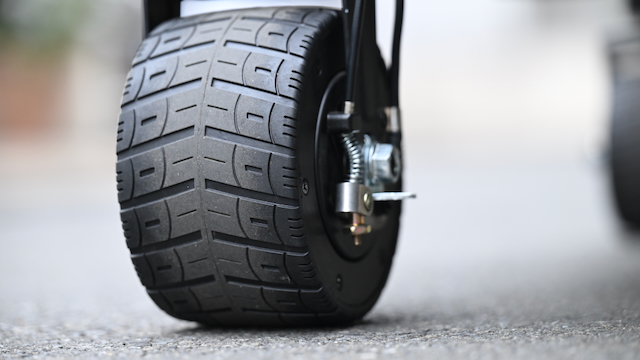
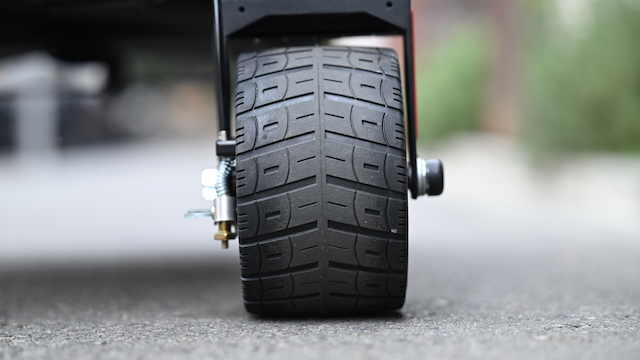
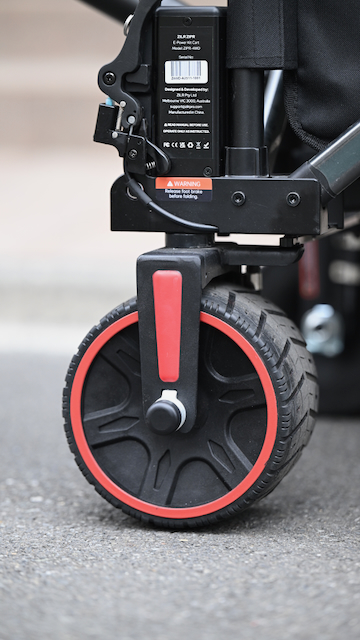
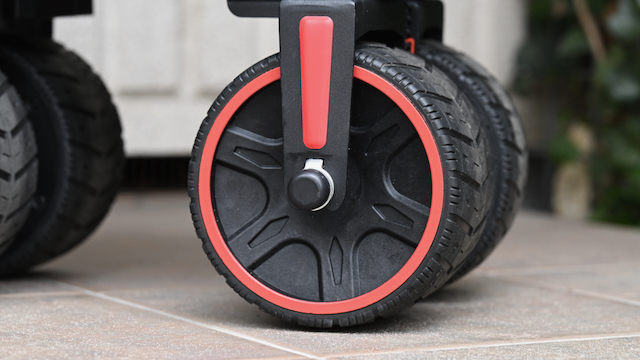
Both ZIPR models have all-terrain, solid rubber tyres that are puncture-proof. The wheels are 6.5″ in diameter, and they have a width of 3.94″ / 100mm.
There is a folding steering column and an intelligent dual-drive differential control algorithm
Real World Use
For me, living in Japan is a challenge when it comes to storing and transporting equipment. I have a lot of equipment at home, but I also have a separate storage room that I rent, which is about a 5-7 minute walk from where I am. I usually take equipment back and forth using trolleys, but there is only so much I can put on the trolleys, and they can be difficult to push and maneuver, especially up slopes. This is where the ZIPR came in very handy.
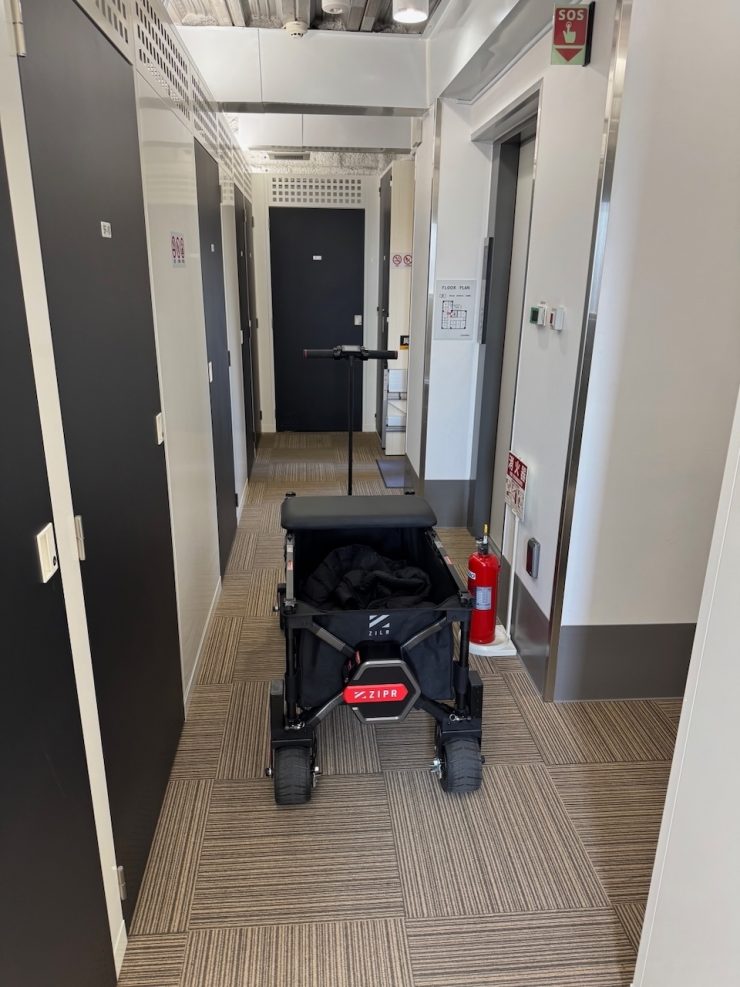
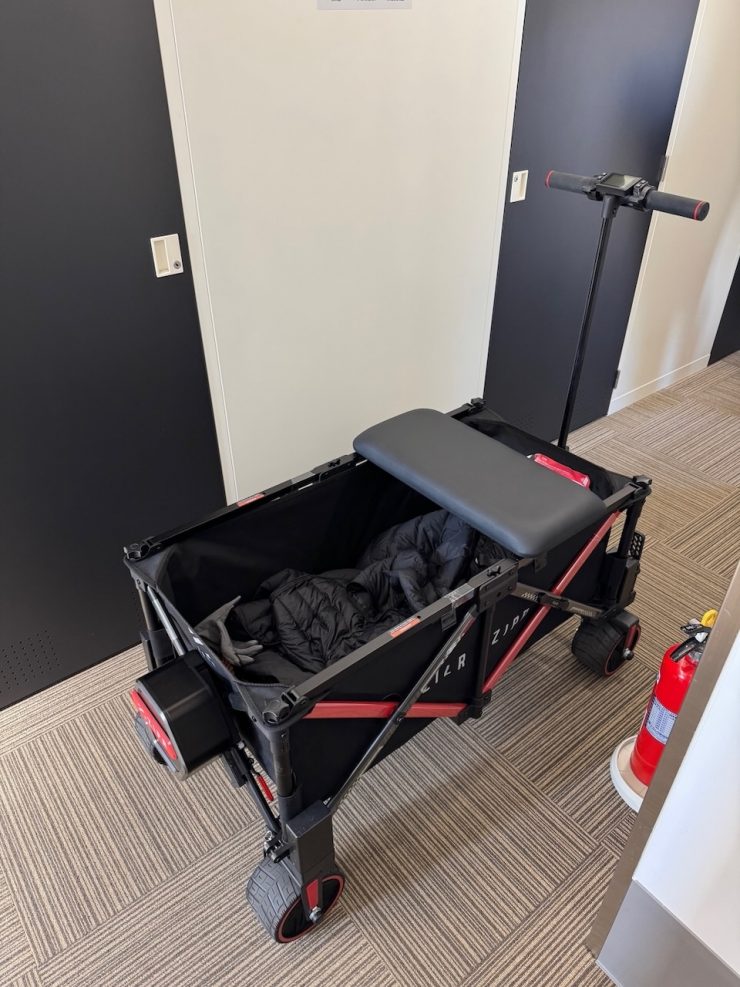
The good news is that it also fits inside lifts and smaller spaces. The only thing you need to take into consideration is that the turning circle is not great (think Austin Powers in the golf cart!), so it can be hard to turn it around.
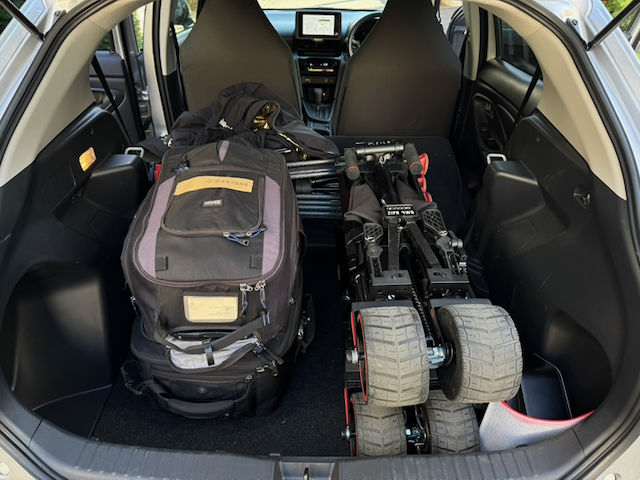
The ZIPR solves quite a few of the problems I often encounter. I have had larger production carts previously, but I have found them too heavy and too large to store, and they don’t fit inside a lot of smaller Japanese vehicles. You also need to use tools and take them apart, which wastes a lot of time. As the ZIPR folds down very quickly, it is a lot easier to use and to take on jobs. In saying that, I need to once again stress that this product shouldn’t be confused with a traditional production cart, because it is more suited for transporting equipment due to its design. Without a multi-tiered structure, you can’t use it like a production cart.
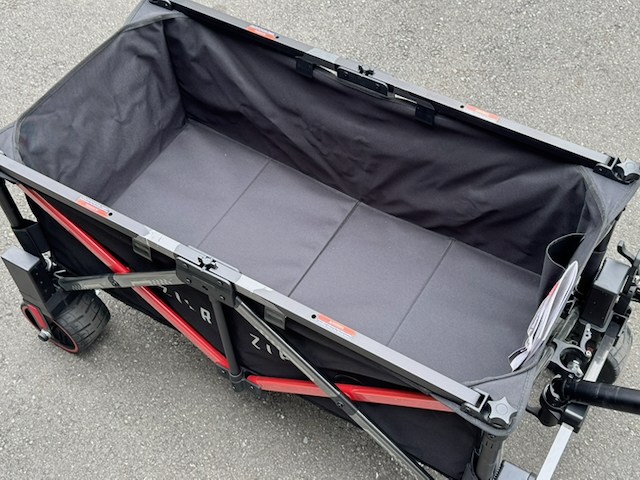
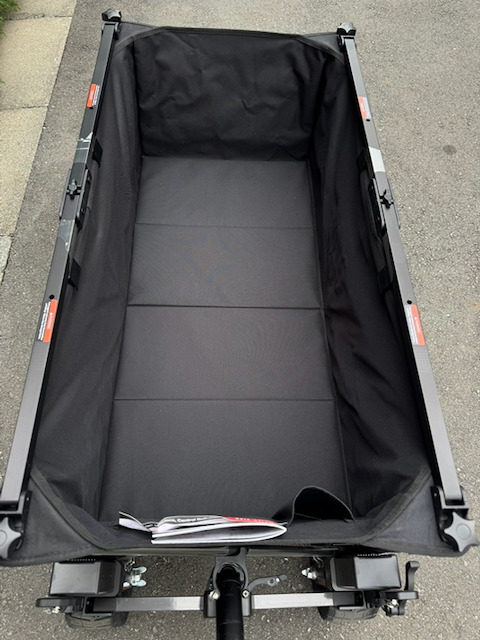
The area where you can place cases, bags, etc., is reasonably big, but it does have some limitations.
While you can carry quite a bit of equipment with it, because it doesn’t have a tiered structure, it does mean that once you get it to where you are shooting, you will have to pull stuff out to get to the equipment that is sitting underneath.
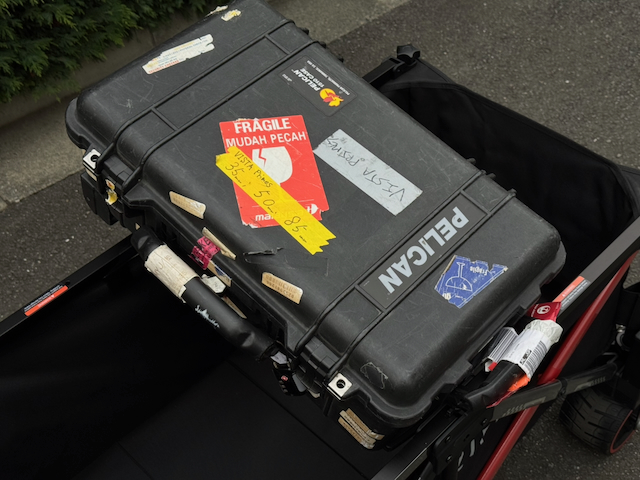
What I also found is that because it isn’t overly wide, there are only certain-sized cases, bags, or pieces of kit that will fit inside. As an example, a Pelican 1510 case won’t fit sideways in the ZIPR.
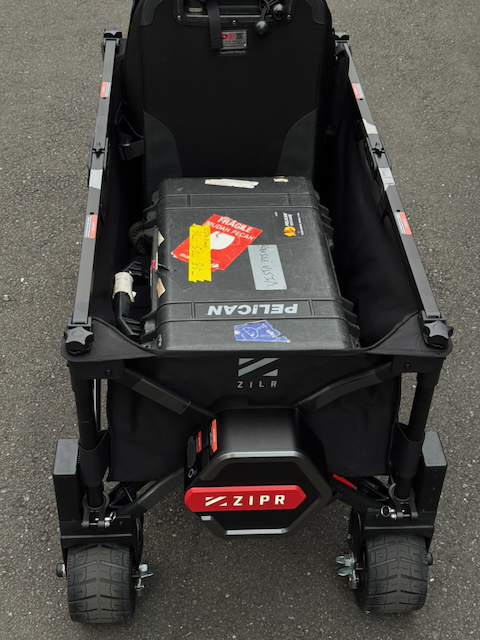
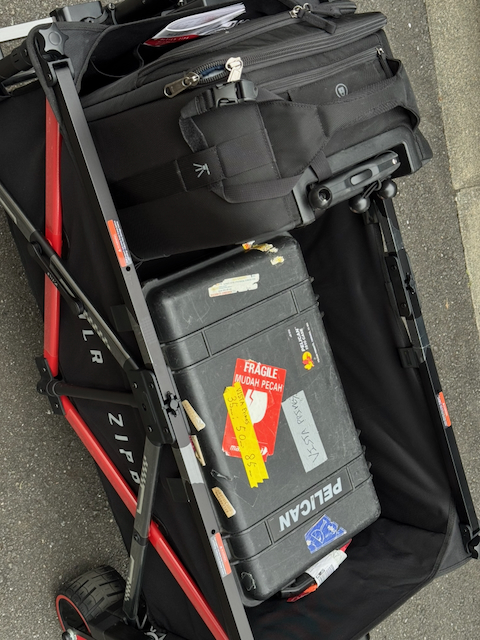
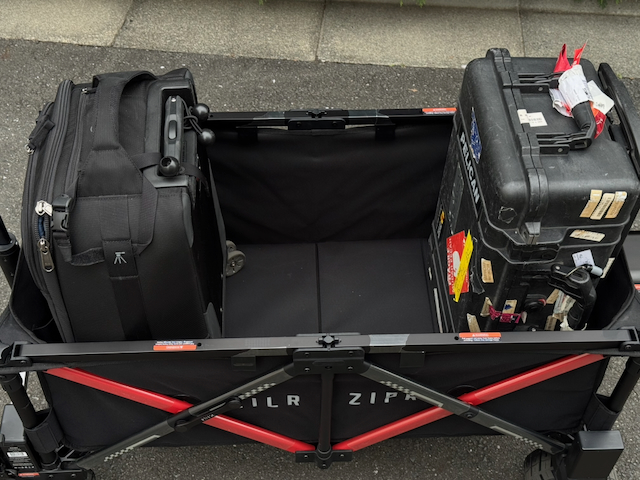
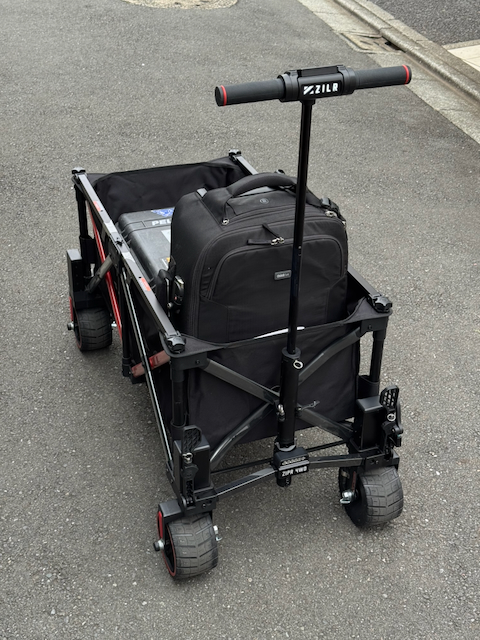
To put it in, I needed to either place it lengthwise or stand it upright.
Like any type of cart or trolley, you need to do a bit of Tetris to work out the best way for things to fit.
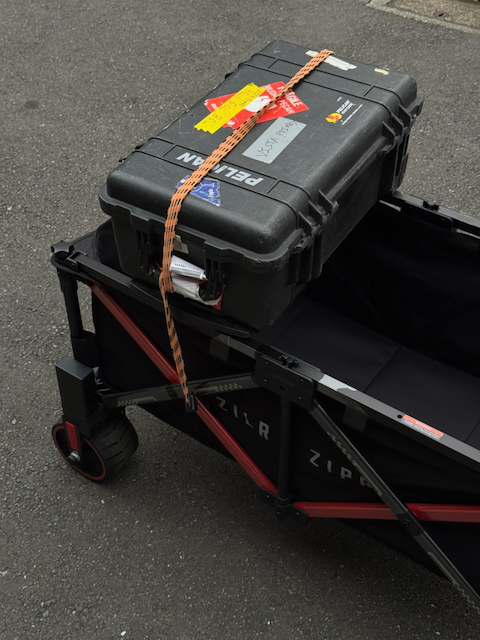
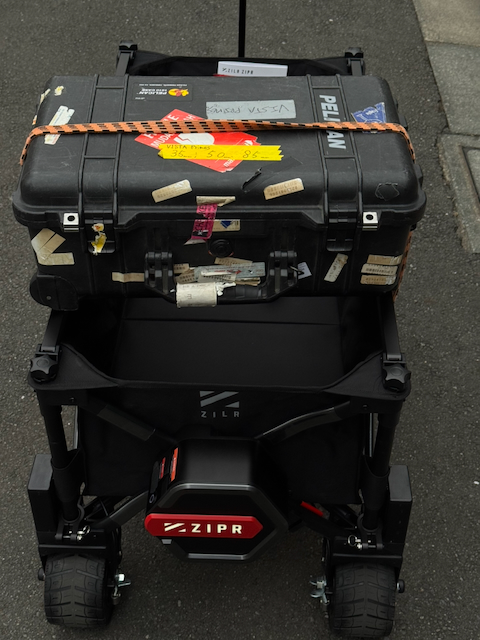
With cases or equipment that are too long to fit inside, you can place them on top of the frame, as it’s very rigid and strong. You can then just use some basic straps and/or a cargo net (depending on what you are trying to secure). You could keep stacking things on top if you wanted, but you would have to make sure that they were very well tied down so they wouldn’t shift around.
For a lot of corporate jobs I do in Japan, entry to buildings requires you to take gear up through loading docks and freight lifts. To do this, I often use trolleys. I own a few trolleys, and at a lot of buildings in Japan, you can also rent them temporarily to move equipment around. Getting gear up in freight lifts is fine, but in a lot of office spaces, they prohibit you from using traditional multi-teared gear carts. This can be an issue if you are moving around to a lot of different locations.
I didn’t test the ZIPR as a pseudo dolly as I didn’t have the second seat. I will do another smaller review looking at how the ZIPR works in that capacity at a later date.
Accessories
To customise the ZIPR, ZILR offers the following accessories:
• Storage Jacket -Additional protection and accessory storage for the ZIPR
• Rain Jacket – UV-resistant rain cover for the cart when unfolded
• Side Saddles – Additional storage that connects on the outer Left and Right sides of the cart
• Spare battery & Charger – For additional run time, battery hot swap, and fast charge
• 2nd Seat – For carrying a passenger or for creative dolly shots
• Kit Crate & Snatch Bags – Simply kit storage, allowing you an easy way to organize your creative load out
• TUGR XL – If you need more cargo capacity, this allows you to hook up the two-tier manual cart for the ZIPR to tow along.
Pricing & Availability
- ZIPR 2WD: $1,499 USD – Front-wheel drive, 250kg capacity, 30km range
- ZIPR 4WD: $1,999 USD – Four-wheel drive, 350kg capacity, advanced terrain capability
How does this price compare to some other carts? Below you can see:
| PRICE | |
| ZILR ZIPR 2WD | $1,499 USD |
| ZILR ZIPR 4WD | $1,999 USD |
| Inovativ Voyager 42 NXT Equipment Cart | $3,199 USD |
| Inovativ Apollo 52 EVO Cart | $4,799 USD |
| Inovativ Apollo 52 Motorized Workstation | $13,495 USD |
| SmallRig 36″ Lightweight Video Production Camera Cart | $1,699.99 USD |
| Tilta 36″ Boulder Camera Cart (Base Model) | $1,199 USD |
| TARION Titanrig Foldable Production Cart (Base Model) | $449.99 USD |
| MultiCart RocknRoller R12RT 8-in-1 All-Terrain Equipment Cart | $299.49 USD |
Final Thoughts
It’s always good to have different options when it comes to any type of equipment. There is never going to be a product that is suitable for everyone and every use case scenario. The ZIPR could certainly be categorized as a niche product, but our industry is filled with tons of those!
While I like the concept of the ZIPR, it could be a hard sell to get people to fork out $1,500-$2,000 USD for a cart, even if it is motorized. I know a lot of people who shoot news get by with a much more affordable rolling cart that they got from a hardware/home improvement store, etc. While those solutions work pretty well, they are often fairly flimsy, and they aren’t designed to carry lots of heavy equipment.
If you are an owner/operator and you are working by yourself or in small-sized teams, then the ZIPR could be a good solution, especially if you need to lug equipment to and from your vehicle to a location where you are filming. It could also be utilized by Grips or Gaffers to help move around certain equipment, as it doesn’t take up a ton of space in a truck when folded up. It certainly has its limitations, and it’s not going to be for everyone, but that’s true of any piece of kit.
I like the ZILR ZIPR, and it makes moving equipment around a lot easier, with the added benefit of being fun!