
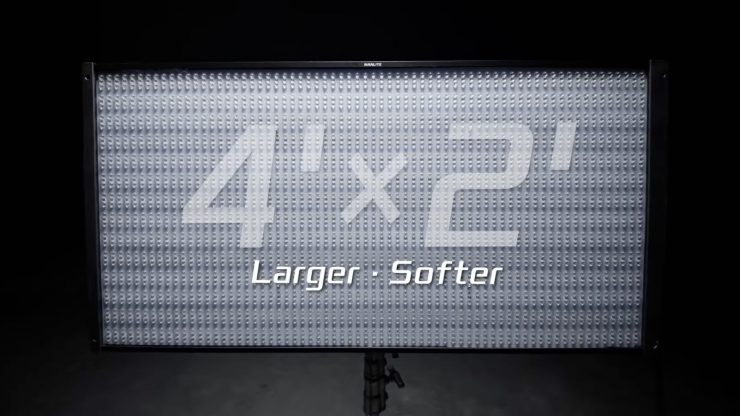
Nanlite’s PavoSlim panel lights have been pretty popular with shooters and the latest addition to the series is the PavoSlim 360C.
The PavoSlim 360C is an ultra-thin 4′ x 2′ RGBWW soft panel light that joins the PavoSlim 60C/ 60CL, PavoSlim 120C, and PavoSlim 240B/C/CL in the series.
The Nanlite PavoSlim range was designed to be lightweight and quick to set up, with the versatility to be used for a wide range of lighting applications.
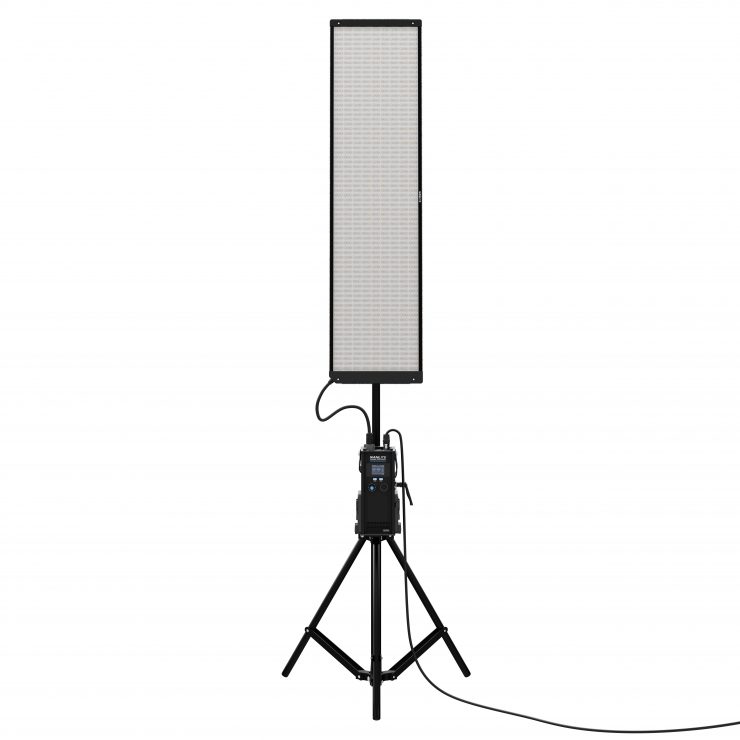
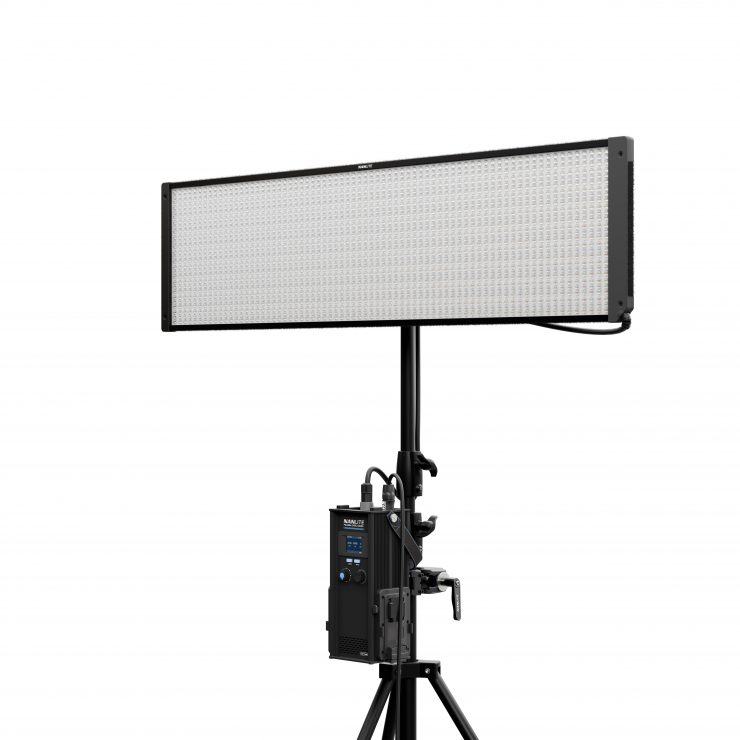
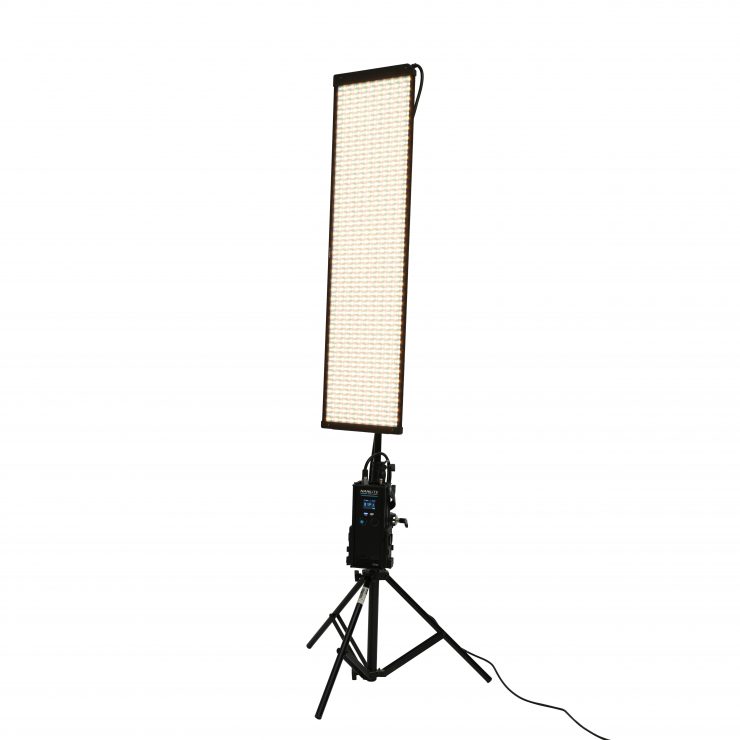
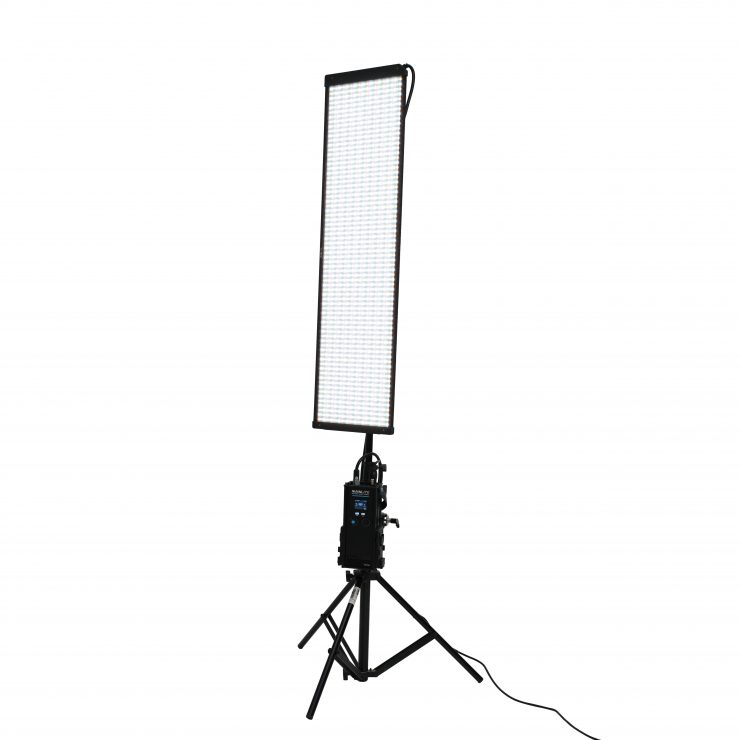
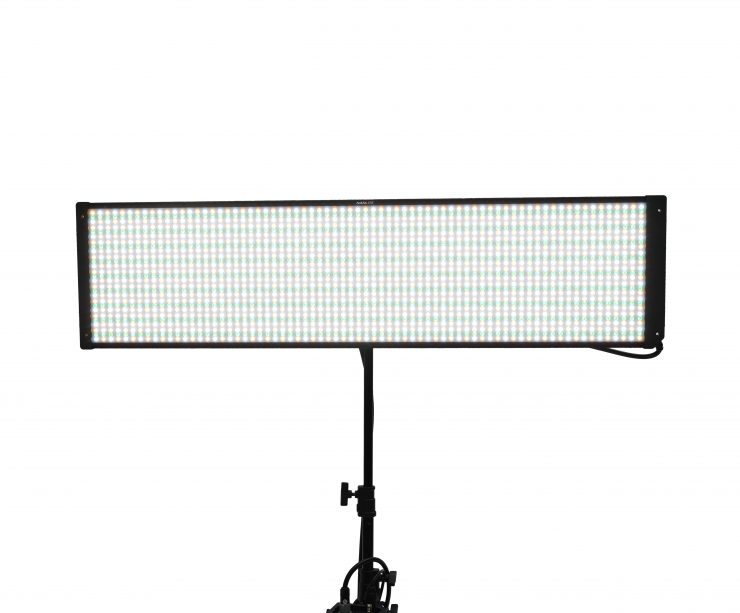
The PavoSlim 360C has a CCT range of 2400K to 12,00K, with the added benefit of green/magenta adjustment. It is lightweight, but also rugged, and it features a 370W output to enable it to generate broad, even soft light. The problem with a lot of light mat-style fixtures is that they tend to be underpowered, and that’s where the PavoSlim series is different. The PavoSlim 360C has a claimed output of 27,060 lux@1m / 3.3′ when used at 5600K.
Key features
- LED full color panel light 4’ × 2’ fixture body, ultra-slim 1.96 cm / 0.77 in
- Delivers 27,060 lux@1m, 5600K with 370W power
- Wide CCT range of 2400K-12,000K with ±150 green/magenta adjustment
- Excellent color rendition with CRI/TLCI average 96/97, TM-30 Rf/Rg average 94/100
- Five lighting modes: CCT, HSI, RGBW, Gel, and Effect
- 460 gels
- 15 special effects with adjustable parameters
- Includes a pop-up softbox, and a universal holder with a 5/8″ baby pin for flexible angle adjustment
- Multiple control methods: on-board, remote controller, NANLINK App, DMX/RDM, LumenRadio CRMX
- Powered by AC power, DC power, or V-mount batteries
Size & Weight
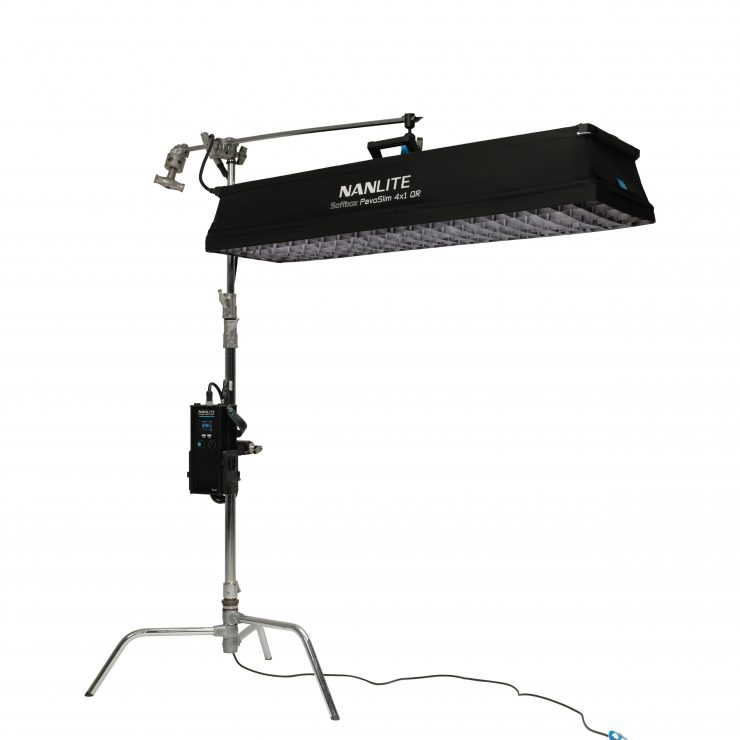
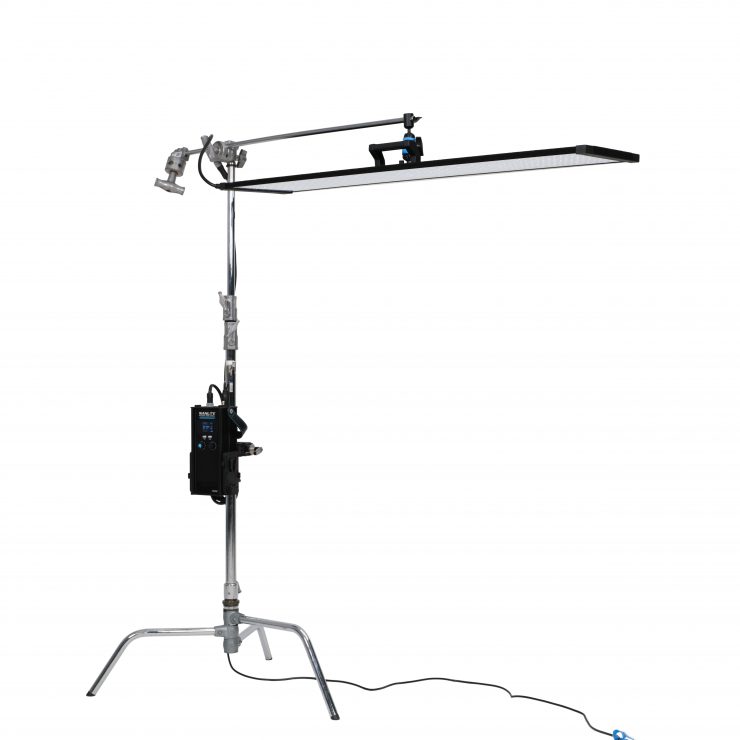
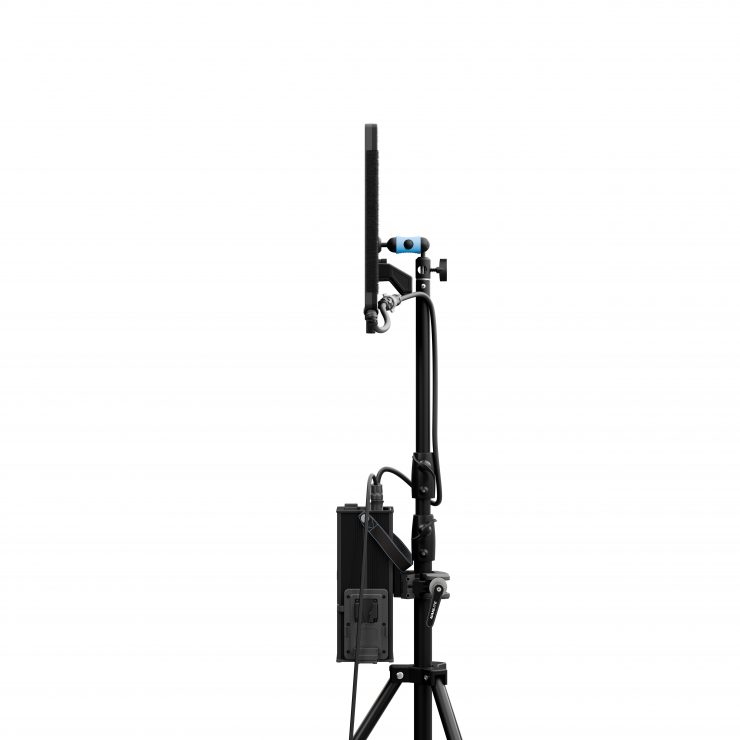
The dimensions of the PavoSlim 360C make it a good option for use in confined spaces or areas with limited headroom. It can be used close to talent, hidden easily within a set design, or suspended from ceilings, and it would also work well in virtual production applications.
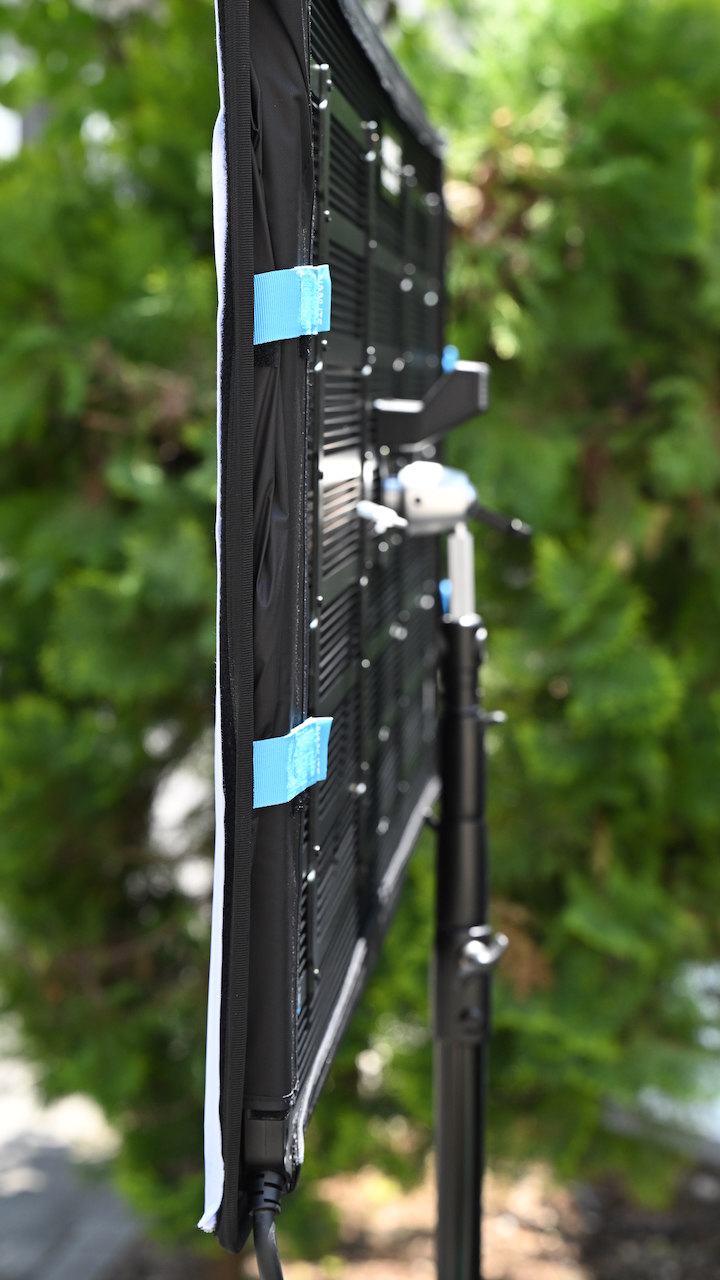
The PavoSlim 360C is lightweight, but it was also designed to be rugged, and it is incredibly thin.
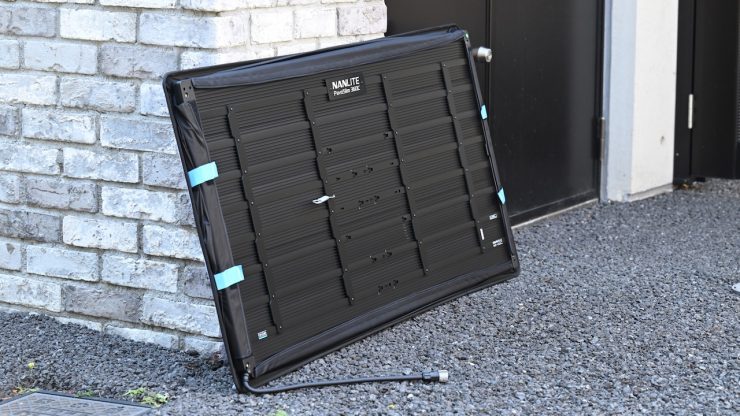
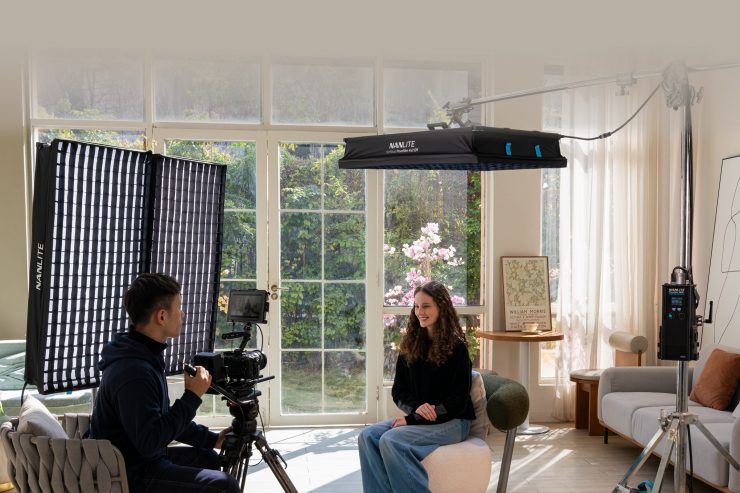
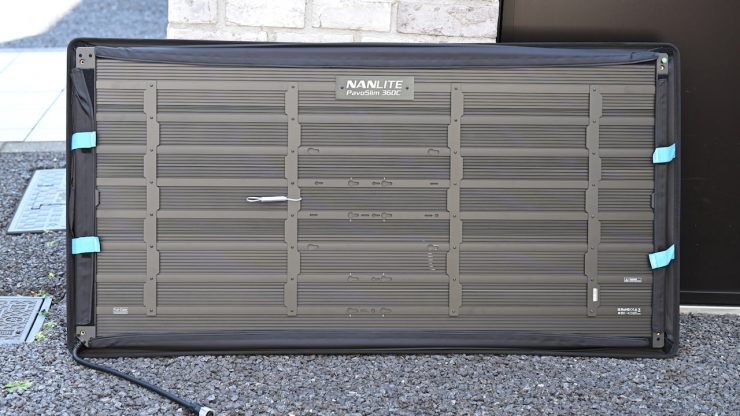
The 360C utilizes a magnesium alloy panel design. This makes it the first fixture in the series to feature a magnesium alloy body. NANLITE has done this to reduce the weight while offering additional durability and strength.
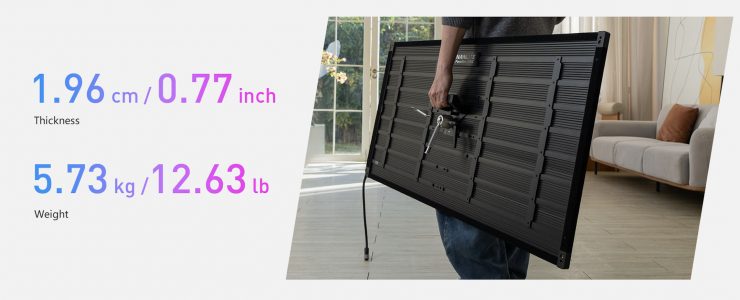
The panel weighs in at 5.73 kg / 12.63 lb. It is 1.96 cm / 0.77″ thick, so it can be mounted in places where other lights won’t go. It was also designed to be very quick to set up.
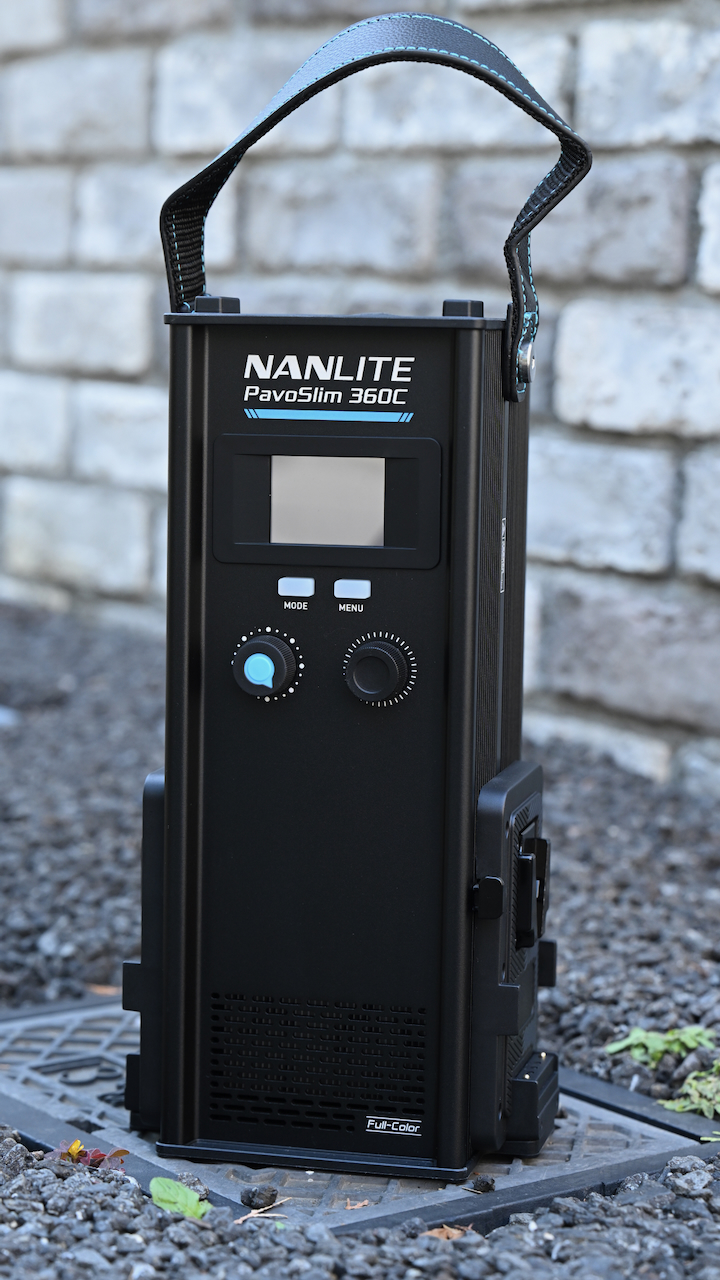
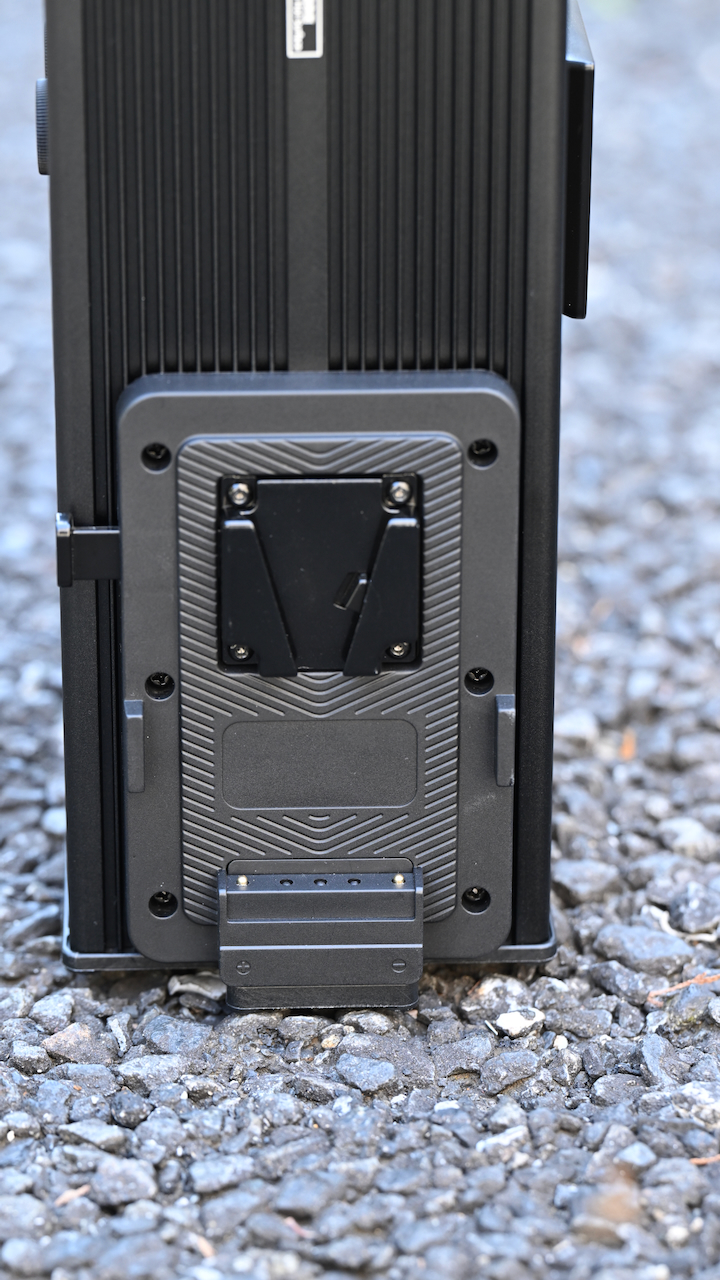
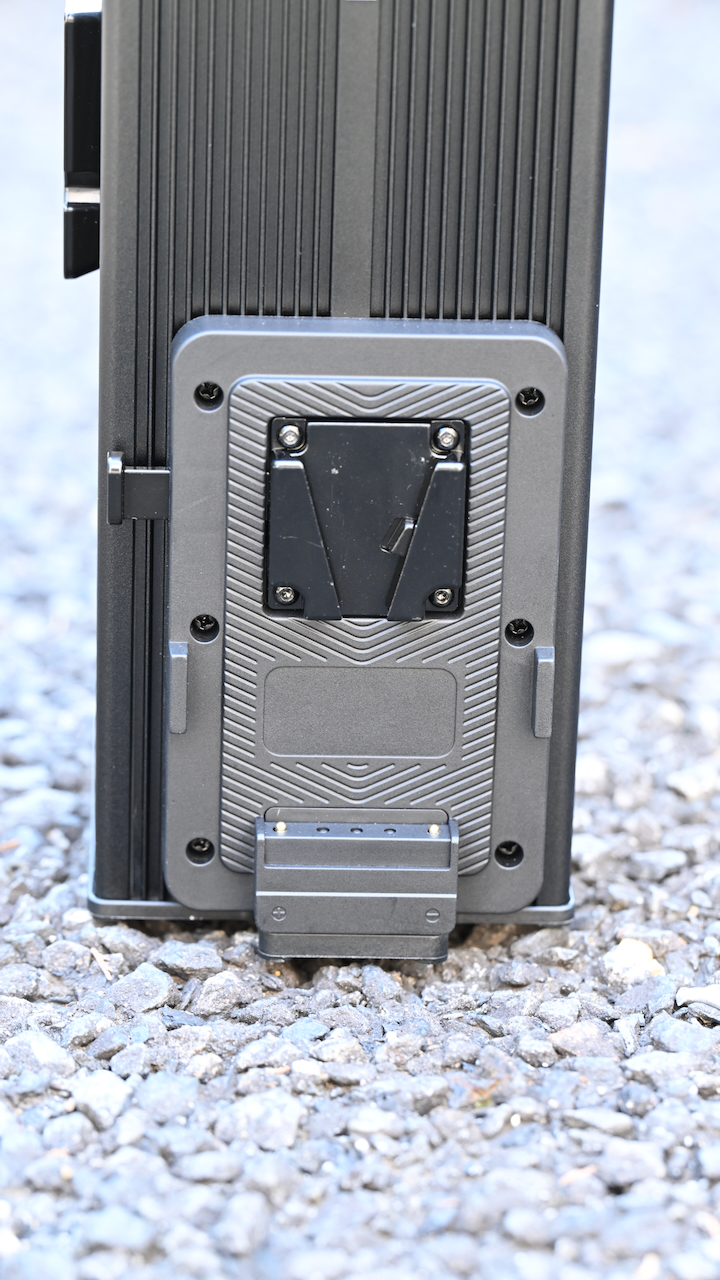
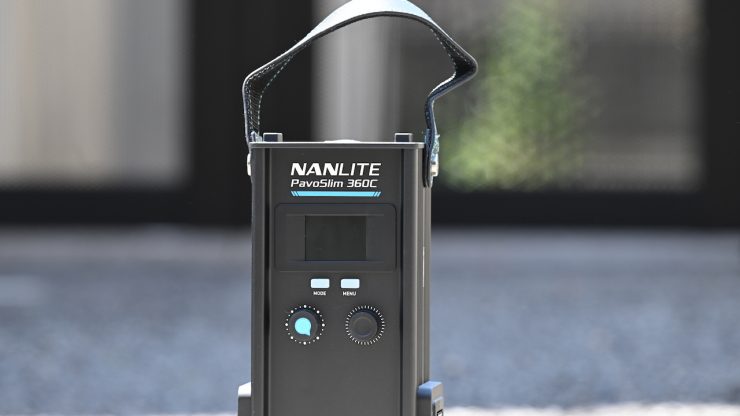
The light utilizes a separate power supply/controller that has V-mount battery plates. The power supply/controller weighs 3.28kg / 7.23 lbs
| WEIGHT (Controller/Power Supply & Panel) | |
| Nanlite PavoSlim 360C | 19.86 lb / 9.01 kg |
| Nanlite PavoSlim 240CL | 14.04 lb / 6.38 kg |
| Nanlite PavoSlim 60C | 5.09 lb / 2.31 kg |
| Nanlite PavoSlim 120C | 7.94 lb / 3.6 kg |
| Godox KNOWLED F400R RGB Flexible LED Light Mat (2 x 4′) | 16.8 lb / 7.6 kg |
| Aputure INFINIMAT LED with Clear Softbox & 400W Control Box Pack (2 x 4′, V-Mount) | 59.43 lb / 26.94 kg |
| Litegear LiteTile Plus Kit Foldable Bi-Color LED Light Panel (2 x 4′) | 4.4 lb / 2 kg (without power supply/ controller) |
So how does the weight of the PavoSlim 360C compare to some other flexible and hard-backed solutions on the market? Well, above you can see.
Easy to travel with?
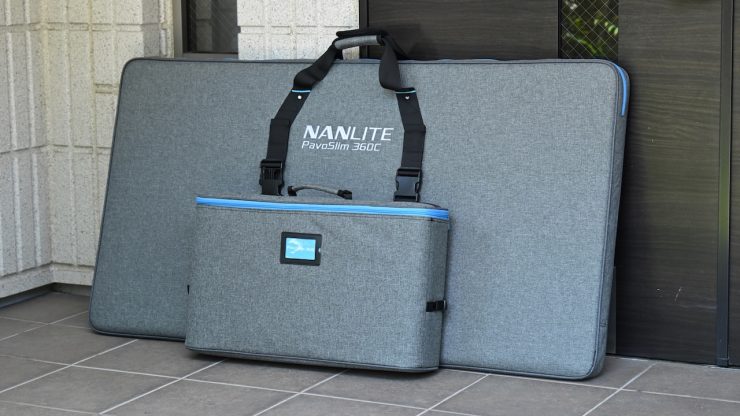
The PavoSlim, as I previously mentioned, are not flexible LED panels that you can fold up to make smaller. They are more like LiteMats as they have a hard backing plate.
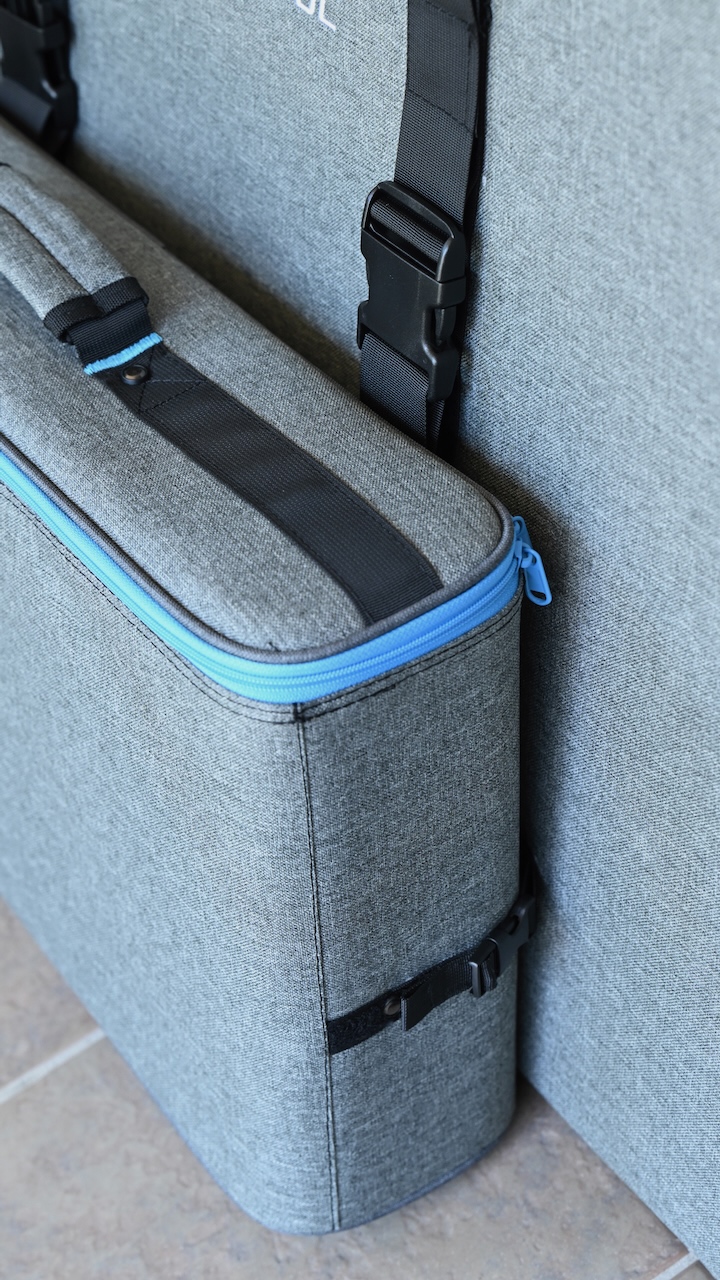
The 360C comes in two cases. These cases can be attached together so nothing gets lost or forgotten.
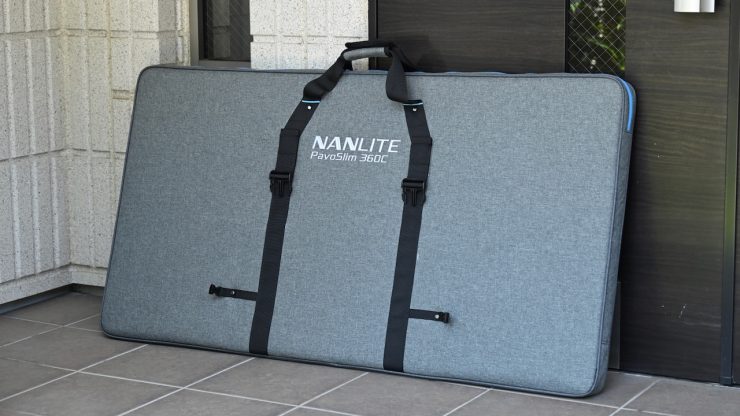
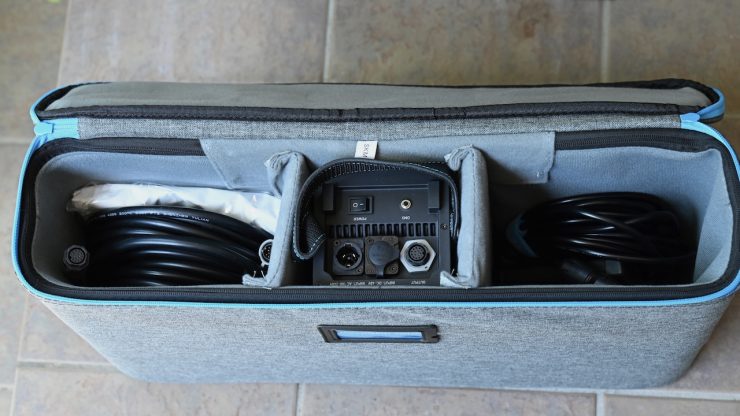
I actually prefer to separate them, as I found that having the two cases attached made it awkward to transport and store.
For anyone who travels a lot, the PavoSlim 360C may arguably not be the best option given its physical footprint. If you want something for travel and you need to keep a small footprint, then the PavoSlim 120C/60C is arguably going to be a better option.
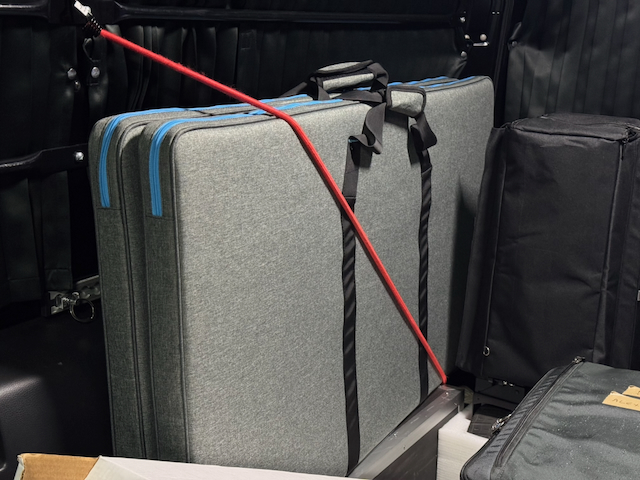
In saying that, as they are pretty thin, they don’t actually take up massive amounts of space in a vehicle.
Power Draw
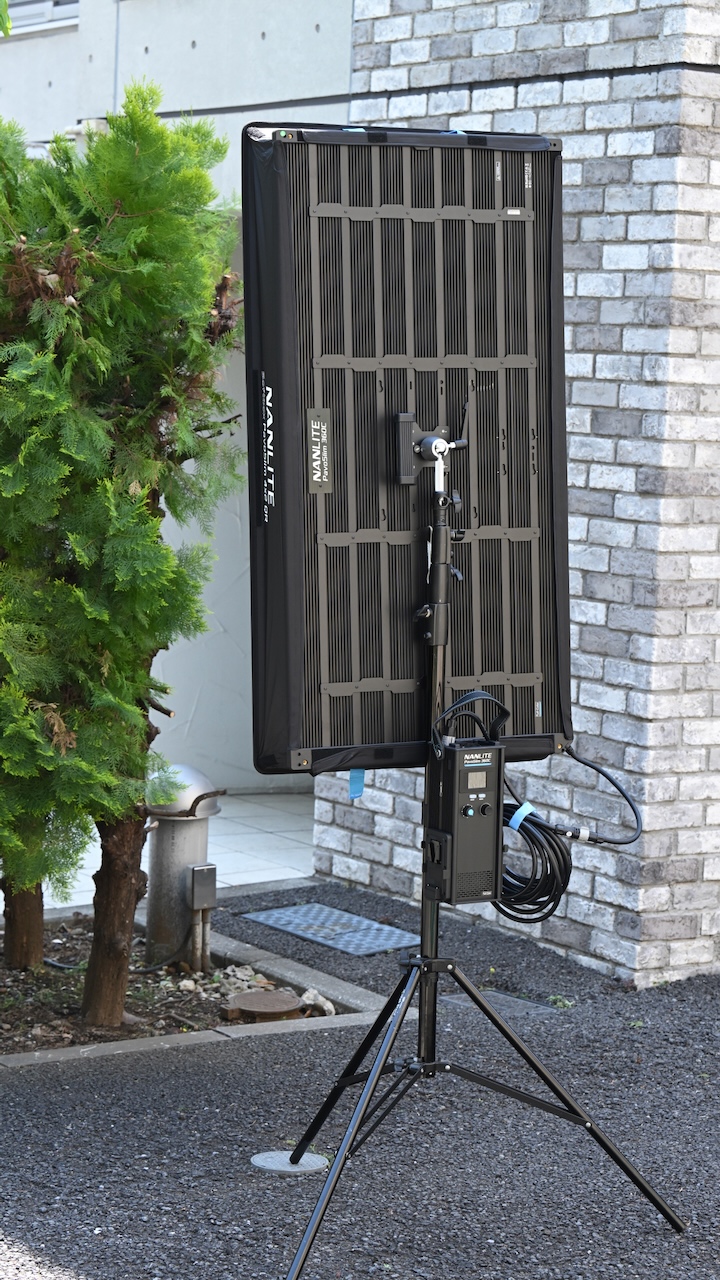
As I previously mentioned, the Nanlite PavoSlim 360C draws 370W.


The fixture can be powered by AC power, DC power, or V-mount batteries.
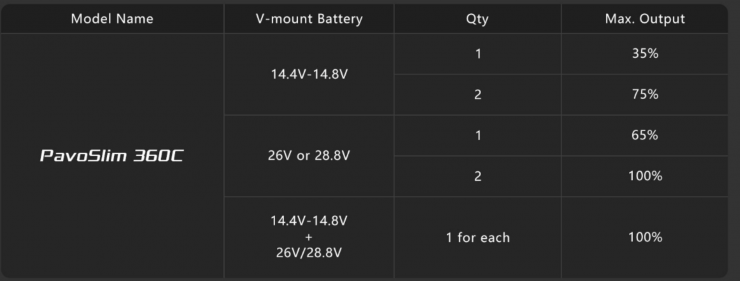
When powered by V-mount batteries, it provides options for on-the-go shooting: optimal performance varies depending on the output and capacity of the battery. You can use either 14.8V or 26V batteries.
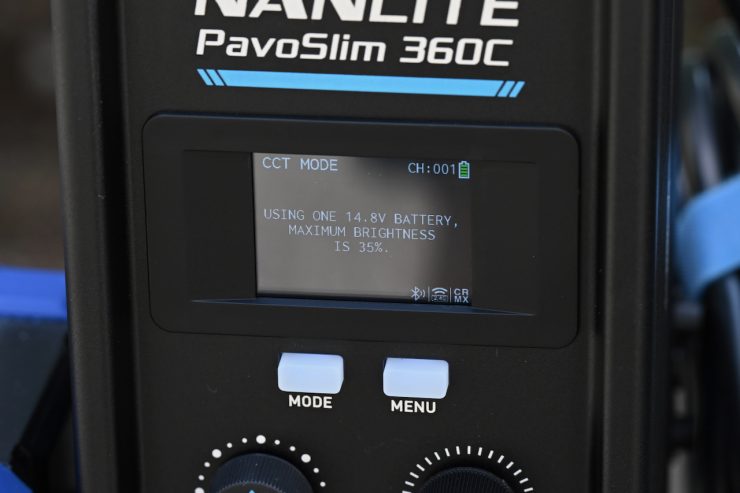
With a single 14.8V battery, the output is limited to 35%, regardless of the capacity of the battery. With two 14.8V batteries, again, regardless of the capacity, the output is capped at 75%.
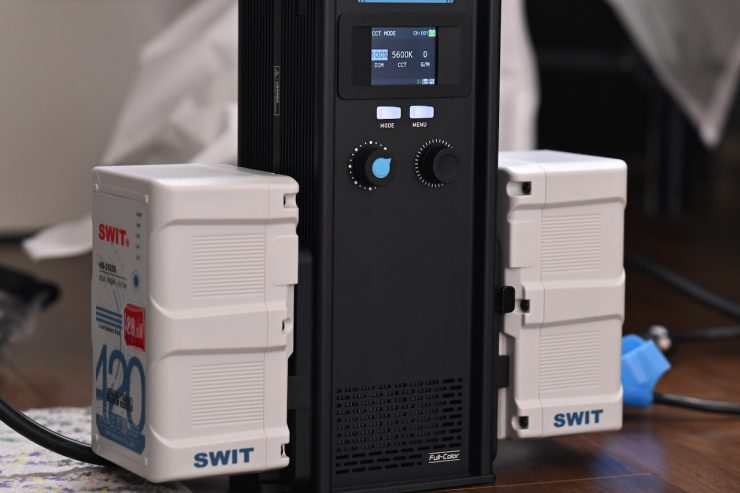
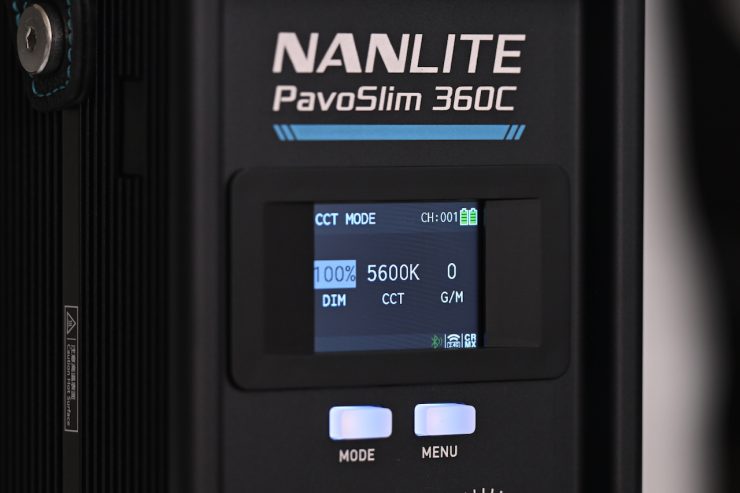
A single 26V battery (regardless of capacity) caps the output to 65%. Two 26V batteries allow the fixture to run at 100% output.
If you use one 14.8V and 1x 26V battery you can operate it at 100%.
The circuit design not only delivers high output power when using battery power but also enables hot swapping between different power sources. Please note that the current intensity must be within the supported range of the selected power supply option when hot swapping.
| POWER DRAW | |
| Nanlite PavoSlim 360C | 370W |
| Nanlite PavoSlim 240CL | 240W |
| Nanlite PavoSlim 60C | 72W |
| Nanlite PavoSlim 120C | 150W |
| Godox KNOWLED F400R RGB Flexible LED Light Mat (2 x 4′) | 460W |
| Aputure INFINIMAT LED with Clear Softbox & 400W Control Box Pack (2 x 4′, V-Mount) | 400W |
| Litegear LiteTile Plus Kit Foldable Bi-Color LED Light Panel (2 x 4′) | 200W |
So, how does this power draw of the PavoSlim 360C compare to some of the competition? Well, above you can see.
RGBWW
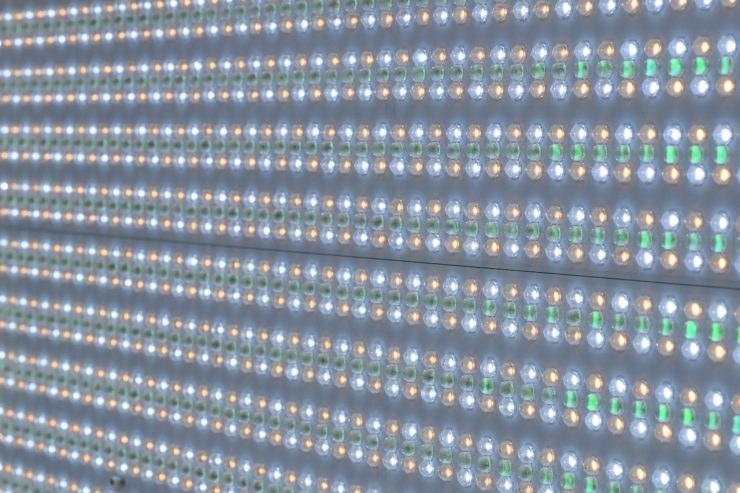
The PavoSlim 360C is RGBWW and not RGBACL. RGBWW lights tend to struggle to create saturated colors like yellow, and they don’t always have as much output when generating saturated colors. They can also have a large drop-off in output at different CCT settings.
We have seen everything from RGBW/RGBWW to 6-color systems (RGBLAC), to Aputure’s BLAIR CC, and NANLUX’s new C8 Full Color Light Engine, which is claimed to be the industry’s first eight-color light engine, as well as Godox’s new PalleteLab light engine.
What do you get?
The lighting kits consist of:
- Nanlite PavoSlim 360C RGB LED Light Panel
- Control Unit (V-Mount)
- Universal Holder with 5/8″ Baby Pin
- Quick Release Clamp
- DC Connection Cable (24.6′)
- AC Power Cable (14.7′)
- Pop-Up Softbox
- Lite Diffuser (2.5-Stop)
- Standard Diffuser (1.5-Stop)
- Egg Crate Grid
- Padded Carry Case
- Limited 2-Year Manufacturer Warranty
The cases the light comes in are pretty well made and in line with other Nanlite products, but I’m in no position to comment on how they would handle the rigors of air travel. That is something you would only find out over time. The cases do come with the light, so you can’t really complain. You can use it if you want, or if you prefer another option, you can decide what works best for you.
Unlike the self-contained cases for the other PavoSlim models, the ones that come with the 360C don’t give you a lot of flexibility for storing other accessories. With the other PavoSlim models, you can put additional items inside them to maximize the space. With the other PavoSlim versions, I found that they were long enough that you could easily sneak in a light stand, extension cables, and a few batteries to have a reasonably full self-contained lighting set-up.
Build Quality
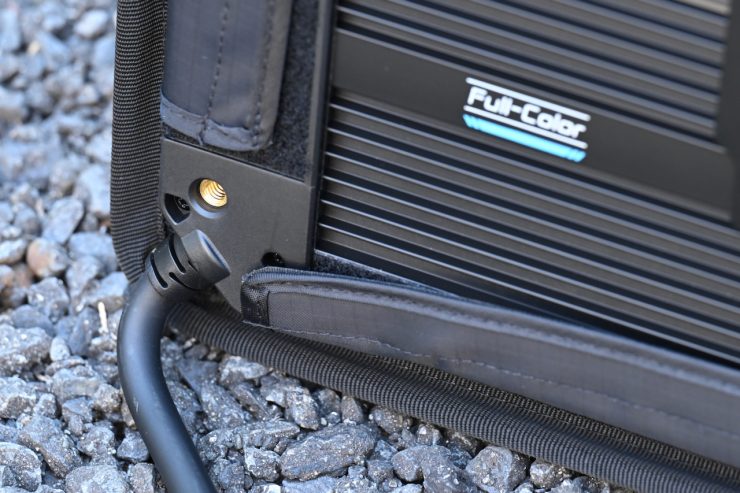
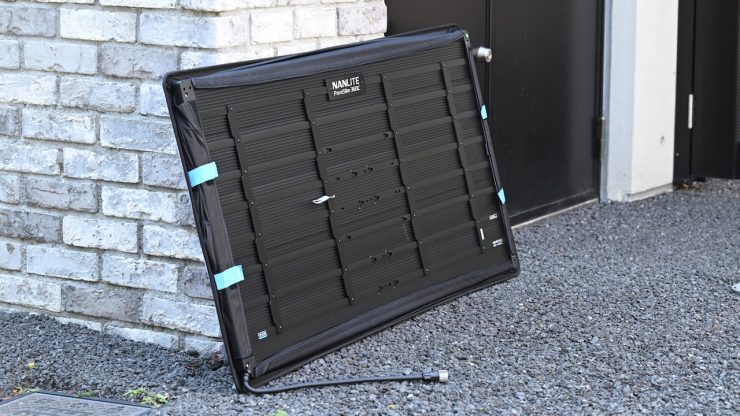
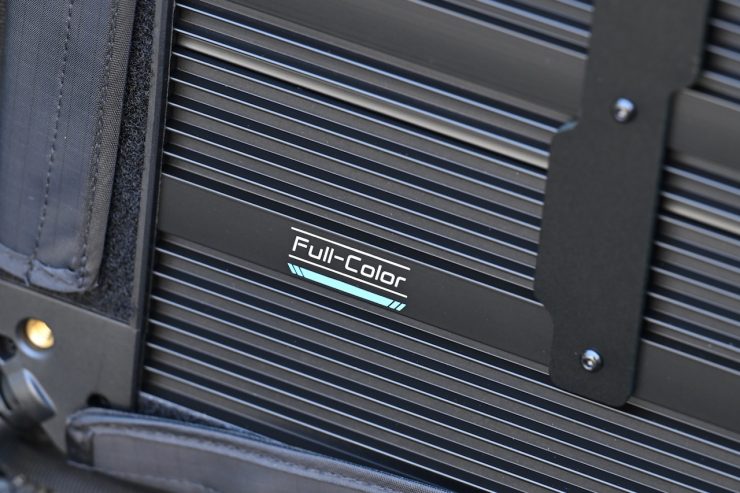
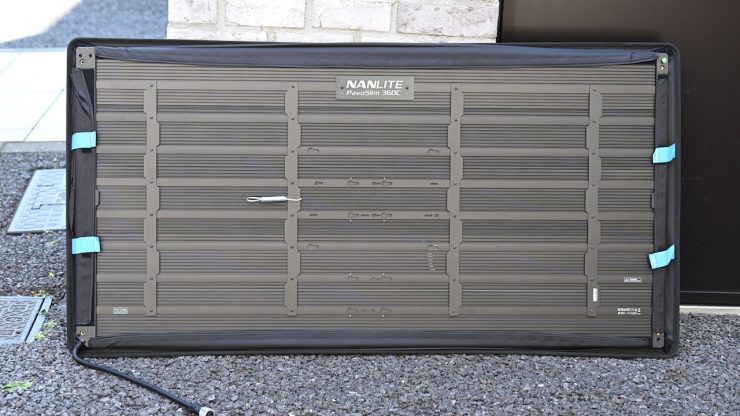
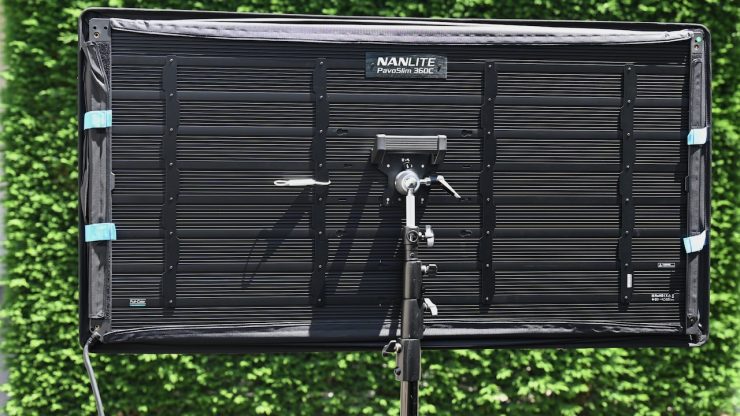
The overall build quality of the Nanlite PavoSlim 360C is a little better than that of the 240CL, 60C, and 120C, whose backing plates are made out of metal. Instead, the 360C features a magnesium alloy panel design. As I mentioned earlier, this makes it the first fixture in the series to feature a magnesium alloy body. Nanlite has done this to reduce the weight while offering additional durability and strength.
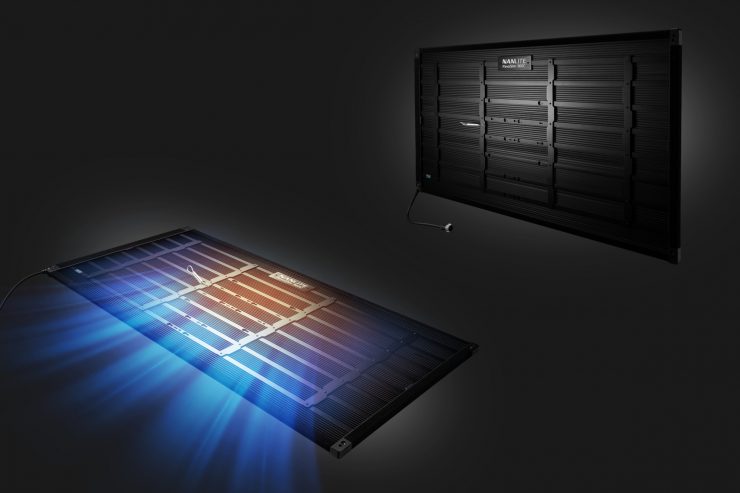
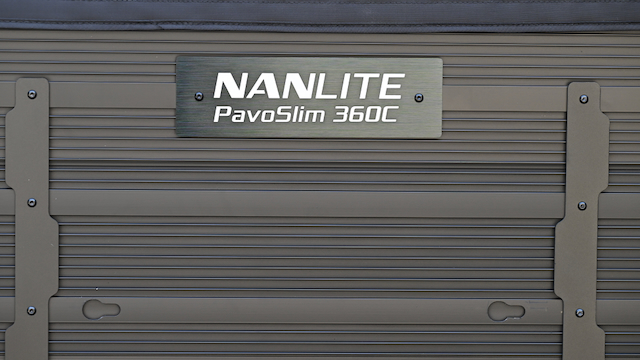
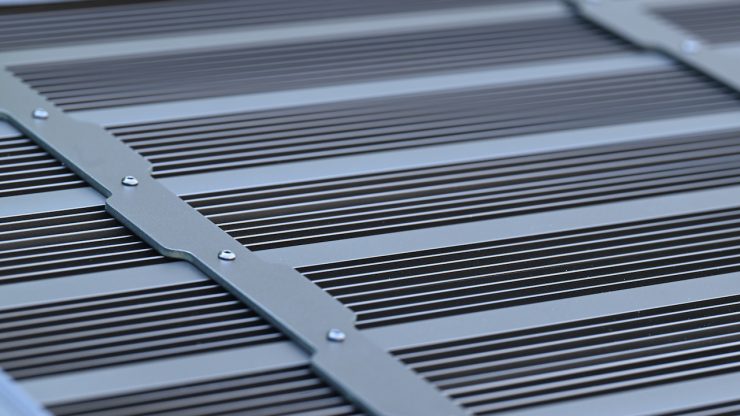
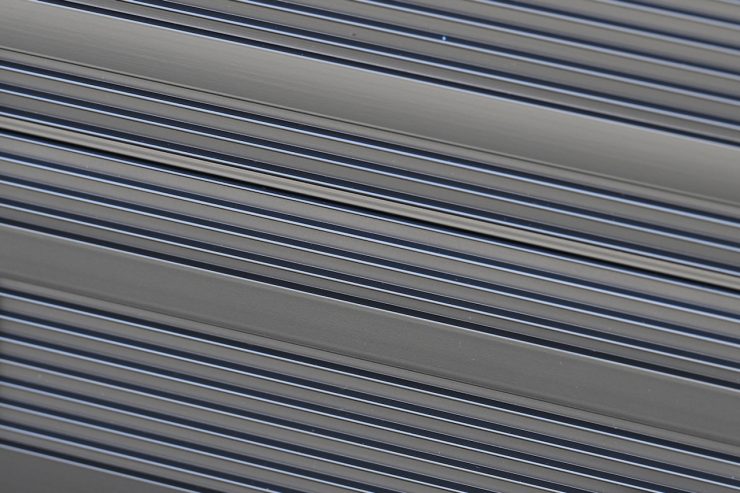
The rear of the fixture is designed with a large multi-row heat sink that adds to the structural strength and enables efficient cooling with silent, fanless operation. It allows the light to deliver strong, stable output over extended periods.
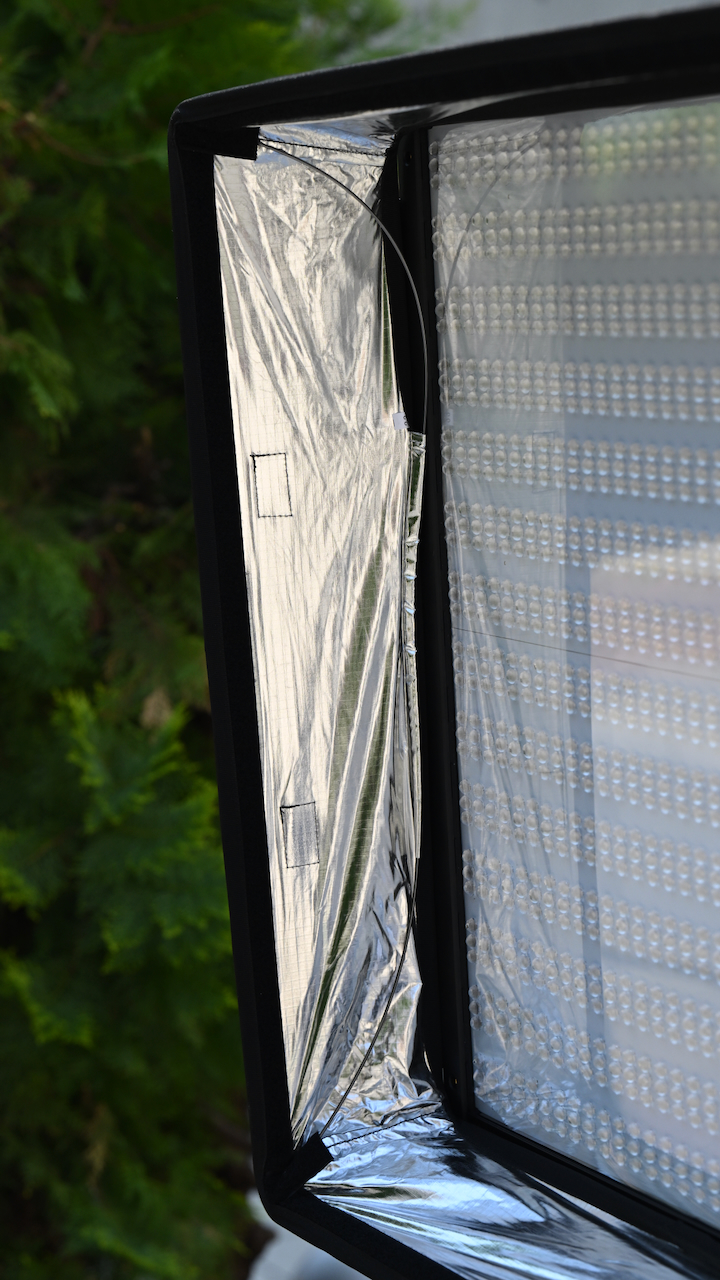
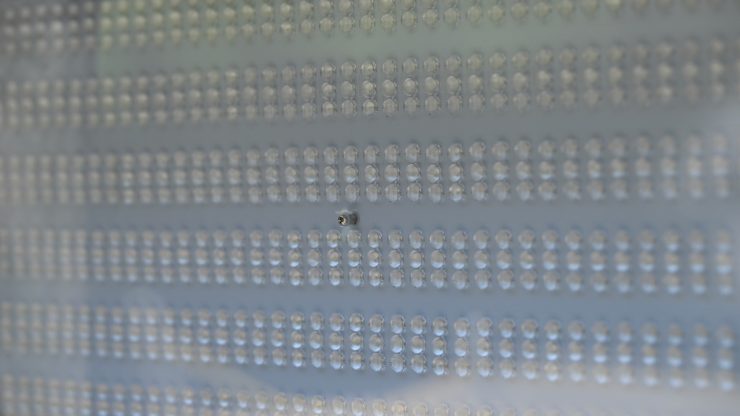
There is a protective acrylic screen over the front of the LEDs.
The problem I have found in the past with flexible panel lights is that they don’t tend to hold their shape well, and you have to be careful folding them because you can end up killing some of the LEDs. With hard-backed lights, you don’t get those issues.
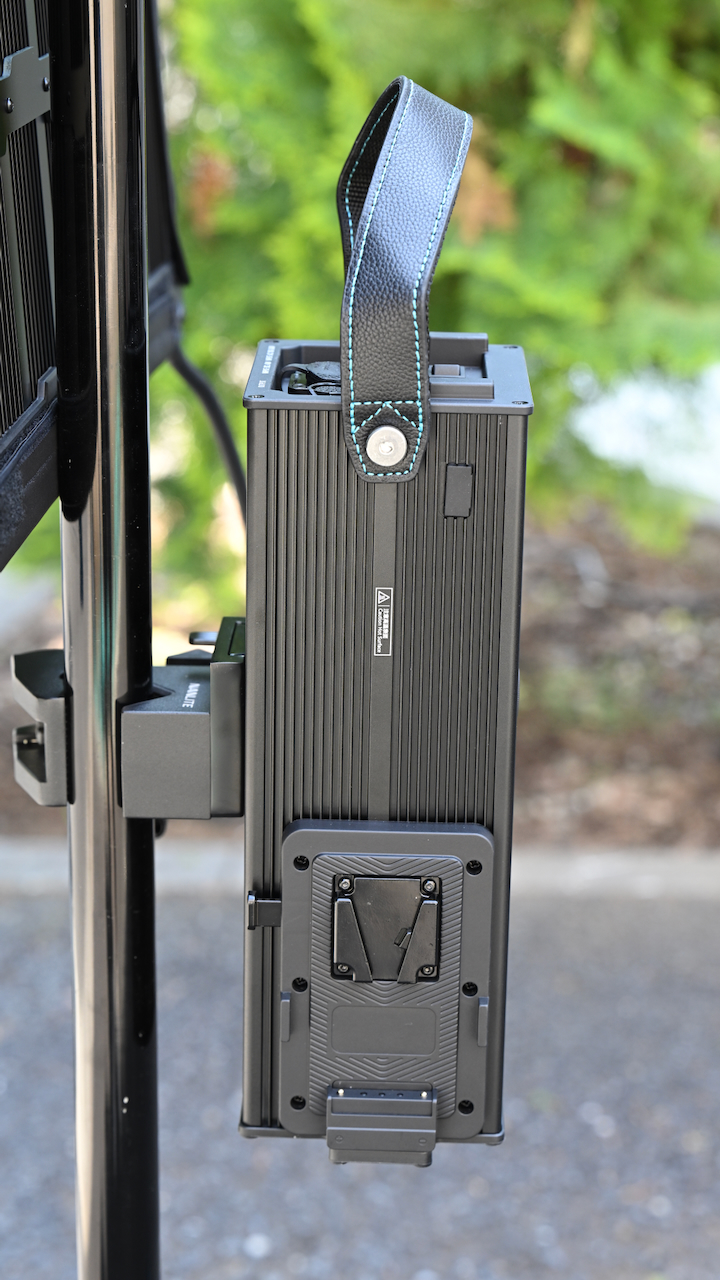
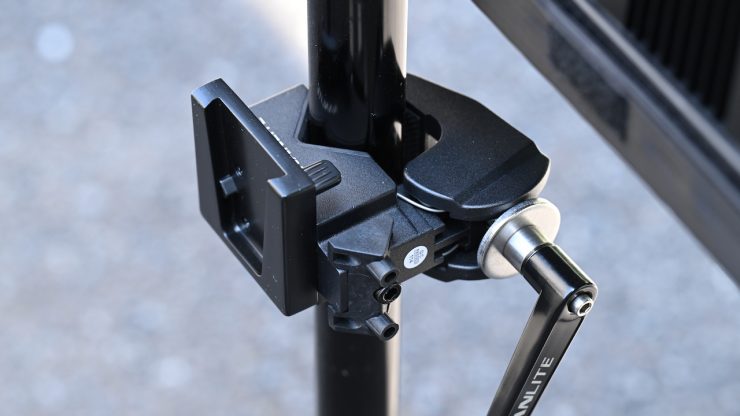
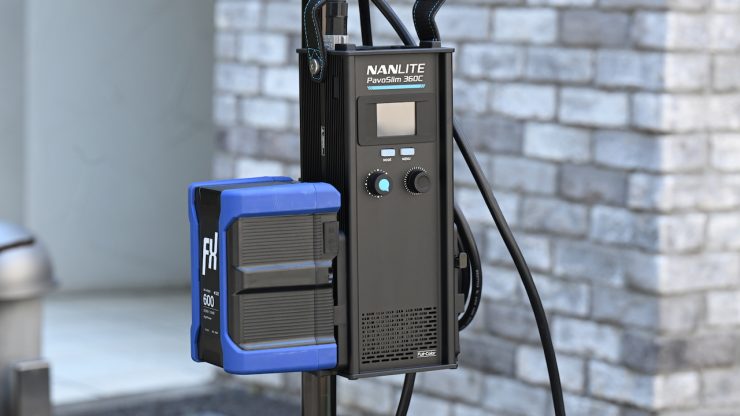
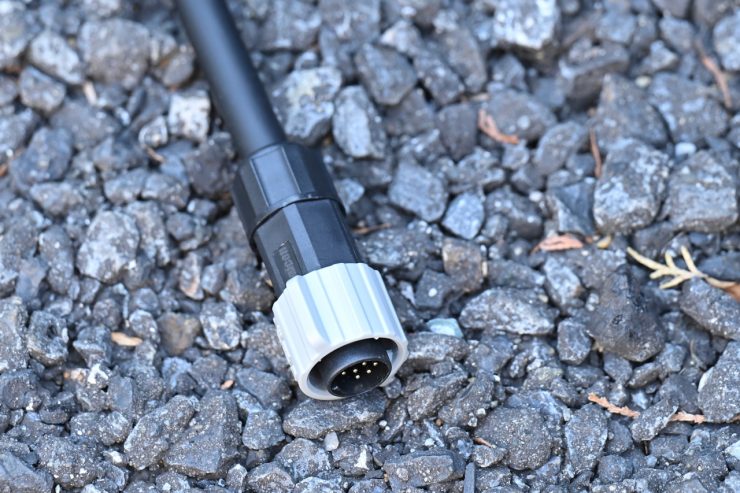
The power supply/control unit is robustly constructed, and all of the connections are solidly made. It can be attached to a light stand with the included clamp.
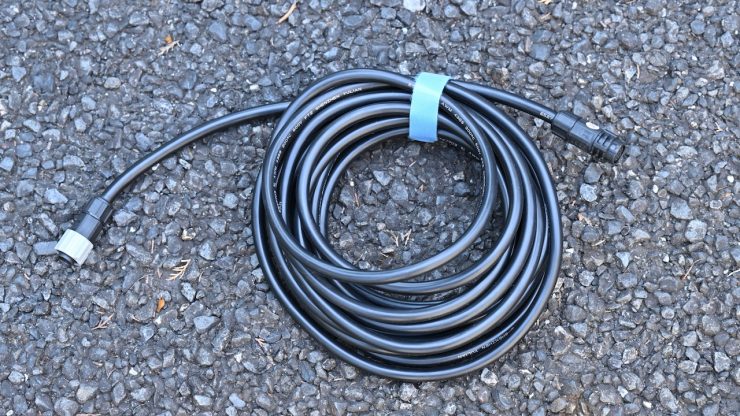
Nanlite also includes a nice, long header cable that goes from the power supply/controller to the fixture.
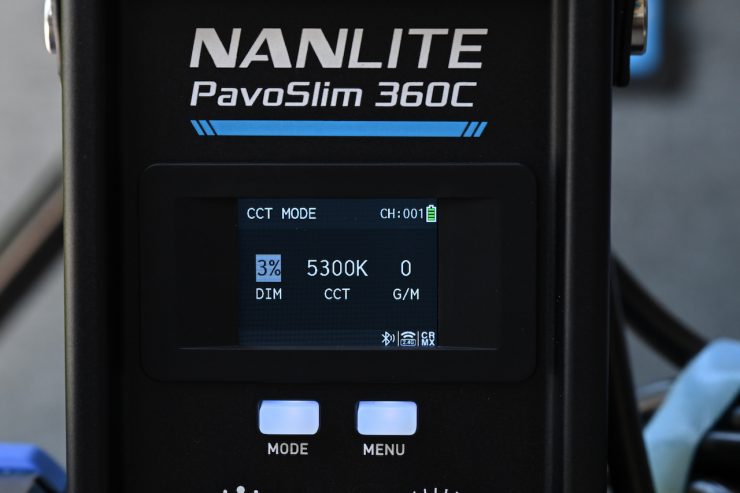
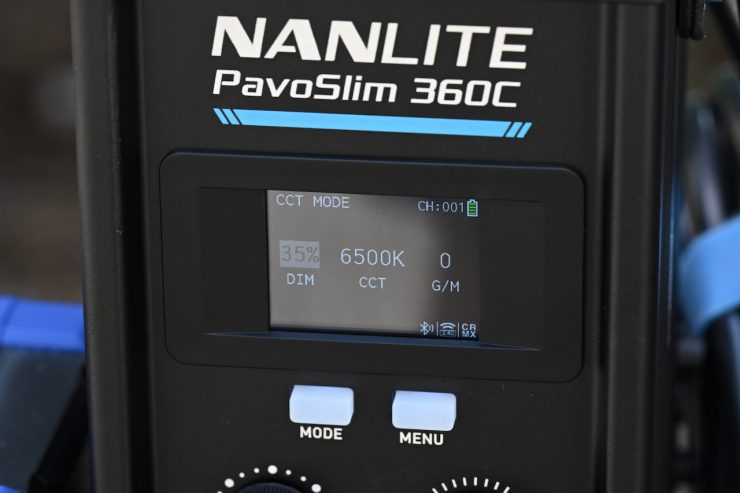
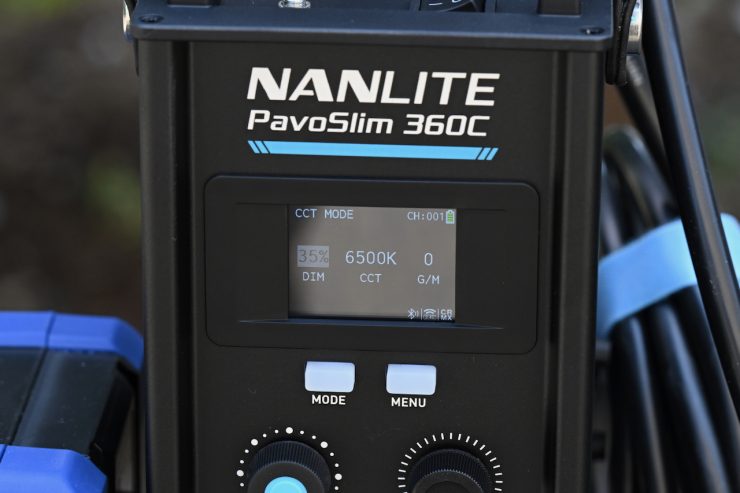
The power supply/controller has a color display on the front, which is reasonably easy to see, and it shows you clearly and concisely what your operating parameters are. Yes, it is fairly basic, but it gets the job done.
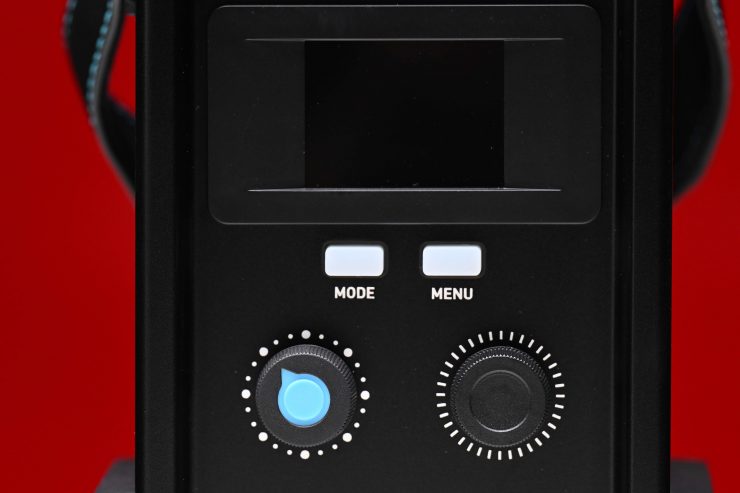
The buttons and dials are tactile and easy to use, and are also solidly made.
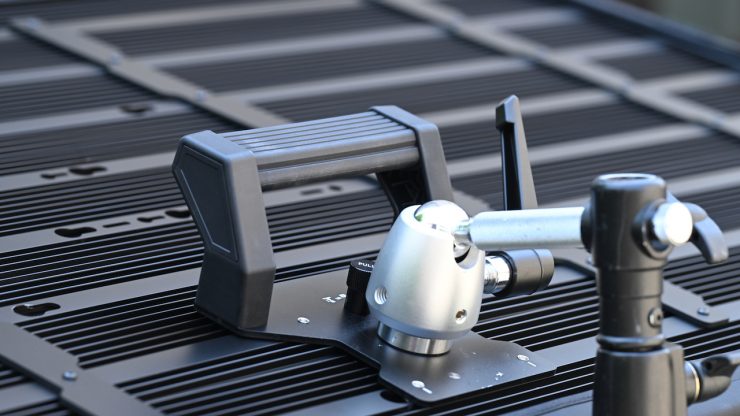
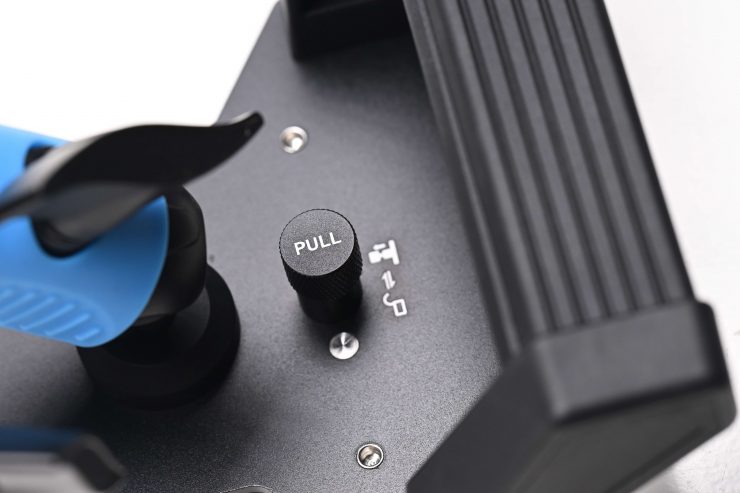
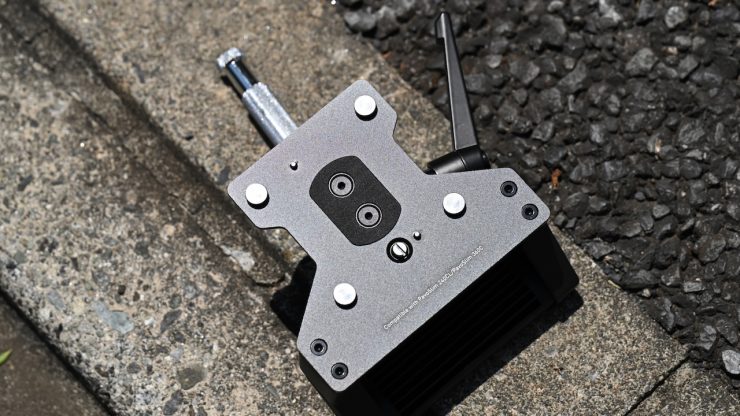
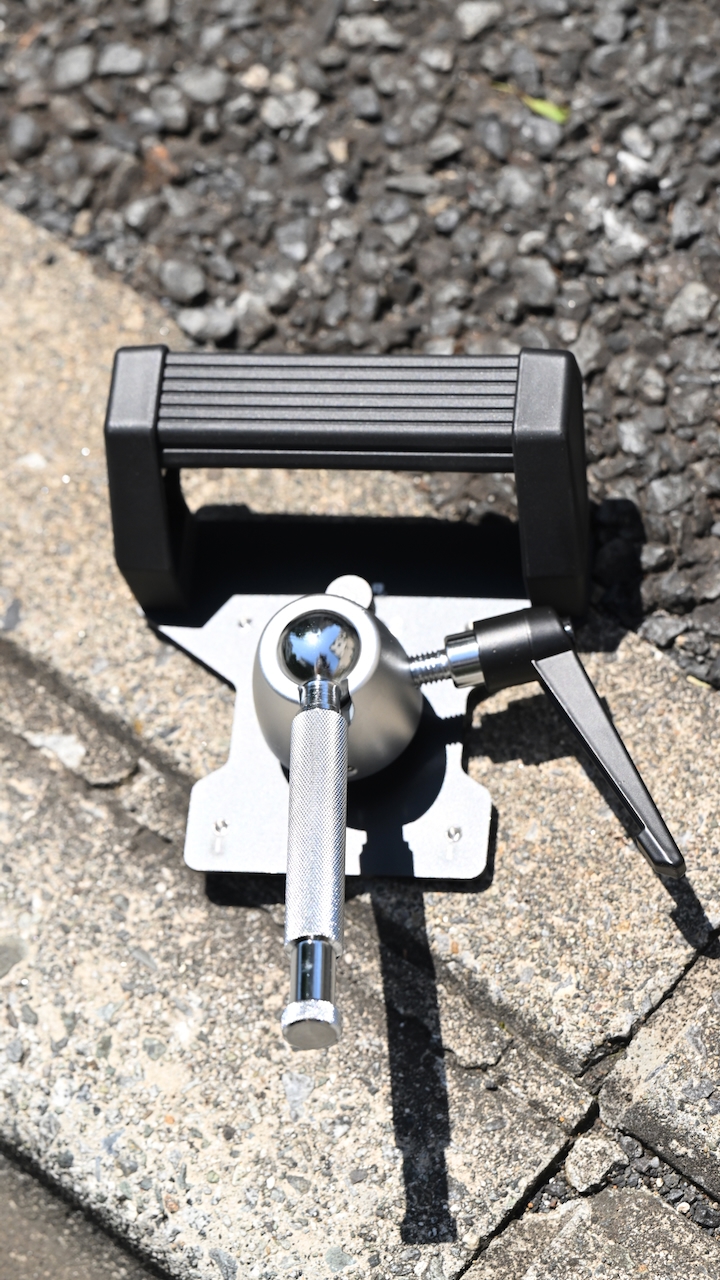
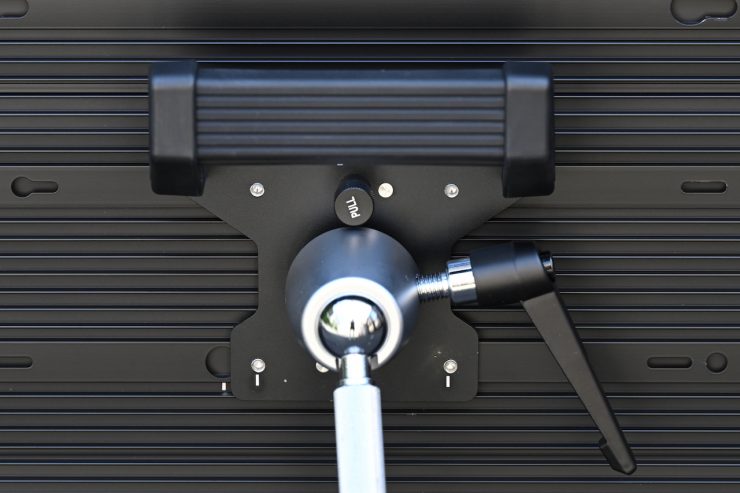
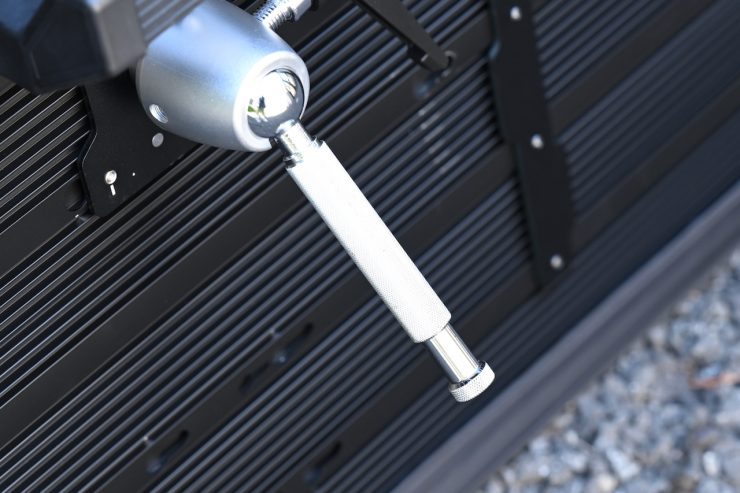
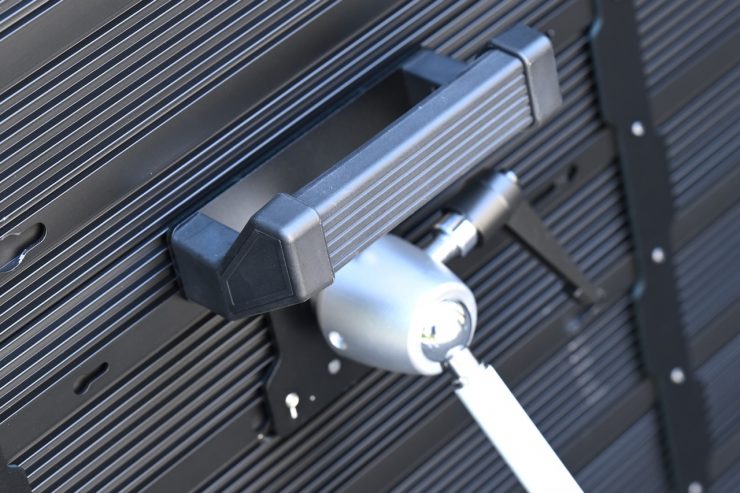
The mounting plate system has been well thought out and designed. The mounting plate features a straight pin and an integrated handle.
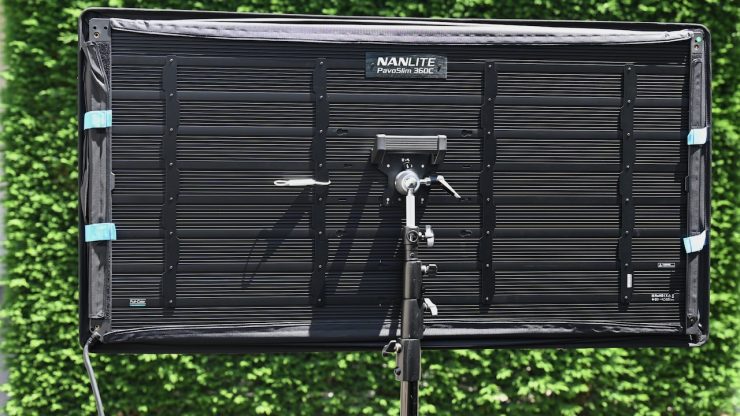
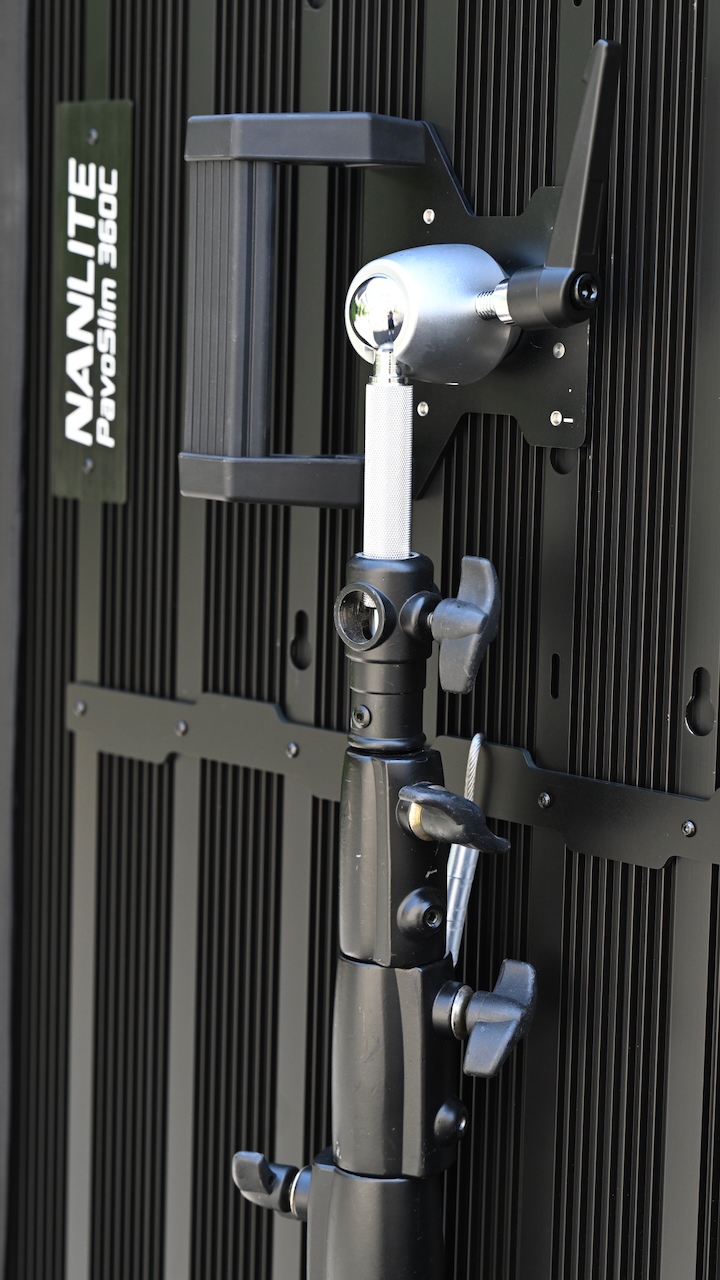
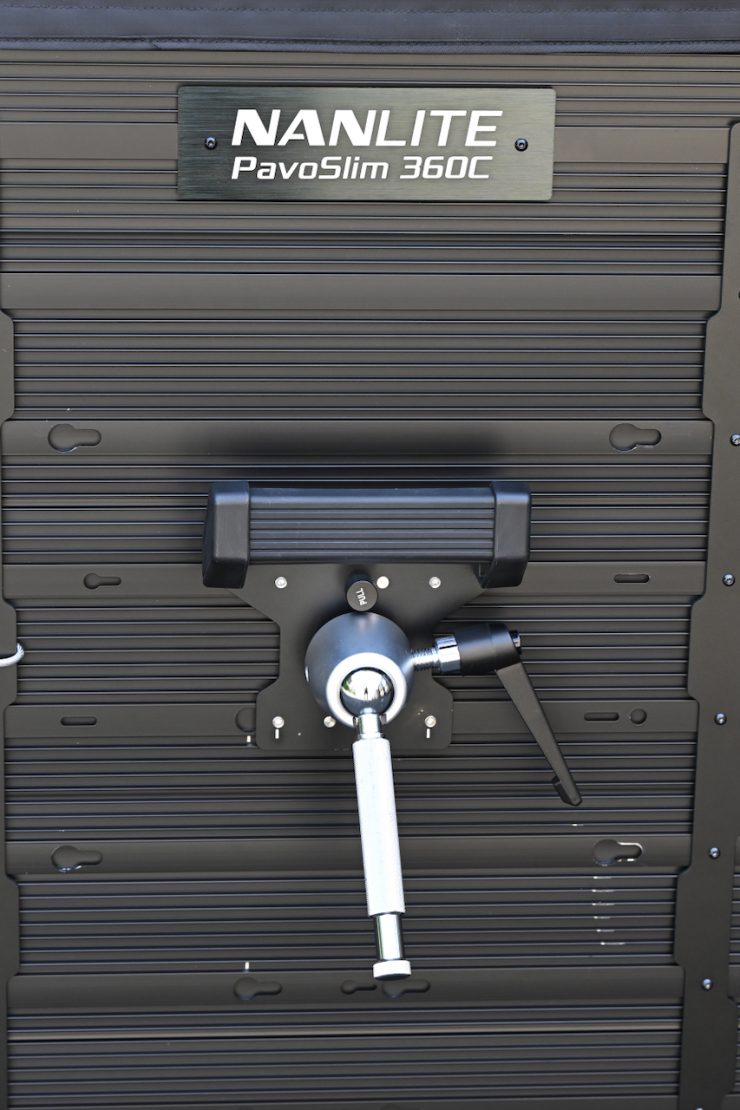
This is a really robust mounting system, and it gives you complete confidence that the light won’t detach from the plate.
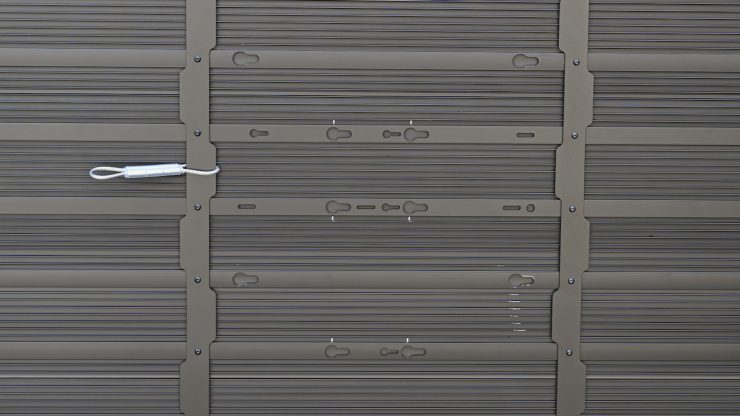
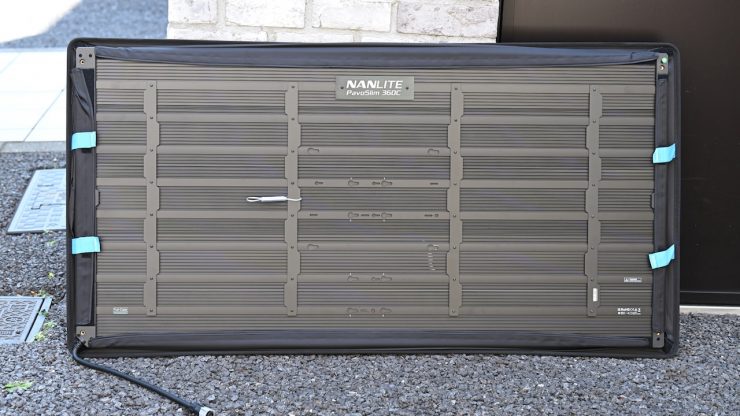
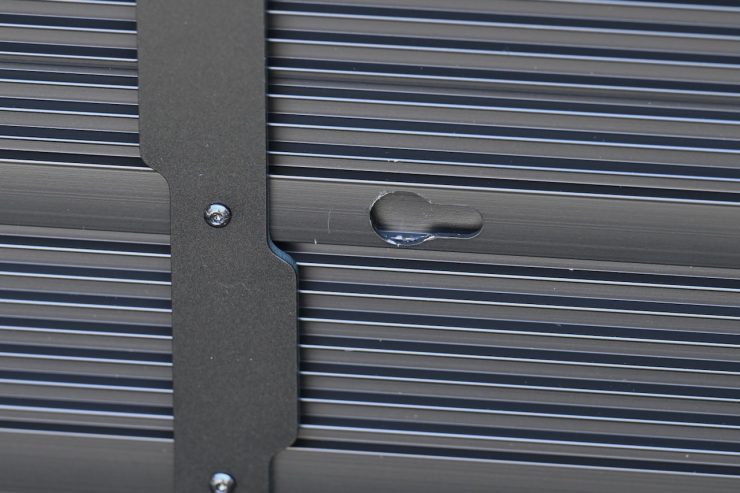
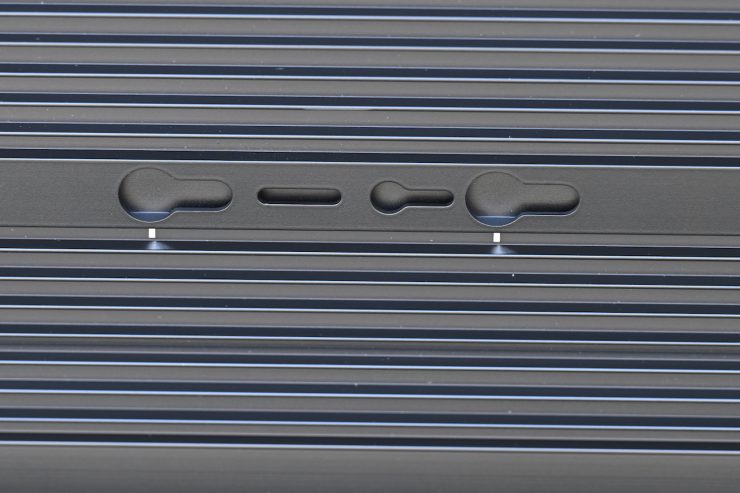
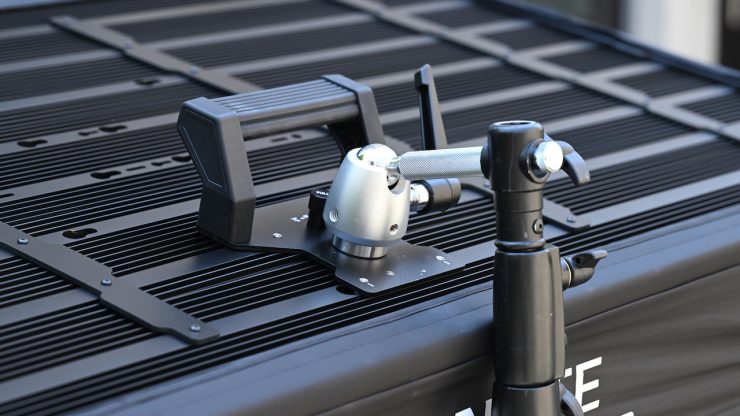
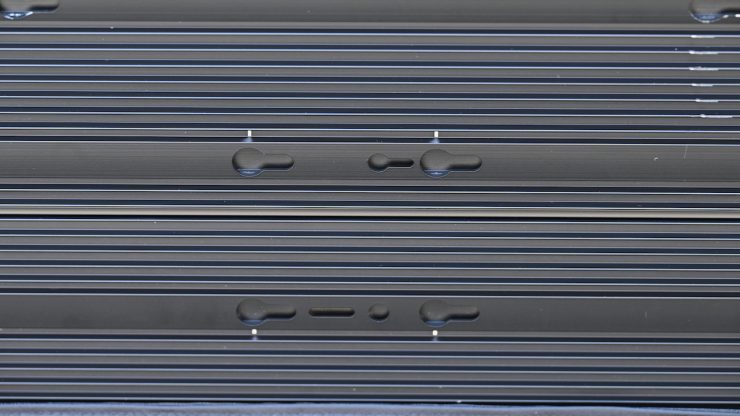
The backing plate features quite a few mounting spots, which is handy depending on how you need to mount the light.
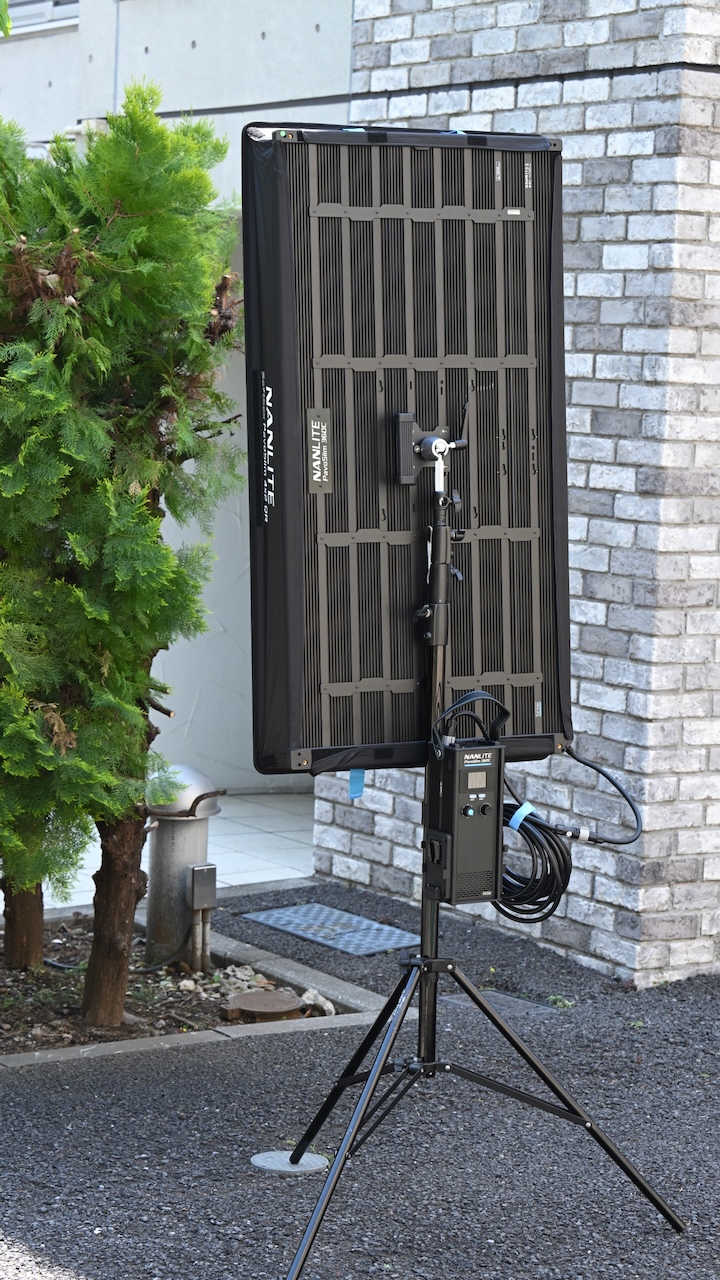
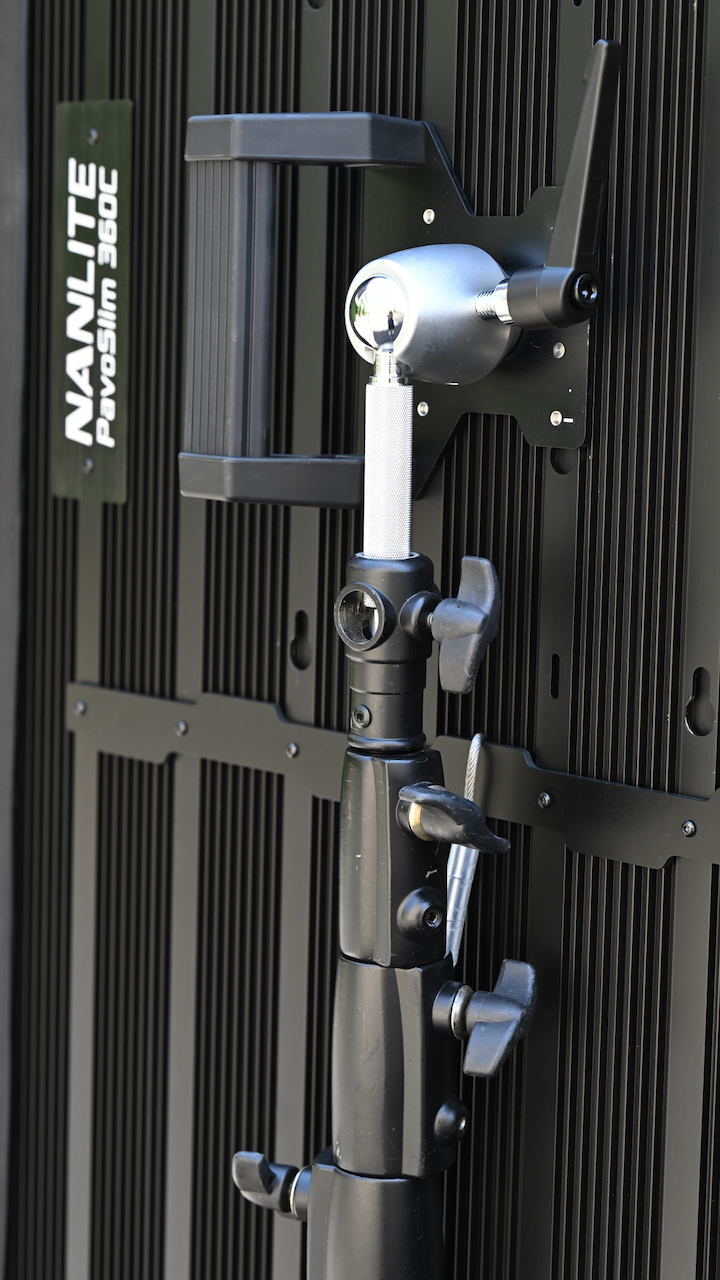
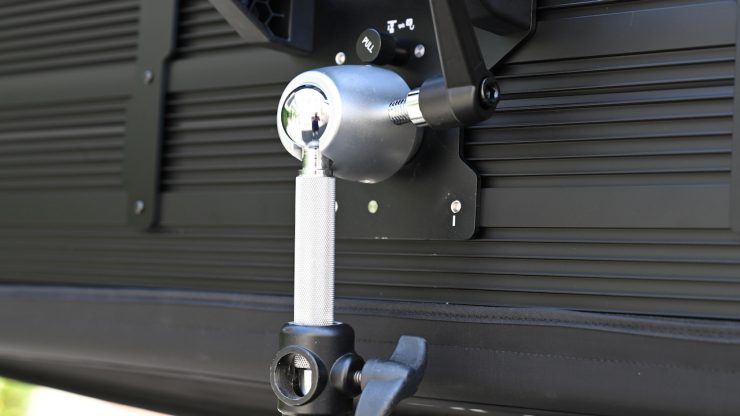
Because the fixture is quite large, you need to think carefully about where you place the mounting plate. If you put it in the middle of the fixture, you have a limited range of angles if you are using it vertically.
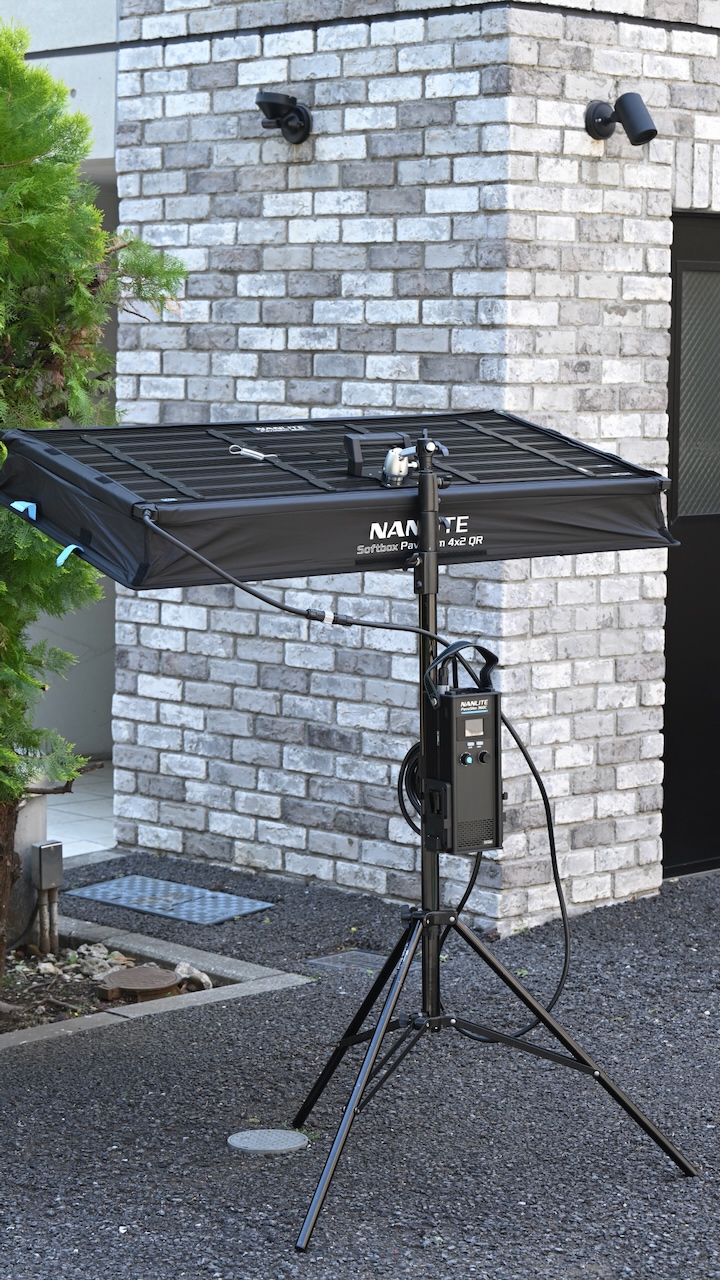
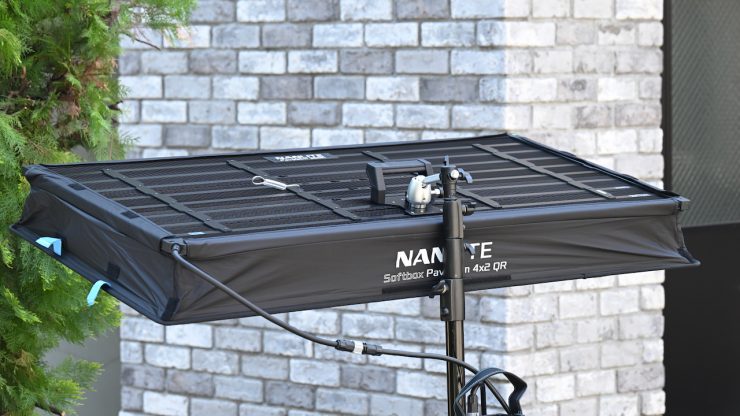
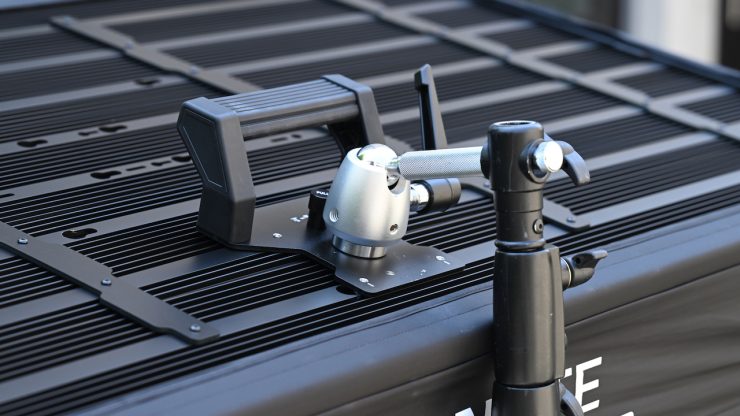
If you need to mount it horizontally, then it is better to put the mounting plate as far towards the edge of the fixture.
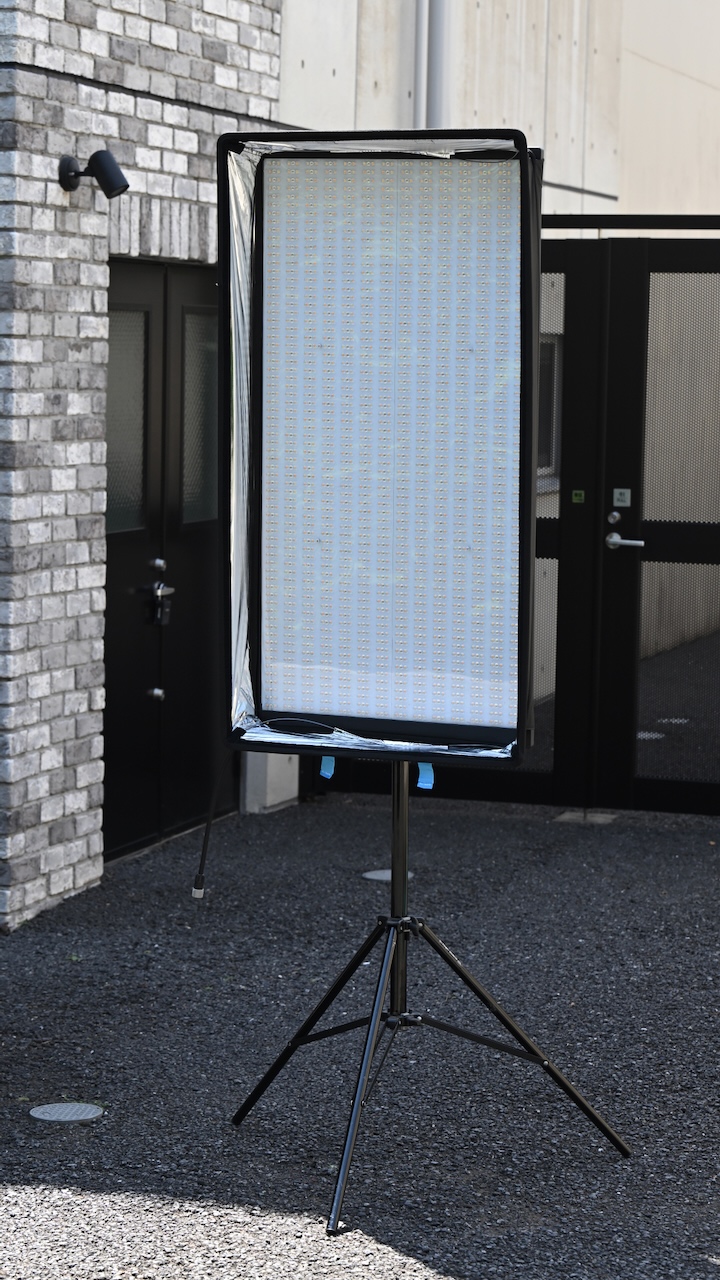
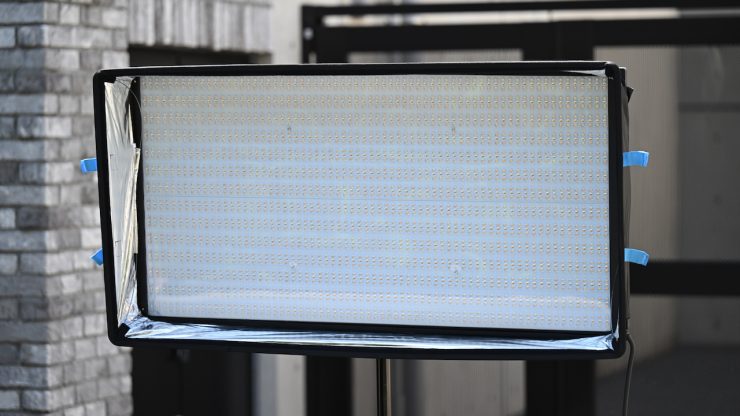
It is easy to mount the light in either a wide or long configuration.
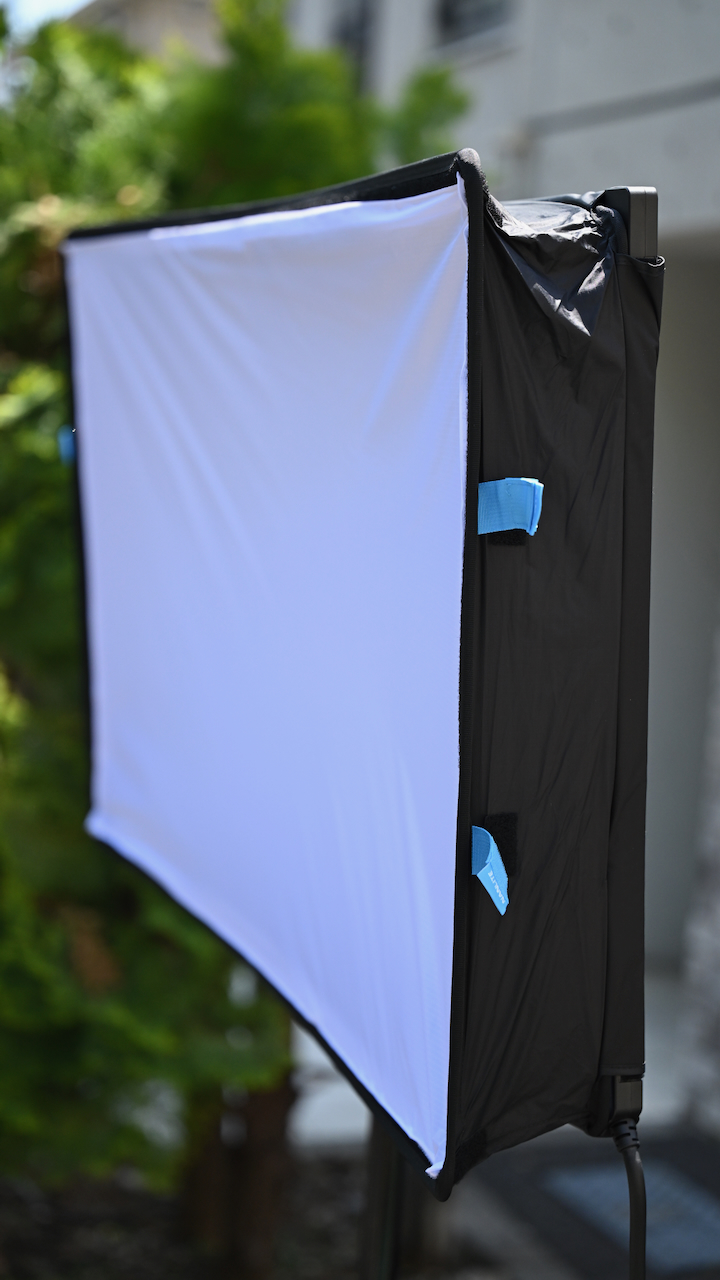
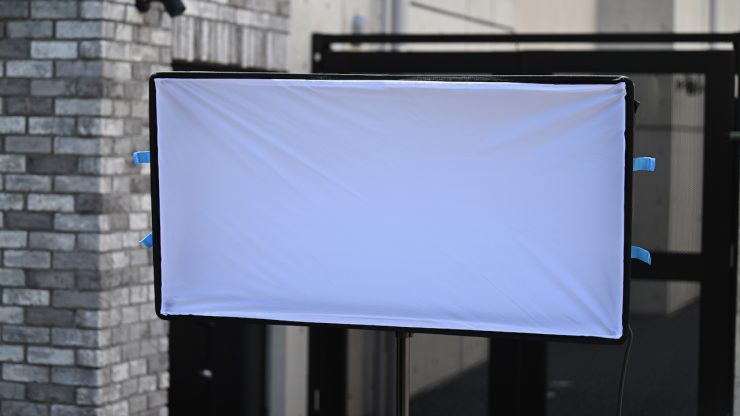
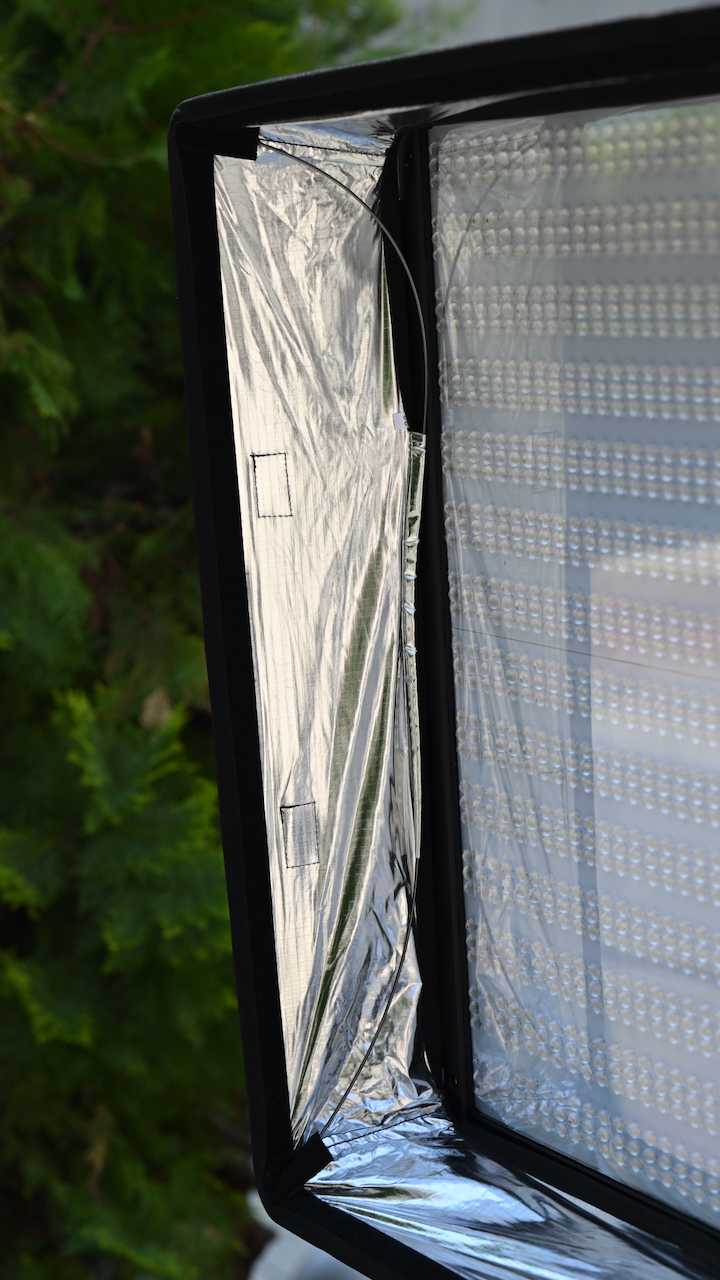
The softbox comes pre-installed and can be quickly deployed using hook-and-loop fasteners. It can be easily compressed for compact storage when not in use. The included eggcrate attaches over the softbox with the elastic strap. When the light is used overhead, or truss-mounted, a rear hanging loop accommodates a safety cable.
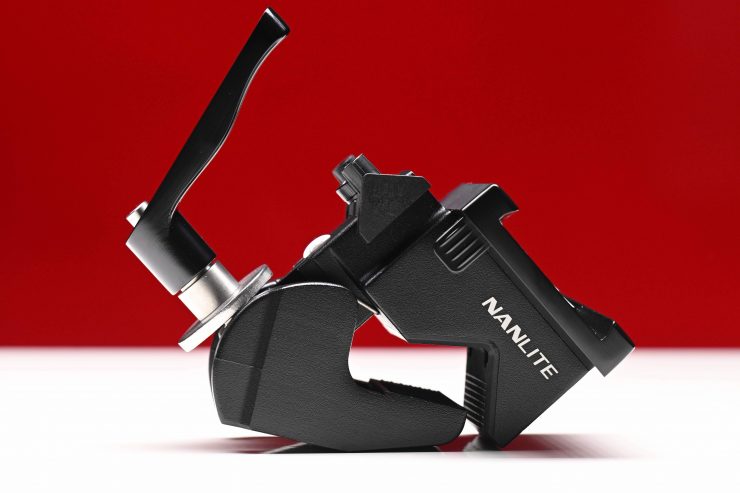
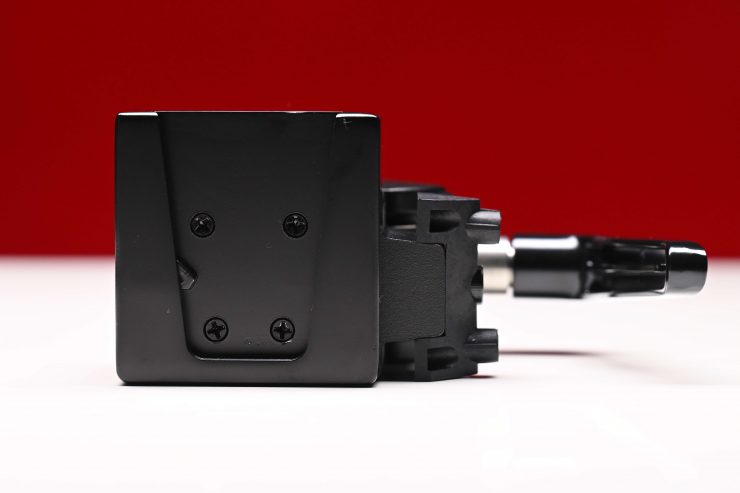
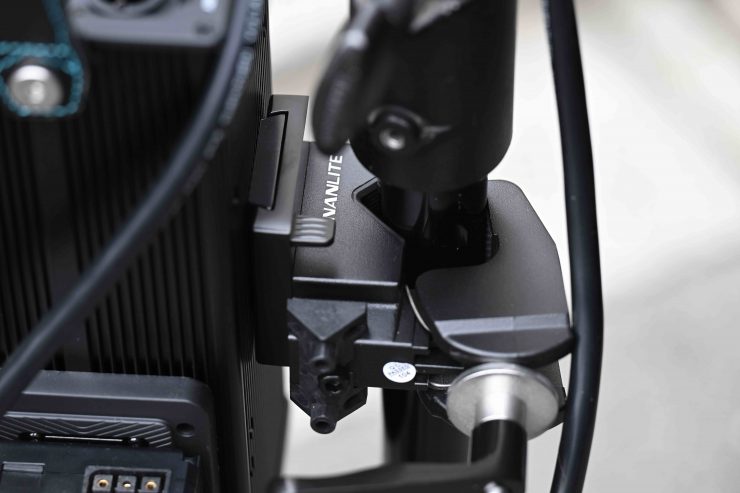
As I mentioned earlier, the light also comes with a clamp that has a V-wedge receptor on it if you need to attach the power supply/controller to a lightstand.
Power Supply/Controller
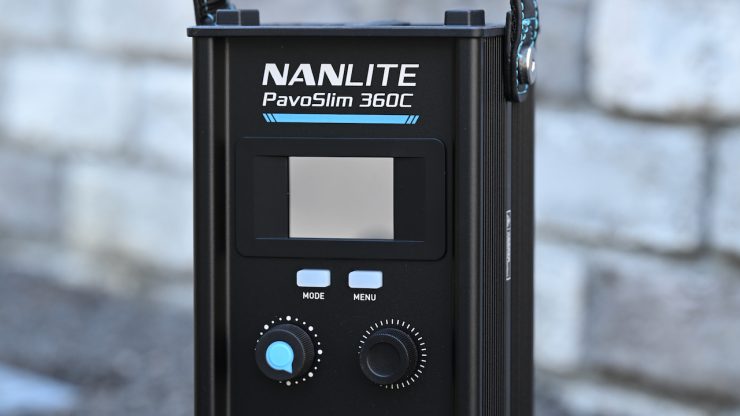
As I previously mentioned, the PavoSlim 360C comes with a separate power supply/controller.
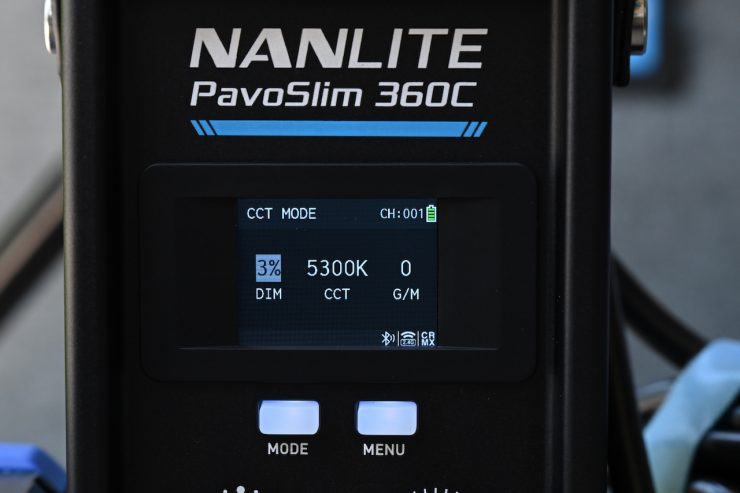
The power supply/controller is very intuitive and straightforward to use. You can clearly see all of the parameters on the display screen. There is nothing overly complicated about the operation.
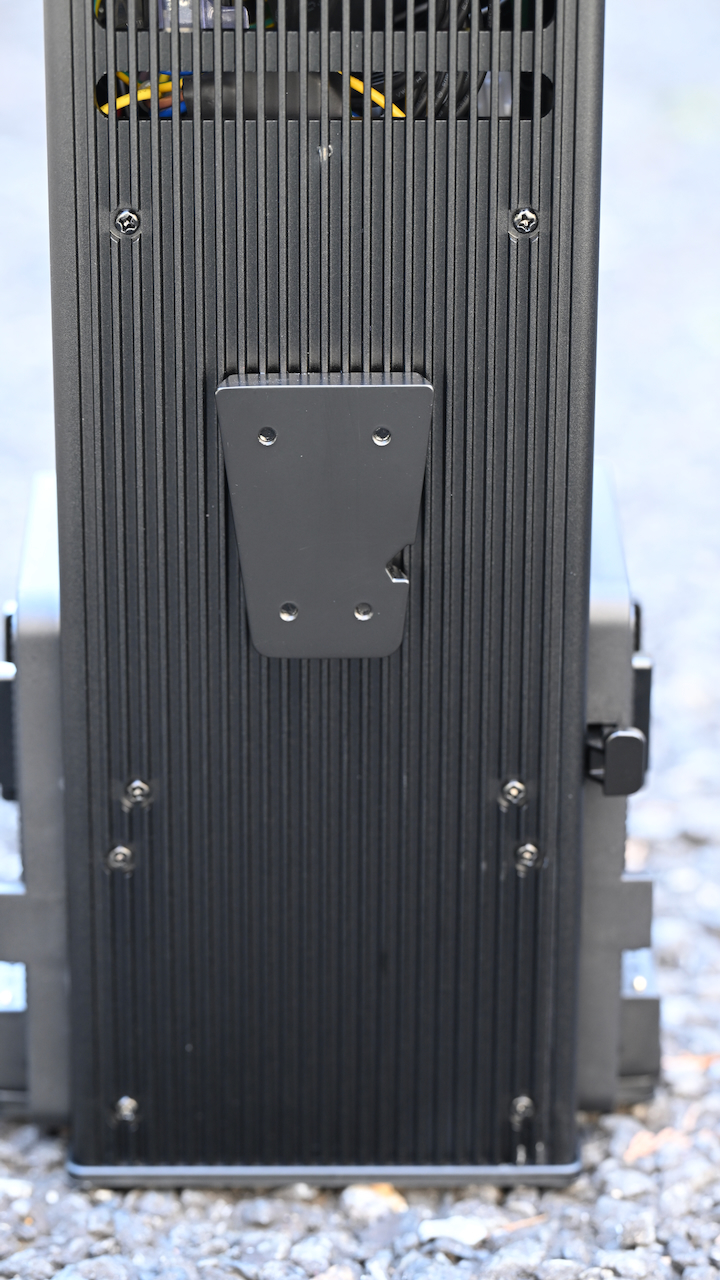
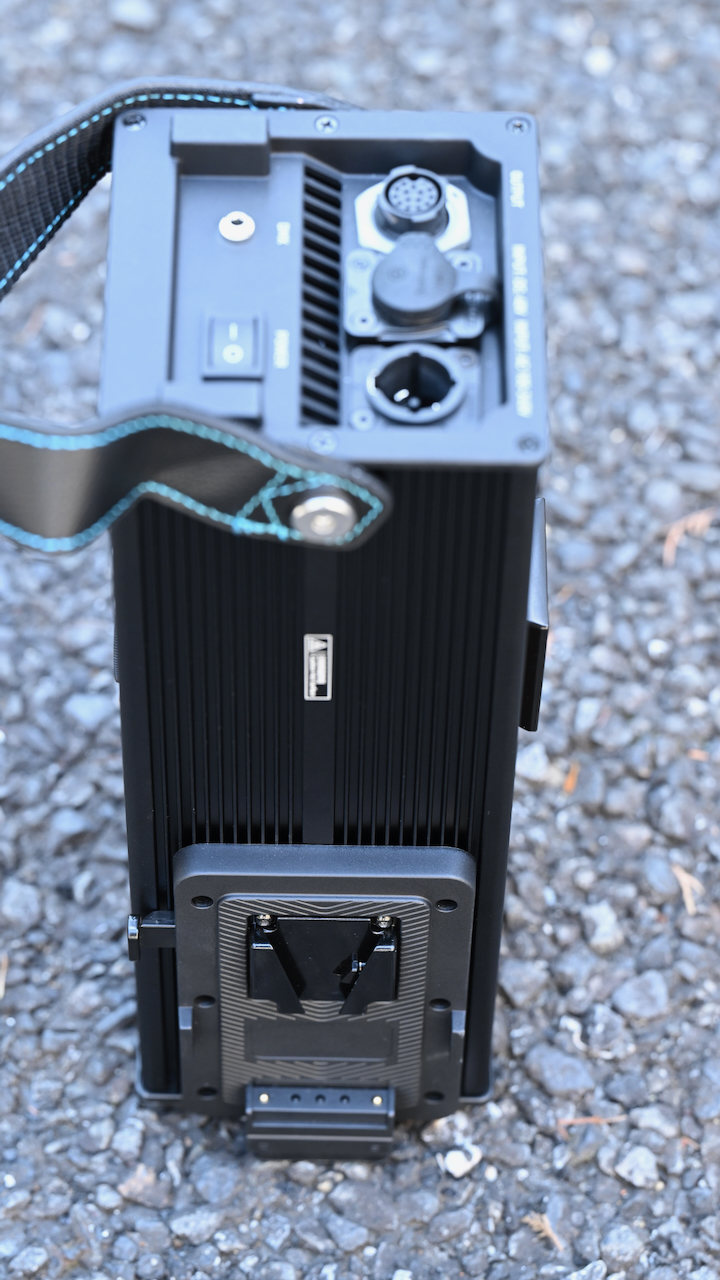
The power supply/controllers feature a little V-mount style receptor quick-release plate on the side. You can use the included clamp mount to attach the power supply/controller to a lightstand.
I like that Nanlite includes an extra-long head cable that goes from the light to the power supply/controller, so when you have the light out on a boom arm, you can put the power supply/controller on the ground because the cable is long enough.
On paper, one of the appeals of the PavoSlim 360C is that you can power it from two flight-safe batteries, but not at 100% output. While this is advantageous if you are traveling a lot, the physical size and weight of the 360C may not make it the best option.
LED mats are great because they are compact and lightweight, but they still require power like any other light. They can’t magically produce a lot of output without a fairly large power supply. I like that Nanlite has managed to keep the weight of the power supply/controller to a minimum.
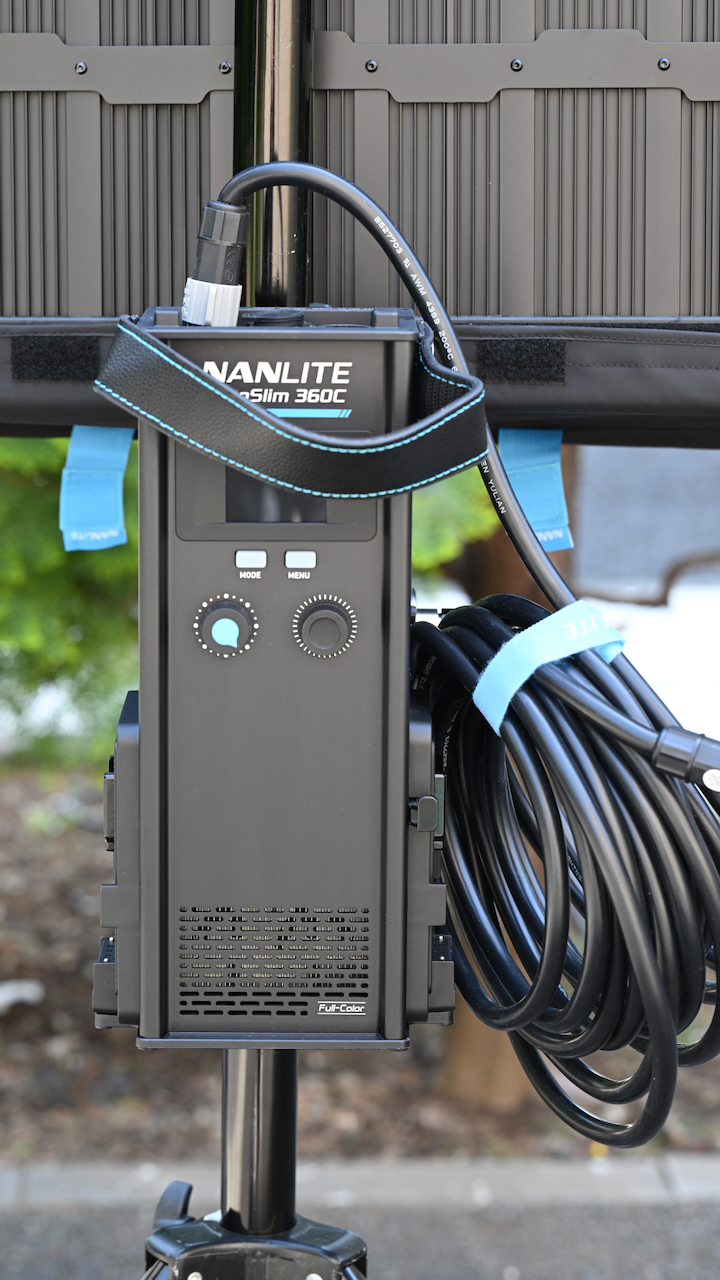
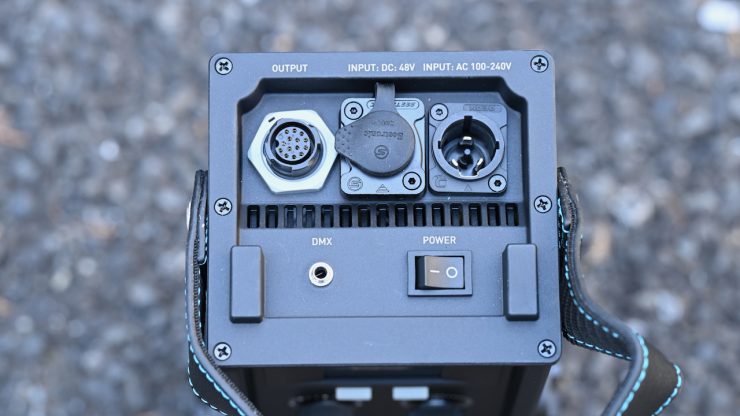
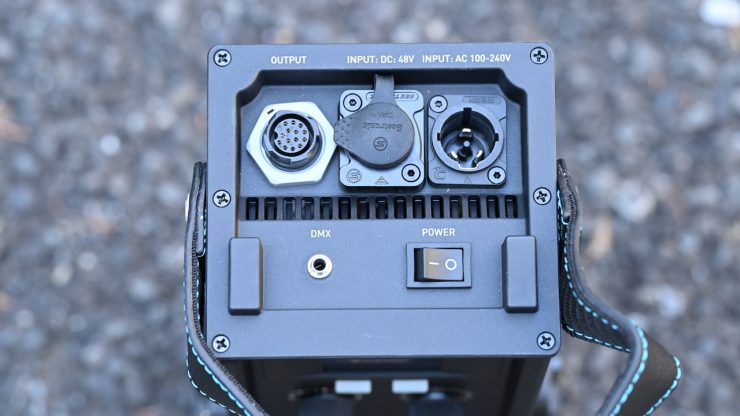
The PavoSlim 360C Power Supply/Controller has the following inputs & outputs:
- 1x Power Output
- 1 x USB-A Female Service Input
- 1 x powerCON AC Power Input (110 to 240 VAC, 50 / 60 Hz)
- 1 x DMX Input
The power supply/controller does have an in-built fan; however, there are no fan controls or options.
The fan noise is basically non-existent, and the light is extremely quiet, which is fantastic.
Control
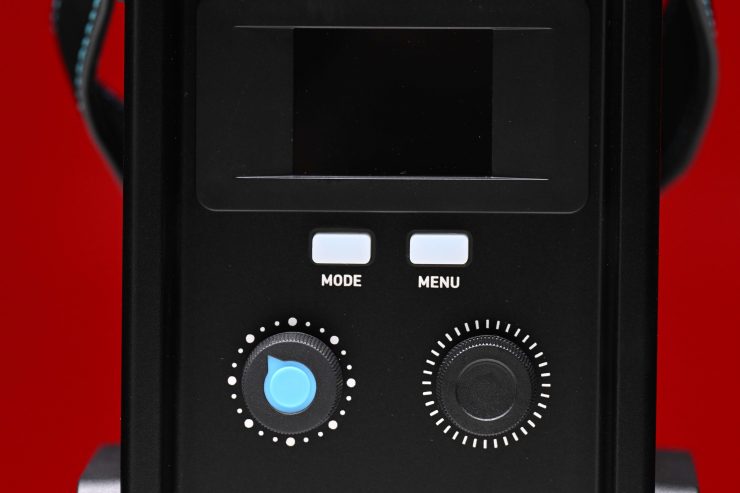
The power supply/controller has two large dials that you use to navigate between modes and to make adjustments. There are also two buttons:
- MODE
- MENU
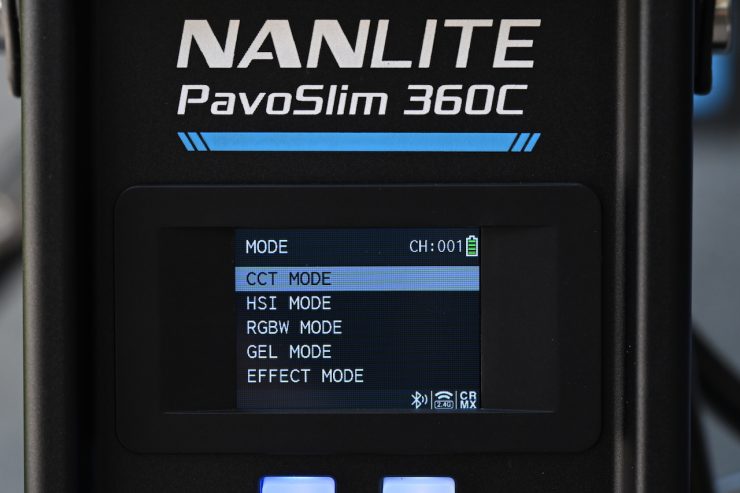
The MODE button toggles between the following operating modes:
- CCT
- HSI
- RGBW
- GEL
- EFFECT
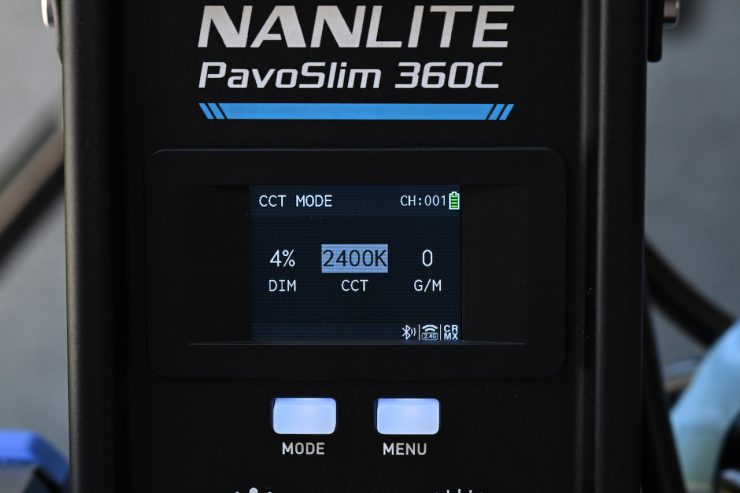
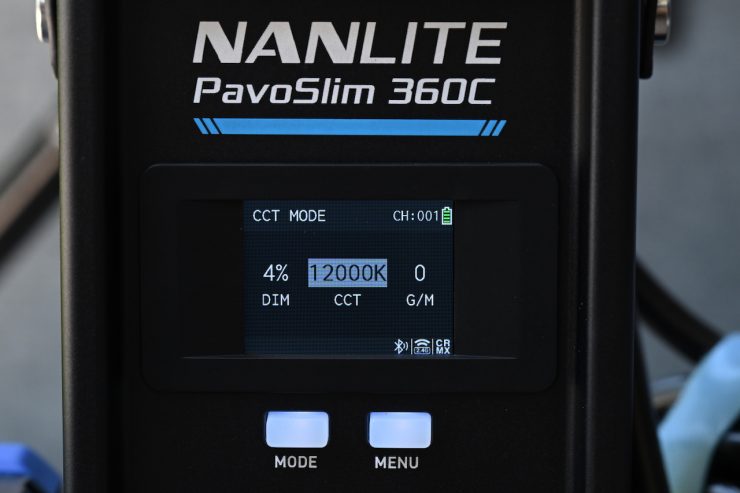
In the CCT mode, you can make adjustments to the CCT from 2400K to 12,000K. You can also change the intensity and the +/- G/M.
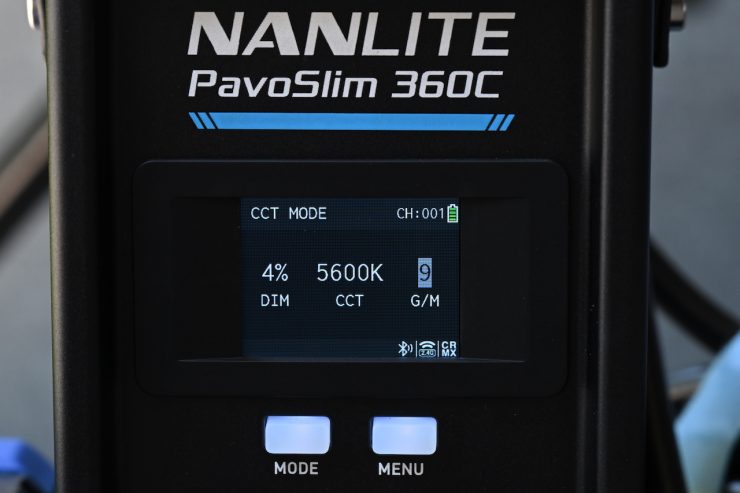
It is nice that the lights feature the ability to adjust the +/- G/M bias. This can really help you match other lighting sources.
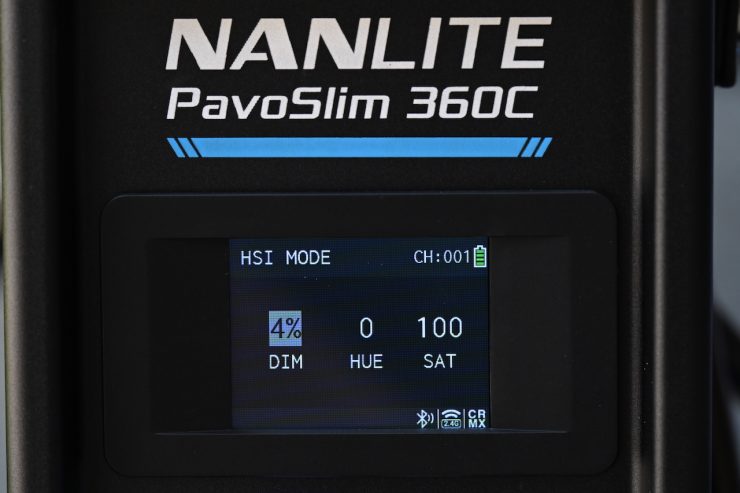
In the HSI mode, you can individually adjust the Hue, Saturation, and Intensity.
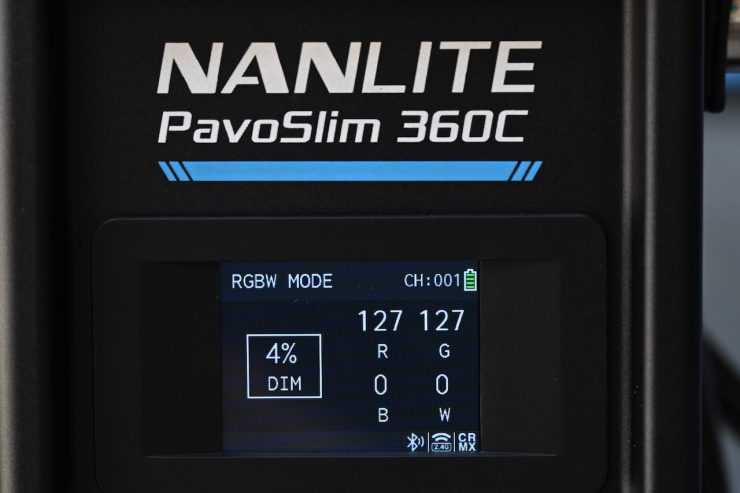
In the RGBW Mode, you can individually adjust Red, Green, Blue, and white.
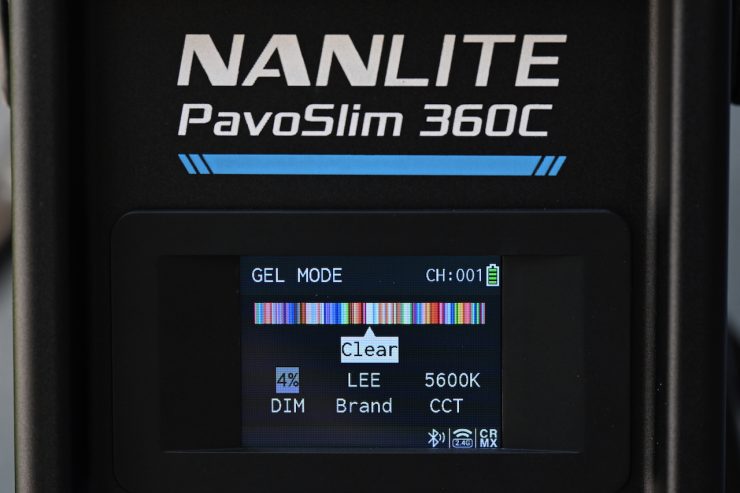
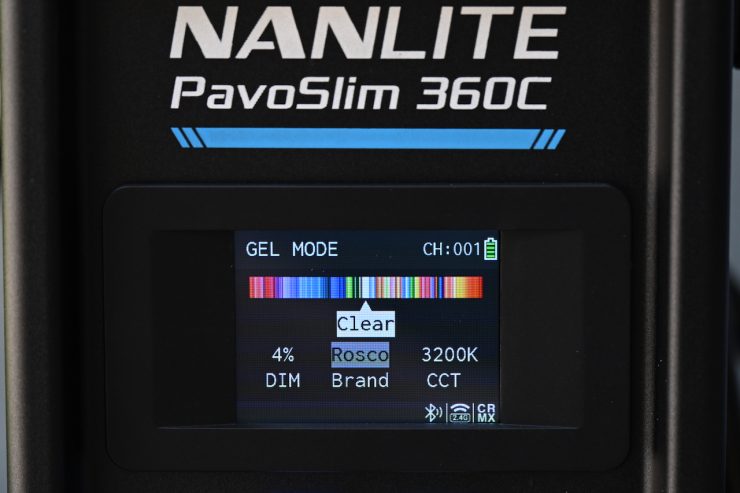
In the GEL Mode, you can choose from a vast array of digital gels. You can also choose your base CCT from either 3200K or 5600K.
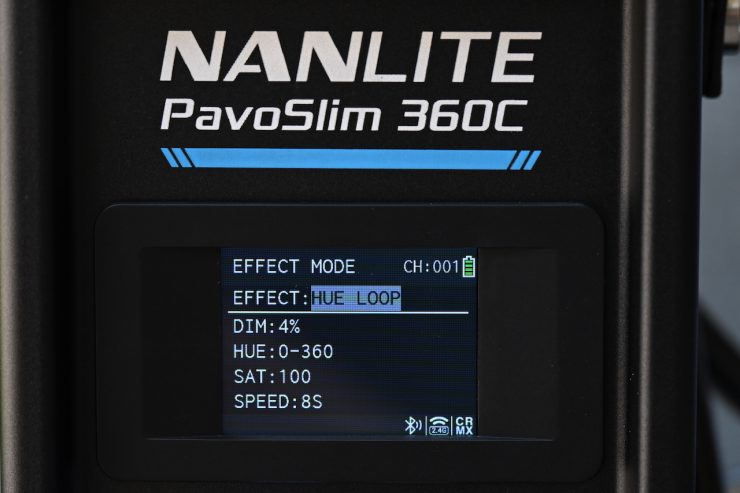
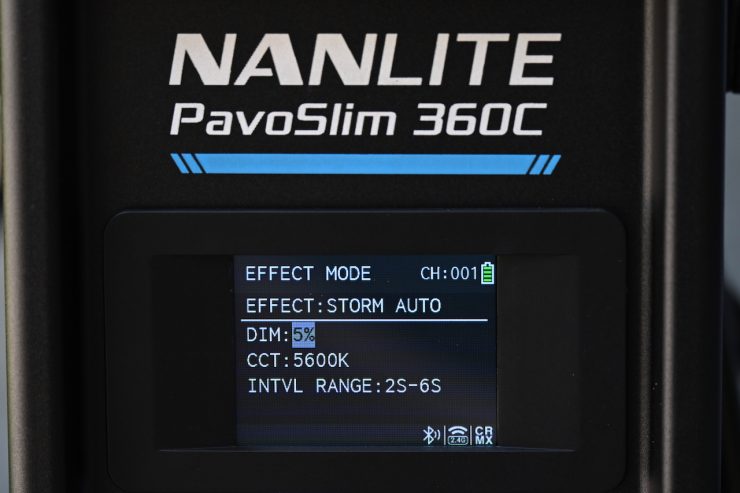
In the Effects Mode, you can choose from a decent collection of special effects.
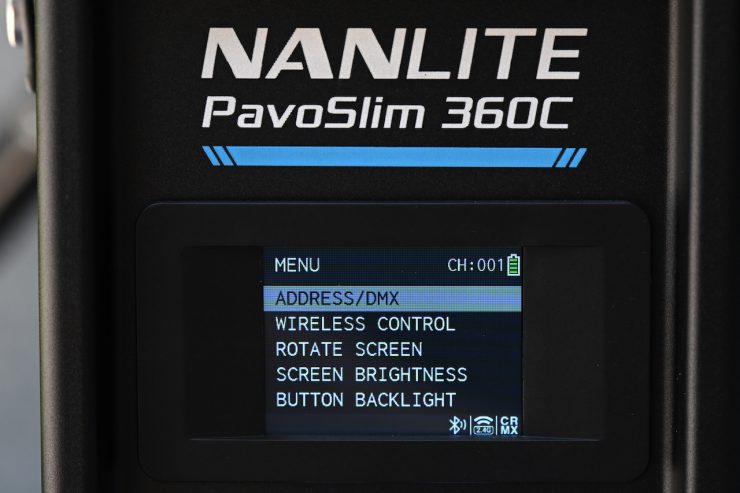
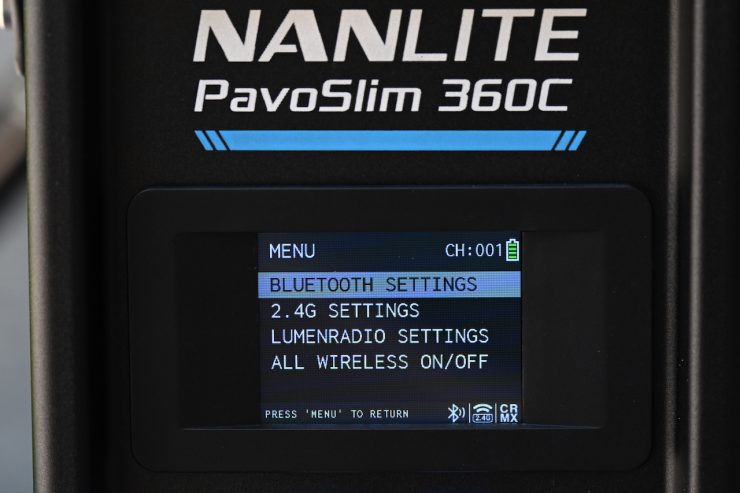
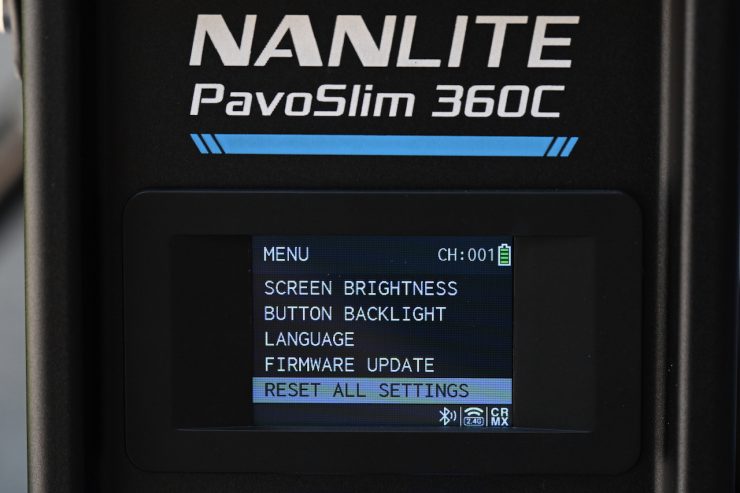
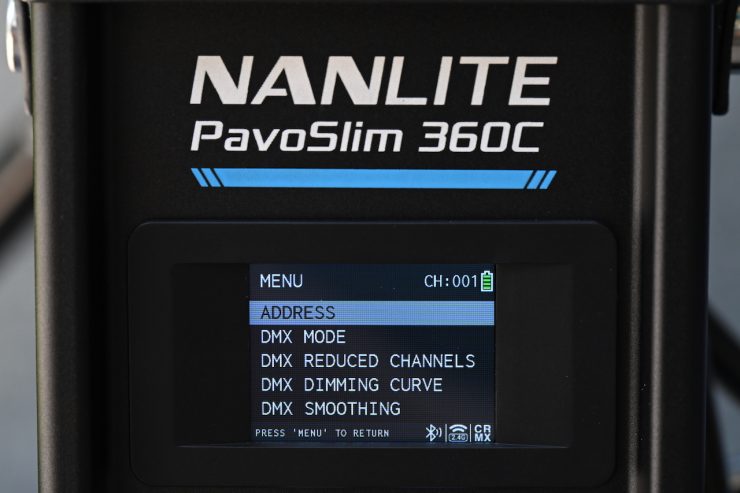
If you press the MENU button, you can choose to view or alter various settings, including the wireless, DMX, language, etc.
Overall, the UI is very intuitive and easy to use. This is also partly due to the fact that there are not a ton of menus or options to choose from. You don’t need a manual to be able to work out how to use this light. This is always a good thing, especially if you are handing the light off to someone who hasn’t used it before.
You can also control the light using DMX/RDM or LumenRadio.
NANLINK Bluetooth app
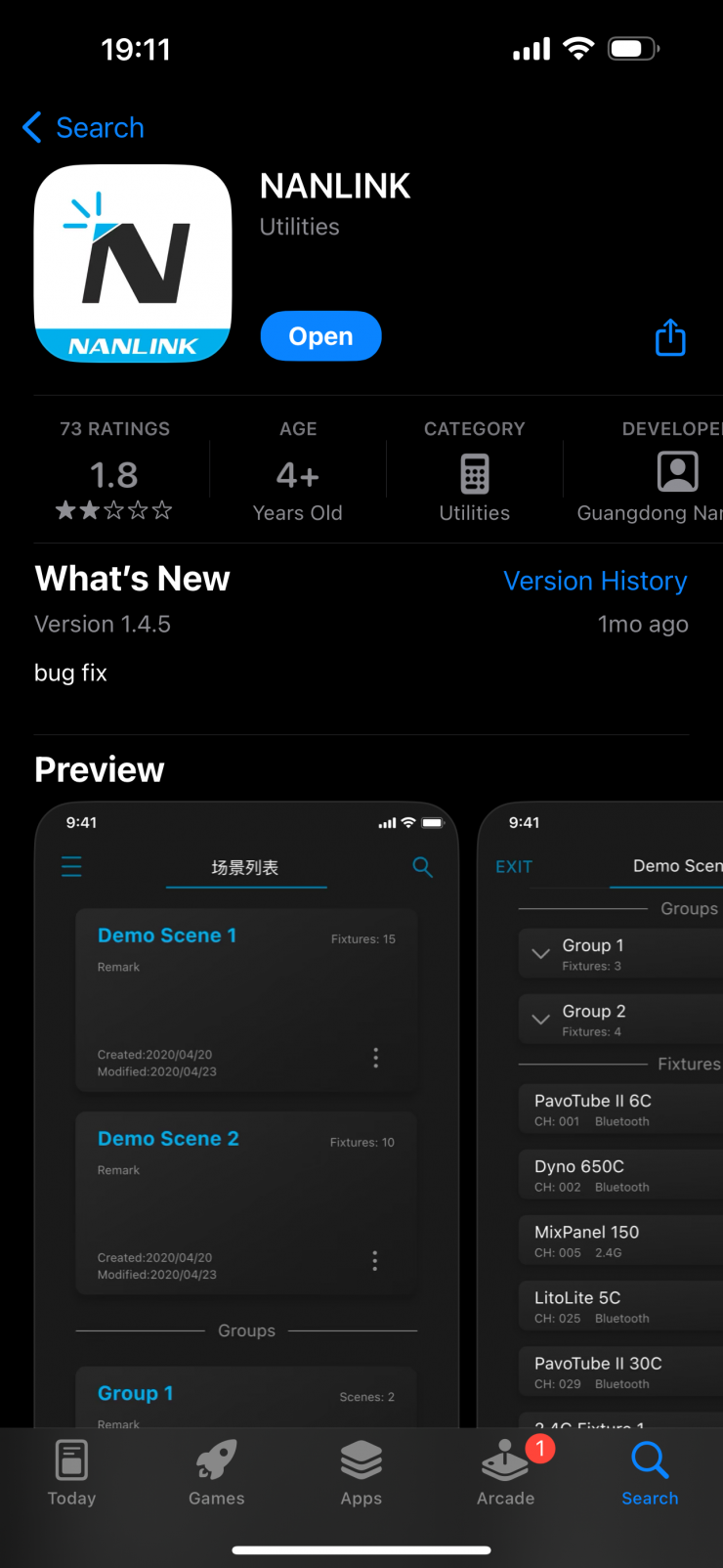
As well as making adjustments directly from the power supply/controller, you can also use the free NANLINK Bluetooth app to control the light remotely.
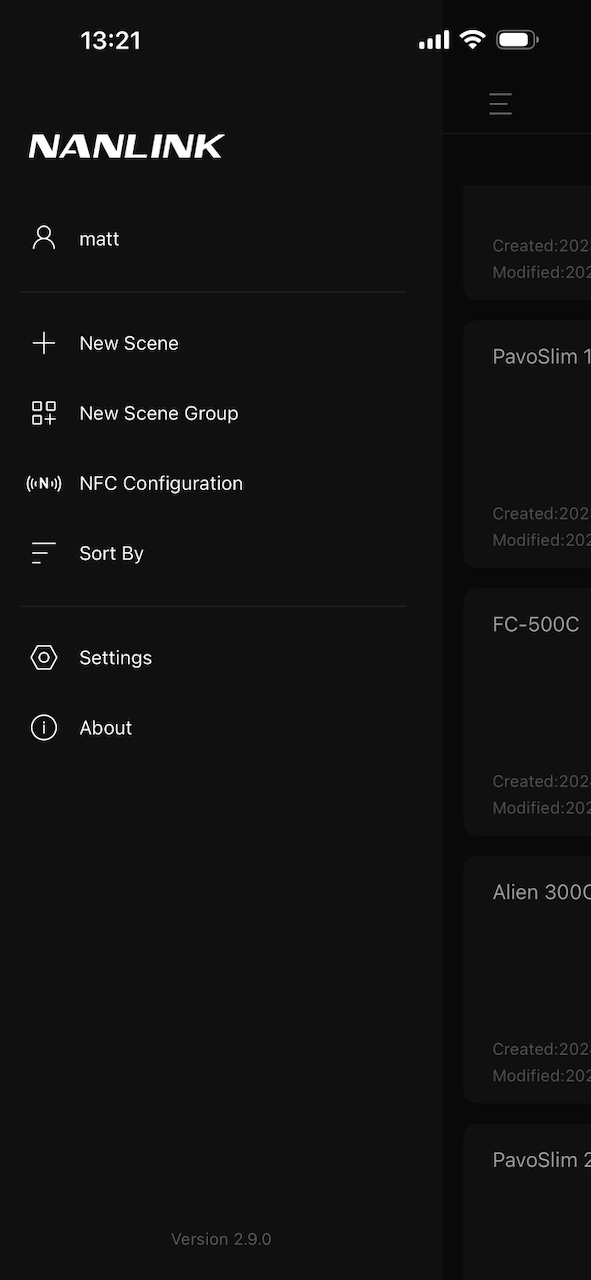
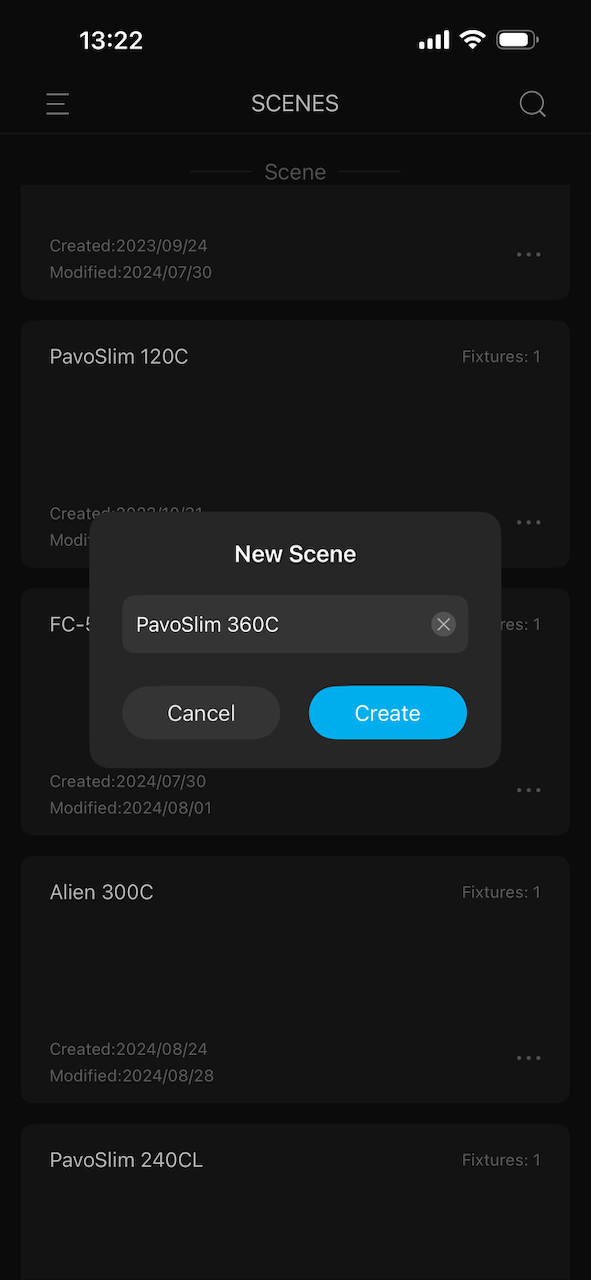
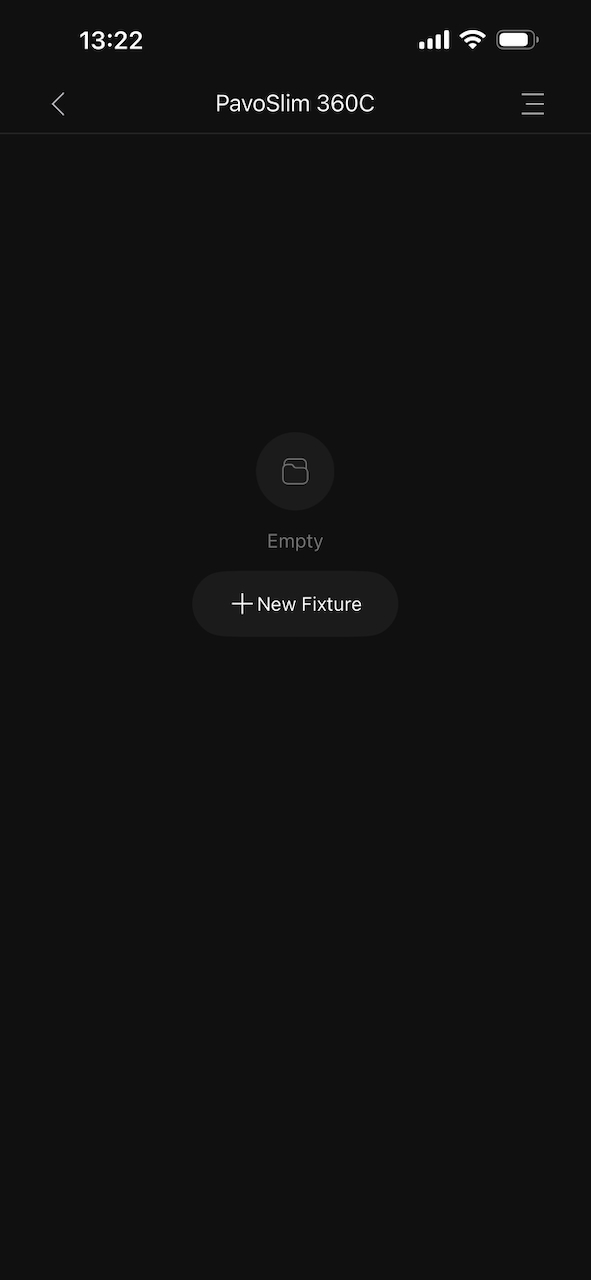
With the app, the first thing I am going to do is create a new Scene and name it PavoSlim 360C. It will then ask me to add a fixture.
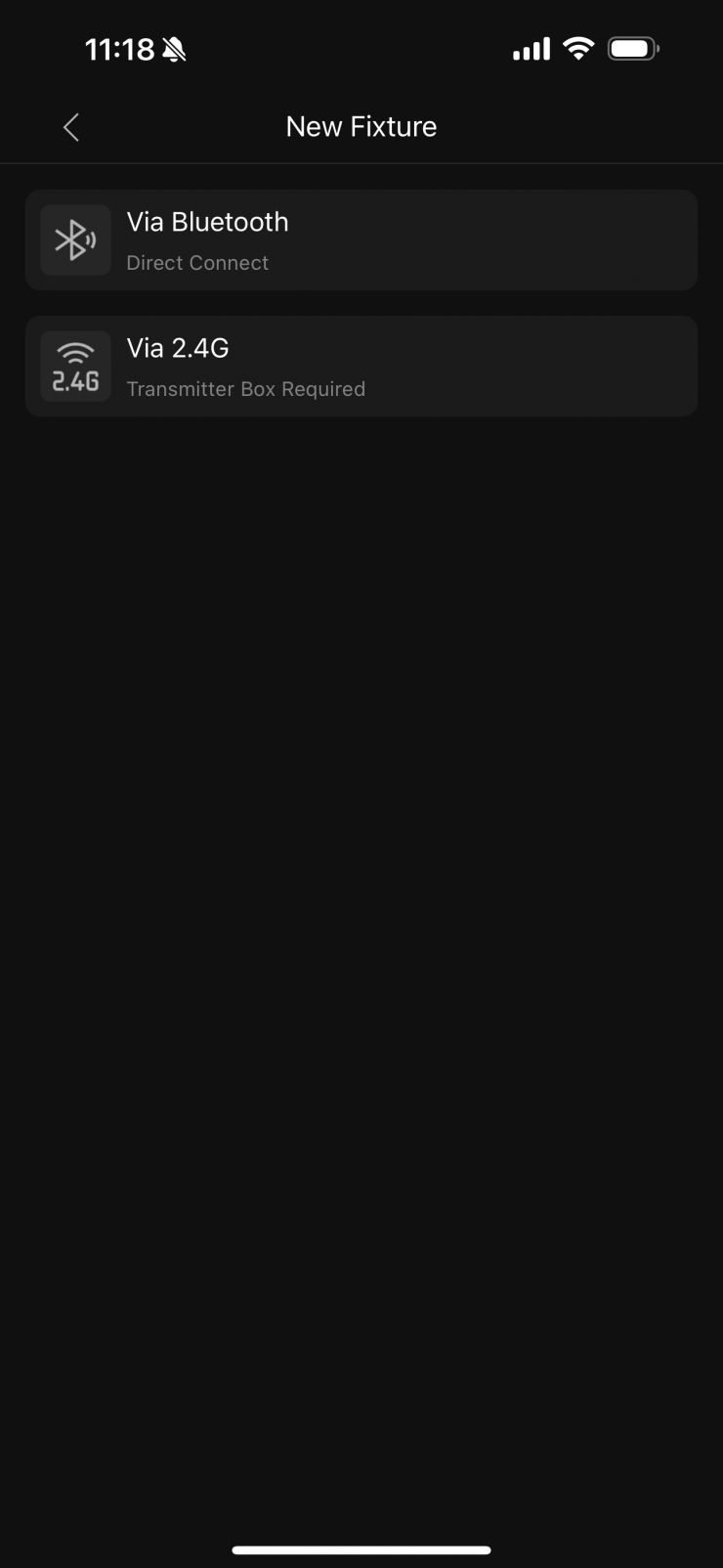
Once I click to add a new fixture, it will ask me how I would like to connect. In this case, I will choose Bluetooth.
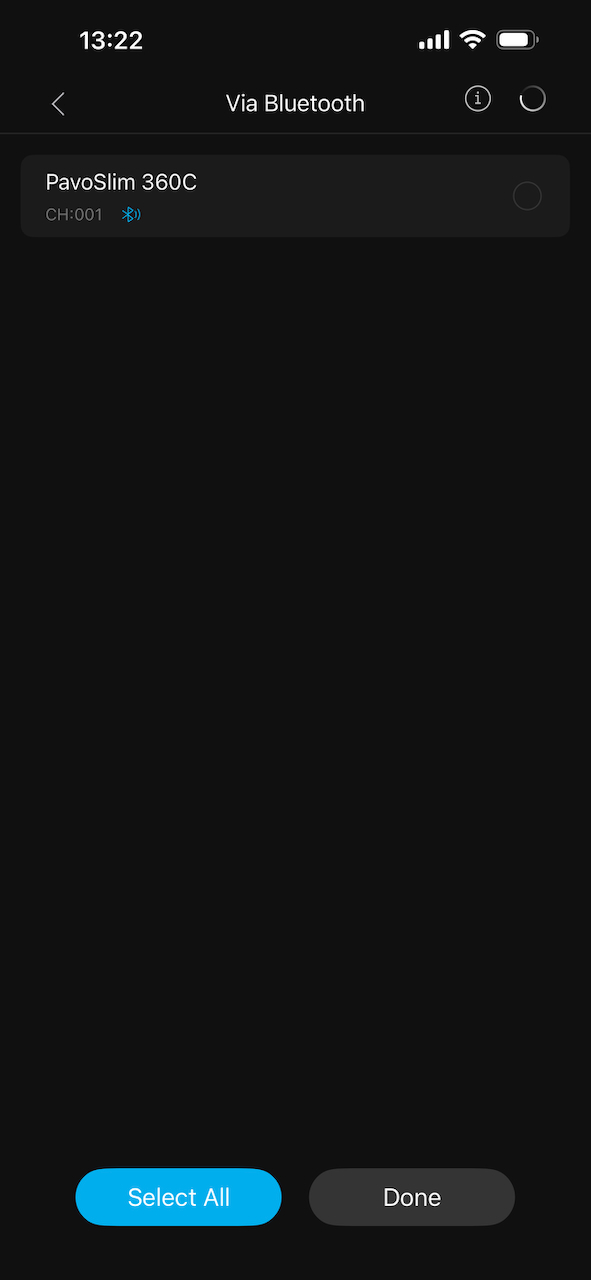
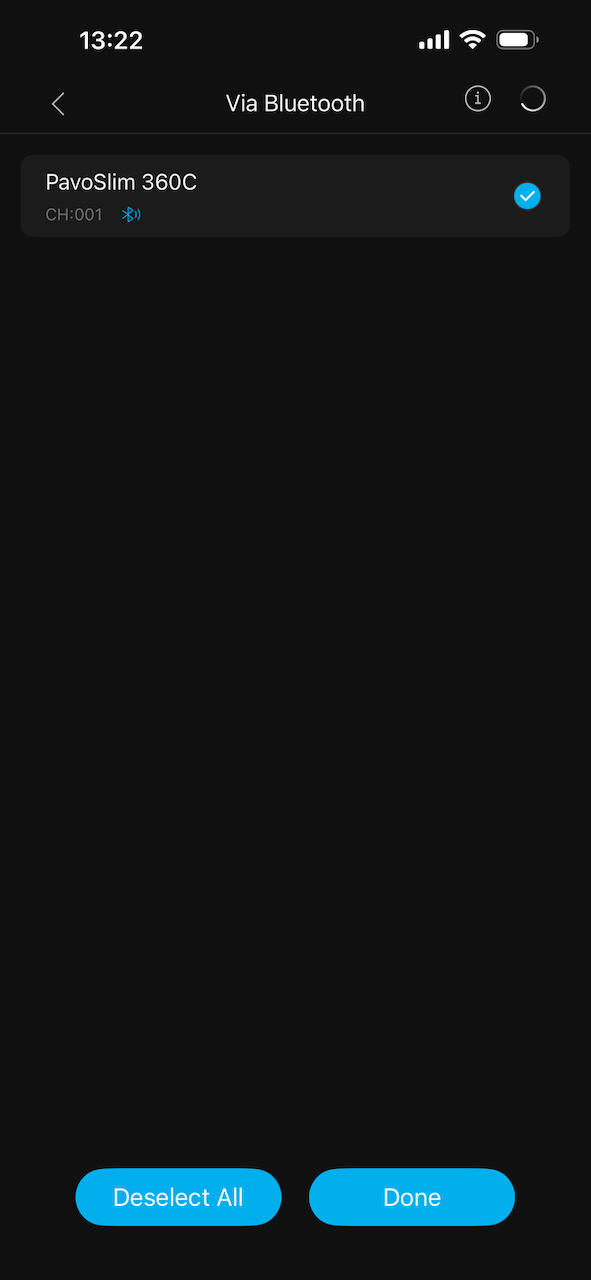
The app will then show me any Nanlite fixtures that are tuned on. I am now going to just select the PavoSlim 360C.
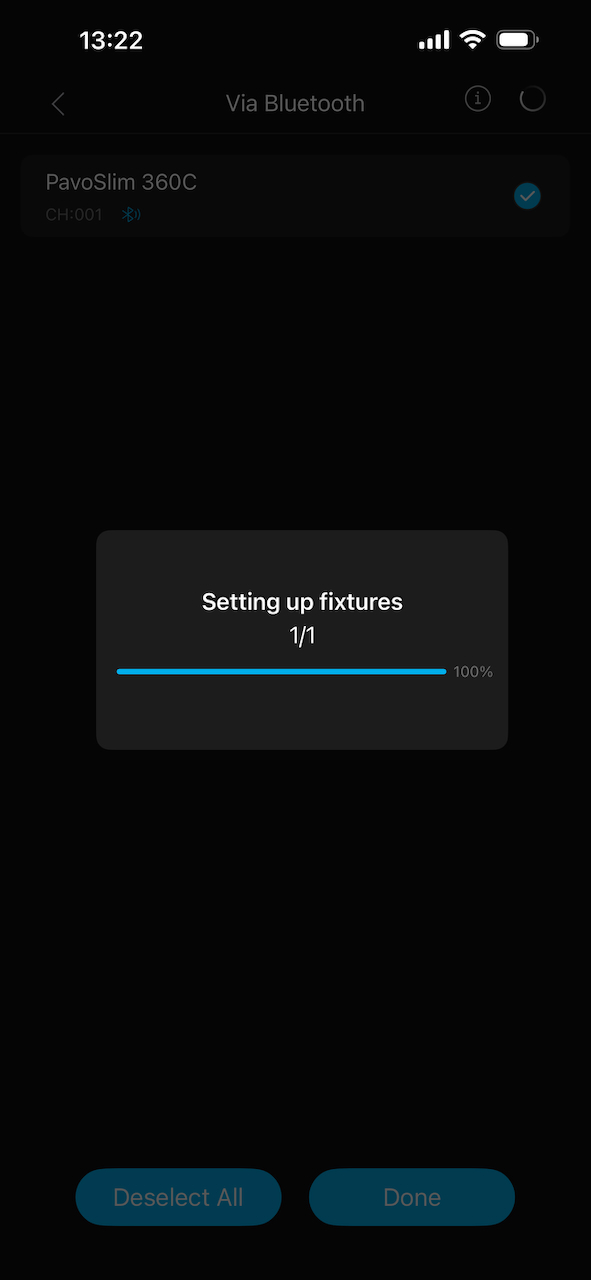
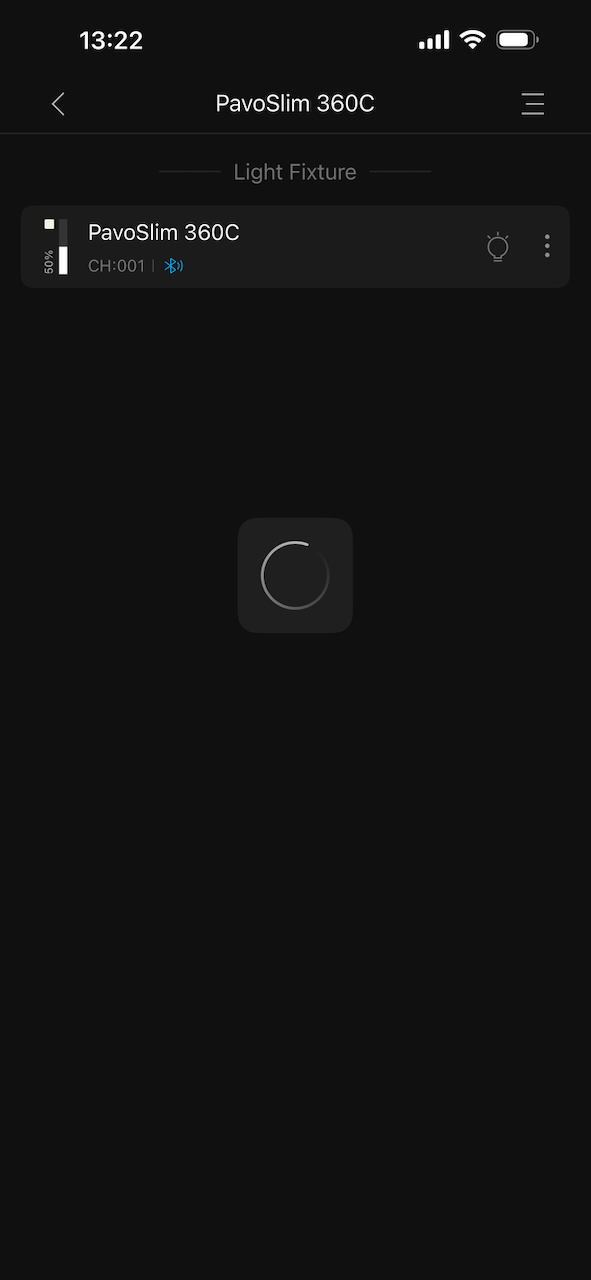
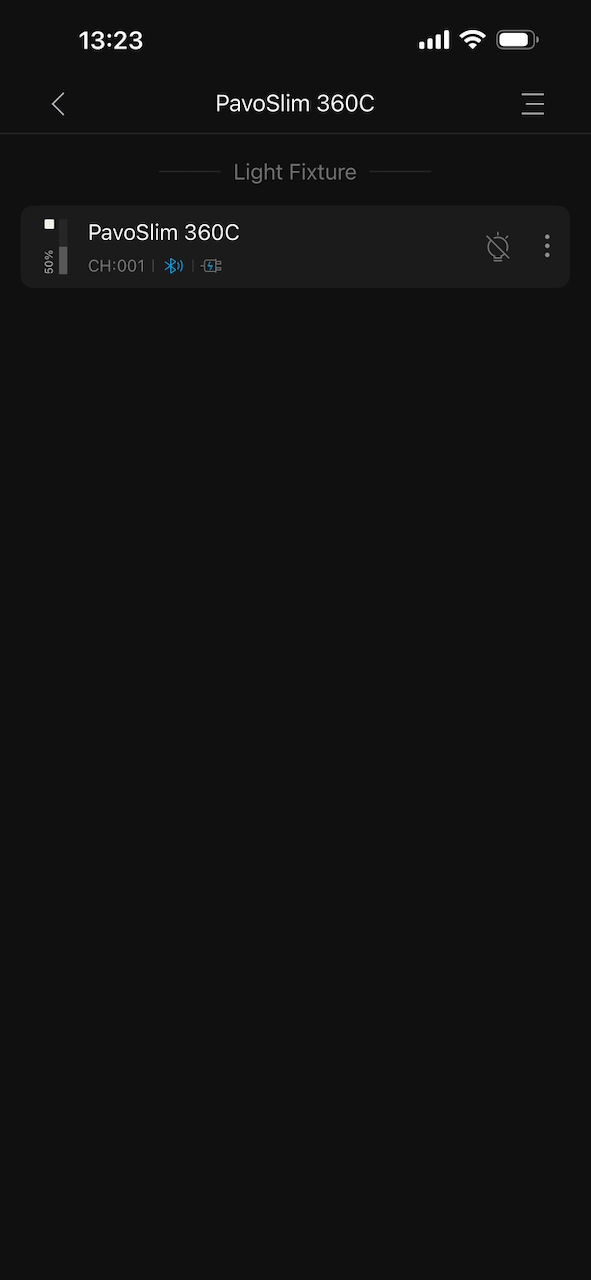
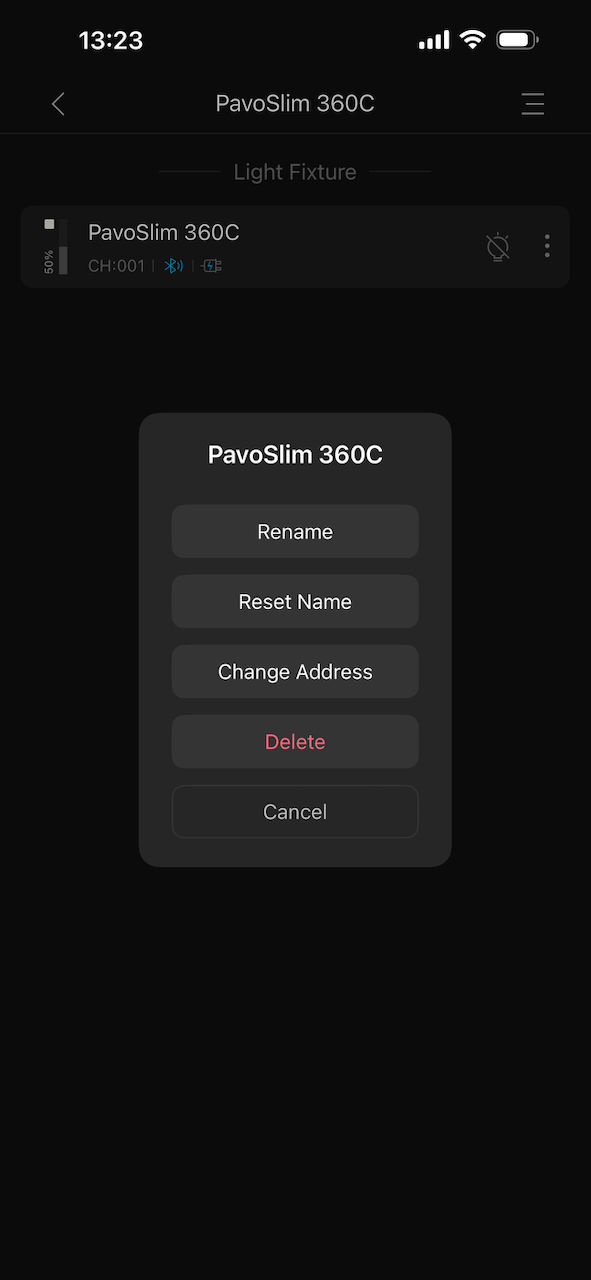
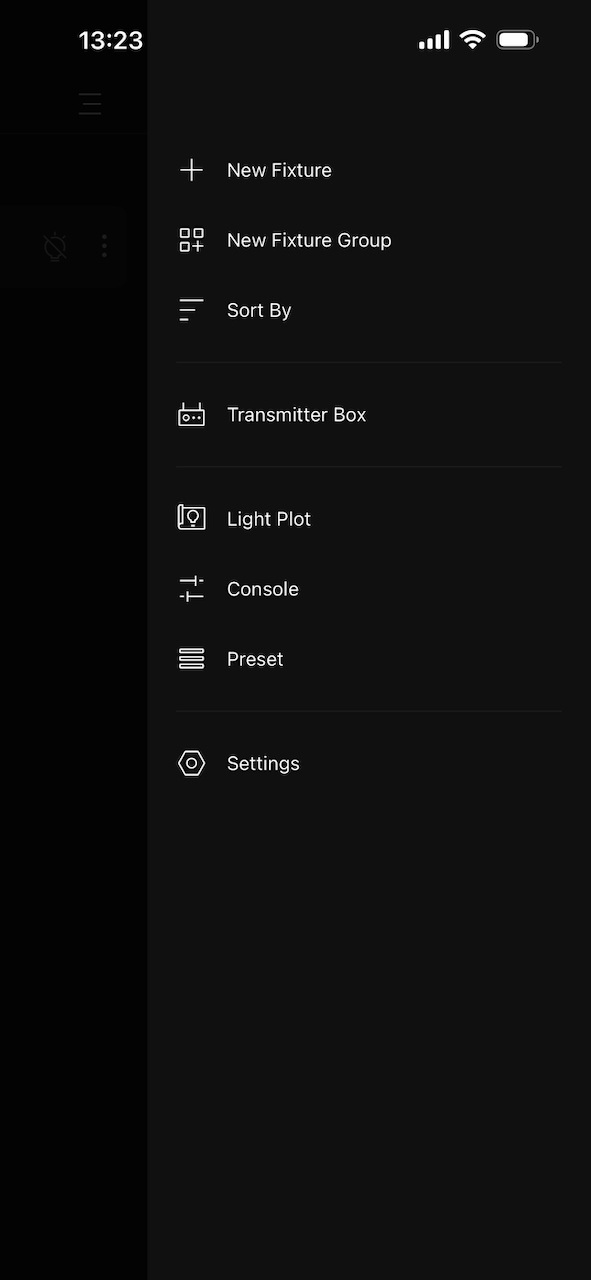
It will then start setting the fixture up to use with the app.
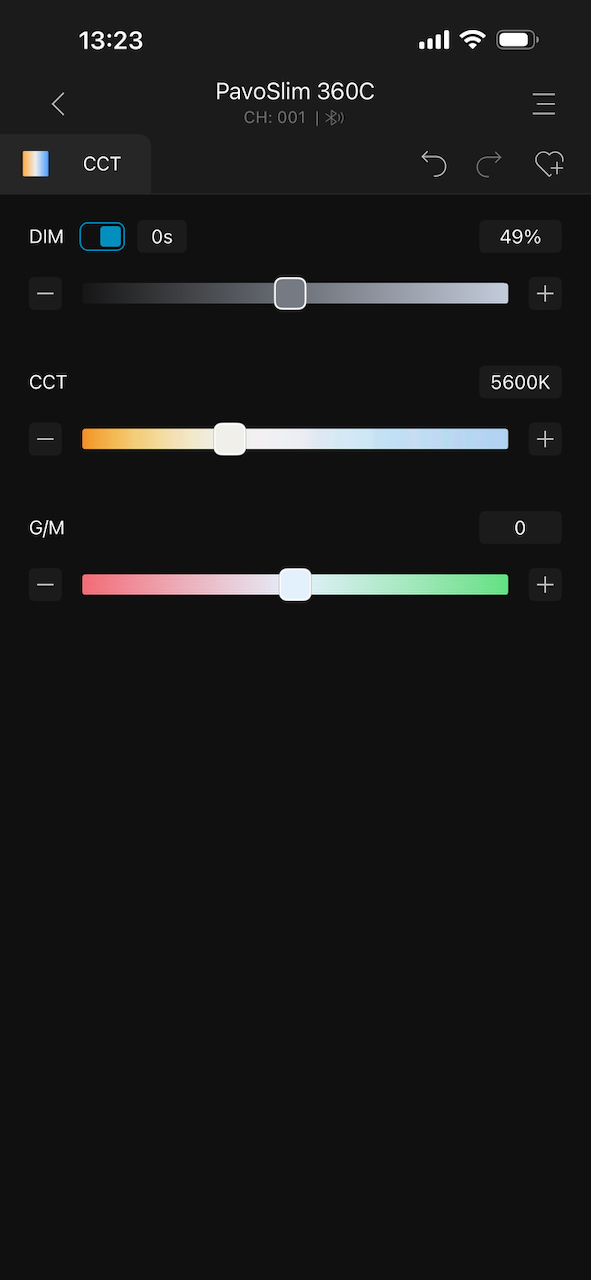
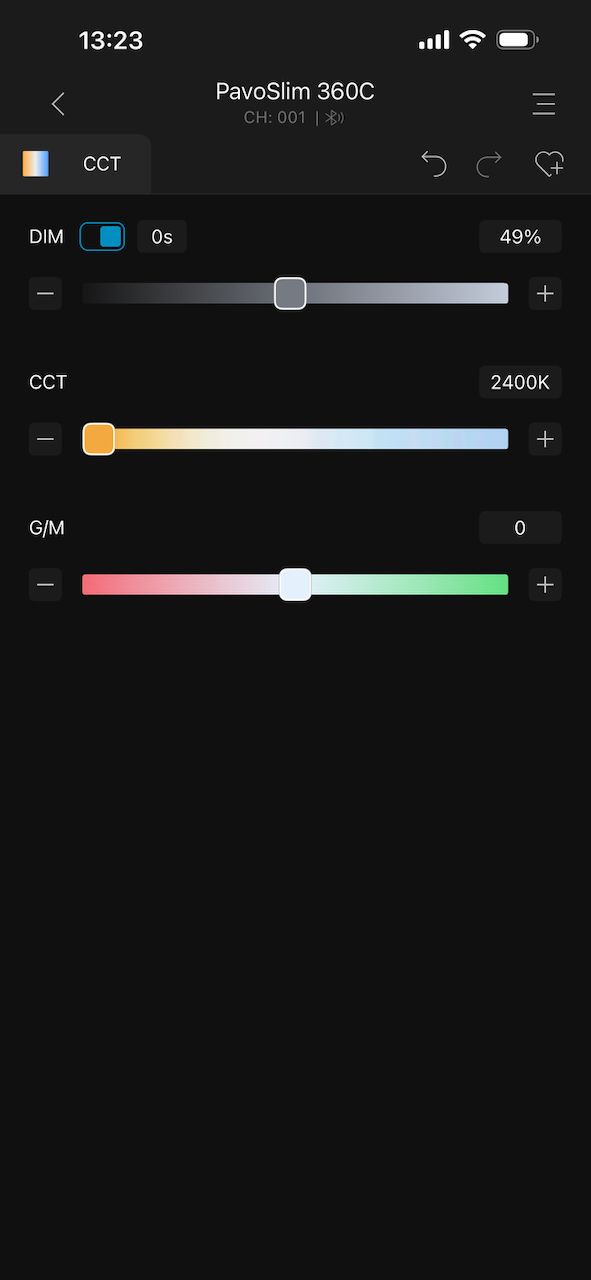
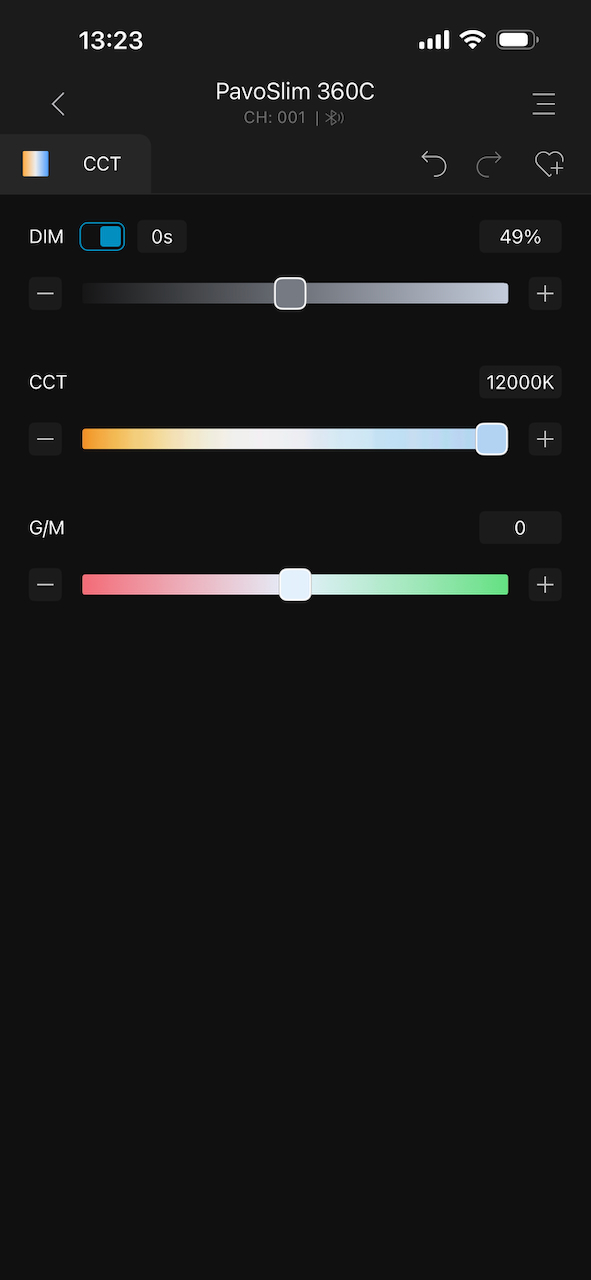
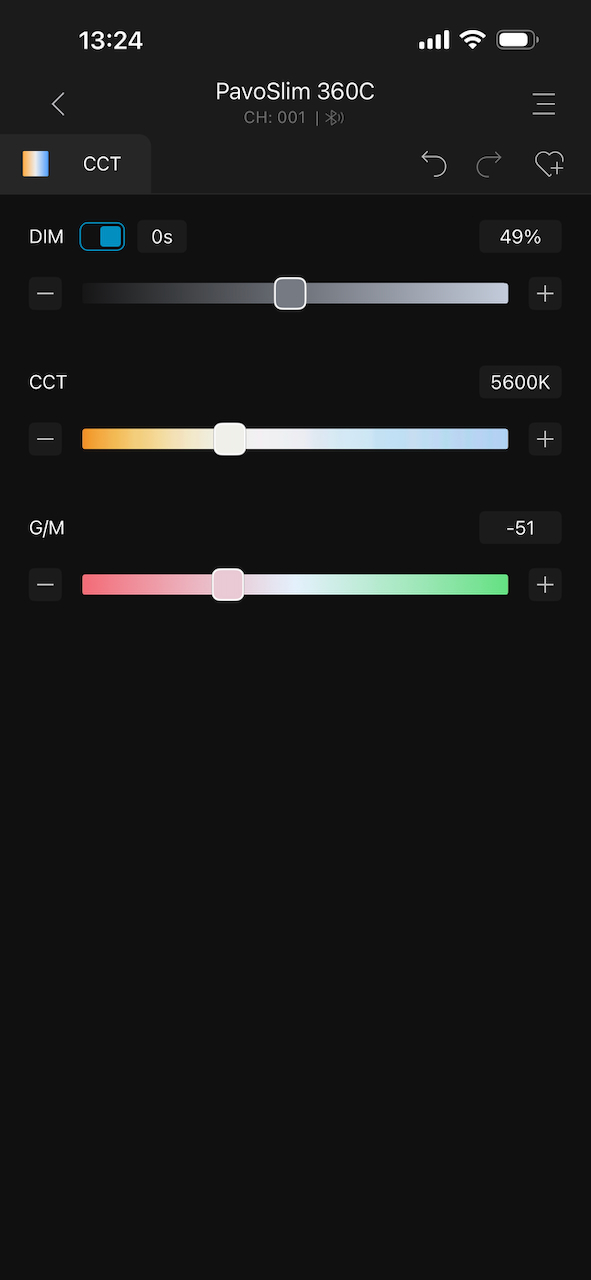
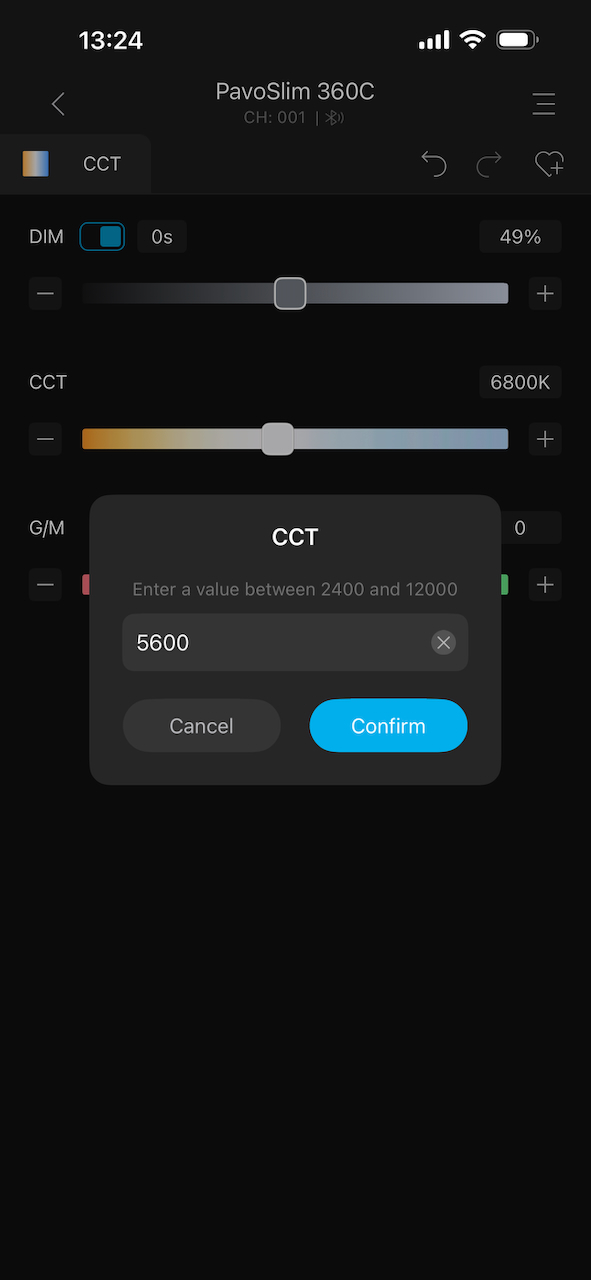
I then end up at the main UI screen. Here I can adjust the CCT, brightness, and +/- G/M bias. You can either use the sliders or dial in your own values.
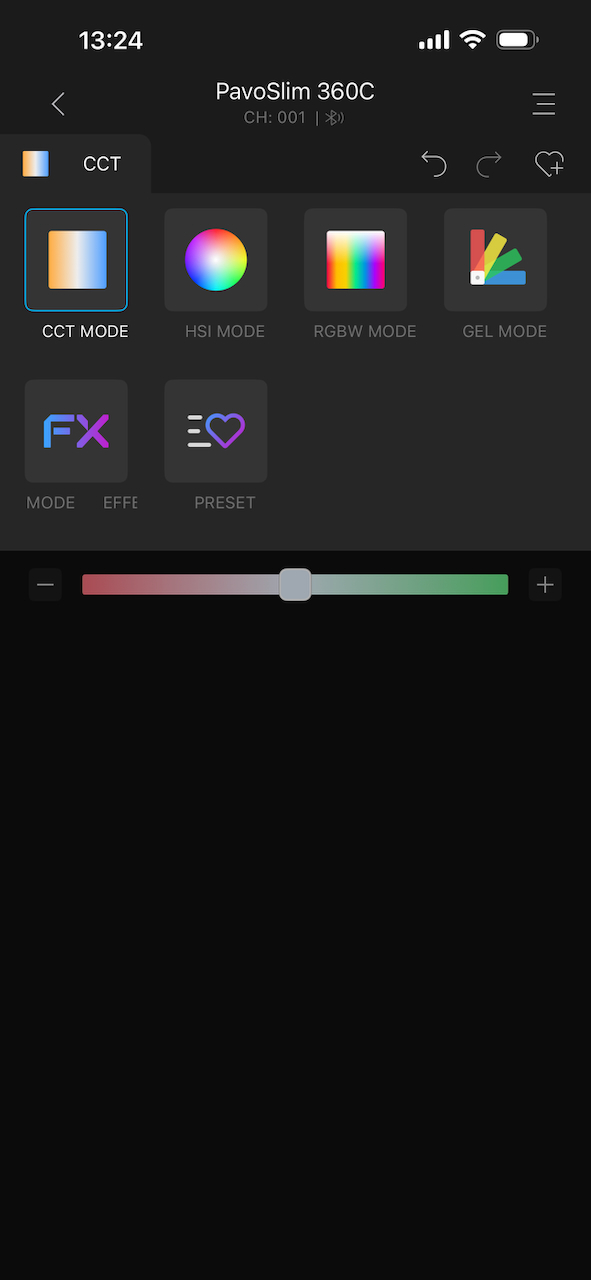
If I want to enter the various operating modes, I can do so from here.
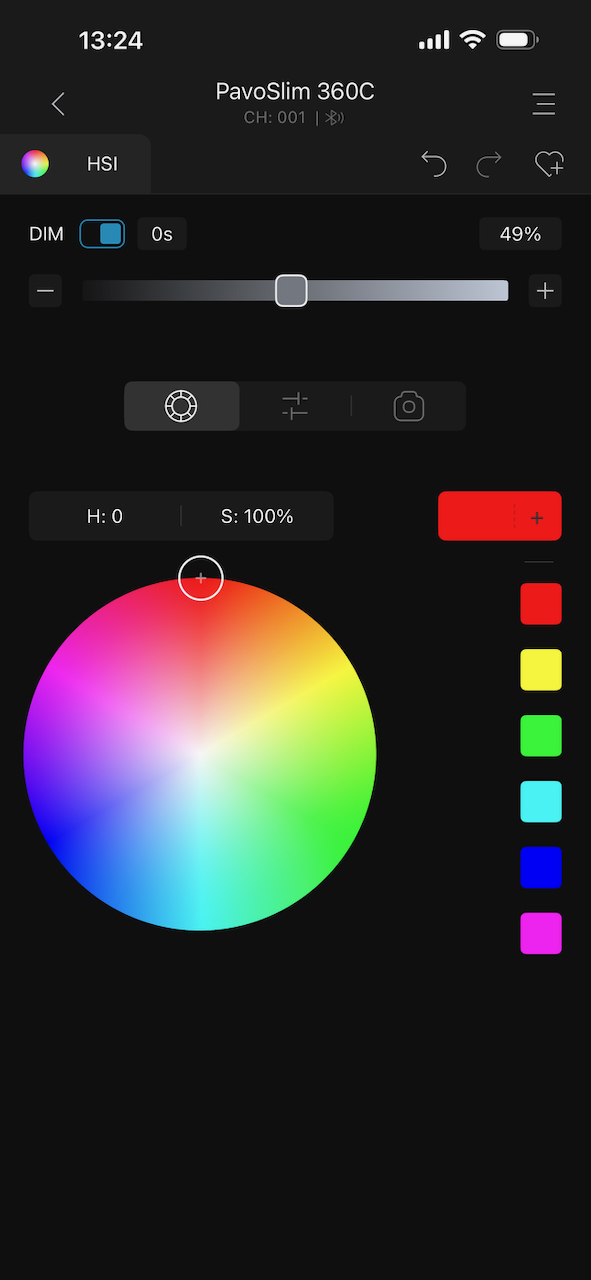
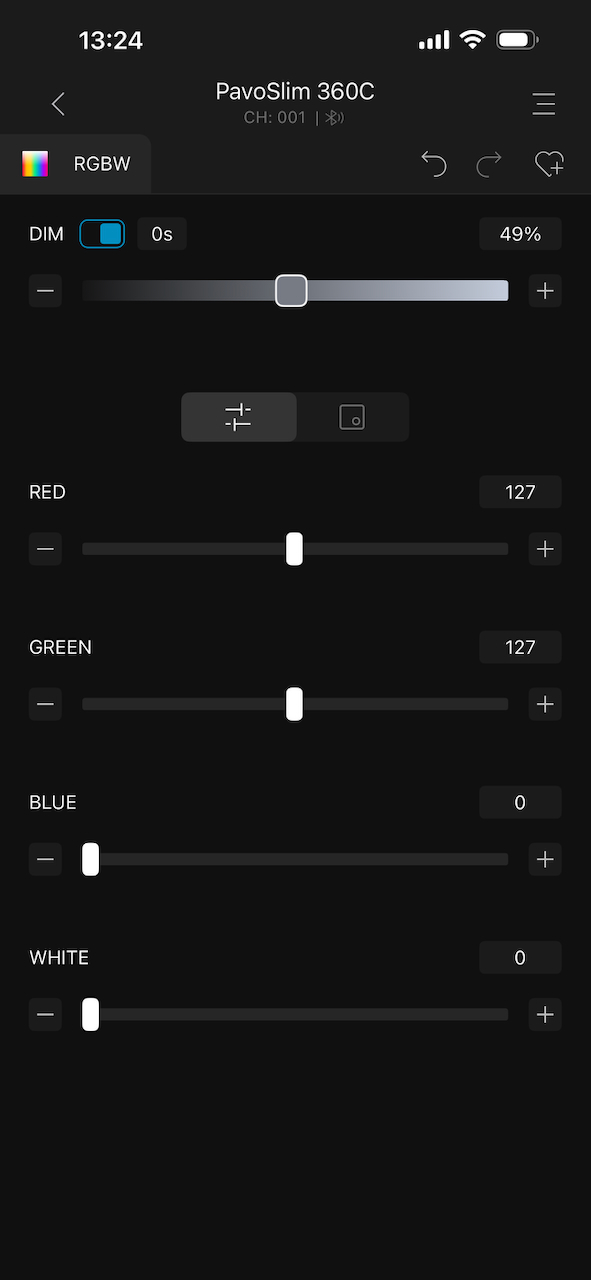
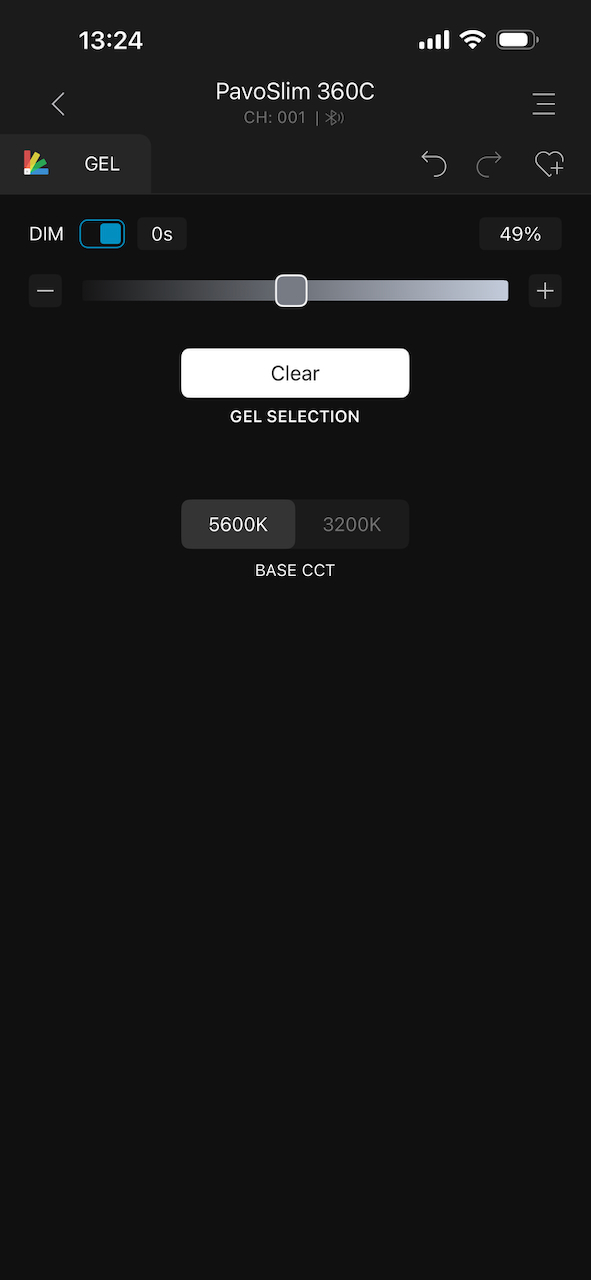
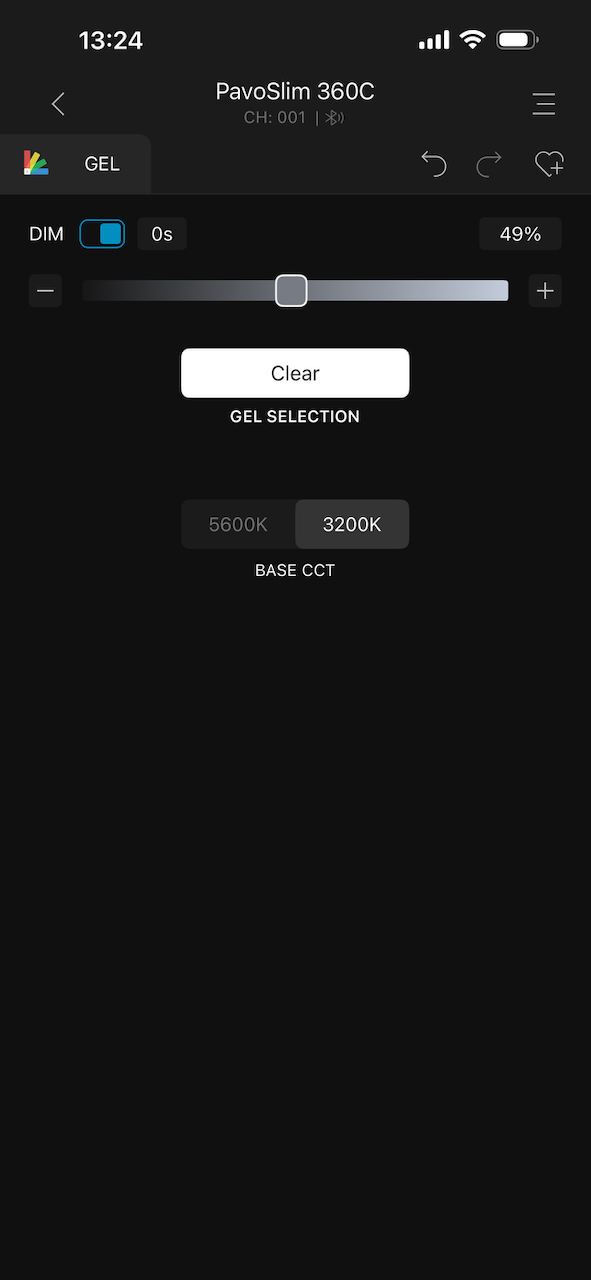
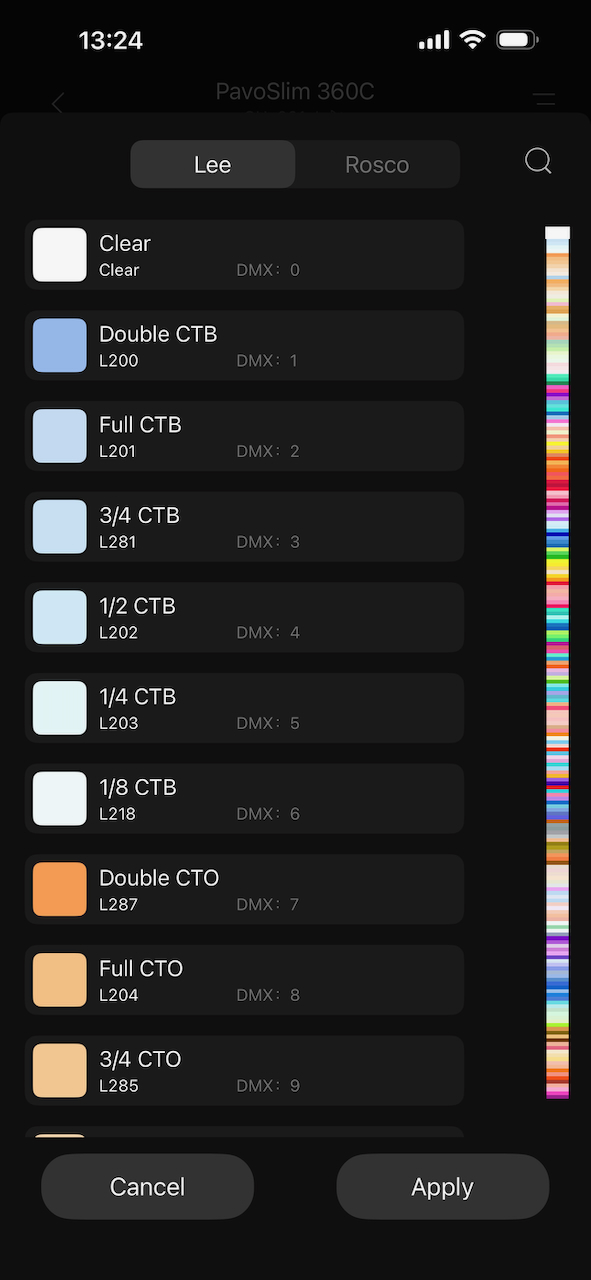
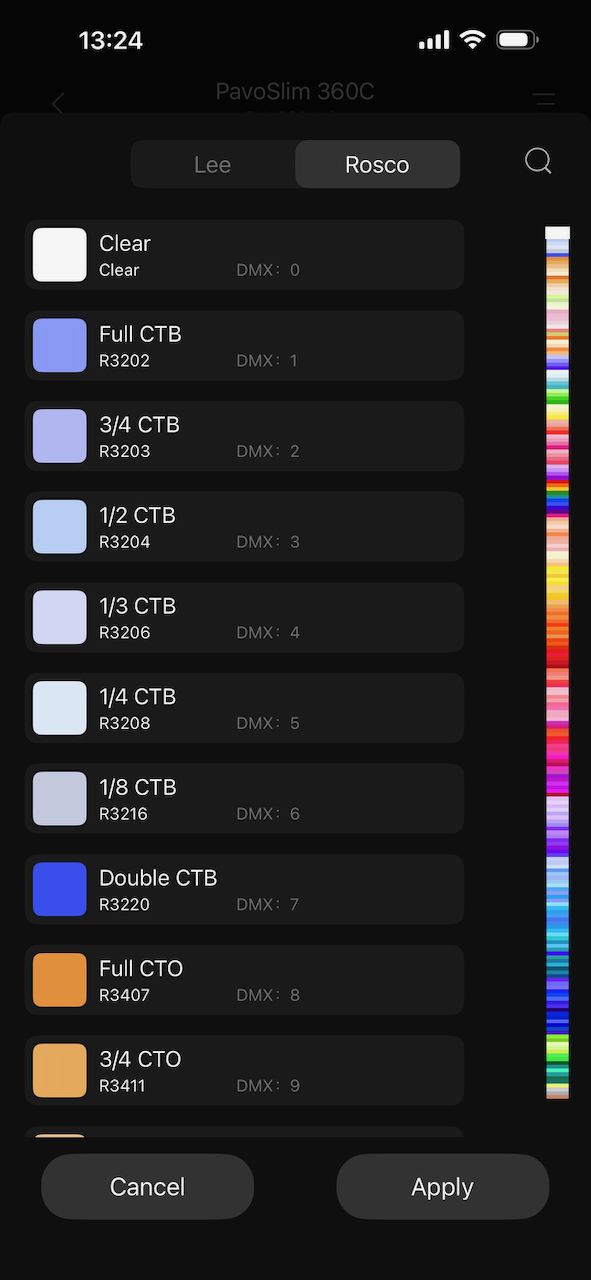
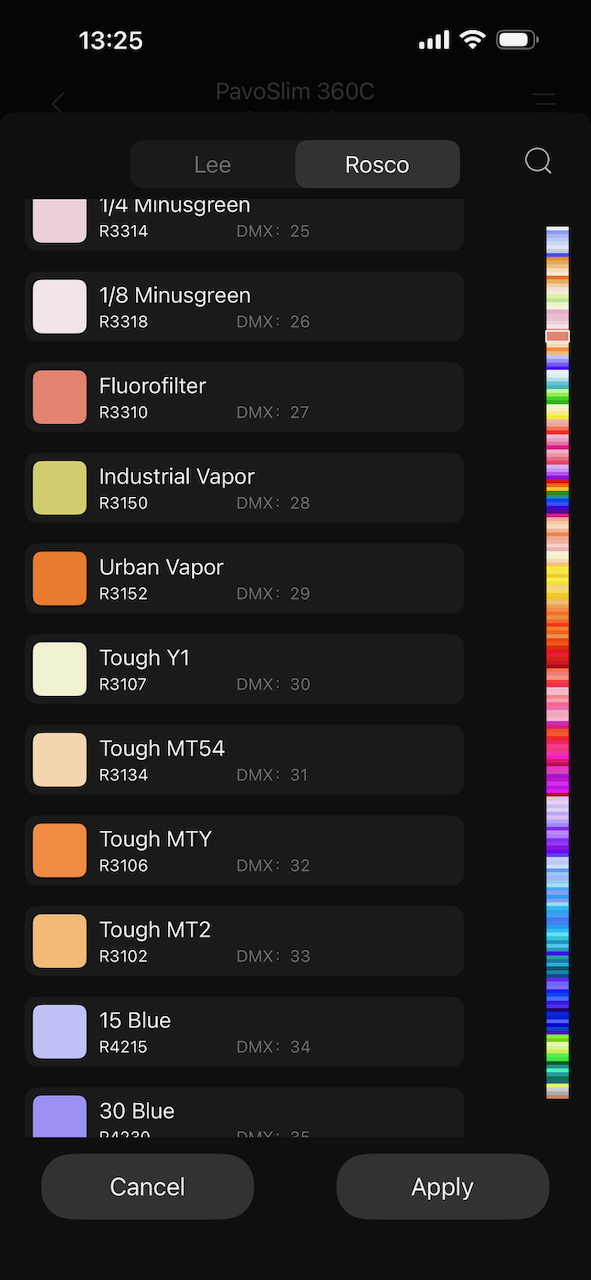
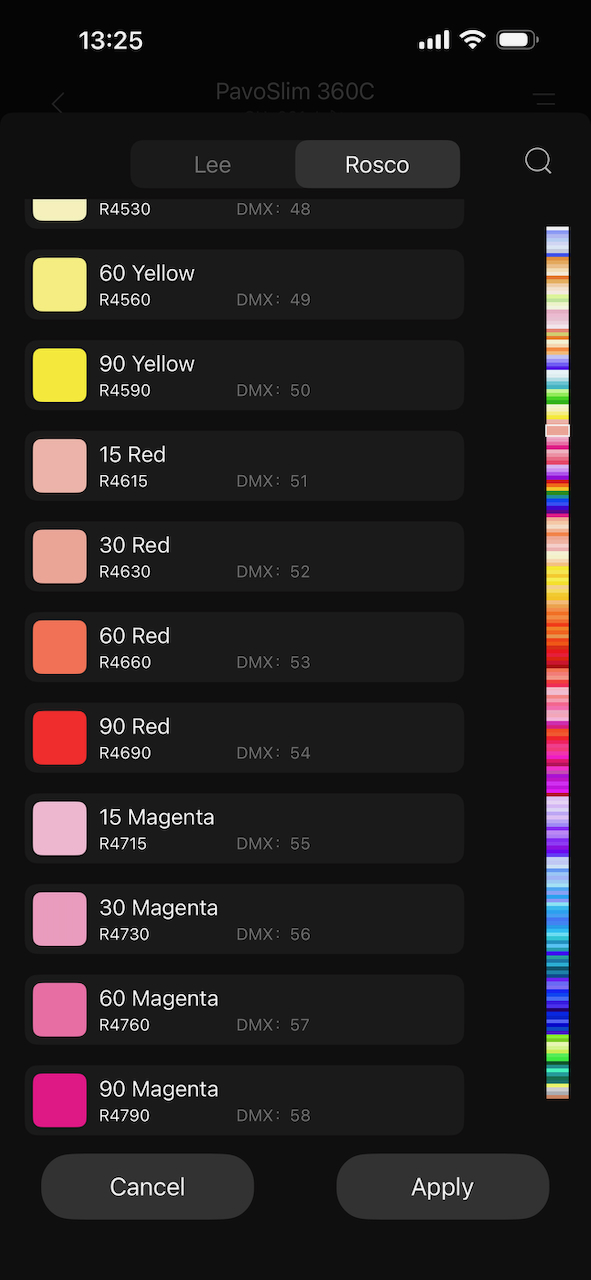
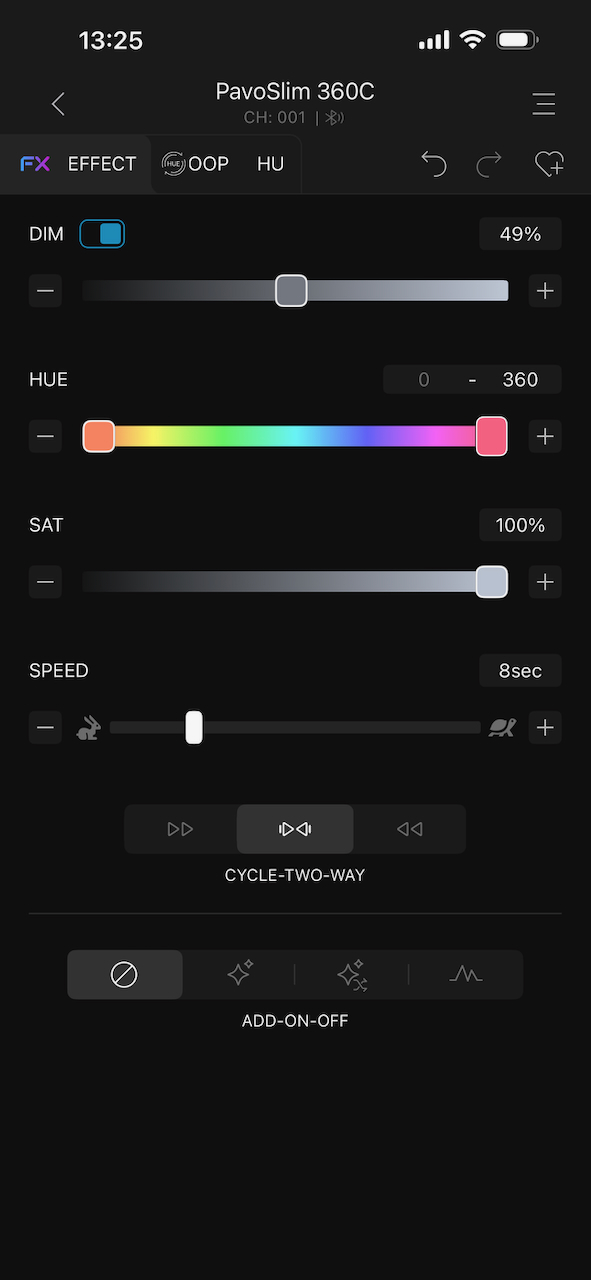
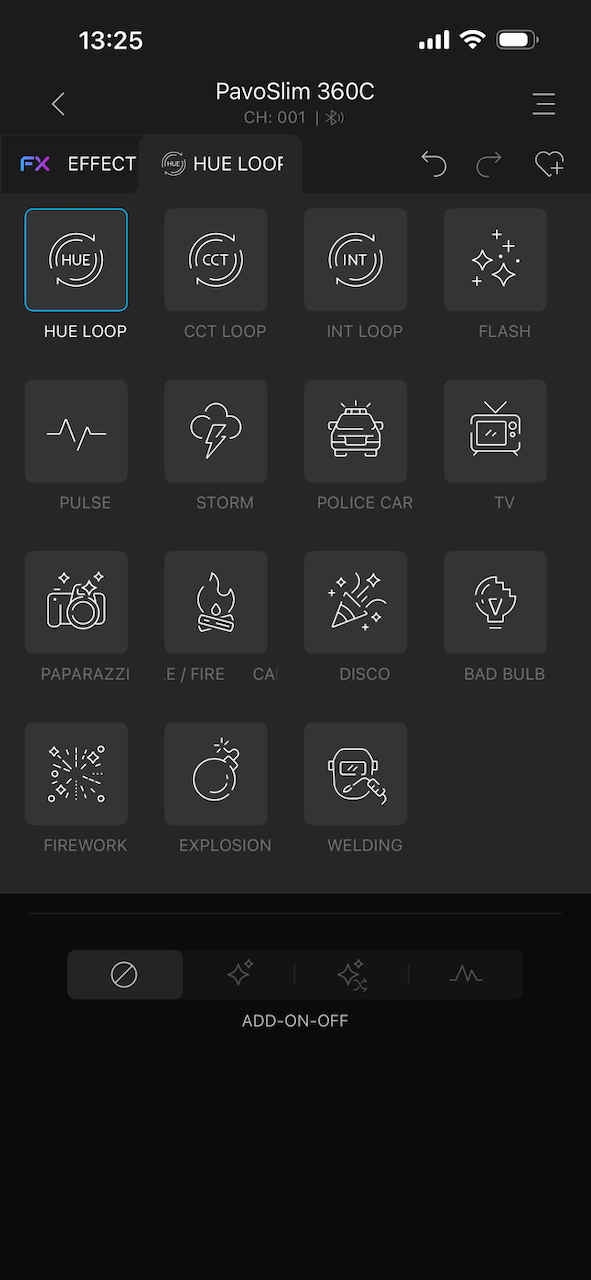
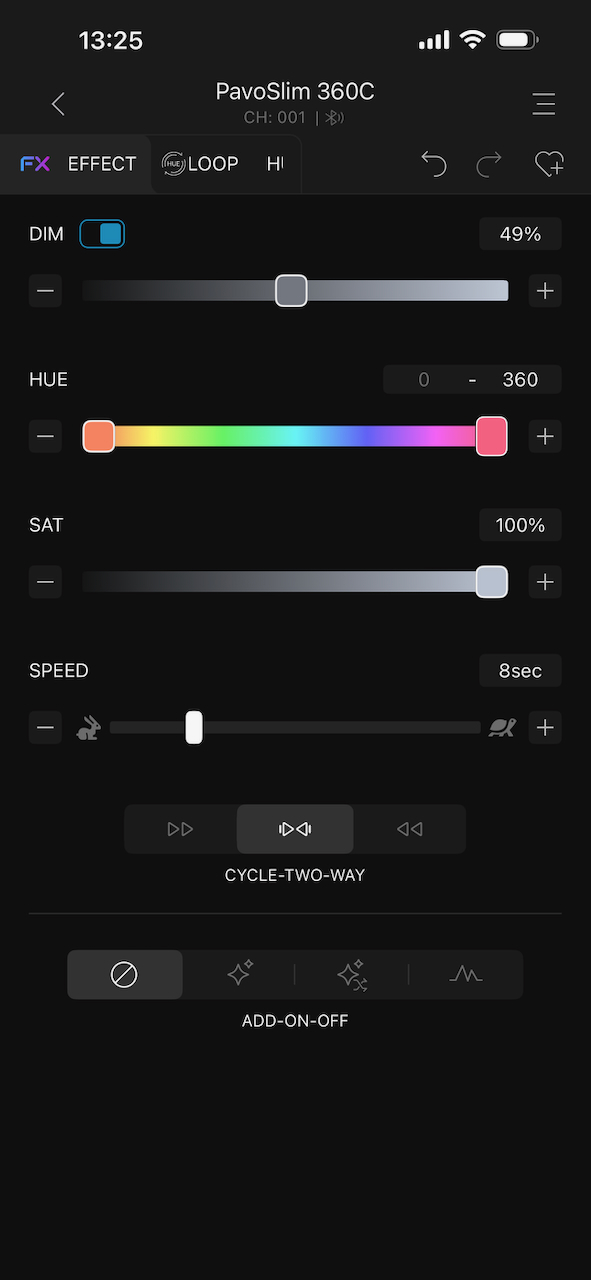
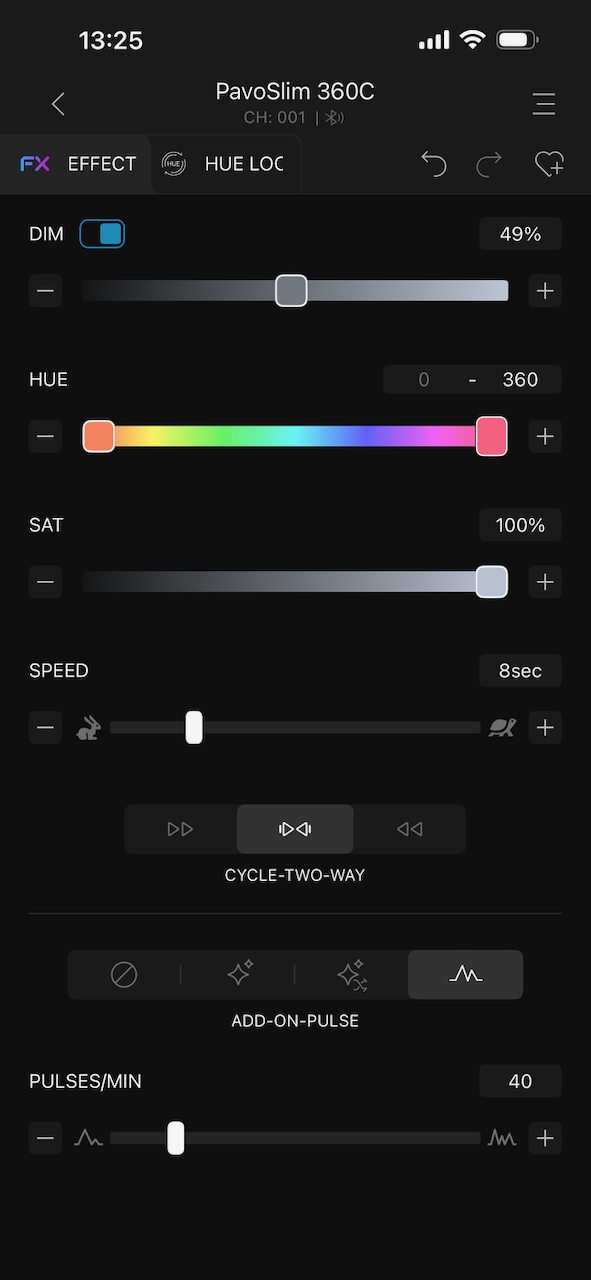
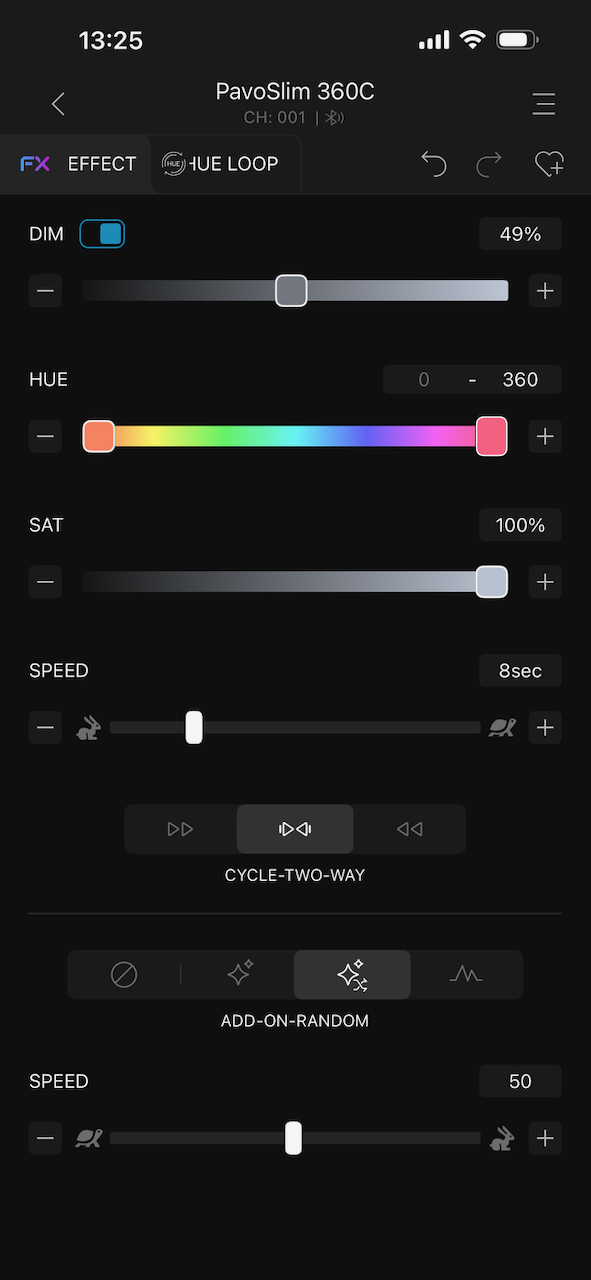
Above, you can see what the screens for each mode look like.
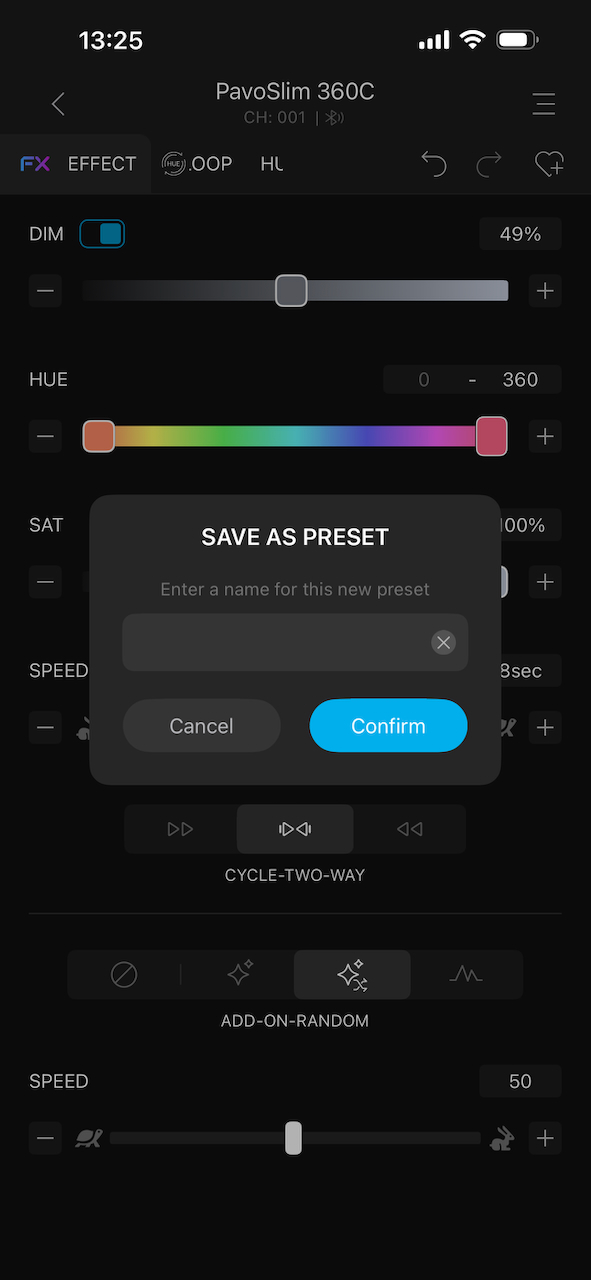
I can also save presets that I can store and recall at a later date.
Overall, the app works well. It is easy to make changes, and it connects up without any issues.
Beam Angle
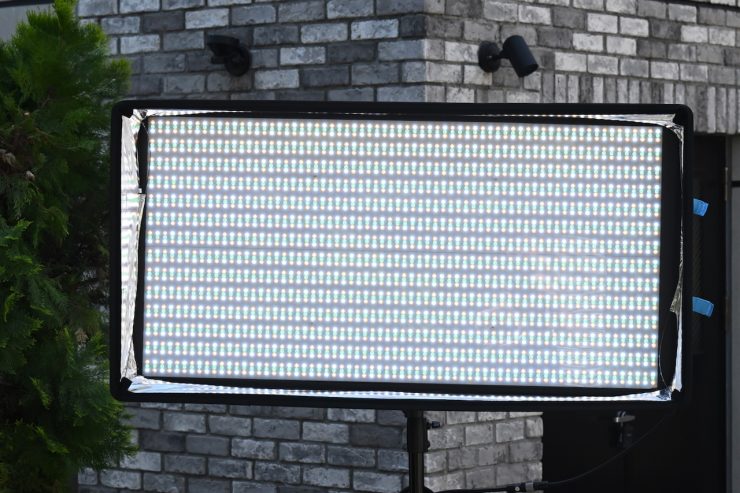
The beam angle of the PavoSlim 360C is 60 degrees. This sounds relatively tight, however, because of its physical size, 60 degrees isn’t actually that narrow for a light like this.
Set-Up Time & Usability
The biggest downside of using a lot of flexible or foldable LED lights is that they are a pain to set up. You normally have to construct frames and mounts and then hook them up to controller units and power supplies.
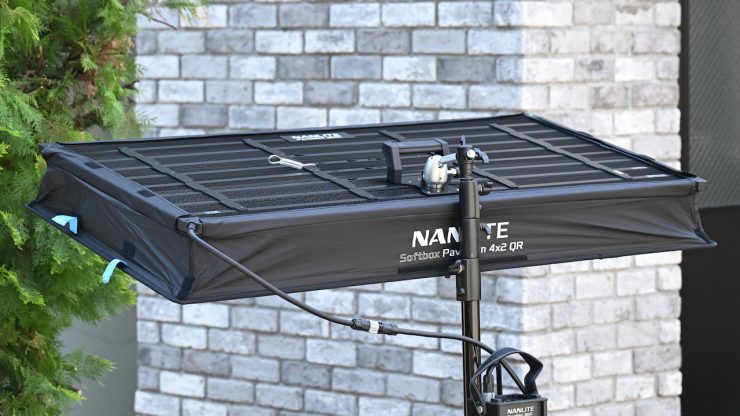
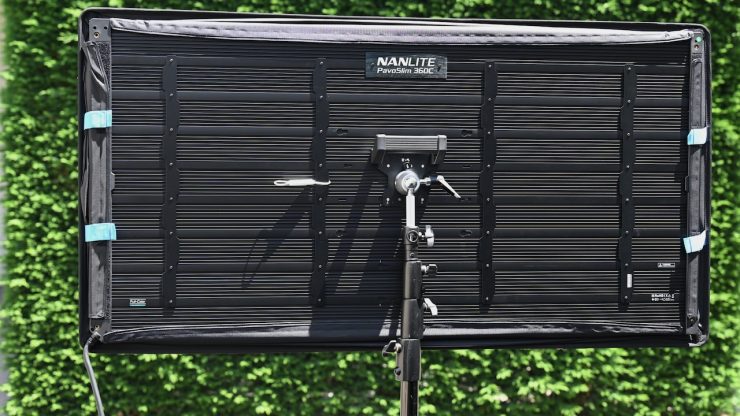
The PavoSlim series is a little different because it features hard backing plates. This allows you to set them up very quickly, which is always handy. As I mentioned earlier, it is also nice that there are several different positions you can mount the plate, depending on your requirements.
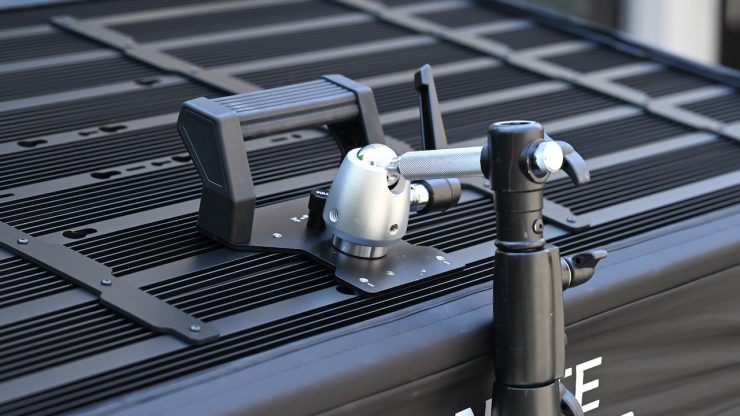
The robust locking backing plate makes it very easy to mount.
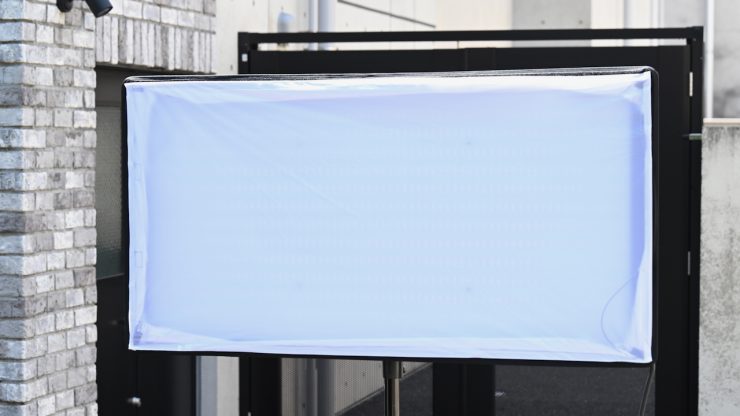
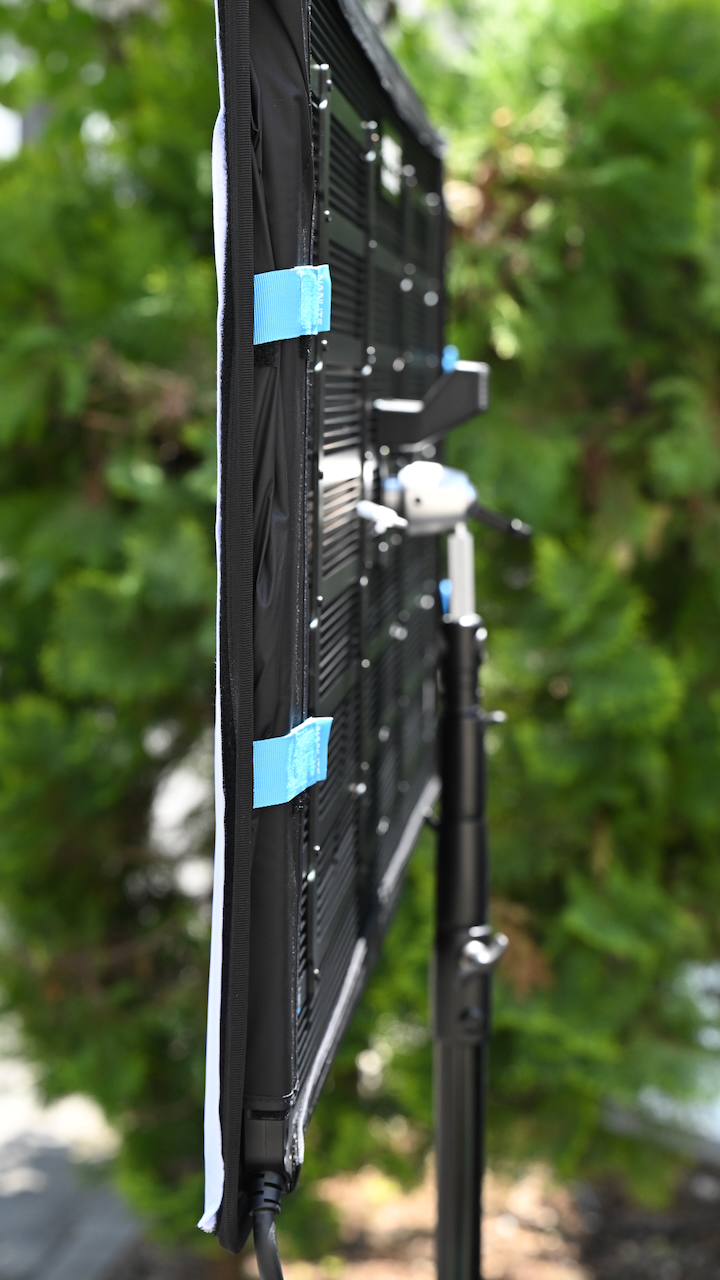
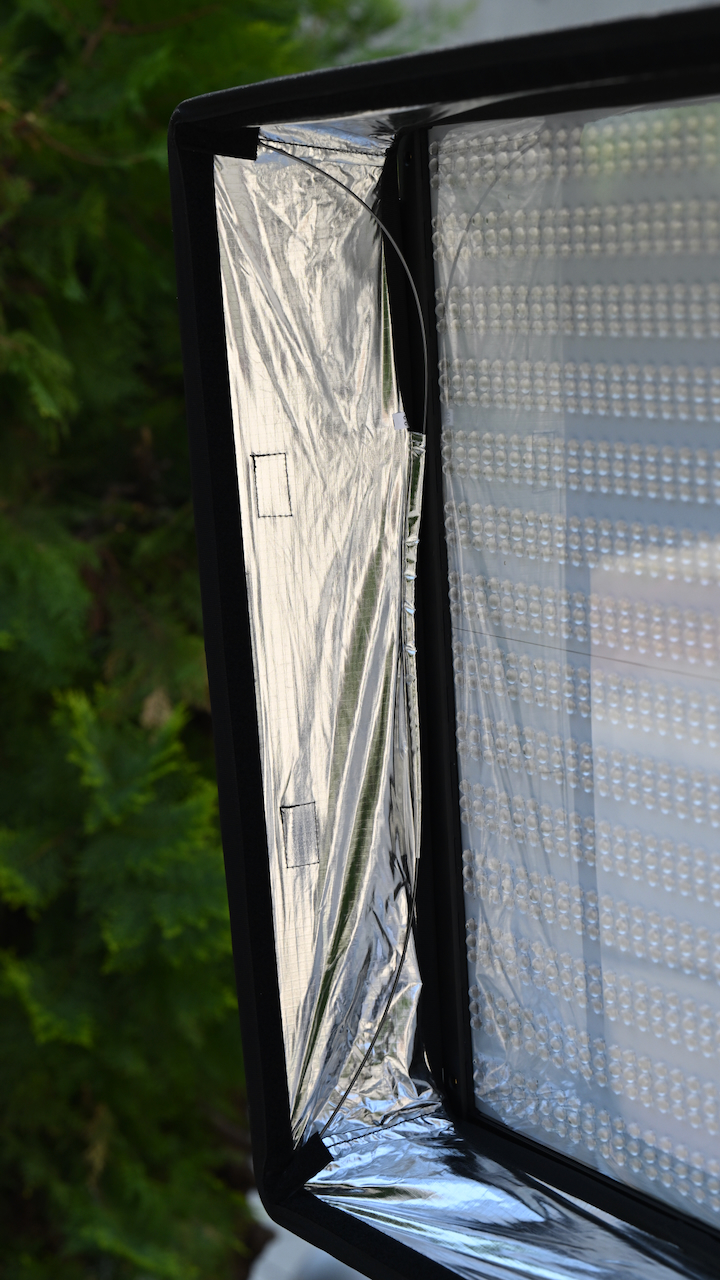
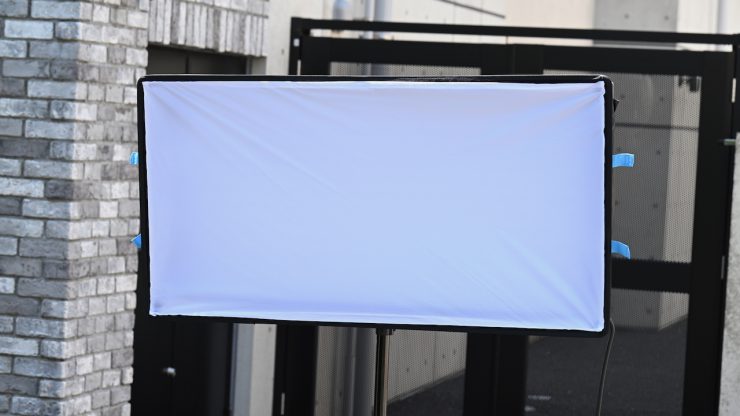
I also really like the clever softbox design. It is held on via velcro, and because it utilizes small bendable rods, you can collapse the softbox down when it isn’t in use so that you don’t have to take it off and put it back on again.
Above, you can see how it works with the smaller 60C. It is the same concept across the series.
If you are working by yourself or in a small crew, you need to be able to set up lighting quickly. The PavoSlim series can literally be set up in a couple of minutes by a single person.
Speaking of the softbox, you also get a honeycomb grid and two different strengths of diffusion in the kit.
I actually found that you combine both pieces of diffusion and use them together if you want to create a softer source.
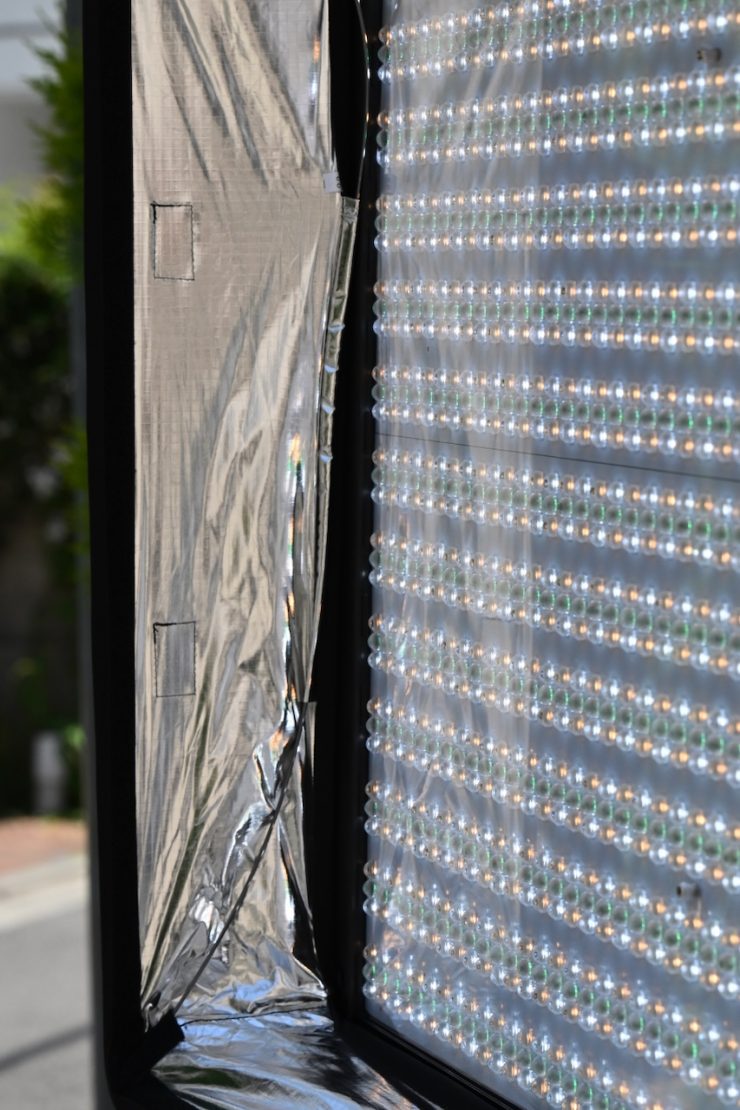
Now, the PavoSlim doesn’t feature any type of inbuilt diffusion in front of the LEDs, so if you want to create a softer source, you will need to use the included softbox.
One of the downsides, as I mentioned earlier, with these types of LED lights, is that you have to carry around a separate controller/power supply, the light, and a bunch of cables and accessories.
Optional Accessories
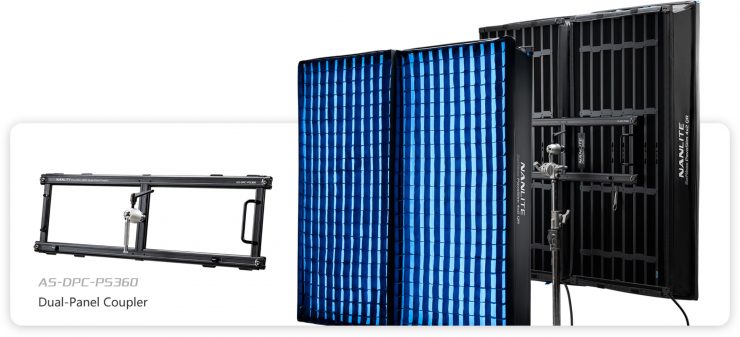
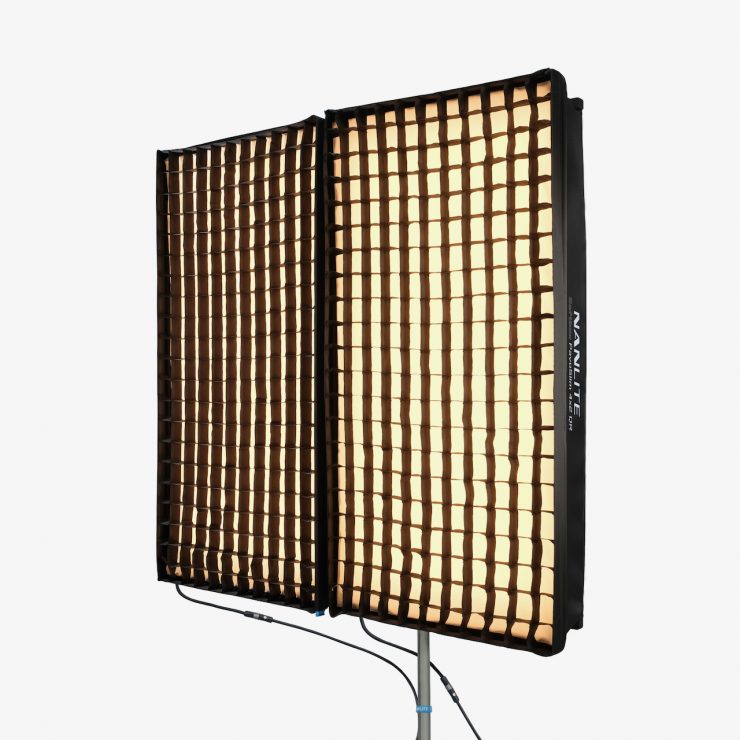
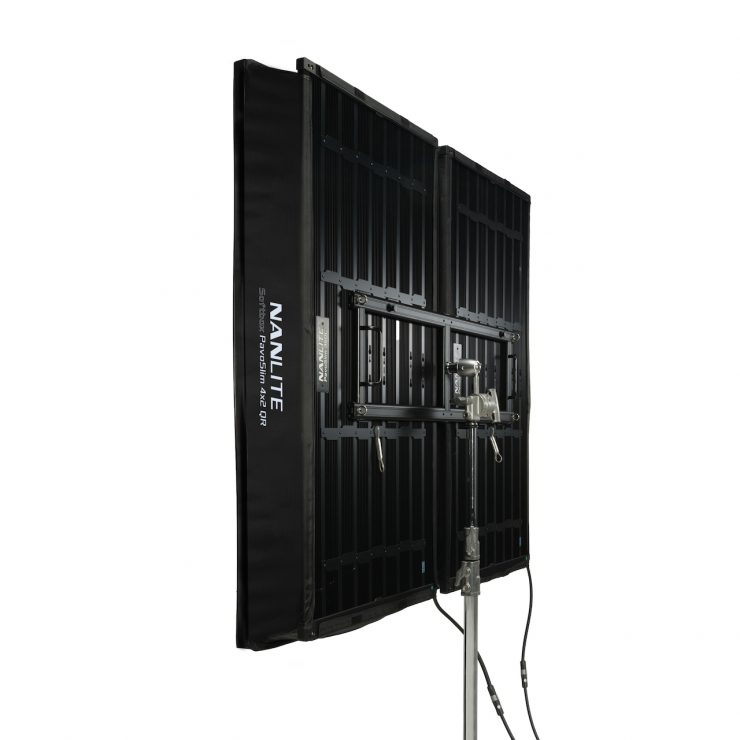
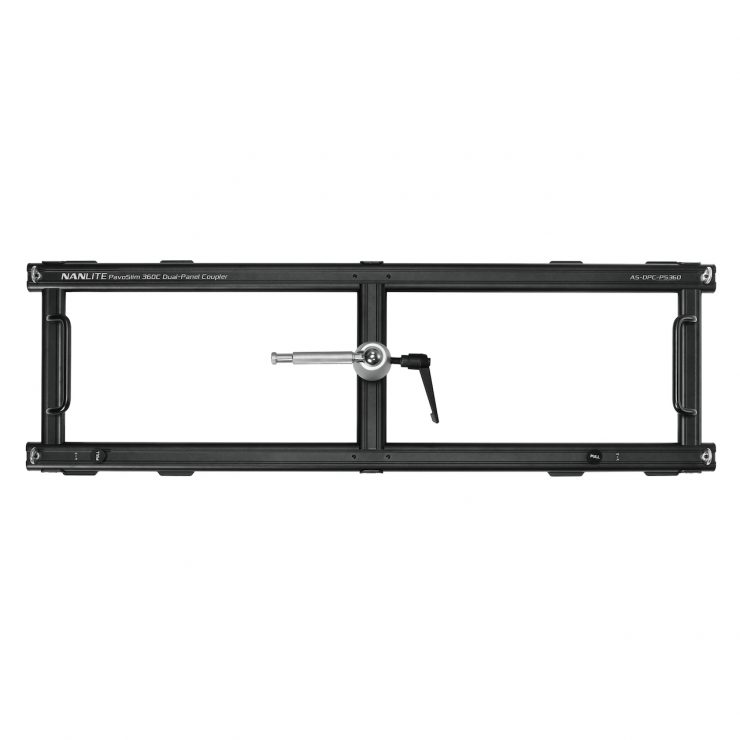
Nanlite makes a few accessories for the PavoSlim series. The most interesting is the AS-DCP-PS360 dual-panel coupler that allows you to join two PavoSlim 360C’s together as a single 4 x 4′ format that quickly expands your light source. The coupler attaches to the mounting points on the back of the fixture.
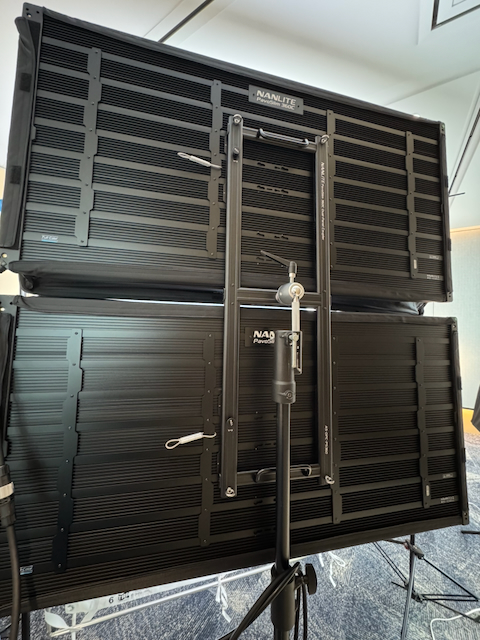
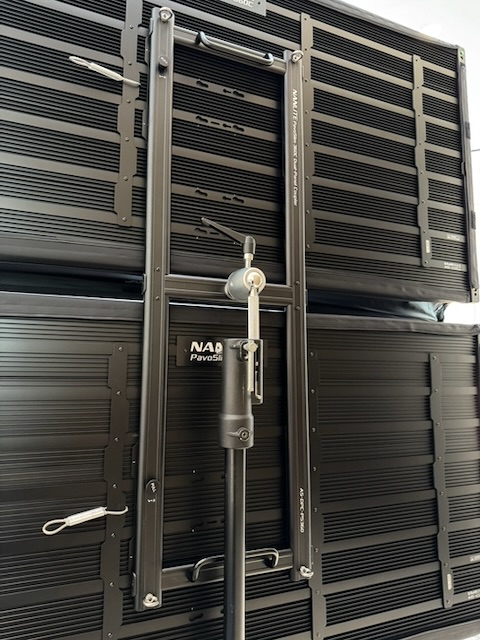
I found the AS-DCP-PS360 dual-panel coupler a little fiddly to install, and while it does work well, it could be made easier to attach.
Output & Color Temperature Accuracy
A big factor for a lot of people when buying a light is how much output it can produce.
I tested the lights’ output at a variety of CCT settings, both running on mains and battery power, using a Sekonic C-800 at a distance of 3m / 9.9′ in a controlled environment; you can see the results below. With any diffusion or attachment, I measure from the end of it and not from the light source. I do this with all my measurements for lights.
With large physical sources, you cannot measure them correctly at a distance of 1m / 3.3′ and that is why the PavoSlim 360C is being measured at 3m / 9.9′. The potential issue when measuring large light sources @1m /3.3′ is that if you consider the diameter of the sensor (for example, Sekonic 800C), it is obviously very small. The emitting area of a 4×2 is very large by comparison. Of course, the quantity of light emitted from the whole area of the panel will not fit into a 1m in the small area of the sensor. Ideally, the sensor should be in the same area as the emitting area. In this case, the ideal sensor would be a 4×2 sensor and would “catch” all the light emitted.
There is a lot to get through here, so I suggest you grab a coffee or a tea!
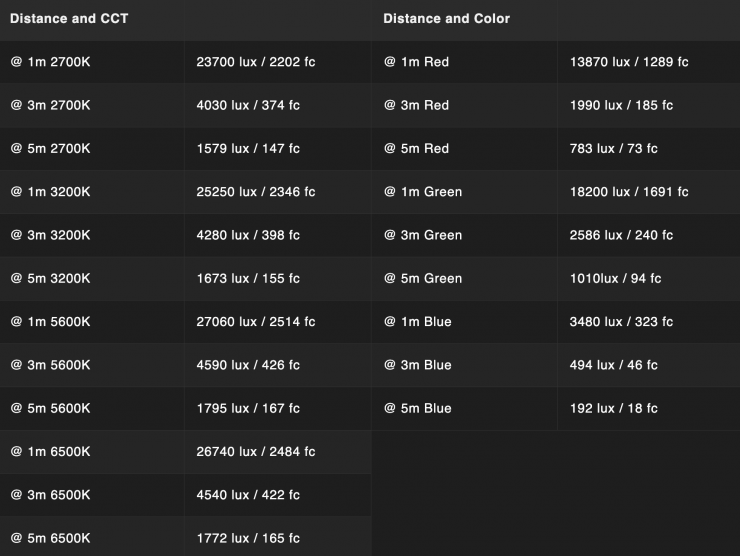
Above, you can see what Nanlite quotes as the output for the 360C when used at various CCT settings at a variety of distances.
Nanlite PavoSlim 360C 5600K Open Face
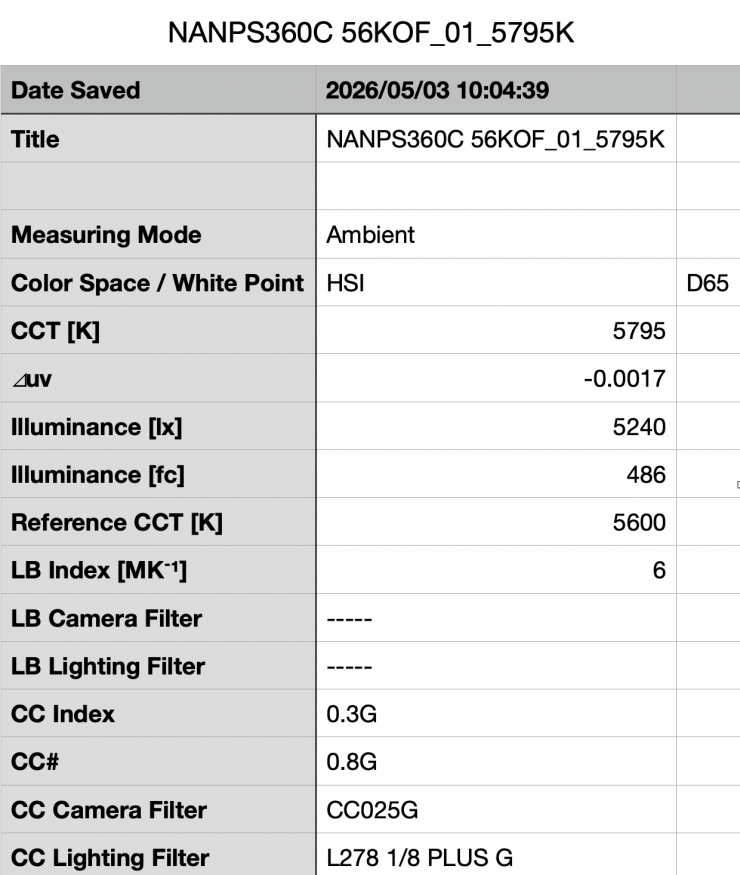
Above, you can see the Nanlite PavoSlim 360C recorded an output of 5240 lx (486 fc) when set at 5600K and run off mains power at a distance of 3m / 9.9′. This is higher than Nanlite’s claimed figure @3m of 4590 lx.
5240 lx from an LED light with this form factor and size that has a power draw of 370W is very impressive.
| OUTPUT @1m / 3.3′ 5600K | |
| Nanlite PavoSlim 360C | 47,160 lx* |
| Nanlite PavoSlim 240CL | 20,100 lx* |
| Godox KNOWLED F400R RGB Flexible LED Light Mat (2 x 4′) | 13,300 lx** |
| Aputure INFINIMAT LED with Clear Softbox & 400W Control Box Pack (2 x 4′) | 10,310 lx** |
| Litegear LiteTile Plus Kit Foldable Bi-Color LED Light Panel (2 x 4′) | 10,192 lx** |
| Nanlite PavoSlim 120C | 12,800 lx |
| Godox KNOWLED F200Bi | 9610 lx |
| Intellytech MEGA-6 LiteCloth 3.0 Bi-Color Foldable LED Mat | 10,300 lx |
*Measurement taken at 3m / 9.9′ (inverse square law calculation used)
**Manufacturers’ claimed figures (not independently tested)
As a comparison, above you can see how that output compares to some other lights. Yes, some of these are a little different from the PavoSlim 360C, but at least they give you a good indication of the output.
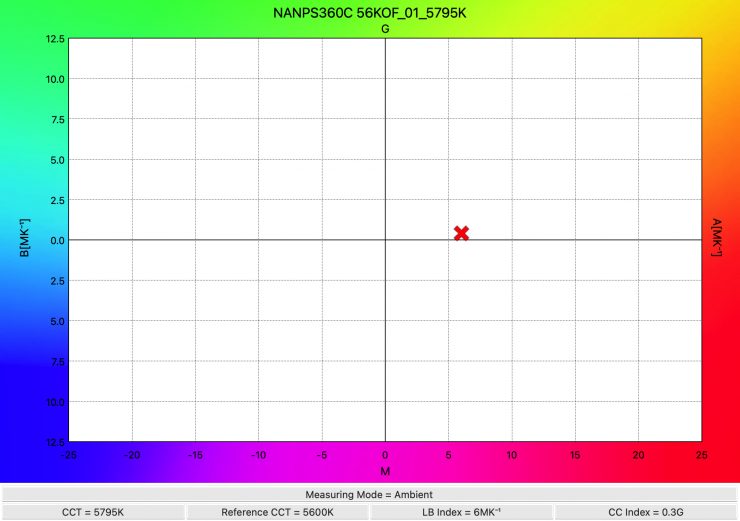
The PavoSlim 360C produced a CCT reading of 5795K, which was 195K off being correct.
As a competition comparison, the Intellytech MEGA-6 LiteCloth 3.0 Bi-Color Foldable LED Mat produced a CCT reading of 5642K, and the Godox KNOWLED F200Bi recorded 5513K.
Nanlite PavoSlim 360C 3200K Open Face
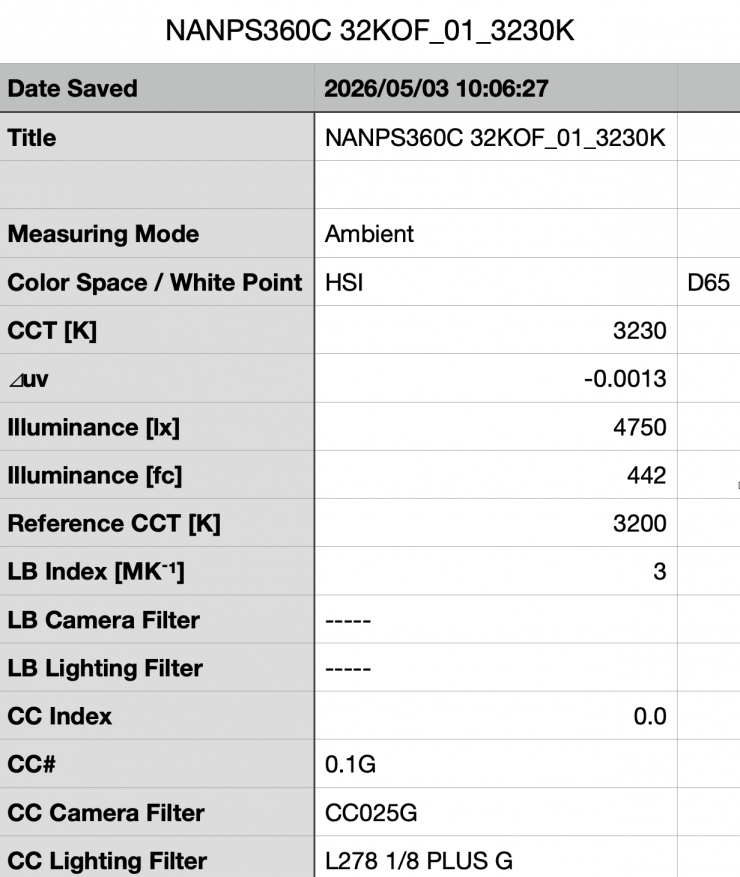
Above you can see the light’s output when it was set at 3200K and measured at a distance of 3m / 9.9′. It produced 4750 lx (442 fc), which is 9.35% less than the 3440 lx it produced at 5600K.
| OUTPUT @1m / 3.3′ 5600K | |
| Nanlite PavoSlim 360C | 42,750 lx* |
| Nanlite PavoSlim 240CL | 21,200 lx* |
| Godox KNOWLED F400R RGB Flexible LED Light Mat (2 x 4′) | 10,500 lx** |
| Aputure INFINIMAT LED with Clear Softbox & 400W Control Box Pack (2 x 4′) | 10,318 lx** |
| Litegear LiteTile Plus Kit Foldable Bi-Color LED Light Panel (2 x 4′) | 10,192 lx** |
| Nanlite PavoSlim 120C | 10,900 lx |
| Godox KNOWLED F200Bi | 8020 lx |
| Intellytech MEGA-6 LiteCloth 3.0 Bi-Color Foldable LED Mat | 9850 lx |
*Measurement taken at 3m / 9.9′ (inverse square law calculation used)
**Manufacturers’ claimed figures (not independently tested)
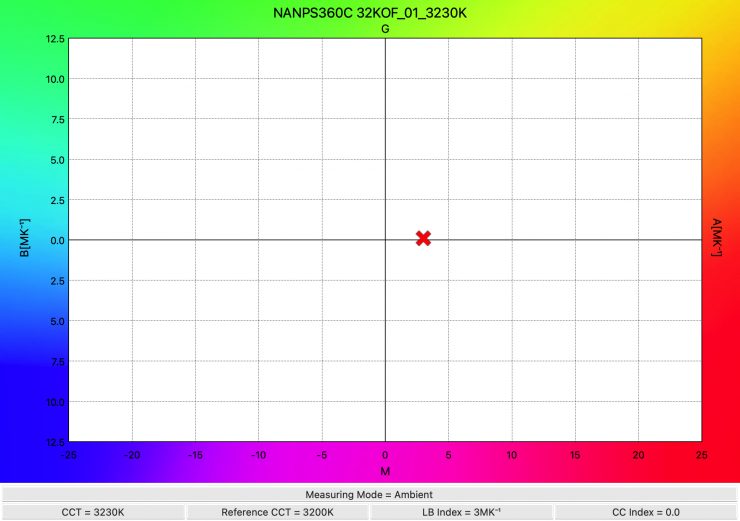
As far as CCT accuracy goes, it recorded a very good reading of 3230K. The light is more CCT-accurate at 3200K than it is at 5600K.
Again, as a comparison, the Intellytech MEGA-6 LiteCloth 3.0 Bi-Color Foldable LED Mat produced a CCT reading of 3256K, and the Godox KNOWLED F200Bi recorded 3204K.
How does it perform at various CCT settings?
Nanlite PavoSlim 360C Open Face @3m / 9.9′
| OUTPUT | CCT | |
| 2500K | 4330 lx | 2564K |
| 3200K | 4750 lx | 3230K |
| 4500K | 5140 lx | 4579K |
| 5600K | 5240 lx | 5795K |
| 6500K | 5040 lx | 6819K |
| 8000K | 4890 lx | 8521K |
| 10000K | 4750 lx | 10784K |
The light’s output was reasonably consistent across its CCT range. The output across its entire CCT range varied by 17.36%. While there is nothing wrong with having a higher output at certain CCT settings, on really good lights, the output is almost identical no matter what CCT setting you select.
The results also show me that the light is very CCT accurate at 2700K, 3200K, and 4500K. Above 4500K, it wasn’t as good.
So, now, let’s have a look at how much output you get when using the included softbox.
Nanlite PavoSlim 360C 5600K Softbox
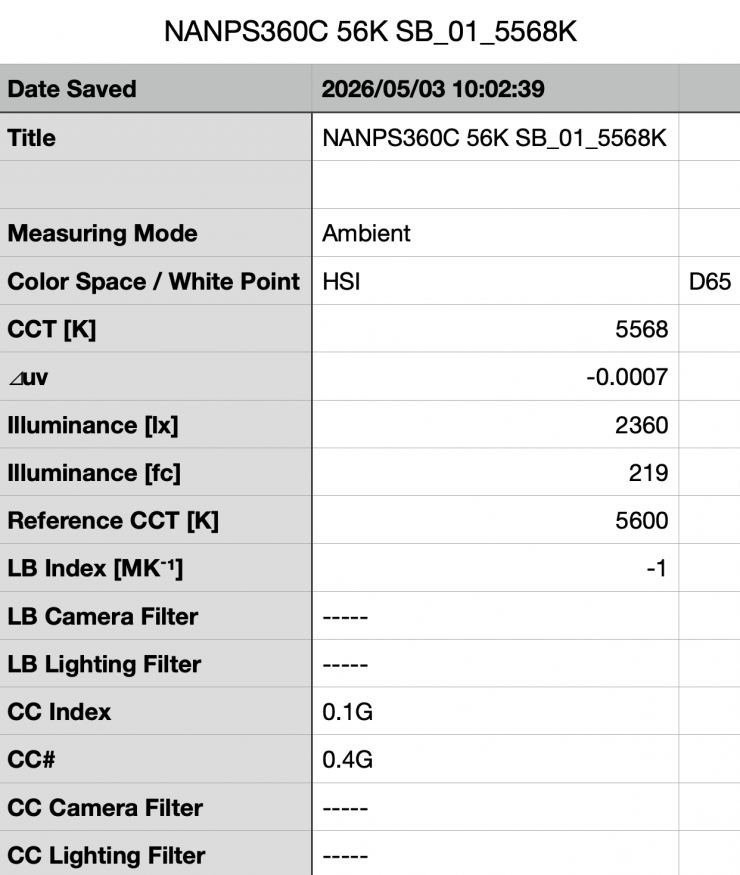
Above, you can see that when the light was using its included softbox, it recorded an output of 2360 lx (219 fc) @3m / 9.9′. This was 54.96% less output than when using the light open face.
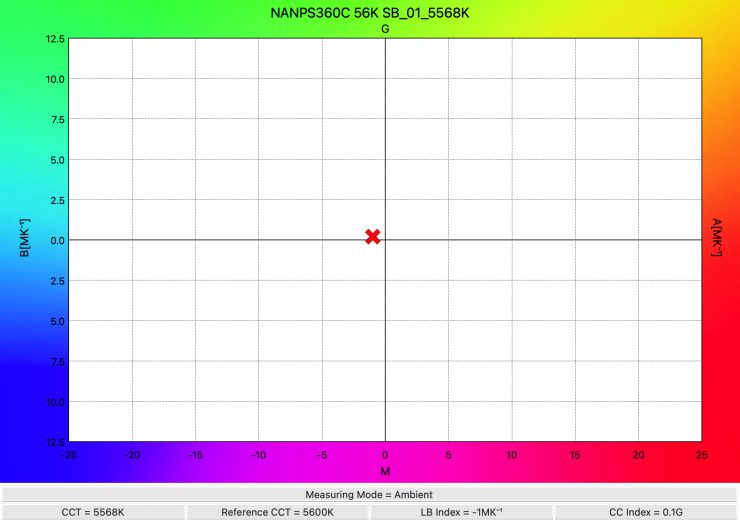
Now, the softbox didn’t massively alter the CCT reading. With the softbox, the CCT reading was 5568K, which was a lot better than the 5795K it recorded with no diffusion.
Nanlite PavoSlim 360C 5600K Softbox Double Diffusion
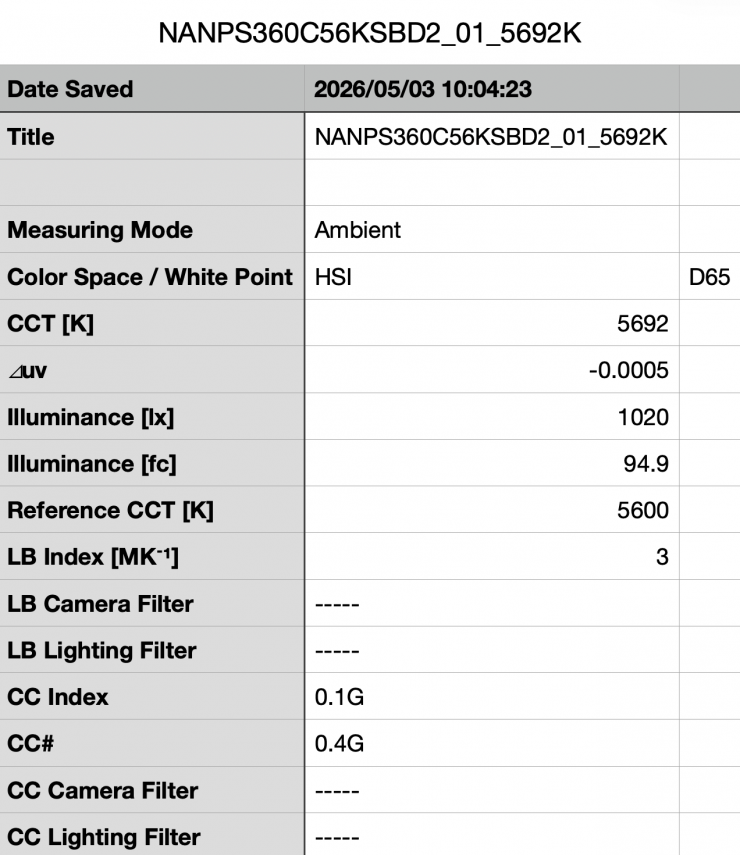
Above you can see the light’s output when it was set at 5600K and used with the softbox and both pieces of diffusion at a distance of 3m / 9.9′, was 1020 lx (94.9 fc), which was 80.53% less than the 5240 lx it produced when used open face.
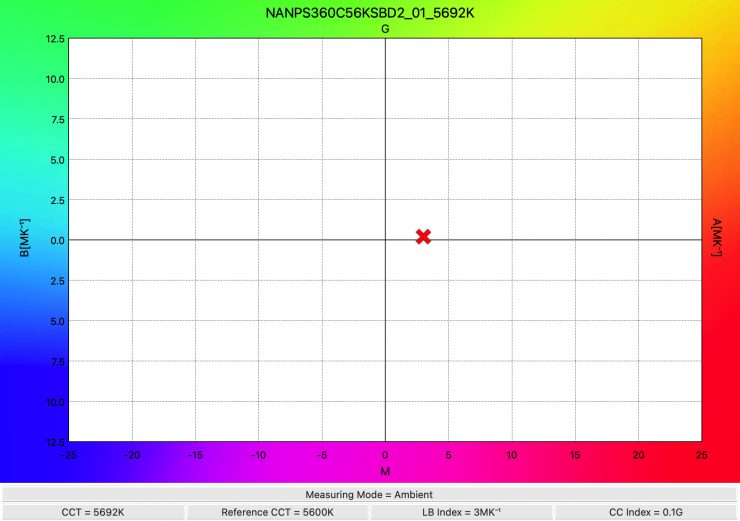
As far as CCT accuracy goes, it recorded a reading of 5692K.
Nanlite PavoSlim 360C 3200K Softbox
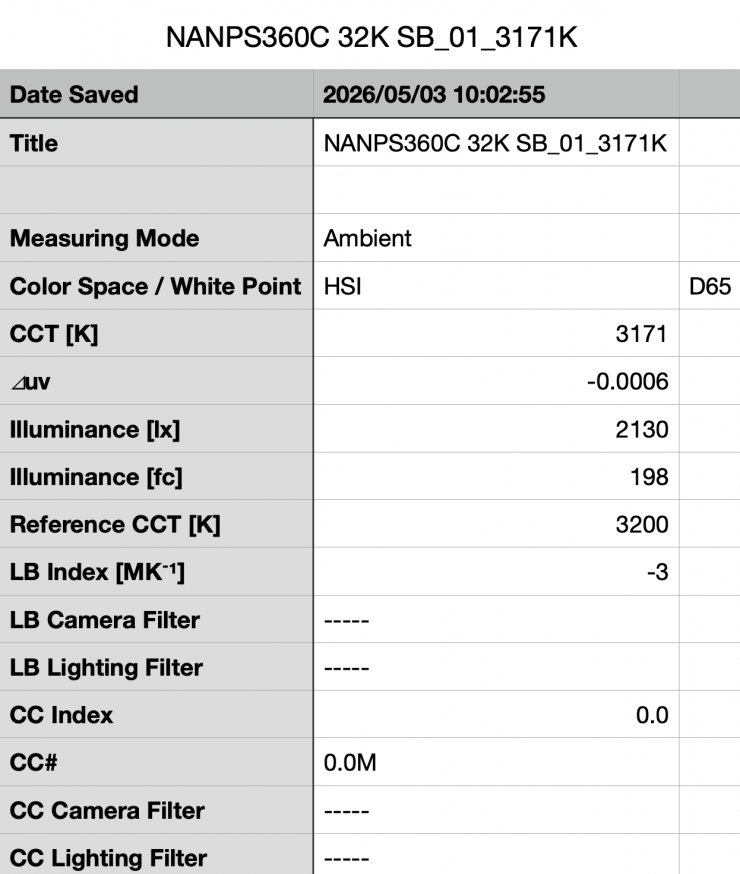
Above you can see the light’s output when it was set at 3200K and used at a distance of 3m / 9.9′ and using the softbox was 2130 lx (198 fc), which was 55.15% less than the 4750 lx it produced when used open face.
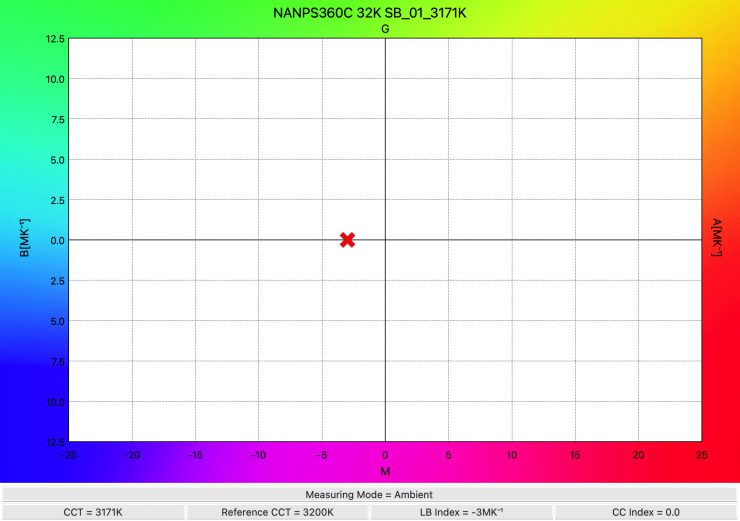
As far as CCT accuracy goes, it recorded a reading of 3171K, which was around 59K lower than the 3130K reading when used open face.
Nanlite PavoSlim 360C 3200K Softbox Double Diffusion
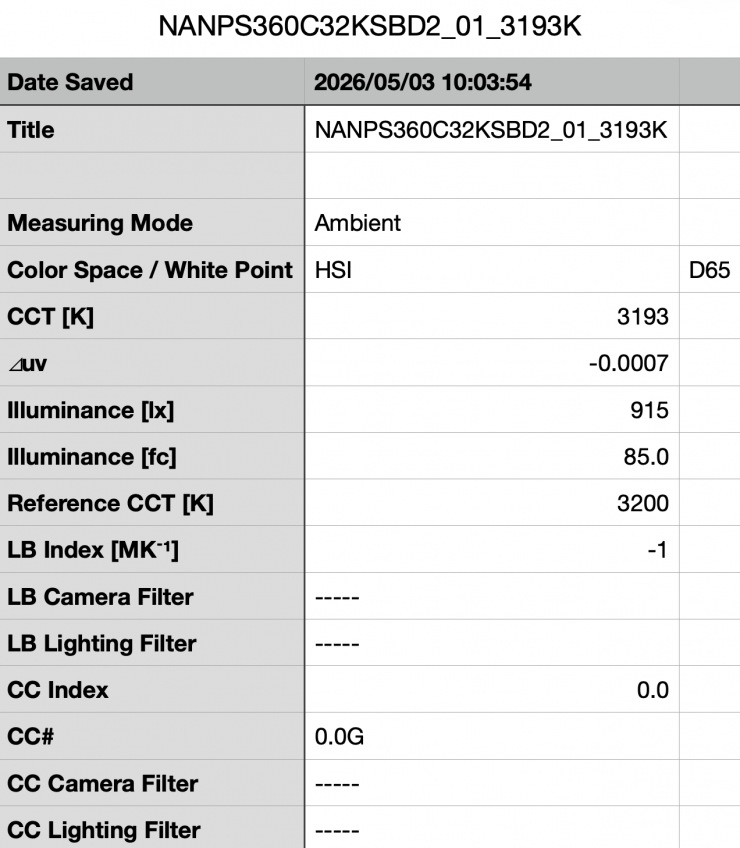
Above you can see the light’s output when it was set at 3200K and used with the softbox and both pieces of diffusion at a distance of 3m / 9.9′, was 915 lx (85 fc).
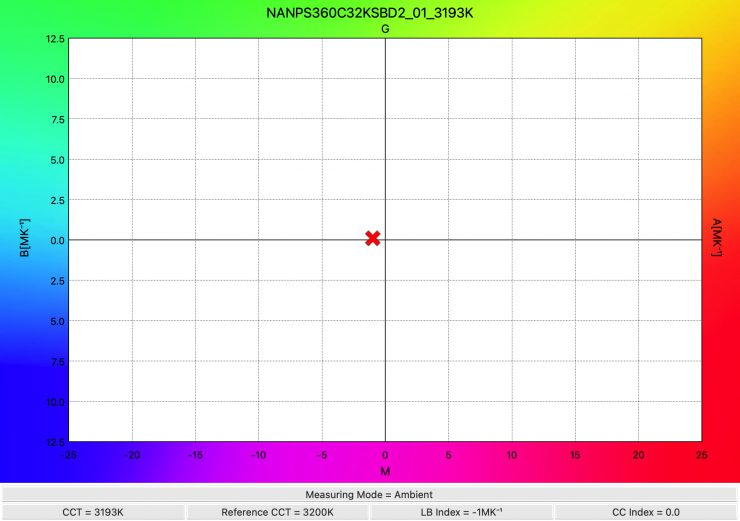
As far as CCT accuracy goes, it recorded a reading of 3193K.
Battery Output
One of the nice aspects of the PavoSlim 360C is that it can be run by V-mount batteries.
Nanlite PavoSlim 360C 5600K @3m / 9.9′ Single 14.8V Battery
Ok, so now let’s see what happens to the output if I try running the Nanlite PavoSlim 360V via a single 14.8V battery.
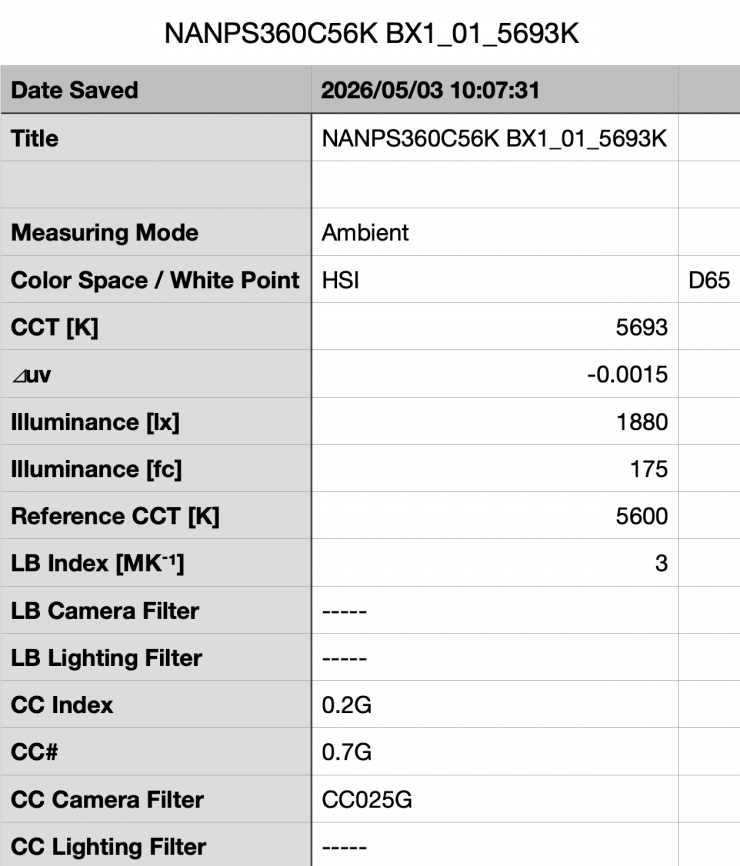
Above, you can see that when the light was running off a single 14.4V V-mount battery, it recorded an output of 1880 lx (175 fc) @3m / 9.9′. This was 64.12% les than when running from mains power. Nanlite states that with a single 14.8V battery the output is limited to 35%. I found this to be true.
Nanlite PavoSlim 360C 5600K @3m / 9.9′ Two V-lock Batteries
Ok, so now let’s see what happens to the output if I try running the Nanlite PavoSlim 360V via two V-mount batteries.
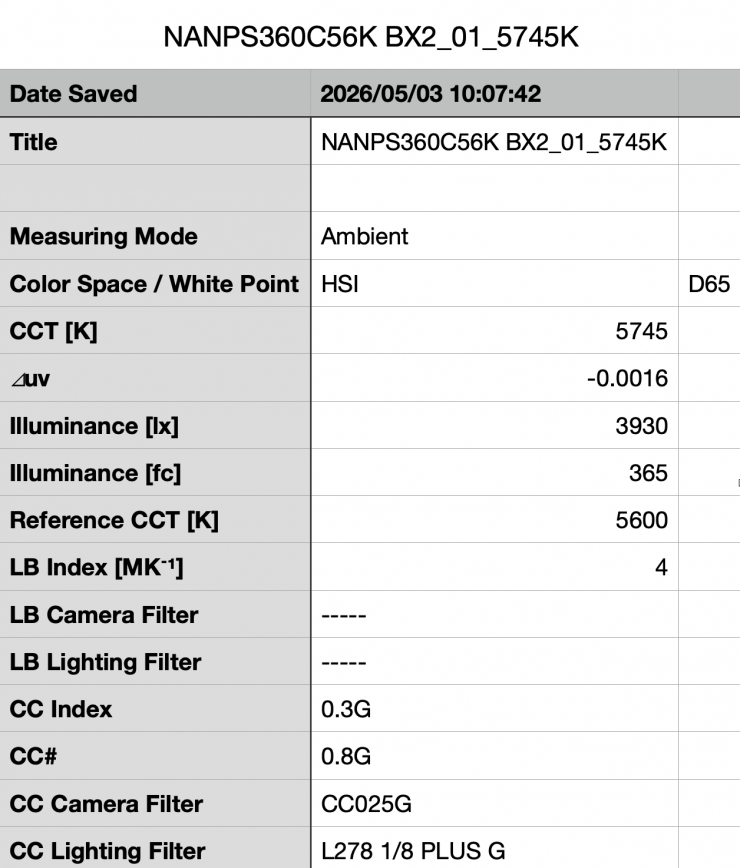
Above, you can see that when the light was running off two 14.4V 150Wh V-mount batteries, it recorded an output of 3,930 lx (365 fc) @3m / 9.9′. This was 25% less output than when it is run via mains power. Nanlite states that with two 14.8V batteries, the output is capped to 75%, and I found that to be correct.
Nanlite PavoSlim 360C 5600K @3m / 9.9′ Two 26V V-lock Batteries
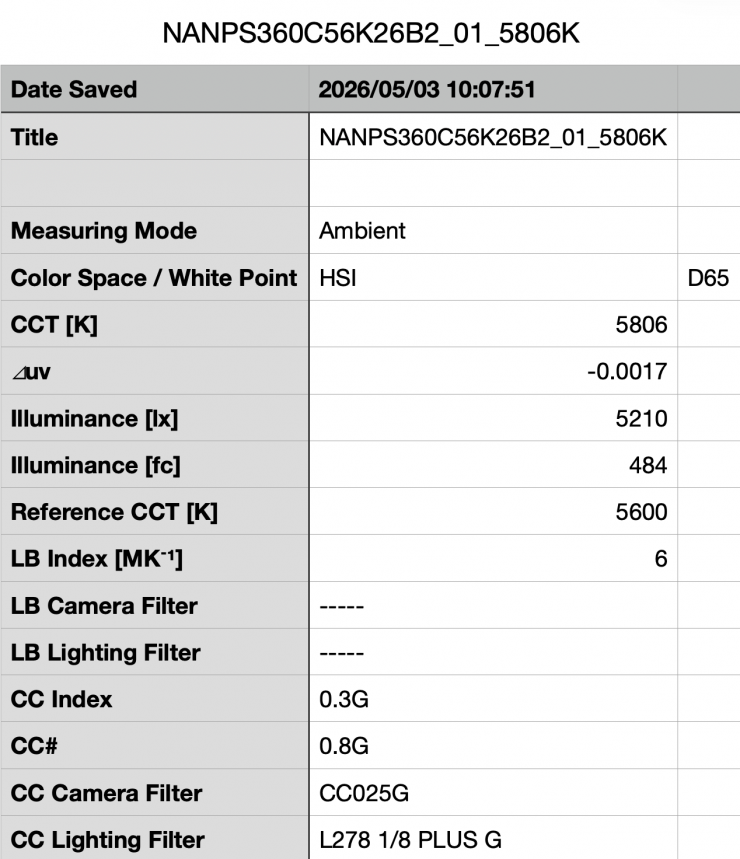
Above, you can see that when the light was running off two 26V V-mount batteries, it recorded an output of 5210 lx (484 fc). This was basically identical to what the light recorded when run via mains power.
Combining two PavoSlim 360s together
The AS-DCP-PS360 dual-panel coupler allows you to join two PavoSlim 360C’s together. So let’s see how much output that combo can produce.
2x Nanlite PavoSlim 360Cs 5600K @3m / 9.9′
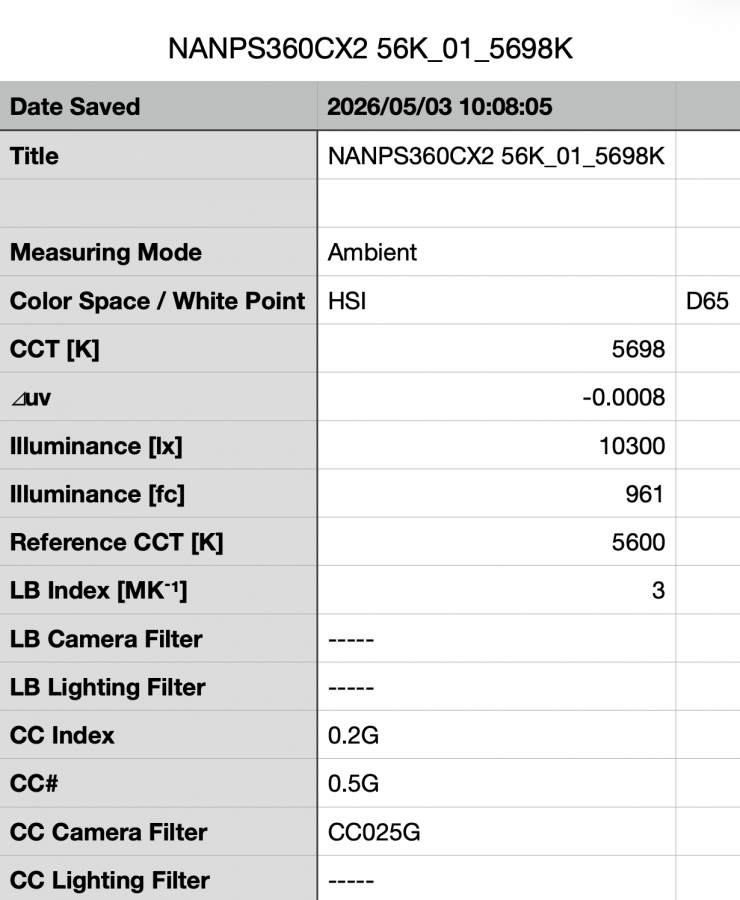
Above, you can see that when two PavoSlim 360s were combined together and run via mains power, they recorded an output of 10,300 lx (961 fc) @3m / 9.9′. This was a ton of output, and it equates to 92,700 lx @1m / 3.3′.
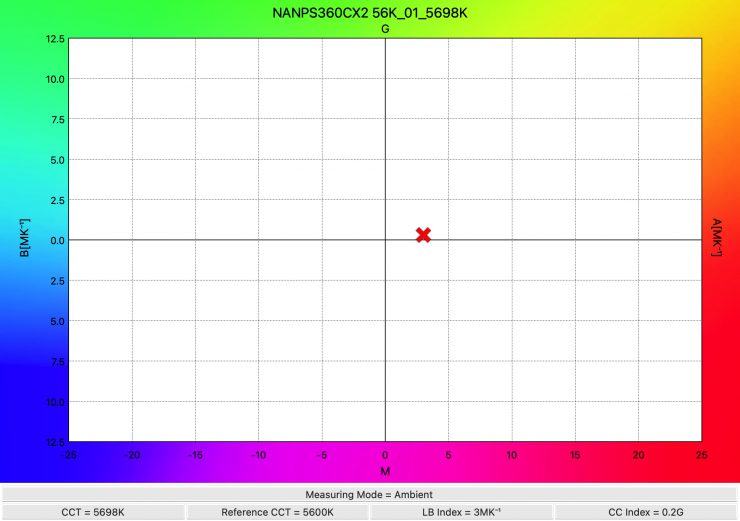
The CCT reading was 5698K.
2x Nanlite PavoSlim 360Cs 3200K @3m / 9.9′
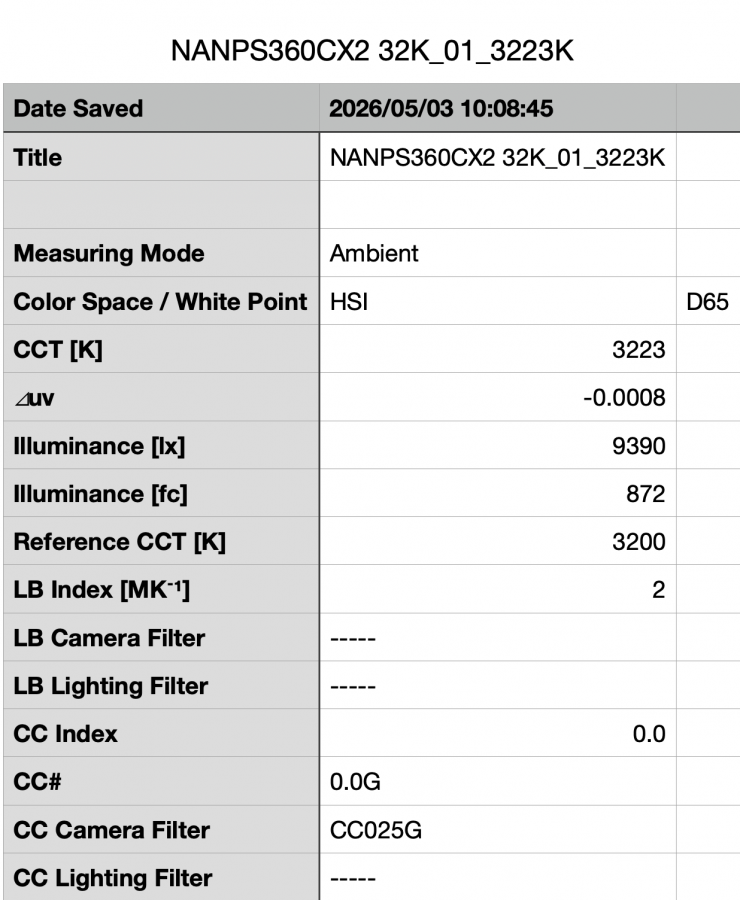
Above, you can see that when two PavoSlim 360s were combined together and run via mains power, they recorded an output of 9390 lx (872 fc) @3m / 9.9′. This was a ton of output, and it equates to 84,510 lx @1m / 3.3′.
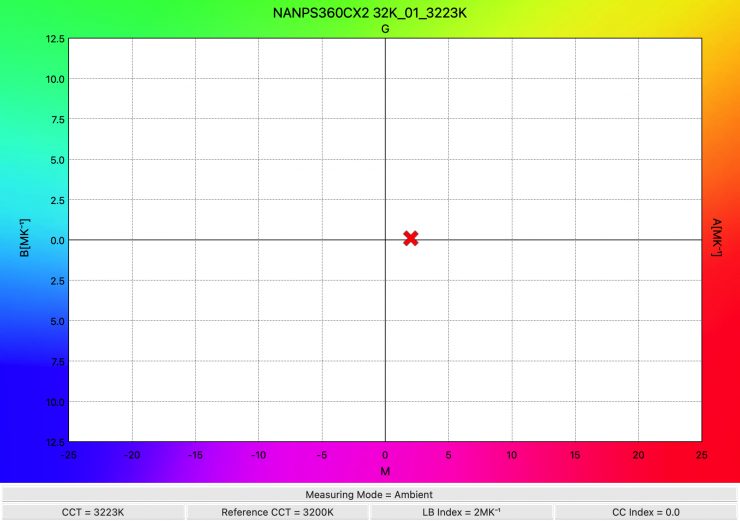
The CCT reading was 3223K.
CCT consistency & linear output when dimming the light
Now, what you should always do when testing lights is to see if the CCT remains consistent when dimming the light. Just because you set a light at say 5600K, that doesn’t mean that the CCT will remain stable as you start dimming the fixture down. I also wanted to see how linear the dimming curve was.
I decided to do a series of tests at 100%/75%/50%/25%10% to see if the CCT being recorded changed. This was done at a distance of 3m / 9.9′ using a Sekonic C-800. These tests were done at 5600K with the light being used open face.
Nanlite PavoSlim 360C
| CCT READING | OUTPUT | INTENSITY % |
| 5795K | 5240 lx | 100 |
| 5749K | 3920 lx | 75 |
| 5742K | 2630 lx | 50 |
| 5706K | 1370 lx | 25 |
| 5632K | 612 lx | 10 |
The Nanlite PavoSlim 360C maintained decent CCT consistency as you start dimming the fixture. My testing showed that the CCT readings varied by 163K from 100% to 10%.
As far as how linear the output is when you start dimming the light, at 50% output, it had 49.80% less output than when used at 100%. At 25%, it had 73.85% less output than when used at 100%. At 10% output, it had 88.32% less output than when used at 100%. This shows me that the light’s dimming curve is very linear.
Color Rendering
So now that we have seen how much output the Nanlite PavoSlim 360C produces, how does it perform when it comes to replicating accurate colors?
Nanlite PavoSlim 360C 5600K (Open Face)
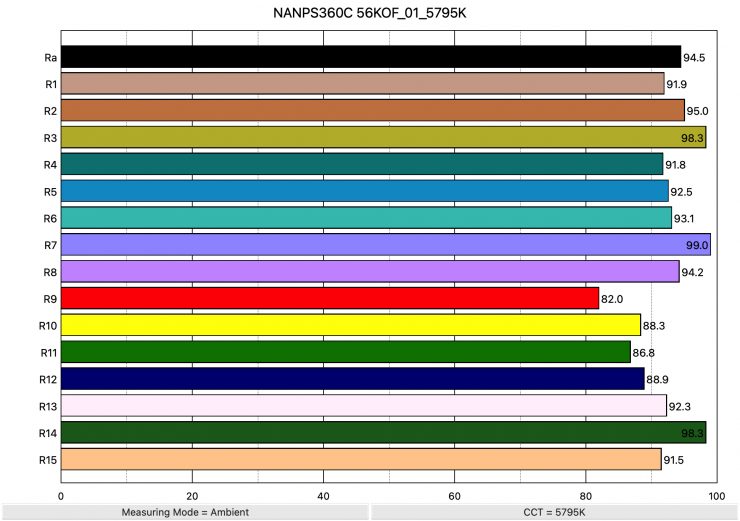
Above you can see that when the light was set at 5600K and used open face, it recorded an average CRI (R1-R8) of 94.5 and an extended CRI (R1-R15) of 92.26. For replicating accurate skin tones, it recorded 82.0 for R9 (red), 92.3 for R13 (closest to caucasian skin tones), and 91.5 for R15 (closest to Asian skin tones). These were ok results, and very similar to the PavoSlim 240CL. However, R9 (Red), R10 (Yellow), R11 (Green), and R12 (Blue) were all below 90.
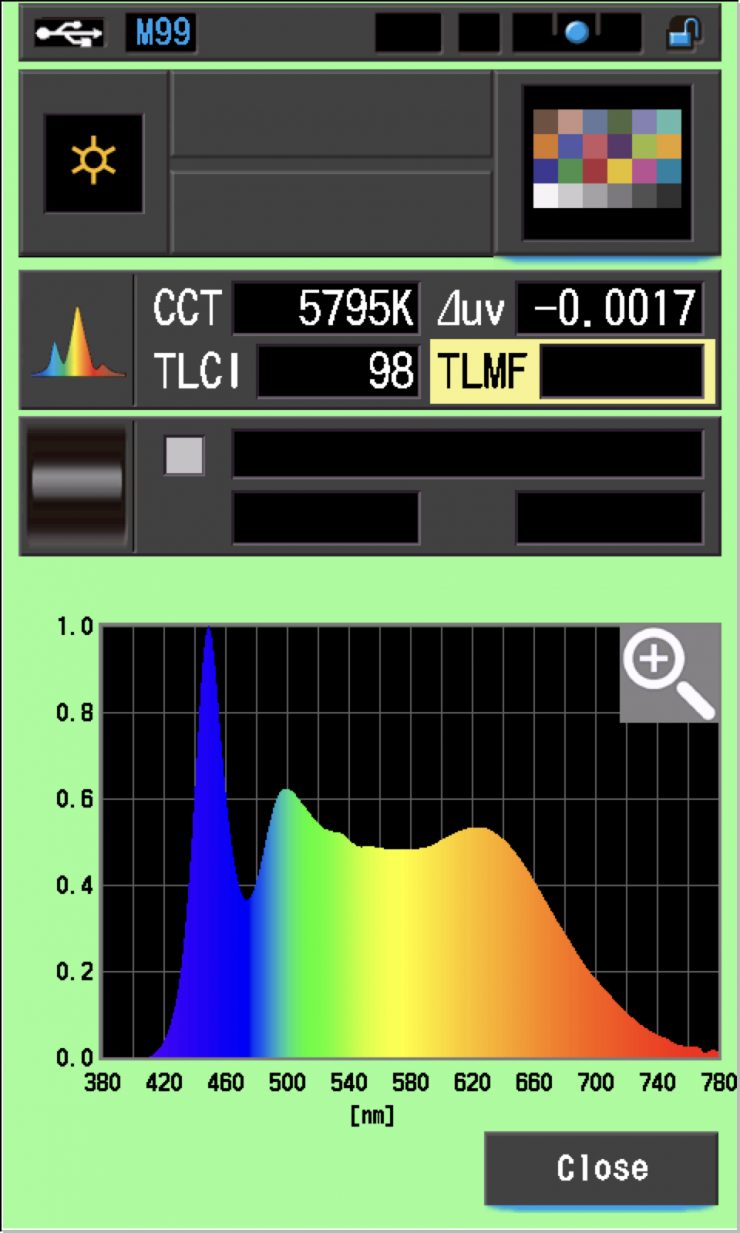
The light, when set at 5600K, also recorded a TLCI score of 99.
As a comparison, I compared the color rendering of the PavoSlim 360C to the PavoSlim 240CL, Godox KNOWLED F200Bi, Aladdin Bi-Flex2 Bi-Color LED Panel 1×2, and the Intellytech MEGA-6 LITECLOTH 3.0. The Aladdin and Godox both have excellent color rendering scores, and I personally consider them to be a benchmark for these types of thin LED panels.
| EXTENDED CRI | R9 | R13 | R15 | |
| Nanlite PavoSlim 360C | 92.26 | 82.0 | 92.3 | 91.5 |
| Nanlite PavoSlim 240CL | 92.54 | 84.8 | 92.3 | 91.9 |
| Godox KNOWLED F200Bi | 95.46 | 97.5 | 98.4 | 97.5 |
| Intellytech MEGA-6 LITECLOTH 3.0 | 95.78 | 93.4 | 96.7 | 95.8 |
| Aladdin Bi-Flex2 Bi-Color LED Panel 1×2 | 97.54 | 96.7 | 98.6 | 98.8 |
Above you can see a head-to-head comparison against the Godox KNOWLED F200Bi, Aladdin Bi-Flex2 Bi-Color LED Panel 1×2, and the Intellytech MEGA-6 LITECLOTH 3.0 when used at 5600K. The Nanlite PavoSlim’s scores were all below the Godox, Aladdin, and Intellytech, which are what I personally consider to be the industry benchmarks for flexible panel lights when it comes to color accuracy. I saying that any light with scores in the 90s is going to be pretty good.
Nanlite PavoSlim 360C 3200K
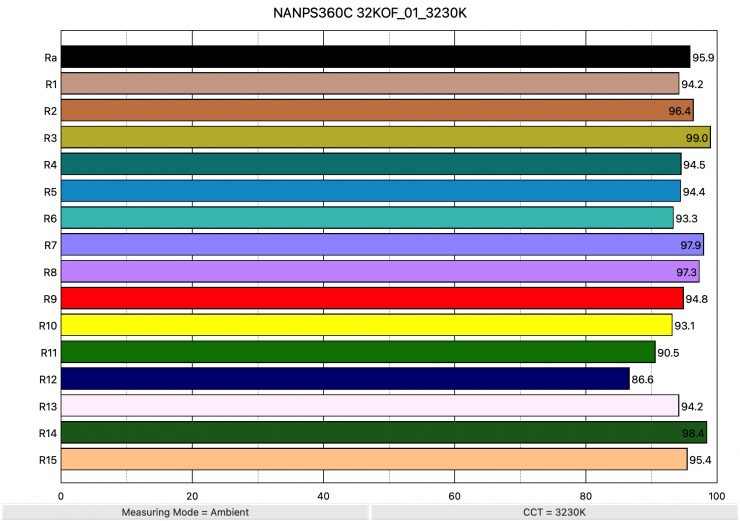
Above, you can see the scores for when the light was used at 3200K open face. It recorded an average CRI (R1-R8) of 95.9 and an extended CRI (R1-R15) of 94.66. For replicating accurate skin tones, it recorded 94.8 for R9 (red), 94.2 for R13 (closest to caucasian skin tones), and 95.94 for R15 (closest to Asian skin tones). These were better results than when the light was used at 5600K. Only R12 (Blue) was below 90.
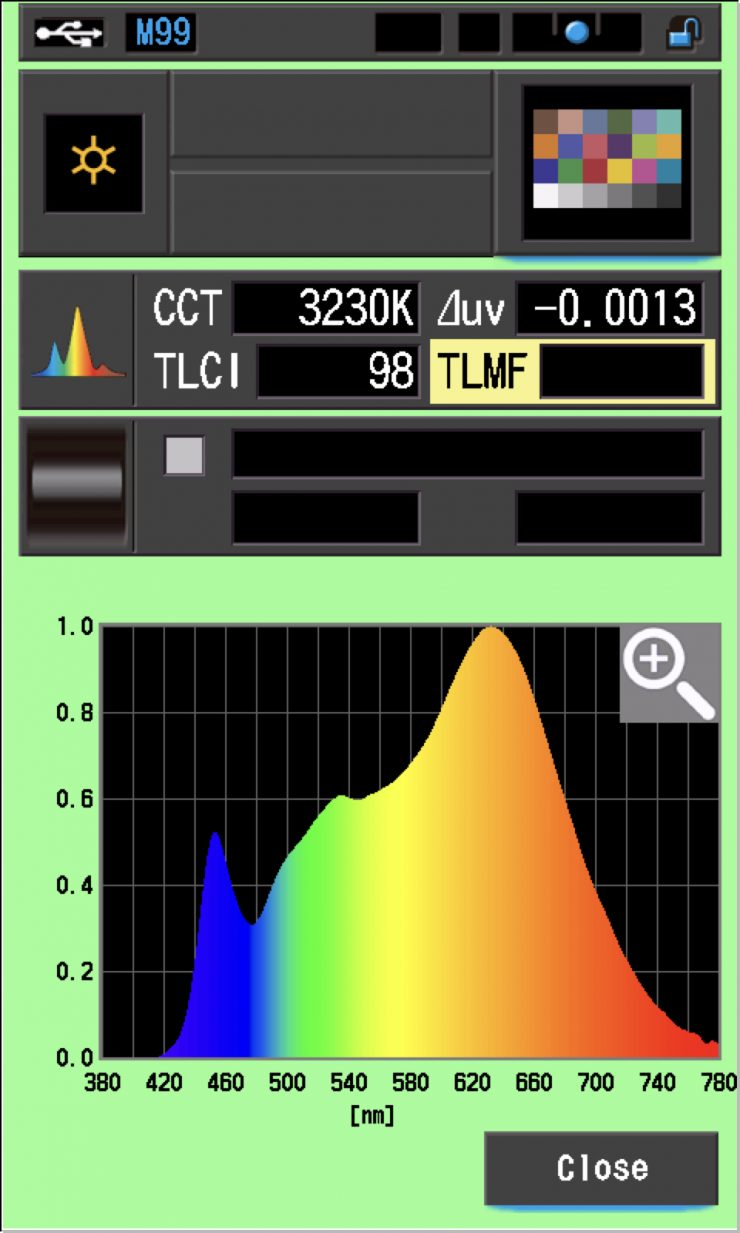
The light, when set at 3200K, recorded a TLCI score of 98.
| EXTENDED CRI | R9 | R13 | R15 | |
| Nanlite PavoSlim 360C | 94.66 | 94.8 | 94.2 | 95.9 |
| Nanlite PavoSlim 240CL | 95.50 | 98.3 | 95.2 | 96.9 |
| Godox KNOWLED F200Bi | 96.84 | 92.5 | 99.5 | 98.9 |
| Intellytech MEGA-6 LITECLOTH 3.0 | 97.07 | 95.1 | 99.5 | 99.0 |
| Aladdin Bi-Flex2 Bi-Color LED Panel 1×2 | 97.54 | 96.7 | 98.6 | 98.8 |
Above, you can see a head-to-head comparison against the Nanlite PavoSlim 240CL, Aladdin Bi-Flex2 Bi-Color LED Panel 1×2, and the Intellytech MEGA-6 LITECLOTH 3.0 when used at 3200K. Again, just like at 5600K, the Nanlite’s scores were all below the competition, but nonetheless, still very good.
Nanlite PavoSlim 360C 5600K Softbox
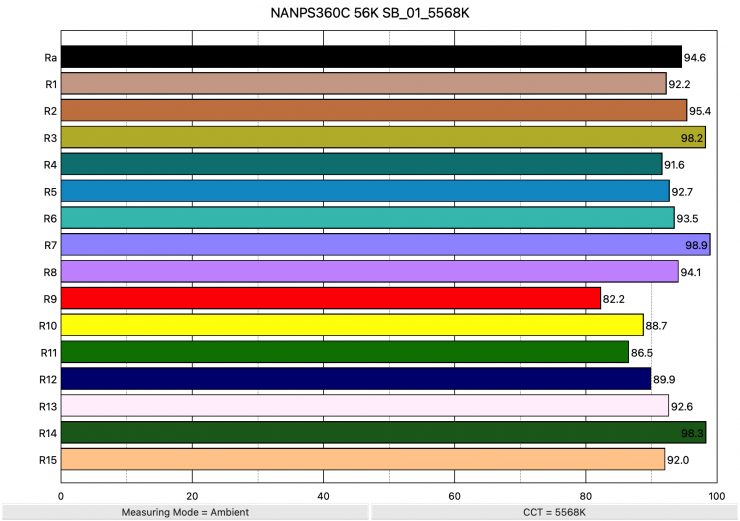
Above, you can see that when the light was set at 5600K and used with its softbox, it recorded an average CRI (R1-R8) of 94.6 and an extended CRI (R1-R15) of 93.06. For replicating accurate skin tones, it recorded 82.2 for R9 (red), 92.6 for R13 (closest to caucasian skin tones), and 92.0 for R15 (closest to Asian skin tones). R9 (Red), R10 (Yellow), R11 (Green), and R12 (Blue) were all below 90.
| EXTENDED CRI | R9 | R13 | R15 | |
| Nanlite PavoSlim 360C Open face | 92.26 | 82.0 | 92.3 | 91.5 |
| Nanlite PavoSlim 360C Softbox | 92.45 | 82.2 | 92.6 | 92.0 |
Above, you can see how those scores compare to when you are using the light open face.
These tests basically tell me that the color rendering performance is very similar whether you use the light with the softbox or open face.
Nanlite PavoSlim 360CL 3200K Softbox
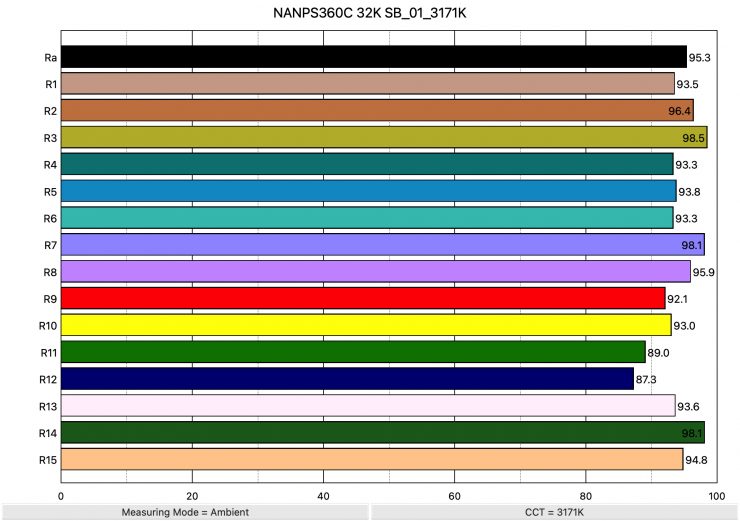
Above, you can see that when the light was set at 5600K and used with its softbox, it recorded an average CRI (R1-R8) of 95.3 and an extended CRI (R1-R15) of 94.04. For replicating accurate skin tones, it recorded 92.1 for R9 (red), 93.6 for R13 (closest to caucasian skin tones), and 94.8 for R15 (closest to Asian skin tones). Only R11 (Green) and R12 (Blue) were marginally below 90.
| EXTENDED CRI | R9 | R13 | R15 | |
| Nanlite PavoSlim 360C Open face | 94.66 | 94.8 | 94.2 | 95.9 |
| Nanlite PavoSlim 360C Softbox | 94.04 | 92.1 | 93.6 | 94.8 |
Above, you can see how those scores compare to when you are using the light open face.
These tests basically tell me that the color rendering performance is almost identical whether you use the light with the softbox or open face.
How does it perform when creating saturated colors?
I also wanted to test the PavoSlim 360C to see how it performed when creating super-saturated colors.
0° – RED
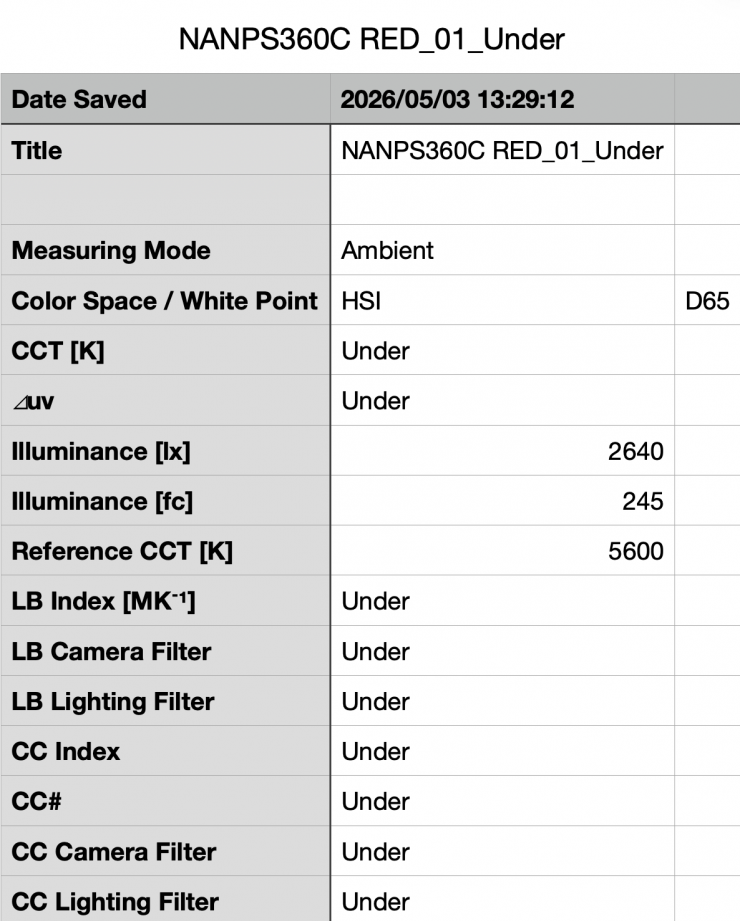
Above, you can see that the light recorded an output of 2640 lx / 245 fc @3m / 9.9′.

As far as creating an accurate 0° Red, the PavoSlim 360C was 1° off.
120° – GREEN
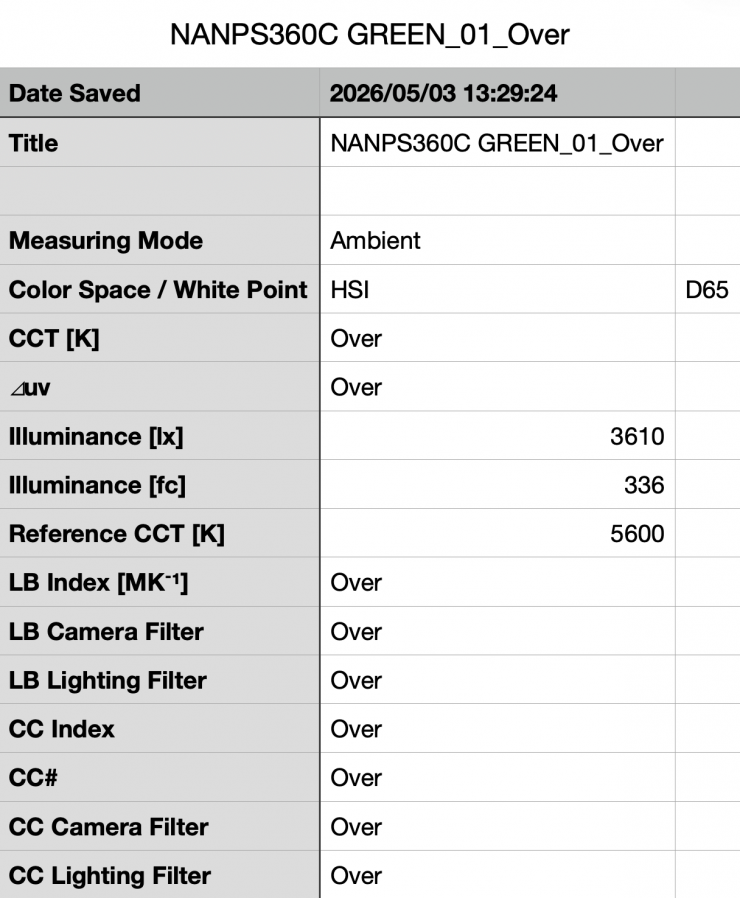
Above, you can see that the light recorded an output of 3610 lx (336 fc) @3m / 9.9′.

As far as creating an accurate 120° Green, the PavoSlim 360C was spot on with a 120° reading and 100% saturation.
240° – BLUE
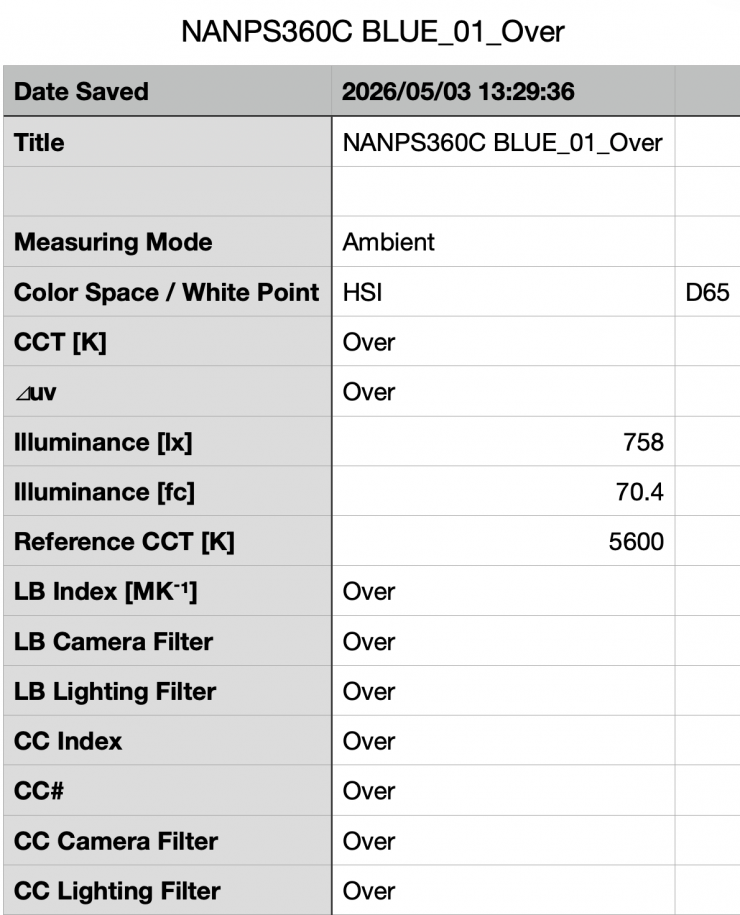
Above you can see that the light recorded an output of 758 lx (70.4 fc) @3m / 9.9′.

As far as creating an accurate 240° Blue, the PavoSlim 360C had a perfect reading of 240°, with 100% saturation.
60° – YELLOW
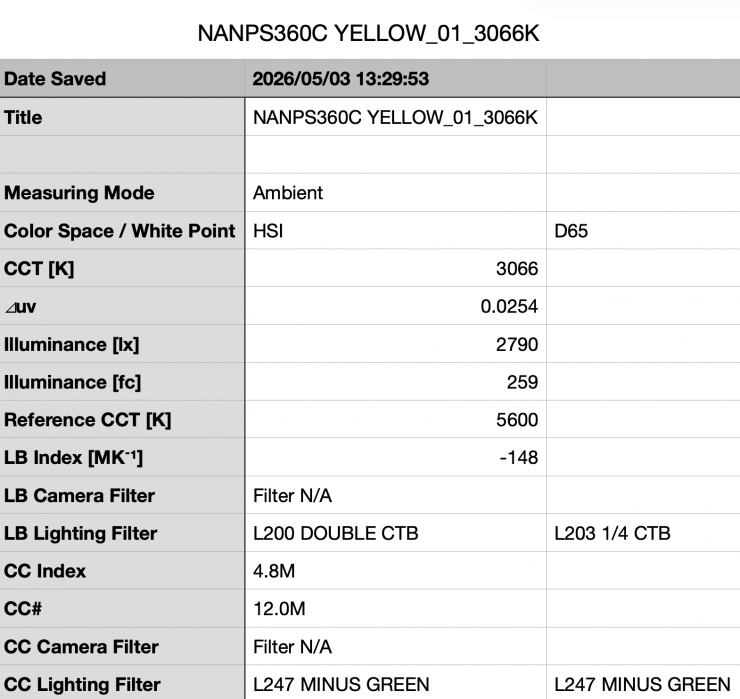
Above, you can see that the light recorded an output of 12790 lx (259 fc).

As far as creating an accurate 60° Yellow, the PavoSlim 360C was 15° off with a reading of 45°.
Because the light is RGBWW, it is going to struggle to recreate some fully saturated colors, such as yellow, accurately.
CC Index & ⊿uv
The CC Index displays the CC correction value and whether any magenta or green need to be added or subtracted. 1 CC corresponds to 035 Kodak CC values or 1/8 Rosco filter values. Any reading less than +1.00 or -1.00 and you’re probably not going to need to make any kind of adjustment. The ⊿uv is the value to show how much this light is away from being an ideal light source (black body radiation = incandescent lamp). As with the CC Index you want this number to theoretically be zero. Kelvin is not a linear value, so we need to convert from Kelvin to MK-1 to compare the values of color temperature. To calculate from Kelvin to Mired is MK-1= 1*1000000/Kelvin. While this may sound confusing, it is the only way of measuring if the Kelvin shift is significant enough to warrant having to use a filter for correction. Below are the results for the Nanlite PavoSlim 360C:
Nanlite PavoSlim 360C Kelvin Vs MK-1
| Kelvin | Difference in K | MK-1 | Difference in MK-1 | |
| SET VALUE | 2500K | 0 | 400.00 | 0 |
| ACTUAL READING | 2564K | 64 | 390.01 | 9.99 MK-1 |
| SET VALUE | 3200K | 0 | 312.5 | 0 |
| ACTUAL READING | 3230K | 30 | 309.59 | 2.91 MK-1 |
| SET VALUE | 4500K | 0 | 222.22 | 0 |
| ACTUAL READING | 4579K | 79 | 218.38 | 3.84 MK-1 |
| SET VALUE | 5600K | 0 | 178.57 | 0 |
| ACTUAL READING | 5490K | 110 | 182.14 | -3.57 MK-1 |
| SET VALUE | 6500K | 0 | 153.84 | 0 |
| ACTUAL READING | 6819K | 319 | 146.65 | 7.19 MK-1 |
| SET VALUE | 8000K | 0 | 125.00 | 0 |
| ACTUAL READING | 8521K | 521 | 117.35 | 7.65 MK-1 |
| SET VALUE | 10000K | 0 | 100.00 | 0 |
| ACTUAL READING | 10784K | 784 | 92.73 | 7.27 MK-1 |
These figures might look confusing, but what they tell me is that the light is reasonably CCT-accurate at 3200K, 4500K, and 5600K. Any MK-1 score that is under -9/9 means you wouldn’t have to use any color correction gels. The MK-1 scores for this light were just ok. Any MK-1 score that is under -6/6 is a very good result. At 2500K, the score wasn’t great, but it was still well within the bounds of being acceptable. very good.
Ok, now let’s look at the CC INDEX & ⊿uv.
Nanlite PavoSlim 360C CC INDEX & ⊿uv
| CC INDEX | ⊿uv | |
| 2500K | 0.4G | -0.0019 |
| 3200K | 0.1G | -0.0013 |
| 4500K | 0.1G | -0.0018 |
| 5600K | 0.3G | -0.0017 |
| 6500K | 0.5G | -0.0016 |
| 8000K | 0.7G | -0.0009 |
| 10000K | 1.0G | 0.0000 |
These were decent results across the board. There was nothing here that anyone should be concerned about. At 5600K and above, it has a very slight green push, but it’s so marginal that you wouldn’t see it in the real world.
TM-30
TM-30 is a relatively new color rendering standard that was developed to deal with the limitations of CRI. TM-30 looks at 99 individual colors. These 99 colors are categorized into seven groups: nature, skin color, textiles, paints, plastics, printed material, and color systems.
TM-30 scores go from 0 – 100. The higher the score, the more accurate a light is at producing colors. Any TM-30 Rf score in the ’90s is considered to be good. What is interesting and something that you need to be very aware of is that two separate light sources with the exact same CRI scores can render colors very differently. A light with a high CRI rating could have a low TM-30 score. Conversely, a light with a good TM-30 score could have a bad CRI score.
Now, there are two measurements associated with TM-30, Rf and Rg.
Rf (Color Fidelity)
Rg (Color Gamut)
With Rf value, ideally, you want a score in the 90’s.
With the RG value, a score below 100 indicates that the light source renders colors with less saturation than the reference source. Any score above 100 means it is over-saturating colors. So ideally, you want this score to be 100.
Nanlite PavoSlim 360C
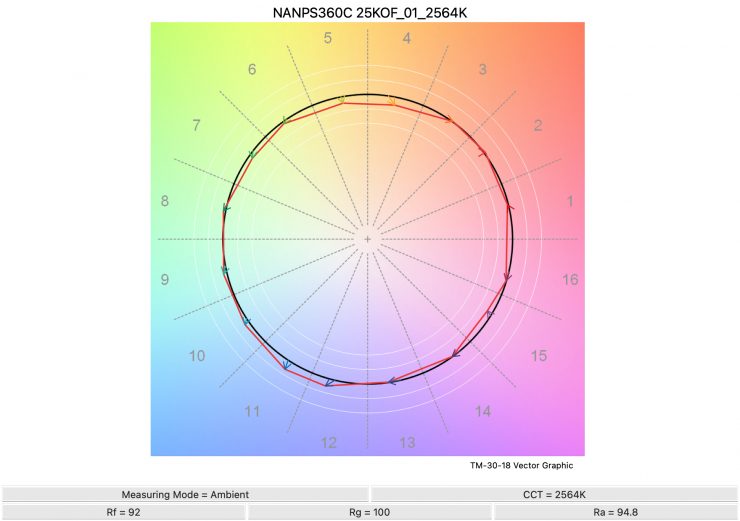
2500K 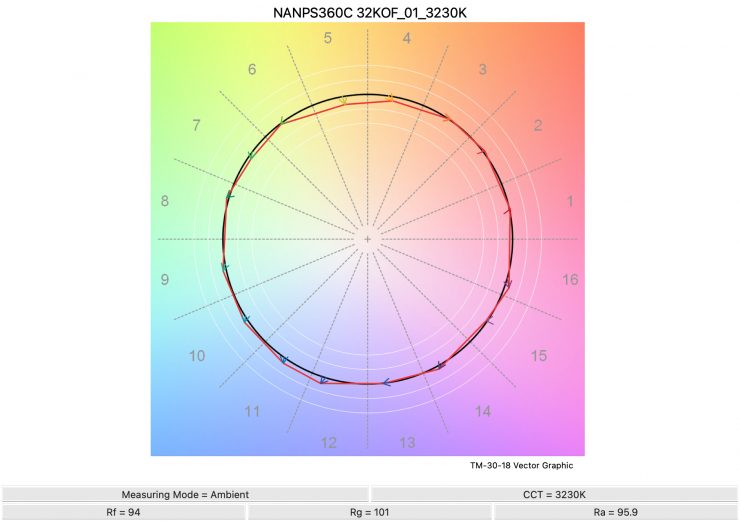
3200K 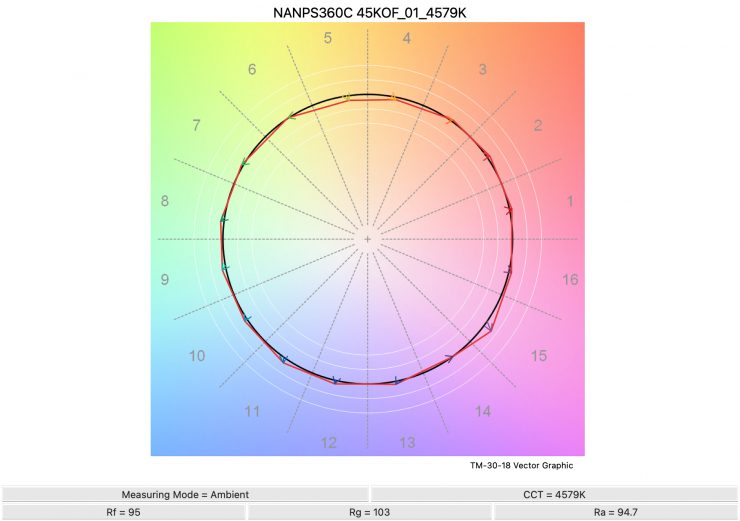
4500K 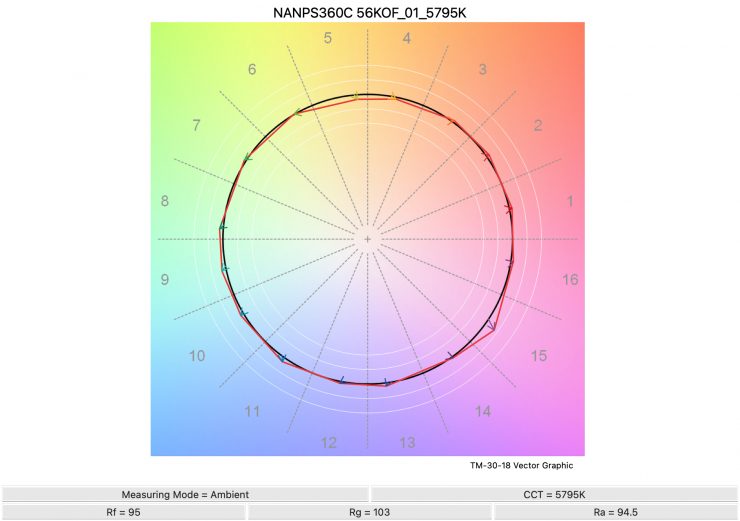
5600K 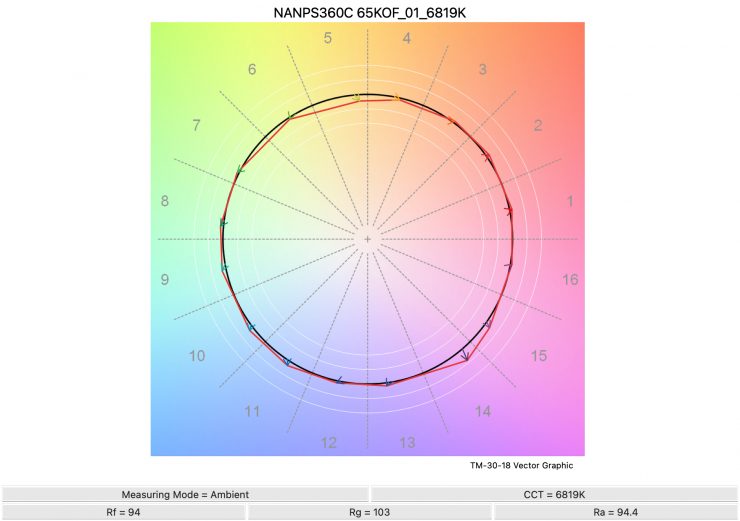
6500K 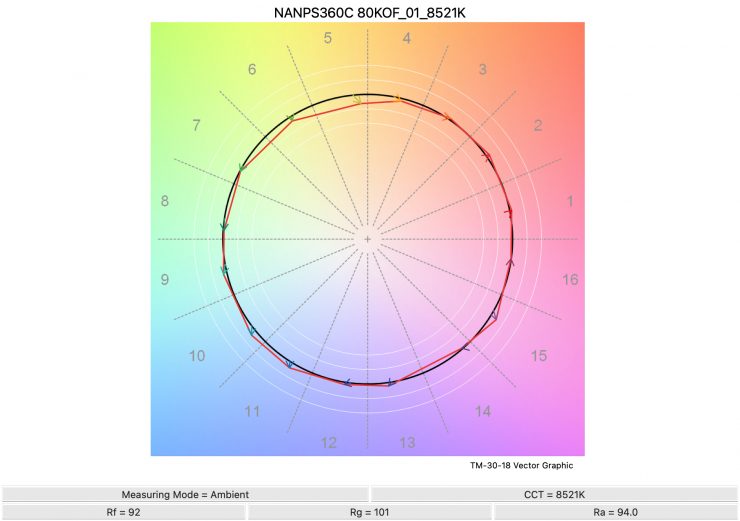
8000K 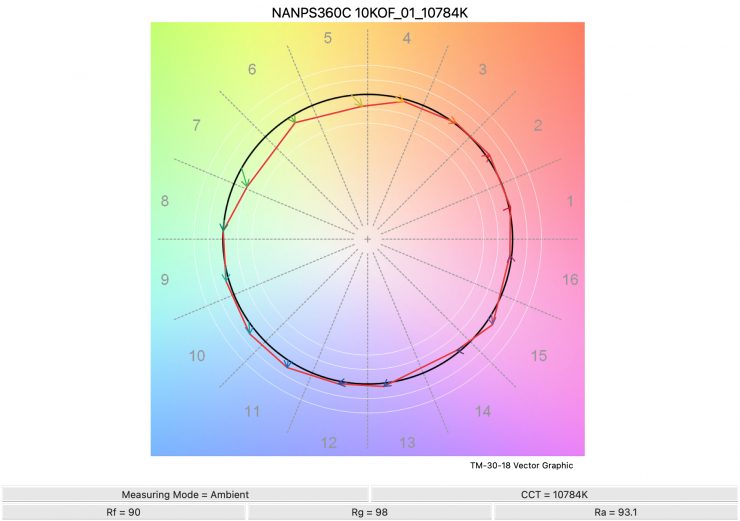
10000K
Above, you can see the scores for the Nanlite PavoSlim 360C at various CCT settings. Below, I have listed the figures as well.
Here are the results:
| Rf | Rg | |
| 2500K | 92 | 100 |
| 3200K | 94 | 101 |
| 4500K | 95 | 103 |
| 5600K | 95 | 103 |
| 6500K | 94 | 103 |
| 8000K | 92 | 101 |
| 10000K | 90 | 98 |
The TM-30 scores were fairly consistent across its CCT range, and it shows me that the light is reasonably consistent at replicating accurate colors with full saturation. However, you can see that it did have a tendency to slightly over-saturate magenta/red colors at 4500K-6500K.
SSI
SSI (Spectral Similarity Index) was developed by the Sci-Tech Council of the Academy. SSI gives me the ability to set any light as a standard, or use predefined standards (such as CIE D55), and then give other lights an SSI score based upon how well they will match standards such as CIE D55 measure spectral response and compare it directly against an ideal light source.
SSI is a much better way to judge an LED light than CRI or TLCI, although they don’t tell the full story of any light, and you can’t judge a light by SSI scores alone.
SSI is useful to see how well different lights will play together. As the Sekonic C-800 Spectromaster can measure SSI, I decided to test out the Nanlite PavoSlim 360C to see how it performed.
Nanlite PavoSlim 360C
3200K
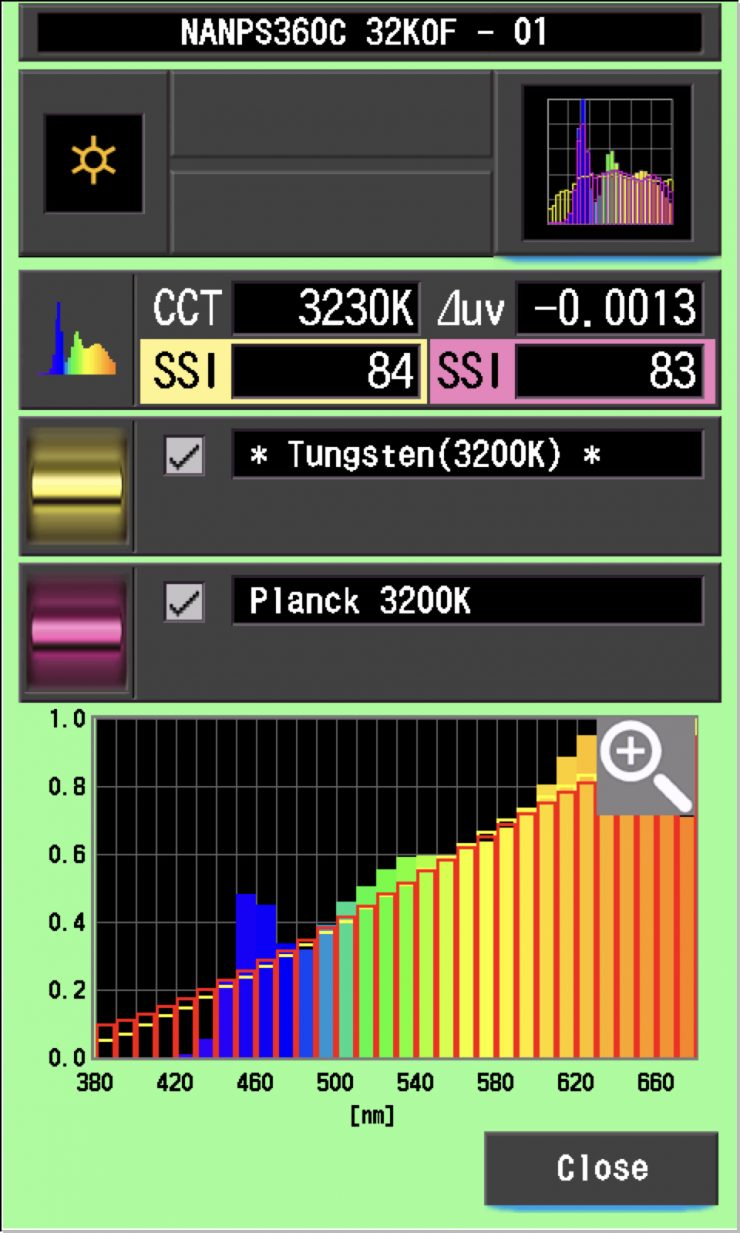
Above are the scores for the light when used at 3200K. The scores show that the light does a very good job of accurately replicating a 3200K (Tungsten) source. Any score in the mid to high 80’s is outstanding for an LED light.
5600K
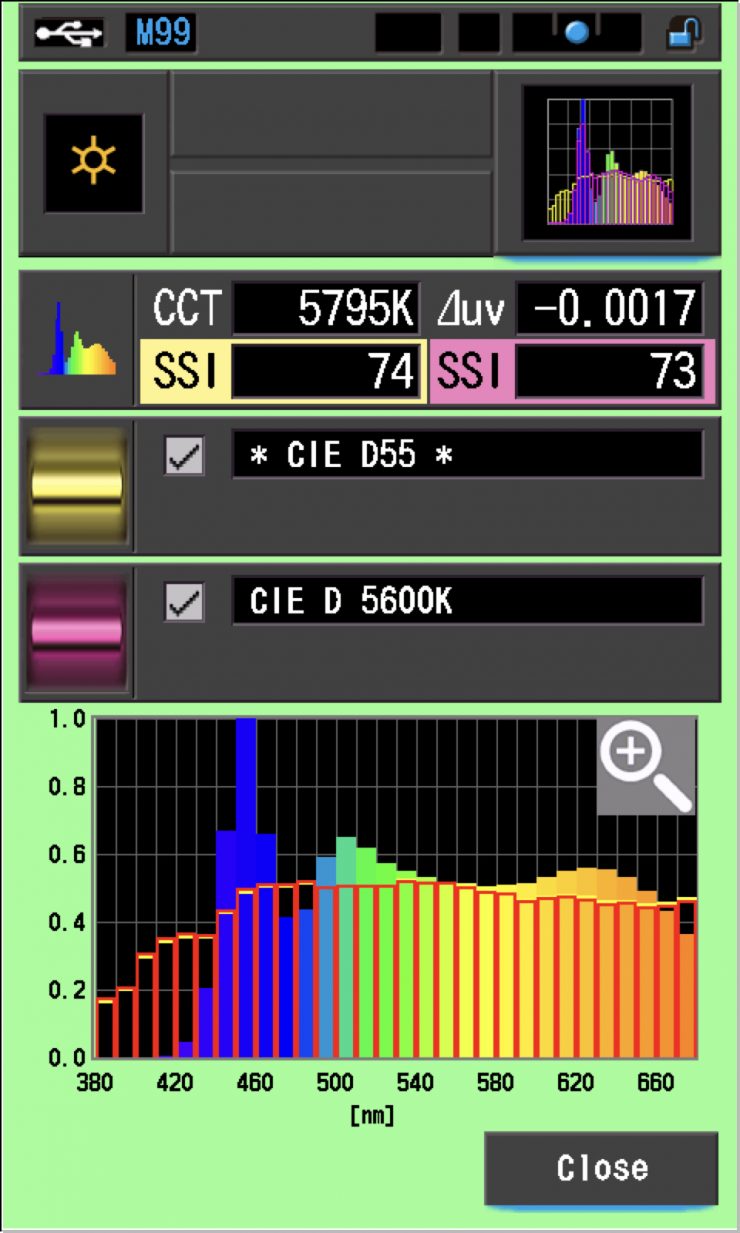
Above are the scores for the light when used at 5600K. The scores show that the light does a reasonably good job of accurately replicating a CIE D55 source. A score in the low to mid-70s is very typical for a 5600K LED light.
The main reason we want to record SSI scores is so we can see how well they match with other lights. For example, let’s see how well the Nanlite PavoSlim 360C matches the Aputure STORM 1200x and the NANLUX EVOKE 600C at both 3200K and 5600K. Below you can see the results.
PavoSlim 360C 5600K
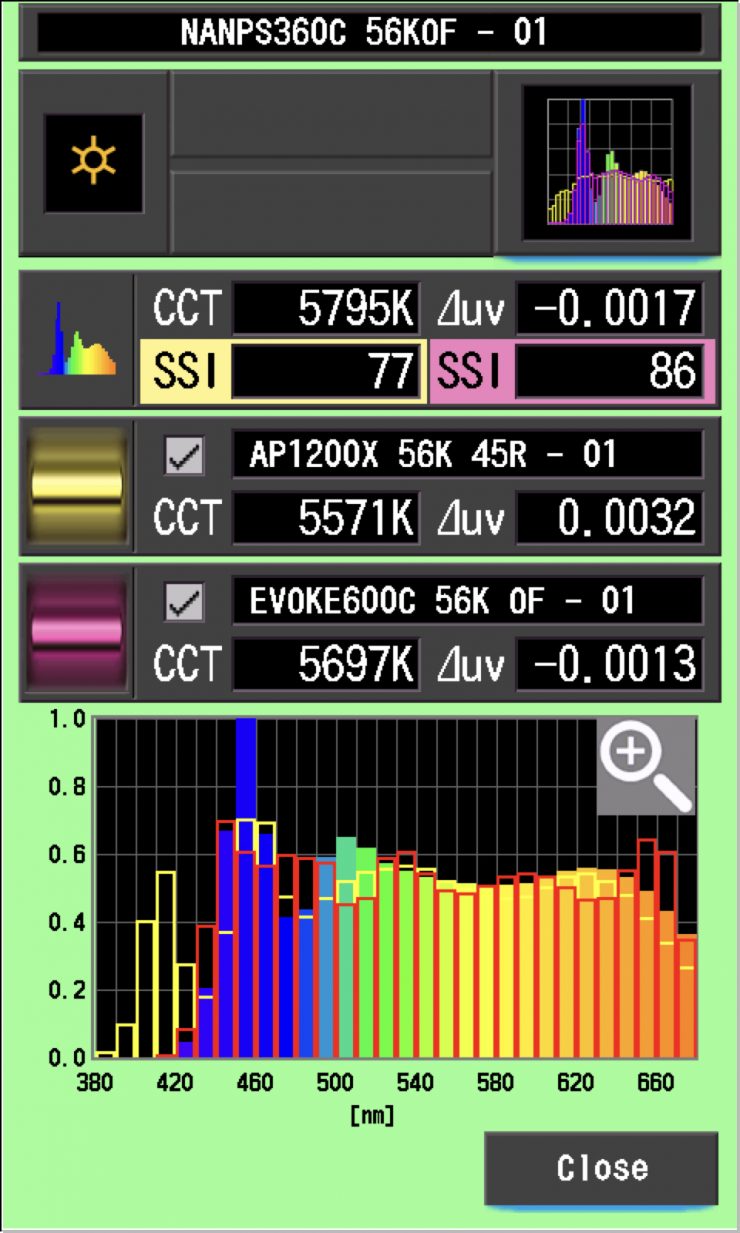
As you can see, the Nanlite PavoSlim 360C is not a great match with the Aputure, but it’s a reasonably good match to the EVOKE 600C when used at 5600K.
PavoSlim 360C 3200K
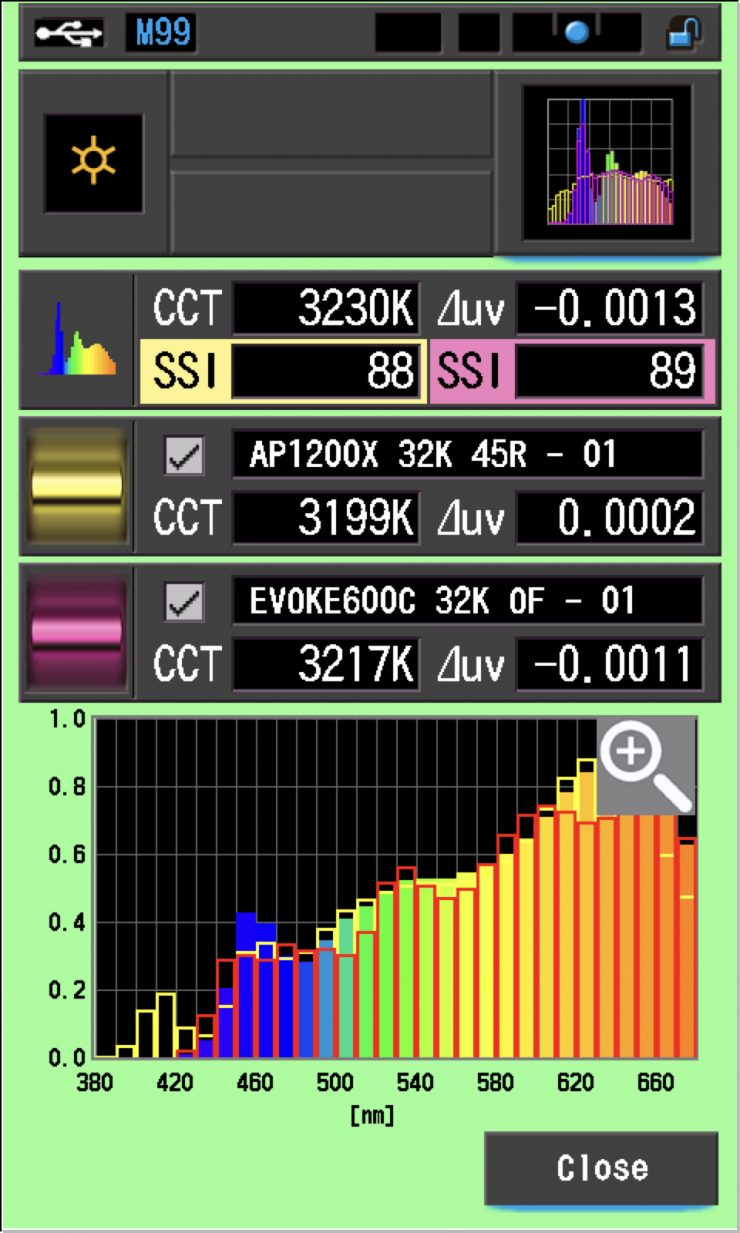
At 3200K, the Nanlite PavoSlim 360C is a reasonably decent match to the Aputure and the NANLUX EVOKE 600C.
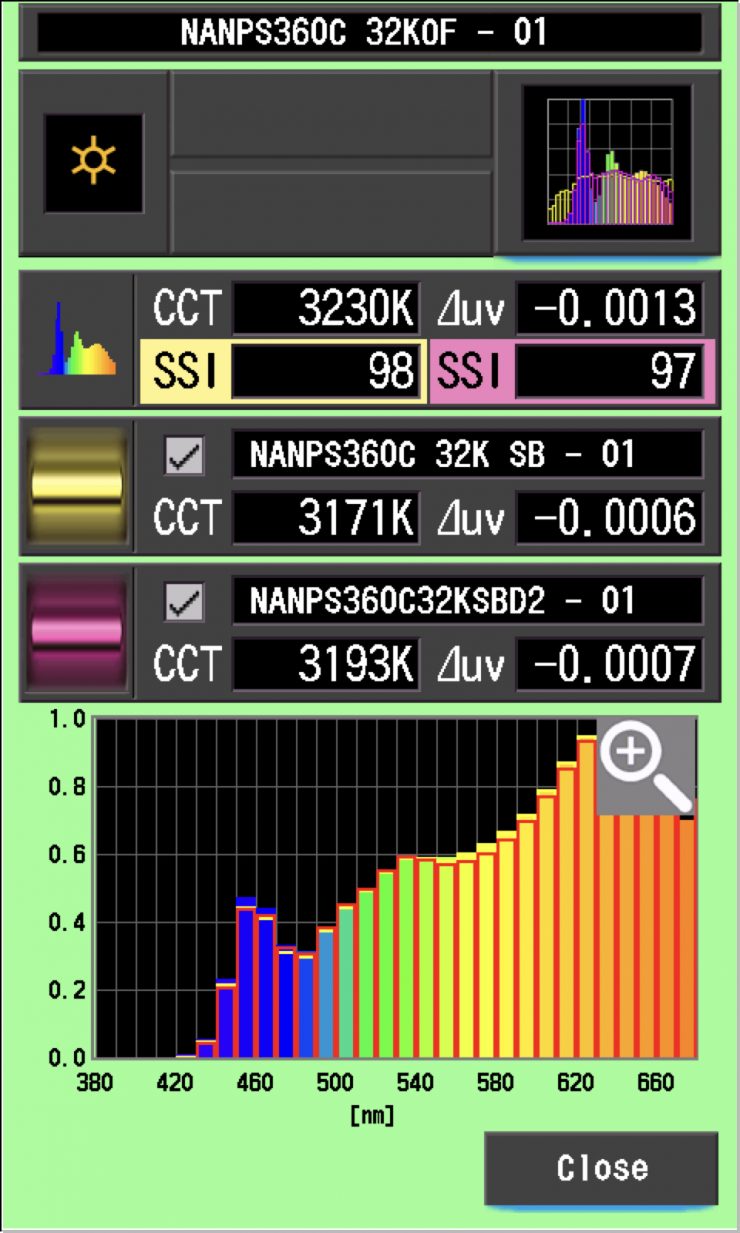
As another comparison, let’s see how it matches itself at 3200K when it is used with the softbox, and the softbox with both pieces of diffusion.
3200K
5600K
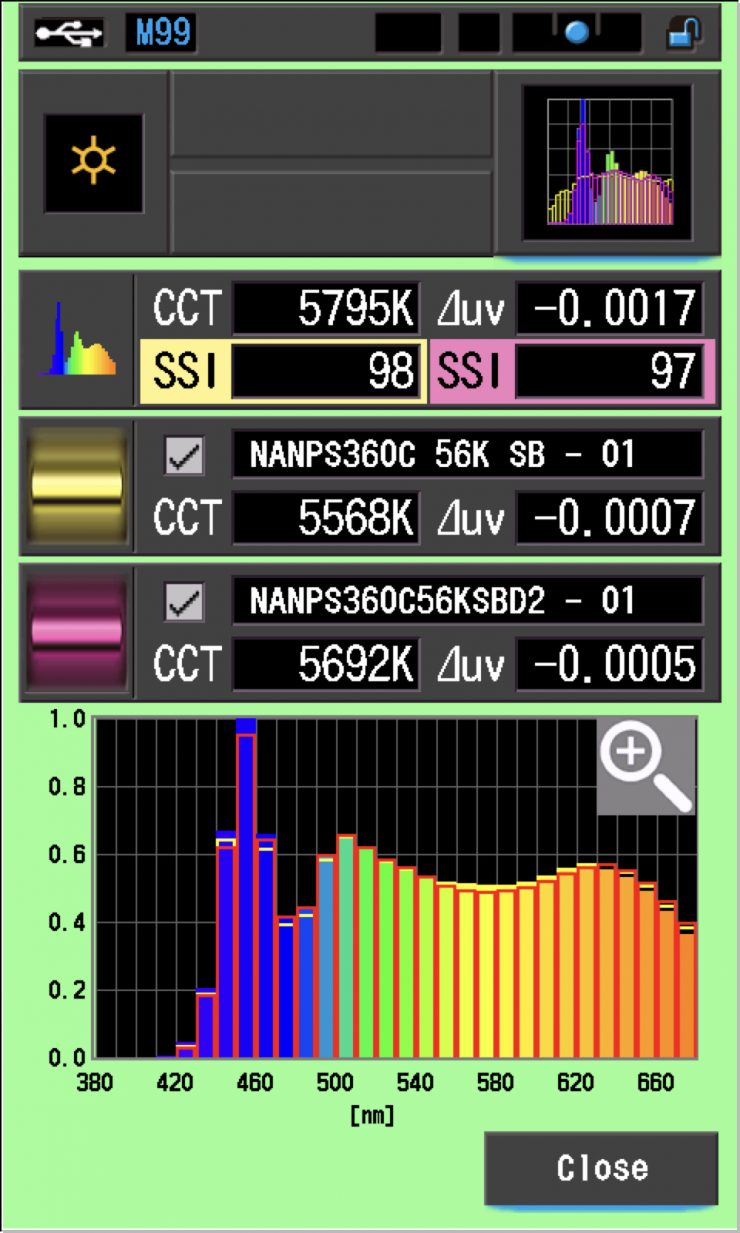
As you can see, the Nanlite PavoSlim 360C was almost a perfect match to tto itself when used with the softbox, and the softbox with both pieces of diffusion.
Being able to measure SSI in advance and compare different lights you may be using together is a great way of finding out what lights will work together and what adjustments need to be made.
Spectral Distribution
Nanlite PavoSlim 360C 3200K
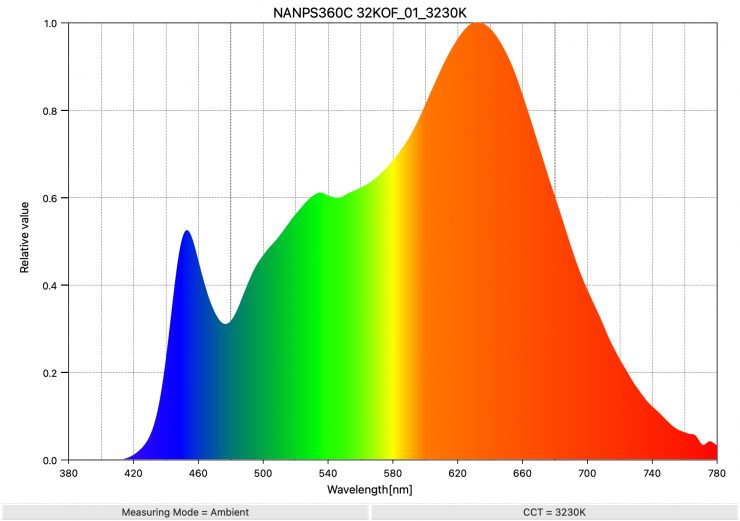
Above, you can see the spectral distribution of the Nanlite PavoSlim 360C when it is set at 3200K. The spectral distribution is decent.
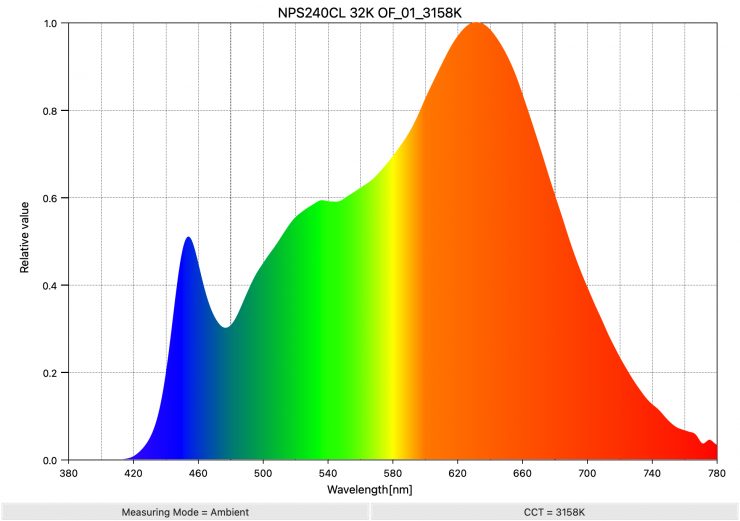
As a comparison, above, you can see the spectral distribution of the Nanlite PavoSlim 240CL when it is set at 3200K. The spectral distribution is decent.
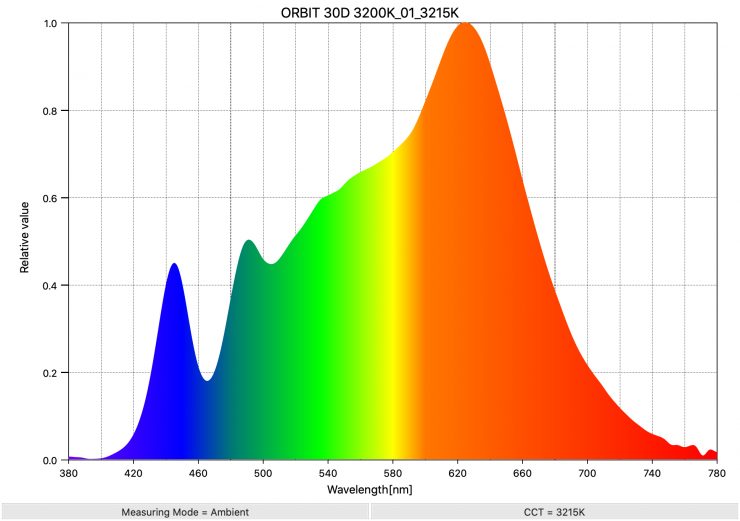
As another comparison, above you can see what the spectral response of an ARRI Orbiter looks like when used at 3200K.
Nanlite PavoSlim 360C 5600K
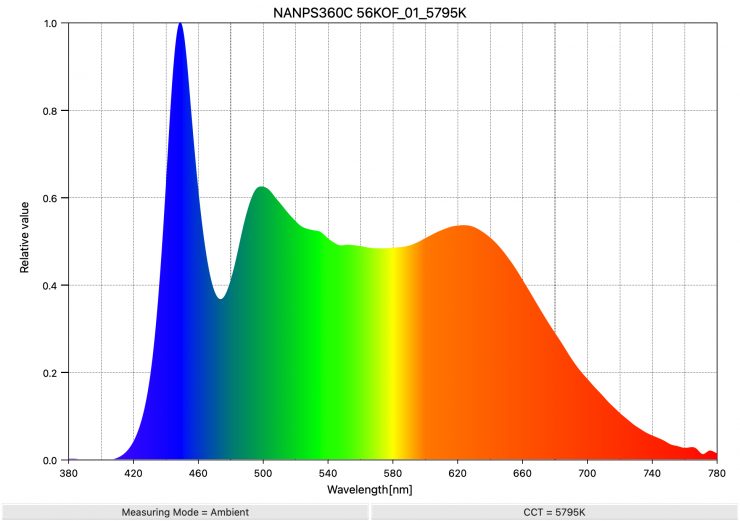
Above, you can see the spectral distribution of the Nanlite PavoSlim 360C when it is set at 5600K. The spectral distribution is decent, but there is a slight push toward green.
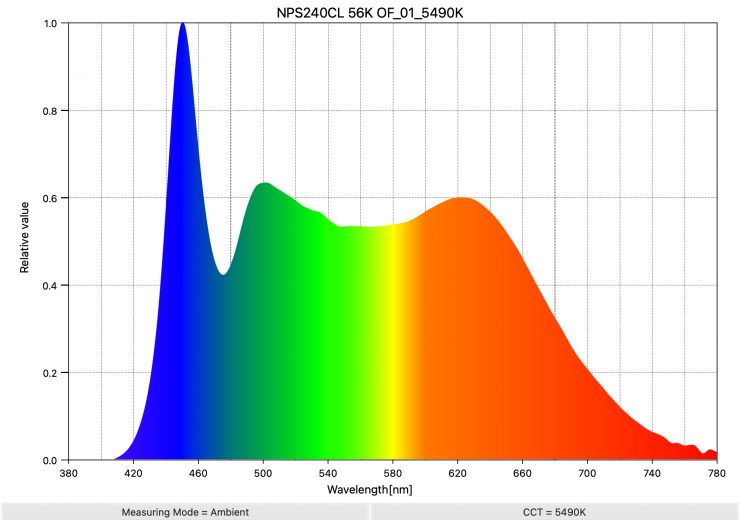
As a comparison, above, you can see the spectral distribution of the Nanlite PavoSlim 240CL when it is set at 5600K. The spectral distribution is decent, but there is a slight push toward green.
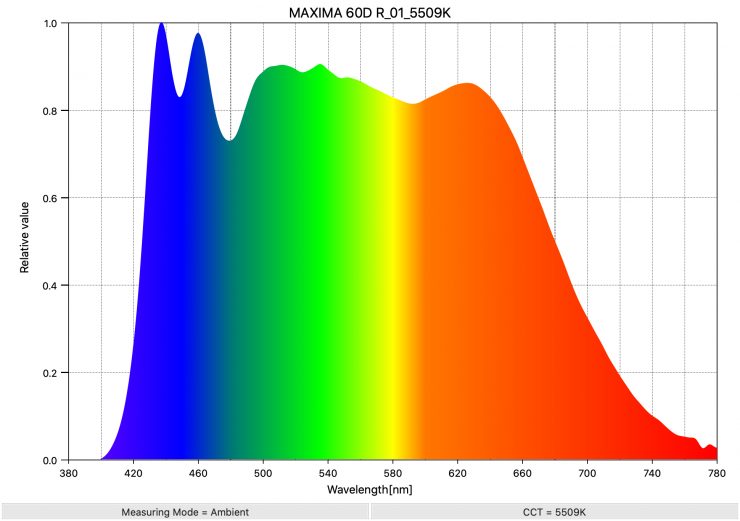
Let’s now compare that against the best LED light I have ever tested at 5600K, the Maxima 3.
Real-World Performance and Quality of Light
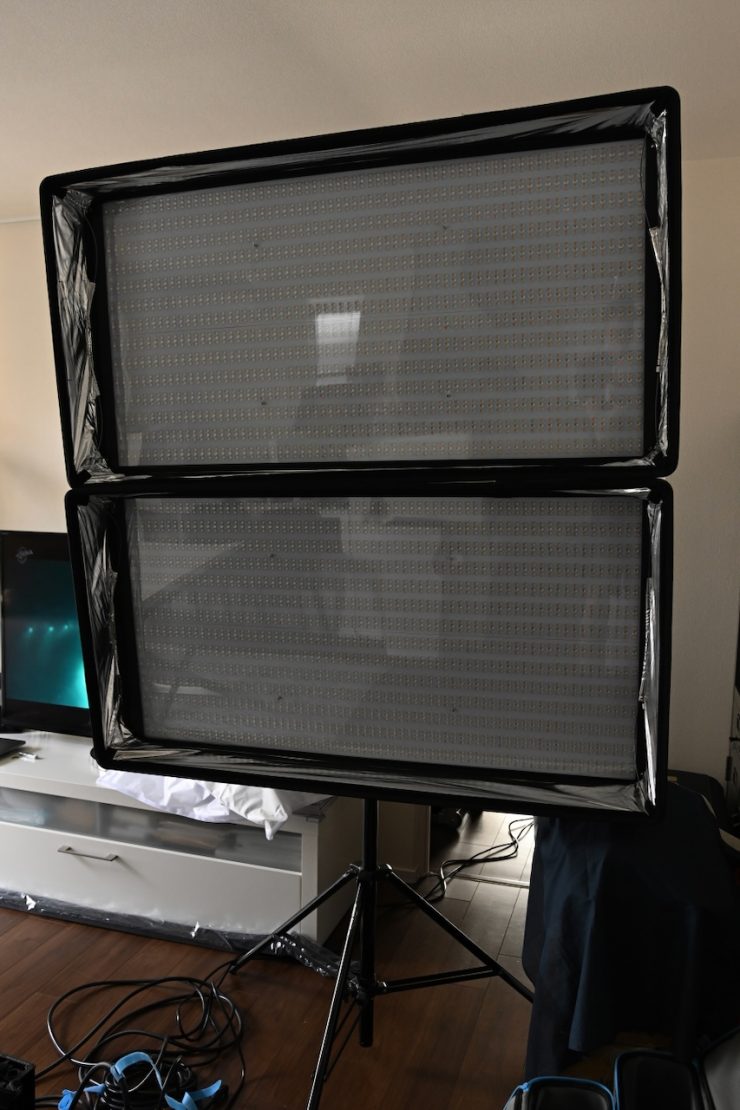
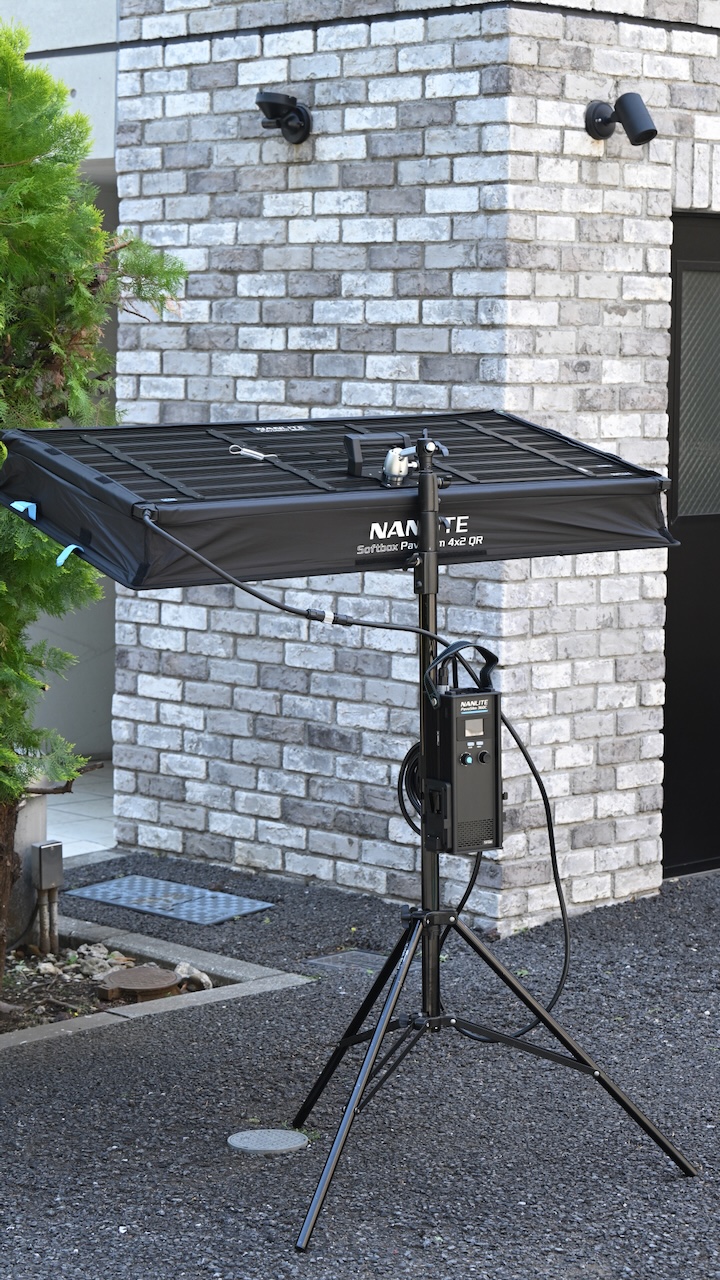
As I always say, photometric scores only tell you part of the story. So do the scores from the Nanlite PavoSlim 360C translate into real-world performance? Well, let’s find out.
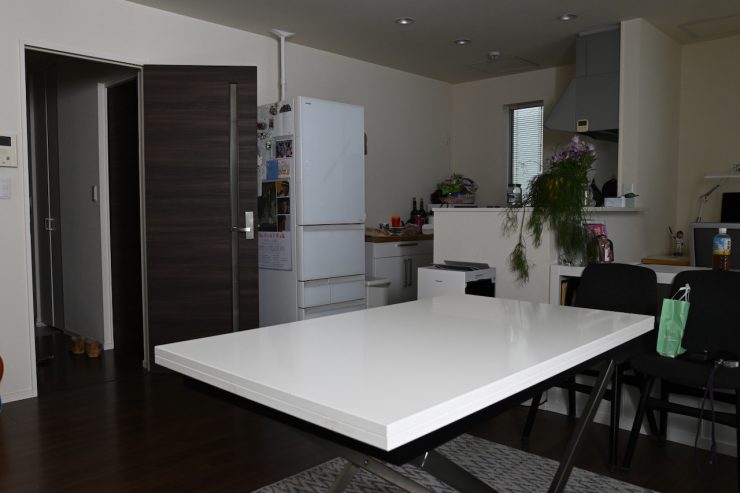
Softbox and one layer of diffusion 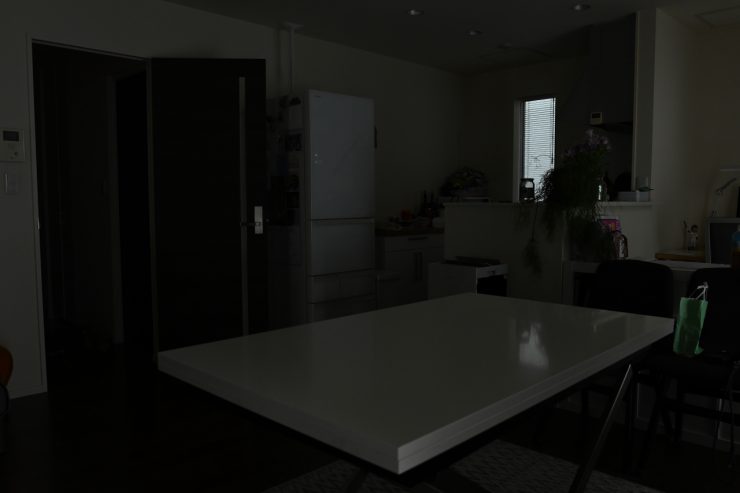
Light off 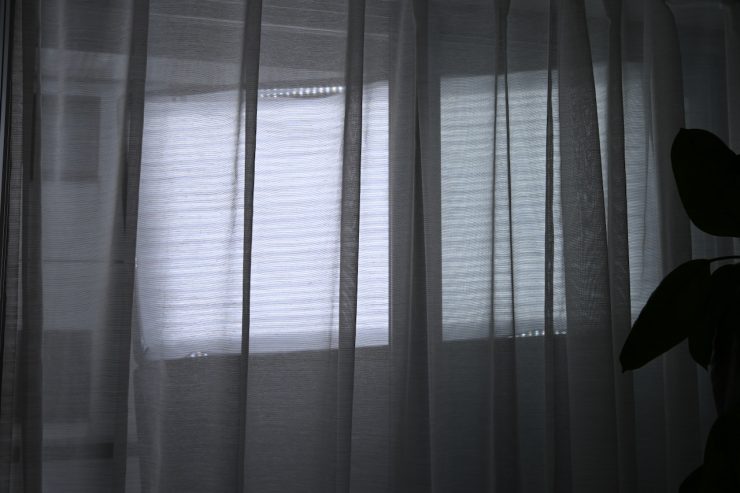
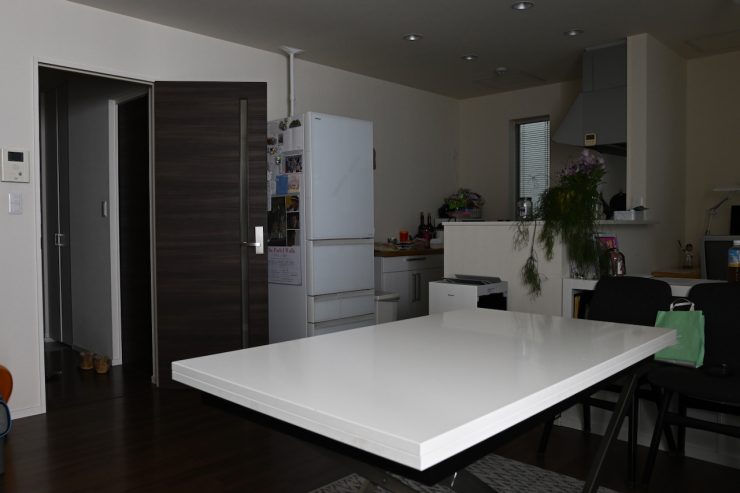
Position of light
If you want to see how much output the light has, above you can see what the light looks like when it is placed outside and punched through a sheer curtain. I have kept the camera settings exactly the same for all of the shots.
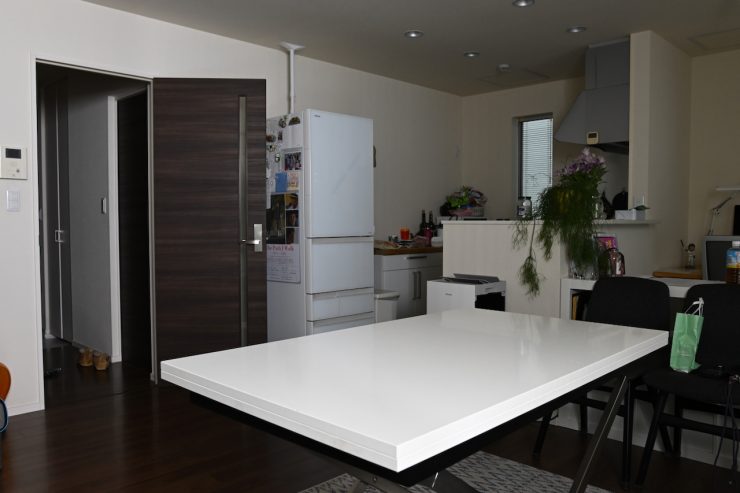
Light used open face 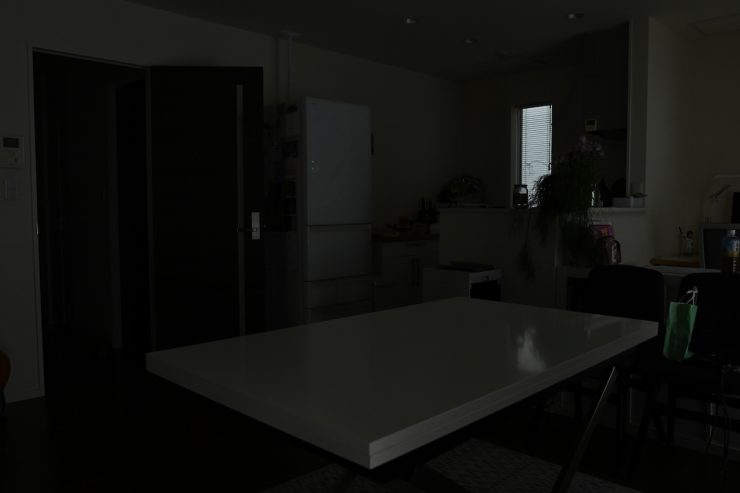
Light off 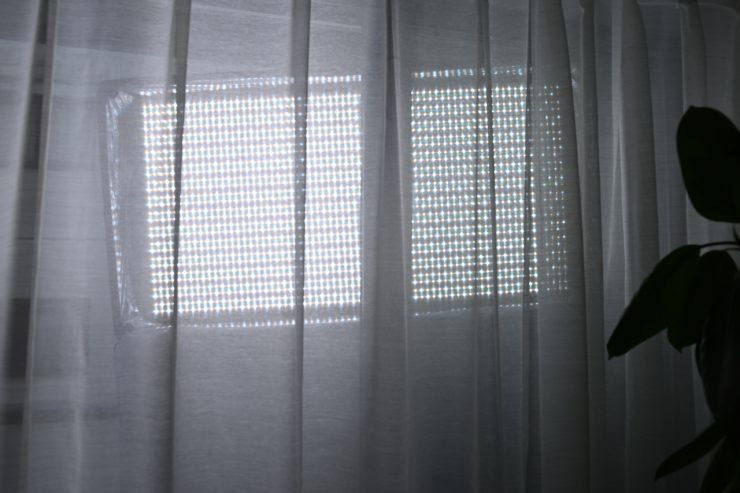
Position of light
Above, you can see how much output the light has when used with no diffusion. I have kept the camera settings exactly the same for all of the shots.
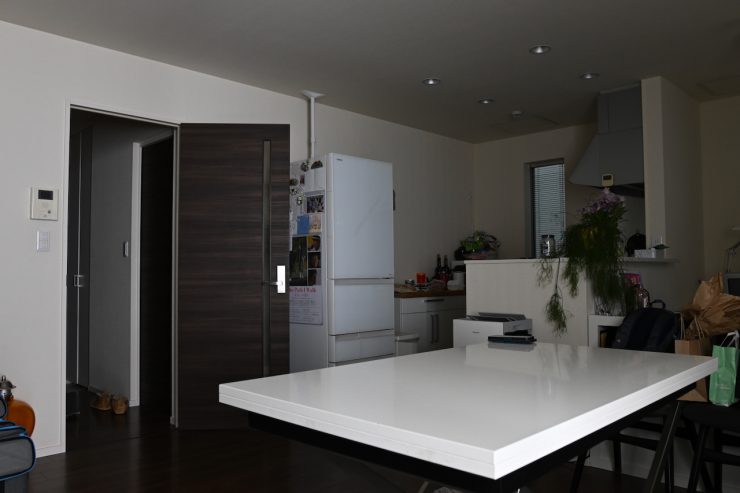
No diffusion 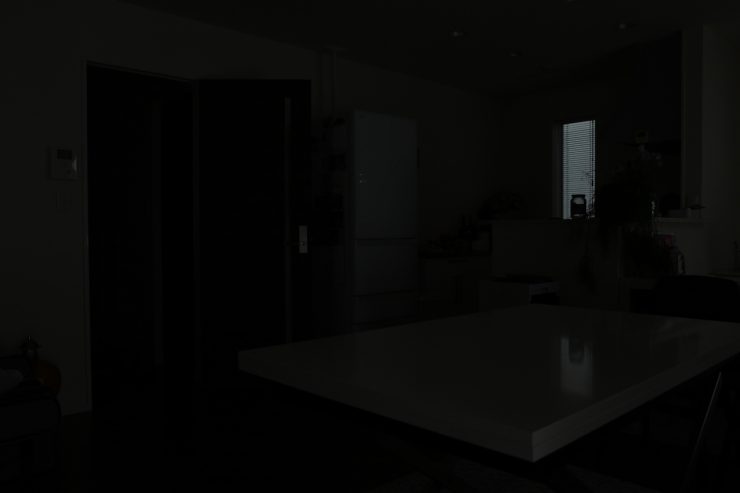
Light off 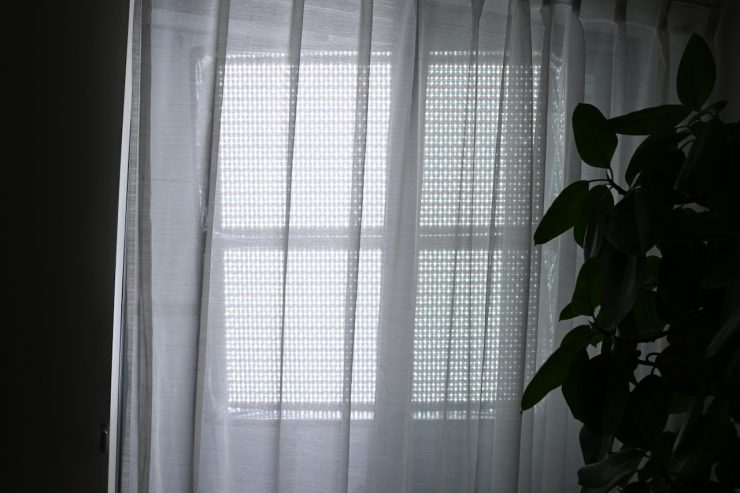
Position of lights 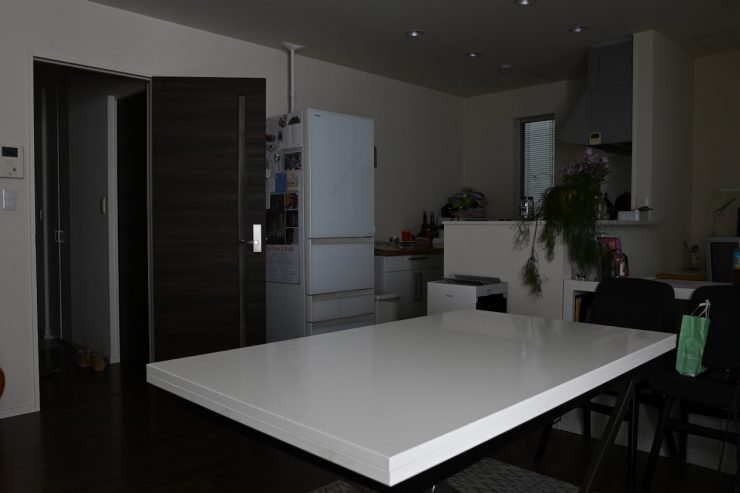
Diffusion 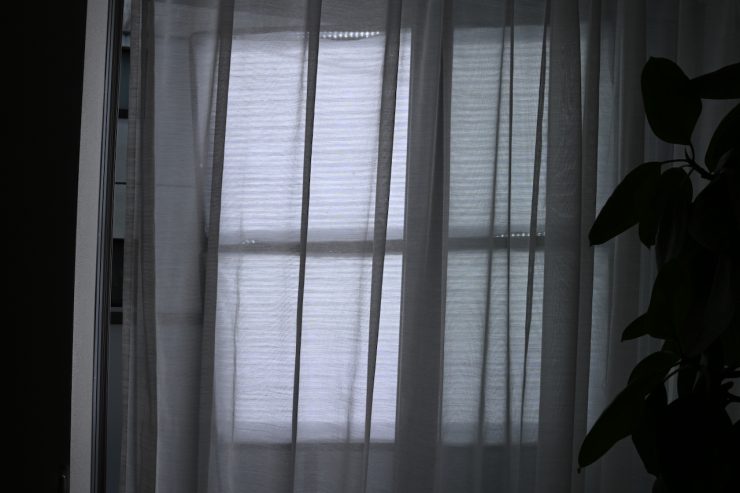
Positon of lights
Above, you can see how much output two of the lights have when using the coupler kit with no diffusion and with diffusion. I have kept the camera settings exactly the same for all of the shots.
One light with diffusion and the other without 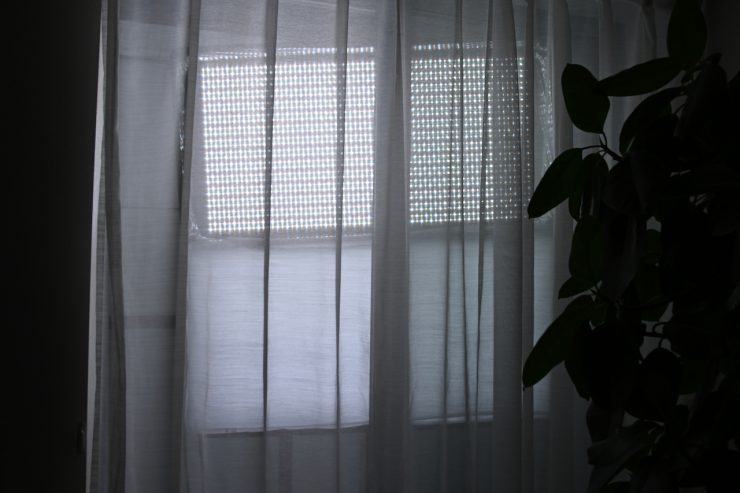
Position of lights 
Above, you can see how much output two of the lights have when using the coupler kit, with one of the lights using no diffusion and the other with diffusion. I have kept the camera settings exactly the same for all of the shots.
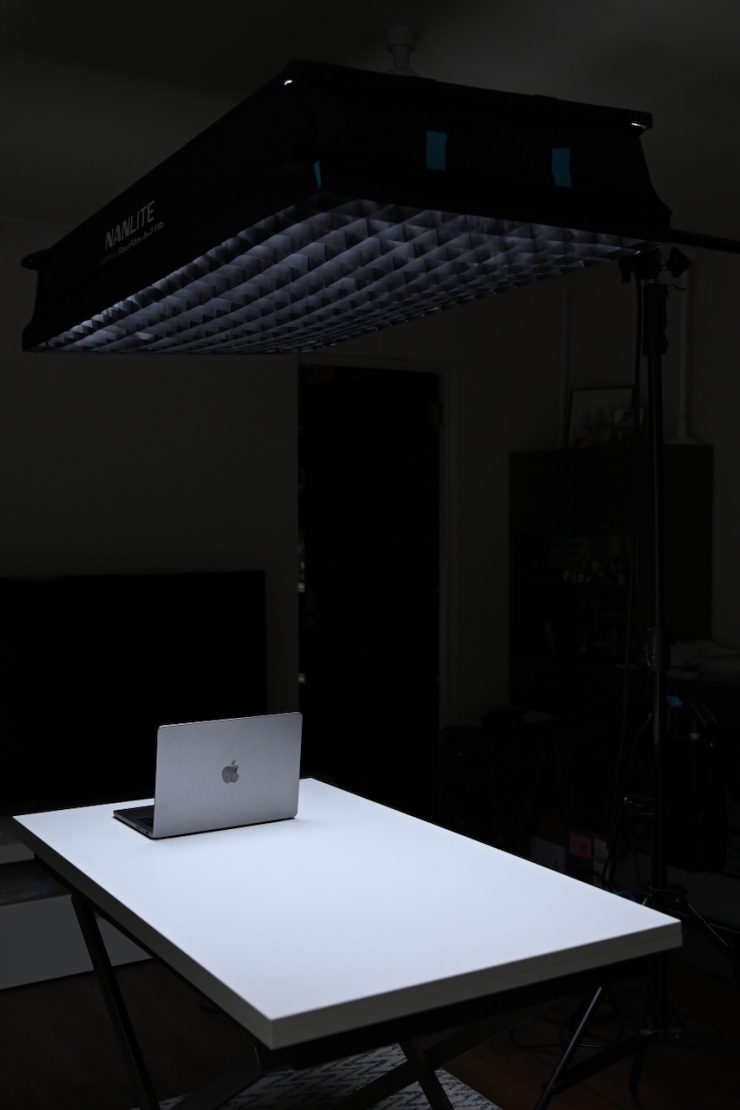
Light at 41% output. Double diffusion 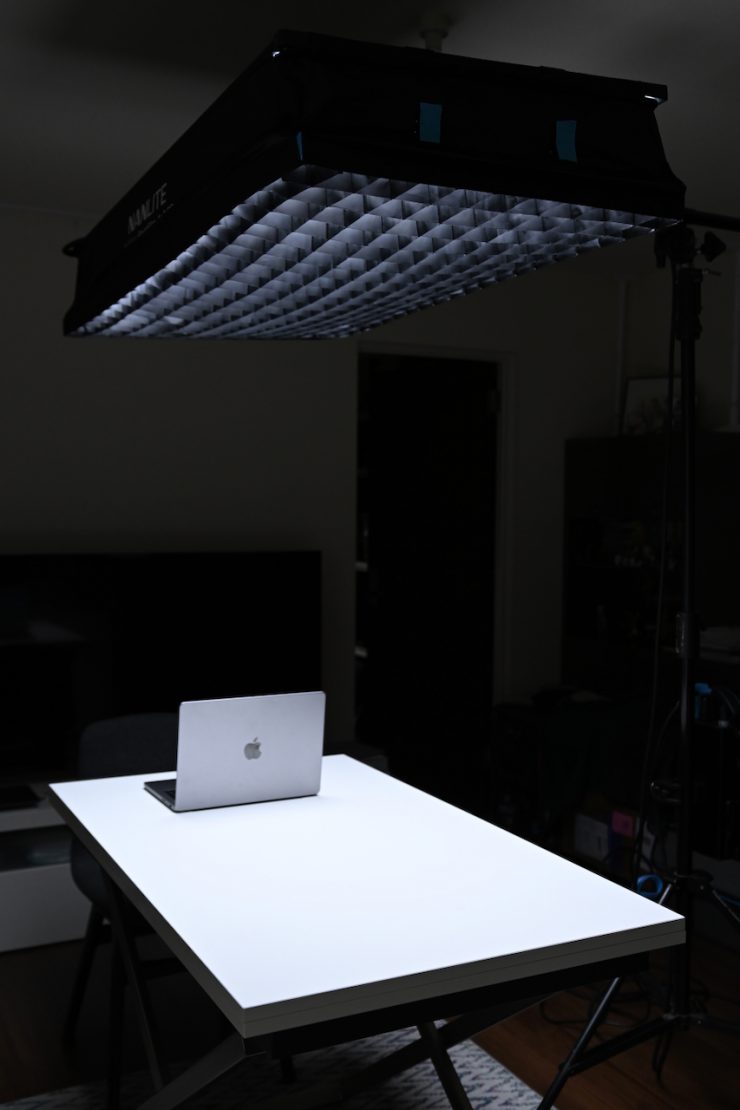
Light at 100% output. Double diffusion 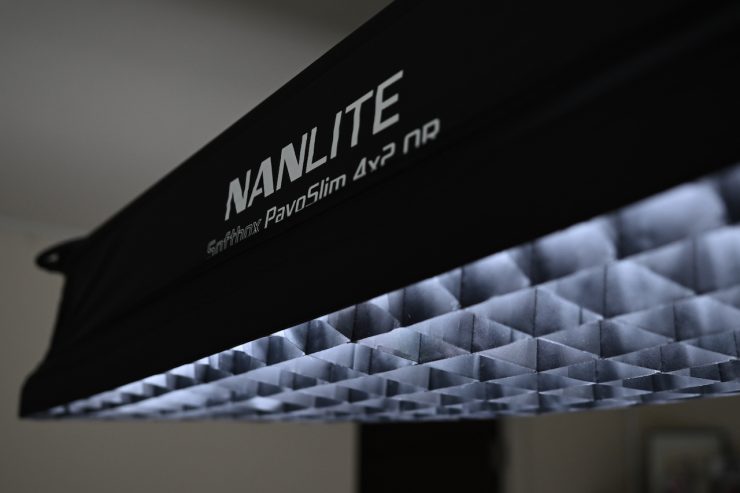
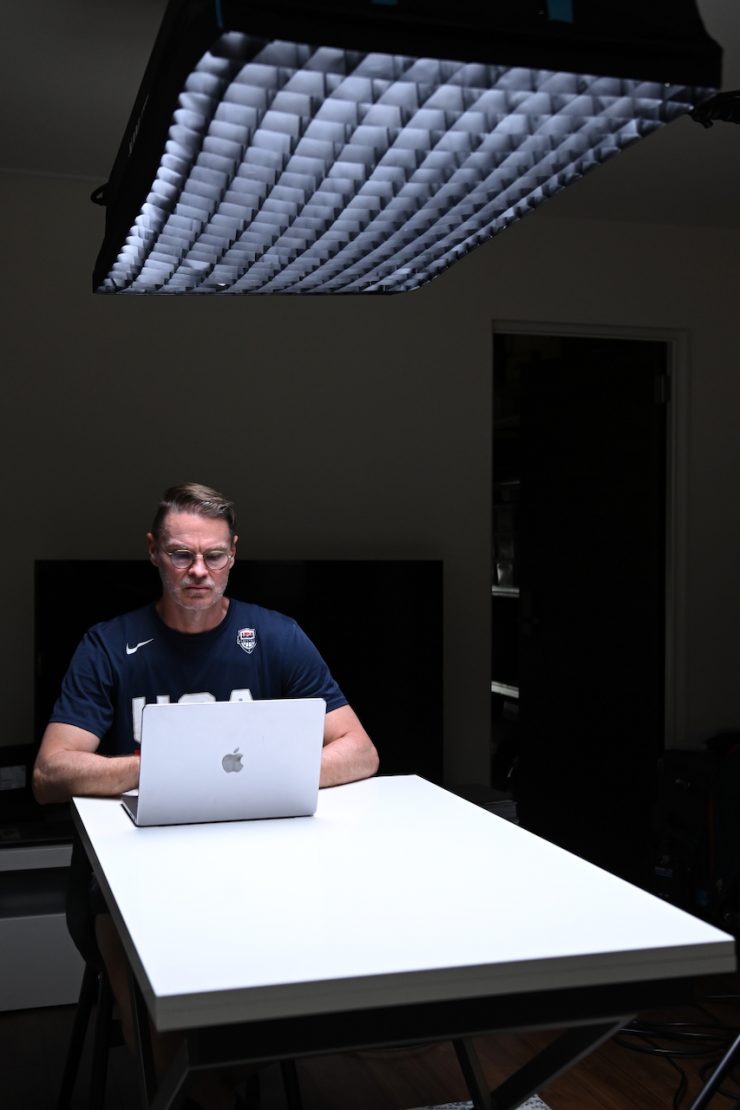
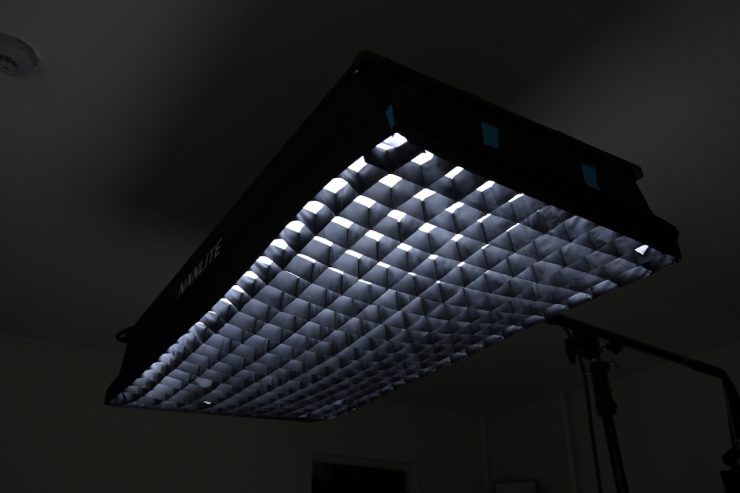
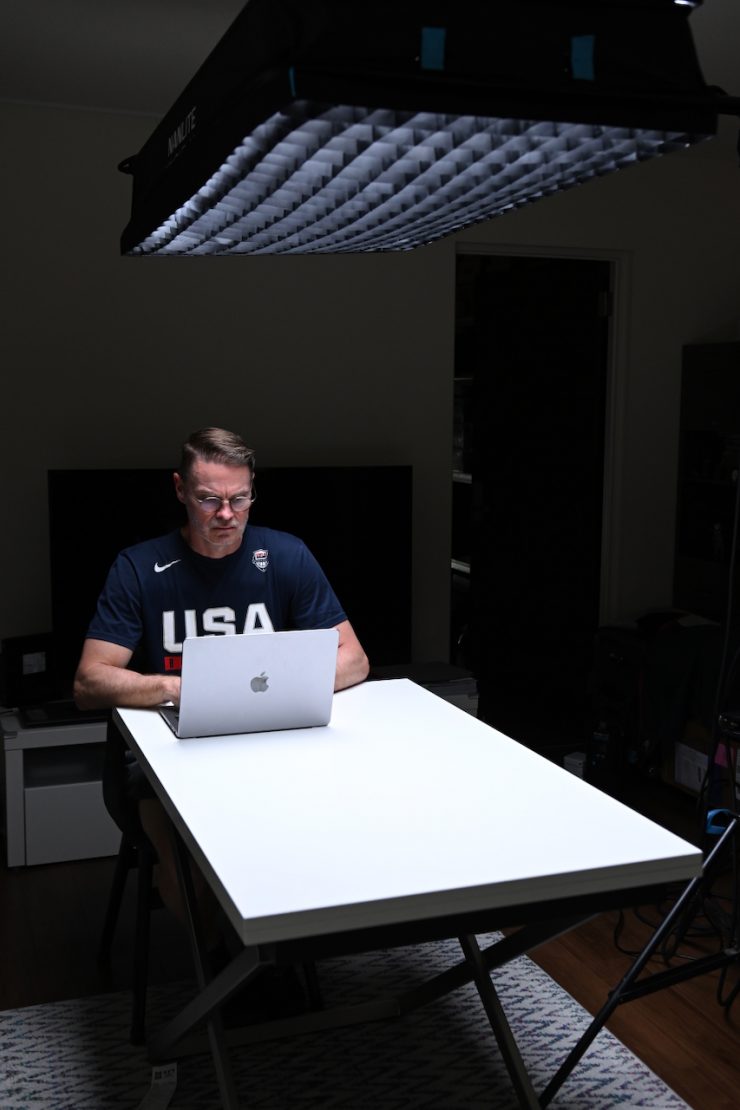
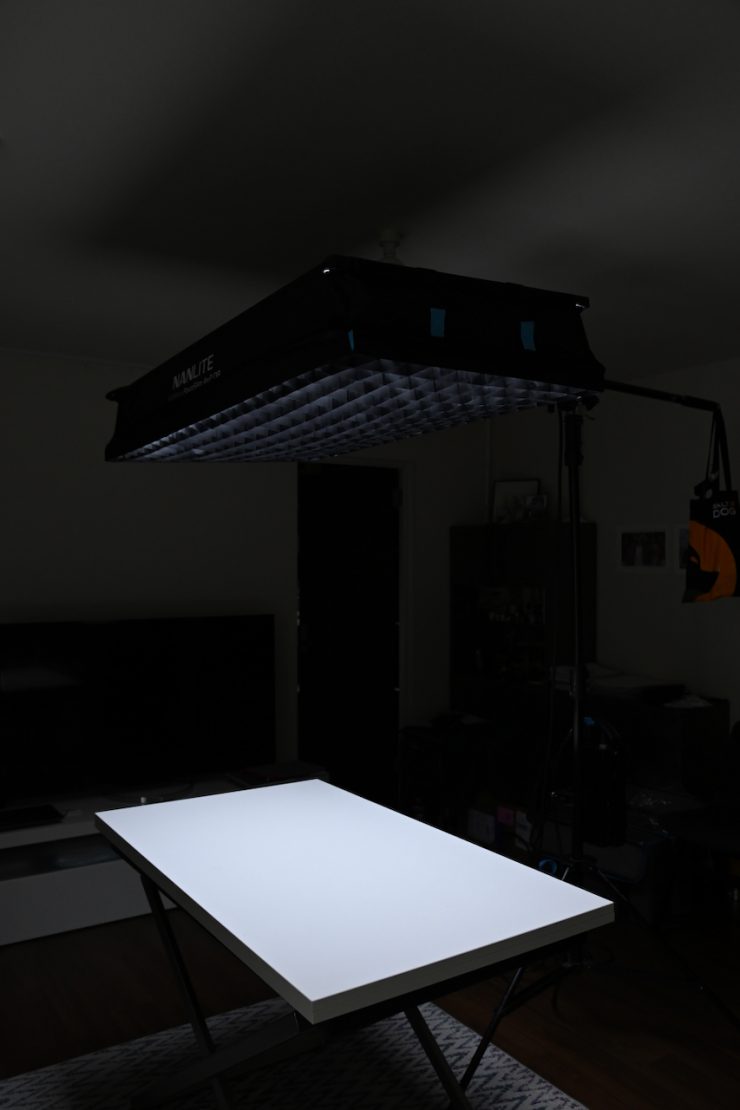
The physical size and length of the fixture make it a really nice option for overhead lighting. By using it with the honeycomb grid, you can also control the spill.





As far as how the lights look, you can produce a beautiful soft source. With the included diffusion, you get this lovely quality of light. As the light has a lot of output, you can still heavily diffuse it and get good results. Above, I am using 3 layers of diffusion, and the light is set at 38% output.
I also found it really nice to have a reasonably lightweight fixture of this size with lots of output. The light certainly punches well above its weight.
You could also use it for lighting green screens and for shooting full-length shots of people.

The light will create some cross-hatched shadows if you use it without diffusion.
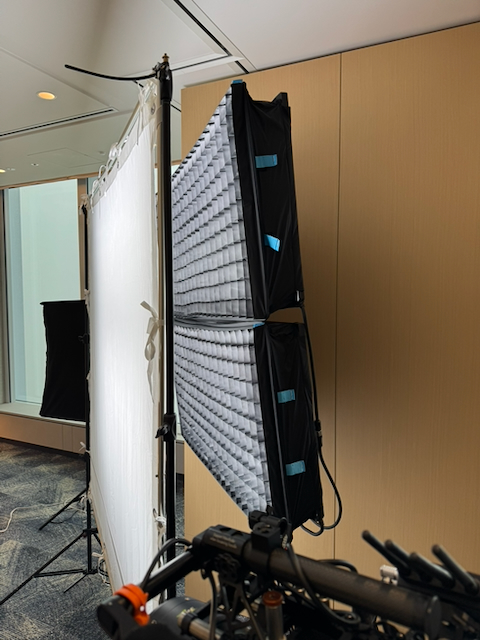
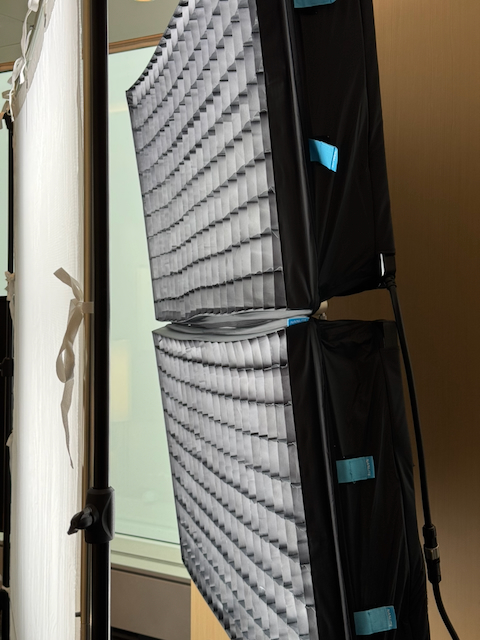
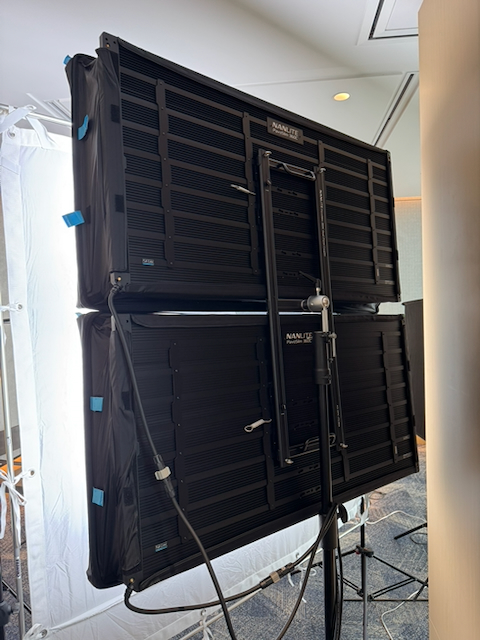
By utilizing the AS-DCP-PS360 dual-panel coupler, you can combine two PavoSlim 360c fixtures to create a nice, large source. It also has a lot of punch, so you can use a diffusion screen to get a very soft source. I used this combination on a recent shoot, and it provided really nice results.
Price
The Nanlite PavoSlim 360C is now available to purchase. Below is the price:
Alternative Solutions
Other alternatives to the Nanlite PavoSlim 360C include options from Godox, Aputure, and Litegear.
| PRICE | |
| Nanlite PavoSlim 360C | $2,490 USD |
| Godox KNOWLED F400R RGB Flexible LED Light Mat (2 x 4′) | $2,390 USD |
| Aputure INFINIMAT LED with Clear Softbox & 400W Control Box Pack (2 x 4′) | $2,190 USD |
| Litegear LiteTile Plus Kit Foldable Bi-Color LED Light Panel (2 x 4′) | $2,952 USD |
So, how does this power draw of the PavoSlim 360C compare to some of the competition? Well, above you can see.
Conclusion
The Nanlite PavoSlim 360C is a great fixture that provides very good results. The light is well-made, well-thought-out, and it has a ton of output. It is also great that you can run it from camera batteries.
It produces a beautiful, big, soft light source, especially when you combine it with the built-in soft box and extra diffusion. The output is extremely impressive given the light’s relatively low power draw. That high output really helps when you want to create a more diffused lighting source, but you still require a decent amount of punch.
The coupler kit, while a little tricky to install, is a great adition and being able to combine to of the lights to create one larger fixture makes it extremely versatile.
Unlike flexible LED lights, because the PavoSlim features hard backing plates they are super quick to set up and use. The mounting system is substantially better than what you will find on most flexible LED panels.
The photometric scores across the board were decent enough, however, the light doesn’t have consistent output across its CCT range. This is probably not a big deal for most people, given the light’s high output.
I like that the diffusion Nanlite has used doesn’t alter the CCT readings in any huge way. This is a big deal because a lot of diffusion I have previously seen with lights like this alters the CCT readings quite considerably.
The Nanlite app works well, and it is easy to use and navigate, as are the physical controls on the power supply/controller.
The PavoSlim 360C is my favorite light in the series, and it is a worthy addition to the range. It makes for a great interview light, overhead light, and it certainly has enough punch to be used as a hard source when needed.
If you are looking for a large-sized, thin, and lightweight panel with a ton of output, it makes for a very compelling option.