
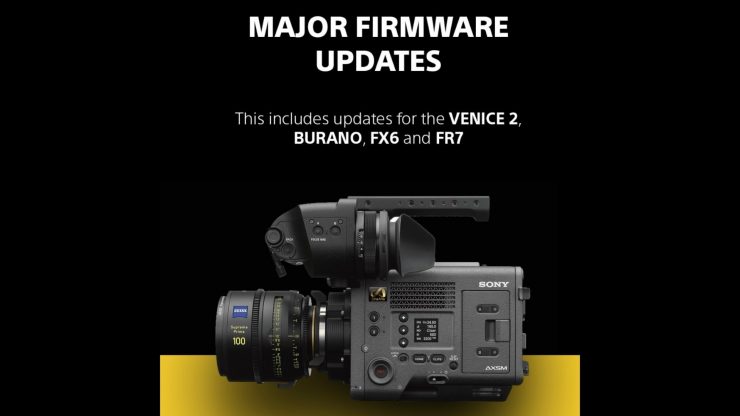
Sony has released information about upcoming firmware updates for the VENICE, BURANO, FX6, and FR7.
The updates are:
- VENICE 2 V4.1
- BURANO V3.0
- FX6 V6.0
- FR7 V4.0
The FX6 V6.0 and FR7 V4.0 were previously announced.
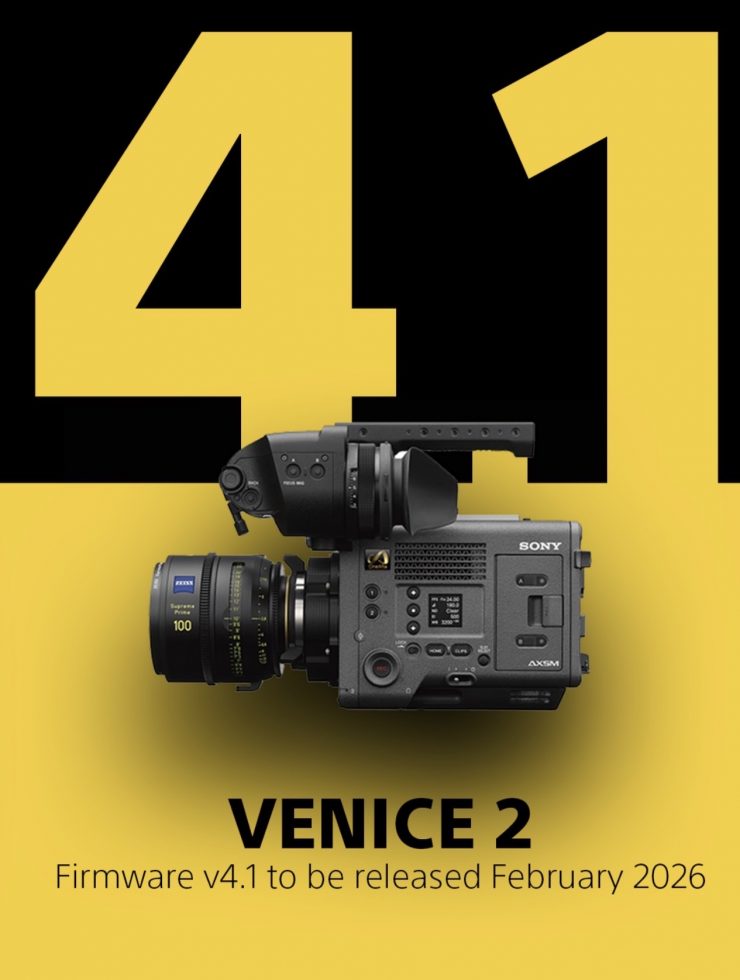
VENICE 2 V4.1 – Expected from Feb 2026
- Moiré alert maximum level recording in metadata
- Horizontal adjustment value storage in VENICE Extension System Mini
- Redesign of EL Zone System screen
As previously announced, VENICE 2 firmware update V5.0 will also be available in 2026 and V6.0 in 2027.
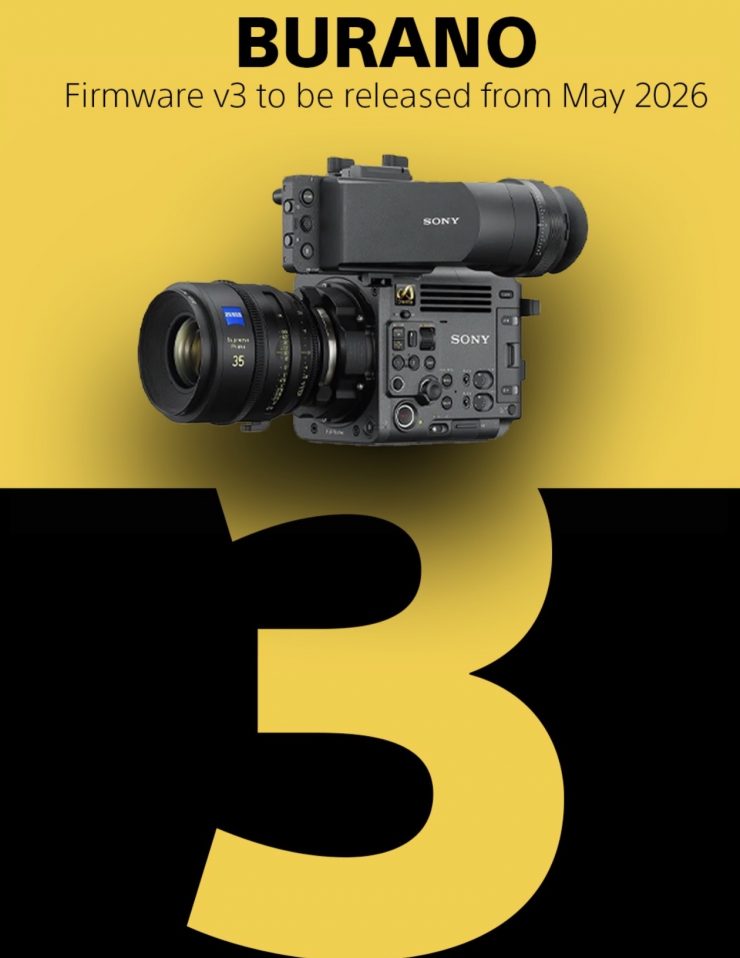
BURANO V3.0 – Expected from May 2026
Imager scan mode
In addition to the scan modes for cinematic and OTT productions, V3.0 supports the following formats for documentaries, sports, and live events, giving users more flexibility and shooting options:
- FF 5.8K 6:5 for full-frame anamorphic lenses
- S35c 3.8K 16:9 up to 120p
- Improved visibility for color peaking display
- S700P command compatibility (adds FPS, shutter, saturation)
- Support for HLG Mild in custom shooting mode
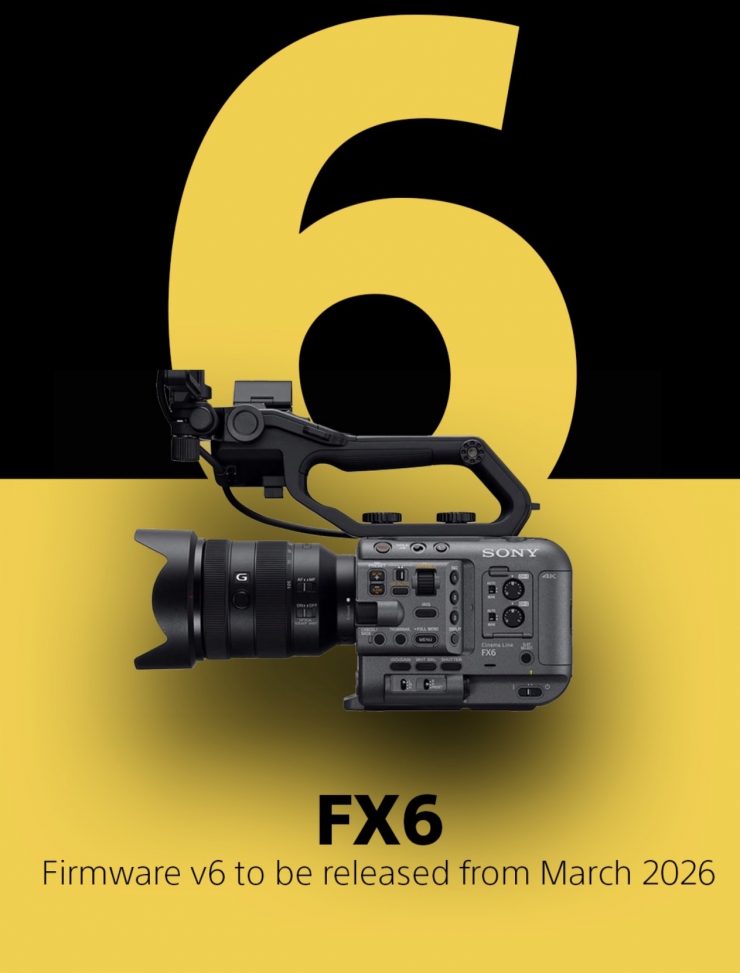
FX6 V6.0 – Expected from March 2026
Quick access to frequently used functions during shooting (BIG6) – Inherited from Sony’s CineAlta cameras, such as the VENICE, the BIG6 interface displays six essential parameters – FPS, ISO, Shutter, Iris or ND Filter, Look, and White Balance – all in one view.
- Updated shooting screen layout – black borders
- Support for Blackmagic RAW recording via HDMI
- Support for HLG mild in custom shooting mode
- Paint and Look in one scene file to easily share
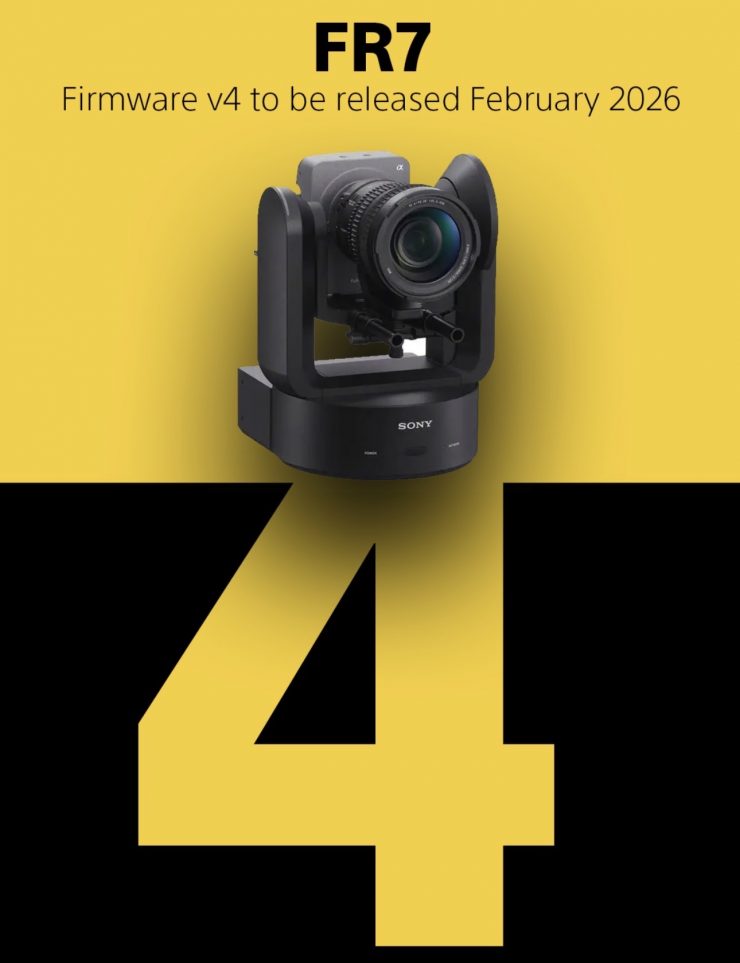
FR7 V4.0 – Expected from Feb 2026
Support for OpenTrackIO – the new standard for Virtual Production camera tracking, designed by SMPTE RIS OSVP group.
This is an open and new format established by SMPTE that allows real-time synchronisation (timecode) and output of tracker, lens information, camera capture data, and positional data (6DoF information from the CG origin to the camera). It is a protocol (camera tracking data) that connects to the Unreal Engine via a single Ethernet cable, without requiring the installation or configuration of third-party plug-ins. It brings four key benefits:
- Tracker-less solution
- Lens calibration-less solution
- Timecode synchronization
- One-shot spatial calibration solution