
Sony Europe has a new video called X-OCN Demystified, which is a handy tool if you have ordered an FX5 and want to know more about what X-OCN is and what options are available in the camera.

The FX5 has the ability to record in three different flavors of X-OCN. X-OCN (eXtended tonal range Original Camera Negative) is Sony’s answer to a compressed RAW format. The FX5 is the first camera below the BURANO to offer X-OCN recording. X-OCN is available when recording in Full-frame 5K 3:2, 17:9, 16:9 aspect ratios, and in the Full-frame crop 3.8K 16:9 mode.
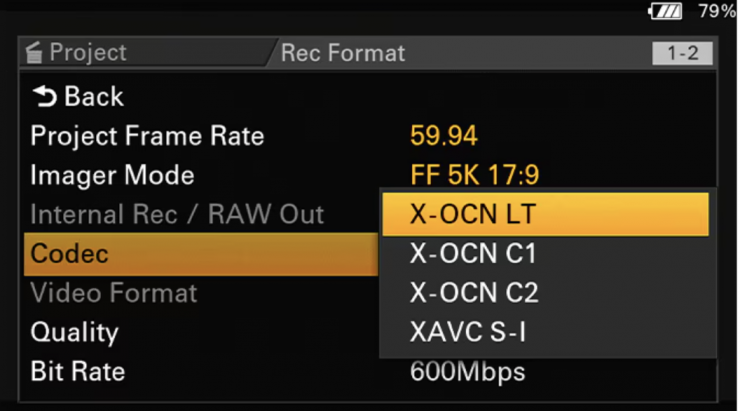
The FX5 has the following X-OCN Recording Options:
- X-OCN LT
- X-OCN C1
- X-OCN C2
The X-OCN LT is exactly the same as you will find on the BURANO. But what are X-OCN C1 and X-OCN C2?
According to Sony, X-OCN C1 file sizes are approximately 25% smaller than those of X-OCN LT. X-OCN C2 was designed so that users can have smaller file sizes when shooting at higher frame rates.
- X-OCN LT (Light): Indie features, TV, commercials, documentaries, and live events-preserves editing flexibility and 16-bit linear encoding. (5K24 OG: 712 Mb/s)
- X-OCN C1: Content creation, online distribution, live events, documentaries-additional compression for longer runtimes and less discerning productions. (5K24 OG: 536 Mb/s)
- X-OCN C2: Prioritizes media storage and long runtimes. (5K24 OG: 429 Mb/s)
Lens distortion correction is not applied to X-OCN clips recorded in-camera.
When using Sony or licensed partner E-mount lenses, lens distortion correction can be applied in Catalyst Browse, Catalyst Prepare, or Catalyst Prepare Plugin using embedded lens metadata.
Clip preview support for lens distortion correction will be added in a future update.
During shooting, lens distortion correction is applied to the image displayed on the camera’s LCD monitor and to the video output via HDMI. However, lens distortion correction is not reflected during clip preview. As a result, the appearance of distortion may differ between shooting and clip preview.
X-OCN supports a variety of resolutions and color reproduction information based on S-Gamut3, Sony’s wide color gamut standard. Sony states that it is capable of recording the wide dynamic range captured by the camera sensor as 16-bit scene-linear data with rich tonal gradation. This information can be effectively utilized not only in high-quality video production such as traditional commercials and films, but also in compositing and HDR production. X-OCN was previously available only in Sony’s higher-end VENICE 2 and BURANO. The VENICE 2 can record 16-bit X-OCN internally to AXS memory cards, while the BURANO has internal 16-bit X-OCN LT that can be recorded to CFexpress Type B cards.
Way back in 2016, Sony released its new recording format called X-OCN (eXtended tonal range Original Camera Negative). I am only speculating here, but I imagine that they came to some sort of licensing agreement with RED/NIKON to be able to use X-OCN in their cameras, including with the FX5.
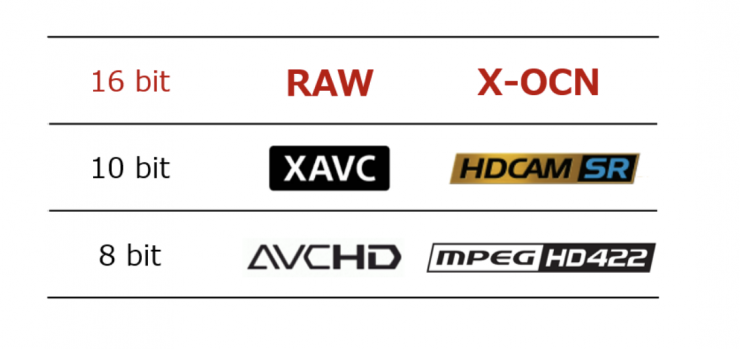
X-OCN was developed to enhance the compression efficiency of Sony RAW to deliver visually lossless image quality utilizing 16 bits. It does this by processing the camera’s original image data utilizing a unique algorithm that was developed by Sony. By utilizing this algorithm, Sony could produce file sizes that were much smaller than typical camera RAW files, but with 16-bit scene linear encoding. X-OCN utilizes CBR (Constant Bit Rate) encoding, where the output remains constant regardless of the complexity of the image. This contributes to minimizing the risk of any distortion or artifacts in the image that may be caused by a limitation of conventional encoding
16-bit X-OCN records 65,536 tonal gradations per color component or over 280 trillion individual shades of color. What you need to keep in mind is that while having all of these shades of color is great, monitors are not able to display that much color information,
According to Sony, the key features of X-OCN are:
• Exceptional quality with the power of 16 bits
• Smaller files, Longer recording times
• Greater decision-making flexibility in post-production
• Stable image quality with robust encoding
• Easy to work with full third-party support
X-OCN doesn’t “bake in” your settings for Exposure Index, color space, LUTs, gamma, Log, and others, as it only captures these parameters as monitoring settings.
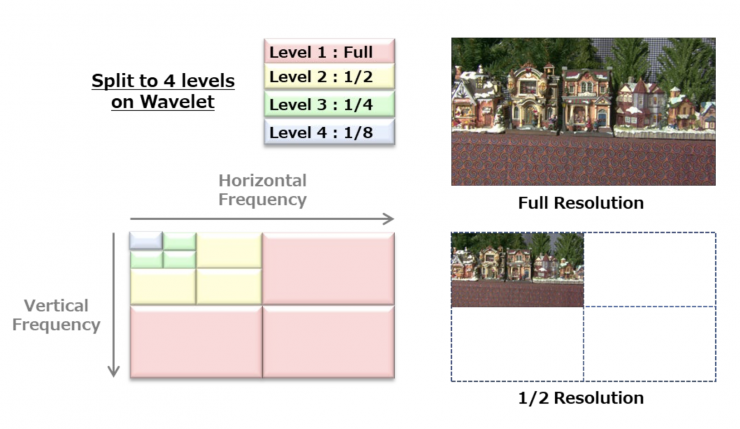
X-OCN uses the same industry-standard OP1a MXF wrapper as Sony RAW, XAVC, SR, and MPEG2 formats. Picture, Sound, and Metadata are contained within one file wrapper. X-OCN also adopts a wavelet transform as part of the image compression that allows it to offer great flexibility in viewing performance. You can still playback X- OCN clips smoothly in real time by selecting 1/2 or 1/4 resolution (or even less if supported) on application software.
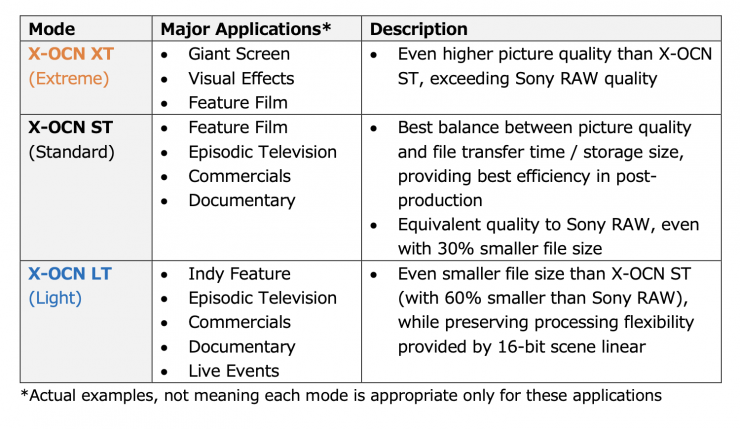
X-OCN is available in three different flavors. The FX5 and BURANO are only able to record in X-OCN LT, while their bigger brother, the VENICE 2, can capture in X-OCN XT and X-OCN ST as well.
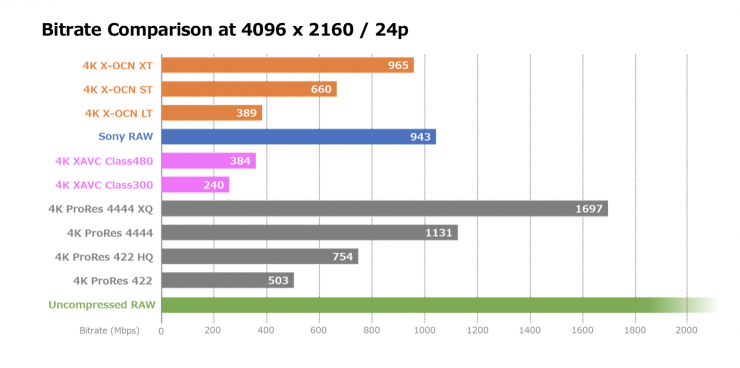
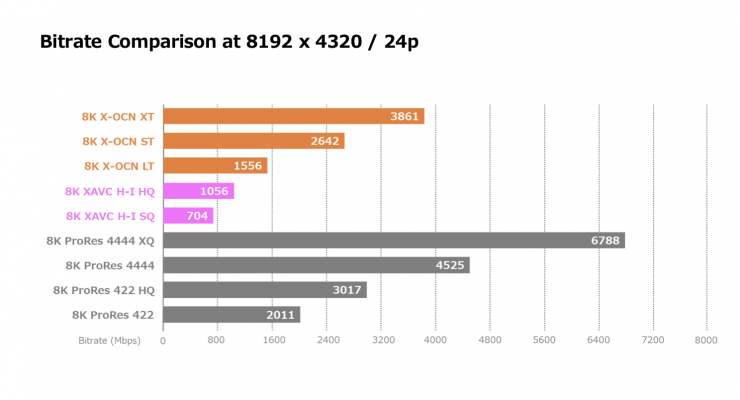
Above you can see how the bitrate of X-OCN compares to other formats.
In the case of the BURANO and FX5, X-OCN LT (389Mbps) can offer RAW quality with 16-bit scene linear at an almost equivalent bitrate to 4K XAVC Class480 (384Mbps) and even at a lower bitrate than 4K ProRes 422 (503Mbps).
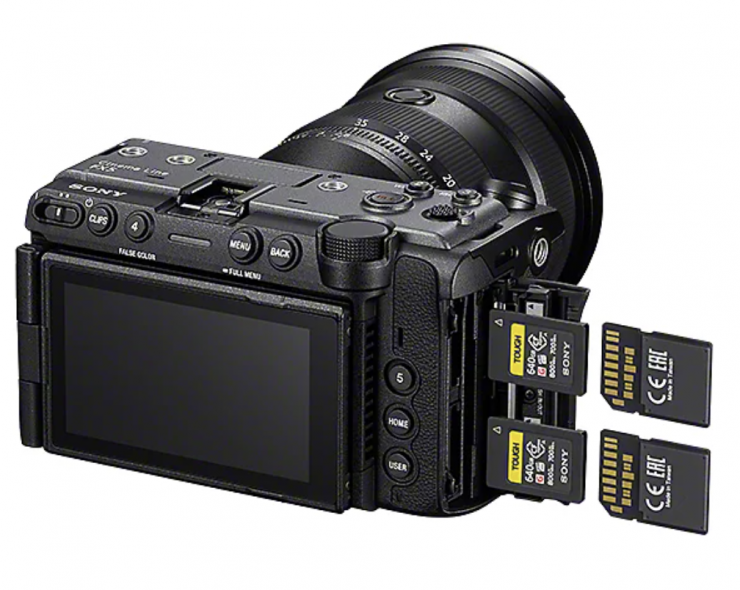
Unlike the VENICE 2, the FX5 doesn’t require the use of the AXS-R7 external recorder to be able to record X-OCN files. This is now all done internally to the camera’s dual CFexpress Type A/SDXC Card Slots.
Now, as I mentioned earlier, you don’t get all of the X-OCN recording options as you do with the VENICE 2. The FX5 and BURANO are only capable of recording X-OCN LT; you cannot record in X-OCN XT or X-OCN ST.
Sony states that X-OCN LT is ideal when you need even smaller file sizes. These files are 60% smaller than Sony RAW yet still give you the picture quality and image processing flexibility provided by a 16-bit Linear file.
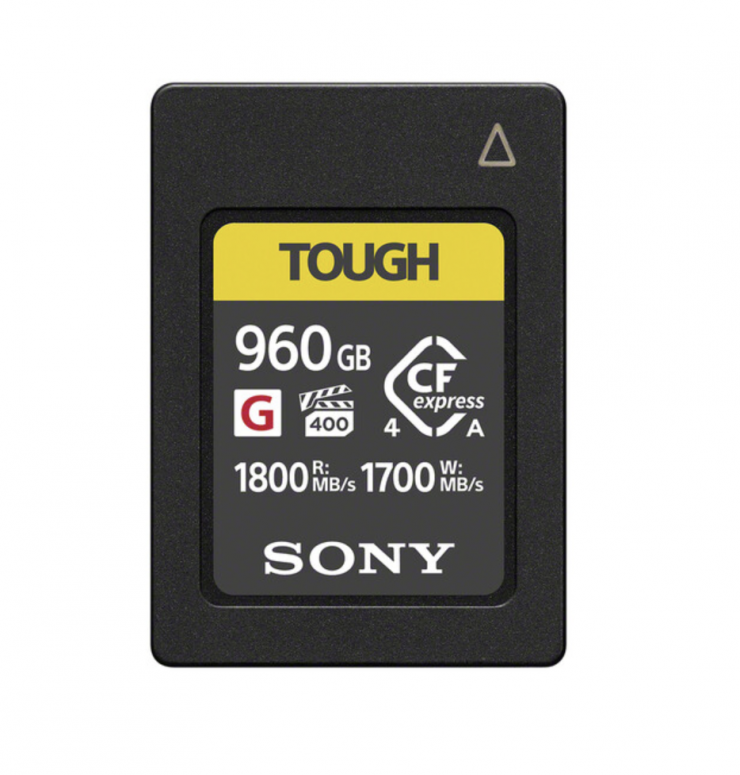
CFexpress Type A cards are fast enough to record the data rates required for the X-OCN LT files. However, you do need to use VPG400-certified cards to do so. You don’t have to use VPG400-certified cards if you are recording in XAVC. These cards are not cheap, and with memory card prices going up and up, you need to factor in the cost if you plan on shooting in X-OCN. As an example, the Sony 960GB CFexpress 4.0 Type A TOUGH Memory Card costs $878 USD.