
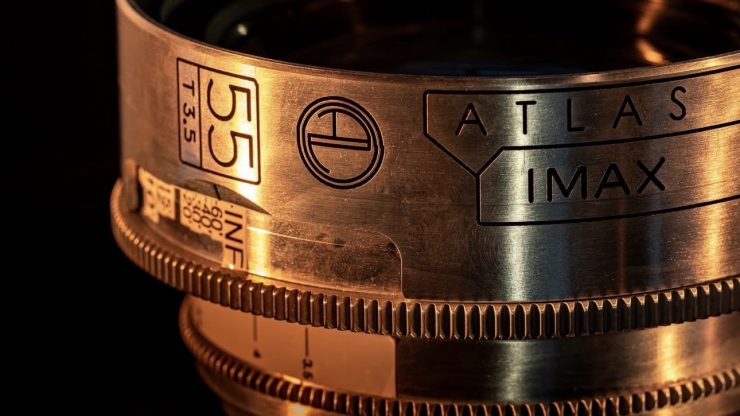
Atlas Lens Co. developed special spherical IMAX lenses for Dune: Part Three that had to meet the very specific requirements for capturing film on the IMAX 70mm format. Atlas Lens Co. made four focal lengths: 55mm T3.5, 80mm, 105mm, and 150mm. They are also working on some more focal lengths.
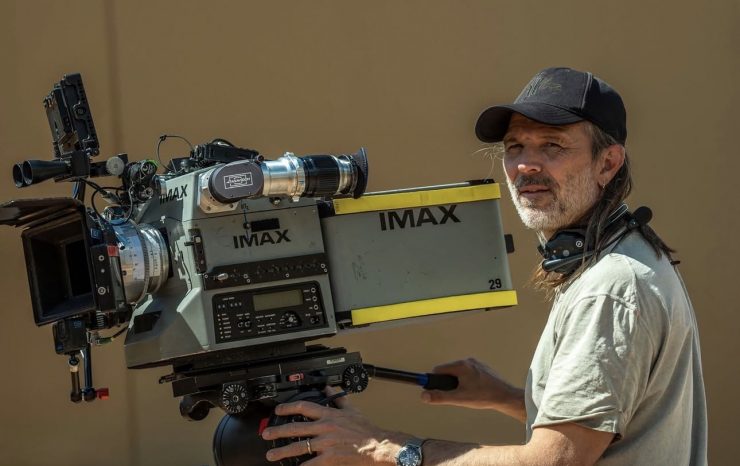
Image Credit: Atlas Lens Co. Instagram 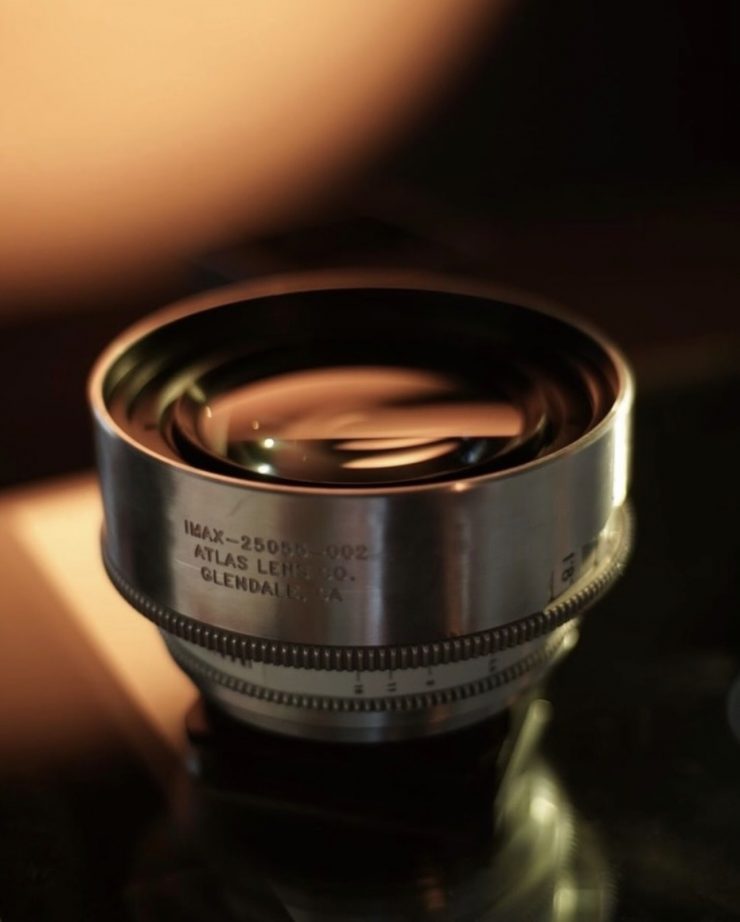
Image Credit: Linus Sandgren Instagram
Linus Sandgren went to see Atlas Lens Co. because there’s a very limited selection of glass available that will cover the IMAX format, and a lot of that is rehoused Mamiya and Hasselblad glass. It isn’t uncommon for cinematographers to get custom ptics made for projects. Panavision made two custom 50mm and 80mm T2 lenses for Christopher Nolan, and both of those lenses were used on Sinners and Oppenheimer.
“The ingenious support from the film industry engineers, it’s one of the most magical things about film making. I had this idea to design a uniquely expressive set of lenses for Dune part three. Denis loved the idea. And together, We turned to our friends at Atlas Lens co for help. With a desire for a golden single coating, a full 15perf non vignetting coverage, and a short close focus, we were hoping for a miracle. Not only did Forrest Schultz and Dan Kanes design and hand build 4 focal lengths for the IMAX 15-perf cameras, but also 4 color matching focal lengths for our Panavision System65 5-perf cameras, all from the ground up. They made something very special for Dune part Three but also for the future of large format cinema.”
Linus Sandgren
The IMAX lenses are somewhat of a departure from what Atlas Lens Co. is known for, as they are spherical rather than anamorphic. What makes the lenses special is that they were designed specifically to eliminate the vignetting issues that are very common in current IMAX lens inventories when stopped down. They also needed to provide a specific visual quality that existing lenses that cover IMAX 70mm could not. Atlas Lens Co. custom-designed the lenses to produce a unique spherical look with specific flare and coating characteristics.
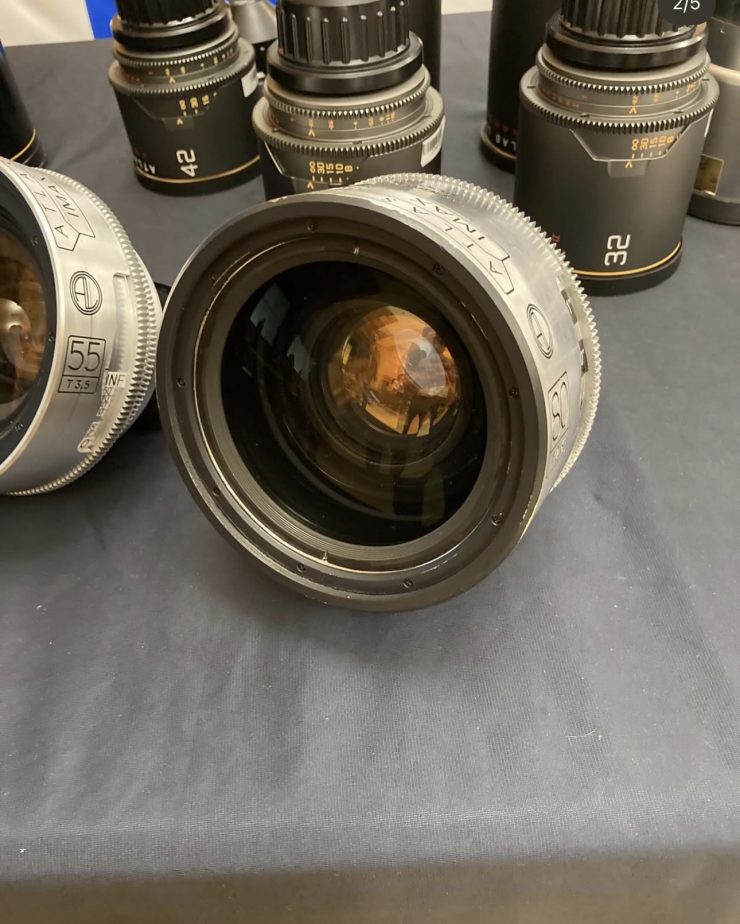
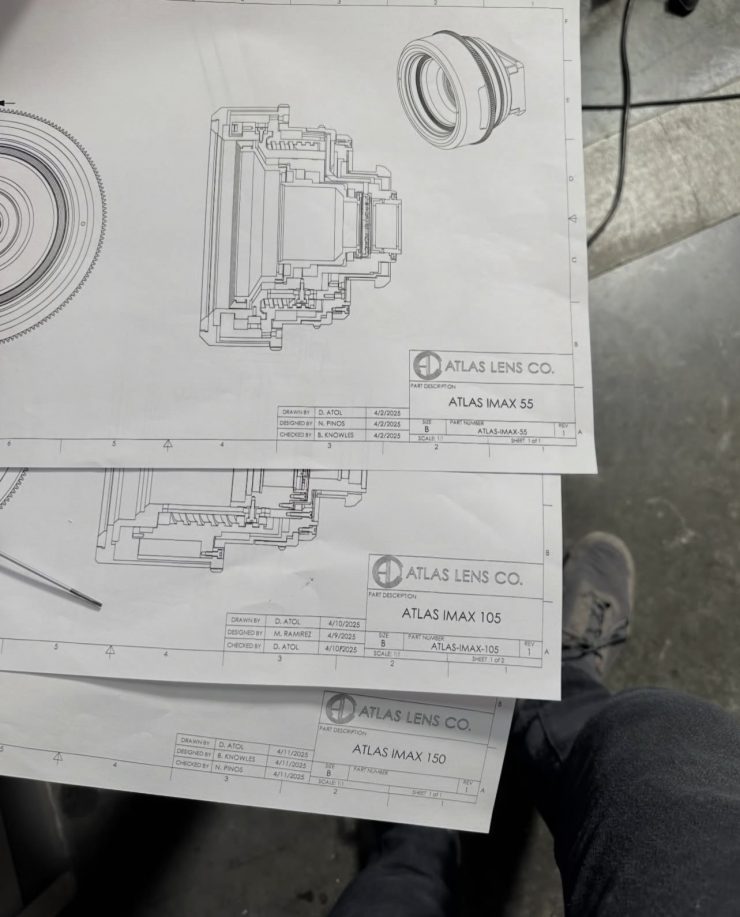
Some of the Atlas Lens Co. IMAX lenses’ focal lengths will cover a 100mm x 100mm image circle, which far exceeds traditional IMAX 70mm film standards.
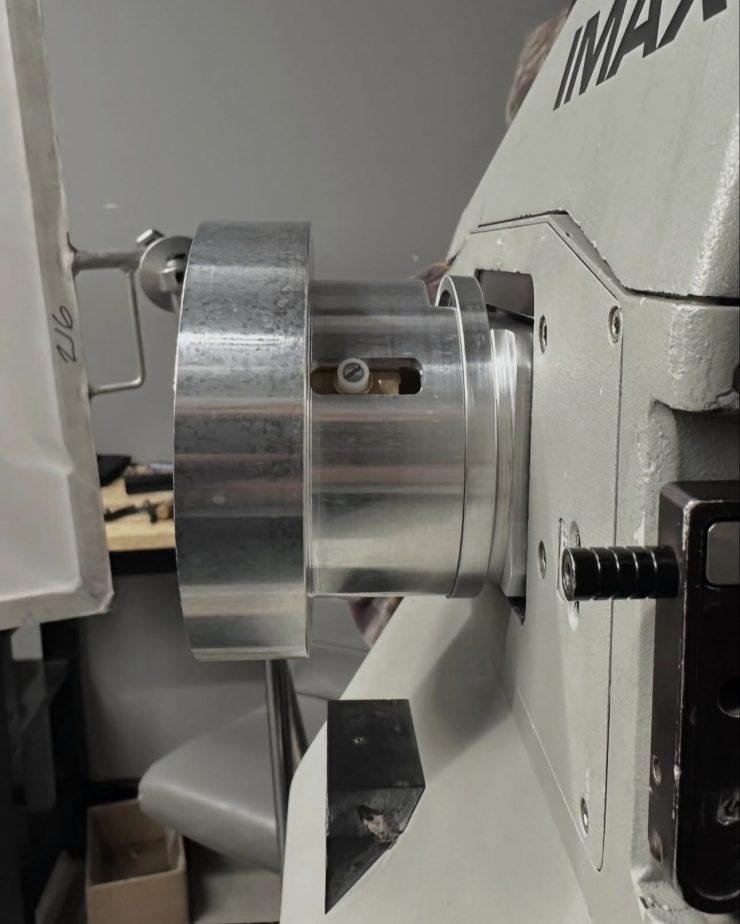
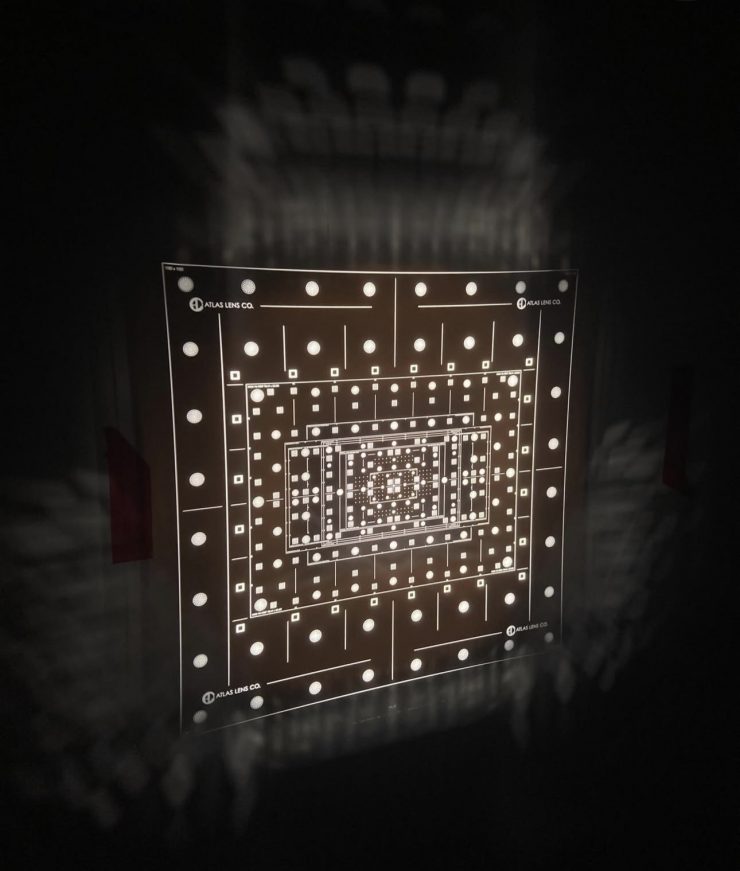
Because of their large image circle, Atlas Lens Co. also needed to create a custom projector to be able to test them, as outside of IMAX, at least to my knowledge, they don’t exist.
The 80mm was the most used of the three focal lengths on Dune: Part Three, and it was designed specifically to offer a unique character in the corners