
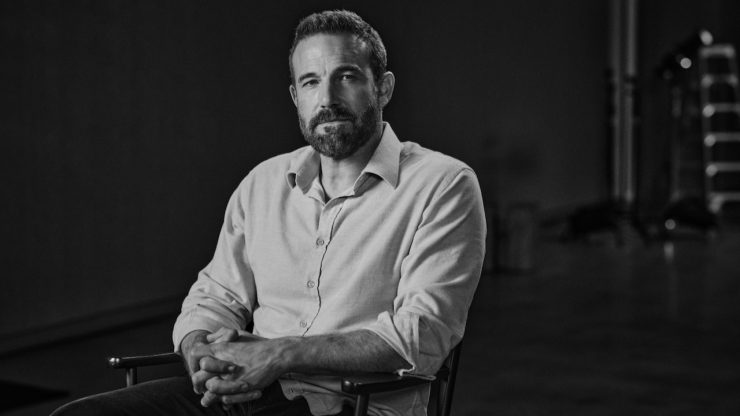
Netflix has bought InterPositive, a small 16-person AI startup fronted by Ben Affleck that has been operating in virtual obscurity for the last four years. Affleck registered InterPositive under a shell company called Fin Bone LLC, as well as filing patents under his legal name.
Just over a week ago, Netflix turned its back on a proposed $83 billion USD deal for Warner Bros. That decision was viewed as a good one by its stockholders, as the stock went up by 12%. Netflix Co-CEO Ted Sarandos has already publicly stated that there’s a bigger business in making content 10% better than making it 50% cheaper.
If you want to watch a video with Ben Affleck, Elizabeth Stone, Netflix Chief Product and Technology Officer, and Bela Bajaria, Netflix Chief Content Officer, talking about the deal, you can click here.
That decision signals a somewhat change in direction for the streamer, who, instead of spending a lot of money to purchase a giant library of legacy content, has now pivoted to acquiring companies that they think will reduce VFX and post-production costs that can account for anything from 15-50% of a production’s budget, depending on the type of film being made.
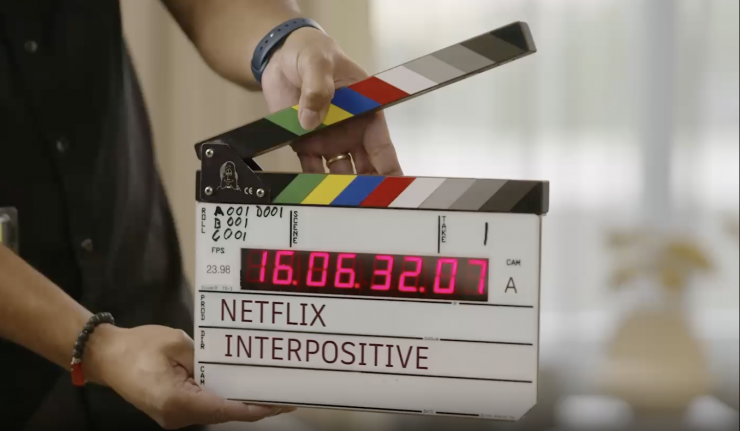
So what does InterPositive actually do? InterPositive is a proprietary AI dataset that allows you to take the dailies from a shoot, and then an AI model can grade and color correct, add visual effects, reframe shots, relight scenes, etc. What is also important to remember here is that the AI model is getting trained on material you already own and have access to.
This theoretically replaces a ton of jobs, and even if it only reduces the post production cost by just 10%, that enables Netflix to save 100s of millions of dollars a year. By purchasing InterPositive, Netflix exclusively owns that technology, and it can make sure that no other studio has access to it.
Netflix already had a pseudo-test case last year where AI was used to create a building collapse scene in the Argentine sci-fi series, The Eternaut. This greatly reduced the show’s budget, and the VFX was able to be completed around 10x faster than traditional methods.
Interpositive doesn’t work on prompts like Runway or Sora, but even still, Netflix may have a hard time justifying that it isn’t going to replace a lot of people’s jobs, because it certainly looks like it will.
Below you can see the full press release from Netflix:
Today, Netflix, Inc. announced the acquisition of InterPositive, the filmmaking technology company founded by Ben Affleck that develops AI-powered tools built by and for filmmakers. InterPositive’s mission — to use emerging technology in ways that protect and expand creative choice — is deeply aligned with Netflix’s long-standing belief that innovation should serve storytellers and the creative process.
For more than two decades, Netflix has paired technology with artistry to help great films and shows find their audience. By bringing InterPositive’s entire team into Netflix through this acquisition, and with Affleck joining as Senior Advisor, we’re investing in creator-led innovation that keeps filmmakers at the center of the process.
Below, Affleck shares the origin story of InterPositive and his vision for creative-first technology, alongside additional comments from Elizabeth Stone, Netflix Chief Product and Technology Officer, and Bela Bajaria, Netflix Chief Content Officer:
Ben Affleck
Academy Award Winning Producer, Academy Award Winning Writer, Director, Actor and InterPositive Founder & CEO
In 2022, I spent a lot of time observing the early rise of AI in production. As a filmmaker, I could see how these models came up short. For artists to apply these tools towards telling the stories we dedicate our lives to, they need to be purpose-built to represent and protect all the qualities that make a great story: the nuances of filmmaking, the predictable — and unpredictable — challenges of production environments, the distortion of a lens or the way light shape-shifts across a scene.
We also need to preserve what makes storytelling human, which is judgment. The kind that takes decades to build, experience to hone and that only people can have. I knew I had a responsibility to my peers and our industry, to protect the power of human creativity and the people behind it. In creating InterPositive, I sought to do just that.
Together with a small team of engineers, researchers and creatives, I began filming a proprietary dataset on a controlled soundstage with all the familiarities of a full production. I wanted to build a workflow that captures what happens on a set, with vocabulary that matched the language cinematographers and directors already spoke and included the kind of consistency and controls they would expect.
Intensive research and development led to our first model, trained to understand visual logic and editorial consistency, while preserving cinematic rules under real-world production challenges such as missing shots, background replacements or incorrect lighting. We also built in restraints to protect creative intent, so the tools are designed for responsible exploration while keeping creative decisions in the hands of artists — and ensuring that the benefits of this technology flow directly back to the story they’re trying to tell.
The results of this foundational work were deliberately smaller datasets and models focused on filmmaking techniques — rather than performances — creating tools that artists can use, control and benefit from.
From the invention of the moving image to the transition to digital, from motion capture to virtual production, technology has evolved alongside the artists who use it. Our shared commitment to continuing this legacy makes joining together a natural next step, in addition to Netflix’s decades of experience applying and scaling technology responsibly. Our values, combined with our complementary strengths, will ensure these tools are used with the same care and responsibility with which they were built.
I couldn’t be happier for this work to continue with the team at Netflix, and look forward to providing the broader creative community with access to what we build and the future we’re working towards together.
Elizabeth Stone, Netflix Chief Product and Technology Officer
Our approach to AI has always been focused on meaningfully serving the needs of the creative community and our members. The InterPositive team is joining Netflix because of our shared belief that innovation should empower storytellers, not replace them. InterPositive’s impressive technology is purpose-built for filmmakers and showrunners to work with tools that naturally support their creative visions and how they want to bring them to life. We’re excited to welcome the InterPositive team to Netflix and continue building towards a future of entertainment where technology plays a part in how stories are made, but people — and their ideas, craft and judgment — remain at the core of great storytelling.
Bela Bajaria, Netflix Chief Content Officer
Our relationship with artists has always been grounded in trust: supporting the full range of their creativity and ensuring they have the power to decide how their films and shows are made. We believe new tools should expand creative freedom, not constrain it or replace the work of writers, directors, actors, and crews. Ben and his team at InterPositive are part of a long tradition in our industry of artists leading the way in how innovation is used in storytelling. Their work is about giving filmmakers more choices, more control and more protection for their vision. We’re excited to build on that legacy together, with creators and their artistic intentions at the center of everything we do.
Ben Affleck and Matt Damon were recently on the Joe Rogan podcast, talking about the limits of AI for movie-making. Affleck talks clearly about how he sees AI being utilized, and a lot of what he says is exactly what InterPositive was designed to do. There is, however, a slight irony that he was saying that AI won’t replace the artist, but then he sells Netflix, a company whose tools are designed to take away people’s jobs.