
Every company in our industry is facing challenges due to the ever changing landscape and advances in technology. Some companies have navigated this change better than others, but a lot of the legacy companies have arguably been slow to adapt.
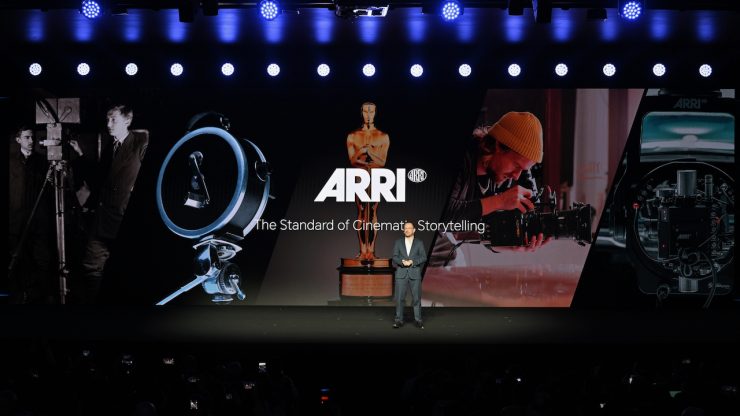
Even companies such as ARRI, that have been around for more than 100 years, need to move with the times and adapt, or they risk being bought by someone else or disappearing completely. ARRI has always been a company whose primary business has focused on the very high-end segments of the market. The problem is that if you put all of your eggs in one basket, you are reliant on that segment of the market doing well. Diversifying your income stream and entering new markets is something ARRI arguably needs to do if it is to survive.
What about a more affordable ARRI camera?
I personally don’t think that ARRI is in any position to suddenly start making more affordable cinema cameras. That is already a very crowded segment of the market with a large array of choices available. ARRI is a relatively small company compared to, say, Canon or Sony, and they don’t have the manpower or infrastructure to make large numbers of cameras without outside help. They also don’t make their own sensors, and they don’t do AF. The cost of an ALEV-III or ALEV-IV CMOS sensor alone would make it next to impossible to make a digital cinema camera that could compete against an FX6, C400, etc.
People have said that they would buy an ARRI camera between $10-15K in a heartbeat, but ARRI currently has no way to sell a camera at that price with the sensors they are using. You need to keep in mind that ARRI’s sensors are custom-built in relatively short batches compared to what some other companies can manage. Their sensor excels in ways that other companies haven’t been able to match, and that performance comes at a cost. ARRI has always prioritized image quality over resolution. At the end of the day, it’s the image quality that matters the most, and ARRI’s philosophy has always been to create the best image quality with no compromises. If you make performance and image compromises to reduce the price, then what’s the point in buying an ARRI over something else?
There is also processing power and cooling to think about. The Alexa 35, for instance, requires a tremendous amount of processing power, and you can’t just take its ALEV-IV sensor and put it into a small-sized body and run it from a 14.8V battery. 17 stops of dynamic range can only fit inside a 12-bit container. Because of the increased dynamic range that the ALEXA 35 is able to capture, the previous ARRIRAW and ProRes 422 HQ bit-depths weren’t big enough to keep all of the information. In Layman’s terms, it is like having a glass that only takes 500ml of milk, but you want to put 750ml of milk in it. The ALEXA 35 uses 18-bit linear processing in-camera. With previous ALEXA cameras, it was 16-bit linear saved as 12-bit Log. Apple ProRes 422HQ recording changed from 10-bit LogC3 to 12-bit LogC4 with the Alexa 35. This means that all ProRes recordings, regardless of what you choose, are 12-bit. The reason for this is that you can’t technically fit 17 stops of dynamic range into a 10-bit container. Because of these higher bitrates, you also have higher data rates. All of these things create massive problems if you want to make a more affordable, smaller-sized camera.
The ARRI Transition

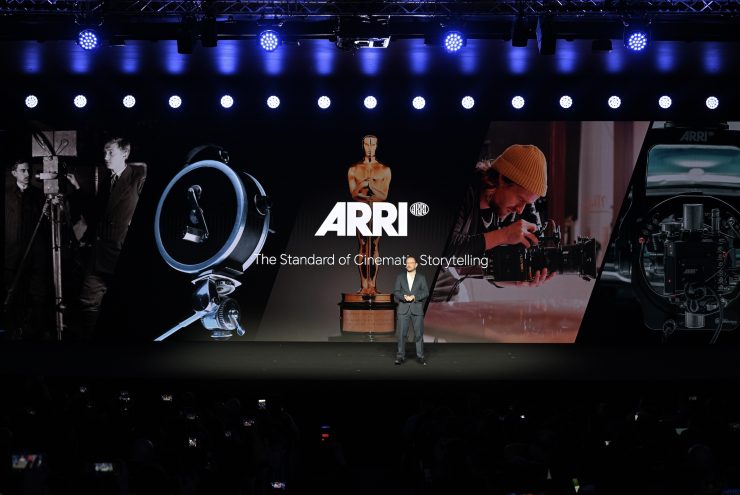
One year ago, David Bermbach took over the role of managing director at ARRI, and together with the team, they started a massive and often painful transition to set ARRI up for the future. The transition plan is to evolve ARRI from an equipment manufacturer to a technology leader for Media and Entertainment. The first part of this transition is the partnership with HONOR. What is interesting is that David started his professional career at Motorola as an R&D Contractor for Telematic Systems, so he knows a thing or two about phones.
HONOR and ARRI’s strategic technical collaboration is said to merge legendary cinema craftsmanship with pioneering innovation. Together, they will integrate ARRI’s Image Science into future consumer devices, bringing professional filmmaking capabilities to a new generation of creators.
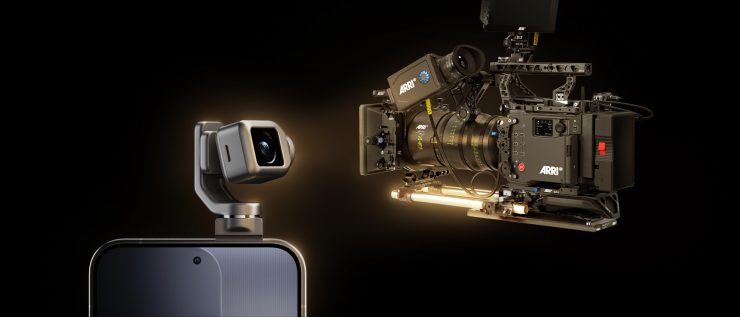
The first results of this collaboration will debut in the upcoming HONOR ROBOT PHONE later this year. This is an interesting concept with an almost DJI Osmo Pocket-style gimbal camera that folds out of the phone.
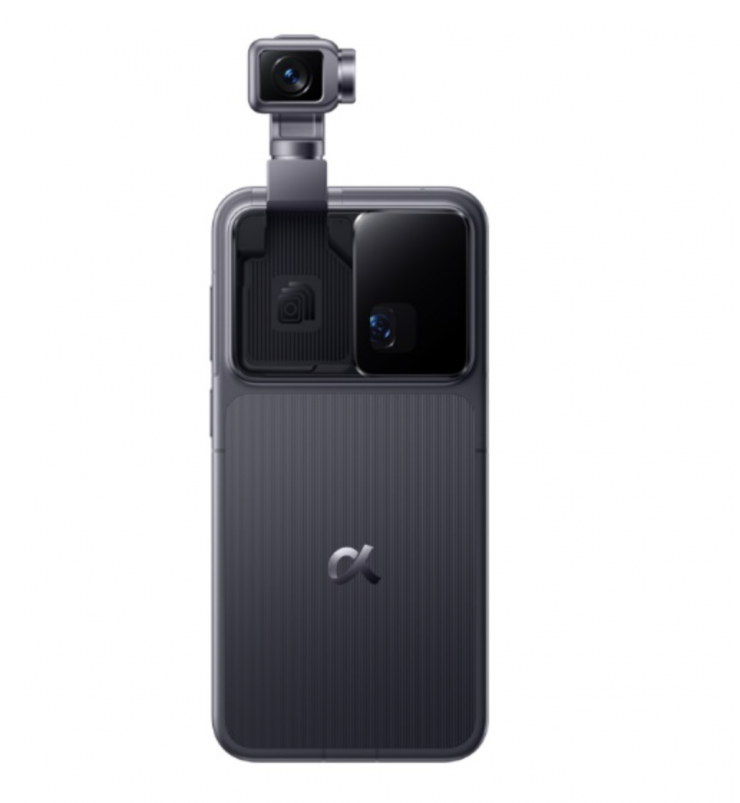
Robot Phonewill be a new type of smartphone, combining embodied AI interaction with robot-grade motion and cinematic imaging capabilities. HONOR states that it goes beyond what a static smartphone can offer, bringing more human, expressive interaction into everyday technology. Multimodal perception means it will be able to identify sounds, track motion, and maintain visual awareness.
Robot Phone will also support all-angle AI video calling that follows the user through robot-grade motion control. It also responds with emotional body language, including expressive nods and head shakes, and can even dance to the beat of music.
Packing a robot into a smartphone required rethinking space, strength, and weight at a microscopic level. HONOR applied high-performance materials and reliability know-how developed for foldables to Robot Phone engineering, enabling a self-developed micro motor designed for extreme compactness and strength. By significantly reducing motor size, HONOR was able to fit an ultra-compact 4DoF gimbal system into the phone, creating the hardware foundation for robot-grade embodied motion control.
This mechanical architecture supports a three-axis gimbal stabilization system, which is claimed to deliver smooth and precise motion even in dynamic environments. Super Steady Video mode enhances stability in high-movement scenarios, while AI Object Tracking allows Robot Phone to intelligently follow subjects in real time. AI SpinShot further expands creative control, supporting intelligent 90° and 180° rotational movement for fluid, cinematic transitions, even when shooting one-handed.
Built around a 200MP sensor and a stabilized gimbal camera system, Robot Phone is designed to help users move beyond capturing moments and toward capturing life stories. Through stabilization, intelligent tracking, and cinematic-style camera movement, it aims to close the gap between smartphone video and professional-looking storytelling.
We have already seen ARRI make a small move into the consumer space by collaborating with Panasonic to offer ARRI LogC3 in some of their cameras, but getting into the consumer smartphone business is a whole new kettle of fish. Hopefully, this doesn’t go the same way as the RED Hydrogen phone!
With a lot of legacy companies in our industry struggling to stay afloat, it only makes sense to try to branch out into different markets to increase revenue streams. Although, in saying that, it is perhaps a little odd that ARRI has teamed up with a company that most of us probably don’t know. HONOR is a Chinese consumer electronics company majority-owned by Shenzhen Zhixin New Information Technology Co. Ltd. It was formerly a subsidiary of Huawei, which sold the brand in November 2020.
You would have thought that teaming up with a Samsung or Apple would make more sense, but partnerships can be tricky, and undoubtedly, ARRI felt like this was the best option.
In cinema, image science determines how colors look, how highlights and shadows are rendered, and how images consistently behave from capture to final screen. Drawing on ARRI’s Image Science foundation, this collaboration is said to apply core cinematic imaging principles to HONOR’s mobile imaging architecture.
Smartphones operate under fundamentally different constraints, smaller sensors, highly integrated SoCs, different optical stacks, and different bandwidth limits. The challenge is not to replicate cinema hardware, but to translate the underlying principles into compact, real-time mobile architectures. The partnership’s goal is to bring a true cinematic aesthetic to smartphone imaging, natural color, gentle highlight roll-off, and a sense of depth that feels authentic to how stories are meant to be seen. ARRI and HONOR state that creators should be able to move seamlessly from mobile capture into professional post-production workflows.
“Today, consumer smartphones have already become a serious tool in professional filmmaking, being used on blockbusters across the globe. That’s why we believe it is time to bring these worlds even closer together. For the first time ever, core elements of ARRI Image Science are being integrated directly into a consumer device,”
David Bermbach, Managing Director at ARRI.
“HONOR is pioneering a new era of mobile imaging, where technology exists to inspire creativity and storytelling. ARRI has defined the visual language of cinema for generations. Through this collaboration, we are bringing those cinematic standards and professional workflows into mobile imaging, enabling creators to craft stories with greater authenticity and emotional depth.”
James Li, CEO of HONOR
What also makes this partnership interesting is that there is more to it than meets the eye. ARRI is not the only company that is teaming up with HONOR.

Dado Valentic’s Colourlab AI’s fourth-generation color grading technology is now shipping inside the Honor Magic V6, making it the world’s first smartphone with on-device AI color grading for video. This means real-time, 4K, HDR, with no cloud processing running directly on the device.
This was a problem nobody had solved before. Professional-grade color grading models are computationally demanding with the kind of processing that powers major studio productions. Getting Colourlab AI’s Gen4 models to run in real time within the thermal and power constraints of a mobile chipset was an enormous engineering challenge.
When Dado started Colourlab AI, the vision was always bigger than desktop software. They wanted to democratize color grading and to take one of the most difficult and technically complex processes in video production and make it accessible to everyone. With the Honor Magic V6, that technology is now available to users worldwide at the touch of a screen.
There’s also a new generation of our AI Color Engine in the works, and new partnerships on the horizon (watch this space for Robophone ARRI).