
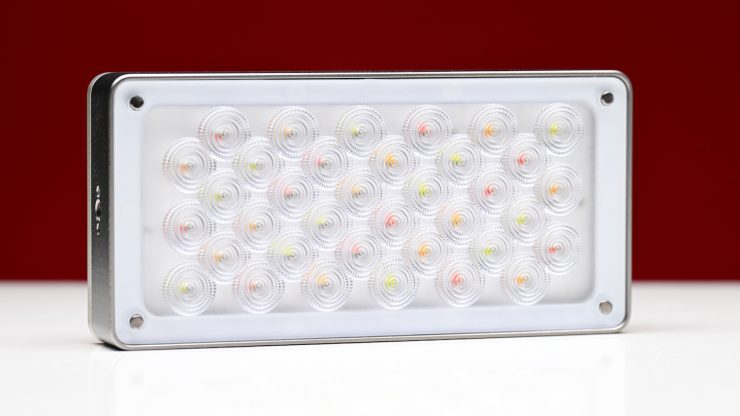
The Kelvin Play Hero RGBACL LED Pocket Light Panel is the latest product from the Norwegian lighting company.
Back at NAB 2025 in Las Vegas, Kelvin first showed its Play Hero RGBACL LED Pocket Creative Panel Light.
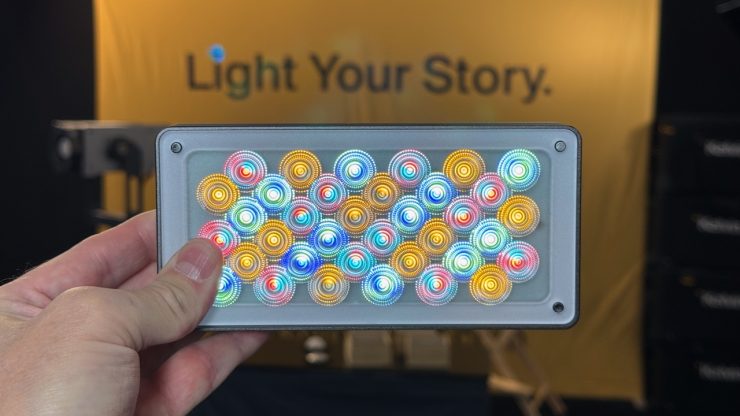
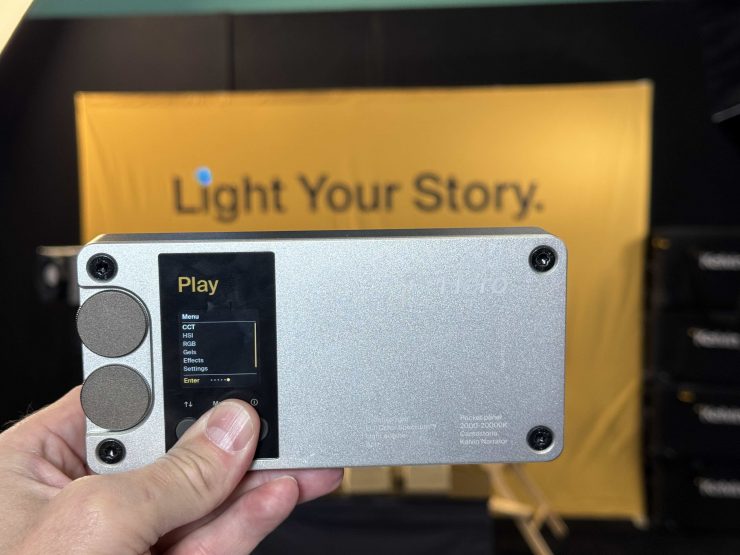
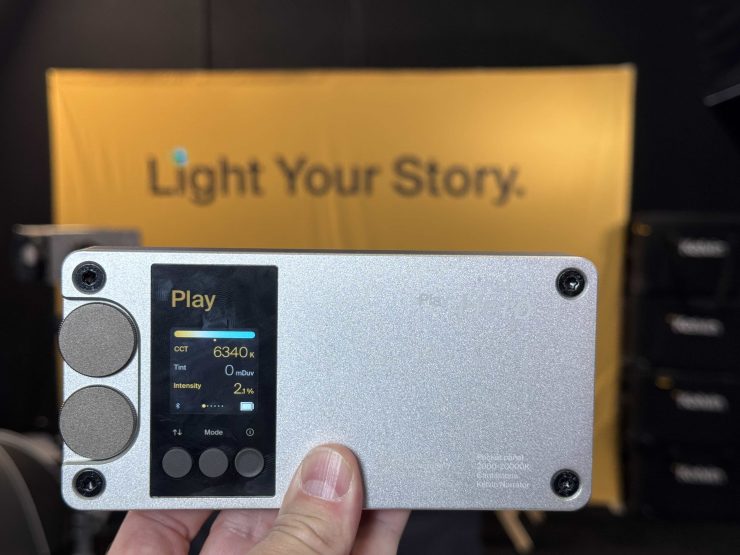
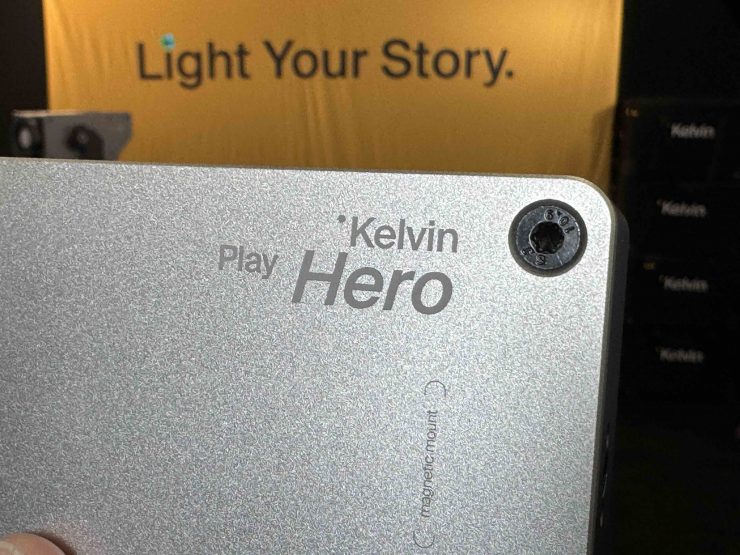
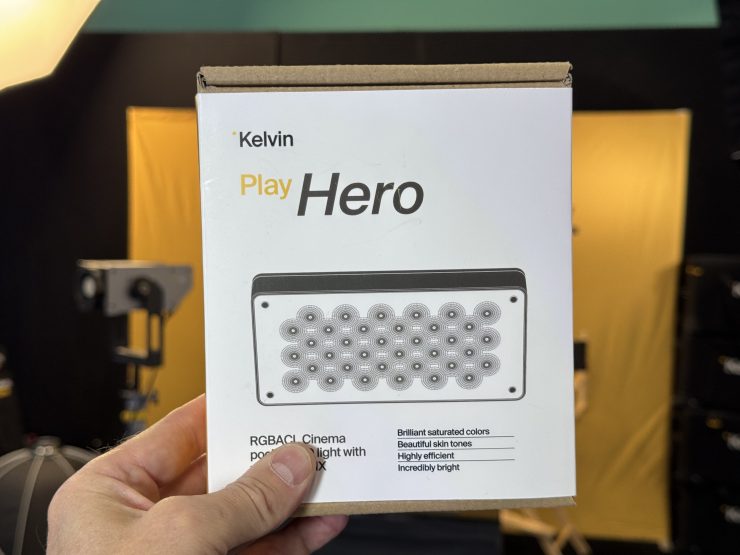
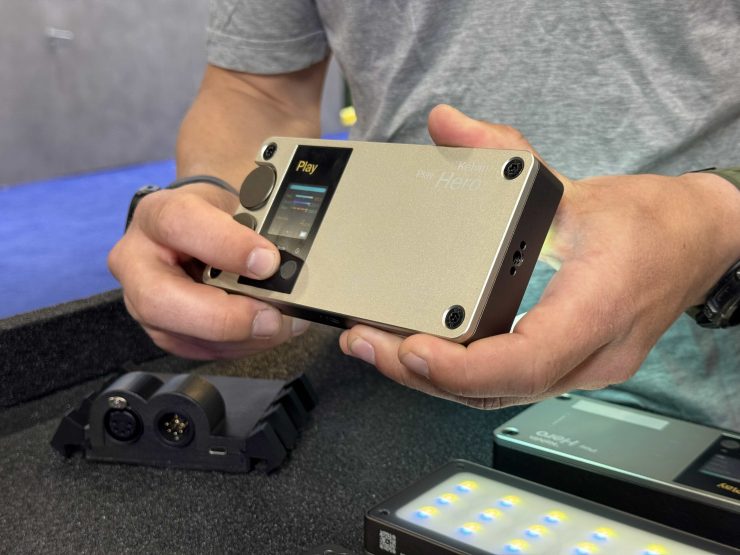
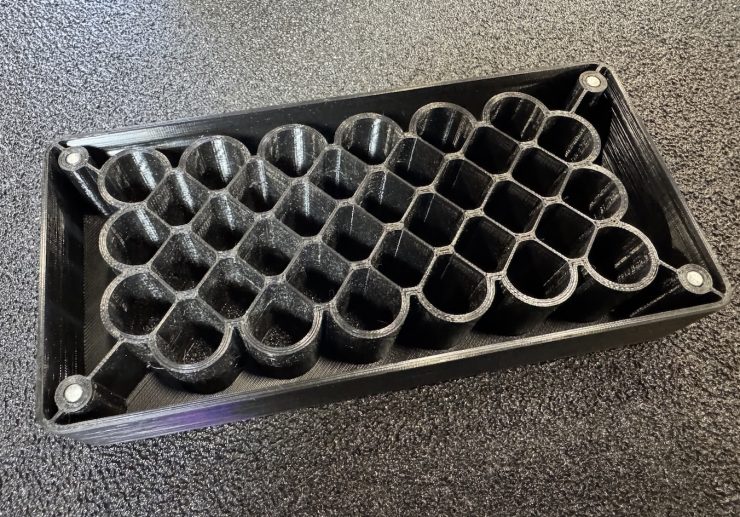
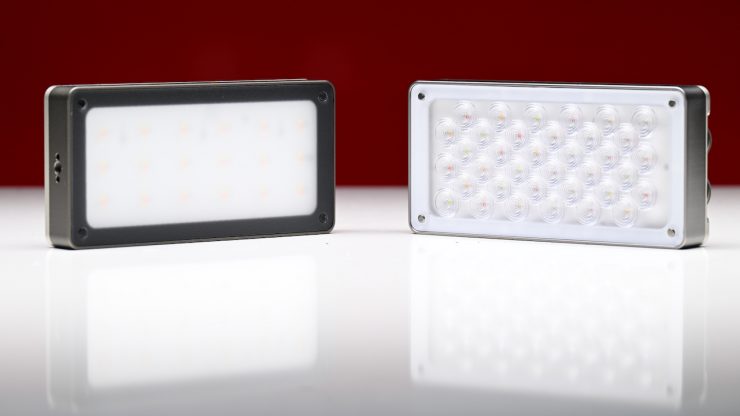
The Kelvin Play Hero is a new version of the Play Pro. It is claimed to be 5x brighter and features an entirely new LED design and a narrower beam angle. All the same accessories, except the honeycomb grid, will work with the new fixture.
The whole ethos behind Kelvin’s range is to make lights that all match and integrate seamlessly together. In a lot of ways, the Play Hero was designed as an entry-level professional fixture to get you into Kelvin’s range.
The Play Hero is a follow-up to the Kelvin Play Pro RGBACL LED Pocket Creative Panel Light, which is slightly different from the original Kelvin Play that was announced at NAB 2023.
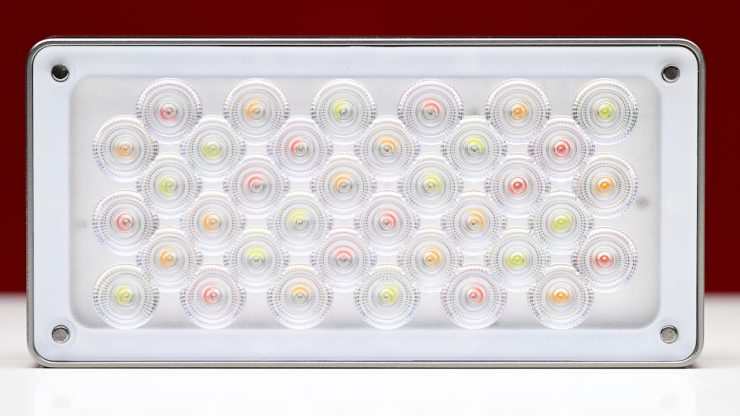
The Kelvin Play Hero is a professional entry-level fixture that utilizes a similar light engine as the ones that power the Epos 300 and Epos 600 fixtures. It is very similar to the previously announced Kelin Play Pro; however, the biggest difference between the two lights is that the Play Hero is claimed to be significantly brighter.
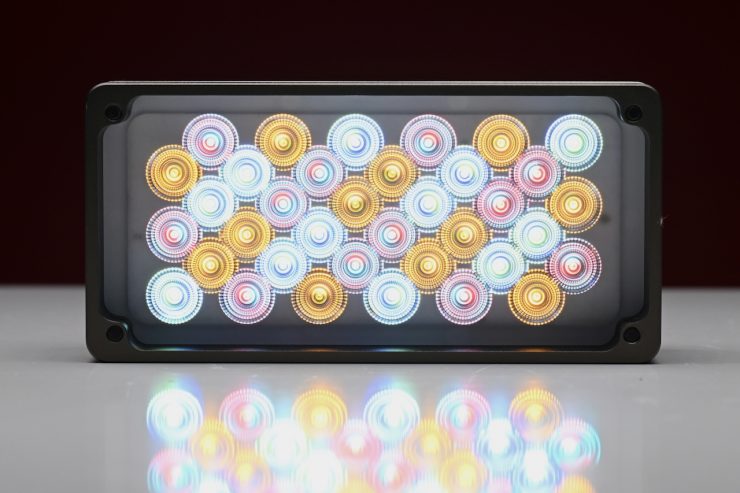
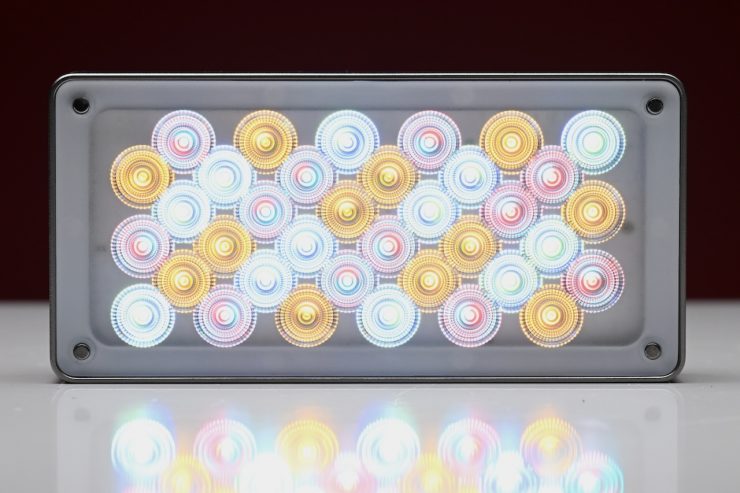
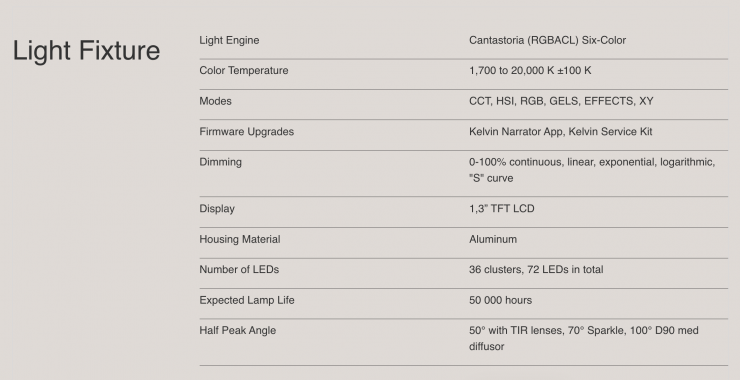
The Play Hero features 36 LED clusters, 72 LEDs in total.
Key features
- Full Color Spectrum LED pocket light
- Compact, yet so powerful – 1202 lux at 1 m / 3.3 ft
- Cantastoria™ RGBACL Six-Color Light Engine (patent pending)
- High-end optics for great beam shaping
- Sunrise to moonlight, 1,700K to 20,000K CCT
- Free firmware updates, unlock new effects and features continuously
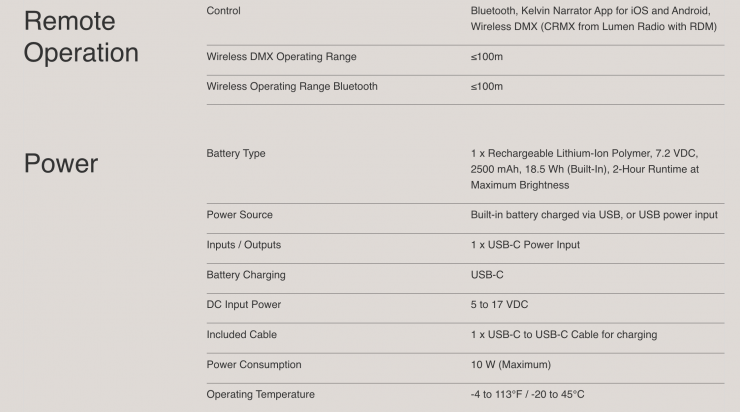
- DC input from 5 to 17 V DC – power directly from charger or Li-Ion battery
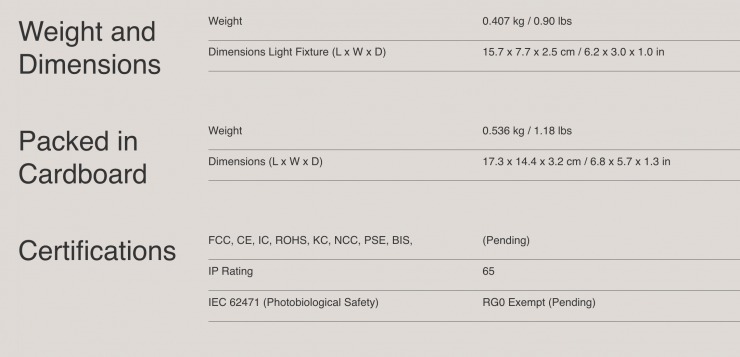
- IP65 weatherproof in sturdy aluminium housing
- High-end color fidelity TM30 Rf95+ /Rg100+ | CRI 97+ | TLCI 99 | CQS 97 | SSI 84 (3200 K) / 74 (5600 K)
- Color spaces (Rec. 709, 2020, DCI-P)
- Unlimited light shaping opportunities with Magnetic Optical Mount Kelvin MagTech
- DMX (via adapter) and Wireless DMX (CRMX from LumenRadio)
- Art-Net, sACN, and BLE & Kelvin Narrator App
The whole ethos behind Kelvin’s range is to make lights that all match and integrate seamlessly together. In a lot of ways, the Play Hero, just like the Play Pro, was designed as an entry-level professional fixture to get you into Kelvin’s range.
Cantastoria 6-channel RGBACL light engine
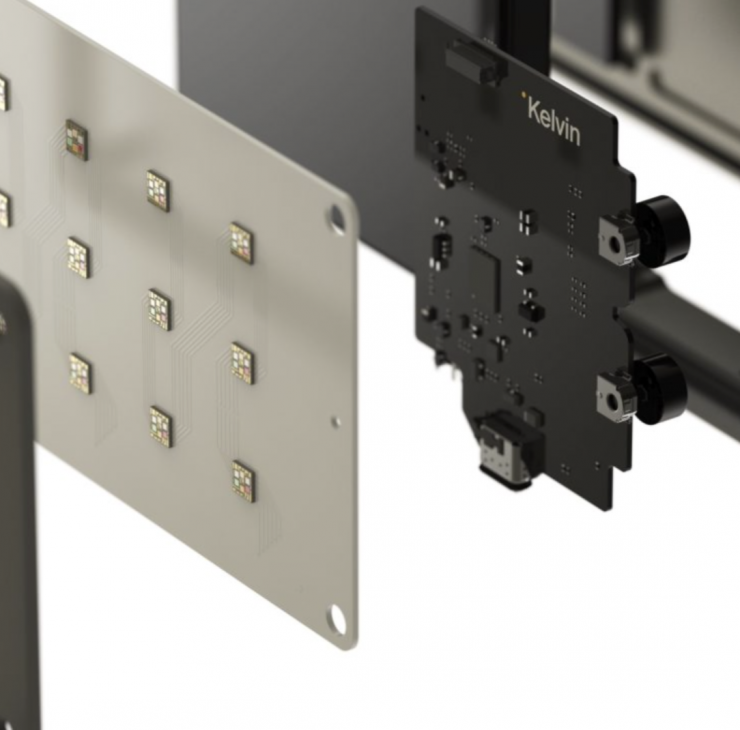
The light features Kelvin’s sophisticated 6-channel RGBACL light engine Cantastoria, which produces a full spectrum of colors within the 1,700 – 20,000K range. The Cantastoria Engine utilizes Red, Green, Blue, Amber, Cyan and Lime. This is a similar light engine that is found in Kelvin’s flagship products.
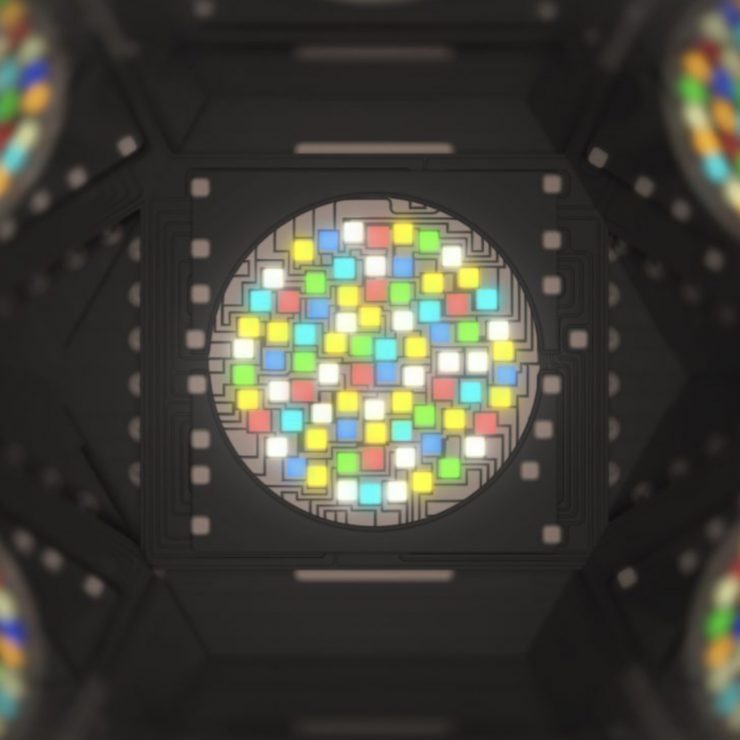
The Play Hero doesn’t use any white LEDs; instead, it mixes all of those different color LEDs to produce white light. Hive Lighting has also been using 7 LED-chip blending. Instead of the traditional 3 colors, Hive uses red, amber, lime, cyan, green, blue, and sapphire. The advantage RGBACL has over RGBWW is that it is capable of giving you a larger CCT range, and it can produce more saturated colors with more output. RGBWW lights tend to struggle to create saturated colors like yellow, and they don’t always have as much output when generating saturated colors. They can also have a large drop-off in output at different CCT settings.
Whatever Kelvin has been doing, they are doing it right. The Kelvin Epos fixtures are some of the most color-accurate lights I have ever tested.
Build Quality
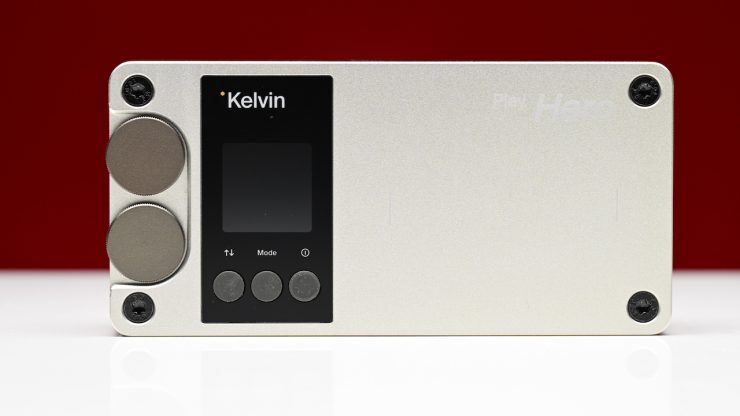
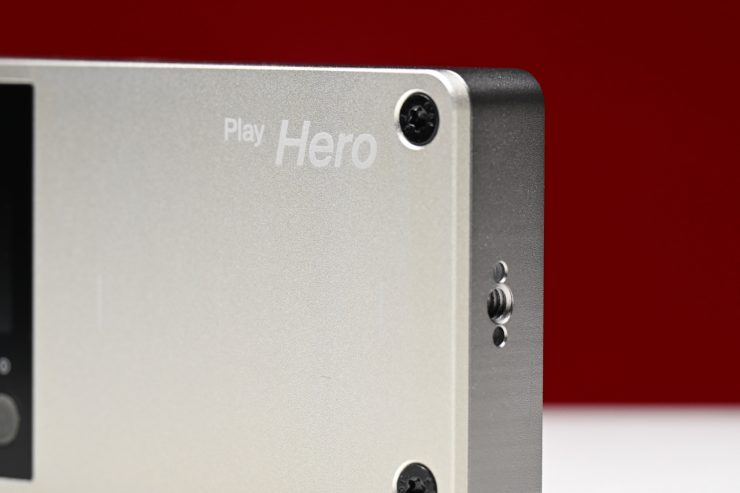
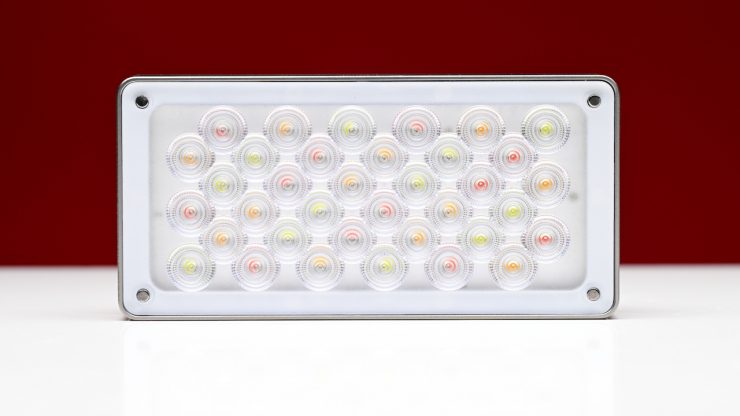
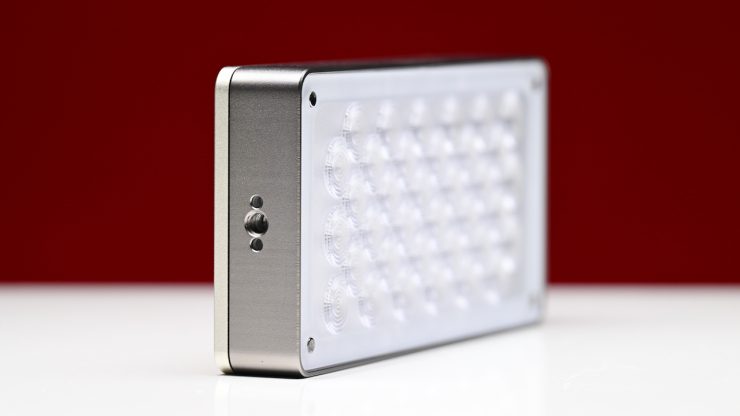
I have been very impressed with the build quality of all of the Kelvin fixtures I have reviewed, and just like the Play Pro, the Play Hero follows in those footsteps. It is beautifully made and, at least in my opinion, it is far better than any other light of this size and form factor when it comes to overall build quality.
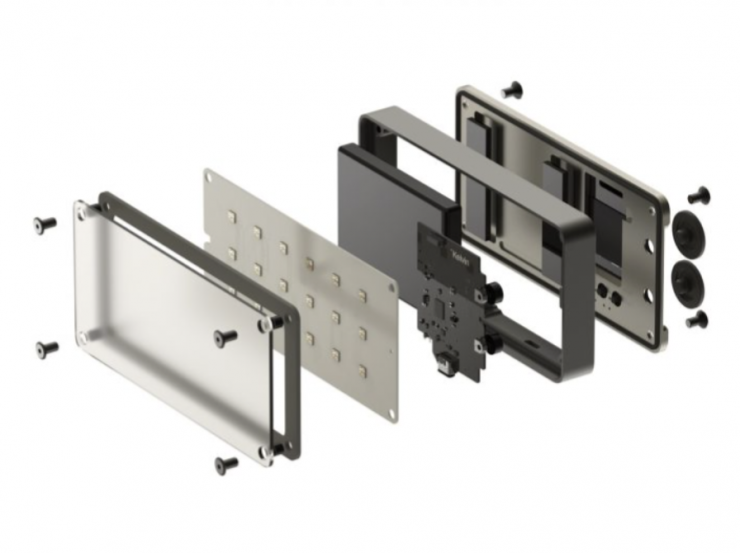
The entire light casing, including the dials, is made out of high-grade aluminum.
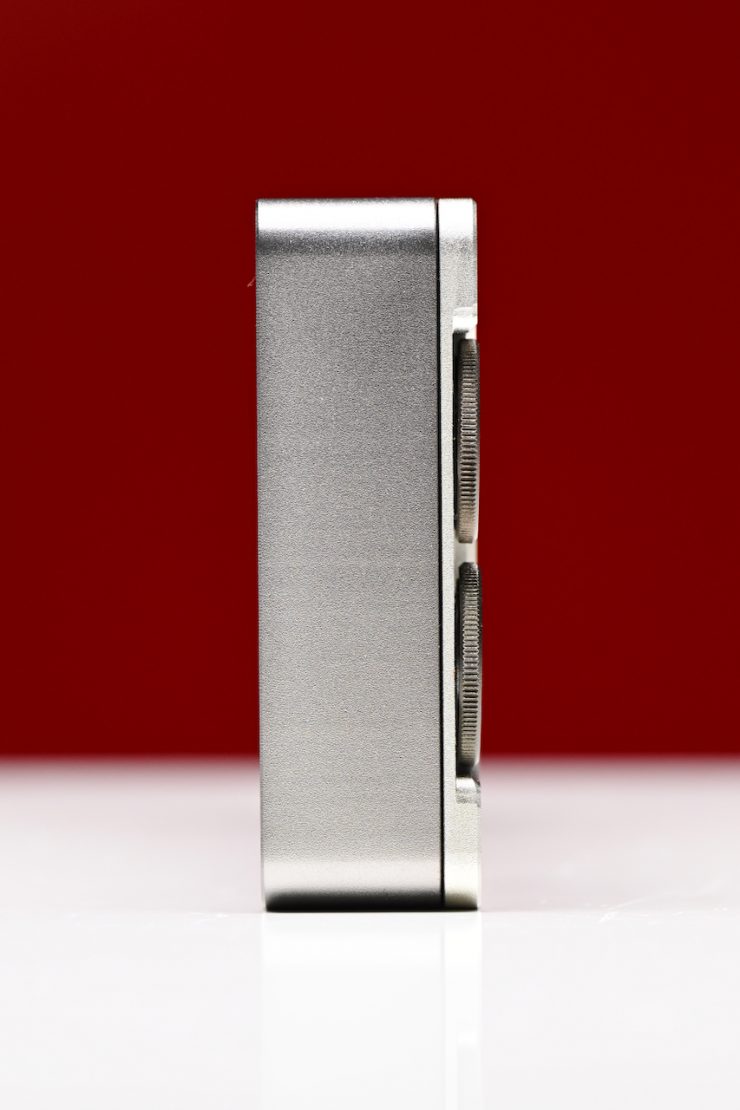
Just like the larger Epos fixtures, the Play Hero has an almost industrial feel about it.
The light also features an IP65 weather rating. An IP65 rating means that your product is protected from water projected from a nozzle from any direction.
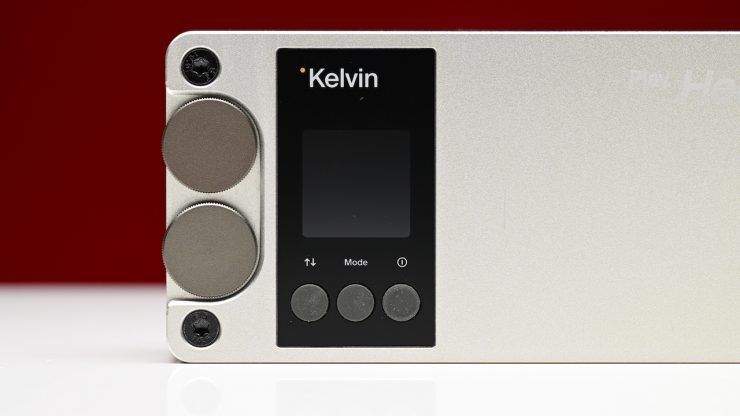
The scroll dials and buttons are also made out of aluminum, and they have a beautiful tactile feel.
Weight & Size
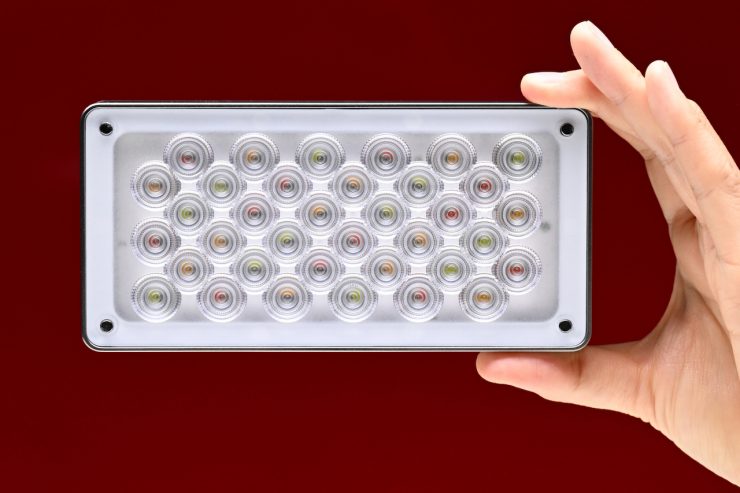
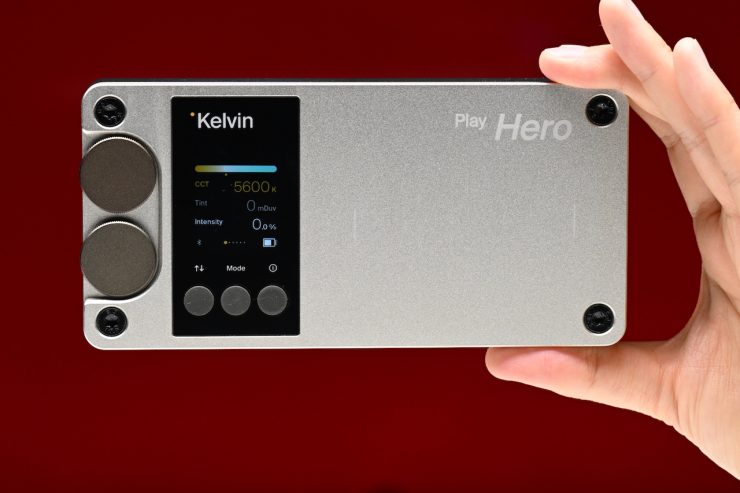
The Kelvin Play Hero weighs in at 382g / 13.47 oz.
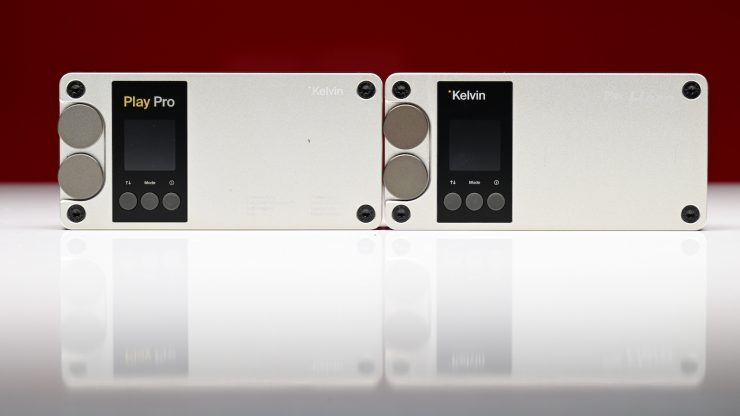
As a comparison, the Play Pro weighs 350g / 12.34 oz. This weight makes it suitable to be used as an on-camera light, but that arguably depends on what camera you are using it with.
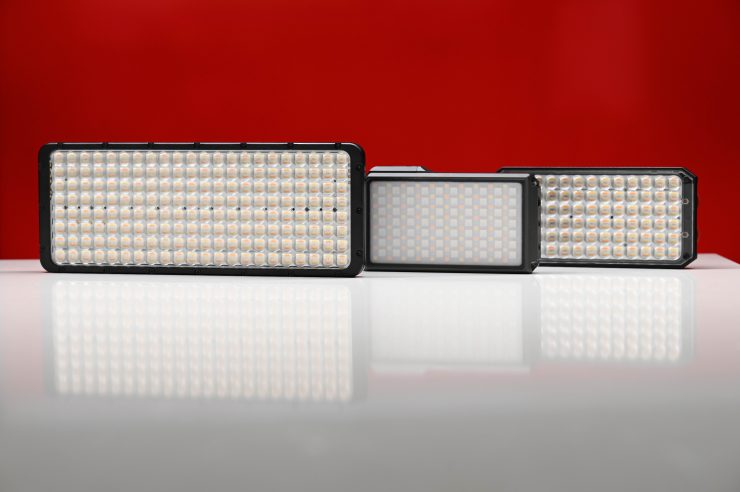
So how does this weight compare to some other small-sized RGBW lights? Below you can see:
| Weight | |
| Kelvin Play Hero | 382g / 13.47 oz |
| Kelvin Play Pro | 350g / 12.34 oz |
| Luxli Cello² | 354.8g / 12.5 oz |
| Lupo Kickassapanel Full-Color RGBW | 530g / 18.69 oz |
| Luxli Fiddle | 282g / 9.94 oz |
| DMG Lumiere DASH Pocket RGB LED Light Panel | 367g / 12.94 oz |
| Aputure MC Pro RGB LED Light Panel | 247g / 8.71 oz |
| Godox C5R Knowled RGB Creative LED Light | 169g / 5.96 oz |
| SmallRig RM75 Mini On-Camera LED Video Light | 185g / 6.52 oz |
| Astera FP6 HydraPanel | 600g / 21.16 oz |
| YY-C150 RGB LED video light | 265g / 9.34 oz |
| BOLING Pocket LED RGB Video Light | 260g / 9.17 oz |
| Aputure MC RGBWW LED Light | 130g / 4.59 oz |
| Falcon Eyes PockeLite F7 RGBW On-Camera Light | 300g / 10.58 oz |
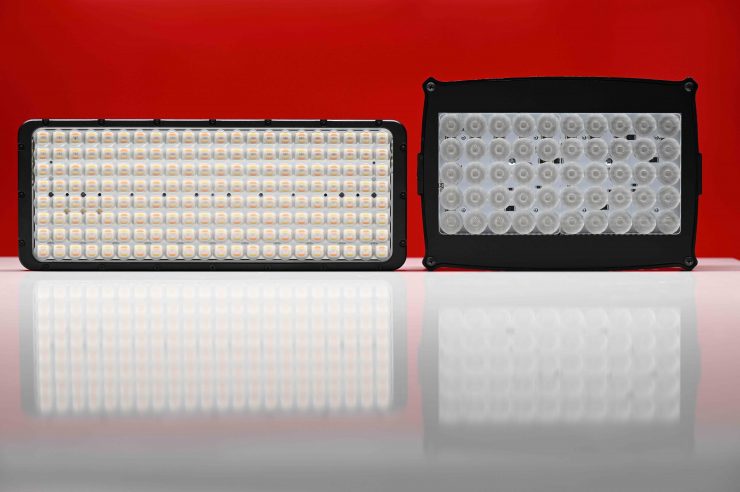
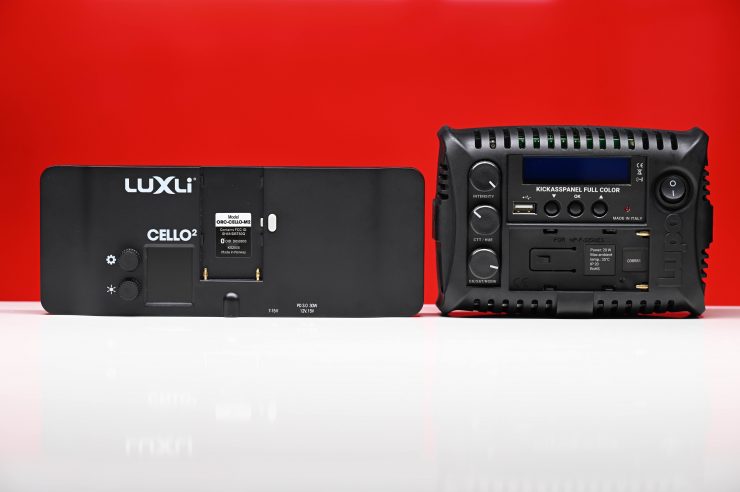
Most similar lights of this size are around 100g lighter, but most of them are not nearly as well-made.
Mounting
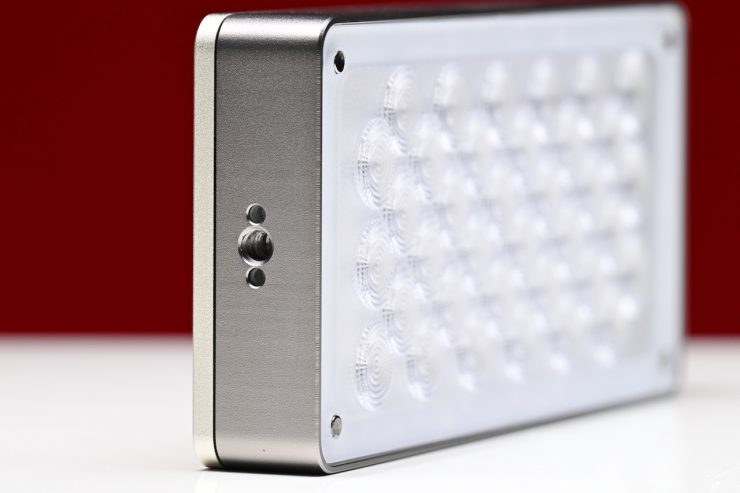
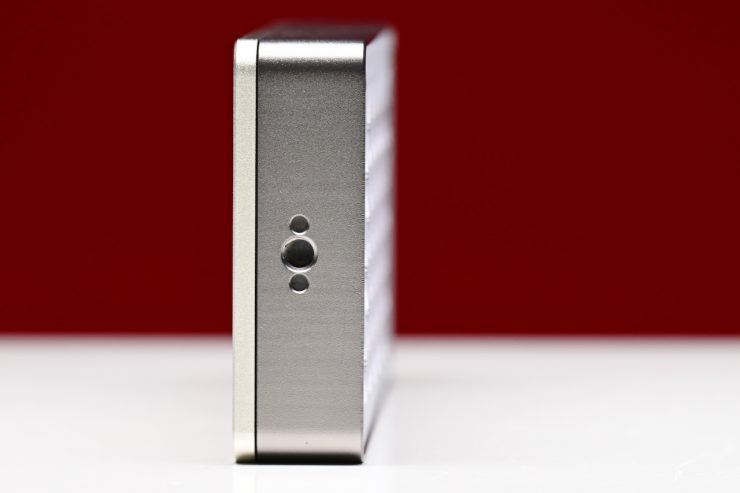
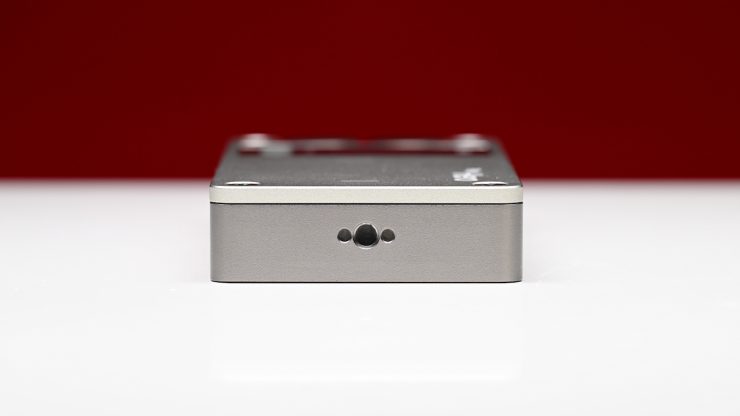
The Play Hero has multiple 1/4-20″ mounting points so you can easily mount it to light stands, small arms, etc. You can also attach multiple Play Hero units together if you need to create a bigger source.
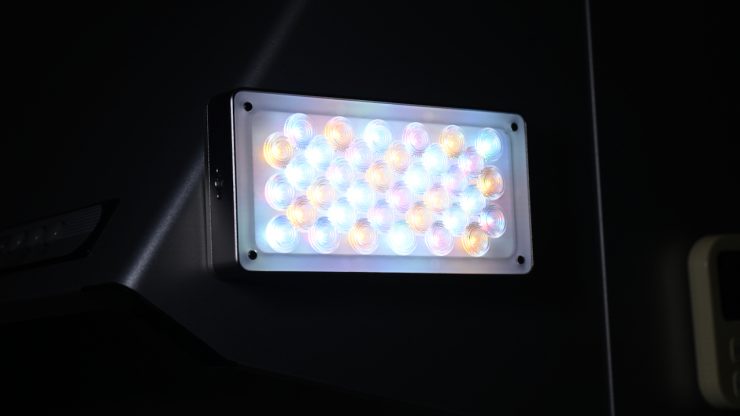
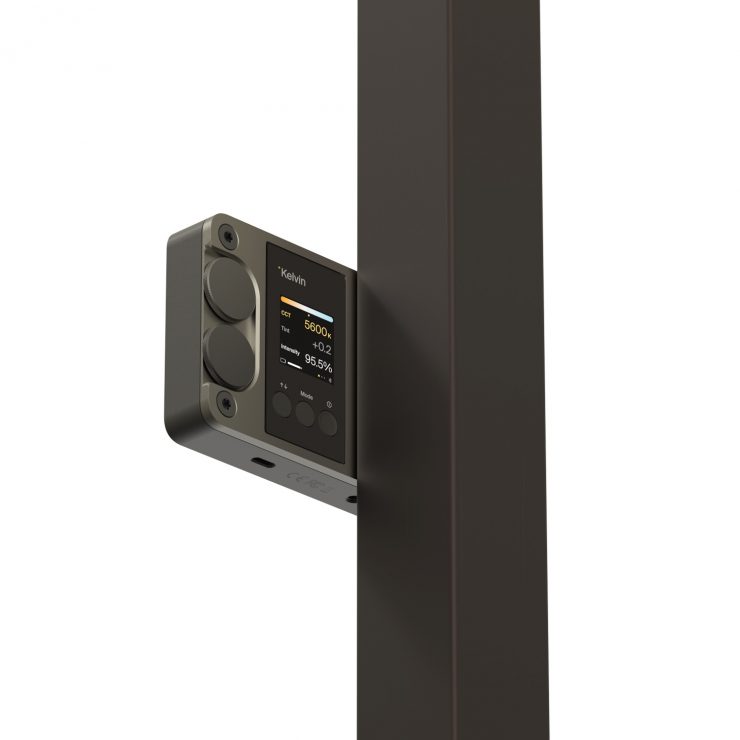
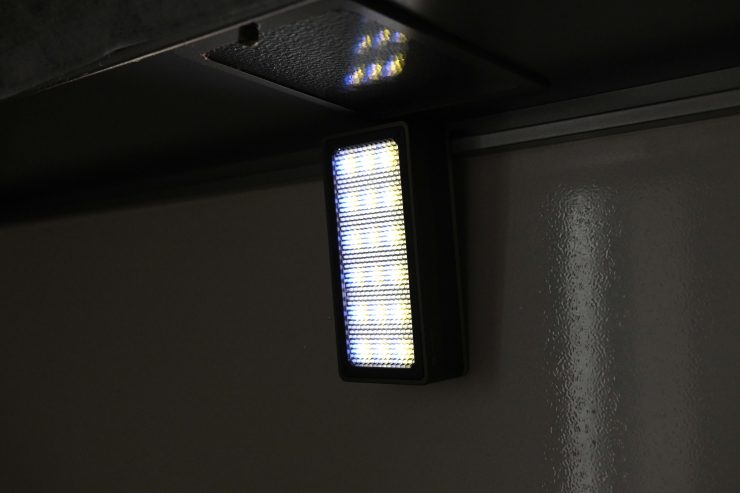
The back of the Play Hero features strong magnets so you can attach the light directly to metal surfaces. This is something we have seen other manufacturers do in the past, but it is always nice to have multiple mounting options available.
Magnetic Attachments
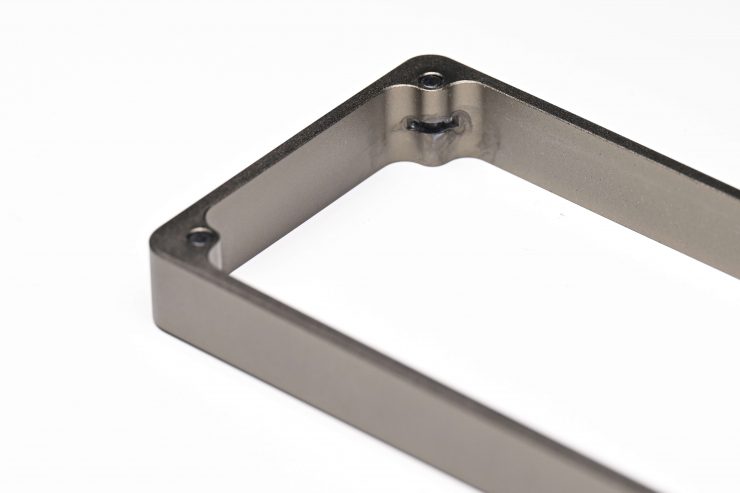
By using magnets, you can actually stack various modifiers by adding additional frames. I like this design and the versatility it allows.
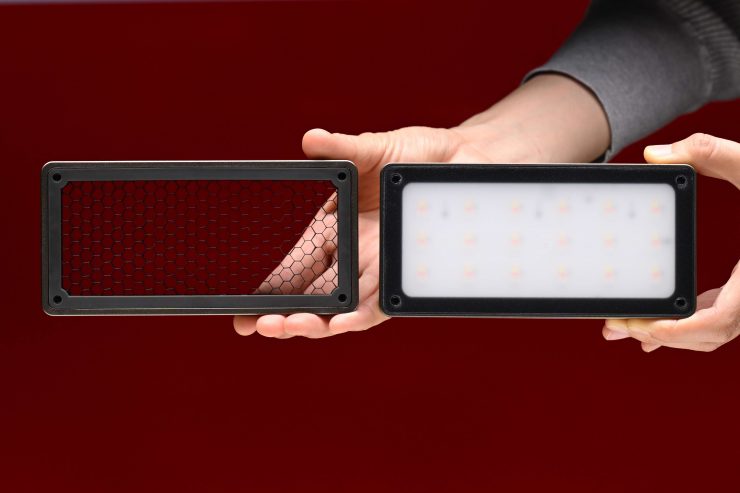
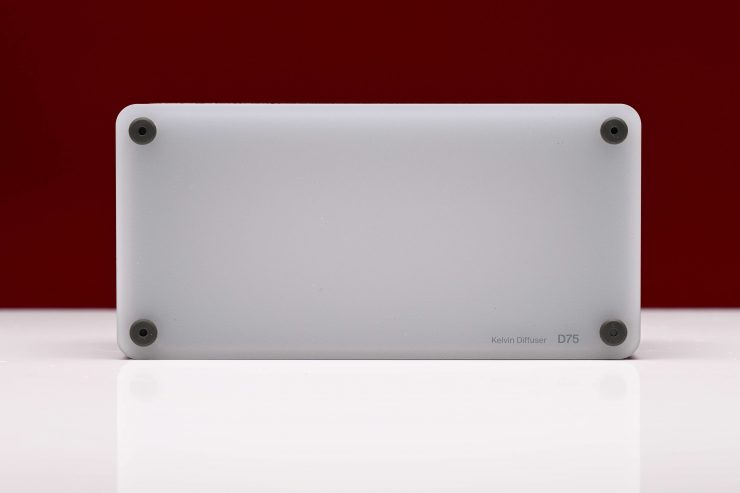
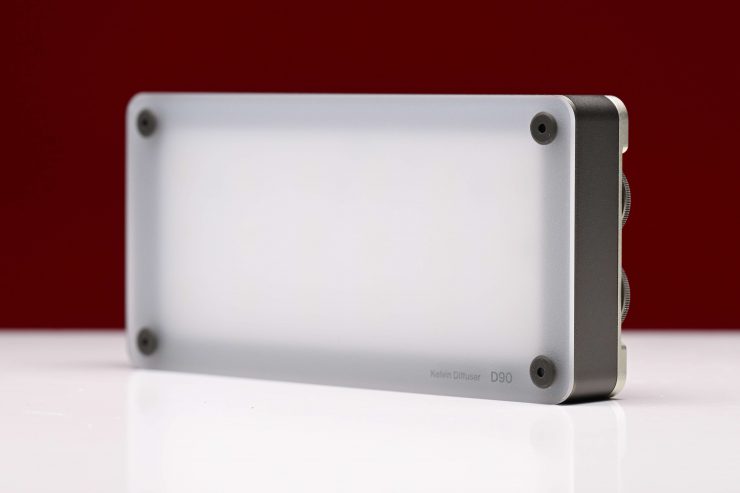
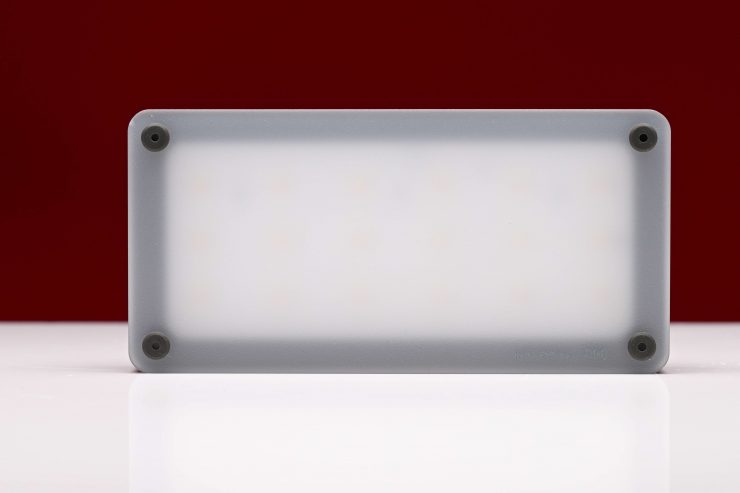
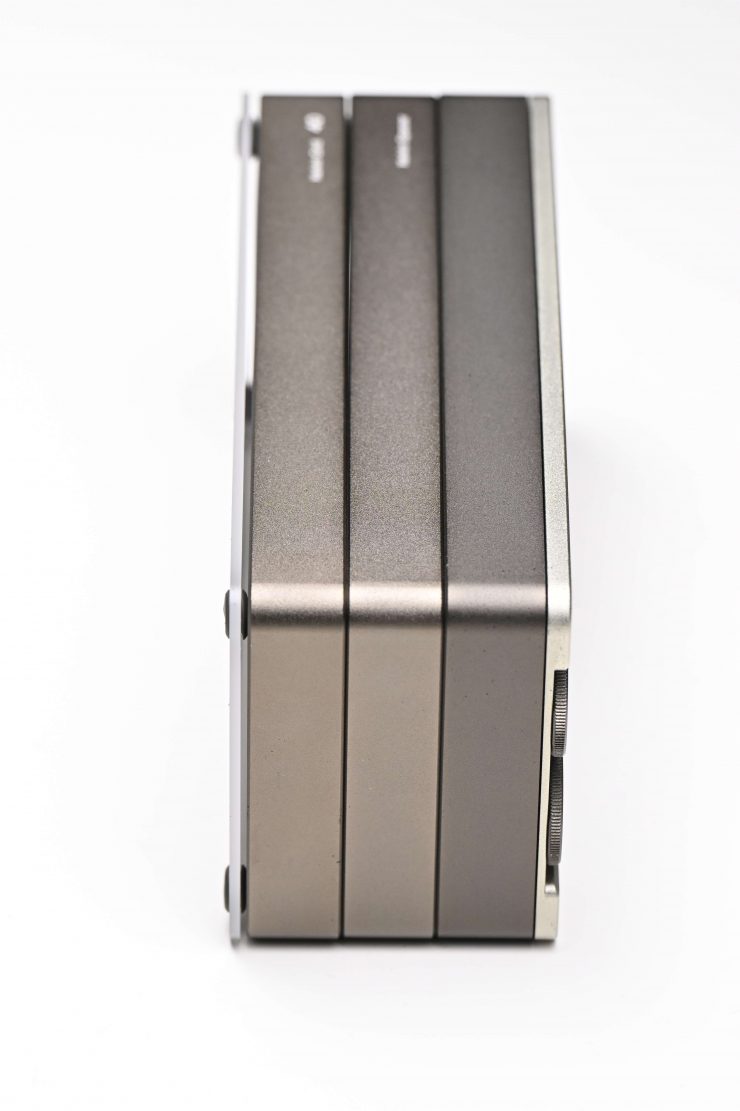
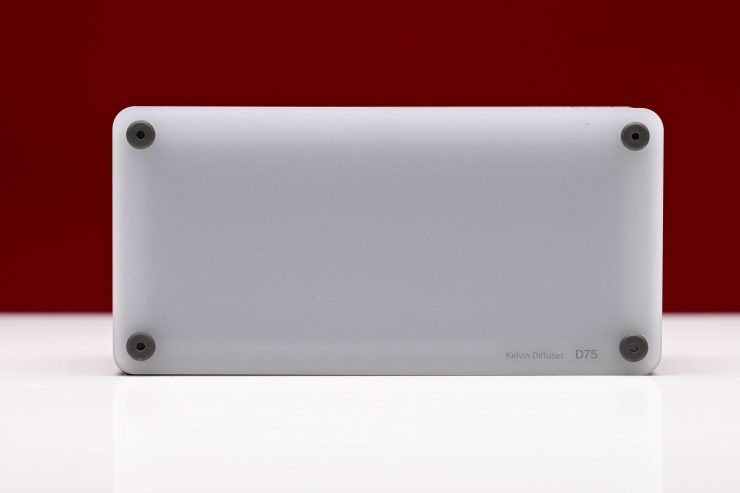
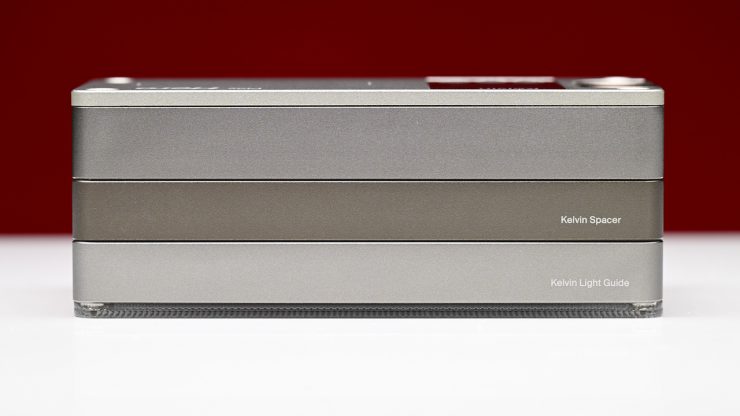
As there are magnets on both sides of the modifiers and Spacer frames, you can stack and position different modifiers depending on your requirements.
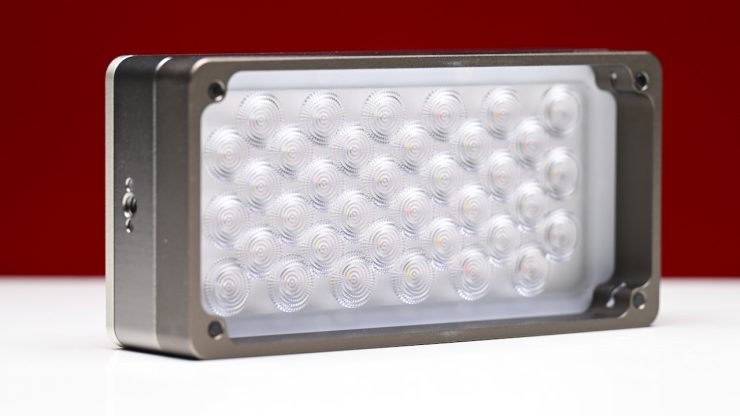
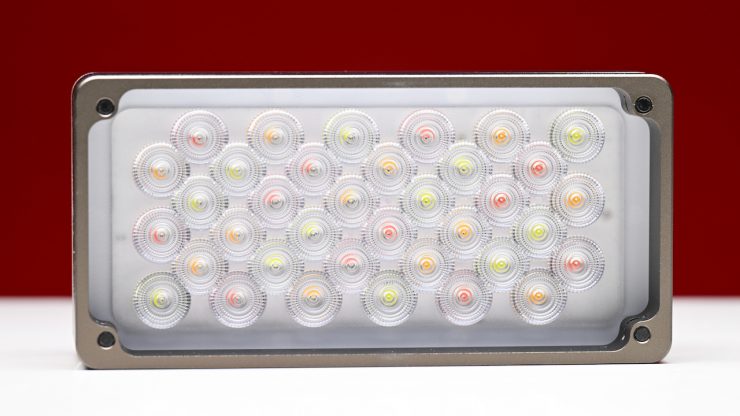
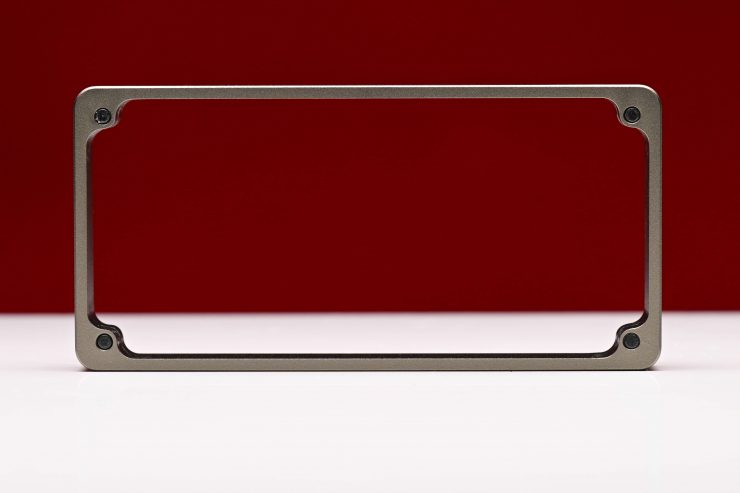
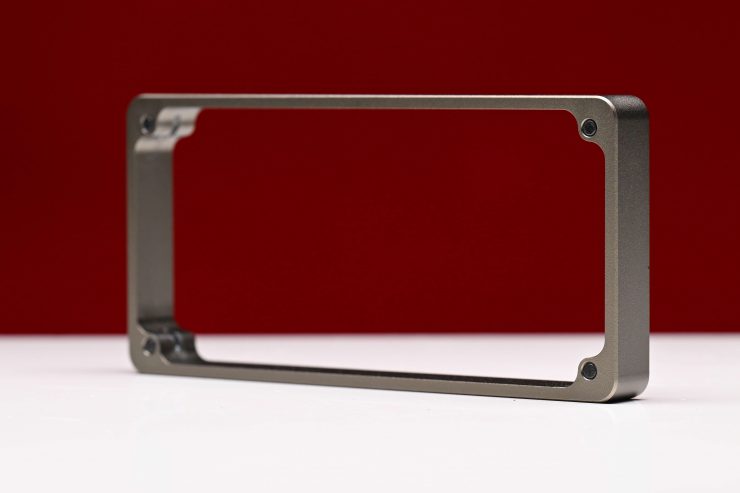
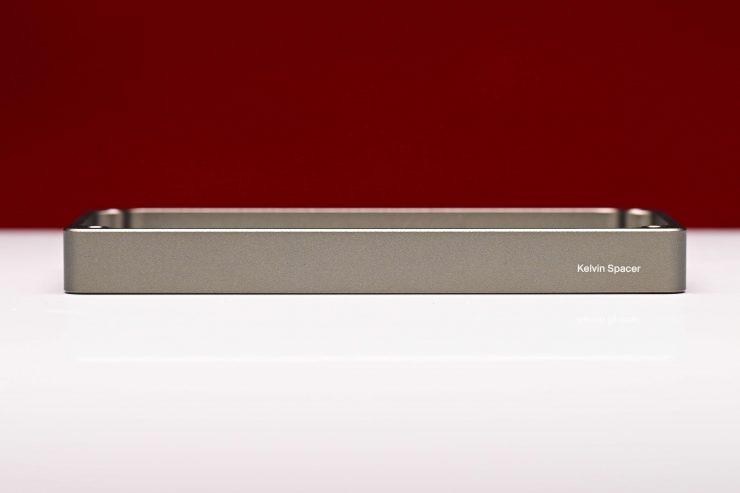
The Spacer frames are beautifully made, just like the fixture.
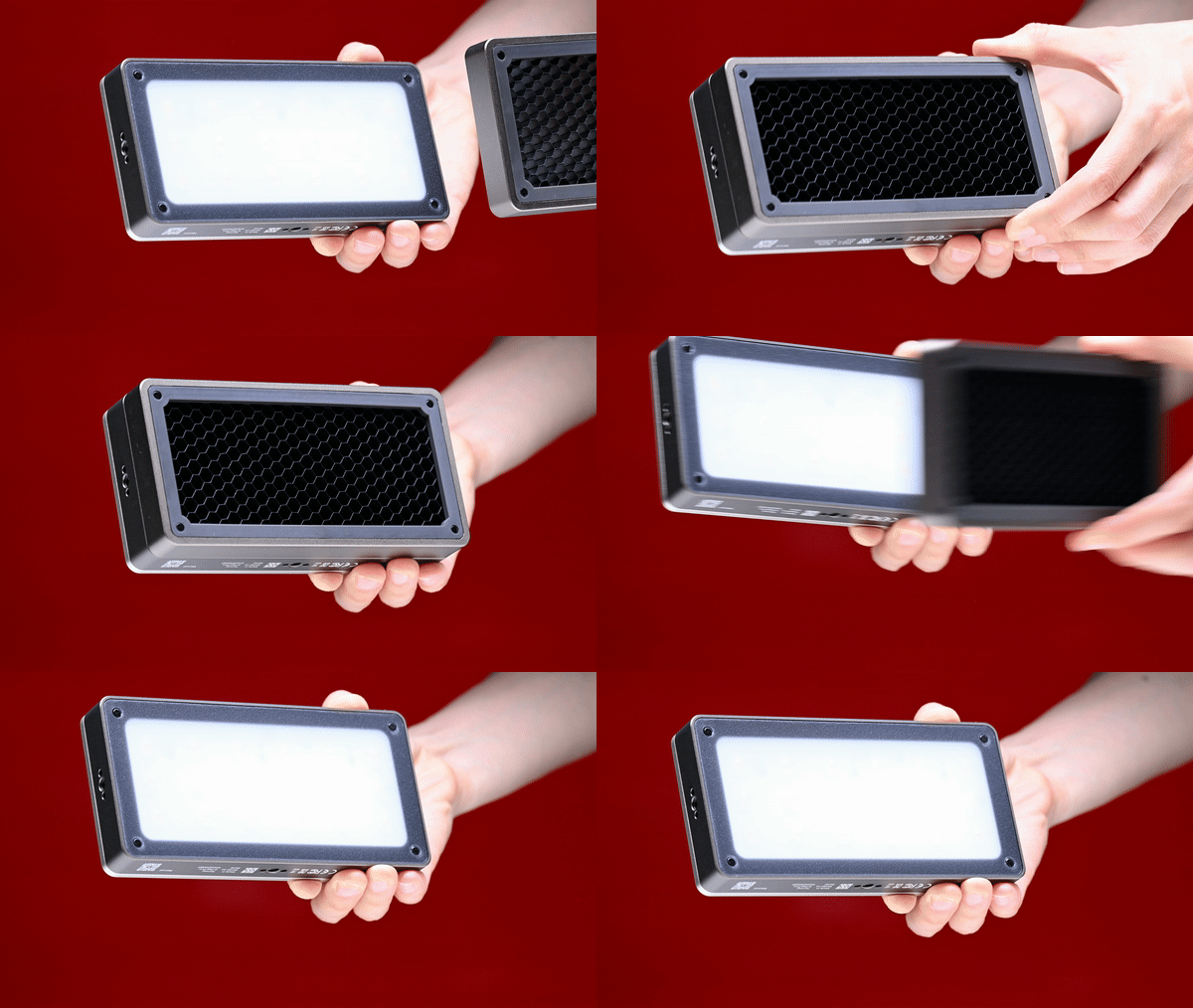
Above, you can see how they attach.
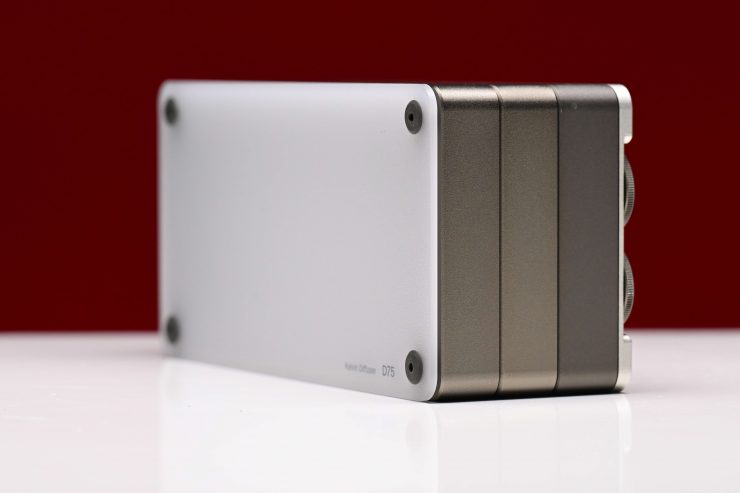
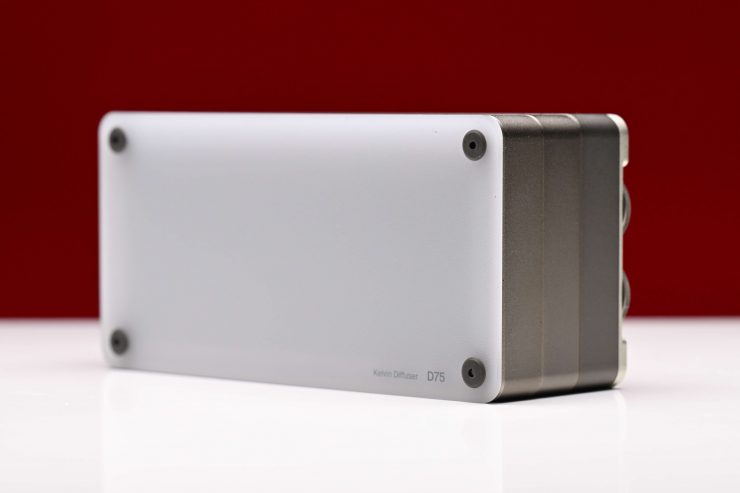
They are great because you can offset the modifiers and move them further away from the fixture. With most small-sized lights like this, the problem is always that the diffusion is too close to the light source.
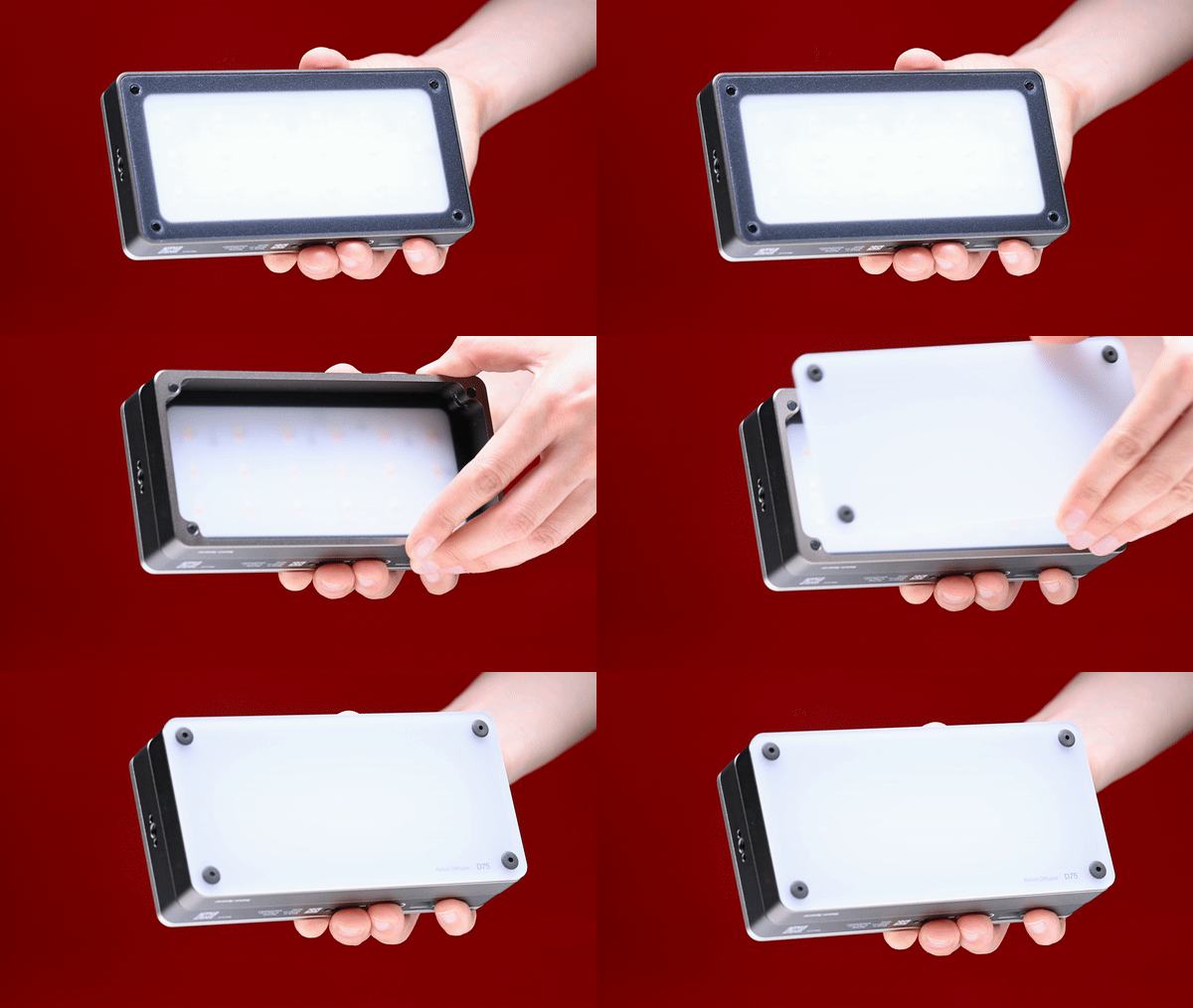
Above, you can see how easy it is to attach the spacer frame and then the diffusion.
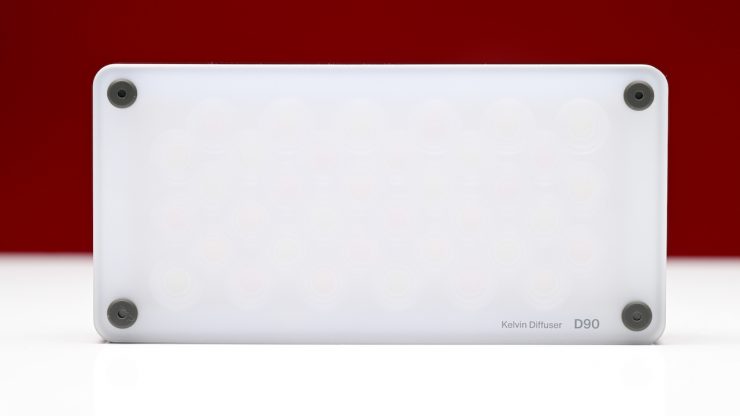

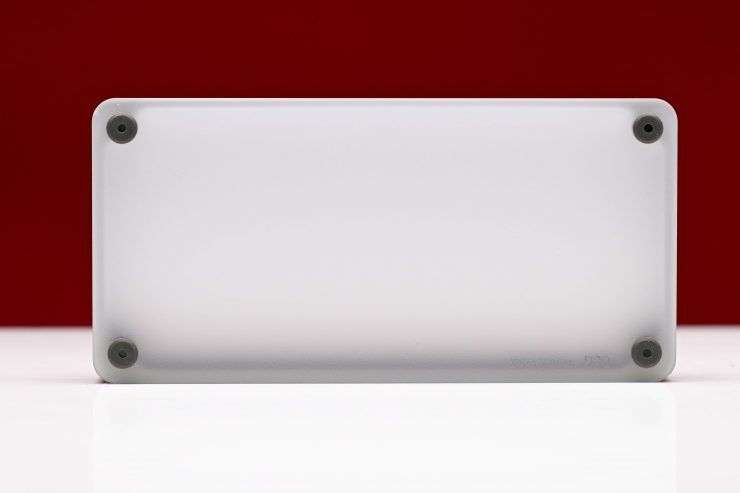
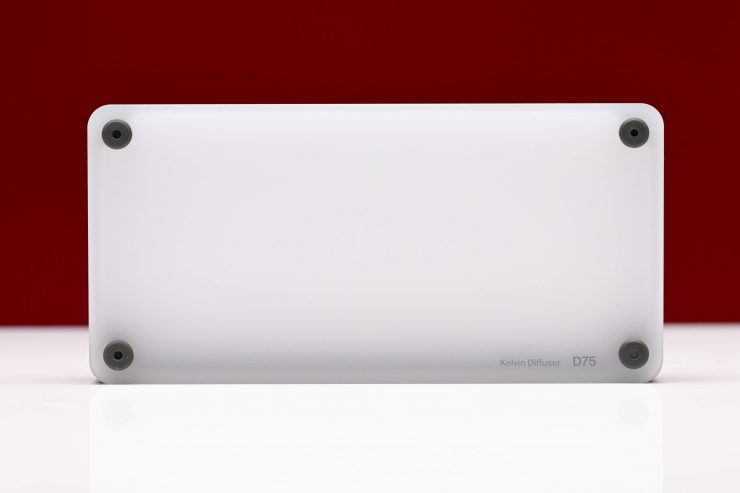
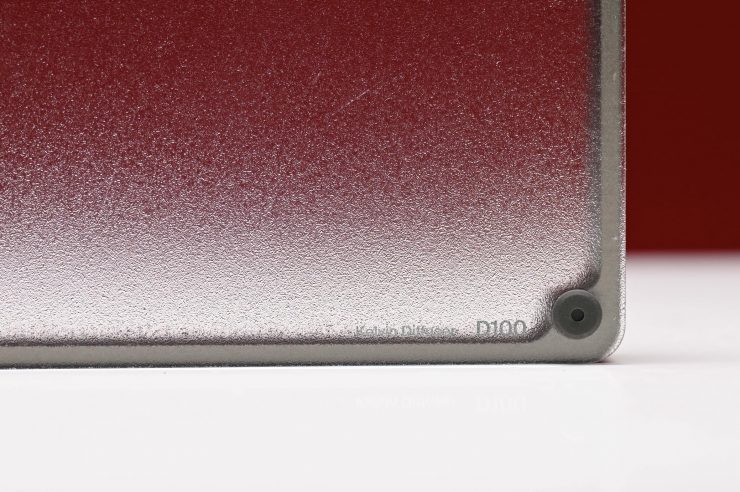
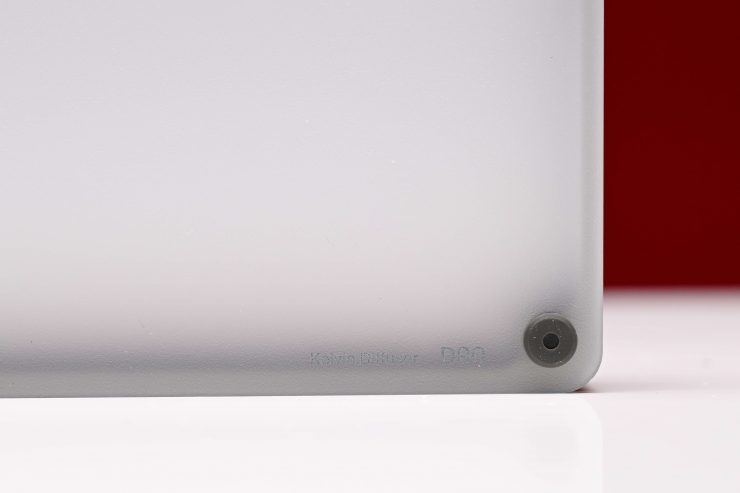
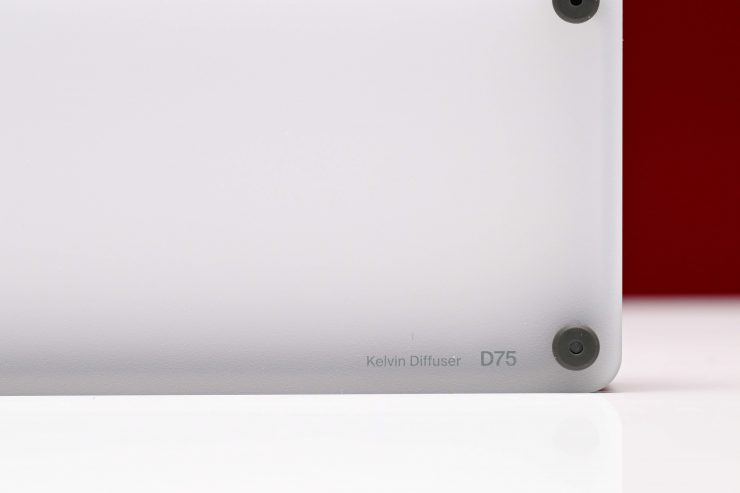
There are also three different diffusion strengths you can choose from:
- D100 (optional)
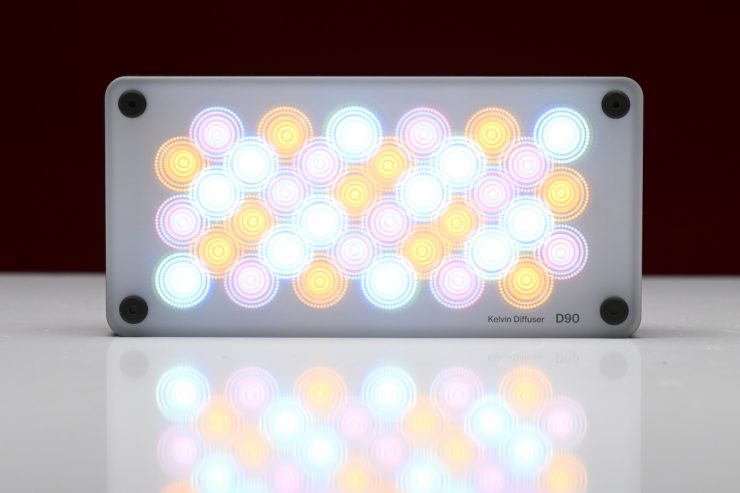
- D90
- D75 (optional)
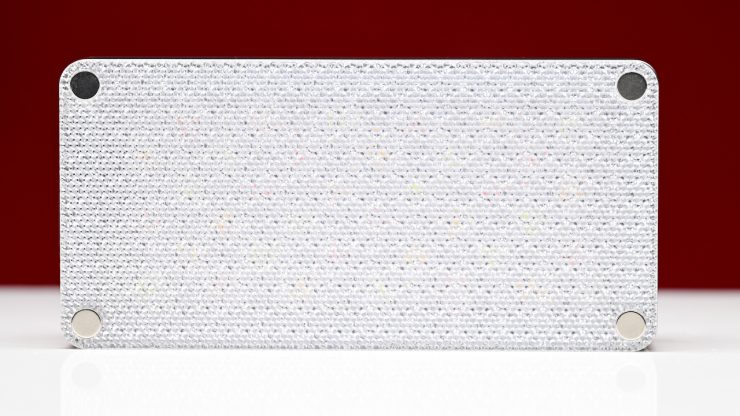
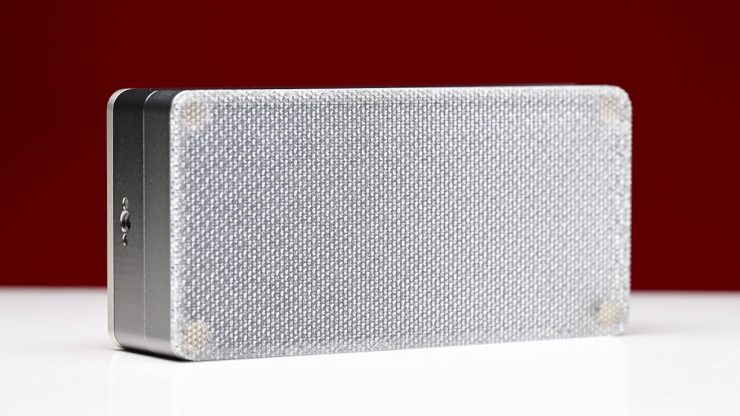
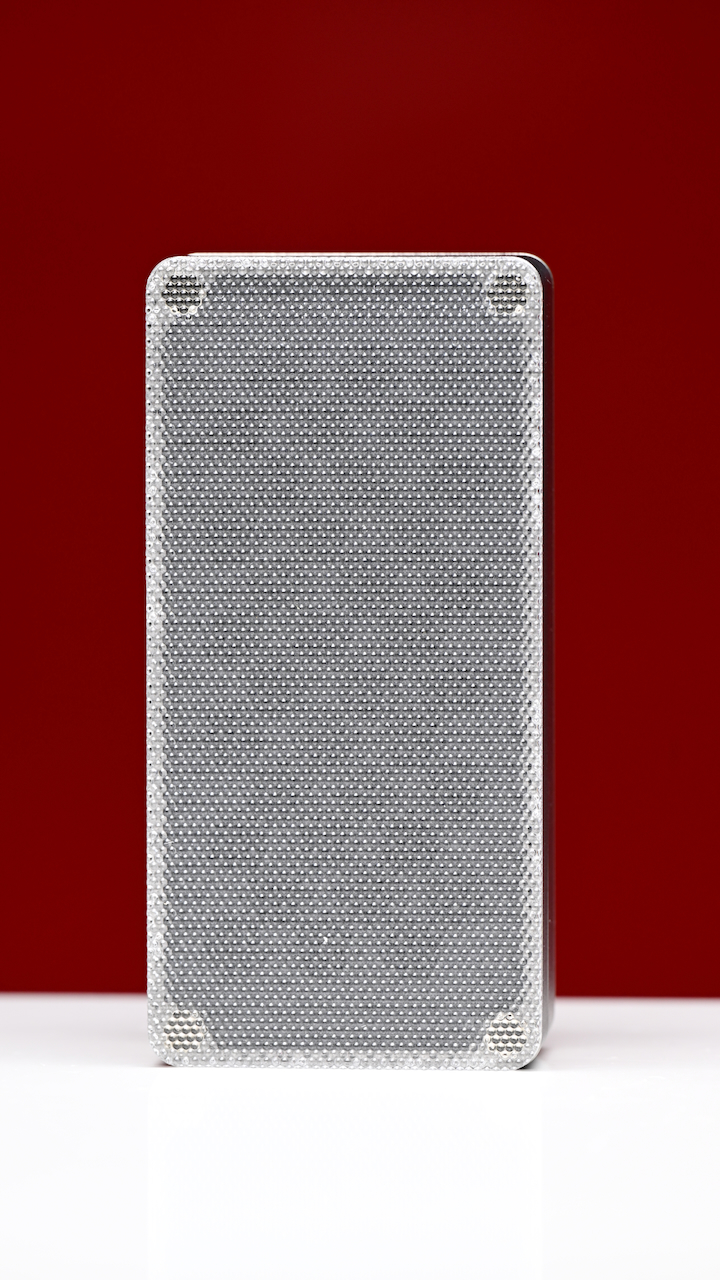
With the Play Hero, Kelvin also introduces what they refer to as the Sparkle Diffuser for Play Series ($39 USD). The Sparkle Diffuser diffuses the fixture’s light output by 2 stops and produces a 70° half peak angle. It is claimed to emphasize skin details and eye highlights.
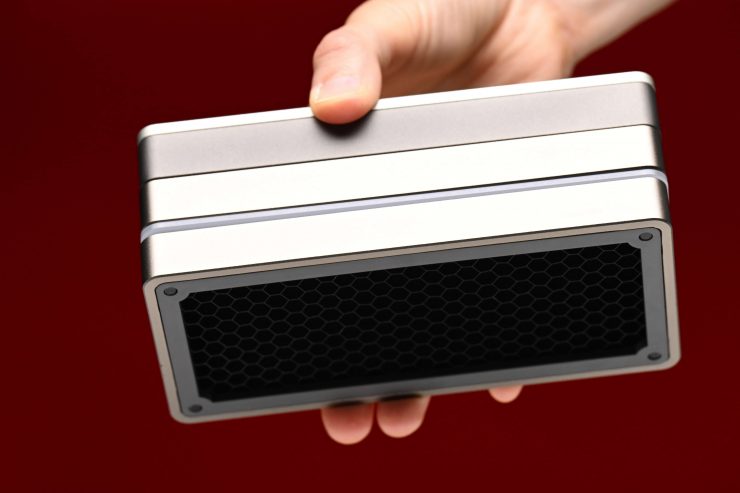
I also really like how you can use a combination of diffusion and a honeycomb grid.
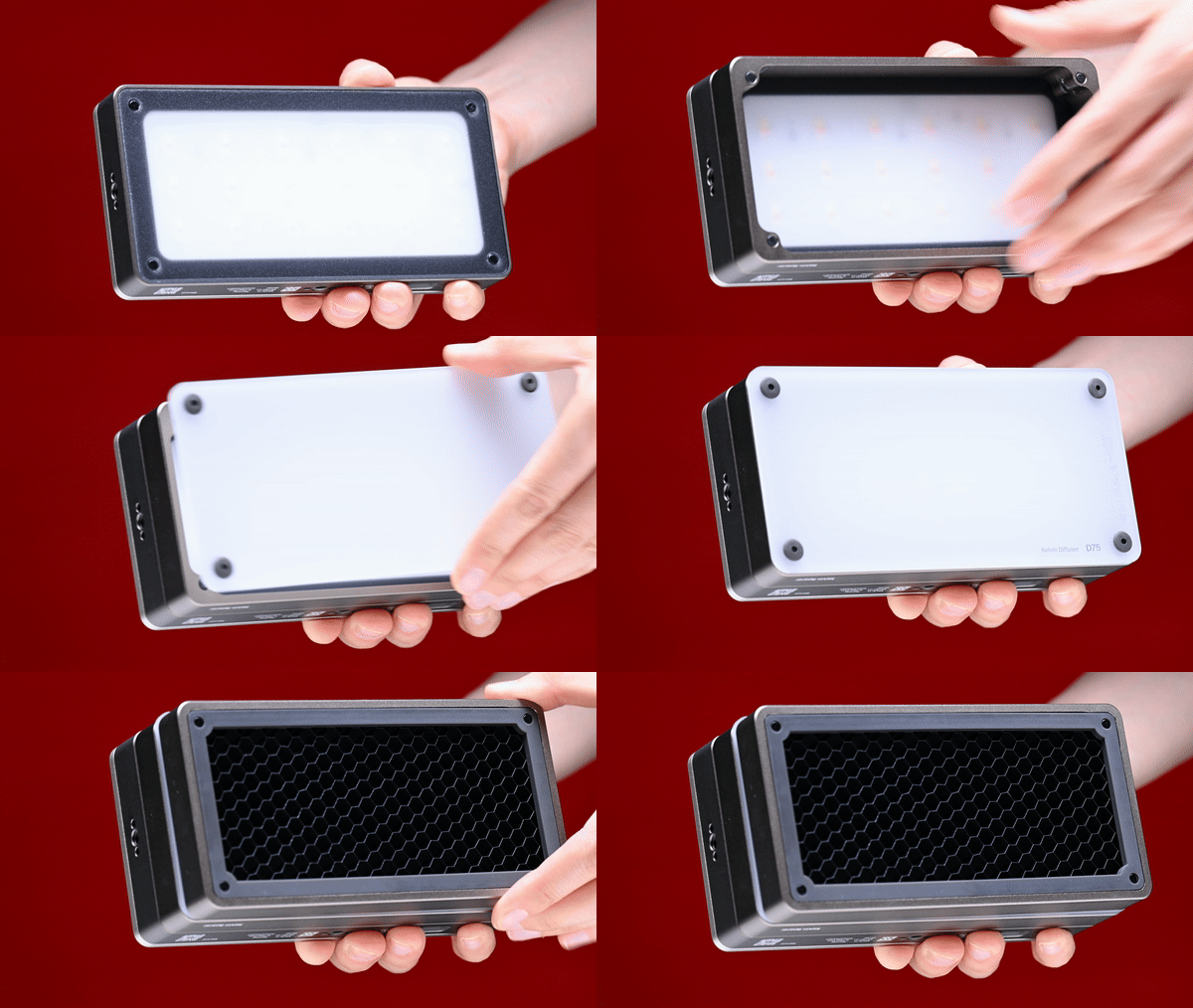
Above, you can see how easy it is to attach the lighting modifiers when creating a combination.
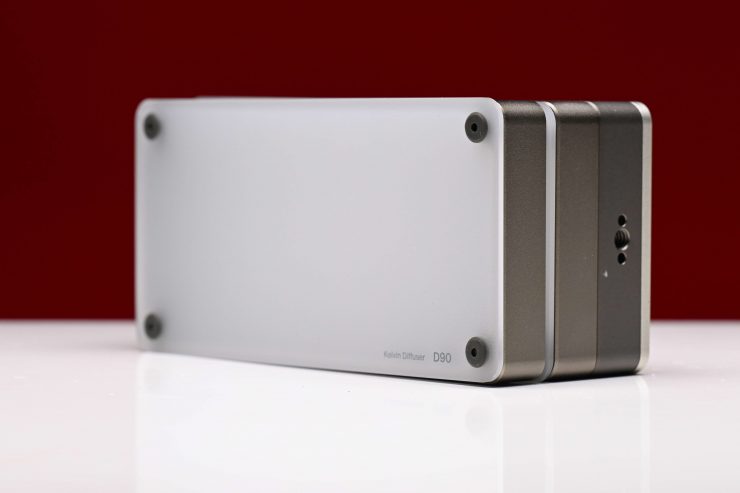
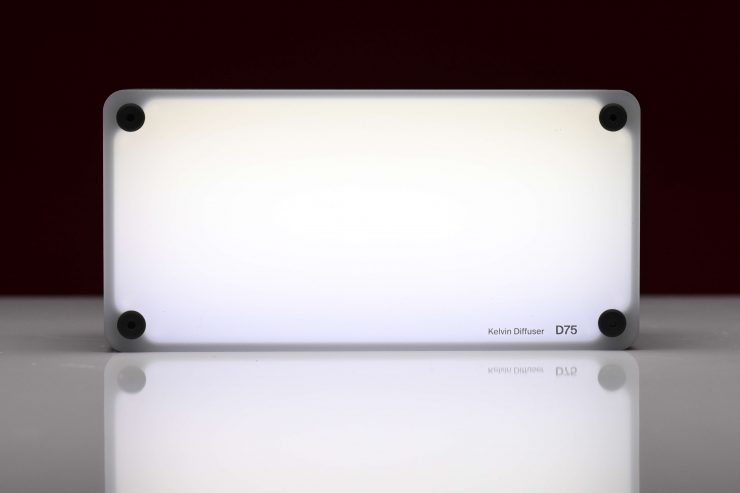
You can also stack several layers of diffusion using the Spacer frames to create a very soft lighting source.
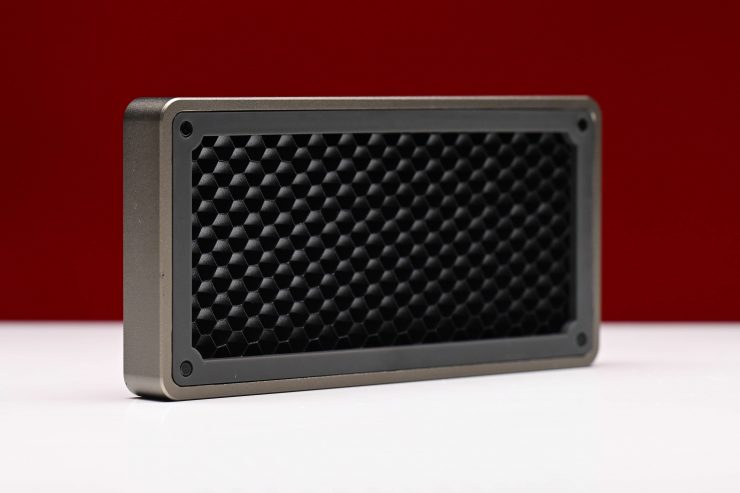
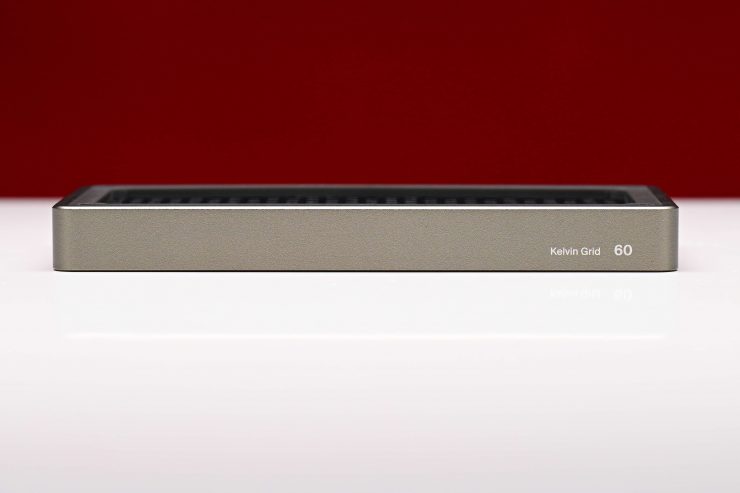
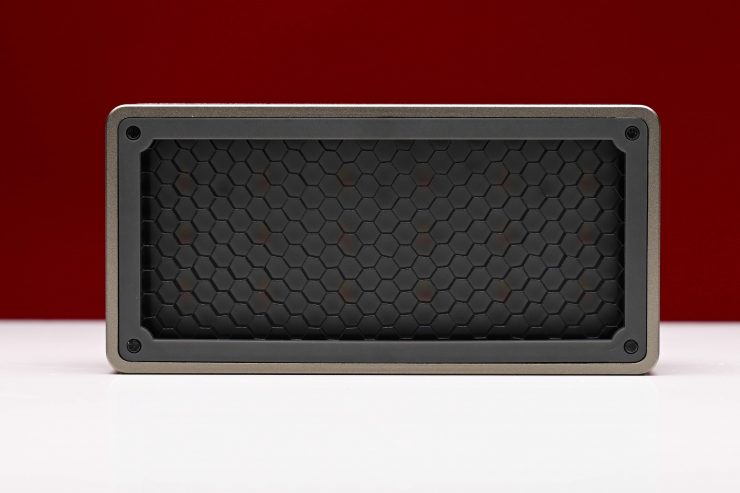
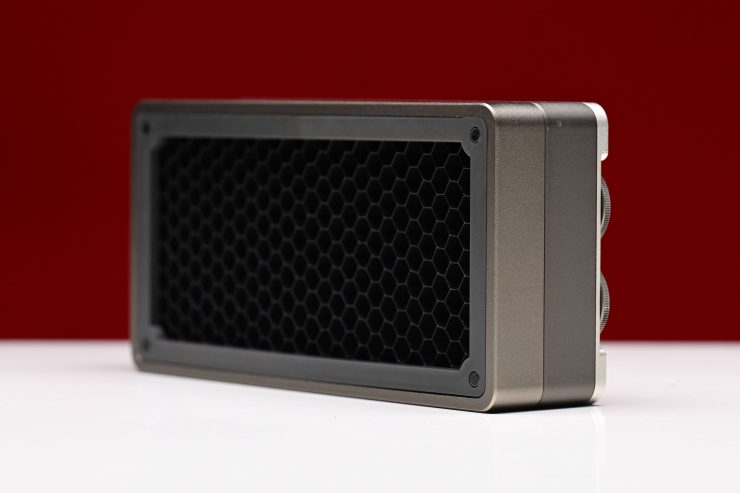
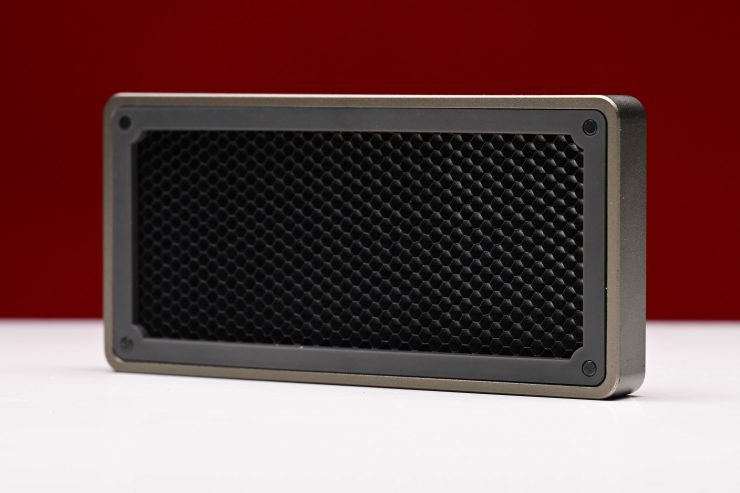
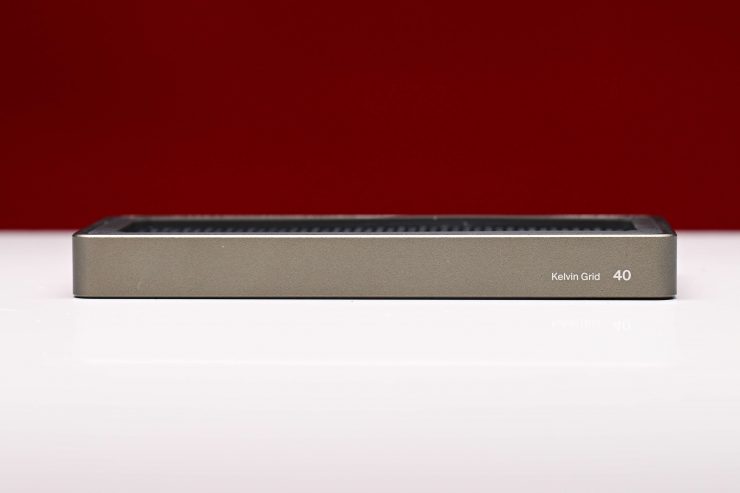
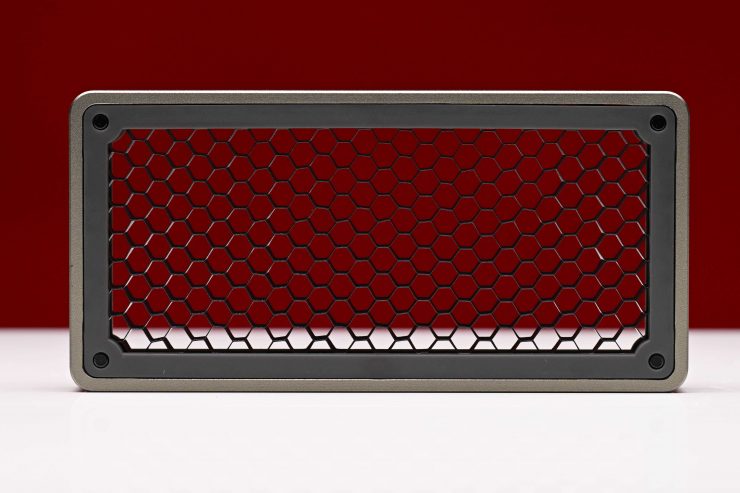
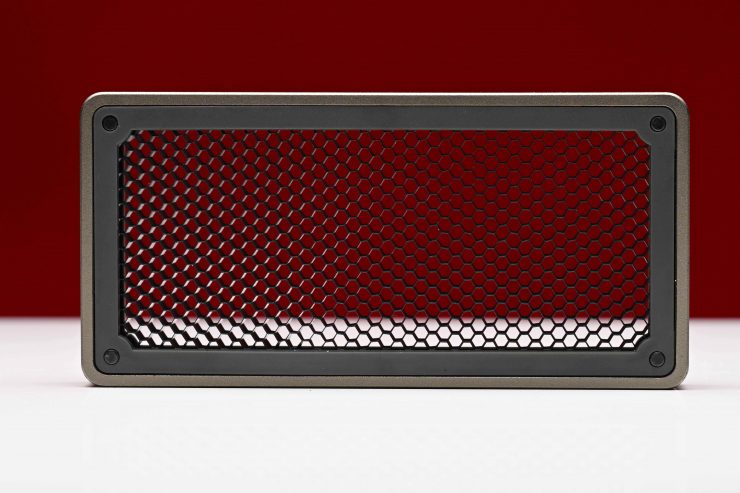
There are optional honeycomb grids available in 40-degree and 60-degree versions.
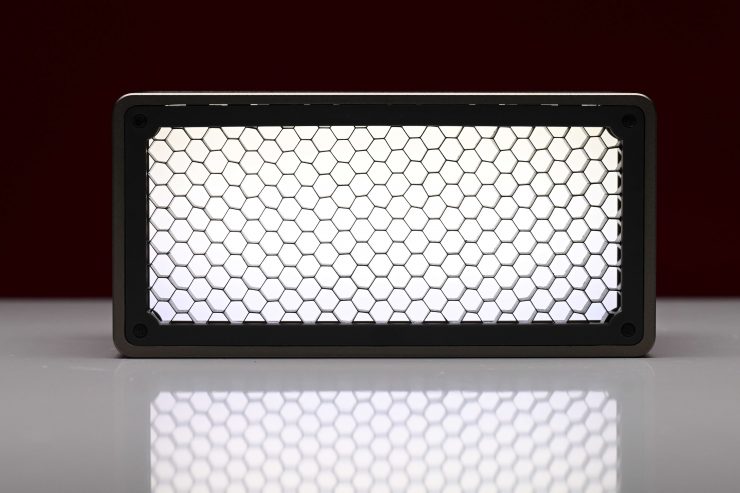
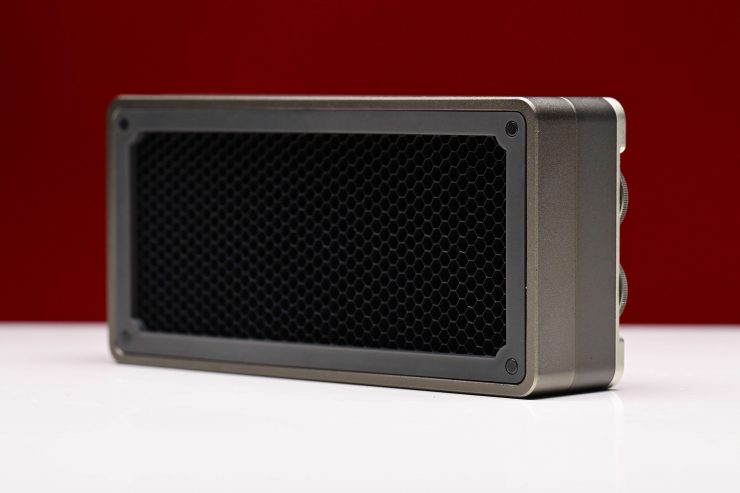
They do a very good job of limiting spill.
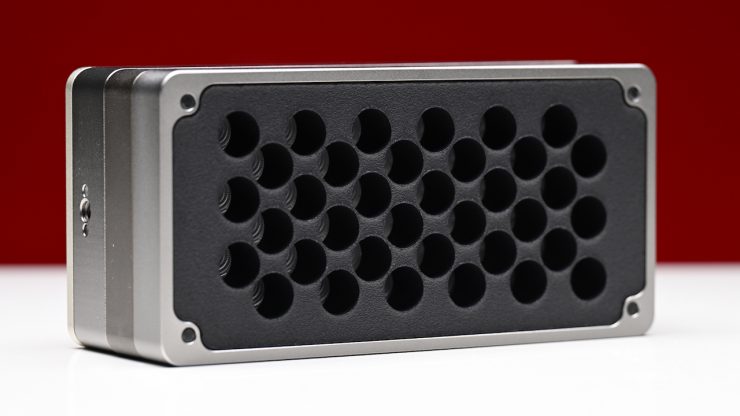
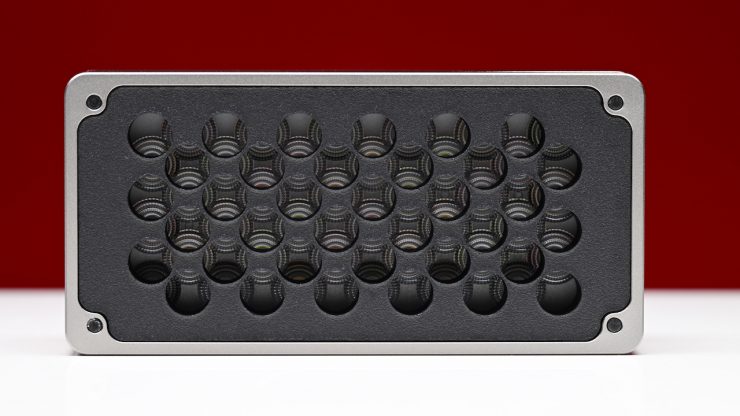
Speaking of honeycomb grids, Kelvin also has the optional Grid Light Guide for Play Hero ($99 USD). Designed to be a grid-and-honeycomb hybrid, the Grid Light Guide focuses and enhances the light beam while minimizing light spill. Each hive of the modifier surrounds each light bead to redirect the output without reducing its illuminance.
Power Draw
The light draws just 10W, which is the same as the Play Pro.
So how does the power draw compare to other fixtures:
| Power Draw | |
| Kelvin Play Hero | 10W |
| Kelvin Play Pro | 10W |
| Luxli Cello² | 30W |
| Lupo Kickasspanel Full-Color RGBW | 20W |
| Luxli Fiddle Pocket | 18W |
| DMG Lumiere DASH Pocket RGB LED Light Panel | 14W |
| Aputure MC Pro RGB LED Light Panel | 7W |
| Godox C5R Knowled RGB Creative LED Light | 5W |
| SmallRig RM75 Mini On-Camera LED Video Light | 5W |
| Astera FP6 HydraPanel | 17W |
| YY-C150 RGB LED video light | 12W |
| BOLING Pocket LED RGB Video Light | 12W |
| Aputure MC RGBWW LED Light | 5W |
| Falcon Eyes PockeLite F7 RGBW On-Camera Light | 12W |
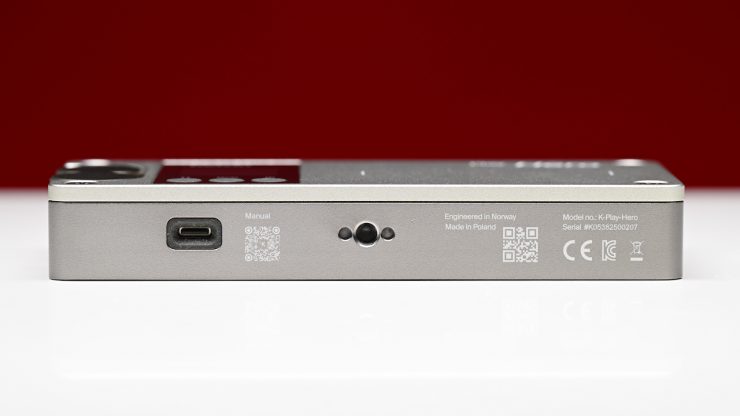
The light features an in-built battery. You can also power or charge the Play Pro via its USB-C input.
| RUN TIME | |
| Kelvin Play Hero | Up to 3-Hour Runtime |
| Kelvin Play Pro | Up to 2-Hour Runtime |
| Luxli Cello² | Depends on the battery being used |
| Lupo Kickasspanel Full-Color RGBW | Depends on the battery being used |
| Luxli Fiddle Pocket | 180min |
| DMG Lumiere DASH Pocket RGB LED Light Panel | 180min |
| Aputure MC Pro RGB LED Light Panel | 120 minutes* |
| SmallRig RM75 Mini On-Camera LED Video Light | NA |
| Astera FP6 HydraPanel | 105min* |
| YY-C150 RGB LED video light | 180min* |
| BOLING Pocket LED RGB Video Light | 140min* |
| Aputure MC RGBWW LED Light | 120min |
| Falcon Eyes PockeLite F7 RGBW On-Camera Light | 110min* |
*Claimed run times (not tested)
Above, you can see how long the internal battery run times are for some of the other lights.
Built-in batteries certainly have their pros and cons. Yes, it is nice to grab a light and not have to worry about finding a battery and putting it onto the back of a light, but the flip side is, once that internal battery dies, you need to power it via another method (if that’s available). If you are going to put an internal battery in a light, it needs to be able to power the light at full power for at least 2-3 hours to be useful. With the Play Hero, you can power it for a reasonable amount of time via its internal battery, and if you need to run it longer, you can via a USB-C source.
Kelvin gives you a USB-C Power Cable, but not a USB-C PD AC wall charger.
You can also power and charge the Play Hero at the same time if you connect it to a USB-C power device.
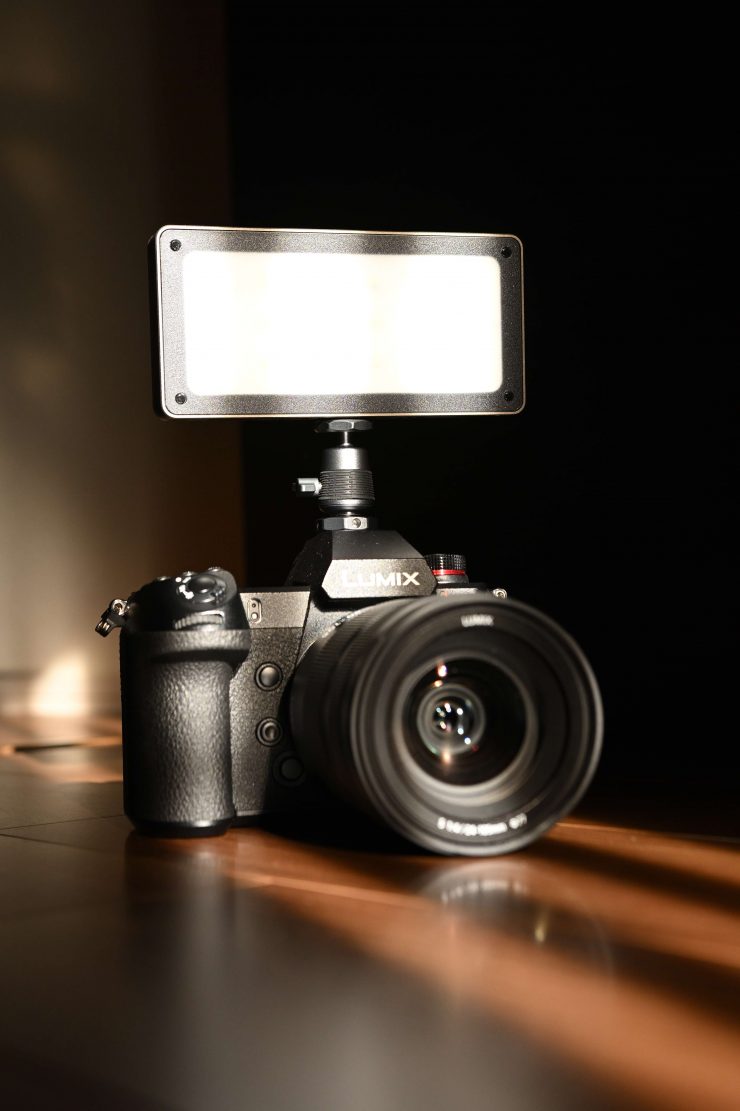
This is very handy if you are using the Play Hero as an on-camera light because you can power it from your camera battery for continuous, uninterrupted use.
More than just a light
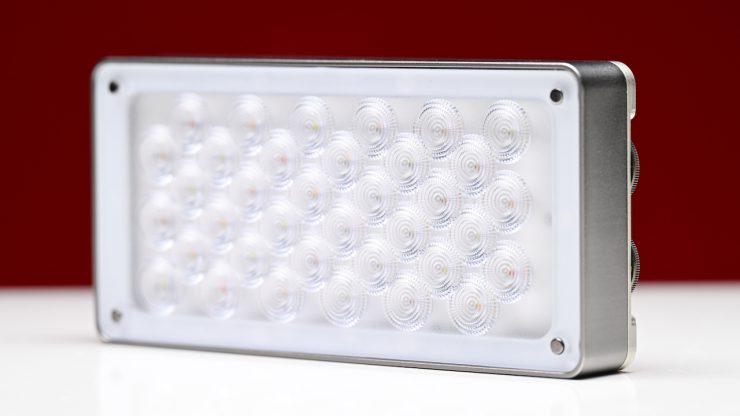
Gone are the days when a light was just a light. A lot of today’s modern lights are now a seamless blend of hardware and firmware.
Having a light that is firmware-updatable helps extend its life and adds extra functionality over time.
Controls & Menu System
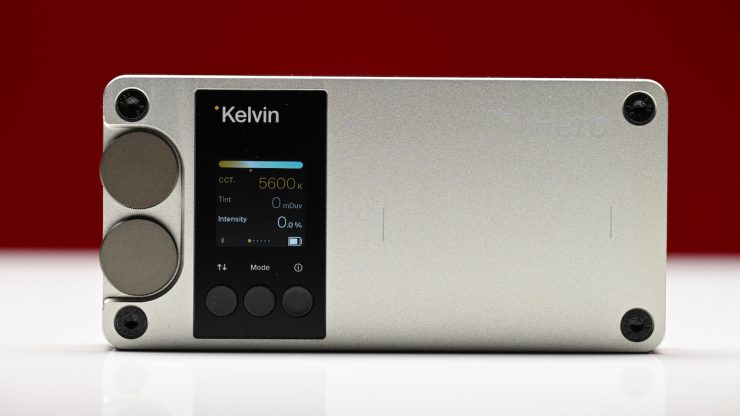
If there is one thing that Kelvin does very well across the board, it is control interfaces. Despite how many features you have in a light, that light should be easy to use and operate. Nobody wants to get lost in endless menus or have to remember weird button combinations to make changes.
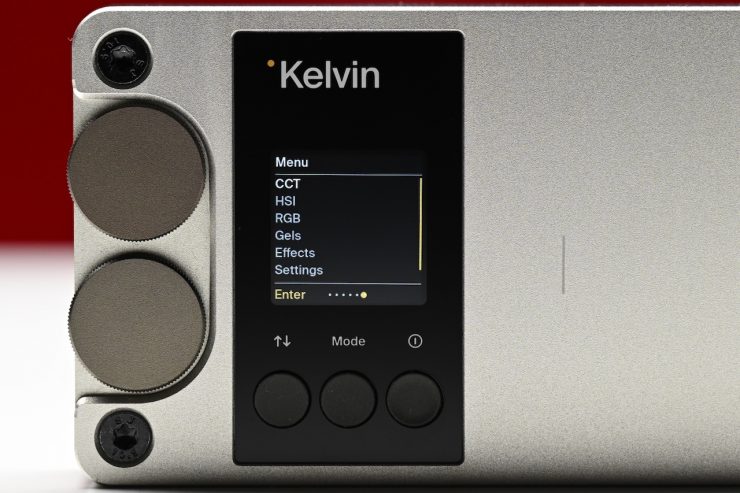
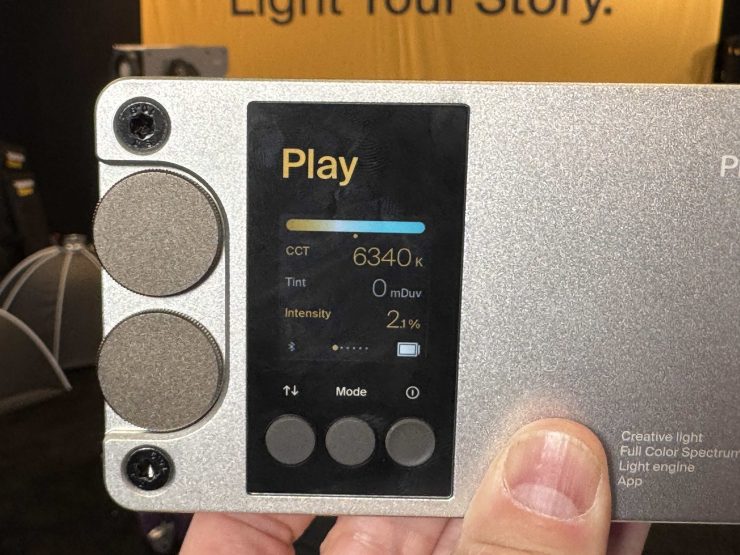
The rear LCD screen is easy to see, and it gives you clear and concise information about the light. The Play Hero uses a combination of dials and buttons. It is pretty easy to cycle through the various modes.
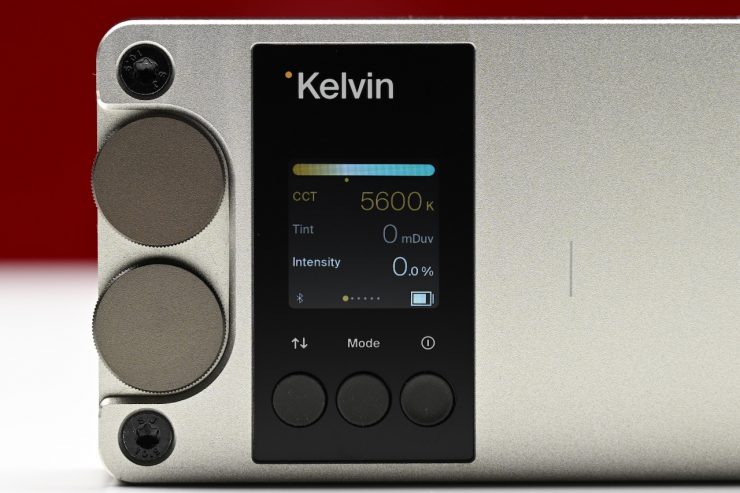
The Play Hero features a very intuitive and easy-to-use operating system. The fixture is CCT adjustable from 1,700 – 20,000K, and it has full +/- G/M adjustment. There are effects, gels, HSI, RGB modes, etc.
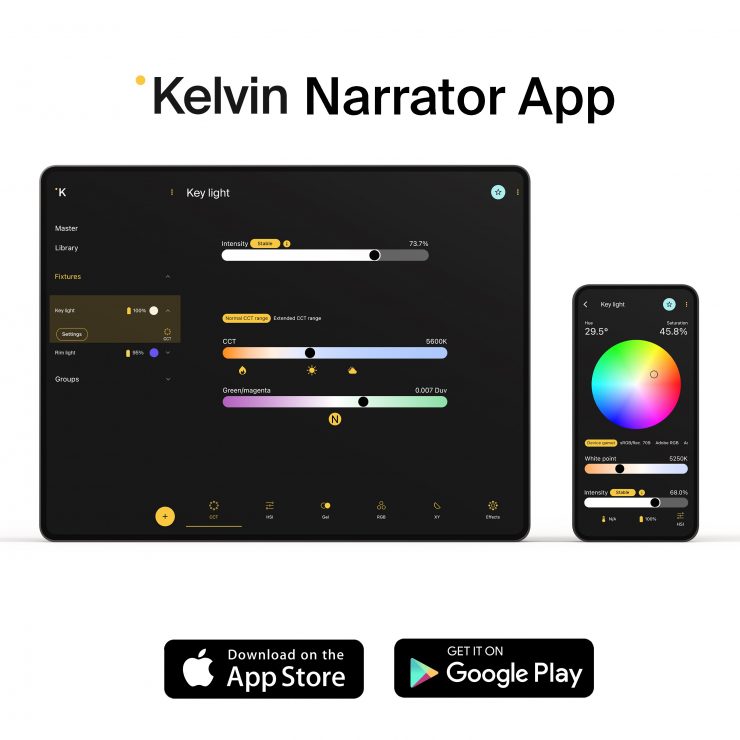
Apart from the onboard controls, the light can also be controlled via the Kelvin Narrator Bluetooth app or DMX. Now, you need to be aware that certain features and modes can only be accessed by using the app.
Control green & magenta color shifts
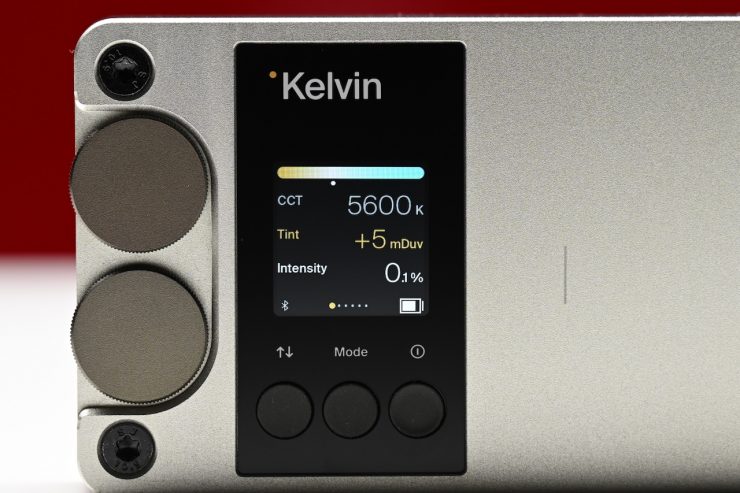
The Play Hero lets you adjust +/-green values from -10 to +10. This is an incredibly useful feature that lets you get rid of color casts and makes it easier to match other lights that you may be using. If you are using lights from different manufacturers, they are all going to behave differently. By being able to offset green or magenta, you can get the Play Hero to closely match another source. For instance, if you happen to be shooting in an office building with overhead fluorescent lights, they may well have a color cast. If you can’t turn them off, you may want to replicate that same look with the Play Hero. By playing with the +/-green values, you can.
Operating Modes
CCT Mode
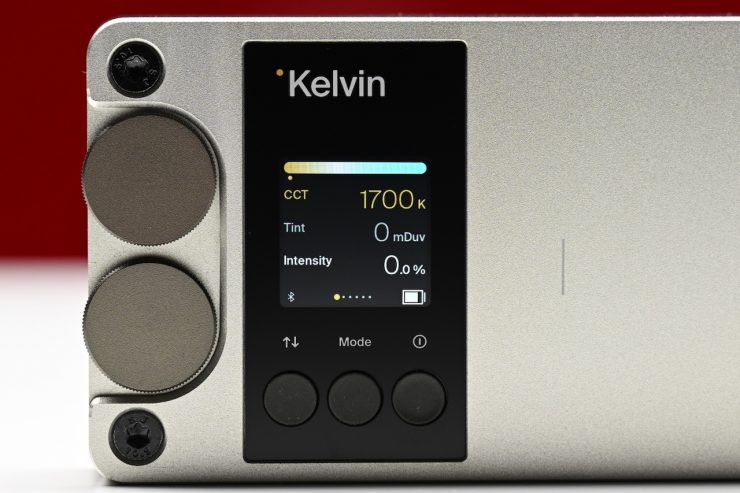
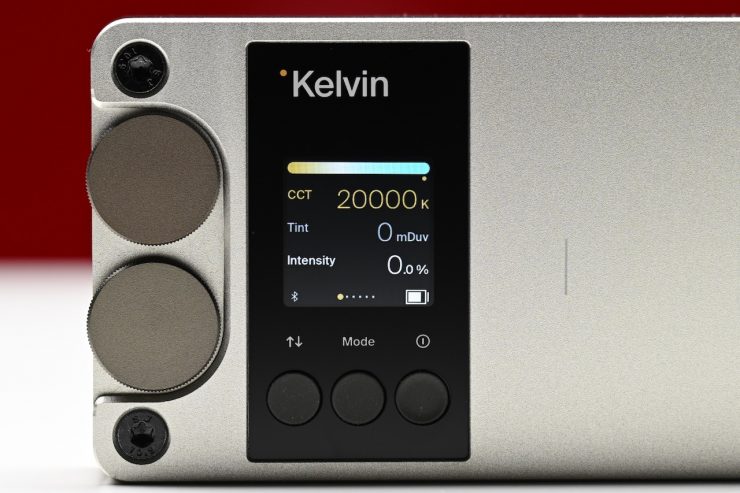
The traditional correlated color temperature (CCT) mode allows you to adjust your color temperature from 1,700K to 20,000K in 20K increments. This lets you emulate any lighting condition, from the cool hues of bright sunlight to the warmth of a tungsten bulb.
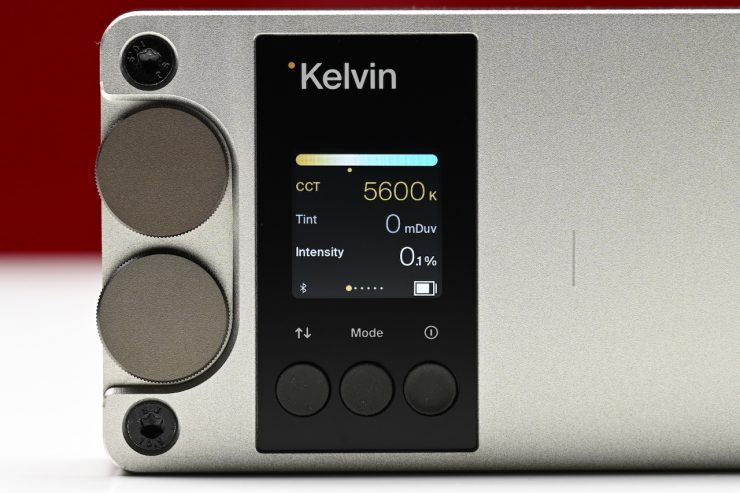
Dimming can be done in increments of 0.1%. Unlike some lights, the Play Pro actually stays on all the way down to 0.1%.
CCT Mode is the one most users will find themselves using the most often.
HSI Mode
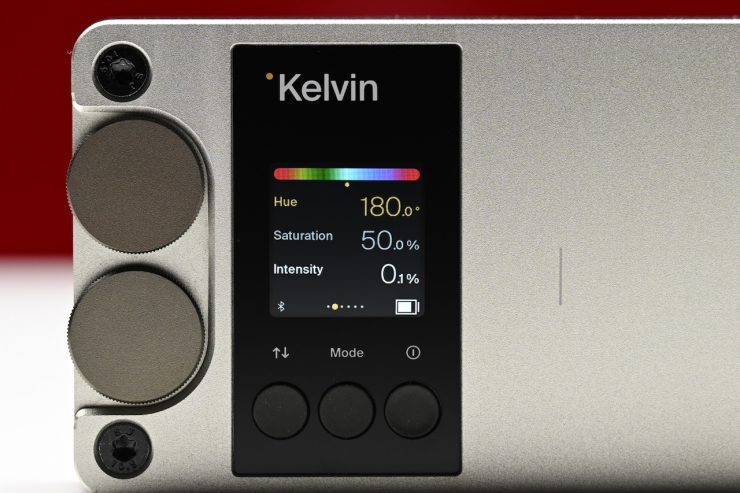
In the HSI Mode, you can independently adjust hue, saturation, and intensity. By manipulating the hue and saturation, you can create some really interesting colors that, depending on the project you are working on, can really add some creative flair. I quite like using this mode to create a lot of color separation between the foreground and background, or for recreating a really cold or warm-looking image.
RGB Mode
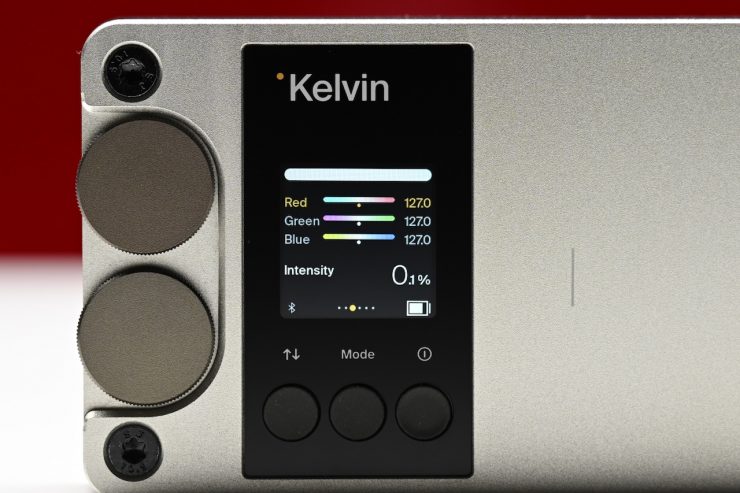
In RGB mode, you can individually adjust the Red, Green, and Blue channels.
Filter Mode
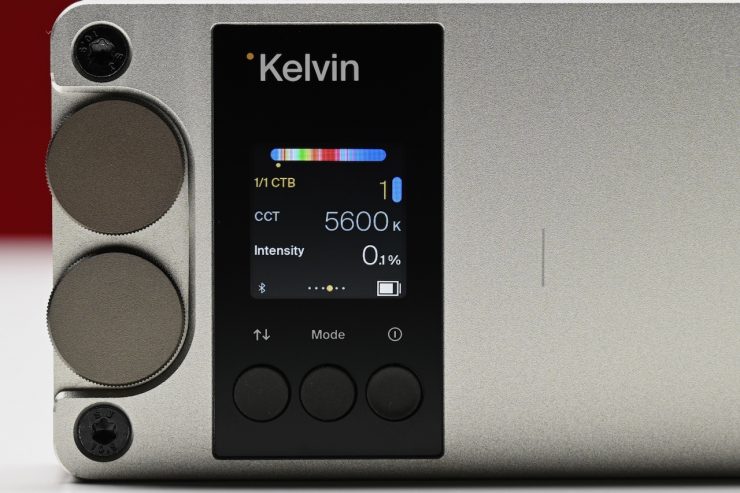
Inside the fixture, there is a huge assortment of industry-standard gels. In fact, you can choose from 166 different options.
Having built-in Digital Gels not only means that you don’t have to physically carry gels around, but you can also quickly and easily replicate popular gels. Using the gel mode can help you match other lighting sources, especially if you are working with other lights with physical gels.
Effects Mode
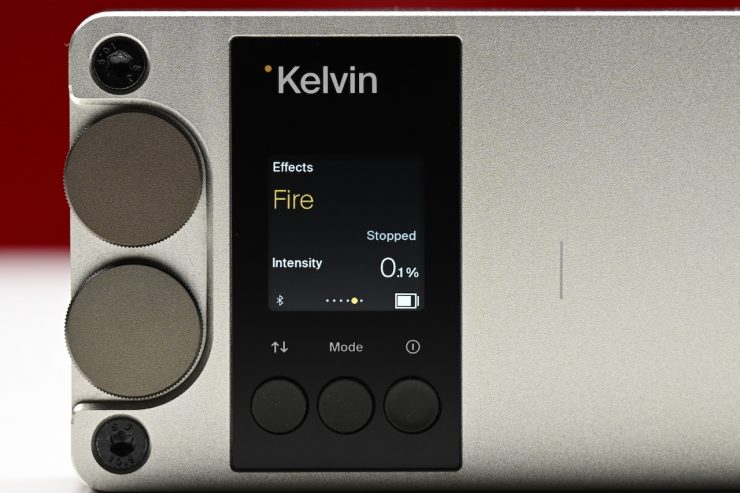
The Cantastoria 6-channel RGBACL light engine allows the fixture to deliver a lot of very realistic full-color lighting effects.
Effects mode lets you recreate a range of lighting effects that can be handy for certain scenarios. The effects are:
- CCT Chase
- Color Chase
- Fire
- Pulse
- Lightning
- Dimming
- Strobe
Other Menu Options
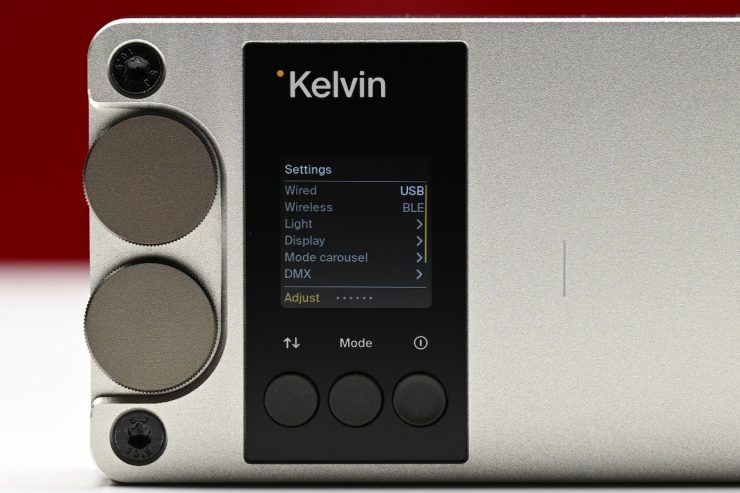
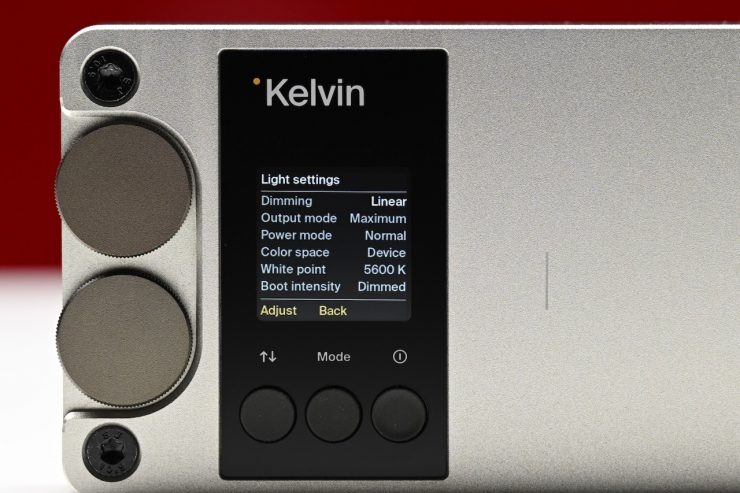
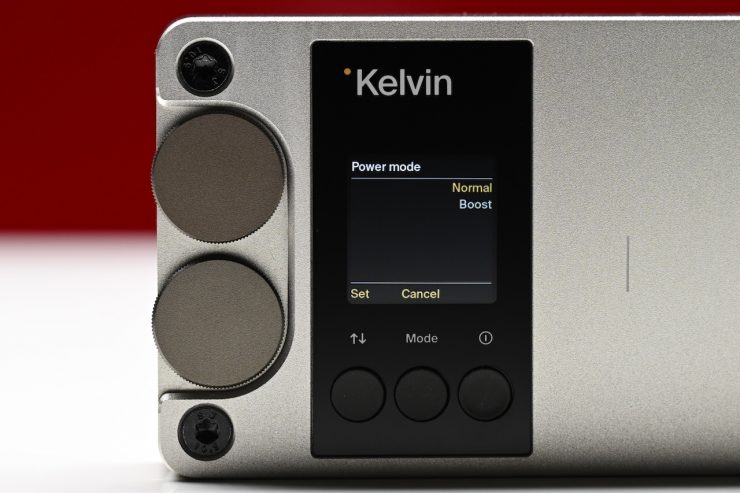
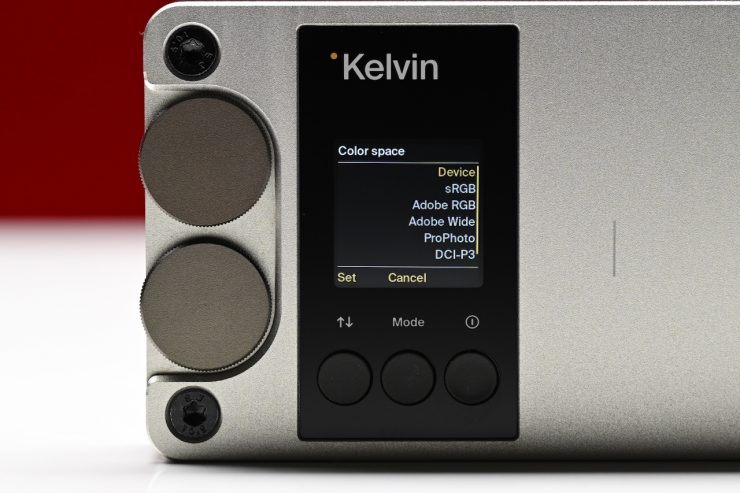
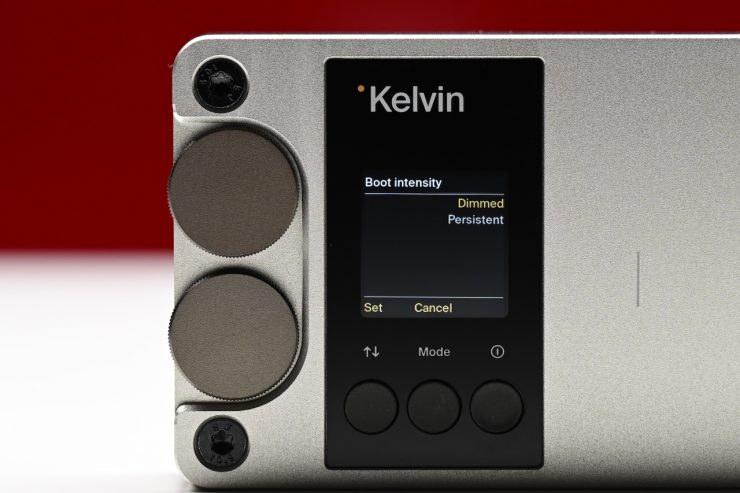
You can change a wide array of options in the menu, from the color space to dimming profiles, to the DMX/ CRMX settings, etc.
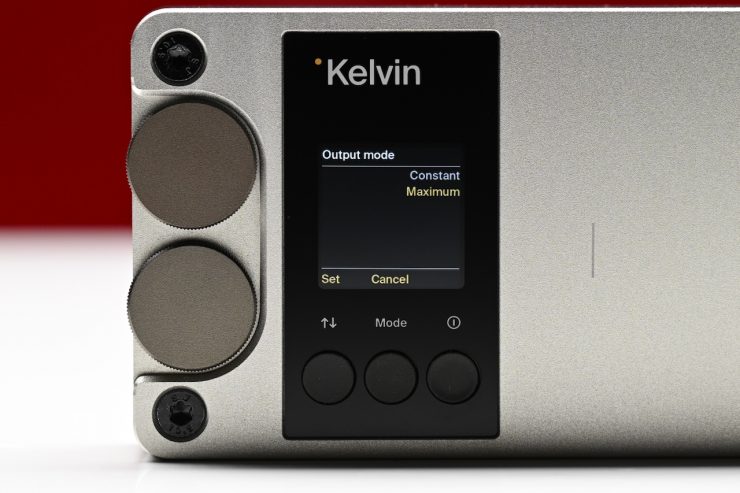
You can also choose whether or not you have the Paly Hero operating in the Maximum or Constant output mode.
Kelvin Narrator Bluetooth App
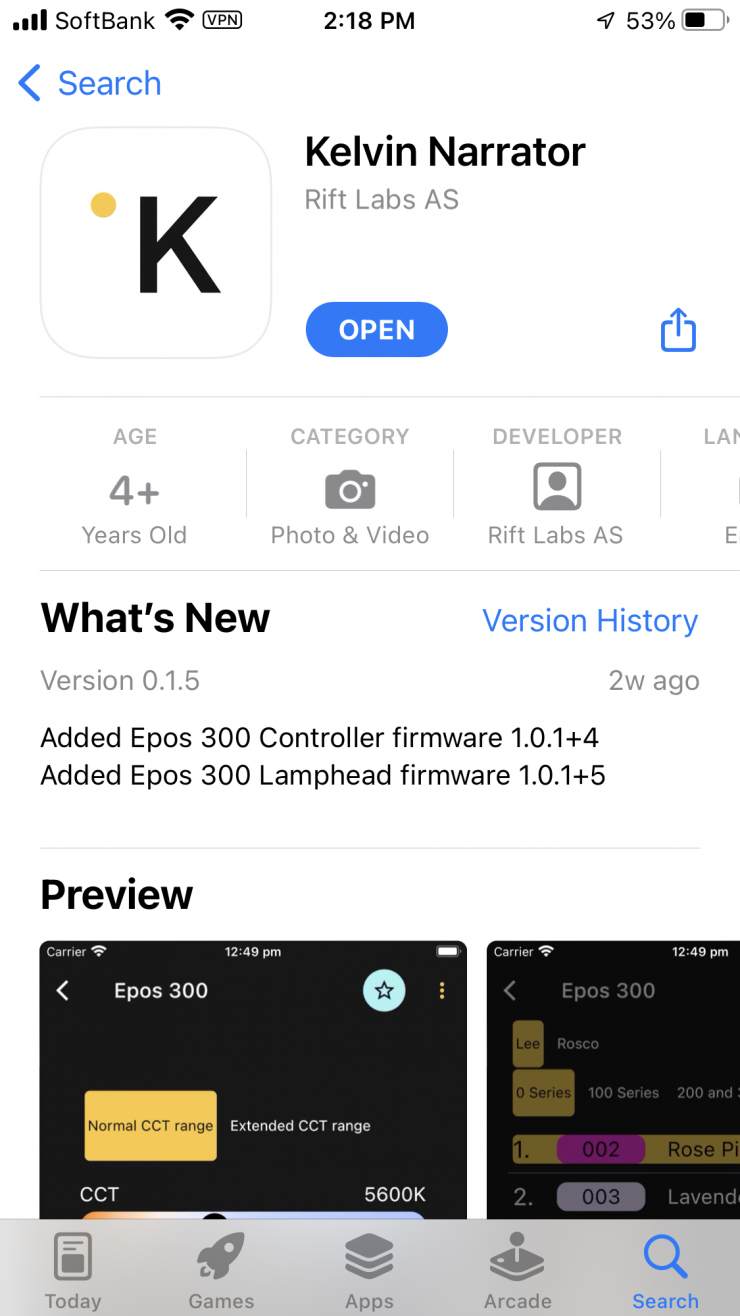
The light can be controlled via Bluetooth using the Kelvin Narrator App.
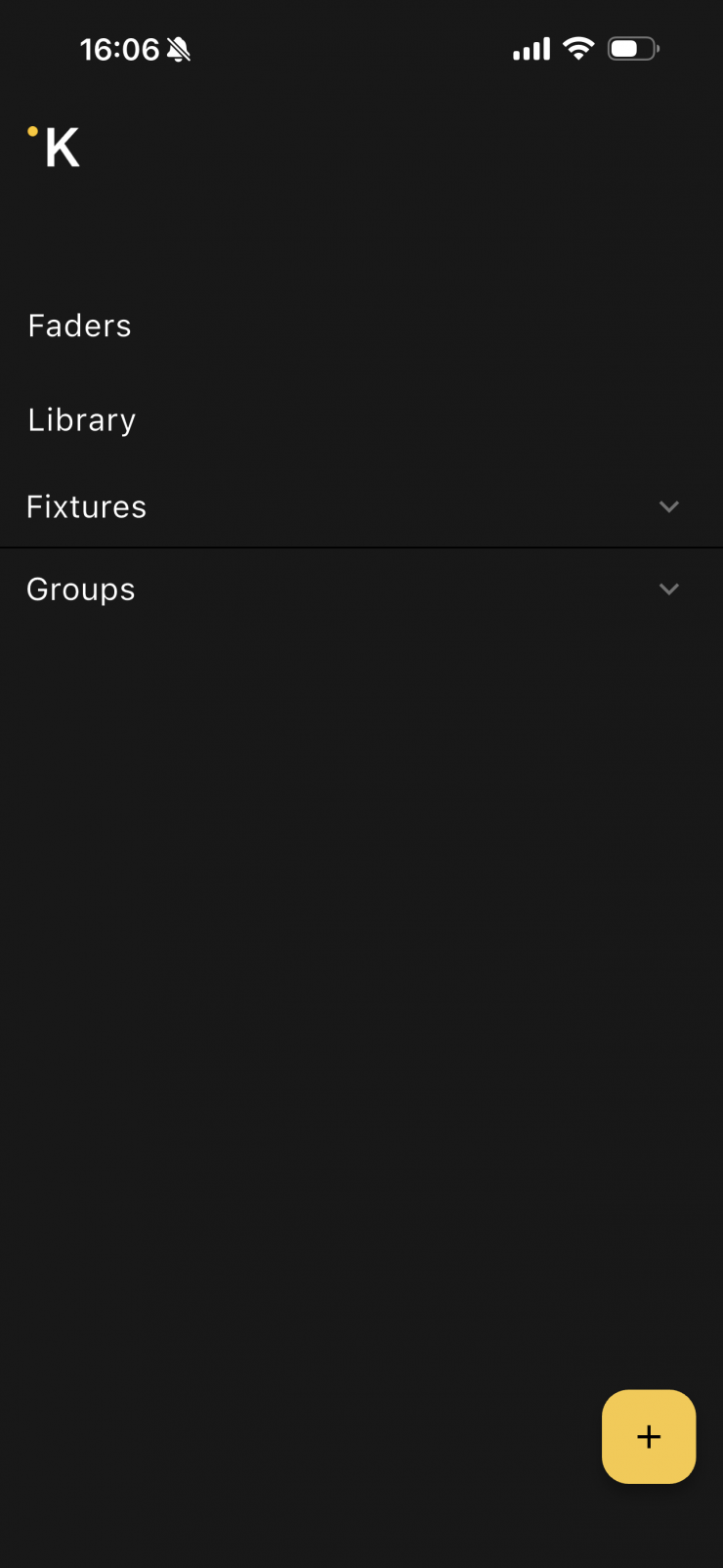
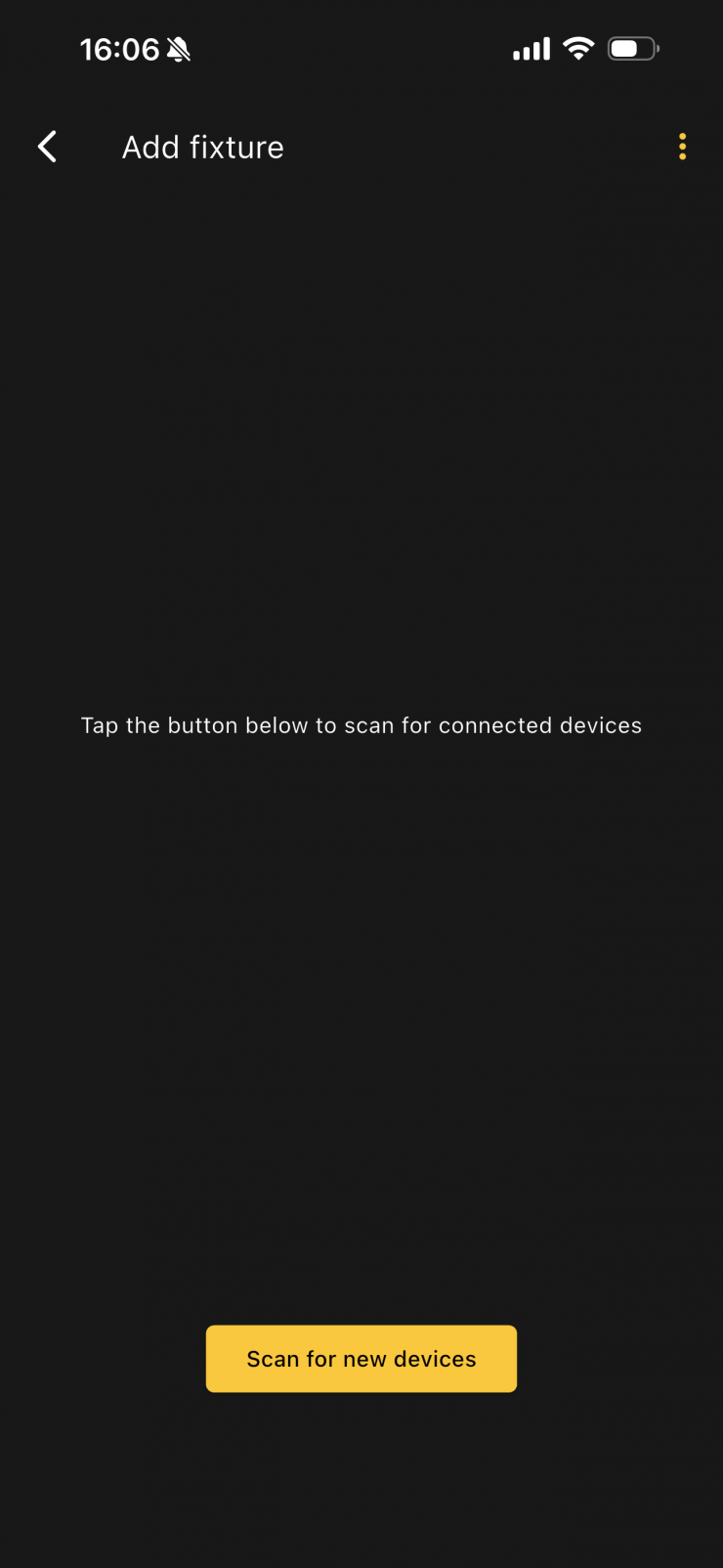
The app is reasonably easy to set up and get going. Once you have created a group, you can then add fixtures to that group. You simply scan for new lights if you haven’t added them previously.
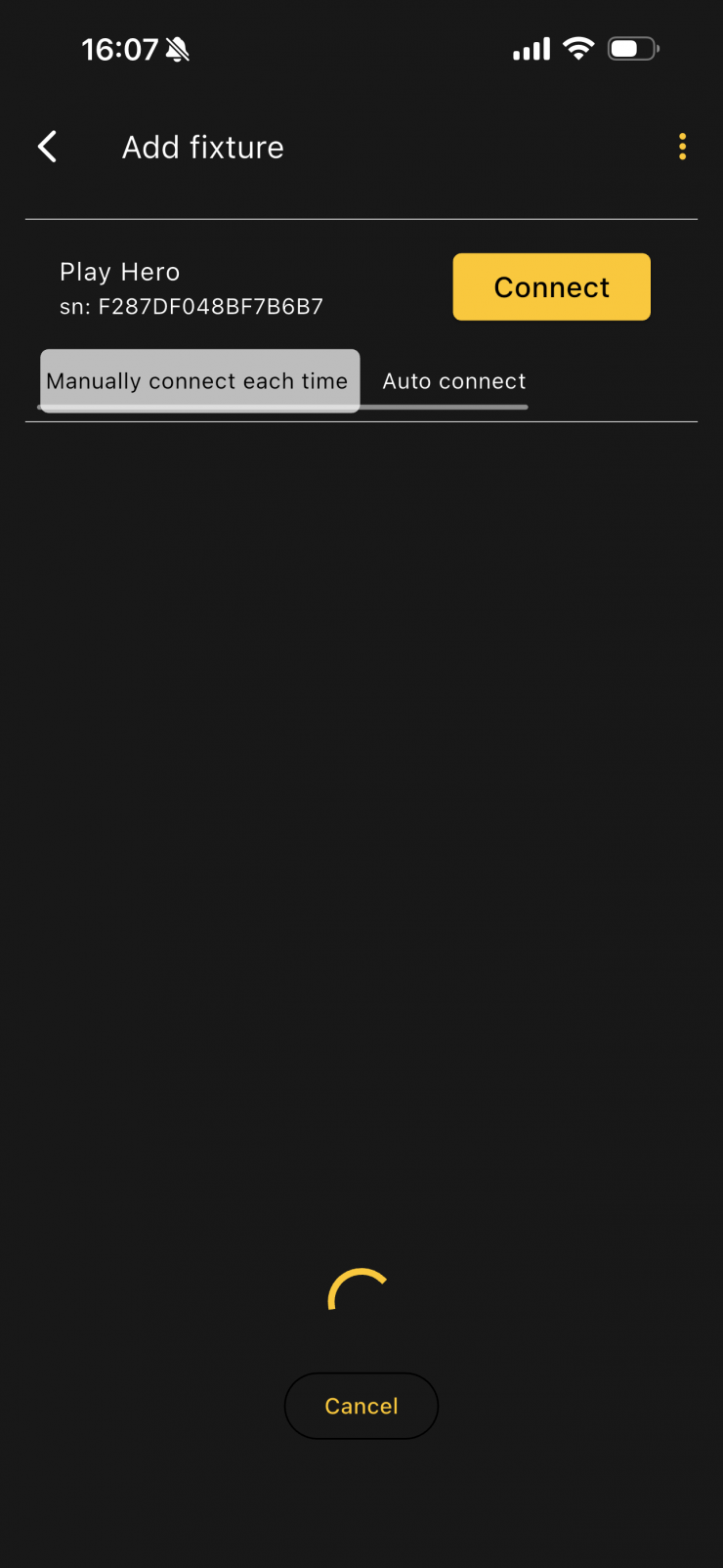
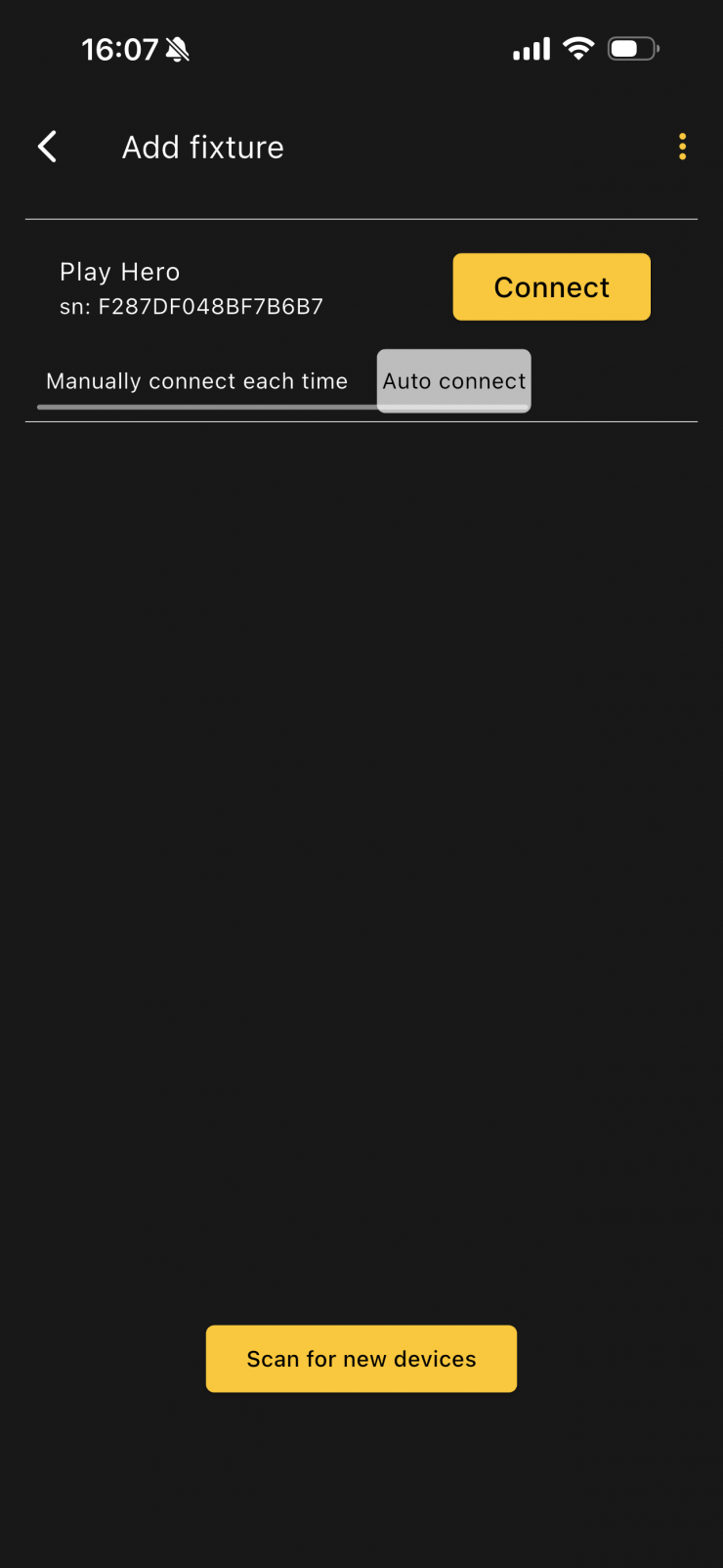
Once it finds your fixture, you can choose to have it automatically connect every time, or not.
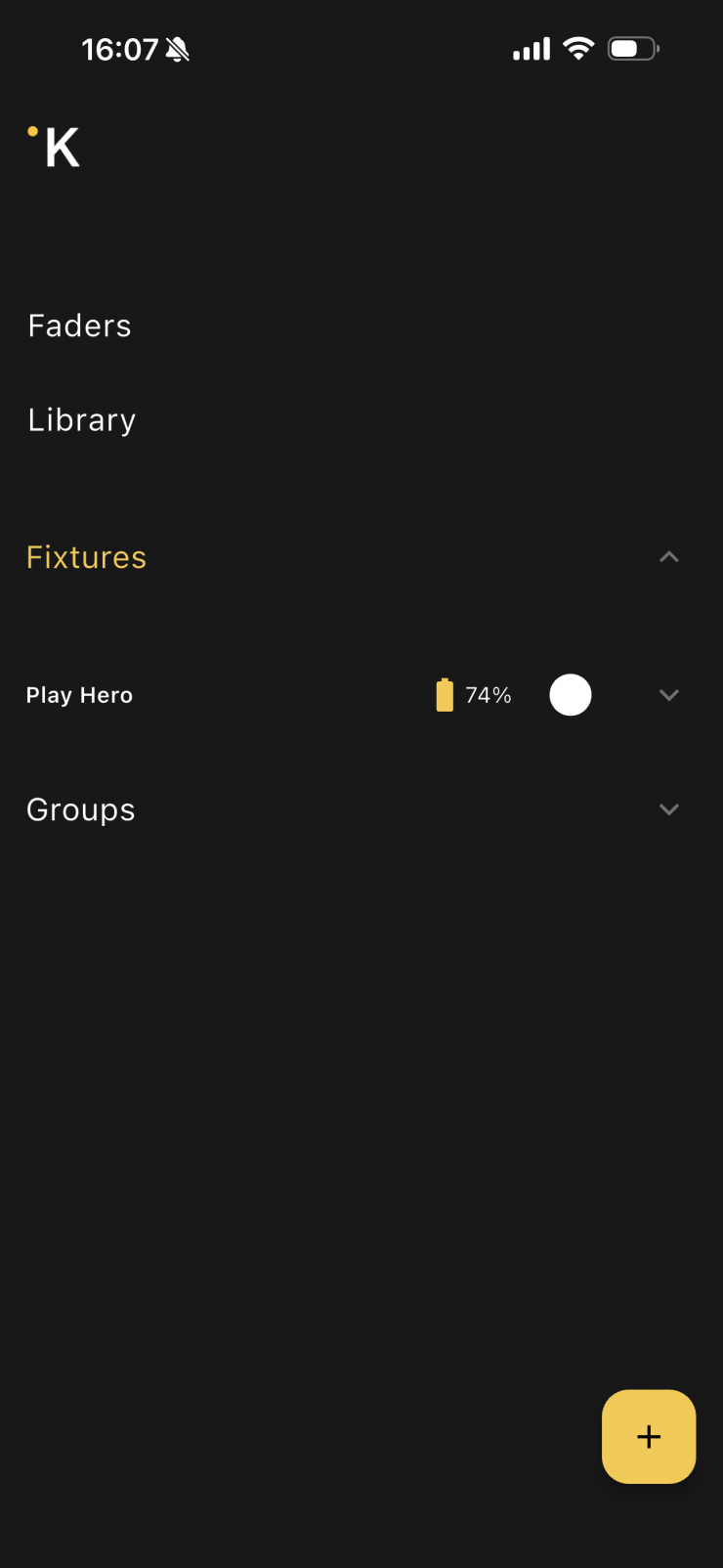
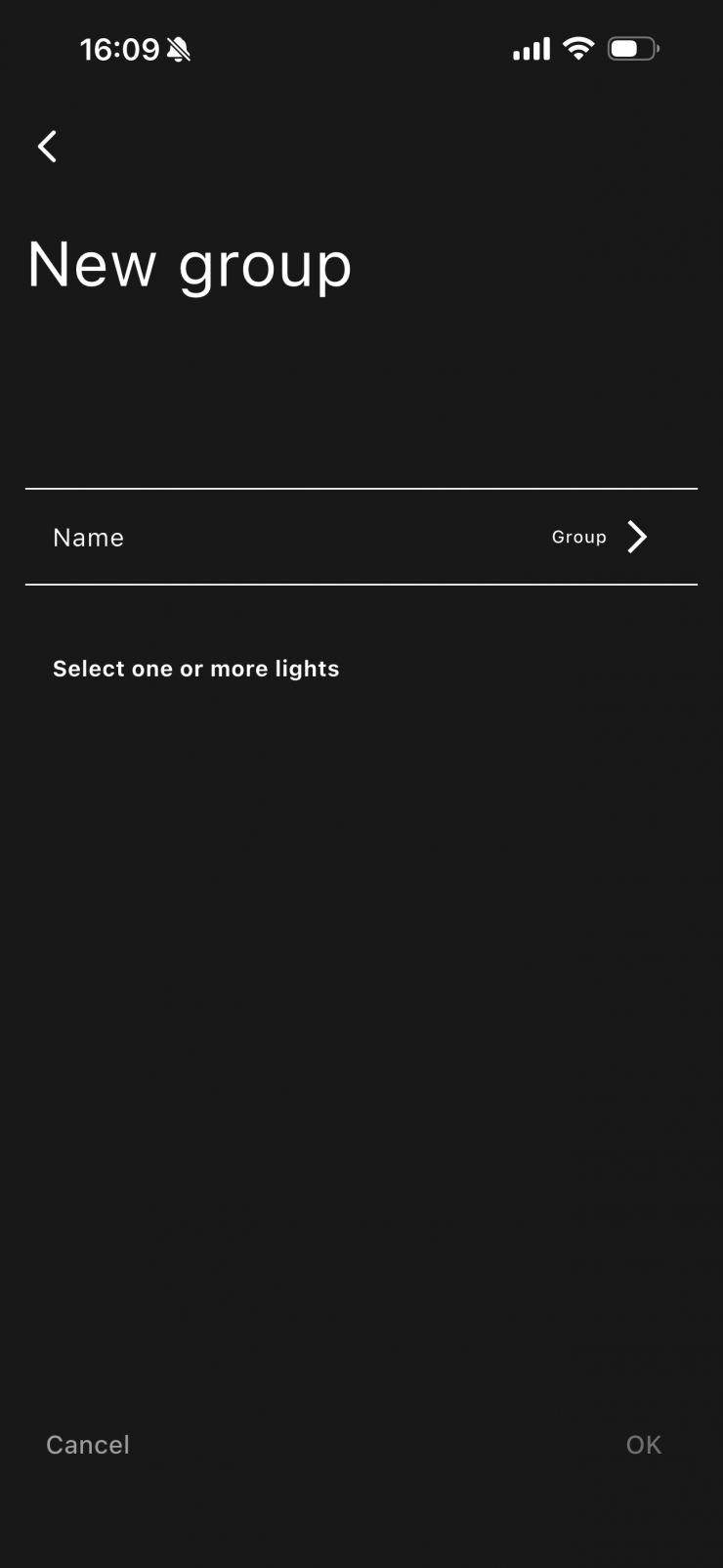
Once you hit connect, you will be brought to his screen, where you can simply click on the light you wish to control, or create a group to add multiple lights.
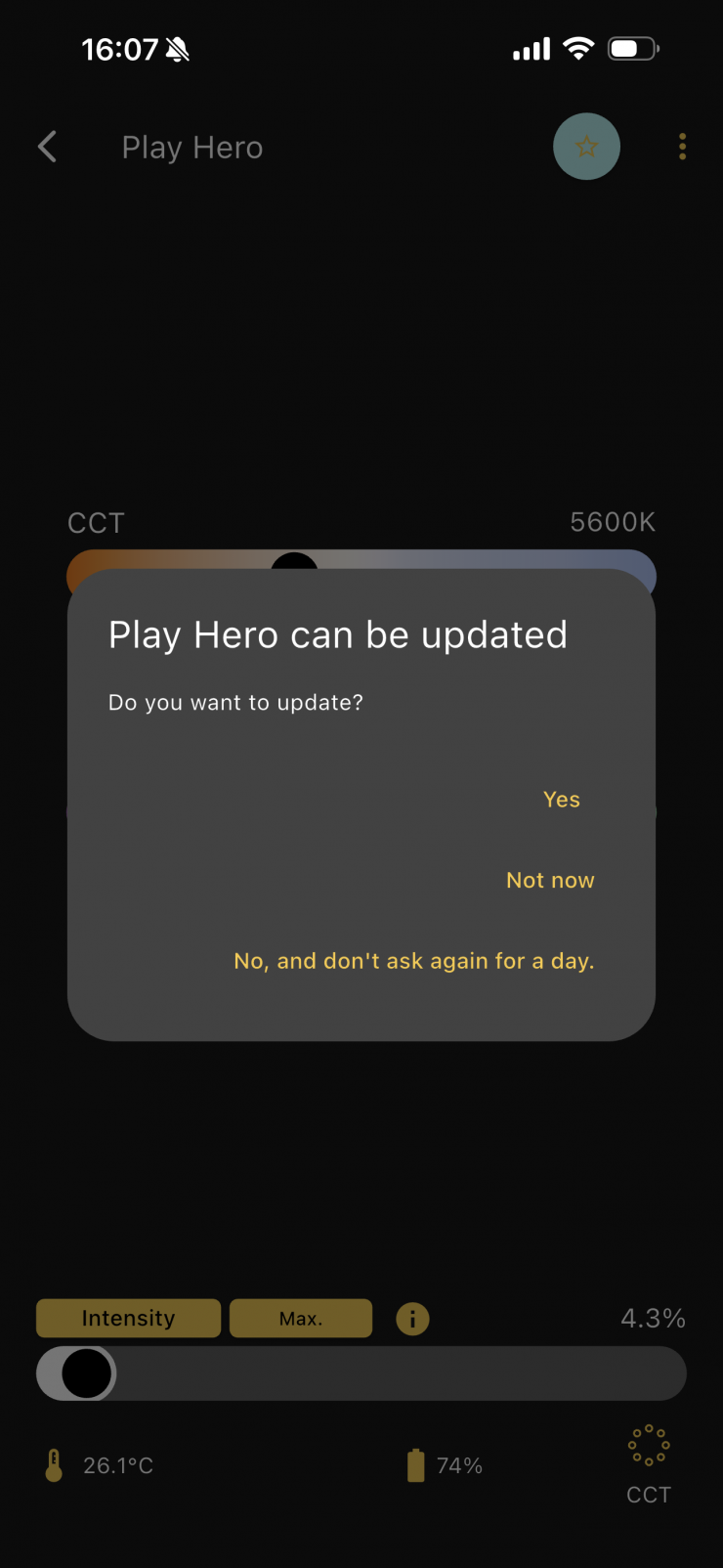
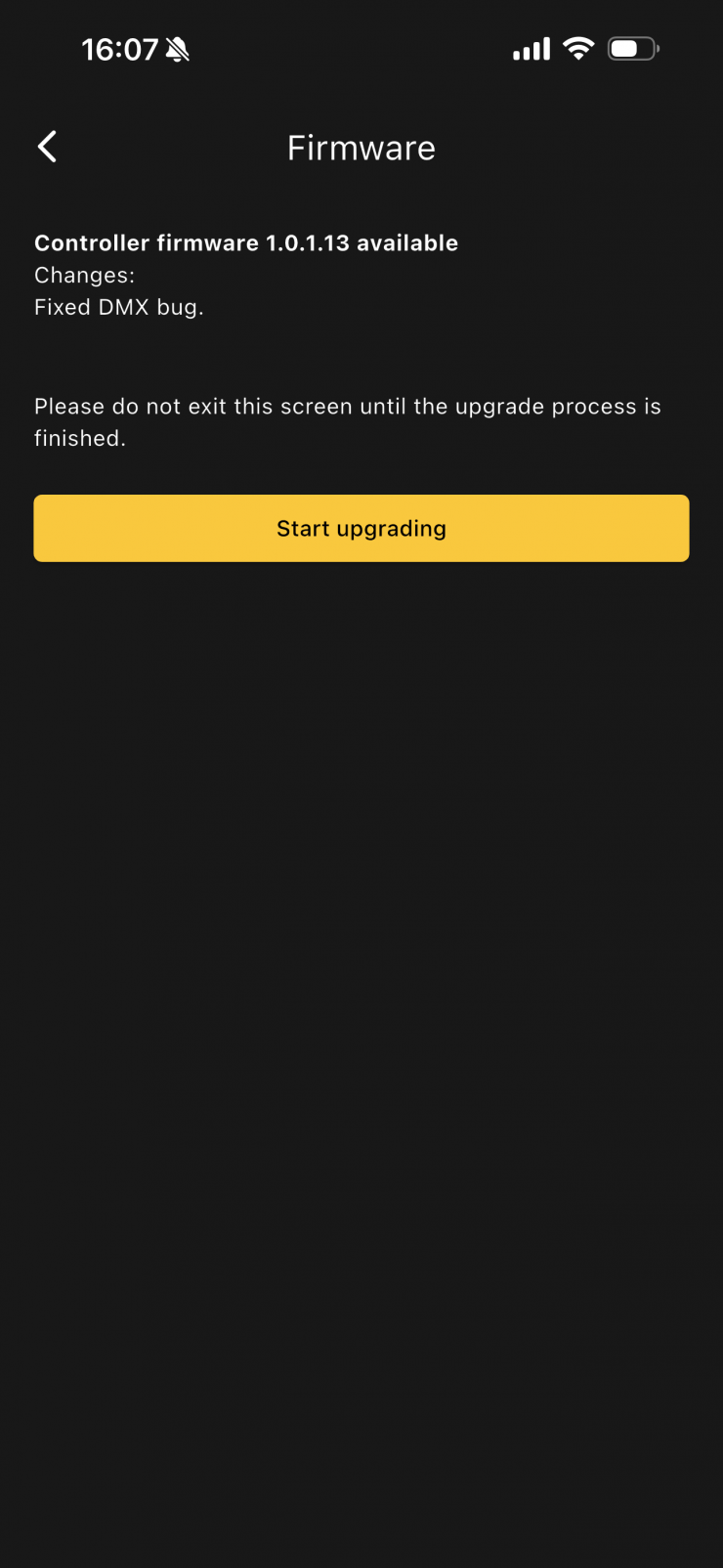
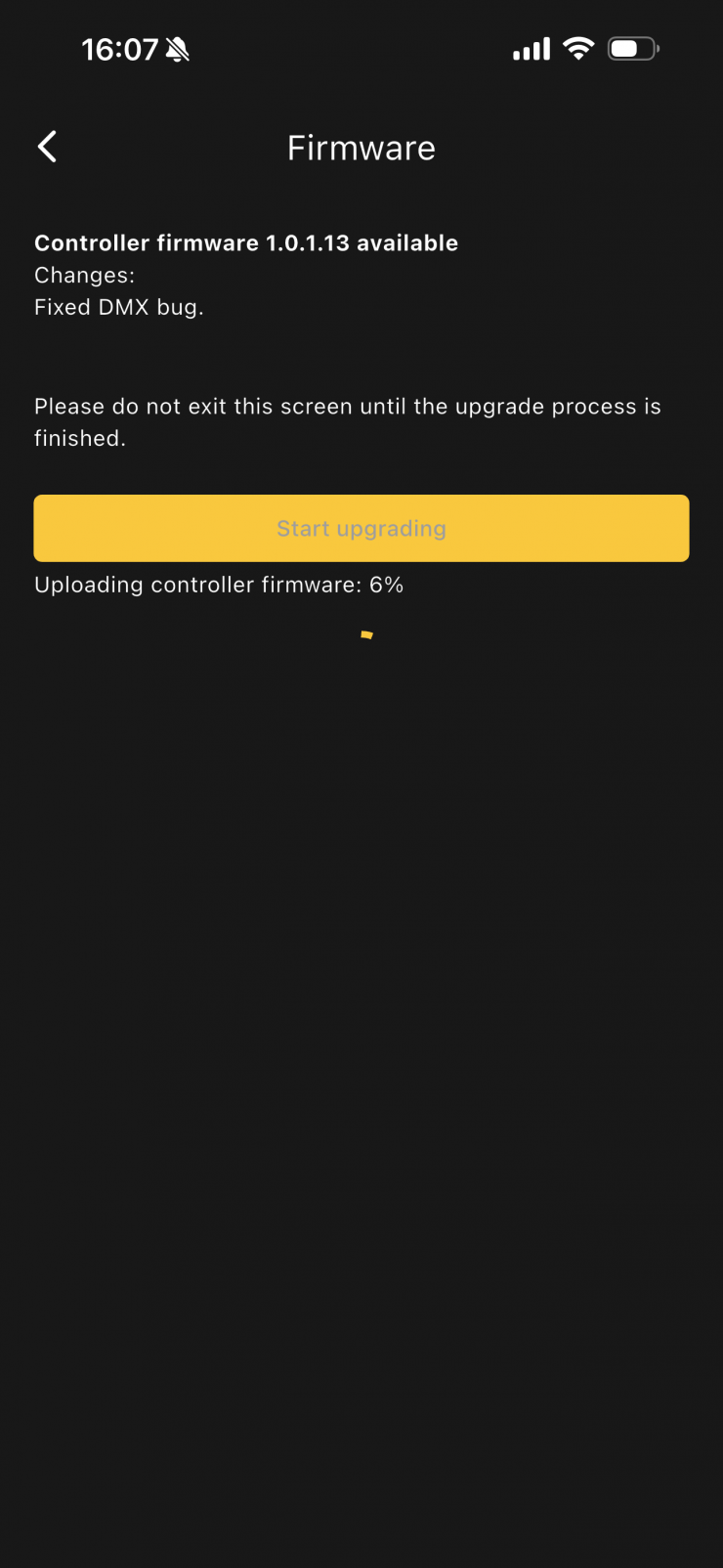
If there are any new firmware updates, you will be given a prompt before you can access the light.
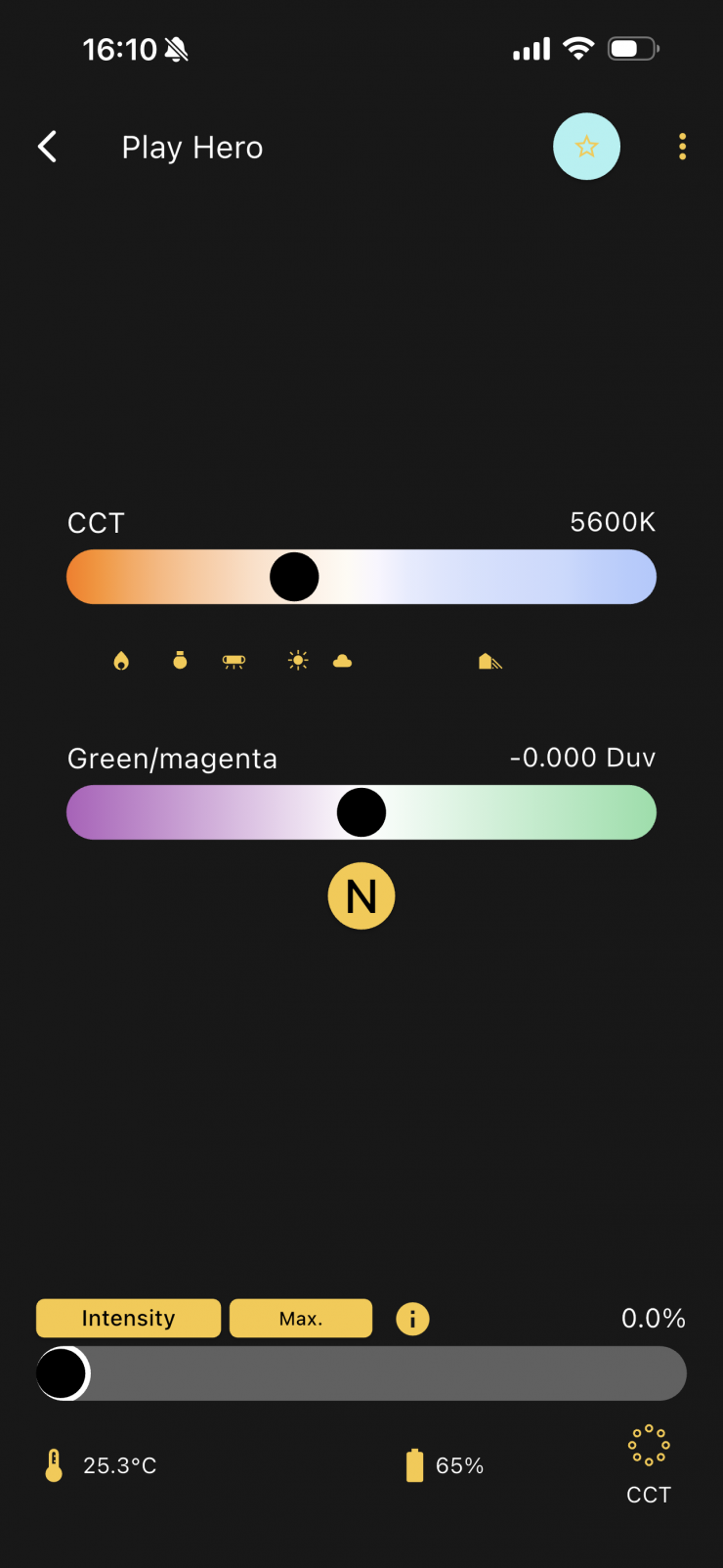
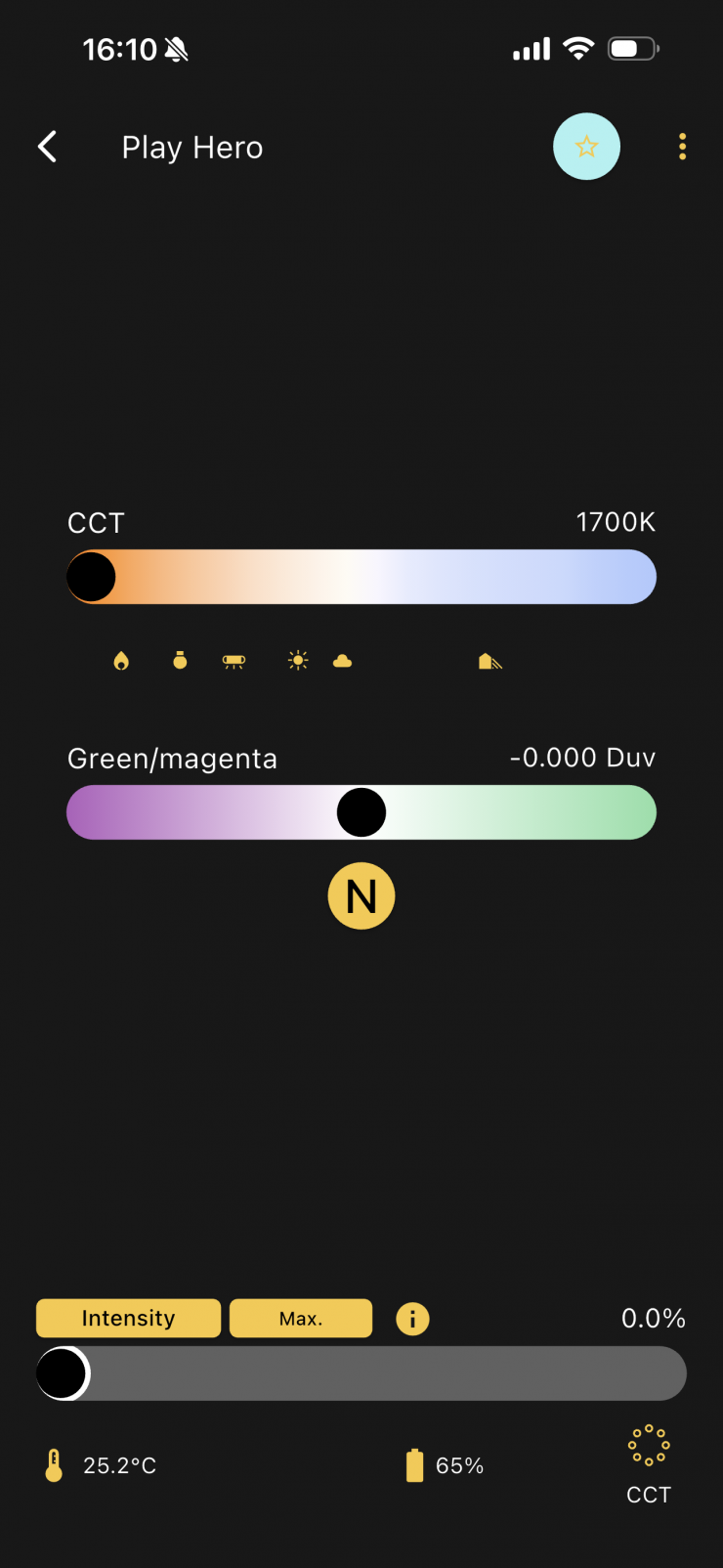
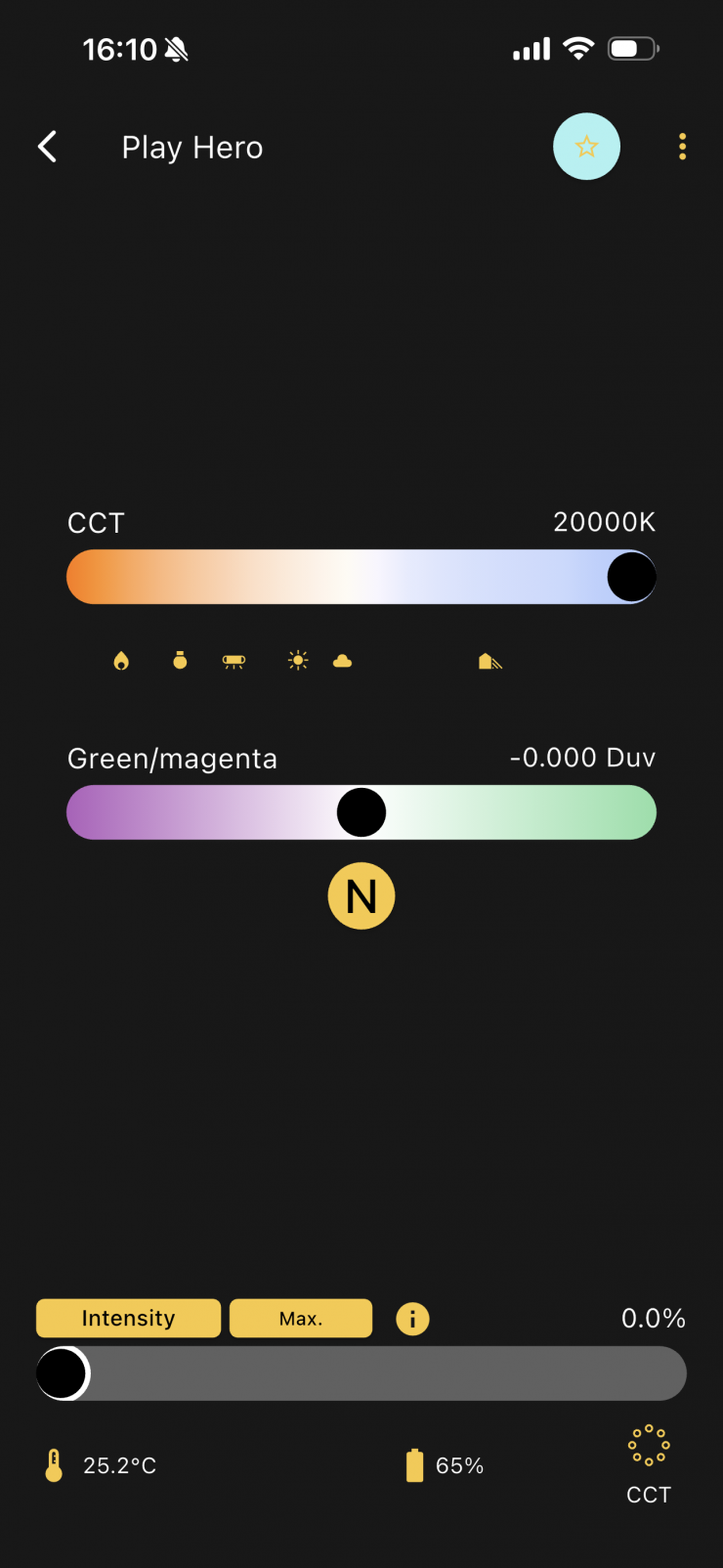
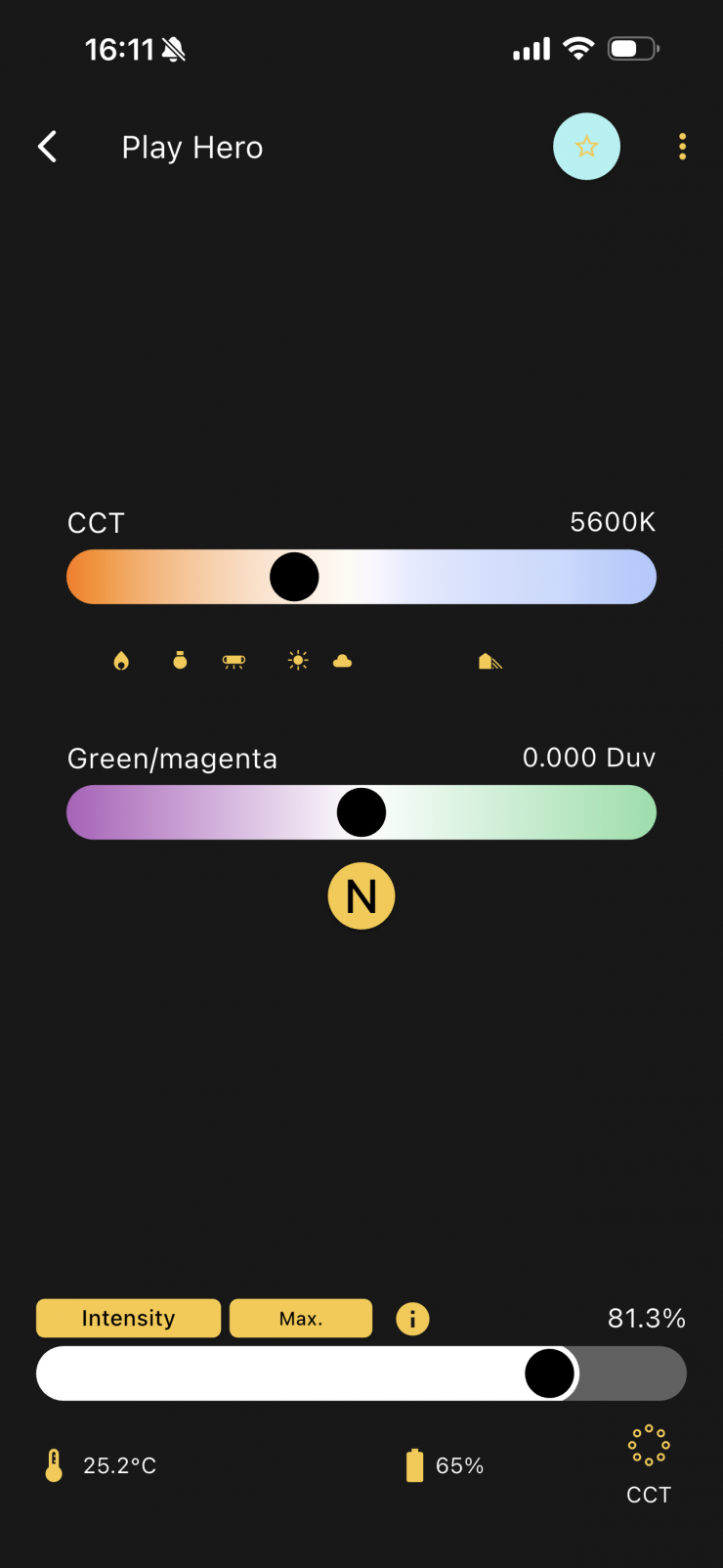
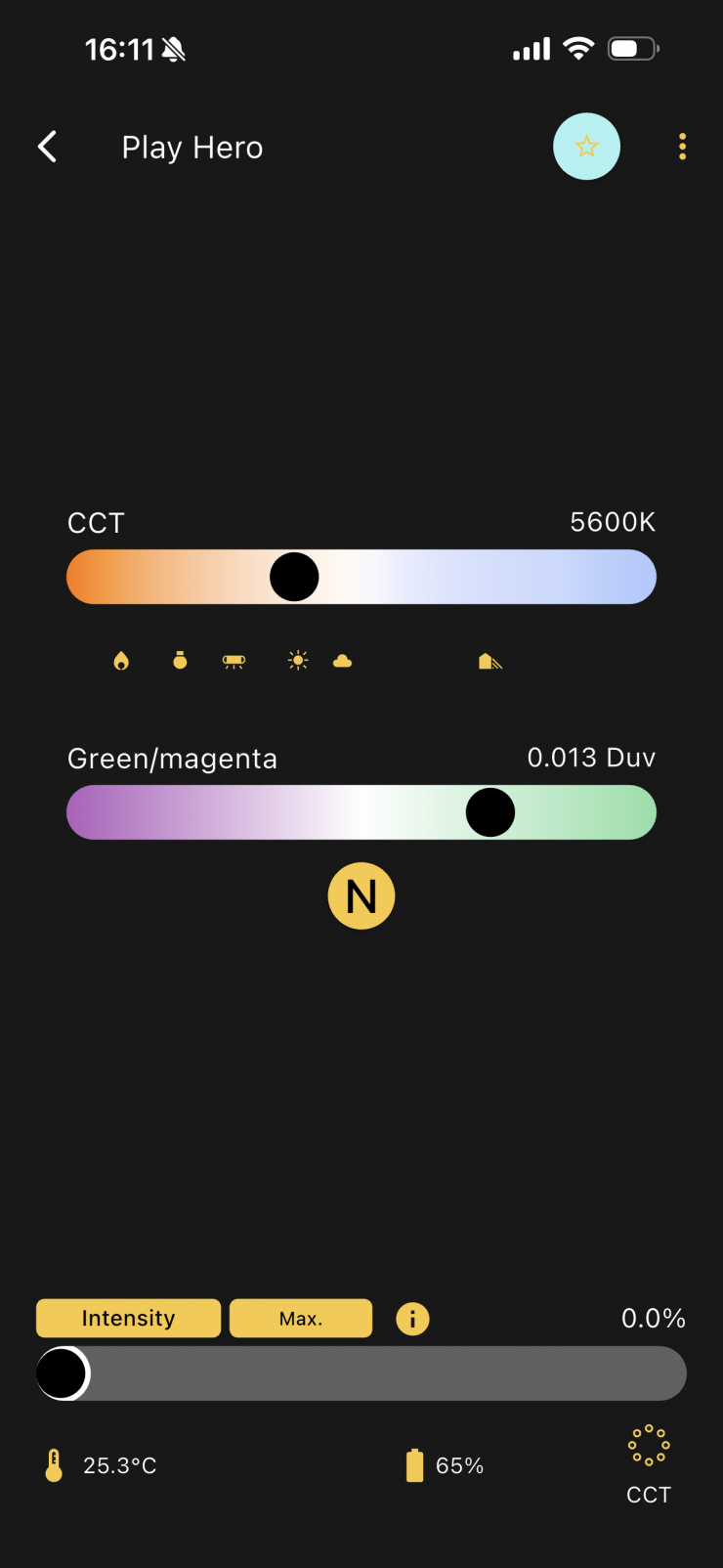
Once you do, you are taken to the main operating page. In the default mode, it will be on CCT. Here you can adjust the CCT, intensity, and +/- G/M bias. You can also see the temperature of the fixture and the internal battery capacity.
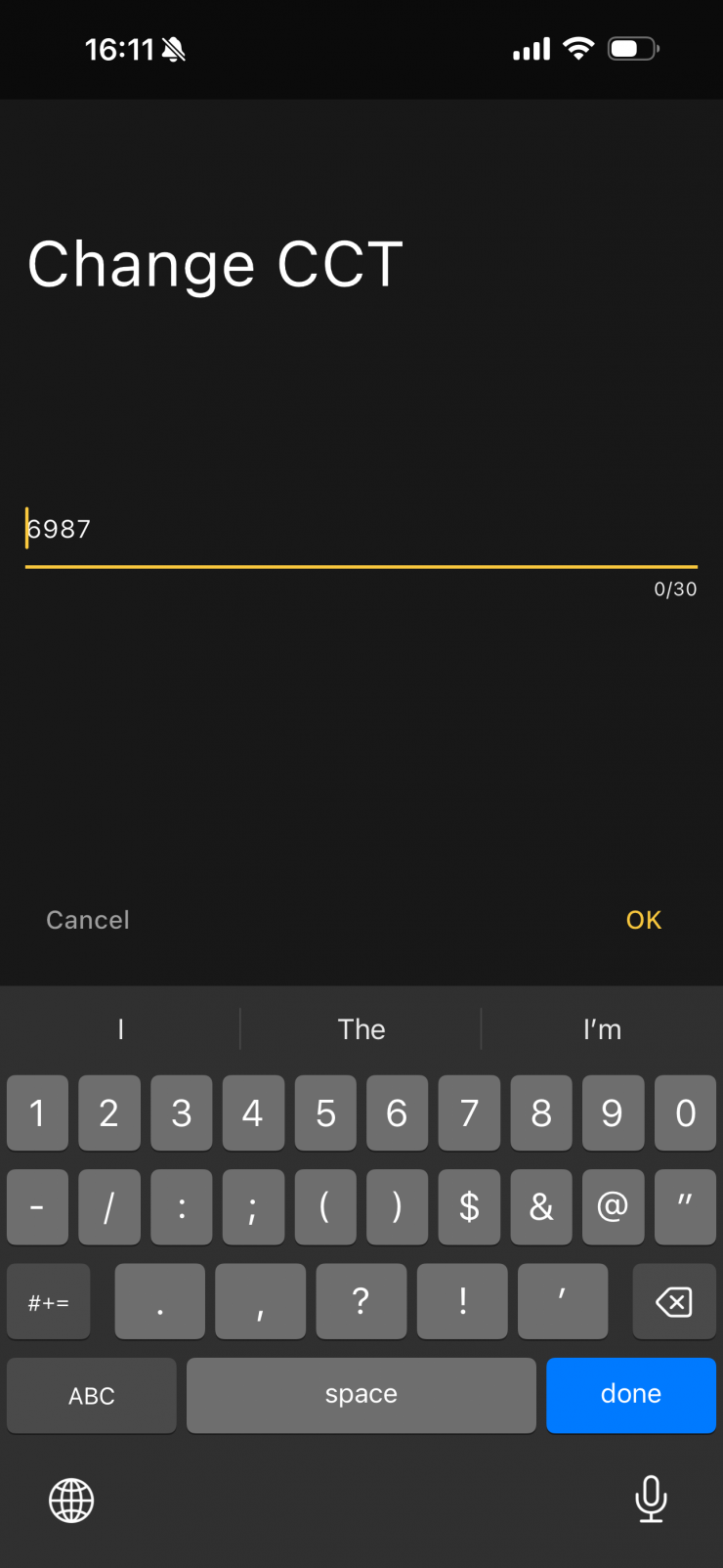
If you need to, you can manually add values instead of using the sliders.
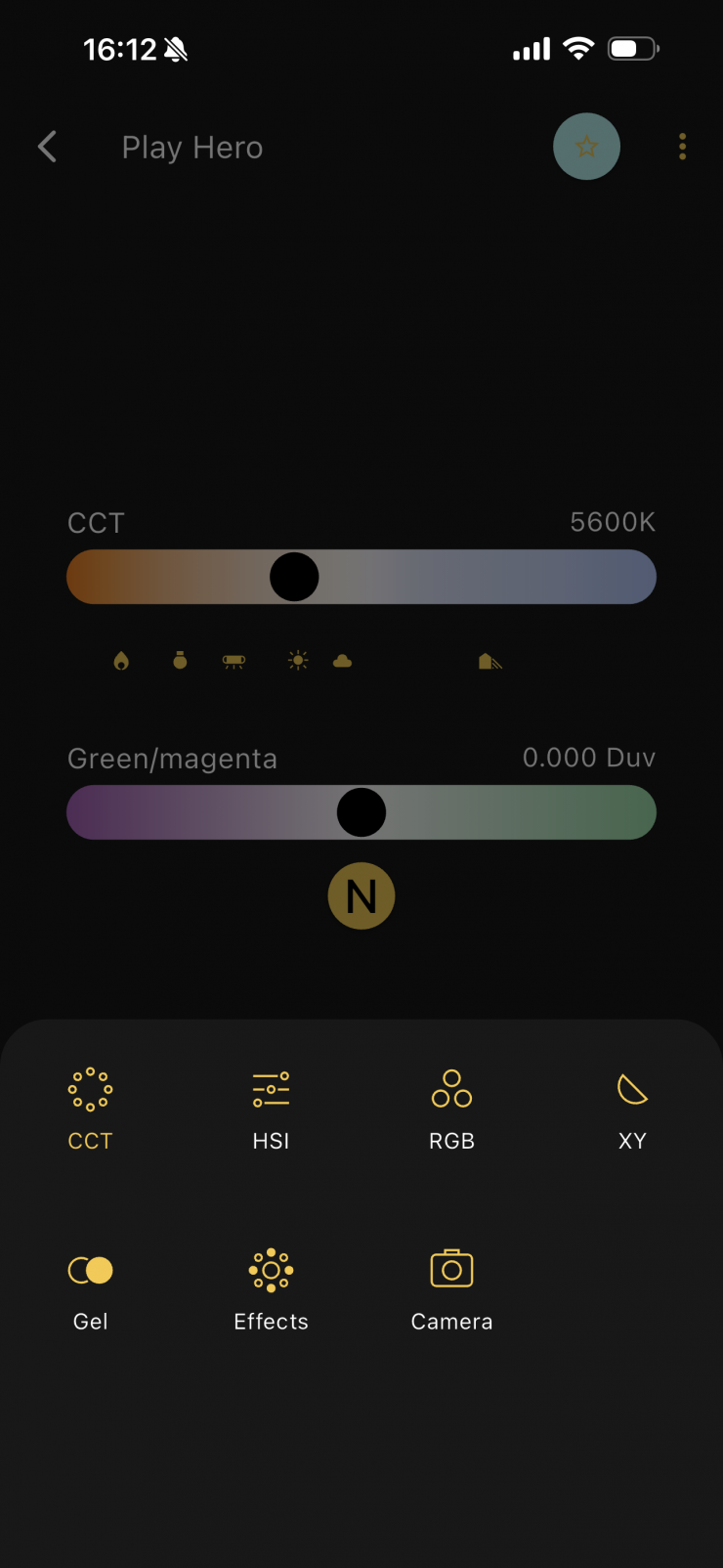
To change operating modes, I can simply click on the CCT icon, and then I will get the above menu.
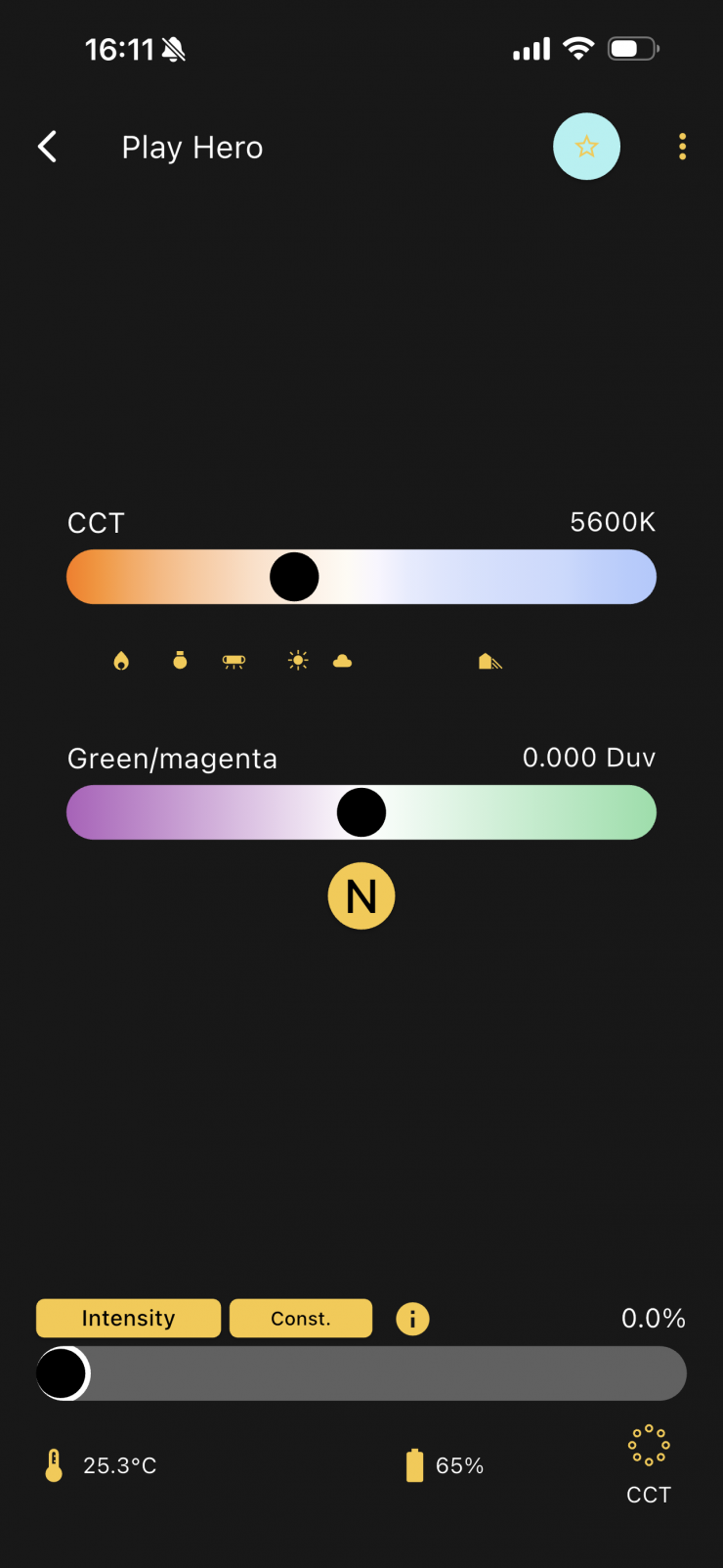
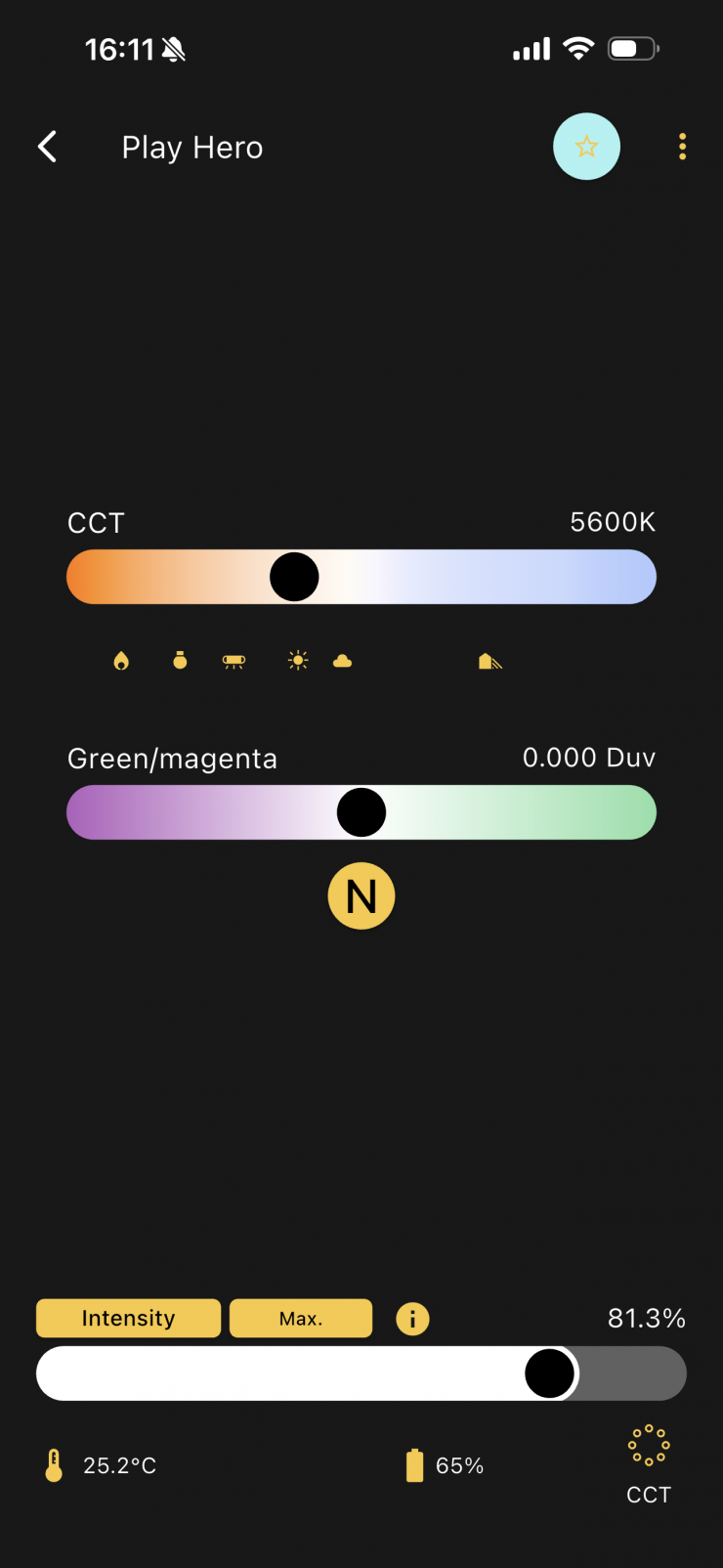
Now, if I press on the Max. or Constant Output in any mode, I can change how the light performs and operates.
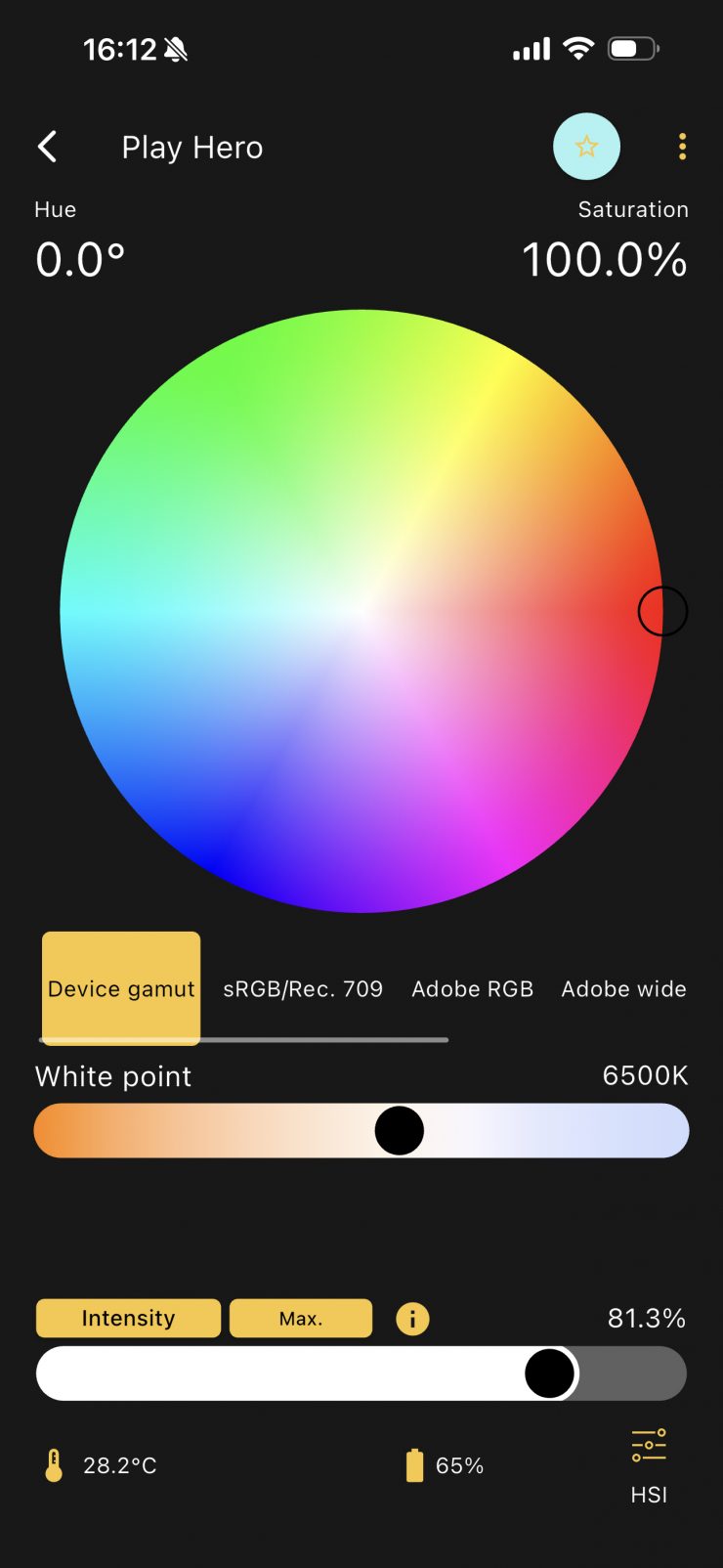
If you click on HSI, you can adjust the Hue, Saturation, and Intensity of the light. You can also change the white point using the CCT slider. In a nice touch, there are also options to adjust the gamut.
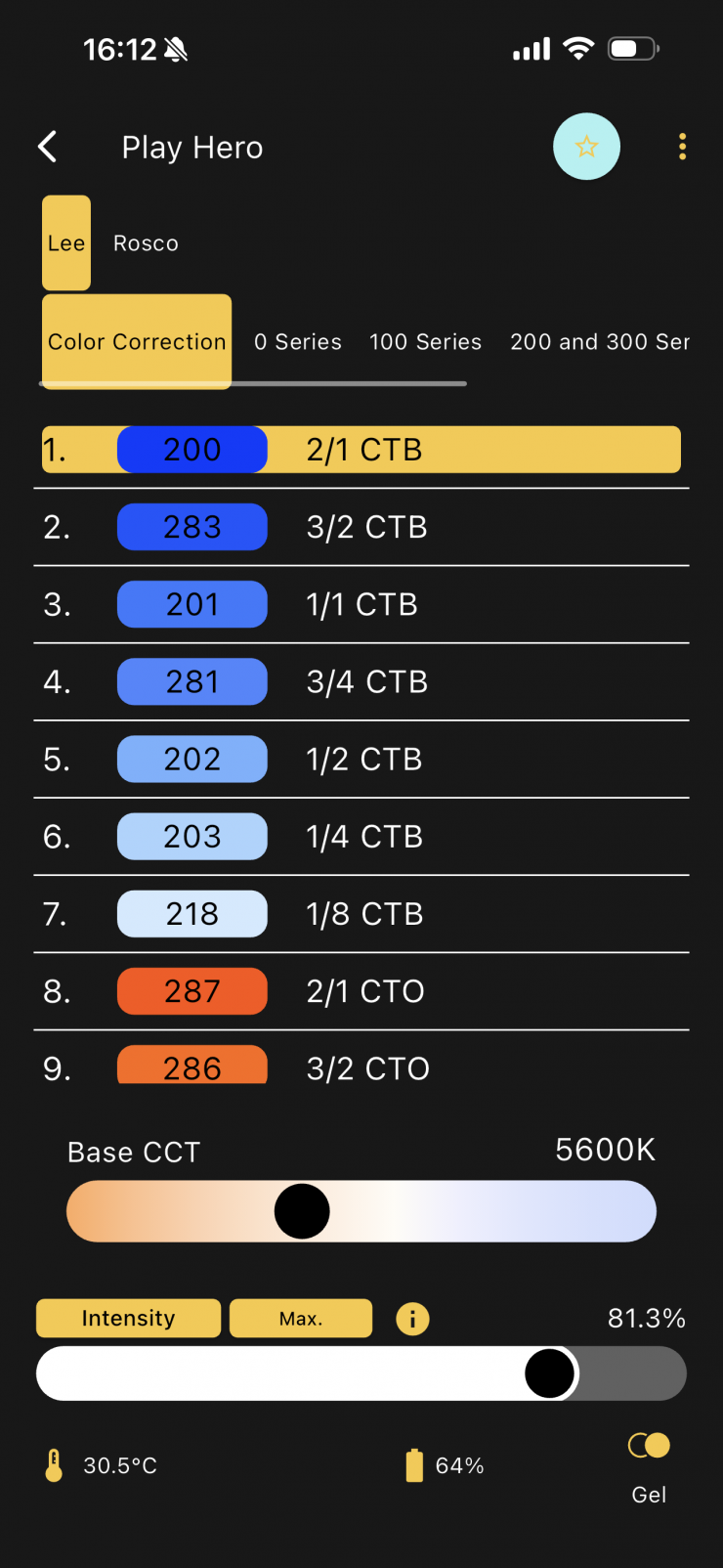
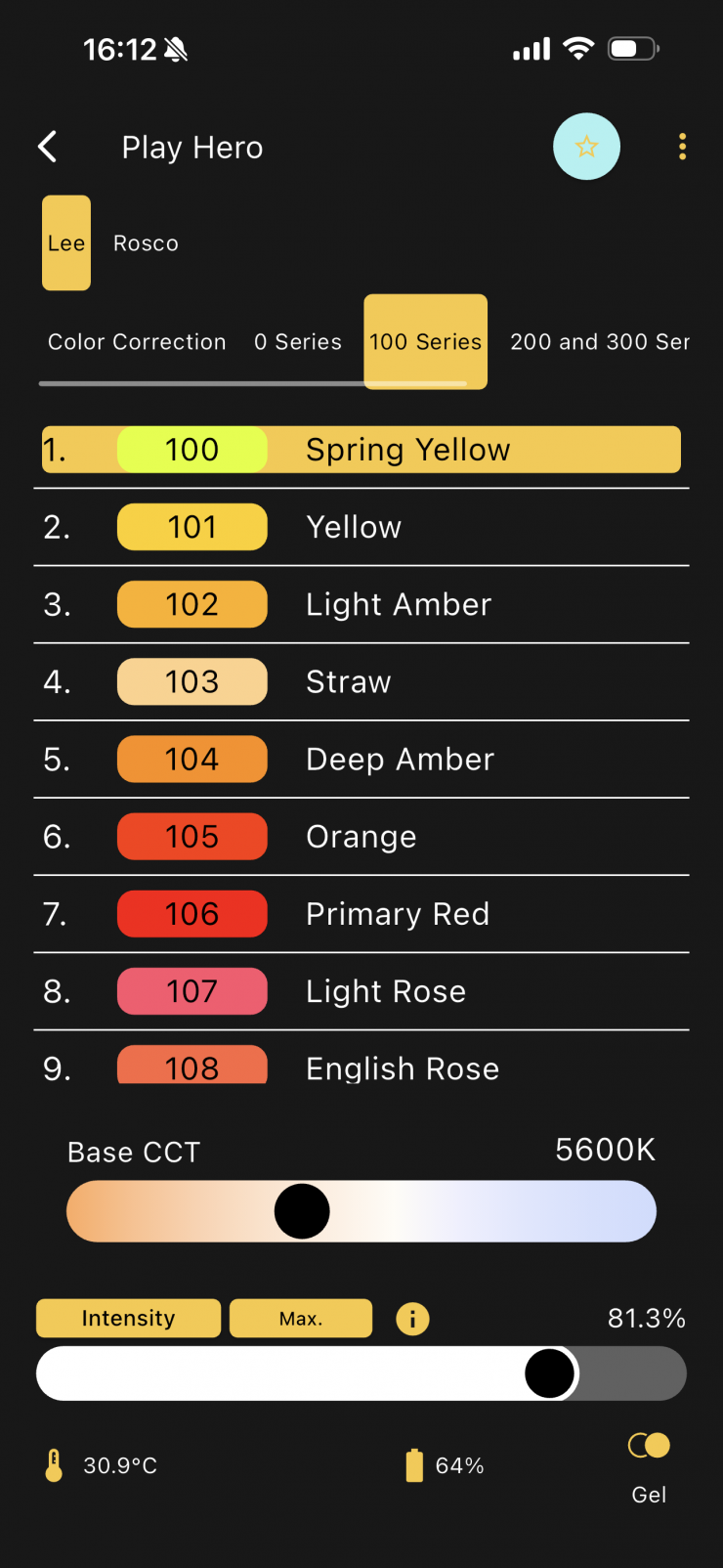
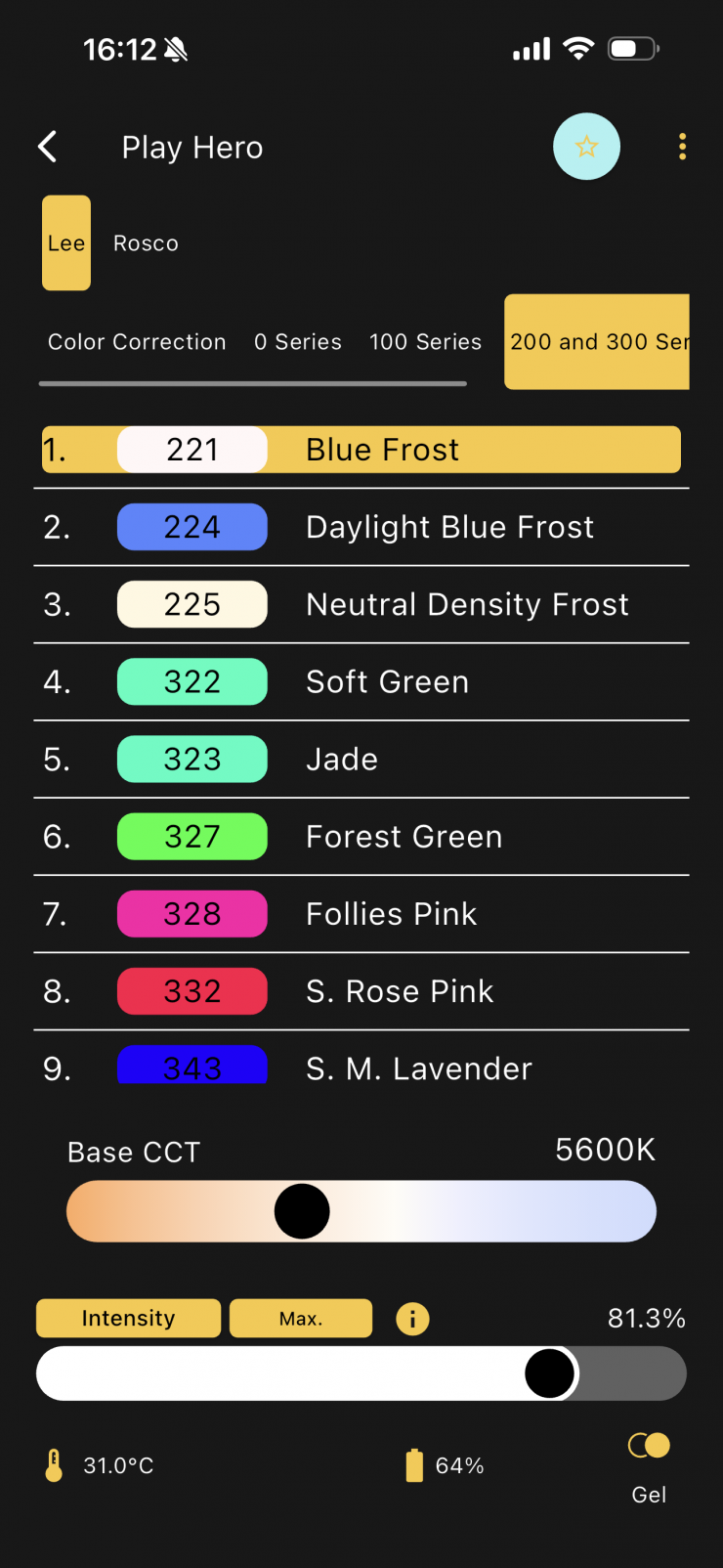
If you click on Gel, you can choose from a vast array of digital gels that mimic industry-standard Lee and Rosco physical gels.
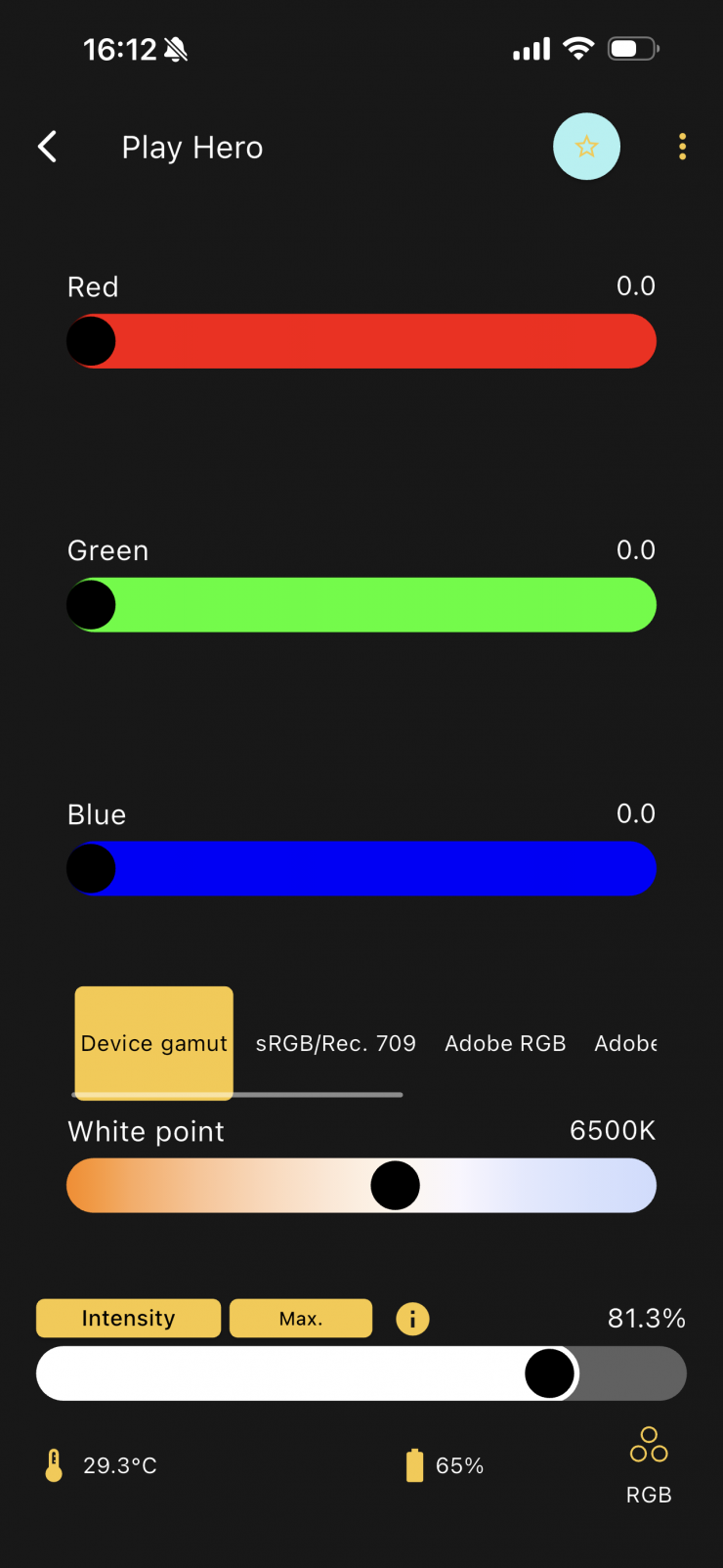
If you click on RGB you can adjust the individual Red, Green, and Blue channels. You can also adjust the white point using the CCT slider.
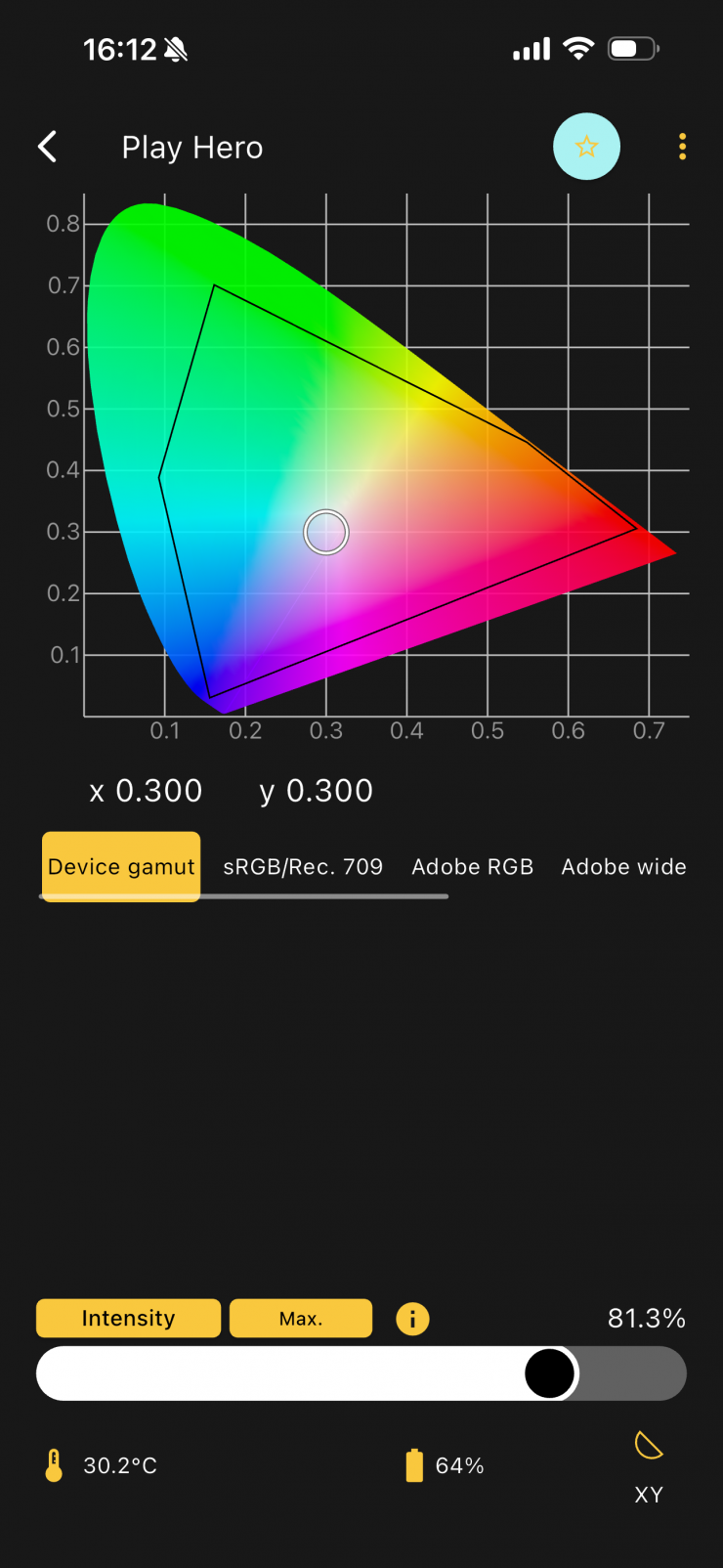
If you click on XY, you can manually adjust the x,y coordinates of the fixture.
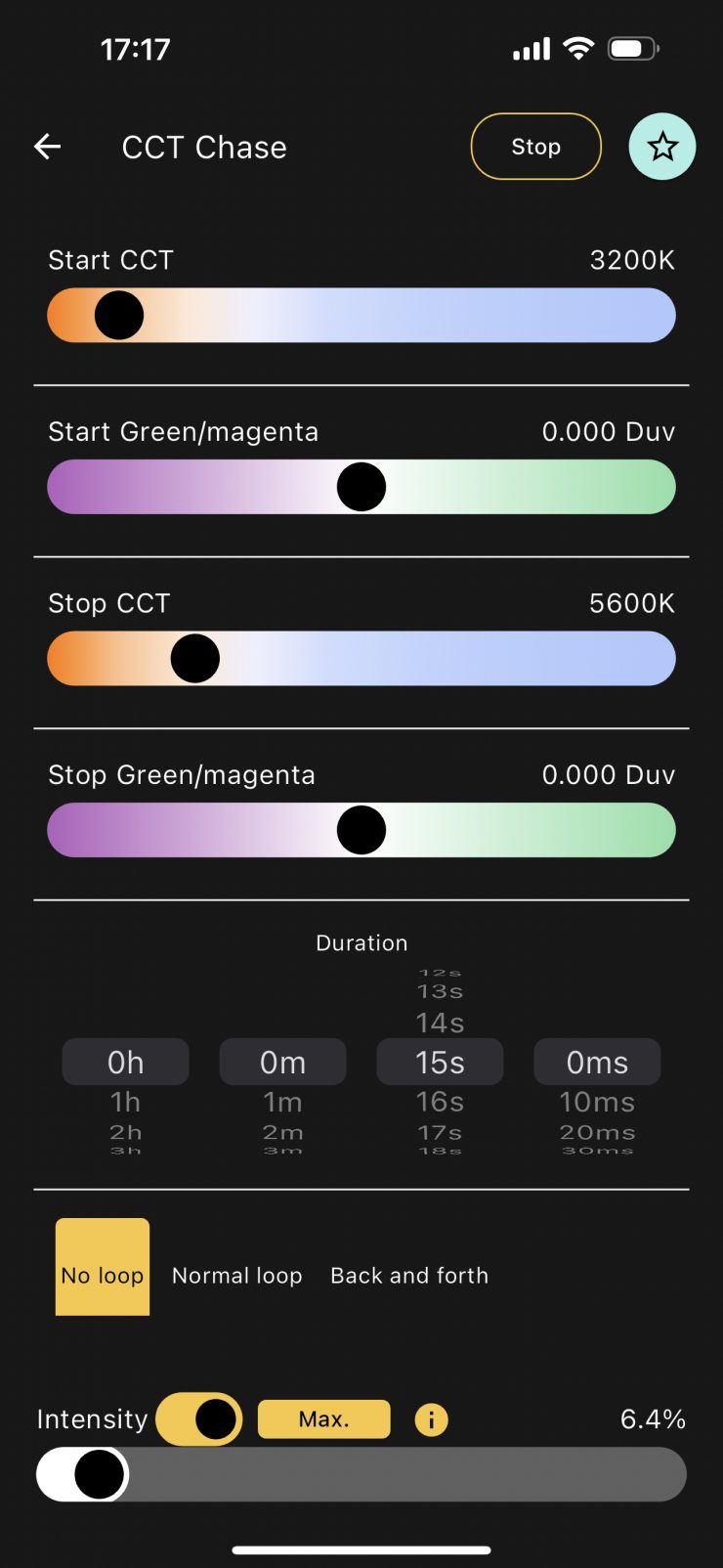
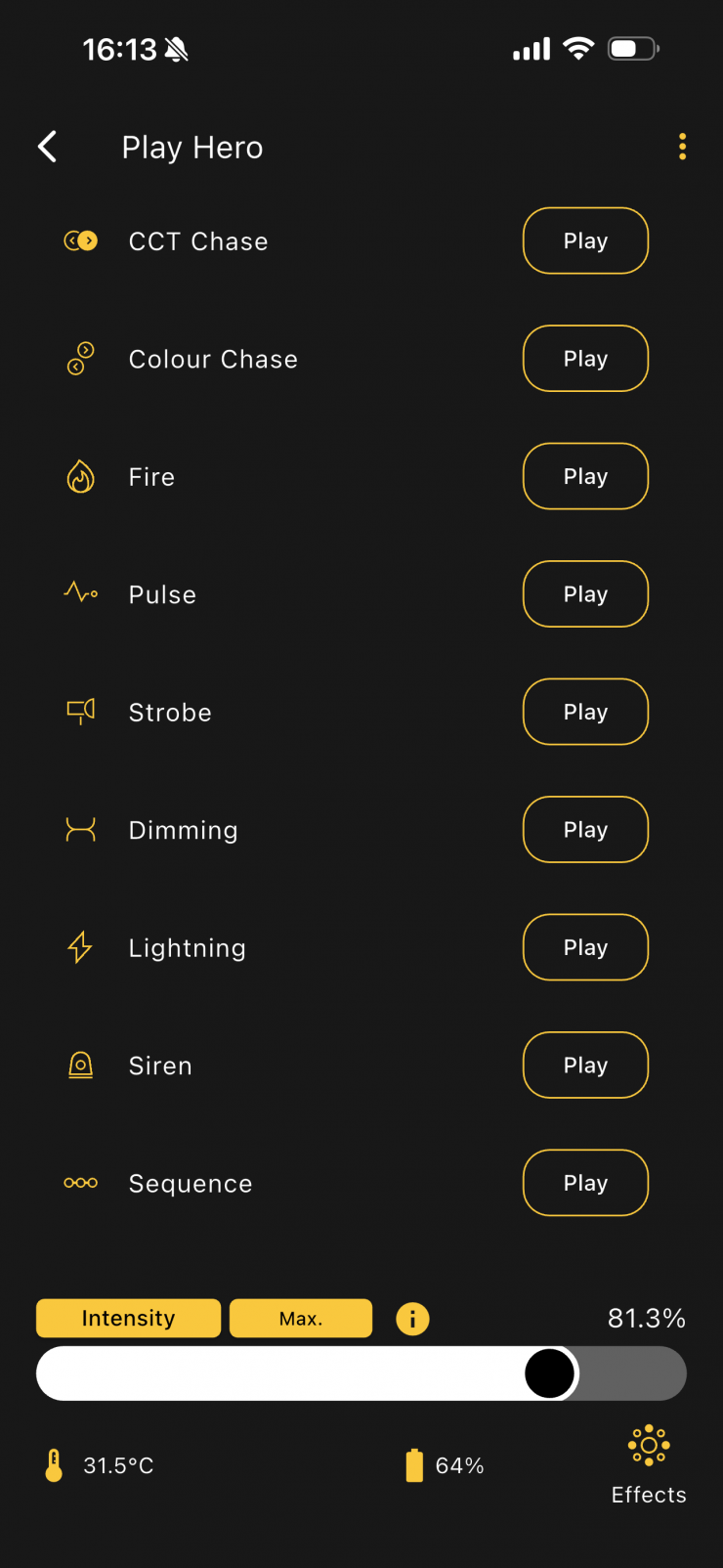
If you click on Effects, you can choose from a reasonable selection of special effects.
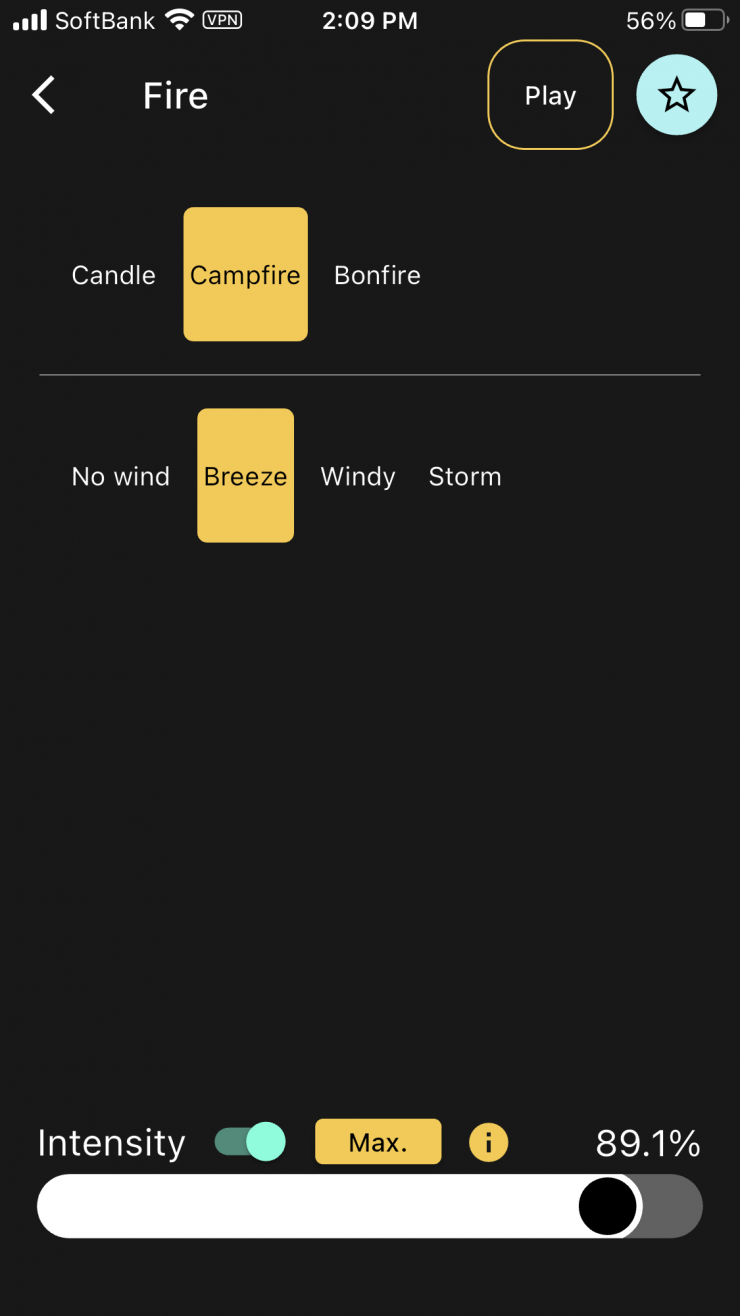
There are some nice adjustments you can make to the individual effects.
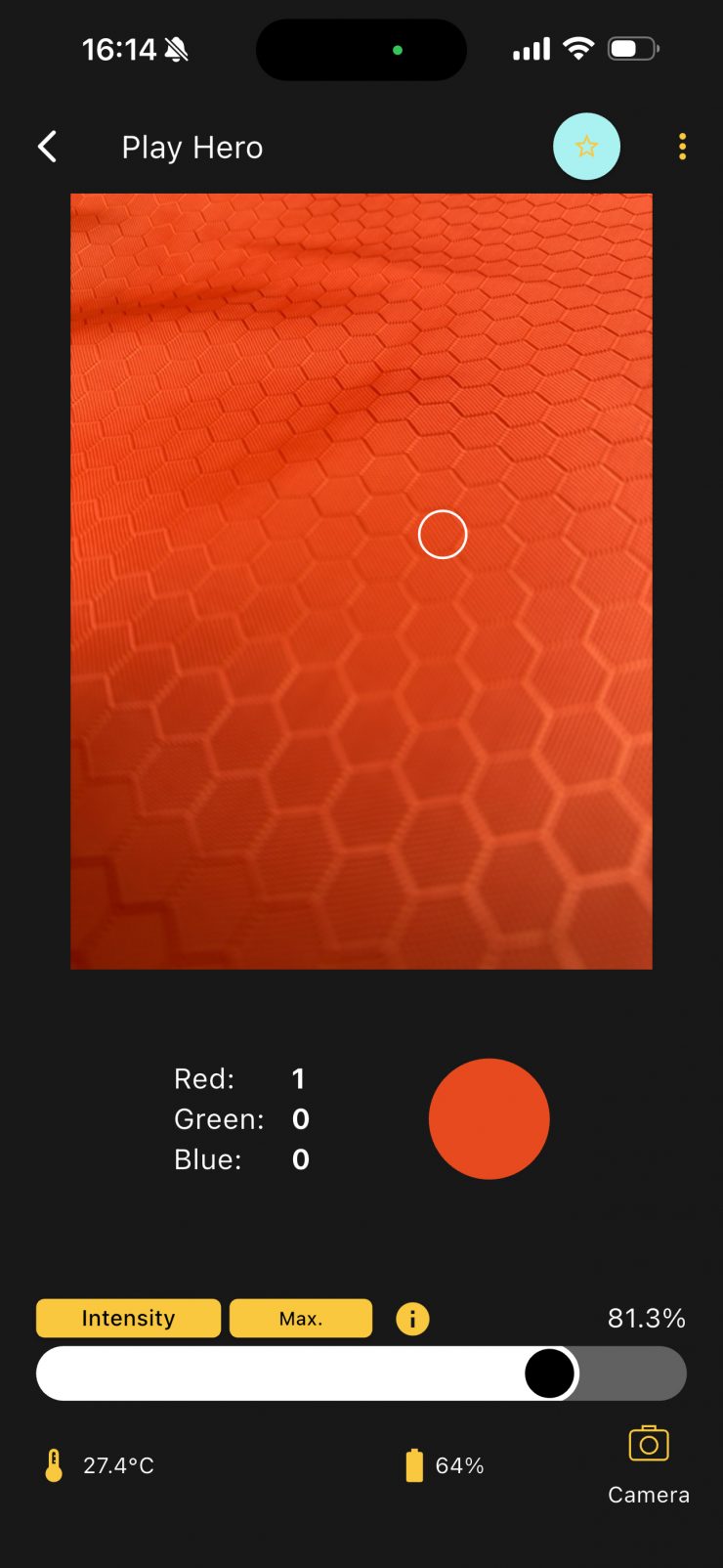
You can also use your smartphone/tablet phone and point it at a color, etc., and the light will attempt to recreate that color.
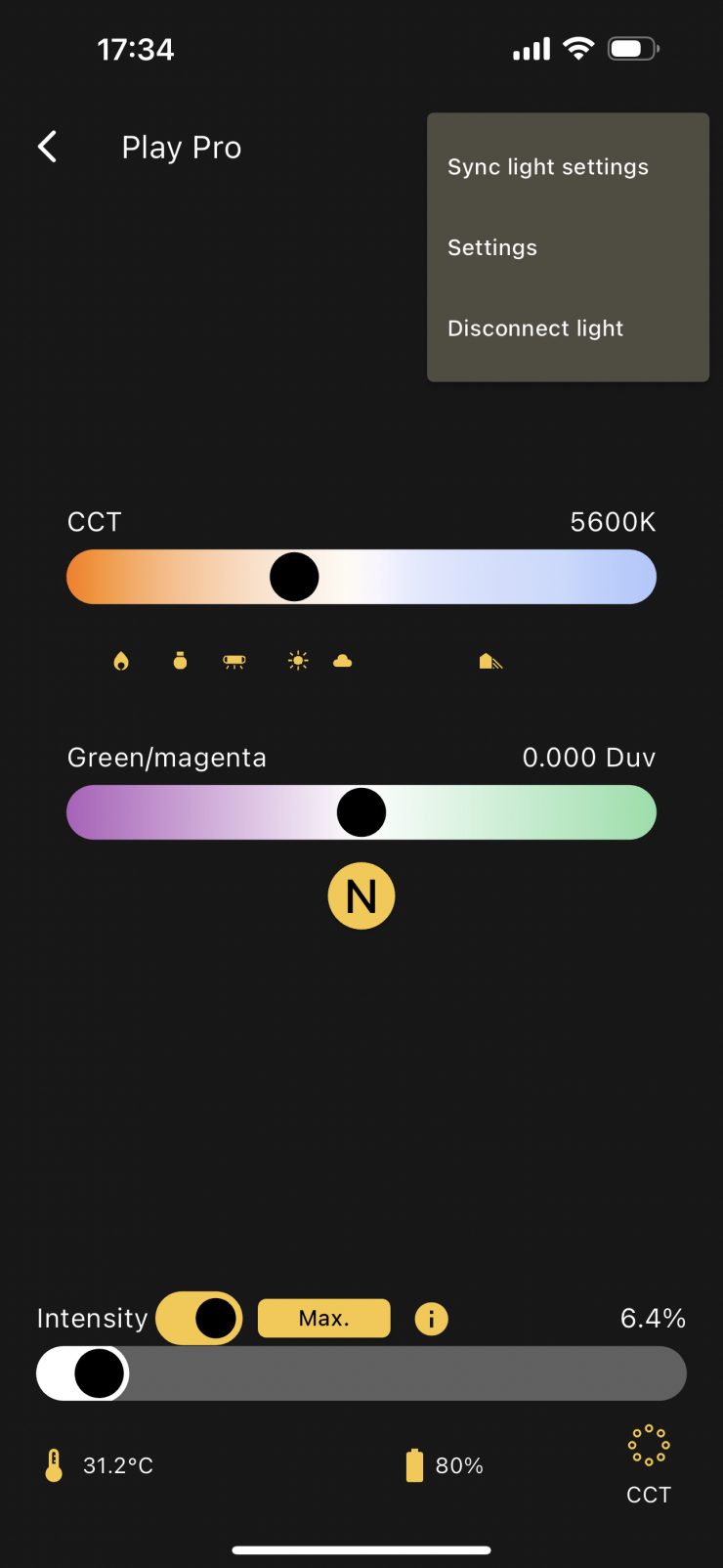
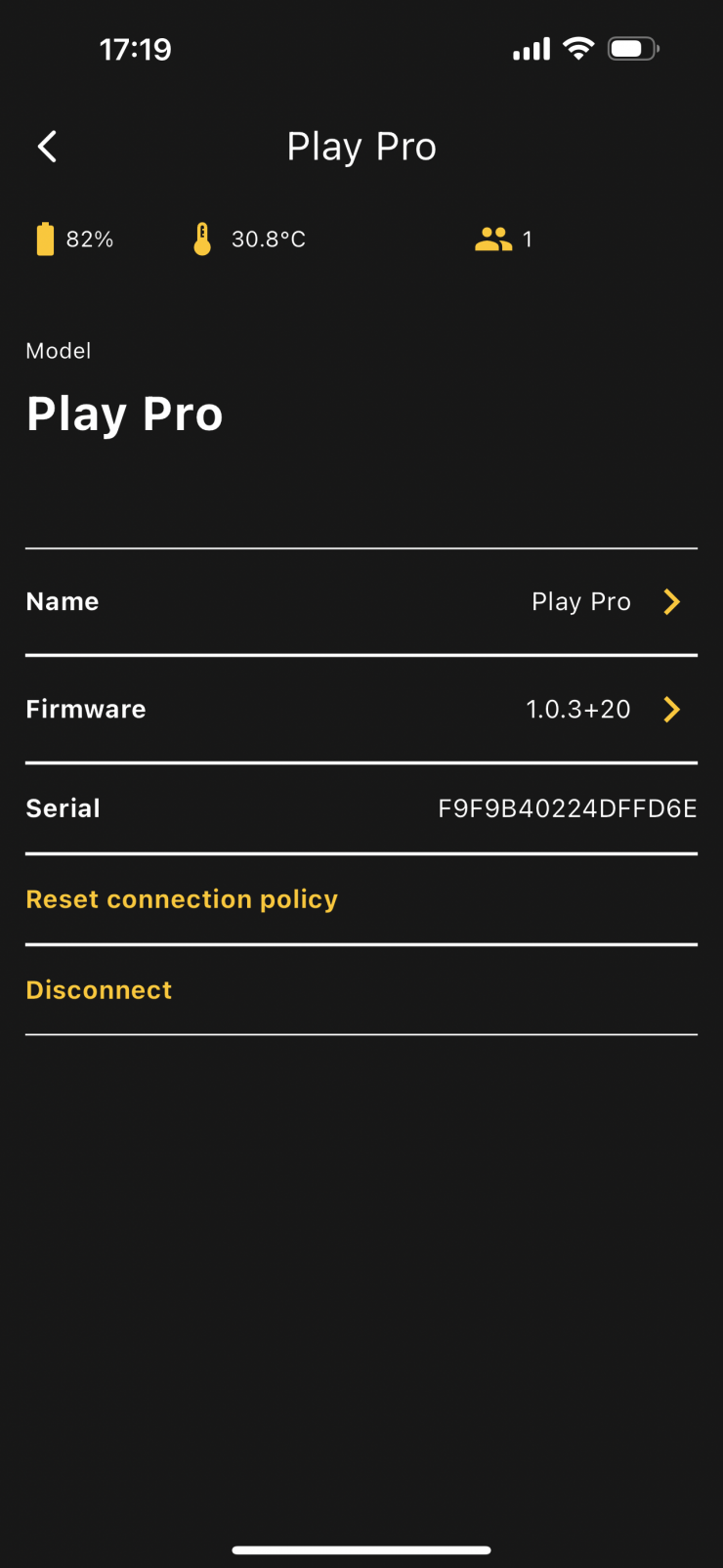
If you click on the three dots in the top right corner of the app, you can disconnect from the light, Sync Light Settings, or go to the Settings page.
On the Settings page, you can see what firmware you are running, the temperature of the fixture, how many lights are connected to the app, and the battery level if you are not running it via mains power.
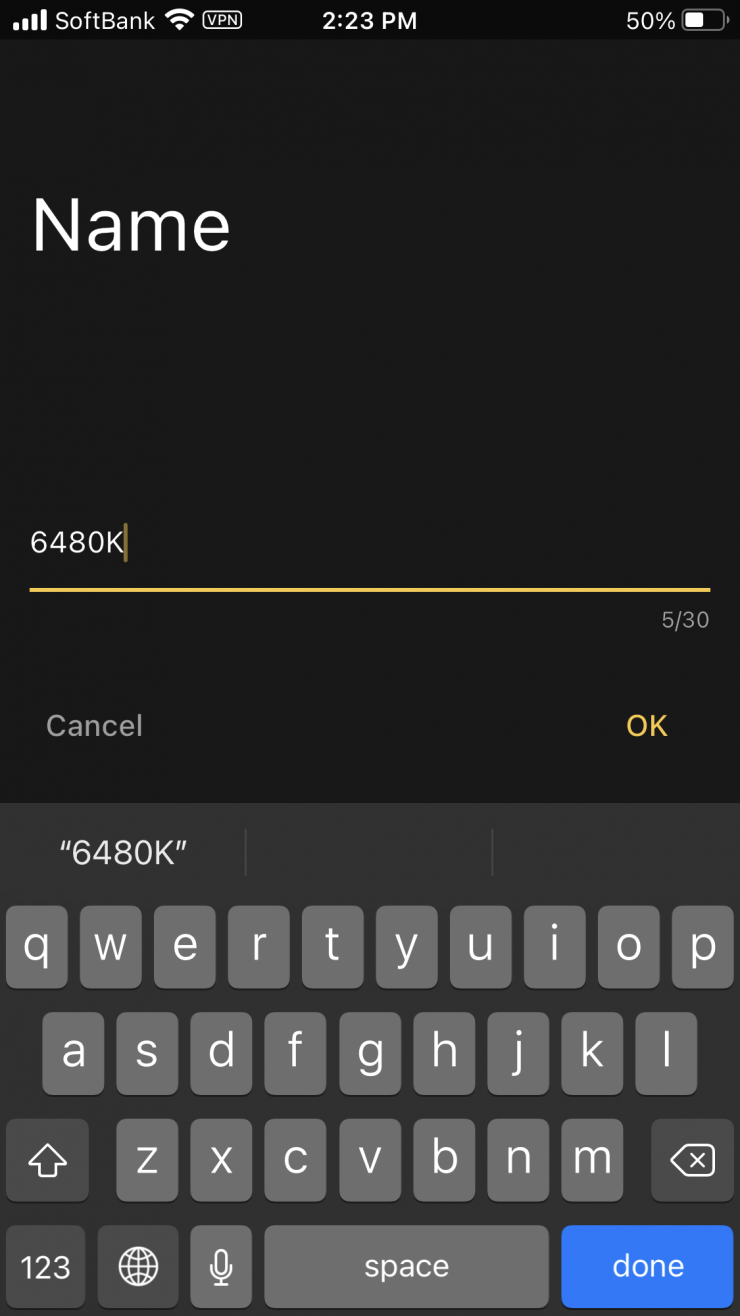
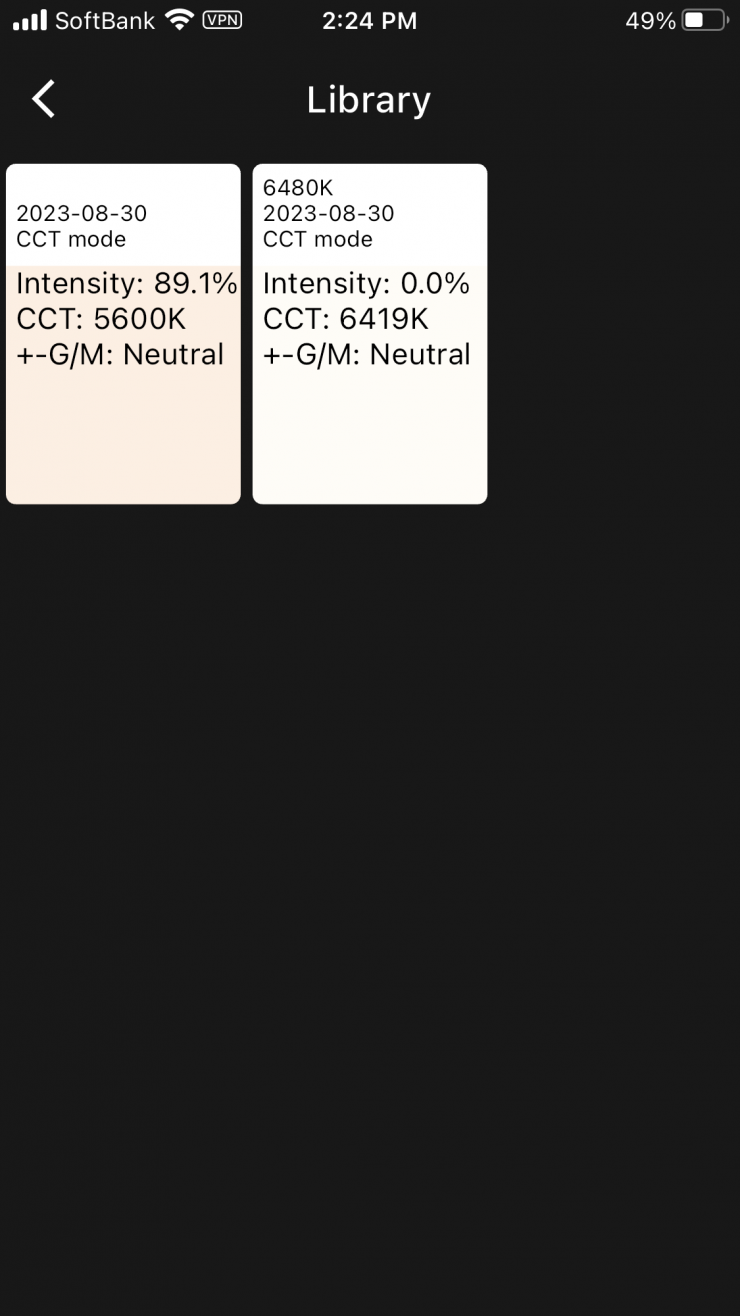
I like that you can save favorite presets and then bring them back up very quickly using the app. What is nice is that any preset, regardless of whether you create it on the controller or in the app, gets saved and can be recalled.
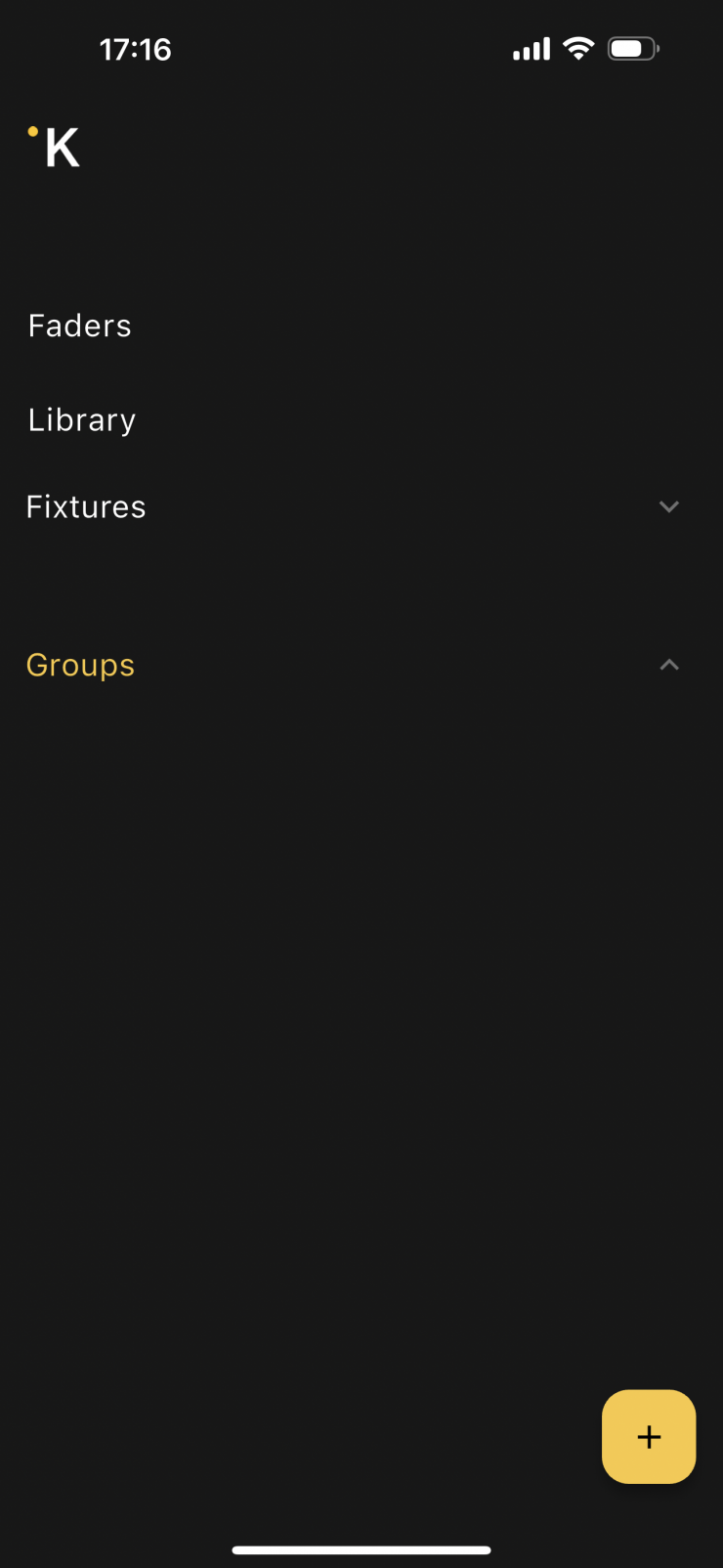
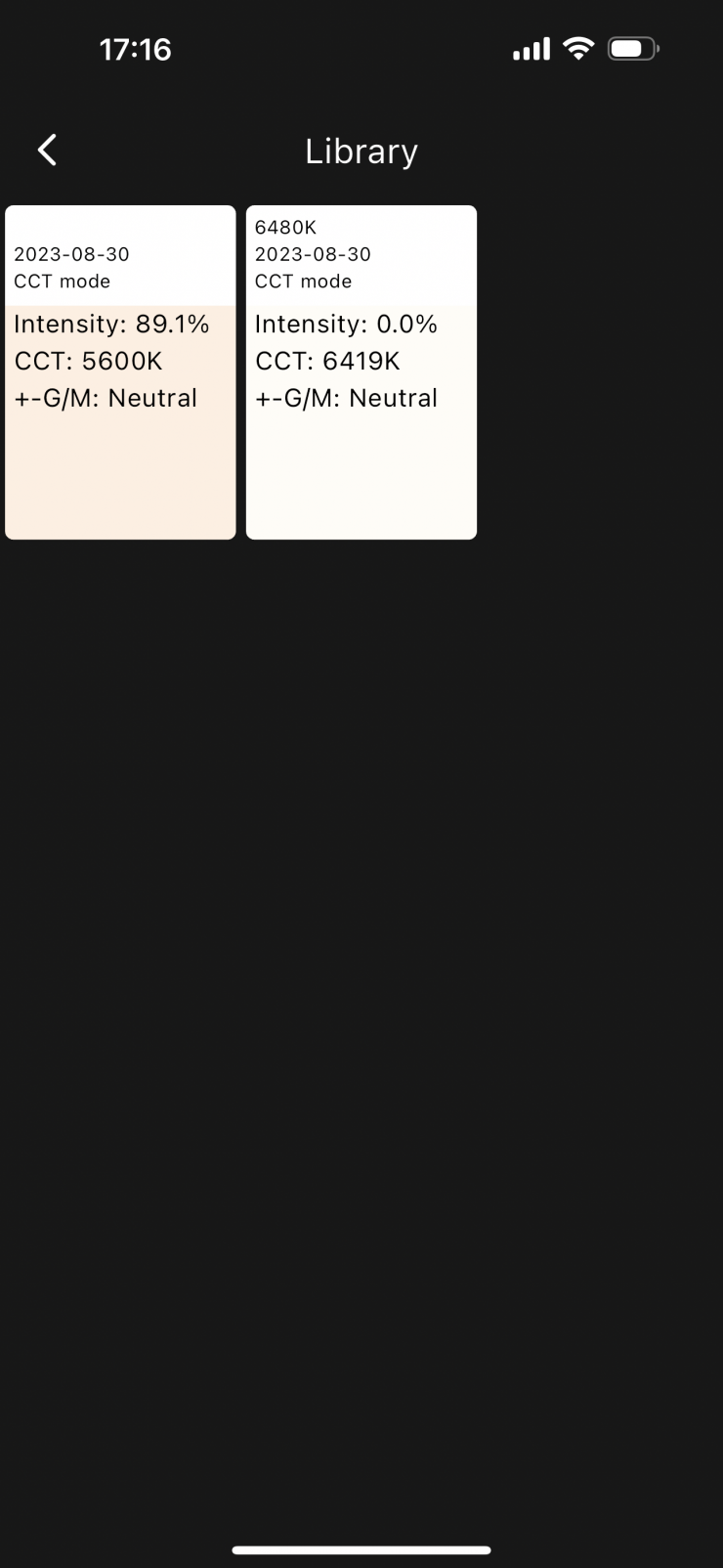
Now, you do need to go to the main menu and click on Library in the app to recall any presets you have saved.
What I like is that when you make a change using the Kelvin Narrator App, it is instantaneously reflected on the power supply/controller. Now, unfortunately, if you make a change to the power supply/controller directly, it doesn’t reflect what you have done on the app.
The app is straightforward and easy to use. I like how they have made it intuitive and visually appealing. Lighting control shouldn’t be overly complicated.
It is certainly one of the better lighting control apps I have seen or used.
Beam Angle
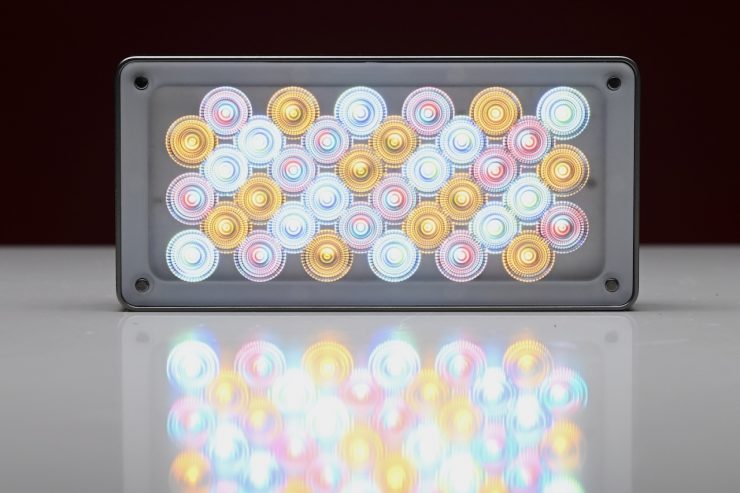
The Play Hero has a 50° beam angle with TIR lenses, 70° with the Sparkle, and 100° D90 med diffusor. As a comparison, the beam angle of the Play Pro has a beam angle of 106°. This beam angle, when unmodified, is pretty tight, especially for an on-camera style LED light. In saying that, a lot of on-camera LED lights have pretty tight beam angles.
Photometrics
So now let’s get to the photometric results. I always test lights in this way so that I get a reference to how they compare to other fixtures. Results only tell part of the story and should never be used alone to judge a light. I have found from extensive testing over the years that certain lights that have good photometric results don’t always look good, and lights that have worse photometric scores can sometimes look better than their results indicate. It is important that you don’t judge a light by one individual result. You have to gather all the data to make a comprehensive conclusion.
Different lights can also look different depending on what camera you happen to be using.
Output & Color Temperature Accuracy
I tested the Kelvin Play Hero at a variety of Kelvin color temperatures with a Sekonic C-800 Spectrometer to find out how much output the light had and how accurate the Kelvin color temperature reproduction was.
All readings are taken at a distance of 1m / 3.28ft in a controlled environment.
Kelvin Play Hero 5600K MAX Output
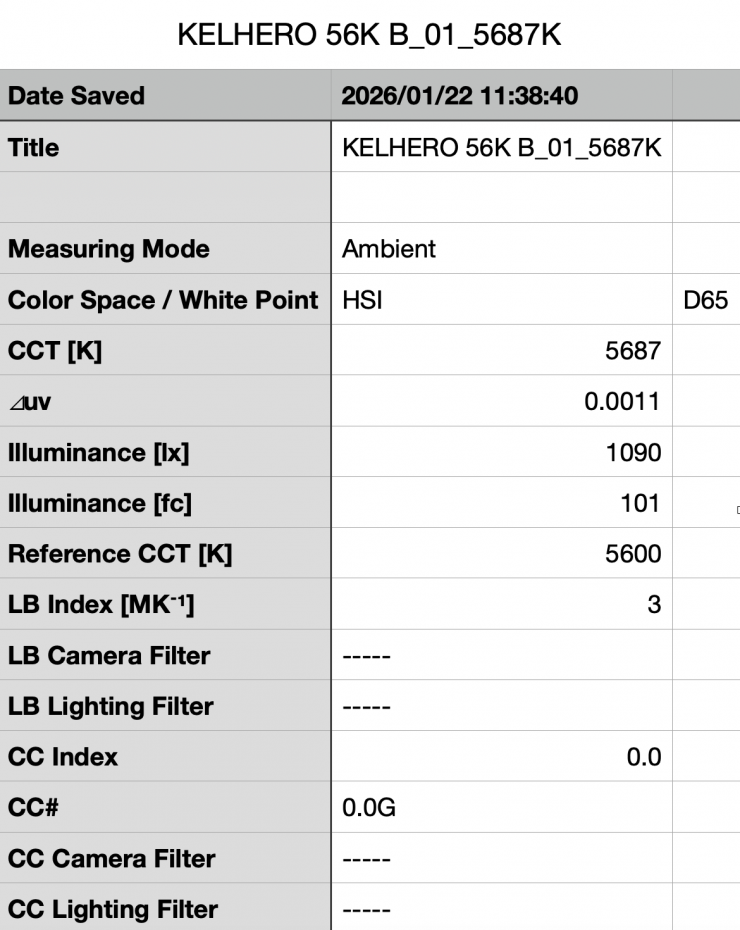
Above, you can see the Kelvin Play Hero when set at 5600K and used in its MAX Output mode recorded an output of 1090lx (101 fc) when set at 5600K.
As a comparison, the Kelvin Play Pro, when used in its MAX Output mode, recorded an output of 176 lx (16.4 fc) when set at 5600K.
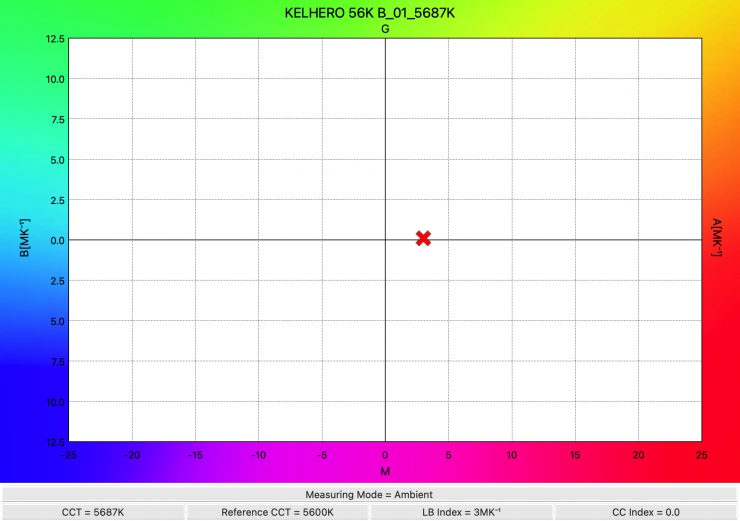
The Play Hero recorded a CCT reading of 5687K, which was a good reading. As a comparison, the Kelvin Play Pro had a reading of 5545K.
So, how does the output at 5600K compare to some other small-sized RGB lights I previously reviewed? Well, let’s see.
| Output at 5600K | |
| Kelvin Play Hero | 1090 lx |
| Kelvin Play Pro | 176 lx |
| Luxli Cello² | 1260 lx |
| Lupo Kickasspanel Full-Color RGBW | 2260 lx |
| Luxli Fiddle Pocket | 522 lx |
| Pilotfly AtomCUBE Rx1 RGBCW Pocket LED | 382 lx |
The Kelvin Play Hero has a good amount of output, especially considering its size and power draw. Please be aware that some of these lights have diffusion on the front of them, and some don’t; they have slightly different power draws.
As far as an accurate rendition of creating a 5600K source, here is how it compares to those other lights:
| Kelvin Color Temperature (when set at 5600K) | |
| Kelvin Play Hero | 5687K |
| Kelvin Play Pro | 5545K |
| Luxli Celo² | 5589K |
| Lupo Kickasspanel Full-Color RGBW | 5921K |
| Luxli Fiddle Pocket | 5622K |
| Pilotfly AtomCUBE Rx1 RGBCW Pocket LED | 5330K |
As you can see, the Kelvin Play HERO was slightly behind the excellent but now-discontinued Luxli Celo² and Fiddle Pocket. It was considerably better than the Lupo Kickasspanel Full-Color RGBW and Pilotfly AtomCUBE Rx1 RGBCW Pocket LED.
Kelvin Play Hero 5600K MAX Output (D90 Diffusion)
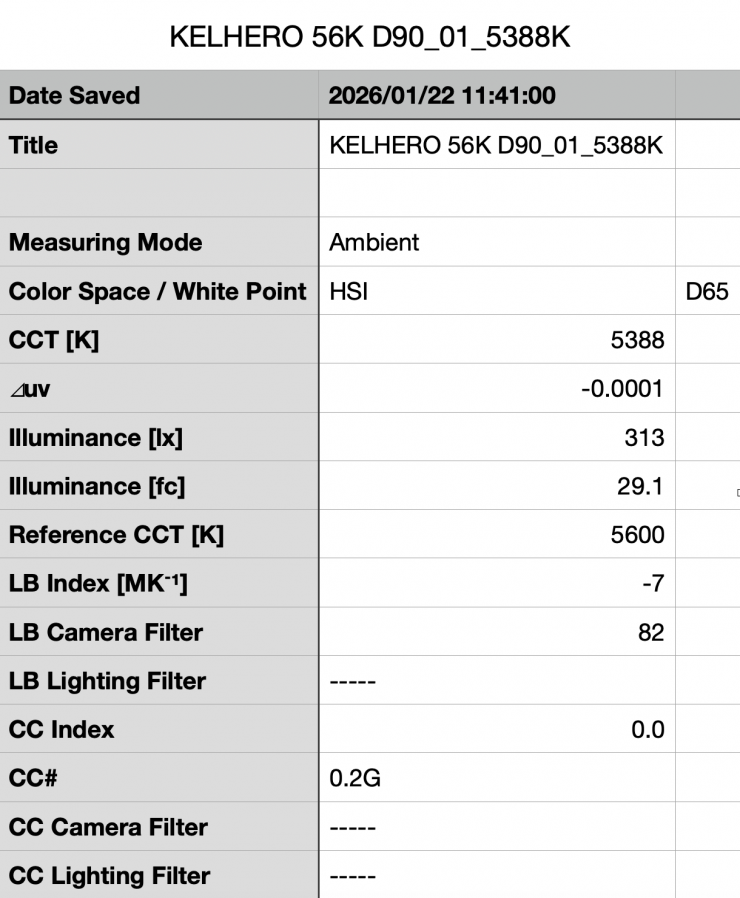
Above you can see the Kelvin Play Hero when set at 5600K in its MAX output mode and used with the D90 diffusion filter attached, recorded an output of 313 lx (29.1 fc). This was 71.2% less output than when used without the D90 diffusion.
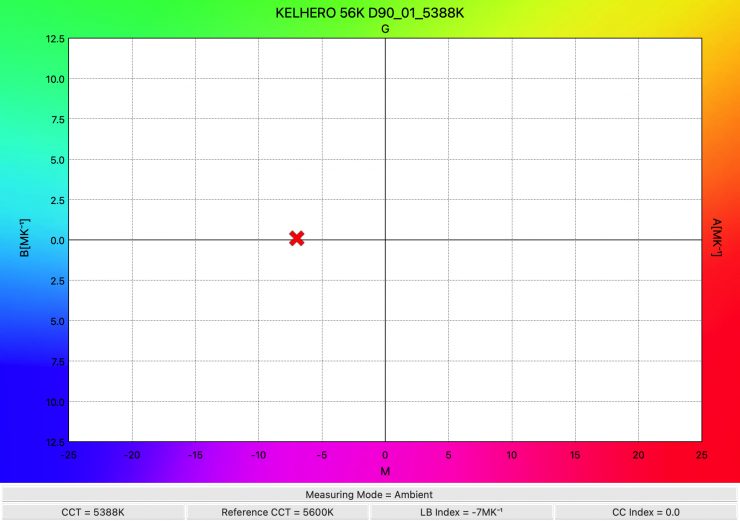
The light recorded a CCT reading of 5388K, which was around 200K different from when the fixture is used without any diffusion filter. This clearly shows me that the diffusion filter is altering the CCT reading slightly.
Kelvin Play Pro 5600K MAX Output Sparkle Diffuser
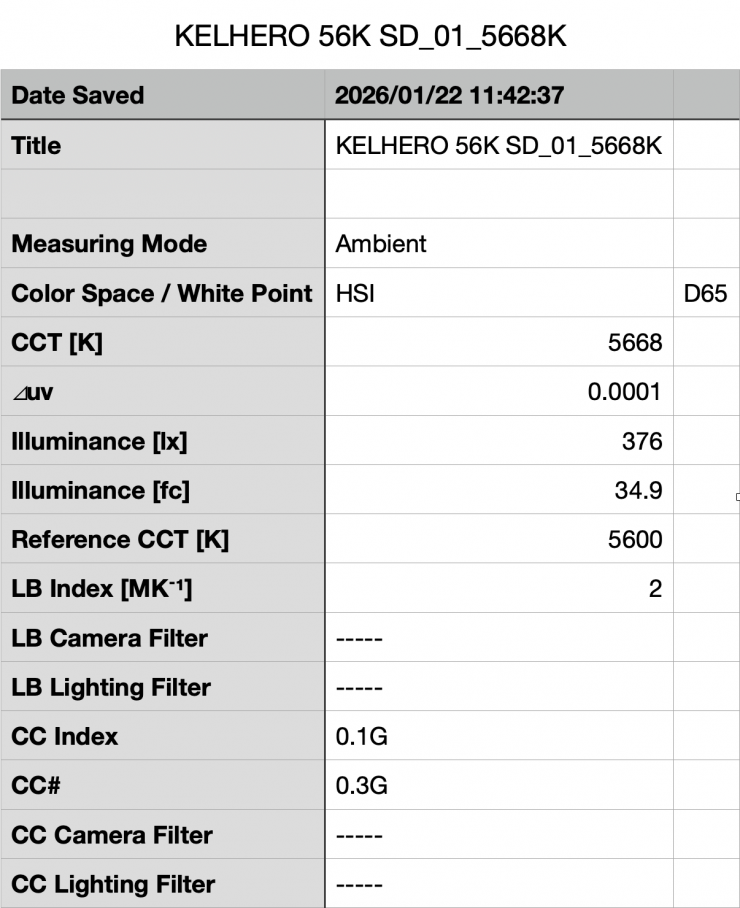
Above, you can see the Kelvin Play Hero when set at 5600K in its MAX output mode and used with the Sparkle Diffuser filter attached, recorded an output of 376 lx (34.9 fc). This was 65.5% less than when used without the Sparkle Diffusion.
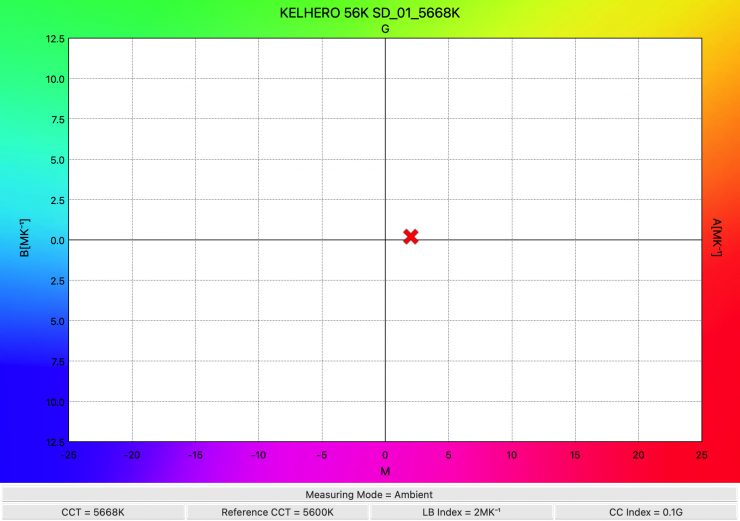
The light recorded a CCT reading of 5686K, which was a very good reading. Unlike the D90 Diffusion that alters the CCT reading, the Sparkle Diffusion filter reading is almost identical to when no diffusion is being used.
Kelvin Play Pro 5600K MAX Output Light Guide
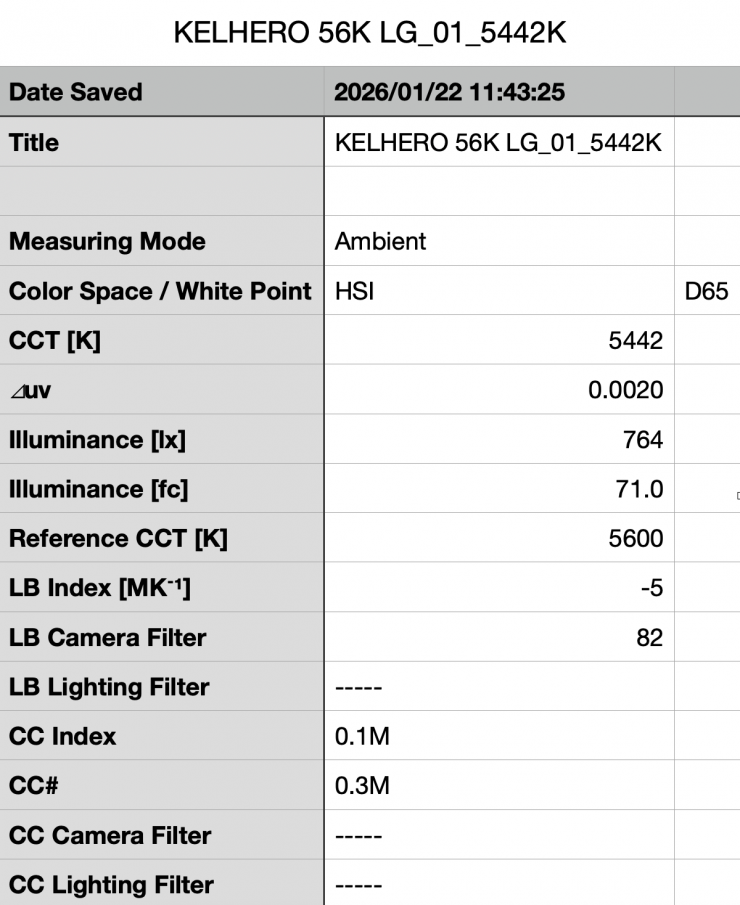
Above, you can see the Kelvin Play Hero when set at 5600K in its MAX output mode and used with the Light Guide attached, recorded an output of 764 lx (71 fc). This was 29.9% less output than when used without it.
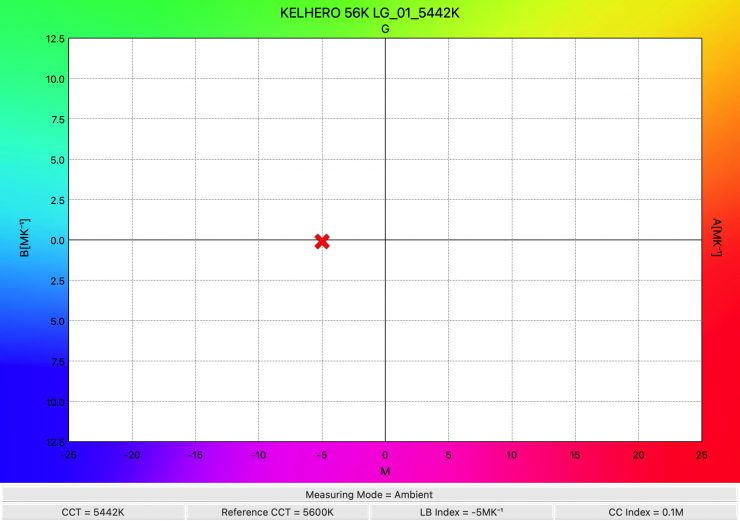
The light recorded a CCT reading of 5442K, which shows me that the Light Guide is affecting the CCT reading by around 250K.
Kelvin Play Pro 5600K Constant Output
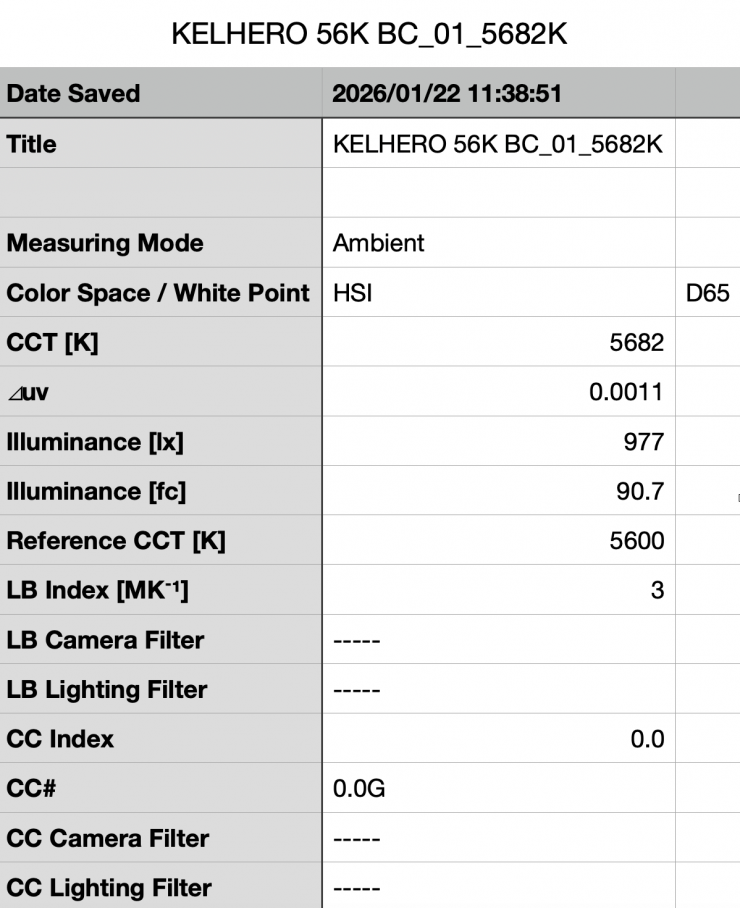
Above, you can see the Kelvin Play Hero when set at 5600K in its Constant output mode, recorded an output of 977 lx (90.7 fc). This was just 10.36% less than when used in its MAX output mode.
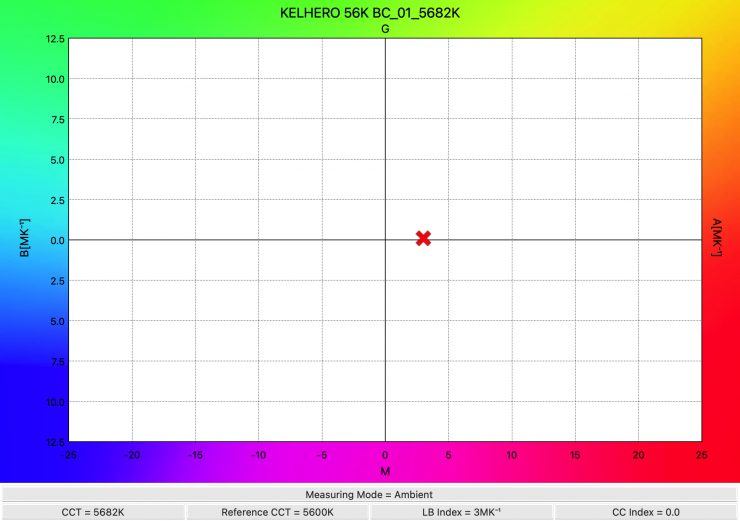
The light recorded a CCT reading of 5682K, which was almost identical to the 5687K it recorded in its MAX output mode. This tells me that the CCT accuracy doesn’t take a hit by using it in its MAX output mode.
Kelvin Play Pro 3200K MAX Output
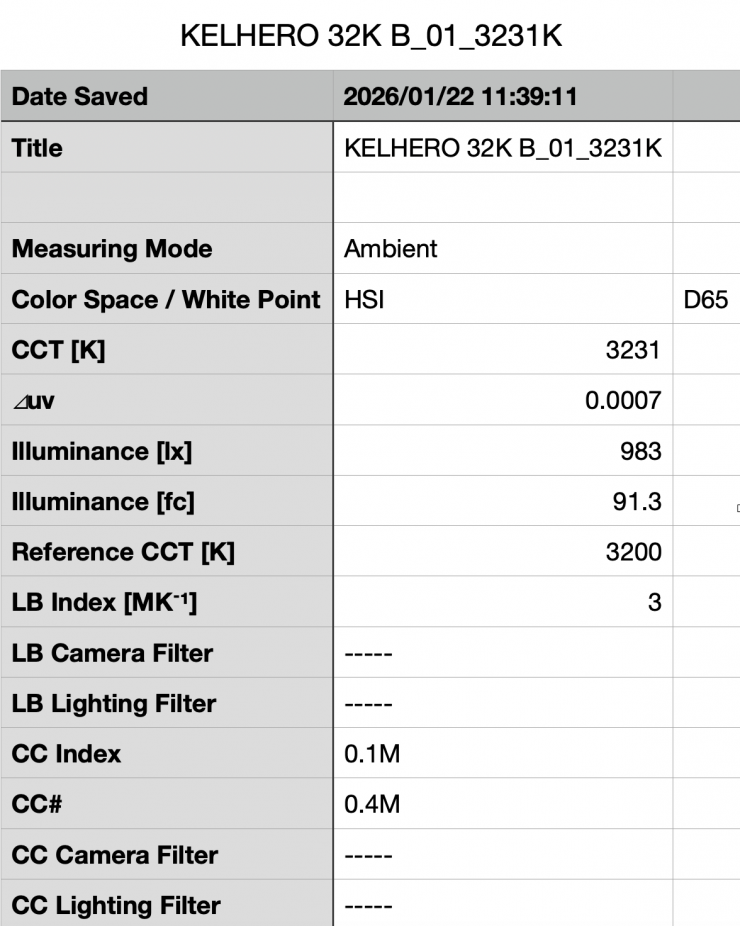
Above, you can see the light’s output when it was set at 3200K in its MAX output mode. It produced 983 lx (91.3 fc), which was 9.8% less than the 1090 lx it produced at 5600K.
As a comparison, the Kelvin Play Pro, when it was set at 3200K in its MAX output mode, produced 160 lx (14.9 fc)
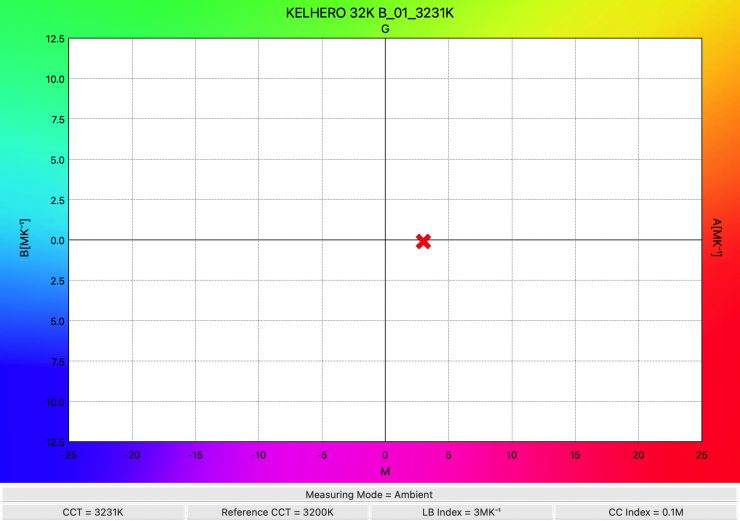
As far as CCT accuracy goes, it recorded a very good reading of 3231K. As a comparison, the Kelvin Play Pro recorded an almost perfect reading of 3197K.
So, how does this compare to some other small-sized RGB lights I have previously reviewed? Below you can see:
| Output at 3200K | |
| Kelvin Play Hero | 983 lx |
| Kelvin Play Pro | 160 lx |
| Luxli Cello² | 1270 lx |
| Lupo Kickasspanel Full-Color RGBW | 1840 lx |
| Luxli Fiddle Pocket | 500 lx |
| Pilotfly AtomCUBE Rx1 RGBCW Pocket LED | 371 lx |
As far as an accurate rendition of creating a 3200K source, here is how it compares against some other small-sized RGB lights I have previously reviewed
| Kelvin Color Temperature (when set at 3200K) | |
| Kelvin Play Hero | 3231K |
| Kelvin Play Pro | 3197K |
| Luxli Cello² | 3207K |
| Lupo Kickasspanel Full-Color RGBW | 3064K |
| Luxli Fiddle Pocket | 3232K |
| Pilotfly AtomCUBE Rx1 RGBCW Pocket LED | 3317K |
At 3200K, the Kelvin Play Hero was very good.
How does it perform at various CCT settings?
Summary of results (MAX Output)
| SETTING | OUTPUT | CCT READING |
| 2500K | 879 lx | 2517K |
| 3200K | 983 lx | 3231K |
| 4500K | 1050 lx | 4538K |
| 5600K | 1090 lx | 5687K |
| 6500K | 1060 lx | 6573K |
| 8000K | 1040 lx | 8096K |
| 10000K | 1020 lx | 10156K |
These results show me that the light’s output is very consistent from 3200-10,000K. From 4500-10,000K, it only varied by 70 lx.
The CCT accuracy across the range is also excellent. From 2500K to 10,000K the light was no more than 156K off being correct. At 2500K to 4500K, the light’s accuracy is exceptionally good.
Now, you can run the light in a Constant Output Mode, which, in theory, should mean that the light has the same output across its CCT range. I tried this out to see. I chose to measure the light at 1700K, 3200K, 5600K, and 20,000K.
| SETTING | OUTPUT | CCT READING |
| 1700K | 611 lx | 1679K |
| 3200K | 969 lx | 3228K |
| 5600K | 977 lx | 5682K |
| 20,000K | 912 lx | 19,111K |
Above, you can see that at 1700K it had substantially less output than it does at other CCT settings. At 3200K and above, the output is basically identical in the Constant Output Mode. Even at 20,000K it only had a tiny bit less output than when used at 5600K. The CCT accuracy was extremely impressive across the entire 1700-20,000K range and the best I have seen from any fixture.
RGB Output
With most RGB lights, if you use them to generate or create colors, the output gets massively reduced. So, how does the Kelvin Play Hero fare?
I decided to do a test to see how much output the light had when I created super-saturated colors and how accurate those colors were.
RED (0°)
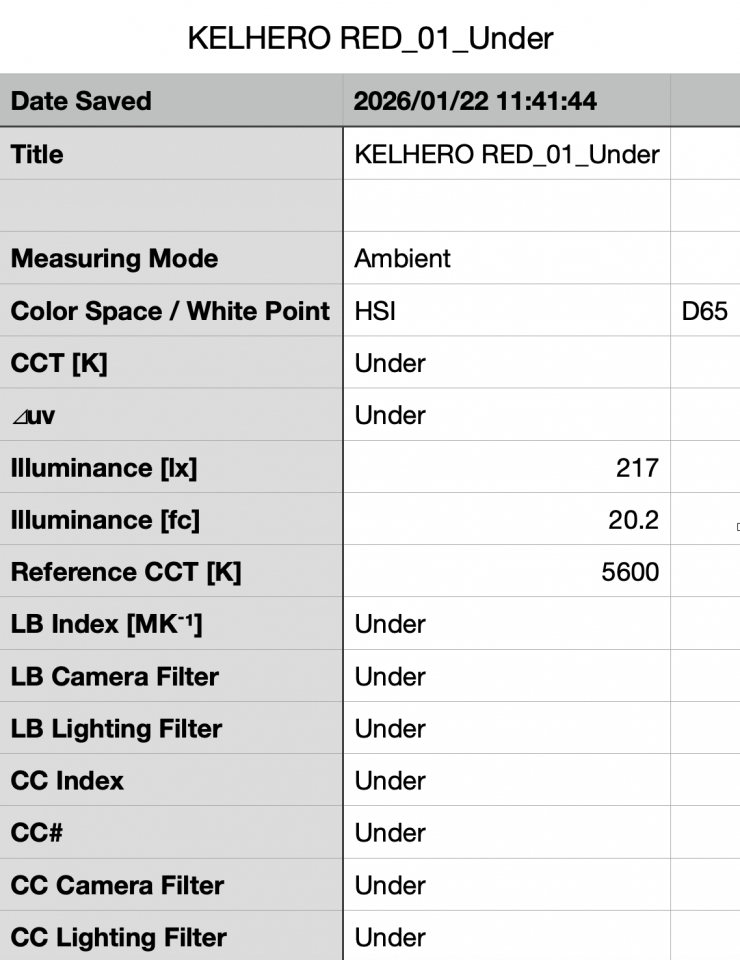
In the HSI mode, choosing a saturated red and set to 100% output, the light recorded an output of 217 lx / 20.2 fc. This is something you need to be clearly aware of when using the HSI mode. The output is going to be significantly lower than when using the light in CCT mode.
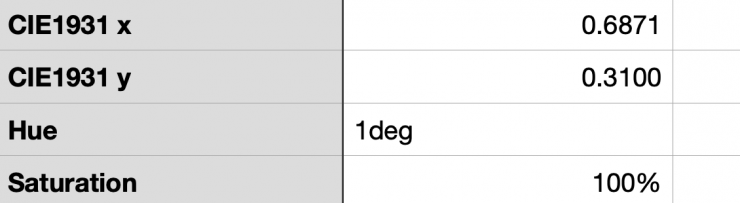
The light was slightly off, being able to create an accurate, fully saturated RED. The light registered 1 degree instead of 0 degrees.
Blue (240°)
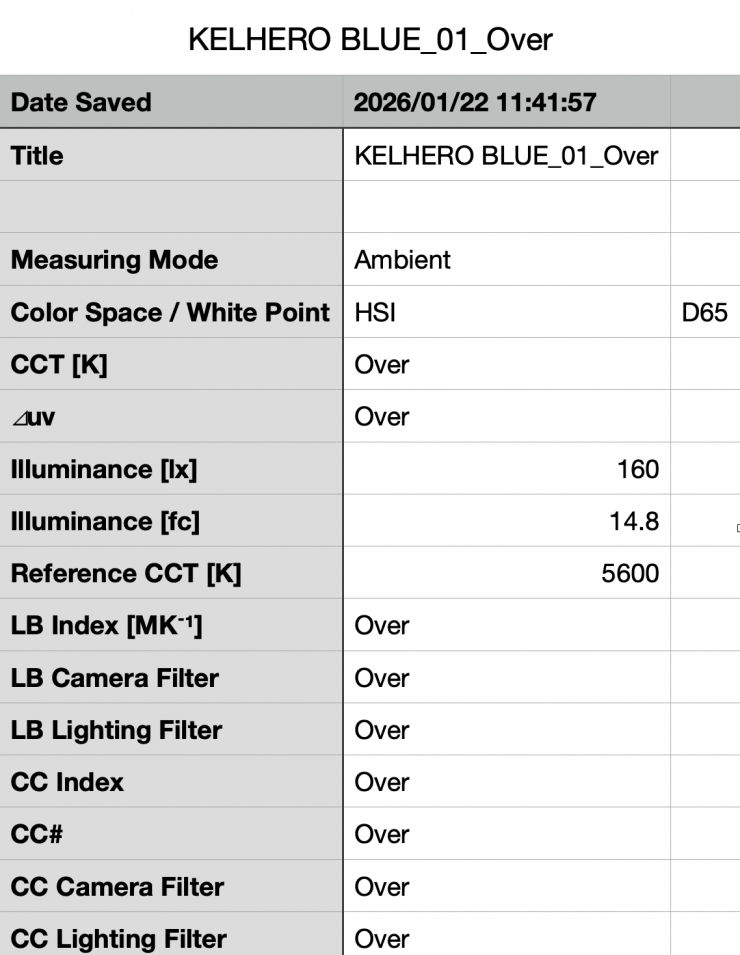
In the HSI mode, choosing a saturated Blue, and set to 100% output, the light recorded an output of 160 lx / 14.8 fc.
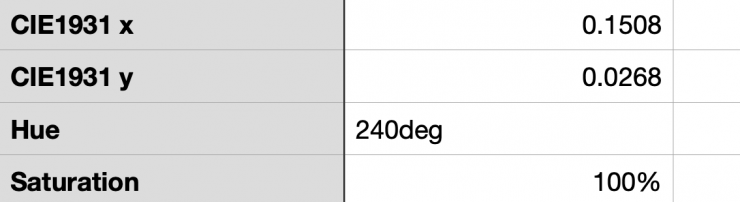
The light was able to create an accurate, fully saturated Blue.
Green (120°)
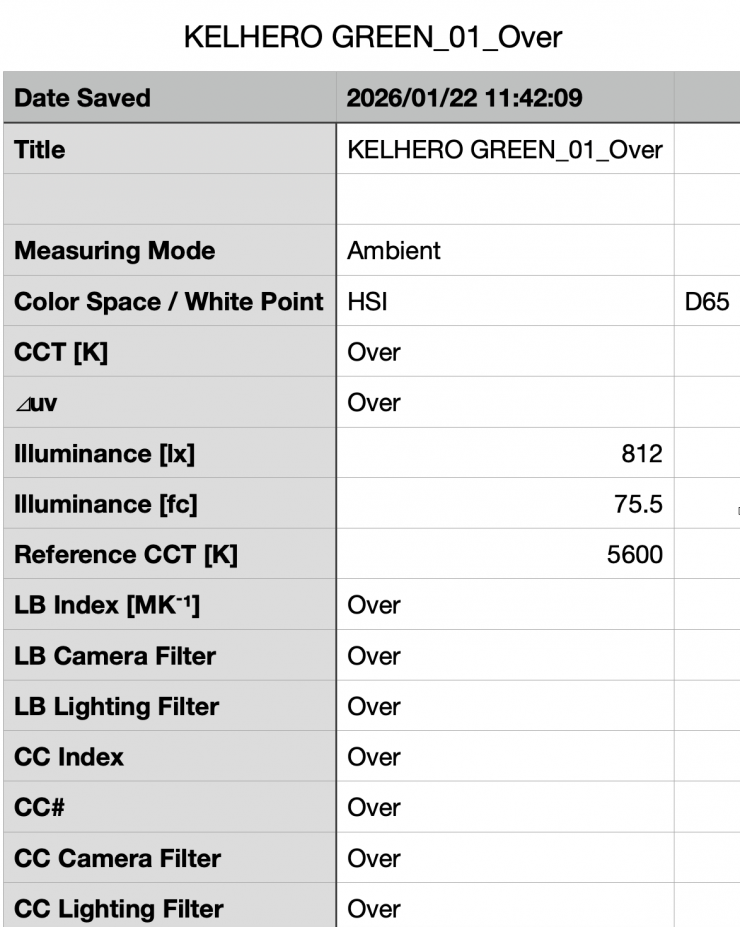
In the HSI mode, choosing a saturated Green and setting it to 100% output, the light recorded an output of 812 lx / 75.5 fc.
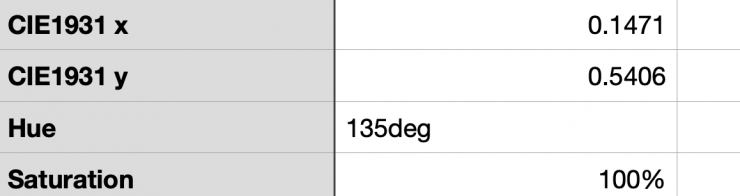
The light was 15° off, being able to create an accurate, fully saturated Green.
Yellow (60°)
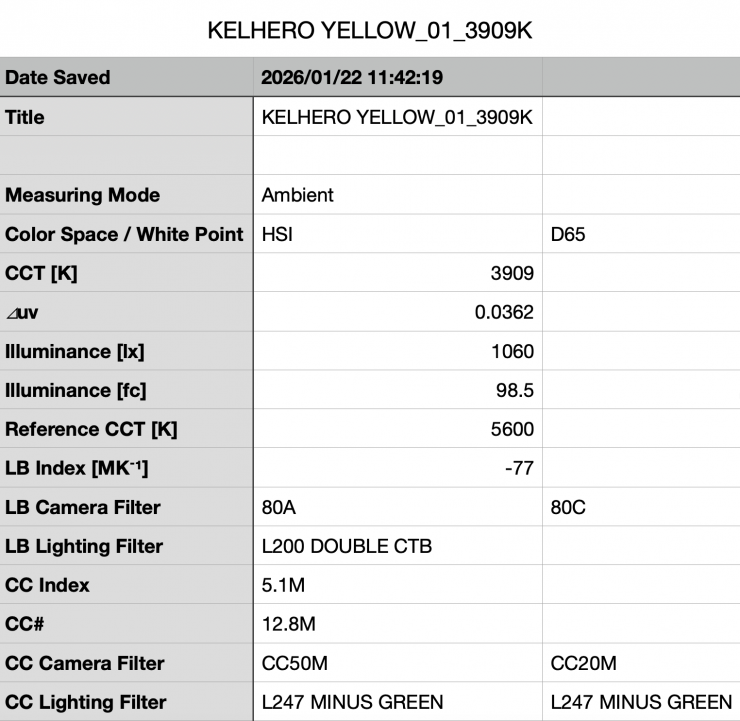
In the HSI mode, choosing a saturated Blue, and set to 100% output, the light recorded an output of 1060 lx / 98.5 fc.

The light was just 1° off being able to create an accurate, fully saturated Yellow.
CCT consistency & linear output when dimming the lights
Now, what you should always do when testing lights is to see if the CCT remains consistent when dimming the light. Just because you set a light at say 5600K, that doesn’t mean that the CCT will remain stable as you start dimming the fixture down. I also wanted to see how linear the dimming curve was.
I decided to do a series of tests at 100%/75%/50%/25%10% to see if the CCT reading being recorded changed. This was done at a distance of 1m using a Sekonic C-800. These tests were done at 5600K in the Max output mode and lenear dimming mode.
Kelvin Play Hero
| CCT READING | OUTPUT | INTENSITY % |
| 5687K | 1090 lx | 100 |
| 5654K | 799 lx | 75 |
| 5645K | 533 lx | 50 |
| 5632K | 267 lx | 25 |
| 5597K | 93.1 lx | 10 |
The Kelvin Play Pro’s consistency as you start dimming the fixture was very good. My testing showed that the CCT varied by just 90K.
As far as how linear the output is when you start dimming the light, at 50% output, it had 51.1% less output than when used at 100%. At 25%, it had 75.5% less output than when used at 100%. At 10% output, it had 91.4% less output than when used at 100%. This shows me that the light’s dimming curve is very linear.
Color Rendering
Kelvin Play Hero 5600K (Max Output)
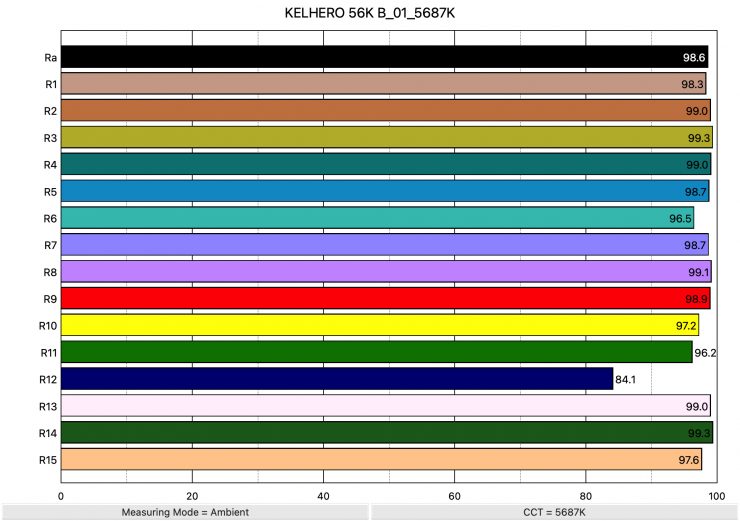
So now that we have seen how much output the Kelvin Play Hero produces, how does it perform when it comes to replicating accurate colors? Above, you can see that when the light was set at 5600K, it recorded an average CRI (R1-R8) of 98.6 and an extended CRI (R1-R15) of 97.39. For replicating accurate skin tones, it recorded 98.9 for R9 (red), 99.0 for R13 (closest to caucasian skin tones), and 97.60 for R15 (closest to Asian skin tones). These are excellent results, and only R12 (Blue) was below 90. The extended CRI score is one of the highest I have ever seen.
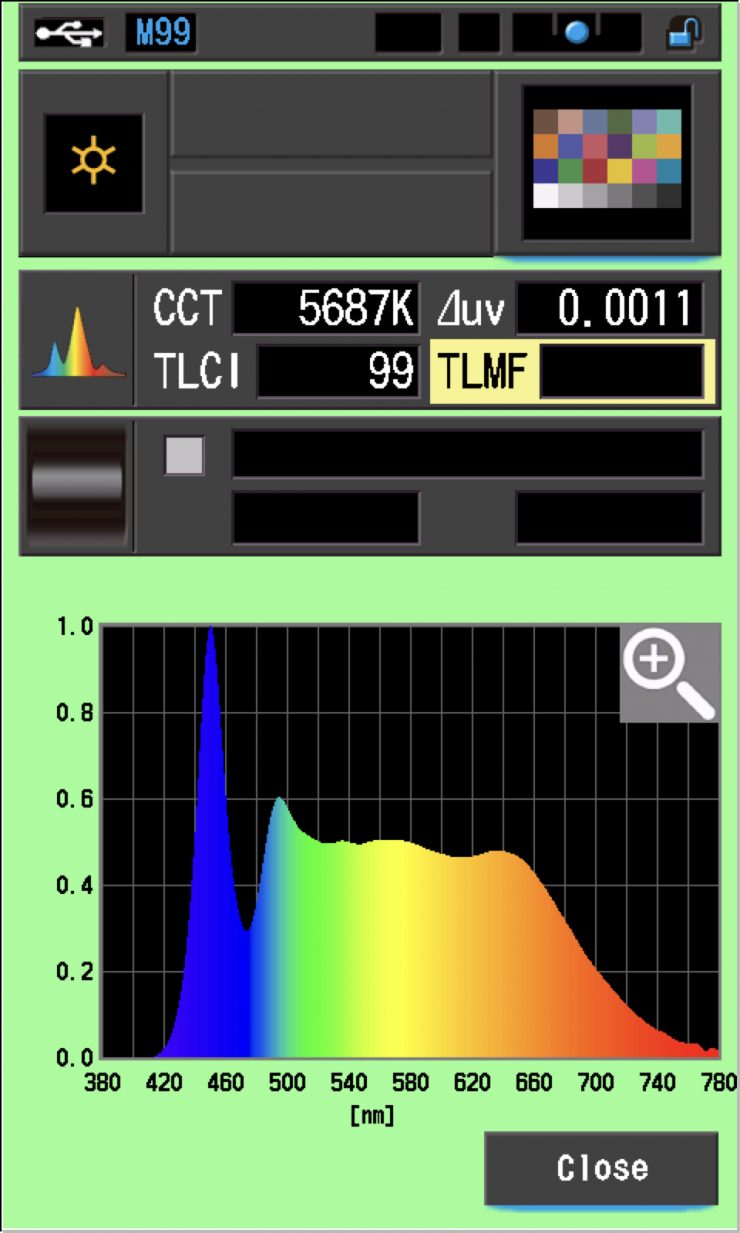
The light, when set at 5600K, recorded a TLCI score of 99. That is almost perfect.
How does this compare to the Luxli Cello², Pilotfly AtomCUBE Rx1 RGBCW
Pocket LED, Luxli Fiddle Pocket, and Lupo Kickassapanel Full-Color RGBW lights that we have previously reviewed when used at 5600K? Below you can see:
| Average CRI | Extended CRI | |
| Kelvin Play Hero | 98.6 | 97.39 |
| Kelvin Play Pro | 98.6 | 97.44 |
| Luxli Cello² | 97.5 | 95.87 |
| Lupo Kickassapanel Full-Color RGBW | 93.6 | 90.69 |
| Luxli Fiddle Pocket | 97.3 | 95.38 |
| Pilotfly AtomCUBE Rx1 RGBCW Pocket LED | 94.5 | 92.3 |
As you can see, the Kelvin Play Hero had almost identical CRI scores to the highest performing small-sized RGB lights I have reviewed, its sibling, the Play Pro.
Kelvin Play Hero 3200K (MAX Output)
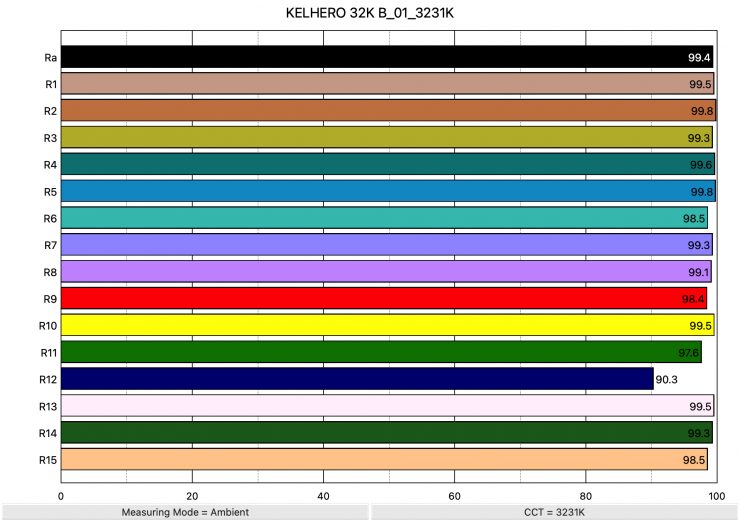
Above, you can see the scores for when the light was used at 3200K. It recorded an average CRI (R1-R8) of 99.4 and an extended CRI (R1-R15) of 98.53. For replicating accurate skin tones, it recorded 98.4 for R9 (red), 99.5 for R13 (closest to caucasian skin tones), and 98.5 for R15 (closest to Asian skin tones). Not a single value was below 90.
These results were the best from any light I have ever tested, period. I have never seen an extended CRI score of 98.53. This result is about as close to perfect as you are ever going to see.
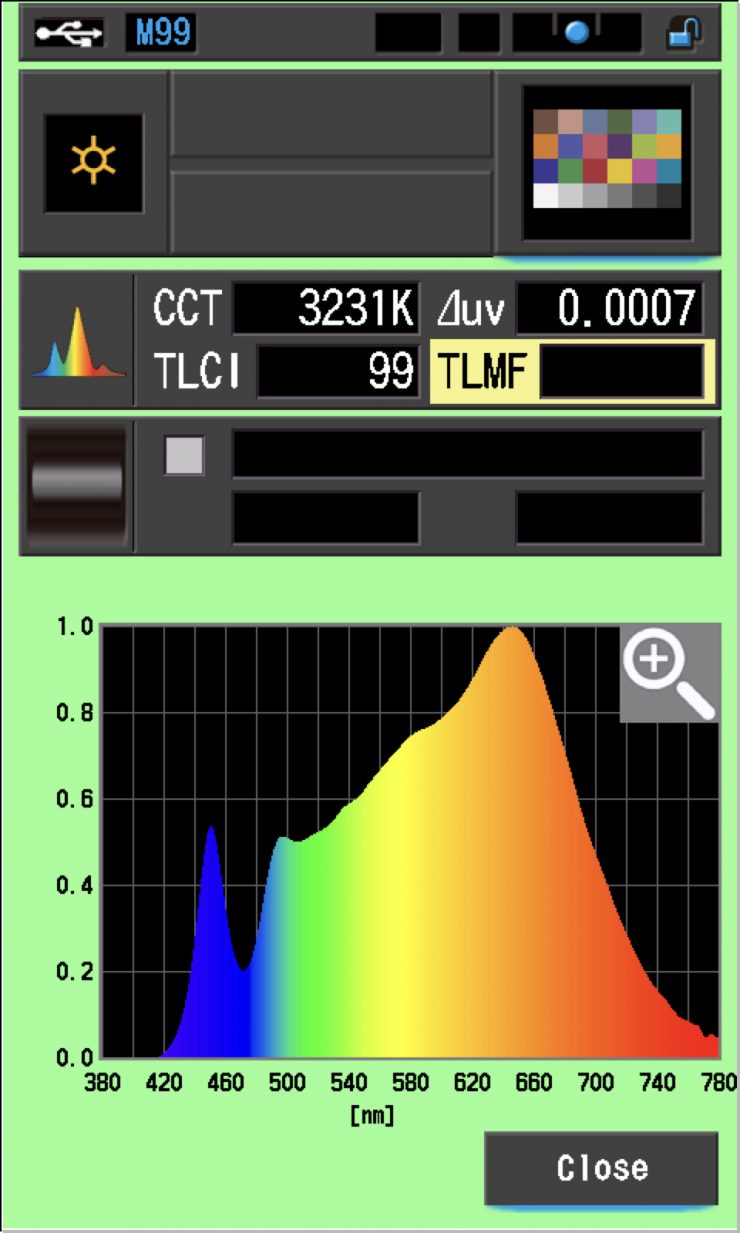
The light, when set at 3200K, recorded an almost perfect TLCI score of 99.
How does this compare to some other small-sized RGB lights I have previously reviewed when used at 3200K? Below you can see:
| Average CRI | Extended CRI | |
| Kelvin Play Hero | 99.4 | 98.53 |
| Kelvin Play Pro | 99.1 | 98.36 |
| Luxli Cello² | 97.6 | 96.53 |
| Lupo Kickasspanel Full-Color RGBW | 95.0 | 93.1 |
| Luxli Fiddle Pocket | 97.5 | 96.32 |
| Pilotfly AtomCUBE Rx1 RGBCW Pocket LED | 94.7 | 93.2 |
The Kelvin Play Hero, when used at 3200K, has higher scores than any of the other lights I have previously reviewed when used at 3200K
Thoughts
The Kelvin Play Hero is an extremely accurate fixture that replicates colors better than any other light I have ever tested. Its scores are exceptionally good across the whole CCT range.
CC Index & ⊿uv
The CC Index displays the CC correction value and whether any magenta or green need to be added or subtracted. 1 CC corresponds to 035 Kodak CC values or 1/8 Rosco filter values. Any reading less than +1.00 or -1.00 and you’re probably not going to need to make any kind of adjustment. The ⊿uv is the value to show how much this light is away from being an ideal light source (black body radiation = incandescent lamp). As with the CC Index you want this number to theoretically be zero. Kelvin is not a linear value, so we need to convert from Kelvin to MK-1 to compare the values of color temperature. To calculate from Kelvin to Mired is MK-1= 1*1000000/Kelvin. While this may sound confusing, it is the only way of measuring if the Kelvin shift is significant enough to warrant having to use a filter for correction. Below are the results for the Kelvin Play Hero:
Kelvin Vs MK-1
| Kelvin | Difference in K | MK-1 | Difference in MK-1 | |
| SET VALUE | 2500K | 0 | 400 | 0 |
| ACTUAL READING | 2517K | 17 | 397.29 | 2.71 MK-1 |
| SET VALUE | 3200K | 0 | 312.50 | 0 |
| ACTUAL READING | 3231K | 31 | 309.50 | 3 MK-1 |
| SET VALUE | 4500K | 0 | 222.22 | 0 |
| ACTUAL READING | 4538K | 38 | 220.36 | 1.86 MK-1 |
| SET VALUE | 5600K | 0 | 178.57 | 0 |
| ACTUAL READING | 5687K | 87 | 175.83 | 2.74 MK-1 |
| SET VALUE | 6500K | 0 | 153.85 | 0 |
| ACTUAL READING | 6573K | 73 | 152.13 | 1.72 MK-1 |
| SET VALUE | 8000K | 0 | 125 | 0 |
| ACTUAL READING | 8096K | 96 | 123.51 | 1.49 MK-1 |
| SET VALUE | 10000K | 0 | 100 | 0 |
| ACTUAL READING | 10156K | 156 | 98.46 | 1.54 MK-1 |
These figures might look confusing, but what it tells me is that the light is extremely CCT accurate, and you wouldn’t need to use any color correction gels at any of its settings. The MK-1 scores for the Kelvin Play Hero were excellent and very consistent. Any MK-1 score of -/+6 or under is considered to be very good.
CC INDEX & ⊿uv
| CC INDEX | ⊿uv | |
| 2500K | 0.1G | 0.0003 |
| 3200K | 0.1M | 0.0007 |
| 4500K | 0.1M | 0.0010 |
| 5600K | 0 | 0.0011 |
| 6500K | 0.1G | 0.0015 |
| 8000K | 0.4G | 0.0016 |
| 10000K | 0.9G | 0.0017 |
The ⊿uv scores were very good for this fixture and the consistency is what makes the light stand out.
TM-30
TM-30 is a relatively new color rendering standard that was developed to deal with the limitations of CRI. TM-30 looks at 99 individual colors. These 99 colors are categorized into seven groups: nature, skin color, textiles, paints, plastics, printed material, and color systems.
TM-30 scores go from 0 – 100. The higher the score, the more accurate a light is at producing colors. Any TM-30 Rf score in the ’90s is considered to be good. What is interesting and something that you need to be very aware of is that two separate light sources with the exact same CRI scores can render colors very differently. A light with a high CRI rating could have a low TM-30 score. Conversely, a light with a good TM-30 score could have a bad CRI score.
Now, there are two measurements associated with TM-30, Rf and Rg.
- Rf (Color Fidelity)
- Rg (Color Gamut)
With Rf value, ideally, you want a score in the 90’s.
With Rg value, a score below 100 indicates that the light source renders colors with less saturation than the reference source. So ideally, you want this score to be above 100.
2500K 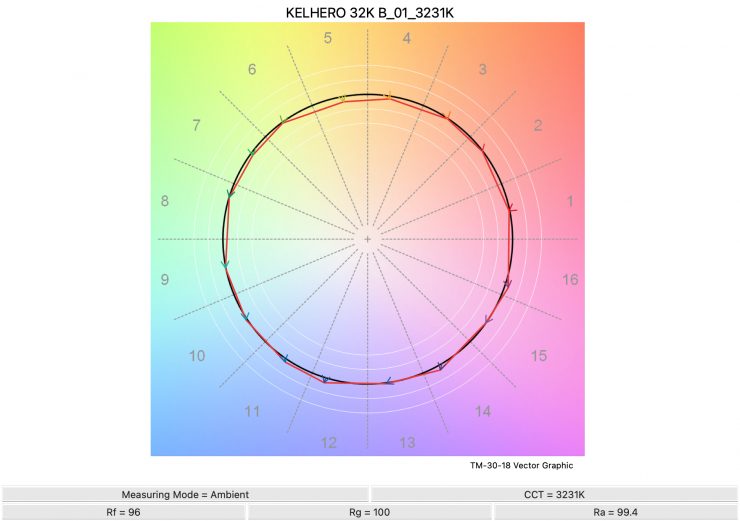
3200K 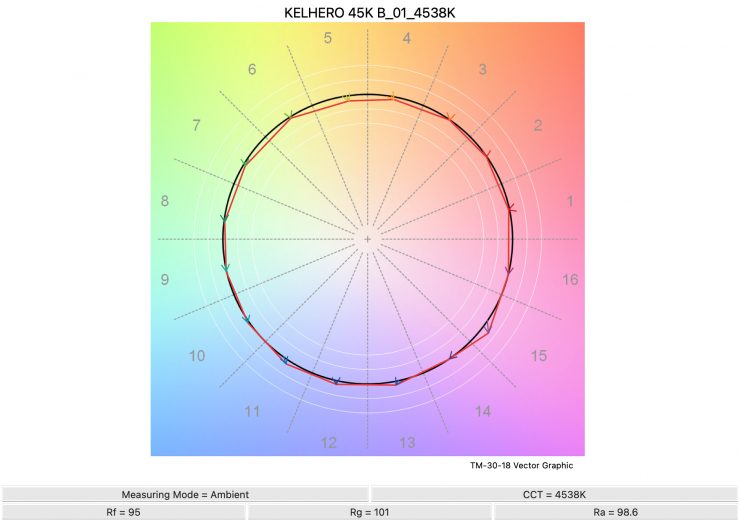
4500K 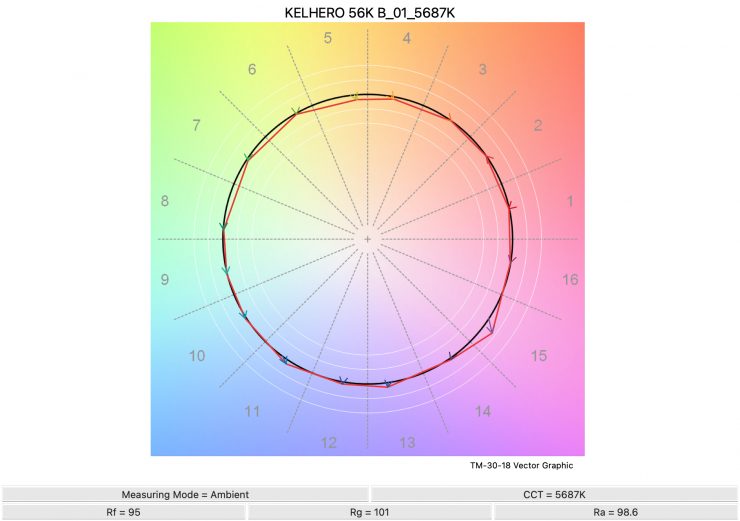
5600K 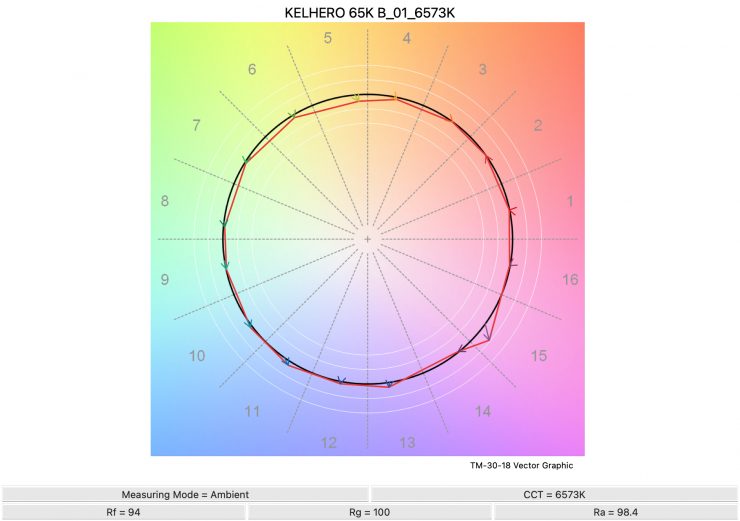
6500K 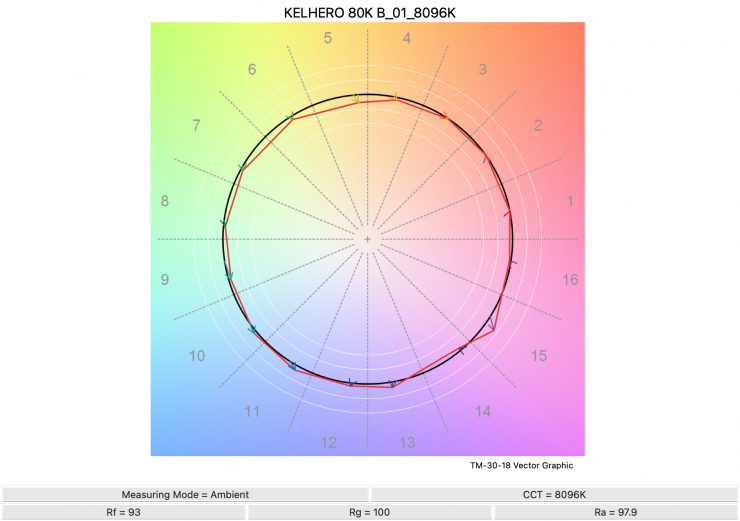
8000K 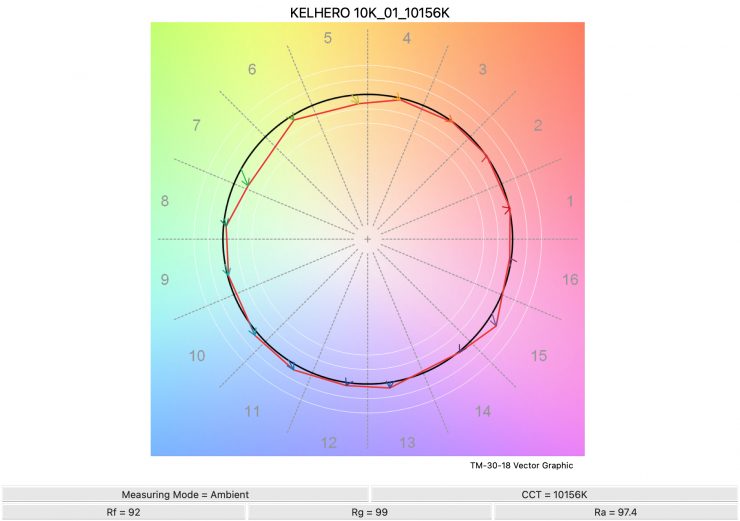
10,000K
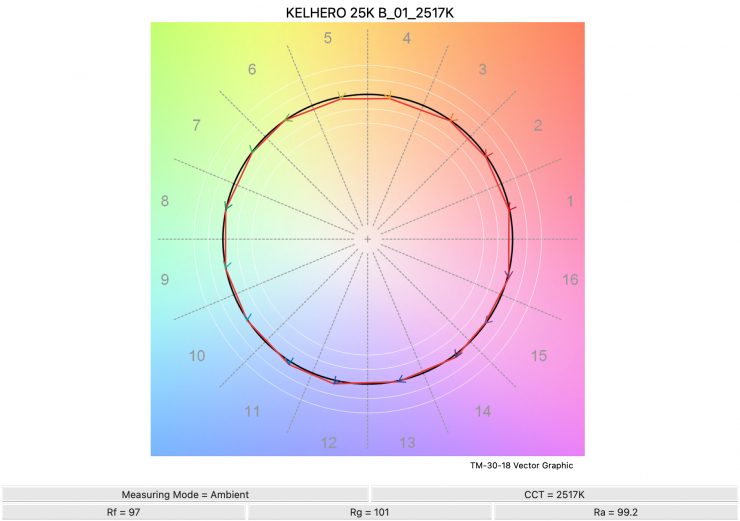
Above, you can see the scores for the Kelvin Play Hero at various Kelvin color temperatures.
Here are the results:
| Rf | Rg | |
| 2500K | 97 | 101 |
| 3200K | 96 | 100 |
| 4500K | 95 | 101 |
| 5600K | 95 | 101 |
| 6500K | 94 | 100 |
| 8000K | 93 | 100 |
| 10000K | 92 | 99 |
These were outstanding results and some of the best I have ever seen.
SSI
SSI (Spectral Similarity Index) was developed by the Sci-Tech Council of the Academy. SSI gives me the ability to set any light as a standard, or use predefined standards (such as CIE D55), and then give other lights an SSI score based on how well they will match standards such as CIE D55. This way, I can measure spectral response and compare it directly against an ideal light source. This is actually a much better test than recording CRI scores, but it doesn’t tell you everything you need to know.
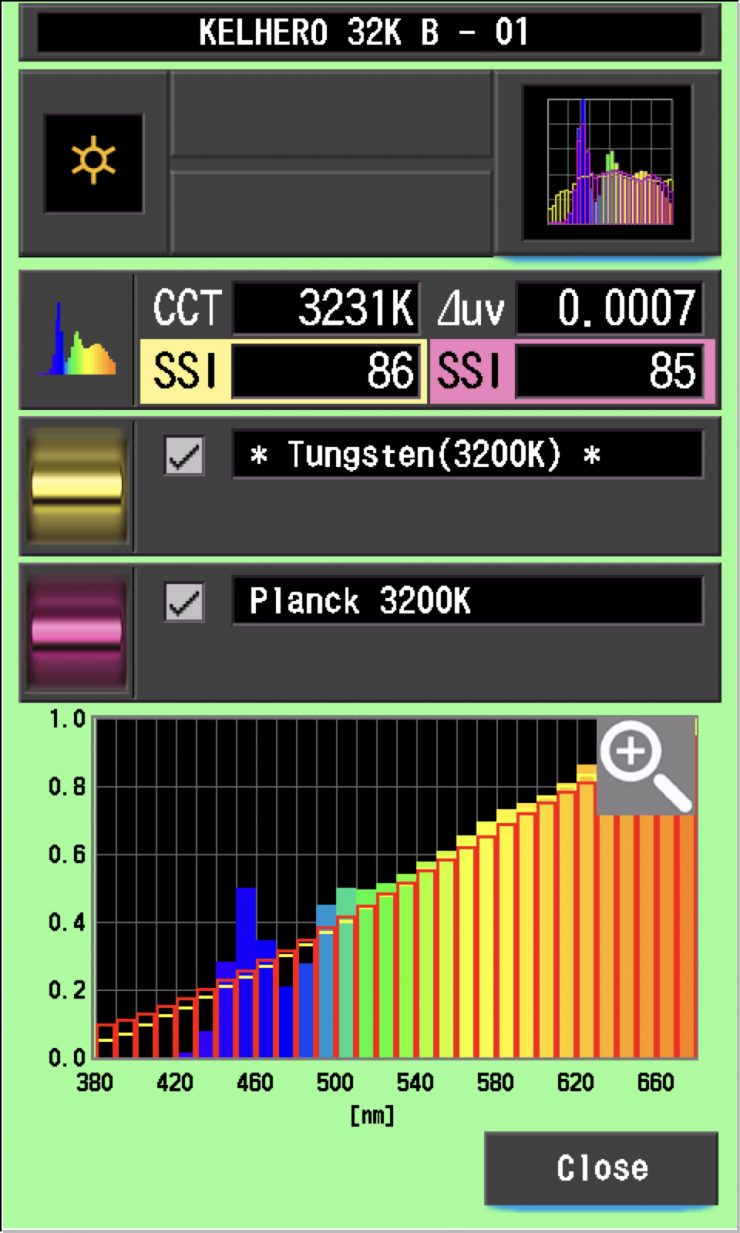
In this graph, the red bars indicate a perfect Planck 3200K source. The gold bars indicate a perfect 3200K Tungsten source. This lets us compare how close to a perfect 3200K lighting source the Kelvin Play Hero is. Any SSI score in the low ’80s is very good for a 3200K LED light. As you can see, LED lights have a hard time replicating colors below about 450nm.
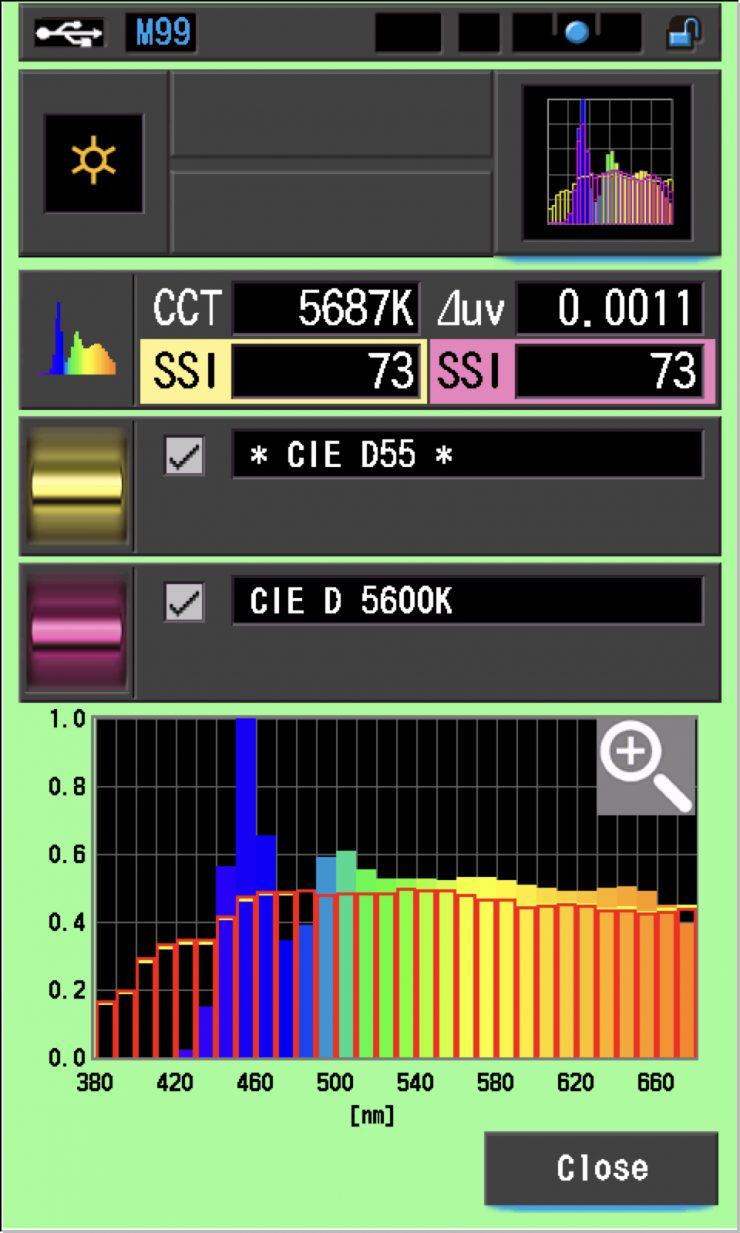
In the graph above, the gold bars indicate a perfect CIE D55 source. The red bars indicate a perfect CIE D 5600K source. A score in the low 70’s is very good for a 5600K LED source. If you look at the⊿uv value, it is 0.0009. The ⊿uv value shows how much this light is away from being an ideal light source (black body radiation = incandescent lamp). This light was almost perfect.
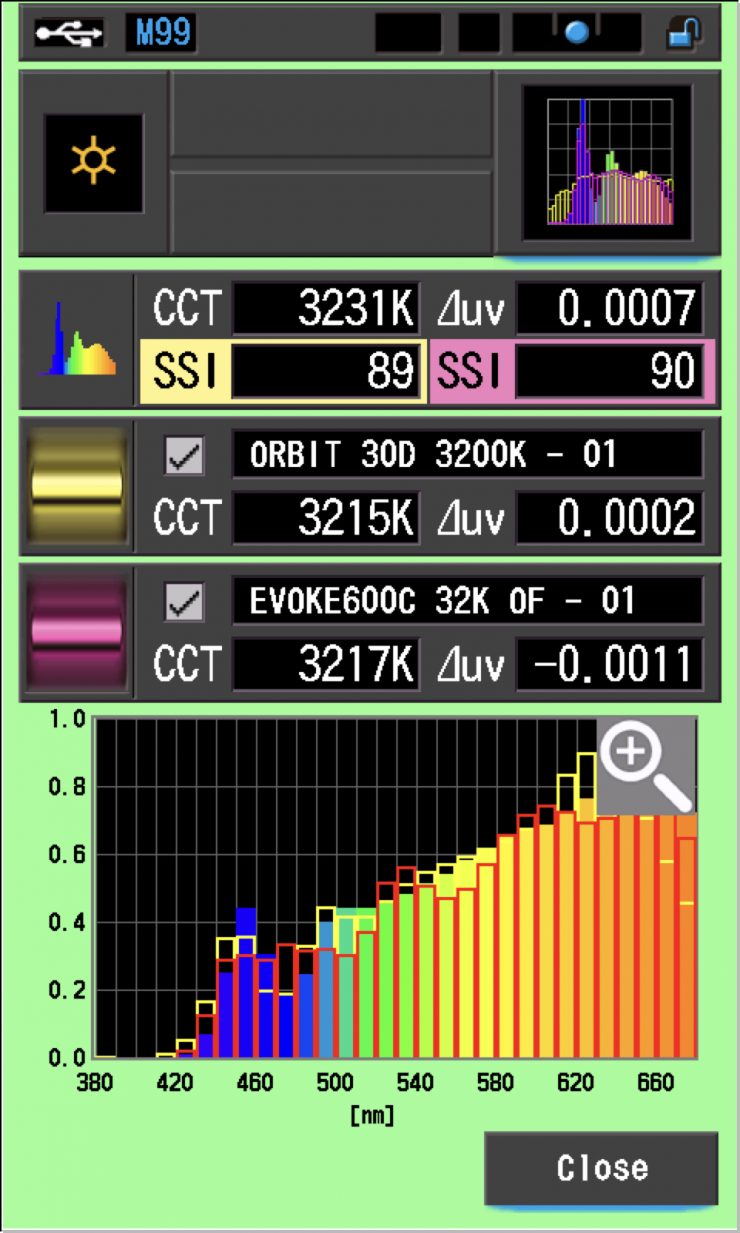
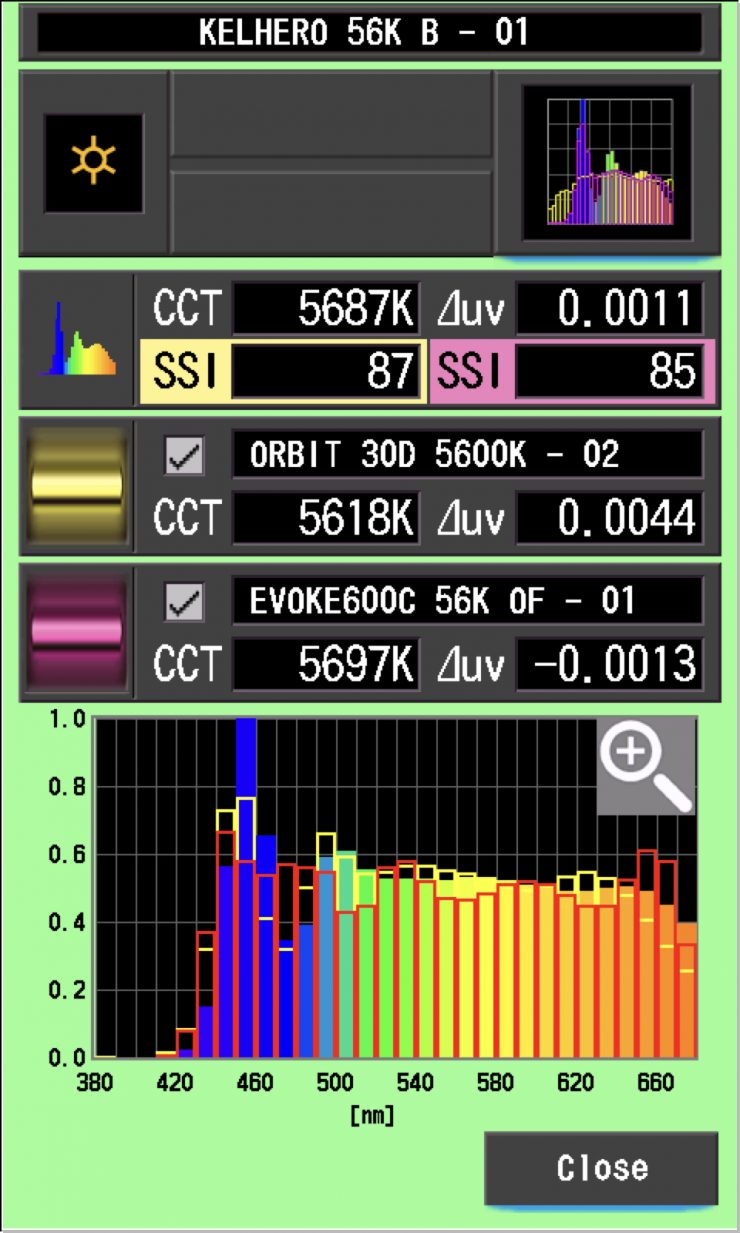
The main reason we want to record SSI scores is so we can see how well they match with other lights. As an example, let’s see how well it matches with an ARRI Orbiter and the NANLUX EVOKE 650C. Above, you can see the results at 3200K and 5600K. As you can see, the Kelvin Play Pro was a pretty good match with both lights.
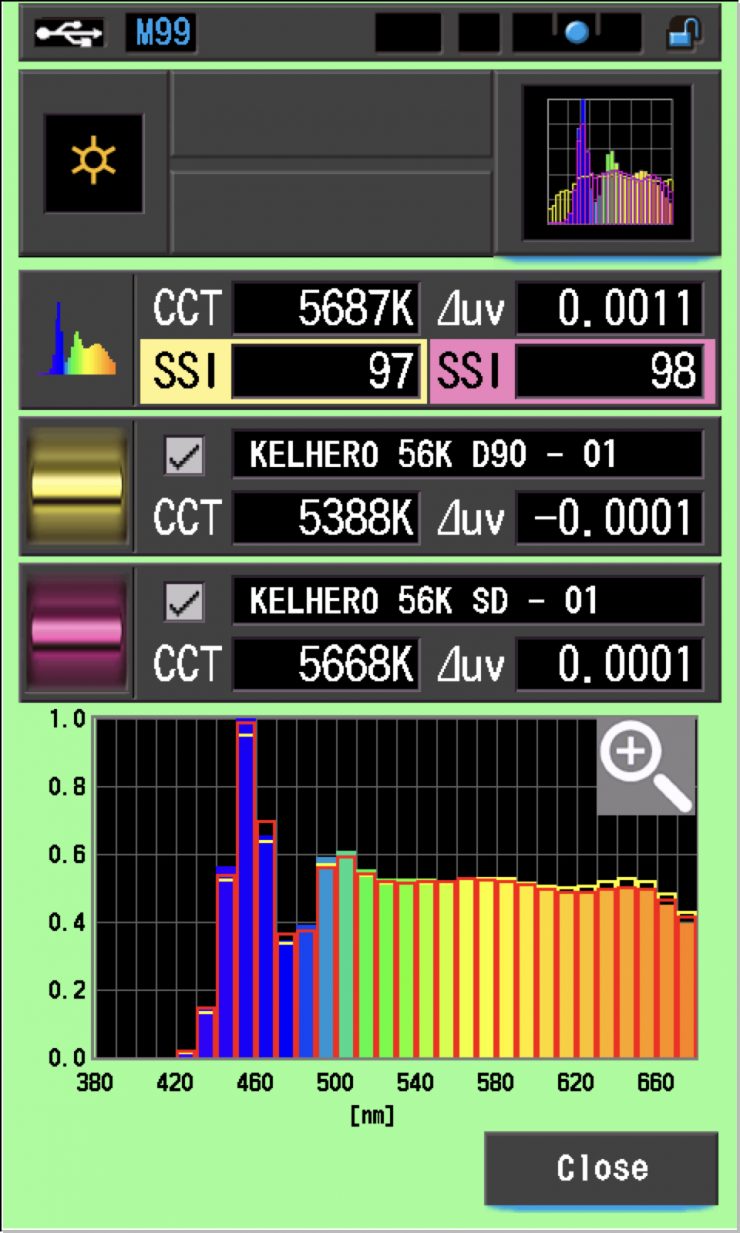
I also wanted to see how well the Kelvin Play Hero matched itself when using the D90 Diffusion and the Sparkle Diffuser. As you can clearly see, you could use a Play Hero with the D90 Diffusion or the Sparkle Diffuser, and they would be almost indistinguishable.
SSI tests are a great way of telling you what lights you own or use will work well together.
Spectral Distribution
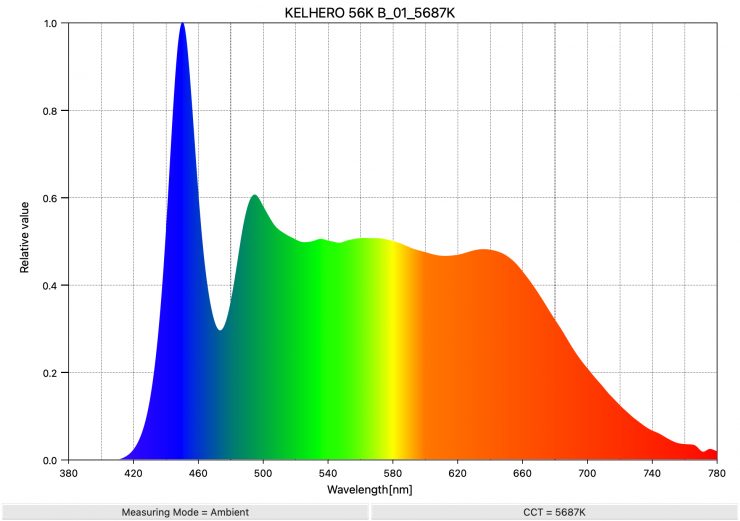
Above, you can see the spectral distribution of the Kelvin Play Hero when it is set at 5600K. The spectral distribution is reasonably full and even.
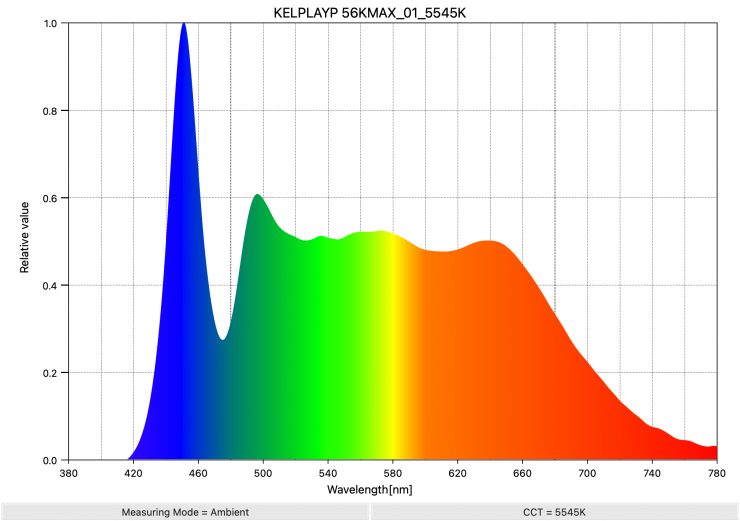
As a comparison, above you can see the spectral distribution of the Kelvin Play Pro when it is set at 5600K. The spectral distribution is reasonably full and even.
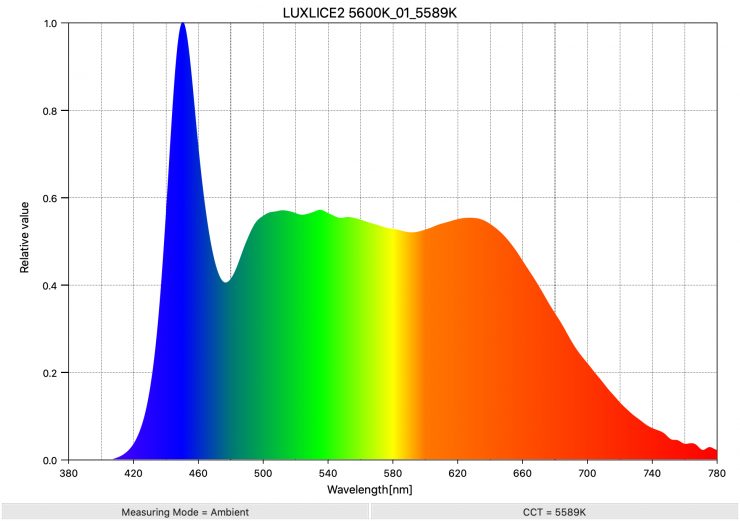
As another comparison, above you can see the spectral distribution of the Luxli Cello² when it is set at 5600K. The spectral distribution is very full and even.
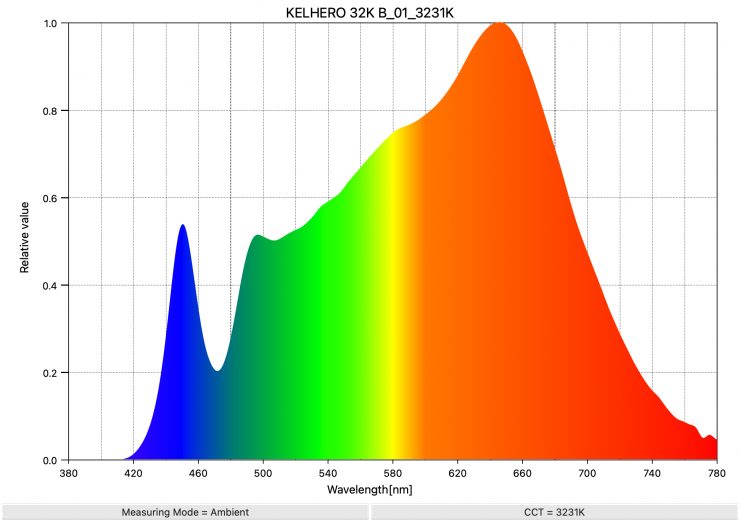
Above, you can see the spectral distribution of the Kelvin Play Hero when it is set at 3200K. The spectral distribution is nice and full.
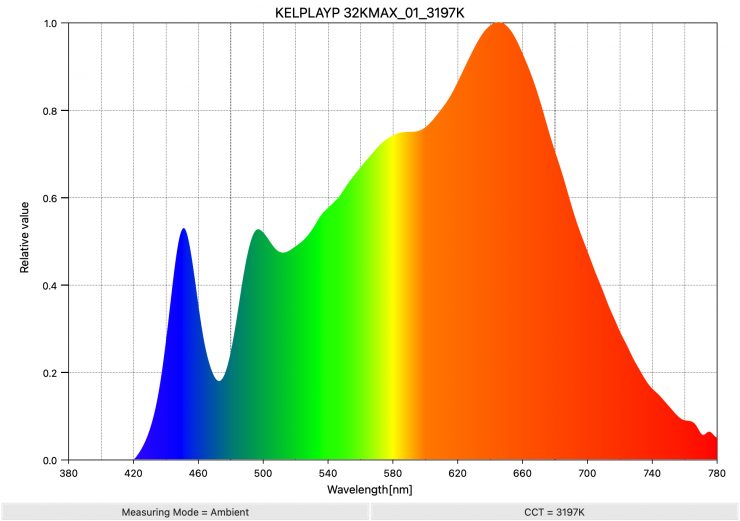
As a comparison, above, you can see the spectral distribution of the Kelvin Play Pro when it is set at 3200K. The spectral distribution is nice and full and there is only a light push towards green.
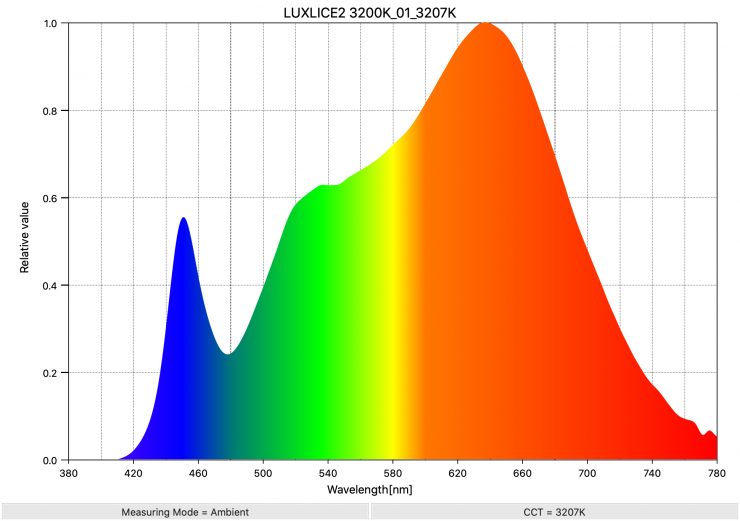
As another comparison, above you can see the spectral distribution of the Luxli Cello² when it is set at 3200K. The spectral distribution is nice and full and there is only a light push towards green.
Real-World Performance & Quality of Light
As I always say, photometric scores only tell you part of the story. So do the scores from the Kelvin Play Hero translate into real-world performance? The photometric data can only give me scientific data, and it is much more important for me to see how the light looks and performs.
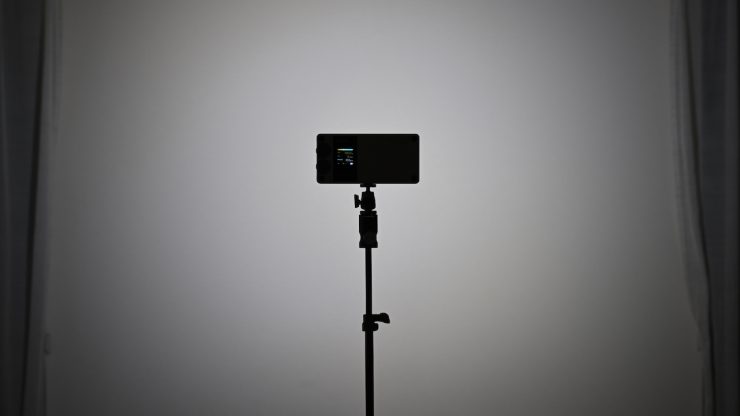
No lighting modifier 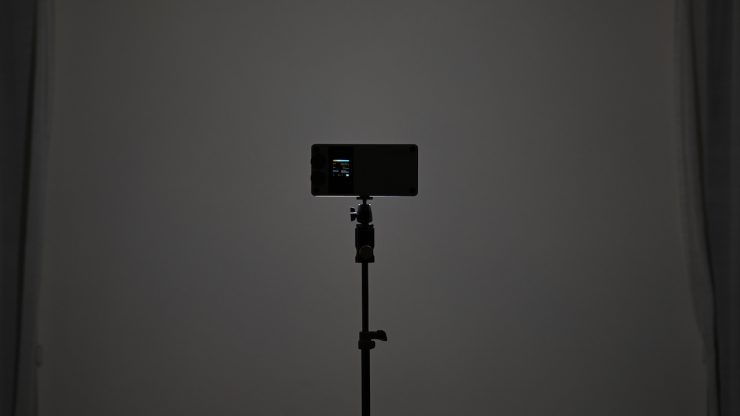
Sparkle Diffuser 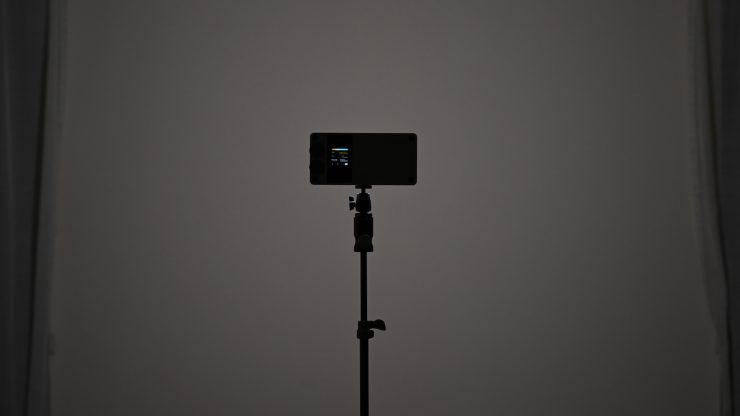
D90 Diffusion 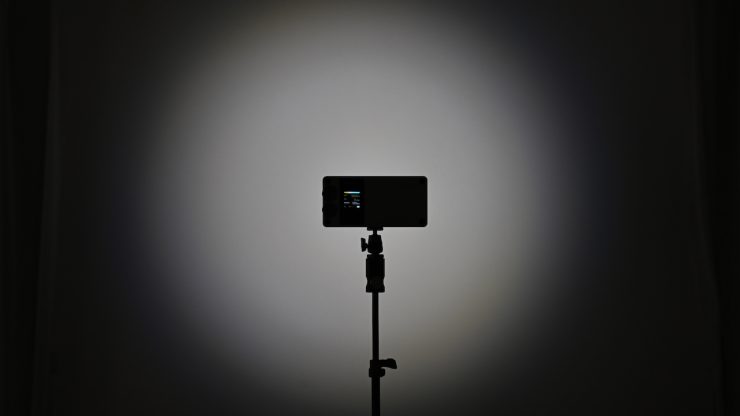
Light Guide 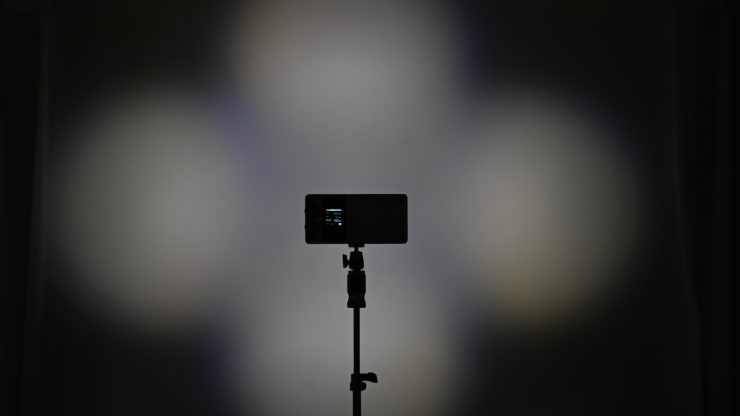
Light Guide & Spacer 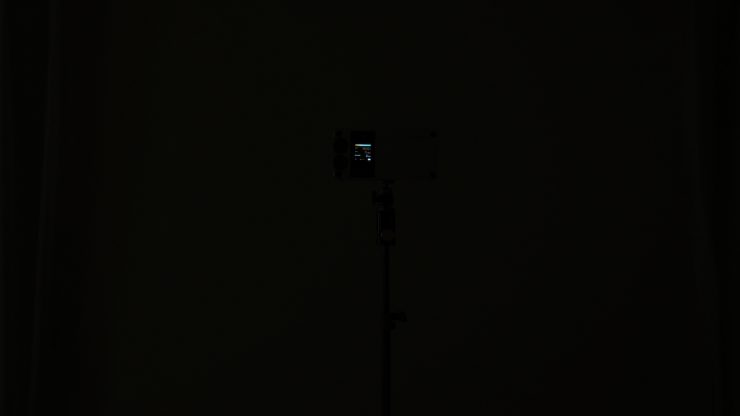
Light Off
Above, you can see what the intensity and beam spread of the Kelvin Play Hero is when used by itself and with the various lighting modifiers. The light is 2m from the wall. I have kept the camera settings exactly the same for all of the shots.
The light can be made to look quite soft; however, anytime you diffuse a small source, you are going to lose quite a lot of output. As the Kelvin Play Pro has a fairly high output, it is actually brighter than you may think. In my opinion, it has enough output that you could get away with diffusing it, but again, it depends on what application you are using it for.

Spacer, D90 & Sparkle Diffusion 
Caligri Eclipse 40 Softbox 
Caligri Eclipse 40 Softbox with skirt 
Caligri Eclipse 40 Softbox with skirt
Above, you can see some examples using just the Kelvin Play Hero and no other lights.
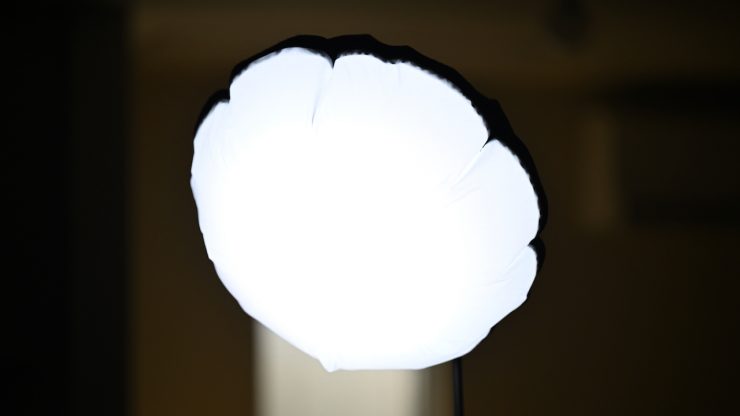
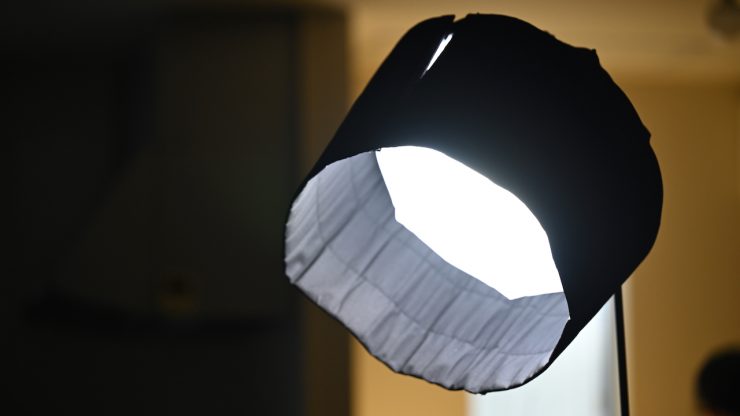
The Caligri Eclipse 40 works really well with the Kelvin Play Hero.
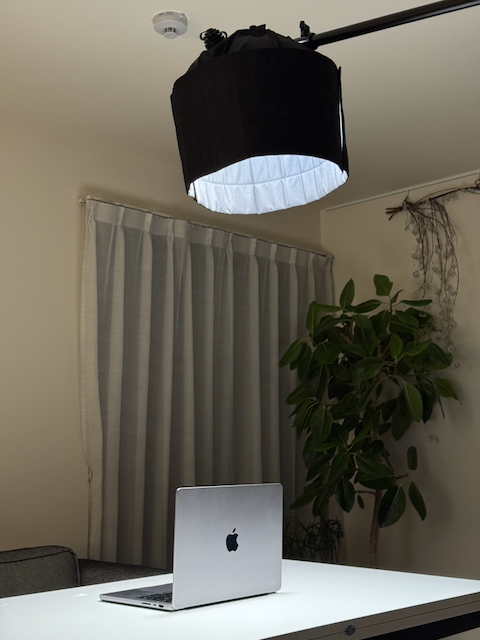
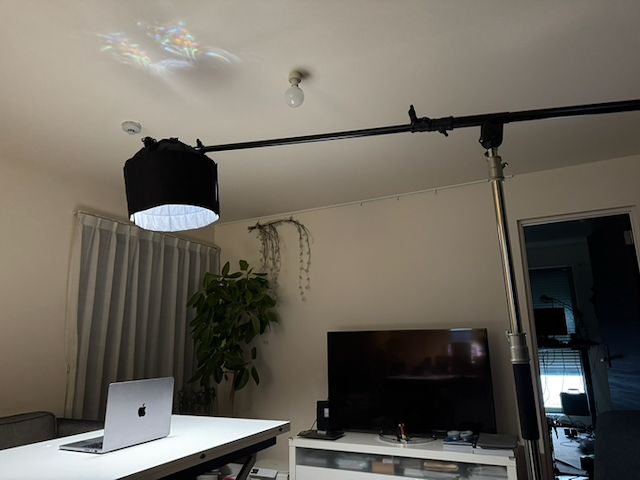

You can also use a couple of Play Hero’s together along with the Caligri Eclipse 40 to create an even larger source that could be used as an overhead light, etc.

No diffusion 
Spacer & D90 Diffusion 
Spacer & Sparkle Diffusion
Above, you can see how the shadows look when using the light with and without the various lighting modifiers.

With the Sparkle Diffusion, you will see a tiny bit of color fringing on the edges of shadows.
The Kevin Play Hero has a good amount of output, especially for such a small-sized fixture with a low power draw. It also offers good usability, and it is really well-made. This all comes with the added benefit of the light being extremely color-accurate.
Having digital filters, special effects, and HSI modes is great, but most users will just want to create really nice white light, and that is something the Kelvin Play Hero does exceptionally well.
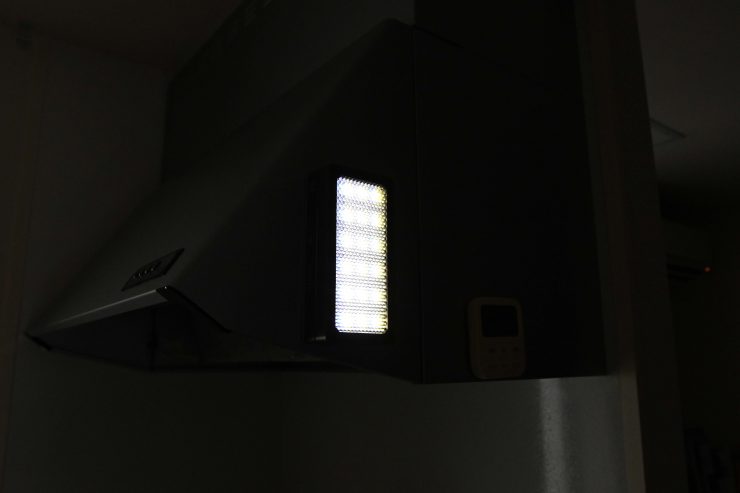
The magnetic accessories are fantastic, and Kelvin gives you a multitude of ways to diffuse or alter the light.
Who is the Play Pro Hero aimed at?
The Play Pro Hero could be used for a lot of different applications, but it is probably a fair assumption to say that it is being aimed as an on-camera light or small accent light for owner-operators. In saying that, in a pinch, you could use three of the lights to create a small and mobile interview lighting kit.
The light is competitively priced given its feature set and outstanding performance, although it will cost you a little more than some other similar alternatives on the market.
Other Alternatives
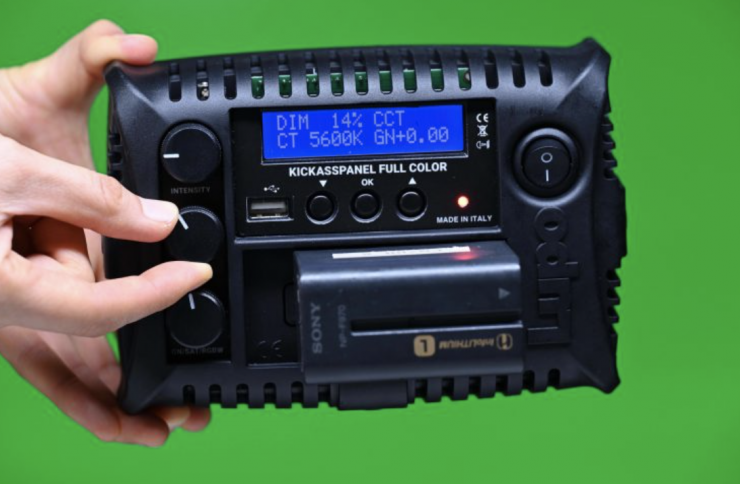
The main competition for the Play Pro Hero arguably comes in the form of the following lights:
- Luxli Luxli Cello² 10″ On-Camera RGB LED Light Panel
- Luxli Viola² 5″ On-Camera RGB LED Light Panel
- Lupo Kickassapanel Full-Color RGBW
- Luxli Fiddle Pocket
- DMG Lumiere DASH Pocket RGB LED Light Panel
- PFY Matrix Pocket-Sized Portable Bi-Color RGB Light
- Pilotfly AtomCUBE Rx1 RGBCW Pocket LED
- YY-C150 RGB LED video light
- Astera FP6 HydraPanel
- BOLING Pocket LED RGB Video Light
- Aputure MC RGBWW LED Light
- Falcon Eyes PockeLite F7 RGBW On-Camera Light
- Genaray RGB-CP425 Compact On-Camera RGB LED Light Panel
All of these lights have their strengths and weaknesses. It is important to note that a lot of these competing lights are actually the same light that has just been rebranded under a different name.
Price & Availability
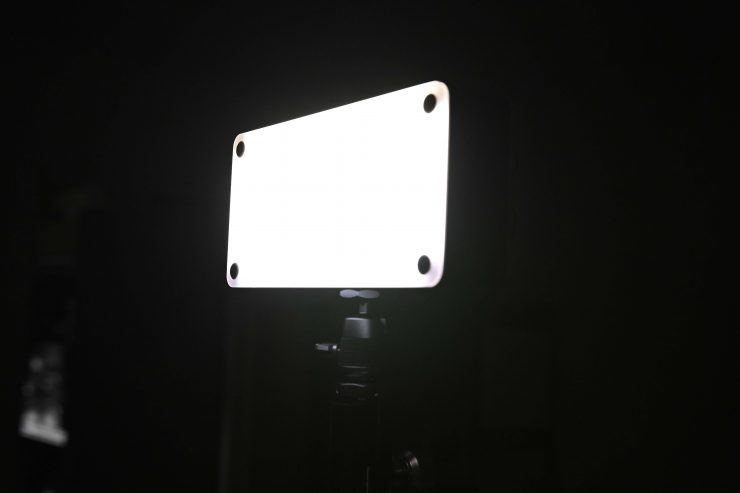
The Kelvin Play Hero is priced at $299 USD, and it is available to pre-order.
Below you can see how the price compares to the competition:
| PRICE | |
| Kelvin Play Hero | $299 USD |
| Kelvin Play Pro | $349 USD |
| Luxli Cello² | $449 USD |
| Luxli Viola² 5″ On-Camera RGB LED Light Panel | $399 USD |
| Luxli Fiddle | $199.99 USD |
| DMG Lumiere DASH Pocket RGB LED Light Panel | $265.25 USD |
| Aputure MC Pro RGB LED Light Panel | $199 USD |
| Godox RGB Mini Creative M1 | $129 USD |
| Godox C5R Knowled RGB Creative LED Light | $69 USD |
| SmallRig RM75 Mini On-Camera LED Video Light | $79.99 USD |
| SmallRig RM120 Compact RGB LED Light with Long Battery Life | $50.99 USD |
| amaran Ace 25x Bi-Color LED Light Panel | $69 USD |
| Astera FP6 HydraPanel | $324 USD |
| YY-C150 RGB LED video light | $259.99 USD |
| BOLING Pocket LED RGB Video Light | $89.99 USD |
| Aputure MC RGBWW LED Light | $90 USD |
| Falcon Eyes PockeLite F7 RGBW On-Camera Light | $99 USD |
| Genaray RGB-CP425 Compact On-Camera RGB LED Light Panel | $75 USD |
| Zhiyun FIVERAY M40 Powerful 40W Pocket LED Light | $69 USD |
The Kelvin Play Pro Hero is more expensive than most other similar on-camera RGB lights, except for the offerings from Luxli.
Specifications
What do you get?
- Kelvin Play Hero RGB LED Light Panel
- USB-C Power Cable
- Limited 3-Year Manufacturer Warranty
Accessories
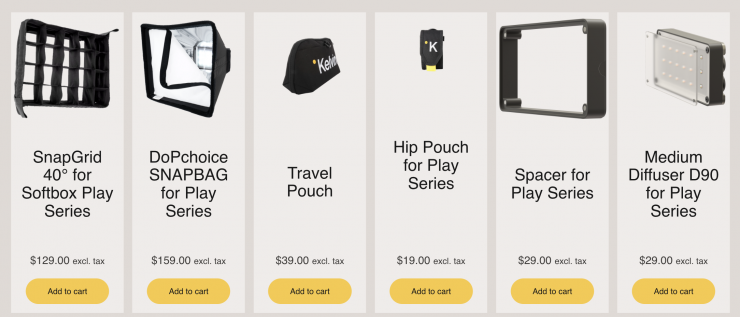
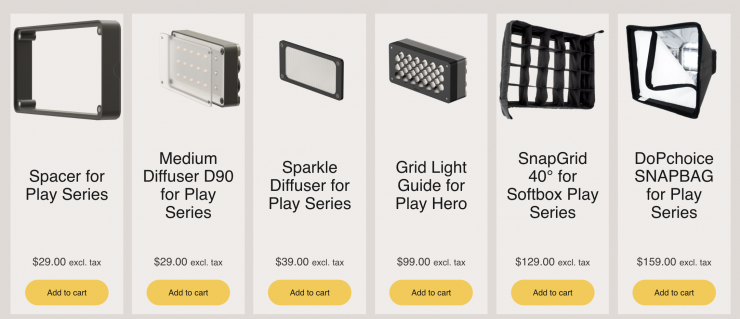
There is also a large array of modifiers available for the Play Pro.
Conclusion
The Kelvin Play Hero is, in my opinion, from the lights I have reviewed, the best small-sized LED light on the market when you consider build quality, output, power draw, size & weight, and photometric performance. It offers exceptionally good color rendering performance and great build quality, and it can be controlled by a fantastic app. The magnetic accessories work really well, and they give the light a lot of versatility as to how it can be used.
The light is very CCT accurate across its whole range, and it’s this type of consistency that you don’t see in a lot of lighting fixtures. The biggest caveat with the previous Play Hero was that it wasn’t super bright, and that only made it suitable for certain applications. There is no such concern with the Kelvin Play Hero.
The light is intuitive and straightforward to use. The app is one of the best lighting control apps that is available, and it is super easy to use and navigate.
Kelvin also offers a nice array of lighting modifiers and accessories for the Play series, which increases its versatility.
Kelvin has done another fantastic job with the Play Hero, and it delivers on all fronts. Its color rendering scores were the best I have seen from any LED light, period. If you are after a small-sized on-camera or off-camera full-color light, then there arguably isn’t anything better on the market. I highly recommend this light.