

2025 was another busy year for the team at Newsshooter, and we saw plenty of new products released in 2025.
So, what were our favorite products of 2025? Well, Erik and Matt have assembled a list of what most impressed them during 2025. Their picks are personal choices based on what gear is relevant and useful for the type of work they do. At least in our opinion, it is impossible to award the best products because people’s needs and requirements differ so much. What might be a great product for you won’t be a great product for someone else.
We would also love to hear from our readers about their favorite products of 2025. Feel free to tell us what your favorites were in the comments section.
Now, the criteria for these selections were as simple as following a few rules:
- The product needed to be officially announced for the first time in 2025 (we did bend the rules here slightly with some of our picks!)
- You had to be able to purchase and have the item shipped in 2025
Erik and Matt have both picked a winner and one or two honorable mentions. Just to be crystal clear, these selections are personal choices; otherwise, they may have still been debating (or arguing!) over the winner of each category.
The categories are:
- Digital Cinema Camera
- Budget Digital Cinema Camera
- Mirrorless Hybrid Camera
- Light
- Lighting Accessory
- Lens
- Audio Product
- Camera Accessory
- Camera Support Device
- Innovation
- Software
Favorite Digital Cinema Camera
MATT’S PICK: ARRI ALEXA 35 Xtreme
I would have chosen the PIXBOOM SPARK, but that camera isn’t shipping yet. Instead, I went with the ARRI ALEXA 35 Xtreme.
ARRI took what was already a great camera and made it better. The ALEXA 35 Xtreme is an extension of the ALEXA 35, but it has a new processor inside, a new extra board, more memory, a new codec, faster frame rates, and a new antenna.
It replaces the ALEXA 35, and it includes almost all ALEXA 35 features. In addition, it offers high-speed shooting capabilities of up to 660 frames a second, a new codec that is called ARRICORE, five times longer pre-recording, lower power consumption, better Wi-Fi, streamlined recording formats, and backwards compatibility with all the ALEXA 35 accessories.
Yes, it’s expensive, but it is arguably the gold standard that all other digital cinema cameras (that you can purchase) are judged on.
MATT’S HONORABLE MENTION: RED V-RAPTOR XE
I would have chosen the Blackmagic Design URSA Cine 17K, but that was actually first announced in 2024. Instead, I went with the RED V-RAPTOR XE. In changing times, it makes sense for RED to offer a more affordable version of their V-RAPTOR.
This newest addition to the Z CINEMA camera lineup is a streamlined version of the V-RAPTOR [X]. The camera is available in Nikon Z or Canon RF mount.
The camera retains RED’s 8K large format (VV) global shutter sensor found in the V-RAPTOR [X] series.
Built on RED’s DSMC3 platform, the XE provides a large-format VV sensor in a lightweight 1.81kg / 4 lb body. It can capture 8K video at up to 60 fps with a claimed 17+ stops of dynamic range. To balance high-end performance with value, the XE omits advanced Global Vision features like Phantom Track and Extended Highlights, but retains the same image quality, workflow flexibility, and connectivity as the rest of RED’s V-RAPTOR line.
ERIK’S PICK: FUJIFILM GFX ETERNA 55 Cinema Camera
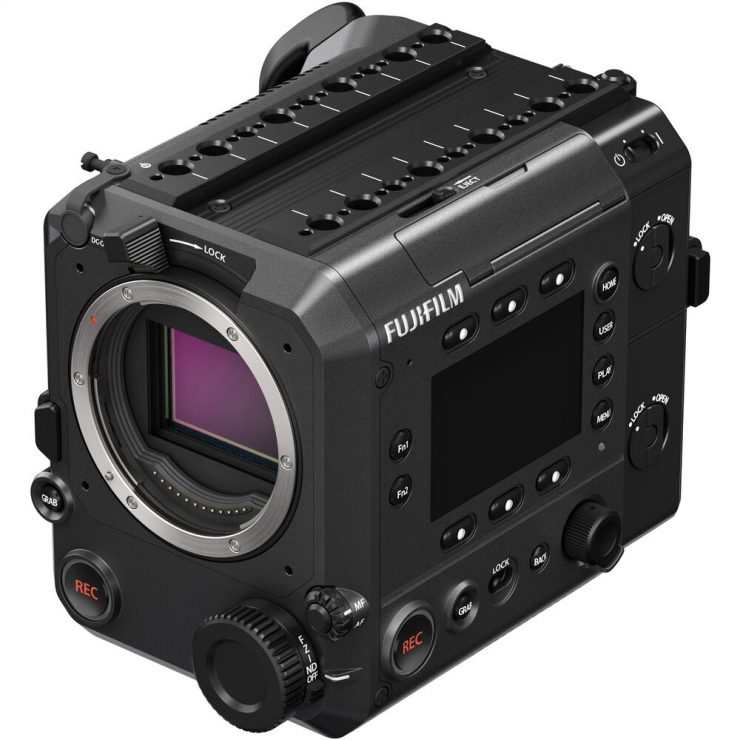
I’m cheating on this one! Sorry Matt 😜. It has to be said that new cinema cameras are rare, as they cost so much and the market can’t support them. I have to tip my hat to Fujifilm for working hard over a year to get their GFX ETERNA 55 Cinema Camera ready for market, and in 2025, they finally did it! It’s a big swing, and I respect and appreciate them doing it.
The medium-format cinema camera is somewhat of a niche camera, but I think Fujifilm is looking more to the future than to today, plus they make very good lenses that I think we will see more of them for this exciting camera in 2026. It’s expensive at $16,499.95, heavy, and niche. I love it!
Key features
- Large-Format Sensor, Variable ND
- 4K48 4:3 Open Gate, 6.3K24 Super 35
- 14.5-Stop Dynamic Range, Dual-Native ISO
- Internal ProRes 422 HQ, H.265, Proxies
- Ext HDMI 10-Bit Uncompressed, 12-Bit Raw
- 5″ 16:9, 3″ 3:2 Touchscreen LCD Screens
- 20 Film Simulations, F-Log2/C 3D LUTs
- FUJIFILM G and ARRI PL Lens Mounts
- Ethernet, BLE with TG-BT1/ATOMOS AirGlu
- CFexpress and SD Card Slots, USB-C Port
Favorite Budget Digital Cinema Camera
MATT’S PICK: Canon C50
While far from perfect and not featuring any internal ND filters, there is a lot to like about the Canon C50. You would be hard-pressed to find a better digital cinema camera for under $4,000 USD.
The EOS C50 features 7K Open Gate Internal RAW recording at up to 30p, 4K at up to 120p, and 2K at up to 180p. With the popularity of the compact Sony FX3 and FX30 cameras, it made sense for Canon to enter the super-compact cinema camera market with an even more compact Cinema EOS camera.
There are numerous third-party rigging options available, and it is nice that Canon includes an audio top handle with proper XLR inputs with the camera.
MATT’S HONORABLE MENTION: Blackmagic Design PYXIS 12K
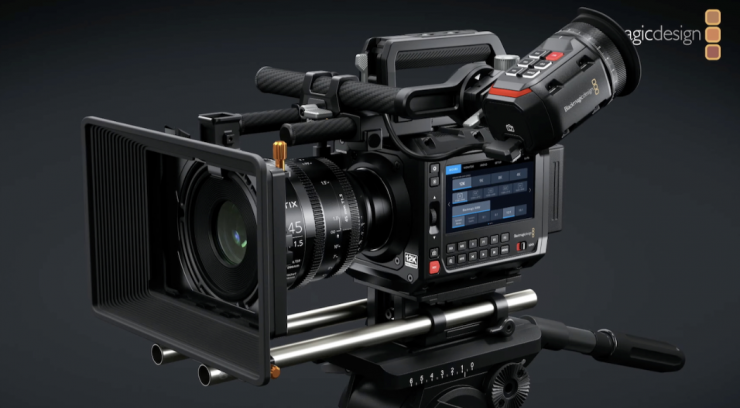
The PYXIS 12K Cinema Box Camera is a follow-up to the Blackmagic PYXIS 6K that was unveiled at NAB 2024. The new 12K version features the same box design and form factor as the original Blackmagic PYXIS 6K, but with a larger sensor and increased resolution.
The large format sensor in the PYXIS 12K allows you to shoot in 3:2 open gate, and you can also use the large sensor area to shoot anamorphic and deliver in a range of aspect ratios with 1.3, 1.5, 1.6, 1.66, 1.8 and 2x de-squeeze factors. Plus, you can shoot in 4K, 8K or 12K using the entire sensor without cropping, retaining the full field of view of your lenses. There are even 9K Super 35 4-perf, 3-perf, and 2-perf modes for full compatibility with classic cinema lenses.
At under $5,500 USD, it offers very good value for money.
ERIK’S PICK: Canon C50
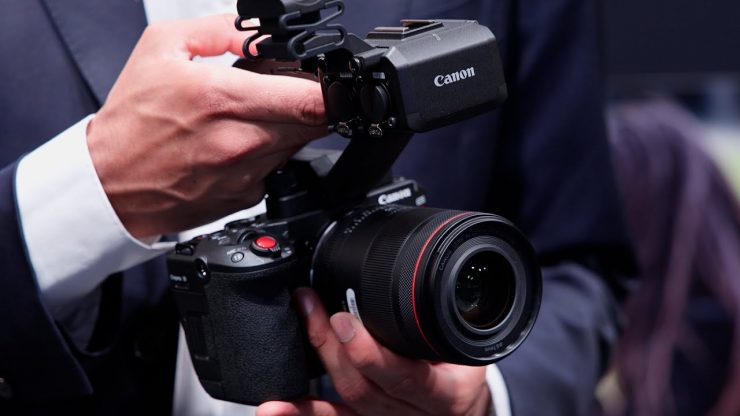
I like the direction Canon has taken with its Cinema and Hybrid cameras in 2025. Remember when they said if you want a video camera, buy the C300?
The C50 is a great option for shooters in the Canon Cinema EOS ecosystem, allowing a more petite body for gimbal work and B-cam, plus you get a lot more than your photo-centric stills camera with full-size HDMI and timecode via DIN port.
Top it off with the handle that has two full-sized 3-pin XLR inputs with 48V phantom power, allowing you to integrate shotgun microphones. A built-in start/stop recording button and a zoom rocker offer easy-to-reach controls when filming low-angle shots.
ERIK’S HONORABLE MENTION: Nikon ZR
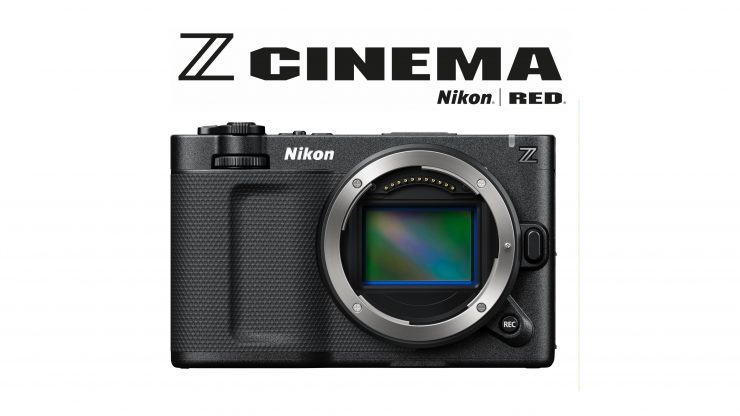
It’s great to see Nikon introduce a new hybrid camera with features acquired from its acquisition of RED, and it’s only the beginning. Some exciting times ahead for Nikon, but the competition is high.
Arguably the best raw format. The Nikon ZR has REDCODE RAW (R3D NE). and can record up to 6K/60p (59.94p). I love that it has 32-Bit Float audio. Once you use it it’s hard to go back.
ERIK’S WILD CARD HONORABLE MENTION: Apple iPhone 17 Pro Max

Yeah, I know, but the iPhone keeps giving, and the 17 Pro Max is a powerhouse of a camera that also makes phone calls and so much more. We all have to shoot on the go, but IQ is improved with every model, including ProRes RAW and much-improved camera apps such as the Blackmagic Camera app and Final Cut Camera. Oh, and those are free options!
I use my iPhone for broadcast work, and the need for social media posts for news promotions shot in portrait has grown even more in 2025. I wouldn’t want to make it my primary camera, but if you use the iPhone like a cinema camera, the results are impressive.
Favorite Mirrorless Hybrid Camera
MATT’S PICK: Nikon ZR
This could arguably be a contentious choice, but the ZR is Nikon’s first mirrorless hybrid to feature the ability to capture REDCODE RAW (R3D NE). The Nikon ZR can record up to 6K/60p (59.94p), 32-Bit Float audio, a dual-base ISO, and a bright folding 4″ DCI-P3 display.
While it certainly has its limitations and quirks, and it has been overly hyped, its small, compact size and affordable pricing make it a compelling option.
MATT’S HONORABLE MENTION: Panasonic S1 II
The S1 II can capture up to 5.1K 60p open gate, and it features Panasonic’s first partially-stacked sensor, which is claimed to improve read-out speeds. The camera is smaller and lighter than the original S1, and Panasonic has also improved the autofocus and AI subject detection.
The S1II is packed with advanced, creator-friendly video recording features, such as a partially stacked CMOS sensor with high-speed readout, and supports open gate 6K 30p (3:2) and 5.1K 60p (3:2) recording, C4K/4K 120p high frame rate video, and high resolution / low noise oversampled 4K video.
Favorite Lens
MATT’S PICK: Tokina Cinema Vista-C Cinema Primes
There were a lot of lenses released in 2025, and like every year, this category was a very hard one for me to pick. I ended up selecting the Tokina Cinema Vista-C Cinema Primes. I had a chance to use these lenses on a feature-length documentary, and I really liked the results I got. At least in my opinion, the Tokina Vista primes are massively underrated.
We have seen Tokina Cinema release the Vista One primes and the Vista-P series, but this new addition to the line-up features quite a different approach altogether. Unlike the Vista, Vista One, and Vista-P lenses, which utilize the same base optics, the Vista-C features completely new optics.
The Vista-C primes offer a unique vintage look with natural falloff, softer edges, blue and red flare tones, subtle distortion, and pleasing bokeh for full-frame plus sensors up to 65mm in a reliable modern design.
There is certainly no doubt about the optical performance of these lenses. They are very sharp even when used wide open, and they produce beautiful bokeh and a soft fall off.
MATT’S HONORABLE MENTION: DZOFILM Vespid Prime II
With so much affordably priced cinema glass now on the market, competition is fierce. I chose the DZOFILM Vespid Prime II as they arguably offer a good compromise between speed, price, and performance.
The Vespid Prime II Full Frame Cinema Lenses include Cooke /i-Technology metadata. If your camera doesn’t support the /i-Technology basic metadata is still compatible.
DZOFILM released six focal lengths: 18mm, 24mm, 35mm, 85mm, and 105mm. The lenses all have a T1.9 aperture with sixteen iris blades for a clean bokeh, and they feature a consistent weight and size to make swapping out easy.
At under $1,300 USD each, these lenses offer excellent value for money, and they are a big step up over the original Vespid primes.
MATT’S HONORABLE MENTION: Laowa Sunlight 2x FF Anamorphic Zoom Series
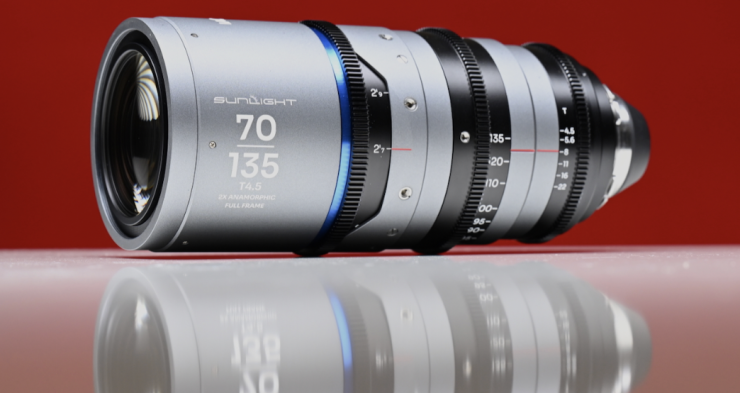
The Sunlight 2x FF Anamorphic Zoom Series is claimed to bring a new level of versatility and accessibility to full-frame anamorphic filmmaking. They are also claimed to be the World’s first front anamorphic full frame 2x anamorphic zooms.
The lenses come in PL mount by default; however, optional Canon RF/ Nikon Z/ Sony E / L mount bayonets are available for purchase. The first two lenses in the new series are the 40-80mm T4.5 and the 70-135mm T4.5.
The Sunlight zooms, just like the Prroteus zooms and primes, are well made, and optically they are far and away a lot better than anything else I have seen or used when it comes to relatively affordable anamorphic lenses.
They certainly punch well above their weight, and I think Laowa has done a very good job at coming up with 2x anamorphic primes and zooms that are very much underrated and probably not appreciated as much as they should be. The biggest issue Laowa is likely to face is that a lot of shooters are more than happy to use the myriad of ‘affordable’ anamorphic lenses that have flooded the market in recent years. Companies have been able to cut corners and make small, compact, full-frame anamorphic primes because optically, they don’t need to be that good, and a lot of people are more interested in the character of the lens, as opposed to its optical performance.
ERIK’S PICK: Sigma 28-45mm T2 FF Cine Lens
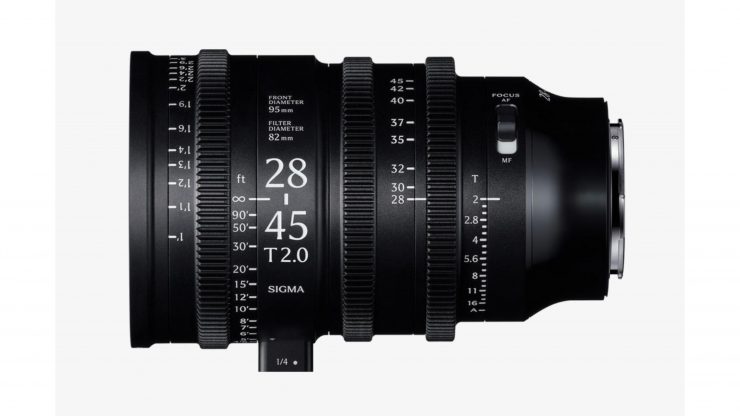
I like Sigma lenses, and this one is a nice stills-to-cine version. It’s based on the popular 28-45mm f/1.8 DG DN Art lens. It’s a zoom lens for full-frame cinema cameras that also features autofocus with a constant T2 to T16 aperture throughout the entire zoom range, and it has a switch that changes the lens from manual to autofocus. It features an 11-blade aperture that provides a soft bokeh.
The lens is compact and comes in Sony E-mount and Leica L. While I haven’t tested it, it isn’t stated to be parfocal, which is one downside.
Erik’s HONORABLE MENTION: DZOFilm Vespid2 T1.9 Prime
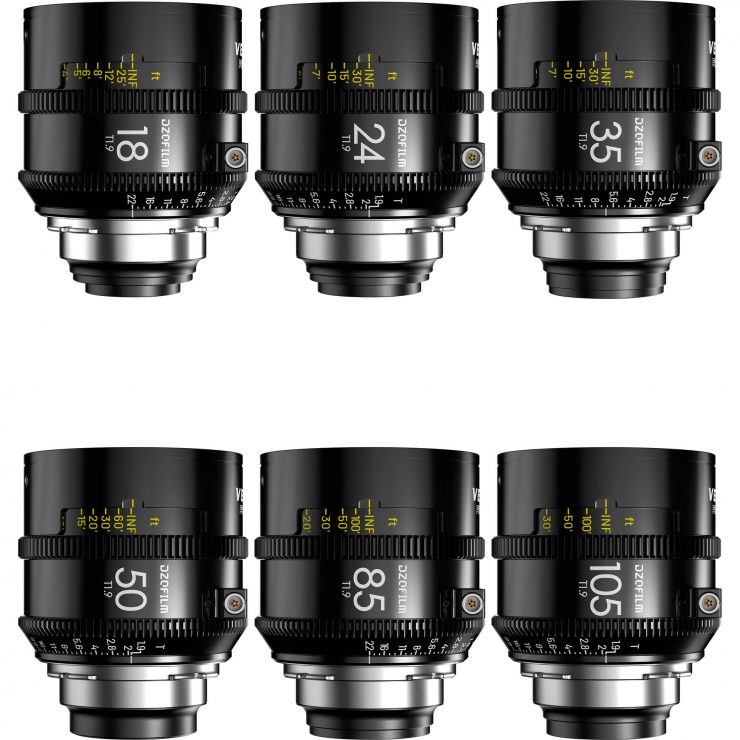
DZOFilm has come a long way in a short time. Some of their first offerings were touted as offering a ‘vintage feel’, but they weren’t particularly sharp, especially when used wide open. The Vespid2 T1.9 Primes are designed to be sharp, high-performance cinema lenses, and the price for a six-lens kit at $6,289.00 is very competitive indeed.
The Vespid2 series has six focal lengths:
- 18mm T1.9
- 24mm T1.9
- 35mm T1.9
- 50mm T1.9
- 85mm T1.9
- 105mm T1.9
Favorite Light
MATT’S PICK: NANLUX EVOKE 600C
Lighting is a very hard category. I reviewed a lot of lights this year, and picking just two was a tall order. My winner was ultimately the NANLUX EVOKE 600C.
It was good to see NANLUX release some smaller-sized Evoke fixtures, as they are likely to appeal to a much wider audience than larger and more power-hungry fixtures. In recent years, we have seen lighting companies chasing high output, and while there is nothing wrong with that, ultimately, it’s the quality of the light that arguably matters the most. For a lot of owner/operators, lights in the 300-600W power draw range tend to be the sweetspot between size & weight, output, and power draw.
The Evoke 600C is an extremely impressive fixture, and it does a lot of things really well, without compromising on any of them. You get a good amount of output, and that output isn’t at the expense of color accuracy. It is right up there with some of the best lighting fixtures I have ever reviewed.
MATT’S HONORABLE MENTION: Aputure 700x
I would have picked the Aputure STORM 80c, but that was announced late in 2024. Instead, I have gone with the STORM 700x.
The STORM 700x features the same BLAIR light engine that is found in the STORM 400x and 1200x.
The greatest challenge for the STORM 700x was to come up with something that was better than their own Light Storm 600 series fixtures. A lot of shooters love the balance of size, power draw, and output that the 600 series offered. These lights were powerful enough to be used as a key in daylight, yet still portable enough for one person to carry around in their personal kit and use on a baby pin light stand.
Aputure didn’t want to stray too far from the path, so the trick was to outperform their Light Storms in spectrum quality, versatility, and sheer output while retaining most of the same features and portability.
MATT’S HONORABLE MENTION: Maxima Rapida
The Maxima Rapida is a compact and powerful battery-first LED light with a claimed output of 23,000 lx, low power consumption, an all-weather IP55 rating, all in a fixture that weighs just 1.8kg.
It is compatible with Bowens-S lighting modifiers and Profoto mounts via an adapter. It is CCT adjustable from 2800K-6800K. Rapida brings full mobility without sacrificing the core features of its flagship fixtures. With an efficacy of 115 lm/W, it can operate for nearly an hour at full power on a single 145 Wh V-Mount battery.
It is good to see more lights coming to market that can run from flight-safe batteries.
ERIK’S PICK: Aputure 700x
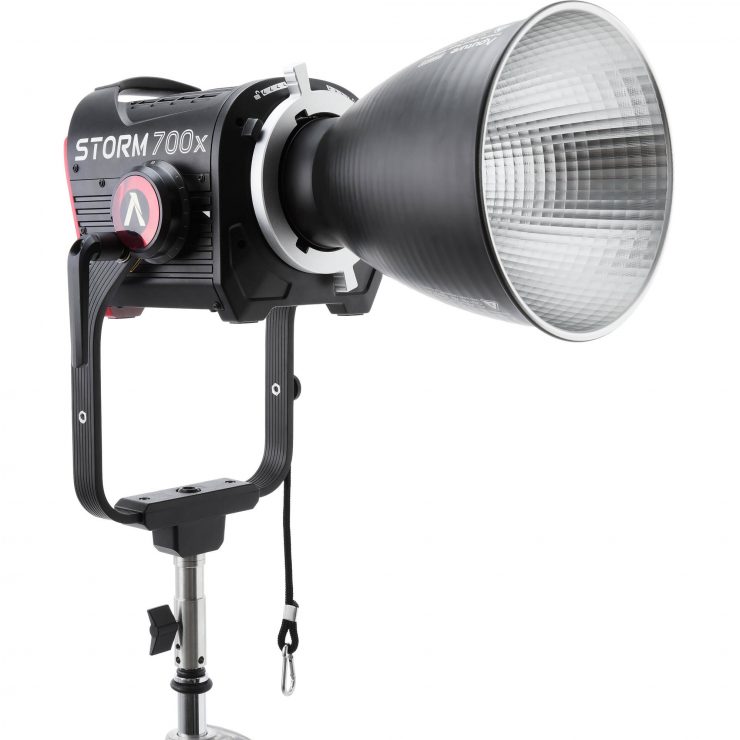
Aputure has been expanding its lineup, adding the BLAIR chipset that features blue, lime, amber, indigo, and red LED emitters to deliver higher brightness levels and color accuracy levels.
Yes, this is a Bi-color only fixture, but it’s intended to be a compact, bright, color-accurate key light, and at $1,690.00 USD. It’s priced right.
ERIK’S HONORABLE MENTION: Godox KNOWLED MG4K Bi-Color LED Monolight
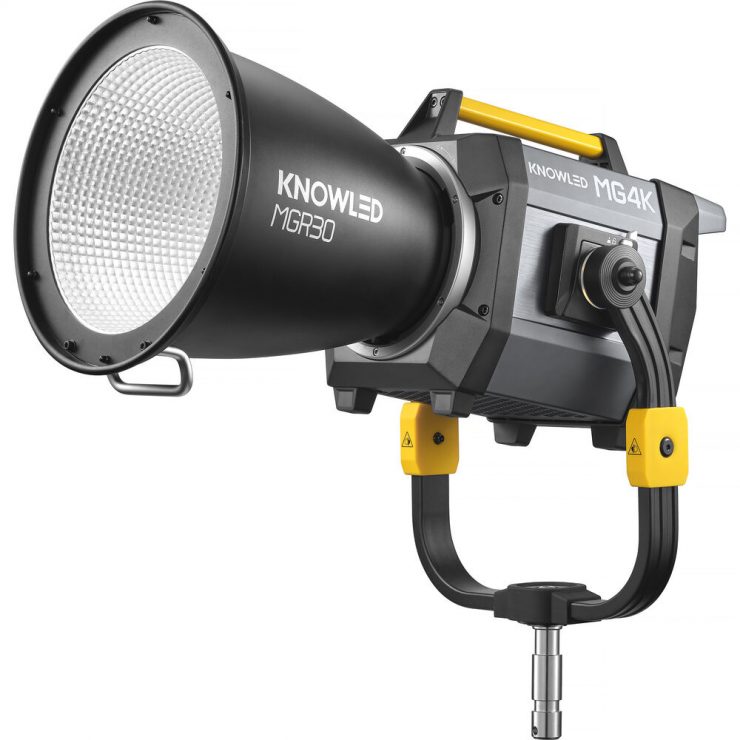
It’s tough to live within the rules announced and released in 2025. So many products are announced at the end of a calendar year. Oh well, I digress. Maybe a 2026 rule change is in order.
The Godox 2000W KNOWLED MG4K Bi-Color packs a lot of punch with a stated output of a 4K HMI. LED sure has come a long way. I think companies decided to go big first, to get the fixtures into professional film sets, and then work backward. If you need output, this will deliver with a stated Output of 640,000 Lux at 3.3′ w/ Reflector.
Favorite Lighting Accessory
MATT’S PICK: Falcam Move LightGo
The Falcam Move LightGo was designed for anyone who wants to streamline their lighting setup process and make it easier to get the ideal position for their lights.
This is a good solution for certain lighting applications and small-sized studios, where you need to reposition lights that are hard to reach or are in fixed positions. The Bowens S mount slides onto a NATO rail, so there is no reason why you couldn’t also use that NATO rail to mount other devices apart from lights. This opens up a lot of possibilities as you could mount cameras and other lighting modifiers.
MATT’S HONORABLE MENTION: NANLITE Bowens Mount Projection Attachment 25°–45°
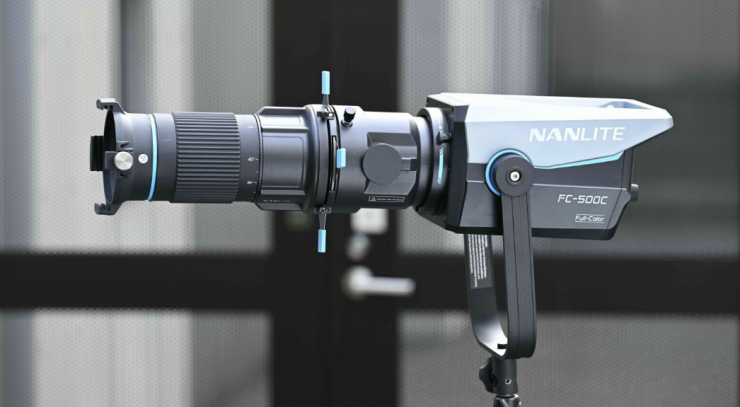
The NANLITE Bowens Mount Projection Attachment 25°–45° (PJ-BM-25-45) features a 25° to 45° beam angle for control over where light is focused.
The projection attachment features a standard Bowens mount, making it compatible with Bowens-mount fixtures under 800W, including NANLITE’s popular Forza, FC, and FS series LED spotlights, as well as numerous fixtures from other brands.
This is a great accessory, and it was good to see a lighting company making a Bowens-S mount version that could be used with a wide array of fixtures from different companies.
ERIK’S PICK: DoPchoice AIRGLOW FRAME
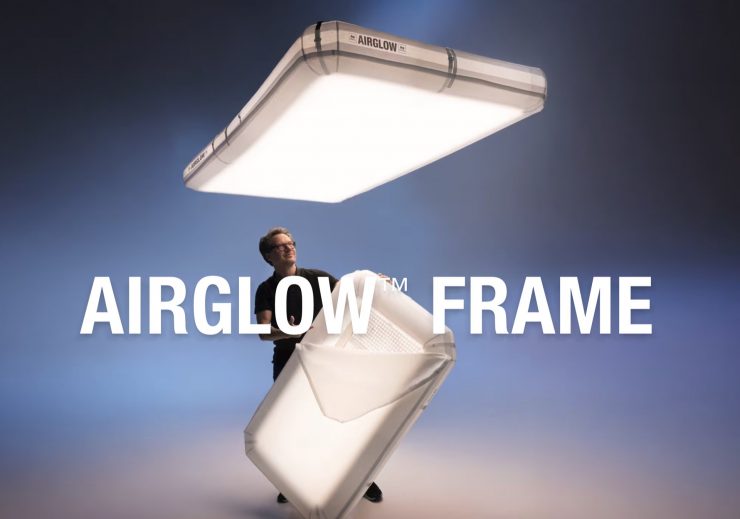
In 2025, we have seen more blowup diffusion options. I personally haven’t used them, but if you need a significant soft source, they can be a good option when using LED mat lighting. I like DoPchoice a lot as their products are well-designed and built to last on professional sets.
They are available in 4×2′ and 8×4′. Pump them up and go. They are compatible with Aladdin and Litegear panels.
Favorite Audio Product
MATT’S PICK: Hollyland LARK MAX 2
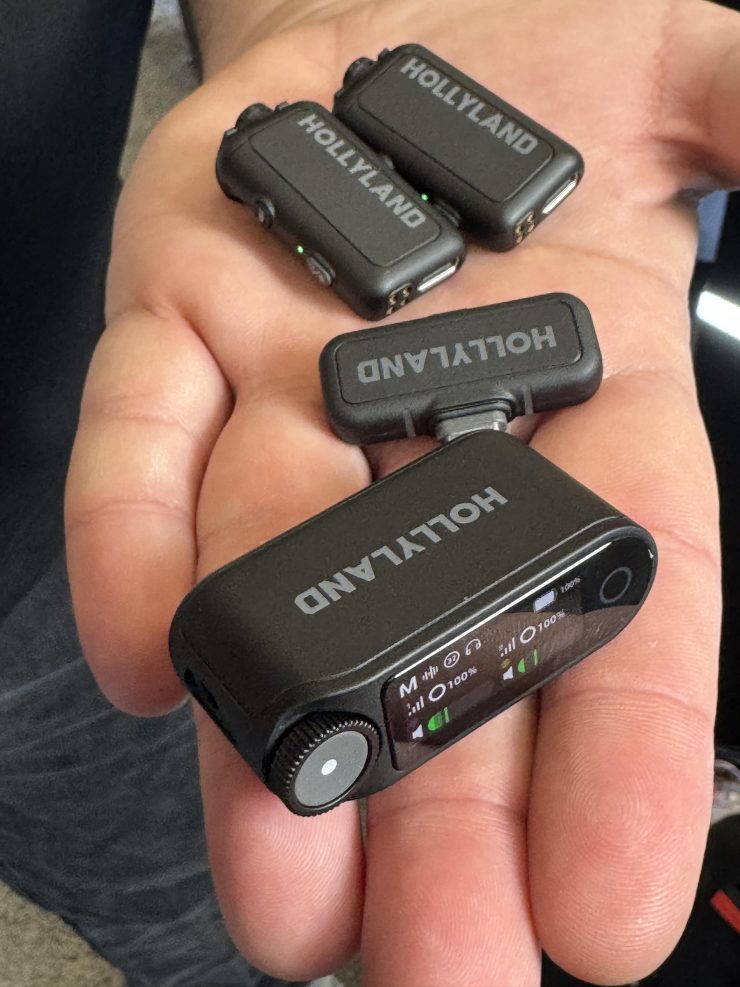
The LARK MAX 2 is a feature-packed, user-friendly digital wireless microphone system with support for wireless monitoring designed for videographers, podcasters, streamers, and content creators.
It lets you capture broadcast-quality sound straight out of the box, recording directly to cameras or USB-C/Lightning mobile devices. It is claimed to be able to deliver 32-bit/48 kHz audio throughout the entire signal chain.
There is AI noise cancellation and auto-gain, and each transmitter also functions as a 32-bit float recorder with a built-in timecode generator, providing backups in case of signal dropouts.
The LARK MAX 2 is an all-in-one wireless lavalier microphone system with MaxTimbre Mic technology and advanced ENC technology. Just like the original LARK MAX, the MAX 2 version has built-in memory for internal recording, but now you will be able to do 32-bit float recordings directly to the small-sized TX units. There is also automated gain control.
The Hollyland LARK MAX 2 offers a lot of features and functionality, and it is good to see Hollyland doing things that other companies are not. The product certainly offers a lot of bang for your buck.
You have to applaud Holland for thinking out of the box and coming up with something different. These affordable 2.4GHz wireless audio systems continue to get better and better.
MATT’S HONORABLE MENTION: Saramonic K9 Digital Duo UHF Wireless Microphone System
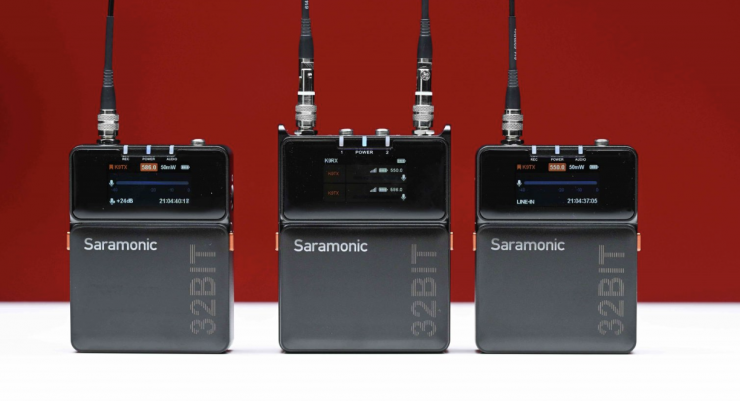
The Saramonic K9 Digital Duo is an all-new wireless microphone system that operates in the wideband UHF spectrum rather than the crowded 2.4 GHz band.
The Saramonic K9 offers features such as 32-bit float internal recording and simultaneous wireless transmission (outside the US), user-replaceable batteries, 3 mm miniature lavalier mics, IFB real-time monitoring, and timecode support.
There aren’t that many affordably priced UHF systems on the market, especially those that can record 32-bit float internally while also being able to do simultaneous wireless transmission. There are far too many 2.4 GHz systems available, and at least in my opinion, UHF systems offer far better reliability and range for a lot of professional applications. It is good to see more competition in this space.
ERIK’S PICK: DJI Mic 3
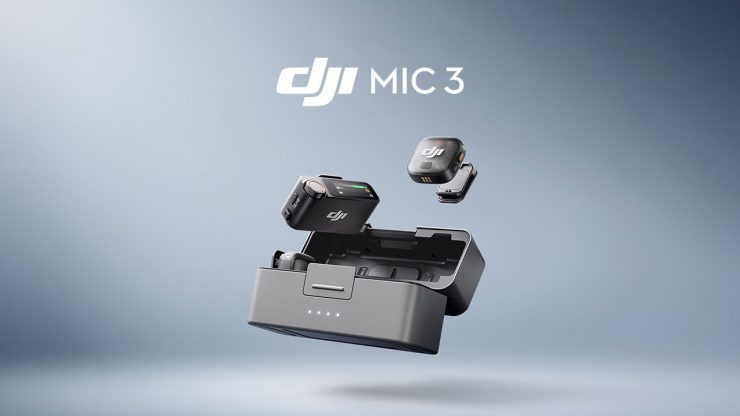
The DJI wireless microphone systems are all pretty darn good. I have the DJI Mic 2, and it’s been a solid performer. If you have other DJI products like the OSMO Pocket 2, you can add two DJI Mic 3 or Mic 2 with it, as the gimbal has a built-in receiver.
The Mic 3 has built-in 32-bit float recording as well in a very tiny transmitter. The only downside is that it doesn’t have a 3.5mm input if you want to use a lav mic.
ERIK’S HONORABLE MENTION: Hollyland LARK MAX 2
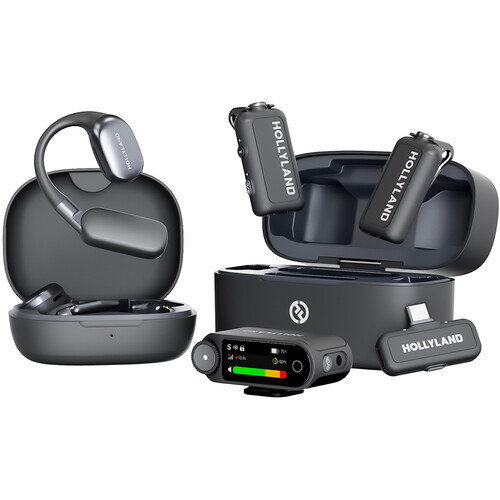
Hollyland has released great-performing tiny wireless audio systems for a while now, and the Hollyland LARK MAX 2 is a good one. The AI noise-cancelling features are impressive, as they do an excellent job of cancelling out loud, distracting sounds while maintaining a rich vocal quality.
Favorite Camera Accessory
MATT’S PICK: Tilta Nucleus-M II
The new Tilta Nucleus-M II is a follow-up to the original Nucleus-M. Tilta introduced the Nucleus-M way back at NAB in 2017. It was designed to be an affordable FIZ system for the masses, and at $1,199 USD, it was considerably more affordable than anything else on the market at the time. It took quite a while for Tilta to sort out some issues and bugs, and a lot of what they learned carried over to the Nucleus Nano and Nano II, and then the Nucleus-M II.
The Tilta Nucleus-M II is a very solid system for the price, and it is a big improvement from the original. It is amazing to think that you can get a FIZ controller, two wireless hand grips, two motors, and a bunch of accessories for under $1,300 USD. Equipment keeps getting more and more affordable, and the quality and performance gap between more affordable products and higher-end products continues to get closer and closer.
MATT’S HONORABLE MENTION: Kinefinity Eagle HDMI e-Viewfinder
The Eagle HDMI e-Viewfinder is based on the Eagle SDI e-Viewfinder that I previously reviewed on the site. While that is a great EVF, it only has an SDI input and wasn’t suitable for use with a lot of smaller cameras or mirrorless hybrids. I am still not sure why more people don’t use EVFs; maybe I’m just showing my age.
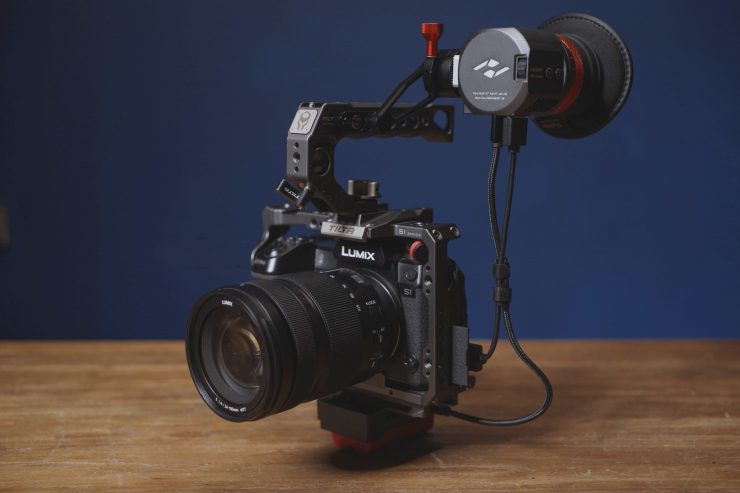
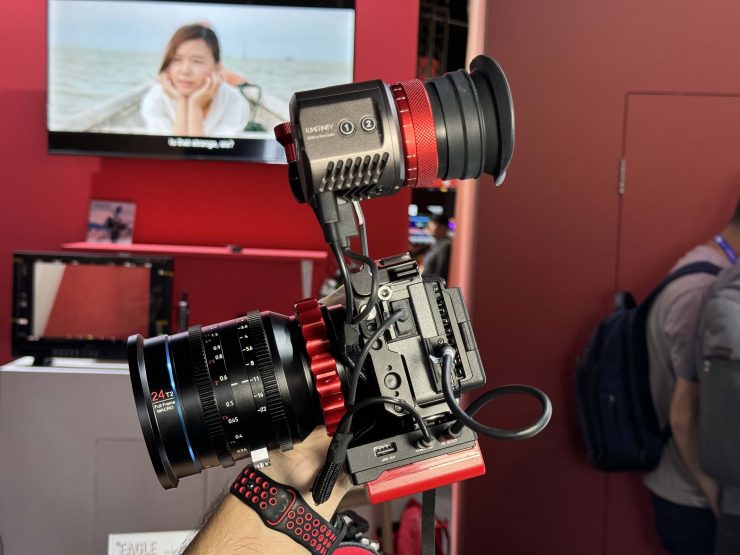
The Eagle HDMI e-Viewfinder is a great option for anyone using smaller-sized cameras that only feature HDMI outputs. It retains many of the features of the SDI version, equipped with a full HD 0.7″ Micro-OLED display and excellent optical design. The viewfinder includes advanced 10-bit color processing to ensure accurate, sharp, and clear images. The EAGLE uses an innovative FPGA-based hybrid processing architecture for quick startup, rapid response, extremely low power consumption, and no additional image delay. Additionally, its fanless design allows the EAGLE HDMI to operate silently, enabling filmmakers to work in quiet environments without distractions.
ERIK’S PICK: MID49 TWIST Mount System
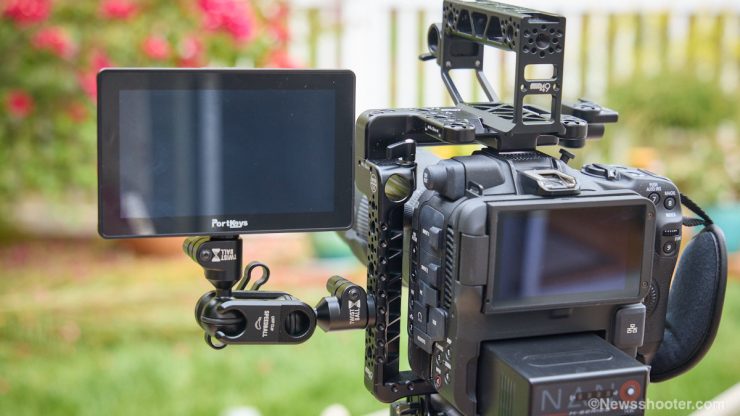
When I purchased the Canon C80, I needed a cage and accessories. The MID49 TWIST Mount System had just been released, and boy, do I love how it works! Those Spuds use a friction-style mount that helps you get your added devices into the perfect position, and they can be repositioned without loosening the clamp. MID49 is expanding its system, and it’s worth exploring even if you don’t use their cages, as it uses industry-standard mounting points like ARRI.
Favorite Support Device
MATT’S PICK: Satchler aktiv 16T/18T Mk II 100mm Fluid Heads
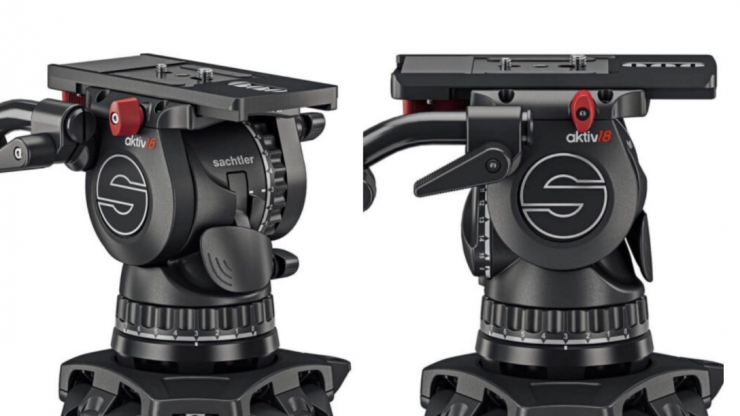
The Satchler aktiv 16T/18T Mk II 100mm fluid heads provide heavier payload capacities, and they are also more affordable than their predecessors.
The Sachtler aktiv Fluid Heads were a brand-new take on a product that hasn’t fundamentally changed in decades. The series was first announced way back in 2020.
The aktiv heads are great, but some Satchler users, such as myself, didn’t upgrade because of the limited payload capacity that the aktiv 14T offered. Well, that has somewhat been addressed with the new 18T.
MATT’S HONORABLE MENTION: EasyRig Vario 6
The EasyRig Vario 6 comes ten years after the launch of arguably what was their most popular large system, the Vario 5.
The Easyrig Vario 6 is a lightweight support system that is 20% lighter compared to the Vario 5. As the market has changed and there have been countless new cameras coming to market over the last ten years, Easyrig wanted to adapt. To do this, they have made the Vario 6 compatible with cameras weighing between 4–14 kg / 9-31 lbs.
ERIK’S PICK: SmallRig TRIBEX SE Hydraulic Tripod
The SmallRig Potato Jet TRIBEX SE Hydraulic Tripod is a budget-friendly system with a few unique features, making it fast to deploy thanks to its quick-release grip. Tripods are not sexy, and most people will purchase cheap, lightweight systems. The TRIBEX SE Hydraulic Tripod meets you in the middle. For many, this is a great stable system at a low price of $399.99 USD.
Key features
- Lightweight Aluminum Alloy Tripod
- Easy X-Clutch Hydraulic Setup/Breakdown
- Fluid Head with Fixed Counterbalance
- 9.8 to 66.1″ Height Range
- 27.9″ Folded Length
- 13.2 lb Maximum Payload
- Manfrotto-Style Quick Release Plate
- Touch-and-Go Quick Release Mount
- 1/4″-20 Threads for Accessories
- Rubber Feet
Innovation
MATT’S PICK: Viltrox NEXUS PL to E Pro adapter
I am going to cheat here and pick the Viltrox NEXUS PL to E Pro adapter (I could have also chosen the similar upcoming Tilta solution), even though they haven’t started shipping yet.
NEXUS is a PL to Sony E-mount adapter that will allow manual PL cine lenses to behave as AF lenses. This is an exciting breakthrough as far as product technology is concerned.
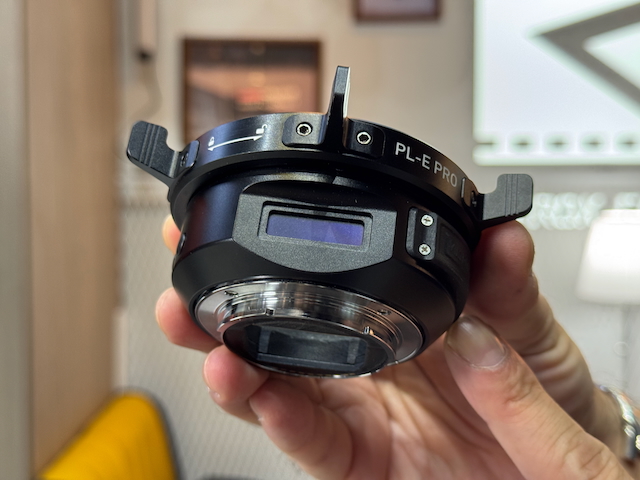
Through the lens adapter mount, Viltrox motors will be able to receive autofocus information directly from the camera sensor.
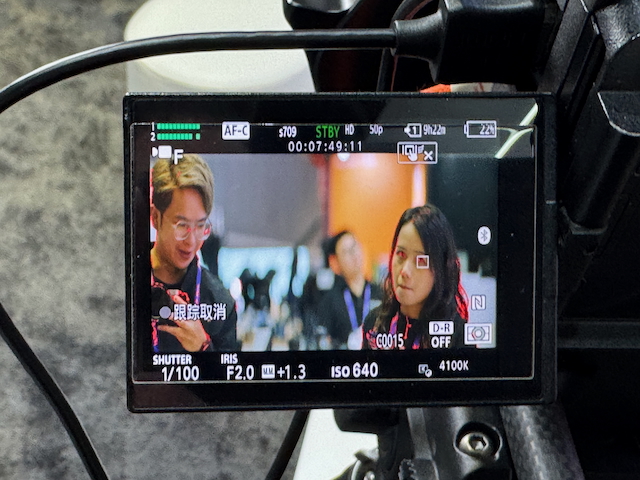
Essentially, when you touch the back LCD screen on the camera, the AF system sends the same information to the lens motors as it would to a native E-mount AF lens. This allows for full AF tracking, eye detection, etc. This is a very clever solution that is way easier to use and set up than something like the DJI Focus Pro. I tried it out at IBC, and it worked very well, even on a 1.33x anamorphic lens.
MATT’S HONORABLE MENTION: Antigravity A1
The Antigravity A1 is the world’s first all-in-one 8K 360 drone designed for intuitive, immersive flight. It’s a new take as far as drones are concerned, and it’s good to see more competition in this space that is dominated by DJI.
The A1 features a dual-lens 1/1.28-inch sensor system capable of recording 8K30fps, 5.2K60fps, or 4K100fps in full 360 degrees. The dual lenses have an F2.2 aperture.
Video Recording
- 8K: 7680×3840@30/25/24fps
- 5.2K: 5248×2624@60/50/30/25/24fps
- 4K: 3840×1920@100/30/25/24fps
- 4K Slow Motion: 3840×1920@30/25/24fps
Footage can be captured in H.264 or H.265 at up to 170Mbps.
The idea of a 360 drone is that every flight captures the entire environment in one pass. This is a fly first, frame later type of product where users can choose perspectives in post. There are modes such as cinematic pans, creative effects like Tiny Planets, and subject tracking. FlowState Stabilization is claimed to provide smooth and steady footage, even in windy conditions.
ERIK’S PICK: Tilta Boulder Camera Cart
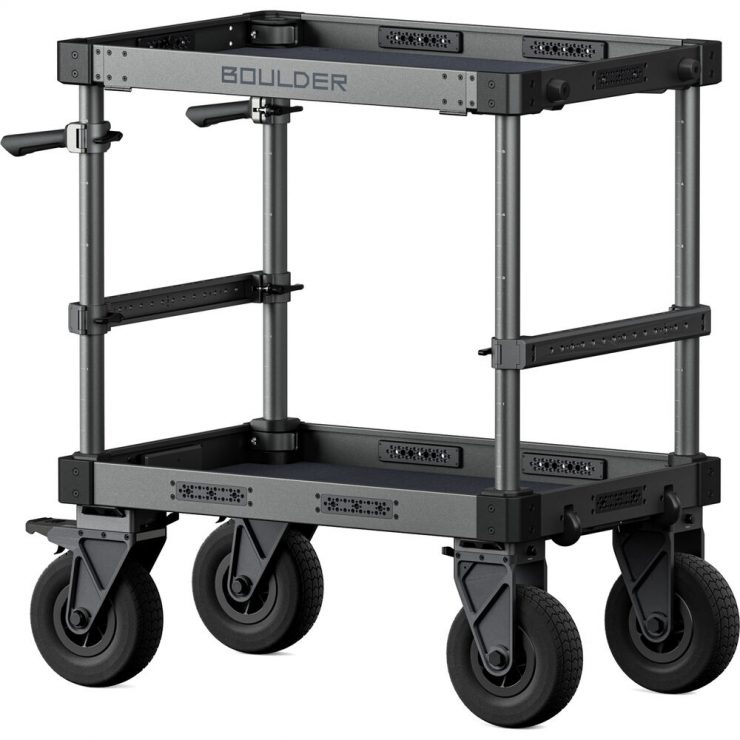
Carts are expensive, and I can’t live without them. Tilta has been working on a Camera Cart that is affordable and offers many options. Yes, that’s what Tilta is known for. At an entry price of $1,199 USD, it offers a sturdy option for heavy gear, with many add-ons for a custom setup.
Key features
- Aluminum, Stainless Steel & Plastic
- Speed Rail with Height Markings
- 1/4″-20, 3/8″-16, 40mm, NATO & Manfrotto
- One-Step-Release Brake System
- Load Capacity: 882 lb
- Two Handles for Comfortable Control
- 9″ Pneumatic Tires
- Tool-Free Assembly
- Adjustable Monitor Mount
- Magnetic Fold-Down Side
Favorite Software
MATT’S PICK: Blackmagic Design DaVinci Resolve 20
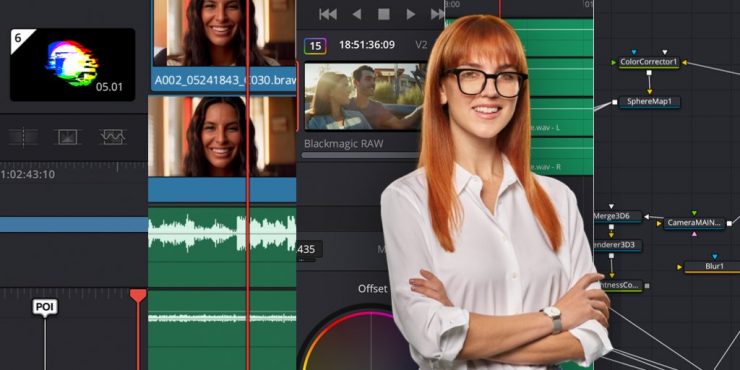
The gift that keeps giving. It is truly remarkable what Blackmagic Design has done with DaVinci Resolve. It is continuously being updated and improved, and it isn’t subscription-based!
This is an annual occurrence for me to pick DaVinci Resolve!
MATT’S HONORABLE MENTION: ARRI Film Lab
Many of our readers are going to find this a strange pick, but for me, ARRI Film Lab is a great piece of software.
Film Lab is a new tool that is claimed to bring the timeless look of analog film into your digital workflow. Film Lab can add grain, halation, and gate weave, as well as adjust your footage to replicate the way that film negatives react to colors.
I really like ARRI Film Look, and it makes a lot of sense if you own an ARRI camera or are grading ARRI footage. Its beauty is in its simplicity, and ARRI has done a really good job of making it super simple to use. You can get good results without having to spend a lot of time. Once the non-destructive preview simulations are added so that they can be viewed on set when recording ARRICORE or ARRIRAW with ALEXA 35 Xtreme or ALEXA 35 cameras, it will make Film Look even more valuable.
Sometimes, less is more, and by using the sliders in Film Lab, you can make subtle adjustments without creating massive changes that go too far. The implementation with the ARRI Look Library also works really well, and ARRI has certainly given you the tools to quickly and easily create film looks from scratch.
ERIK’S PICK: Adobe Premiere Pro 2025

Adobe has significantly improved Premiere Pro in 2025, adding AI tools such as Generative Extend and enhancing stability. I can safely say the software can finally put stability issues behind it. No software is 100% stable, but woof, Premiere Pro used to be painful.
I also appreciate the addition of Film Impact, with 90+ new effects and transitions, including GPU-accelerated features such as real-time results like glitches, 3D text, and transitions.
Our team at NBC 7 is using Teams for a big project. Works well so far…
So there you have it: Matt and Erik’s favorite products of 2025. Again, these are very much personal choices and not products of the year. Please let us know what your favorite products of 2025 were in the comments section below.
Matt and Erik hope all of our readers and their families had a great 2025, and here’s to a prosperous and healthy 2026.