
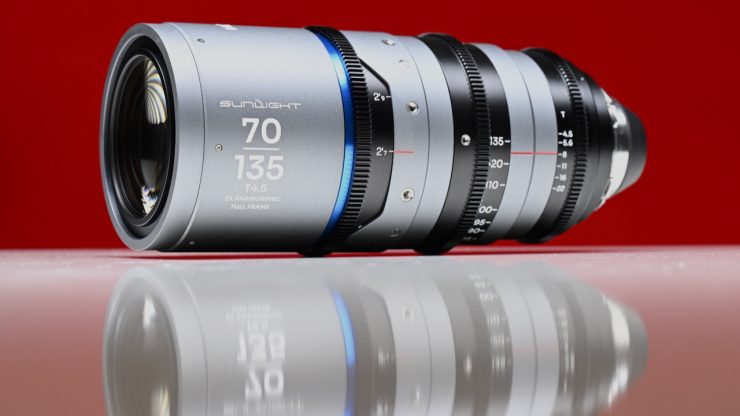
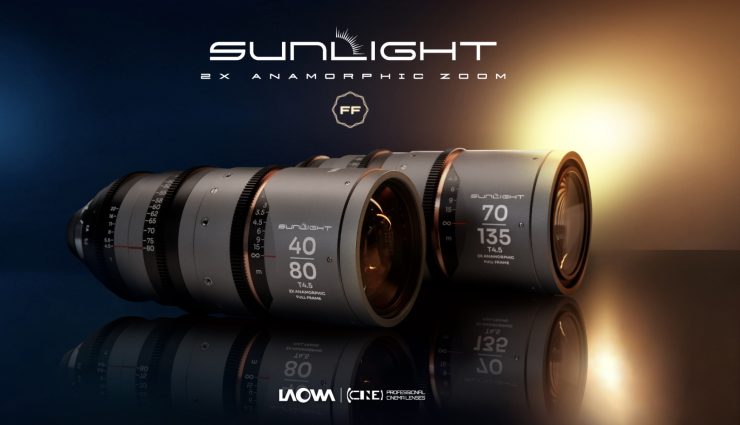
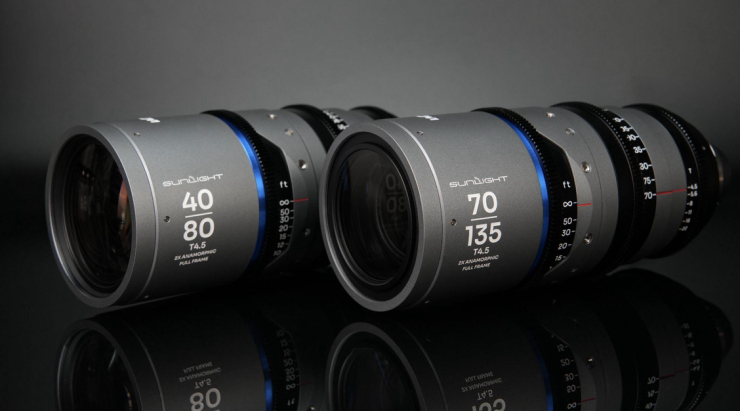
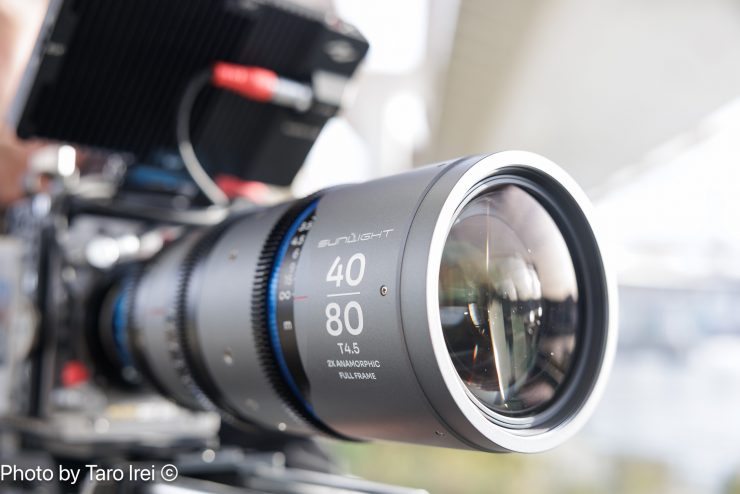
Laowa recently announced its new Sunlight 2x FF Anamorphic Zoom Series. These new zooms are claimed to bring a new level of versatility and accessibility to full-frame anamorphic filmmaking. They are also claimed to be the World’s first front anamorphic full frame 2x anamorphic zooms.
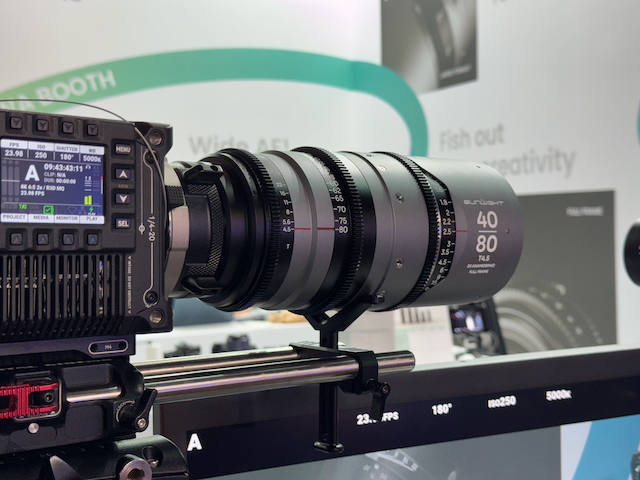
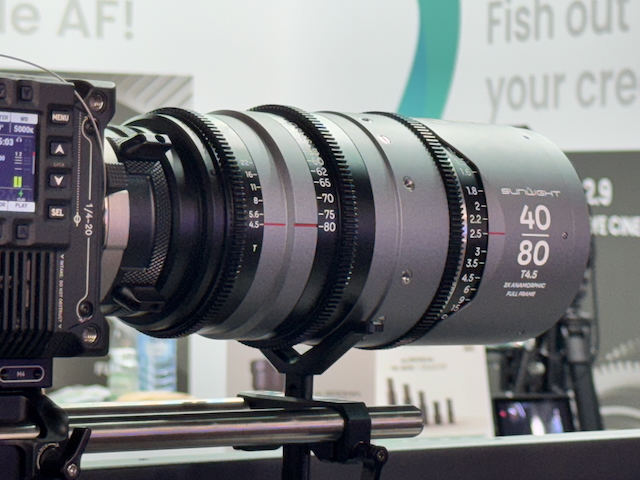
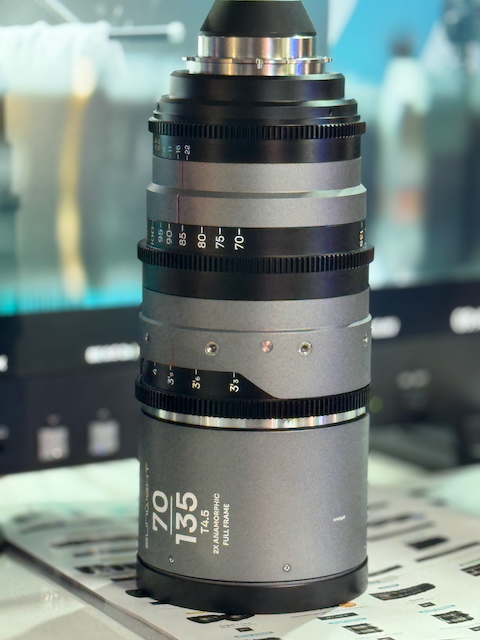
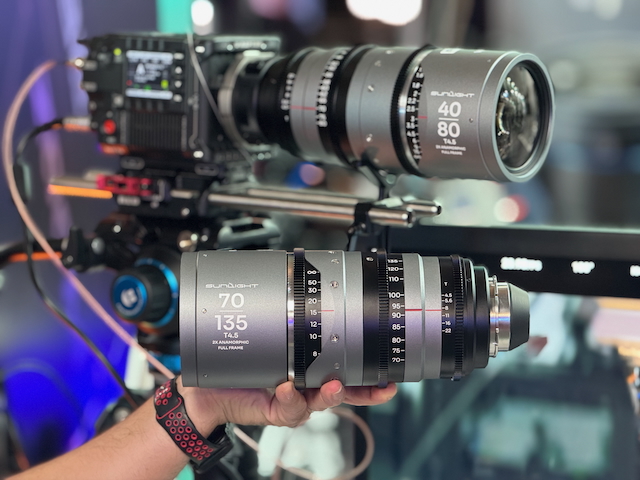
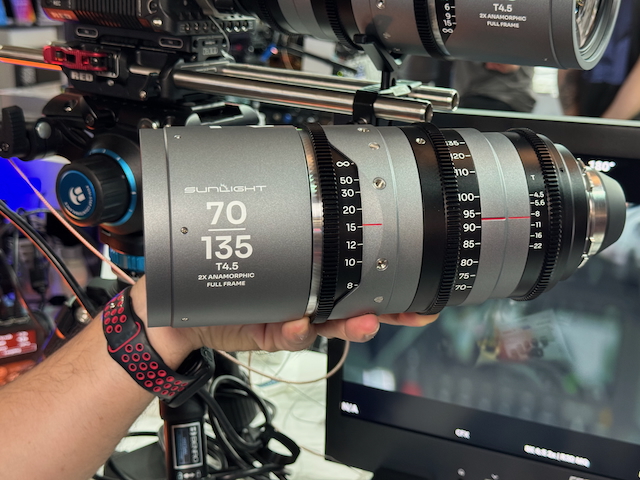
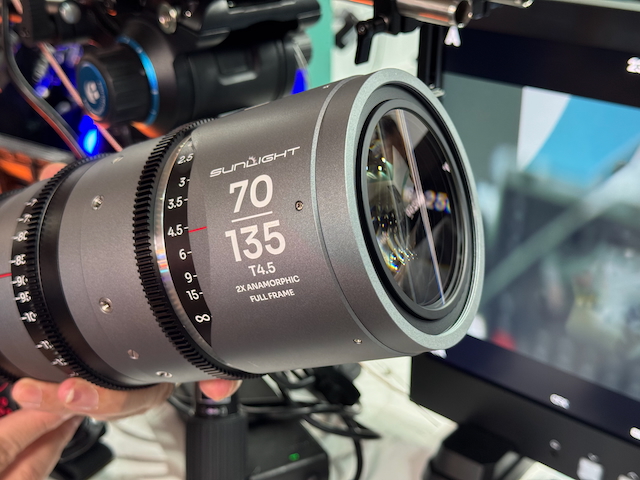
The lenses come in PL mount by default; however, optional Canon RF/ Nikon Z/ Sony E / L mount bayonets are available for purchase on the website for easy adaptation to different camera systems.
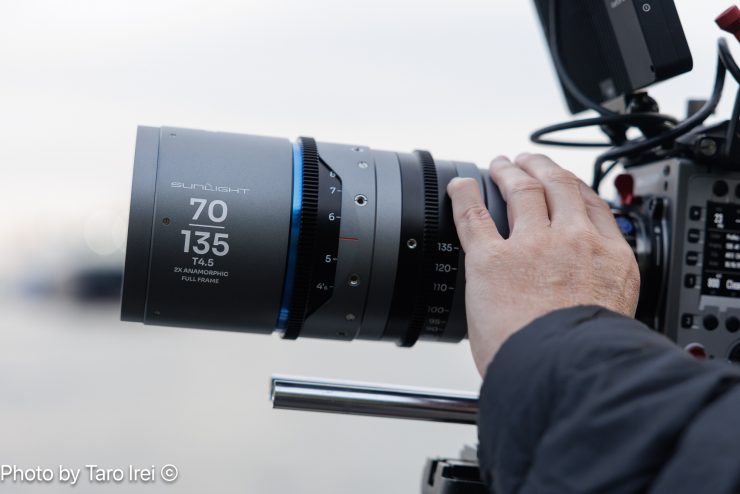
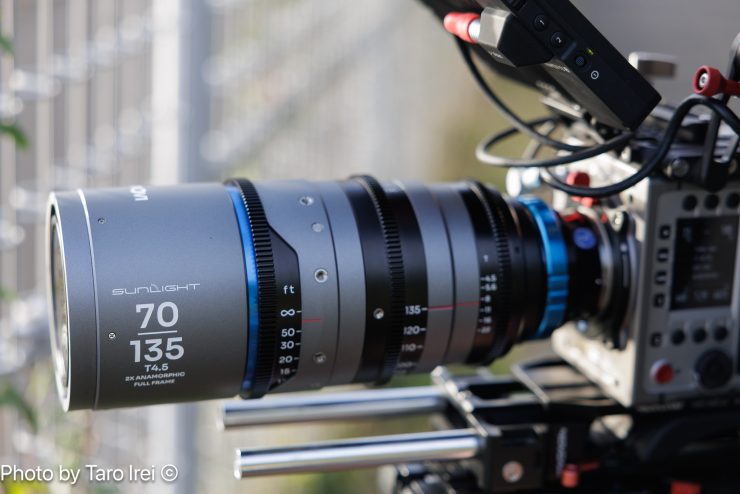
The first two lenses in the new series are the 40-80mm T4.5 and the 70-135mm T4.5.
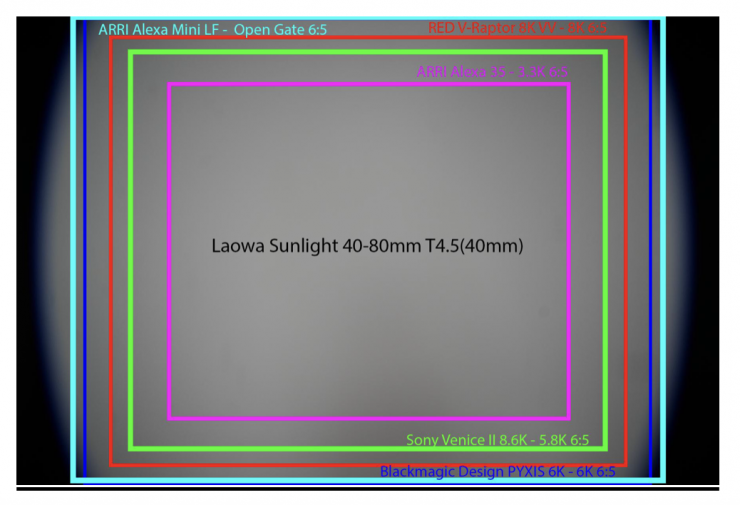
Even though they are full-frame lenses, the 40-80mm T4.5 isn’t going to fully cover open gate on cameras like the ARRI Alexa Mini LF or Sony VENICE 2. I also tried shooting 6K open gate on the Kinefinity MAVO EDGE 6K, and there is certainly vignetting when using the 40-80mm T4.5. It mostly disappears if you are cropping for 2.39:1, but there is still a tiny bit visible on the edges. If I wanted to get no vignetting at all, without needing to do a 2.39:1 crop, I found I could use a 4K 6:5 mode.
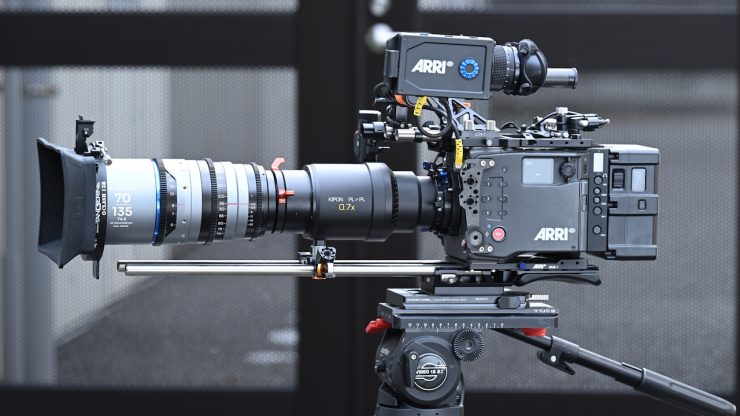
I also tried the lenses with an ARRI Alexa 35 running a Kipon PL-PL 0.7x Focal Reducer. This reduces the focal length of a lens by a factor of 0.7x and increases the light transmission by one stop. In layman’s terms, it enables you to use full-frame lenses on S35 sensor PL mount cameras to create a wider field of view and increase the T-stop.
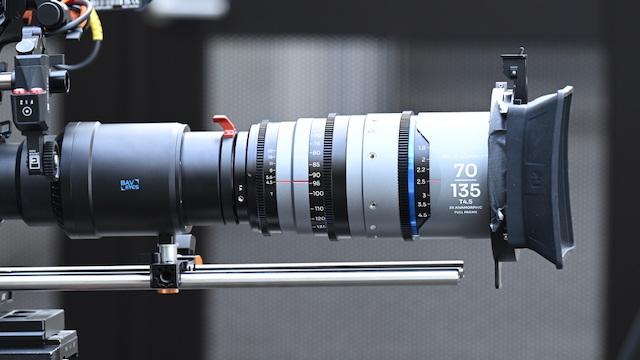
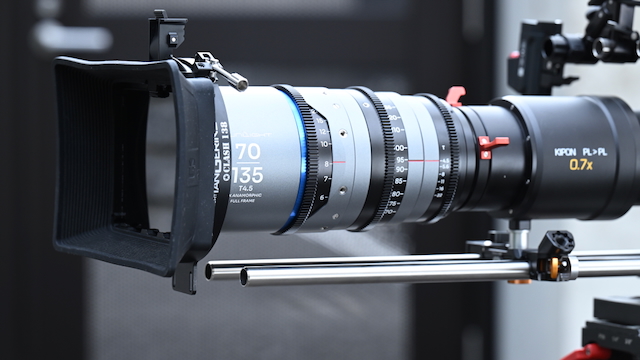
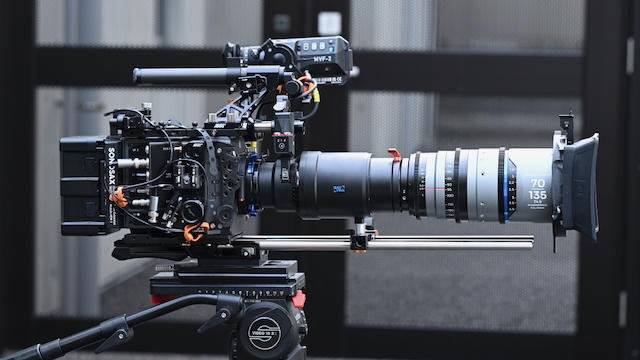
This combination also gave me vignetting when shooting 4.6K open gate. Even when cropping for 2.39:1, I needed to zoom in slightly on the lens to avoid vignetting. The ARRI Alexa 35 running a Kipon PL-PL 0.7x Focal Reducer actually gives me a field of view that is slightly larger than full frame.
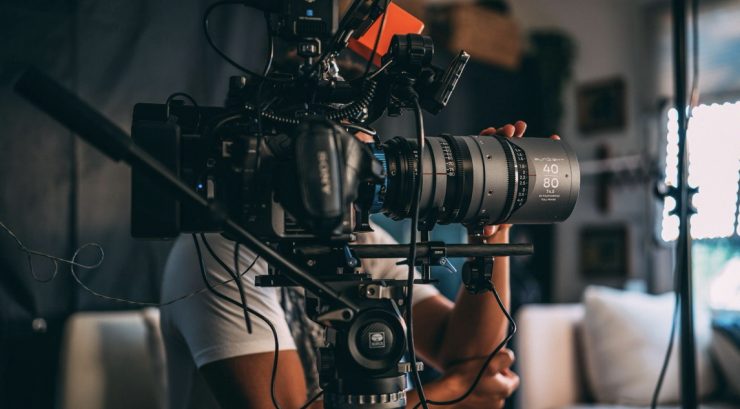
Following in the footsteps of the Laowa Proteus series, the Sunlight zooms are claimed to offer exceptional value and performance. The Laowa Sunlight Series is claimed to achieve its distinct 2x anamorphic character through a sophisticated front anamorphic design, all while maintaining an impressively compact size and lightweight build.
There are very few ‘affordable’ 2x anamorphic zooms on the market. At the start of the year, Laowa announced the Proteus 26-45mm T2.9 and 45-85mm T2.9 2x anamorphic zooms, however, these only cover S35 sensors.
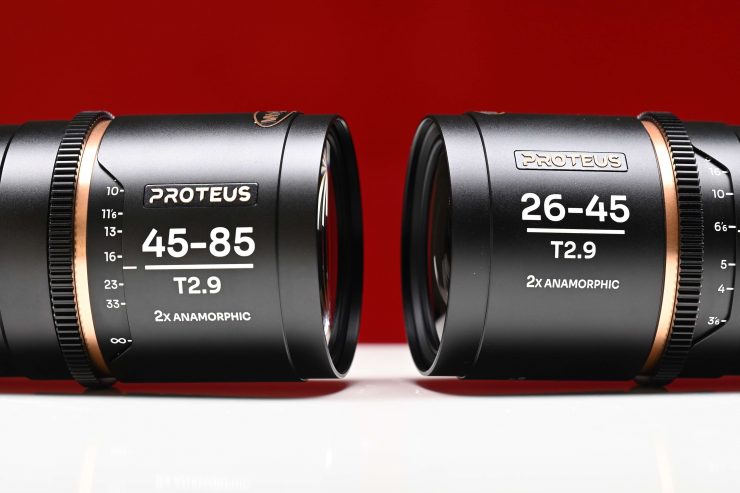
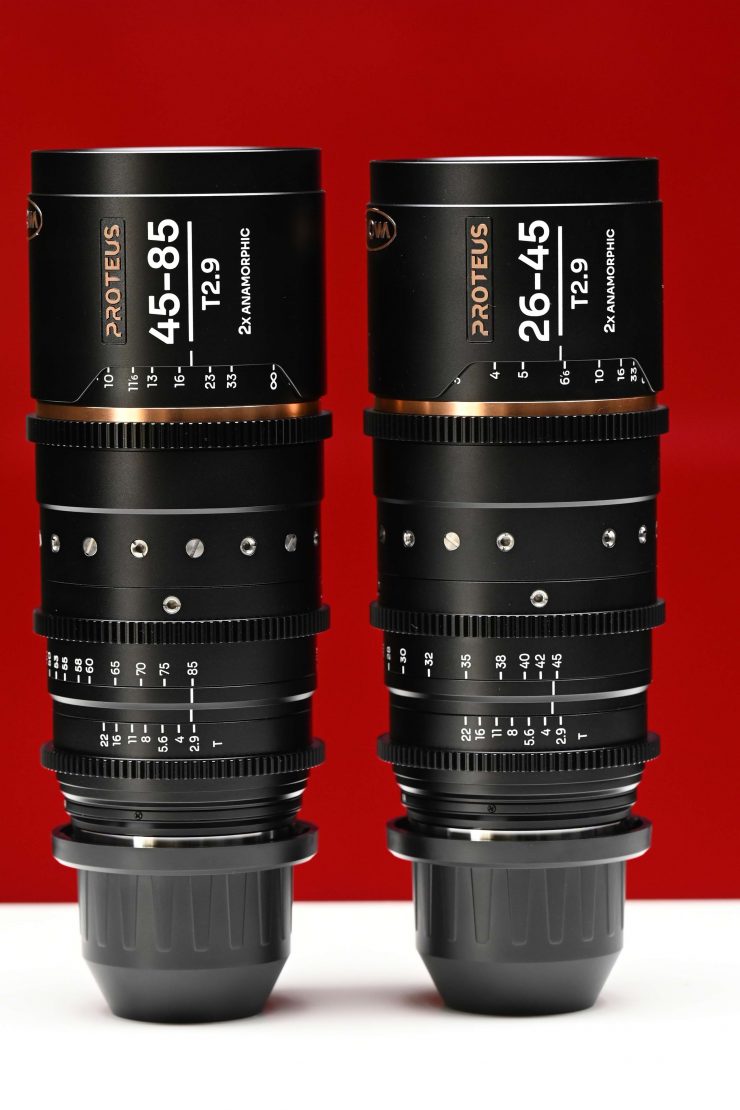
Those zooms joined the Proteus 2x anamorphic primes. Just like the primes, the Proteus zooms cover S35 sensors. By using an optional 1.4x full-frame expander adapter, the Proteus zooms can also cover a full-frame sensor.
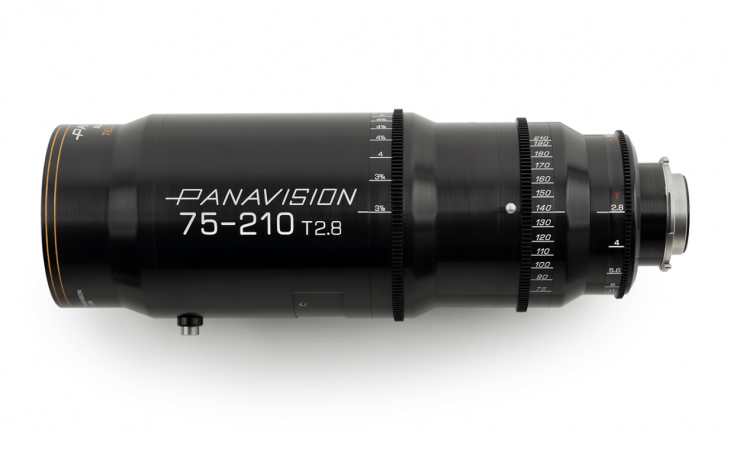
As I just mentioned, 2x anamorphic zooms are few and far between. There are very few options available. Panavision offers a variety of 2x-squeeze anamorphic zooms, covering focal lengths from 37mm to 550mm. There are also older lenses, such as the LOMO 40-120mm T3.1 Front-Anamorphic Zoom, and if you wanted something newer, the Angenieux Optimo Anamorphic 56-152mm Zoom.
Overview
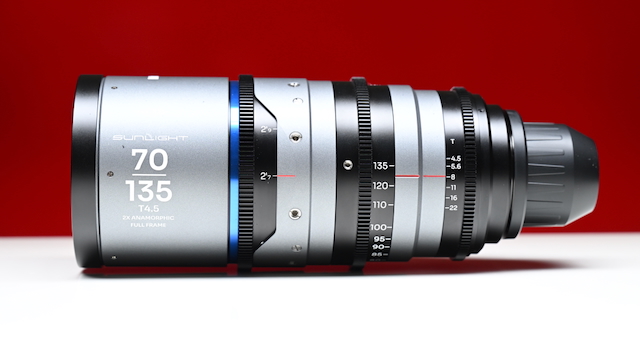
These lenses are very interesting due to their relatively compact form factor (especially for full-frame 2x anamorphic zooms), and Laowa claims that they can produce classic anamorphic characteristics such as oval bokeh and cinematic flaring.
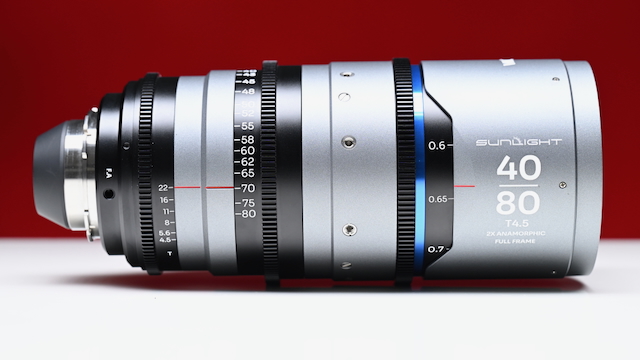
According to Laowa, their excellent sharpness allows the set to be used on a variety of productions such as commercials, music videos, and feature films, without the caveats that you can experience with more affordable anamorphic lenses.
At under $6,000 USD each, you may not classify these lenses as affordable, but for 2x anamorphic zooms, they are very affordable. To put the price in perspective, the Angenieux Optimo Anamorphic 56-152mm Zoom Lens costs $56,333 USD.
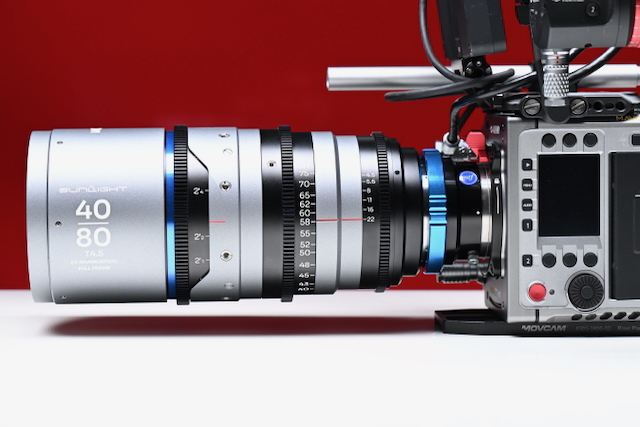
Laowa doesn’t list what image circle the lenses will cover. As a comparison, the Proteus 2x anamorphic zooms cover an image circle diameter of 31.9mm, and the Proteus primes cover an image circle of 25.92mm.
As I previously mentioned, on certain cameras, when shooting open gate, you will get some vignetting at the edges of the frame with the wider focal lengths, but if you are framing for 2.39:1, then that mostly disappears.
Concept
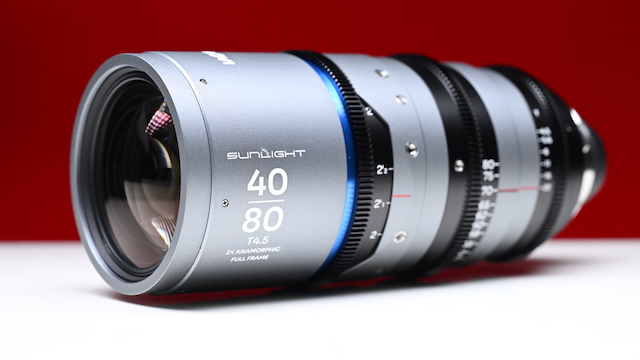
According to Laowa, the Sunlight 2X Anamorphic zooms were designed to be the most accessible professional anamorphic zooms for full frame sensors with a constant 2X squeeze ratio. The Sunlight Series is said to exhibit classic anamorphic characters with modern image quality.
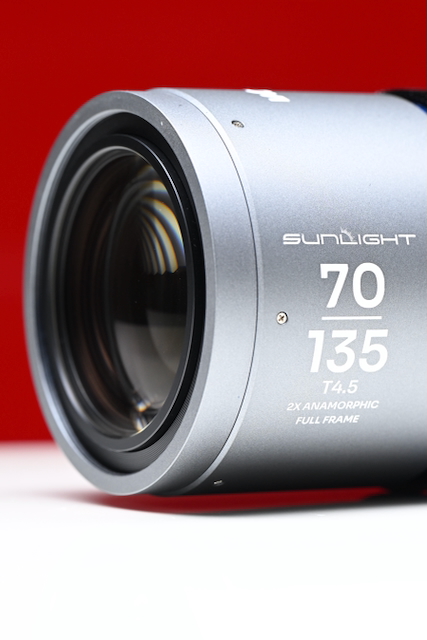
They are claimed to feature smooth elliptical bokeh and signature flares, including blue, amber, and silver options.
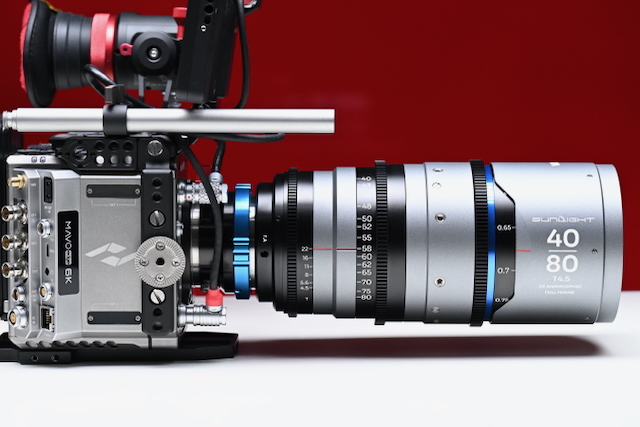
I think it would be fair to say that Laowa is trying to attract owner/operators of mid to high-end digital cinema cameras that are capable of shooting in open-gate anamorphic modes. In saying that, there is no reason why they wouldn’t also find themselves in a lot of rental houses, especially given the limited options available when it comes to 2x anamorphic zooms.
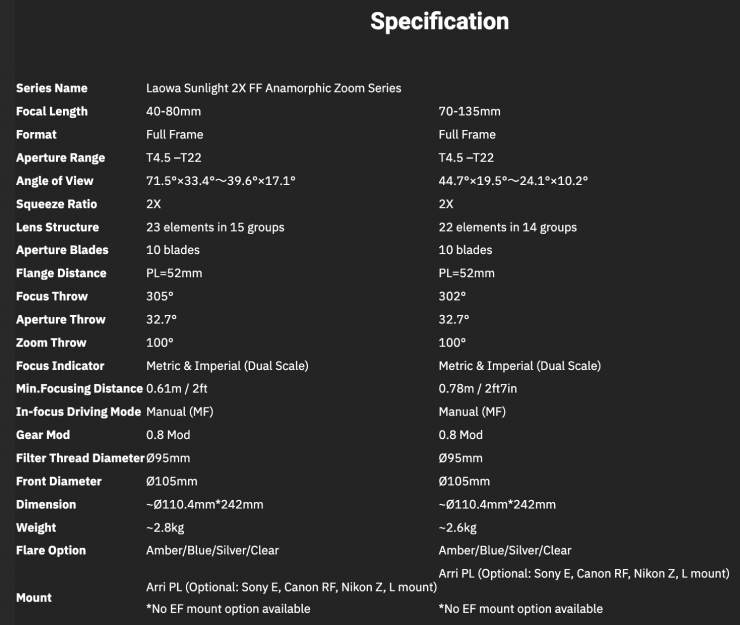
As I mentioned earlier, the zooms are only available in PL mount, but they also come with a user-interchangeable optional RF/E/Z/L mounts. There is no EF option like with the Proteus 2x Anamorphic zooms.
Size & Weight
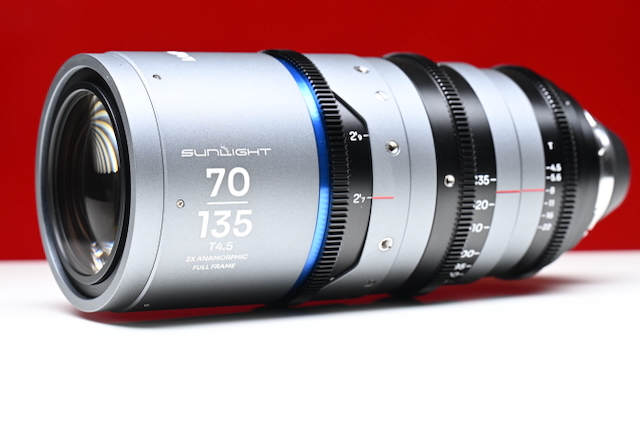
Unlike the Proteus 2x anamorphic zooms, the Sunlight series is considerably larger, heavier, and has a slower constant T-stop. They have the following weights:
| WEIGHT | |
| Laowa Sunlight 40-80mm T4.5 | 2.8kg / 6.17 lbs |
| Laowa Sunlight 70-135mm T4.5 | 2.6kg / 5.73 lbs |
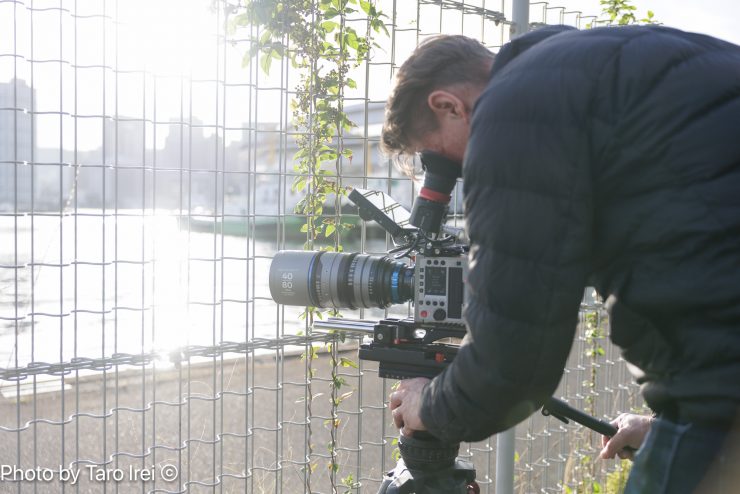
While you could use them on smaller-sized digital cinema cameras or mirrorless hybrids, you are going to end up with an incredibly front-heavy package. The zooms are certainly better suited for use with mid to large-sized digital cinema cameras.
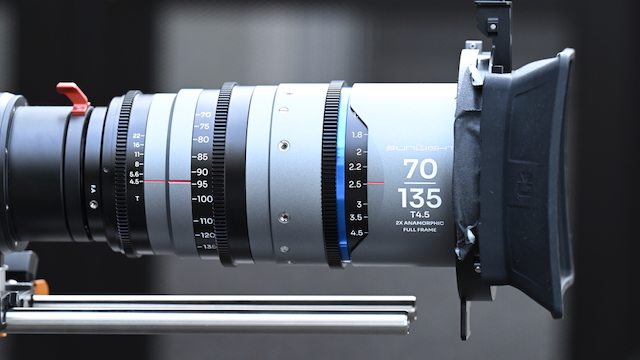
So how does that weight compare to a couple of other 2x anamorphic zooms? Well, below you can see:
| WEIGHT | |
| Laowa Sunlight 40-80mm T4.5 | 2.8kg / 6.17 lbs |
| Laowa Sunlight 70-135mm T4.5 | 2.6kg / 5.73 lbs |
| Laowa Proteus 26-45mm T2.9 | 1.53kg / 3.38 lbs |
| Laowa Proteus 45-85mm T2.9 | 1.49kg / 3.30 lbs |
| Panavision 37-85mm T2.8 | 6.35 kg / 14 lb |
| Panavision 40-80mm T2.8 | 4.71 kg / 10.4 lb |
| LOMO 40-120mm T3.1 | 7.5 kg / 16.5 lb |
| Angenieux Optimo Anamorphic 56-152mm T4 | 2.2 kg / 4.85 lb |
| Cooke 35-140mm Anamorphic/i Zoom Lens T3.1 | 10.25 kg / 22.6 lb |
| ARRI Anamorphic Ultra Wide Zoom AUWZ 19-36/T4.2 | 5.5 kg / 12.1 lb |
As you can see, the Sunlight series is heavier than an Angenieux Optimo Anamorphic 56-152mm T4; however, that lens only covers up to 35mm 4-Perf Scope.
Build Quality
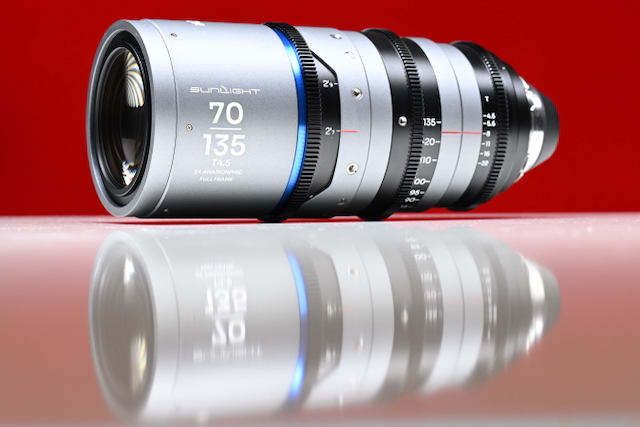
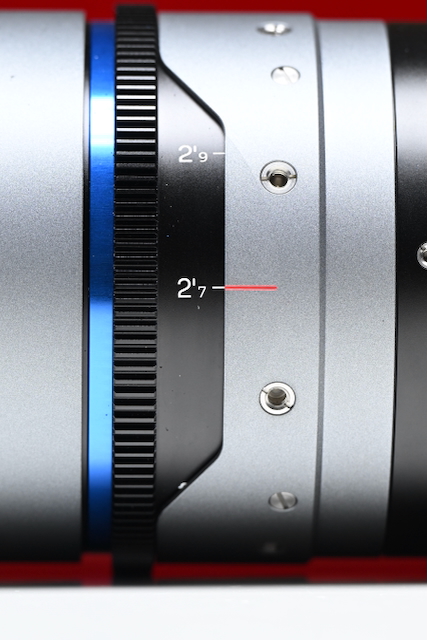
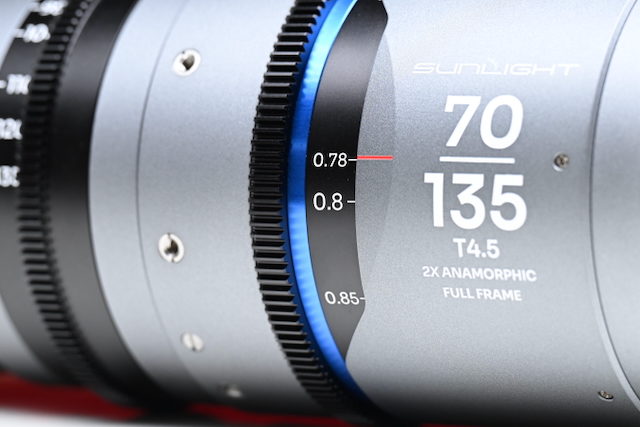
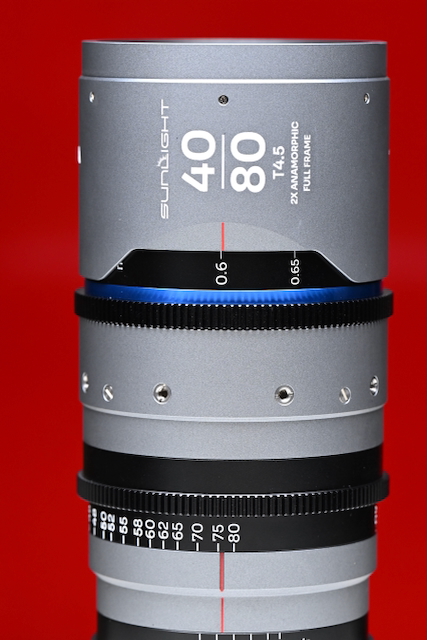
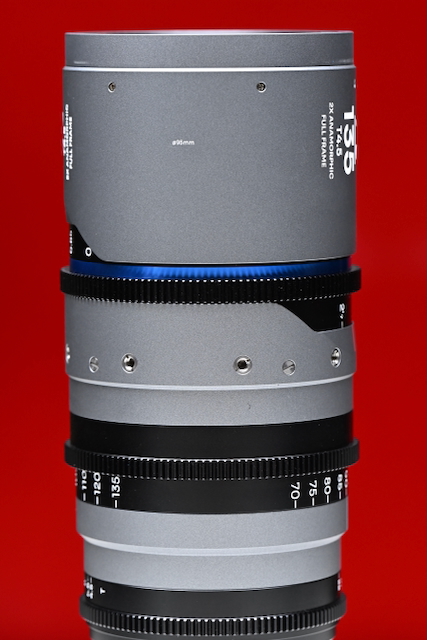
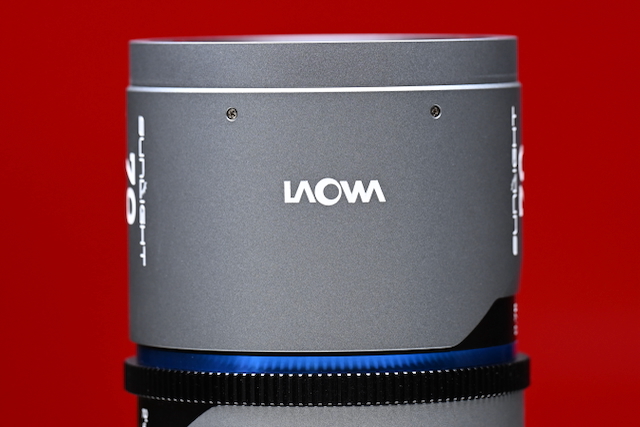
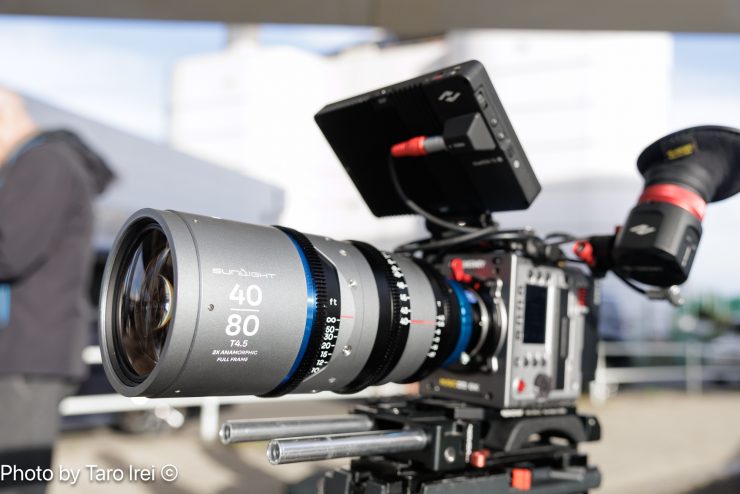
The Sunlight 2x Anamorphic zooms are well-made and constructed. With every new lens series, Laowa has seemingly improved the build quality, and the attention to detail has become more evident.
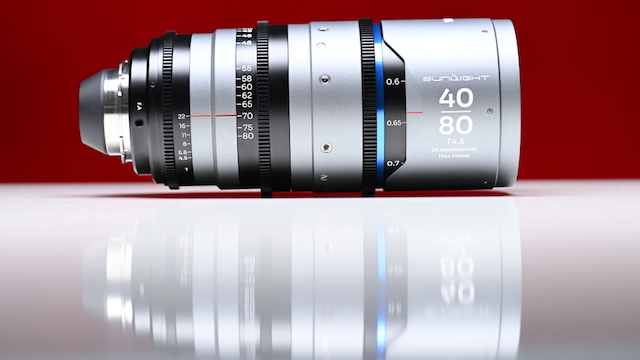
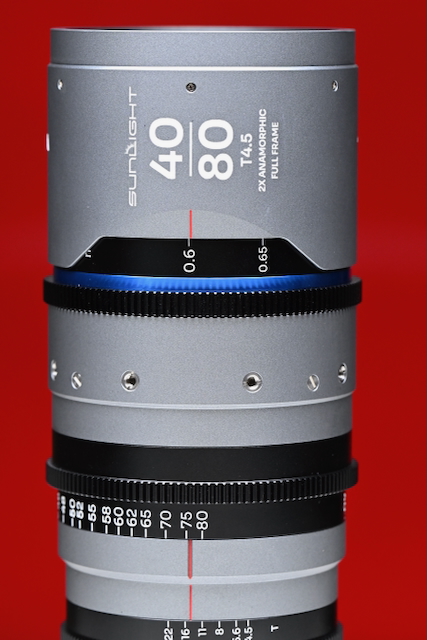
They come in a gunmetal grey color.
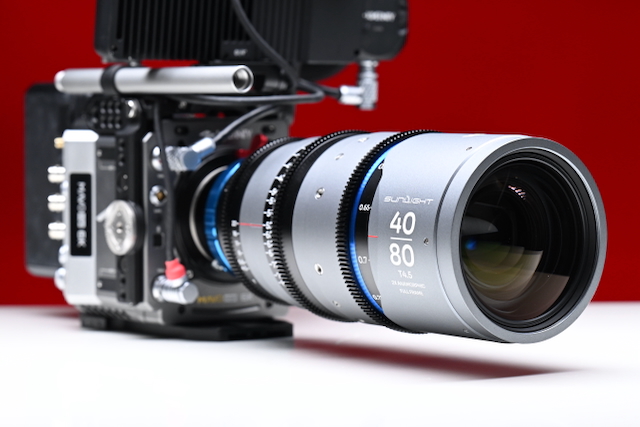
What I am always looking for when it comes to sets of lenses is how consistent the mechanics and look are. Good lenses maintain very high levels of consistency across the focal ranges. With a lot of the more ‘affordable’ lenses that I have reviewed over the years, the thing that normally lets them down is consistency when it comes to the mechanics, build quality, and look. If you are a lens manufacturer and want a seat at the big boys’ table, then you need to be able to deliver lenses that have consistency. This is especially true if you have both zooms and primes in a series.
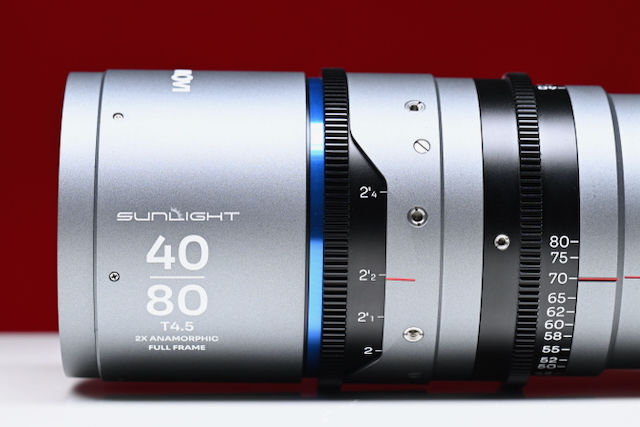
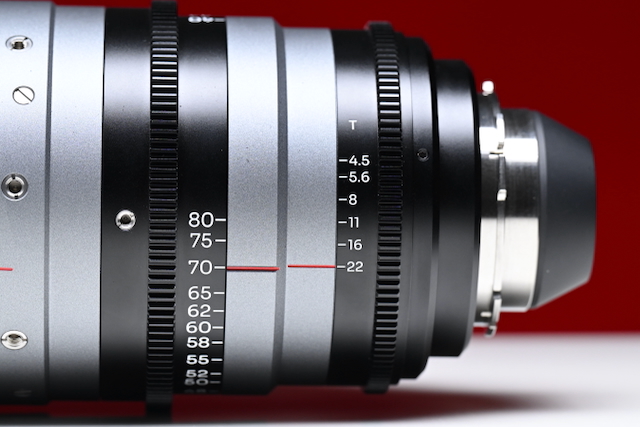
The mechanical consistency of the Sunlight 2x Anamorphic zooms was very good. The focus, zoom, and aperture rings were all well-weighted and smooth.
Markings
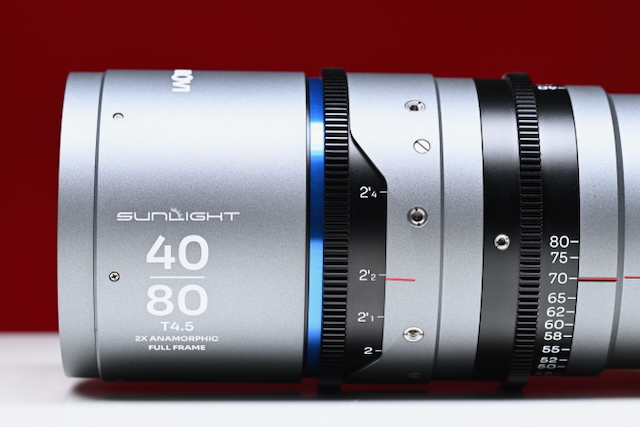
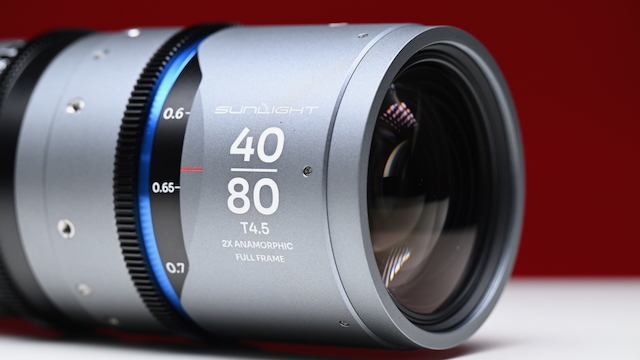
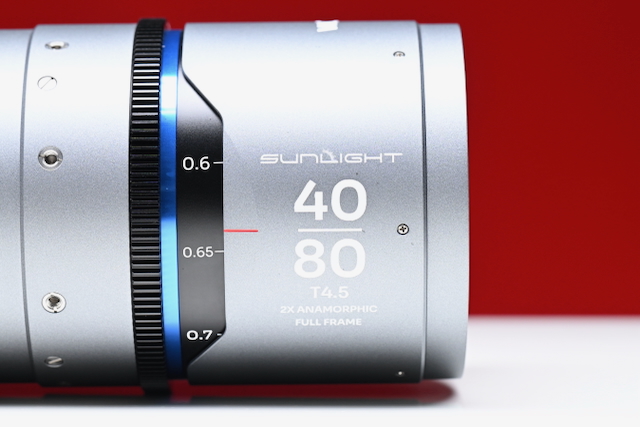
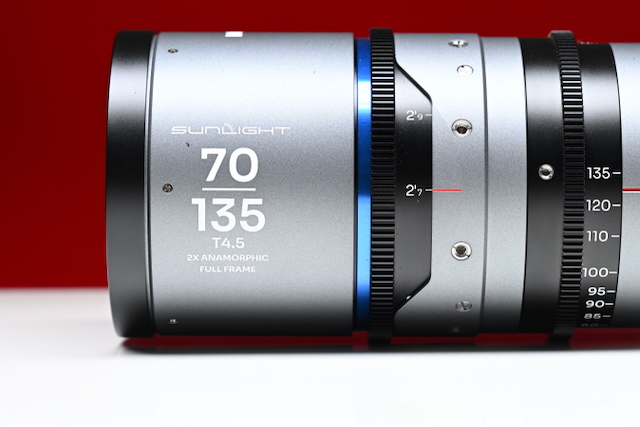
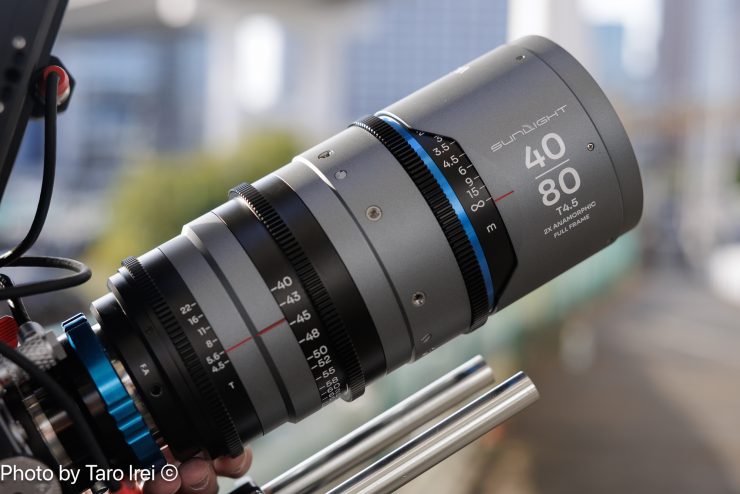
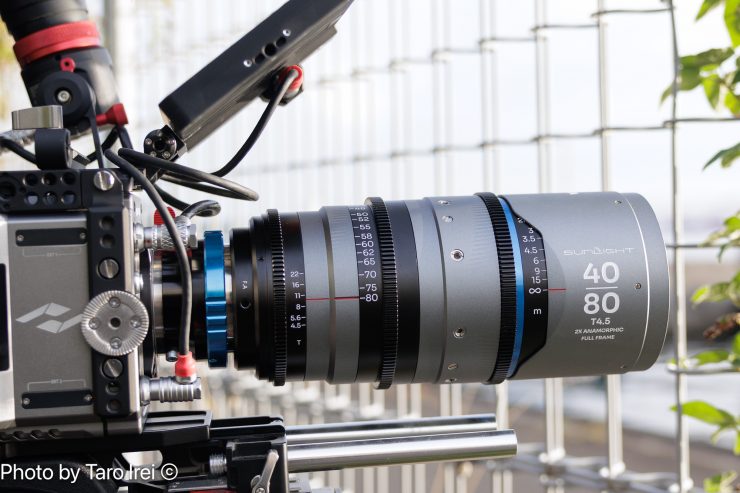
Unlike the Laowa Proteus 2x anamorphic zooms that come in either Imperial or Metric focus markings (which can be changed over if need be), the Sunlight series features dual scales.
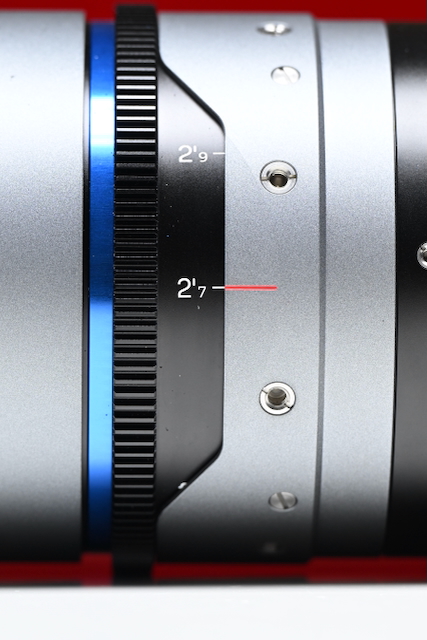
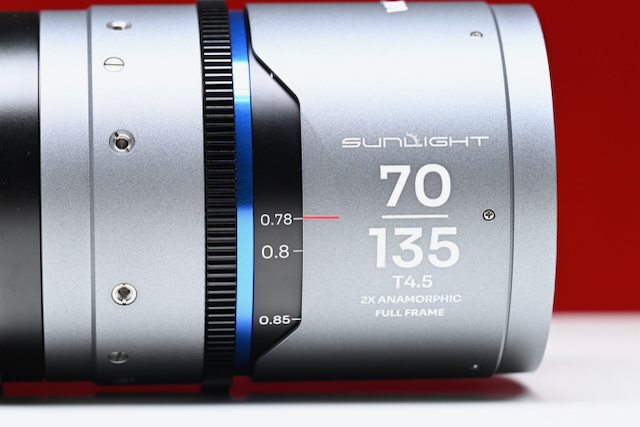
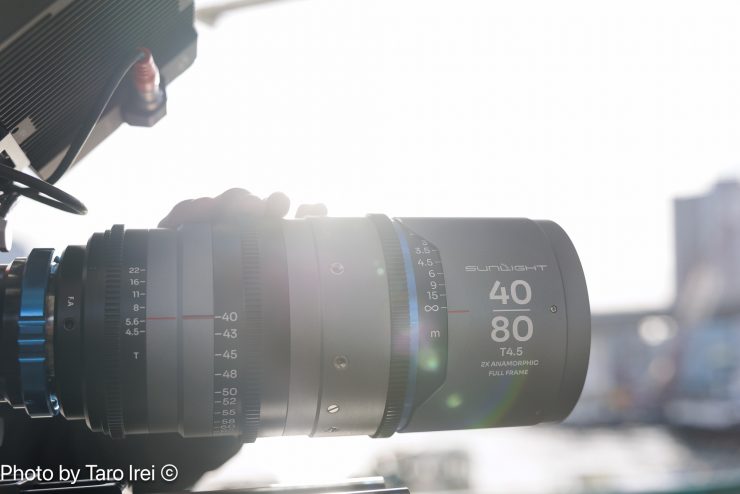
There are meter markings on the operator side and feet markings on the non-operator side.
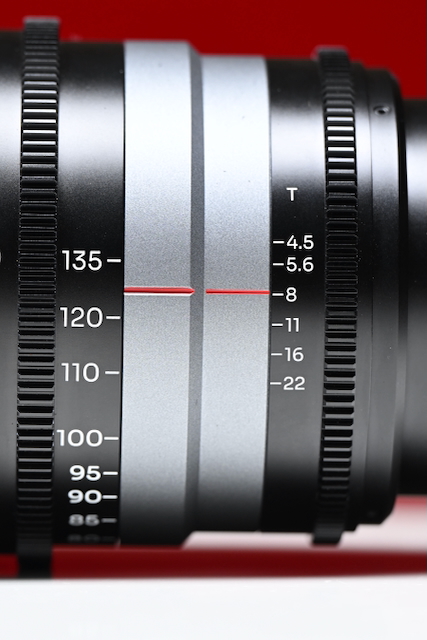
Sunlight Zooms 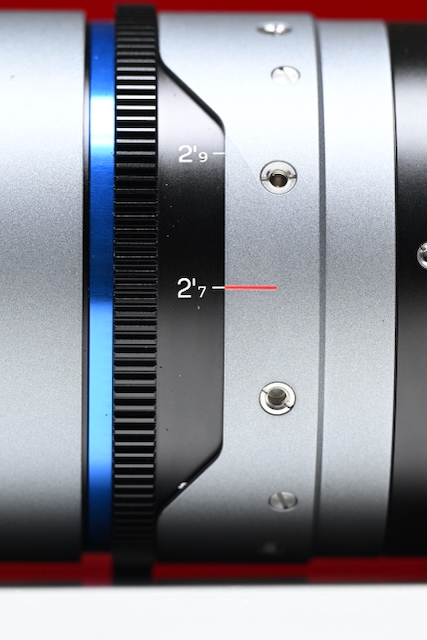
Sunlight Zooms 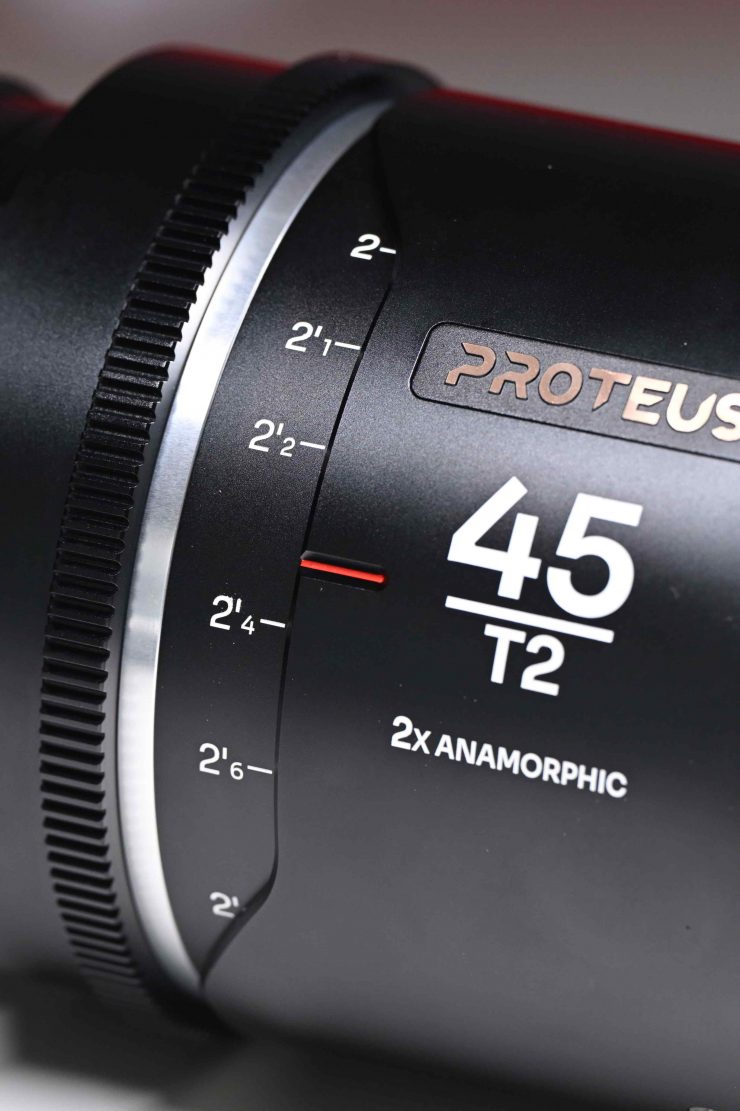
Proteus Primes 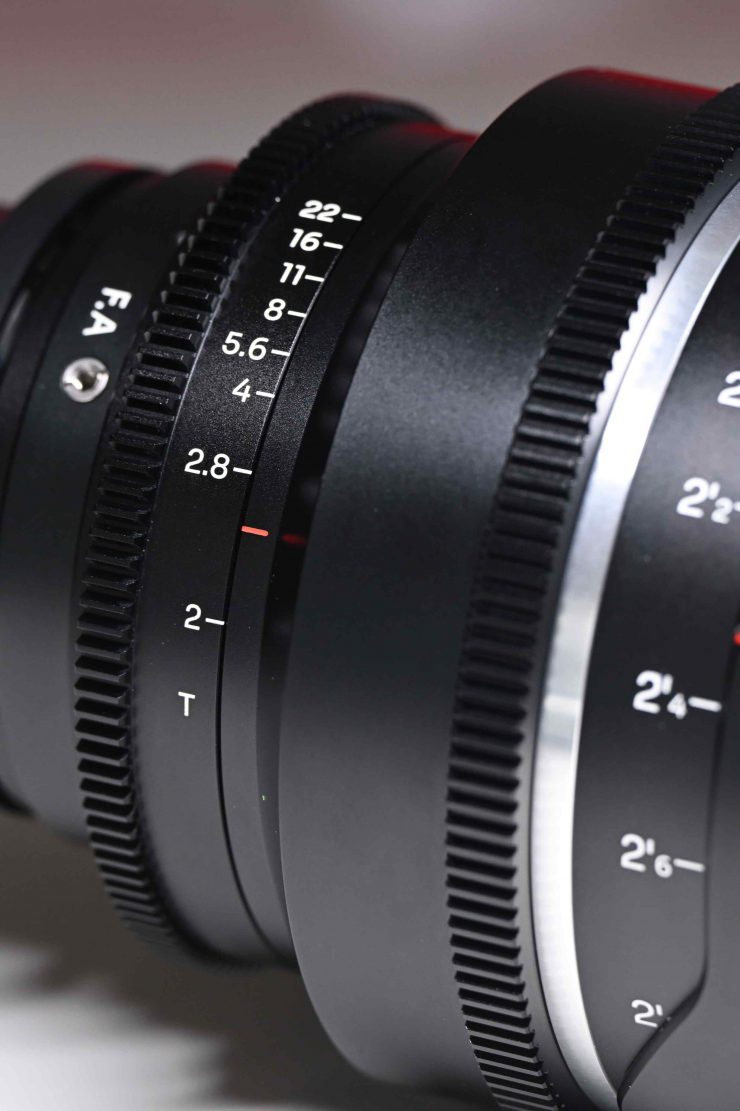
Proteus Primes 
Proteus Zooms 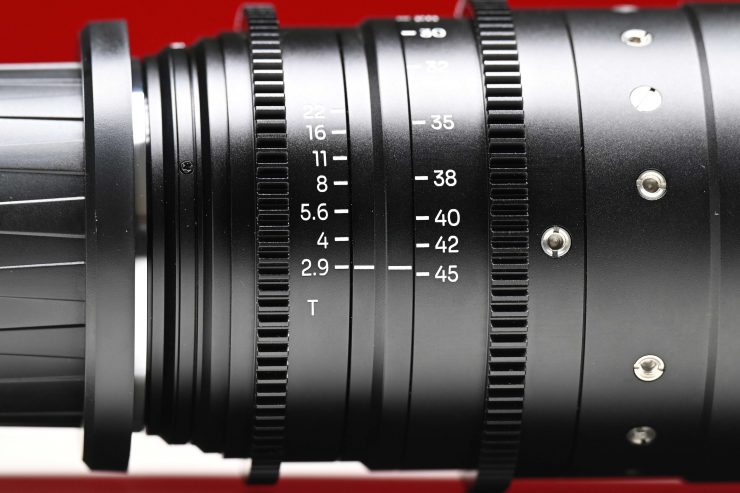
Proteus Zooms
The markings are very easy to see, and I am glad that Laowa kept the clear and concise red markings from the Proteus primes that let you easily see exactly what T stop or focus distance you are at. This is something that you won’t find on the Proteus zooms.
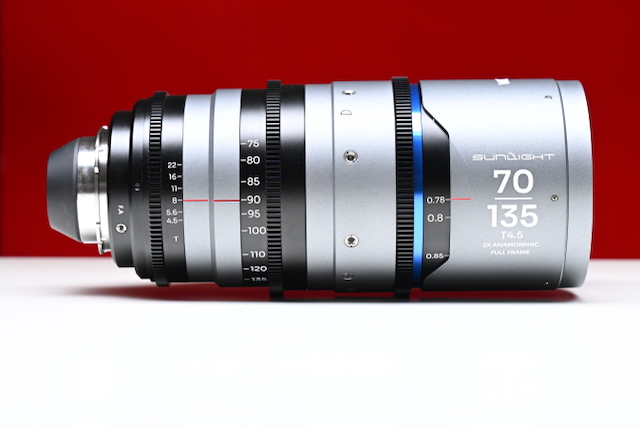
The markings all line up correctly, which is nice to see.
Back Focus Adjustment?
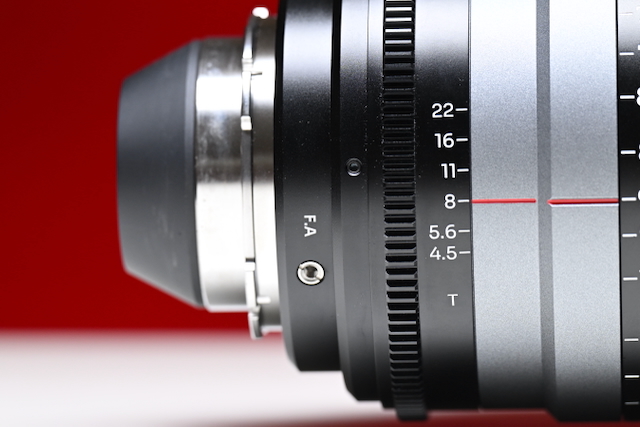
One of the nice features of the Sunlight zooms is that they feature a back-focus adjustment, which can be adjusted with the lens mounted on a camera.
Back focus, which can also be referred to as focal flange length, is the distance between a camera’s sensor and the rearmost element of the lens. Adjusting back focus is especially important if you are changing over lens mounts. Usually, this is done through the painstaking task of using shims. I would highly recommend that if you have to use shims to change the back focus on an anamorphic lens, take it to a lens technician at a reseller/rental house. Adjusting the back focus shim stack on anamorphic lenses will adversely affect the optical performance and introduce astigmatism to the lens.
Instead of having to do this with the Sunlight series, you can use the back focus adjustment on the lenses to do this instead. This is as simple as loosening three screws with the included Allen key and then moving the rear barrel.
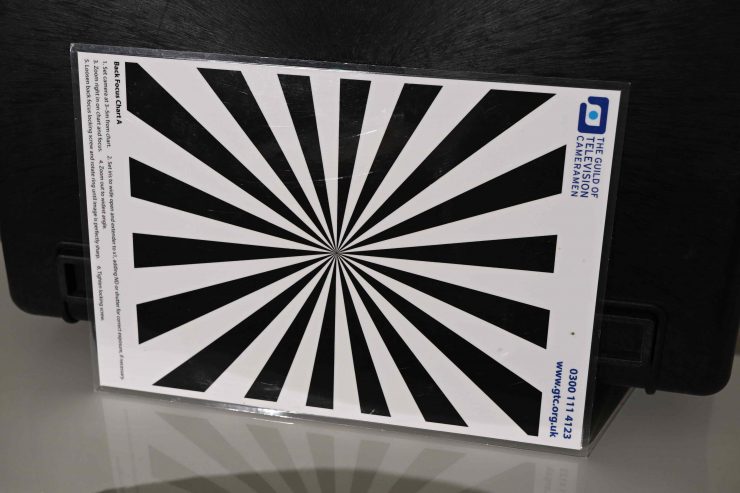
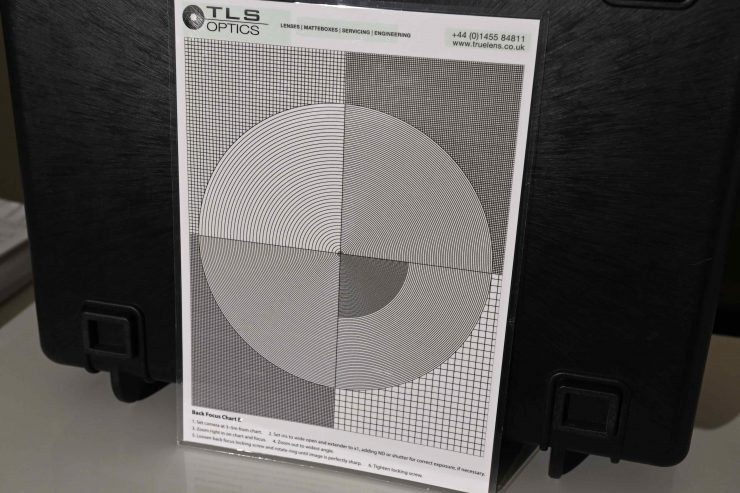
The best way to adjust back focus is to put your camera on a tripod so that it won’t move around. Then frame up a focus chart or any solid object if you don’t have access to one. Now, the distance at which you place your focus chart away from the lens depends on the focal length of your lens. If it is a wide focal length, then 6′ / 183cm or so will usually work. If you are using longer focal lengths, then that could be up to 20’/ 6m.
It is important that when doing a back focus adjustment, the lens you are using is wide open. In the case of the Sunlight zooms, you want them at T4.5. If you have an EVF or monitor, it’s best to turn down the brightness and turn up the contrast so you can clearly see what you are doing.
You then zoom all the way in and focus the lens until it looks as sharp as it will get, and then you zoom all the way out, loosen the back focus, and adjust it till you get the sharpest image. Once you have done that, then you tighten up the screws, but you need to make sure that you don’t move it when you do this. I recommend using a large monitor with good resolution; otherwise, it can be difficult to see what you are doing.
This is a really good feature on the Sunlight zooms, and it makes it easy for a user to adjust the back focus. With lenses that you have to remove and add shims, I highly recommend that you get someone at a rental house or other facility to do this.
Anamorphic Design
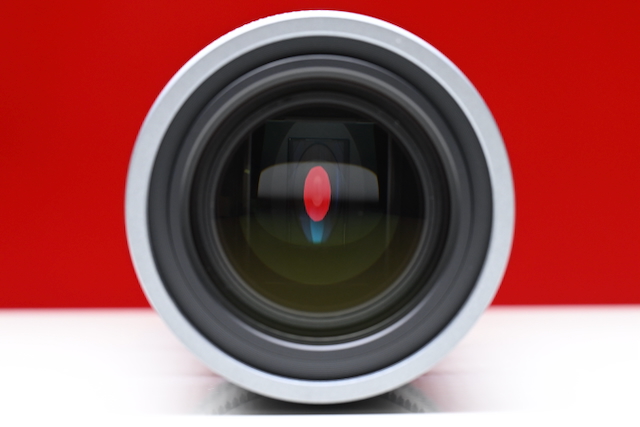
The Laowa Sunlight 2X Anamorphic Series features a front anamorphic design.
Optical Construction
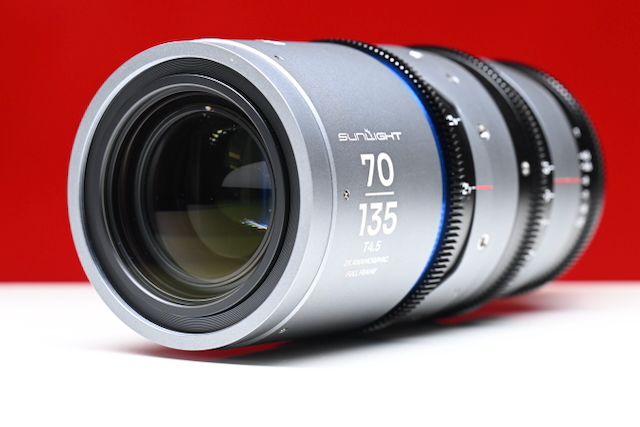
Both zooms feature 10 aperture blades. The Sunlight 40-80mm T4.5 has 23 elements in 15 groups, and the 70-135mm T4.5 has 22 elements in 14 groups.
Constant 2X squeeze ratio
The 2X squeeze ratio allows you to create the classic wide-screen anamorphic look, and it pairs well with 4:3 or 6:5 sensors, which are usually defaulted in professional cinema cameras to deliver a 2.66:1 or 2.4:1 image after de-squeeze. You can also crop to a 2.39:1 with minimal loss of resolution.
On cameras like the ARRI ALEXA 35, you can also shoot in a 2.7K 8:9 recording mode that allows you to use 2x anamorphic lenses to create a 16:9 UHD image. This is very handy if you want to want to shoot with an anamorphic, but still deliver a 16:9 image that meets the streaming mandates.
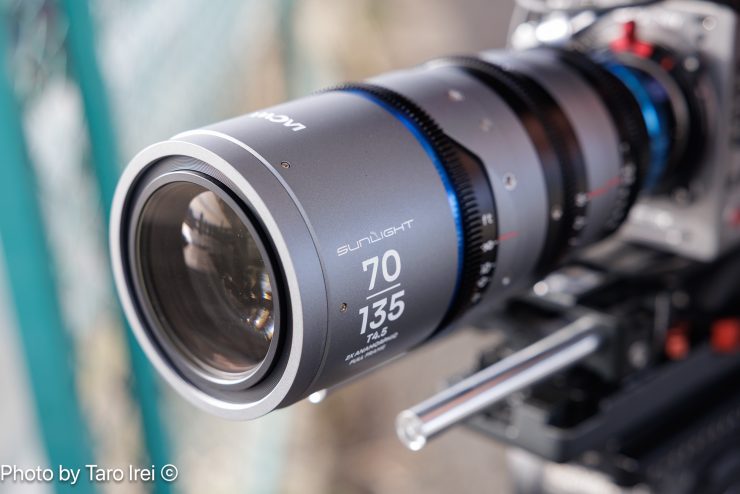
With the optical design, the 2X squeeze ratio can be achieved at any focus distance. Laowa also states that the lenses maintain the relative shape of the object and avoid anamorphic mumps. I will test this further down in the review.
Close Focus
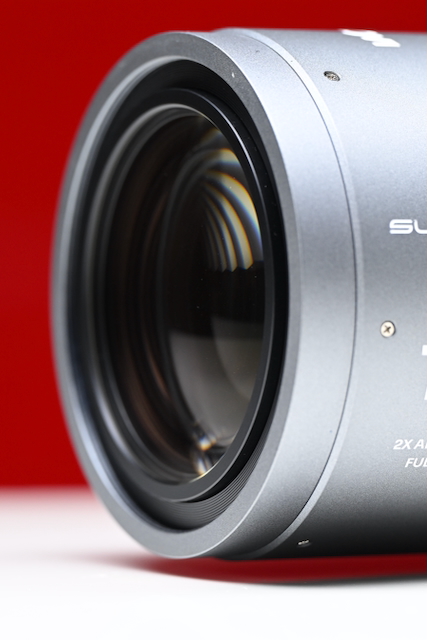
You can see the minimum focus distance for the Laowa Sunlight zooms below:
| Minimum Focus Distance | |
| 40-80mm T4.5 | 2′ / 61cm |
| 70-135mm T4.5 | 2.55′ / 78cm |
The minimum focus distance is pretty good for a 2x anamorphic, especially the 70-135mm T4.5
How does this compare to some other 2x anamorphic zooms? Below you can see:
| Minimum Focus Distance | |
| Laowa Proteus 26-45mm T2.9 | 1.64′ / 50cm |
| Laowa Proteus 45-85mm T2.9 | 2.95′ / 90cm |
| Panavision 37-85mm T2.8 | 2.75′ / 83.82cm |
| Panavision 40-80mm T2.8 | 3.25′ / 99cm |
| LOMO 40-120mm T3.1 | 3.25′ / 99cm |
| Angenieux Optimo Anamorphic 56-152mm T4 | 2.08′ / 63.69cm |
| Cooke 35-140mm Anamorphic/i Zoom Lens T3.1 | 3.93′ / 120cm |
| ARRI Anamorphic Ultra Wide Zoom AUWZ 19-36/T4.2 | 2′ / 60cm |
Flare Options
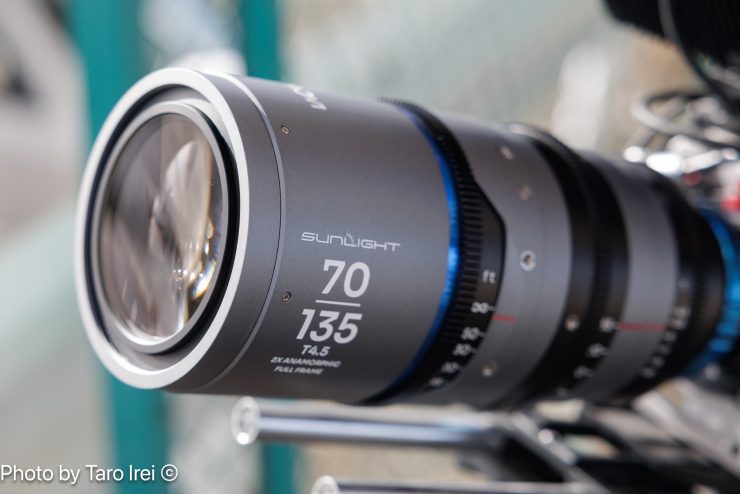
As I mentioned earlier, the lenses are available in either blue, amber, or neutral silver flare color options. If you are looking for something with a more neutral flare then the silver flare option will change color according to the light source.
Other Features
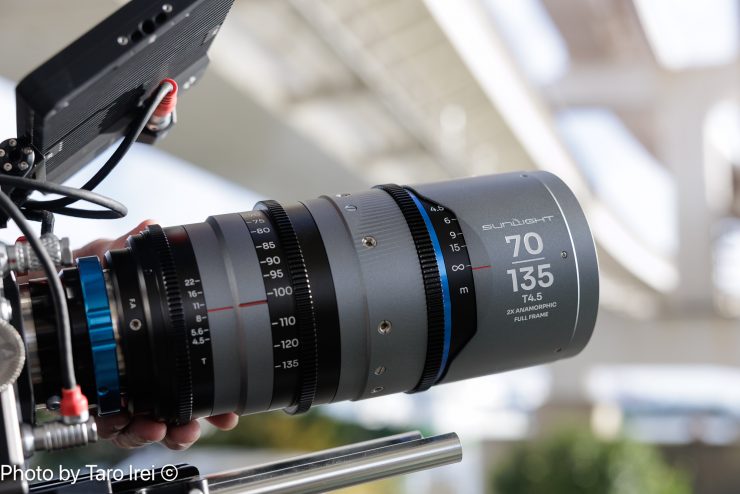
Both of the zooms feature unified gear positions so that they can be switched quickly between focal lengths to work with the same set of gears.
They also all have a back focus adjustment mechanism that I mentioned earlier in the review, so that you can calibrate the back focus with the lens mounted on the camera directly without going through a tedious shimming process.
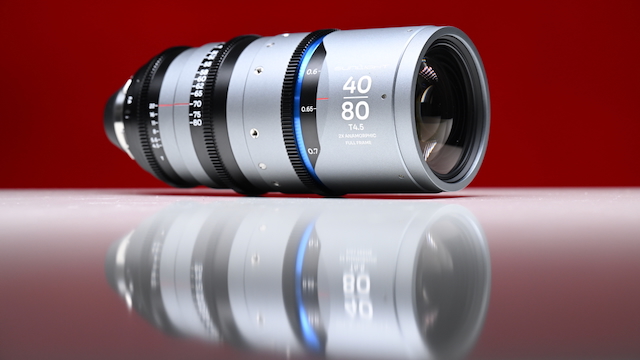
The Sunlight zooms feature an Ø 105mm front diameter and a Ø 95mm front filter thread. As a comparison, the Proteus zooms have an Ø 80mm outer diameter and an Ø 77mm filter thread.
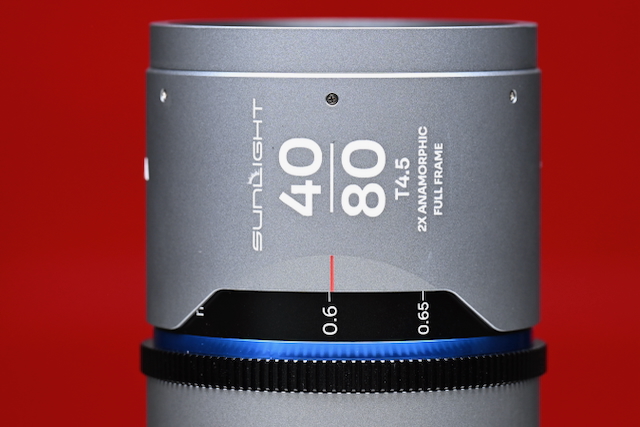
The focus throw is 305° for the 40-80mm, and 302° for the 70-135mm; the zoom throw is 100°, and the aperture throw is 32.7°.
Why were anamorphic lenses made?
What you may not know is that anamorphosing optics was developed by Henri Chrétien during World War I to provide a wide-angle viewer for military tanks. The optical process was called Hypergonar by Chrétien and was capable of showing a field of view of 180 degrees. After the war, anamorphic lenses for cinema were originally designed so that wide format imagery would fully utilize the film area of a standard 35 mm frame. The lenses also enhanced vertical resolution and reduced the appearance of grain. The technology was first used in a cinematic context in the short film Construire un Feu in 1927 by Claude Autant-Lara. The introduction of the Super 35mm format made the difference between anamorphic and spherical lenses a lot less obvious. This is because Super 35 provided more horizontal film area, as it didn’t have to record the audio next to each frame, as was the case with standard 35mm film.
Why shoot anamorphic?
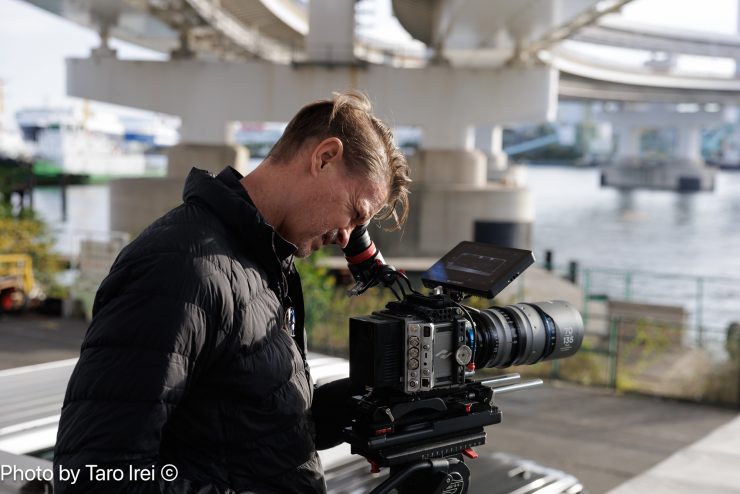
With a lot of anamorphic lenses, you are going to see image imperfections, but this is what makes anamorphic lenses so special. With modern-day cameras and sensors being so good, a lot of DPs want to try and add character through the use of vintage or/and anamorphic lenses. Image characteristics when shooting with an anamorphic lens include the bokeh taking on the appearance of being oval-shaped as opposed to circular, and flares appear as bluish horizontal or vertical streaks that can span across the entire picture. The other characteristic associated with anamorphic shooting is the widescreen aspect ratio.
If you are working in HD or 2K formats with spherical lenses, you could just crop your 2K frame to get a 2.39:1 ratio, right? Yes, you could, but the problem is you are left with just 858 lines of vertical resolution. Anamorphic lenses provide a way to capture a 2.39:1 ratio without having to make that sacrifice in resolution. Of course, you can also capture at higher resolutions (4K, 6K, 8K, etc.) and then deliver in a lower resolution as well.
2x anamorphic lenses produce a super-wide 3.55:1 ratio. To produce a traditional 2.39:1 ratio with a 16:9 sensor, a 1.33x or 1.35x anamorphic lens is needed.
Anamorphic certainly isn’t for everyone
As the old saying goes, just because you can, doesn’t mean you should. Anamorphics aren’t for everyone, and they certainly aren’t suitable for a lot of projects. The very nature of their aspect ratio makes them difficult to use for a lot of content you may want to shoot. TV broadcasters often want a native 16:9 aspect ratio as they don’t want to have black bars below and above the image shown on their viewers’ screens. A lot of DPs would love to shoot anamorphic or even in a wider aspect ratio, but this is normally vetoed by the network. Because the anamorphic-scope camera format does not preserve any of the images above and below the scope frame, it may not transfer as well to narrower aspect ratios, like the commonly used 16:9 for full-screen television.
You also need to take into account that the depth of field is also affected when shooting anamorphic-ally. Technically, anamorphic and spherical lenses have the same depth of field, but in real-world use, you have to use a longer focal length with an anamorphic in order to achieve the same angle of view. This means that at the same magnification (for example, using a 35mm focal length), anamorphic lenses produce a shallower depth of field. As we all know, (whether you agree or not), the “cinematic” look is often associated with a shallower depth of field.
Reasons for not shooting anamorphic can include:
* Most anamorphic lenses can create artifacts or distortions
* Generally more expensive than spherical lenses
* A lot of anamorphic lenses are slower than spherical lenses and require more light
* Does not transfer well to narrower aspect ratios, such as 16:9
Sharpness
The Laowa Sunlight zooms are pretty sharp for full frame 2X anamorphic lenses at this price, but they are a tiny bit soft when shooting wide-open at T4.5. However, you really need to zoom in a lot to see that softness. Once you start stopping down to T5.6-T8 they do sharpen up. I would say T5.6 to T8 is the sweet spot for sharpness. A lot of the more ‘affordable’ anamorphic lenses that are on the market are not sharp at all, especially when used wide open.
As a comparison, above you can see my tests that I did with the Proteus 2x anamorphic zooms. I don’t personally think the Sunlight series is quite as sharp as the Proteus anamorphic zooms.
They are a little bit softer out towards the edges of the frame; however, I personally thought that the sharpness drop-off wasn’t as big as I expected.
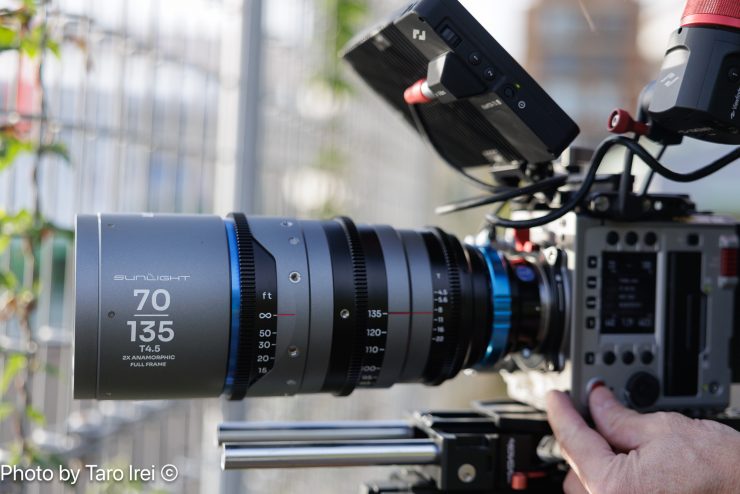
At wider focal lengths, there is some very small pincushion distortion; however, it isn’t too bad. If you are not familiar with pincushion distortion, it is where straight lines bend or pinch inward from the center of the image. You will sometimes see pincushion distortion in images with straight lines, especially out toward the edges of the frame. The further the lines are away from the center of the image, the more noticeable the distortion. Pincushion distortion isn’t necessarily a bad thing with anamorphic lenses because if you are doing close focus with a wider focal length, you don’t want to have barrel distortion, as that would make people’s faces look distorted.
In technical tests, a lot of anamorphic lenses are not going to win people over. One of the rare exceptions would be ARRI’s Master Anamorphics. Technical tests are more unforgiving than a lot of real-world shooting situations, and they are done to look very closely at potential optical flaws. Zooming in 300% on an image is not something I am ever going to do in the real world; it is just pixel-peeping.
In the real world, most lenses are going to look a lot better than they will in technical tests. The reason I do tests like this is that it gives you a benchmark when comparing other lenses. The robot has a very fine pattern on its surface, and this is very helpful in seeing sharpness, detail, micro-contrast, etc.
Lens Breathing
I tested out the zooms by doing large focus throws, and there is certainly breathing in the form of vertical stretching when using the lenses wide open, but for 2x anamorphic lenses at this price, that is to be expected. If you stop down to T8 the breathing is minimized.
Anamorphic breathing appears in a different way than when using a normal spherical lens. With a spherical lens, breathing gives the appearance that the focal length is changing. However, with anamorphic lenses, vertical stretching occurs with the background. So when you adjust focus from something close to something further away, the background takes on a squeezed appearance, hence why you see oval instead of round bokeh.
With anamorphic lenses, the more you stop the lens down, the less the out-of-focus object’s appearance will change. If you shoot wide open and pull focus, the out-of-focus objects will change shape more dramatically.
Older anamorphic lenses, such as Lomo’s and Kowa’s, can breathe a lot. Newer anamorphic designs from companies such as Zeiss and Cooke have a lot less breathing. The popular Panavision E Series anamorphic lenses retain true anamorphic artifacts such as disproportional vertical focus breathing.
As a comparison, above you can see focus breathing tests done with the Laowa Proteus 26-45mm T2.9 and 45-85mm T2.9 S35 2x anamorphic zooms.
Flare
Let’s face it, the reason a lot of people want to use anamorphic lenses is because of the interesting flares you can obtain. Yes, they can be overly used, and sometimes less is more.
Used wide open, or relatively wide open, you do get that streak that everyone is familiar with. The lenses I was testing were the blue version. Whether you prefer a blue streak, an amber streak, or a more neutral streak is again a personal thing.
Personally, sometimes I like to use lenses like these in combination with something like glimmer glass to soften the streaks.
A strong blue streak might be fine if you are shooting a Sci-fi movie, but it can be very distracting for a lot of other content. Sometimes less is more.
I quite liked the flare from the Sunlight series. They have a little bit of halation, and there is some veiling.
The lenses maintain reasonably good contrast when a lot of direct light is shining down the barrel.
Above, as a comparison, you can see flare tests I did with the Laowa Proteus 26-45mm T2.9 and 45-85mm T2.9 S35 2x anamorphic zooms.
As another comparison, above you can see some flare tests that I did with the Proteus primes. Please note that the Primes I was testing were the silver flare option.
Chromatic Aberration
The lenses don’t show any big real world signs of chromatic aberration, which doesn’t come as a huge surprise given they have a maximun aperture of T4.5.
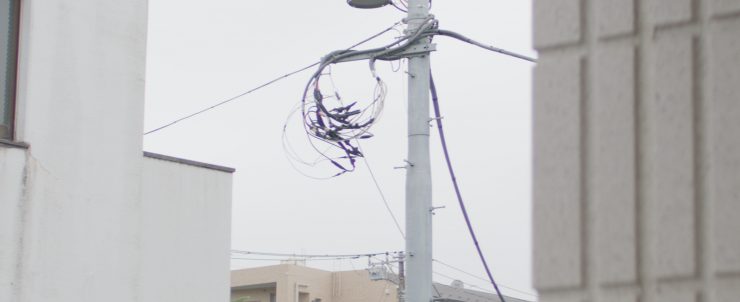
T2.8 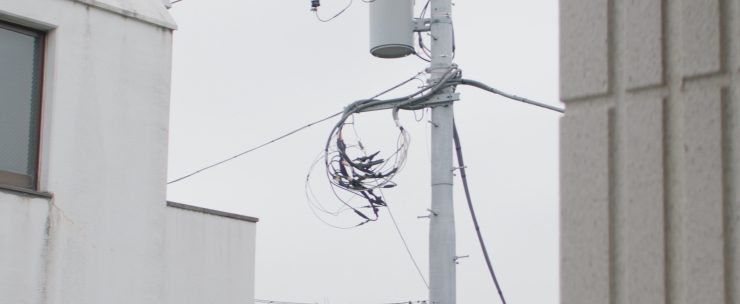
T4
As a comparison, above you can see the chromatic aberration when using the Proteus 85mm T2 prime.
Bokeh
Oval-shaped bokeh is another drawcard of anamorphic lenses. The ability to create interesting-looking out-of-focus areas can certainly be used to help enhance a shot. I personally prefer out-of-focus areas in the foreground rather than the background when using lenses like this.
The bokeh is what you would expect for 2x anamorphic lenses with a T4.5 aperture. It has a reasonably nice oval appearance.
Real World Use
I took the lenses out and shot some quick test footage so that you could see the general look and characteristics of the lenses. The footage was cropped for 2.39:1.
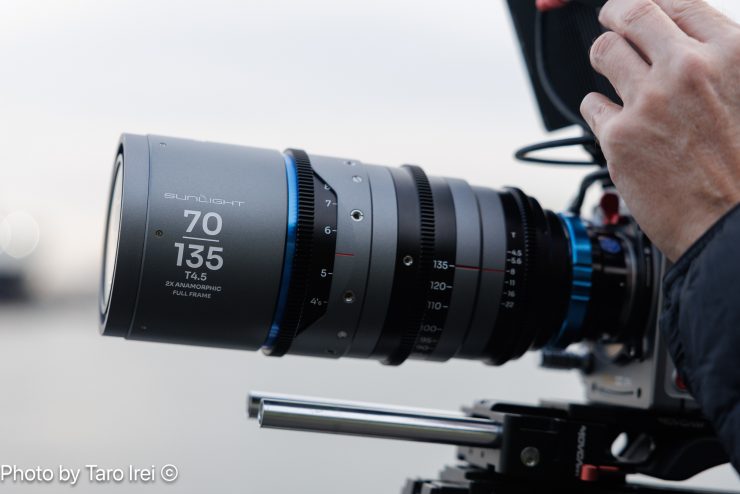
I enjoyed using the lenses, and I generally liked the images I was getting from them. They have character without being over the top, and they have a nice amount of sharpness and pleasing bokeh. They have very little chromatic aberration when used wide open in highly contrasty conditions.
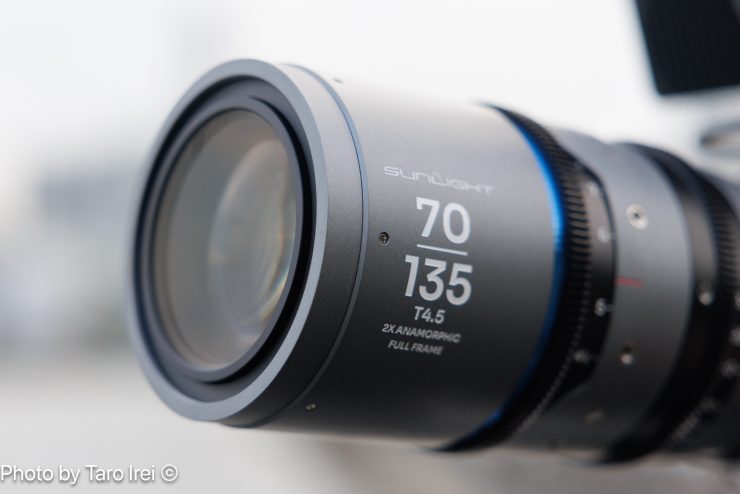
The mechanics of the lenses make them easy to use, and they certainly provide you with that ‘look’ that you would typically associate with a 2x anamorphic.
I didn’t find the lenses to be a clinical as say the Proteus zooms or primes. They can easily be used wide open at T4.5 as they provide good levels of sharpness, which is something other anamorphic lenses do struggle with. I didn’t find the T4.5 aperture to be overly limiting given the good high ISIO performance of so many cameras on the market today. However, I understand that some users will be put off by not having a faster T stop.
As a comparison, above you can see footage taken with the Proteus 2x anamorphic zooms.
As another comparison, above is some test footage using the Proteus primes.
Can you get wide enough?
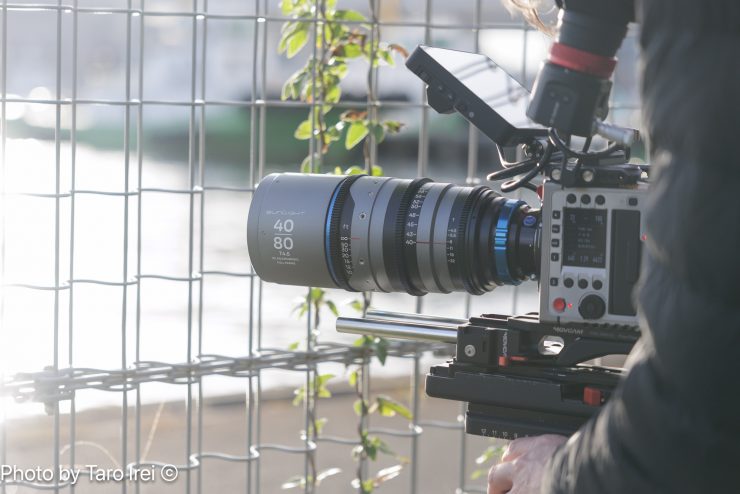
With the widest focal length being 40mm, you may well be asking, Is that wide enough? A 40mm 2x anamorphic lens has the equivalent field of view of a 20mm lens. What you do need to remember is that you are getting a 20mm horizontal field of view, but you are losing information vertically. Wide-angle anamorphic lenses of less than 40mm focal length produce a cylindrical perspective, which some people like, and others hate.
Price & Availability
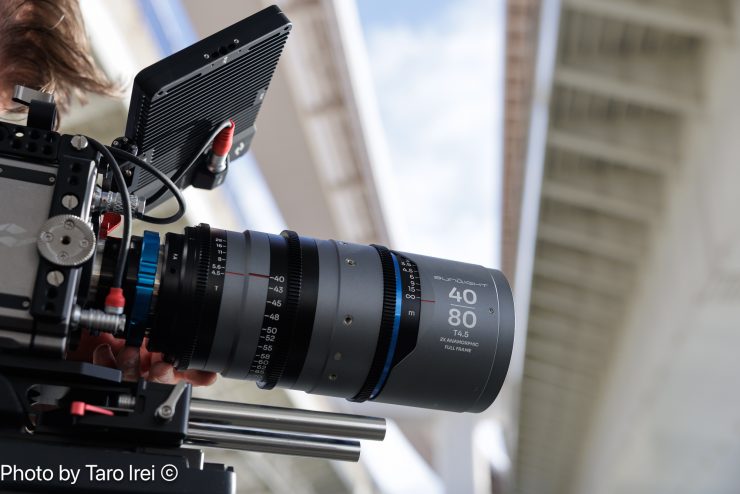
The Laowa Sunlight 2x FF Anamorphic Zoom Series costs $5,999 USD for a single lens (40-80mm/70-135mm) and $10,999 USD for a 2-lens set. Interchangeable bayonets for mirrorless cameras (Canon RF, Sony E, Nikon Z, L mount) are available for purchase, priced at $50 USD each.
These lenses don’t have any direct competition at their price.
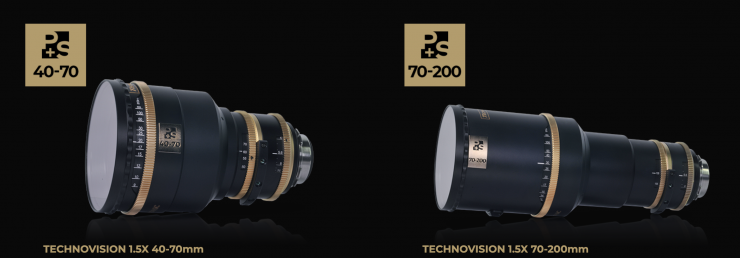
A lot of the anamorphic zooms you can purchase tend to have a 1.5x squeeze. Laowa has its 1.5x Nanomorph zooms, and there are the P+S Technic TECHNOVISION 1.5X Zooms.
The Laowa Sunlight series certainly offers very good value for money, given their optical performance and build quality.
Do you really need an anamorphic lens?
I think in principle a lot of people like the idea of shooting with anamorphic lenses, but whether or not you actually need to is maybe a completely different story. Depending on what you do, there may well be little to no demand to shoot anamorphic. For a lot of shooters, it makes more sense to rent anamorphic lenses rather than to own them; however, with quite a few budget-friendly options now on the market, they are affordable enough to purchase. The Proteus series certainly fits that bill, especially for owners of mid to high-level digital cinema cameras.
While you may find the look of anamorphic aesthetically pleasing, in the past, a lot of shows would not shoot anamorphic for broadcast television, simply because the broadcasters didn’t want viewers complaining about black bars on top and below the image.
However, with more and more online content being created by Netflix, Amazon, Disney, etc., this isn’t really an issue anymore. Online streaming entities are often more than happy to have productions shoot with anamorphic lenses, and the 2:1 aspect ratio has become an increasingly popular delivery format for Netflix. If you produce content that will end up in a widescreen aspect rati,o you could easily mix anamorphic and other spherical lenses together. Also, if you are making your own content, then go for your life and use whatever you like.
In my honest opinion, it can be better to just rent good anamorphic lenses for projects that require them. However, buying affordable anamorphic lenses makes sense if you are someone who is going to use them a lot for the type of work you do. The Proteus series is sure to appeal to both owner/operators and rental houses.
Conclusion
Laowa has been knocking it out of the park lately, and they are bringing so many new and sometimes unique lenses to the market. As I previously mentioned when I reviewed the Proteus primes and zooms, the Proteus series feelt like a more serious effort at producing proper cine anamorphic lenses. The Sunlight 2x anamorphics follow in those footsteps. They are very well priced for full-frame 2x anamorphic lenses, especially zooms, and furthermore, at this price point, they don’t have any direct competition.
In the past, I have generally been pretty disappointed with most so-called ‘affordable’ anamorphic lenses, although there have been some exceptions. The trouble was that those exceptions were plagued by inconsistencies with the look, build quality, and mechanics. The Sunlight zooms series certainly buck that trend, and if you are after a cleaner and sharper-looking anamorphic lens that still has some character and won’t cost more than a good car, then these are the only game in town.
The Sunlight zooms, just like the Prroteus zooms and primes, are well made, and optically they are far and away a lot better than anything else I have seen or used when it comes to relatively affordable anamorphic lenses.
They certainly punch well above their weight, and I think Laowa has done a very good job at coming up with 2x anamorphic primes and zooms that are very much underrated and probably not appreciated as much as they should be. The biggest issue Laowa is likely to face is that a lot of shooters are more than happy to use the myriad of ‘affordable’ anamorphic lenses that have flooded the market in recent years. Companies have been able to cut corners and make small, compact, full-frame anamorphic primes because optically they don’t need to be that good, and a lot of people are more interested in the character of the lens, as opposed to its optical performance.
Anamorphic lenses are hard to review. Sure, I can talk about the technical aspects of a lens, but technical perfection is not what most DPs look for when choosing an anamorphic. The character and unique look of a lens are why certain anamorphic lenses are more popular than others. Unless you are after something that is super clean, like an ARRI Master Anamorphic, the preference is usually to find and use a lens that has lots of character. The Sunlight series blends sharpness with character, and I didn’t find them to be overly sterile. There are a lot of instances, although this does depend on the type of work you do, where having lenses with ‘character’ is not going to suit the project. I personally prefer to use cleaner lenses and then alter them with filters or in post, but that’s just me. Everyone has different needs and requirements, and there is no right or wrong choice. Having a cleaner-looking anamorphic can also help if you need to mix and match it with spherical lenses.
In the past, anamorphic lenses were predominantly rental items for a lot of shooters, simply because the cost of ownership was so high, but over the last 3-4 years, a lot of affordable options have come to market. I can see more and more people starting to purchase anamorphic lenses instead of renting them.
Lenses can have different characteristics when used on different cameras, and it is important to try out both the lens you want on the cameras you own or use.
The Sunlight series strikes a very good balance between affordability, image quality, and consistency. The biggest caveat is arguably the weight and T4.5 aperture.
Laowa is also the first company to make what I would consider ‘affordable’ full-frame anamorphic zooms. This is certainly going to set them apart, as there is nothing else on the market that does what they can do at anywhere near the price.