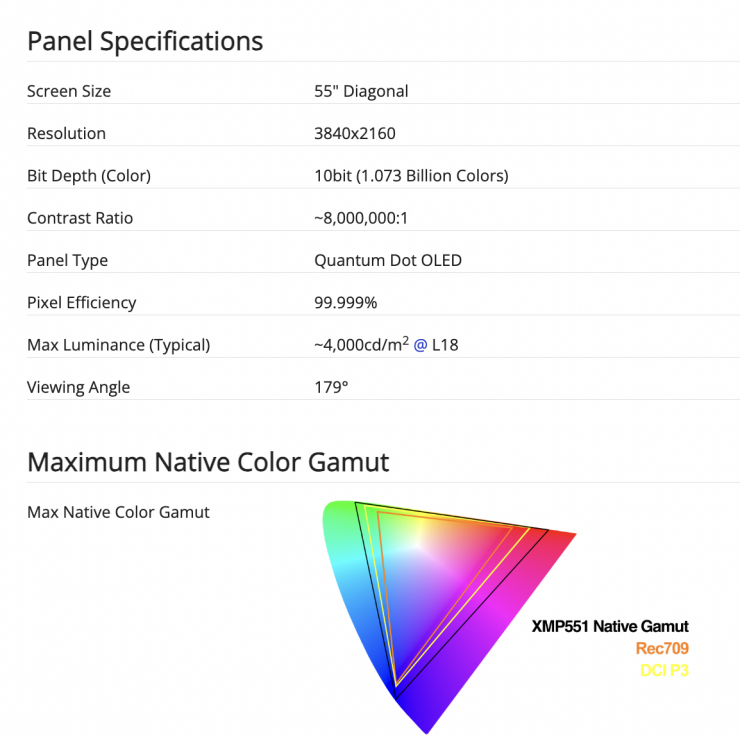

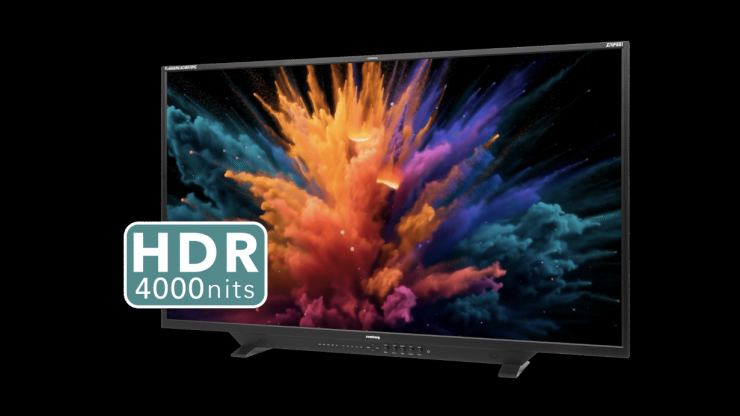
Flanders Scientific has announced its new XMP551 55″ UHD HDR/SDR reference mastering monitor with a 4th generation QD-OLED panel capable of up to 4000nit peak luminance, an 8,000,000:1 contrast ratio, and their widest color gamut ever.
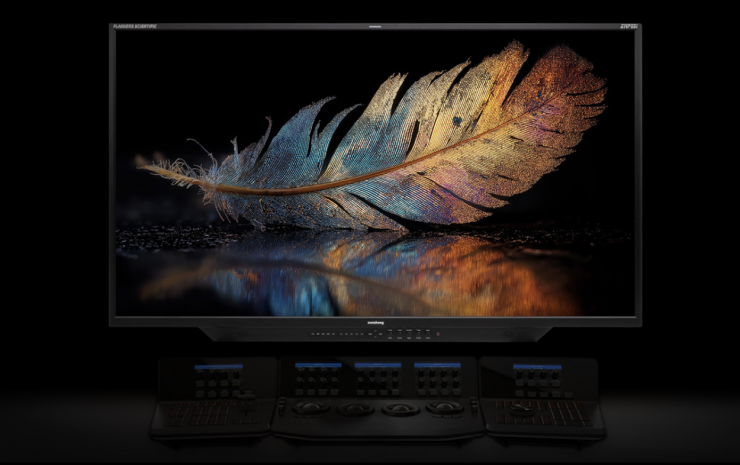
The XMP551 qualifies as a Dolby Vision mastering monitor and delivers true reference-grade performance and professional connectivity in a form factor large enough for both the colorist and clients to view. This opens up many exciting possibilities, including the option to build single-monitor viewing rooms instead of needing to rely on separate mastering and client monitors.
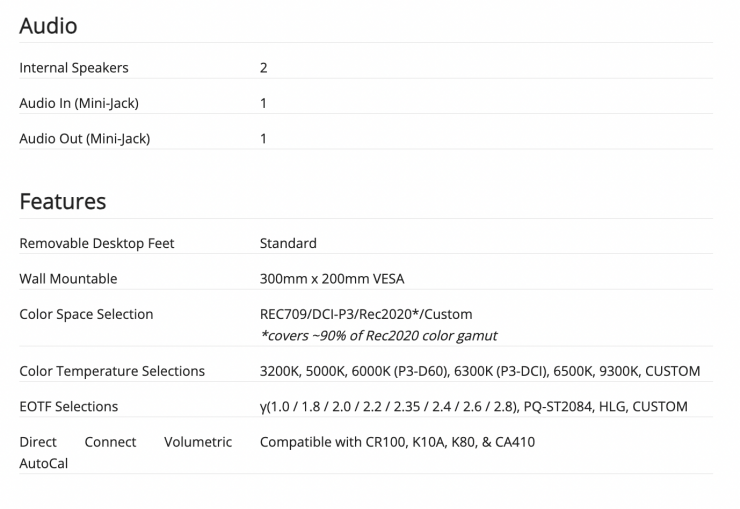
All FSI monitors come pre-calibrated from the factory. The XMP551 also features highly accurate volumetric Auto Calibration, making it incredibly easy for operators to recalibrate the display over time. Simply plug a supported probe directly into the monitor and the advanced GaiaColor AutoCal routine will profile the monitor for all color space selections in one simple, unified calibration process—all without requiring a computer. AutoCal works by profiling the monitor’s native, uncalibrated state and storing this data in non-volatile memory. When a color management selection is made, the monitor calculates and instantly applies a calibrated state based on that stored profile. Since all selections are derived from a single primary profile capture, operators can switch between selections without needing to rerun AutoCal, ensuring a fast, accurate, and efficient workflow.
Third Party Calibration
The XMP551 is also compatible with popular 3rd party calibration solutions including Calman and ColourSpace. Quickly and easily perform your own custom 3D+1D LUT based calibration with any program capable of saving into FSI’s calibration LUT formats.


The XMP551 utilizes advanced tetrahedral LUT interpolation delivering a higher degree of precision with better on screen performance than simple trilinear LUT interpolation.
Trilinear Interpolation

Tetrahedral Interpolation

The QD-OLED Advantage
This is OLED without compromise.
The XMP551 is uniquely qualified for use as a large format HDR Program Mastering Monitor, learn why in our Technical Overview PDF.
Advantages Over Other OLED Technologies
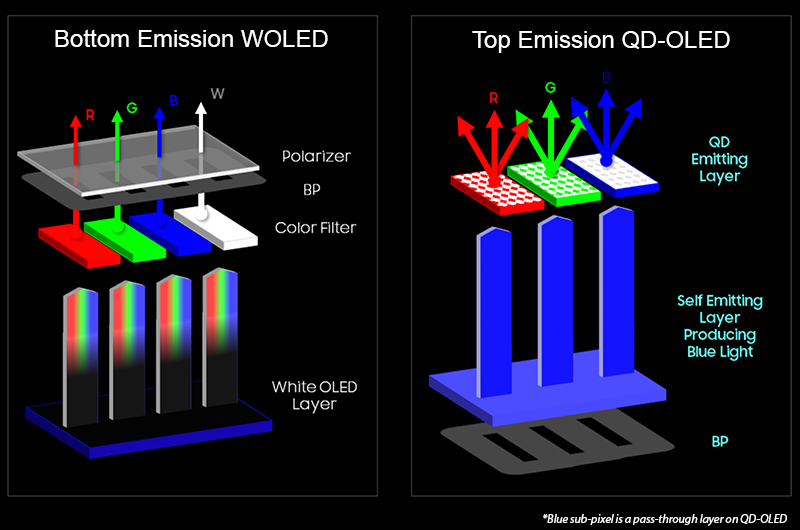
Other available OLED technologies are either too dim for HDR mastering or suffer from very significant volumetric collapse due to their non-additive RGB+W sub pixel structures making them unsuitable for HDR use cases that demand color accuracy. QD-OLED is truly RGB additive for white, thus avoiding color volume limitations, and easily exceeds several thousand nits peak luminance with plenty of headroom to spare.

Exceptional Off-Axis Viewing
The XMP551 has the widest viewing angle, with the least off-axis contrast and color shift, ever featured in an FSI display. So not only will a colorist’s clients benefit from being able to view a reference image on a large screen they will also have the flexibility to view the image from anywhere in the room without having to worry about the off-axis limitations often seen in other display technologies.

Advantages over FALD LCD
The XMP551’s accurate per pixel level luminance control means true black levels at all times with none of the small bright object or motion artifact limitations found on FALD (Full Array Local Dimming) LCDs. The per pixel emissive design of the XMP551’s QD-OLED panel guarantees exceptional simultaneous contrast with all varieties of content.
With the XMP551 you can rest assured that compared to FALD LCDs:
- Highlight detail will not be obscured due to backlight zone flaring.
- Shadow detail and black levels will not be compromised by halation.
- There will be no color shift or artificial flicker with fast moving bright objects.
- No scene cut anomalies as can be found on some FALD that exhibit differential rise/fall times of LED backlight phosphors.
While the amount of halation can vary greatly between FALD LCDs, all FALD systems will show at least some degree of raised black levels and haloing when rendering a high contrast image like this example of a white circles on a black background graphic. The XMP551’s QD-OLED panel on the other hand can render these types of very bright white highlights while maintaining the intended deep black background.

Power Efficiency
The XMP551 is very power efficient compared to most other reference grade HDR display solutions. Display technologies like LMCL (Light Modulating Cell Layer) LCDs are highly inefficient as they not only need to pass light through two separate TFT layers, but also because their backlights always remain fully engaged drawing the same high amount of power whether displaying very dark or very bright images. When compared with bottom emission OLED technologies the efficiency of the XMP551’s top emission display structure means less power is required to attain the same luminance levels.
Advantages over Global Dimming LCDs
Reference grade HDR displays should be able to produce high simultaneous contrast, not just a bright image. Global dimming LCDs can either produce a bright image or a dark image, but cannot produce images that simultaneously have bright highlights and dark lowlights. Global dimming LCD specifications often quote high sequential contrast ratio figures, where a display’s peak luminance and black level are measured at different times, but this can be quite misleading as simultaneous contrast is problematically low on these devices for any HDR content mastering use-cases. The XMP551 features class leading simultaneous contrast rendering both bright highlights and dark lowlights with incredible clarity and accuracy at the same time.

Quiet Fanless Design
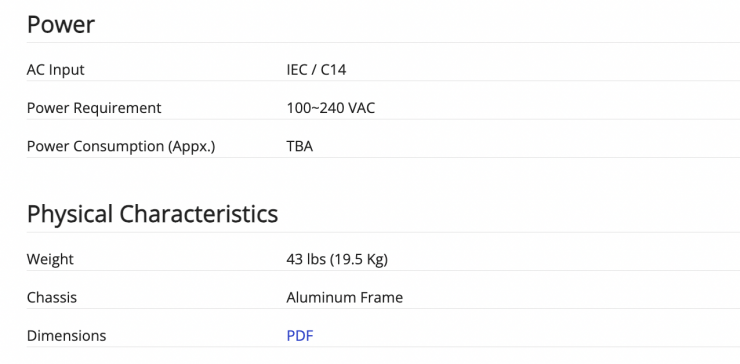
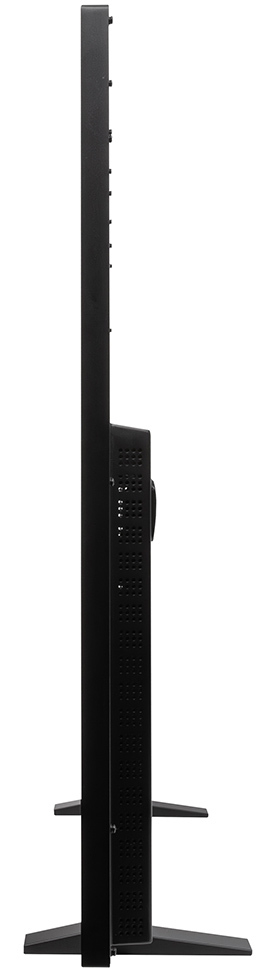
The XMP551 utilizes a combination of a graphite heat sink and all aluminum chassis to efficiently dissipate heat without relying on fans. Many consumer devices use a plastic chassis, which can act as an insulator trapping heat and impacting panel performance. An aluminum chassis not only provides increased strength and durability in professional installs, it also helps efficiently conduct heat away from the panel.
This fanless design provides users with both a quieter and lower maintenance HDR grading display. Other HDR technologies, like LMCL LCD displays, tend to produce exponentially more noise when operating in HDR modes.

Professional Connectivity
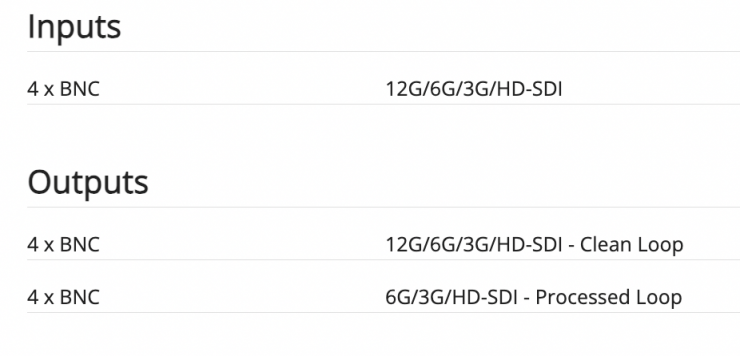
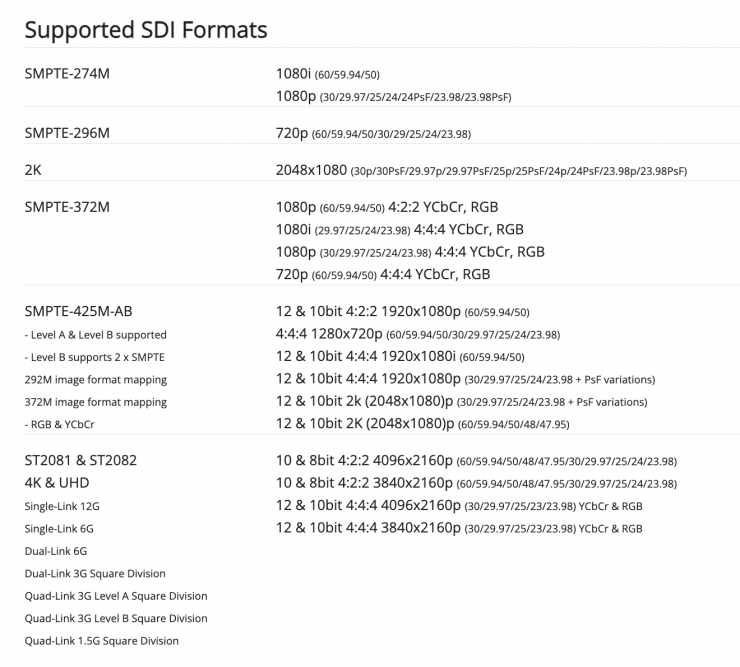
12Gbps SDI connections greatly simplify room design by allowing you to feed 4K and UHD signals to the display over a single cable. Quad 1.5Gbps and 3Gbps SDI connectivity are also supported ensuring compatibility with practically any type of 4K or UHD output.
The XMP551 supports advanced signal formats up to 12bit 4:4:4 at 4K resolution setting it apart from less advanced monitoring solutions.

XMP series monitors feature 4 clean loop-throughs and 4 processed MON outputs, with each input having its own clean loop and processed MON output. The MON outputs support processed signal output capabilities, such as basic quarter-sample resolution downconversion and the ability to mirror any active Look LUT on the corresponding input. The unique ability to simultaneously supply a clean 12G/6G loop through and real-time quarter-sample downconverted 3G or 1.5G output means that any incoming single link 4K or UHD signals can be converted to 2K or HD output for downstream HD monitors or scopes, all without needing any standalone down conversion equipment.

Advanced Signal Status Detection
XMP series monitors automatically read payload ID (VPID) information embedded in SDI signals and configure the monitor’s SDI Format mode for proper support of 4:4:4 or 4:2:2, 10 or 12bit, and RGB or YCbCr signals. This information can also be temporarily displayed whenever a format change is detected so that you can be sure that what you intend to output to the monitor is what the monitor receives.
A VPID override toggle is also provided allowing users to manually configure the monitor in instances where the payload ID may be missing or incorrect.

Quad-View Mode with 4 Channel LUT Support
Ideal for multi-camera setups, XMP series monitors let you display 4 HD input signals on-screen simultaneously. With a single button press, you can toggle Quad View mode on or off, making it easy to view all 4 inputs at once or focus on any selected input full screen.
Best of all, Quad View mode no longer requires gen-lock synchronization. Simply connect sources of the same frame rate, and the monitor handles the rest.

Additionally, Quad-View Mode offers 4 channel LUT support so that each quadrant can have its own unique 3D LUT applied.

This 4 channel Look LUT support extends to the 4 processed MON outputs, allowing each input’s applied Look LUT to be displayed both on-screen and on its corresponding MON output. This transforms the XMP monitor into a 4-channel LUT box, letting you preview looks on-screen and share them with downstream devices.
Simultaneous Monitoring of HDR & SDR
Quad view mode combined with Look LUT support also enables simultaneous viewing of HDR and SDR on screen at the same. FSI provides an HDR & SDR simultaneous viewing LUT package as a free download for XMP series users.

Real-Time LUT Update Support
XMP monitors support direct integration with applications like Pomfort’s Livegrade for real-time Look LUT control. Active Look LUTs are applied in real-time to the monitor’s processed MON outputs, allowing the XMP to function as a real-time LUT box for both the on-screen image and connected downstream devices.
Note: Real-time Look LUT support with LiveGrade and XMP series monitors is currently limited to the SDI 1 input.


Remote Control
The IP Remote Utility can be used to remotely toggle functions, switch inputs, and navigate the menu on Flanders Scientific monitors using your Mac or PC’s keyboard, mouse or control panel. Also available for iOS devices.

Stream Deck
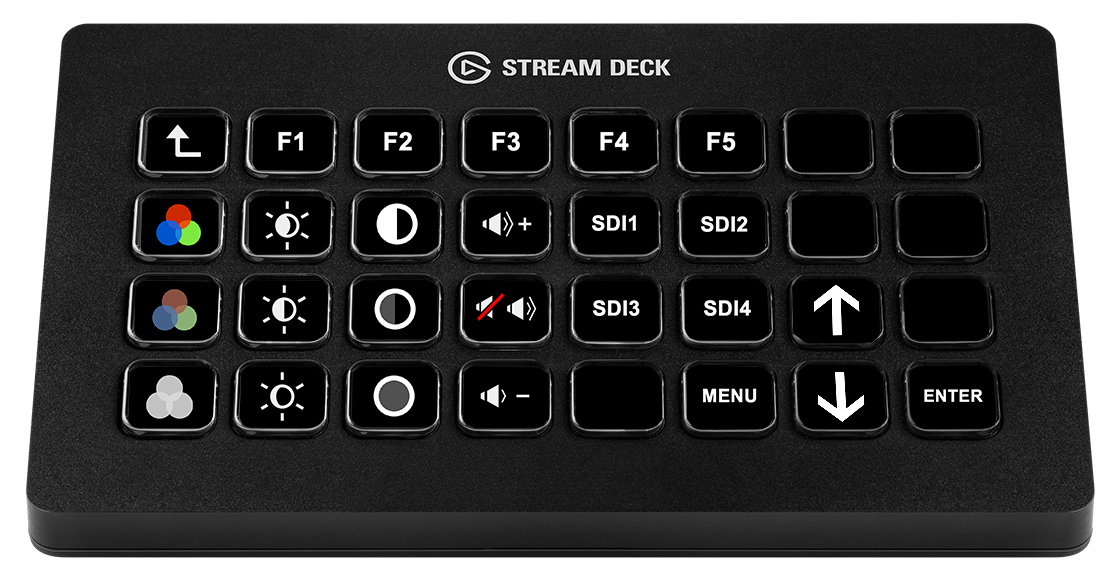
A Stream Deck can be easily configured for use with the IP Remote Utility to trigger shortcuts.
Quick Access Configurations
Quickly and easily save up to 5 custom configurations and switch between them with a single button press.

4K, UHD, and HDR Compatible Scopes
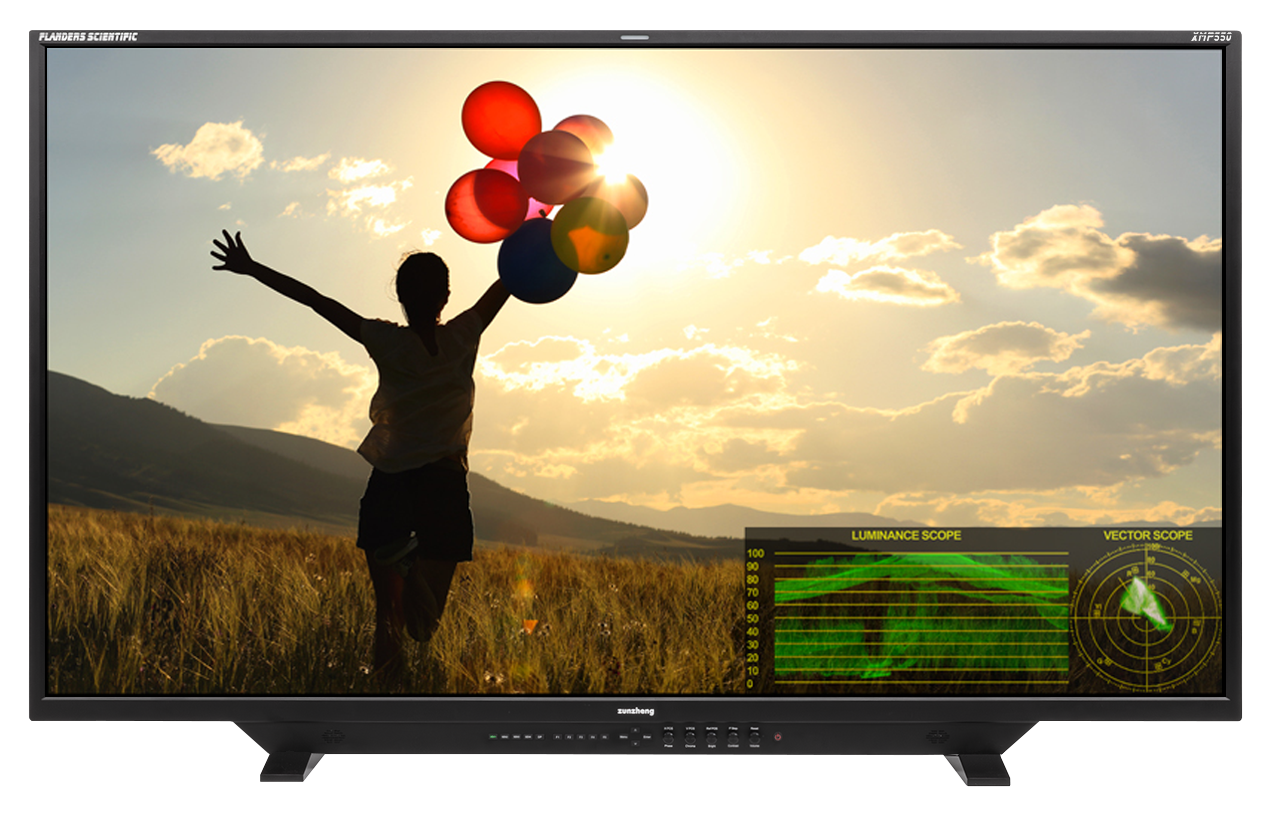
The XMP551 comes equipped with 4K/UHD/HDR compatible real-time waveform and vector scope. The waveform can be shown with your choice of percentage or PQ nits graticules for precise monitoring.
LUM Coloring (Customizable Exposure Check)
4 adjustment points from 0-100 percent allow you to establish specific target areas to be shown in false color or greyscale.


Blue Only, Red Only, Green Only, and Monochrome Modes
Blue Only, Blue Only Mono, Red Only, Red Only Mono, Green Only, Green Only Mono, and standard Monochrome monitoring modes are invaluable for QC and engineering tasks.

Markers
Choose from a wide assortment of standard area and safety markers, and optionally combine them with a center marker as well.

16:9

16:9 in 4:3

17:9

32:9

ADOBE

DISCOVERY V2

DISCOVERY V3


Custom Markers
XMP series displays also support upload of custom markers allowing for unparalleled flexibility in generating frame lines, overlays, and even complex elements like vignettes. Any 1920×1080 resolution PNG is supported giving you the freedom and power to use custom colors, opacity levels, and more. Give your markers custom names and save them to the display quickly and easily from the free IP Remote Utility application.

Native UHD Resolution
The XMP551 is a true UHD resolution monitor (3840×2160) that supports full screen viewing of HD and Ultra HD signals and will also accept 4K signals and scale them automatically to fit on screen while preserving native signal aspect ratio.


High-Quality, Ultra-Low-Latency Scaling
XMP series monitors feature high-quality bicubic scaling, ensuring that even HD sources appear clear and sharp on screen. Unlike many consumer devices, this scaling is performed in near real-time, offering exceptional, low-latency processing that’s ideal for on-set or audio-critical applications.
Additionally, a 1:1 pixel mapping mode is available, providing a true reference QC viewing mode for any incoming signal.


Interlaced Signal Monitoring
The XMP551 has the unique ability to replicate interlaced video accurately on screen making it ideal for spotting quality control concerns like field reversals. The XMP551’s QD-OLED panel is also not susceptible to the fast onset TIR & after-image flicker that occurs on many IPS LCD panels when trying to simulate interlaced video accurately on screen.

The XMP551 will make its worldwide debut at BIRTV in Beijing later this month. Deliveries in North America are expected to begin in September and deliveries in most other territories are expected to begin in October.
The 2,000-nit XMP550 remains an actively available product in Flanders Scientific’s lineup.
Special Pre-Order Pricing
Pre-orders are now being accepted at ShopFSI.com. Save $2,000 USD by pre-ordering in July. The regular list price is $20,995 USD, but the Pre-order Price is $18,995 USD.